Online Video Platform Market Research Report 2033

Online Video Platform Market Research Report 2033

Segments - by Component (Solution, Services), by Application (Video Sharing, Commercial Video Platforms, Live Streaming, Video Hosting, Others), by Deployment Mode (Cloud, On-Premises), by End-User (Media & Entertainment, Education, Healthcare, Retail, IT & Telecom, Others)

https://growthmarketreports.com/Raksha
Author : Raksha Sharma
https://growthmarketreports.com/Vaibhav
Fact-checked by : V. Chandola
https://growthmarketreports.com/Shruti
Editor : Shruti Bhat

Upcoming | Report ID :ICT-SE-3078 | 4.2 Rating | 43 Reviews | 266 Pages | Format : Docx PDF

Report Description


Online Video Platform Market Outlook

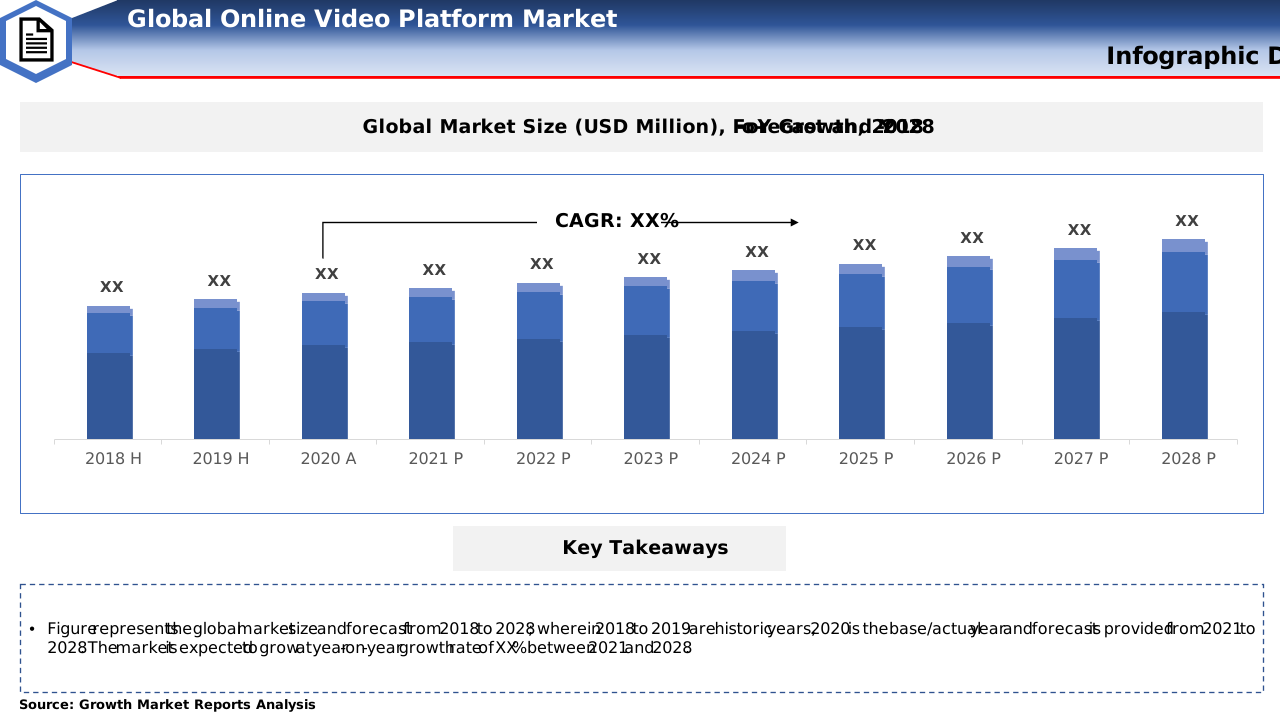
According to our latest research, the global online video platform market size reached USD 9.2 billion in 2024, reflecting robust expansion fueled by the exponential growth in digital content consumption worldwide. The market is projected to grow at a CAGR of 17.1% during the forecast period, reaching a value of USD 27.9 billion by 2033. This impressive growth trajectory is primarily driven by the surge in video streaming, proliferation of smart devices, and the increasing adoption of cloud-based solutions across industries.

A critical growth factor for the online video platform market is the rapid evolution of digital media consumption habits. The widespread adoption of high-speed internet, coupled with the ubiquity of smartphones and connected devices, has fundamentally transformed how consumers access and engage with video content. Businesses and creators are increasingly leveraging online video platforms to deliver engaging, on-demand, and live video experiences tailored to diverse audiences. This shift is particularly notable in sectors such as media & entertainment, education, and retail, where video content is now a primary medium for communication, marketing, and customer engagement. The integration of advanced analytics, AI-driven personalization, and interactive features has further enhanced the value proposition of online video platforms, driving higher user engagement and retention rates.

Another significant driver is the expanding enterprise adoption of online video platforms for internal communication, training, and marketing purposes. Organizations across various industries are recognizing the efficiency and effectiveness of video as a tool for knowledge sharing, employee engagement, and brand storytelling. The COVID-19 pandemic accelerated this trend, with remote work and virtual events becoming the norm, thereby increasing the reliance on robust, scalable video platforms. As enterprises continue to invest in digital transformation initiatives, the demand for secure, customizable, and feature-rich video solutions is expected to remain strong. Additionally, the rise of e-learning and telehealth has created new avenues for online video platform providers, further diversifying the market landscape.

The proliferation of social media and user-generated content platforms has also played a pivotal role in market growth. Platforms like YouTube, TikTok, and Instagram have democratized video creation and distribution, enabling individuals and businesses to reach global audiences with minimal barriers to entry. This democratization has spurred a wave of innovation in content formats, monetization models, and audience engagement strategies. Online video platforms are continuously evolving to support these trends, offering tools for live streaming, interactive content, and seamless integration with social networks. As a result, the competitive landscape is becoming increasingly dynamic, with new entrants and established players vying for market share through differentiation and strategic partnerships.

From a regional perspective, North America continues to dominate the online video platform market, accounting for the largest share in 2024, followed closely by Europe and Asia Pacific. The regionÂ’s leadership is attributed to the presence of major technology companies, early adoption of advanced digital infrastructure, and a mature content creation ecosystem. However, Asia Pacific is emerging as the fastest-growing region, driven by rising internet penetration, a burgeoning middle class, and increasing investments in digital media. Latin America and the Middle East & Africa are also witnessing steady growth, supported by improving connectivity and a growing appetite for online video content. This regional diversification underscores the global nature of the market and the vast opportunities for expansion across different geographies.

The increasing complexity of video delivery ecosystems has led to the emergence of specialized solutions like the Video CDN Analytics Platform. This platform plays a crucial role in optimizing content delivery networks by providing real-time insights into video performance, viewer engagement, and network efficiency. By leveraging advanced analytics, businesses can ensure seamless streaming experiences, reduce latency, and optimize bandwidth usage. As the demand for high-quality video content continues to rise, the integration of CDN analytics becomes essential for maintaining competitive advantage and enhancing user satisfaction. This trend underscores the importance of robust infrastructure and data-driven strategies in the evolving online video platform market.

Global Online Video Platform Industry Outlook

Component Analysis

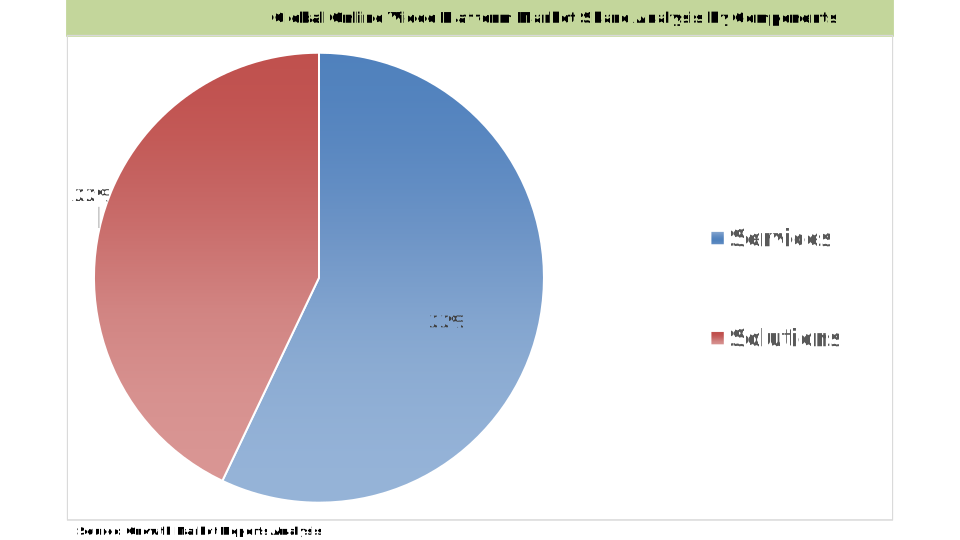
The online video platform market by component is segmented into solution and services. The solution segment encompasses the core software platforms that enable video hosting, management, distribution, and analytics. These solutions are the backbone of the market, providing content creators, enterprises, and broadcasters with the tools required to deliver high-quality video experiences at scale. The increasing demand for scalable, secure, and feature-rich video solutions has prompted providers to invest in innovations such as AI-driven content recommendations, advanced video analytics, and seamless integration with third-party applications. As organizations seek to enhance their digital presence and engage audiences more effectively, the solution segment is expected to maintain its dominance in the coming years.

The services segment, which includes professional services such as consulting, integration, support, and managed services, is witnessing significant growth as well. As the complexity of video delivery ecosystems increases, businesses are seeking expert guidance to ensure seamless deployment, optimization, and maintenance of their video platforms. Service providers offer tailored solutions that address specific business needs, from platform customization to workflow automation and security enhancements. The rising adoption of hybrid and multi-cloud environments has further fueled the demand for specialized services, as organizations require assistance in navigating the technical and operational challenges associated with video delivery at scale.

A key trend within the component segment is the convergence of solutions and services to deliver end-to-end video platform offerings. Leading vendors are increasingly bundling software solutions with managed services, enabling customers to benefit from a unified, turnkey approach to video content management and distribution. This approach not only simplifies the procurement process but also ensures ongoing platform optimization and technical support, driving higher customer satisfaction and retention. As the market matures, the distinction between solutions and services is expected to blur, with integrated offerings becoming the norm.

The competitive landscape within the component segment is characterized by intense innovation and differentiation. Providers are leveraging emerging technologies such as artificial intelligence, machine learning, and blockchain to enhance platform capabilities and address evolving customer needs. Features such as real-time analytics, automated content moderation, and dynamic ad insertion are becoming standard offerings, enabling businesses to maximize the value of their video assets. As a result, the component segment is expected to remain a key battleground for market share, with continuous investment in R&D and strategic partnerships shaping the future of the online video platform market.

Report Scope

Attributes Details
Report Title Online Video Platform Market Research Report 2033
By Component Solution, Services
By Application Video Sharing, Commercial Video Platforms, Live Streaming, Video Hosting, Others
By Deployment Mode Cloud, On-Premises
By End-User Media & Entertainment, Education, Healthcare, Retail, IT & Telecom, Others
Regions Covered North America, Europe, APAC, Latin America, MEA
Base Year 2024
Historic Data 2018-2023
Forecast Period 2025-2033
Number of Pages 266
Number of Tables & Figures 393
Customization Available Yes, the report can be customized as per your need.

Application Analysis

The application segment of the online video platform market is diverse, encompassing video sharing, commercial video platforms, live streaming, video hosting, and others. Video sharing platforms, such as YouTube and Vimeo, have become household names, enabling users to upload, share, and monetize video content with ease. These platforms have revolutionized content consumption, democratizing access to information and entertainment while providing creators with new revenue streams. The proliferation of user-generated content and the rise of influencer marketing have further cemented the importance of video sharing applications in the digital ecosystem.

Commercial video platforms cater to businesses and enterprises seeking to leverage video for marketing, training, and communication purposes. These platforms offer advanced features such as branding customization, secure access controls, and integration with enterprise systems. The growing emphasis on digital marketing and customer engagement has driven significant adoption of commercial video platforms, particularly among retail, education, and healthcare organizations. As businesses seek to differentiate themselves in crowded markets, the ability to deliver compelling video experiences is increasingly seen as a strategic imperative.

Live streaming has emerged as one of the fastest-growing application segments, driven by the demand for real-time engagement and interactive experiences. From live sports and concerts to virtual events and webinars, live streaming platforms enable organizations to connect with audiences in new and impactful ways. The integration of social media and interactive features, such as live chat and audience polling, has further enhanced the appeal of live streaming, making it a preferred choice for both content creators and viewers. As bandwidth and streaming technologies continue to improve, the live streaming segment is expected to witness sustained growth and innovation.

In the realm of education, the adoption of video technologies is transforming traditional learning environments. An Education Video Platform offers a comprehensive suite of tools designed to facilitate interactive and engaging learning experiences. These platforms support a variety of educational formats, from live lectures and webinars to on-demand tutorials and collaborative projects. By incorporating features such as video analytics, personalized learning paths, and secure content distribution, educational institutions can enhance student engagement and learning outcomes. As the demand for flexible and accessible education solutions grows, the role of video platforms in the education sector is set to expand significantly.

Video hosting platforms provide the infrastructure required to store, manage, and deliver video content efficiently. These platforms are essential for businesses and creators looking to ensure high-quality playback, scalability, and security. The increasing complexity of video workflows, coupled with the need for global content delivery, has driven demand for robust video hosting solutions. Providers are responding by offering features such as adaptive bitrate streaming, multi-device compatibility, and advanced analytics, enabling customers to optimize their video strategies and maximize audience reach.

Deployment Mode Analysis

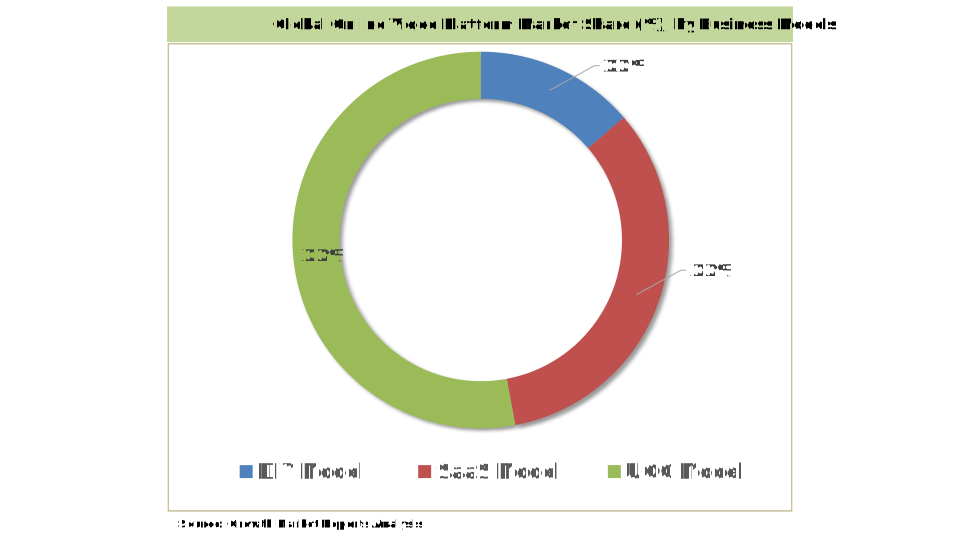
The deployment mode segment of the online video platform market is divided into cloud and on-premises solutions. Cloud-based deployment has become the dominant model, accounting for the majority of market share in 2024. The flexibility, scalability, and cost-effectiveness of cloud platforms make them an attractive choice for organizations of all sizes. Cloud deployment enables businesses to quickly launch and scale video services without the need for significant upfront investment in infrastructure. This model also supports seamless updates, integration with other cloud services, and global content delivery, making it ideal for organizations with distributed audiences and dynamic content needs.

On-premises deployment, while less prevalent, remains an important option for organizations with stringent security, compliance, or customization requirements. Industries such as healthcare, finance, and government often prefer on-premises solutions to maintain greater control over data and ensure compliance with regulatory standards. On-premises platforms offer enhanced security, customization, and integration capabilities, allowing organizations to tailor their video delivery infrastructure to specific business needs. However, the higher upfront costs and ongoing maintenance requirements associated with on-premises deployment have limited its adoption compared to cloud-based solutions.

A notable trend within the deployment mode segment is the rise of hybrid deployment models, which combine the benefits of cloud and on-premises solutions. Hybrid models enable organizations to leverage the scalability and flexibility of the cloud while retaining control over sensitive data and critical workflows. This approach is particularly relevant for large enterprises and regulated industries, where data sovereignty and compliance are paramount. As the complexity of video delivery ecosystems increases, hybrid deployment is expected to gain traction, offering organizations greater agility and control.

The choice of deployment mode is increasingly influenced by factors such as total cost of ownership, ease of integration, and the ability to support emerging use cases such as live streaming, interactive video, and AI-driven analytics. Providers are responding by offering flexible deployment options, robust security features, and seamless migration paths to support organizations at different stages of their digital transformation journey. As the market continues to evolve, deployment mode will remain a critical consideration for organizations seeking to optimize their video strategies and maximize return on investment.

End-User Analysis

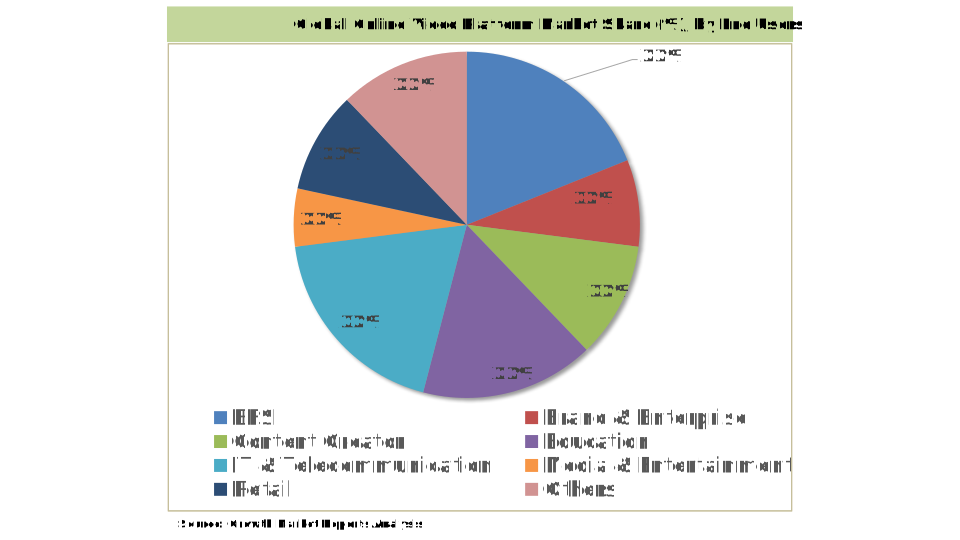
The end-user segment of the online video platform market is broad, encompassing media & entertainment, education, healthcare, retail, IT & telecom, and others. The media & entertainment sector remains the largest end-user, leveraging online video platforms for content distribution, live streaming, and audience engagement. The shift towards digital-first content strategies, coupled with the rise of OTT (over-the-top) services, has driven significant investment in video platform technologies. Broadcasters, studios, and content creators are increasingly adopting advanced video platforms to reach global audiences, monetize content, and deliver immersive viewing experiences.

The evolution of content management systems has given rise to the Video CMS, a specialized platform designed to streamline the management and distribution of video content. A Video CMS provides content creators and enterprises with powerful tools to organize, publish, and monetize their video assets efficiently. With features like metadata management, automated workflows, and multi-channel distribution, these platforms enable users to maximize the reach and impact of their video content. As video becomes an integral component of digital strategies across industries, the adoption of advanced CMS solutions is essential for optimizing content operations and achieving strategic objectives.

The education sector is experiencing rapid growth in video platform adoption, driven by the proliferation of e-learning, virtual classrooms, and online training programs. Educational institutions and corporate trainers are leveraging video platforms to deliver interactive, personalized learning experiences that cater to diverse learning styles and geographies. Features such as video analytics, content management, and secure access controls are critical for ensuring effective and compliant delivery of educational content. The COVID-19 pandemic accelerated the shift towards online learning, and the trend is expected to persist as institutions seek to enhance accessibility and flexibility.

Healthcare is another key end-user segment, utilizing online video platforms for telemedicine, patient education, and professional training. Video platforms enable healthcare providers to deliver remote consultations, conduct virtual medical conferences, and facilitate ongoing medical education. The ability to securely manage and distribute sensitive video content is paramount in this sector, driving demand for platforms with robust security and compliance features. As telehealth adoption continues to rise, the healthcare segment is poised for sustained growth within the online video platform market.

Retail and IT & telecom sectors are increasingly leveraging online video platforms for marketing, customer support, and employee training. Retailers use video to showcase products, deliver personalized recommendations, and engage customers through live shopping events. IT & telecom companies utilize video platforms for product demonstrations, technical support, and internal communications. The ability to deliver high-quality, interactive video experiences is becoming a key differentiator in these competitive sectors, driving ongoing investment in video platform technologies.

Opportunities & Threats

The online video platform market presents a multitude of opportunities for growth and innovation. One of the most promising opportunities lies in the integration of artificial intelligence and machine learning to enhance content personalization, recommendation engines, and video analytics. AI-powered platforms can analyze viewer behavior, preferences, and engagement patterns to deliver tailored content experiences that maximize audience retention and monetization. Additionally, the rise of immersive technologies such as virtual reality and augmented reality is opening new avenues for interactive video experiences, enabling organizations to differentiate their offerings and capture new market segments. As businesses increasingly prioritize digital engagement, the demand for innovative, AI-driven video platforms is expected to accelerate.

Another significant opportunity is the expansion into emerging markets, where rising internet penetration and smartphone adoption are driving increased demand for online video content. Providers that can offer localized, culturally relevant content and support multiple languages are well-positioned to capture market share in regions such as Asia Pacific, Latin America, and Africa. Strategic partnerships with telecom operators, content creators, and device manufacturers can further enhance market reach and drive adoption. Additionally, the growing emphasis on data privacy and security presents an opportunity for providers to differentiate themselves by offering platforms with robust compliance and security features, catering to the needs of regulated industries and privacy-conscious consumers.

Despite the numerous opportunities, the online video platform market faces several restraining factors. One of the primary challenges is the increasing complexity of video delivery ecosystems, which can pose technical and operational hurdles for organizations. Ensuring seamless integration with existing IT infrastructure, managing large volumes of video data, and delivering consistent quality of service across diverse devices and networks require significant expertise and investment. Additionally, concerns around data privacy, copyright infringement, and content moderation present ongoing risks for platform providers. Regulatory compliance and the need to balance user engagement with responsible content management will remain critical challenges as the market continues to evolve.

Regional Outlook

North America remains the largest regional market for online video platforms, accounting for USD 3.7 billion in 2024. The regionÂ’s dominance is attributed to the presence of major technology companies, early adoption of advanced digital infrastructure, and a mature content creation ecosystem. The United States, in particular, is home to leading online video platform providers and a vibrant community of content creators, broadcasters, and OTT service providers. The regionÂ’s strong focus on innovation, coupled with high consumer demand for digital content, is expected to drive continued growth, with a projected CAGR of 15.9% through 2033.

Europe is the second-largest market, with a market size of USD 2.2 billion in 2024. The region benefits from a highly connected population, supportive regulatory environment, and growing investment in digital media. Countries such as the United Kingdom, Germany, and France are leading adopters of online video platforms, driven by the expansion of OTT services, e-learning, and digital marketing initiatives. The European market is characterized by a strong emphasis on data privacy and compliance, with providers required to adhere to stringent regulations such as the General Data Protection Regulation (GDPR). This focus on privacy and security is shaping the development and adoption of video platform technologies across the region.

Asia Pacific is the fastest-growing region, with a market size of USD 2.1 billion in 2024 and a projected CAGR of 20.5% through 2033. The regionÂ’s rapid growth is driven by rising internet penetration, a burgeoning middle class, and increasing investments in digital infrastructure. Countries such as China, India, Japan, and South Korea are witnessing a surge in demand for online video content, fueled by the proliferation of smartphones, affordable data plans, and a vibrant creator economy. Localized content, mobile-first platforms, and strategic partnerships with telecom operators are key success factors in the Asia Pacific market. As digital consumption continues to rise, the region is expected to play an increasingly important role in shaping the future of the global online video platform market.

Online Video Platform Market Statistics

Competitor Outlook

The competitive landscape of the online video platform market is characterized by intense innovation, strategic partnerships, and a focus on differentiation. Leading players are continuously investing in research and development to enhance platform capabilities, improve user experience, and address evolving customer needs. The market is highly fragmented, with a mix of global technology giants, specialized video platform providers, and emerging startups vying for market share. Key areas of competition include video quality, scalability, security, analytics, and integration with third-party applications. Providers are also focusing on expanding their global footprint through strategic acquisitions, partnerships, and localization efforts.

Innovation is a key driver of competitiveness in the online video platform market. Providers are leveraging emerging technologies such as artificial intelligence, machine learning, and blockchain to enhance content discovery, personalization, and monetization. Features such as real-time analytics, automated content moderation, dynamic ad insertion, and interactive video experiences are becoming standard offerings, enabling businesses to maximize the value of their video assets. The ability to support diverse use cases, from live streaming and e-learning to telehealth and virtual events, is a critical differentiator in the market.

Strategic partnerships and ecosystem development are also shaping the competitive landscape. Leading providers are collaborating with telecom operators, content creators, device manufacturers, and cloud service providers to deliver integrated, end-to-end video solutions. These partnerships enable providers to expand their reach, enhance platform capabilities, and offer seamless experiences across devices and networks. The rise of hybrid and multi-cloud deployment models is further driving collaboration between platform providers and cloud vendors, enabling organizations to achieve greater flexibility, scalability, and resilience.

Some of the major companies operating in the online video platform market include Brightcove Inc., Kaltura Inc., IBM Corporation, Google LLC (YouTube), Vimeo Inc., Panopto, MediaPlatform, JW Player, Qumu Corporation, and Ooyala Inc.. Brightcove is known for its robust enterprise video platform, offering solutions for marketing, communications, and monetization. Kaltura provides a flexible, open-source video platform catering to education, enterprise, and media sectors. IBM Cloud Video (formerly Ustream) is a leader in live and on-demand video streaming, leveraging IBMÂ’s cloud infrastructure and AI capabilities. GoogleÂ’s YouTube remains the dominant consumer video sharing platform, with a vast global user base and advanced content discovery features.

Vimeo has established itself as a leading platform for professional video creators, offering tools for hosting, collaboration, and monetization. Panopto specializes in video solutions for education and enterprise, with a focus on lecture capture, webcasting, and video content management. MediaPlatform and JW Player provide scalable video solutions for live streaming, corporate communications, and media organizations. Qumu and Ooyala focus on enterprise video platforms, offering solutions for secure video delivery, analytics, and workflow automation. Each of these companies brings unique strengths and capabilities to the market, contributing to a dynamic and competitive ecosystem.

The online video platform market is poised for continued growth and innovation, driven by evolving consumer preferences, technological advancements, and expanding use cases across industries. As competition intensifies, providers will need to focus on differentiation, customer-centric innovation, and strategic partnerships to capture new opportunities and sustain long-term growth. The ability to deliver high-quality, secure, and engaging video experiences will be paramount in shaping the future of the online video platform market.

Key Players

  • YouTube
  • Vimeo
  • Brightcove
  • Kaltura
  • Dacast
  • JW Player
  • Wistia
  • IBM Cloud Video
  • Panopto
  • Vidyard
  • Ooyala
  • Muvi
  • MediaPlatform
  • Wowza Media Systems
  • Qumu
  • Dailymotion
  • Limelight Networks
  • Zype
  • SproutVideo
  • StreamShark
Online Video Platform Market Overview

Segments

The Online Video Platform market has been segmented on the basis of

Component

  • Solution
  • Services

Application

  • Video Sharing
  • Commercial Video Platforms
  • Live Streaming
  • Video Hosting
  • Others

Deployment Mode

  • Cloud
  • On-Premises

End-User

  • Media & Entertainment
  • Education
  • Healthcare
  • Retail
  • IT & Telecom
  • Others

Competitive Landscape

Key players in the online video platform market are Telstra Corporation Limited, Google, Inc. (YouTube), Limelight Networks, Inc., RTL Group S.A., Comcast Corporation, Panopto, Inc., Brightcove, Inc., Kaltura, Inc., Akamai Technologies, Inc., Vimeo.com, Inc., and MediaMelon, Inc. These players are widely engaged in several market development activities such as collaborations, agreements, mergers & acquisitions, production capacity expansion, new product launches, and partnerships to increase their market share.

Frequently Asked Questions

Innovation in AI, machine learning, blockchain, real-time analytics, and interactive video experiences is driving competition and enhancing platform capabilities for diverse use cases.

Key players include YouTube, Vimeo, Brightcove, Kaltura, IBM Cloud Video, JW Player, Panopto, MediaPlatform, Qumu, Ooyala, and others.

Opportunities include AI integration for personalization, expansion into emerging markets, and immersive technologies like AR/VR. Challenges involve technical complexity, data privacy, copyright issues, and regulatory compliance.

Major end-users include media & entertainment, education, healthcare, retail, and IT & telecom sectors.

Deployment modes include cloud-based, on-premises, and hybrid models. Cloud deployment is dominant due to its scalability and cost-effectiveness, while hybrid models are gaining traction for their flexibility.

Key applications include video sharing, commercial video platforms, live streaming, video hosting, and others, serving both individual creators and enterprises.

The market is segmented into solutions (software for video hosting, management, distribution, and analytics) and services (consulting, integration, support, and managed services).

North America leads the market, followed by Europe and Asia Pacific. Asia Pacific is the fastest-growing region due to rising internet penetration and investments in digital infrastructure.

Key growth drivers include the surge in video streaming, proliferation of smart devices, increasing adoption of cloud-based solutions, and the integration of AI-driven personalization and analytics.

As of 2024, the global online video platform market size reached USD 9.2 billion, with projections to grow to USD 27.9 billion by 2033.

Table Of Content

Chapter 1 Executive Summary
Chapter 2 Assumptions and Acronyms Used
Chapter 3 Research Methodology
Chapter 4 Online Video Platform Market Overview
   4.1 Introduction
      4.1.1 Market Taxonomy
      4.1.2 Market Definition
      4.1.3 Macro-Economic Factors Impacting the Market Growth
   4.2 Online Video Platform Market Dynamics
      4.2.1 Market Drivers
      4.2.2 Market Restraints
      4.2.3 Market Opportunity
   4.3 Online Video Platform Market - Supply Chain Analysis
      4.3.1 List of Key Suppliers
      4.3.2 List of Key Distributors
      4.3.3 List of Key Consumers
   4.4 Key Forces Shaping the Online Video Platform Market
      4.4.1 Bargaining Power of Suppliers
      4.4.2 Bargaining Power of Buyers
      4.4.3 Threat of Substitution
      4.4.4 Threat of New Entrants
      4.4.5 Competitive Rivalry
   4.5 Global Online Video Platform Market Size & Forecast, 2023-2032
      4.5.1 Online Video Platform Market Size and Y-o-Y Growth
      4.5.2 Online Video Platform Market Absolute $ Opportunity

Chapter 5 Global Online Video Platform Market Analysis and Forecast By Component
   5.1 Introduction
      5.1.1 Key Market Trends & Growth Opportunities By Component
      5.1.2 Basis Point Share (BPS) Analysis By Component
      5.1.3 Absolute $ Opportunity Assessment By Component
   5.2 Online Video Platform Market Size Forecast By Component
      5.2.1 Solution
      5.2.2 Services
   5.3 Market Attractiveness Analysis By Component

Chapter 6 Global Online Video Platform Market Analysis and Forecast By Application
   6.1 Introduction
      6.1.1 Key Market Trends & Growth Opportunities By Application
      6.1.2 Basis Point Share (BPS) Analysis By Application
      6.1.3 Absolute $ Opportunity Assessment By Application
   6.2 Online Video Platform Market Size Forecast By Application
      6.2.1 Video Sharing
      6.2.2 Commercial Video Platforms
      6.2.3 Live Streaming
      6.2.4 Video Hosting
      6.2.5 Others
   6.3 Market Attractiveness Analysis By Application

Chapter 7 Global Online Video Platform Market Analysis and Forecast By Deployment Mode
   7.1 Introduction
      7.1.1 Key Market Trends & Growth Opportunities By Deployment Mode
      7.1.2 Basis Point Share (BPS) Analysis By Deployment Mode
      7.1.3 Absolute $ Opportunity Assessment By Deployment Mode
   7.2 Online Video Platform Market Size Forecast By Deployment Mode
      7.2.1 Cloud
      7.2.2 On-Premises
   7.3 Market Attractiveness Analysis By Deployment Mode

Chapter 8 Global Online Video Platform Market Analysis and Forecast By End-User
   8.1 Introduction
      8.1.1 Key Market Trends & Growth Opportunities By End-User
      8.1.2 Basis Point Share (BPS) Analysis By End-User
      8.1.3 Absolute $ Opportunity Assessment By End-User
   8.2 Online Video Platform Market Size Forecast By End-User
      8.2.1 Media & Entertainment
      8.2.2 Education
      8.2.3 Healthcare
      8.2.4 Retail
      8.2.5 IT & Telecom
      8.2.6 Others
   8.3 Market Attractiveness Analysis By End-User

Chapter 9 Global Online Video Platform Market Analysis and Forecast by Region
   9.1 Introduction
      9.1.1 Key Market Trends & Growth Opportunities By Region
      9.1.2 Basis Point Share (BPS) Analysis By Region
      9.1.3 Absolute $ Opportunity Assessment By Region
   9.2 Online Video Platform Market Size Forecast By Region
      9.2.1 North America
      9.2.2 Europe
      9.2.3 Asia Pacific
      9.2.4 Latin America
      9.2.5 Middle East & Africa (MEA)
   9.3 Market Attractiveness Analysis By Region

Chapter 10 Coronavirus Disease (COVID-19) Impact 
   10.1 Introduction 
   10.2 Current & Future Impact Analysis 
   10.3 Economic Impact Analysis 
   10.4 Government Policies 
   10.5 Investment Scenario

Chapter 11 North America Online Video Platform Analysis and Forecast
   11.1 Introduction
   11.2 North America Online Video Platform Market Size Forecast by Country
      11.2.1 U.S.
      11.2.2 Canada
   11.3 Basis Point Share (BPS) Analysis by Country
   11.4 Absolute $ Opportunity Assessment by Country
   11.5 Market Attractiveness Analysis by Country
   11.6 North America Online Video Platform Market Size Forecast By Component
      11.6.1 Solution
      11.6.2 Services
   11.7 Basis Point Share (BPS) Analysis By Component 
   11.8 Absolute $ Opportunity Assessment By Component 
   11.9 Market Attractiveness Analysis By Component
   11.10 North America Online Video Platform Market Size Forecast By Application
      11.10.1 Video Sharing
      11.10.2 Commercial Video Platforms
      11.10.3 Live Streaming
      11.10.4 Video Hosting
      11.10.5 Others
   11.11 Basis Point Share (BPS) Analysis By Application 
   11.12 Absolute $ Opportunity Assessment By Application 
   11.13 Market Attractiveness Analysis By Application
   11.14 North America Online Video Platform Market Size Forecast By Deployment Mode
      11.14.1 Cloud
      11.14.2 On-Premises
   11.15 Basis Point Share (BPS) Analysis By Deployment Mode 
   11.16 Absolute $ Opportunity Assessment By Deployment Mode 
   11.17 Market Attractiveness Analysis By Deployment Mode
   11.18 North America Online Video Platform Market Size Forecast By End-User
      11.18.1 Media & Entertainment
      11.18.2 Education
      11.18.3 Healthcare
      11.18.4 Retail
      11.18.5 IT & Telecom
      11.18.6 Others
   11.19 Basis Point Share (BPS) Analysis By End-User 
   11.20 Absolute $ Opportunity Assessment By End-User 
   11.21 Market Attractiveness Analysis By End-User

Chapter 12 Europe Online Video Platform Analysis and Forecast
   12.1 Introduction
   12.2 Europe Online Video Platform Market Size Forecast by Country
      12.2.1 Germany
      12.2.2 France
      12.2.3 Italy
      12.2.4 U.K.
      12.2.5 Spain
      12.2.6 Russia
      12.2.7 Rest of Europe
   12.3 Basis Point Share (BPS) Analysis by Country
   12.4 Absolute $ Opportunity Assessment by Country
   12.5 Market Attractiveness Analysis by Country
   12.6 Europe Online Video Platform Market Size Forecast By Component
      12.6.1 Solution
      12.6.2 Services
   12.7 Basis Point Share (BPS) Analysis By Component 
   12.8 Absolute $ Opportunity Assessment By Component 
   12.9 Market Attractiveness Analysis By Component
   12.10 Europe Online Video Platform Market Size Forecast By Application
      12.10.1 Video Sharing
      12.10.2 Commercial Video Platforms
      12.10.3 Live Streaming
      12.10.4 Video Hosting
      12.10.5 Others
   12.11 Basis Point Share (BPS) Analysis By Application 
   12.12 Absolute $ Opportunity Assessment By Application 
   12.13 Market Attractiveness Analysis By Application
   12.14 Europe Online Video Platform Market Size Forecast By Deployment Mode
      12.14.1 Cloud
      12.14.2 On-Premises
   12.15 Basis Point Share (BPS) Analysis By Deployment Mode 
   12.16 Absolute $ Opportunity Assessment By Deployment Mode 
   12.17 Market Attractiveness Analysis By Deployment Mode
   12.18 Europe Online Video Platform Market Size Forecast By End-User
      12.18.1 Media & Entertainment
      12.18.2 Education
      12.18.3 Healthcare
      12.18.4 Retail
      12.18.5 IT & Telecom
      12.18.6 Others
   12.19 Basis Point Share (BPS) Analysis By End-User 
   12.20 Absolute $ Opportunity Assessment By End-User 
   12.21 Market Attractiveness Analysis By End-User

Chapter 13 Asia Pacific Online Video Platform Analysis and Forecast
   13.1 Introduction
   13.2 Asia Pacific Online Video Platform Market Size Forecast by Country
      13.2.1 China
      13.2.2 Japan
      13.2.3 South Korea
      13.2.4 India
      13.2.5 Australia
      13.2.6 South East Asia (SEA)
      13.2.7 Rest of Asia Pacific (APAC)
   13.3 Basis Point Share (BPS) Analysis by Country
   13.4 Absolute $ Opportunity Assessment by Country
   13.5 Market Attractiveness Analysis by Country
   13.6 Asia Pacific Online Video Platform Market Size Forecast By Component
      13.6.1 Solution
      13.6.2 Services
   13.7 Basis Point Share (BPS) Analysis By Component 
   13.8 Absolute $ Opportunity Assessment By Component 
   13.9 Market Attractiveness Analysis By Component
   13.10 Asia Pacific Online Video Platform Market Size Forecast By Application
      13.10.1 Video Sharing
      13.10.2 Commercial Video Platforms
      13.10.3 Live Streaming
      13.10.4 Video Hosting
      13.10.5 Others
   13.11 Basis Point Share (BPS) Analysis By Application 
   13.12 Absolute $ Opportunity Assessment By Application 
   13.13 Market Attractiveness Analysis By Application
   13.14 Asia Pacific Online Video Platform Market Size Forecast By Deployment Mode
      13.14.1 Cloud
      13.14.2 On-Premises
   13.15 Basis Point Share (BPS) Analysis By Deployment Mode 
   13.16 Absolute $ Opportunity Assessment By Deployment Mode 
   13.17 Market Attractiveness Analysis By Deployment Mode
   13.18 Asia Pacific Online Video Platform Market Size Forecast By End-User
      13.18.1 Media & Entertainment
      13.18.2 Education
      13.18.3 Healthcare
      13.18.4 Retail
      13.18.5 IT & Telecom
      13.18.6 Others
   13.19 Basis Point Share (BPS) Analysis By End-User 
   13.20 Absolute $ Opportunity Assessment By End-User 
   13.21 Market Attractiveness Analysis By End-User

Chapter 14 Latin America Online Video Platform Analysis and Forecast
   14.1 Introduction
   14.2 Latin America Online Video Platform Market Size Forecast by Country
      14.2.1 Brazil
      14.2.2 Mexico
      14.2.3 Rest of Latin America (LATAM)
   14.3 Basis Point Share (BPS) Analysis by Country
   14.4 Absolute $ Opportunity Assessment by Country
   14.5 Market Attractiveness Analysis by Country
   14.6 Latin America Online Video Platform Market Size Forecast By Component
      14.6.1 Solution
      14.6.2 Services
   14.7 Basis Point Share (BPS) Analysis By Component 
   14.8 Absolute $ Opportunity Assessment By Component 
   14.9 Market Attractiveness Analysis By Component
   14.10 Latin America Online Video Platform Market Size Forecast By Application
      14.10.1 Video Sharing
      14.10.2 Commercial Video Platforms
      14.10.3 Live Streaming
      14.10.4 Video Hosting
      14.10.5 Others
   14.11 Basis Point Share (BPS) Analysis By Application 
   14.12 Absolute $ Opportunity Assessment By Application 
   14.13 Market Attractiveness Analysis By Application
   14.14 Latin America Online Video Platform Market Size Forecast By Deployment Mode
      14.14.1 Cloud
      14.14.2 On-Premises
   14.15 Basis Point Share (BPS) Analysis By Deployment Mode 
   14.16 Absolute $ Opportunity Assessment By Deployment Mode 
   14.17 Market Attractiveness Analysis By Deployment Mode
   14.18 Latin America Online Video Platform Market Size Forecast By End-User
      14.18.1 Media & Entertainment
      14.18.2 Education
      14.18.3 Healthcare
      14.18.4 Retail
      14.18.5 IT & Telecom
      14.18.6 Others
   14.19 Basis Point Share (BPS) Analysis By End-User 
   14.20 Absolute $ Opportunity Assessment By End-User 
   14.21 Market Attractiveness Analysis By End-User

Chapter 15 Middle East & Africa (MEA) Online Video Platform Analysis and Forecast
   15.1 Introduction
   15.2 Middle East & Africa (MEA) Online Video Platform Market Size Forecast by Country
      15.2.1 Saudi Arabia
      15.2.2 South Africa
      15.2.3 UAE
      15.2.4 Rest of Middle East & Africa (MEA)
   15.3 Basis Point Share (BPS) Analysis by Country
   15.4 Absolute $ Opportunity Assessment by Country
   15.5 Market Attractiveness Analysis by Country
   15.6 Middle East & Africa (MEA) Online Video Platform Market Size Forecast By Component
      15.6.1 Solution
      15.6.2 Services
   15.7 Basis Point Share (BPS) Analysis By Component 
   15.8 Absolute $ Opportunity Assessment By Component 
   15.9 Market Attractiveness Analysis By Component
   15.10 Middle East & Africa (MEA) Online Video Platform Market Size Forecast By Application
      15.10.1 Video Sharing
      15.10.2 Commercial Video Platforms
      15.10.3 Live Streaming
      15.10.4 Video Hosting
      15.10.5 Others
   15.11 Basis Point Share (BPS) Analysis By Application 
   15.12 Absolute $ Opportunity Assessment By Application 
   15.13 Market Attractiveness Analysis By Application
   15.14 Middle East & Africa (MEA) Online Video Platform Market Size Forecast By Deployment Mode
      15.14.1 Cloud
      15.14.2 On-Premises
   15.15 Basis Point Share (BPS) Analysis By Deployment Mode 
   15.16 Absolute $ Opportunity Assessment By Deployment Mode 
   15.17 Market Attractiveness Analysis By Deployment Mode
   15.18 Middle East & Africa (MEA) Online Video Platform Market Size Forecast By End-User
      15.18.1 Media & Entertainment
      15.18.2 Education
      15.18.3 Healthcare
      15.18.4 Retail
      15.18.5 IT & Telecom
      15.18.6 Others
   15.19 Basis Point Share (BPS) Analysis By End-User 
   15.20 Absolute $ Opportunity Assessment By End-User 
   15.21 Market Attractiveness Analysis By End-User

Chapter 16 Competition Landscape 
   16.1 Online Video Platform Market: Competitive Dashboard
   16.2 Global Online Video Platform Market: Market Share Analysis, 2023
   16.3 Company Profiles (Details – Overview, Financials, Developments, Strategy) 
      16.3.1 YouTube
Vimeo
Brightcove
Kaltura
Dacast
JW Player
Wistia
IBM Cloud Video
Panopto
Vidyard
Ooyala
Muvi
MediaPlatform
Wowza Media Systems
Qumu
Dailymotion
Limelight Networks
Zype
SproutVideo
StreamShark

Methodology

Our Clients

General Mills
Siemens Healthcare
Nestle SA
Honda Motor Co. Ltd.
Microsoft
Pfizer
FedEx Logistics
sinopec