Online Video Platforms Market Research Report 2033

Online Video Platforms Market Research Report 2033

Segments - by Component (Solution, Services), by Application (Video Sharing, Commercial Broadcasting, Live Streaming, Video Hosting, Others), by Deployment Mode (Cloud-Based, On-Premises), by End-User (Media & Entertainment, Education, Corporate, Healthcare, Retail, Others)

https://growthmarketreports.com/Debadatta
Author : Debadatta Patel
https://growthmarketreports.com/Vaibhav
Fact-checked by : V. Chandola
https://growthmarketreports.com/Shruti
Editor : Shruti Bhat

Upcoming | Report ID :CG-657 | 4.6 Rating | 24 Reviews | 288 Pages | Format : Docx PDF

Report Description


Online Video Platforms Market Outlook

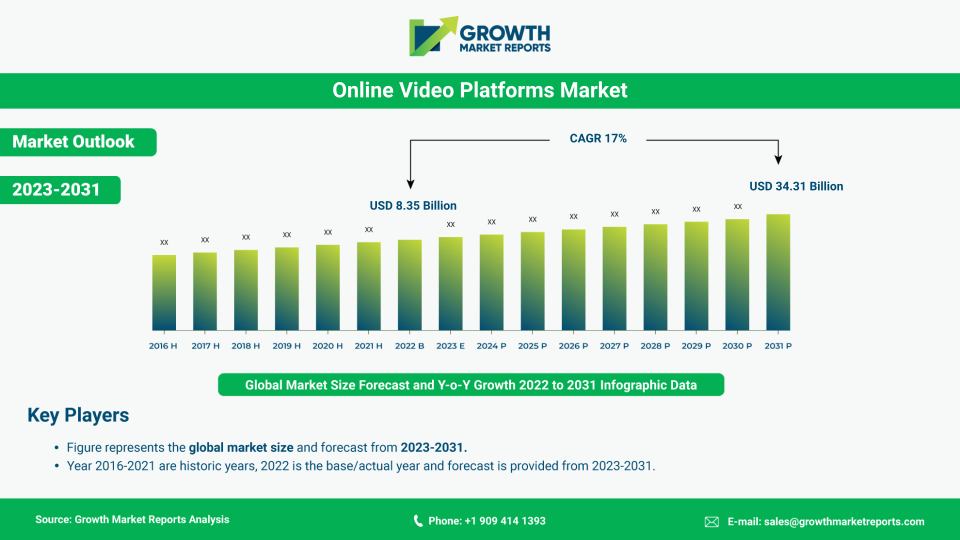
According to our latest research, the global Online Video Platforms market size reached USD 10.7 billion in 2024, demonstrating robust expansion driven by increasing digital content consumption and technological advancements. The market is projected to grow at a CAGR of 16.2% from 2025 to 2033, reaching an estimated USD 38.3 billion by 2033. This remarkable growth is primarily fueled by the surging demand for video streaming services, proliferation of high-speed internet, and the widespread adoption of smart devices across both consumer and enterprise sectors.

The exponential growth of the Online Video Platforms market is significantly attributed to the rising popularity of video content as a preferred mode of communication and entertainment. Businesses, educational institutions, and media companies are increasingly leveraging video platforms for marketing, training, and customer engagement, which has accelerated the adoption of these solutions. The surge in live streaming events, virtual conferences, and webcasts, especially in the post-pandemic era, has further intensified the reliance on online video platforms. Additionally, the integration of artificial intelligence for personalized content recommendations, automated video editing, and real-time analytics is enhancing user experiences and driving platform innovation.

Another major growth factor is the rapid technological advancements in cloud computing and content delivery networks (CDNs). These developments have enabled seamless video streaming at scale, minimizing latency and improving video quality across various devices. The widespread rollout of 5G networks is expected to further revolutionize the online video platforms market by enabling ultra-high-definition (UHD) and 4K streaming with minimal buffering. Moreover, the increasing use of mobile devices for video consumption, coupled with the trend of cord-cutting and the decline of traditional cable TV, is fueling the demand for flexible, on-demand video solutions. The emergence of interactive video formats and immersive technologies such as augmented reality (AR) and virtual reality (VR) is also broadening the scope and application of online video platforms.

Furthermore, the shift towards hybrid and remote work environments has amplified the need for reliable and secure online video platforms in the corporate sector. Enterprises are investing in robust video solutions to facilitate internal communication, virtual meetings, and employee training. The education sector is also witnessing a paradigm shift with the adoption of online video platforms for e-learning, virtual classrooms, and interactive lectures. The healthcare industry is leveraging these platforms for telehealth consultations, patient education, and remote medical training. As a result, the market is experiencing diversified demand across multiple end-user segments, driving sustained growth and innovation.

Regionally, North America continues to dominate the Online Video Platforms market due to early technology adoption, strong digital infrastructure, and the presence of major industry players. However, the Asia Pacific region is emerging as the fastest-growing market, propelled by rapid digitalization, increasing internet penetration, and a burgeoning population of tech-savvy consumers. Europe is also witnessing significant growth, driven by rising investments in digital media and the proliferation of OTT (over-the-top) services. The Middle East & Africa and Latin America are gradually catching up, with increasing investments in broadband infrastructure and growing demand for localized content. Overall, the global market landscape is characterized by dynamic growth, technological innovation, and evolving consumer preferences.

Global Online Video Platforms Industry Outlook

Component Analysis

The Component segment of the Online Video Platforms market is bifurcated into Solution and Services. Solutions encompass the core software and platforms that enable video hosting, management, streaming, and analytics. These solutions are increasingly being enhanced with advanced features such as artificial intelligence, machine learning, and real-time data analytics, providing users with a seamless and personalized video experience. The demand for customizable and scalable solutions is rising, particularly among large enterprises and media houses that require robust platforms to manage vast video libraries and high traffic volumes. Vendors are focusing on developing modular solutions that can be tailored to meet specific business requirements, thus driving market growth in this segment.

Services, on the other hand, include professional and managed services such as implementation, integration, consulting, support, and maintenance. As organizations strive to optimize their video content strategies and ensure smooth platform deployment, the demand for specialized services is witnessing steady growth. Managed services are particularly popular among small and medium enterprises (SMEs) that lack in-house technical expertise. Service providers offer end-to-end solutions, from platform setup and customization to ongoing technical support and performance optimization. This segment is also benefiting from the trend of outsourcing non-core activities, enabling organizations to focus on their core competencies while leveraging expert support for their video operations.

The interplay between solution and services is crucial for the success of online video platforms. While robust solutions form the backbone of the platform, the availability of comprehensive services ensures that clients can maximize the value of their investment. Service providers are increasingly adopting a consultative approach, helping organizations align their video strategies with business objectives and industry best practices. The integration of advanced analytics and reporting tools within both solutions and services is enabling organizations to measure engagement, track performance, and optimize content delivery. This holistic approach is fostering long-term partnerships between platform providers and clients, driving sustained growth in both segments.

Moreover, the component segment is witnessing increased competition, with vendors differentiating themselves through innovation, customer-centricity, and value-added services. Open-source solutions are gaining traction among cost-sensitive organizations, while premium platforms are focusing on offering advanced security features, multi-device compatibility, and seamless integration with existing IT ecosystems. The growing importance of data privacy and regulatory compliance is also shaping the development of solutions and services, with vendors investing in robust security protocols and compliance certifications. As the market continues to evolve, the component segment is expected to play a pivotal role in shaping the future of online video platforms.

Report Scope

Attributes Details
Report Title Online Video Platforms Market Research Report 2033
By Component Solution, Services
By Application Video Sharing, Commercial Broadcasting, Live Streaming, Video Hosting, Others
By Deployment Mode Cloud-Based, On-Premises
By End-User Media & Entertainment, Education, Corporate, Healthcare, Retail, Others
Regions Covered North America, Europe, APAC, Latin America, MEA
Base Year 2024
Historic Data 2018-2023
Forecast Period 2025-2033
Number of Pages 288
Number of Tables & Figures 371
Customization Available Yes, the report can be customized as per your need.

Application Analysis

The Application segment of the Online Video Platforms market is highly diverse, encompassing Video Sharing, Commercial Broadcasting, Live Streaming, Video Hosting, and other specialized use cases. Video sharing platforms such as YouTube and Vimeo have revolutionized the way content is created, distributed, and consumed, enabling users to reach global audiences with minimal barriers to entry. The democratization of content creation has empowered individuals, influencers, and small businesses to leverage video as a powerful tool for storytelling, marketing, and brand building. These platforms are continuously evolving, introducing new monetization options, community features, and content moderation tools to enhance user engagement and safety.

Commercial broadcasting represents a significant application area, with traditional broadcasters and media companies increasingly adopting online video platforms to reach digital audiences. The shift from linear TV to on-demand streaming is driving investments in advanced broadcasting solutions that support multi-channel distribution, high-definition streaming, and real-time analytics. Broadcasters are leveraging online platforms to offer catch-up TV, exclusive online content, and interactive experiences, catering to the evolving preferences of modern viewers. The integration of programmatic advertising and dynamic ad insertion is also enhancing revenue generation opportunities for broadcasters and advertisers alike.

Live streaming has emerged as one of the fastest-growing applications within the online video platforms market. The popularity of live events, esports tournaments, webinars, and virtual concerts has propelled the demand for platforms that can deliver high-quality, low-latency live streams to global audiences. Enterprises are utilizing live streaming for product launches, corporate communications, and training sessions, while educational institutions are leveraging it for virtual classrooms and remote learning. The rise of social media live streaming has further expanded the reach and impact of live video, enabling real-time interaction between creators and viewers. Advanced features such as multi-camera support, real-time chat, and interactive polls are enhancing the live streaming experience and driving user engagement.

Video hosting remains a core application, enabling organizations to securely store, manage, and distribute video content. Businesses across various industries are leveraging video hosting platforms for marketing campaigns, internal training, and customer support. The ability to control access, manage permissions, and track usage analytics is critical for organizations seeking to protect their intellectual property and optimize content performance. Video hosting solutions are increasingly being integrated with content management systems (CMS), learning management systems (LMS), and customer relationship management (CRM) platforms, enabling seamless workflows and data synchronization. The emergence of hybrid and multi-cloud hosting options is providing organizations with greater flexibility and scalability, supporting their evolving video needs.

Beyond these primary applications, online video platforms are being utilized for a wide range of specialized use cases, including telemedicine, virtual events, online fitness classes, and interactive advertising. The versatility of these platforms is enabling organizations to innovate and experiment with new content formats, engagement strategies, and monetization models. As the boundaries between entertainment, education, and commerce continue to blur, the application segment is expected to witness sustained growth and diversification, shaping the future trajectory of the online video platforms market.

Deployment Mode Analysis

The Deployment Mode segment in the Online Video Platforms market is categorized into Cloud-Based and On-Premises solutions. Cloud-based deployment has rapidly gained traction owing to its scalability, flexibility, and cost-effectiveness. Organizations are increasingly opting for cloud-based platforms to eliminate the need for significant upfront investments in hardware and infrastructure. The pay-as-you-go pricing model, coupled with the ability to scale resources dynamically based on demand, makes cloud-based solutions particularly attractive for businesses of all sizes. Cloud deployment also enables seamless updates, rapid feature rollouts, and global accessibility, ensuring that users can access video content from anywhere, at any time.

The proliferation of cloud-based solutions is further driven by advancements in cloud security, data encryption, and compliance standards. Leading cloud service providers are investing heavily in data centers, content delivery networks (CDNs), and edge computing capabilities to ensure high availability, low latency, and robust security. The integration of artificial intelligence and machine learning in cloud-based platforms is enabling advanced video analytics, automated content tagging, and personalized recommendations. These capabilities are empowering organizations to deliver superior user experiences, optimize content strategies, and drive audience engagement. As remote work, distance learning, and virtual events become the norm, cloud-based deployment is expected to maintain its dominance in the market.

On-premises deployment, while less prevalent than cloud-based solutions, continues to hold relevance for organizations with stringent security, compliance, and customization requirements. Enterprises in highly regulated industries such as healthcare, finance, and government often prefer on-premises solutions to maintain complete control over their data and infrastructure. On-premises deployment offers greater flexibility in terms of customization, integration with legacy systems, and adherence to specific regulatory frameworks. However, the higher upfront costs, ongoing maintenance, and limited scalability associated with on-premises solutions have led many organizations to transition to hybrid or cloud-based models over time.

The deployment mode landscape is increasingly shaped by the emergence of hybrid solutions that combine the best of both worlds. Hybrid deployment allows organizations to leverage the scalability and accessibility of the cloud while retaining critical data and applications on-premises for enhanced security and compliance. This approach is gaining traction among large enterprises and multinational corporations with complex IT environments and diverse regulatory requirements. Vendors are responding to this trend by offering flexible deployment options, seamless migration paths, and integrated management tools to support hybrid environments. As the market continues to evolve, deployment mode will remain a critical consideration for organizations seeking to balance performance, security, and cost-effectiveness in their online video platform strategies.

End-User Analysis

The End-User segment of the Online Video Platforms market encompasses a wide range of industries, including Media & Entertainment, Education, Corporate, Healthcare, Retail, and others. The media and entertainment sector remains the largest end-user, driven by the insatiable demand for digital content, OTT streaming services, and interactive experiences. Major broadcasters, production houses, and content creators are leveraging online video platforms to distribute movies, TV shows, music videos, and live events to global audiences. The integration of advanced analytics, targeted advertising, and interactive features is enabling media companies to enhance viewer engagement, monetize content, and gain valuable insights into audience preferences.

The education sector is witnessing rapid digital transformation, with online video platforms playing a pivotal role in enabling remote learning, virtual classrooms, and interactive lectures. Educational institutions are adopting video platforms to deliver course content, conduct live sessions, and facilitate student collaboration. The ability to record, archive, and share lectures is enhancing accessibility and flexibility for students and educators alike. Video analytics and engagement tracking are enabling institutions to measure learning outcomes, identify at-risk students, and personalize the learning experience. The rise of Massive Open Online Courses (MOOCs), e-learning platforms, and blended learning models is further driving demand for robust and scalable video solutions in the education sector.

Corporate enterprises are increasingly utilizing online video platforms for internal communication, employee training, product launches, and customer engagement. The shift towards remote and hybrid work models has underscored the importance of reliable and secure video solutions for virtual meetings, webinars, and collaboration. Enterprises are leveraging video platforms to streamline knowledge sharing, enhance employee engagement, and foster a culture of continuous learning. The integration of video with enterprise applications such as CRM, HRM, and project management tools is enabling seamless workflows and data synchronization. As organizations strive to enhance productivity, innovation, and employee satisfaction, the corporate segment is expected to witness sustained growth in the adoption of online video platforms.

The healthcare sector is also emerging as a significant end-user, leveraging online video platforms for telemedicine consultations, patient education, and remote medical training. The COVID-19 pandemic has accelerated the adoption of telehealth solutions, enabling healthcare providers to deliver care remotely and reach underserved populations. Video platforms are facilitating secure and compliant communication between doctors and patients, improving access to care and patient outcomes. The ability to record and archive consultations, share educational content, and conduct virtual medical conferences is enhancing the efficiency and effectiveness of healthcare delivery. As the healthcare industry continues to embrace digital transformation, the demand for specialized video solutions tailored to medical workflows and regulatory requirements is expected to grow.

Retailers are utilizing online video platforms for product demonstrations, virtual shopping experiences, and customer support. The integration of video with e-commerce platforms is enabling interactive and personalized shopping journeys, driving higher conversion rates and customer satisfaction. Retailers are also leveraging live streaming for product launches, flash sales, and influencer marketing campaigns, reaching wider audiences and generating buzz around new offerings. The ability to analyze viewer behavior, track engagement, and optimize video content is enabling retailers to refine their marketing strategies and maximize ROI. As the retail landscape becomes increasingly digital and competitive, the adoption of online video platforms is expected to become a key differentiator for brands seeking to enhance customer engagement and loyalty.

Opportunities & Threats

The Online Video Platforms market presents significant opportunities for growth and innovation across multiple dimensions. One of the most promising opportunities lies in the integration of artificial intelligence and machine learning technologies to enhance video content personalization, automate video editing, and improve content discovery. AI-driven recommendation engines can analyze user preferences, viewing history, and engagement patterns to deliver highly relevant and engaging content, thereby increasing user retention and monetization potential. The adoption of immersive technologies such as augmented reality (AR) and virtual reality (VR) is opening new avenues for interactive and experiential video content, enabling organizations to differentiate themselves in a crowded market. Additionally, the expansion of 5G networks and advancements in content delivery networks (CDNs) are enabling ultra-high-definition (UHD) and low-latency streaming, creating new possibilities for live events, virtual conferences, and remote collaboration.

Another significant opportunity is the growing demand for localized and niche content, particularly in emerging markets. As internet penetration and smartphone adoption continue to rise in regions such as Asia Pacific, Latin America, and the Middle East & Africa, there is a burgeoning appetite for content that resonates with local cultures, languages, and preferences. Online video platforms that can effectively cater to these diverse audiences by offering multilingual support, regional content libraries, and tailored user experiences are well-positioned to capture market share and drive growth. The increasing adoption of online video platforms in non-traditional sectors such as healthcare, education, and retail is also creating new revenue streams and expanding the addressable market. Strategic partnerships, mergers and acquisitions, and investments in research and development are enabling vendors to innovate, diversify their offerings, and strengthen their competitive positions.

Despite the numerous opportunities, the Online Video Platforms market faces several restraining factors that could impede growth. One of the primary challenges is the increasing complexity of data privacy and regulatory compliance requirements, particularly in regions with stringent data protection laws such as the European Union's General Data Protection Regulation (GDPR). Organizations must invest in robust security measures, data encryption, and compliance frameworks to protect user data and avoid costly penalties. The proliferation of pirated content, copyright infringement, and unauthorized distribution poses significant risks to content creators and platform providers. Additionally, the growing competition and commoditization of video platforms are putting pressure on pricing and margins, necessitating continuous innovation and differentiation to maintain profitability. Addressing these challenges will require a concerted effort by industry stakeholders, regulators, and technology providers to create a secure, compliant, and sustainable ecosystem for online video platforms.

Regional Outlook

North America remains the largest regional market for Online Video Platforms, accounting for approximately USD 4.2 billion in 2024. The region's dominance is underpinned by early adoption of digital technologies, high internet penetration, and the presence of leading industry players such as YouTube, Vimeo, and Brightcove. The United States, in particular, is a major hub for innovation and investment in video streaming, content creation, and OTT services. The proliferation of smart devices, increasing demand for on-demand content, and the shift towards remote work and learning are driving sustained growth in the region. North America is also witnessing significant investments in 5G infrastructure, cloud computing, and artificial intelligence, further enhancing the capabilities and reach of online video platforms.

Asia Pacific is emerging as the fastest-growing regional market, with a projected CAGR of 19.4% from 2025 to 2033. The market size in Asia Pacific reached USD 2.8 billion in 2024, with countries such as China, India, Japan, and South Korea leading the adoption of online video platforms. The region's rapid digitalization, expanding internet user base, and increasing smartphone penetration are driving demand for video streaming, live events, and interactive content. Localized content, multilingual support, and partnerships with regional telecom operators are key strategies for success in this diverse and dynamic market. The rise of homegrown platforms such as Tencent Video, iQIYI, and Hotstar is intensifying competition and fostering innovation, making Asia Pacific a critical growth engine for the global market.

Europe is also witnessing robust growth, with the market size reaching USD 2.1 billion in 2024. The region's strong focus on digital media, content localization, and regulatory compliance is shaping the development and adoption of online video platforms. Countries such as the United Kingdom, Germany, and France are leading the way in OTT services, digital advertising, and interactive content. The European market is characterized by a high degree of fragmentation, with a mix of global and regional players competing for market share. Investments in broadband infrastructure, 5G networks, and content delivery networks (CDNs) are enabling seamless video streaming and enhancing user experiences. The Middle East & Africa and Latin America, with market sizes of USD 0.9 billion and USD 0.7 billion respectively in 2024, are gradually catching up as investments in digital infrastructure and localized content continue to rise.

Online Video Platforms Market Statistics

Competitor Outlook

The Online Video Platforms market is characterized by intense competition, rapid innovation, and a dynamic landscape of global and regional players. Major companies are continuously investing in research and development to introduce new features, enhance user experiences, and differentiate their offerings. The competitive landscape is shaped by the convergence of technology, media, and telecommunications, with players vying for leadership in video streaming, content management, and monetization. Strategic partnerships, mergers and acquisitions, and collaborations with content creators, advertisers, and technology providers are common strategies to expand market reach, diversify portfolios, and accelerate growth. The rise of open-source platforms and niche providers is intensifying competition, driving incumbents to innovate and adapt to evolving market dynamics.

Leading players such as YouTube (Google LLC), Vimeo, Inc., Brightcove Inc., and Kaltura, Inc. dominate the global market with their comprehensive platforms, extensive content libraries, and advanced analytics capabilities. These companies are leveraging artificial intelligence, machine learning, and cloud computing to deliver personalized recommendations, optimize content delivery, and enhance security. The integration of interactive features, live streaming, and monetization tools is enabling creators and organizations to engage audiences, generate revenue, and build communities. The ability to support multi-device compatibility, high-definition streaming, and seamless integration with enterprise applications is a key differentiator for leading platforms.

Regional players such as Tencent Video, iQIYI, and Hotstar are gaining prominence in Asia Pacific, leveraging localized content, strategic partnerships, and innovative business models to capture market share. These companies are investing in original content production, exclusive licensing agreements, and user engagement initiatives to differentiate themselves in a highly competitive market. The emergence of new entrants and niche providers focusing on specific industries, content formats, or user segments is driving further fragmentation and specialization. Vendors are also exploring new revenue streams such as subscription-based models, pay-per-view, and ad-supported streaming to cater to diverse customer preferences.

In addition to established players, the market is witnessing the entry of technology giants such as Amazon Web Services (AWS), IBM Corporation, and Microsoft Corporation, offering cloud-based video solutions, content delivery networks, and AI-powered analytics. These companies are leveraging their global infrastructure, technical expertise, and ecosystem partnerships to deliver scalable, secure, and feature-rich video platforms. The competitive landscape is also influenced by the growing importance of data privacy, regulatory compliance, and content security, prompting vendors to invest in robust security protocols, compliance certifications, and transparency initiatives. As the market continues to evolve, the ability to innovate, adapt, and deliver value-added solutions will be critical for success in the highly competitive online video platforms market.

Key Players

  • YouTube
  • Vimeo
  • Brightcove
  • Kaltura
  • Dacast
  • JW Player
  • Wistia
  • IBM Cloud Video (Ustream)
  • Vidyard
  • Ooyala
  • Panopto
  • Muvi
  • Dailymotion
  • Wowza Media Systems
  • SproutVideo
  • MediaPlatform
  • Qumu
  • Limelight Networks
  • Zype
  • Vzaar
Online Video Platforms Market Overview

Segments

The Online Video Platforms market has been segmented on the basis of

Component

  • Solution
  • Services

Application

  • Video Sharing
  • Commercial Broadcasting
  • Live Streaming
  • Video Hosting
  • Others

Deployment Mode

  • Cloud-Based
  • On-Premises

End-User

  • Media & Entertainment
  • Education
  • Corporate
  • Healthcare
  • Retail
  • Others

Competitive Landscape

Some of the key players competing in the global online video platform market are Akamai Technologies, Brightcove Inc., Comcast Cable Communications Management, LLC, Endavo Media, Frame.io Inc., Kaltura, Inc., Limelight Networks, Longtail Ad Solutions, Inc. (JW PLAYER), MediaMelon Inc., Ooyala Inc. (Telstra), Panopto, SpotX, Inc., and Wistia Inc. Akamai, a content network solution provider based in the US focused on working on watermarking technology, which is a technology that helps broadcasters to detect pirated networks.

The solution would assist broadcasting companies in preventing unauthorized redistribution of content including unauthorized broadcasters re-streaming live sports events.


Global Online Video Platforms Market Key Players

Frequently Asked Questions

AI is enhancing online video platforms through personalized content recommendations, automated video editing, real-time analytics, advanced security, and improved user engagement.

Major players include YouTube (Google LLC), Vimeo, Brightcove, Kaltura, Dacast, JW Player, Wistia, IBM Cloud Video, Vidyard, Ooyala, Panopto, Muvi, Dailymotion, Wowza Media Systems, and others.

Opportunities include AI-driven personalization, immersive technologies (AR/VR), 5G-enabled streaming, and demand for localized content. Challenges involve data privacy, regulatory compliance, content piracy, and intense competition.

Key end-users include media & entertainment, education, corporate, healthcare, and retail sectors, each leveraging video platforms for content distribution, remote learning, communication, telehealth, and customer engagement.

Online video platforms can be deployed as cloud-based solutions, on-premises, or hybrid models. Cloud-based deployment is popular for its scalability and flexibility, while on-premises is preferred for strict security and compliance needs.

Major applications include video sharing, commercial broadcasting, live streaming, video hosting, and specialized use cases like telemedicine, virtual events, online fitness, and interactive advertising.

The market is segmented into Solutions (core software for hosting, management, streaming, and analytics) and Services (professional and managed services such as implementation, integration, consulting, and support).

North America is the largest market due to early technology adoption and strong digital infrastructure, while Asia Pacific is the fastest-growing region, driven by rapid digitalization and increasing internet penetration.

Key growth drivers include increasing digital content consumption, technological advancements, proliferation of high-speed internet, widespread adoption of smart devices, and the rise of live streaming, virtual conferences, and AI-powered features.

The global online video platforms market reached USD 10.7 billion in 2024 and is projected to grow at a CAGR of 16.2% from 2025 to 2033, reaching an estimated USD 38.3 billion by 2033.

Table Of Content

Chapter 1 Executive Summary
Chapter 2 Assumptions and Acronyms Used
Chapter 3 Research Methodology
Chapter 4 Online Video Platforms Market Overview
   4.1 Introduction
      4.1.1 Market Taxonomy
      4.1.2 Market Definition
      4.1.3 Macro-Economic Factors Impacting the Market Growth
   4.2 Online Video Platforms Market Dynamics
      4.2.1 Market Drivers
      4.2.2 Market Restraints
      4.2.3 Market Opportunity
   4.3 Online Video Platforms Market - Supply Chain Analysis
      4.3.1 List of Key Suppliers
      4.3.2 List of Key Distributors
      4.3.3 List of Key Consumers
   4.4 Key Forces Shaping the Online Video Platforms Market
      4.4.1 Bargaining Power of Suppliers
      4.4.2 Bargaining Power of Buyers
      4.4.3 Threat of Substitution
      4.4.4 Threat of New Entrants
      4.4.5 Competitive Rivalry
   4.5 Global Online Video Platforms Market Size & Forecast, 2023-2032
      4.5.1 Online Video Platforms Market Size and Y-o-Y Growth
      4.5.2 Online Video Platforms Market Absolute $ Opportunity

Chapter 5 Global Online Video Platforms Market Analysis and Forecast By Component
   5.1 Introduction
      5.1.1 Key Market Trends & Growth Opportunities By Component
      5.1.2 Basis Point Share (BPS) Analysis By Component
      5.1.3 Absolute $ Opportunity Assessment By Component
   5.2 Online Video Platforms Market Size Forecast By Component
      5.2.1 Solution
      5.2.2 Services
   5.3 Market Attractiveness Analysis By Component

Chapter 6 Global Online Video Platforms Market Analysis and Forecast By Application
   6.1 Introduction
      6.1.1 Key Market Trends & Growth Opportunities By Application
      6.1.2 Basis Point Share (BPS) Analysis By Application
      6.1.3 Absolute $ Opportunity Assessment By Application
   6.2 Online Video Platforms Market Size Forecast By Application
      6.2.1 Video Sharing
      6.2.2 Commercial Broadcasting
      6.2.3 Live Streaming
      6.2.4 Video Hosting
      6.2.5 Others
   6.3 Market Attractiveness Analysis By Application

Chapter 7 Global Online Video Platforms Market Analysis and Forecast By Deployment Mode
   7.1 Introduction
      7.1.1 Key Market Trends & Growth Opportunities By Deployment Mode
      7.1.2 Basis Point Share (BPS) Analysis By Deployment Mode
      7.1.3 Absolute $ Opportunity Assessment By Deployment Mode
   7.2 Online Video Platforms Market Size Forecast By Deployment Mode
      7.2.1 Cloud-Based
      7.2.2 On-Premises
   7.3 Market Attractiveness Analysis By Deployment Mode

Chapter 8 Global Online Video Platforms Market Analysis and Forecast By End-User
   8.1 Introduction
      8.1.1 Key Market Trends & Growth Opportunities By End-User
      8.1.2 Basis Point Share (BPS) Analysis By End-User
      8.1.3 Absolute $ Opportunity Assessment By End-User
   8.2 Online Video Platforms Market Size Forecast By End-User
      8.2.1 Media & Entertainment
      8.2.2 Education
      8.2.3 Corporate
      8.2.4 Healthcare
      8.2.5 Retail
      8.2.6 Others
   8.3 Market Attractiveness Analysis By End-User

Chapter 9 Global Online Video Platforms Market Analysis and Forecast by Region
   9.1 Introduction
      9.1.1 Key Market Trends & Growth Opportunities By Region
      9.1.2 Basis Point Share (BPS) Analysis By Region
      9.1.3 Absolute $ Opportunity Assessment By Region
   9.2 Online Video Platforms Market Size Forecast By Region
      9.2.1 North America
      9.2.2 Europe
      9.2.3 Asia Pacific
      9.2.4 Latin America
      9.2.5 Middle East & Africa (MEA)
   9.3 Market Attractiveness Analysis By Region

Chapter 10 Coronavirus Disease (COVID-19) Impact 
   10.1 Introduction 
   10.2 Current & Future Impact Analysis 
   10.3 Economic Impact Analysis 
   10.4 Government Policies 
   10.5 Investment Scenario

Chapter 11 North America Online Video Platforms Analysis and Forecast
   11.1 Introduction
   11.2 North America Online Video Platforms Market Size Forecast by Country
      11.2.1 U.S.
      11.2.2 Canada
   11.3 Basis Point Share (BPS) Analysis by Country
   11.4 Absolute $ Opportunity Assessment by Country
   11.5 Market Attractiveness Analysis by Country
   11.6 North America Online Video Platforms Market Size Forecast By Component
      11.6.1 Solution
      11.6.2 Services
   11.7 Basis Point Share (BPS) Analysis By Component 
   11.8 Absolute $ Opportunity Assessment By Component 
   11.9 Market Attractiveness Analysis By Component
   11.10 North America Online Video Platforms Market Size Forecast By Application
      11.10.1 Video Sharing
      11.10.2 Commercial Broadcasting
      11.10.3 Live Streaming
      11.10.4 Video Hosting
      11.10.5 Others
   11.11 Basis Point Share (BPS) Analysis By Application 
   11.12 Absolute $ Opportunity Assessment By Application 
   11.13 Market Attractiveness Analysis By Application
   11.14 North America Online Video Platforms Market Size Forecast By Deployment Mode
      11.14.1 Cloud-Based
      11.14.2 On-Premises
   11.15 Basis Point Share (BPS) Analysis By Deployment Mode 
   11.16 Absolute $ Opportunity Assessment By Deployment Mode 
   11.17 Market Attractiveness Analysis By Deployment Mode
   11.18 North America Online Video Platforms Market Size Forecast By End-User
      11.18.1 Media & Entertainment
      11.18.2 Education
      11.18.3 Corporate
      11.18.4 Healthcare
      11.18.5 Retail
      11.18.6 Others
   11.19 Basis Point Share (BPS) Analysis By End-User 
   11.20 Absolute $ Opportunity Assessment By End-User 
   11.21 Market Attractiveness Analysis By End-User

Chapter 12 Europe Online Video Platforms Analysis and Forecast
   12.1 Introduction
   12.2 Europe Online Video Platforms Market Size Forecast by Country
      12.2.1 Germany
      12.2.2 France
      12.2.3 Italy
      12.2.4 U.K.
      12.2.5 Spain
      12.2.6 Russia
      12.2.7 Rest of Europe
   12.3 Basis Point Share (BPS) Analysis by Country
   12.4 Absolute $ Opportunity Assessment by Country
   12.5 Market Attractiveness Analysis by Country
   12.6 Europe Online Video Platforms Market Size Forecast By Component
      12.6.1 Solution
      12.6.2 Services
   12.7 Basis Point Share (BPS) Analysis By Component 
   12.8 Absolute $ Opportunity Assessment By Component 
   12.9 Market Attractiveness Analysis By Component
   12.10 Europe Online Video Platforms Market Size Forecast By Application
      12.10.1 Video Sharing
      12.10.2 Commercial Broadcasting
      12.10.3 Live Streaming
      12.10.4 Video Hosting
      12.10.5 Others
   12.11 Basis Point Share (BPS) Analysis By Application 
   12.12 Absolute $ Opportunity Assessment By Application 
   12.13 Market Attractiveness Analysis By Application
   12.14 Europe Online Video Platforms Market Size Forecast By Deployment Mode
      12.14.1 Cloud-Based
      12.14.2 On-Premises
   12.15 Basis Point Share (BPS) Analysis By Deployment Mode 
   12.16 Absolute $ Opportunity Assessment By Deployment Mode 
   12.17 Market Attractiveness Analysis By Deployment Mode
   12.18 Europe Online Video Platforms Market Size Forecast By End-User
      12.18.1 Media & Entertainment
      12.18.2 Education
      12.18.3 Corporate
      12.18.4 Healthcare
      12.18.5 Retail
      12.18.6 Others
   12.19 Basis Point Share (BPS) Analysis By End-User 
   12.20 Absolute $ Opportunity Assessment By End-User 
   12.21 Market Attractiveness Analysis By End-User

Chapter 13 Asia Pacific Online Video Platforms Analysis and Forecast
   13.1 Introduction
   13.2 Asia Pacific Online Video Platforms Market Size Forecast by Country
      13.2.1 China
      13.2.2 Japan
      13.2.3 South Korea
      13.2.4 India
      13.2.5 Australia
      13.2.6 South East Asia (SEA)
      13.2.7 Rest of Asia Pacific (APAC)
   13.3 Basis Point Share (BPS) Analysis by Country
   13.4 Absolute $ Opportunity Assessment by Country
   13.5 Market Attractiveness Analysis by Country
   13.6 Asia Pacific Online Video Platforms Market Size Forecast By Component
      13.6.1 Solution
      13.6.2 Services
   13.7 Basis Point Share (BPS) Analysis By Component 
   13.8 Absolute $ Opportunity Assessment By Component 
   13.9 Market Attractiveness Analysis By Component
   13.10 Asia Pacific Online Video Platforms Market Size Forecast By Application
      13.10.1 Video Sharing
      13.10.2 Commercial Broadcasting
      13.10.3 Live Streaming
      13.10.4 Video Hosting
      13.10.5 Others
   13.11 Basis Point Share (BPS) Analysis By Application 
   13.12 Absolute $ Opportunity Assessment By Application 
   13.13 Market Attractiveness Analysis By Application
   13.14 Asia Pacific Online Video Platforms Market Size Forecast By Deployment Mode
      13.14.1 Cloud-Based
      13.14.2 On-Premises
   13.15 Basis Point Share (BPS) Analysis By Deployment Mode 
   13.16 Absolute $ Opportunity Assessment By Deployment Mode 
   13.17 Market Attractiveness Analysis By Deployment Mode
   13.18 Asia Pacific Online Video Platforms Market Size Forecast By End-User
      13.18.1 Media & Entertainment
      13.18.2 Education
      13.18.3 Corporate
      13.18.4 Healthcare
      13.18.5 Retail
      13.18.6 Others
   13.19 Basis Point Share (BPS) Analysis By End-User 
   13.20 Absolute $ Opportunity Assessment By End-User 
   13.21 Market Attractiveness Analysis By End-User

Chapter 14 Latin America Online Video Platforms Analysis and Forecast
   14.1 Introduction
   14.2 Latin America Online Video Platforms Market Size Forecast by Country
      14.2.1 Brazil
      14.2.2 Mexico
      14.2.3 Rest of Latin America (LATAM)
   14.3 Basis Point Share (BPS) Analysis by Country
   14.4 Absolute $ Opportunity Assessment by Country
   14.5 Market Attractiveness Analysis by Country
   14.6 Latin America Online Video Platforms Market Size Forecast By Component
      14.6.1 Solution
      14.6.2 Services
   14.7 Basis Point Share (BPS) Analysis By Component 
   14.8 Absolute $ Opportunity Assessment By Component 
   14.9 Market Attractiveness Analysis By Component
   14.10 Latin America Online Video Platforms Market Size Forecast By Application
      14.10.1 Video Sharing
      14.10.2 Commercial Broadcasting
      14.10.3 Live Streaming
      14.10.4 Video Hosting
      14.10.5 Others
   14.11 Basis Point Share (BPS) Analysis By Application 
   14.12 Absolute $ Opportunity Assessment By Application 
   14.13 Market Attractiveness Analysis By Application
   14.14 Latin America Online Video Platforms Market Size Forecast By Deployment Mode
      14.14.1 Cloud-Based
      14.14.2 On-Premises
   14.15 Basis Point Share (BPS) Analysis By Deployment Mode 
   14.16 Absolute $ Opportunity Assessment By Deployment Mode 
   14.17 Market Attractiveness Analysis By Deployment Mode
   14.18 Latin America Online Video Platforms Market Size Forecast By End-User
      14.18.1 Media & Entertainment
      14.18.2 Education
      14.18.3 Corporate
      14.18.4 Healthcare
      14.18.5 Retail
      14.18.6 Others
   14.19 Basis Point Share (BPS) Analysis By End-User 
   14.20 Absolute $ Opportunity Assessment By End-User 
   14.21 Market Attractiveness Analysis By End-User

Chapter 15 Middle East & Africa (MEA) Online Video Platforms Analysis and Forecast
   15.1 Introduction
   15.2 Middle East & Africa (MEA) Online Video Platforms Market Size Forecast by Country
      15.2.1 Saudi Arabia
      15.2.2 South Africa
      15.2.3 UAE
      15.2.4 Rest of Middle East & Africa (MEA)
   15.3 Basis Point Share (BPS) Analysis by Country
   15.4 Absolute $ Opportunity Assessment by Country
   15.5 Market Attractiveness Analysis by Country
   15.6 Middle East & Africa (MEA) Online Video Platforms Market Size Forecast By Component
      15.6.1 Solution
      15.6.2 Services
   15.7 Basis Point Share (BPS) Analysis By Component 
   15.8 Absolute $ Opportunity Assessment By Component 
   15.9 Market Attractiveness Analysis By Component
   15.10 Middle East & Africa (MEA) Online Video Platforms Market Size Forecast By Application
      15.10.1 Video Sharing
      15.10.2 Commercial Broadcasting
      15.10.3 Live Streaming
      15.10.4 Video Hosting
      15.10.5 Others
   15.11 Basis Point Share (BPS) Analysis By Application 
   15.12 Absolute $ Opportunity Assessment By Application 
   15.13 Market Attractiveness Analysis By Application
   15.14 Middle East & Africa (MEA) Online Video Platforms Market Size Forecast By Deployment Mode
      15.14.1 Cloud-Based
      15.14.2 On-Premises
   15.15 Basis Point Share (BPS) Analysis By Deployment Mode 
   15.16 Absolute $ Opportunity Assessment By Deployment Mode 
   15.17 Market Attractiveness Analysis By Deployment Mode
   15.18 Middle East & Africa (MEA) Online Video Platforms Market Size Forecast By End-User
      15.18.1 Media & Entertainment
      15.18.2 Education
      15.18.3 Corporate
      15.18.4 Healthcare
      15.18.5 Retail
      15.18.6 Others
   15.19 Basis Point Share (BPS) Analysis By End-User 
   15.20 Absolute $ Opportunity Assessment By End-User 
   15.21 Market Attractiveness Analysis By End-User

Chapter 16 Competition Landscape 
   16.1 Online Video Platforms Market: Competitive Dashboard
   16.2 Global Online Video Platforms Market: Market Share Analysis, 2023
   16.3 Company Profiles (Details – Overview, Financials, Developments, Strategy) 
      16.3.1 YouTube
Vimeo
Brightcove
Kaltura
Dacast
JW Player
Wistia
IBM Cloud Video (Ustream)
Vidyard
Ooyala
Panopto
Muvi
Dailymotion
Wowza Media Systems
SproutVideo
MediaPlatform
Qumu
Limelight Networks
Zype
Vzaar

Methodology

Our Clients

General Mills
FedEx Logistics
Nestle SA
Pfizer
The John Holland Group
Siemens Healthcare
Deloitte
Honda Motor Co. Ltd.