Segments - by Product Type (Audio Players, Video Players, Multimedia Players), by Storage Capacity (Below 4GB, 4GB–8GB, 8GB–16GB, Above 16GB), by Screen Size (Below 2 Inches, 2–4 Inches, Above 4 Inches), by Distribution Channel (Online Stores, Offline Stores), by End-User (Personal, Commercial)
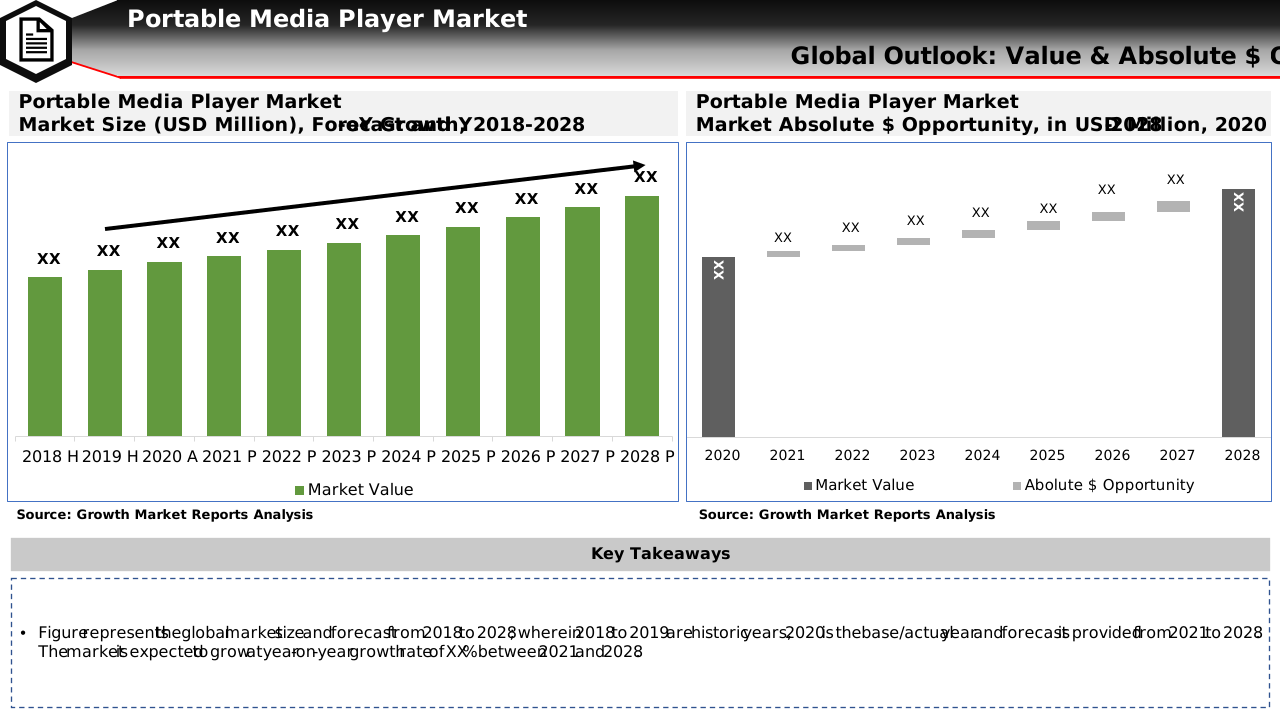
According to our latest research findings, the global portable media player market size in 2024 stands at USD 11.2 billion, exhibiting a steady expansion driven by evolving consumer preferences and technological advancements. The market is projected to grow at a CAGR of 5.1% during the forecast period from 2025 to 2033. By the end of 2033, the market is forecasted to reach a value of USD 17.5 billion. This growth is primarily attributed to the continuous innovation in product design, increasing integration of advanced multimedia features, and a surge in demand for portable entertainment and storage solutions worldwide.
The growth trajectory of the portable media player market is significantly influenced by rapid technological advancements and the increasing adoption of digital entertainment platforms. The proliferation of high-speed internet and the widespread availability of streaming services have transformed how users consume media, pushing manufacturers to integrate features like Wi-Fi, Bluetooth, and compatibility with multiple audio and video formats. Additionally, the miniaturization of components and improvements in battery life have made these devices more appealing, particularly to consumers seeking on-the-go entertainment. The demand for high-resolution audio and video playback, coupled with enhanced storage capacities, is further propelling the market, as users look for devices that can accommodate large media libraries without compromising on portability or performance.
Another key growth factor for the portable media player market is the diversification of product offerings tailored to specific consumer needs. Manufacturers are introducing a wide range of devices, from basic audio players to sophisticated multimedia players capable of supporting various file formats and streaming capabilities. This diversification is particularly evident in the segmentation of storage capacities and screen sizes, allowing consumers to select devices based on their intended usage, whether for casual listening, professional audio monitoring, or immersive video experiences. The increasing popularity of fitness and outdoor activities has also contributed to the demand for rugged and waterproof media players, further expanding the market’s reach across different demographics and lifestyle segments.
Furthermore, the expansion of distribution channels, particularly online stores, has played a pivotal role in the growth of the portable media player market. E-commerce platforms offer consumers a convenient way to compare products, read reviews, and access a broader selection of devices than traditional retail stores. This shift towards online purchasing is complemented by aggressive marketing strategies and promotional offers, which have boosted sales volumes and enhanced brand visibility. The proliferation of affordable devices in emerging markets, coupled with rising disposable incomes, is expected to sustain the market's upward momentum over the forecast period.
Regionally, the Asia Pacific market has emerged as a dominant force in the global portable media player landscape, driven by a large and youthful population, rapid urbanization, and increasing adoption of digital technology. North America and Europe continue to represent significant markets, characterized by high consumer spending power and a strong inclination towards premium and feature-rich devices. Meanwhile, Latin America and the Middle East & Africa are witnessing gradual growth, fueled by improving economic conditions and expanding internet penetration. The interplay of these regional dynamics is shaping the overall outlook of the portable media player market, with each region contributing uniquely to the market’s evolution and growth prospects.
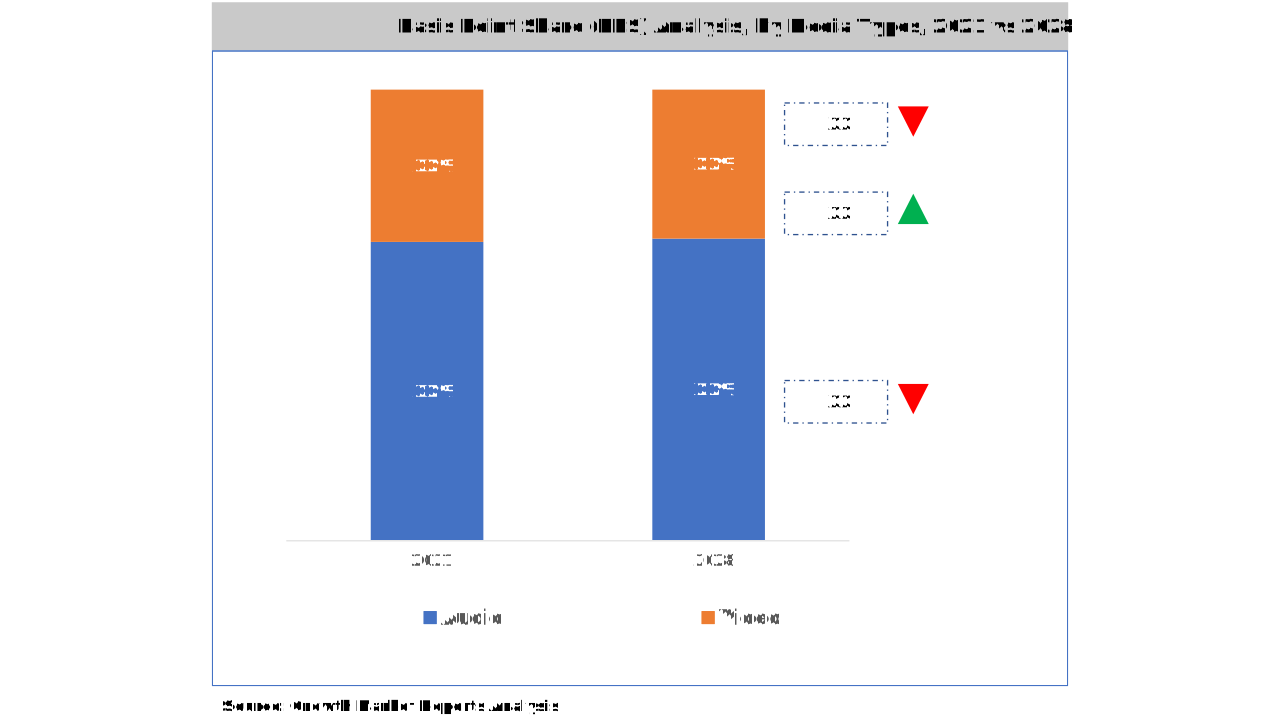
The portable media player market is segmented by product type into audio players, video players, and multimedia players, each catering to distinct consumer preferences and use cases. Audio players have traditionally dominated the market, owing to their simplicity, affordability, and widespread use among music enthusiasts and fitness-conscious individuals. These devices, often characterized by compact designs and long battery life, continue to appeal to users seeking a dedicated music experience free from smartphone distractions. However, the segment is witnessing a gradual shift as consumers increasingly demand multifunctional devices capable of supporting both audio and video playback, prompting manufacturers to innovate and incorporate advanced features.
Video players have gained traction with the growing popularity of video streaming and portable entertainment. These devices typically offer larger screens, enhanced display resolutions, and support for various video formats, making them suitable for users who prioritize visual content consumption. The integration of touchscreens, Wi-Fi connectivity, and app ecosystems has further elevated the user experience, blurring the lines between traditional media players and smart devices. As a result, the video player segment is experiencing robust growth, particularly among younger demographics and frequent travelers who value high-quality video playback on the go.
The multimedia player segment represents the most technologically advanced category within the portable media player market. These devices are designed to offer an all-in-one solution, supporting a wide range of audio, video, and image formats, along with additional functionalities such as internet browsing, gaming, and e-book reading. The convergence of multiple features into a single device has broadened the appeal of multimedia players, attracting tech-savvy consumers and professionals who require versatile tools for both work and leisure. The growing trend of integrating artificial intelligence and voice assistants is expected to further enhance the capabilities of multimedia players, positioning this segment for sustained growth over the forecast period.
Manufacturers are continuously innovating across all product types to differentiate their offerings and capture a larger share of the market. The introduction of customizable user interfaces, advanced sound processing technologies, and support for high-resolution audio and video formats are some of the strategies employed to meet evolving consumer expectations. Additionally, collaborations with content providers and streaming platforms are enabling seamless access to a vast array of digital content, further enhancing the value proposition of portable media players across different product segments.
| Attributes | Details |
| Report Title | Portable Media Player Market Research Report 2033 |
| By Product Type | Audio Players, Video Players, Multimedia Players |
| By Storage Capacity | Below 4GB, 4GB–8GB, 8GB–16GB, Above 16GB |
| By Screen Size | Below 2 Inches, 2–4 Inches, Above 4 Inches |
| By Distribution Channel | Online Stores, Offline Stores |
| By End-User | Personal, Commercial |
| Regions Covered | North America, Europe, APAC, Latin America, MEA |
| Base Year | 2024 |
| Historic Data | 2018-2023 |
| Forecast Period | 2025-2033 |
| Number of Pages | 290 |
| Number of Tables & Figures | 275 |
| Customization Available | Yes, the report can be customized as per your need. |
Storage capacity is a critical determinant in the portable media player market, as it directly impacts the device's utility and consumer appeal. Devices with below 4GB storage are typically targeted at entry-level users who require basic functionality for limited media libraries. These devices are popular among budget-conscious consumers and those who primarily use media players for short-duration activities such as workouts or commutes. However, the limited storage capacity restricts their ability to store high-resolution audio and video files, which can be a drawback as media quality standards continue to rise.
The 4GB–8GB and 8GB–16GB segments represent a middle ground, offering a balance between affordability and functionality. Devices in these categories are well-suited for users with moderate storage needs, allowing them to carry a diverse selection of music, podcasts, and videos without significantly increasing the device's size or cost. These segments have witnessed steady demand, particularly among students, travelers, and casual users who value portability and convenience. The ongoing reduction in the cost of flash memory has enabled manufacturers to offer higher storage capacities at competitive prices, further driving adoption in these segments.
The above 16GB storage capacity segment caters to power users and professionals who require extensive media libraries and support for high-definition content. These devices are equipped with advanced processors, high-resolution displays, and robust connectivity options, making them ideal for users who demand superior performance and versatility. The increasing popularity of lossless audio formats and 4K video content has further fueled demand for high-capacity media players, as consumers seek devices that can accommodate large file sizes without compromising speed or reliability. As a result, the above 16GB segment is expected to witness the highest growth rate over the forecast period.
Manufacturers are also exploring innovative storage solutions, such as cloud integration and expandable memory options, to enhance the flexibility and scalability of portable media players. The ability to seamlessly access and manage content across multiple devices is becoming a key differentiator in the market, as consumers prioritize convenience and ease of use. The evolution of storage technologies, coupled with declining costs and increasing consumer awareness, is set to reshape the storage capacity landscape within the portable media player market in the coming years.
Screen size is an important factor influencing the consumer’s choice of portable media players, as it directly affects the device’s usability and multimedia experience. Devices with below 2 inches screens are primarily designed for audio playback, offering compactness and portability for users who prioritize convenience over visual content. These devices are particularly popular among fitness enthusiasts and individuals seeking lightweight solutions for music on the go. However, the limited screen real estate restricts their functionality for video playback, navigation, and interactive features, which may limit their appeal as multimedia consumption habits evolve.
The 2–4 inches screen size segment strikes a balance between portability and functionality, making it the most popular category among mainstream consumers. Devices in this segment offer sufficient display area for basic video playback, album art visualization, and intuitive navigation, without significantly increasing the device’s size or weight. The widespread adoption of touchscreens and high-resolution displays in this segment has enhanced the user experience, enabling smoother interactions and richer visual content. As a result, the 2–4 inches segment continues to dominate the market, catering to a broad spectrum of users ranging from students to professionals.
Devices with above 4 inches screens are positioned as premium offerings, targeting users who demand immersive multimedia experiences and advanced functionalities. These devices often feature high-definition displays, powerful processors, and enhanced connectivity options, making them suitable for video streaming, gaming, and productivity applications. The growing popularity of portable video consumption and mobile gaming has fueled demand for large-screen media players, particularly among younger demographics and frequent travelers. However, the increased size and weight of these devices may limit their portability for certain use cases, necessitating a careful balance between screen size and overall device design.
Manufacturers are leveraging advancements in display technologies, such as OLED and AMOLED panels, to deliver vibrant colors, deeper contrasts, and improved energy efficiency across all screen size segments. The integration of adaptive brightness, gesture controls, and customizable interfaces is further enhancing the usability and appeal of portable media players. As consumer preferences continue to evolve, the screen size segment is expected to witness ongoing innovation, with manufacturers striving to offer devices that cater to diverse usage scenarios and aesthetic sensibilities.
The distribution channel landscape for the portable media player market is undergoing a significant transformation, driven by shifts in consumer purchasing behavior and the rise of digital commerce. Online stores have emerged as the preferred channel for a growing segment of consumers, offering unparalleled convenience, product variety, and competitive pricing. The ability to compare features, read customer reviews, and access promotional offers has made online platforms an attractive option for both first-time buyers and seasoned enthusiasts. The proliferation of e-commerce giants and specialized electronics retailers has further expanded the reach of portable media players, enabling manufacturers to tap into new markets and customer segments with minimal overhead.
Despite the growing dominance of online channels, offline stores continue to play a vital role in the distribution of portable media players, particularly in regions where internet penetration remains limited or consumers prefer hands-on product experiences. Brick-and-mortar outlets, including electronics stores, department stores, and specialty retailers, provide opportunities for consumers to physically interact with devices, assess build quality, and receive personalized recommendations from sales staff. The offline channel is particularly important for premium and high-value devices, where consumers may seek reassurance regarding product authenticity and after-sales support before making a purchase decision.
Manufacturers are increasingly adopting an omnichannel approach, integrating online and offline distribution strategies to maximize market coverage and enhance the customer experience. Initiatives such as click-and-collect services, exclusive in-store launches, and augmented reality product demonstrations are bridging the gap between digital and physical retail, offering consumers greater flexibility and choice. The ongoing evolution of distribution channels is expected to intensify competition among retailers, driving innovation in marketing, logistics, and customer engagement across the portable media player market.
The rise of direct-to-consumer (D2C) models is also reshaping the distribution landscape, as manufacturers seek to establish stronger relationships with end-users and capture higher margins by bypassing traditional intermediaries. D2C channels enable brands to gather valuable customer insights, offer personalized recommendations, and deliver tailored promotions, further enhancing brand loyalty and customer satisfaction. As the distribution channel segment continues to evolve, manufacturers and retailers must remain agile and responsive to changing consumer preferences and technological advancements to maintain a competitive edge in the dynamic portable media player market.
The portable media player market is segmented by end-user into personal and commercial categories, each characterized by distinct usage patterns and product requirements. The personal end-user segment represents the largest share of the market, driven by the widespread adoption of media players for entertainment, fitness, and leisure activities. Consumers in this segment prioritize portability, ease of use, and compatibility with various media formats, seeking devices that can seamlessly integrate into their daily routines. The increasing trend of personalized content consumption, including curated playlists, podcasts, and audiobooks, is further fueling demand for personal media players across different age groups and lifestyles.
The commercial end-user segment, while smaller in comparison, is witnessing steady growth as businesses and organizations recognize the value of portable media players for training, marketing, and customer engagement purposes. Applications range from in-store audio and video demonstrations to language learning tools and guided tours, highlighting the versatility and adaptability of these devices in diverse commercial settings. The demand for rugged, durable, and easy-to-manage media players is particularly pronounced in sectors such as education, hospitality, and healthcare, where reliable performance and user-friendly interfaces are critical.
Manufacturers are responding to the unique needs of both personal and commercial end-users by offering a wide range of devices with varying features, form factors, and price points. Customization options, such as branding, preloaded content, and device management solutions, are gaining traction in the commercial segment, enabling businesses to deliver tailored experiences and enhance operational efficiency. The growing emphasis on data security and privacy is also influencing product development, with manufacturers incorporating advanced encryption and access control features to protect sensitive information and ensure compliance with regulatory requirements.
The interplay between personal and commercial end-user segments is expected to drive ongoing innovation and diversification within the portable media player market. As technological advancements continue to expand the capabilities of these devices, new use cases and applications are likely to emerge, further broadening the market’s appeal and growth potential. Manufacturers that can effectively address the evolving needs of both personal and commercial end-users will be well-positioned to capitalize on the expanding opportunities in the global portable media player market.
The portable media player market presents a host of opportunities for manufacturers, retailers, and technology providers. One of the most significant opportunities lies in the integration of smart features, such as voice assistants, biometric authentication, and IoT connectivity, which can enhance the functionality and appeal of portable media players. The growing demand for high-resolution audio and video content, coupled with advancements in wireless and battery technologies, offers manufacturers the chance to differentiate their products and capture new customer segments. Additionally, the rising popularity of fitness and wellness applications presents an opportunity for the development of specialized media players tailored to active lifestyles, including waterproof and shock-resistant designs.
Another key opportunity stems from the expansion of emerging markets, where rising disposable incomes, increasing urbanization, and improving internet infrastructure are driving demand for affordable and feature-rich portable media players. Manufacturers that can offer cost-effective solutions without compromising on quality or functionality stand to gain a competitive advantage in these regions. The proliferation of e-commerce platforms and the growing trend of direct-to-consumer sales provide additional avenues for market expansion, enabling brands to reach a wider audience and build stronger customer relationships. Collaborations with content providers and streaming services can further enhance the value proposition of portable media players, offering consumers seamless access to a vast array of digital content.
Despite the numerous opportunities, the portable media player market faces several restraining factors that could impact its growth trajectory. The increasing multifunctionality of smartphones and tablets poses a significant threat, as these devices offer similar media playback capabilities along with a host of additional features. The rapid pace of technological obsolescence and the emergence of new entertainment platforms may also challenge the long-term viability of standalone media players. To remain competitive, manufacturers must continuously innovate and adapt to changing consumer preferences, leveraging advancements in hardware, software, and content integration to deliver compelling and differentiated products.
The Asia Pacific region dominates the global portable media player market, accounting for approximately 38% of the total market share in 2024, which translates to a market value of around USD 4.26 billion. The region’s leadership is underpinned by a large and youthful population, rapid urbanization, and increasing penetration of digital technology. Countries such as China, Japan, South Korea, and India are at the forefront of market growth, driven by rising disposable incomes, expanding middle-class populations, and a strong appetite for portable entertainment solutions. The proliferation of affordable devices and the widespread availability of high-speed internet are further fueling demand, positioning Asia Pacific as a key growth engine for the portable media player market.
North America remains a significant market, contributing approximately 26% of the global market share, or USD 2.91 billion in 2024. The region is characterized by high consumer spending power, a strong inclination towards premium and feature-rich devices, and a mature digital entertainment ecosystem. The United States and Canada are the primary contributors, with consumers exhibiting a strong preference for advanced multimedia players and seamless integration with streaming platforms. The North American market is expected to grow at a steady CAGR of 4.8% during the forecast period, supported by ongoing innovation, robust distribution networks, and a high level of brand loyalty.
Europe holds a market share of approximately 20%, or USD 2.24 billion in 2024, with major markets including Germany, the United Kingdom, France, and Italy. The region is characterized by a discerning consumer base that values quality, design, and sustainability. The adoption of portable media players is driven by a combination of entertainment, fitness, and productivity applications, with a growing emphasis on eco-friendly and energy-efficient devices. Latin America and the Middle East & Africa collectively account for the remaining 16% of the market, or USD 1.79 billion, with growth fueled by improving economic conditions, expanding internet access, and increasing awareness of digital entertainment options. The regional outlook for the portable media player market remains positive, with each region presenting unique opportunities and challenges that will shape the market’s evolution over the coming years.
The competitive landscape of the portable media player market is characterized by a mix of established global brands and emerging regional players, all vying for market share through innovation, product differentiation, and strategic partnerships. Leading companies are leveraging their technological expertise, extensive distribution networks, and strong brand equity to maintain a competitive edge, while new entrants are focusing on niche segments and value-driven offerings to capture untapped market opportunities. The rapid pace of technological advancement and the evolving nature of consumer preferences have intensified competition, prompting manufacturers to invest heavily in research and development, marketing, and customer engagement initiatives.
Product innovation remains a key focus area for market participants, with companies striving to introduce devices that offer superior performance, enhanced user experiences, and seamless integration with digital ecosystems. The incorporation of advanced features such as high-resolution displays, wireless connectivity, voice assistants, and AI-driven recommendations is becoming increasingly common, as manufacturers seek to differentiate their products and cater to the evolving needs of consumers. Strategic collaborations with content providers, streaming platforms, and technology partners are also playing a crucial role in expanding product offerings and enhancing the value proposition of portable media players.
The competitive landscape is further shaped by the ongoing shift towards direct-to-consumer sales and the growing importance of online distribution channels. Leading brands are investing in e-commerce platforms, digital marketing, and personalized customer experiences to strengthen their market presence and build lasting relationships with consumers. At the same time, regional players are leveraging their local market knowledge and agile business models to respond quickly to changing consumer preferences and emerging trends. The interplay between global and regional competitors is fostering a dynamic and competitive environment, driving continuous innovation and value creation across the portable media player market.
Major companies operating in the portable media player market include Apple Inc., Sony Corporation, Samsung Electronics, SanDisk (Western Digital), and Cowon Systems. Apple Inc. continues to lead the market with its iconic iPod series, renowned for its sleek design, intuitive user interface, and seamless integration with the Apple ecosystem. Sony Corporation remains a key player, offering a diverse range of high-quality audio and multimedia players that cater to both personal and professional users. Samsung Electronics and SanDisk (Western Digital) are recognized for their innovation in storage technologies and multimedia capabilities, while Cowon Systems is known for its focus on high-resolution audio and advanced sound processing features. These companies are continually investing in research and development, strategic partnerships, and marketing initiatives to maintain their competitive positions and drive growth in the global portable media player market.
In addition to these industry leaders, a host of emerging players and niche brands are making their mark by offering specialized products tailored to specific user segments and regional markets. Companies such as Astell&Kern, Fiio Electronics, and Creative Technology are gaining traction among audiophiles and tech enthusiasts, leveraging advanced technologies and unique design elements to differentiate their offerings. The competitive landscape is expected to remain dynamic and evolving, with ongoing innovation, strategic alliances, and market consolidation shaping the future of the portable media player market.
The Portable Media Player market has been segmented on the basis of
Some of the leading manufacturers in global portable media player market are Apple Inc., Samsung, Creative Technology Ltd., SanDisk Corporation, Sony Corporation, Archos, Microsoft Corporation, Koninklijke Philips N.V., Coby Electronics Corporation and Cinepal.
Key manufacturers are focusing on product innovation to cater the growing requirements of consumers. They are majorly focusing on expanding their product portfolio and are engaging in creative strategies to increase their market share.
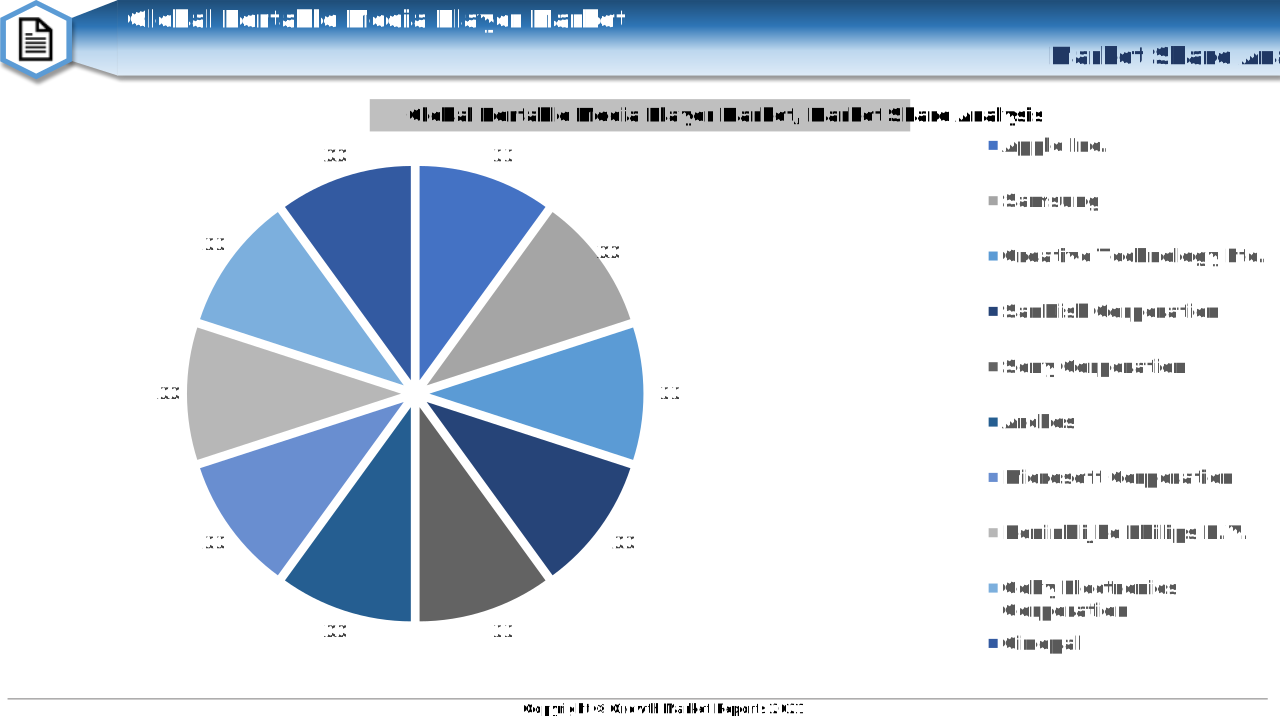
Major players include Apple Inc., Sony Corporation, Samsung Electronics, SanDisk (Western Digital), Cowon Systems, Creative Technology, Astell&Kern, FiiO Electronics, and others.
Opportunities include integrating smart features, targeting emerging markets, and collaborating with streaming services. Threats include competition from multifunctional smartphones and rapid technological obsolescence.
The market serves both personal users (for entertainment, fitness, and leisure) and commercial users (for training, marketing, education, and healthcare applications).
Online stores are increasingly preferred for their convenience and variety, but offline stores remain vital for hands-on experiences, especially for premium products. Omnichannel and direct-to-consumer models are also gaining traction.
Screen sizes vary: below 2 inches for compact audio players, 2–4 inches for mainstream use with basic video playback, and above 4 inches for premium devices offering immersive multimedia experiences.
Storage capacity is a key factor, with options ranging from below 4GB for basic use to above 16GB for power users needing large media libraries and high-definition content support. Expandable and cloud storage options are also emerging.
The market is segmented into audio players, video players, and multimedia players. Audio players are popular for music and fitness, video players for visual content, and multimedia players for all-in-one entertainment solutions.
Asia Pacific dominates the market with about 38% share, followed by North America (26%), Europe (20%), and Latin America & Middle East & Africa (16%).
Key growth drivers include technological advancements, integration of advanced multimedia features, rising demand for portable entertainment, improved battery life, and the proliferation of high-speed internet and streaming services.
As of 2024, the global portable media player market is valued at USD 11.2 billion and is projected to reach USD 17.5 billion by 2033, growing at a CAGR of 5.1% during the forecast period.