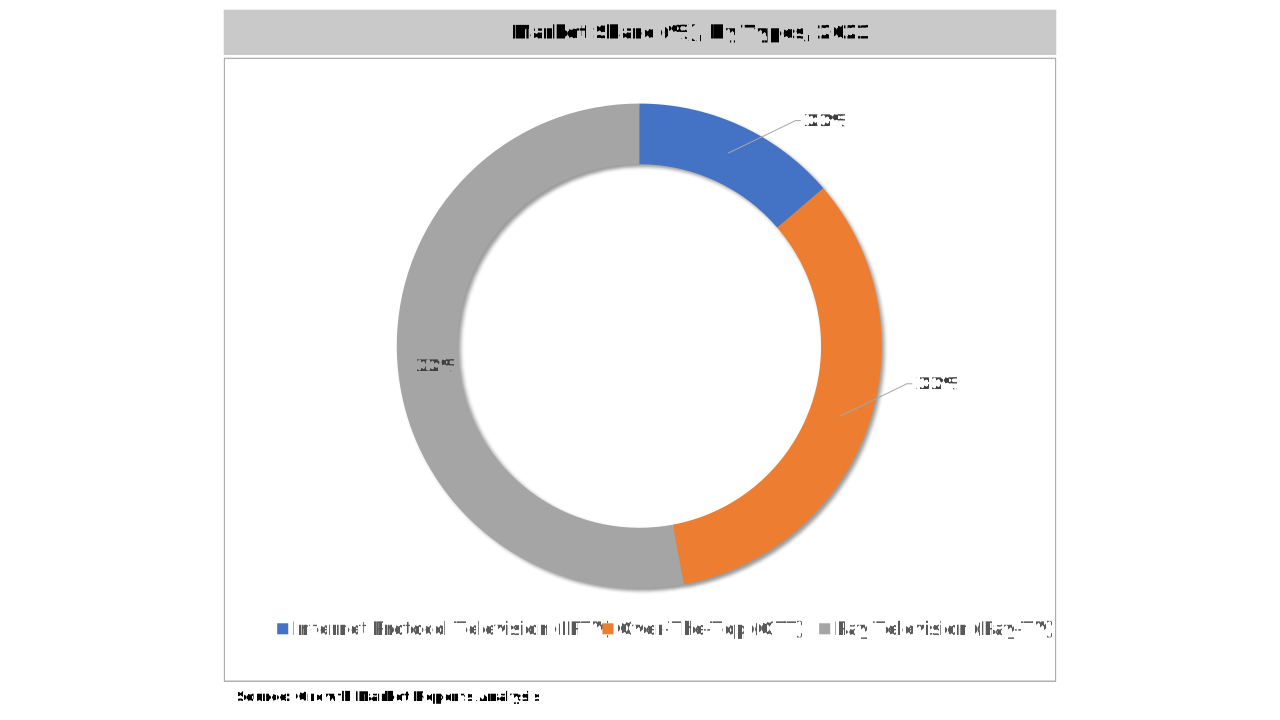
Segments - by Component (Solution, Services), by Content Type (Movies, TV Shows, Music Videos, Sports, Others), by Monetization Model (Subscription-Based, Transactional-Based, Advertisement-Based), by Deployment Mode (On-Premises, Cloud), by Device Type (Smart TVs, Smartphones, Laptops/Tablets, Desktops, Others), by End-User (Individual, Commercial)
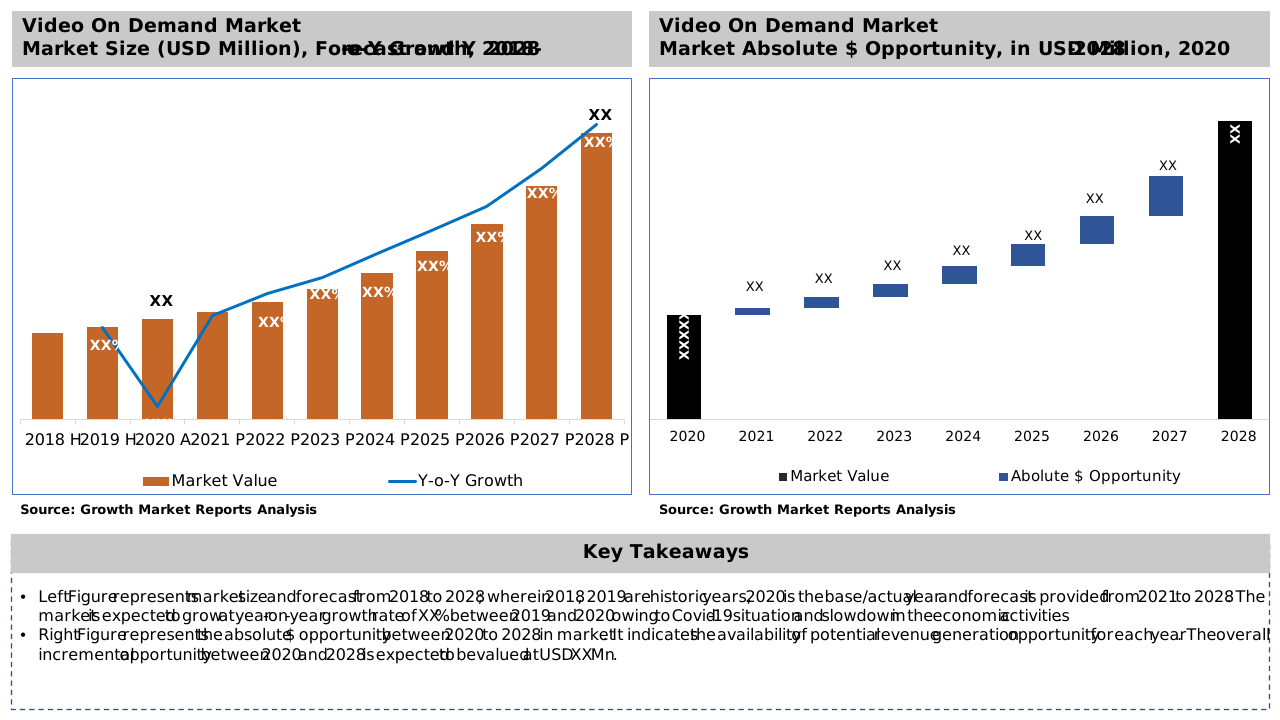
According to our latest research, the global Video On Demand (VOD) market size reached USD 127.4 billion in 2024, and is anticipated to grow at a robust CAGR of 13.1% from 2025 to 2033. By the end of 2033, the market is forecasted to attain a value of USD 345.2 billion. The rapid expansion of high-speed internet infrastructure and the proliferation of smart devices are among the primary growth drivers for this industry, enabling consumers worldwide to access vast libraries of digital content seamlessly.
The Video On Demand (VOD) market is experiencing remarkable growth due to the increasing consumer preference for personalized, on-the-go entertainment experiences. The shift from traditional cable television to digital streaming platforms has been propelled by the flexibility and convenience offered by VOD services, allowing users to access content anytime and anywhere. The surge in original content production by major streaming platforms, coupled with aggressive marketing strategies and affordable subscription packages, has further accelerated adoption rates. Additionally, the integration of advanced technologies such as artificial intelligence and machine learning for content recommendations is enhancing user engagement and satisfaction, thereby fueling market expansion.
Another significant growth factor for the VOD market is the rising penetration of smart devices, including smartphones, smart TVs, and tablets, which has made streaming services more accessible than ever. With advancements in mobile technology and the widespread availability of high-speed internet, consumers are increasingly using portable devices to consume video content. This trend is particularly pronounced among younger demographics who prefer short-form content and interactive experiences. Furthermore, the COVID-19 pandemic acted as a catalyst, dramatically increasing the demand for home entertainment options as people spent more time indoors, leading to a surge in new subscriptions and higher engagement levels across VOD platforms.
The monetization landscape of the VOD market is also evolving rapidly, with providers exploring diverse revenue streams such as subscription-based, transactional-based, and advertisement-based models. Subscription-based services remain dominant due to their predictable revenue and customer loyalty, but the emergence of hybrid models is enabling platforms to cater to a broader audience. The growing adoption of advertisement-based VOD, particularly in emerging markets, is making premium content accessible to users at little or no cost, thereby expanding the overall market base. Strategic partnerships between content creators, telecom operators, and technology providers are further enhancing the reach and quality of VOD services globally.
From a regional perspective, North America continues to lead the VOD market, driven by the presence of global streaming giants and advanced digital infrastructure. However, Asia Pacific is emerging as the fastest-growing region, fueled by a massive population base, increasing internet penetration, and rising disposable incomes. Local content production and regional language offerings are playing a crucial role in attracting new users in Asia Pacific, while regulatory support and favorable government policies are encouraging investment in digital media infrastructure. Europe and Latin America are also witnessing steady growth, supported by the expansion of broadband networks and the rising popularity of international and local streaming platforms.
The Video On Demand (VOD) market by component is segmented into solutions and services, each playing a pivotal role in the ecosystem. Solutions encompass the core VOD platforms, content management systems, media servers, and analytics tools that enable content delivery, user management, and performance optimization. As consumer expectations for seamless streaming and personalized experiences rise, VOD solutions are increasingly integrating advanced technologies such as artificial intelligence, machine learning, and cloud computing. These innovations are not only enhancing content discovery and recommendation engines but also improving video quality through adaptive bitrate streaming and real-time analytics. The demand for scalable, secure, and feature-rich solutions is driving continuous investment in research and development by leading technology providers.
On the services front, the market includes consulting, integration, maintenance, and support services that facilitate the successful deployment and operation of VOD platforms. As organizations seek to launch and scale their digital content offerings, service providers play a critical role in ensuring smooth migration from legacy systems, customizing platforms to specific business needs, and providing ongoing technical support. The rise of managed services is particularly noteworthy, as enterprises increasingly outsource the management of their VOD infrastructure to specialized providers, allowing them to focus on content creation and customer engagement. This trend is especially prominent among small and medium enterprises (SMEs) and new market entrants seeking to minimize upfront capital expenditure and operational complexity.
The interplay between solutions and services is becoming increasingly symbiotic, with vendors bundling their offerings to deliver end-to-end VOD experiences. For instance, platform providers often partner with system integrators and managed service providers to offer comprehensive packages that include platform deployment, content ingestion, user authentication, monetization, and analytics. This integrated approach not only accelerates time-to-market for content providers but also ensures a consistent and high-quality user experience. As the competitive landscape intensifies, differentiation through superior service delivery and innovative solution features is becoming a key success factor for market players.
The component segment is also witnessing significant innovation in terms of interoperability and open standards, as content providers seek to deliver seamless experiences across multiple devices and platforms. The adoption of cloud-native architectures and API-driven integrations is enabling VOD solutions to connect with third-party systems such as payment gateways, advertising networks, and social media platforms. This flexibility is crucial for supporting diverse monetization models and expanding the reach of VOD services to new customer segments. As the market matures, the focus is shifting towards holistic, agile, and scalable component offerings that can adapt to evolving consumer preferences and technological advancements.
| Attributes | Details |
| Report Title | Video On Demand Market Research Report 2033 |
| By Component | Solution, Services |
| By Content Type | Movies, TV Shows, Music Videos, Sports, Others |
| By Monetization Model | Subscription-Based, Transactional-Based, Advertisement-Based |
| By Deployment Mode | On-Premises, Cloud |
| By Device Type | Smart TVs, Smartphones, Laptops/Tablets, Desktops, Others |
| By End-User | Individual, Commercial |
| Regions Covered | North America, Europe, APAC, Latin America, MEA |
| Base Year | 2024 |
| Historic Data | 2018-2023 |
| Forecast Period | 2025-2033 |
| Number of Pages | 287 |
| Number of Tables & Figures | 334 |
| Customization Available | Yes, the report can be customized as per your need. |
The content type segment in the Video On Demand (VOD) market is a key driver of user engagement and platform differentiation. Movies remain the most popular content type, attracting a broad audience with a diverse range of genres, languages, and production styles. The increasing investment in original films by leading streaming platforms has elevated the quality and exclusivity of movie offerings, drawing subscribers who seek premium content not available through traditional channels. Additionally, the availability of classic and international films is expanding the appeal of VOD platforms to niche audiences and global markets.
TV shows represent another significant content category, with serialized storytelling and episodic formats driving sustained user engagement and platform loyalty. The rise of binge-watching culture, fueled by the release of entire seasons at once, has transformed viewing habits and increased the time users spend on VOD platforms. Exclusive partnerships with major studios and the production of original series have become key strategies for attracting and retaining subscribers. The success of high-profile shows has not only boosted platform revenues but also created new opportunities for merchandising, spin-offs, and cross-platform promotions.
Music videos and sports content are emerging as high-growth segments within the VOD market, catering to diverse audience preferences and consumption patterns. Music video streaming is particularly popular among younger demographics, driving traffic through short-form, visually engaging content. Sports content, including live broadcasts, highlights, and documentaries, is becoming a major draw for VOD platforms seeking to differentiate themselves from competitors. The integration of interactive features such as real-time statistics, multi-angle viewing, and social media sharing is enhancing the appeal of sports VOD, creating new monetization opportunities through targeted advertising and premium subscriptions.
Other content types, such as educational videos, documentaries, and user-generated content, are also gaining traction as VOD platforms expand their offerings to cater to specialized interests and underserved audiences. Educational content, in particular, has seen a surge in demand due to the rise of remote learning and online skill development. Documentaries are attracting viewers interested in in-depth storytelling and real-world issues, while user-generated content is fostering community engagement and platform stickiness. As content diversity becomes a key competitive differentiator, VOD providers are investing in content acquisition, production, and curation to appeal to a wide range of user segments.
The monetization model segment of the Video On Demand (VOD) market is characterized by a dynamic mix of subscription-based, transactional-based, and advertisement-based revenue streams. Subscription-based VOD (SVOD) remains the dominant model, offering users unlimited access to a vast library of content for a recurring fee. The predictability of subscription revenues and the ability to foster long-term customer relationships make this model attractive to both established players and new entrants. Leading platforms are leveraging tiered pricing, family plans, and bundled offerings to cater to different budget levels and maximize subscriber acquisition and retention.
Transactional-based VOD (TVOD), where users pay for individual titles or short-term access, is gaining popularity among consumers who prefer flexibility and control over their viewing choices. This model is particularly effective for premium content such as new movie releases, live events, and special programming that command higher price points. TVOD platforms are experimenting with dynamic pricing, early access windows, and exclusive content deals to drive incremental revenues and attract occasional viewers. The integration of secure payment gateways and frictionless transaction experiences is critical to the success of this model, ensuring user trust and satisfaction.
Advertisement-based VOD (AVOD) is emerging as a powerful alternative, especially in price-sensitive markets where consumers are willing to watch ads in exchange for free or discounted access to content. The proliferation of digital advertising technologies, including programmatic ad buying and targeted ad insertion, is enabling VOD platforms to monetize large audiences effectively. AVOD models are particularly appealing to advertisers seeking measurable reach and engagement, as well as to content providers looking to expand their user base without imposing subscription fees. The challenge for AVOD platforms lies in balancing ad load and user experience, ensuring that advertising does not detract from content enjoyment.
Hybrid models that combine elements of SVOD, TVOD, and AVOD are gaining traction as VOD providers seek to address diverse consumer preferences and maximize revenue potential. For example, platforms may offer a basic ad-supported tier alongside premium ad-free subscriptions or provide pay-per-view access to select content for subscribers. These flexible monetization strategies are enabling VOD providers to capture value across different customer segments, respond to competitive pressures, and adapt to changing market dynamics. As the industry evolves, data-driven insights and personalization will play an increasingly important role in optimizing monetization and enhancing user engagement.
Deployment mode is a critical consideration in the Video On Demand (VOD) market, influencing platform scalability, performance, and cost structure. The on-premises deployment model, where VOD infrastructure is hosted and managed within an organization's own data centers, offers maximum control over security, customization, and compliance. This model is favored by large enterprises and media conglomerates with stringent data privacy requirements, proprietary content, or complex integration needs. On-premises solutions are typically associated with higher upfront capital expenditure and ongoing maintenance costs, but they provide unparalleled flexibility in terms of platform configuration and feature development.
Cloud-based deployment is rapidly gaining traction as the preferred choice for VOD providers seeking agility, scalability, and cost efficiency. The cloud model enables organizations to leverage elastic computing resources, reduce infrastructure overhead, and accelerate time-to-market for new services and features. Leading cloud service providers offer a range of video streaming solutions, including content delivery networks (CDNs), media processing, storage, and analytics, empowering VOD platforms to deliver high-quality experiences to global audiences. The pay-as-you-go pricing model and seamless integration with third-party services make cloud deployment particularly attractive to startups, SMEs, and rapidly growing platforms.
The rise of hybrid deployment models is bridging the gap between on-premises and cloud solutions, allowing VOD providers to optimize their infrastructure based on specific business requirements. Hybrid models enable organizations to retain sensitive data or mission-critical workloads on-premises while leveraging the cloud for content delivery, analytics, and scaling during peak demand. This approach offers the best of both worlds, balancing control and flexibility while minimizing risk and operational complexity. As regulatory requirements and data sovereignty concerns evolve, hybrid deployment is expected to gain further prominence, especially in highly regulated industries and regions.
Deployment mode decisions are increasingly influenced by factors such as total cost of ownership, integration capabilities, and support for emerging technologies like artificial intelligence, machine learning, and edge computing. VOD providers are prioritizing solutions that offer seamless upgrades, robust security, and high availability to ensure uninterrupted service delivery and optimal user experiences. The ongoing shift towards cloud-native architectures and microservices-based development is enabling faster innovation cycles, greater resilience, and easier integration with external ecosystems. As the VOD market continues to grow and diversify, deployment flexibility will remain a key differentiator for technology vendors and service providers.
The proliferation of connected devices is reshaping the Video On Demand (VOD) market, with device type emerging as a critical determinant of user experience and platform reach. Smart TVs have become the centerpiece of home entertainment, offering large screens, high-definition displays, and integrated streaming capabilities. The adoption of smart TVs is being driven by falling hardware prices, increasing internet penetration, and the availability of pre-installed VOD applications. VOD providers are optimizing their platforms for seamless navigation, voice control, and personalized recommendations on smart TV interfaces, enhancing user engagement and satisfaction.
Smartphones represent the fastest-growing device segment for VOD consumption, particularly among younger audiences and in emerging markets. The ubiquity of mobile devices, coupled with advancements in 4G and 5G connectivity, is enabling users to stream high-quality video content on the go. Mobile-optimized apps, offline viewing features, and short-form content are key strategies for attracting and retaining mobile users. The integration of social sharing, interactive features, and push notifications is further driving engagement and monetization opportunities on smartphones.
Laptops and tablets continue to play a significant role in the VOD ecosystem, offering a balance between portability and screen size. These devices are favored by users seeking flexibility in content consumption, whether at home, in the office, or while traveling. VOD platforms are investing in responsive web design, cross-device synchronization, and multi-screen experiences to cater to the diverse needs of laptop and tablet users. The growing trend of remote work and online education is also boosting demand for VOD content on these devices, particularly for educational and professional development videos.
Desktops, while less prevalent than other device types, remain important for certain user segments, such as corporate environments, educational institutions, and content creators. The superior processing power, larger screens, and multitasking capabilities of desktops make them suitable for high-definition streaming, content editing, and collaborative viewing experiences. VOD providers are ensuring compatibility with a wide range of operating systems and browsers to maximize accessibility and user satisfaction across desktop platforms. As device ecosystems become increasingly interconnected, seamless content synchronization and user authentication across multiple devices are emerging as key differentiators for VOD platforms.
The end-user segment of the Video On Demand (VOD) market is broadly categorized into individual and commercial users, each with distinct consumption patterns and requirements. Individual users, comprising the vast majority of the market, are driving demand for personalized, on-demand entertainment experiences. The ability to access a wide variety of content at any time and on any device is a major factor influencing subscription and engagement rates among individual users. VOD platforms are leveraging advanced analytics, recommendation engines, and user profiling to deliver tailored content suggestions and enhance user satisfaction. The growing trend of cord-cutting, where consumers abandon traditional cable or satellite TV in favor of digital streaming, is further boosting the individual user segment.
Commercial users, including businesses, educational institutions, hospitality providers, and public venues, represent a growing opportunity for VOD platforms. In the corporate sector, VOD solutions are being used for employee training, internal communications, and customer engagement, offering cost-effective and scalable alternatives to traditional media. Educational institutions are leveraging VOD platforms to deliver lectures, tutorials, and course materials to remote learners, supporting the shift towards digital and blended learning environments. The hospitality industry is deploying VOD services to enhance guest experiences, offering in-room entertainment and personalized content recommendations. As commercial use cases expand, VOD providers are developing tailored solutions with features such as content management, user authentication, analytics, and integration with enterprise systems.
The needs of individual and commercial users are converging in some areas, with both segments demanding high-quality, reliable, and secure VOD experiences. The rise of user-generated content, live streaming, and social sharing is blurring the lines between content creators and consumers, creating new opportunities for engagement and monetization. VOD providers are responding by offering flexible pricing models, customizable interfaces, and robust support services to meet the diverse requirements of their user base. As the market matures, the ability to deliver differentiated value to both individual and commercial users will be a key determinant of success for VOD platforms.
The Video On Demand (VOD) market presents significant opportunities for growth and innovation, driven by evolving consumer preferences, technological advancements, and expanding global reach. The ongoing digital transformation of the media and entertainment industry is creating new avenues for content creation, distribution, and monetization. The rise of original content production, including exclusive series, films, and documentaries, is enabling VOD platforms to differentiate themselves and attract loyal subscribers. The integration of immersive technologies such as virtual reality (VR), augmented reality (AR), and 360-degree video is opening up new possibilities for interactive and experiential content, enhancing user engagement and satisfaction. Furthermore, the expansion of VOD services into emerging markets, supported by rising internet penetration and smartphone adoption, is unlocking new revenue streams and audience segments.
Another major opportunity lies in the adoption of data-driven personalization and targeted advertising, which can significantly enhance user experiences and monetization potential. Advanced analytics, artificial intelligence, and machine learning are enabling VOD platforms to analyze user behavior, preferences, and viewing patterns, delivering tailored content recommendations and personalized marketing messages. This level of personalization not only increases user engagement and retention but also drives higher advertising revenues through more effective targeting. Partnerships with telecom operators, device manufacturers, and content creators are further expanding the reach and capabilities of VOD platforms, enabling seamless integration with smart home ecosystems, connected cars, and wearable devices.
Despite the numerous opportunities, the VOD market faces several restraining factors that could hinder its growth trajectory. Intense competition among streaming platforms is leading to market fragmentation, with consumers facing subscription fatigue and rising costs as they juggle multiple services. Content licensing and distribution rights remain complex and costly, limiting the availability of popular titles and creating challenges for global expansion. Regulatory issues, including data privacy, content censorship, and intellectual property protection, are posing additional hurdles for VOD providers. Technical challenges such as bandwidth limitations, latency, and cybersecurity threats can also impact service quality and user trust. Addressing these restrainers will require ongoing investment in technology, content, and regulatory compliance, as well as innovative business models that balance affordability, accessibility, and profitability.
North America remains the largest and most mature market for Video On Demand (VOD), with a market size of USD 54.5 billion in 2024. The region's dominance is underpinned by the presence of leading streaming giants, advanced digital infrastructure, and high consumer spending on entertainment. The United States accounts for the lion's share of the North American market, driven by widespread adoption of subscription-based services, a strong culture of original content production, and early adoption of emerging technologies. Canada is also experiencing steady growth, supported by government initiatives to expand broadband access and promote digital media innovation. The North American VOD market is expected to maintain a healthy CAGR of 10.5% through 2033, reaching a projected value of USD 129.9 billion.
Asia Pacific is emerging as the fastest-growing region in the VOD market, with a market size of USD 32.8 billion in 2024 and a forecasted CAGR of 17.2% from 2025 to 2033. The region's rapid expansion is driven by a massive population base, rising internet penetration, and increasing smartphone adoption. Countries such as China, India, Japan, and South Korea are leading the charge, with local and international VOD platforms competing for market share. The production of regional and vernacular content is a key differentiator in Asia Pacific, catering to diverse linguistic and cultural preferences. Strategic partnerships with telecom operators and device manufacturers are further accelerating the adoption of VOD services in the region. By 2033, the Asia Pacific VOD market is projected to reach USD 163.2 billion, accounting for a significant share of global revenues.
Europe and Latin America are also witnessing robust growth in the VOD market, with market sizes of USD 25.3 billion and USD 9.2 billion respectively in 2024. Europe is characterized by a highly fragmented market landscape, with a mix of international and local players competing for consumer attention. The expansion of high-speed broadband networks, growing demand for localized content, and supportive regulatory frameworks are driving VOD adoption across the region. In Latin America, the increasing affordability of smartphones and data plans is enabling more consumers to access digital content, while partnerships with local content creators are enhancing platform relevance. The Middle East & Africa, with a market size of USD 5.6 billion in 2024, is expected to see steady growth, fueled by investments in digital infrastructure and the rising popularity of international streaming platforms. By 2033, these regions are expected to collectively contribute over USD 52.0 billion to the global VOD market.
The Video On Demand (VOD) market is characterized by intense competition and rapid innovation, with a diverse array of global and regional players vying for market share. The competitive landscape is dominated by major streaming giants such as Netflix, Amazon Prime Video, Disney+, and Apple TV+, each investing heavily in original content production, technology infrastructure, and global expansion. These industry leaders are leveraging their scale, brand recognition, and financial resources to secure exclusive content deals, launch new features, and enter untapped markets. The battle for subscriber growth and retention is fueling a wave of mergers, acquisitions, and strategic partnerships, as platforms seek to differentiate themselves and expand their value propositions.
In addition to global players, the VOD market is home to a vibrant ecosystem of regional and niche platforms catering to specific audience segments and content preferences. Local champions such as iQIYI and Tencent Video in China, Hotstar in India, and Viaplay in Scandinavia are leveraging their deep understanding of local cultures, languages, and regulatory environments to build loyal user bases. These platforms are increasingly focusing on the production of regional and vernacular content, as well as partnerships with telecom operators and device manufacturers to enhance distribution and accessibility. The rise of ad-supported and hybrid monetization models is enabling smaller players to compete effectively with established giants, particularly in price-sensitive markets.
Technology providers and system integrators play a crucial role in the VOD ecosystem, offering solutions and services that enable content delivery, user management, monetization, and analytics. Companies such as Brightcove, Kaltura, and IBM Cloud Video are at the forefront of innovation, developing scalable, secure, and feature-rich platforms that support the evolving needs of content providers and distributors. The integration of artificial intelligence, machine learning, and cloud computing is enabling these vendors to deliver personalized experiences, optimize video quality, and enhance operational efficiency. As the VOD market continues to evolve, technology partnerships and ecosystem collaboration will be key drivers of competitive advantage.
The competitive dynamics of the VOD market are further shaped by the entry of new players from adjacent industries, including telecom operators, device manufacturers, and social media platforms. Companies such as AT&T, Verizon, Samsung, and Facebook are investing in VOD services as part of their broader digital transformation strategies, leveraging their customer bases, distribution networks, and technology assets to capture value across the media and entertainment value chain. This convergence of telecom, technology, and media is creating new opportunities for innovation, differentiation, and growth, while also intensifying competition and raising the bar for user expectations.
Major companies in the VOD market include Netflix, Amazon Prime Video, Disney+, Apple TV+, Hulu, YouTube, HBO Max, Tencent Video, iQIYI, Hotstar (now Disney+ Hotstar), Viaplay, Brightcove, Kaltura, IBM Cloud Video, and Vimeo. Netflix remains the global leader with over 260 million subscribers as of 2024, renowned for its extensive library of original series, films, and documentaries. Amazon Prime Video is leveraging its integration with the broader Amazon ecosystem to drive subscriber growth and engagement, while Disney+ has rapidly scaled its user base through exclusive franchises such as Marvel, Star Wars, and Pixar. Apple TV+ is differentiating itself through high-quality original productions and strategic partnerships with leading content creators.
Regional players such as Tencent Video and iQIYI dominate the Chinese market, capitalizing on local content production, government support, and innovative monetization strategies. Hotstar, now Disney+ Hotstar, is the leading platform in India, offering a mix of international and regional content, live sports, and ad-supported viewing options. Viaplay is a prominent player in the Nordic region, focusing on original series, local sports, and international acquisitions. Technology vendors such as Brightcove, Kaltura, and IBM Cloud Video provide the underlying infrastructure and services that power many of the world's leading VOD platforms, enabling scalability, security, and innovation.
As the VOD market continues to evolve, competition will intensify, with success increasingly determined by the ability to deliver differentiated content, personalized experiences, and seamless integration across devices and ecosystems. The ongoing convergence of media, technology, and telecommunications will create new opportunities and challenges for market participants, requiring agility, innovation, and strategic vision to thrive in an ever-changing landscape.
The Video On Demand market has been segmented on the basis of
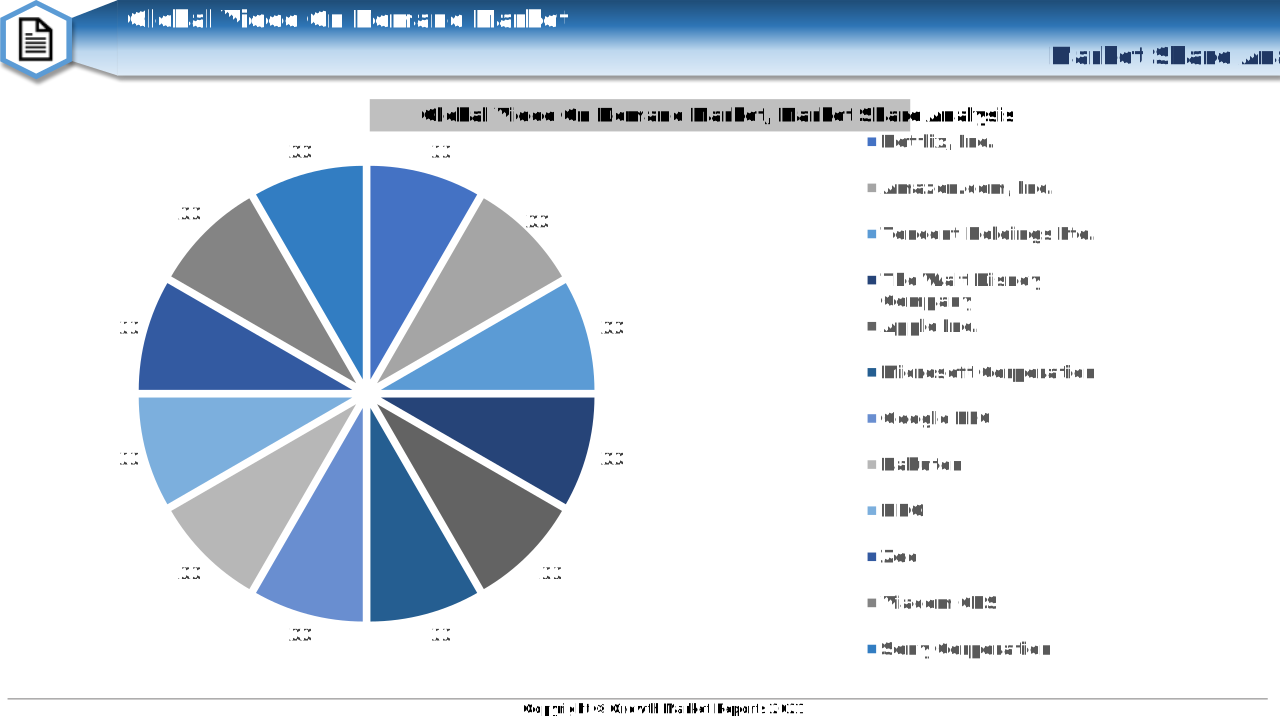
The major players of the market are Netflix, Inc., Amazon.com, Inc., Tencent Holdings Ltd., The Walt Disney Company, Apple Inc., Microsoft Corporation, Google LLC, Rakuten, HBO, Zee, Viacom CBS, and Sony Corporation.
Companies are engaging in partnerships with telecommunication conglomerates to expand their market share. Moreover, they are focusing on creating original shows to leverage their market position, while they are increasingly adopting various strategies such as signing partnerships with movie studios to gain more subscribers to their services.
Challenges include intense competition, content licensing complexities, regulatory issues, subscription fatigue, cybersecurity threats, and the need for continuous innovation.
Technologies such as artificial intelligence, machine learning, cloud computing, and advanced analytics are enhancing content recommendations, video quality, and user engagement.
Key players include Netflix, Amazon Prime Video, Disney+, Apple TV+, Hulu, HBO Max, YouTube, Tencent Video, iQIYI, Hotstar (Disney+ Hotstar), and Viaplay, among others.
Smart TVs and smartphones are the most popular devices for VOD streaming, followed by laptops, tablets, and desktops.
Movies and TV shows are the most popular content types, but music videos, sports, educational videos, documentaries, and user-generated content are also gaining traction.
The main monetization models are subscription-based (SVOD), transactional-based (TVOD), advertisement-based (AVOD), and hybrid models combining these approaches.
North America remains the largest and most mature VOD market, while Asia Pacific is the fastest-growing region, driven by rising internet penetration and smartphone adoption.
Key growth drivers include the expansion of high-speed internet, proliferation of smart devices, increased production of original content, and the integration of advanced technologies like AI and machine learning.
The VOD market is anticipated to grow at a robust CAGR of 13.1% from 2025 to 2033, reaching a forecasted value of USD 345.2 billion by 2033.
As of 2024, the global Video On Demand (VOD) market size reached USD 127.4 billion and is projected to grow significantly in the coming years.