Segments - by Service Type (Subscription-Based, Pay-Per-View, Free-to-Air), by Application (Residential, Commercial, Government), by Content Type (Entertainment, News, Sports, Educational, Others), by Distribution Channel (Satellite, Cable, IPTV, Over-the-Air)
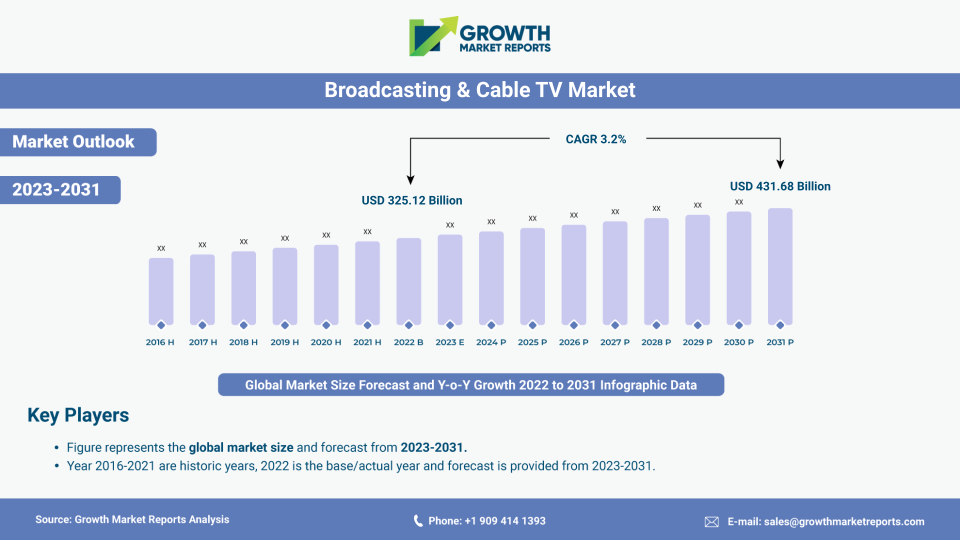
According to our latest research, the global Broadcasting & Cable TV market size reached USD 320.4 billion in 2024, reflecting a dynamic industry that continues to evolve despite digital disruption. The market is projected to grow at a CAGR of 3.1% from 2025 to 2033, reaching an estimated value of USD 419.7 billion by the end of the forecast period. The primary growth factor driving the market is the ongoing demand for diverse content delivery, coupled with technological advancements that are enhancing user experience and expanding the reach of broadcasting services.
A key growth driver for the Broadcasting & Cable TV market is the rapid advancement in digital transmission technologies, which has enabled broadcasters to deliver higher quality content to a broader audience. The proliferation of high-definition (HD) and ultra-high-definition (UHD) channels has significantly improved the viewer experience, encouraging both consumers and advertisers to invest more in cable TV subscriptions and broadcasting services. Simultaneously, the integration of interactive features such as video-on-demand, catch-up TV, and personalized recommendations has made cable TV more appealing in the face of competition from streaming platforms. As a result, the sector continues to attract investments from both established players and new entrants seeking to capitalize on the expanding content ecosystem.
Another important growth factor is the strategic partnerships and collaborations between content creators, broadcasters, and technology providers. These alliances are facilitating the development of innovative content delivery models, such as hybrid broadcast-broadband TV (HbbTV) and IPTV, which combine traditional broadcasting with internet-based services. This convergence is not only broadening the range of available content but also enabling broadcasters to tap into new revenue streams such as targeted advertising and subscription-based offerings. The increasing penetration of smart TVs and connected devices further supports this trend, as consumers are now able to access a wider array of channels and services through a single platform, driving overall market expansion.
The resilience of the Broadcasting & Cable TV market is also underpinned by its ability to cater to diverse consumer preferences across various demographic segments. While younger audiences may gravitate towards digital streaming, a significant portion of the population, particularly in emerging markets, continues to rely on traditional cable and broadcast TV for news, sports, and entertainment. This sustained demand is prompting market players to invest in localized content and language-specific channels, thereby enhancing viewer engagement and loyalty. Moreover, the growing importance of live events, such as sports tournaments and real-time news coverage, ensures that broadcasting and cable TV remain indispensable components of the global media landscape.
The role of Pay TV in the Broadcasting & Cable TV market cannot be overstated, as it continues to be a significant contributor to the industry's revenue streams. Pay TV services, which include both cable and satellite subscriptions, offer consumers access to a wide array of premium content, including exclusive sports events, blockbuster movies, and high-quality series. This model has proven successful in attracting a loyal customer base willing to pay for enhanced viewing experiences and content exclusivity. As the market evolves, Pay TV providers are increasingly integrating advanced features such as high-definition channels, interactive services, and personalized content recommendations to retain subscribers and compete with the growing influence of streaming platforms. The continued investment in content acquisition and technology upgrades underscores the importance of Pay TV in maintaining the vibrancy and competitiveness of the Broadcasting & Cable TV sector.
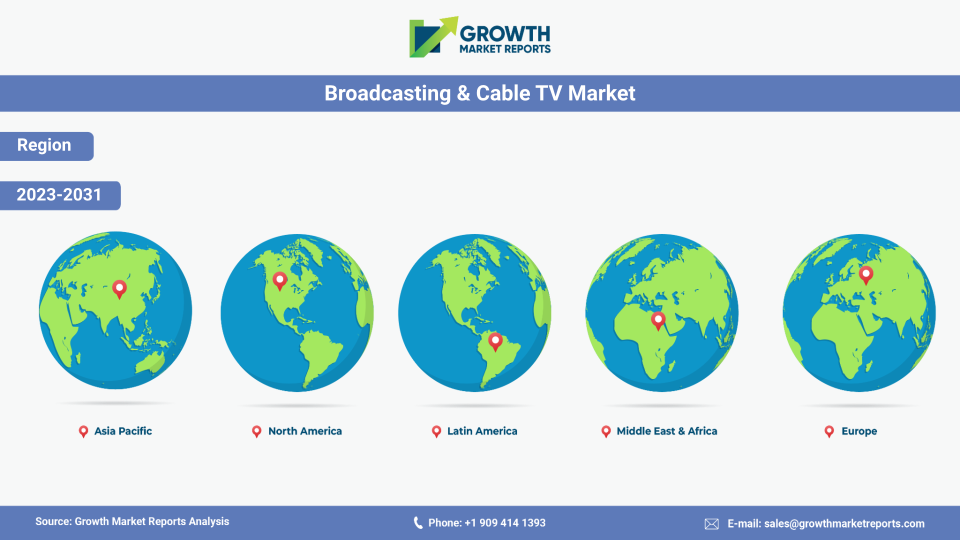
From a regional perspective, Asia Pacific remains the largest and fastest-growing market for Broadcasting & Cable TV, driven by rising disposable incomes, expanding urbanization, and increasing digital infrastructure investments. North America and Europe, while mature markets, continue to witness steady growth due to ongoing technological upgrades and the introduction of value-added services. Meanwhile, Latin America and the Middle East & Africa are emerging as promising markets, supported by regulatory reforms and initiatives to enhance broadcast quality and accessibility. These regional trends underscore the global appeal and enduring relevance of the Broadcasting & Cable TV sector.
The Broadcasting & Cable TV market is segmented by service type into Subscription-Based, Pay-Per-View, and Free-to-Air offerings. Subscription-Based services continue to dominate the market, accounting for a significant share due to their ability to provide a stable revenue stream for broadcasters and content providers. These services typically offer bundled channel packages, premium content, and exclusive access to live events, which appeals to a broad spectrum of viewers. The growth of Subscription-Based services is further supported by the integration of advanced features such as cloud DVR, multi-screen viewing, and personalized recommendations, which enhance the overall user experience and drive customer retention.
Pay-Per-View (PPV) services have carved out a niche in the Broadcasting & Cable TV market, particularly for high-profile sports events, concerts, and exclusive entertainment content. While PPV accounts for a smaller share compared to subscription models, it remains a lucrative segment due to the premium pricing associated with exclusive, time-sensitive content. The adoption of digital payment solutions and seamless integration with smart TVs and set-top boxes has further simplified the PPV purchasing process, encouraging more consumers to opt for such services. Market players are increasingly leveraging PPV to monetize marquee events and generate incremental revenue beyond traditional subscriptions.
Free-to-Air (FTA) services remain a vital component of the Broadcasting & Cable TV ecosystem, especially in regions with lower income levels and limited internet penetration. FTA channels typically rely on advertising revenue and government funding, making them accessible to a wider audience without the need for a subscription fee. These services play a critical role in delivering essential information, educational programming, and public service announcements to underserved communities. The ongoing digitalization of FTA broadcasting is enhancing content quality and expanding channel offerings, thereby increasing their appeal in both developed and emerging markets.
The interplay between these service types is shaping the competitive dynamics of the Broadcasting & Cable TV market. While Subscription-Based and PPV services are driving revenue growth and innovation, FTA channels continue to ensure broad-based access and social inclusion. Market players are increasingly adopting hybrid models that combine elements of all three service types, enabling them to cater to diverse consumer preferences and maximize their reach. This strategic diversification is expected to remain a key trend throughout the forecast period, as broadcasters seek to balance profitability with accessibility and inclusivity.
| Attributes | Details |
| Report Title | Broadcasting & Cable TV Market Research Report 2033 |
| By Service Type | Subscription-Based, Pay-Per-View, Free-to-Air |
| By Application | Residential, Commercial, Government |
| By Content Type | Entertainment, News, Sports, Educational, Others |
| By Distribution Channel | Satellite, Cable, IPTV, Over-the-Air |
| Regions Covered | North America, Europe, APAC, Latin America, MEA |
| Base Year | 2024 |
| Historic Data | 2018-2023 |
| Forecast Period | 2025-2033 |
| Number of Pages | 290 |
| Number of Tables & Figures | 358 |
| Customization Available | Yes, the report can be customized as per your need. |
The Broadcasting & Cable TV market serves a diverse range of applications, including Residential, Commercial, and Government sectors. The Residential segment represents the largest application area, driven by the widespread adoption of cable and satellite TV in households worldwide. Consumers in this segment demand a wide variety of content, ranging from entertainment and sports to news and educational programming. The proliferation of smart TVs and home entertainment systems has further enhanced the viewing experience, encouraging higher penetration rates and increased spending on premium channel packages and value-added services.
In the Commercial application segment, Broadcasting & Cable TV services are widely utilized in hospitality, retail, healthcare, and corporate environments. Hotels and resorts rely on cable and satellite TV to provide guests with a comprehensive selection of channels and on-demand content, enhancing customer satisfaction and loyalty. Retail outlets and restaurants use broadcasting services to create engaging in-store experiences, while hospitals and clinics leverage educational and entertainment programming to improve patient comfort. The commercial segment is also witnessing increased adoption of IPTV and digital signage solutions, which offer greater flexibility and customization options for businesses.
The Government application segment plays a crucial role in leveraging Broadcasting & Cable TV for public communication, emergency alerts, and educational outreach. Government agencies utilize dedicated channels to disseminate information on public health, safety, and policy initiatives, ensuring that critical messages reach a broad audience. In many countries, public broadcasting services are mandated to provide free access to essential news and educational content, supporting social inclusion and informed citizenship. The integration of advanced broadcasting technologies is enabling governments to improve the quality and reach of their communications, particularly in rural and remote areas.
The interplay between these application segments is driving innovation and diversification within the Broadcasting & Cable TV market. Service providers are increasingly tailoring their offerings to meet the unique needs of each segment, whether through customized content packages, interactive features, or multilingual programming. This targeted approach is enhancing customer engagement and loyalty, while also opening up new revenue streams for broadcasters and content creators. As the market continues to evolve, the ability to address the specific requirements of Residential, Commercial, and Government users will remain a key differentiator for leading players.
The Broadcasting & Cable TV market is characterized by a rich diversity of content types, including Entertainment, News, Sports, Educational, and Others. Entertainment content remains the primary driver of viewership and revenue, encompassing a wide range of genres such as dramas, movies, reality shows, and music programs. The demand for high-quality, original entertainment content has intensified competition among broadcasters and streaming platforms, prompting significant investments in content production and acquisition. Exclusive programming, celebrity-driven shows, and regional language content are key strategies employed by market players to attract and retain viewers in this highly competitive segment.
News content continues to be a cornerstone of the Broadcasting & Cable TV market, providing timely and reliable information to audiences around the world. The importance of real-time news coverage has been underscored by recent global events, driving increased viewership and advertising revenues for news channels. Broadcasters are leveraging advanced technologies such as live streaming, augmented reality, and data analytics to enhance the quality and relevance of news programming. The proliferation of 24-hour news channels and specialized coverage of business, politics, and international affairs is further expanding the reach and influence of news content in the market.
Sports content represents a significant growth area within the Broadcasting & Cable TV market, driven by the global popularity of live sporting events and tournaments. Major sports leagues and events such as the Olympics, FIFA World Cup, and regional championships command large audiences and premium advertising rates. Broadcasters are increasingly securing exclusive rights to live sports coverage, creating a competitive advantage and driving subscription growth. The integration of interactive features, multi-camera angles, and real-time statistics is enhancing the viewer experience and encouraging greater engagement with sports content.
Educational content is gaining prominence in the Broadcasting & Cable TV market, particularly in the wake of the COVID-19 pandemic, which accelerated the adoption of remote learning and digital education solutions. Broadcasters are partnering with educational institutions and content providers to deliver high-quality instructional programming, catering to students of all ages and backgrounds. The availability of dedicated educational channels and on-demand resources is supporting lifelong learning and skills development, while also addressing the needs of underserved communities with limited access to traditional educational infrastructure.
The "Others" content category encompasses a wide range of specialized programming, including documentaries, lifestyle shows, religious content, and niche interest channels. This segment is characterized by its ability to cater to specific audience segments and interests, providing broadcasters with opportunities to differentiate their offerings and build loyal viewer communities. The ongoing diversification of content types is a testament to the adaptability and resilience of the Broadcasting & Cable TV market, as it continues to evolve in response to changing consumer preferences and technological advancements.
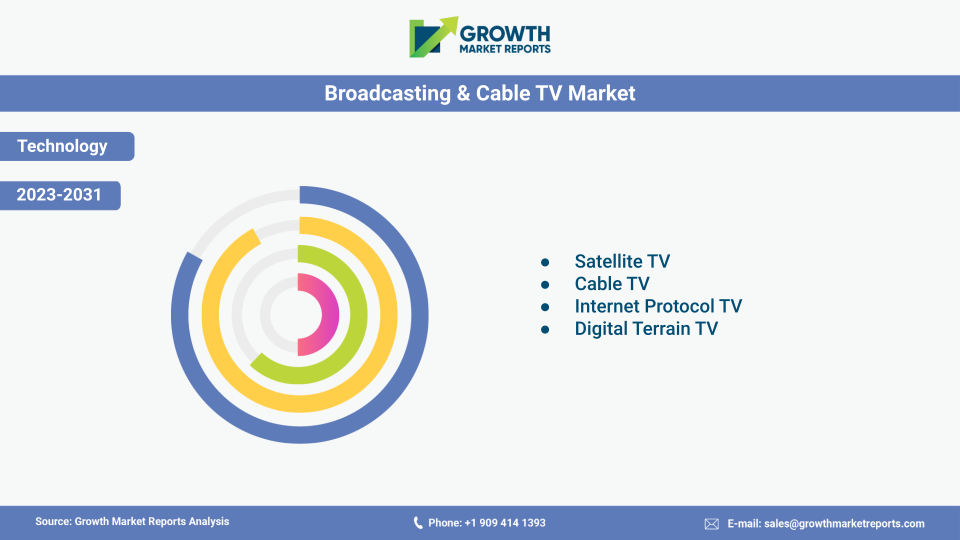
The Broadcasting & Cable TV market is segmented by distribution channel into Satellite, Cable, IPTV, and Over-the-Air platforms. Cable TV remains the dominant distribution channel, accounting for the largest share of subscribers and revenue globally. The widespread availability of cable infrastructure, coupled with the ability to deliver a wide range of channels and services, has made cable TV the preferred choice for many households and businesses. Ongoing investments in network upgrades and the transition to digital cable are enhancing service quality and enabling the introduction of advanced features such as high-definition and interactive programming.
Satellite TV is a key distribution channel, particularly in regions with limited cable infrastructure or challenging geographical conditions. Satellite platforms offer extensive coverage and the ability to deliver a diverse array of channels to remote and underserved areas. The adoption of direct-to-home (DTH) satellite services has expanded rapidly in emerging markets, driven by the growing demand for high-quality content and the increasing affordability of satellite receivers. Market players are leveraging satellite technology to reach new audiences and expand their footprint in regions with high growth potential.
Internet Protocol Television (IPTV) is emerging as a disruptive force in the Broadcasting & Cable TV market, offering a flexible and scalable platform for content delivery. IPTV enables the transmission of television content over broadband internet connections, providing viewers with access to a wide range of channels, on-demand content, and interactive features. The growing penetration of high-speed internet and the proliferation of smart devices are fueling the adoption of IPTV services, particularly among younger, tech-savvy consumers. Market players are investing in the development of IPTV platforms and partnerships with telecom operators to capitalize on this trend.
Over-the-Air (OTA) broadcasting continues to play a vital role in the market, particularly for free-to-air channels and public service broadcasting. OTA platforms rely on terrestrial transmission towers to deliver content to households equipped with antennas, offering a cost-effective and accessible alternative to cable and satellite services. The transition to digital terrestrial broadcasting is improving the quality and reliability of OTA services, while also enabling the introduction of additional channels and enhanced features. OTA remains an important distribution channel in both developed and emerging markets, supporting broad-based access to essential news, entertainment, and educational programming.
The interplay between these distribution channels is shaping the competitive landscape of the Broadcasting & Cable TV market. Service providers are increasingly adopting multi-platform strategies, enabling viewers to access content through cable, satellite, IPTV, and OTA platforms. This approach not only enhances customer convenience and flexibility but also allows broadcasters to maximize their reach and revenue potential. As the market continues to evolve, the ability to deliver high-quality content across multiple distribution channels will be a key success factor for industry players.
The Broadcasting & Cable TV market presents a wealth of opportunities for growth and innovation, particularly in the areas of content creation, technology integration, and market expansion. The ongoing shift towards digital and high-definition broadcasting is creating new avenues for content producers and distributors to deliver immersive and engaging experiences to viewers. The rise of smart TVs, connected devices, and interactive platforms is enabling broadcasters to offer personalized and on-demand content, enhancing viewer engagement and loyalty. Additionally, the growing demand for localized and language-specific programming is opening up opportunities for market players to tap into underserved audience segments and expand their footprint in emerging markets.
Another significant opportunity lies in the convergence of broadcasting and internet-based services, which is driving the development of hybrid models such as HbbTV and IPTV. These platforms combine the strengths of traditional broadcasting with the flexibility and interactivity of online content delivery, enabling broadcasters to offer a seamless and integrated viewing experience. The adoption of advanced analytics and targeted advertising solutions is further enhancing the monetization potential of broadcasting services, allowing market players to deliver more relevant and impactful advertising to viewers. Strategic partnerships and collaborations with technology providers, content creators, and telecom operators are expected to play a crucial role in unlocking these opportunities and driving sustained market growth.
Despite the numerous opportunities, the Broadcasting & Cable TV market faces several threats and challenges that could hinder its growth prospects. The most significant restrainer is the intensifying competition from over-the-top (OTT) streaming platforms, which are attracting viewers with their vast content libraries, flexible pricing models, and ad-free experiences. The shift in consumer preferences towards on-demand and mobile viewing is putting pressure on traditional broadcasters to adapt their business models and invest in digital transformation. Additionally, regulatory challenges, content piracy, and the high cost of content acquisition are posing significant hurdles for market players. To remain competitive, broadcasters must embrace innovation, enhance content quality, and deliver superior value to viewers in an increasingly fragmented media landscape.
The Asia Pacific region is the largest and fastest-growing market for Broadcasting & Cable TV, accounting for approximately USD 115.7 billion in 2024. The region's robust growth is driven by rising disposable incomes, rapid urbanization, and substantial investments in digital infrastructure. Countries such as China, India, and Japan are leading the way in terms of subscriber base and content diversity, with local broadcasters and international players competing for market share. The increasing adoption of smart TVs and internet-based services is further fueling market expansion, while government initiatives to enhance broadcast quality and accessibility are supporting the growth of both urban and rural markets.
North America remains a mature but resilient market, with a total market size of USD 86.4 billion in 2024. The region is characterized by high penetration rates of cable and satellite TV, as well as a strong emphasis on content innovation and technological advancement. The United States and Canada are at the forefront of adopting advanced broadcasting technologies, such as 4K and interactive TV, which are enhancing the viewer experience and driving incremental revenue growth. Despite the growing popularity of OTT streaming platforms, traditional broadcasters in North America are leveraging multi-platform strategies and exclusive content rights to maintain their competitive edge. The market is expected to grow at a steady CAGR of 2.1% through 2033.
Europe is another significant market for Broadcasting & Cable TV, with a market size of USD 67.8 billion in 2024. The region is characterized by a diverse and fragmented landscape, with a mix of public and private broadcasters catering to a wide range of linguistic and cultural preferences. The ongoing transition to digital terrestrial broadcasting and the introduction of value-added services are driving market growth, particularly in Western and Northern Europe. Meanwhile, Latin America and the Middle East & Africa are emerging as promising markets, with a combined market size of USD 50.5 billion in 2024. These regions are benefiting from regulatory reforms, increasing investment in broadcast infrastructure, and rising demand for localized content. As these markets continue to mature, they are expected to contribute significantly to the overall growth of the global Broadcasting & Cable TV market.
The competitive landscape of the Broadcasting & Cable TV market is characterized by the presence of both global media conglomerates and regional players, each vying for market share through content innovation, technological advancement, and strategic partnerships. Major companies are continuously investing in original content production, exclusive broadcasting rights, and advanced distribution technologies to differentiate themselves in an increasingly crowded market. The rise of digital transformation and the convergence of broadcasting and internet-based services have further intensified competition, prompting traditional broadcasters to adapt their business models and embrace new revenue streams such as targeted advertising and subscription-based services.
Innovation remains a key differentiator in the Broadcasting & Cable TV market, with leading players leveraging advanced technologies such as artificial intelligence, data analytics, and cloud computing to enhance content delivery and viewer engagement. The integration of interactive features, personalized recommendations, and multi-screen viewing options is enabling broadcasters to offer a more immersive and tailored viewing experience. Strategic collaborations with telecom operators, technology providers, and content creators are also playing a crucial role in expanding service offerings and reaching new audience segments. As the market continues to evolve, the ability to innovate and adapt to changing consumer preferences will be critical for sustaining competitive advantage.
Mergers and acquisitions are another prominent feature of the competitive landscape, as companies seek to strengthen their market position, expand their content libraries, and achieve economies of scale. Recent years have witnessed a wave of consolidation among major broadcasters, cable operators, and content producers, resulting in the emergence of vertically integrated media giants with extensive reach and resources. These developments are reshaping the industry structure and intensifying competition, as market players strive to capture a larger share of the global Broadcasting & Cable TV market.
Some of the major companies operating in the Broadcasting & Cable TV market include Comcast Corporation, The Walt Disney Company, ViacomCBS Inc., AT&T Inc., Charter Communications Inc., British Broadcasting Corporation (BBC), Sky Group, Dish Network Corporation, and Sony Corporation. Comcast Corporation is a leading player in the market, with a strong presence in cable TV, broadcasting, and content production through its NBCUniversal division. The Walt Disney Company is renowned for its extensive portfolio of entertainment channels and exclusive content, while ViacomCBS Inc. is a key player in both broadcasting and cable TV, with a diverse range of channels and digital platforms. AT&T Inc. and Charter Communications Inc. are major cable operators in North America, offering a comprehensive suite of broadcasting and broadband services.
British Broadcasting Corporation (BBC) and Sky Group are prominent players in the European market, known for their high-quality programming and innovative broadcasting solutions. Dish Network Corporation is a leading satellite TV provider in the United States, offering a wide range of channels and on-demand content. Sony Corporation is a global media and entertainment conglomerate, with a strong presence in broadcasting, content production, and technology development. These companies are continuously investing in content creation, technological innovation, and strategic partnerships to maintain their leadership positions and drive growth in the highly competitive Broadcasting & Cable TV market.
The Broadcasting & Cable TV market has been segmented on the basis of
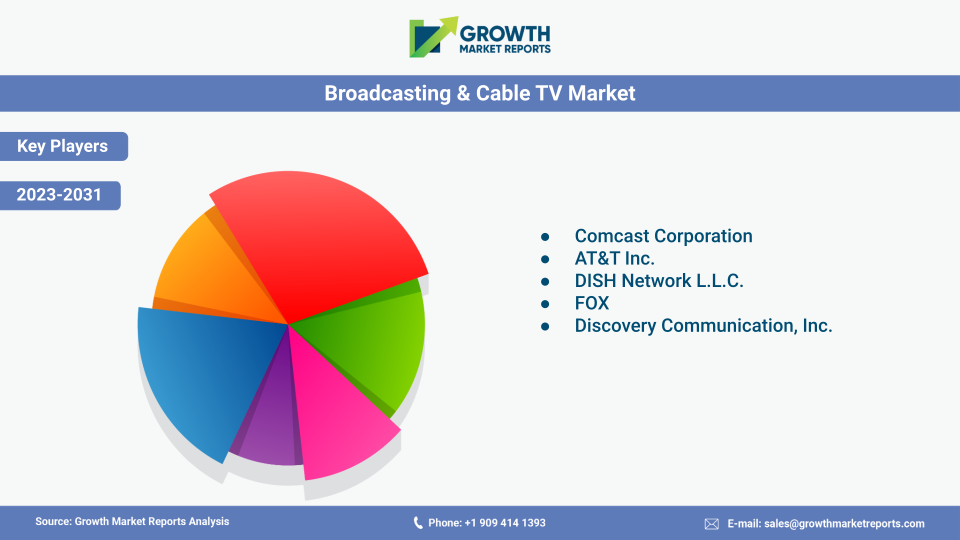
Key players in the global broadcasting & cable TV market include Comcast Corporation, AT&T Inc., DISH Network L.L.C., FOX, and Discovery Communication, Inc. Service providers are offering language specific packages to gain deep market penetration. For instance, DISH Network L.L.C. recently added Latino packages to its service to attract Portuguese and Spanish viewers in Latin America.
Technological advancements such as artificial intelligence, data analytics, cloud computing, and interactive features are enhancing content delivery, viewer engagement, and enabling personalized and multi-screen viewing experiences.
Key players include Comcast Corporation, The Walt Disney Company, ViacomCBS Inc., AT&T Inc., Charter Communications, BBC, Sky Group, Dish Network Corporation, and Sony Corporation, among others.
Opportunities include digital transformation, content innovation, and hybrid broadcast-internet models like HbbTV and IPTV. Challenges include competition from OTT streaming platforms, changing consumer preferences, regulatory issues, and content piracy.
Entertainment content leads in viewership and revenue, followed by News, Sports, and Educational programming. There is also a significant demand for niche content such as documentaries, lifestyle shows, and regional programming.
The market serves Residential, Commercial, and Government sectors. Residential is the largest, driven by household adoption. Commercial applications include hospitality, retail, and healthcare, while Government uses broadcasting for public communication and educational outreach.
The primary distribution channels are Cable, Satellite, IPTV, and Over-the-Air (OTA). Cable remains dominant globally, while Satellite is crucial in remote areas, IPTV is rapidly growing due to internet penetration, and OTA supports free-to-air and public service broadcasting.
Asia Pacific is the largest and fastest-growing region, followed by North America and Europe. Latin America and the Middle East & Africa are emerging as promising markets due to regulatory reforms and investments in broadcast infrastructure.
The market is segmented into Subscription-Based, Pay-Per-View (PPV), and Free-to-Air (FTA) services. Subscription-Based services dominate due to stable revenue streams, while PPV is popular for exclusive events, and FTA channels provide accessible content, especially in regions with lower income levels.
Key growth drivers include advancements in digital transmission technologies, the proliferation of HD and UHD channels, integration of interactive features like video-on-demand, and strategic partnerships between content creators, broadcasters, and technology providers.
The global Broadcasting & Cable TV market reached USD 320.4 billion in 2024 and is projected to grow at a CAGR of 3.1% from 2025 to 2033, reaching approximately USD 419.7 billion by 2033.