Secondary Tickets Market Research Report 2033

Secondary Tickets Market Research Report 2033

Segments - by Platform (Online, Offline), by Ticket Type (Sports, Concerts, Theater, Movies, Others), by Event Category (Music Events, Sports Events, Arts & Theater, Others), by End-User (Individual, Corporate)

https://growthmarketreports.com/Debadatta
Author : Debadatta Patel
https://growthmarketreports.com/Vaibhav
Fact-checked by : V. Chandola
https://growthmarketreports.com/Shruti
Editor : Shruti Bhat

Upcoming | Report ID :CG-163 | 4.0 Rating | 94 Reviews | 269 Pages | Format : Docx PDF

Report Description


Secondary Tickets Market Outlook

According to our latest research, the secondary tickets market size reached USD 19.3 billion in 2024, reflecting robust demand for resale event tickets globally. The market is experiencing a healthy growth trajectory, with a recorded CAGR of 9.2% from 2025 to 2033. By the end of 2033, the secondary tickets market is projected to attain a value of USD 43.2 billion. The market’s expansion is primarily driven by the growing digitalization of ticketing platforms, increased consumer preference for live experiences, and the proliferation of high-profile events across sports, music, and entertainment sectors.

The rapid advancement and adoption of online platforms have been a significant growth factor for the secondary tickets market. Digitalization has streamlined the ticket buying and selling process, making it more convenient, transparent, and secure for consumers. Online ticket marketplaces have empowered individuals to resell tickets seamlessly, broadening access to high-demand events that are often sold out through primary channels. The integration of secure payment gateways, real-time seat selection, and mobile ticketing has further enhanced user experience, driving higher transaction volumes and repeat purchases. Additionally, the use of advanced algorithms to detect fraudulent listings and dynamic pricing tools has fostered greater trust and efficiency within the market ecosystem.

Another pivotal growth driver is the increasing popularity of live events across the globe. The resurgence of concerts, sporting events, and theater performances post-pandemic has reignited consumer enthusiasm for shared experiences. This cultural shift has led to a surge in demand for tickets, often outstripping supply through primary sales channels and creating a lucrative environment for secondary ticket exchanges. High-profile international events, such as global sports tournaments and world tours by renowned artists, attract audiences from diverse geographies, further fueling the growth of the secondary tickets market. The flexibility offered by secondary platforms, including last-minute purchases and a wider range of seating options, continues to appeal to consumers seeking spontaneity and choice.

The secondary tickets market is also benefiting from increased corporate participation. Businesses are increasingly leveraging ticketing platforms for employee engagement, client entertainment, and promotional activities. Corporate demand for premium event experiences, hospitality packages, and exclusive access has contributed to higher ticket values and expanded market opportunities. Moreover, the adoption of advanced analytics by secondary ticketing platforms enables better targeting of corporate clients and the customization of offerings, thereby enhancing the value proposition for this segment. As companies prioritize experiential marketing and relationship-building, the corporate end-user segment is expected to maintain its upward trajectory.

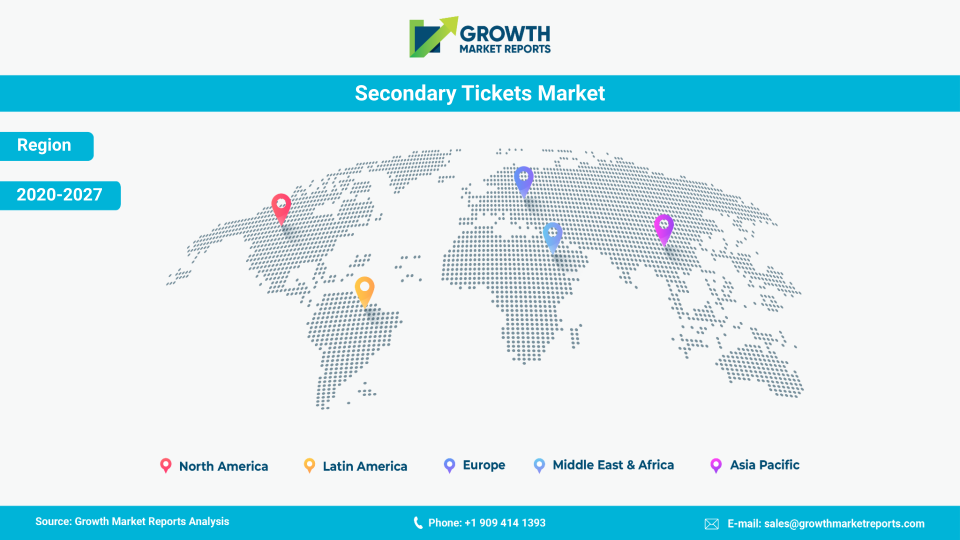
Regionally, North America continues to dominate the secondary tickets market, accounting for the largest revenue share in 2024. The region’s mature digital infrastructure, high disposable incomes, and a vibrant calendar of sports and entertainment events underpin its leadership position. Europe follows closely, driven by a strong tradition of live performances and sporting events. The Asia Pacific region is emerging as a high-growth market, supported by increasing internet penetration, a burgeoning middle class, and rising interest in international events. Latin America and the Middle East & Africa are also witnessing steady growth, albeit from a smaller base, as local event industries and digital adoption rates improve.

Global Secondary Tickets Industry Outlook

Platform Analysis

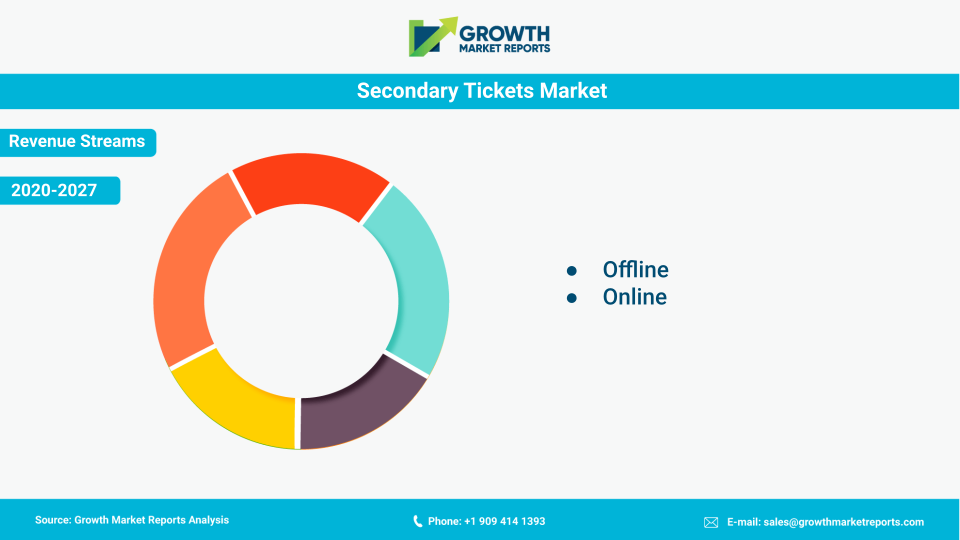
The secondary tickets market is segmented by platform into online and offline channels, with online platforms commanding a substantial majority of the market share in 2024. The transition to digital platforms has been accelerated by the widespread adoption of smartphones, improved internet accessibility, and the convenience offered by online transactions. Online ticketing platforms provide users with a seamless experience, including the ability to browse multiple events, compare prices, and access real-time seat availability from the comfort of their homes. The integration of advanced technologies such as artificial intelligence and blockchain has further enhanced the credibility and security of online ticket transactions, addressing concerns related to fraud and counterfeit tickets.

Offline platforms, while still relevant, have been experiencing a gradual decline in market share. These traditional channels, which include physical ticket outlets and box offices, cater primarily to consumers who prefer in-person transactions or lack access to digital platforms. However, the limitations in terms of reach, convenience, and real-time updates have restricted their growth potential. Despite this, offline channels remain important in certain regions and for specific demographics, such as older consumers or those attending local events where digital infrastructure is less developed. Hybrid models that combine online and offline capabilities are also emerging to bridge the gap and cater to a broader audience.

The online segment’s dominance is further reinforced by the increasing use of mobile applications for ticket purchases. Mobile ticketing apps offer enhanced features such as digital wallets, instant notifications, and personalized recommendations based on user preferences and past behavior. These innovations have contributed to higher user engagement and retention rates, positioning online platforms as the preferred choice for both buyers and sellers in the secondary tickets market. Moreover, partnerships between ticketing platforms and event organizers have enabled exclusive access to premium tickets, further strengthening the online ecosystem.

Looking ahead, the online platform segment is expected to continue its robust growth, driven by ongoing technological advancements and evolving consumer behaviors. The adoption of contactless ticketing solutions, virtual queues, and integrated social sharing functionalities will further enhance the appeal of online platforms. As market players invest in user experience and expand their global reach, the gap between online and offline channels is anticipated to widen, solidifying the online segment’s leadership in the secondary tickets market.

Report Scope

Attributes Details
Report Title Secondary Tickets Market Research Report 2033
By Platform Online, Offline
By Ticket Type Sports, Concerts, Theater, Movies, Others
By Event Category Music Events, Sports Events, Arts & Theater, Others
By End-User Individual, Corporate
Regions Covered North America, Europe, APAC, Latin America, MEA
Base Year 2024
Historic Data 2018-2023
Forecast Period 2025-2033
Number of Pages 269
Number of Tables & Figures 266
Customization Available Yes, the report can be customized as per your need.

Ticket Type Analysis

The secondary tickets market is categorized by ticket type into sports, concerts, theater, movies, and others. Among these, sports tickets represent the largest segment, accounting for a significant portion of total market revenue in 2024. The global appeal of major sporting events, such as football championships, basketball tournaments, and the Olympics, consistently drives high demand for secondary ticket sales. Fans are often willing to pay a premium for access to sold-out games and exclusive seating, making sports tickets a lucrative segment for resellers. The dynamic nature of sports scheduling and last-minute ticket availability further contribute to the vibrancy of this segment.

Concert tickets form the second-largest segment, propelled by the resurgence of live music events and international tours by top artists. The unpredictable nature of primary ticket sales, characterized by rapid sellouts and limited availability, has fueled the growth of the secondary market for concert tickets. Music enthusiasts seeking unique experiences, such as VIP access and front-row seats, frequently turn to secondary platforms to secure their desired spots. The willingness of fans to pay above face value for premium concert experiences has made this segment highly profitable for both individual and professional resellers.

The theater and movies segment, while smaller in comparison to sports and concerts, plays a crucial role in diversifying the secondary tickets market. Theater productions, especially in cultural hubs like Broadway and the West End, attract dedicated audiences who are often willing to purchase tickets through secondary channels for sold-out performances. Similarly, blockbuster movie premieres and special screenings generate significant demand for secondary tickets, particularly among avid fans and collectors. The exclusivity and limited availability associated with these events enhance their appeal in the secondary market.

The ‘others’ category encompasses a wide range of events, including comedy shows, festivals, conventions, and community gatherings. This segment is characterized by its diversity and the potential for rapid growth, particularly as new event formats and experiences emerge. The adaptability of secondary ticket platforms to accommodate various event types has enabled them to capture a broader audience and drive incremental revenue. As consumer preferences continue to evolve and new forms of entertainment gain traction, the ticket type segment is expected to witness ongoing innovation and expansion.

Event Category Analysis

The event category segmentation of the secondary tickets market includes music events, sports events, arts & theater, and others. Music events dominate this segment, reflecting the global popularity of live concerts, festivals, and tours. The growing trend of experiential entertainment, where consumers prioritize memorable experiences over material possessions, has significantly boosted the demand for music event tickets on secondary platforms. The unpredictability of primary ticket sales and the limited availability of premium seats have made secondary marketplaces an essential avenue for music fans seeking access to high-demand events.

Sports events constitute the second-largest event category, driven by the passionate fan base and the global reach of major leagues and tournaments. The cyclical nature of sports seasons, coupled with the excitement of playoffs and championship games, generates consistent demand for secondary tickets. Fans who miss out on primary sales often rely on secondary platforms to secure last-minute access, contributing to the segment’s resilience and growth. The secondary market also caters to fans traveling from different regions, offering a wider selection of seating options and price points.

Arts & theater events, including plays, musicals, ballet, and opera, represent a niche but valuable segment within the secondary tickets market. These events often attract dedicated audiences seeking exclusive or sold-out performances, particularly in renowned cultural centers. The secondary market’s ability to provide access to limited-run shows and premium seating has enhanced its appeal among theater enthusiasts. The increasing collaboration between theater producers and secondary platforms to manage ticket distribution and pricing has further strengthened this segment.

The ‘others’ category includes a diverse array of events such as comedy shows, exhibitions, conventions, and special interest gatherings. This segment is characterized by its adaptability and potential for rapid growth as new event formats emerge. Secondary ticket platforms have demonstrated flexibility in accommodating a broad spectrum of event types, enabling them to capture new market opportunities and cater to evolving consumer interests. As the event landscape continues to diversify, the event category segment is expected to play a pivotal role in the ongoing expansion of the secondary tickets market.

End-User Analysis

The secondary tickets market is segmented by end-user into individual and corporate purchasers, with individuals representing the dominant user base in 2024. Individual buyers drive the majority of transactions on secondary platforms, seeking access to sold-out events, premium seating, and last-minute opportunities. The convenience, flexibility, and variety offered by secondary marketplaces have made them increasingly popular among consumers looking for personalized event experiences. Social media integration and targeted marketing campaigns have further enhanced user engagement, encouraging repeat purchases and referrals within this segment.

Corporate end-users, while smaller in number, represent a high-value segment within the secondary tickets market. Businesses utilize secondary ticket platforms for a range of purposes, including client entertainment, employee rewards, and promotional activities. The demand for premium event experiences, exclusive suites, and hospitality packages has driven higher ticket values and contributed to the overall growth of the market. Corporate clients often seek tailored solutions and value-added services, such as dedicated account management and customized event packages, which secondary platforms are increasingly equipped to provide.

The growth of the corporate segment is further supported by the rise of experiential marketing and the increasing importance of relationship-building in business. Companies are leveraging live events as a means to strengthen client and employee engagement, enhance brand image, and differentiate themselves in competitive markets. The ability of secondary ticket platforms to offer access to high-profile events and exclusive experiences has positioned them as valuable partners for corporate clients. As businesses continue to prioritize unique and memorable engagements, the corporate end-user segment is expected to expand steadily.

Both individual and corporate segments benefit from the ongoing digital transformation of the ticketing industry. The integration of advanced analytics, customer relationship management tools, and personalized recommendations has enabled secondary platforms to better understand and serve the unique needs of each user group. As competition intensifies and consumer expectations evolve, market players are investing in technology and service enhancements to maintain their competitive edge and drive growth across both end-user segments.

Opportunities & Threats

The secondary tickets market presents significant opportunities for growth and innovation, particularly through the continued digitalization of ticketing processes. The adoption of emerging technologies such as blockchain, artificial intelligence, and machine learning is expected to enhance transparency, security, and user experience on secondary platforms. Blockchain, for instance, can help eliminate counterfeit tickets and ensure the authenticity of transactions, while AI-powered algorithms can optimize pricing and match buyers with relevant events more effectively. Additionally, the expansion into new event categories and emerging markets offers untapped potential for market players, as rising disposable incomes and evolving consumer preferences drive demand for live experiences worldwide.

Another key opportunity lies in the development of strategic partnerships and collaborations with event organizers, sports franchises, and entertainment companies. By working closely with primary ticket sellers and event producers, secondary platforms can gain access to exclusive inventory, improve inventory management, and enhance the overall value proposition for consumers. These partnerships can also help address regulatory challenges and foster greater trust within the market. Furthermore, the increasing integration of mobile and social media channels into ticketing platforms provides opportunities for real-time engagement, personalized marketing, and viral promotion of events, driving higher conversion rates and expanding the customer base.

Despite the numerous growth opportunities, the secondary tickets market faces several restraining factors, the most prominent being regulatory scrutiny and concerns over ticket scalping. Governments and industry bodies in various regions have implemented or are considering regulations to curb unethical practices such as price gouging, ticket hoarding, and the use of automated bots. Compliance with these regulations can increase operational complexity and costs for secondary platforms. Additionally, negative public perception regarding inflated ticket prices and fraudulent listings can undermine consumer trust and deter potential buyers. Addressing these challenges will require ongoing investment in technology, transparency, and collaboration with industry stakeholders to ensure a fair and secure marketplace.

Regional Outlook

North America remains the largest regional market for secondary tickets, generating revenue of approximately USD 8.7 billion in 2024. The region’s dominance is attributed to its advanced digital infrastructure, high consumer spending on entertainment, and a vibrant calendar of sports, music, and theater events. The United States, in particular, is home to several leading secondary ticket platforms and a mature regulatory framework that supports market growth while ensuring consumer protection. Canada also contributes significantly to the regional market, driven by a strong culture of live events and increasing adoption of digital ticketing solutions.

Europe is the second-largest market, with a valuation of USD 5.2 billion in 2024, and is expected to maintain a steady CAGR of 8.7% through 2033. The region’s rich tradition of cultural and sporting events, coupled with high internet penetration and a growing preference for online transactions, underpins its strong performance. Key markets such as the United Kingdom, Germany, and France are witnessing robust demand for secondary tickets, particularly for music festivals, football matches, and theater performances. The European market is also characterized by a diverse regulatory landscape, with varying degrees of restrictions and consumer protection measures across different countries.

The Asia Pacific region is emerging as a high-growth market, with revenues reaching USD 3.1 billion in 2024. Rapid urbanization, a burgeoning middle class, and increasing internet penetration are driving demand for live events and digital ticketing solutions. Countries such as China, India, Japan, and Australia are at the forefront of this growth, supported by rising disposable incomes and a growing appetite for international entertainment experiences. Latin America and the Middle East & Africa, although smaller in size, are also witnessing steady growth as local event industries expand and digital adoption rates improve. Collectively, these regions are expected to contribute increasingly to the global secondary tickets market in the coming years.

Secondary Tickets Market Statistics

Competitor Outlook

The competitive landscape of the secondary tickets market is characterized by the presence of several global and regional players vying for market share through innovation, strategic partnerships, and service differentiation. Leading companies are investing heavily in technology to enhance platform security, user experience, and operational efficiency. The integration of advanced analytics, AI-driven recommendation engines, and blockchain-based verification systems has become standard practice among top-tier platforms, enabling them to build trust and loyalty among consumers. Moreover, market players are expanding their geographic footprint through acquisitions, joint ventures, and localized offerings tailored to the unique preferences of each region.

In addition to technological innovation, customer service and transparency have emerged as key differentiators in the secondary tickets market. Companies are prioritizing clear communication, flexible refund policies, and responsive customer support to address consumer concerns and foster long-term relationships. The ability to offer exclusive access to high-demand events, premium seating, and tailored experiences has further strengthened the competitive positioning of leading platforms. As competition intensifies, market players are also focusing on building strong brand identities and leveraging influencer marketing and social media channels to engage with younger, tech-savvy audiences.

The market is also witnessing increased collaboration between secondary ticket platforms and primary sellers, event organizers, and venue operators. These partnerships enable more efficient inventory management, better pricing strategies, and improved event promotion, benefiting both consumers and industry stakeholders. Regulatory compliance and ethical business practices are gaining prominence as companies seek to differentiate themselves and mitigate reputational risks. The ongoing evolution of the competitive landscape is expected to drive further consolidation and innovation, with new entrants and established players alike striving to capture a larger share of the growing secondary tickets market.

Key players in the global secondary tickets market include StubHub, Viagogo, Ticketmaster Resale, Vivid Seats, and SeatGeek. StubHub, a pioneer in the industry, is renowned for its user-friendly platform, robust security features, and extensive event coverage. Viagogo has established a strong presence in Europe and Asia, leveraging its global network and localized offerings to cater to diverse markets. Ticketmaster Resale, a subsidiary of Live Nation Entertainment, benefits from its integration with primary ticketing operations and exclusive partnerships with major event organizers. Vivid Seats and SeatGeek have gained traction through innovative technology, mobile-first solutions, and a focus on personalized user experiences.

These companies are continuously expanding their service portfolios to include value-added features such as interactive seating maps, dynamic pricing, and mobile ticket delivery. Strategic acquisitions and partnerships with sports leagues, music promoters, and theater producers are further enhancing their competitive advantage. As the market evolves, the ability to adapt to changing consumer preferences, regulatory requirements, and technological advancements will be critical for sustained success. The competitive outlook for the secondary tickets market remains dynamic, with ongoing innovation and strategic maneuvering shaping the future of the industry.

Key Players

  • StubHub
  • Viagogo
  • Ticketmaster Resale
  • SeatGeek
  • Vivid Seats
  • TicketNetwork
  • AXS Official Resale
  • Eventbrite
  • TickPick
  • Ticketswap
  • GetMeIn!
  • RazorGator
  • eBay Tickets
  • MyTicketTracker
  • Live Nation Resale
  • TicketCity
  • See Tickets Resale
  • Twickets
  • Billetto
  • BookMyShow Resale
Secondary Tickets Market Overview

Segments

The Secondary Tickets market has been segmented on the basis of

Platform

  • Online
  • Offline

Ticket Type

  • Sports
  • Concerts
  • Theater
  • Movies
  • Others

Event Category

  • Music Events
  • Sports Events
  • Arts & Theater
  • Others

End-User

  • Individual
  • Corporate

Competitive Landscape

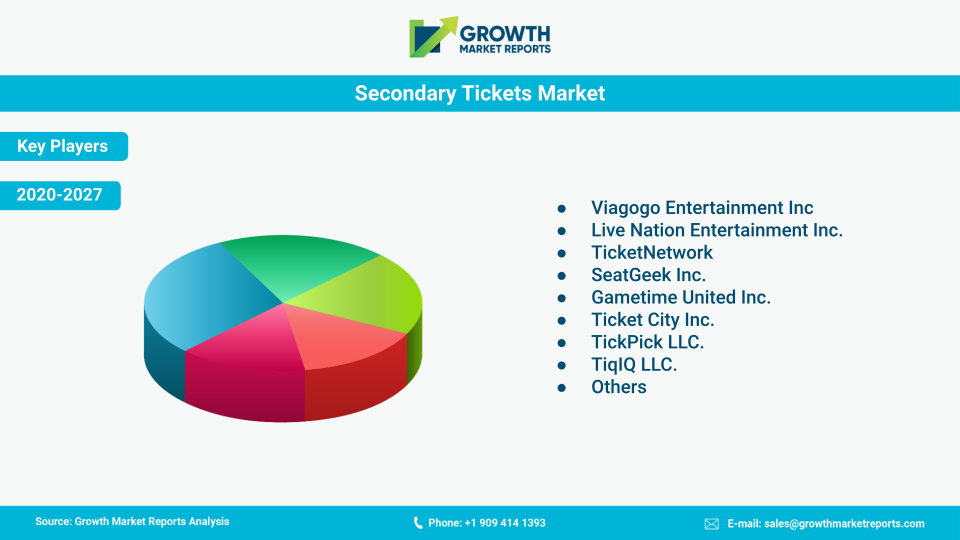
Key players in the market include Viagogo Entertainment Inc, TicketNetwork, Live Nation Entertainment Inc., SeatGeek Inc., Gametime United Inc., Ticket City Inc., TickPick LLC., TiqIQ LLC., Vivid Seats LLC., Seetickets

These players are considered as key manufacturers of the market based on their different varieties of product availability, regional presence, better supply chain management system, and the increasing demand for the products. 
The players are adopting key strategies such as product development, geographical expansion, mergers and acquisition and many other strategies to increase their demand for secondary tickets.

Secondary Tickets Market Key Players

Frequently Asked Questions

Additional company profiles can be provided on request.

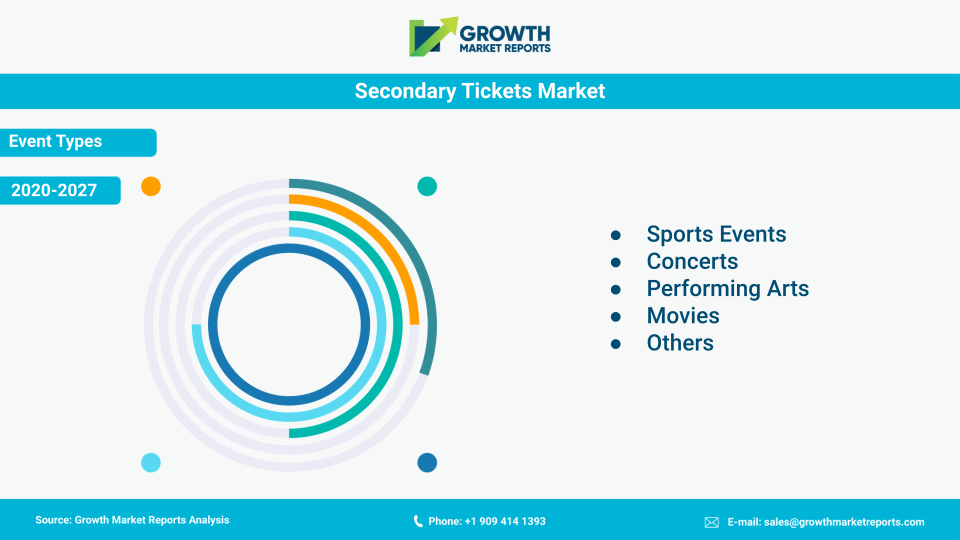
Yes, the report covers types of events secondary tickets are available for such as sports events, concerts, performing arts, movies, and others.

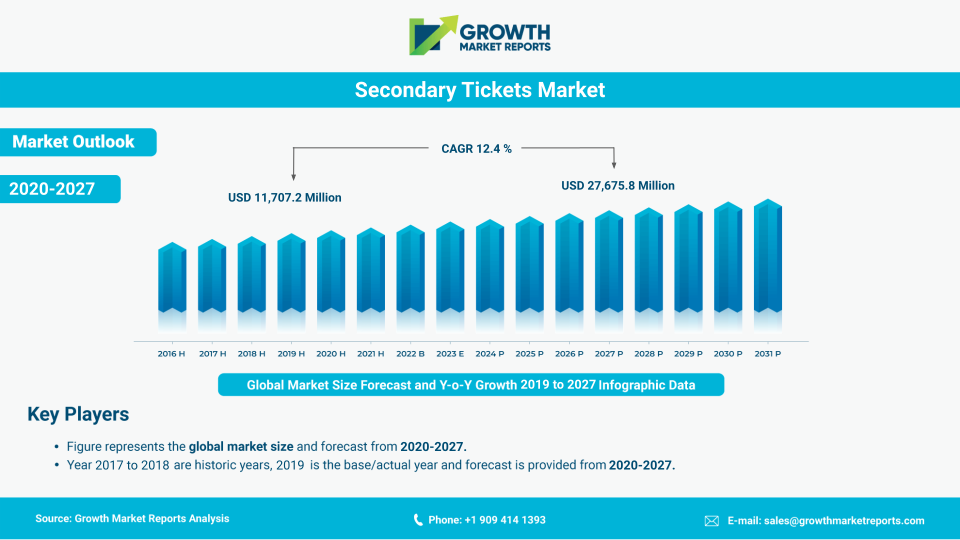
According to this Growth Market Reports report, the secondary tickets market is likely to register a CAGR of 12.4% during forecast period 2020-2027, with an anticipated valuation of USD 27,675.8 million by the end of the 2027.

In addition to market size (in USD Million) and Company Market Share (in % for base year 2019), other data such Macro-economic factors, COVID-19 Impact on the secondary tickets market is available in final report.

The secondary tickets market is anticipated to grow significantly during forecast period due to rising disposable income, penetration of internet, and smartphones. Moreover, due to increasing population as well as rapid urbanization.

Sports events, concerts, performing arts, movies, and others are the key events driving the market growth.

Factors such as competitive strength and market positioning are key areas considered while selecting top companies to be profiled.

The market is expected to witness sluggish growth with slow increase in terms of demand during 2019-2020 owing to the negative impact of COVID-19 pandemic on the secondary tickets market.

The base year considered for the global secondary tickets market report is 2019. The complete analysis period is 2017 to 2027, wherein, 2017 & 2018 are the historic years and the forecast is provided from 2020 to 2027.

Major Manufactures include Viagogo Entertainment Inc, TicketNetwork, Live Nation Entertainment Inc., SeatGeek Inc., Gametime United Inc., Ticket City Inc., TickPick LLC., TiqIQ LLC., Vivid Seats LLC., Seetickets, Alliance Tickets, and Coast to Coast LCC.

Table Of Content

Chapter 1 Executive Summary
Chapter 2 Assumptions and Acronyms Used
Chapter 3 Research Methodology
Chapter 4 Secondary Tickets Market Overview
   4.1 Introduction
      4.1.1 Market Taxonomy
      4.1.2 Market Definition
      4.1.3 Macro-Economic Factors Impacting the Market Growth
   4.2 Secondary Tickets Market Dynamics
      4.2.1 Market Drivers
      4.2.2 Market Restraints
      4.2.3 Market Opportunity
   4.3 Secondary Tickets Market - Supply Chain Analysis
      4.3.1 List of Key Suppliers
      4.3.2 List of Key Distributors
      4.3.3 List of Key Consumers
   4.4 Key Forces Shaping the Secondary Tickets Market
      4.4.1 Bargaining Power of Suppliers
      4.4.2 Bargaining Power of Buyers
      4.4.3 Threat of Substitution
      4.4.4 Threat of New Entrants
      4.4.5 Competitive Rivalry
   4.5 Global Secondary Tickets Market Size & Forecast, 2023-2032
      4.5.1 Secondary Tickets Market Size and Y-o-Y Growth
      4.5.2 Secondary Tickets Market Absolute $ Opportunity

Chapter 5 Global Secondary Tickets Market Analysis and Forecast By Platform
   5.1 Introduction
      5.1.1 Key Market Trends & Growth Opportunities By Platform
      5.1.2 Basis Point Share (BPS) Analysis By Platform
      5.1.3 Absolute $ Opportunity Assessment By Platform
   5.2 Secondary Tickets Market Size Forecast By Platform
      5.2.1 Online
      5.2.2 Offline
   5.3 Market Attractiveness Analysis By Platform

Chapter 6 Global Secondary Tickets Market Analysis and Forecast By Ticket Type
   6.1 Introduction
      6.1.1 Key Market Trends & Growth Opportunities By Ticket Type
      6.1.2 Basis Point Share (BPS) Analysis By Ticket Type
      6.1.3 Absolute $ Opportunity Assessment By Ticket Type
   6.2 Secondary Tickets Market Size Forecast By Ticket Type
      6.2.1 Sports
      6.2.2 Concerts
      6.2.3 Theater
      6.2.4 Movies
      6.2.5 Others
   6.3 Market Attractiveness Analysis By Ticket Type

Chapter 7 Global Secondary Tickets Market Analysis and Forecast By Event Category
   7.1 Introduction
      7.1.1 Key Market Trends & Growth Opportunities By Event Category
      7.1.2 Basis Point Share (BPS) Analysis By Event Category
      7.1.3 Absolute $ Opportunity Assessment By Event Category
   7.2 Secondary Tickets Market Size Forecast By Event Category
      7.2.1 Music Events
      7.2.2 Sports Events
      7.2.3 Arts & Theater
      7.2.4 Others
   7.3 Market Attractiveness Analysis By Event Category

Chapter 8 Global Secondary Tickets Market Analysis and Forecast By End-User
   8.1 Introduction
      8.1.1 Key Market Trends & Growth Opportunities By End-User
      8.1.2 Basis Point Share (BPS) Analysis By End-User
      8.1.3 Absolute $ Opportunity Assessment By End-User
   8.2 Secondary Tickets Market Size Forecast By End-User
      8.2.1 Individual
      8.2.2 Corporate
   8.3 Market Attractiveness Analysis By End-User

Chapter 9 Global Secondary Tickets Market Analysis and Forecast by Region
   9.1 Introduction
      9.1.1 Key Market Trends & Growth Opportunities By Region
      9.1.2 Basis Point Share (BPS) Analysis By Region
      9.1.3 Absolute $ Opportunity Assessment By Region
   9.2 Secondary Tickets Market Size Forecast By Region
      9.2.1 North America
      9.2.2 Europe
      9.2.3 Asia Pacific
      9.2.4 Latin America
      9.2.5 Middle East & Africa (MEA)
   9.3 Market Attractiveness Analysis By Region

Chapter 10 Coronavirus Disease (COVID-19) Impact 
   10.1 Introduction 
   10.2 Current & Future Impact Analysis 
   10.3 Economic Impact Analysis 
   10.4 Government Policies 
   10.5 Investment Scenario

Chapter 11 North America Secondary Tickets Analysis and Forecast
   11.1 Introduction
   11.2 North America Secondary Tickets Market Size Forecast by Country
      11.2.1 U.S.
      11.2.2 Canada
   11.3 Basis Point Share (BPS) Analysis by Country
   11.4 Absolute $ Opportunity Assessment by Country
   11.5 Market Attractiveness Analysis by Country
   11.6 North America Secondary Tickets Market Size Forecast By Platform
      11.6.1 Online
      11.6.2 Offline
   11.7 Basis Point Share (BPS) Analysis By Platform 
   11.8 Absolute $ Opportunity Assessment By Platform 
   11.9 Market Attractiveness Analysis By Platform
   11.10 North America Secondary Tickets Market Size Forecast By Ticket Type
      11.10.1 Sports
      11.10.2 Concerts
      11.10.3 Theater
      11.10.4 Movies
      11.10.5 Others
   11.11 Basis Point Share (BPS) Analysis By Ticket Type 
   11.12 Absolute $ Opportunity Assessment By Ticket Type 
   11.13 Market Attractiveness Analysis By Ticket Type
   11.14 North America Secondary Tickets Market Size Forecast By Event Category
      11.14.1 Music Events
      11.14.2 Sports Events
      11.14.3 Arts & Theater
      11.14.4 Others
   11.15 Basis Point Share (BPS) Analysis By Event Category 
   11.16 Absolute $ Opportunity Assessment By Event Category 
   11.17 Market Attractiveness Analysis By Event Category
   11.18 North America Secondary Tickets Market Size Forecast By End-User
      11.18.1 Individual
      11.18.2 Corporate
   11.19 Basis Point Share (BPS) Analysis By End-User 
   11.20 Absolute $ Opportunity Assessment By End-User 
   11.21 Market Attractiveness Analysis By End-User

Chapter 12 Europe Secondary Tickets Analysis and Forecast
   12.1 Introduction
   12.2 Europe Secondary Tickets Market Size Forecast by Country
      12.2.1 Germany
      12.2.2 France
      12.2.3 Italy
      12.2.4 U.K.
      12.2.5 Spain
      12.2.6 Russia
      12.2.7 Rest of Europe
   12.3 Basis Point Share (BPS) Analysis by Country
   12.4 Absolute $ Opportunity Assessment by Country
   12.5 Market Attractiveness Analysis by Country
   12.6 Europe Secondary Tickets Market Size Forecast By Platform
      12.6.1 Online
      12.6.2 Offline
   12.7 Basis Point Share (BPS) Analysis By Platform 
   12.8 Absolute $ Opportunity Assessment By Platform 
   12.9 Market Attractiveness Analysis By Platform
   12.10 Europe Secondary Tickets Market Size Forecast By Ticket Type
      12.10.1 Sports
      12.10.2 Concerts
      12.10.3 Theater
      12.10.4 Movies
      12.10.5 Others
   12.11 Basis Point Share (BPS) Analysis By Ticket Type 
   12.12 Absolute $ Opportunity Assessment By Ticket Type 
   12.13 Market Attractiveness Analysis By Ticket Type
   12.14 Europe Secondary Tickets Market Size Forecast By Event Category
      12.14.1 Music Events
      12.14.2 Sports Events
      12.14.3 Arts & Theater
      12.14.4 Others
   12.15 Basis Point Share (BPS) Analysis By Event Category 
   12.16 Absolute $ Opportunity Assessment By Event Category 
   12.17 Market Attractiveness Analysis By Event Category
   12.18 Europe Secondary Tickets Market Size Forecast By End-User
      12.18.1 Individual
      12.18.2 Corporate
   12.19 Basis Point Share (BPS) Analysis By End-User 
   12.20 Absolute $ Opportunity Assessment By End-User 
   12.21 Market Attractiveness Analysis By End-User

Chapter 13 Asia Pacific Secondary Tickets Analysis and Forecast
   13.1 Introduction
   13.2 Asia Pacific Secondary Tickets Market Size Forecast by Country
      13.2.1 China
      13.2.2 Japan
      13.2.3 South Korea
      13.2.4 India
      13.2.5 Australia
      13.2.6 South East Asia (SEA)
      13.2.7 Rest of Asia Pacific (APAC)
   13.3 Basis Point Share (BPS) Analysis by Country
   13.4 Absolute $ Opportunity Assessment by Country
   13.5 Market Attractiveness Analysis by Country
   13.6 Asia Pacific Secondary Tickets Market Size Forecast By Platform
      13.6.1 Online
      13.6.2 Offline
   13.7 Basis Point Share (BPS) Analysis By Platform 
   13.8 Absolute $ Opportunity Assessment By Platform 
   13.9 Market Attractiveness Analysis By Platform
   13.10 Asia Pacific Secondary Tickets Market Size Forecast By Ticket Type
      13.10.1 Sports
      13.10.2 Concerts
      13.10.3 Theater
      13.10.4 Movies
      13.10.5 Others
   13.11 Basis Point Share (BPS) Analysis By Ticket Type 
   13.12 Absolute $ Opportunity Assessment By Ticket Type 
   13.13 Market Attractiveness Analysis By Ticket Type
   13.14 Asia Pacific Secondary Tickets Market Size Forecast By Event Category
      13.14.1 Music Events
      13.14.2 Sports Events
      13.14.3 Arts & Theater
      13.14.4 Others
   13.15 Basis Point Share (BPS) Analysis By Event Category 
   13.16 Absolute $ Opportunity Assessment By Event Category 
   13.17 Market Attractiveness Analysis By Event Category
   13.18 Asia Pacific Secondary Tickets Market Size Forecast By End-User
      13.18.1 Individual
      13.18.2 Corporate
   13.19 Basis Point Share (BPS) Analysis By End-User 
   13.20 Absolute $ Opportunity Assessment By End-User 
   13.21 Market Attractiveness Analysis By End-User

Chapter 14 Latin America Secondary Tickets Analysis and Forecast
   14.1 Introduction
   14.2 Latin America Secondary Tickets Market Size Forecast by Country
      14.2.1 Brazil
      14.2.2 Mexico
      14.2.3 Rest of Latin America (LATAM)
   14.3 Basis Point Share (BPS) Analysis by Country
   14.4 Absolute $ Opportunity Assessment by Country
   14.5 Market Attractiveness Analysis by Country
   14.6 Latin America Secondary Tickets Market Size Forecast By Platform
      14.6.1 Online
      14.6.2 Offline
   14.7 Basis Point Share (BPS) Analysis By Platform 
   14.8 Absolute $ Opportunity Assessment By Platform 
   14.9 Market Attractiveness Analysis By Platform
   14.10 Latin America Secondary Tickets Market Size Forecast By Ticket Type
      14.10.1 Sports
      14.10.2 Concerts
      14.10.3 Theater
      14.10.4 Movies
      14.10.5 Others
   14.11 Basis Point Share (BPS) Analysis By Ticket Type 
   14.12 Absolute $ Opportunity Assessment By Ticket Type 
   14.13 Market Attractiveness Analysis By Ticket Type
   14.14 Latin America Secondary Tickets Market Size Forecast By Event Category
      14.14.1 Music Events
      14.14.2 Sports Events
      14.14.3 Arts & Theater
      14.14.4 Others
   14.15 Basis Point Share (BPS) Analysis By Event Category 
   14.16 Absolute $ Opportunity Assessment By Event Category 
   14.17 Market Attractiveness Analysis By Event Category
   14.18 Latin America Secondary Tickets Market Size Forecast By End-User
      14.18.1 Individual
      14.18.2 Corporate
   14.19 Basis Point Share (BPS) Analysis By End-User 
   14.20 Absolute $ Opportunity Assessment By End-User 
   14.21 Market Attractiveness Analysis By End-User

Chapter 15 Middle East & Africa (MEA) Secondary Tickets Analysis and Forecast
   15.1 Introduction
   15.2 Middle East & Africa (MEA) Secondary Tickets Market Size Forecast by Country
      15.2.1 Saudi Arabia
      15.2.2 South Africa
      15.2.3 UAE
      15.2.4 Rest of Middle East & Africa (MEA)
   15.3 Basis Point Share (BPS) Analysis by Country
   15.4 Absolute $ Opportunity Assessment by Country
   15.5 Market Attractiveness Analysis by Country
   15.6 Middle East & Africa (MEA) Secondary Tickets Market Size Forecast By Platform
      15.6.1 Online
      15.6.2 Offline
   15.7 Basis Point Share (BPS) Analysis By Platform 
   15.8 Absolute $ Opportunity Assessment By Platform 
   15.9 Market Attractiveness Analysis By Platform
   15.10 Middle East & Africa (MEA) Secondary Tickets Market Size Forecast By Ticket Type
      15.10.1 Sports
      15.10.2 Concerts
      15.10.3 Theater
      15.10.4 Movies
      15.10.5 Others
   15.11 Basis Point Share (BPS) Analysis By Ticket Type 
   15.12 Absolute $ Opportunity Assessment By Ticket Type 
   15.13 Market Attractiveness Analysis By Ticket Type
   15.14 Middle East & Africa (MEA) Secondary Tickets Market Size Forecast By Event Category
      15.14.1 Music Events
      15.14.2 Sports Events
      15.14.3 Arts & Theater
      15.14.4 Others
   15.15 Basis Point Share (BPS) Analysis By Event Category 
   15.16 Absolute $ Opportunity Assessment By Event Category 
   15.17 Market Attractiveness Analysis By Event Category
   15.18 Middle East & Africa (MEA) Secondary Tickets Market Size Forecast By End-User
      15.18.1 Individual
      15.18.2 Corporate
   15.19 Basis Point Share (BPS) Analysis By End-User 
   15.20 Absolute $ Opportunity Assessment By End-User 
   15.21 Market Attractiveness Analysis By End-User

Chapter 16 Competition Landscape 
   16.1 Secondary Tickets Market: Competitive Dashboard
   16.2 Global Secondary Tickets Market: Market Share Analysis, 2023
   16.3 Company Profiles (Details – Overview, Financials, Developments, Strategy) 
      16.3.1 StubHub
Viagogo
Ticketmaster Resale
SeatGeek
Vivid Seats
TicketNetwork
AXS Official Resale
Eventbrite
TickPick
Ticketswap
GetMeIn!
RazorGator
eBay Tickets
MyTicketTracker
Live Nation Resale
TicketCity
See Tickets Resale
Twickets
Billetto
BookMyShow Resale

Methodology

Our Clients

Pfizer
General Electric
Microsoft
General Mills
Dassault Aviation
Siemens Healthcare
Nestle SA
sinopec