Segments - by Component (Hardware, Software, Services), by Security Type (Network Security, Endpoint Security, Cloud Security, Application Security, Physical Security, Others), by Deployment Mode (On-Premises, Cloud), by Organization Size (Small and Medium Enterprises, Large Enterprises), by End-User (BFSI, Healthcare, Government, IT and Telecommunications, Retail, Manufacturing, Energy & Utilities, Others)
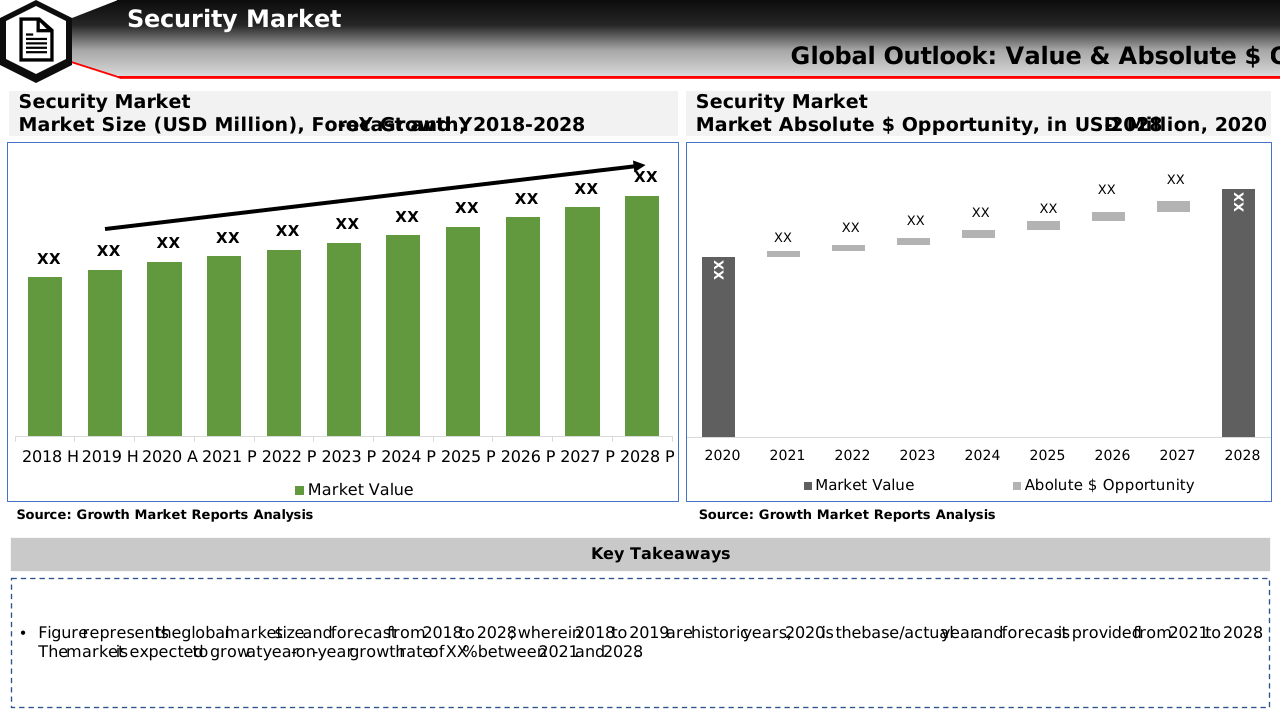
According to our latest research, the global security market size reached USD 202.3 billion in 2024, reflecting the escalating demand for comprehensive security solutions across industries. With a robust compound annual growth rate (CAGR) of 10.1% projected from 2025 to 2033, the market is expected to reach USD 474.9 billion by 2033. This impressive growth trajectory is primarily driven by the increasing sophistication of cyber threats, the proliferation of connected devices, and the growing emphasis on regulatory compliance worldwide. As organizations strive to safeguard their digital and physical assets, the security market is witnessing significant investments in advanced technologies and integrated security frameworks.
One of the primary growth factors propelling the security market is the surge in cyberattacks targeting critical infrastructure and enterprise data. The rapid digital transformation across sectors such as BFSI, healthcare, and government has expanded the attack surface, making organizations more vulnerable to ransomware, phishing, and advanced persistent threats. Consequently, there is a heightened demand for multi-layered security solutions that can detect, prevent, and respond to evolving cyber risks in real time. The integration of artificial intelligence and machine learning into security platforms is further enhancing threat detection capabilities, enabling proactive defense mechanisms that adapt to the dynamic threat landscape.
Another significant driver is the proliferation of cloud computing and remote work models, which have fundamentally altered the security paradigm. As businesses migrate critical workloads to the cloud and enable distributed workforces, traditional perimeter-based security approaches are proving inadequate. This shift is fueling investments in cloud security, endpoint protection, and identity and access management (IAM) solutions, ensuring secure access to resources regardless of location. Moreover, regulatory mandates such as GDPR, HIPAA, and CCPA are compelling organizations to adopt robust security measures to protect sensitive data and avoid hefty penalties, further accelerating market growth.
The increasing convergence of physical and digital security is also shaping the future of the security market. Organizations are deploying integrated security frameworks that combine network, application, and physical security to provide holistic protection against both cyber and physical threats. The adoption of IoT devices and smart infrastructure has amplified the need for unified security management platforms capable of monitoring and controlling diverse endpoints. Additionally, advancements in video surveillance, biometric authentication, and access control systems are driving the adoption of physical security solutions, particularly in sectors such as manufacturing, energy, and transportation.
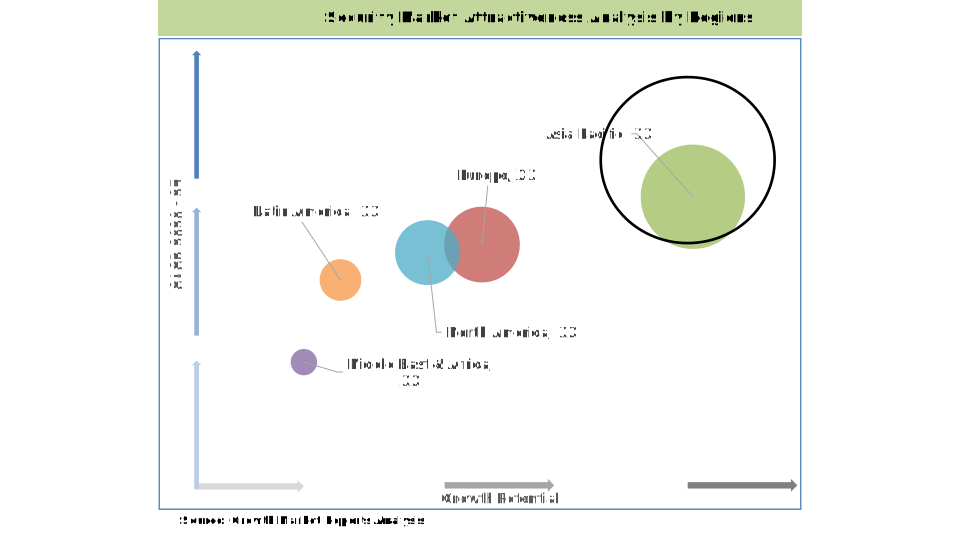
From a regional perspective, North America continues to dominate the global security market, accounting for a significant share due to the presence of major technology vendors, stringent regulatory landscape, and high adoption of advanced security solutions. However, Asia Pacific is emerging as the fastest-growing region, driven by rapid digitalization, increasing cyber threats, and government initiatives to strengthen cybersecurity infrastructure. Europe also holds a substantial market share, supported by robust data protection regulations and growing investments in smart city projects. The Middle East & Africa and Latin America are witnessing steady growth, fueled by rising awareness of security risks and expanding IT infrastructure.
In the realm of residential security, Villa Security Systems are gaining traction as homeowners seek to protect their properties with advanced technology. These systems offer comprehensive solutions that encompass surveillance cameras, motion detectors, and smart locks, all integrated into a unified platform. With the rise of smart homes, Villa Security Systems are evolving to include features such as remote monitoring and control via smartphones, providing homeowners with peace of mind even when they are away. The demand for these systems is driven by the increasing need for personalized security solutions that cater to the unique layout and requirements of villas. As technology continues to advance, Villa Security Systems are expected to incorporate artificial intelligence and machine learning to enhance threat detection and response capabilities.
The security market is segmented by component into hardware, software, and services, each playing a pivotal role in the overall ecosystem. Hardware components, such as firewalls, intrusion detection systems, and surveillance cameras, form the backbone of physical and network security. These devices are essential for establishing secure perimeters and monitoring critical infrastructure in real time. The growing adoption of IoT and connected devices is driving demand for specialized security hardware capable of protecting diverse endpoints across industrial, commercial, and residential environments. As organizations prioritize resilience and uptime, investments in redundant and high-availability hardware solutions are on the rise.
Software solutions constitute the most dynamic segment within the security market, encompassing a wide range of applications such as antivirus, encryption, identity and access management, and security information and event management (SIEM) platforms. The evolution of sophisticated malware and zero-day exploits necessitates continuous innovation in security software, leveraging artificial intelligence and machine learning to enhance threat detection and response capabilities. Cloud-based security software is gaining traction due to its scalability, flexibility, and ability to provide centralized management across distributed environments. As enterprises transition to hybrid and multi-cloud architectures, the demand for software-defined security solutions is expected to surge.
Services represent a critical component of the security market, addressing the growing need for specialized expertise and managed security operations. Organizations are increasingly outsourcing security functions to managed security service providers (MSSPs) to overcome talent shortages and ensure round-the-clock monitoring and incident response. Professional services, including risk assessment, compliance consulting, and security architecture design, are in high demand as businesses navigate complex regulatory landscapes and strive to align security strategies with business objectives. The rise of Security-as-a-Service (SECaaS) models is enabling organizations of all sizes to access enterprise-grade security capabilities without significant upfront investments.
The interplay between hardware, software, and services is fostering the development of integrated security solutions that offer end-to-end protection across digital and physical domains. Vendors are increasingly bundling products and services to deliver comprehensive security packages tailored to specific industry needs. This trend is driving market consolidation and strategic partnerships, as players seek to expand their portfolios and address evolving customer requirements. As security threats become more sophisticated and persistent, the synergy between hardware, software, and services will remain a cornerstone of the security marketÂ’s growth and innovation.
| Attributes | Details |
| Report Title | Security Market Research Report 2033 |
| By Component | Hardware, Software, Services |
| By Security Type | Network Security, Endpoint Security, Cloud Security, Application Security, Physical Security, Others |
| By Deployment Mode | On-Premises, Cloud |
| By Organization Size | Small and Medium Enterprises, Large Enterprises |
| By End-User | BFSI, Healthcare, Government, IT and Telecommunications, Retail, Manufacturing, Energy & Utilities, Others |
| Regions Covered | North America, Europe, APAC, Latin America, MEA |
| Base Year | 2024 |
| Historic Data | 2018-2023 |
| Forecast Period | 2025-2033 |
| Number of Pages | 269 |
| Number of Tables & Figures | 317 |
| Customization Available | Yes, the report can be customized as per your need. |
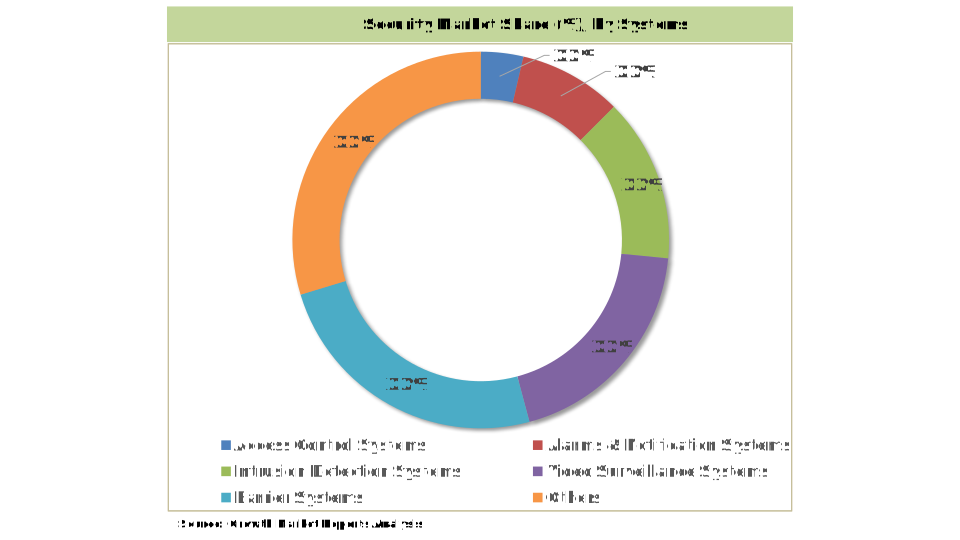
The security market is categorized by security type into network security, endpoint security, cloud security, application security, physical security, and others, each addressing distinct threat vectors and operational challenges. Network security remains a foundational pillar, encompassing technologies such as firewalls, intrusion prevention systems, and virtual private networks (VPNs) that protect data in transit and prevent unauthorized access. The increasing frequency of distributed denial-of-service (DDoS) attacks and lateral movement by threat actors underscores the importance of robust network security frameworks. Organizations are investing in advanced network segmentation, zero-trust architectures, and behavioral analytics to strengthen their defenses against sophisticated attacks.
Endpoint security has gained prominence in the wake of remote work and the proliferation of mobile devices, laptops, and IoT endpoints. Modern endpoint security solutions leverage machine learning and behavioral analysis to detect anomalies and prevent malware infections across diverse device types. The integration of endpoint detection and response (EDR) capabilities enables organizations to swiftly identify and contain threats before they escalate. As the number of endpoints continues to grow, scalable and automated endpoint security platforms are becoming indispensable for maintaining visibility and control in complex IT environments.
Cloud security is experiencing exponential growth as organizations accelerate their adoption of cloud services for agility and scalability. Cloud security solutions encompass identity and access management, data encryption, workload protection, and cloud security posture management (CSPM) tools. The shared responsibility model in cloud environments necessitates a collaborative approach between cloud service providers and customers to ensure data integrity and compliance. As multi-cloud and hybrid cloud deployments become the norm, the demand for unified cloud security platforms capable of providing consistent policy enforcement and threat intelligence is escalating.
Application security is another critical segment, focusing on securing software applications throughout their lifecycle. With the rise of DevSecOps and agile development practices, security is being integrated into the development pipeline to identify vulnerabilities early and reduce the risk of exploitation. Application security solutions include static and dynamic application security testing (SAST/DAST), runtime application self-protection (RASP), and web application firewalls (WAFs). As applications become more complex and interconnected, ensuring their security is paramount to preventing data breaches and maintaining customer trust.
Physical security, encompassing video surveillance, access control, and perimeter security, remains essential for protecting tangible assets and critical infrastructure. Advances in biometric authentication, facial recognition, and AI-powered analytics are enhancing the effectiveness of physical security systems, enabling real-time threat detection and incident response. The convergence of physical and cyber security is giving rise to integrated security management platforms that provide holistic visibility and control across digital and physical domains. Other security types, such as operational technology (OT) security and supply chain security, are gaining traction as organizations recognize the need to protect their entire value chain from emerging threats.
The deployment mode segment of the security market is bifurcated into on-premises and cloud-based solutions, each offering distinct advantages and challenges. On-premises deployment remains a preferred choice for organizations with stringent regulatory requirements, legacy infrastructure, or a need for complete control over their security environment. This model provides greater customization and integration capabilities, allowing organizations to tailor security solutions to their specific operational needs. However, the high upfront costs, ongoing maintenance, and scalability limitations associated with on-premises deployments are prompting many organizations to reevaluate their security strategies.
Cloud-based deployment is witnessing rapid adoption due to its scalability, flexibility, and cost-effectiveness. Cloud security solutions enable organizations to quickly deploy and scale security controls across distributed environments, supporting remote workforces and dynamic business operations. The pay-as-you-go pricing model reduces capital expenditures and allows organizations to align security investments with business growth. Cloud-based security platforms also facilitate centralized management and real-time threat intelligence sharing, enhancing the overall effectiveness of security operations. As cloud adoption accelerates, vendors are investing in advanced encryption, identity management, and compliance automation to address emerging cloud security challenges.
Hybrid deployment models are gaining traction as organizations seek to balance the benefits of both on-premises and cloud-based security solutions. Hybrid architectures enable seamless integration of legacy systems with modern cloud services, providing a unified security posture across diverse environments. This approach is particularly relevant for large enterprises with complex IT landscapes and varying regulatory obligations. Hybrid deployment also supports business continuity and disaster recovery initiatives by enabling redundant security controls and data replication across multiple locations.
The choice of deployment mode is influenced by factors such as organizational size, industry vertical, regulatory landscape, and risk tolerance. Small and medium enterprises (SMEs) often favor cloud-based solutions due to their ease of deployment and lower total cost of ownership, while large enterprises may adopt a mix of on-premises and cloud-based security to address diverse operational requirements. As security threats evolve and technology advances, the deployment mode segment will continue to play a critical role in shaping the future of the security market, driving innovation and enabling organizations to adapt to changing business environments.
The security market is segmented by organization size into small and medium enterprises (SMEs) and large enterprises, each exhibiting unique security needs and investment patterns. SMEs face significant resource constraints, making it challenging to maintain dedicated security teams or invest in advanced technologies. As a result, they are increasingly turning to managed security services, cloud-based solutions, and Security-as-a-Service (SECaaS) offerings that provide enterprise-grade protection at an affordable cost. The growing frequency of cyberattacks targeting SMEs, coupled with the rise of ransomware-as-a-service (RaaS) and phishing campaigns, is driving demand for user-friendly and scalable security solutions tailored to the needs of smaller organizations.
Large enterprises, on the other hand, operate complex and distributed IT environments that require comprehensive and integrated security frameworks. These organizations are investing heavily in advanced threat intelligence, security automation, and incident response capabilities to protect critical assets and ensure business continuity. Large enterprises often have dedicated security operations centers (SOCs), in-house expertise, and the resources to deploy multi-layered security architectures that span network, endpoint, cloud, and physical domains. The increasing adoption of zero-trust security models and behavioral analytics is enabling large enterprises to detect and mitigate sophisticated threats more effectively.
The disparity in security maturity between SMEs and large enterprises is narrowing as vendors introduce modular and scalable solutions that cater to organizations of all sizes. Innovations in artificial intelligence, machine learning, and automation are democratizing access to advanced security capabilities, enabling SMEs to achieve a higher level of protection without significant investments in infrastructure or personnel. The rise of regulatory mandates and industry standards is also compelling organizations across the spectrum to prioritize security and invest in compliance-driven solutions.
Collaboration between SMEs and large enterprises is fostering the development of ecosystem-based security models, where threat intelligence, best practices, and resources are shared to enhance collective resilience. Industry associations, government agencies, and technology vendors are playing a pivotal role in supporting organizations of all sizes through training, awareness programs, and subsidized security solutions. As the threat landscape continues to evolve, the organization size segment will remain a key determinant of security market dynamics, influencing product development, go-to-market strategies, and investment priorities.
The security market serves a diverse range of end-users, including BFSI, healthcare, government, IT and telecommunications, retail, manufacturing, energy & utilities, and others, each facing unique security challenges and regulatory requirements. The BFSI sector is at the forefront of security adoption, driven by the need to protect sensitive financial data, ensure regulatory compliance, and maintain customer trust. Financial institutions are investing in advanced fraud detection, transaction monitoring, and identity verification solutions to combat cybercrime and safeguard digital banking platforms. The integration of blockchain, biometrics, and behavioral analytics is further enhancing security in the BFSI sector.
Healthcare organizations are increasingly targeted by cybercriminals seeking to exploit vulnerabilities in electronic health records (EHRs), medical devices, and patient data systems. The adoption of telemedicine, IoT-enabled medical devices, and cloud-based health information exchanges is expanding the attack surface, necessitating robust security frameworks that encompass data encryption, access control, and continuous monitoring. Regulatory mandates such as HIPAA and GDPR are driving investments in compliance-driven security solutions, ensuring the confidentiality, integrity, and availability of patient data.
Government agencies are prioritizing security to protect critical infrastructure, national security assets, and citizen data from state-sponsored attacks and insider threats. The increasing digitization of public services and the adoption of smart city initiatives are prompting investments in integrated security platforms that combine cyber, physical, and operational technology (OT) security. Governments are also collaborating with private sector partners to enhance threat intelligence sharing, incident response, and public awareness campaigns. The deployment of advanced surveillance, biometric authentication, and secure communication systems is strengthening the overall security posture of government entities.
Other key end-users, such as IT and telecommunications, retail, manufacturing, and energy & utilities, are adopting tailored security solutions to address sector-specific risks and compliance obligations. The IT and telecommunications sector is focused on securing network infrastructure, cloud services, and customer data, while retailers are investing in point-of-sale (POS) security, fraud prevention, and supply chain protection. Manufacturers are deploying industrial control system (ICS) security to safeguard operational technology and prevent production disruptions. The energy and utilities sector is prioritizing critical infrastructure protection, grid security, and incident response to mitigate the impact of cyberattacks on essential services.
The security market presents significant opportunities for growth, driven by the rapid evolution of the threat landscape and the increasing adoption of digital technologies across industries. The integration of artificial intelligence, machine learning, and automation into security platforms is enabling organizations to detect and respond to threats in real time, reducing the dwell time of attackers and minimizing the impact of breaches. The rise of IoT, 5G, and edge computing is creating new avenues for innovation, as vendors develop specialized security solutions to protect emerging technologies and decentralized environments. The growing emphasis on privacy, data protection, and regulatory compliance is opening up new markets for security consulting, risk assessment, and managed services.
Another major opportunity lies in the democratization of security through cloud-based and as-a-service models. Small and medium enterprises, which have traditionally been underserved due to resource constraints, can now access enterprise-grade security capabilities on a subscription basis, leveling the playing field and enhancing overall market resilience. The increasing convergence of cyber and physical security is driving demand for integrated solutions that provide unified visibility and control across digital and physical assets. Strategic partnerships, mergers and acquisitions, and ecosystem collaboration are fostering innovation and enabling vendors to address evolving customer needs more effectively.
Despite the promising growth prospects, the security market faces several restraining factors that could impede its expansion. The increasing complexity of IT environments, coupled with a global shortage of skilled security professionals, is making it challenging for organizations to implement and maintain effective security measures. The rapid pace of technological change and the proliferation of point solutions are leading to integration challenges and security gaps, undermining the effectiveness of existing security frameworks. Budget constraints, particularly among SMEs and organizations in emerging markets, are limiting the adoption of advanced security solutions. Additionally, the evolving tactics of cybercriminals and the emergence of new threat vectors require continuous innovation and investment, placing pressure on vendors and end-users alike.
North America continues to lead the global security market, accounting for approximately 37% of the total market size in 2024, or around USD 74.9 billion. The regionÂ’s dominance is attributed to the presence of major technology vendors, a mature cybersecurity ecosystem, and stringent regulatory requirements across sectors such as BFSI, healthcare, and government. The United States, in particular, is a major hub for security innovation, with significant investments in R&D, threat intelligence, and public-private partnerships. The growing adoption of cloud services, IoT, and 5G networks is further driving demand for advanced security solutions in North America.
Europe holds a substantial share of the security market, with a market size of USD 50.6 billion in 2024, representing 25% of the global market. The regionÂ’s growth is fueled by robust data protection regulations such as GDPR, increasing cyber threats, and rising investments in smart city and critical infrastructure projects. Countries such as the United Kingdom, Germany, and France are at the forefront of security adoption, leveraging advanced technologies to enhance resilience and ensure regulatory compliance. The European security market is expected to grow at a CAGR of 9.8% from 2025 to 2033, driven by ongoing digital transformation initiatives and heightened awareness of security risks.
Asia Pacific is emerging as the fastest-growing region in the global security market, with a market size of USD 40.5 billion in 2024 and a projected CAGR of 12.6% through 2033. Rapid digitalization, expanding IT infrastructure, and increasing cyber threats are prompting governments and enterprises in countries such as China, India, Japan, and South Korea to invest in comprehensive security solutions. The region is also witnessing significant growth in cloud adoption, IoT deployments, and smart city initiatives, creating new opportunities for security vendors. Latin America and the Middle East & Africa are experiencing steady growth, with market sizes of USD 18.2 billion and USD 18.1 billion respectively in 2024, driven by rising awareness of security risks and growing investments in digital infrastructure.
The global security market is characterized by intense competition, with a diverse mix of established players, emerging startups, and niche vendors vying for market share. The competitive landscape is shaped by continuous innovation, strategic partnerships, and mergers and acquisitions, as companies seek to expand their product portfolios and address evolving customer needs. Leading vendors are investing heavily in research and development to enhance their offerings with advanced technologies such as artificial intelligence, machine learning, behavioral analytics, and automation. The shift towards integrated security platforms and Security-as-a-Service (SECaaS) models is driving market consolidation and fostering collaboration between technology providers, system integrators, and managed security service providers (MSSPs).
Market leaders are differentiating themselves through comprehensive product suites, global reach, and a strong focus on customer support and managed services. The ability to provide end-to-end security solutions that span network, endpoint, cloud, application, and physical domains is becoming a key competitive advantage. Vendors are also leveraging threat intelligence sharing, real-time analytics, and automated incident response to deliver proactive and adaptive security capabilities. The growing emphasis on regulatory compliance, privacy, and data protection is prompting vendors to offer specialized solutions and consulting services that help organizations navigate complex legal and regulatory landscapes.
Emerging players and startups are disrupting the market with innovative approaches to threat detection, response, and risk management. These companies are leveraging cloud-native architectures, open-source technologies, and agile development methodologies to deliver scalable and cost-effective security solutions. The rise of cybersecurity venture funding and government-backed innovation programs is fueling the growth of new entrants and accelerating the pace of technological advancement. As the threat landscape continues to evolve, collaboration between established players and innovative startups will be essential to address emerging challenges and capitalize on new opportunities.
Some of the major companies operating in the global security market include Cisco Systems, Inc., IBM Corporation, Palo Alto Networks, Fortinet, Inc., Check Point Software Technologies Ltd., Symantec Corporation (Broadcom), McAfee, LLC, Trend Micro Incorporated, Honeywell International Inc., and Siemens AG. Cisco Systems is renowned for its comprehensive network security solutions, including firewalls, intrusion prevention systems, and secure access platforms. IBM Corporation offers a broad portfolio of security software, services, and consulting, with a strong focus on artificial intelligence and threat intelligence. Palo Alto Networks and Fortinet are leaders in next-generation firewall and cloud security solutions, while Check Point Software Technologies excels in unified threat management and endpoint protection.
Symantec Corporation, now part of Broadcom, is a key player in endpoint security, data loss prevention, and cloud security, serving both enterprises and consumers. McAfee and Trend Micro are prominent providers of antivirus, endpoint protection, and cloud security solutions, with a strong presence in the SME segment. Honeywell International and Siemens AG are leading the convergence of cyber and physical security, offering integrated solutions for industrial, manufacturing, and critical infrastructure sectors. These companies are continuously expanding their product portfolios, investing in R&D, and forging strategic alliances to maintain their competitive edge and address the evolving needs of global customers.
The Security market has been segmented on the basis of
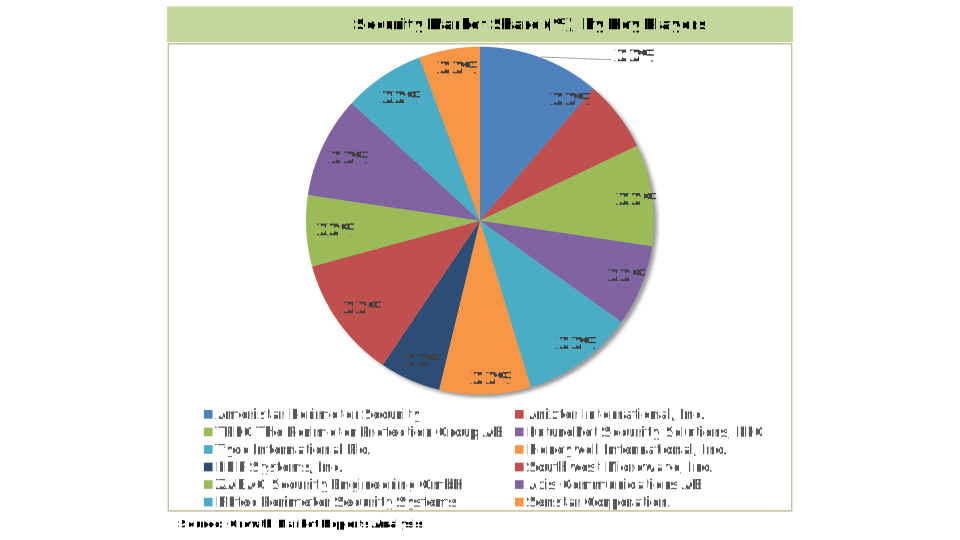
Key players competing in the security market include Ameristar Perimeter Security; Anixter International, Inc.; TPPG The Perimeter Protection Group AB; FutureNet Security Solutions, LLC; Tyco International Plc.; Honeywell International, Inc.; FLIR Systems, Inc.; Southwest Microwave, Inc.; ZABAG Security Engineering GmbH; Axis Communications AB; RBtec Perimeter Security Systems; and Senstar Corporation.
Major trends include the integration of AI and automation, the rise of cloud-based and Security-as-a-Service models, convergence of cyber and physical security, and growing demand for unified, end-to-end security platforms.
Leading companies include Cisco Systems, IBM Corporation, Palo Alto Networks, Fortinet, Check Point Software Technologies, Symantec (Broadcom), McAfee, Trend Micro, Honeywell, Siemens, and others such as ADT, Securitas, and Hikvision.
Key end-users include BFSI, healthcare, government, IT and telecommunications, retail, manufacturing, and energy & utilities, each with unique security and compliance needs.
Security solutions can be deployed on-premises, in the cloud, or in hybrid models, each offering distinct benefits in terms of control, scalability, and cost.
Security types include network security, endpoint security, cloud security, application security, physical security, and others such as OT and supply chain security.
The security market is segmented into hardware (e.g., firewalls, surveillance cameras), software (e.g., antivirus, IAM, SIEM), and services (e.g., managed security, consulting, SECaaS).
North America leads the security market, accounting for about 37% of the global market size. Asia Pacific is the fastest-growing region, with a projected CAGR of 12.6% through 2033.
Key growth drivers include the increasing sophistication of cyber threats, proliferation of connected devices, regulatory compliance requirements, and the integration of advanced technologies like AI and machine learning.
The security market is expected to grow at a compound annual growth rate (CAGR) of 10.1% from 2025 to 2033, reaching USD 474.9 billion by 2033.
As of 2024, the global security market size reached USD 202.3 billion, driven by rising demand for comprehensive security solutions across various industries.