Smart Homes Security Cameras Market Research Report 2033

Smart Homes Security Cameras Market Research Report 2033

Segments - by Product Type (Wired Cameras, Wireless Cameras, Doorbell Cameras, PTZ Cameras, Others), by Application (Indoor Security, Outdoor Security, Baby Monitoring, Pet Monitoring, Others), by Connectivity (Wi-Fi, Bluetooth, Zigbee, Z-Wave, Others), by Resolution (HD, Full HD, 4K, Others), by Distribution Channel (Online Stores, Offline Stores), by End-User (Residential, Commercial, Others)

https://growthmarketreports.com/Raksha
Author : Raksha Sharma
https://growthmarketreports.com/Vaibhav
Fact-checked by : V. Chandola
https://growthmarketreports.com/Shruti
Editor : Shruti Bhat

Upcoming | Report ID :ICT-SE-386 | 5.0 Rating | 9 Reviews | 281 Pages | Format : Docx PDF

Report Description


Smart Home Security Cameras Market Outlook

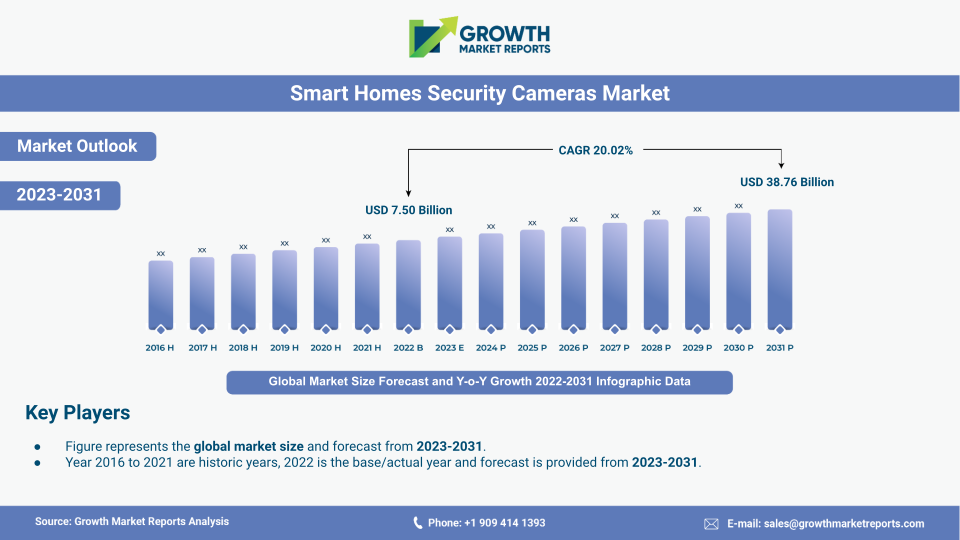
As per our latest research, the global smart home security cameras market size reached USD 10.4 billion in 2024, demonstrating robust demand across residential and commercial sectors. The market is expected to expand at a CAGR of 13.2% during the forecast period, reaching a projected value of USD 28 billion by 2033. This remarkable growth is attributed to increasing consumer awareness regarding home safety, rapid technological advancements in camera systems, and the proliferation of connected smart home devices worldwide.

One of the primary growth factors propelling the smart home security cameras market is the surge in adoption of Internet of Things (IoT) enabled devices. With the rising penetration of high-speed internet and the widespread use of smartphones, consumers are increasingly inclined towards integrating smart security solutions into their homes. The convenience of remote monitoring, real-time alerts, and seamless integration with other smart home systems has made these cameras an essential component of modern households. Furthermore, the ongoing trend of urbanization and the growing number of nuclear families are fueling the demand for advanced security systems, as individuals seek to ensure the safety of their loved ones and property even when they are away.

Technological innovation remains a critical driver in the smart home security cameras market. The evolution from traditional analog cameras to high-definition, full HD, and even 4K resolution cameras has significantly enhanced the quality and reliability of surveillance. Features such as motion detection, night vision, two-way audio, and AI-powered facial recognition are increasingly being integrated into security cameras, delivering superior performance and user experience. Additionally, the development of wireless and battery-powered cameras has further simplified installation and maintenance, making smart home security accessible to a broader demographic. These advancements are not only boosting consumer confidence but are also encouraging manufacturers to invest in research and development, fostering a cycle of continuous improvement and innovation.

Another significant factor contributing to the growth of the smart home security cameras market is the increasing emphasis on personal and property security amid rising crime rates. Governments and law enforcement agencies across various regions are actively promoting the adoption of security systems through awareness campaigns and incentives. This, coupled with the decreasing cost of smart cameras and the availability of flexible payment options, has made these devices more affordable and accessible. Moreover, the integration of smart cameras with broader home automation systems, including smart locks, lighting, and alarm systems, is creating a comprehensive security ecosystem that appeals to tech-savvy consumers seeking holistic solutions.

In recent years, the concept of community-driven security has gained traction, leading to the development of innovative solutions like the Neighborhood Security Camera Share App. This app allows residents within a community to share their security camera feeds with neighbors, creating a collaborative network that enhances overall neighborhood safety. By pooling resources, communities can achieve comprehensive surveillance coverage, deterring potential intruders and providing valuable evidence in the event of an incident. The app's integration with existing smart home security systems ensures seamless operation, while its user-friendly interface makes it accessible to residents of all ages. As more neighborhoods adopt this approach, the collective security of communities is expected to improve significantly, fostering a sense of unity and shared responsibility among residents.

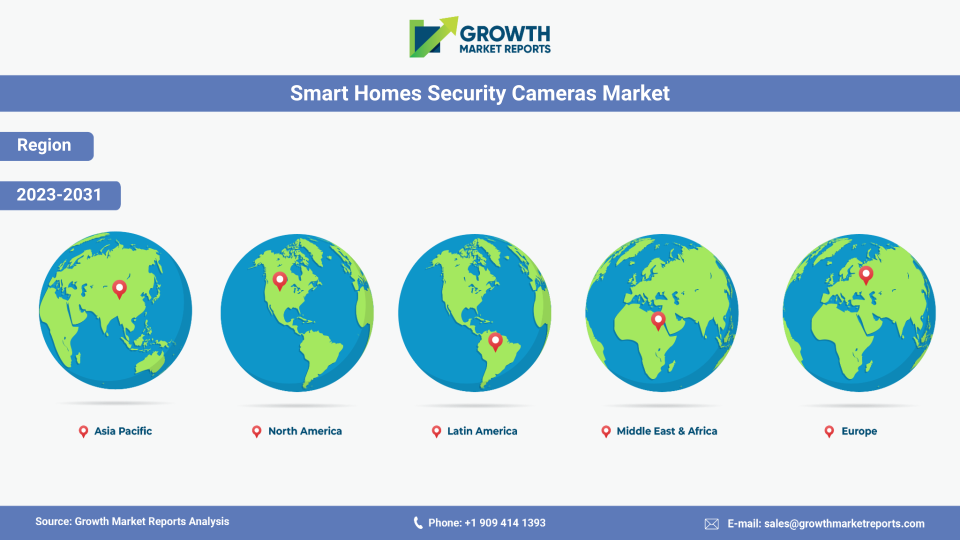
From a regional perspective, North America currently dominates the smart home security cameras market, accounting for the largest share in 2024, primarily due to high consumer awareness, advanced infrastructure, and the presence of leading market players. However, the Asia Pacific region is poised for the fastest growth during the forecast period, driven by rapid urbanization, increasing disposable incomes, and the growing adoption of smart home technologies in countries such as China, India, and Japan. Europe also remains a significant market, supported by stringent security regulations and a strong emphasis on home automation. Meanwhile, Latin America and the Middle East & Africa are emerging markets with substantial growth potential, fueled by improving connectivity and rising security concerns.

Global Smart Homes Security Cameras Industry Outlook

Product Type Analysis

The product type segment of the smart home security cameras market encompasses wired cameras, wireless cameras, doorbell cameras, PTZ (pan-tilt-zoom) cameras, and others. Wired cameras, while offering stable connectivity and reliable performance, are gradually being overshadowed by wireless alternatives due to the latterÂ’s ease of installation and flexibility in placement. Nevertheless, wired cameras continue to hold relevance in scenarios where uninterrupted power supply and robust data transmission are paramount, such as in large residential complexes and commercial establishments. Their popularity is sustained by users who prioritize security and are less concerned with the inconvenience of installation.

Wireless cameras have emerged as the most popular product type in the smart home security cameras market, driven by their plug-and-play functionality, scalability, and compatibility with modern smart home ecosystems. These cameras are particularly favored in residential settings, where consumers seek hassle-free solutions that can be easily relocated or expanded as needed. The integration of advanced features such as cloud storage, AI-powered analytics, and voice assistant compatibility has further cemented the dominance of wireless cameras. Their ability to connect seamlessly with other smart devices, along with the growing prevalence of wireless internet, continues to fuel their adoption.

Doorbell cameras represent a rapidly growing segment, fueled by the increasing demand for front-door security and package theft prevention. These cameras not only provide real-time video feeds of visitors but also offer two-way communication, enabling homeowners to interact with delivery personnel or guests remotely. The proliferation of e-commerce and the rise in unattended deliveries have made doorbell cameras a must-have security feature for many households. Manufacturers are continually enhancing these devices with features such as motion detection, facial recognition, and integration with smart locks, making them an integral part of the smart home security ecosystem.

The advent of Wi-Fi 6 technology is revolutionizing the smart home security cameras market, particularly with the introduction of Wi-Fi 6 Cameras for Security. These cameras offer enhanced connectivity, faster data transfer rates, and improved network efficiency, making them ideal for high-resolution video streaming and real-time monitoring. Wi-Fi 6's ability to handle multiple devices simultaneously without compromising performance is particularly beneficial for households with numerous smart devices. This technology not only enhances the reliability of security cameras but also supports advanced features such as AI-powered analytics and cloud-based storage solutions. As consumers become more aware of the benefits of Wi-Fi 6, its adoption in security cameras is expected to rise, providing users with a more robust and seamless security experience.

PTZ cameras, with their ability to pan, tilt, and zoom, are gaining traction in both residential and commercial applications requiring comprehensive coverage and flexible monitoring. These cameras are particularly useful for larger properties or areas with complex layouts, as they can be remotely controlled to focus on specific zones or track moving objects. The inclusion of AI-powered tracking and automated patrol modes has further expanded the utility of PTZ cameras, enabling users to monitor their premises more effectively. The “others” category, which includes specialized cameras such as floodlight cameras and hidden cameras, caters to niche requirements and is expected to witness steady demand as consumers seek tailored security solutions.

Report Scope

Attributes Details
Report Title Smart Homes Security Cameras Market Research Report 2033
By Product Type Wired Cameras, Wireless Cameras, Doorbell Cameras, PTZ Cameras, Others
By Application Indoor Security, Outdoor Security, Baby Monitoring, Pet Monitoring, Others
By Connectivity Wi-Fi, Bluetooth, Zigbee, Z-Wave, Others
By Resolution HD, Full HD, 4K, Others
By Distribution Channel Online Stores, Offline Stores
By End-User Residential, Commercial, Others
Regions Covered North America, Europe, APAC, Latin America, MEA
Base Year 2024
Historic Data 2018-2023
Forecast Period 2025-2033
Number of Pages 281
Number of Tables & Figures 346
Customization Available Yes, the report can be customized as per your need.

Application Analysis

The application segment of the smart home security cameras market is broadly categorized into indoor security, outdoor security, baby monitoring, pet monitoring, and others. Indoor security cameras are widely adopted for monitoring entryways, living rooms, and high-value areas within homes. These cameras are typically equipped with features such as motion detection, night vision, and two-way audio, offering homeowners peace of mind and the ability to respond promptly to potential threats. The growing trend of smart home automation has further enhanced the appeal of indoor security cameras, as they can be integrated with other devices to create customized security routines.

Outdoor security cameras are essential for safeguarding the perimeter of residential and commercial properties. These cameras are designed to withstand harsh weather conditions and are often equipped with advanced features such as infrared night vision, motion-activated floodlights, and high-definition video recording. The increasing incidence of property crimes and the desire to deter potential intruders have driven the adoption of outdoor security cameras. Additionally, the integration of AI-powered analytics, such as object detection and facial recognition, enables more effective monitoring and reduces the likelihood of false alarms.

Baby monitoring is a specialized application within the smart home security cameras market, catering to parents seeking to ensure the safety and well-being of their infants. These cameras often feature high-definition video, temperature and humidity sensors, and two-way audio, allowing parents to monitor their children remotely and respond to their needs in real time. The growing awareness of child safety and the increasing prevalence of dual-income households have contributed to the rising demand for baby monitoring cameras. Manufacturers are continuously innovating in this segment, introducing features such as lullaby playback, sleep tracking, and integration with smart speakers.

As the smart home security cameras market continues to expand, the issue of Home Security Camera Manufacturer Liability Insurance has become increasingly pertinent. Manufacturers are now more aware of the potential legal and financial implications associated with product failures or security breaches. Liability insurance provides a safety net for manufacturers, covering costs related to product recalls, legal defense, and compensation claims. This type of insurance not only protects manufacturers but also boosts consumer confidence in the reliability and safety of smart home security products. By ensuring that their products meet stringent safety and quality standards, manufacturers can mitigate risks and maintain their reputation in a competitive market. As the industry evolves, liability insurance is expected to become a standard practice, ensuring accountability and fostering trust among consumers.

Pet monitoring is another emerging application, driven by the growing number of pet owners who wish to keep an eye on their animals while they are away from home. Smart cameras designed for pet monitoring often include features such as treat dispensers, interactive toys, and motion tracking, enabling owners to interact with their pets remotely and ensure their well-being. The “others” category encompasses a range of niche applications, including elderly care, home office security, and vacation home monitoring. As the smart home ecosystem continues to evolve, the versatility and adaptability of security cameras are expected to drive their adoption across an expanding array of use cases.

Connectivity Analysis

The connectivity segment in the smart home security cameras market comprises Wi-Fi, Bluetooth, Zigbee, Z-Wave, and others. Wi-Fi-enabled cameras dominate the market due to their widespread compatibility, ease of installation, and ability to support high-resolution video streaming. Most consumers prefer Wi-Fi cameras as they can be seamlessly integrated into existing home networks and controlled via smartphones or voice assistants. The proliferation of high-speed wireless internet and advancements in Wi-Fi technology, such as dual-band support and mesh networking, have further reinforced the dominance of Wi-Fi connectivity in smart home security cameras.

Bluetooth-enabled cameras, while less common, are gaining traction in specific use cases where short-range connectivity and low power consumption are prioritized. These cameras are often used for temporary deployments or as supplementary devices in larger security systems. The simplicity of Bluetooth pairing and the absence of complex network configurations make them appealing for users seeking plug-and-play solutions. However, the limited range and bandwidth of Bluetooth restrict their applicability in scenarios requiring continuous high-definition video streaming or remote access.

Zigbee and Z-Wave are popular choices for users who prioritize interoperability and integration within broader smart home ecosystems. These protocols are designed specifically for low-power, low-data-rate applications, making them ideal for battery-powered security cameras. Zigbee and Z-Wave cameras can communicate with other smart devices, such as sensors, lights, and alarms, enabling users to create comprehensive security routines and automate responses to detected events. The growing adoption of smart home hubs and the increasing demand for unified control interfaces are driving the popularity of Zigbee and Z-Wave connectivity in the smart home security cameras market.

The “others” category includes emerging connectivity options such as cellular, Ethernet, and proprietary protocols. Cellular-enabled cameras are particularly valuable in remote or off-grid locations where traditional internet connectivity is unavailable. These cameras leverage 4G or 5G networks to transmit video feeds and alerts, ensuring continuous monitoring regardless of location. Ethernet-connected cameras, while less common in residential settings, are favored in commercial environments where stable and high-bandwidth connections are required. As technology continues to evolve, the smart home security cameras market is likely to witness the introduction of new connectivity standards that further enhance performance, reliability, and user experience.

Resolution Analysis

The resolution segment in the smart home security cameras market is divided into HD, Full HD, 4K, and others. High-definition (HD) cameras have long been the standard in the market, offering a balance between image clarity, bandwidth requirements, and affordability. HD cameras are suitable for most residential applications, providing clear video feeds that enable users to identify people and objects with ease. The widespread availability of HD cameras at competitive prices has made them a popular choice among budget-conscious consumers.

Full HD cameras represent a significant upgrade over their HD counterparts, delivering enhanced image quality and greater detail. These cameras are increasingly preferred in scenarios where precise identification and evidence collection are critical, such as in entryways, driveways, and high-traffic areas. The decreasing cost of Full HD sensors and the availability of affordable storage solutions have contributed to the growing adoption of Full HD cameras in both residential and commercial settings. Manufacturers are also incorporating advanced features such as digital zoom and wide dynamic range to further improve the performance of Full HD cameras.

4K resolution cameras are at the forefront of technological innovation in the smart home security cameras market. These cameras offer unparalleled image clarity, enabling users to zoom in on specific areas without sacrificing detail. The adoption of 4K cameras is being driven by consumers who prioritize comprehensive surveillance and are willing to invest in premium solutions. However, the higher bandwidth and storage requirements associated with 4K video present challenges that need to be addressed through advanced compression technologies and cloud-based storage options. As the cost of 4K sensors continues to decline, it is expected that these cameras will become more accessible to a wider audience.

The “others” category includes cameras with specialized resolutions, such as 720p, 5MP, and 8MP, as well as thermal and infrared cameras designed for specific applications. These cameras cater to niche requirements, such as monitoring low-light environments or detecting temperature anomalies. As consumer preferences evolve and new use cases emerge, manufacturers are likely to introduce a broader range of resolution options to meet the diverse needs of the market. The ongoing advancement of image sensor technology and the increasing availability of high-capacity storage solutions are expected to further drive innovation in this segment.

Distribution Channel Analysis

The distribution channel segment of the smart home security cameras market is categorized into online stores and offline stores. Online stores have rapidly become the preferred channel for purchasing smart home security cameras, owing to the convenience, competitive pricing, and wide product selection they offer. E-commerce platforms such as Amazon, Best Buy, and Alibaba provide consumers with access to a vast array of brands and models, along with detailed product information, customer reviews, and fast shipping options. The COVID-19 pandemic further accelerated the shift towards online shopping, as consumers increasingly sought contactless purchasing experiences.

Offline stores, including electronics retailers, specialty security stores, and home improvement centers, continue to play a vital role in the smart home security cameras market. These stores offer consumers the opportunity to physically examine products, seek expert advice, and benefit from personalized service. For many buyers, especially those less familiar with smart home technology, the ability to interact with knowledgeable staff and receive hands-on demonstrations is a significant advantage. Offline stores also serve as important channels for after-sales support, installation services, and warranty claims.

The growing trend of omnichannel retailing is blurring the lines between online and offline distribution channels. Many manufacturers and retailers are adopting hybrid approaches, enabling consumers to research products online and make purchases in-store or vice versa. This strategy enhances the overall customer experience by providing greater flexibility and catering to diverse shopping preferences. The integration of digital tools, such as virtual product demonstrations and augmented reality applications, is further enriching the shopping experience and driving engagement across both channels.

As competition intensifies, manufacturers and retailers are investing in advanced logistics, customer service, and marketing initiatives to differentiate themselves in the market. The availability of bundled offers, financing options, and subscription-based services is also influencing consumer purchasing decisions. Moving forward, the balance between online and offline distribution channels is expected to be shaped by evolving consumer preferences, technological advancements, and the ongoing digital transformation of the retail sector.

End-User Analysis

The end-user segment in the smart home security cameras market includes residential, commercial, and others. The residential sector accounts for the largest share of the market, driven by the increasing adoption of smart home technologies and the rising awareness of home security. Homeowners are increasingly investing in security cameras to protect their families, deter intruders, and monitor their properties remotely. The growing trend of home automation, coupled with the availability of affordable and easy-to-install camera systems, has made smart security cameras a mainstream solution for residential users.

The commercial sector represents a significant and growing segment of the smart home security cameras market. Businesses, including retail stores, offices, warehouses, and hospitality establishments, are leveraging smart cameras to enhance security, prevent theft, and monitor employee activities. The integration of advanced analytics, such as facial recognition and behavioral analysis, is enabling commercial users to derive actionable insights from video data and optimize security operations. The increasing emphasis on workplace safety and regulatory compliance is further driving the adoption of smart security cameras in the commercial sector.

The “others” category encompasses a diverse range of end-users, including educational institutions, healthcare facilities, and government buildings. These organizations are adopting smart security cameras to ensure the safety of students, patients, and staff, as well as to protect valuable assets and sensitive information. The versatility and scalability of smart camera systems make them suitable for a wide variety of applications, from monitoring public spaces to securing critical infrastructure. As the benefits of smart security solutions become more widely recognized, it is expected that adoption will continue to expand across new and emerging end-user segments.

Manufacturers are increasingly developing tailored solutions to meet the unique requirements of different end-user segments. For example, cameras designed for residential use may prioritize ease of installation and integration with home automation systems, while commercial-grade cameras may focus on durability, scalability, and advanced analytics. The ability to customize camera systems to suit specific needs is a key factor driving market growth and differentiation. As the smart home security cameras market continues to evolve, end-user preferences and requirements will play a critical role in shaping product development and innovation.

Opportunities & Threats

The smart home security cameras market presents numerous opportunities for growth and innovation. One of the most significant opportunities lies in the integration of artificial intelligence and machine learning technologies. By incorporating advanced analytics, such as facial recognition, object detection, and behavioral analysis, manufacturers can offer smarter and more proactive security solutions. These capabilities enable users to receive more accurate alerts, reduce false alarms, and automate responses to detected events. The development of cloud-based platforms and subscription services also presents opportunities for recurring revenue streams and enhanced user engagement. As consumer expectations continue to evolve, there is significant potential for manufacturers to differentiate themselves through innovation and value-added services.

Another major opportunity in the smart home security cameras market is the expansion into emerging markets, particularly in Asia Pacific, Latin America, and the Middle East & Africa. These regions are experiencing rapid urbanization, rising disposable incomes, and increasing awareness of home security, creating fertile ground for market growth. Manufacturers can capitalize on these trends by offering affordable and easy-to-install solutions tailored to the unique needs of these markets. Strategic partnerships with local distributors, telecom operators, and e-commerce platforms can help accelerate market penetration and build brand awareness. Additionally, the growing trend of smart city initiatives and government-led security programs presents opportunities for large-scale deployments of smart camera systems in public spaces and critical infrastructure.

Despite the numerous opportunities, the smart home security cameras market faces several restraining factors. Privacy concerns remain a significant challenge, as consumers are increasingly wary of data breaches, unauthorized access, and surveillance abuses. The collection and storage of video footage, particularly when integrated with cloud-based platforms and AI analytics, raise important questions about data security and user consent. Regulatory frameworks governing the use of surveillance technologies are evolving, and manufacturers must navigate a complex landscape of compliance requirements. Addressing these concerns through robust data protection measures, transparent privacy policies, and user-friendly controls will be essential for building trust and sustaining long-term growth in the market.

Regional Outlook

North America continues to be the leading region in the smart home security cameras market, accounting for approximately 38% of the global market share in 2024, which translates to about USD 3.95 billion. The regionÂ’s dominance is fueled by high consumer awareness, advanced technological infrastructure, and the strong presence of leading market players. The United States remains the largest market within the region, driven by the widespread adoption of smart home technologies, increasing concerns about property crime, and the growing popularity of DIY security solutions. Canada is also witnessing steady growth, supported by government initiatives and rising demand for home automation.

The Asia Pacific region is projected to experience the fastest growth during the forecast period, with a CAGR of 15.7%. In 2024, the market size in Asia Pacific was estimated at USD 2.3 billion, with China, Japan, South Korea, and India emerging as key growth engines. The rapid pace of urbanization, increasing disposable incomes, and the proliferation of internet connectivity are driving the adoption of smart home security cameras across the region. Local manufacturers are introducing affordable and feature-rich products tailored to the needs of diverse consumer segments, further accelerating market expansion. The growing emphasis on safety and security, coupled with government-led smart city initiatives, is expected to sustain strong demand in the coming years.

Europe holds a significant share of the global smart home security cameras market, valued at USD 2.1 billion in 2024. The regionÂ’s growth is supported by stringent security regulations, high standards of living, and a strong culture of home automation. The United Kingdom, Germany, and France are among the leading markets, with consumers increasingly investing in advanced security solutions to protect their homes and businesses. The adoption of smart cameras is also being driven by the growing popularity of integrated home automation systems and the availability of government incentives for security upgrades. As the market matures, European consumers are expected to demand more sophisticated and customized solutions, driving further innovation and differentiation.

Smart Homes Security Cameras Market Statistics

Competitor Outlook

The competitive landscape of the smart home security cameras market is highly dynamic, characterized by the presence of both established players and innovative startups. Leading companies are continually investing in research and development to introduce new features, improve user experience, and differentiate their offerings. The market is marked by intense competition in terms of price, quality, and technological innovation, with manufacturers striving to capture market share through product differentiation, strategic partnerships, and aggressive marketing campaigns. The shift towards subscription-based services and cloud storage solutions is creating new avenues for recurring revenue and customer retention, further intensifying competition among market participants.

Key players in the smart home security cameras market are focusing on expanding their product portfolios to cater to a diverse range of consumer needs and preferences. Many companies are introducing modular and customizable camera systems that can be easily integrated with other smart home devices, such as door locks, lighting, and alarms. The integration of artificial intelligence and machine learning technologies is enabling manufacturers to offer smarter, more proactive security solutions that deliver greater value to consumers. Strategic collaborations with technology partners, telecom operators, and e-commerce platforms are also helping companies expand their reach and enhance their competitive positioning.

The market is witnessing a growing trend of mergers and acquisitions, as larger players seek to strengthen their market presence and expand their technological capabilities. Startups and niche players are also making significant contributions to innovation, introducing disruptive technologies and business models that challenge established norms. The ability to adapt to changing consumer preferences, regulatory requirements, and technological advancements is critical for success in this rapidly evolving market. Companies that can deliver reliable, user-friendly, and secure solutions are well-positioned to capture a larger share of the growing smart home security cameras market.

Major companies operating in the smart home security cameras market include Arlo Technologies, Inc., Ring LLC (an Amazon company), Google LLC (Nest), Xiaomi Corporation, Hikvision Digital Technology Co., Ltd., Lorex Technology, Inc., ADT Inc., Bosch Security Systems, Panasonic Corporation, and Honeywell International Inc. Arlo Technologies is renowned for its wireless camera systems and advanced AI features, while Ring has established itself as a leader in doorbell cameras and integrated security solutions. Google Nest offers a comprehensive range of smart home products, including high-resolution cameras with intelligent analytics. Xiaomi and Hikvision are prominent players in the Asia Pacific region, known for their affordable and feature-rich offerings. Lorex and ADT have a strong presence in the North American market, focusing on both residential and commercial security solutions. Bosch, Panasonic, and Honeywell are recognized for their innovation and reliability, serving a wide range of end-user segments worldwide.

These companies are continuously enhancing their product portfolios through technological innovation, strategic acquisitions, and partnerships with other players in the smart home ecosystem. The focus on user experience, data security, and interoperability is driving the development of next-generation smart home security cameras that offer greater convenience, flexibility, and peace of mind to consumers. As the market continues to evolve, the ability to anticipate and respond to emerging trends and consumer needs will be critical for maintaining a competitive edge and achieving long-term success.

Key Players

  • Arlo Technologies
  • Ring (Amazon)
  • Google Nest
  • Wyze Labs
  • ADT Inc.
  • Vivint Smart Home
  • SimpliSafe
  • Bosch Security Systems
  • Hikvision
  • Dahua Technology
  • Honeywell International
  • Panasonic Corporation
  • Samsung Electronics (SmartThings)
  • Logitech International
  • Netatmo (Legrand)
  • TP-Link Technologies
  • Zmodo Technology
  • Canary Connect
  • Blink (Amazon)
  • Swann Communications
Smart Homes Security Cameras Market Overview

Segments

The Smart Homes Security Cameras market has been segmented on the basis of

Product Type

  • Wired Cameras
  • Wireless Cameras
  • Doorbell Cameras
  • PTZ Cameras
  • Others

Application

  • Indoor Security
  • Outdoor Security
  • Baby Monitoring
  • Pet Monitoring
  • Others

Connectivity

  • Wi-Fi
  • Bluetooth
  • Zigbee
  • Z-Wave
  • Others

Resolution

  • HD
  • Full HD
  • 4K
  • Others

Distribution Channel

  • Online Stores
  • Offline Stores

End-User

  • Residential
  • Commercial
  • Others

Competitive Landscape

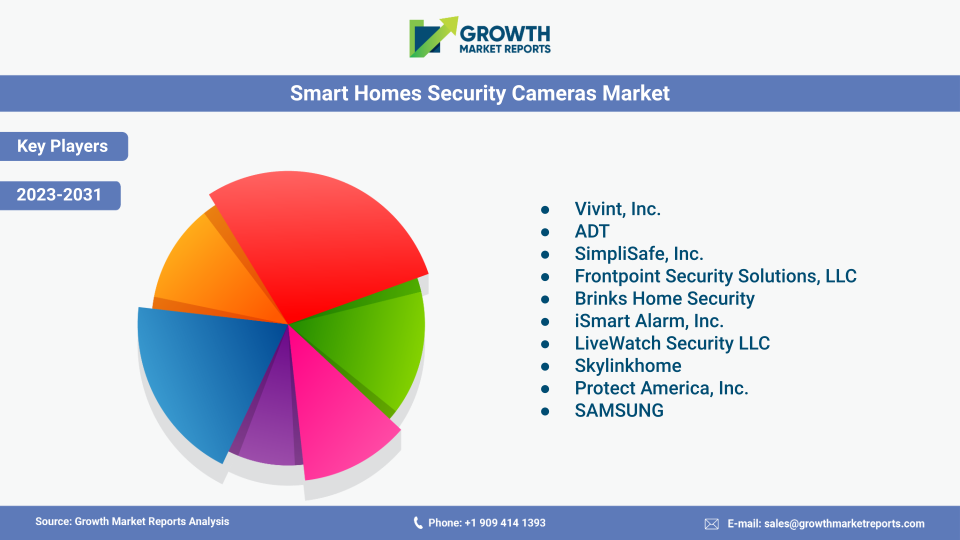
Some of the leading manufacturers in the global smart home security camera market are Vivint, Inc., ADT, SimpliSafe, Inc., Frontpoint Security Solutions, LLC, Brinks Home Security, iSmart Alarm, Inc., LiveWatch Security LLC, Skylinkhome, Protect America, Inc., and SAMSUNG.

The manufacturers are focusing on product innovation and launch of new product lines to cater the rising consumer demand for advanced security cameras.

In January 2020, Abode Systems, Inc. announced the launch of an outdoor/indoor smart wired video camera with features, such as facial recognition and 24X7 video recording.

In November 2017, Amazon announced the launch of smart home security camera, Amazon Cloud Cam, that captures and video at 1080p. It has a feature of night mode and can be controlled through Echo devices.

Smart Homes Security Cameras Market Key Players

Frequently Asked Questions

Opportunities include the integration of AI and machine learning, expansion into emerging markets, and the growth of cloud-based services. Challenges include privacy concerns, data security, and navigating complex regulatory environments.

Key companies include Arlo Technologies, Ring (Amazon), Google Nest, Wyze Labs, ADT Inc., Vivint Smart Home, SimpliSafe, Bosch Security Systems, Hikvision, Dahua Technology, Honeywell International, Panasonic, Samsung Electronics (SmartThings), Logitech, Netatmo, TP-Link, Zmodo, Canary Connect, Blink (Amazon), and Swann Communications.

Smart home security cameras are sold through online stores (such as Amazon, Best Buy, Alibaba) and offline stores (electronics retailers, specialty security stores, home improvement centers). Omnichannel retailing is also becoming more common.

The most popular connectivity options are Wi-Fi, Bluetooth, Zigbee, Z-Wave, and cellular networks. Wi-Fi-enabled cameras are the most widely used due to their compatibility and ease of installation.

Smart home security cameras are used for indoor security, outdoor security, baby monitoring, pet monitoring, elderly care, home office security, and vacation home monitoring.

Modern smart home security cameras offer features like high-definition (HD, Full HD, 4K) video, motion detection, night vision, two-way audio, AI-powered facial recognition, wireless connectivity, and integration with smart home systems.

The main product types include wired cameras, wireless cameras, doorbell cameras, PTZ (pan-tilt-zoom) cameras, and specialized cameras such as floodlight and hidden cameras.

North America currently dominates the market, accounting for about 38% of the global share in 2024. The Asia Pacific region is projected to experience the fastest growth, particularly in China, India, and Japan. Europe also holds a significant share, while Latin America and the Middle East & Africa are emerging markets.

The smart home security cameras market is expected to grow at a CAGR of 13.2% from 2025 to 2033, reaching an estimated value of USD 28 billion by 2033.

As of 2024, the global smart home security cameras market size reached USD 10.4 billion, with strong demand from both residential and commercial sectors.

Table Of Content

Chapter 1 Executive Summary
Chapter 2 Assumptions and Acronyms Used
Chapter 3 Research Methodology
Chapter 4 Smart Homes Security Cameras Market Overview
   4.1 Introduction
      4.1.1 Market Taxonomy
      4.1.2 Market Definition
      4.1.3 Macro-Economic Factors Impacting the Market Growth
   4.2 Smart Homes Security Cameras Market Dynamics
      4.2.1 Market Drivers
      4.2.2 Market Restraints
      4.2.3 Market Opportunity
   4.3 Smart Homes Security Cameras Market - Supply Chain Analysis
      4.3.1 List of Key Suppliers
      4.3.2 List of Key Distributors
      4.3.3 List of Key Consumers
   4.4 Key Forces Shaping the Smart Homes Security Cameras Market
      4.4.1 Bargaining Power of Suppliers
      4.4.2 Bargaining Power of Buyers
      4.4.3 Threat of Substitution
      4.4.4 Threat of New Entrants
      4.4.5 Competitive Rivalry
   4.5 Global Smart Homes Security Cameras Market Size & Forecast, 2023-2032
      4.5.1 Smart Homes Security Cameras Market Size and Y-o-Y Growth
      4.5.2 Smart Homes Security Cameras Market Absolute $ Opportunity

Chapter 5 Global Smart Homes Security Cameras Market Analysis and Forecast By Product Type
   5.1 Introduction
      5.1.1 Key Market Trends & Growth Opportunities By Product Type
      5.1.2 Basis Point Share (BPS) Analysis By Product Type
      5.1.3 Absolute $ Opportunity Assessment By Product Type
   5.2 Smart Homes Security Cameras Market Size Forecast By Product Type
      5.2.1 Wired Cameras
      5.2.2 Wireless Cameras
      5.2.3 Doorbell Cameras
      5.2.4 PTZ Cameras
      5.2.5 Others
   5.3 Market Attractiveness Analysis By Product Type

Chapter 6 Global Smart Homes Security Cameras Market Analysis and Forecast By Application
   6.1 Introduction
      6.1.1 Key Market Trends & Growth Opportunities By Application
      6.1.2 Basis Point Share (BPS) Analysis By Application
      6.1.3 Absolute $ Opportunity Assessment By Application
   6.2 Smart Homes Security Cameras Market Size Forecast By Application
      6.2.1 Indoor Security
      6.2.2 Outdoor Security
      6.2.3 Baby Monitoring
      6.2.4 Pet Monitoring
      6.2.5 Others
   6.3 Market Attractiveness Analysis By Application

Chapter 7 Global Smart Homes Security Cameras Market Analysis and Forecast By Connectivity
   7.1 Introduction
      7.1.1 Key Market Trends & Growth Opportunities By Connectivity
      7.1.2 Basis Point Share (BPS) Analysis By Connectivity
      7.1.3 Absolute $ Opportunity Assessment By Connectivity
   7.2 Smart Homes Security Cameras Market Size Forecast By Connectivity
      7.2.1 Wi-Fi
      7.2.2 Bluetooth
      7.2.3 Zigbee
      7.2.4 Z-Wave
      7.2.5 Others
   7.3 Market Attractiveness Analysis By Connectivity

Chapter 8 Global Smart Homes Security Cameras Market Analysis and Forecast By Resolution
   8.1 Introduction
      8.1.1 Key Market Trends & Growth Opportunities By Resolution
      8.1.2 Basis Point Share (BPS) Analysis By Resolution
      8.1.3 Absolute $ Opportunity Assessment By Resolution
   8.2 Smart Homes Security Cameras Market Size Forecast By Resolution
      8.2.1 HD
      8.2.2 Full HD
      8.2.3 4K
      8.2.4 Others
   8.3 Market Attractiveness Analysis By Resolution

Chapter 9 Global Smart Homes Security Cameras Market Analysis and Forecast By Distribution Channel
   9.1 Introduction
      9.1.1 Key Market Trends & Growth Opportunities By Distribution Channel
      9.1.2 Basis Point Share (BPS) Analysis By Distribution Channel
      9.1.3 Absolute $ Opportunity Assessment By Distribution Channel
   9.2 Smart Homes Security Cameras Market Size Forecast By Distribution Channel
      9.2.1 Online Stores
      9.2.2 Offline Stores
   9.3 Market Attractiveness Analysis By Distribution Channel

Chapter 10 Global Smart Homes Security Cameras Market Analysis and Forecast By End-User
   10.1 Introduction
      10.1.1 Key Market Trends & Growth Opportunities By End-User
      10.1.2 Basis Point Share (BPS) Analysis By End-User
      10.1.3 Absolute $ Opportunity Assessment By End-User
   10.2 Smart Homes Security Cameras Market Size Forecast By End-User
      10.2.1 Residential
      10.2.2 Commercial
      10.2.3 Others
   10.3 Market Attractiveness Analysis By End-User

Chapter 11 Global Smart Homes Security Cameras Market Analysis and Forecast by Region
   11.1 Introduction
      11.1.1 Key Market Trends & Growth Opportunities By Region
      11.1.2 Basis Point Share (BPS) Analysis By Region
      11.1.3 Absolute $ Opportunity Assessment By Region
   11.2 Smart Homes Security Cameras Market Size Forecast By Region
      11.2.1 North America
      11.2.2 Europe
      11.2.3 Asia Pacific
      11.2.4 Latin America
      11.2.5 Middle East & Africa (MEA)
   11.3 Market Attractiveness Analysis By Region

Chapter 12 Coronavirus Disease (COVID-19) Impact 
   12.1 Introduction 
   12.2 Current & Future Impact Analysis 
   12.3 Economic Impact Analysis 
   12.4 Government Policies 
   12.5 Investment Scenario

Chapter 13 North America Smart Homes Security Cameras Analysis and Forecast
   13.1 Introduction
   13.2 North America Smart Homes Security Cameras Market Size Forecast by Country
      13.2.1 U.S.
      13.2.2 Canada
   13.3 Basis Point Share (BPS) Analysis by Country
   13.4 Absolute $ Opportunity Assessment by Country
   13.5 Market Attractiveness Analysis by Country
   13.6 North America Smart Homes Security Cameras Market Size Forecast By Product Type
      13.6.1 Wired Cameras
      13.6.2 Wireless Cameras
      13.6.3 Doorbell Cameras
      13.6.4 PTZ Cameras
      13.6.5 Others
   13.7 Basis Point Share (BPS) Analysis By Product Type 
   13.8 Absolute $ Opportunity Assessment By Product Type 
   13.9 Market Attractiveness Analysis By Product Type
   13.10 North America Smart Homes Security Cameras Market Size Forecast By Application
      13.10.1 Indoor Security
      13.10.2 Outdoor Security
      13.10.3 Baby Monitoring
      13.10.4 Pet Monitoring
      13.10.5 Others
   13.11 Basis Point Share (BPS) Analysis By Application 
   13.12 Absolute $ Opportunity Assessment By Application 
   13.13 Market Attractiveness Analysis By Application
   13.14 North America Smart Homes Security Cameras Market Size Forecast By Connectivity
      13.14.1 Wi-Fi
      13.14.2 Bluetooth
      13.14.3 Zigbee
      13.14.4 Z-Wave
      13.14.5 Others
   13.15 Basis Point Share (BPS) Analysis By Connectivity 
   13.16 Absolute $ Opportunity Assessment By Connectivity 
   13.17 Market Attractiveness Analysis By Connectivity
   13.18 North America Smart Homes Security Cameras Market Size Forecast By Resolution
      13.18.1 HD
      13.18.2 Full HD
      13.18.3 4K
      13.18.4 Others
   13.19 Basis Point Share (BPS) Analysis By Resolution 
   13.20 Absolute $ Opportunity Assessment By Resolution 
   13.21 Market Attractiveness Analysis By Resolution
   13.22 North America Smart Homes Security Cameras Market Size Forecast By Distribution Channel
      13.22.1 Online Stores
      13.22.2 Offline Stores
   13.23 Basis Point Share (BPS) Analysis By Distribution Channel 
   13.24 Absolute $ Opportunity Assessment By Distribution Channel 
   13.25 Market Attractiveness Analysis By Distribution Channel
   13.26 North America Smart Homes Security Cameras Market Size Forecast By End-User
      13.26.1 Residential
      13.26.2 Commercial
      13.26.3 Others
   13.27 Basis Point Share (BPS) Analysis By End-User 
   13.28 Absolute $ Opportunity Assessment By End-User 
   13.29 Market Attractiveness Analysis By End-User

Chapter 14 Europe Smart Homes Security Cameras Analysis and Forecast
   14.1 Introduction
   14.2 Europe Smart Homes Security Cameras Market Size Forecast by Country
      14.2.1 Germany
      14.2.2 France
      14.2.3 Italy
      14.2.4 U.K.
      14.2.5 Spain
      14.2.6 Russia
      14.2.7 Rest of Europe
   14.3 Basis Point Share (BPS) Analysis by Country
   14.4 Absolute $ Opportunity Assessment by Country
   14.5 Market Attractiveness Analysis by Country
   14.6 Europe Smart Homes Security Cameras Market Size Forecast By Product Type
      14.6.1 Wired Cameras
      14.6.2 Wireless Cameras
      14.6.3 Doorbell Cameras
      14.6.4 PTZ Cameras
      14.6.5 Others
   14.7 Basis Point Share (BPS) Analysis By Product Type 
   14.8 Absolute $ Opportunity Assessment By Product Type 
   14.9 Market Attractiveness Analysis By Product Type
   14.10 Europe Smart Homes Security Cameras Market Size Forecast By Application
      14.10.1 Indoor Security
      14.10.2 Outdoor Security
      14.10.3 Baby Monitoring
      14.10.4 Pet Monitoring
      14.10.5 Others
   14.11 Basis Point Share (BPS) Analysis By Application 
   14.12 Absolute $ Opportunity Assessment By Application 
   14.13 Market Attractiveness Analysis By Application
   14.14 Europe Smart Homes Security Cameras Market Size Forecast By Connectivity
      14.14.1 Wi-Fi
      14.14.2 Bluetooth
      14.14.3 Zigbee
      14.14.4 Z-Wave
      14.14.5 Others
   14.15 Basis Point Share (BPS) Analysis By Connectivity 
   14.16 Absolute $ Opportunity Assessment By Connectivity 
   14.17 Market Attractiveness Analysis By Connectivity
   14.18 Europe Smart Homes Security Cameras Market Size Forecast By Resolution
      14.18.1 HD
      14.18.2 Full HD
      14.18.3 4K
      14.18.4 Others
   14.19 Basis Point Share (BPS) Analysis By Resolution 
   14.20 Absolute $ Opportunity Assessment By Resolution 
   14.21 Market Attractiveness Analysis By Resolution
   14.22 Europe Smart Homes Security Cameras Market Size Forecast By Distribution Channel
      14.22.1 Online Stores
      14.22.2 Offline Stores
   14.23 Basis Point Share (BPS) Analysis By Distribution Channel 
   14.24 Absolute $ Opportunity Assessment By Distribution Channel 
   14.25 Market Attractiveness Analysis By Distribution Channel
   14.26 Europe Smart Homes Security Cameras Market Size Forecast By End-User
      14.26.1 Residential
      14.26.2 Commercial
      14.26.3 Others
   14.27 Basis Point Share (BPS) Analysis By End-User 
   14.28 Absolute $ Opportunity Assessment By End-User 
   14.29 Market Attractiveness Analysis By End-User

Chapter 15 Asia Pacific Smart Homes Security Cameras Analysis and Forecast
   15.1 Introduction
   15.2 Asia Pacific Smart Homes Security Cameras Market Size Forecast by Country
      15.2.1 China
      15.2.2 Japan
      15.2.3 South Korea
      15.2.4 India
      15.2.5 Australia
      15.2.6 South East Asia (SEA)
      15.2.7 Rest of Asia Pacific (APAC)
   15.3 Basis Point Share (BPS) Analysis by Country
   15.4 Absolute $ Opportunity Assessment by Country
   15.5 Market Attractiveness Analysis by Country
   15.6 Asia Pacific Smart Homes Security Cameras Market Size Forecast By Product Type
      15.6.1 Wired Cameras
      15.6.2 Wireless Cameras
      15.6.3 Doorbell Cameras
      15.6.4 PTZ Cameras
      15.6.5 Others
   15.7 Basis Point Share (BPS) Analysis By Product Type 
   15.8 Absolute $ Opportunity Assessment By Product Type 
   15.9 Market Attractiveness Analysis By Product Type
   15.10 Asia Pacific Smart Homes Security Cameras Market Size Forecast By Application
      15.10.1 Indoor Security
      15.10.2 Outdoor Security
      15.10.3 Baby Monitoring
      15.10.4 Pet Monitoring
      15.10.5 Others
   15.11 Basis Point Share (BPS) Analysis By Application 
   15.12 Absolute $ Opportunity Assessment By Application 
   15.13 Market Attractiveness Analysis By Application
   15.14 Asia Pacific Smart Homes Security Cameras Market Size Forecast By Connectivity
      15.14.1 Wi-Fi
      15.14.2 Bluetooth
      15.14.3 Zigbee
      15.14.4 Z-Wave
      15.14.5 Others
   15.15 Basis Point Share (BPS) Analysis By Connectivity 
   15.16 Absolute $ Opportunity Assessment By Connectivity 
   15.17 Market Attractiveness Analysis By Connectivity
   15.18 Asia Pacific Smart Homes Security Cameras Market Size Forecast By Resolution
      15.18.1 HD
      15.18.2 Full HD
      15.18.3 4K
      15.18.4 Others
   15.19 Basis Point Share (BPS) Analysis By Resolution 
   15.20 Absolute $ Opportunity Assessment By Resolution 
   15.21 Market Attractiveness Analysis By Resolution
   15.22 Asia Pacific Smart Homes Security Cameras Market Size Forecast By Distribution Channel
      15.22.1 Online Stores
      15.22.2 Offline Stores
   15.23 Basis Point Share (BPS) Analysis By Distribution Channel 
   15.24 Absolute $ Opportunity Assessment By Distribution Channel 
   15.25 Market Attractiveness Analysis By Distribution Channel
   15.26 Asia Pacific Smart Homes Security Cameras Market Size Forecast By End-User
      15.26.1 Residential
      15.26.2 Commercial
      15.26.3 Others
   15.27 Basis Point Share (BPS) Analysis By End-User 
   15.28 Absolute $ Opportunity Assessment By End-User 
   15.29 Market Attractiveness Analysis By End-User

Chapter 16 Latin America Smart Homes Security Cameras Analysis and Forecast
   16.1 Introduction
   16.2 Latin America Smart Homes Security Cameras Market Size Forecast by Country
      16.2.1 Brazil
      16.2.2 Mexico
      16.2.3 Rest of Latin America (LATAM)
   16.3 Basis Point Share (BPS) Analysis by Country
   16.4 Absolute $ Opportunity Assessment by Country
   16.5 Market Attractiveness Analysis by Country
   16.6 Latin America Smart Homes Security Cameras Market Size Forecast By Product Type
      16.6.1 Wired Cameras
      16.6.2 Wireless Cameras
      16.6.3 Doorbell Cameras
      16.6.4 PTZ Cameras
      16.6.5 Others
   16.7 Basis Point Share (BPS) Analysis By Product Type 
   16.8 Absolute $ Opportunity Assessment By Product Type 
   16.9 Market Attractiveness Analysis By Product Type
   16.10 Latin America Smart Homes Security Cameras Market Size Forecast By Application
      16.10.1 Indoor Security
      16.10.2 Outdoor Security
      16.10.3 Baby Monitoring
      16.10.4 Pet Monitoring
      16.10.5 Others
   16.11 Basis Point Share (BPS) Analysis By Application 
   16.12 Absolute $ Opportunity Assessment By Application 
   16.13 Market Attractiveness Analysis By Application
   16.14 Latin America Smart Homes Security Cameras Market Size Forecast By Connectivity
      16.14.1 Wi-Fi
      16.14.2 Bluetooth
      16.14.3 Zigbee
      16.14.4 Z-Wave
      16.14.5 Others
   16.15 Basis Point Share (BPS) Analysis By Connectivity 
   16.16 Absolute $ Opportunity Assessment By Connectivity 
   16.17 Market Attractiveness Analysis By Connectivity
   16.18 Latin America Smart Homes Security Cameras Market Size Forecast By Resolution
      16.18.1 HD
      16.18.2 Full HD
      16.18.3 4K
      16.18.4 Others
   16.19 Basis Point Share (BPS) Analysis By Resolution 
   16.20 Absolute $ Opportunity Assessment By Resolution 
   16.21 Market Attractiveness Analysis By Resolution
   16.22 Latin America Smart Homes Security Cameras Market Size Forecast By Distribution Channel
      16.22.1 Online Stores
      16.22.2 Offline Stores
   16.23 Basis Point Share (BPS) Analysis By Distribution Channel 
   16.24 Absolute $ Opportunity Assessment By Distribution Channel 
   16.25 Market Attractiveness Analysis By Distribution Channel
   16.26 Latin America Smart Homes Security Cameras Market Size Forecast By End-User
      16.26.1 Residential
      16.26.2 Commercial
      16.26.3 Others
   16.27 Basis Point Share (BPS) Analysis By End-User 
   16.28 Absolute $ Opportunity Assessment By End-User 
   16.29 Market Attractiveness Analysis By End-User

Chapter 17 Middle East & Africa (MEA) Smart Homes Security Cameras Analysis and Forecast
   17.1 Introduction
   17.2 Middle East & Africa (MEA) Smart Homes Security Cameras Market Size Forecast by Country
      17.2.1 Saudi Arabia
      17.2.2 South Africa
      17.2.3 UAE
      17.2.4 Rest of Middle East & Africa (MEA)
   17.3 Basis Point Share (BPS) Analysis by Country
   17.4 Absolute $ Opportunity Assessment by Country
   17.5 Market Attractiveness Analysis by Country
   17.6 Middle East & Africa (MEA) Smart Homes Security Cameras Market Size Forecast By Product Type
      17.6.1 Wired Cameras
      17.6.2 Wireless Cameras
      17.6.3 Doorbell Cameras
      17.6.4 PTZ Cameras
      17.6.5 Others
   17.7 Basis Point Share (BPS) Analysis By Product Type 
   17.8 Absolute $ Opportunity Assessment By Product Type 
   17.9 Market Attractiveness Analysis By Product Type
   17.10 Middle East & Africa (MEA) Smart Homes Security Cameras Market Size Forecast By Application
      17.10.1 Indoor Security
      17.10.2 Outdoor Security
      17.10.3 Baby Monitoring
      17.10.4 Pet Monitoring
      17.10.5 Others
   17.11 Basis Point Share (BPS) Analysis By Application 
   17.12 Absolute $ Opportunity Assessment By Application 
   17.13 Market Attractiveness Analysis By Application
   17.14 Middle East & Africa (MEA) Smart Homes Security Cameras Market Size Forecast By Connectivity
      17.14.1 Wi-Fi
      17.14.2 Bluetooth
      17.14.3 Zigbee
      17.14.4 Z-Wave
      17.14.5 Others
   17.15 Basis Point Share (BPS) Analysis By Connectivity 
   17.16 Absolute $ Opportunity Assessment By Connectivity 
   17.17 Market Attractiveness Analysis By Connectivity
   17.18 Middle East & Africa (MEA) Smart Homes Security Cameras Market Size Forecast By Resolution
      17.18.1 HD
      17.18.2 Full HD
      17.18.3 4K
      17.18.4 Others
   17.19 Basis Point Share (BPS) Analysis By Resolution 
   17.20 Absolute $ Opportunity Assessment By Resolution 
   17.21 Market Attractiveness Analysis By Resolution
   17.22 Middle East & Africa (MEA) Smart Homes Security Cameras Market Size Forecast By Distribution Channel
      17.22.1 Online Stores
      17.22.2 Offline Stores
   17.23 Basis Point Share (BPS) Analysis By Distribution Channel 
   17.24 Absolute $ Opportunity Assessment By Distribution Channel 
   17.25 Market Attractiveness Analysis By Distribution Channel
   17.26 Middle East & Africa (MEA) Smart Homes Security Cameras Market Size Forecast By End-User
      17.26.1 Residential
      17.26.2 Commercial
      17.26.3 Others
   17.27 Basis Point Share (BPS) Analysis By End-User 
   17.28 Absolute $ Opportunity Assessment By End-User 
   17.29 Market Attractiveness Analysis By End-User

Chapter 18 Competition Landscape 
   18.1 Smart Homes Security Cameras Market: Competitive Dashboard
   18.2 Global Smart Homes Security Cameras Market: Market Share Analysis, 2023
   18.3 Company Profiles (Details – Overview, Financials, Developments, Strategy) 
      18.3.1 Arlo Technologies
Ring (Amazon)
Google Nest
Wyze Labs
ADT Inc.
Vivint Smart Home
SimpliSafe
Bosch Security Systems
Hikvision
Dahua Technology
Honeywell International
Panasonic Corporation
Samsung Electronics (SmartThings)
Logitech International
Netatmo (Legrand)
TP-Link Technologies
Zmodo Technology
Canary Connect
Blink (Amazon)
Swann Communications

Methodology

Our Clients

Pfizer
FedEx Logistics
Deloitte
Dassault Aviation
General Mills
sinopec
Honda Motor Co. Ltd.
Siemens Healthcare