Segments - by Product Type (X-ray Screening Systems, Metal Detectors, Explosive Trace Detectors, Biometric Systems, Others), by Application (Airport Security, Border Security, Government Buildings, Commercial, Others), by End-User (Transportation, Government, Commercial, Industrial, Others), by Technology (Electromagnetic, Biometric, X-ray, Others)
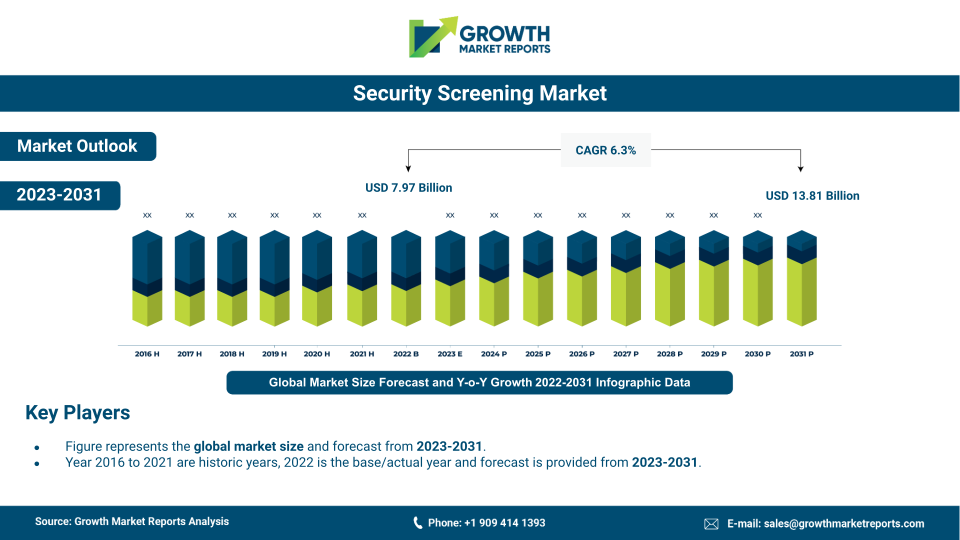
According to our latest research, the global security screening market size reached USD 9.8 billion in 2024, driven by rising security concerns and technological advancements across key sectors. The market is set to expand at a robust CAGR of 8.2% from 2025 to 2033, with forecasts indicating the market will attain USD 19.4 billion by 2033. This impressive growth is underpinned by increased investments in advanced screening solutions, regulatory mandates, and the growing need to safeguard critical infrastructure worldwide.
One of the primary growth factors in the security screening market is the escalating incidence of global security threats, including terrorism, smuggling, and cyber-physical attacks. Governments and private sector organizations are intensifying their investments in comprehensive screening systems to mitigate risks in public spaces, transportation hubs, and sensitive facilities. The demand for sophisticated screening technologies, such as biometric verification and advanced X-ray systems, is surging as stakeholders seek to enhance threat detection capabilities while maintaining operational efficiency. Additionally, the proliferation of international travel and trade has led to stricter regulatory frameworks, compelling airports, border checkpoints, and seaports to adopt state-of-the-art security screening solutions.
Technological innovation is another significant driver shaping the trajectory of the security screening market. The integration of artificial intelligence, machine learning, and automation into screening devices has revolutionized the industry, enabling faster, more accurate detection of threats with minimal human intervention. Companies are increasingly deploying multi-modal screening systems that combine X-ray, electromagnetic, and biometric technologies to address evolving security challenges. Furthermore, the miniaturization of components and the development of portable screening devices have expanded the application scope beyond traditional settings, facilitating rapid deployment in emergency scenarios and temporary checkpoints.
The market is also benefitting from heightened awareness and proactive security measures in commercial and industrial sectors. Enterprises are prioritizing employee and asset protection, leading to widespread adoption of security screening solutions in office complexes, manufacturing plants, and retail environments. The ongoing digital transformation across industries has prompted the convergence of physical and cybersecurity measures, creating new opportunities for integrated screening platforms. As organizations strive to comply with data privacy and security regulations, the demand for biometric and contactless screening technologies is gaining momentum, further propelling market growth.
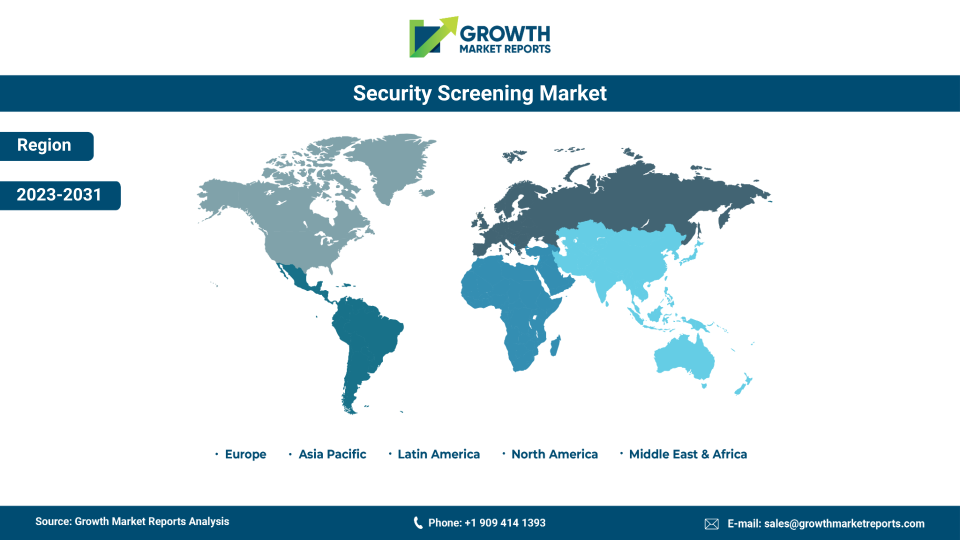
Regionally, North America continues to dominate the security screening market due to its advanced infrastructure, stringent regulatory standards, and substantial defense spending. However, Asia Pacific is emerging as the fastest-growing region, fueled by rapid urbanization, expanding transportation networks, and increased government initiatives to bolster security in public and private sectors. Europe and the Middle East & Africa are also witnessing steady growth, supported by modernization efforts and rising security concerns in high-traffic locations. The market’s regional dynamics are influenced by varying threat landscapes, regulatory environments, and economic conditions, resulting in diverse adoption patterns and investment priorities.
The security screening market by product type encompasses a wide range of solutions, including X-ray screening systems, metal detectors, explosive trace detectors, biometric systems, and other specialized devices. X-ray screening systems remain the most widely deployed product, particularly in transportation hubs and critical infrastructure, owing to their ability to provide detailed imagery and detect concealed threats efficiently. The evolution of dual-view and multi-energy X-ray technologies has significantly improved detection accuracy, enabling operators to differentiate between organic and inorganic materials. These systems are increasingly equipped with automated threat recognition software, reducing the risk of human error and enhancing throughput in high-traffic environments.
Metal detectors, both walk-through and handheld variants, continue to be a cornerstone of perimeter and entry-point security strategies. Their cost-effectiveness, ease of use, and reliability make them indispensable in airports, stadiums, and government buildings. Recent advancements in multi-zone detection and discrimination algorithms have improved their ability to pinpoint the location and type of metallic objects, thereby minimizing false alarms and expediting the screening process. The integration of metal detectors with access control and surveillance systems is further amplifying their utility in comprehensive security ecosystems.
Explosive trace detectors are experiencing increased demand, particularly in regions with heightened terrorism risks and stringent regulatory mandates. These devices utilize advanced chemical analysis techniques, such as ion mobility spectrometry and mass spectrometry, to detect trace amounts of explosive substances on surfaces, baggage, and cargo. The miniaturization of explosive trace detectors has facilitated their deployment in mobile security units and remote checkpoints, expanding their application beyond fixed installations. Continuous research and development efforts are focused on enhancing sensitivity, reducing detection times, and minimizing maintenance requirements to meet the evolving needs of end-users.
Biometric systems represent one of the fastest-growing segments within the security screening market, driven by the increasing adoption of facial recognition, fingerprint, and iris scanning technologies. These systems offer unparalleled accuracy and convenience in identity verification, making them ideal for secure access control in airports, government facilities, and corporate environments. The shift towards contactless biometric solutions, accelerated by the COVID-19 pandemic, is further boosting market growth. Vendors are leveraging artificial intelligence and deep learning algorithms to improve recognition rates, reduce spoofing risks, and ensure compliance with data privacy regulations.
Other product types, including under-vehicle inspection systems, radiation detectors, and chemical sensors, are gaining traction in specialized applications such as border security, customs, and nuclear facilities. The integration of multiple detection modalities into unified platforms is enabling stakeholders to address complex threat scenarios with greater agility. As security threats become more sophisticated, the demand for innovative and adaptable screening products is expected to remain strong, driving continuous product development and market expansion.
| Attributes | Details |
| Report Title | Security Screening Market Research Report 2033 |
| By Product Type | X-ray Screening Systems, Metal Detectors, Explosive Trace Detectors, Biometric Systems, Others |
| By Application | Airport Security, Border Security, Government Buildings, Commercial, Others |
| By End-User | Transportation, Government, Commercial, Industrial, Others |
| By Technology | Electromagnetic, Biometric, X-ray, Others |
| Regions Covered | North America, Europe, APAC, Latin America, MEA |
| Countries Covered | North America (United States, Canada), Europe (Germany, France, Italy, United Kingdom, Spain, Russia, Rest of Europe), Asia Pacific (China, Japan, South Korea, India, Australia, South East Asia (SEA), Rest of Asia Pacific), Latin America (Mexico, Brazil, Rest of Latin America), Middle East & Africa (Saudi Arabia, South Africa, United Arab Emirates, Rest of Middle East & Africa) |
| Base Year | 2024 |
| Historic Data | 2018-2023 |
| Forecast Period | 2025-2033 |
| Number of Pages | 272 |
| Number of Tables & Figures | 277 |
| Customization Available | Yes, the report can be customized as per your need. |
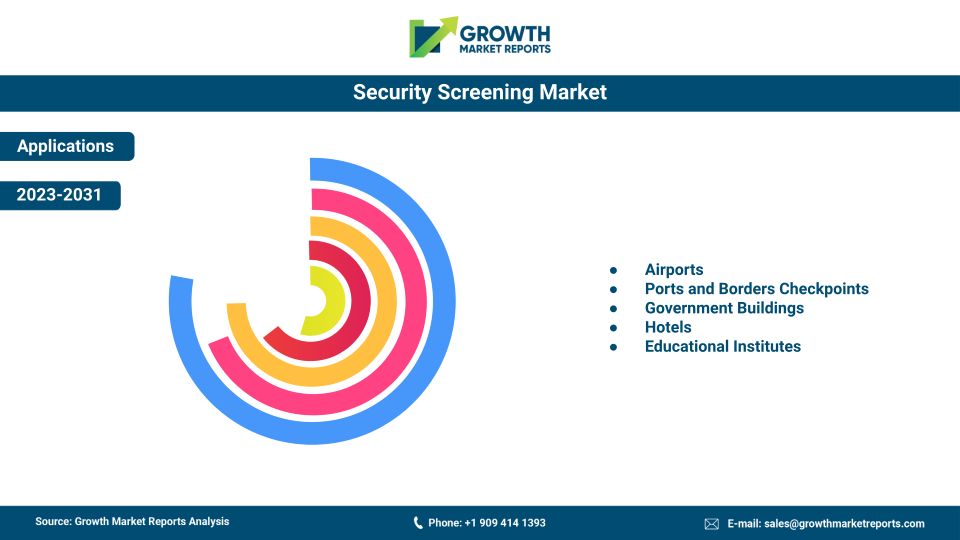
The security screening market serves a diverse array of applications, with airport security constituting the largest segment by revenue. Airports are under constant pressure to enhance passenger safety while maintaining efficient operations, leading to the widespread adoption of advanced screening technologies. Automated screening lanes, computed tomography scanners, and biometric e-gates are becoming standard features in major international airports, enabling faster processing and improved threat detection. The growing emphasis on seamless passenger experiences is prompting airports to invest in integrated screening solutions that minimize bottlenecks and enhance overall security posture.
Border security is another critical application area, particularly in regions facing significant migration pressures, smuggling, and cross-border terrorism threats. Governments are deploying a combination of fixed and mobile screening systems at land, sea, and air borders to detect illicit goods, unauthorized individuals, and hazardous materials. The integration of biometric identification, advanced imaging, and data analytics is enabling authorities to streamline border control processes while maintaining high levels of security. The ongoing development of smart borders, powered by real-time data sharing and automated screening, is expected to drive sustained investment in this segment.
Government buildings represent a high-value target for security threats, necessitating robust screening measures to protect personnel, assets, and sensitive information. Security screening solutions in this segment range from walk-through metal detectors and baggage scanners to biometric access control and visitor management systems. The adoption of layered security approaches, combining physical and digital screening, is gaining traction as government agencies seek to address insider threats and cyber-physical risks. The trend towards smart government infrastructure and e-governance is further boosting demand for integrated security screening platforms.
The commercial sector, encompassing office complexes, shopping malls, hotels, and entertainment venues, is witnessing increased adoption of security screening technologies in response to rising incidents of workplace violence, theft, and terrorism. Businesses are prioritizing employee and customer safety, leading to the deployment of screening solutions at entry points and critical zones. The shift towards contactless and automated screening, driven by health and safety considerations, is reshaping the commercial application landscape. Vendors are offering customizable solutions tailored to the unique needs of different commercial environments, supporting market growth.
Other applications, such as educational institutions, healthcare facilities, and event venues, are also embracing security screening solutions to safeguard occupants and assets. The increasing frequency of mass gatherings and public events is prompting organizers to implement comprehensive screening protocols, leveraging portable and rapid-deployment systems. The convergence of physical security with digital monitoring and emergency response capabilities is creating new opportunities for innovation and market expansion across diverse application areas.
The security screening market caters to a broad spectrum of end-users, with the transportation sector accounting for a significant share of market revenue. Airports, seaports, railways, and mass transit systems are major adopters of advanced screening technologies, driven by regulatory mandates and the imperative to safeguard passengers and cargo. The integration of screening systems with ticketing, surveillance, and incident response platforms is enhancing situational awareness and operational efficiency. The ongoing expansion of transportation infrastructure in emerging economies is expected to fuel further demand for security screening solutions in this segment.
Government agencies, including law enforcement, customs, and defense organizations, represent another key end-user group. These entities require high-performance screening solutions capable of detecting a wide range of threats in dynamic and high-risk environments. The growing focus on homeland security and critical infrastructure protection is prompting governments to invest in next-generation screening technologies, including AI-powered analytics, remote monitoring, and mobile screening units. Collaborative initiatives between public and private sectors are fostering innovation and accelerating the adoption of cutting-edge solutions.
The commercial sector is increasingly recognizing the importance of robust security screening to protect employees, customers, and assets. Enterprises across industries, from banking and retail to hospitality and real estate, are deploying screening systems at entrances, loading docks, and sensitive areas. The rise of workplace safety regulations and the growing threat of insider attacks are driving demand for integrated screening platforms that combine physical, digital, and behavioral analytics. Vendors are offering scalable solutions that can be tailored to the specific risk profiles and operational requirements of different commercial clients.
Industrial end-users, such as manufacturing plants, energy facilities, and logistics centers, are investing in security screening to prevent theft, sabotage, and unauthorized access. The convergence of physical security with industrial control systems is enabling real-time monitoring and rapid incident response, reducing operational downtime and financial losses. The adoption of ruggedized and explosion-proof screening devices is supporting deployment in challenging industrial environments. As the industrial sector embraces digital transformation and automation, the demand for smart and connected screening solutions is expected to rise.
Other end-users, including educational institutions, healthcare providers, and event organizers, are increasingly adopting security screening technologies to address evolving threat landscapes. The need to protect vulnerable populations, such as students and patients, is prompting investments in user-friendly and non-intrusive screening solutions. The growing emphasis on community safety and resilience is creating new opportunities for market growth across diverse end-user segments.
The security screening market is characterized by a diverse array of technologies, each offering unique capabilities and advantages. Electromagnetic screening, encompassing metal detectors and electromagnetic field sensors, remains a foundational technology for detecting metallic threats in a wide range of settings. Advancements in electromagnetic technology, such as improved sensitivity, multi-zone detection, and wireless connectivity, are enhancing the effectiveness and versatility of screening devices. The integration of electromagnetic screening with data analytics and remote monitoring is enabling centralized control and real-time threat assessment in complex security environments.
Biometric technologies, including facial recognition, fingerprint scanning, and iris recognition, are gaining rapid traction in the security screening market. These technologies offer high accuracy and reliability in identity verification, making them ideal for access control, border security, and high-security facilities. The adoption of AI-powered biometric systems is improving recognition rates, reducing false positives, and enabling seamless integration with existing security infrastructure. The shift towards contactless biometrics, driven by hygiene concerns and user convenience, is further accelerating market adoption.
X-ray technology remains a cornerstone of the security screening market, particularly in transportation and critical infrastructure applications. The evolution of computed tomography (CT) scanners, dual-energy X-ray systems, and automated threat detection algorithms is enabling faster and more accurate screening of baggage, cargo, and personnel. X-ray systems are increasingly being integrated with AI-driven analytics and cloud-based data management platforms, facilitating remote monitoring and predictive maintenance. The miniaturization of X-ray components and the development of portable systems are expanding the application scope to include temporary checkpoints and mobile security units.
Other technologies, such as terahertz imaging, millimeter-wave scanners, and chemical trace detection, are gaining traction in specialized applications requiring non-invasive and high-sensitivity screening. Terahertz and millimeter-wave technologies offer the ability to detect concealed objects under clothing without physical contact, making them suitable for high-throughput environments like airports and public events. Chemical trace detection technologies, including ion mobility spectrometry and mass spectrometry, are essential for identifying explosives, narcotics, and hazardous substances in real time. The continuous advancement of these technologies is enabling stakeholders to address emerging threats and regulatory requirements with greater agility.
The convergence of multiple screening technologies into unified platforms is a key trend shaping the future of the security screening market. Integrated solutions that combine electromagnetic, biometric, X-ray, and chemical detection capabilities are enabling comprehensive threat detection and streamlined operations. The adoption of cloud-based analytics, IoT connectivity, and machine learning is transforming traditional screening systems into intelligent, adaptive platforms capable of evolving with changing threat landscapes. As security challenges become more complex and dynamic, the demand for innovative and interoperable screening technologies is expected to drive sustained market growth.
One of the most significant opportunities in the security screening market lies in the integration of artificial intelligence and machine learning into screening systems. AI-powered analytics can dramatically improve threat detection accuracy, reduce false alarms, and enable predictive maintenance, leading to lower operational costs and enhanced security outcomes. The growing adoption of cloud-based platforms and IoT connectivity is facilitating real-time data sharing and centralized control, enabling organizations to respond more effectively to emerging threats. Additionally, the development of portable and rapid-deployment screening solutions is opening new avenues for market expansion in temporary and remote security scenarios, such as public events, disaster response, and military operations.
Another major opportunity is the increasing demand for contactless and non-intrusive screening technologies, particularly in the wake of the COVID-19 pandemic. Organizations are prioritizing the safety and comfort of employees, customers, and travelers, driving the adoption of biometric and millimeter-wave screening systems that minimize physical contact and streamline the screening process. The expansion of smart city initiatives and the proliferation of connected infrastructure are creating new opportunities for integrated security screening platforms that combine physical, digital, and behavioral analytics. Vendors that can offer scalable, customizable, and interoperable solutions are well-positioned to capitalize on these emerging trends and capture a larger share of the market.
However, the security screening market also faces several restraining factors, including high initial investment costs, privacy concerns, and regulatory complexities. The deployment of advanced screening systems often requires significant capital expenditure and ongoing maintenance, which can be a barrier for smaller organizations and emerging economies. Privacy concerns related to biometric data collection and surveillance are prompting calls for stricter regulations and transparency, potentially slowing the adoption of certain technologies. Additionally, the rapidly evolving threat landscape and the proliferation of new attack vectors are challenging stakeholders to keep pace with technological advancements and regulatory requirements, creating uncertainty and risk in the market.
North America remains the leading region in the security screening market, accounting for approximately USD 3.4 billion in 2024. The region’s dominance is attributed to its well-established transportation infrastructure, stringent security regulations, and high levels of public and private sector investment. The United States, in particular, is a major adopter of advanced screening technologies in airports, government buildings, and critical infrastructure. The presence of leading technology providers and a strong focus on research and development are further supporting market growth in North America.
Asia Pacific is emerging as the fastest-growing region, with a projected CAGR of 10.1% from 2025 to 2033. The region’s market size reached USD 2.7 billion in 2024, driven by rapid urbanization, expanding transportation networks, and increased government spending on security infrastructure. Countries such as China, India, and Japan are investing heavily in airport modernization, smart city projects, and border security initiatives, creating significant opportunities for security screening vendors. The growing adoption of biometric and contactless screening solutions in response to public health concerns is further accelerating market growth in Asia Pacific.
Europe and the Middle East & Africa are also witnessing steady growth in the security screening market, with market sizes of USD 2.1 billion and USD 1.1 billion respectively in 2024. Europe’s growth is supported by regulatory harmonization, modernization of transportation hubs, and increasing concerns over terrorism and cross-border crime. The Middle East & Africa region is benefitting from investments in critical infrastructure, tourism, and event security, particularly in the Gulf Cooperation Council (GCC) countries. Latin America, with a market size of USD 0.5 billion in 2024, is gradually adopting advanced screening technologies, driven by urbanization and efforts to combat organized crime. Together, these regional dynamics are shaping a diverse and evolving global market landscape.
The security screening market is characterized by intense competition and rapid technological innovation, with both established players and emerging entrants vying for market share. Leading companies are investing heavily in research and development to enhance the performance, reliability, and user experience of their screening solutions. The competitive landscape is marked by frequent product launches, strategic partnerships, and mergers and acquisitions aimed at expanding product portfolios and geographic reach. Companies are also focusing on developing customized solutions to address the unique needs of different end-users and applications, further intensifying competition.
Innovation is a key differentiator in the market, with vendors leveraging artificial intelligence, machine learning, and cloud computing to deliver next-generation screening systems. The integration of advanced analytics, remote monitoring, and predictive maintenance capabilities is enabling companies to offer value-added services and strengthen customer relationships. The shift towards software-defined and modular screening platforms is providing greater flexibility and scalability, allowing organizations to adapt to evolving threat landscapes and regulatory requirements. Companies that can deliver interoperable, user-friendly, and cost-effective solutions are well-positioned to succeed in this dynamic market.
The market is also witnessing increased collaboration between technology providers, system integrators, and end-users to develop holistic security solutions that address both physical and digital threats. Public-private partnerships are playing a crucial role in driving innovation and accelerating the deployment of advanced screening technologies, particularly in critical infrastructure and public sector projects. The growing emphasis on data privacy and regulatory compliance is prompting vendors to invest in robust cybersecurity measures and transparent data management practices, further shaping the competitive landscape.
Some of the major companies operating in the security screening market include Smiths Detection, OSI Systems, L3Harris Technologies, Leidos Holdings, and Rapiscan Systems. Smiths Detection is renowned for its comprehensive portfolio of X-ray, trace detection, and integrated security solutions, serving airports, ports, and government agencies worldwide. OSI Systems, through its Rapiscan subsidiary, offers a wide range of screening products, including baggage scanners, metal detectors, and explosive trace detectors, with a strong focus on innovation and customer support. L3Harris Technologies is a key player in the development of advanced screening and surveillance systems for defense, transportation, and critical infrastructure applications.
Leidos Holdings is recognized for its expertise in integrated security solutions, combining physical screening, biometric identification, and data analytics to deliver end-to-end threat detection capabilities. Rapiscan Systems, a subsidiary of OSI Systems, is a global leader in security inspection technologies, offering solutions for aviation, cargo, and event security. These companies are continuously expanding their product offerings and global footprint through strategic acquisitions, partnerships, and investments in emerging markets. Other notable players in the market include Analogic Corporation, Nuctech Company, CEIA SpA, and Garrett Metal Detectors, each contributing to the industry’s ongoing evolution through technological innovation and customer-centric solutions.
Overall, the competitive landscape of the security screening market is dynamic and rapidly evolving, driven by technological advancements, regulatory changes, and shifting customer demands. Companies that can anticipate market trends, invest in innovation, and deliver integrated, scalable solutions are likely to maintain a competitive edge and capitalize on the substantial growth opportunities in the years ahead.
The Security Screening market has been segmented on the basis of
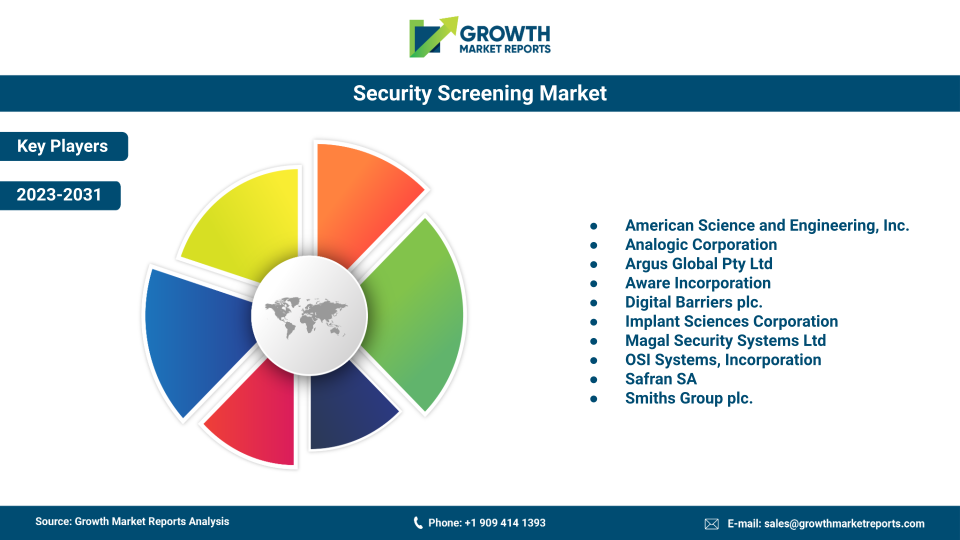
Some of the key players competing in the market are American Science and Engineering, Inc., Analogic Corporation, Argus Global Pty Ltd, Aware Incorporation, Digital Barriers plc., Implant Sciences Corporation, Magal Security Systems Ltd, OSI Systems, Inc., Safran SA, and Smiths Group plc. These companies are actively adopting new technology and engaged in R&D activities to enhance their product portfolios and expand the existing consumer base.
AI is enhancing threat detection accuracy, reducing false alarms, enabling predictive maintenance, and supporting the development of intelligent, adaptive, and integrated screening systems for diverse security environments.
Major players include Smiths Detection, OSI Systems (Rapiscan Systems), L3Harris Technologies, Leidos Holdings, Analogic Corporation, Nuctech Company, CEIA SpA, and Garrett Metal Detectors.
Challenges include high initial investment and maintenance costs, privacy concerns related to biometric data, regulatory complexities, and the need to keep up with evolving security threats and compliance requirements.
Trends include the integration of AI and machine learning for threat detection, adoption of contactless and biometric screening, development of portable and rapid-deployment devices, and convergence of multiple screening modalities into unified platforms.
Primary end-users are transportation sectors (airports, seaports, railways), government agencies (law enforcement, customs, defense), commercial enterprises, industrial facilities, educational institutions, healthcare providers, and event organizers.
Major applications include airport security, border security, government buildings, commercial spaces (offices, malls, hotels), educational institutions, healthcare facilities, and event venues.
Popular product types include X-ray screening systems, metal detectors, explosive trace detectors, biometric systems (facial recognition, fingerprint, iris scanning), and specialized devices like under-vehicle inspection systems and chemical sensors.
North America leads the market due to advanced infrastructure and high investment, while Asia Pacific is the fastest-growing region driven by urbanization, expanding transportation, and government security initiatives. Europe and the Middle East & Africa are also experiencing steady growth.
Key growth drivers include rising global security threats (terrorism, smuggling, cyber-physical attacks), technological advancements (AI, machine learning, automation), regulatory mandates, and increased investments in critical infrastructure protection.
The global security screening market reached USD 9.8 billion in 2024 and is projected to grow at a CAGR of 8.2% from 2025 to 2033, reaching USD 19.4 billion by 2033.