Segments - by Type (LCD DDIC, OLED DDIC, e-Paper DDIC, Others), by Technology (Active Matrix, Passive Matrix), by Application (Smartphones, Televisions, Tablets, Laptops, Automotive Displays, Wearables, Industrial Displays, Others), by End-User (Consumer Electronics, Automotive, Industrial, Healthcare, Others)
This report is updated with the latest market data and insights as of June 2026. Base year: 2025 | Forecast period: 2026-2034
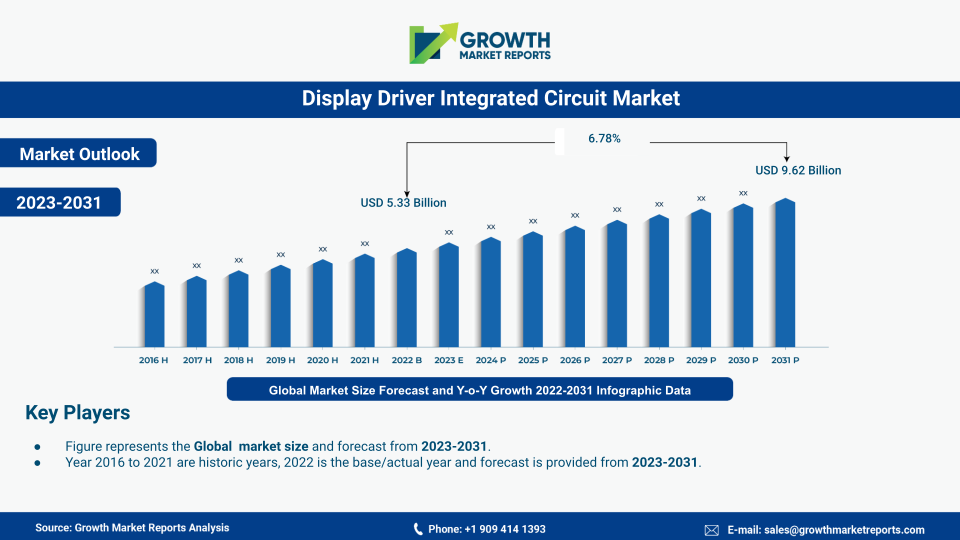
According to our latest research, the global Display Driver Integrated Circuit (DDIC) market size reached USD 10.3 billion in 2025, reflecting the robust expansion of digital display technologies worldwide. The market is poised to grow at a CAGR of 6.5% during the forecast period, with the market expected to reach USD 18.1 billion by 2034. This growth is primarily driven by the rising adoption of advanced display panels in consumer electronics, automotive, and industrial applications, as well as the ongoing evolution of display technologies such as OLED, e-Paper, and high-resolution LCDs. The convergence of these forces is creating a dynamic environment where DDIC manufacturers must continuously innovate to meet evolving performance, efficiency, and form-factor demands.
The primary growth driver for the Display Driver Integrated Circuit market is the surging demand for high-definition displays across a broad spectrum of consumer electronics, including smartphones, tablets, laptops, and televisions. With consumers increasingly seeking immersive visual experiences and manufacturers continuously pushing the boundaries of display quality, DDICs have become a critical component in delivering superior image clarity, color accuracy, and refresh rates. The transition from traditional LCDs to OLED and flexible display technologies further accelerates the need for advanced DDICs capable of handling complex signal processing and high pixel densities, thereby fueling consistent market growth. The expanding ecosystem of integrated touch and display driver solutions is also reshaping product architectures across the industry.
Another significant factor contributing to the expansion of the DDIC market is the rapid proliferation of smart and connected devices in industrial, automotive, and healthcare sectors. Automotive displays, for instance, are evolving from basic instrument clusters to sophisticated infotainment and driver-assistance systems, all of which require high-performance DDICs for seamless operation. Similarly, industrial applications are adopting advanced human-machine interfaces (HMIs) and control panels that rely on reliable and efficient display drivers. The healthcare sector is also witnessing increased integration of digital displays in diagnostic equipment, patient monitoring systems, and wearable medical devices, further broadening the application horizon for DDICs through 2034.
The ongoing trend toward miniaturization and energy efficiency in electronic devices is playing a pivotal role in shaping the DDIC market landscape. Manufacturers are focusing on developing highly integrated, low-power DDICs that can support ultra-thin, lightweight, and battery-efficient devices without compromising display performance. The emergence of foldable and rollable displays, particularly in smartphones and wearables, has created new opportunities for innovative DDIC designs that facilitate flexible, durable, and high-quality visual outputs. Innovations in backside display driver IC architectures are further enabling thinner panel designs and higher integration density. This technological evolution is expected to sustain the momentum of market growth throughout the forecast period.
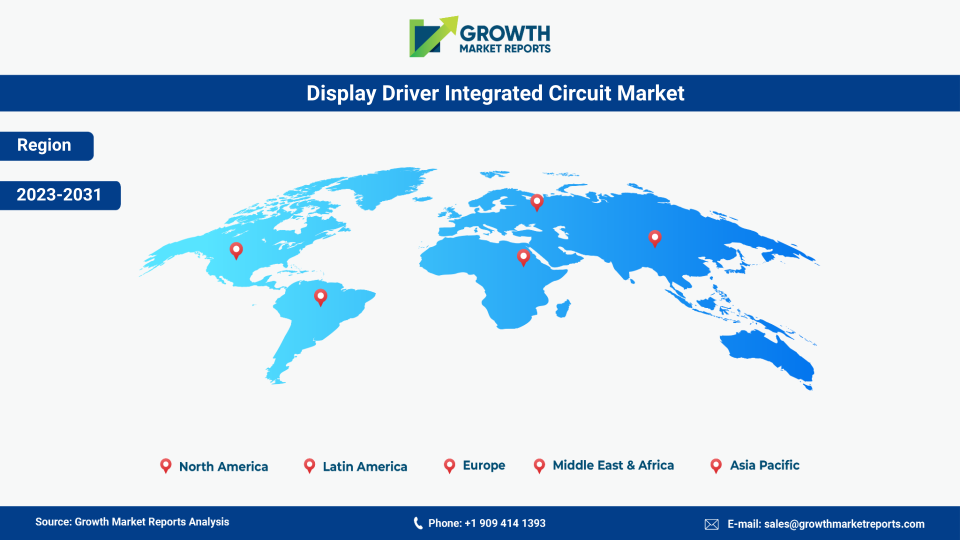
Regionally, Asia Pacific continues to dominate the global DDIC market, accounting for a substantial share of both production and consumption. The region's leadership is attributed to the presence of major display panel manufacturers, robust electronics manufacturing ecosystems, and soaring demand for consumer electronics in countries such as China, South Korea, Japan, and Taiwan. North America and Europe are also witnessing steady growth, driven by advancements in automotive displays, industrial automation, and healthcare digitization. Meanwhile, emerging economies in Latin America and the Middle East and Africa are gradually increasing their market presence, supported by rising investments in digital infrastructure and expanding consumer bases.
The Display Driver Integrated Circuit (DDIC) market can be segmented by type into LCD DDIC, OLED DDIC, e-Paper DDIC, and others, each catering to distinct display technologies and end-user requirements. LCD DDICs currently hold the largest market share at approximately 44.5% in 2025, owing to the widespread adoption of liquid crystal displays in televisions, monitors, laptops, and industrial equipment. The maturity and cost-effectiveness of LCD technology ensure its continued relevance, particularly in price-sensitive markets and applications where ultra-high resolution or flexibility is not a primary concern. However, the segment is witnessing gradual saturation as newer display technologies gain traction across premium device categories.
OLED DDICs are rapidly emerging as the fastest-growing segment, representing approximately 38.2% of the market in 2025, driven by the escalating demand for high-end smartphones, premium televisions, and next-generation wearable devices. OLED technology offers superior contrast, vibrant colors, and flexible form factors, all of which require specialized DDICs capable of managing complex drive schemes and higher data rates. The proliferation of foldable and curved displays in flagship smartphones and automotive dashboards is further accelerating the adoption of OLED DDICs. Advances in micro-LED driver IC technology are also beginning to influence next-generation DDIC architectures, positioning this segment for robust growth over the forecast period through 2034.
The e-Paper DDIC segment, accounting for approximately 9.1% of the market in 2025, is witnessing steady growth due to its application in e-readers, digital signage, and low-power display solutions. E-Paper displays are valued for their readability under direct sunlight, ultra-low power consumption, and thin form factors, making them ideal for electronic shelf labels, smart cards, and portable reading devices. The increasing focus on energy efficiency and sustainable display solutions in retail and logistics sectors is expected to drive the demand for e-Paper DDICs through 2034, with smart retail deployments representing a particularly attractive growth vector.
The "Others" category, representing approximately 8.2% of the market in 2025, encompasses emerging and niche display technologies such as micro-LED and quantum-dot displays, each requiring tailored DDIC solutions to unlock their full potential. As research and development in advanced display technologies intensify, this segment is anticipated to witness incremental growth, particularly in specialized applications like augmented reality (AR), virtual reality (VR), and high-end industrial displays. The role of complementary components, including solutions in the broader digital light processing chip ecosystem, underscores the expanding complexity and opportunity within this category. The evolving landscape of display technologies reinforces the importance of innovation and flexibility in DDIC design and manufacturing.
| Attributes | Details |
| Report Title | Display Driver Integrated Circuit Market Research Report 2025-2034 |
| By Type | LCD DDIC, OLED DDIC, e-Paper DDIC, Others |
| By Technology | Active Matrix, Passive Matrix |
| By Application | Smartphones, Televisions, Tablets, Laptops, Automotive Displays, Wearables, Industrial Displays, Others |
| By End-User | Consumer Electronics, Automotive, Industrial, Healthcare, Others |
| Regions Covered | North America, Europe, APAC, Latin America, MEA |
| Base Year | 2025 |
| Historic Data | 2019-2024 |
| Forecast Period | 2026-2034 |
| Number of Pages | 269 |
| Number of Tables & Figures | 289 |
| Customization Available | Yes, the report can be customized as per your need. |
The DDIC market is also segmented by technology into Active Matrix and Passive Matrix approaches, each offering distinct advantages and addressing different application needs. Active Matrix technology, which utilizes thin-film transistors (TFTs) to control individual pixels, dominates the market due to its ability to deliver high-resolution, fast-refreshing, and vibrant displays. This technology is the backbone of modern smartphones, tablets, televisions, and laptops, where image quality and responsiveness are paramount. The continuous evolution of TFT materials and architectures, including low-temperature polysilicon (LTPO) and oxide TFT variants, is further enhancing the performance and integration capabilities of Active Matrix DDICs heading into 2026 and beyond.
Passive Matrix technology, while less prevalent in high-end consumer electronics, retains its relevance in cost-sensitive and low-power applications such as simple wearables, industrial panels, and basic digital displays. Passive Matrix DDICs are valued for their simplicity, lower production costs, and ease of integration, making them suitable for applications where high resolution and rapid refresh rates are not critical. The segment continues to serve niche markets and is expected to maintain a stable presence, especially in emerging economies and specialized industrial use cases through the forecast period.
The transition from Passive Matrix to Active Matrix technology is particularly evident in sectors prioritizing enhanced visual performance and interactivity. The automotive and healthcare industries are increasingly adopting Active Matrix displays for infotainment systems, instrument clusters, and medical imaging equipment, all of which demand precise control and high image fidelity. This trend is expected to drive further investments in Active Matrix DDIC research and development, fostering innovation in materials, power management, and integration techniques from 2025 onward.
Technological advancements in both Active and Passive Matrix DDICs are being propelled by the miniaturization of semiconductor components and the integration of advanced functionalities such as touch control, adaptive brightness, and power-saving modes. These enhancements not only improve end-user experiences but also enable manufacturers to differentiate their products in a highly competitive market. The growing adoption of DP Alt-Mode IC solutions alongside DDICs is enabling higher-bandwidth display connectivity in thin-and-light laptops and docking stations, further enriching the technology landscape. The convergence of display and touch driver ICs in a single package remains a central trend, streamlining device architecture and reducing overall system costs.
The application landscape for DDICs is vast, encompassing Smartphones, Televisions, Tablets, Laptops, Automotive Displays, Wearables, Industrial Displays, and others. Among these, smartphones represent the largest application segment, accounting for a significant share of global DDIC consumption in 2025. The relentless pace of innovation in smartphone displays, including higher resolutions, adaptive refresh rates up to 165Hz, and flexible form factors, has intensified the demand for advanced DDICs. Leading smartphone manufacturers are continuously integrating cutting-edge DDICs to support features such as HDR, in-display fingerprint sensors, and foldable screens, thereby driving market growth through the 2026-2034 forecast window.
Televisions and laptops also constitute major application areas, benefiting from the transition to ultra-high-definition (UHD) and smart display technologies. As consumers increasingly seek immersive home entertainment experiences, manufacturers are investing in larger, thinner, and more energy-efficient television panels, all of which require sophisticated DDICs. Similarly, the continued prevalence of hybrid work models and digital learning has sustained demand for high-performance laptop and tablet displays, further expanding the application base for DDICs. The shift toward higher-bandwidth display interfaces is also elevating interest in solutions such as DisplayPort 2.1 transmitter IC technology, which complements advanced DDIC deployments in premium computing platforms.
The automotive sector is emerging as a dynamic growth frontier for DDICs, fueled by the integration of digital instrument clusters, head-up displays, infotainment systems, and advanced driver-assistance displays. Automotive displays demand robust, reliable, and high-visibility solutions capable of withstanding harsh operating conditions and delivering critical information in real time. DDIC manufacturers are responding with automotive-grade solutions that meet stringent safety, durability, and performance standards aligned with ISO 26262 functional safety requirements, positioning the sector for sustained growth through 2034.
Wearables and industrial displays represent additional growth avenues, driven by the rising adoption of smartwatches, fitness trackers, medical monitoring devices, and industrial control panels. These applications require compact, energy-efficient DDICs that can deliver clear visuals and responsive interfaces within constrained form factors. The expansion of the Internet of Things (IoT) ecosystem and the increasing digitization of industrial operations are expected to further boost demand for specialized DDIC solutions across diverse application domains through the forecast period.
The DDIC market is segmented by end-user into Consumer Electronics, Automotive, Industrial, Healthcare, and others, each exhibiting unique demand patterns and growth trajectories. Consumer electronics remain the dominant end-user segment, accounting for the majority of DDIC shipments globally in 2025. The relentless evolution of smartphones, tablets, laptops, and televisions continues to drive innovation in DDIC design, with manufacturers striving to deliver ever-higher display resolutions, color accuracy, and energy efficiency to meet consumer expectations in a highly competitive device market.
The automotive industry is rapidly emerging as a key growth driver for the DDIC market, propelled by the digital transformation of vehicle interiors and the adoption of advanced driver-assistance systems (ADAS). Modern vehicles are increasingly equipped with multiple digital displays, including instrument clusters, infotainment panels, rear-seat entertainment screens, and heads-up displays. These applications require automotive-grade DDICs that can deliver high reliability, wide temperature tolerance, and compliance with stringent safety standards, thereby expanding the market's scope and complexity considerably between 2026 and 2034.
Industrial end-users are leveraging DDICs to power advanced human-machine interfaces (HMIs), control panels, and monitoring systems across manufacturing, energy, and transportation sectors. The shift toward Industry 4.0 and smart factory initiatives is driving demand for rugged, high-performance displays capable of operating in challenging environments. DDIC manufacturers are responding with solutions that offer enhanced durability, extended lifespans, and compatibility with a wide range of industrial display technologies, ensuring relevance across a broad industrial customer base.
The healthcare sector, though a comparatively smaller segment, is witnessing growing adoption of DDICs in diagnostic imaging equipment, patient monitoring systems, and wearable medical devices. The emphasis on telemedicine, remote patient monitoring, and digital health records is fostering demand for reliable and high-quality display solutions. Other emerging end-user segments include education, retail, and public information systems, all of which are integrating digital displays to enhance user engagement and operational efficiency, further diversifying the end-user landscape for DDICs through 2034.
The Display Driver Integrated Circuit (DDIC) market presents a wealth of opportunities for innovation and expansion, particularly as display technologies continue to evolve and diversify. The rising adoption of OLED, micro-LED, and quantum-dot displays across consumer electronics, automotive, and industrial sectors creates significant growth prospects for DDIC manufacturers capable of delivering tailored, high-performance solutions. The ongoing shift toward flexible, foldable, and transparent displays opens new avenues for breakthrough DDIC designs, enabling manufacturers to capture emerging market segments and differentiate their offerings in a competitive landscape. Additionally, the convergence of display and touch functionalities in a single IC package, as exemplified by the expanding market for TDDI solutions, presents opportunities for cost reduction, simplified device architectures, and enhanced user experiences across 2026-2034.
Another notable opportunity lies in the increasing digitization of automotive and industrial applications, where demand for robust, high-reliability DDICs is on the rise. The integration of advanced driver-assistance systems, digital cockpits, and smart factory interfaces requires specialized DDICs capable of delivering superior performance under demanding conditions. The healthcare sector also offers untapped potential, with growing investments in telemedicine, remote diagnostics, and wearable medical devices driving demand for compact, energy-efficient display solutions. Furthermore, the expansion of smart cities, digital signage, and public information systems presents additional growth avenues for DDICs, as governments and enterprises invest in digital transformation initiatives at scale.
Despite these opportunities, the DDIC market faces several restraining factors that could impact its growth trajectory through 2034. One of the primary challenges is the intense price competition and margin pressure resulting from the commoditization of display technologies and the presence of numerous low-cost manufacturers, particularly in Asia Pacific. The cyclical nature of the consumer electronics industry, coupled with fluctuations in raw material prices and supply chain disruptions, can also pose risks to market stability. Additionally, the rapid pace of technological change necessitates continuous investment in research and development, which may strain the resources of smaller players and limit their ability to compete effectively against established industry leaders with deep capital and IP portfolios.
Asia Pacific remains the undisputed leader in the global DDIC market, commanding a market size of approximately USD 5.9 billion in 2025 and projected to maintain a strong CAGR of 7.0% through 2034. The region's dominance is underpinned by its robust electronics manufacturing ecosystem, the presence of leading display panel and semiconductor companies, and the insatiable demand for consumer electronics in countries such as China, South Korea, Japan, and Taiwan. These countries collectively account for a substantial portion of global DDIC production and consumption, driven by large-scale investments in research, manufacturing, and supply chain integration. The rapid adoption of advanced display technologies and the proliferation of smart devices in Asia Pacific are expected to sustain the region's leadership position throughout the 2026-2034 forecast period.
North America represents the second-largest regional market, with a market size of approximately USD 1.8 billion in 2025. The region is characterized by strong demand for high-end consumer electronics, automotive displays, and industrial applications, supported by a mature technology ecosystem and significant investments in research and development. The United States, in particular, is a major hub for innovation in display technologies, with leading companies focusing on next-generation solutions for both consumer and enterprise markets. The increasing integration of digital displays in automotive, healthcare, and industrial sectors is expected to drive steady growth in North America over the 2026-2034 forecast window.
Europe follows closely, with a market size of approximately USD 1.3 billion in 2025, reflecting the region's focus on automotive innovation, industrial automation, and healthcare digitization. Germany, France, and the United Kingdom are at the forefront of adopting advanced display solutions in automotive and industrial applications, supported by strong engineering capabilities and a commitment to sustainability and functional safety standards. Latin America and the Middle East and Africa, with market sizes of approximately USD 0.72 billion and USD 0.58 billion respectively in 2025, are gradually expanding their presence in the global DDIC market. These regions are benefiting from rising investments in digital infrastructure, expanding consumer bases, and increasing adoption of smart devices, albeit from a smaller base compared to Asia Pacific, North America, and Europe.
The competitive landscape of the Display Driver Integrated Circuit (DDIC) market is characterized by intense rivalry among a mix of global semiconductor giants, specialized IC manufacturers, and emerging technology innovators. The market is highly consolidated at the top, with a handful of leading players accounting for a significant share of global revenues, particularly in the high-volume segments of consumer electronics and automotive displays. These companies have established strong brand recognition, extensive intellectual property portfolios, and robust supply chain networks, enabling them to maintain a competitive edge through economies of scale, continuous innovation, and strategic partnerships with display panel manufacturers and OEMs in 2025 and beyond.
Mid-tier and niche players are actively targeting specialized segments such as e-Paper, industrial, and medical displays, where customization, reliability, and application-specific features are paramount. These companies often differentiate themselves through agility, customer-centric solutions, and deep expertise in specific display technologies or end-user industries. The rapid pace of technological advancement in the DDIC market necessitates substantial investments in research and development, with leading players focusing on next-generation integration, miniaturization, and energy efficiency to address evolving customer requirements and emerging display trends across the 2026-2034 forecast period.
Strategic collaborations, mergers and acquisitions, and joint ventures are common strategies employed by market participants to expand their product portfolios, access new markets, and accelerate innovation. The convergence of display and touch driver functionalities, the integration of AI-driven display optimization features, and the development of automotive-grade and industrial-grade solutions are key focus areas for differentiation and value creation. The competitive landscape is further shaped by the entry of new players from adjacent semiconductor and electronics domains, as well as the emergence of startups leveraging novel materials and architectures to disrupt traditional DDIC paradigms.
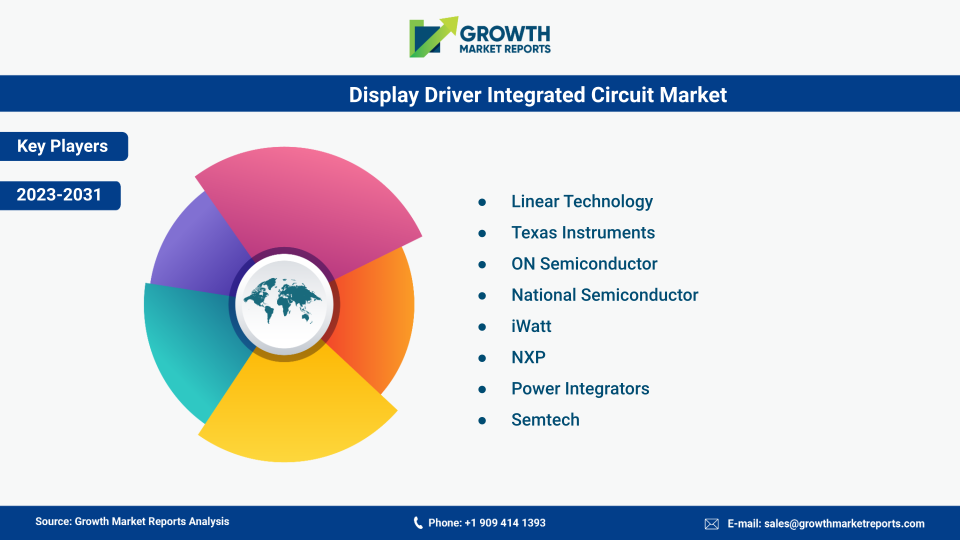
Major companies operating in the global DDIC market include Samsung Electronics, Novatek Microelectronics, Synaptics, Himax Technologies, Raydium Semiconductor, Sitronix Technology, Magnachip Semiconductor, Silicon Works, FocalTech Systems, Parade Technologies, Solomon Systech, ROHM Semiconductor, Analog Devices, onsemi, Texas Instruments, Renesas Electronics, Ilitek, and MediaTek. Samsung Electronics is a dominant force, leveraging its integrated supply chain and leadership in OLED panel manufacturing to deliver cutting-edge DDIC solutions for smartphones, televisions, and automotive applications. Novatek Microelectronics and Raydium Semiconductor are recognized for their innovation in LCD and OLED DDICs, serving leading display panel and device manufacturers worldwide. Synaptics and Himax Technologies are prominent in touch and display integration, catering to both consumer and industrial markets with a broad portfolio of combined solutions.
Sitronix Technology and Magnachip Semiconductor are known for their focus on automotive and industrial-grade DDICs, offering solutions that meet stringent reliability and performance standards. Silicon Works specializes in high-performance display driver ICs for ultra-high-definition televisions and advanced display panels, with a growing presence in OLED driver solutions. FocalTech Systems and Parade Technologies are gaining ground in high-resolution mobile and laptop display segments, while Renesas Electronics and Ilitek are expanding their footprints in both consumer and industrial display applications. These companies are continuously investing in R&D to enhance product performance, reduce power consumption, and enable new form factors, ensuring their continued leadership in a rapidly evolving market through 2034.
The Display Driver Integrated Circuit market has been segmented on the basis of
The DDIC market faces several key challenges, including intense price competition and margin pressure from low-cost Asian manufacturers, cyclical demand fluctuations in consumer electronics, and ongoing supply chain vulnerabilities exposed by global semiconductor shortages. The rapid pace of display technology evolution necessitates continuous R&D spending, which can strain smaller players. Additionally, stringent automotive and healthcare qualification requirements extend product development timelines and increase compliance costs for manufacturers targeting those segments.
Leading players in the global DDIC market include Samsung Electronics, Novatek Microelectronics, Synaptics, Himax Technologies, Raydium Semiconductor, Sitronix Technology, Magnachip Semiconductor, Silicon Works, FocalTech Systems, Parade Technologies, Solomon Systech, ROHM Semiconductor, Analog Devices, onsemi, Texas Instruments, Renesas Electronics, Ilitek, and MediaTek. These companies compete through continuous R&D investment, strategic partnerships with display panel manufacturers, and expanding automotive and industrial product portfolios.
Key emerging trends include the rapid adoption of OLED and micro-LED display technologies, the proliferation of foldable and rollable displays, and the integration of touch and display driver functions into a single IC package, as seen in the growing TDDI IC segment. AI-driven display optimization, automotive-grade DDIC solutions for digital cockpits, and the expansion of e-Paper displays in retail and logistics represent significant growth opportunities through 2034.
Consumer electronics remains the dominant end-user segment, accounting for the majority of global DDIC shipments in 2025. The automotive industry is the fastest-growing end-user, propelled by digital transformation of vehicle interiors and the integration of advanced driver-assistance systems. Industrial end-users rely on DDICs for human-machine interfaces and control panels, while the healthcare sector is increasingly adopting DDICs in diagnostic imaging, patient monitoring, and wearable medical devices.
Key applications include smartphones (the largest segment), televisions, tablets, laptops, automotive displays, wearables, and industrial displays. Smartphones account for the highest DDIC consumption due to relentless innovation in screen resolution, refresh rates, and foldable form factors. Automotive displays are the fastest-growing application, supported by digital cockpits, head-up displays, and infotainment systems. Wearables and industrial displays are also expanding rapidly as IoT adoption and Industry 4.0 initiatives accelerate.
The DDIC market is segmented by technology into Active Matrix and Passive Matrix approaches. Active Matrix technology, based on thin-film transistor (TFT) architectures, dominates the market due to its ability to deliver high-resolution, fast-refreshing, and vibrant displays used in smartphones, televisions, tablets, and automotive applications. Passive Matrix technology remains relevant in cost-sensitive, low-power, and niche applications such as simple wearables, industrial panels, and basic digital signage.
The DDIC market is segmented into LCD DDICs, OLED DDICs, e-Paper DDICs, and others. LCD DDICs currently hold the largest share at around 44.5%, while OLED DDICs are the fastest-growing segment at 38.2% share in 2025, reflecting strong demand from premium smartphones and automotive displays. e-Paper DDICs account for approximately 9.1%, driven by e-readers, electronic shelf labels, and digital signage, while the others category, covering micro-LED and quantum-dot drivers, represents around 8.2%.
Asia Pacific leads the global DDIC market with a 57.3% share in 2025, driven by dominant display panel and semiconductor manufacturing ecosystems in China, South Korea, Japan, and Taiwan. North America holds the second-largest share at 17.5%, fueled by demand in automotive, industrial, and high-end consumer electronics. Europe accounts for 12.6%, led by automotive and industrial display adoption in Germany, France, and the United Kingdom.
The primary growth drivers include surging demand for high-definition displays in smartphones, tablets, laptops, and televisions, along with the rapid proliferation of OLED and flexible display technologies. Additional drivers encompass the digitization of automotive cockpits, expanding industrial automation, the rise of wearable devices, and increasing investments in healthcare display systems. Energy efficiency requirements and the push for miniaturized semiconductor components are also accelerating innovation in DDIC design.
The global DDIC market reached USD 10.3 billion in 2025 and is projected to grow at a CAGR of 6.5% from 2026 to 2034, reaching approximately USD 18.1 billion by 2034. This growth is driven by rising demand for advanced display panels across consumer electronics, automotive, and industrial applications, as well as the rapid adoption of OLED and flexible display technologies.