Video Analytics Market Research Report 2033

Video Analytics Market Research Report 2033

Segments - by Component (Software, Hardware, Services), by Application (Security and Surveillance, Traffic Management, Intrusion Detection, Facial Recognition, License Plate Recognition, Crowd Management, Others), by Deployment Mode (On-Premises, Cloud), by End-User (BFSI, Retail, Transportation and Logistics, Government, Healthcare, Manufacturing, Others)

https://growthmarketreports.com/Raksha
Author : Raksha Sharma
https://growthmarketreports.com/Vaibhav
Fact-checked by : V. Chandola
https://growthmarketreports.com/Shruti
Editor : Shruti Bhat

Upcoming | Report ID :ICT-SE-2157 | 4.9 Rating | 63 Reviews | 280 Pages | Format : Docx PDF

Report Description


Video Analytics Market Outlook

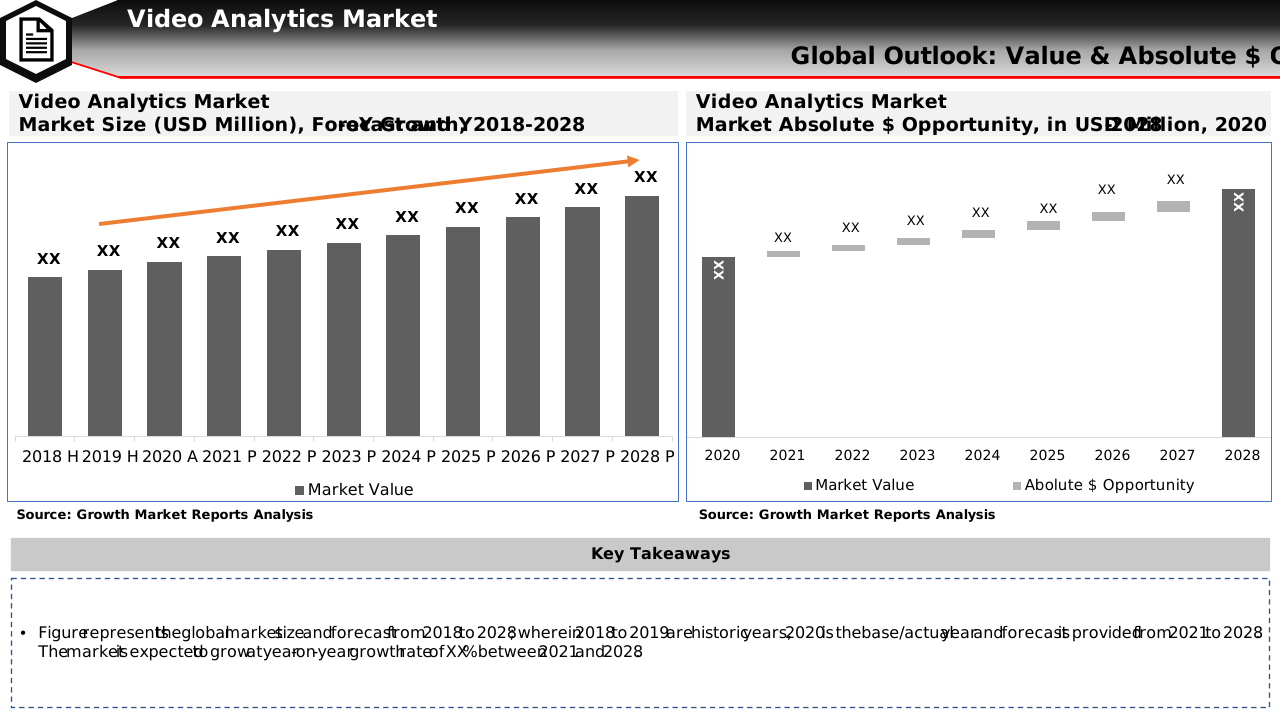
According to our latest research, the global video analytics market size reached USD 8.5 billion in 2024, driven by rapid advancements in artificial intelligence and the increasing demand for automated surveillance solutions across diverse sectors. The market is expected to grow at a CAGR of 21.4% from 2025 to 2033, projecting the market value to reach USD 57.7 billion by 2033. This robust growth is primarily fueled by a surge in smart city initiatives, heightened security concerns, and the proliferation of IoT-enabled devices, which are collectively transforming the landscape of video analytics worldwide.

The primary growth driver for the video analytics market is the escalating need for real-time surveillance and security solutions across both public and private domains. Organizations are increasingly leveraging video analytics to automate the monitoring of critical infrastructure, public spaces, and commercial properties. The integration of advanced technologies such as deep learning, computer vision, and edge computing has significantly enhanced the accuracy and efficiency of video analytics systems. These systems not only reduce human error but also enable proactive threat detection, thereby minimizing potential security breaches. Furthermore, the COVID-19 pandemic accelerated the adoption of video analytics in healthcare and retail sectors for monitoring social distancing and occupancy management, further amplifying market growth.

Another significant factor propelling the expansion of the video analytics market is the growing implementation of smart city projects globally. Governments and municipalities are deploying sophisticated video analytics solutions for traffic management, crowd control, and urban safety, aiming to enhance the quality of urban life. The adoption of intelligent transportation systems, coupled with the integration of video analytics in traffic cameras, enables authorities to monitor vehicular flow, detect violations, and respond swiftly to incidents. Additionally, the retail sector is increasingly utilizing video analytics for customer behavior analysis, queue management, and loss prevention, which not only improves operational efficiency but also enhances customer experience.

The proliferation of cloud-based video analytics platforms is further accelerating market growth by offering scalable, flexible, and cost-effective solutions. Cloud deployment allows organizations to seamlessly manage and analyze vast volumes of video data without the need for significant on-premises infrastructure investment. This shift is particularly beneficial for small and medium-sized enterprises (SMEs) that seek to leverage advanced analytics capabilities without incurring high upfront costs. Moreover, the integration of video analytics with IoT and connected devices has broadened the scope of applications, enabling predictive maintenance, asset tracking, and operational optimization across industries such as manufacturing, logistics, and healthcare.

The advent of Intelligent Video Analytics Chip technology is revolutionizing the capabilities of video analytics systems. These chips are designed to process vast amounts of video data in real-time, enabling faster and more accurate analysis. By embedding advanced AI algorithms directly into the chip, these devices can perform complex tasks such as facial recognition, motion detection, and behavioral analysis with minimal latency. This innovation not only enhances the efficiency of video surveillance systems but also reduces the reliance on cloud-based processing, offering a more secure and privacy-conscious solution. As the demand for real-time analytics continues to grow, the integration of intelligent video analytics chips is expected to become a standard feature in next-generation surveillance systems.

Regionally, North America continues to dominate the video analytics market, accounting for the largest revenue share in 2024, followed closely by Europe and the Asia Pacific. The presence of leading technology providers, early adoption of AI-based surveillance systems, and stringent regulatory frameworks regarding public safety contribute to the regionÂ’s leadership. Meanwhile, the Asia Pacific region is witnessing the fastest growth, fueled by rapid urbanization, increasing investments in smart city infrastructure, and the rising need for advanced security solutions in emerging economies such as China and India. Latin America and the Middle East & Africa are also experiencing steady growth, albeit at a comparatively moderate pace, as organizations in these regions gradually adopt video analytics to address evolving security and operational challenges.

Global Video Analytics Industry Outlook

Component Analysis

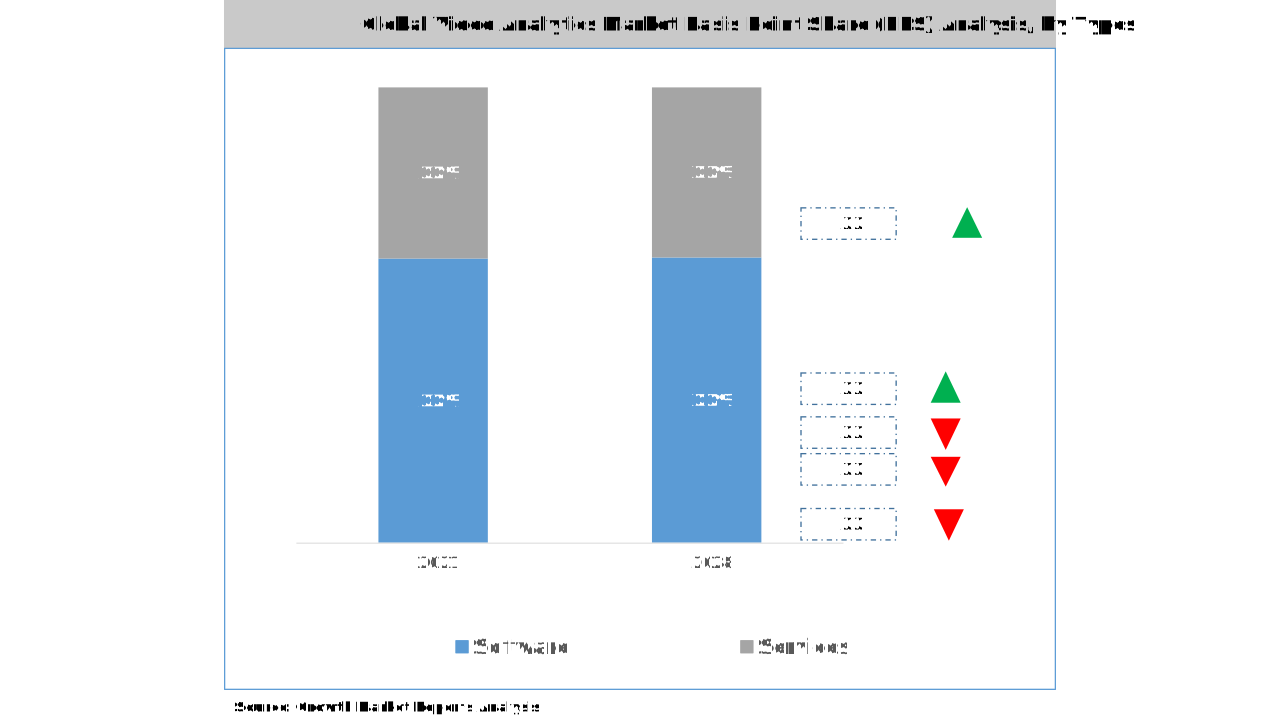
The video analytics market by component is segmented into software, hardware, and services. Software remains the cornerstone of the market, accounting for the largest share in 2024, as organizations seek advanced analytics capabilities to interpret and extract actionable insights from video data. The evolution of software platforms, powered by AI and machine learning algorithms, has enabled real-time processing, object detection, facial recognition, and behavioral analysis with unprecedented accuracy. These software solutions are increasingly integrated with existing video management systems, allowing businesses to automate surveillance, streamline operations, and enhance situational awareness. The continuous development of intuitive user interfaces and customizable dashboards further contributes to the widespread adoption of video analytics software across industries.

Hardware components, including cameras, sensors, and storage devices, play a vital role in the overall ecosystem by facilitating the capture, transmission, and storage of high-resolution video data. The transition from traditional analog cameras to IP-based and smart cameras has significantly improved the quality and efficiency of video analytics solutions. Modern hardware is equipped with embedded processing capabilities, enabling edge analytics and reducing latency in critical applications such as intrusion detection and traffic management. The hardware segment is also witnessing innovation in terms of compact designs, energy efficiency, and integration with wireless connectivity, making it suitable for deployment in diverse environments, from urban centers to remote industrial sites.

In the realm of video analytics, ensuring compliance with data privacy regulations is paramount, leading to the development of Privacy-Compliant Video Analytics solutions. These solutions are designed to address the growing concerns around data protection by incorporating features such as data anonymization, encryption, and access control. By adhering to stringent privacy standards, these systems enable organizations to leverage video analytics without compromising individual privacy rights. The implementation of privacy-compliant analytics is particularly crucial in regions with rigorous data protection laws, such as the European Union, where GDPR compliance is mandatory. As privacy concerns continue to shape the landscape of video analytics, the adoption of compliant solutions is anticipated to rise significantly.

The services segment, encompassing consulting, system integration, support, and maintenance, is experiencing rapid growth as organizations increasingly rely on expert guidance to implement and optimize video analytics solutions. Service providers offer end-to-end assistance, from system design and deployment to ongoing technical support and upgrades, ensuring seamless integration with existing IT infrastructure. The growing complexity of video analytics systems and the need for customized solutions tailored to specific industry requirements are driving the demand for professional services. Furthermore, managed services are gaining traction, particularly among SMEs, as they offer a cost-effective way to access advanced analytics capabilities without the burden of managing in-house resources.

Overall, the synergy between software, hardware, and services is pivotal in delivering comprehensive video analytics solutions that address the diverse needs of end-users. As technology continues to evolve, the market is witnessing a shift towards integrated platforms that combine robust analytics engines with scalable hardware and value-added services. This holistic approach not only enhances the functionality and reliability of video analytics systems but also ensures long-term value for organizations across sectors such as security, transportation, retail, and healthcare.

Report Scope

Attributes Details
Report Title Video Analytics Market Research Report 2033
By Component Software, Hardware, Services
By Application Security and Surveillance, Traffic Management, Intrusion Detection, Facial Recognition, License Plate Recognition, Crowd Management, Others
By Deployment Mode On-Premises, Cloud
By End-User BFSI, Retail, Transportation and Logistics, Government, Healthcare, Manufacturing, Others
Regions Covered North America, Europe, APAC, Latin America, MEA
Base Year 2024
Historic Data 2018-2023
Forecast Period 2025-2033
Number of Pages 280
Number of Tables & Figures 367
Customization Available Yes, the report can be customized as per your need.

Application Analysis

The video analytics market is characterized by a wide range of applications, with security and surveillance emerging as the dominant segment in 2024. Organizations across public and private sectors are increasingly deploying video analytics to automate the monitoring of critical infrastructure, public spaces, and commercial premises. Advanced features such as motion detection, object tracking, and anomaly detection enable security personnel to identify and respond to potential threats in real-time, thereby reducing the risk of security breaches. The integration of video analytics with access control systems and alarm management further enhances situational awareness and incident response capabilities.

The development of specialized Video Analytics Chipsets is playing a crucial role in advancing the capabilities of video surveillance systems. These chipsets are engineered to handle the intensive computational demands of video processing, enabling real-time analytics and decision-making at the edge. By integrating AI and machine learning capabilities directly into the hardware, video analytics chipsets facilitate faster and more efficient data processing, reducing the need for extensive cloud resources. This not only enhances the performance of video analytics solutions but also offers a more scalable and cost-effective approach for organizations looking to deploy large-scale surveillance networks. As the market for video analytics continues to expand, the demand for high-performance chipsets is expected to grow, driving further innovation in this field.

Traffic management is another key application area, where video analytics solutions are used to monitor vehicular flow, detect traffic violations, and optimize signal timings. Intelligent transportation systems leverage video analytics to improve road safety, reduce congestion, and enhance the overall efficiency of urban mobility. The ability to analyze traffic patterns, identify bottlenecks, and predict incidents enables authorities to make data-driven decisions and implement proactive measures. In addition, video analytics is increasingly being used for license plate recognition, facilitating automated toll collection, law enforcement, and parking management in smart cities.

Facial recognition and intrusion detection are rapidly gaining traction as organizations seek to enhance security and streamline access control processes. Facial recognition technology, powered by deep learning algorithms, enables accurate identification and verification of individuals, making it a valuable tool for law enforcement, border control, and enterprise security. Intrusion detection systems leverage video analytics to monitor restricted areas, detect unauthorized access, and trigger real-time alerts, thereby minimizing the risk of theft, vandalism, and other security incidents. The growing adoption of these applications across sectors such as BFSI, healthcare, and government underscores the critical role of video analytics in safeguarding assets and ensuring public safety.

Crowd management is emerging as a critical application, particularly in the context of large-scale events, transportation hubs, and public gatherings. Video analytics solutions enable authorities to monitor crowd density, detect abnormal behavior, and implement crowd control measures to ensure safety and prevent incidents such as stampedes. The COVID-19 pandemic further highlighted the importance of crowd management, as organizations adopted video analytics to enforce social distancing and occupancy limits in public spaces. Other applications, including retail analytics, customer behavior analysis, and operational optimization, are also gaining momentum as businesses seek to leverage video data to drive strategic decision-making and improve customer experience.

Deployment Mode Analysis

The video analytics market by deployment mode is segmented into on-premises and cloud-based solutions, each offering distinct advantages and addressing specific organizational needs. On-premises deployment continues to hold a significant share, particularly among large enterprises and government agencies that prioritize data privacy, security, and regulatory compliance. These organizations often manage sensitive or classified information, necessitating the deployment of video analytics solutions within their own IT infrastructure to maintain control over data storage and access. On-premises systems also offer greater customization and integration capabilities, enabling organizations to tailor solutions to their unique operational requirements.

Cloud-based deployment is experiencing rapid growth, driven by the increasing demand for scalable, flexible, and cost-effective video analytics solutions. Cloud platforms enable organizations to manage and analyze vast volumes of video data without the need for substantial upfront investment in hardware and infrastructure. This deployment model is particularly attractive to small and medium-sized enterprises (SMEs) that seek to leverage advanced analytics capabilities while minimizing operational complexity and IT overhead. The ability to access video analytics tools and insights from any location further enhances the appeal of cloud-based solutions, supporting remote monitoring and collaboration across geographically dispersed teams.

Hybrid deployment models are also gaining traction, allowing organizations to combine the benefits of on-premises and cloud-based solutions. By leveraging edge computing and distributed analytics, hybrid models enable real-time processing of critical video data at the source, while leveraging the cloud for centralized storage, long-term analytics, and advanced AI-driven insights. This approach offers a balanced solution for organizations with diverse operational needs, ensuring data security and compliance while maximizing scalability and agility. The adoption of hybrid models is particularly prominent in sectors such as transportation, healthcare, and manufacturing, where both real-time responsiveness and centralized analytics are essential.

The choice of deployment mode is influenced by several factors, including organizational size, industry regulations, budget constraints, and the complexity of video analytics requirements. As cloud technology continues to mature and data security concerns are addressed through advanced encryption and compliance frameworks, the adoption of cloud-based and hybrid video analytics solutions is expected to accelerate. Vendors are responding to this trend by offering flexible deployment options and seamless migration paths, enabling organizations to transition from on-premises to cloud-based solutions as their needs evolve.

End-User Analysis

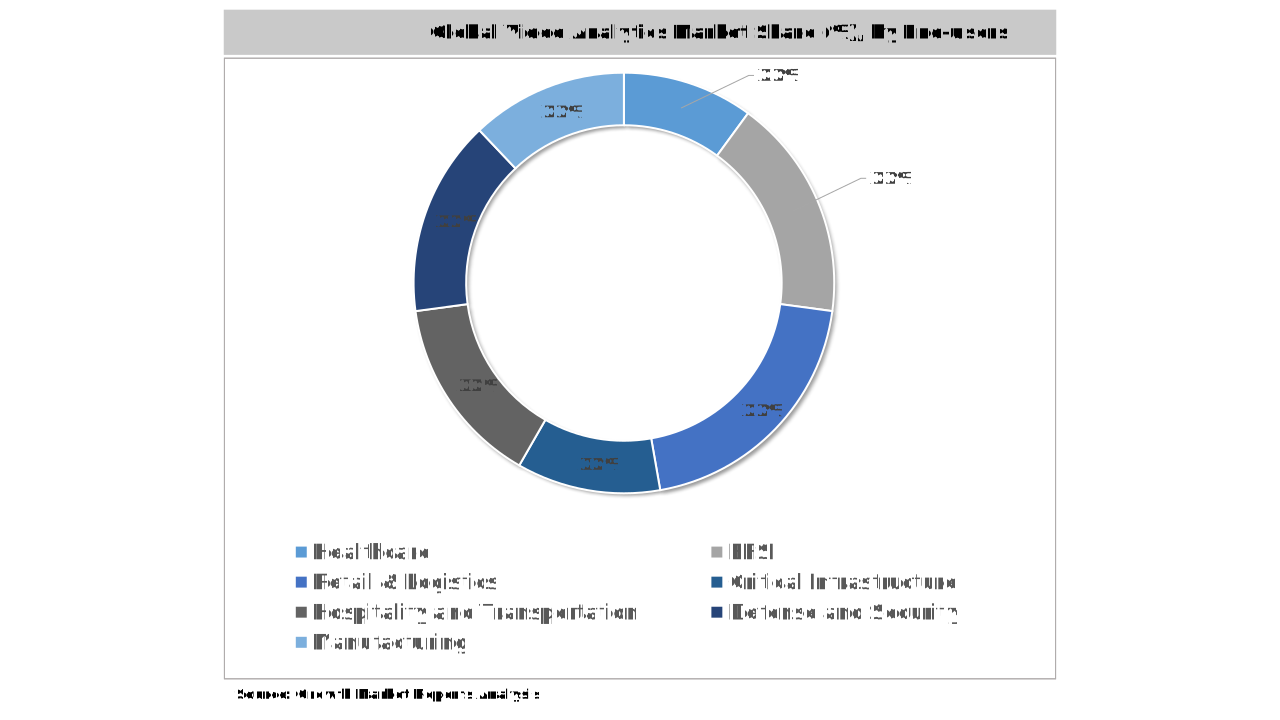
The video analytics market serves a diverse range of end-users, with the BFSI (Banking, Financial Services, and Insurance) sector representing a major segment in 2024. Financial institutions are leveraging video analytics to enhance security, monitor customer behavior, and ensure compliance with regulatory requirements. Advanced features such as facial recognition, intrusion detection, and suspicious activity monitoring enable banks to prevent fraud, protect assets, and deliver a safe environment for customers and employees. The integration of video analytics with access control and alarm systems further strengthens the security posture of financial institutions, making it a critical component of their risk management strategy.

Retail is another prominent end-user segment, where video analytics is transforming store operations, customer engagement, and loss prevention. Retailers are utilizing video analytics to analyze foot traffic, monitor customer behavior, and optimize store layouts, leading to improved sales and enhanced customer experience. Queue management, inventory tracking, and theft detection are among the key applications that help retailers streamline operations and reduce shrinkage. The ability to extract actionable insights from video data enables retailers to make informed decisions, personalize marketing strategies, and respond proactively to changing consumer preferences.

Transportation and logistics is witnessing significant adoption of video analytics for applications such as traffic management, fleet monitoring, and cargo security. Video analytics solutions enable transportation authorities to monitor road conditions, detect accidents, and manage traffic flow in real-time, improving safety and efficiency. In logistics, video analytics is used to track shipments, monitor warehouse operations, and ensure the security of goods in transit. The integration of video analytics with IoT devices and telematics systems further enhances visibility and control across the supply chain, enabling organizations to optimize routes, reduce operational costs, and improve service delivery.

Government, healthcare, and manufacturing sectors are also key end-users of video analytics, leveraging the technology for a wide range of applications. Governments deploy video analytics for public safety, law enforcement, and urban management, while healthcare organizations use it for patient monitoring, access control, and operational efficiency. In manufacturing, video analytics is employed for quality control, worker safety, and process optimization. The versatility of video analytics solutions and their ability to address industry-specific challenges underscore their growing importance across multiple sectors, driving sustained market growth.

Opportunities & Threats

The video analytics market presents substantial opportunities for innovation and expansion, particularly in the context of smart city initiatives and the proliferation of IoT-enabled devices. As urban populations continue to grow, the demand for intelligent surveillance, traffic management, and public safety solutions is expected to surge. Video analytics vendors have the opportunity to develop advanced solutions that leverage AI, machine learning, and edge computing to deliver real-time insights and automate critical decision-making processes. The integration of video analytics with emerging technologies such as 5G, augmented reality, and blockchain further expands the scope of applications, enabling new use cases and business models across sectors such as transportation, healthcare, and retail.

Another significant opportunity lies in the development of industry-specific video analytics solutions tailored to the unique needs of sectors such as healthcare, manufacturing, and logistics. By addressing the distinct operational challenges and regulatory requirements of these industries, vendors can differentiate their offerings and capture new market segments. The growing adoption of cloud-based and hybrid deployment models also presents opportunities for service providers to offer managed video analytics solutions, enabling organizations to access advanced capabilities without the burden of managing complex IT infrastructure. Strategic partnerships, mergers, and acquisitions are expected to drive innovation and accelerate market expansion as vendors seek to enhance their technology portfolios and global reach.

Despite the promising outlook, the video analytics market faces several restraining factors, with data privacy and security concerns being the most prominent. The collection, storage, and analysis of video data raise significant privacy issues, particularly in regions with stringent data protection regulations such as the European Union. Organizations must ensure compliance with legal frameworks such as GDPR, which mandate strict controls over the processing of personal data. The risk of data breaches, unauthorized access, and misuse of video analytics systems poses a threat to both organizations and individuals. Addressing these challenges requires robust security measures, transparent data governance policies, and ongoing investment in cybersecurity technologies.

Regional Outlook

North America continues to lead the video analytics market with a market size of USD 3.1 billion in 2024, accounting for the largest revenue share globally. The regionÂ’s dominance is attributed to the early adoption of advanced surveillance technologies, the presence of leading technology vendors, and a strong focus on public safety and security. The United States, in particular, has witnessed significant investments in smart city projects, transportation infrastructure, and critical infrastructure protection, driving the demand for video analytics solutions. The region is also characterized by a high level of regulatory compliance and data privacy awareness, which has spurred the development of secure and reliable video analytics platforms.

Europe holds the second-largest share in the video analytics market, with a market value of USD 2.2 billion in 2024. The region is witnessing steady growth, driven by the increasing adoption of video analytics in transportation, retail, and government sectors. Countries such as the United Kingdom, Germany, and France are at the forefront of deploying intelligent transportation systems, leveraging video analytics for traffic management, public safety, and urban planning. The implementation of strict data protection regulations, such as GDPR, has prompted organizations to invest in privacy-centric video analytics solutions, ensuring compliance while harnessing the benefits of advanced analytics.

The Asia Pacific region is emerging as the fastest-growing market, with a CAGR of 26.5% and a market size of USD 1.8 billion in 2024. Rapid urbanization, increasing investments in smart city infrastructure, and the rising need for advanced security solutions are driving the adoption of video analytics in countries such as China, India, and Japan. The regionÂ’s dynamic economic landscape, coupled with government initiatives to enhance urban safety and efficiency, is creating significant opportunities for video analytics vendors. Latin America and the Middle East & Africa are also experiencing gradual growth, with a combined market size of USD 1.4 billion in 2024, as organizations in these regions increasingly recognize the value of video analytics in addressing security and operational challenges.

Video Analytics Market Statistics

Competitor Outlook

The video analytics market is highly competitive, characterized by the presence of numerous global and regional players striving to gain a competitive edge through innovation, strategic partnerships, and mergers and acquisitions. The market is marked by rapid technological advancements, with vendors continuously enhancing their product portfolios to incorporate the latest AI and machine learning capabilities. Leading companies are investing heavily in research and development to develop advanced analytics algorithms, improve system integration, and deliver scalable solutions that cater to the evolving needs of end-users. The competitive landscape is further shaped by the emergence of niche players specializing in industry-specific solutions, driving differentiation and fostering healthy competition.

Strategic collaborations and partnerships are playing a pivotal role in the growth of the video analytics market. Technology vendors are partnering with system integrators, cloud service providers, and IoT device manufacturers to deliver comprehensive solutions that address the diverse requirements of customers. These collaborations enable vendors to leverage complementary strengths, accelerate product development, and expand their market reach. Mergers and acquisitions are also prevalent, as companies seek to enhance their technology portfolios, enter new markets, and strengthen their competitive positioning. The trend towards consolidation is expected to continue, driven by the need for scale, innovation, and global expansion.

Customer-centric innovation remains a key focus area for leading video analytics vendors. Companies are investing in user-friendly interfaces, customizable dashboards, and advanced reporting tools to enhance the user experience and drive adoption. The increasing demand for cloud-based and hybrid deployment models has prompted vendors to offer flexible solutions that cater to organizations of all sizes and industries. Additionally, the emphasis on data privacy and security has led to the development of robust encryption, access control, and compliance features, ensuring that video analytics solutions meet the highest standards of reliability and trustworthiness.

Major players in the video analytics market include Axis Communications AB, Avigilon Corporation (Motorola Solutions), Genetec Inc., Honeywell International Inc., Bosch Security Systems, IBM Corporation, Cisco Systems Inc., Huawei Technologies Co., Ltd., Dahua Technology, and Hikvision Digital Technology Co., Ltd. These companies are recognized for their extensive product portfolios, global presence, and strong focus on innovation. For instance, Axis Communications is renowned for its advanced network cameras and intelligent analytics solutions, while Avigilon (a Motorola Solutions company) is a leader in AI-powered video surveillance and access control systems. Genetec is known for its unified security platforms, offering seamless integration of video analytics, access control, and license plate recognition. Honeywell and Bosch are prominent players in the security and building automation sectors, leveraging video analytics to deliver comprehensive safety and operational solutions.

IBM and Cisco are leveraging their expertise in AI, cloud computing, and IoT to develop scalable video analytics platforms that cater to large enterprises and government agencies. Huawei, Dahua, and Hikvision are leading players in the Asia Pacific region, offering a wide range of video surveillance and analytics solutions tailored to the needs of emerging markets. These companies are continuously expanding their product offerings, investing in R&D, and forming strategic alliances to strengthen their market position. The competitive landscape is expected to remain dynamic, with ongoing innovation and collaboration driving the future growth of the video analytics market.

Key Players

  • Axis Communications
  • Bosch Security Systems
  • Honeywell International Inc.
  • Hikvision Digital Technology
  • Dahua Technology
  • Avigilon (Motorola Solutions)
  • Genetec Inc.
  • Cisco Systems
  • IBM Corporation
  • Agent Video Intelligence (Agent Vi)
  • Verint Systems
  • Huawei Technologies
  • Panasonic Corporation
  • Siemens AG
  • BriefCam (Canon Inc.)
  • IntelliVision (Nortek Security & Control)
  • VIVOTEK Inc.
  • Qognify
  • iOmniscient
  • Digital Barriers
Video Analytics Market Overview

Segments

The Video Analytics market has been segmented on the basis of

Component

  • Software
  • Hardware
  • Services

Application

  • Security and Surveillance
  • Traffic Management
  • Intrusion Detection
  • Facial Recognition
  • License Plate Recognition
  • Crowd Management
  • Others

Deployment Mode

  • On-Premises
  • Cloud

End-User

  • BFSI
  • Retail
  • Transportation and Logistics
  • Government
  • Healthcare
  • Manufacturing
  • Others

Competitive Landscape

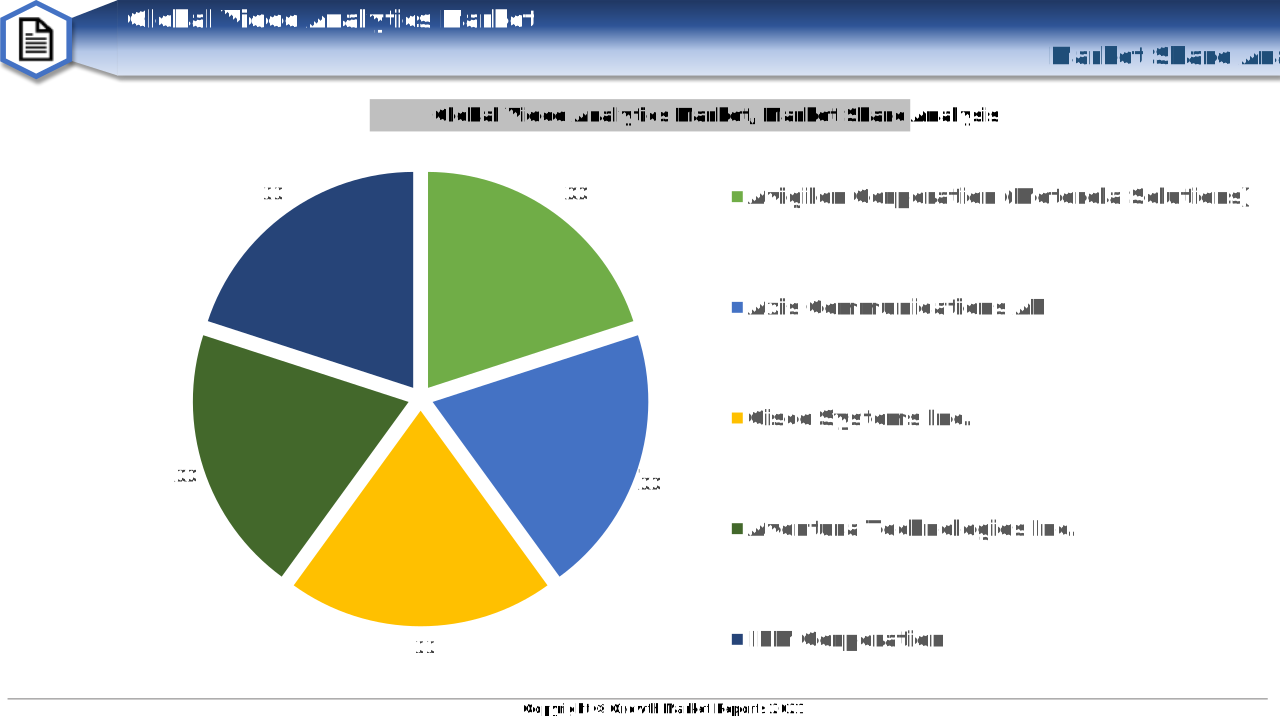
Key players competing in the video analytics market are Avigilon Corporation (Motorola Solutions); Axis Communications AB; Cisco Systems Inc.; Aventura Technologies Inc.; and IBM Corporation.

Major players are focusing on modernization of video analytics tool using artificial intelligence and machine learning and also offering advanced solutions to expand their market share.

Global Video Analytics Market Key Players

Frequently Asked Questions

Industries such as BFSI, retail, transportation and logistics, government, healthcare, and manufacturing are major adopters of video analytics for security, operational efficiency, and customer experience.

Data privacy and security concerns, especially regarding compliance with regulations like GDPR, are significant challenges. Organizations must invest in robust security and data governance.

Key companies include Axis Communications, Bosch Security Systems, Honeywell International, Hikvision, Dahua Technology, Avigilon (Motorola Solutions), Genetec, Cisco, IBM, Huawei, and others.

The market is segmented into software, hardware, and services. Software holds the largest share, while hardware (cameras, sensors, storage) and services (consulting, integration, support) are also vital.

Cloud-based video analytics platforms are accelerating market growth by offering scalable, flexible, and cost-effective solutions, especially benefiting SMEs with limited IT infrastructure.

Major applications include security and surveillance, traffic management, intrusion detection, facial recognition, license plate recognition, crowd management, and retail analytics.

Key growth drivers include the rise of smart city initiatives, heightened security concerns, proliferation of IoT-enabled devices, and advancements in AI technologies such as deep learning and computer vision.

North America holds the largest revenue share in the video analytics market, followed by Europe and the Asia Pacific. The Asia Pacific region is the fastest-growing, with significant adoption in China and India.

The video analytics market is expected to grow at a CAGR of 21.4% from 2025 to 2033, reaching an estimated value of USD 57.7 billion by 2033.

As of 2024, the global video analytics market size reached USD 8.5 billion, driven by advancements in AI and increased demand for automated surveillance solutions.

Table Of Content

Chapter 1 Executive Summary
Chapter 2 Assumptions and Acronyms Used
Chapter 3 Research Methodology
Chapter 4 Video Analytics Market Overview
   4.1 Introduction
      4.1.1 Market Taxonomy
      4.1.2 Market Definition
      4.1.3 Macro-Economic Factors Impacting the Market Growth
   4.2 Video Analytics Market Dynamics
      4.2.1 Market Drivers
      4.2.2 Market Restraints
      4.2.3 Market Opportunity
   4.3 Video Analytics Market - Supply Chain Analysis
      4.3.1 List of Key Suppliers
      4.3.2 List of Key Distributors
      4.3.3 List of Key Consumers
   4.4 Key Forces Shaping the Video Analytics Market
      4.4.1 Bargaining Power of Suppliers
      4.4.2 Bargaining Power of Buyers
      4.4.3 Threat of Substitution
      4.4.4 Threat of New Entrants
      4.4.5 Competitive Rivalry
   4.5 Global Video Analytics Market Size & Forecast, 2023-2032
      4.5.1 Video Analytics Market Size and Y-o-Y Growth
      4.5.2 Video Analytics Market Absolute $ Opportunity

Chapter 5 Global Video Analytics Market Analysis and Forecast By Component
   5.1 Introduction
      5.1.1 Key Market Trends & Growth Opportunities By Component
      5.1.2 Basis Point Share (BPS) Analysis By Component
      5.1.3 Absolute $ Opportunity Assessment By Component
   5.2 Video Analytics Market Size Forecast By Component
      5.2.1 Software
      5.2.2 Hardware
      5.2.3 Services
   5.3 Market Attractiveness Analysis By Component

Chapter 6 Global Video Analytics Market Analysis and Forecast By Application
   6.1 Introduction
      6.1.1 Key Market Trends & Growth Opportunities By Application
      6.1.2 Basis Point Share (BPS) Analysis By Application
      6.1.3 Absolute $ Opportunity Assessment By Application
   6.2 Video Analytics Market Size Forecast By Application
      6.2.1 Security and Surveillance
      6.2.2 Traffic Management
      6.2.3 Intrusion Detection
      6.2.4 Facial Recognition
      6.2.5 License Plate Recognition
      6.2.6 Crowd Management
      6.2.7 Others
   6.3 Market Attractiveness Analysis By Application

Chapter 7 Global Video Analytics Market Analysis and Forecast By Deployment Mode
   7.1 Introduction
      7.1.1 Key Market Trends & Growth Opportunities By Deployment Mode
      7.1.2 Basis Point Share (BPS) Analysis By Deployment Mode
      7.1.3 Absolute $ Opportunity Assessment By Deployment Mode
   7.2 Video Analytics Market Size Forecast By Deployment Mode
      7.2.1 On-Premises
      7.2.2 Cloud
   7.3 Market Attractiveness Analysis By Deployment Mode

Chapter 8 Global Video Analytics Market Analysis and Forecast By End-User
   8.1 Introduction
      8.1.1 Key Market Trends & Growth Opportunities By End-User
      8.1.2 Basis Point Share (BPS) Analysis By End-User
      8.1.3 Absolute $ Opportunity Assessment By End-User
   8.2 Video Analytics Market Size Forecast By End-User
      8.2.1 BFSI
      8.2.2 Retail
      8.2.3 Transportation and Logistics
      8.2.4 Government
      8.2.5 Healthcare
      8.2.6 Manufacturing
      8.2.7 Others
   8.3 Market Attractiveness Analysis By End-User

Chapter 9 Global Video Analytics Market Analysis and Forecast by Region
   9.1 Introduction
      9.1.1 Key Market Trends & Growth Opportunities By Region
      9.1.2 Basis Point Share (BPS) Analysis By Region
      9.1.3 Absolute $ Opportunity Assessment By Region
   9.2 Video Analytics Market Size Forecast By Region
      9.2.1 North America
      9.2.2 Europe
      9.2.3 Asia Pacific
      9.2.4 Latin America
      9.2.5 Middle East & Africa (MEA)
   9.3 Market Attractiveness Analysis By Region

Chapter 10 Coronavirus Disease (COVID-19) Impact 
   10.1 Introduction 
   10.2 Current & Future Impact Analysis 
   10.3 Economic Impact Analysis 
   10.4 Government Policies 
   10.5 Investment Scenario

Chapter 11 North America Video Analytics Analysis and Forecast
   11.1 Introduction
   11.2 North America Video Analytics Market Size Forecast by Country
      11.2.1 U.S.
      11.2.2 Canada
   11.3 Basis Point Share (BPS) Analysis by Country
   11.4 Absolute $ Opportunity Assessment by Country
   11.5 Market Attractiveness Analysis by Country
   11.6 North America Video Analytics Market Size Forecast By Component
      11.6.1 Software
      11.6.2 Hardware
      11.6.3 Services
   11.7 Basis Point Share (BPS) Analysis By Component 
   11.8 Absolute $ Opportunity Assessment By Component 
   11.9 Market Attractiveness Analysis By Component
   11.10 North America Video Analytics Market Size Forecast By Application
      11.10.1 Security and Surveillance
      11.10.2 Traffic Management
      11.10.3 Intrusion Detection
      11.10.4 Facial Recognition
      11.10.5 License Plate Recognition
      11.10.6 Crowd Management
      11.10.7 Others
   11.11 Basis Point Share (BPS) Analysis By Application 
   11.12 Absolute $ Opportunity Assessment By Application 
   11.13 Market Attractiveness Analysis By Application
   11.14 North America Video Analytics Market Size Forecast By Deployment Mode
      11.14.1 On-Premises
      11.14.2 Cloud
   11.15 Basis Point Share (BPS) Analysis By Deployment Mode 
   11.16 Absolute $ Opportunity Assessment By Deployment Mode 
   11.17 Market Attractiveness Analysis By Deployment Mode
   11.18 North America Video Analytics Market Size Forecast By End-User
      11.18.1 BFSI
      11.18.2 Retail
      11.18.3 Transportation and Logistics
      11.18.4 Government
      11.18.5 Healthcare
      11.18.6 Manufacturing
      11.18.7 Others
   11.19 Basis Point Share (BPS) Analysis By End-User 
   11.20 Absolute $ Opportunity Assessment By End-User 
   11.21 Market Attractiveness Analysis By End-User

Chapter 12 Europe Video Analytics Analysis and Forecast
   12.1 Introduction
   12.2 Europe Video Analytics Market Size Forecast by Country
      12.2.1 Germany
      12.2.2 France
      12.2.3 Italy
      12.2.4 U.K.
      12.2.5 Spain
      12.2.6 Russia
      12.2.7 Rest of Europe
   12.3 Basis Point Share (BPS) Analysis by Country
   12.4 Absolute $ Opportunity Assessment by Country
   12.5 Market Attractiveness Analysis by Country
   12.6 Europe Video Analytics Market Size Forecast By Component
      12.6.1 Software
      12.6.2 Hardware
      12.6.3 Services
   12.7 Basis Point Share (BPS) Analysis By Component 
   12.8 Absolute $ Opportunity Assessment By Component 
   12.9 Market Attractiveness Analysis By Component
   12.10 Europe Video Analytics Market Size Forecast By Application
      12.10.1 Security and Surveillance
      12.10.2 Traffic Management
      12.10.3 Intrusion Detection
      12.10.4 Facial Recognition
      12.10.5 License Plate Recognition
      12.10.6 Crowd Management
      12.10.7 Others
   12.11 Basis Point Share (BPS) Analysis By Application 
   12.12 Absolute $ Opportunity Assessment By Application 
   12.13 Market Attractiveness Analysis By Application
   12.14 Europe Video Analytics Market Size Forecast By Deployment Mode
      12.14.1 On-Premises
      12.14.2 Cloud
   12.15 Basis Point Share (BPS) Analysis By Deployment Mode 
   12.16 Absolute $ Opportunity Assessment By Deployment Mode 
   12.17 Market Attractiveness Analysis By Deployment Mode
   12.18 Europe Video Analytics Market Size Forecast By End-User
      12.18.1 BFSI
      12.18.2 Retail
      12.18.3 Transportation and Logistics
      12.18.4 Government
      12.18.5 Healthcare
      12.18.6 Manufacturing
      12.18.7 Others
   12.19 Basis Point Share (BPS) Analysis By End-User 
   12.20 Absolute $ Opportunity Assessment By End-User 
   12.21 Market Attractiveness Analysis By End-User

Chapter 13 Asia Pacific Video Analytics Analysis and Forecast
   13.1 Introduction
   13.2 Asia Pacific Video Analytics Market Size Forecast by Country
      13.2.1 China
      13.2.2 Japan
      13.2.3 South Korea
      13.2.4 India
      13.2.5 Australia
      13.2.6 South East Asia (SEA)
      13.2.7 Rest of Asia Pacific (APAC)
   13.3 Basis Point Share (BPS) Analysis by Country
   13.4 Absolute $ Opportunity Assessment by Country
   13.5 Market Attractiveness Analysis by Country
   13.6 Asia Pacific Video Analytics Market Size Forecast By Component
      13.6.1 Software
      13.6.2 Hardware
      13.6.3 Services
   13.7 Basis Point Share (BPS) Analysis By Component 
   13.8 Absolute $ Opportunity Assessment By Component 
   13.9 Market Attractiveness Analysis By Component
   13.10 Asia Pacific Video Analytics Market Size Forecast By Application
      13.10.1 Security and Surveillance
      13.10.2 Traffic Management
      13.10.3 Intrusion Detection
      13.10.4 Facial Recognition
      13.10.5 License Plate Recognition
      13.10.6 Crowd Management
      13.10.7 Others
   13.11 Basis Point Share (BPS) Analysis By Application 
   13.12 Absolute $ Opportunity Assessment By Application 
   13.13 Market Attractiveness Analysis By Application
   13.14 Asia Pacific Video Analytics Market Size Forecast By Deployment Mode
      13.14.1 On-Premises
      13.14.2 Cloud
   13.15 Basis Point Share (BPS) Analysis By Deployment Mode 
   13.16 Absolute $ Opportunity Assessment By Deployment Mode 
   13.17 Market Attractiveness Analysis By Deployment Mode
   13.18 Asia Pacific Video Analytics Market Size Forecast By End-User
      13.18.1 BFSI
      13.18.2 Retail
      13.18.3 Transportation and Logistics
      13.18.4 Government
      13.18.5 Healthcare
      13.18.6 Manufacturing
      13.18.7 Others
   13.19 Basis Point Share (BPS) Analysis By End-User 
   13.20 Absolute $ Opportunity Assessment By End-User 
   13.21 Market Attractiveness Analysis By End-User

Chapter 14 Latin America Video Analytics Analysis and Forecast
   14.1 Introduction
   14.2 Latin America Video Analytics Market Size Forecast by Country
      14.2.1 Brazil
      14.2.2 Mexico
      14.2.3 Rest of Latin America (LATAM)
   14.3 Basis Point Share (BPS) Analysis by Country
   14.4 Absolute $ Opportunity Assessment by Country
   14.5 Market Attractiveness Analysis by Country
   14.6 Latin America Video Analytics Market Size Forecast By Component
      14.6.1 Software
      14.6.2 Hardware
      14.6.3 Services
   14.7 Basis Point Share (BPS) Analysis By Component 
   14.8 Absolute $ Opportunity Assessment By Component 
   14.9 Market Attractiveness Analysis By Component
   14.10 Latin America Video Analytics Market Size Forecast By Application
      14.10.1 Security and Surveillance
      14.10.2 Traffic Management
      14.10.3 Intrusion Detection
      14.10.4 Facial Recognition
      14.10.5 License Plate Recognition
      14.10.6 Crowd Management
      14.10.7 Others
   14.11 Basis Point Share (BPS) Analysis By Application 
   14.12 Absolute $ Opportunity Assessment By Application 
   14.13 Market Attractiveness Analysis By Application
   14.14 Latin America Video Analytics Market Size Forecast By Deployment Mode
      14.14.1 On-Premises
      14.14.2 Cloud
   14.15 Basis Point Share (BPS) Analysis By Deployment Mode 
   14.16 Absolute $ Opportunity Assessment By Deployment Mode 
   14.17 Market Attractiveness Analysis By Deployment Mode
   14.18 Latin America Video Analytics Market Size Forecast By End-User
      14.18.1 BFSI
      14.18.2 Retail
      14.18.3 Transportation and Logistics
      14.18.4 Government
      14.18.5 Healthcare
      14.18.6 Manufacturing
      14.18.7 Others
   14.19 Basis Point Share (BPS) Analysis By End-User 
   14.20 Absolute $ Opportunity Assessment By End-User 
   14.21 Market Attractiveness Analysis By End-User

Chapter 15 Middle East & Africa (MEA) Video Analytics Analysis and Forecast
   15.1 Introduction
   15.2 Middle East & Africa (MEA) Video Analytics Market Size Forecast by Country
      15.2.1 Saudi Arabia
      15.2.2 South Africa
      15.2.3 UAE
      15.2.4 Rest of Middle East & Africa (MEA)
   15.3 Basis Point Share (BPS) Analysis by Country
   15.4 Absolute $ Opportunity Assessment by Country
   15.5 Market Attractiveness Analysis by Country
   15.6 Middle East & Africa (MEA) Video Analytics Market Size Forecast By Component
      15.6.1 Software
      15.6.2 Hardware
      15.6.3 Services
   15.7 Basis Point Share (BPS) Analysis By Component 
   15.8 Absolute $ Opportunity Assessment By Component 
   15.9 Market Attractiveness Analysis By Component
   15.10 Middle East & Africa (MEA) Video Analytics Market Size Forecast By Application
      15.10.1 Security and Surveillance
      15.10.2 Traffic Management
      15.10.3 Intrusion Detection
      15.10.4 Facial Recognition
      15.10.5 License Plate Recognition
      15.10.6 Crowd Management
      15.10.7 Others
   15.11 Basis Point Share (BPS) Analysis By Application 
   15.12 Absolute $ Opportunity Assessment By Application 
   15.13 Market Attractiveness Analysis By Application
   15.14 Middle East & Africa (MEA) Video Analytics Market Size Forecast By Deployment Mode
      15.14.1 On-Premises
      15.14.2 Cloud
   15.15 Basis Point Share (BPS) Analysis By Deployment Mode 
   15.16 Absolute $ Opportunity Assessment By Deployment Mode 
   15.17 Market Attractiveness Analysis By Deployment Mode
   15.18 Middle East & Africa (MEA) Video Analytics Market Size Forecast By End-User
      15.18.1 BFSI
      15.18.2 Retail
      15.18.3 Transportation and Logistics
      15.18.4 Government
      15.18.5 Healthcare
      15.18.6 Manufacturing
      15.18.7 Others
   15.19 Basis Point Share (BPS) Analysis By End-User 
   15.20 Absolute $ Opportunity Assessment By End-User 
   15.21 Market Attractiveness Analysis By End-User

Chapter 16 Competition Landscape 
   16.1 Video Analytics Market: Competitive Dashboard
   16.2 Global Video Analytics Market: Market Share Analysis, 2023
   16.3 Company Profiles (Details – Overview, Financials, Developments, Strategy) 
      16.3.1 Axis Communications
Bosch Security Systems
Honeywell International Inc.
Hikvision Digital Technology
Dahua Technology
Avigilon (Motorola Solutions)
Genetec Inc.
Cisco Systems
IBM Corporation
Agent Video Intelligence (Agent Vi)
Verint Systems
Huawei Technologies
Panasonic Corporation
Siemens AG
BriefCam (Canon Inc.)
IntelliVision (Nortek Security & Control)
VIVOTEK Inc.
Qognify
iOmniscient
Digital Barriers

Methodology

Our Clients

FedEx Logistics
Microsoft
Honda Motor Co. Ltd.
Pfizer
Nestle SA
Siemens Healthcare
General Electric
sinopec