Segments - by Component (Hardware, Software, Services), by Deployment Mode (On-Premises, Cloud), by Application (Training and Development, Corporate Communications, Marketing and Client Engagement, Knowledge Sharing and Collaboration, Others), by Enterprise Size (Small and Medium Enterprises, Large Enterprises), by End-User (BFSI, Healthcare, IT and Telecommunications, Retail, Education, Media and Entertainment, Others)
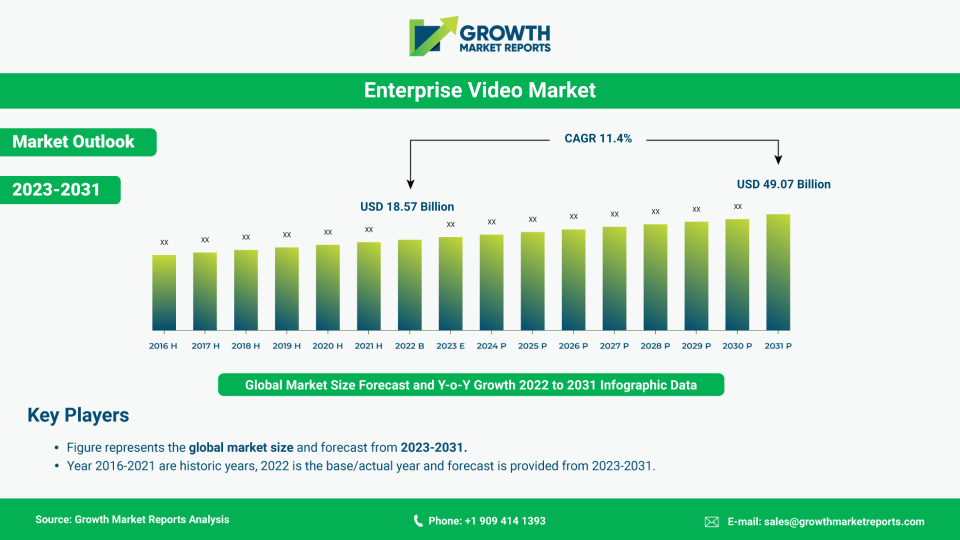
According to our latest research, the global enterprise video market size in 2024 reached USD 22.1 billion, with a robust compound annual growth rate (CAGR) of 11.7% projected from 2025 to 2033. By the end of 2033, the market is forecasted to attain a value of USD 59.1 billion. The primary growth driver is the accelerated adoption of digital communication tools, particularly video-based platforms, to support remote work, enhance collaboration, and streamline corporate communications across diverse industries.
The surging demand for efficient communication and collaboration tools within organizations is a significant growth factor for the enterprise video market. With the proliferation of remote and hybrid work environments, enterprises are increasingly relying on video solutions for conducting meetings, training sessions, and knowledge sharing. Video platforms facilitate real-time communication, foster team engagement, and improve productivity by bridging geographical gaps. Furthermore, the integration of advanced technologies such as artificial intelligence, machine learning, and cloud computing has expanded the capabilities of enterprise video solutions, enabling features like automated transcription, real-time analytics, and personalized content delivery. These technological advancements are making video platforms more accessible, scalable, and cost-effective, which is further fueling market growth.
Another key driver propelling the enterprise video market is the growing emphasis on employee training and development. Organizations across sectors are investing in video-based learning modules to provide continuous education, compliance training, and skill enhancement for their workforce. Video content is proven to be more engaging and effective compared to traditional text-based materials, leading to higher retention rates and improved learning outcomes. Additionally, the ability to create, store, and distribute on-demand video content allows enterprises to standardize training procedures and ensure consistent messaging across global teams. This shift towards video-based training is particularly prominent in industries with high regulatory requirements, such as healthcare, BFSI, and manufacturing, where timely and accurate dissemination of information is critical.
The enterprise video market is also benefiting from the increasing adoption of video marketing and client engagement strategies. Companies are leveraging video content to enhance brand visibility, explain complex products or services, and connect with customers on a more personal level. Social media platforms, live streaming, and webinars have become integral components of digital marketing campaigns, enabling organizations to reach wider audiences and generate actionable insights through viewer analytics. The combination of video with interactive features, such as polls and Q&A sessions, is further enhancing customer engagement and driving conversion rates. As businesses continue to prioritize digital transformation, the role of enterprise video in marketing and client engagement is expected to expand significantly.
Regionally, North America leads the enterprise video market, accounting for the largest share due to the high adoption rate of advanced technologies, strong presence of leading vendors, and widespread implementation of remote work policies. Europe follows closely, driven by stringent data privacy regulations and the growing demand for secure video communication solutions. The Asia Pacific region is anticipated to witness the fastest growth over the forecast period, supported by rapid digitalization, increasing internet penetration, and the emergence of new business models. Meanwhile, Latin America and the Middle East & Africa are gradually embracing enterprise video solutions, with investments in digital infrastructure and rising awareness about the benefits of video communication contributing to market expansion in these regions.
The enterprise video market is segmented by component into hardware, software, and services, each playing a pivotal role in shaping the industry landscape. Hardware components include video conferencing systems, cameras, microphones, and display units, which form the backbone of any video communication setup. The demand for high-definition and 4K video equipment has surged, driven by the need for clear and seamless communication, especially in large enterprises with geographically dispersed teams. Hardware vendors are focusing on developing integrated solutions that are easy to deploy and compatible with various software platforms, reducing the complexity of installation and maintenance. As organizations upgrade their existing infrastructure to support enhanced video capabilities, the hardware segment is expected to maintain steady growth.
Software solutions represent the largest and fastest-growing segment within the enterprise video market. This category encompasses video conferencing platforms, content management systems, video editing tools, and collaboration suites. The shift towards cloud-based software has revolutionized the way businesses deploy and scale their video solutions, offering flexibility, accessibility, and cost savings. Advanced software platforms now offer features such as end-to-end encryption, AI-driven analytics, automated transcription, and integration with third-party applications like CRM and project management tools. These enhancements are enabling organizations to derive greater value from their video investments, streamline workflows, and ensure data security. The continuous innovation in software capabilities is a key factor driving the overall market growth.
Services form a critical component of the enterprise video ecosystem, encompassing consulting, integration, training, and support services. As the adoption of video solutions accelerates, organizations are seeking expert guidance to design, implement, and optimize their video infrastructure. Service providers offer tailored solutions to address specific business needs, ensure seamless integration with existing systems, and provide ongoing technical support to minimize downtime. Training services are particularly important for maximizing user adoption and helping employees leverage the full potential of video platforms. The growing complexity of enterprise video environments, coupled with the need for continuous upgrades and maintenance, is driving demand for comprehensive service offerings.
The interplay between hardware, software, and services is essential for delivering a holistic enterprise video solution. Organizations are increasingly opting for bundled offerings that combine best-in-class hardware with robust software platforms and dedicated support services. This integrated approach simplifies procurement, accelerates deployment, and ensures a consistent user experience across the organization. Vendors are also collaborating with channel partners and system integrators to expand their reach and deliver end-to-end solutions that cater to the diverse requirements of enterprises of all sizes.
Looking ahead, the component landscape of the enterprise video market will continue to evolve, driven by advancements in technology and changing user preferences. The emergence of smart devices, IoT integration, and immersive technologies such as augmented and virtual reality is expected to open new avenues for innovation. As enterprises seek to enhance collaboration, improve productivity, and deliver engaging experiences, the demand for advanced hardware, intelligent software, and value-added services will remain strong, shaping the future trajectory of the enterprise video market.
| Attributes | Details |
| Report Title | Enterprise Video Market Research Report 2033 |
| By Component | Hardware, Software, Services |
| By Deployment Mode | On-Premises, Cloud |
| By Application | Training and Development, Corporate Communications, Marketing and Client Engagement, Knowledge Sharing and Collaboration, Others |
| By Enterprise Size | Small and Medium Enterprises, Large Enterprises |
| By End-User | BFSI, Healthcare, IT and Telecommunications, Retail, Education, Media and Entertainment, Others |
| Regions Covered | North America, Europe, APAC, Latin America, MEA |
| Base Year | 2024 |
| Historic Data | 2018-2023 |
| Forecast Period | 2025-2033 |
| Number of Pages | 260 |
| Number of Tables & Figures | 382 |
| Customization Available | Yes, the report can be customized as per your need. |
Deployment mode is a critical consideration for organizations implementing enterprise video solutions, with the market segmented into on-premises and cloud-based deployments. On-premises deployment involves hosting video infrastructure within the organization's own data centers, offering greater control over security, customization, and integration with legacy systems. This mode is preferred by large enterprises and industries with stringent regulatory requirements, such as BFSI and healthcare, where data privacy and compliance are paramount. On-premises solutions enable organizations to tailor their video platforms to specific business needs, manage bandwidth usage, and ensure uninterrupted service even in low-connectivity environments. However, the higher upfront costs, ongoing maintenance, and scalability challenges associated with on-premises deployment have prompted many organizations to explore alternative models.
Cloud-based deployment has emerged as the dominant trend in the enterprise video market, driven by its flexibility, scalability, and cost-effectiveness. Cloud solutions enable organizations to access video platforms from any location, on any device, without the need for extensive hardware investments or complex installations. The pay-as-you-go pricing model allows businesses to scale their video infrastructure in line with changing requirements, making it particularly attractive for small and medium enterprises (SMEs) and rapidly growing organizations. Cloud platforms also offer automatic updates, robust security features, and seamless integration with other cloud-based applications, enhancing the overall user experience. The ability to support large-scale virtual events, webinars, and global collaboration has further accelerated the adoption of cloud-based enterprise video solutions.
Hybrid deployment models are gaining traction as organizations seek to balance the benefits of both on-premises and cloud-based solutions. A hybrid approach allows businesses to retain sensitive data and mission-critical applications on-premises while leveraging the scalability and accessibility of the cloud for less sensitive workloads. This model is particularly relevant for enterprises operating in highly regulated industries or those with complex IT environments. Hybrid deployments offer greater flexibility, enabling organizations to optimize costs, enhance security, and ensure business continuity. Vendors are responding to this trend by offering hybrid-ready solutions that facilitate seamless integration and management across multiple deployment environments.
The choice of deployment mode is influenced by several factors, including organizational size, industry vertical, regulatory landscape, and IT infrastructure maturity. While cloud adoption continues to surge, on-premises and hybrid models will remain relevant for organizations with unique security, compliance, or customization requirements. Vendors are investing in developing deployment-agnostic solutions that provide a consistent user experience regardless of the underlying infrastructure, ensuring that organizations can transition between deployment modes as their needs evolve.
Looking forward, the deployment mode landscape in the enterprise video market will be shaped by ongoing advancements in cloud technology, increasing adoption of edge computing, and the growing importance of data sovereignty. As organizations continue to embrace digital transformation, the demand for flexible, scalable, and secure deployment options will drive innovation and competition among vendors, ultimately benefiting end-users with more choices and enhanced capabilities.
The application landscape of the enterprise video market is diverse, encompassing a wide range of use cases that drive organizational efficiency and engagement. Training and development represent one of the most prominent applications, as enterprises leverage video platforms to deliver interactive learning modules, compliance training, and professional development programs. Video-based training offers several advantages, including higher engagement, improved retention, and the ability to reach distributed workforces. Organizations can create on-demand content libraries, conduct live training sessions, and track employee progress through integrated analytics, ensuring that learning objectives are met effectively. The shift towards continuous learning and upskilling, driven by rapid technological advancements and evolving job roles, is fueling the adoption of video solutions for training and development.
Corporate communications is another critical application area, with organizations using video platforms to facilitate internal messaging, executive announcements, town hall meetings, and crisis communications. Video enables leaders to convey messages with greater clarity, authenticity, and impact, fostering a sense of transparency and trust within the organization. The ability to record and archive communications ensures that employees across different time zones can access important information at their convenience. Furthermore, video-based communications support inclusivity by accommodating diverse learning styles and language preferences. As organizations prioritize employee engagement and organizational alignment, the role of video in corporate communications is becoming increasingly central.
Marketing and client engagement are rapidly growing applications within the enterprise video market. Businesses are harnessing the power of video to create compelling marketing campaigns, product demonstrations, customer testimonials, and virtual events. Video content is highly effective in capturing audience attention, conveying complex information, and driving conversions. The integration of interactive features, such as live polls, Q&A sessions, and clickable calls-to-action, enhances viewer engagement and provides valuable insights into customer preferences. Social media platforms and video-sharing sites have amplified the reach of marketing videos, enabling organizations to connect with global audiences and build brand loyalty. As digital marketing strategies evolve, video is expected to play an increasingly prominent role in client engagement.
Knowledge sharing and collaboration constitute another key application segment, with video platforms enabling teams to share expertise, document best practices, and collaborate on projects in real time. Video-based knowledge repositories, webinars, and virtual workshops facilitate the exchange of ideas and foster a culture of continuous improvement. Collaboration tools integrated with video platforms, such as screen sharing, virtual whiteboards, and real-time chat, enhance teamwork and streamline decision-making processes. The ability to record and archive collaborative sessions ensures that valuable knowledge is preserved and accessible to future teams. As organizations become more decentralized and project-based, the demand for video-enabled collaboration tools is set to rise.
Beyond these core applications, enterprise video solutions are being adopted for a variety of other use cases, including customer support, product training, compliance monitoring, and remote inspections. The versatility of video platforms allows organizations to address unique business challenges and improve operational efficiency. Vendors are continuously innovating to expand the range of applications supported by their solutions, incorporating features such as AI-driven content recommendations, real-time language translation, and advanced analytics. As enterprises seek to maximize the value of their video investments, the application landscape will continue to expand, driving further growth in the enterprise video market.
The enterprise video market serves organizations of all sizes, with distinct adoption patterns and requirements observed across small and medium enterprises (SMEs) and large enterprises. SMEs are increasingly recognizing the value of video solutions in enhancing communication, training, and customer engagement. The availability of affordable, cloud-based video platforms has lowered the barriers to entry for SMEs, enabling them to access advanced features without significant upfront investments. Video solutions help SMEs overcome geographical constraints, reach new markets, and compete with larger players by delivering professional and engaging content. The scalability and flexibility of cloud-based platforms are particularly appealing to SMEs, allowing them to adapt their video infrastructure as their business grows.
Large enterprises, on the other hand, have more complex requirements due to their scale, diverse operations, and stringent security needs. These organizations often deploy enterprise-grade video solutions that offer advanced features such as multi-level access controls, integration with existing IT systems, and support for large-scale virtual events. Large enterprises are also more likely to invest in on-premises or hybrid deployment models to maintain control over sensitive data and ensure compliance with industry regulations. The ability to customize video platforms, integrate with enterprise resource planning (ERP) and customer relationship management (CRM) systems, and support global collaboration is critical for large organizations. As digital transformation initiatives accelerate, large enterprises are increasingly investing in video solutions to drive innovation, improve productivity, and enhance stakeholder engagement.
The needs of SMEs and large enterprises are converging in some areas, particularly as both seek to improve employee engagement, streamline operations, and enhance customer experiences. Vendors are responding by offering modular solutions that can be tailored to the specific requirements of organizations of different sizes. Flexible pricing models, such as subscription-based and usage-based plans, are making it easier for organizations to scale their video infrastructure in line with business needs. Training and support services are also being customized to address the unique challenges faced by SMEs and large enterprises, ensuring that all users can maximize the value of their video investments.
The adoption of enterprise video solutions among SMEs is expected to grow at a faster rate compared to large enterprises, driven by the increasing affordability and accessibility of cloud-based platforms. However, large enterprises will continue to account for a significant share of the market, given their higher spending capacity and more complex requirements. The ongoing digitalization of business processes, coupled with the need for effective communication and collaboration tools, will drive sustained demand for enterprise video solutions across organizations of all sizes.
As the enterprise video market matures, the distinction between SMEs and large enterprises will become less pronounced, with vendors focusing on delivering scalable, flexible, and user-friendly solutions that cater to a broad spectrum of organizational needs. The ability to support hybrid work environments, facilitate global collaboration, and deliver personalized experiences will be key differentiators in the increasingly competitive enterprise video market.
The enterprise video market caters to a wide range of end-users, each with unique requirements and adoption drivers. The BFSI sector is a major adopter of video solutions, using them for secure communications, customer onboarding, compliance training, and virtual consultations. The need for data privacy, regulatory compliance, and seamless customer interactions has driven BFSI organizations to invest in advanced video platforms with robust security features and integration capabilities. Video-enabled customer service and remote advisory services are becoming increasingly popular in the BFSI sector, enhancing customer satisfaction and operational efficiency.
Healthcare is another key end-user segment, leveraging enterprise video solutions for telemedicine, remote consultations, medical training, and internal communications. The COVID-19 pandemic accelerated the adoption of video technologies in healthcare, enabling providers to deliver care remotely, reduce patient wait times, and improve access to specialized expertise. Video platforms are also used for continuing medical education, patient monitoring, and collaboration among healthcare professionals. The integration of video with electronic health records (EHR) and other healthcare IT systems is enhancing the quality and efficiency of care delivery.
The IT and telecommunications sector is at the forefront of enterprise video adoption, using video platforms for product demonstrations, technical training, customer support, and global collaboration. The fast-paced nature of the industry, coupled with the need for continuous innovation and knowledge sharing, makes video an indispensable tool for IT and telecom companies. Video solutions enable organizations to connect with distributed teams, streamline project management, and deliver real-time support to customers. The integration of video with other collaboration tools, such as instant messaging and project management software, is enhancing productivity and driving digital transformation in the sector.
Retail organizations are increasingly using enterprise video solutions for employee training, product launches, customer engagement, and virtual store tours. Video platforms help retailers deliver consistent training across multiple locations, showcase new products, and engage customers through live streaming and interactive content. The ability to analyze viewer behavior and preferences is enabling retailers to tailor their marketing strategies and improve customer experiences. As the retail industry continues to embrace omnichannel strategies, the role of video in driving customer engagement and operational efficiency is set to grow.
Other major end-user segments include education, media and entertainment, and various other industries such as manufacturing, government, and non-profits. Educational institutions are leveraging video platforms for remote learning, virtual classrooms, and faculty development, while media and entertainment companies use video for content creation, distribution, and audience engagement. The versatility of enterprise video solutions makes them suitable for a wide range of applications across different sectors, driving broad-based adoption and market growth.
The enterprise video market presents significant opportunities for growth, driven by the ongoing digital transformation of businesses across all sectors. One of the most promising opportunities lies in the integration of artificial intelligence and machine learning with video platforms. AI-powered features such as automated transcription, real-time language translation, facial recognition, and content recommendations are enhancing the functionality and user experience of enterprise video solutions. These innovations are enabling organizations to derive actionable insights from video content, improve accessibility, and deliver personalized experiences to users. The growing demand for data-driven decision-making and intelligent automation is expected to drive further investment in AI-enabled video platforms, opening new revenue streams for vendors and service providers.
Another major opportunity is the increasing adoption of enterprise video solutions in emerging markets, particularly in the Asia Pacific, Latin America, and Middle East & Africa regions. Rapid digitalization, expanding internet penetration, and the proliferation of mobile devices are creating a favorable environment for the adoption of video technologies. Governments and enterprises in these regions are investing in digital infrastructure, remote learning, telemedicine, and e-government services, all of which rely heavily on video communication. Vendors that can offer localized, cost-effective, and scalable solutions are well-positioned to capture market share in these high-growth regions. Strategic partnerships with local service providers, system integrators, and channel partners will be critical for success in emerging markets.
Despite the numerous growth opportunities, the enterprise video market faces several restraining factors that could hinder its expansion. One of the primary challenges is data security and privacy concerns, particularly as the volume of sensitive video content increases. Organizations must ensure that their video platforms comply with industry regulations, such as GDPR and HIPAA, and implement robust security measures to protect against unauthorized access, data breaches, and cyber threats. The complexity of managing video data across multiple deployment environments, including on-premises, cloud, and hybrid models, adds to the challenge. Vendors must continuously invest in security enhancements, compliance certifications, and user education to address these concerns and build trust among enterprise customers.
North America remains the largest regional market for enterprise video, with a market size of USD 8.6 billion in 2024. The region’s dominance can be attributed to the high adoption rate of advanced technologies, a strong presence of leading vendors, and the widespread implementation of remote and hybrid work policies. Enterprises in the United States and Canada are early adopters of video solutions, leveraging them for a wide range of applications, including corporate communications, training, and customer engagement. The region is also characterized by a mature IT infrastructure, high internet penetration, and a strong focus on innovation. As organizations continue to invest in digital transformation and remote work capabilities, North America is expected to maintain its leadership position, with a projected CAGR of 10.9% through 2033.
Europe is the second-largest market, with a market size of USD 5.7 billion in 2024. The region’s growth is driven by the increasing demand for secure and compliant video communication solutions, particularly in industries such as BFSI, healthcare, and government. The implementation of stringent data privacy regulations, such as GDPR, has prompted organizations to invest in video platforms that prioritize security and compliance. European enterprises are also leveraging video solutions to support cross-border collaboration, multilingual communications, and remote learning. The region’s diverse linguistic and cultural landscape presents unique challenges and opportunities for vendors, who must offer localized solutions to meet the needs of different markets.
The Asia Pacific region is experiencing the fastest growth in the enterprise video market, with a market size of USD 4.2 billion in 2024 and a projected CAGR of 14.2% through 2033. Rapid digitalization, expanding internet access, and the proliferation of mobile devices are driving the adoption of video solutions across industries such as education, healthcare, retail, and manufacturing. Governments in countries like China, India, Japan, and Australia are investing in digital infrastructure, e-learning, and telemedicine initiatives, creating significant opportunities for enterprise video vendors. The region’s large and diverse population, coupled with rising demand for remote work and online services, is expected to drive sustained growth in the coming years.
The enterprise video market is highly competitive, with a mix of established technology giants, specialized video solution providers, and emerging startups vying for market share. The competitive landscape is characterized by rapid innovation, frequent product launches, and strategic partnerships aimed at enhancing product offerings and expanding geographic reach. Leading vendors are investing heavily in research and development to incorporate advanced features such as artificial intelligence, machine learning, and real-time analytics into their platforms. The ability to offer scalable, secure, and user-friendly solutions is a key differentiator in the market, as organizations seek to maximize the value of their video investments.
Mergers and acquisitions are a common strategy among market players, enabling them to acquire new technologies, expand their customer base, and enter new markets. Collaboration with system integrators, channel partners, and cloud service providers is also prevalent, as vendors aim to deliver end-to-end solutions that address the diverse needs of enterprise customers. The rise of cloud-based video platforms has intensified competition, with new entrants challenging established players by offering innovative, cost-effective solutions tailored to the needs of small and medium enterprises. Customer support, training services, and customization capabilities are increasingly important factors influencing vendor selection.
Key players in the enterprise video market include Cisco Systems, Microsoft Corporation, Zoom Video Communications, Poly (formerly Polycom), Adobe Systems, Kaltura, Vidyo, Avaya, Huawei Technologies, and BlueJeans by Verizon. These companies offer a broad range of video solutions, from video conferencing and collaboration platforms to video content management and streaming services. Cisco Systems is known for its robust Webex platform, which offers advanced security features and integration with other collaboration tools. Microsoft Teams is widely adopted for its seamless integration with the Microsoft 365 suite, making it a preferred choice for organizations already using Microsoft products. Zoom has gained significant market share due to its ease of use, scalability, and feature-rich platform.
Other notable players, such as Kaltura and Vidyo, specialize in video content management and streaming solutions, catering to the unique needs of educational institutions, media companies, and large enterprises. Poly and Avaya focus on providing high-quality video conferencing hardware and integrated solutions for meeting rooms and conference centers. Huawei Technologies and BlueJeans by Verizon are expanding their presence in emerging markets, offering localized solutions and competitive pricing. Adobe Systems leverages its expertise in digital media to deliver video editing and content creation tools that complement its enterprise video offerings.
The competitive landscape of the enterprise video market is expected to evolve rapidly, driven by technological advancements, changing customer preferences, and the ongoing shift towards hybrid work environments. Vendors that can offer innovative, scalable, and secure solutions, backed by strong customer support and a global presence, will be well-positioned to succeed in this dynamic and growing market.
The Enterprise Video market has been segmented on the basis of
Key players in the global enterprise video market include Avaya Inc., Adobe, Inc., Cisco Systems, Inc., Brightcove Inc., IBM, Microsoft Corporation, Kaltura, VBrick Systems, Polycom, Inc., and Vidyo. Major strategies adopted by key market players are partnership, acquisition, and mergers.

Key players include Microsoft, Cisco, IBM, Zoom, Adobe, Google, Avaya, Kaltura, Poly, Vbrick, Brightcove, Qumu, Vidyo, BlueJeans by Verizon, LogMeIn, Panopto, Haivision, Lifesize, MediaPlatform, and ON24.
Opportunities include AI and machine learning integration, expansion in emerging markets, and growing demand for data-driven video analytics. Key challenges are data security, privacy concerns, and regulatory compliance.
Major end-users include BFSI, healthcare, IT and telecommunications, retail, education, and media and entertainment, each leveraging video for unique use cases like telemedicine, compliance training, customer engagement, and remote learning.
SMEs benefit from affordable, cloud-based video solutions for communication and training, while large enterprises often require advanced features, integration with existing IT systems, and may prefer on-premises or hybrid deployments for security and compliance.
Key applications include training and development, corporate communications, marketing and client engagement, knowledge sharing, collaboration, customer support, and compliance monitoring.
Enterprise video platforms can be deployed on-premises, in the cloud, or through hybrid models, offering flexibility based on organizational needs, security requirements, and scalability.
Enterprise video solutions are segmented into hardware (such as cameras and conferencing systems), software (including video conferencing platforms and content management), and services (consulting, integration, training, and support).
North America leads the enterprise video market, followed by Europe. The Asia Pacific region is expected to experience the fastest growth due to rapid digitalization and increasing internet penetration.
Major growth drivers include the accelerated adoption of digital communication tools, increased remote and hybrid work, demand for efficient collaboration, and advancements in AI, machine learning, and cloud computing.
As of 2024, the global enterprise video market size reached USD 22.1 billion, with projections to grow to USD 59.1 billion by 2033.