Segments - by Type (Pay-As-You-Drive, Pay-How-You-Drive, Manage-How-You-Drive, Others), by Technology (OBD-II, Smartphone, Embedded Telematics, Black Box, Others), by Vehicle Type (Passenger Cars, Commercial Vehicles, Others), by Application (Personal, Commercial), by Distribution Channel (OEMs, Insurance Companies, Others)
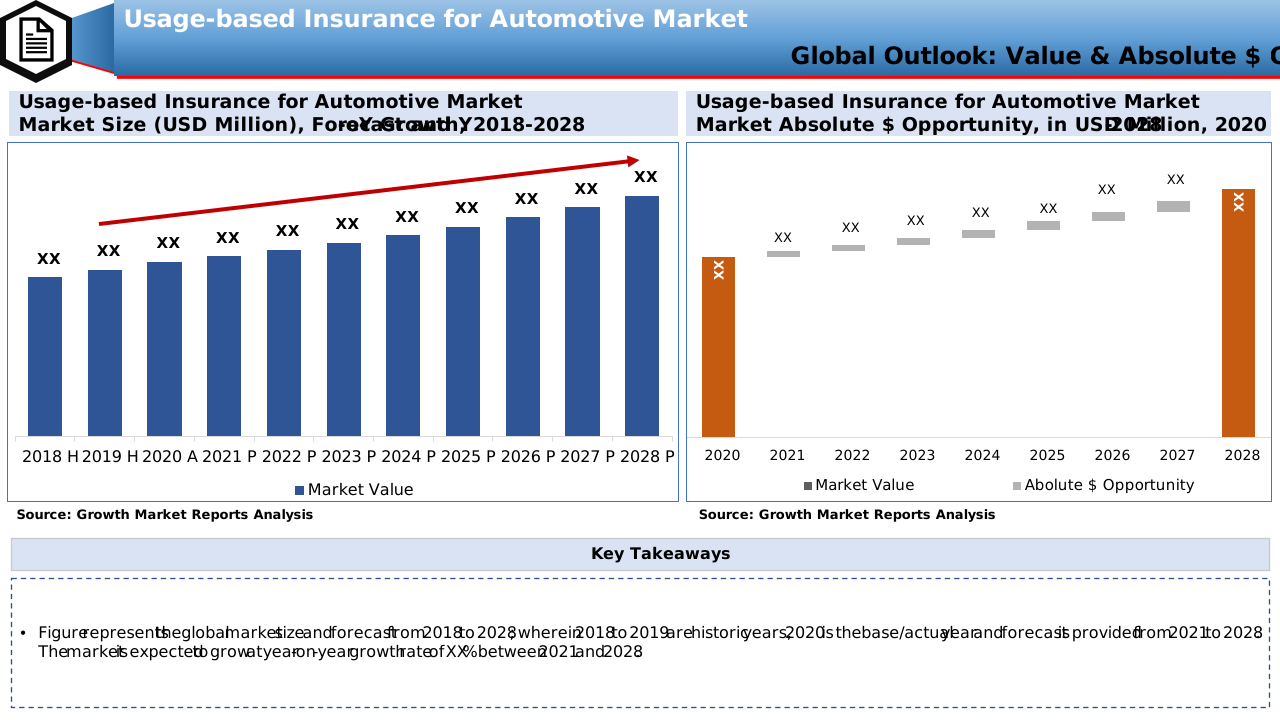
According to our latest research, the global Usage-based Insurance for Automotive market size reached USD 44.3 billion in 2024, and is expected to grow at a robust CAGR of 21.7% from 2025 to 2033. By the end of 2033, the market is forecasted to achieve a valuation of USD 308.1 billion. This remarkable growth is propelled by the increasing adoption of telematics technology in vehicles, a surge in demand for personalized insurance premiums, and a global push toward digital transformation in the automotive and insurance sectors.
The rapid proliferation of connected vehicles and advancements in telematics infrastructure are among the primary growth drivers for the Usage-based Insurance for Automotive market. Telematics allows insurers to collect real-time data on driving behavior, mileage, and vehicle usage, enabling them to offer highly customized insurance products. With consumers becoming more aware of the benefits of usage-based models, such as potential cost savings and fairer premium calculations, the adoption rate is accelerating. Additionally, regulatory encouragement for safer driving and reduced environmental impact is motivating both insurers and policyholders to embrace these innovative insurance solutions.
Another significant factor fueling market expansion is the increasing penetration of smartphones and IoT devices, which facilitate seamless connectivity between vehicles, drivers, and insurers. Smartphones, in particular, have democratized access to telematics-based insurance by lowering hardware costs and simplifying data collection. As a result, both established and emerging markets are witnessing a surge in usage-based insurance programs, especially among younger, tech-savvy drivers who value transparency and flexibility. Furthermore, insurance companies are leveraging advanced analytics and AI to process telematics data, improving risk assessment and enabling dynamic pricing models that further enhance customer value.
Usage-Based Commercial Auto Insurance is gaining traction as businesses recognize the benefits of aligning premiums with actual vehicle usage. This approach not only offers cost savings for companies with fluctuating vehicle needs but also promotes safer driving practices among employees. By utilizing telematics data, insurers can provide commercial clients with insights into fleet performance, helping them optimize routes and reduce fuel consumption. As a result, businesses are able to lower their operational costs while insurers benefit from more accurate risk assessments and reduced claims frequency. This symbiotic relationship is fostering a more efficient and responsive insurance market, catering to the dynamic needs of modern enterprises.
The evolution of automotive insurance is also being shaped by changing consumer preferences and heightened competition among insurers. As customers increasingly demand personalized, data-driven products, insurance providers are compelled to innovate and differentiate their offerings. The shift from traditional fixed-premium models to usage-based insurance is also being supported by automakers, who are integrating telematics solutions directly into new vehicles. This ecosystem collaboration is fostering a more connected and customer-centric insurance landscape, where real-time feedback and rewards for safe driving not only reduce accidents but also lower overall claims costs for insurers.
Regionally, North America and Europe are leading the adoption of usage-based insurance for automotive, accounting for a significant share of the global market. These regions benefit from mature automotive markets, advanced digital infrastructure, and favorable regulatory environments that support telematics adoption. Meanwhile, Asia Pacific is emerging as the fastest-growing region, driven by rapid vehicle sales, urbanization, and increasing smartphone penetration. Latin America and the Middle East & Africa are also witnessing steady growth, albeit at a slower pace, as insurers invest in telematics infrastructure and consumer awareness campaigns.
Claims Analytics for Auto Insurance is revolutionizing the way insurers handle claims, offering a more streamlined and efficient process. By leveraging big data and machine learning, insurance companies can now analyze vast amounts of information to detect patterns and predict potential fraud. This not only speeds up the claims process but also enhances accuracy, ensuring that genuine claims are processed swiftly while minimizing fraudulent activities. As a result, policyholders experience improved satisfaction due to faster settlements, and insurers benefit from reduced operational costs and enhanced trust from their customers. The integration of advanced analytics into claims management is setting a new standard in the industry, driving innovation and improving overall service quality.
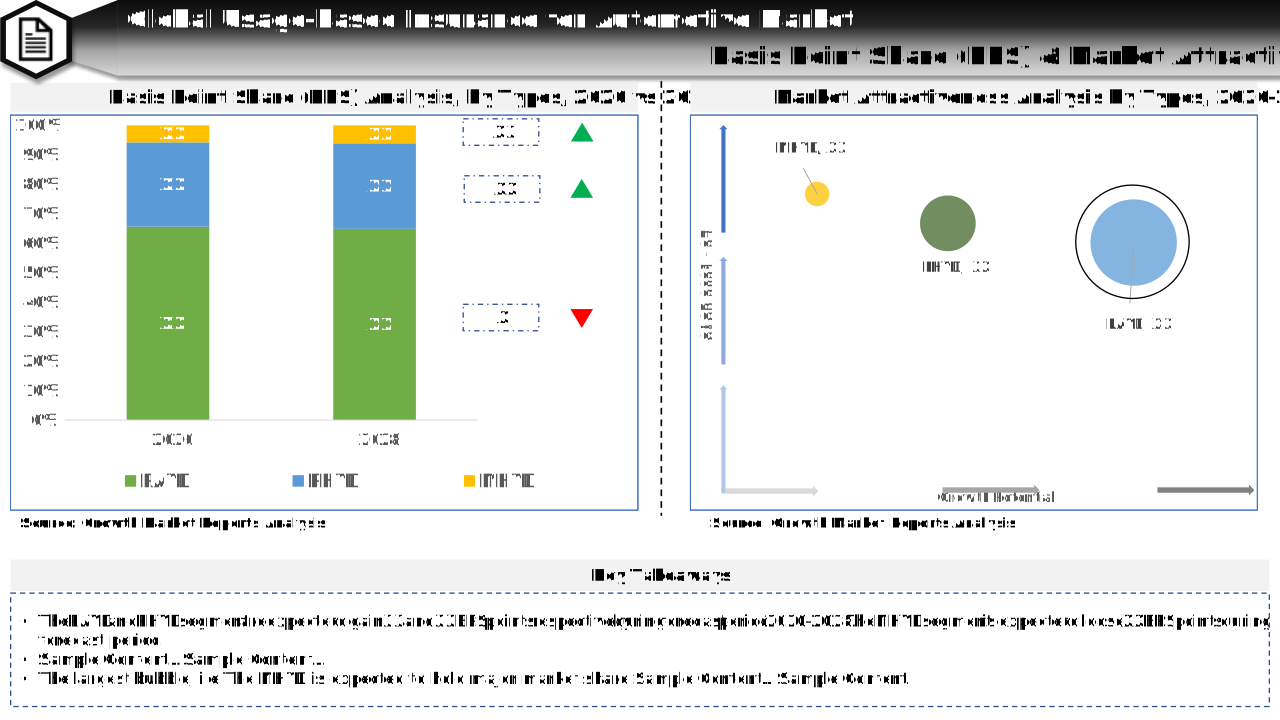
The Type segment in the Usage-based Insurance for Automotive market comprises Pay-As-You-Drive (PAYD), Pay-How-You-Drive (PHYD), Manage-How-You-Drive (MHYD), and other innovative models. Among these, PAYD has gained significant traction due to its simplicity and direct correlation between mileage and premium costs. This model appeals particularly to low-mileage drivers, such as retirees or urban commuters, who can benefit from lower premiums compared to traditional insurance. Insurers are leveraging PAYD to attract a broader customer base, enhance retention, and promote responsible driving habits, which ultimately contribute to reduced claims and improved profitability.
PHYD models, on the other hand, take personalization a step further by incorporating driving behavior metrics such as speed, acceleration, braking, and cornering. This approach rewards safe and responsible drivers with lower premiums, while those exhibiting risky behaviors may face higher rates. The adoption of PHYD is accelerating as consumers seek fairer pricing and insurers aim to incentivize safer roads. Advanced telematics and AI-powered analytics enable accurate risk assessment, making PHYD a win-win proposition for both insurers and policyholders. As a result, PHYD is expected to witness the fastest growth within the Type segment during the forecast period.
Pay-Per-Mile Insurance Telematics is emerging as a popular choice for drivers seeking flexibility and cost-effectiveness. This model allows policyholders to pay premiums based on the actual miles driven, making it an attractive option for those who drive infrequently or have variable driving patterns. By utilizing telematics technology, insurers can accurately track mileage and offer tailored premiums that reflect individual usage. This approach not only provides savings for low-mileage drivers but also encourages more mindful driving habits, contributing to road safety and environmental sustainability. As consumers increasingly seek personalized insurance solutions, pay-per-mile models are expected to gain further traction, reshaping the landscape of auto insurance.
Manage-How-You-Drive (MHYD) is an emerging model that not only monitors driving behavior but also provides real-time feedback and coaching to help drivers improve their habits. This proactive approach is gaining popularity among fleet operators and commercial vehicle owners, who benefit from reduced accident rates, lower maintenance costs, and enhanced driver productivity. MHYD solutions are increasingly being integrated with fleet management platforms, offering comprehensive insights into driver performance, route optimization, and fuel efficiency. As regulatory bodies and businesses prioritize road safety and sustainability, MHYD is poised to become a key growth driver in the Usage-based Insurance for Automotive market.
Other models within the Type segment include hybrid approaches and innovative pay-per-use schemes tailored to specific customer segments or geographies. These models cater to the diverse needs of consumers, from occasional drivers to ride-sharing operators, and reflect the ongoing evolution of insurance products in response to changing mobility patterns. Insurers are experimenting with flexible policies, short-term coverage, and on-demand insurance to address the dynamic requirements of modern vehicle users. As the market matures, the Type segment is expected to witness further diversification, driven by technological advancements and evolving customer expectations.
| Attributes | Details |
| Report Title | Usage-based Insurance for Automotive Market Research Report 2033 |
| By Type | Pay-As-You-Drive, Pay-How-You-Drive, Manage-How-You-Drive, Others |
| By Technology | OBD-II, Smartphone, Embedded Telematics, Black Box, Others |
| By Vehicle Type | Passenger Cars, Commercial Vehicles, Others |
| By Application | Personal, Commercial |
| By Distribution Channel | OEMs, Insurance Companies, Others |
| Regions Covered | North America, Europe, APAC, Latin America, MEA |
| Base Year | 2024 |
| Historic Data | 2018-2023 |
| Forecast Period | 2025-2033 |
| Number of Pages | 253 |
| Number of Tables & Figures | 336 |
| Customization Available | Yes, the report can be customized as per your need. |
The Technology segment is pivotal to the success of usage-based insurance, encompassing OBD-II devices, smartphones, embedded telematics, black box solutions, and other emerging technologies. OBD-II (On-Board Diagnostics) devices have historically dominated the market due to their ease of installation and ability to provide comprehensive vehicle data. These plug-and-play devices are widely used by insurers to collect real-time information on driving patterns, vehicle health, and location. OBD-II technology has enabled rapid scaling of usage-based insurance programs, particularly in regions with a large base of older vehicles lacking factory-installed telematics.
Smartphone-based telematics is rapidly gaining ground as a cost-effective and user-friendly alternative to hardware-based solutions. Leveraging the sensors and GPS capabilities of modern smartphones, insurers can collect a wealth of driving data without the need for additional devices. This approach reduces upfront costs, simplifies onboarding, and appeals to younger, tech-savvy consumers. Smartphone telematics also supports innovative features such as gamification, driver coaching, and instant feedback, enhancing customer engagement and retention. As mobile penetration continues to rise globally, smartphone-based solutions are expected to become the dominant technology for usage-based insurance.
Embedded telematics refers to factory-installed systems integrated directly into vehicles by automakers. These solutions offer superior data accuracy, reliability, and security compared to aftermarket devices. Automakers are increasingly partnering with insurers to offer usage-based insurance as a bundled service, leveraging embedded telematics to deliver seamless customer experiences. This trend is particularly pronounced in premium and electric vehicle segments, where connectivity and data-driven services are key differentiators. Embedded telematics also enables advanced features such as crash detection, emergency response, and predictive maintenance, further enhancing the value proposition for insurers and policyholders alike.
Black box solutions, though less common, remain relevant in certain markets and use cases, particularly for young or high-risk drivers. These tamper-proof devices provide insurers with a reliable source of driving data, supporting accurate risk assessment and fraud prevention. Black box technology is often mandated by regulators or offered as a condition for policy approval in specific regions. As data privacy and security concerns gain prominence, black box solutions are likely to maintain a niche presence, especially in markets with strict regulatory oversight. The Technology segment is expected to evolve rapidly, with ongoing innovations in IoT, AI, and cloud computing driving the next wave of growth in usage-based insurance.
The Vehicle Type segment in the Usage-based Insurance for Automotive market is categorized into passenger cars, commercial vehicles, and other vehicle classes. Passenger cars constitute the largest share of the market, driven by the sheer volume of private vehicle ownership and the growing demand for personalized insurance products. Urbanization, rising disposable incomes, and increasing awareness of telematics-based insurance benefits are fueling adoption among individual car owners. Insurers are targeting this segment with tailored PAYD and PHYD offerings, leveraging real-time data to deliver competitive premiums and enhance customer satisfaction.
Commercial vehicles, including trucks, vans, and fleet vehicles, represent a significant and rapidly growing segment within the market. Fleet operators are increasingly adopting usage-based insurance to manage risk, control costs, and improve operational efficiency. Telematics solutions provide fleet managers with comprehensive insights into driver behavior, vehicle utilization, and maintenance needs, enabling proactive risk mitigation and cost optimization. Insurance providers are developing specialized products for commercial vehicles, incorporating features such as driver coaching, route optimization, and real-time alerts to support safe and efficient operations.
The "Others" category encompasses a diverse range of vehicle types, including motorcycles, buses, and specialty vehicles such as taxis and ride-sharing cars. While this segment currently accounts for a smaller share of the market, it presents significant growth potential as mobility patterns evolve and new business models emerge. For example, the rise of shared mobility and micro-mobility solutions is creating demand for flexible, on-demand insurance products tailored to unique usage scenarios. Insurers are responding with innovative offerings that cater to the specific needs of these vehicle types, leveraging telematics data to deliver accurate and dynamic pricing.
Overall, the Vehicle Type segment is characterized by increasing segmentation and product differentiation as insurers seek to address the diverse needs of individual and commercial customers. The adoption of telematics-based insurance is expected to accelerate across all vehicle categories, driven by advancements in connectivity, data analytics, and regulatory support. As the market matures, insurers will continue to refine their offerings, leveraging vehicle-specific data to enhance risk assessment, pricing accuracy, and customer value.
The Application segment of the Usage-based Insurance for Automotive market is divided into personal and commercial applications. Personal usage-based insurance is the dominant application, accounting for the majority of policies issued globally. Individual drivers are increasingly attracted to the transparency, fairness, and potential cost savings offered by usage-based models. Insurers are leveraging telematics data to deliver personalized premiums, reward safe driving, and foster long-term customer loyalty. The proliferation of connected cars and smartphone telematics is making it easier for individuals to access and benefit from usage-based insurance, driving widespread adoption across developed and emerging markets.
Commercial applications are witnessing robust growth as businesses seek to optimize fleet management, reduce accident rates, and control insurance costs. Usage-based insurance solutions tailored for commercial vehicles provide fleet operators with actionable insights into driver behavior, vehicle utilization, and risk exposure. Insurers are partnering with fleet management companies and telematics providers to deliver integrated solutions that support proactive risk management, regulatory compliance, and operational efficiency. The commercial segment is expected to outpace the personal segment in terms of growth rate, driven by the increasing adoption of telematics in logistics, transportation, and service industries.
The Application segment is also witnessing the emergence of hybrid models that cater to the unique needs of shared mobility operators, such as ride-hailing, car-sharing, and subscription-based services. These business models require flexible, on-demand insurance solutions that can adapt to varying usage patterns and risk profiles. Insurers are responding with innovative products that leverage real-time data to deliver dynamic pricing, instant coverage, and seamless claims processing. As mobility trends continue to evolve, the Application segment is expected to diversify further, creating new opportunities for insurers and technology providers.
In summary, the Application segment is a key driver of growth and innovation in the Usage-based Insurance for Automotive market. Insurers are increasingly adopting a customer-centric approach, leveraging telematics data to deliver tailored products that meet the evolving needs of personal and commercial customers. The ongoing shift toward connected, data-driven mobility is expected to fuel continued expansion and diversification within the Application segment.
The Distribution Channel segment in the Usage-based Insurance for Automotive market includes OEMs (Original Equipment Manufacturers), insurance companies, and other channels such as brokers and digital platforms. Insurance companies remain the primary distribution channel, leveraging their established customer bases, underwriting expertise, and claims management capabilities. Many insurers have developed proprietary telematics platforms or partnered with technology providers to offer usage-based insurance products directly to consumers. The direct-to-consumer model enables insurers to build stronger relationships with policyholders, deliver personalized experiences, and capture valuable data for product development and risk management.
OEMs are playing an increasingly important role as distribution partners for usage-based insurance. Automakers are integrating telematics solutions into new vehicles and collaborating with insurers to offer bundled insurance products at the point of sale. This approach enhances the value proposition for customers, streamlines the onboarding process, and supports seamless data sharing between vehicles, insurers, and drivers. OEM-led distribution is particularly prevalent in premium and electric vehicle segments, where connectivity and digital services are key differentiators. As automakers continue to invest in connected car technologies, their influence on the distribution landscape is expected to grow.
Other distribution channels, including brokers, aggregators, and digital platforms, are also gaining traction as consumers increasingly seek convenient, online solutions for purchasing insurance. Digital platforms enable insurers to reach a broader audience, simplify policy comparison, and facilitate instant policy issuance. Aggregators and brokers play a crucial role in educating consumers about the benefits of usage-based insurance and guiding them through the selection process. The rise of insurtech startups is further disrupting traditional distribution models, introducing innovative digital solutions that enhance customer engagement and streamline operations.
The Distribution Channel segment is characterized by increasing convergence and collaboration between insurers, OEMs, and technology providers. As the market evolves, distribution strategies are becoming more customer-centric, leveraging digital technologies to deliver personalized, seamless experiences. The ongoing shift toward online and direct-to-consumer channels is expected to accelerate, driven by changing consumer preferences and advancements in digital infrastructure.
The Usage-based Insurance for Automotive market presents significant opportunities for insurers, technology providers, and consumers alike. One of the most promising opportunities lies in the expansion of telematics infrastructure and the proliferation of connected vehicles. As more vehicles are equipped with advanced sensors and connectivity features, insurers can access richer, real-time data to refine risk assessment and develop innovative products. This data-driven approach enables insurers to offer highly personalized premiums, reward safe driving, and reduce fraud, ultimately enhancing profitability and customer satisfaction. Additionally, the growing adoption of electric and autonomous vehicles is creating new opportunities for usage-based insurance, as these vehicles generate vast amounts of data that can be leveraged for risk management and product innovation.
Another major opportunity stems from the increasing demand for flexible, on-demand insurance solutions that cater to evolving mobility patterns. The rise of shared mobility, subscription-based services, and micro-mobility is driving demand for insurance products that can adapt to varying usage scenarios and risk profiles. Insurers that can develop agile, customer-centric solutions will be well-positioned to capture market share and drive long-term growth. Furthermore, advancements in AI, machine learning, and big data analytics are enabling insurers to extract actionable insights from telematics data, supporting dynamic pricing, proactive risk management, and enhanced claims processing. These technological advancements are expected to unlock new revenue streams and create a more competitive, innovative insurance landscape.
Despite the promising outlook, the Usage-based Insurance for Automotive market faces several restraining factors, chief among them being data privacy and security concerns. As insurers collect and process vast amounts of sensitive driving data, consumers and regulators are increasingly concerned about how this information is stored, used, and shared. Data breaches or misuse of personal information can erode trust and hinder adoption, particularly in regions with stringent data protection regulations. Insurers must invest in robust cybersecurity measures, transparent data governance policies, and clear communication to address these concerns and build consumer confidence. Additionally, the high upfront costs of telematics infrastructure and integration with legacy systems can pose challenges for insurers, particularly in emerging markets with limited digital maturity.
North America remains the largest regional market for usage-based insurance for automotive, accounting for approximately USD 17.8 billion in 2024. The region's leadership is underpinned by a mature automotive industry, widespread adoption of telematics, and a favorable regulatory environment that encourages innovation in insurance products. The United States and Canada are at the forefront, with insurers leveraging advanced analytics and digital platforms to deliver personalized, data-driven insurance solutions. The presence of leading telematics providers and insurtech startups further accelerates market growth, while consumer awareness and acceptance of usage-based models continue to rise.
Europe is the second-largest market, with a value of around USD 13.3 billion in 2024 and a projected CAGR of 20.3% through 2033. The region benefits from strong regulatory support for road safety and environmental sustainability, as well as high levels of vehicle connectivity and digital infrastructure. Countries such as the United Kingdom, Germany, Italy, and France are leading the adoption of usage-based insurance, driven by competitive insurance markets and consumer demand for fairer, usage-based premiums. European insurers are also at the forefront of developing innovative telematics solutions, often in partnership with automakers and technology providers.
Asia Pacific is emerging as the fastest-growing region, with a market size of USD 8.9 billion in 2024 and significant growth potential driven by rapid urbanization, rising vehicle ownership, and increasing smartphone penetration. China, Japan, India, and South Korea are key markets, with insurers investing in telematics infrastructure and consumer education to drive adoption. The region's young, tech-savvy population is particularly receptive to digital insurance solutions, while government initiatives to promote road safety and reduce emissions further support market growth. Latin America and the Middle East & Africa collectively account for approximately USD 4.3 billion in 2024, with steady but slower growth as insurers expand telematics offerings and build consumer awareness.
The competitive landscape of the Usage-based Insurance for Automotive market is characterized by intense rivalry among established insurers, technology providers, and emerging insurtech startups. Leading insurance companies are investing heavily in telematics platforms, data analytics, and digital transformation initiatives to enhance their product offerings and capture market share. Collaboration between insurers and automakers is becoming increasingly common, with both parties seeking to leverage connected vehicle data to deliver seamless, value-added insurance solutions. Technology providers play a crucial role in enabling these partnerships, offering advanced telematics hardware, software, and analytics capabilities that support usage-based insurance models.
Insurtech startups are disrupting the market with innovative business models, agile product development, and customer-centric solutions. These companies are leveraging digital platforms, mobile apps, and AI-powered analytics to deliver personalized, on-demand insurance products that cater to the evolving needs of modern consumers. By focusing on user experience, transparency, and flexibility, insurtech firms are attracting younger, digitally native customers and driving broader adoption of usage-based insurance. Established insurers are responding by accelerating their own digital transformation efforts, launching new telematics-based products, and forming strategic alliances with technology partners and automakers.
The market is also witnessing increasing consolidation as larger players acquire or partner with smaller firms to expand their technological capabilities, geographic reach, and customer bases. Mergers and acquisitions are enabling insurers to accelerate innovation, achieve economies of scale, and strengthen their competitive positions in the rapidly evolving usage-based insurance landscape. At the same time, regulatory developments and evolving consumer expectations are driving insurers to invest in data privacy, cybersecurity, and transparent communication to build trust and maintain compliance.
Major companies operating in the Usage-based Insurance for Automotive market include Progressive Corporation, Allstate Insurance, AXA, Liberty Mutual, State Farm, Generali Group, Allianz SE, Zurich Insurance Group, Insure The Box, Octo Telematics, and Metromile. Progressive Corporation and Allstate are pioneers in the U.S. market, leveraging advanced telematics platforms to offer PAYD and PHYD products to millions of drivers. AXA, Generali, and Allianz SE are leading players in Europe, driving innovation through partnerships with automakers and technology providers. Octo Telematics and Insure The Box are prominent telematics solution providers, supporting insurers with advanced data analytics and platform integration. Metromile, an insurtech leader, has gained traction with its pay-per-mile insurance model, appealing to urban drivers and low-mileage customers.
These companies are distinguished by their strong focus on digital innovation, customer experience, and data-driven risk management. They are continuously investing in telematics infrastructure, AI-powered analytics, and seamless digital platforms to enhance their product offerings and deliver superior value to customers. Strategic partnerships, acquisitions, and product diversification are key strategies employed by leading players to maintain their competitive edge and capitalize on the growing demand for usage-based insurance. As the market continues to evolve, competition is expected to intensify, driving further innovation and consolidation in the Usage-based Insurance for Automotive industry.
The Usage-based Insurance for Automotive market has been segmented on the basis of
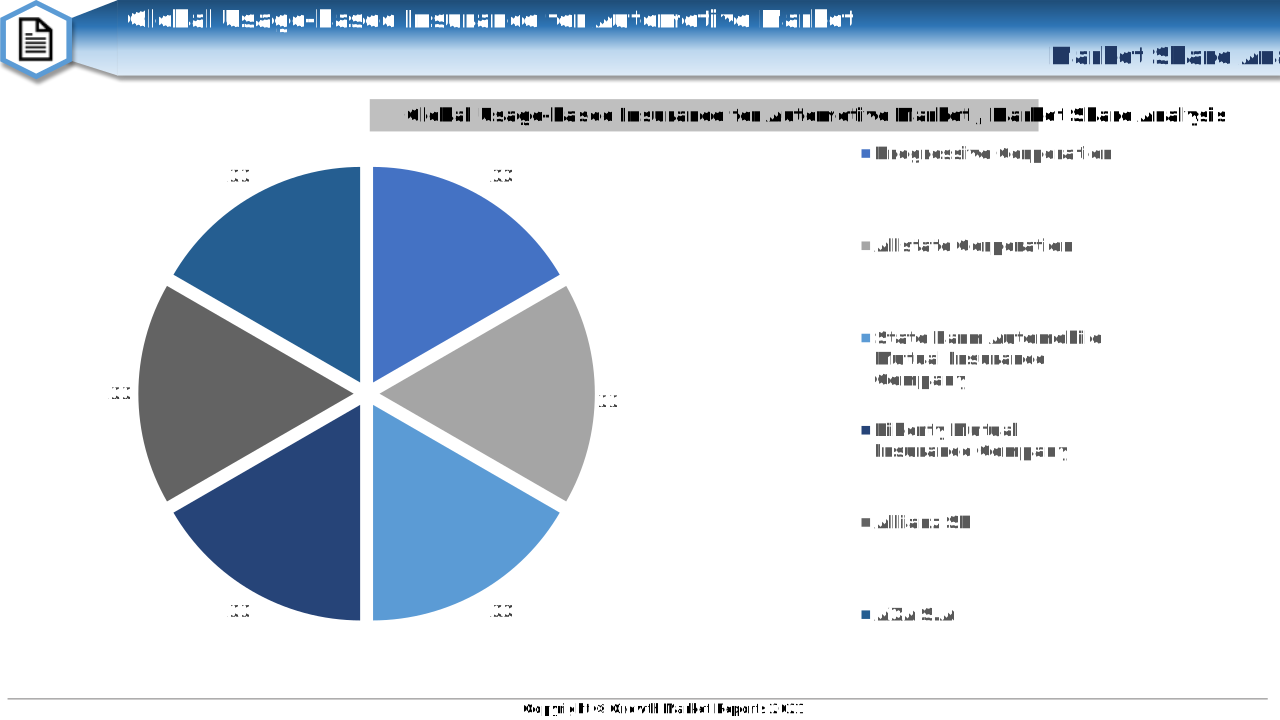
Some of the key players in the global usage-based insurance for automotive market are Progressive Corporation, Allstate Corporation, State Farm Automobile Mutual Insurance Company, Liberty Mutual Insurance Company, Allianz SE, and AXA S.A.
Manufacturers are focusing on mergers and acquisitions and collaborations to acquire a large market share. Additionally, the market players are enhancing their market presence by adopting various business strategies.
Opportunities include expanding telematics infrastructure, developing flexible on-demand insurance products, leveraging AI and big data analytics for dynamic pricing, and catering to new mobility models like shared and subscription-based services. Insurers that innovate and address evolving consumer needs are well-positioned for long-term growth.
The global usage-based insurance for automotive market is expected to grow at a CAGR of 21.7% from 2025 to 2033, reaching an estimated value of USD 308.1 billion by 2033. Growth is driven by telematics adoption, demand for personalized insurance, digital transformation, and evolving mobility trends.
Usage-based insurance is distributed through insurance companies, OEMs (automakers), brokers, aggregators, and digital platforms. Insurance companies and OEMs often partner to offer bundled products, while digital platforms and brokers help educate consumers and facilitate easy policy comparison and purchase.
The main challenges include data privacy and security concerns, high upfront costs for telematics infrastructure, and integration with legacy systems. Consumers and regulators are increasingly focused on how driving data is stored, used, and shared, making robust cybersecurity and transparent data governance essential for market growth.
For drivers, usage-based insurance offers fairer and more personalized premiums, potential cost savings, and rewards for safe driving. For insurers, it enables improved risk assessment, reduced fraud, lower claims costs, and enhanced customer loyalty. The real-time data also supports proactive risk management and product innovation.
Major players in the global usage-based insurance for automotive market include Progressive Corporation, Allstate Insurance, AXA, Liberty Mutual, State Farm, Generali Group, Allianz SE, Zurich Insurance Group, Insure The Box, Octo Telematics, and Metromile. These companies are leading innovation through telematics platforms, partnerships, and digital transformation.
North America and Europe are leading the adoption of usage-based insurance for automotive, supported by mature automotive markets, advanced digital infrastructure, and favorable regulations. Asia Pacific is the fastest-growing region due to rapid urbanization, increasing vehicle ownership, and high smartphone penetration. Latin America and the Middle East & Africa are also experiencing growth, albeit at a slower pace.
Key technologies in usage-based automotive insurance include OBD-II devices, smartphone-based telematics, embedded telematics systems, and black box solutions. These technologies collect and transmit driving data to insurers, enabling dynamic pricing and personalized insurance products. Advances in IoT, AI, and cloud computing are further enhancing data analytics and risk assessment capabilities.
The main types of usage-based insurance for automotive include Pay-As-You-Drive (PAYD), Pay-How-You-Drive (PHYD), and Manage-How-You-Drive (MHYD). PAYD bases premiums on mileage, PHYD considers driving behavior, and MHYD provides real-time feedback and coaching to help drivers improve their habits. Hybrid and pay-per-use models are also emerging to meet diverse customer needs.
Usage-based insurance (UBI) for automotive is a type of car insurance where premiums are determined by actual driving behavior, mileage, and vehicle usage. Insurers use telematics technology—such as OBD-II devices, smartphones, or embedded vehicle systems—to collect real-time data on speed, braking, acceleration, and distance driven. This data allows insurers to offer personalized premiums and reward safe driving habits.