Segments - by Component (Solutions, Services), by Deployment Mode (On-Premises, Cloud), by Enterprise Size (Small and Medium Enterprises, Large Enterprises), by Application (Marketing, Sales, IT, Operations, Others), by End-User (Media and Entertainment, BFSI, Retail and E-commerce, Healthcare, Manufacturing, Government, Others)
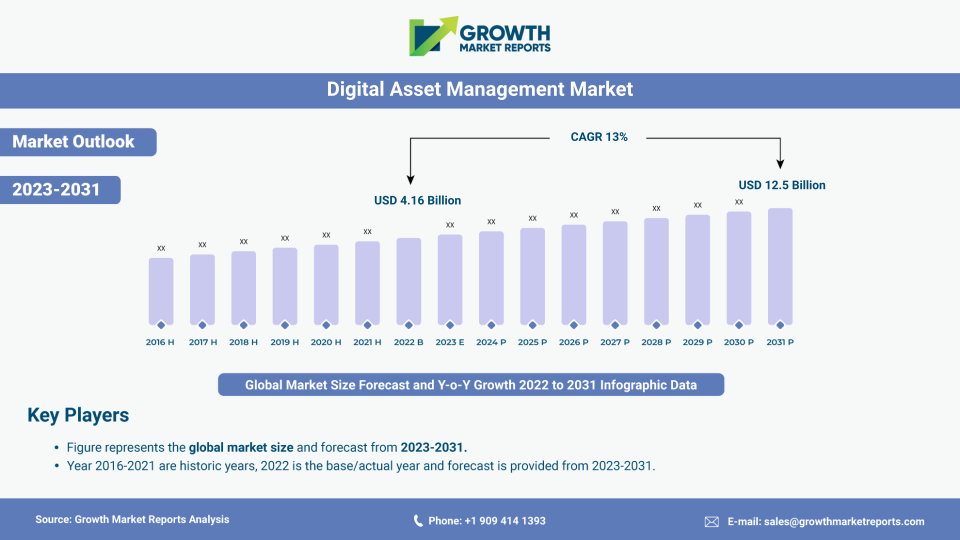
According to our latest research, the global Digital Asset Management (DAM) market size in 2024 stands at USD 5.4 billion, driven by rapid digital transformation across industries and the exponential growth of digital content. The market is expected to register a robust CAGR of 14.1% from 2025 to 2033, reaching a forecasted market size of USD 17.3 billion by the end of 2033. This impressive growth trajectory is propelled by the increasing need for effective management, storage, and retrieval of digital assets, as organizations continue to embrace remote work, omnichannel marketing, and data-driven decision-making. As per our 2025 research, the DAM marketÂ’s expansion is further catalyzed by the proliferation of cloud-based solutions and the rising demand for workflow automation across various sectors.
One of the primary growth factors fueling the Digital Asset Management market is the unprecedented surge in digital content creation across enterprises. As brands and organizations produce vast amounts of multimedia content, including images, videos, documents, and graphics, managing these assets efficiently has become a critical business imperative. DAM solutions offer centralized repositories, advanced search capabilities, and streamlined collaboration tools, enabling teams to access, share, and repurpose content with ease. This not only enhances operational efficiency but also ensures brand consistency and compliance with regulatory requirements. The increasing volume and complexity of digital assets, coupled with the need for real-time collaboration among geographically dispersed teams, are major drivers accelerating the adoption of DAM platforms.
Another significant growth driver is the rapid adoption of cloud-based deployment models. Cloud DAM solutions provide organizations with scalability, flexibility, and cost-effectiveness, making them highly attractive for businesses of all sizes. The shift towards cloud is further amplified by the growing trend of remote and hybrid work environments, which demand seamless access to digital assets from any location and device. Cloud-based DAM platforms also offer automatic updates, enhanced security features, and integration capabilities with other enterprise systems such as content management, marketing automation, and customer relationship management (CRM) tools. As a result, enterprises are increasingly migrating from legacy on-premises systems to cloud-native DAM solutions to future-proof their digital asset strategies.
The integration of artificial intelligence (AI) and machine learning (ML) technologies into DAM platforms is another pivotal factor contributing to market growth. AI-powered features such as automated tagging, content recognition, metadata enrichment, and intelligent search are revolutionizing how organizations manage and utilize their digital assets. These capabilities not only reduce manual effort but also improve asset discoverability and enhance user experiences. Furthermore, the growing emphasis on omnichannel marketing and personalized customer engagement is prompting organizations to invest in advanced DAM systems that can support dynamic content delivery and analytics. This technological evolution, combined with increasing digitalization across industries, is expected to sustain the upward momentum of the DAM market in the coming years.
As organizations navigate the complexities of managing digital assets, the concept of Digital Asset Compliance Orchestration emerges as a critical component in ensuring regulatory adherence and operational efficiency. This orchestration involves the seamless integration of compliance frameworks within digital asset management systems, allowing businesses to automate compliance checks and maintain audit trails effortlessly. By orchestrating compliance processes, organizations can mitigate risks associated with data breaches and non-compliance penalties. Furthermore, this approach enhances transparency and accountability, fostering trust among stakeholders and customers. As regulatory landscapes evolve, the ability to dynamically adjust compliance protocols within digital asset management platforms becomes indispensable, ensuring that organizations remain agile and responsive to new requirements.
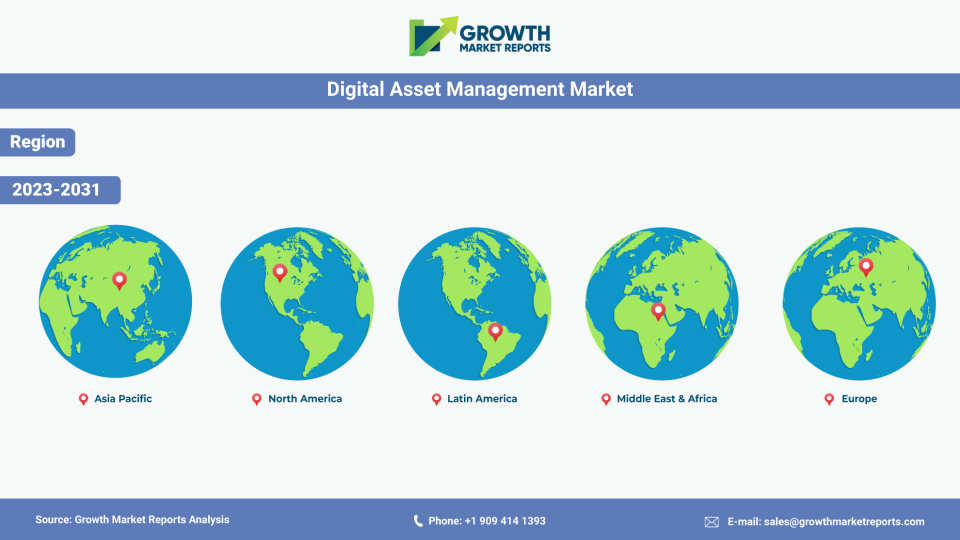
From a regional perspective, North America continues to dominate the global Digital Asset Management market, accounting for the largest share in 2024, followed closely by Europe and Asia Pacific. The strong presence of leading DAM vendors, high digital maturity, and early adoption of advanced technologies contribute to North AmericaÂ’s leadership position. Europe is witnessing substantial growth, driven by stringent regulatory frameworks around data protection and a growing focus on digital transformation initiatives. Meanwhile, the Asia Pacific region is emerging as a lucrative market, fueled by the rapid expansion of e-commerce, media, and entertainment sectors, as well as increasing investments in cloud infrastructure. Latin America and the Middle East & Africa are also experiencing steady growth, albeit from a smaller base, as organizations in these regions recognize the value proposition of DAM solutions in optimizing digital asset workflows and enhancing business agility.
The Digital Asset Management market is broadly segmented by component into Solutions and Services. Solutions comprise the core DAM software platforms that offer functionalities such as asset storage, metadata management, workflow automation, version control, and content distribution. These platforms are increasingly incorporating AI-driven features to automate asset tagging, enable advanced search capabilities, and provide analytics for content performance. The growing need for centralized asset repositories and seamless collaboration among creative and marketing teams is driving the demand for robust DAM solutions across industries. As organizations strive to maintain brand consistency and streamline digital workflows, the adoption of comprehensive DAM solutions is becoming indispensable.
Services, on the other hand, encompass a range of offerings such as consulting, implementation, training, support, and maintenance. These services play a crucial role in ensuring the successful deployment and ongoing optimization of DAM platforms. Consulting services help organizations assess their digital asset management needs, design customized solutions, and develop effective governance frameworks. Implementation services focus on configuring and integrating DAM systems with existing IT infrastructure, while training and support services empower users to maximize the value of their DAM investments. As the complexity of digital asset ecosystems increases, the demand for specialized services to facilitate smooth adoption and drive user engagement is on the rise.
The solutions segment currently accounts for the largest share of the DAM market, reflecting the critical importance of software platforms in managing the growing volume and diversity of digital assets. However, the services segment is expected to witness higher growth during the forecast period, driven by the increasing need for expert guidance and ongoing support as organizations scale their DAM initiatives. The evolution of DAM from standalone systems to integrated, enterprise-wide platforms is further amplifying the demand for value-added services, including system integration, workflow customization, and change management. Vendors are responding by expanding their service portfolios and establishing strategic partnerships to deliver end-to-end DAM solutions.
In the realm of digital asset management, the role of a Digital Asset Data Aggregator is becoming increasingly pivotal. This technology serves as a centralized hub that consolidates diverse digital asset data from multiple sources, providing a unified view for organizations to analyze and leverage. By aggregating data, businesses can gain deeper insights into asset performance, usage patterns, and audience engagement, enabling more informed decision-making. The integration of data aggregation capabilities within DAM platforms also facilitates enhanced reporting and analytics, supporting strategic initiatives such as personalized marketing and content optimization. As the volume of digital assets continues to grow, the demand for robust data aggregation solutions is set to rise, empowering organizations to harness the full potential of their digital ecosystems.
Another key trend in the component segment is the emergence of modular and API-driven DAM solutions. These offerings enable organizations to tailor their DAM environments to specific business requirements, integrate with third-party applications, and leverage microservices architectures for enhanced scalability and flexibility. As digital asset management becomes increasingly intertwined with broader digital experience and content management strategies, the ability to seamlessly connect DAM platforms with marketing, e-commerce, and analytics tools is becoming a critical differentiator. This shift towards open, extensible DAM architectures is expected to drive innovation and create new growth opportunities for both solution providers and service partners in the coming years.
| Attributes | Details |
| Report Title | Digital Asset Management Market Research Report 2033 |
| By Component | Solutions, Services |
| By Deployment Mode | On-Premises, Cloud |
| By Enterprise Size | Small and Medium Enterprises, Large Enterprises |
| By Application | Marketing, Sales, IT, Operations, Others |
| By End-User | Media and Entertainment, BFSI, Retail and E-commerce, Healthcare, Manufacturing, Government, Others |
| Regions Covered | North America, Europe, APAC, Latin America, MEA |
| Base Year | 2024 |
| Historic Data | 2018-2023 |
| Forecast Period | 2025-2033 |
| Number of Pages | 278 |
| Number of Tables & Figures | 359 |
| Customization Available | Yes, the report can be customized as per your need. |
The Digital Asset Management market is segmented by deployment mode into On-Premises and Cloud. On-premises DAM solutions have traditionally been favored by large enterprises and organizations with stringent data security, compliance, and customization requirements. These solutions offer complete control over data storage, access, and management, making them suitable for industries such as government, healthcare, and financial services where regulatory compliance is paramount. However, on-premises deployments often entail higher upfront costs, longer implementation timelines, and increased IT resource requirements, which can pose challenges for organizations seeking agility and scalability.
In contrast, cloud-based DAM solutions are gaining rapid traction across industries, driven by their inherent advantages in terms of scalability, flexibility, cost efficiency, and ease of deployment. Cloud DAM platforms enable organizations to access digital assets from any location and device, support remote and distributed teams, and facilitate seamless collaboration across geographies. The subscription-based pricing models offered by cloud providers make DAM solutions more accessible to small and medium enterprises (SMEs), while automatic updates and managed services reduce the burden on internal IT teams. As a result, cloud deployment is emerging as the preferred choice for organizations looking to accelerate their digital transformation journeys and future-proof their asset management strategies.
Hybrid deployment models are also gaining prominence, particularly among organizations with complex digital ecosystems and diverse regulatory requirements. Hybrid DAM solutions combine the benefits of on-premises control with the scalability and accessibility of the cloud, enabling organizations to store sensitive assets locally while leveraging cloud capabilities for collaboration and distribution. This approach offers greater flexibility in managing data sovereignty, security, and compliance, while supporting the evolving needs of modern enterprises. As regulatory landscapes continue to evolve and data privacy concerns intensify, hybrid deployment models are expected to gain further traction in the DAM market.
The shift towards cloud-based DAM is further accelerated by advancements in cloud infrastructure, improved internet connectivity, and the proliferation of SaaS-based solutions. Leading DAM vendors are investing in robust cloud architectures, offering multi-tenant environments, and integrating advanced security features such as encryption, identity management, and access controls. These developments are addressing the traditional concerns around data security and reliability, making cloud DAM platforms increasingly viable for mission-critical applications. As organizations prioritize agility, scalability, and cost optimization, the cloud deployment segment is projected to outpace on-premises deployments, driving the next wave of growth in the DAM market.
The Digital Asset Management market is segmented by enterprise size into Small and Medium Enterprises (SMEs) and Large Enterprises. Large enterprises have historically been the primary adopters of DAM solutions, given their extensive digital asset portfolios, complex workflows, and stringent governance requirements. These organizations often operate across multiple regions and business units, necessitating centralized asset repositories, advanced metadata management, and robust access controls. DAM platforms enable large enterprises to streamline content creation, distribution, and reuse, resulting in significant efficiency gains, cost savings, and enhanced brand consistency. The ability to integrate DAM systems with other enterprise applications such as ERP, CRM, and marketing automation tools further amplifies the value proposition for large organizations.
Small and medium enterprises are increasingly recognizing the benefits of DAM solutions in enhancing productivity, accelerating time-to-market, and improving customer engagement. The proliferation of cloud-based DAM platforms has democratized access to advanced asset management capabilities, enabling SMEs to compete more effectively in digital-first marketplaces. These solutions offer intuitive user interfaces, scalable pricing models, and pre-configured workflows tailored to the needs of smaller organizations. As SMEs ramp up their digital marketing efforts and expand their online presence, the demand for affordable, easy-to-deploy DAM solutions is on the rise. Vendors are responding by offering modular, SaaS-based DAM platforms that cater specifically to the requirements of SMEs.
The adoption dynamics between large enterprises and SMEs are shaped by distinct business priorities and resource constraints. While large enterprises prioritize scalability, integration, and customization, SMEs seek simplicity, cost-effectiveness, and rapid deployment. This has led to the emergence of differentiated DAM offerings, with vendors providing tiered solutions, industry-specific templates, and self-service options to address the unique needs of each segment. The growing recognition of digital assets as strategic business assets is prompting organizations of all sizes to invest in DAM platforms, driving broad-based market growth.
The enterprise size segment is also witnessing increased collaboration between DAM vendors and channel partners, including system integrators, value-added resellers, and managed service providers. These partnerships are facilitating the delivery of end-to-end DAM solutions, from initial assessment and implementation to ongoing support and optimization. As the DAM market matures, the focus is shifting towards delivering measurable business outcomes, such as improved content ROI, faster campaign execution, and enhanced customer experiences. This outcome-driven approach is expected to accelerate DAM adoption across both large enterprises and SMEs, fueling sustained market expansion over the forecast period.
The application landscape of the Digital Asset Management market is diverse, encompassing key use cases such as Marketing, Sales, IT, Operations, and Others. Marketing remains the largest and most dynamic application segment, as organizations across industries rely on digital assets to power omnichannel campaigns, drive brand engagement, and deliver personalized customer experiences. DAM platforms enable marketing teams to efficiently manage creative assets, automate approval workflows, and ensure consistent brand messaging across channels. The integration of DAM with marketing automation, social media management, and content delivery networks (CDNs) is further enhancing the agility and effectiveness of marketing operations.
Sales teams are increasingly leveraging DAM solutions to access up-to-date collateral, product images, videos, and presentations, enabling them to engage prospects with relevant and compelling content. By providing a single source of truth for sales assets, DAM platforms reduce duplication, minimize version control issues, and accelerate the sales cycle. The ability to track asset usage and performance also provides valuable insights for optimizing sales enablement strategies. As organizations adopt data-driven approaches to sales and customer engagement, the role of DAM in supporting sales operations is becoming increasingly critical.
The IT function plays a pivotal role in the deployment, integration, and ongoing management of DAM platforms. IT teams are responsible for ensuring data security, system reliability, and seamless integration with other enterprise applications. DAM solutions that offer robust APIs, support for industry standards, and compatibility with existing IT infrastructure are highly valued by organizations seeking to future-proof their digital asset ecosystems. The growing complexity of digital workflows and the need for interoperability across systems are driving ITÂ’s involvement in DAM selection and implementation processes.
Operations teams are utilizing DAM platforms to streamline internal processes, improve collaboration, and enhance productivity. By centralizing digital assets and automating routine tasks, DAM solutions enable operations teams to reduce manual effort, minimize errors, and accelerate project timelines. The ability to manage and track asset usage across departments and business units also supports compliance, auditability, and resource optimization. As organizations pursue operational excellence and digital transformation, the adoption of DAM in operations is expected to increase.
Other application areas for DAM include human resources, legal, procurement, and customer service, where the efficient management and distribution of digital assets can drive significant business value. The versatility of DAM platforms in supporting a wide range of use cases underscores their strategic importance in the modern enterprise. As organizations continue to digitize their operations and embrace new digital channels, the application footprint of DAM is expected to expand, creating new growth opportunities for vendors and service providers.
The Digital Asset Management market serves a broad spectrum of end-users, including Media and Entertainment, BFSI (Banking, Financial Services, and Insurance), Retail and E-commerce, Healthcare, Manufacturing, Government, and Others. The media and entertainment industry is the largest adopter of DAM solutions, driven by the need to manage vast libraries of multimedia content, streamline production workflows, and distribute assets across multiple platforms. DAM platforms enable media organizations to automate metadata tagging, facilitate collaboration among creative teams, and monetize content more effectively. The rise of digital streaming, social media, and user-generated content is further amplifying the demand for advanced DAM capabilities in this sector.
The BFSI sector is increasingly investing in DAM solutions to manage digital documents, marketing materials, compliance records, and customer communications. Regulatory requirements around data security, privacy, and auditability are driving the adoption of DAM platforms that offer robust access controls, encryption, and versioning capabilities. By centralizing digital assets and automating document workflows, BFSI organizations can enhance operational efficiency, reduce risk, and improve customer experiences. The integration of DAM with customer relationship management (CRM) and enterprise content management (ECM) systems is further strengthening its value proposition in the financial services industry.
Retail and e-commerce companies are leveraging DAM solutions to manage product images, videos, catalogs, and promotional content across digital and physical channels. The ability to deliver consistent and engaging product experiences, automate content distribution, and support personalized marketing is critical for success in this highly competitive sector. DAM platforms that integrate with e-commerce platforms, digital marketing tools, and analytics solutions are in high demand, as retailers seek to optimize content workflows and drive conversion rates. The rapid growth of online shopping and omnichannel retailing is expected to fuel continued investment in DAM solutions among retailers.
Healthcare organizations are adopting DAM platforms to manage medical images, patient records, educational materials, and marketing assets. The need for secure, compliant, and efficient management of digital assets is paramount in this sector, given the sensitive nature of healthcare data and the stringent regulatory environment. DAM solutions that offer HIPAA compliance, audit trails, and integration with electronic health record (EHR) systems are particularly valued by healthcare providers. The digitization of healthcare workflows and the increasing use of telemedicine are expected to drive further adoption of DAM in the healthcare sector.
Manufacturing and government sectors are also recognizing the benefits of DAM solutions in managing technical documentation, training materials, regulatory records, and public communications. The ability to centralize and secure digital assets, automate approval processes, and ensure compliance with industry standards is driving DAM adoption in these sectors. As digital transformation initiatives gain momentum across industries, the end-user base for DAM solutions is expected to broaden, creating new opportunities for market growth and innovation.
One of the most significant opportunities in the Digital Asset Management market lies in the integration of DAM platforms with emerging technologies such as artificial intelligence, machine learning, and blockchain. AI-powered DAM solutions can automate content tagging, enable intelligent search, and provide actionable insights into asset performance, driving greater efficiency and value for organizations. The integration of blockchain technology offers enhanced security, transparency, and traceability in asset management, particularly for industries dealing with intellectual property and digital rights management. As organizations seek to unlock the full potential of their digital assets, the convergence of DAM with these advanced technologies presents a compelling growth avenue for vendors and service providers.
Another major opportunity is the growing adoption of DAM solutions among small and medium enterprises, fueled by the increasing availability of affordable, cloud-based platforms. SMEs are recognizing the strategic importance of digital assets in driving brand visibility, customer engagement, and business growth. Vendors that offer scalable, user-friendly, and industry-specific DAM solutions are well-positioned to capture this expanding market segment. Furthermore, the rise of remote work, global collaboration, and digital commerce is creating new use cases and demand for DAM platforms that support seamless asset sharing, workflow automation, and integration with other business applications. As digitalization continues to reshape business models, the addressable market for DAM solutions is set to expand significantly.
Despite the positive outlook, the DAM market faces certain restraining factors, the most notable being data security and privacy concerns. As organizations store increasing volumes of sensitive digital assets in the cloud, the risk of data breaches, unauthorized access, and compliance violations becomes a critical challenge. Ensuring robust security measures, such as encryption, multi-factor authentication, and access controls, is essential to building trust and driving adoption. Additionally, the complexity of integrating DAM platforms with existing IT infrastructure and legacy systems can pose implementation challenges, particularly for large enterprises with diverse digital ecosystems. Addressing these concerns through continuous innovation, customer education, and best practice frameworks will be crucial for sustaining market growth.
The regional analysis of the Digital Asset Management market reveals that North America holds the dominant share, with the regionÂ’s market size estimated at USD 2.2 billion in 2024. This leadership is attributed to the early adoption of digital technologies, the presence of major DAM vendors, and the high digital maturity of enterprises across the United States and Canada. North American organizations are at the forefront of leveraging DAM solutions to optimize marketing, sales, and operational workflows, particularly in sectors such as media and entertainment, retail, and BFSI. The regionÂ’s robust IT infrastructure, focus on innovation, and stringent data protection regulations further reinforce its position as the leading DAM market globally.
Europe is the second-largest market for DAM solutions, with a market size of approximately USD 1.5 billion in 2024. The regionÂ’s growth is driven by the increasing emphasis on data privacy, compliance with regulations such as GDPR, and the rising adoption of cloud-based DAM platforms. European enterprises are investing in DAM to ensure brand consistency, support multilingual content management, and enhance collaboration across geographically dispersed teams. The strong presence of media, retail, and manufacturing industries, combined with government initiatives to promote digital transformation, is fueling the demand for advanced DAM solutions in Europe. The region is expected to register a healthy CAGR of 13.6% over the forecast period.
The Asia Pacific region is emerging as a high-growth market for DAM, with a market size of USD 1.1 billion in 2024 and projected to witness the fastest CAGR of 16.2% from 2025 to 2033. Rapid digitalization, the expansion of e-commerce, and the proliferation of digital media are driving DAM adoption across countries such as China, India, Japan, and Australia. Enterprises in the region are increasingly leveraging DAM platforms to manage large volumes of digital content, support multilingual and multicultural marketing, and enhance customer engagement. The growing investments in cloud infrastructure and the rising awareness of the benefits of digital asset management are expected to further accelerate market growth in Asia Pacific. Latin America and the Middle East & Africa are also experiencing steady uptake of DAM solutions, albeit from a smaller base, as organizations in these regions embrace digital transformation and seek to optimize their digital asset workflows.
The competitive landscape of the Digital Asset Management market is characterized by intense rivalry among a diverse set of players, ranging from global technology giants to specialized DAM providers and emerging startups. Leading vendors are continuously innovating to enhance their product offerings, incorporating advanced features such as AI-driven automation, integration with third-party applications, and robust security capabilities. The market is witnessing a wave of mergers, acquisitions, and strategic partnerships, as companies seek to expand their geographic reach, strengthen their technology portfolios, and address evolving customer needs. The ability to deliver scalable, flexible, and user-friendly DAM solutions is emerging as a key differentiator in the highly competitive marketplace.
Major DAM vendors are focusing on expanding their cloud capabilities, offering multi-tenant SaaS platforms, and providing industry-specific solutions tailored to the unique requirements of sectors such as media, retail, healthcare, and manufacturing. The trend towards open, API-driven architectures is enabling seamless integration with other enterprise systems, enhancing the value proposition for customers. Vendors are also investing in customer success programs, training, and support services to drive user adoption and maximize the return on investment for DAM deployments. The growing importance of data security and compliance is prompting vendors to enhance their security features, achieve industry certifications, and offer robust data governance frameworks.
The market is also witnessing the entry of niche players and startups that are leveraging emerging technologies such as AI, machine learning, and blockchain to disrupt traditional DAM models. These innovators are introducing novel solutions focused on specific use cases, such as creative collaboration, rights management, and content analytics. The availability of modular, cloud-native DAM platforms is lowering the barriers to entry for new players, intensifying competition and driving continuous innovation. As customer expectations evolve and the demand for personalized, data-driven experiences increases, the competitive dynamics of the DAM market are expected to remain fluid and dynamic.
Prominent companies in the Digital Asset Management market include Adobe Inc., OpenText Corporation, Bynder, Cognizant, Widen (an Acquia company), MediaBeacon, Aprimo, Northplains, Cloudinary, and CELUM. Adobe Inc. is renowned for its comprehensive Creative Cloud and Experience Manager DAM solutions, which are widely adopted by enterprises for their scalability, integration capabilities, and advanced creative tools. OpenText Corporation offers a robust suite of enterprise information management solutions, including DAM, with a strong focus on security, compliance, and workflow automation. Bynder is recognized for its intuitive, cloud-based DAM platform, catering to marketing and creative teams with features such as brand portals, creative project management, and content analytics.
Widen, now part of Acquia, provides a highly configurable DAM solution known for its ease of integration and scalability, serving a diverse client base across industries. Aprimo specializes in marketing operations and DAM, offering solutions that streamline content creation, distribution, and performance measurement. Cloudinary is a leading provider of cloud-based media management solutions, focusing on image and video optimization for web and mobile applications. CELUM and MediaBeacon are recognized for their enterprise-grade DAM platforms, offering advanced features for metadata management, workflow automation, and digital rights management. These companies, along with numerous emerging players, are shaping the future of the DAM market through continuous innovation, customer-centric strategies, and a relentless focus on delivering business value.
The Digital Asset Management market has been segmented on the basis of
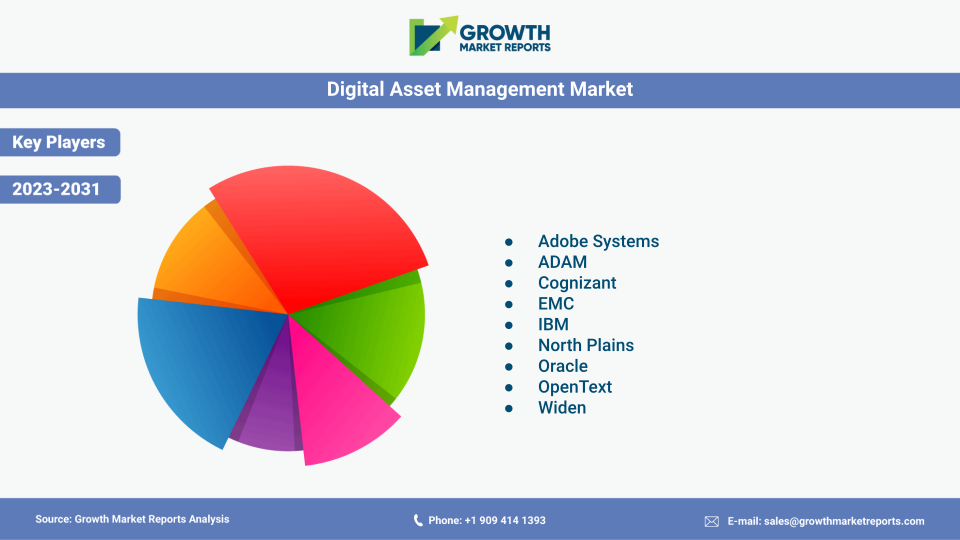
The major players of the market are Adobe Systems, ADAM, Cognizant, EMC, IBM, North Plains, Oracle, OpenText, and Widen.
In October 2020, Adobe Systems and Contentserv, one of the leading product experience platform providers, announced the integration of Adobe Creative Cloud Libraries through Contentserv’s Adobe Creative Cloud Connector.
SMEs are increasingly adopting affordable, cloud-based DAM platforms to enhance productivity, accelerate time-to-market, and improve customer engagement, with vendors offering scalable and user-friendly solutions tailored to their needs.
Prominent DAM vendors include Adobe Inc., OpenText Corporation, Bynder, Cognizant, Widen (Acquia), MediaBeacon, Aprimo, Northplains, Cloudinary, and CELUM.
The DAM market is segmented into solutions (core software for asset storage, metadata management, workflow automation) and services (consulting, implementation, training, support, and maintenance).
Key challenges include data security and privacy concerns, integration complexities with existing IT infrastructure, and compliance with regulatory requirements.
AI and machine learning are enhancing DAM platforms with features like automated tagging, content recognition, metadata enrichment, and intelligent search, improving efficiency and asset discoverability.
Major end-users include media and entertainment, BFSI (banking, financial services, and insurance), retail and e-commerce, healthcare, manufacturing, government, and others.
DAM solutions can be deployed on-premises, in the cloud, or through hybrid models. Cloud-based DAM is gaining rapid traction due to its scalability, flexibility, and cost-effectiveness.
North America holds the largest share of the DAM market, followed by Europe and Asia Pacific. Asia Pacific is expected to witness the fastest growth rate through 2033.
Key growth drivers include rapid digital transformation, exponential growth of digital content, increased adoption of cloud-based solutions, workflow automation, and integration of AI and machine learning technologies.
The global Digital Asset Management (DAM) market is expected to reach USD 17.3 billion by 2033, growing at a CAGR of 14.1% from 2025 to 2033.