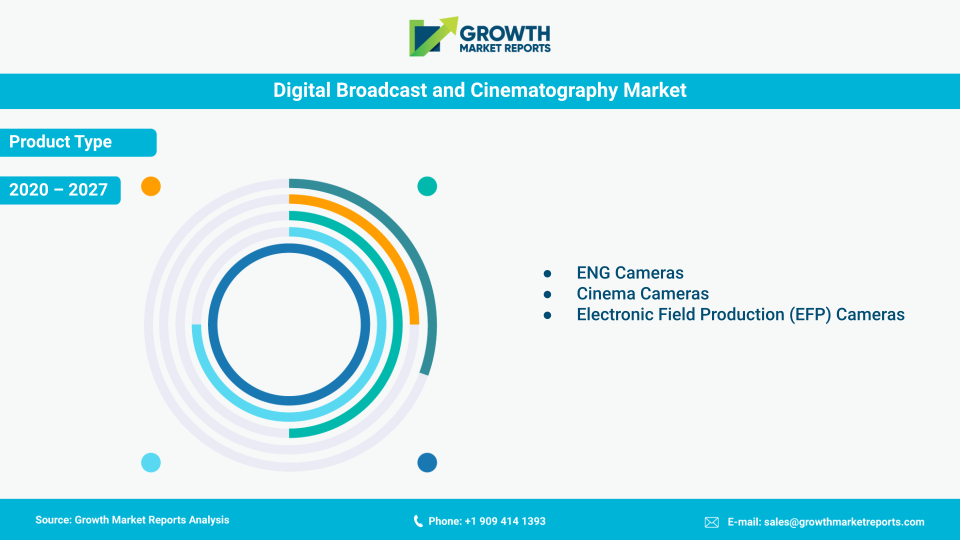
Segments - by Product Type (Cameras, Lenses, Switchers, Video Servers, Lighting Equipment, Others), by Application (Television, Film Production, News Broadcasting, Sports Broadcasting, Others), by Resolution (HD, 4K, 8K, Others), by End-User (Broadcast Studios, Production Houses, Freelancers, Others)
According to our latest research, the global digital broadcast and cinematography market size in 2024 stands at USD 13.7 billion, with robust growth fueled by the increasing adoption of high-resolution video technologies and evolving content consumption patterns. The market is expected to grow at a CAGR of 7.6% from 2025 to 2033, reaching a projected value of USD 26.7 billion by 2033. This significant growth is attributed to the rapid proliferation of streaming platforms, advancements in camera and production technologies, and the rising demand for immersive viewing experiences across various applications and end-user segments.
The growth trajectory of the digital broadcast and cinematography market is primarily driven by the relentless demand for high-quality content and the ongoing digital transformation in the media and entertainment industry. As consumers increasingly prefer on-demand and live streaming services, broadcasters and production houses are investing heavily in advanced equipment such as ultra-high-definition (UHD) cameras, sophisticated video servers, and innovative lighting solutions. Furthermore, the integration of artificial intelligence and machine learning in editing and post-production workflows is streamlining processes, reducing turnaround times, and enhancing creative possibilities, thereby further propelling market expansion.
Another critical factor contributing to the marketÂ’s expansion is the shift toward higher resolutions, notably 4K and 8K, which are rapidly becoming industry standards. This evolution is not only improving the visual experience for viewers but also compelling broadcasters and filmmakers to upgrade their infrastructure and adopt new workflows. The push for real-time content delivery, especially for live sports and news broadcasting, requires robust video servers, advanced switchers, and reliable connectivity, all of which are fueling demand across the product spectrum. Additionally, the rise of OTT (over-the-top) platforms and direct-to-consumer streaming services is intensifying competition, prompting content creators to differentiate through superior production quality and innovative storytelling techniques.
The digital broadcast and cinematography market is also benefiting from the democratization of content creation tools, which is empowering a broader range of end-users, including freelancers and small production houses. The availability of affordable, high-performance cameras, lenses, and editing software has lowered entry barriers, enabling independent creators to produce professional-grade content. This trend is particularly pronounced in emerging markets, where local content production is experiencing a boom, driven by increasing internet penetration and the growing popularity of regional streaming platforms. As a result, the market is witnessing a surge in demand for versatile, user-friendly equipment that caters to both established studios and new entrants alike.
In recent years, the advent of Digital Camcorders has significantly transformed the landscape of content creation, offering filmmakers and broadcasters unprecedented flexibility and creative control. These devices, known for their compact size and high-quality output, have become indispensable tools in both professional and amateur settings. The integration of advanced features such as 4K and 8K recording, image stabilization, and wireless connectivity has made digital camcorders a popular choice for capturing everything from cinematic productions to live events. As technology continues to evolve, digital camcorders are expected to further enhance the capabilities of content creators, enabling them to produce visually stunning and technically sophisticated works with greater ease and efficiency.
From a regional perspective, North America continues to dominate the digital broadcast and cinematography market, accounting for the largest revenue share in 2024, owing to the presence of major studios, broadcasters, and technology innovators. However, Asia Pacific is emerging as the fastest-growing region, supported by the rapid expansion of the entertainment industry, rising investments in media infrastructure, and a burgeoning base of content creators. Europe, with its rich film heritage and strong public broadcasting networks, remains a key contributor, while Latin America and the Middle East & Africa are gradually gaining momentum as local industries modernize and global streaming players expand their footprint.
The product landscape of the digital broadcast and cinematography market is diverse, encompassing cameras, lenses, switchers, video servers, lighting equipment, and several other supporting devices. Cameras remain the cornerstone of this market, with technological advancements such as higher resolutions, enhanced low-light performance, and integrated connectivity features driving their adoption across both studio and field production environments. The transition from traditional broadcast cameras to digital cinema cameras has enabled content creators to capture cinematic visuals with greater flexibility, catering to the evolving demands of filmmakers, broadcasters, and independent creators alike.
Lenses play a pivotal role in shaping the visual narrative, and the market for broadcast and cinema lenses is witnessing robust growth due to the increasing preference for prime and zoom lenses that deliver superior optical quality and creative control. Manufacturers are focusing on developing lightweight, high-precision lenses compatible with a wide range of camera systems, addressing the needs of both large-scale productions and agile, run-and-gun shooting scenarios. The demand for specialty lenses, including anamorphic and macro lenses, is also on the rise, driven by the desire for unique visual aesthetics in high-end productions.
The role of the Camcorder in the digital broadcast and cinematography market cannot be overstated. As a versatile and accessible tool, camcorders have democratized the process of video production, allowing a wider range of creators to participate in the industry. With advancements in sensor technology and processing power, modern camcorders offer exceptional image quality and a host of features that cater to both novice and experienced users. The ability to shoot in various resolutions, coupled with user-friendly interfaces, makes camcorders an ideal choice for capturing a wide array of content, from documentaries and indie films to corporate videos and educational materials. As the demand for diverse and high-quality content grows, camcorders will continue to play a crucial role in meeting the needs of the evolving media landscape.
Switchers and video servers are critical for live production workflows, enabling seamless switching between multiple camera feeds and real-time content management. The adoption of IP-based switchers and servers is accelerating, as broadcasters seek scalable, flexible solutions capable of supporting remote production and multi-platform distribution. These innovations are particularly relevant for live sports, news, and event broadcasting, where reliability, low latency, and high throughput are paramount. The integration of cloud-based video servers is further enhancing collaboration and remote editing capabilities, reflecting the industryÂ’s shift toward distributed production models.
Lighting equipment is another essential segment, with advancements in LED technology driving demand for energy-efficient, versatile lighting solutions that offer superior color rendering and control. Modern lighting systems are designed to be portable, easy to configure, and compatible with digital workflows, enabling cinematographers and lighting designers to achieve consistent, high-quality illumination across diverse shooting environments. The growing emphasis on virtual production and mixed reality sets is also spurring innovation in lighting technology, as content creators seek to blend real and virtual elements seamlessly.
The “others” category, which includes accessories such as audio equipment, tripods, gimbals, and editing consoles, is also experiencing steady growth. These supporting products are essential for enhancing workflow efficiency and ensuring high production standards. As the industry continues to evolve, manufacturers are prioritizing interoperability, modularity, and user-centric design, enabling professionals to build customized production ecosystems tailored to their specific requirements.
| Attributes | Details |
| Report Title | Digital Broadcast and Cinematography Market Research Report 2033 |
| By Product Type | Cameras, Lenses, Switchers, Video Servers, Lighting Equipment, Others |
| By Application | Television, Film Production, News Broadcasting, Sports Broadcasting, Others |
| By Resolution | HD, 4K, 8K, Others |
| By End-User | Broadcast Studios, Production Houses, Freelancers, Others |
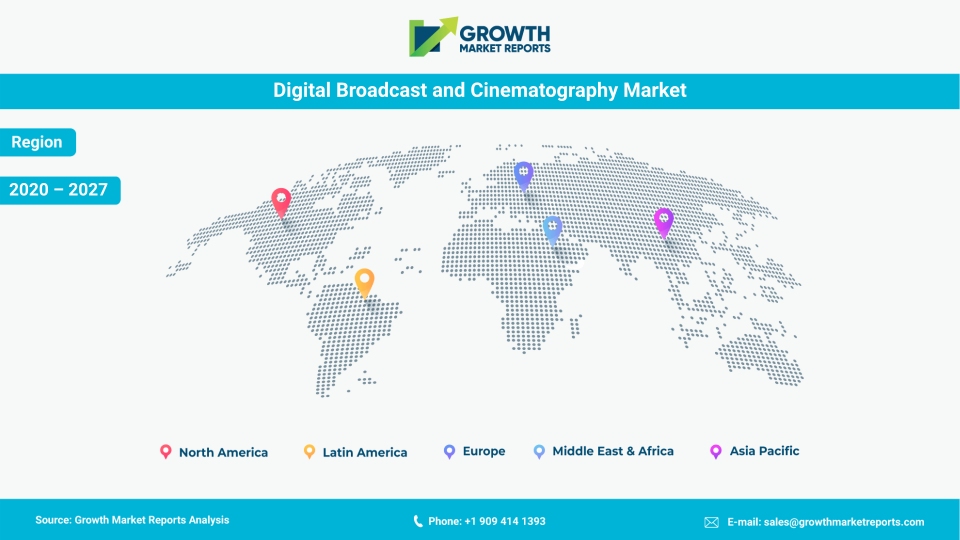
| Regions Covered | North America, Europe, APAC, Latin America, MEA |
| Base Year | 2024 |
| Historic Data | 2018-2023 |
| Forecast Period | 2025-2033 |
| Number of Pages | 273 |
| Number of Tables & Figures | 390 |
| Customization Available | Yes, the report can be customized as per your need. |
The application spectrum of the digital broadcast and cinematography market is broad, spanning television, film production, news broadcasting, sports broadcasting, and a variety of other content genres. Television remains a dominant application area, with broadcasters investing in state-of-the-art equipment to deliver high-definition and ultra-high-definition content across linear and digital platforms. The proliferation of smart TVs and the rise of connected viewing experiences are driving demand for advanced production tools that support multi-platform content delivery, interactive features, and personalized viewing experiences.
Film production represents a significant growth avenue, as filmmakers increasingly leverage digital technologies to streamline workflows, reduce costs, and enhance creative possibilities. The shift from celluloid to digital cinematography has democratized access to high-quality production tools, enabling independent filmmakers and small studios to compete with established players. The adoption of virtual production techniques, such as real-time rendering and LED volume stages, is revolutionizing the filmmaking process, allowing for greater flexibility, cost savings, and visual innovation.
News broadcasting is undergoing a transformation, driven by the need for speed, accuracy, and adaptability in a rapidly changing media landscape. The integration of mobile journalism tools, cloud-based editing platforms, and automated content distribution systems is enabling news organizations to deliver timely, high-quality coverage across traditional and digital channels. The use of drones, mobile cameras, and portable transmission units is expanding the reach of news teams, allowing for real-time reporting from remote or challenging locations.
Sports broadcasting is another key application segment, characterized by the demand for ultra-high-definition visuals, slow-motion replays, and immersive viewing experiences. Broadcasters are investing in specialized cameras, high-speed switchers, and advanced graphics systems to capture and deliver the excitement of live sporting events to global audiences. The integration of augmented reality (AR) and virtual reality (VR) elements is enhancing fan engagement, while cloud-based production workflows are enabling remote collaboration and multi-platform content distribution.
The “others” application category includes a diverse range of content genres, such as live events, concerts, educational programming, and corporate communications. The growing popularity of live streaming and virtual events is driving demand for flexible, scalable production solutions that can support a wide variety of formats and distribution channels. As audiences continue to seek personalized, interactive content experiences, the market is witnessing increased adoption of innovative production tools and technologies across all application areas.
Resolution is a critical factor shaping the digital broadcast and cinematography market, with HD, 4K, 8K, and other formats catering to diverse production needs and audience preferences. High-definition (HD) remains the most widely adopted resolution, offering a balance between image quality and bandwidth requirements. HD equipment is prevalent across television, news, and live event production, providing reliable performance and compatibility with existing broadcast infrastructure. However, the market is witnessing a gradual shift toward higher resolutions, driven by the quest for enhanced visual fidelity and immersive viewing experiences.
4K resolution is rapidly gaining traction, particularly in film production, sports broadcasting, and premium television content. The availability of affordable 4K cameras, lenses, and post-production tools is enabling content creators to deliver stunning visuals that meet the expectations of discerning viewers. The adoption of 4K is also being propelled by the proliferation of 4K-enabled consumer devices, such as smart TVs, monitors, and projectors, which are driving demand for native 4K content across multiple platforms.
8K resolution represents the cutting edge of the market, offering unparalleled image clarity, depth, and detail. While 8K adoption is still in its nascent stages, it is gaining momentum in high-end film production, live sports, and large-scale event broadcasting. The development of 8K cameras, lenses, and post-production workflows is enabling early adopters to push the boundaries of visual storytelling, creating content that is future-proof and ready for emerging distribution channels. However, the widespread adoption of 8K is currently limited by high equipment costs, bandwidth constraints, and the need for compatible display devices.
The “others” resolution category includes a range of formats, such as 2K, 5K, and custom aspect ratios, which are used in specialized applications and experimental projects. The flexibility to capture and deliver content in multiple resolutions is becoming increasingly important, as content creators seek to optimize production workflows for different platforms, devices, and audience segments. The ongoing evolution of compression technologies, such as HEVC and AV1, is facilitating the efficient transmission and storage of high-resolution content, further supporting market growth.
As the demand for higher resolutions continues to rise, manufacturers are focusing on developing scalable, future-ready solutions that can accommodate evolving industry standards. The integration of AI-powered upscaling, real-time rendering, and cloud-based processing is enabling content creators to maximize the value of their investments in high-resolution equipment, ensuring compatibility with current and next-generation distribution platforms.
The end-user landscape of the digital broadcast and cinematography market is diverse, encompassing broadcast studios, production houses, freelancers, and a variety of other stakeholders. Broadcast studios represent the largest end-user segment, driven by the need for state-of-the-art equipment and infrastructure to deliver high-quality content across multiple channels. These organizations are at the forefront of adopting new technologies, such as IP-based production workflows, cloud-based editing, and virtual production tools, to enhance efficiency, flexibility, and creative output.
Production houses, ranging from large-scale studios to boutique agencies, are key drivers of market demand, as they constantly seek innovative solutions to differentiate their content and optimize production workflows. The adoption of advanced cameras, lenses, lighting, and post-production tools is enabling production houses to deliver cinematic visuals, streamline operations, and reduce costs. The growing trend toward co-productions, cross-border collaborations, and multi-platform content distribution is further fueling investment in versatile, interoperable equipment.
The rise of freelancers and independent content creators is reshaping the market, as affordable, user-friendly production tools become more accessible. Freelancers are leveraging compact cameras, portable lighting, and cloud-based editing platforms to produce high-quality content for a wide range of clients, including broadcasters, brands, and digital platforms. The gig economy and the increasing demand for niche, personalized content are driving growth in this segment, as independent creators capitalize on new monetization opportunities and distribution channels.
The “others” end-user category includes educational institutions, corporate organizations, government agencies, and non-profits, all of which are investing in digital broadcast and cinematography equipment to enhance communication, training, and outreach efforts. The adoption of live streaming, virtual events, and interactive content formats is driving demand for scalable, easy-to-use production solutions that can be deployed in diverse settings. As digital literacy and content creation skills become increasingly important, the market is witnessing growing interest from non-traditional end-users seeking to harness the power of video for engagement and storytelling.
Across all end-user segments, the emphasis is on flexibility, scalability, and interoperability, as organizations seek to future-proof their investments and adapt to rapidly changing industry dynamics. The integration of cloud-based workflows, remote collaboration tools, and AI-powered automation is enabling end-users to maximize productivity, reduce costs, and deliver compelling content in an increasingly competitive landscape.
The digital broadcast and cinematography market is brimming with opportunities, particularly as technological advancements continue to reshape the industry landscape. The proliferation of streaming platforms and the growing appetite for high-quality, original content are opening new avenues for broadcasters, production houses, and independent creators. The adoption of virtual production techniques, such as real-time rendering and LED volume stages, is revolutionizing the filmmaking process, enabling cost-effective, visually stunning productions that were previously unattainable. Furthermore, the integration of artificial intelligence and machine learning in editing, color grading, and content personalization is enhancing creative possibilities and operational efficiency, positioning the market for sustained growth in the coming years.
Another significant opportunity lies in the expansion of the market into emerging regions, where increasing internet penetration, rising disposable incomes, and the growing popularity of local content are driving demand for digital broadcast and cinematography equipment. The democratization of content creation tools is empowering a new generation of storytellers, fostering innovation, and fueling the growth of regional streaming platforms. As governments and private sector players invest in media infrastructure and digital literacy initiatives, the market is poised for robust expansion, with new business models and revenue streams emerging across the value chain.
Despite these opportunities, the market faces several challenges that could hinder growth. One of the primary restrainers is the high cost of advanced equipment, particularly 4K and 8K cameras, lenses, and post-production tools, which can be prohibitive for small studios and independent creators. Additionally, the rapid pace of technological change necessitates frequent upgrades and ongoing training, placing pressure on budgets and resources. Bandwidth constraints, especially in developing regions, can also limit the adoption of high-resolution content and cloud-based workflows. Furthermore, the increasing complexity of production workflows and the need for interoperability among diverse systems and platforms can pose integration challenges, requiring ongoing innovation and collaboration among industry stakeholders.
The regional analysis of the digital broadcast and cinematography market reveals distinct growth patterns and opportunities across key geographies. North America leads the market, accounting for approximately USD 5.6 billion in revenue in 2024, driven by the presence of major studios, broadcasters, and technology innovators. The regionÂ’s mature media and entertainment industry, coupled with strong investments in research and development, is fostering the adoption of cutting-edge production technologies and workflows. The United States, in particular, is a global hub for film and television production, with Hollywood studios and leading broadcasters setting industry standards and driving demand for advanced equipment.
Asia Pacific is the fastest-growing region, with a projected CAGR of 9.2% from 2025 to 2033, and is expected to reach USD 7.8 billion by the end of the forecast period. The rapid expansion of the entertainment industry, rising investments in media infrastructure, and the burgeoning base of content creators are fueling market growth across countries such as China, India, Japan, and South Korea. The increasing popularity of regional streaming platforms, coupled with government initiatives to promote digital literacy and content production, is creating a fertile environment for innovation and investment. As local studios and independent creators embrace new technologies, the region is poised to become a major contributor to global market growth.
Europe remains a key market, generating approximately USD 4.2 billion in revenue in 2024, supported by a rich film heritage, strong public broadcasting networks, and a vibrant independent production sector. The regionÂ’s emphasis on high-quality, culturally relevant content is driving demand for advanced production tools and technologies. Latin America and the Middle East & Africa are gradually gaining momentum, with combined revenues of USD 2.1 billion in 2024, as local industries modernize and global streaming players expand their footprint. The adoption of digital broadcast and cinematography equipment in these regions is being supported by increasing internet penetration, rising consumer demand for diverse content, and growing investment in media infrastructure.
The competitive landscape of the digital broadcast and cinematography market is characterized by intense rivalry among established players, innovative startups, and niche manufacturers. Leading companies are continually investing in research and development to introduce cutting-edge products that cater to the evolving needs of broadcasters, filmmakers, and content creators. The market is marked by rapid technological advancements, with manufacturers focusing on enhancing image quality, workflow efficiency, and user experience through the integration of artificial intelligence, cloud computing, and real-time collaboration tools. Strategic partnerships, mergers and acquisitions, and collaborations with technology providers are common strategies employed by key players to expand their product portfolios and strengthen their market presence.
Innovation is a key differentiator in this market, with companies striving to offer versatile, scalable solutions that address the diverse requirements of various end-users. The shift toward IP-based production workflows, virtual production techniques, and cloud-based editing platforms is driving the development of interoperable, modular equipment that can be seamlessly integrated into existing production ecosystems. Manufacturers are also prioritizing sustainability, developing energy-efficient lighting solutions and eco-friendly production tools to meet the growing demand for environmentally responsible practices in the media and entertainment industry.
The market is witnessing increased competition from new entrants and disruptive startups, particularly in niche segments such as virtual production, AI-powered editing, and remote collaboration tools. These companies are leveraging agile development processes, user-centric design, and innovative business models to capture market share and address emerging needs. As the barriers to entry continue to fall, the market is becoming increasingly dynamic, with a growing emphasis on customization, flexibility, and value-added services.
Major companies operating in the digital broadcast and cinematography market include Canon Inc., Sony Corporation, Panasonic Corporation, ARRI AG, Blackmagic Design Pty Ltd, RED Digital Cinema LLC, Grass Valley, A Belden Brand, Hitachi Kokusai Electric Inc., and Ikegami Tsushinki Co., Ltd. These industry leaders are renowned for their commitment to innovation, quality, and reliability, offering comprehensive product portfolios that span cameras, lenses, switchers, video servers, lighting equipment, and accessories. Canon and Sony are recognized for their leadership in camera and lens technology, while ARRI and RED Digital Cinema are synonymous with high-end cinema cameras and production tools. Blackmagic Design and Grass Valley are at the forefront of switchers, video servers, and live production solutions, catering to broadcasters and production houses worldwide.
These companies are continually expanding their offerings through the introduction of new products, strategic acquisitions, and partnerships with broadcasters, studios, and technology providers. For example, SonyÂ’s investment in AI-powered production tools and cloud-based workflows is enabling broadcasters to enhance efficiency and deliver compelling content across multiple platforms. ARRIÂ’s focus on virtual production and real-time rendering is revolutionizing the filmmaking process, while Blackmagic DesignÂ’s affordable, user-friendly equipment is empowering independent creators and small studios. As the market continues to evolve, these industry leaders are well-positioned to capitalize on emerging opportunities and drive the next wave of innovation in digital broadcast and cinematography.
The Digital Broadcast and Cinematography market has been segmented on the basis of
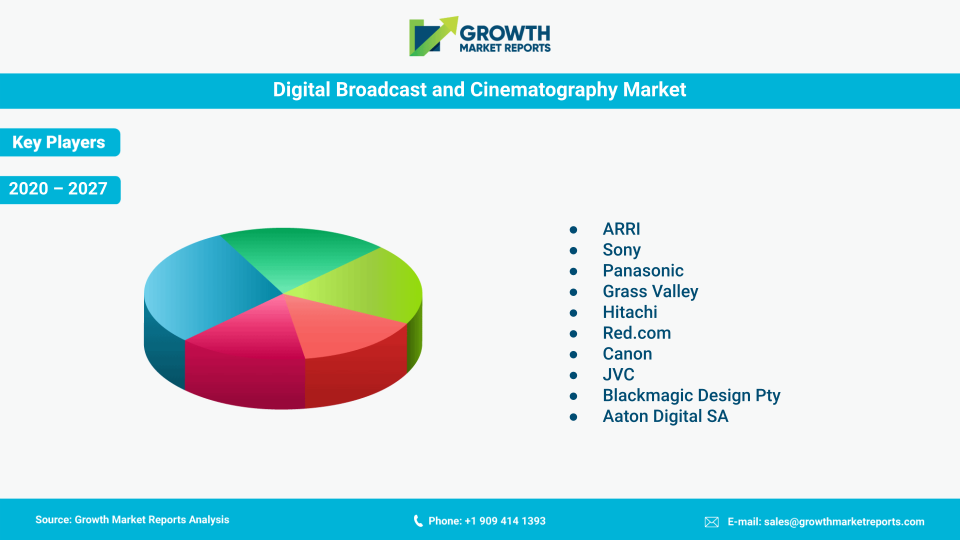
Key players in the market include ARRI, Sony, Panasonic, Grass Valley, Hitachi, Red.com, Canon, JVC, Blackmagic Design Pty, and Aaton Digital SA.
These companies are considered as key players in global digital broadcast and cinematography market based on their revenue, research development (R&D) activities, regional presence, and supply chain management system.
Key players in the market are engaged in acquiring regional players to increase their sales globally. Company can withstand competition in the digital broadcast and cinematography market by adopting the latest technologies, increasing consumer awareness, and through significant partnership with photography studios.
Additional company profiles can be provided on request.
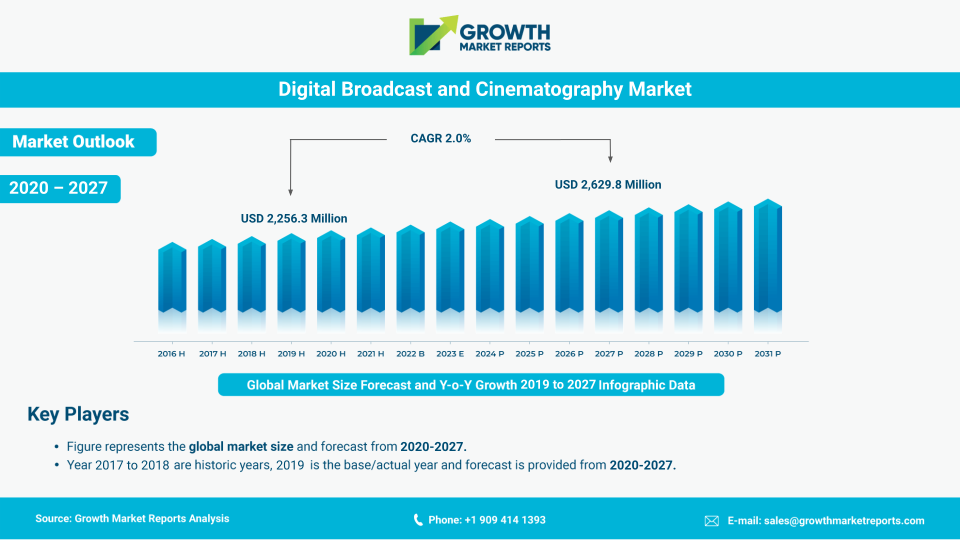
According to this Growth Market Reports report, the market from digital broadcast and cinematography is likely to register a CAGR of 2.0% during forecast period 2020-2027, with an anticipated valuation of USD 2,629.8 million by the end of the 2027.
In addition to market size (in USD Million) and company market share (in % for base year 2019), other data such as pricing analysis for year 2017 to 2027 (estimated pricing analysis) is provided for period (2015 to 2019), Impact of key regulation for digital broadcast and cinematography market is available in final report.
Factors such as competitive strength and market positioning are key areas considered while selecting top companies to be profiled.
Changing individual interest in professional photography, film industry advancement, introduction of chromatography methods and increase in R&D expenditure by manufacturers for developing new digital broadcast and cinematography cameras is expected to drive the market growth during forecast period.
Studios and film Industry are the key end-user that are driving the digital broadcast and cinematography market.
The market is expected to witness decline between 2019 and due to the adverse impact of COVID 19 pandemic on supply chain of medical industry.
The base year considered for the global digital broadcast and cinematography market report is 2019. The complete analysis period is 2017 to 2027, wherein, 2018 & 2019 are the historic years and the forecast is provided from 2020 to 2027.
Major Manufactures in the market include, ARRI, Sony, Panasonic, and Grass Valley.