Automotive Market Research Report 2033

Automotive Market Research Report 2033

Segments - by Vehicle Type (Passenger Cars, Commercial Vehicles, Electric Vehicles, Two-Wheelers, Others), by Component (Engine, Transmission, Interior, Exterior, Electronics, Others), by Fuel Type (Petrol, Diesel, Electric, Hybrid, Others), by Application (Personal, Commercial, Industrial, Others), by Sales Channel (OEM, Aftermarket)

https://growthmarketreports.com/Raksha
Author : Raksha Sharma
https://growthmarketreports.com/Vaibhav
Fact-checked by : V. Chandola
https://growthmarketreports.com/Shruti
Editor : Shruti Bhat

Upcoming | Report ID :AL-1671 | 4.9 Rating | 64 Reviews | 296 Pages | Format : Docx PDF

Report Description


Automotive Market Outlook

According to our latest research, the global automotive market size reached USD 3.1 trillion in 2024, with a compound annual growth rate (CAGR) of 4.2% projected through 2033. By the end of this forecast period, the market is expected to attain a value of USD 4.5 trillion. This robust growth is primarily driven by technological advancements, the rapid adoption of electric vehicles, and evolving consumer preferences towards sustainable mobility solutions.

One of the most significant growth factors in the automotive market is the accelerating shift towards electrification. The increasing concerns over environmental sustainability and stringent emission regulations imposed by governments worldwide have compelled automakers to invest heavily in electric vehicle (EV) development. The proliferation of battery technologies, coupled with declining battery costs, has made EVs more accessible to a broader consumer base. This transition is further bolstered by supportive government policies, such as tax incentives and subsidies for EV buyers, as well as the expansion of charging infrastructure. As a result, electric vehicles are not only reshaping product portfolios but are also influencing supply chains and manufacturing processes across the industry.

Another critical driver for the automotive market is the integration of advanced electronics and digital technologies. The rise of connected vehicles, autonomous driving features, and sophisticated infotainment systems has transformed the traditional automobile into a smart mobility platform. Consumers now demand enhanced safety features, real-time navigation, and seamless connectivity, prompting manufacturers to invest in research and development for next-generation automotive electronics. Furthermore, the emergence of artificial intelligence (AI), machine learning, and the Internet of Things (IoT) in vehicle systems is creating new revenue streams and business models, such as mobility-as-a-service (MaaS) and over-the-air (OTA) software updates.

In addition to electrification and digitization, the automotive market is experiencing growth due to the rising demand for personal mobility and the recovery of global supply chains post-pandemic. Urbanization and increasing disposable incomes in emerging economies have spurred the sales of passenger cars and two-wheelers. Meanwhile, the commercial vehicle segment is benefiting from the surge in e-commerce and logistics activities, necessitating efficient transportation solutions. The aftermarket segment is also gaining traction, driven by the growing vehicle parc and consumer inclination towards vehicle customization and maintenance.

Regionally, the Asia Pacific continues to dominate the global automotive market, accounting for the largest share in both production and sales. This dominance is attributed to the presence of major automotive manufacturing hubs in China, Japan, India, and South Korea, as well as a rapidly expanding middle-class population. North America and Europe remain key markets due to their technological leadership and high adoption rates of advanced automotive technologies. However, regions such as Latin America and the Middle East & Africa are emerging as lucrative markets, fueled by infrastructure development and favorable government initiatives aimed at boosting local automotive industries.

Global Automotive Industry Outlook

Vehicle Type Analysis

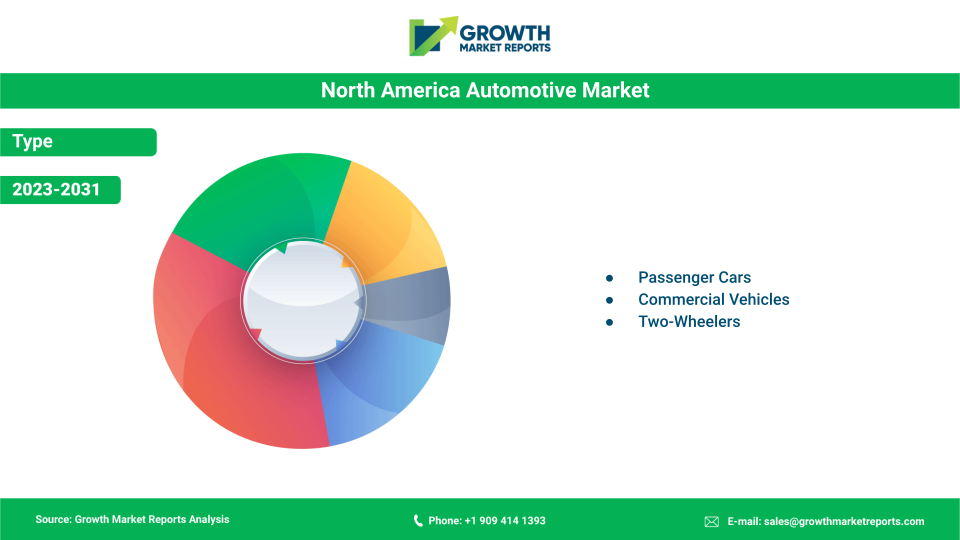
The vehicle type segment of the automotive market is highly diversified, encompassing passenger cars, commercial vehicles, electric vehicles, two-wheelers, and other specialized vehicles. Passenger cars continue to represent the largest share of the market, driven by increasing urbanization, rising disposable incomes, and evolving consumer preferences for personal mobility. The global demand for passenger cars is particularly strong in emerging economies, where a growing middle class is seeking affordable and reliable transportation options. Automakers are responding by introducing a wide range of models, from compact city cars to luxury sedans, tailored to meet the diverse needs of consumers worldwide.

Commercial vehicles, including trucks, buses, and vans, play a vital role in supporting economic activities such as logistics, construction, and public transportation. The segment is witnessing robust growth, especially in regions with expanding infrastructure and e-commerce sectors. The rise of online shopping and last-mile delivery services has led to increased demand for light commercial vehicles, while heavy-duty trucks are essential for long-haul transportation. Additionally, the adoption of alternative fuel technologies, such as electric and hybrid powertrains, is gaining momentum in the commercial vehicle segment, as fleet operators seek to reduce operating costs and comply with emission standards.

The electric vehicle (EV) sub-segment is experiencing exponential growth, outpacing traditional vehicle categories in terms of both sales and innovation. Governments worldwide are implementing policies to encourage EV adoption, including subsidies, tax breaks, and investments in charging infrastructure. Major automakers are ramping up production of electric cars, SUVs, and even commercial EVs, aiming to capture a larger share of this rapidly expanding market. The increasing availability of affordable EV models and improvements in battery technology are expected to further accelerate the transition from internal combustion engine (ICE) vehicles to electric mobility solutions.

Two-wheelers, such as motorcycles and scooters, remain a popular choice in densely populated urban areas, particularly in Asia Pacific and Latin America. These vehicles offer an affordable and efficient means of transportation, especially in regions with limited public transit options. The two-wheeler market is also witnessing a shift towards electric models, driven by environmental concerns and government incentives. Additionally, the growth of ride-sharing platforms and delivery services is boosting demand for both conventional and electric two-wheelers, making this segment a key contributor to the overall automotive market.

Other specialized vehicle types, including off-road vehicles, recreational vehicles (RVs), and specialty vehicles for industrial and military applications, contribute to the diversity and resilience of the automotive market. These vehicles cater to niche markets with specific requirements, such as durability, performance, and customization. The segment is characterized by continuous innovation, with manufacturers developing advanced features and technologies to meet the evolving needs of their customers. Overall, the vehicle type segment reflects the dynamic nature of the automotive market, with each category playing a distinct role in shaping industry trends and growth trajectories.

Report Scope

Attributes Details
Report Title Automotive Market Research Report 2033
By Vehicle Type Passenger Cars, Commercial Vehicles, Electric Vehicles, Two-Wheelers, Others
By Component Engine, Transmission, Interior, Exterior, Electronics, Others
By Fuel Type Petrol, Diesel, Electric, Hybrid, Others
By Application Personal, Commercial, Industrial, Others
By Sales Channel OEM, Aftermarket
Regions Covered North America, Europe, APAC, Latin America, MEA
Base Year 2024
Historic Data 2018-2023
Forecast Period 2025-2033
Number of Pages 296
Number of Tables & Figures 335
Customization Available Yes, the report can be customized as per your need.

Component Analysis

The component segment of the automotive market is a critical factor influencing vehicle performance, safety, and user experience. Key components include engines, transmissions, interiors, exteriors, electronics, and other essential parts. The engine segment remains fundamental, as it determines the vehicle's power, efficiency, and environmental impact. While internal combustion engines (ICEs) continue to dominate, there is a marked shift towards electric powertrains and hybrid systems, reflecting the industry's commitment to sustainability. Manufacturers are investing in lightweight materials, turbocharging, and direct injection technologies to enhance engine performance and fuel efficiency, in line with stringent emission regulations.

Transmission systems are another vital component, ensuring smooth power delivery and optimal fuel economy. The market has witnessed a transition from traditional manual transmissions to advanced automatic and continuously variable transmissions (CVTs), which offer improved driving comfort and efficiency. Hybrid and electric vehicles have introduced new transmission architectures, such as single-speed gearboxes and dual-clutch systems, further diversifying the component landscape. The integration of electronic control units (ECUs) and sensors has enhanced the functionality and reliability of modern transmission systems, contributing to the overall performance of vehicles.

The interior and exterior components play a significant role in shaping the aesthetics, comfort, and safety of vehicles. Interior components, including seats, dashboards, infotainment systems, and climate control units, are designed to provide a premium user experience. Automakers are increasingly focusing on ergonomic designs, high-quality materials, and advanced connectivity features to differentiate their offerings and attract discerning customers. Exterior components, such as body panels, lighting systems, and aerodynamic enhancements, are engineered to improve vehicle safety, fuel efficiency, and visual appeal. The adoption of lightweight materials, such as aluminum and composites, is helping manufacturers reduce vehicle weight and enhance performance.

Automotive electronics have emerged as a key growth driver, enabling a wide range of advanced features and functionalities. These include safety systems (airbags, anti-lock braking systems, electronic stability control), driver assistance technologies (adaptive cruise control, lane-keeping assist, parking sensors), and infotainment solutions (touchscreen displays, smartphone integration, voice recognition). The increasing complexity of automotive electronics has led to collaborations between automakers and technology companies, resulting in innovative solutions that enhance vehicle safety, connectivity, and user experience. The trend towards electrification and autonomous driving is expected to further accelerate the demand for sophisticated electronic components.

Other components, such as braking systems, suspension systems, and steering mechanisms, are essential for ensuring vehicle safety, handling, and comfort. Continuous innovation in these areas is driven by the need to comply with regulatory standards and meet consumer expectations for performance and reliability. The aftermarket for automotive components is also thriving, as vehicle owners seek to upgrade, customize, and maintain their vehicles. Overall, the component segment is characterized by rapid technological advancements, intense competition, and a relentless focus on quality and innovation.

Fuel Type Analysis

The fuel type segment of the automotive market is undergoing a profound transformation, shaped by environmental concerns, regulatory mandates, and technological innovation. Petrol and diesel vehicles have traditionally dominated the market, offering a balance of performance, affordability, and widespread availability. However, the growing awareness of climate change and air pollution has led to increased scrutiny of fossil fuel-powered vehicles, prompting governments to implement stricter emission standards and promote cleaner alternatives. As a result, the market share of petrol and diesel vehicles is gradually declining, particularly in developed regions with ambitious decarbonization targets.

Electric vehicles (EVs) are at the forefront of the industry's transition towards sustainable mobility. The rapid advancement of battery technology, coupled with declining costs and improved energy density, has made EVs more competitive with conventional vehicles. Governments around the world are offering incentives, such as tax credits and rebates, to encourage EV adoption, while investing in charging infrastructure to support the growing fleet of electric vehicles. Automakers are responding by expanding their electric vehicle portfolios, introducing models across various segments, from compact city cars to luxury SUVs and commercial vehicles. The increasing availability of affordable EVs is expected to drive significant growth in this segment over the forecast period.

Hybrid vehicles, which combine internal combustion engines with electric motors, offer a transitional solution for consumers seeking improved fuel efficiency and reduced emissions without fully committing to electric mobility. Hybrid technology is particularly popular in markets with limited charging infrastructure, as it allows for extended driving range and flexibility. Automakers are investing in plug-in hybrid electric vehicles (PHEVs) and mild hybrid systems, catering to a wide range of consumer preferences and regulatory requirements. The hybrid segment is expected to maintain steady growth, supported by ongoing technological advancements and favorable government policies.

Other fuel types, such as compressed natural gas (CNG), liquefied petroleum gas (LPG), and hydrogen fuel cells, are gaining traction in specific markets and applications. CNG and LPG vehicles are popular in regions with abundant natural gas resources and supportive regulatory frameworks, offering lower emissions and operating costs compared to petrol and diesel vehicles. Hydrogen fuel cell vehicles, while still in the early stages of commercialization, hold promise for long-range applications and heavy-duty transportation, thanks to their zero-emission profile and fast refueling times. The diversification of fuel types reflects the industry's commitment to sustainability and the need to address a wide range of mobility challenges.

The fuel type segment is characterized by intense competition and rapid innovation, as automakers strive to meet evolving consumer demands and regulatory requirements. The transition towards cleaner fuels is expected to accelerate over the forecast period, driven by technological breakthroughs, policy support, and shifting consumer preferences. As the automotive market continues to evolve, the fuel type segment will play a pivotal role in shaping the industry's future trajectory.

Application Analysis

The application segment of the automotive market encompasses personal, commercial, industrial, and other specialized uses, each with distinct growth drivers and challenges. Personal vehicles remain the largest application segment, accounting for a significant share of global automotive sales. The demand for personal vehicles is driven by factors such as urbanization, rising disposable incomes, and the desire for convenience and autonomy. In emerging markets, increasing vehicle ownership rates are contributing to robust growth in this segment, while in developed regions, consumers are prioritizing advanced safety features, connectivity, and fuel efficiency.

Commercial vehicles are essential for supporting economic activities across various sectors, including logistics, construction, and public transportation. The growth of e-commerce and the expansion of global supply chains have led to increased demand for light and heavy commercial vehicles, particularly in urban centers and emerging markets. Fleet operators are increasingly adopting alternative fuel technologies, such as electric and hybrid powertrains, to reduce operating costs and comply with emission regulations. The commercial vehicle segment is also witnessing innovation in telematics, fleet management systems, and autonomous driving technologies, aimed at improving efficiency, safety, and productivity.

The industrial application segment includes specialized vehicles used in sectors such as mining, agriculture, and manufacturing. These vehicles are designed to operate in challenging environments, requiring robust engineering, high performance, and advanced safety features. The adoption of automation, IoT, and telematics solutions is transforming industrial vehicles, enabling remote monitoring, predictive maintenance, and enhanced operational efficiency. The industrial segment is expected to witness steady growth, driven by infrastructure development, technological advancements, and increasing demand for specialized transportation solutions.

Other applications, such as emergency vehicles, military vehicles, and recreational vehicles (RVs), contribute to the diversity and resilience of the automotive market. Each of these segments has unique requirements in terms of performance, safety, and customization. For example, emergency vehicles are equipped with advanced communication and safety systems, while military vehicles prioritize durability and off-road capabilities. Recreational vehicles are designed for comfort and versatility, catering to consumers seeking adventure and leisure experiences. The continued innovation and diversification of applications reflect the dynamic nature of the automotive market and its ability to adapt to changing consumer needs and industry trends.

The application segment is characterized by a high degree of specialization and customization, as manufacturers strive to meet the specific requirements of different end-users. The growing adoption of digital technologies, electrification, and automation across all application segments is expected to drive significant growth and transformation in the automotive market over the forecast period. As consumer preferences and industry dynamics continue to evolve, the application segment will remain a key determinant of market growth and competitiveness.

Sales Channel Analysis

The sales channel segment of the automotive market is bifurcated into Original Equipment Manufacturer (OEM) and aftermarket channels, each playing a crucial role in the distribution and servicing of vehicles and components. OEMs are responsible for the production and initial sale of new vehicles, accounting for the majority of automotive sales globally. The OEM channel is characterized by intense competition, with automakers striving to differentiate their products through innovation, quality, and brand reputation. The rise of direct-to-consumer sales models, online platforms, and digital showrooms is reshaping the traditional dealership landscape, offering consumers greater convenience and transparency in the vehicle purchasing process.

The aftermarket segment encompasses the sale of replacement parts, accessories, and services for vehicles already in operation. This segment is experiencing robust growth, driven by the increasing vehicle parc, longer vehicle lifespans, and consumer demand for customization and maintenance. The aftermarket is highly fragmented, with a mix of authorized service centers, independent workshops, and online retailers competing for market share. The proliferation of e-commerce platforms and digital tools is transforming the aftermarket landscape, enabling consumers to access a wide range of products and services with ease. The growing popularity of vehicle customization, performance upgrades, and preventive maintenance is expected to drive continued growth in the aftermarket segment.

The integration of advanced digital technologies, such as telematics, predictive analytics, and connected diagnostics, is enhancing the value proposition of both OEM and aftermarket channels. Automakers and service providers are leveraging data-driven insights to offer personalized services, proactive maintenance, and seamless customer experiences. The adoption of subscription-based models, mobility services, and over-the-air (OTA) software updates is further blurring the lines between OEM and aftermarket offerings, creating new opportunities for revenue generation and customer engagement.

The sales channel segment is also influenced by regulatory requirements, consumer preferences, and industry trends. For example, the increasing adoption of electric vehicles is driving demand for specialized aftermarket services, such as battery diagnostics, charging infrastructure installation, and software updates. Similarly, the rise of autonomous and connected vehicles is creating new opportunities and challenges for both OEMs and aftermarket players, as they adapt to evolving technology standards and customer expectations. The sales channel segment is expected to remain dynamic and competitive, with ongoing innovation and digital transformation shaping its future trajectory.

Overall, the sales channel segment reflects the complexity and diversity of the automotive market, with multiple stakeholders working together to deliver value to consumers and end-users. The continued evolution of sales and distribution models, driven by technology and changing consumer behavior, will play a critical role in shaping the growth and competitiveness of the automotive industry over the forecast period.

Opportunities & Threats

The automotive market presents a wide array of opportunities for growth and innovation, particularly in the areas of electrification, digitalization, and sustainable mobility. The rapid adoption of electric vehicles, driven by technological advancements and supportive government policies, offers significant opportunities for automakers, suppliers, and technology providers. The development of advanced battery technologies, charging infrastructure, and energy management systems is creating new revenue streams and business models. Additionally, the integration of connected and autonomous vehicle technologies is enabling the creation of smart mobility solutions, such as ride-sharing, car-sharing, and mobility-as-a-service (MaaS), which are transforming urban transportation and creating new market opportunities.

Another major opportunity lies in the growth of emerging markets, where rising incomes, urbanization, and infrastructure development are driving increased demand for vehicles and automotive services. Automakers that can tailor their products and strategies to meet the unique needs of these markets stand to benefit from significant growth potential. The expansion of aftermarket services, including vehicle customization, maintenance, and digital solutions, also presents lucrative opportunities for businesses across the value chain. Furthermore, the increasing focus on sustainability and circular economy principles is encouraging innovation in areas such as vehicle recycling, remanufacturing, and the use of eco-friendly materials, opening up new avenues for growth and differentiation.

Despite the numerous opportunities, the automotive market faces several restraining factors and threats that could impact its growth and profitability. One of the primary challenges is the high capital investment required for research, development, and production of new technologies, particularly in the areas of electrification and autonomous driving. The uncertainty surrounding regulatory frameworks, supply chain disruptions, and fluctuating raw material prices can also pose significant risks to industry players. Additionally, the transition to electric and autonomous vehicles may lead to job displacement and require substantial workforce retraining, creating social and economic challenges. The intensifying competition from new entrants, particularly technology companies and startups, is further increasing pressure on traditional automakers to innovate and adapt.

Regional Outlook

The Asia Pacific region continues to lead the global automotive market, accounting for approximately 48% of total market revenue in 2024, or about USD 1.49 trillion. China remains the largest automotive market in the world, followed by Japan, India, and South Korea. The region's dominance is attributed to its robust manufacturing base, large consumer population, and rapid urbanization. Government initiatives to promote electric mobility, infrastructure development, and local manufacturing are further boosting market growth. The Asia Pacific automotive market is projected to grow at a CAGR of 5.1% through 2033, outpacing the global average and solidifying its position as the primary growth engine for the industry.

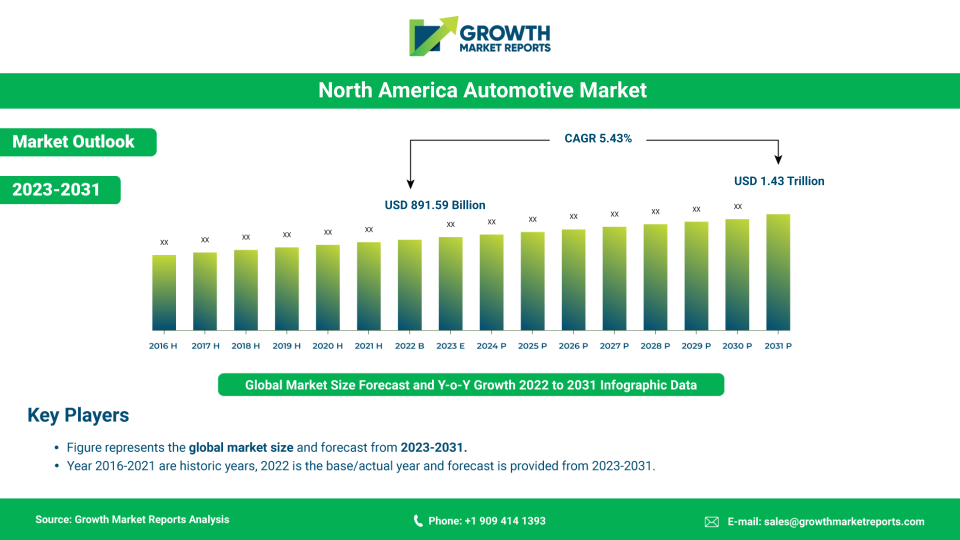
North America holds a significant share of the global automotive market, valued at approximately USD 690 billion in 2024. The region is characterized by high vehicle ownership rates, technological leadership, and a strong focus on innovation. The United States is the largest market in North America, followed by Canada and Mexico, with a well-established automotive manufacturing ecosystem and a growing emphasis on electric and autonomous vehicles. The North American market is expected to experience steady growth over the forecast period, supported by investments in advanced manufacturing, research and development, and the expansion of electric vehicle infrastructure.

Europe is another key region, with a market size of around USD 620 billion in 2024. The region is known for its stringent emission regulations, technological innovation, and high consumer demand for premium and electric vehicles. Germany, France, the United Kingdom, and Italy are the leading automotive markets in Europe, with a strong presence of global automakers and suppliers. The European market is expected to grow at a CAGR of 3.8% through 2033, driven by the transition to electric mobility, digitalization, and sustainability initiatives. Latin America and the Middle East & Africa, while smaller in size, are emerging as attractive markets due to infrastructure development, rising incomes, and supportive government policies. Together, these regions accounted for approximately USD 300 billion in market revenue in 2024, with significant growth potential over the forecast period.

Automotive Market Statistics

Competitor Outlook

The automotive market is characterized by intense competition, rapid technological innovation, and a dynamic landscape shaped by both traditional automakers and new entrants. The industry is witnessing a paradigm shift, with established players investing heavily in electrification, autonomous driving, and digitalization to maintain their competitive edge. Strategic partnerships, mergers and acquisitions, and collaborations with technology companies are becoming increasingly common, as automakers seek to accelerate innovation and expand their market presence. The competitive landscape is also influenced by changing consumer preferences, regulatory requirements, and the emergence of new business models, such as mobility-as-a-service (MaaS) and subscription-based offerings.

Leading automotive companies are focusing on expanding their product portfolios, enhancing manufacturing capabilities, and investing in research and development to stay ahead of the competition. The shift towards electric and autonomous vehicles is driving significant investments in battery technology, software development, and advanced manufacturing processes. Automakers are also leveraging digital technologies, such as artificial intelligence, machine learning, and the Internet of Things (IoT), to enhance vehicle performance, safety, and connectivity. The ability to adapt to evolving market trends and consumer demands is a key determinant of success in the highly competitive automotive industry.

In addition to traditional automakers, the competitive landscape is being reshaped by the entry of technology companies, startups, and new mobility providers. These players are bringing innovative solutions and disruptive business models to the market, challenging established norms and driving industry transformation. Companies specializing in electric vehicles, autonomous driving, and connected car technologies are gaining traction, attracting significant investments and strategic partnerships. The increasing convergence of the automotive and technology sectors is creating new opportunities and challenges, as industry players compete for leadership in the next generation of mobility solutions.

Some of the major companies operating in the global automotive market include Toyota Motor Corporation, Volkswagen AG, General Motors Company, Ford Motor Company, Honda Motor Co., Ltd., Hyundai Motor Company, Daimler AG (Mercedes-Benz Group), BMW AG, Nissan Motor Co., Ltd., and Tesla, Inc. These companies are recognized for their extensive product portfolios, global reach, and commitment to innovation. Toyota and Volkswagen consistently rank among the world's largest automakers by sales volume, while Tesla has emerged as a leader in electric vehicle technology and market capitalization. General Motors and Ford are investing heavily in electrification and autonomous driving, while Hyundai and Honda are expanding their presence in both traditional and emerging markets.

Other key players include Stellantis N.V., Renault Group, SAIC Motor Corporation, and Geely Automobile Holdings, each with a strong presence in their respective regions and a growing focus on sustainable mobility solutions. These companies are leveraging strategic partnerships, joint ventures, and investments in research and development to enhance their competitiveness and drive growth. The competitive landscape is further enriched by the presence of specialized component suppliers, technology providers, and aftermarket service companies, all contributing to the innovation and resilience of the global automotive market.

Key Players

  • Toyota Motor Corporation
  • Volkswagen AG
  • Daimler AG (Mercedes-Benz Group)
  • Ford Motor Company
  • General Motors Company
  • Honda Motor Co., Ltd.
  • SAIC Motor Corporation Limited
  • Nissan Motor Co., Ltd.
  • BMW AG
  • Stellantis N.V.
  • Hyundai Motor Company
  • Kia Corporation
  • Renault Group
  • Tata Motors Limited
  • Suzuki Motor Corporation
  • Geely Automobile Holdings Limited
  • Mazda Motor Corporation
  • Subaru Corporation
  • FAW Group Corporation
  • BYD Company Limited
Automotive Market Overview

Segments

The Automotive market has been segmented on the basis of

Vehicle Type

  • Passenger Cars
  • Commercial Vehicles
  • Electric Vehicles
  • Two-Wheelers
  • Others

Component

  • Engine
  • Transmission
  • Interior
  • Exterior
  • Electronics
  • Others

Fuel Type

  • Petrol
  • Diesel
  • Electric
  • Hybrid
  • Others

Application

  • Personal
  • Commercial
  • Industrial
  • Others

Sales Channel

  • OEM
  • Aftermarket

Competitive Landscape

Key players competing in the North America automotive market include Tesla, Inc., General Motors, FCA Group, Ford Motor Company, and BMW AG.

Companies are engaging in partnerships, acquisitions, and collaborations to expand their market share
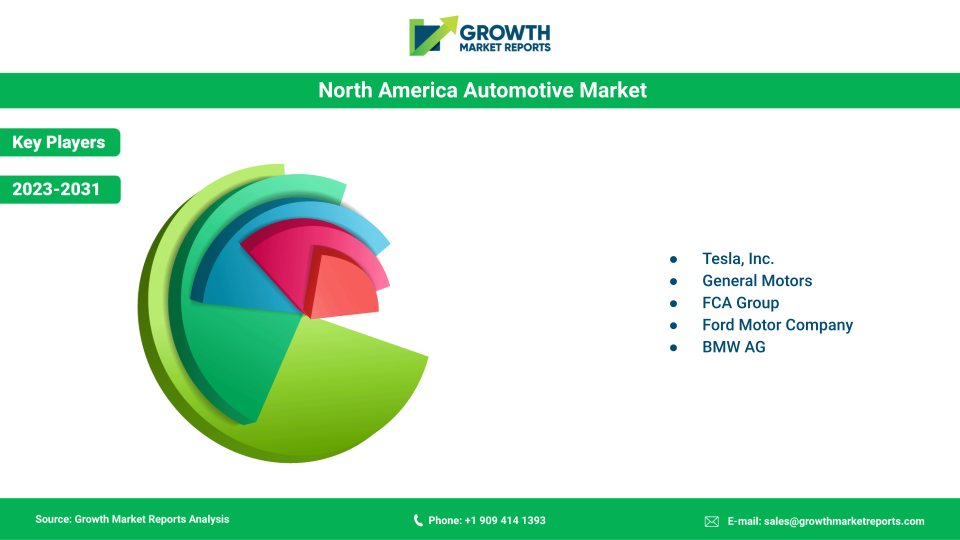

North America Automotive Market Key Players

Frequently Asked Questions

Opportunities include growth in EVs, digitalization, emerging markets, and aftermarket services. Challenges involve high R&D costs, regulatory uncertainties, supply chain disruptions, and increased competition from technology companies and startups.

Major players include Toyota Motor Corporation, Volkswagen AG, Daimler AG (Mercedes-Benz Group), Ford Motor Company, General Motors, Honda, SAIC Motor, Nissan, BMW, Stellantis, Hyundai, Kia, Renault, Tata Motors, Suzuki, Geely, Mazda, Subaru, FAW Group, and BYD.

Automotive sales occur through Original Equipment Manufacturer (OEM) channels and the aftermarket, with digital platforms and direct-to-consumer models reshaping traditional sales processes.

The market is segmented into petrol, diesel, electric, hybrid, and other fuel types such as CNG, LPG, and hydrogen fuel cells, with a growing shift towards electric and hybrid vehicles.

Trends include a shift towards electric and hybrid powertrains, advanced electronics for safety and connectivity, lightweight materials for improved efficiency, and increased focus on interior comfort and infotainment systems.

The EV segment is experiencing exponential growth, outpacing traditional vehicle categories due to government incentives, improved battery technology, and increasing consumer demand for sustainable transportation.

The automotive market includes passenger cars, commercial vehicles, electric vehicles, two-wheelers, and specialized vehicles such as off-road and recreational vehicles.

The Asia Pacific region leads the global automotive market, accounting for about 48% of total market revenue in 2024, driven by major manufacturing hubs in China, Japan, India, and South Korea.

Key growth drivers include technological advancements, rapid adoption of electric vehicles (EVs), evolving consumer preferences for sustainable mobility, and the integration of advanced electronics and digital technologies.

As of 2024, the global automotive market size reached USD 3.1 trillion, with projections to grow to USD 4.5 trillion by 2033.

Table Of Content

Chapter 1 Executive Summary
Chapter 2 Assumptions and Acronyms Used
Chapter 3 Research Methodology
Chapter 4 Automotive Market Overview
   4.1 Introduction
      4.1.1 Market Taxonomy
      4.1.2 Market Definition
      4.1.3 Macro-Economic Factors Impacting the Market Growth
   4.2 Automotive Market Dynamics
      4.2.1 Market Drivers
      4.2.2 Market Restraints
      4.2.3 Market Opportunity
   4.3 Automotive Market - Supply Chain Analysis
      4.3.1 List of Key Suppliers
      4.3.2 List of Key Distributors
      4.3.3 List of Key Consumers
   4.4 Key Forces Shaping the Automotive Market
      4.4.1 Bargaining Power of Suppliers
      4.4.2 Bargaining Power of Buyers
      4.4.3 Threat of Substitution
      4.4.4 Threat of New Entrants
      4.4.5 Competitive Rivalry
   4.5 Global Automotive Market Size & Forecast, 2023-2032
      4.5.1 Automotive Market Size and Y-o-Y Growth
      4.5.2 Automotive Market Absolute $ Opportunity

Chapter 5 Global Automotive Market Analysis and Forecast By Vehicle Type
   5.1 Introduction
      5.1.1 Key Market Trends & Growth Opportunities By Vehicle Type
      5.1.2 Basis Point Share (BPS) Analysis By Vehicle Type
      5.1.3 Absolute $ Opportunity Assessment By Vehicle Type
   5.2 Automotive Market Size Forecast By Vehicle Type
      5.2.1 Passenger Cars
      5.2.2 Commercial Vehicles
      5.2.3 Electric Vehicles
      5.2.4 Two-Wheelers
      5.2.5 Others
   5.3 Market Attractiveness Analysis By Vehicle Type

Chapter 6 Global Automotive Market Analysis and Forecast By Component
   6.1 Introduction
      6.1.1 Key Market Trends & Growth Opportunities By Component
      6.1.2 Basis Point Share (BPS) Analysis By Component
      6.1.3 Absolute $ Opportunity Assessment By Component
   6.2 Automotive Market Size Forecast By Component
      6.2.1 Engine
      6.2.2 Transmission
      6.2.3 Interior
      6.2.4 Exterior
      6.2.5 Electronics
      6.2.6 Others
   6.3 Market Attractiveness Analysis By Component

Chapter 7 Global Automotive Market Analysis and Forecast By Fuel Type
   7.1 Introduction
      7.1.1 Key Market Trends & Growth Opportunities By Fuel Type
      7.1.2 Basis Point Share (BPS) Analysis By Fuel Type
      7.1.3 Absolute $ Opportunity Assessment By Fuel Type
   7.2 Automotive Market Size Forecast By Fuel Type
      7.2.1 Petrol
      7.2.2 Diesel
      7.2.3 Electric
      7.2.4 Hybrid
      7.2.5 Others
   7.3 Market Attractiveness Analysis By Fuel Type

Chapter 8 Global Automotive Market Analysis and Forecast By Application
   8.1 Introduction
      8.1.1 Key Market Trends & Growth Opportunities By Application
      8.1.2 Basis Point Share (BPS) Analysis By Application
      8.1.3 Absolute $ Opportunity Assessment By Application
   8.2 Automotive Market Size Forecast By Application
      8.2.1 Personal
      8.2.2 Commercial
      8.2.3 Industrial
      8.2.4 Others
   8.3 Market Attractiveness Analysis By Application

Chapter 9 Global Automotive Market Analysis and Forecast By Sales Channel
   9.1 Introduction
      9.1.1 Key Market Trends & Growth Opportunities By Sales Channel
      9.1.2 Basis Point Share (BPS) Analysis By Sales Channel
      9.1.3 Absolute $ Opportunity Assessment By Sales Channel
   9.2 Automotive Market Size Forecast By Sales Channel
      9.2.1 OEM
      9.2.2 Aftermarket
   9.3 Market Attractiveness Analysis By Sales Channel

Chapter 10 Global Automotive Market Analysis and Forecast by Region
   10.1 Introduction
      10.1.1 Key Market Trends & Growth Opportunities By Region
      10.1.2 Basis Point Share (BPS) Analysis By Region
      10.1.3 Absolute $ Opportunity Assessment By Region
   10.2 Automotive Market Size Forecast By Region
      10.2.1 North America
      10.2.2 Europe
      10.2.3 Asia Pacific
      10.2.4 Latin America
      10.2.5 Middle East & Africa (MEA)
   10.3 Market Attractiveness Analysis By Region

Chapter 11 Coronavirus Disease (COVID-19) Impact 
   11.1 Introduction 
   11.2 Current & Future Impact Analysis 
   11.3 Economic Impact Analysis 
   11.4 Government Policies 
   11.5 Investment Scenario

Chapter 12 North America Automotive Analysis and Forecast
   12.1 Introduction
   12.2 North America Automotive Market Size Forecast by Country
      12.2.1 U.S.
      12.2.2 Canada
   12.3 Basis Point Share (BPS) Analysis by Country
   12.4 Absolute $ Opportunity Assessment by Country
   12.5 Market Attractiveness Analysis by Country
   12.6 North America Automotive Market Size Forecast By Vehicle Type
      12.6.1 Passenger Cars
      12.6.2 Commercial Vehicles
      12.6.3 Electric Vehicles
      12.6.4 Two-Wheelers
      12.6.5 Others
   12.7 Basis Point Share (BPS) Analysis By Vehicle Type 
   12.8 Absolute $ Opportunity Assessment By Vehicle Type 
   12.9 Market Attractiveness Analysis By Vehicle Type
   12.10 North America Automotive Market Size Forecast By Component
      12.10.1 Engine
      12.10.2 Transmission
      12.10.3 Interior
      12.10.4 Exterior
      12.10.5 Electronics
      12.10.6 Others
   12.11 Basis Point Share (BPS) Analysis By Component 
   12.12 Absolute $ Opportunity Assessment By Component 
   12.13 Market Attractiveness Analysis By Component
   12.14 North America Automotive Market Size Forecast By Fuel Type
      12.14.1 Petrol
      12.14.2 Diesel
      12.14.3 Electric
      12.14.4 Hybrid
      12.14.5 Others
   12.15 Basis Point Share (BPS) Analysis By Fuel Type 
   12.16 Absolute $ Opportunity Assessment By Fuel Type 
   12.17 Market Attractiveness Analysis By Fuel Type
   12.18 North America Automotive Market Size Forecast By Application
      12.18.1 Personal
      12.18.2 Commercial
      12.18.3 Industrial
      12.18.4 Others
   12.19 Basis Point Share (BPS) Analysis By Application 
   12.20 Absolute $ Opportunity Assessment By Application 
   12.21 Market Attractiveness Analysis By Application
   12.22 North America Automotive Market Size Forecast By Sales Channel
      12.22.1 OEM
      12.22.2 Aftermarket
   12.23 Basis Point Share (BPS) Analysis By Sales Channel 
   12.24 Absolute $ Opportunity Assessment By Sales Channel 
   12.25 Market Attractiveness Analysis By Sales Channel

Chapter 13 Europe Automotive Analysis and Forecast
   13.1 Introduction
   13.2 Europe Automotive Market Size Forecast by Country
      13.2.1 Germany
      13.2.2 France
      13.2.3 Italy
      13.2.4 U.K.
      13.2.5 Spain
      13.2.6 Russia
      13.2.7 Rest of Europe
   13.3 Basis Point Share (BPS) Analysis by Country
   13.4 Absolute $ Opportunity Assessment by Country
   13.5 Market Attractiveness Analysis by Country
   13.6 Europe Automotive Market Size Forecast By Vehicle Type
      13.6.1 Passenger Cars
      13.6.2 Commercial Vehicles
      13.6.3 Electric Vehicles
      13.6.4 Two-Wheelers
      13.6.5 Others
   13.7 Basis Point Share (BPS) Analysis By Vehicle Type 
   13.8 Absolute $ Opportunity Assessment By Vehicle Type 
   13.9 Market Attractiveness Analysis By Vehicle Type
   13.10 Europe Automotive Market Size Forecast By Component
      13.10.1 Engine
      13.10.2 Transmission
      13.10.3 Interior
      13.10.4 Exterior
      13.10.5 Electronics
      13.10.6 Others
   13.11 Basis Point Share (BPS) Analysis By Component 
   13.12 Absolute $ Opportunity Assessment By Component 
   13.13 Market Attractiveness Analysis By Component
   13.14 Europe Automotive Market Size Forecast By Fuel Type
      13.14.1 Petrol
      13.14.2 Diesel
      13.14.3 Electric
      13.14.4 Hybrid
      13.14.5 Others
   13.15 Basis Point Share (BPS) Analysis By Fuel Type 
   13.16 Absolute $ Opportunity Assessment By Fuel Type 
   13.17 Market Attractiveness Analysis By Fuel Type
   13.18 Europe Automotive Market Size Forecast By Application
      13.18.1 Personal
      13.18.2 Commercial
      13.18.3 Industrial
      13.18.4 Others
   13.19 Basis Point Share (BPS) Analysis By Application 
   13.20 Absolute $ Opportunity Assessment By Application 
   13.21 Market Attractiveness Analysis By Application
   13.22 Europe Automotive Market Size Forecast By Sales Channel
      13.22.1 OEM
      13.22.2 Aftermarket
   13.23 Basis Point Share (BPS) Analysis By Sales Channel 
   13.24 Absolute $ Opportunity Assessment By Sales Channel 
   13.25 Market Attractiveness Analysis By Sales Channel

Chapter 14 Asia Pacific Automotive Analysis and Forecast
   14.1 Introduction
   14.2 Asia Pacific Automotive Market Size Forecast by Country
      14.2.1 China
      14.2.2 Japan
      14.2.3 South Korea
      14.2.4 India
      14.2.5 Australia
      14.2.6 South East Asia (SEA)
      14.2.7 Rest of Asia Pacific (APAC)
   14.3 Basis Point Share (BPS) Analysis by Country
   14.4 Absolute $ Opportunity Assessment by Country
   14.5 Market Attractiveness Analysis by Country
   14.6 Asia Pacific Automotive Market Size Forecast By Vehicle Type
      14.6.1 Passenger Cars
      14.6.2 Commercial Vehicles
      14.6.3 Electric Vehicles
      14.6.4 Two-Wheelers
      14.6.5 Others
   14.7 Basis Point Share (BPS) Analysis By Vehicle Type 
   14.8 Absolute $ Opportunity Assessment By Vehicle Type 
   14.9 Market Attractiveness Analysis By Vehicle Type
   14.10 Asia Pacific Automotive Market Size Forecast By Component
      14.10.1 Engine
      14.10.2 Transmission
      14.10.3 Interior
      14.10.4 Exterior
      14.10.5 Electronics
      14.10.6 Others
   14.11 Basis Point Share (BPS) Analysis By Component 
   14.12 Absolute $ Opportunity Assessment By Component 
   14.13 Market Attractiveness Analysis By Component
   14.14 Asia Pacific Automotive Market Size Forecast By Fuel Type
      14.14.1 Petrol
      14.14.2 Diesel
      14.14.3 Electric
      14.14.4 Hybrid
      14.14.5 Others
   14.15 Basis Point Share (BPS) Analysis By Fuel Type 
   14.16 Absolute $ Opportunity Assessment By Fuel Type 
   14.17 Market Attractiveness Analysis By Fuel Type
   14.18 Asia Pacific Automotive Market Size Forecast By Application
      14.18.1 Personal
      14.18.2 Commercial
      14.18.3 Industrial
      14.18.4 Others
   14.19 Basis Point Share (BPS) Analysis By Application 
   14.20 Absolute $ Opportunity Assessment By Application 
   14.21 Market Attractiveness Analysis By Application
   14.22 Asia Pacific Automotive Market Size Forecast By Sales Channel
      14.22.1 OEM
      14.22.2 Aftermarket
   14.23 Basis Point Share (BPS) Analysis By Sales Channel 
   14.24 Absolute $ Opportunity Assessment By Sales Channel 
   14.25 Market Attractiveness Analysis By Sales Channel

Chapter 15 Latin America Automotive Analysis and Forecast
   15.1 Introduction
   15.2 Latin America Automotive Market Size Forecast by Country
      15.2.1 Brazil
      15.2.2 Mexico
      15.2.3 Rest of Latin America (LATAM)
   15.3 Basis Point Share (BPS) Analysis by Country
   15.4 Absolute $ Opportunity Assessment by Country
   15.5 Market Attractiveness Analysis by Country
   15.6 Latin America Automotive Market Size Forecast By Vehicle Type
      15.6.1 Passenger Cars
      15.6.2 Commercial Vehicles
      15.6.3 Electric Vehicles
      15.6.4 Two-Wheelers
      15.6.5 Others
   15.7 Basis Point Share (BPS) Analysis By Vehicle Type 
   15.8 Absolute $ Opportunity Assessment By Vehicle Type 
   15.9 Market Attractiveness Analysis By Vehicle Type
   15.10 Latin America Automotive Market Size Forecast By Component
      15.10.1 Engine
      15.10.2 Transmission
      15.10.3 Interior
      15.10.4 Exterior
      15.10.5 Electronics
      15.10.6 Others
   15.11 Basis Point Share (BPS) Analysis By Component 
   15.12 Absolute $ Opportunity Assessment By Component 
   15.13 Market Attractiveness Analysis By Component
   15.14 Latin America Automotive Market Size Forecast By Fuel Type
      15.14.1 Petrol
      15.14.2 Diesel
      15.14.3 Electric
      15.14.4 Hybrid
      15.14.5 Others
   15.15 Basis Point Share (BPS) Analysis By Fuel Type 
   15.16 Absolute $ Opportunity Assessment By Fuel Type 
   15.17 Market Attractiveness Analysis By Fuel Type
   15.18 Latin America Automotive Market Size Forecast By Application
      15.18.1 Personal
      15.18.2 Commercial
      15.18.3 Industrial
      15.18.4 Others
   15.19 Basis Point Share (BPS) Analysis By Application 
   15.20 Absolute $ Opportunity Assessment By Application 
   15.21 Market Attractiveness Analysis By Application
   15.22 Latin America Automotive Market Size Forecast By Sales Channel
      15.22.1 OEM
      15.22.2 Aftermarket
   15.23 Basis Point Share (BPS) Analysis By Sales Channel 
   15.24 Absolute $ Opportunity Assessment By Sales Channel 
   15.25 Market Attractiveness Analysis By Sales Channel

Chapter 16 Middle East & Africa (MEA) Automotive Analysis and Forecast
   16.1 Introduction
   16.2 Middle East & Africa (MEA) Automotive Market Size Forecast by Country
      16.2.1 Saudi Arabia
      16.2.2 South Africa
      16.2.3 UAE
      16.2.4 Rest of Middle East & Africa (MEA)
   16.3 Basis Point Share (BPS) Analysis by Country
   16.4 Absolute $ Opportunity Assessment by Country
   16.5 Market Attractiveness Analysis by Country
   16.6 Middle East & Africa (MEA) Automotive Market Size Forecast By Vehicle Type
      16.6.1 Passenger Cars
      16.6.2 Commercial Vehicles
      16.6.3 Electric Vehicles
      16.6.4 Two-Wheelers
      16.6.5 Others
   16.7 Basis Point Share (BPS) Analysis By Vehicle Type 
   16.8 Absolute $ Opportunity Assessment By Vehicle Type 
   16.9 Market Attractiveness Analysis By Vehicle Type
   16.10 Middle East & Africa (MEA) Automotive Market Size Forecast By Component
      16.10.1 Engine
      16.10.2 Transmission
      16.10.3 Interior
      16.10.4 Exterior
      16.10.5 Electronics
      16.10.6 Others
   16.11 Basis Point Share (BPS) Analysis By Component 
   16.12 Absolute $ Opportunity Assessment By Component 
   16.13 Market Attractiveness Analysis By Component
   16.14 Middle East & Africa (MEA) Automotive Market Size Forecast By Fuel Type
      16.14.1 Petrol
      16.14.2 Diesel
      16.14.3 Electric
      16.14.4 Hybrid
      16.14.5 Others
   16.15 Basis Point Share (BPS) Analysis By Fuel Type 
   16.16 Absolute $ Opportunity Assessment By Fuel Type 
   16.17 Market Attractiveness Analysis By Fuel Type
   16.18 Middle East & Africa (MEA) Automotive Market Size Forecast By Application
      16.18.1 Personal
      16.18.2 Commercial
      16.18.3 Industrial
      16.18.4 Others
   16.19 Basis Point Share (BPS) Analysis By Application 
   16.20 Absolute $ Opportunity Assessment By Application 
   16.21 Market Attractiveness Analysis By Application
   16.22 Middle East & Africa (MEA) Automotive Market Size Forecast By Sales Channel
      16.22.1 OEM
      16.22.2 Aftermarket
   16.23 Basis Point Share (BPS) Analysis By Sales Channel 
   16.24 Absolute $ Opportunity Assessment By Sales Channel 
   16.25 Market Attractiveness Analysis By Sales Channel

Chapter 17 Competition Landscape 
   17.1 Automotive Market: Competitive Dashboard
   17.2 Global Automotive Market: Market Share Analysis, 2023
   17.3 Company Profiles (Details – Overview, Financials, Developments, Strategy) 
      17.3.1 Toyota Motor Corporation
Volkswagen AG
Daimler AG (Mercedes-Benz Group)
Ford Motor Company
General Motors Company
Honda Motor Co., Ltd.
SAIC Motor Corporation Limited
Nissan Motor Co., Ltd.
BMW AG
Stellantis N.V.
Hyundai Motor Company
Kia Corporation
Renault Group
Tata Motors Limited
Suzuki Motor Corporation
Geely Automobile Holdings Limited
Mazda Motor Corporation
Subaru Corporation
FAW Group Corporation
BYD Company Limited

Methodology

Our Clients

Pfizer
Nestle SA
Deloitte
The John Holland Group
sinopec
FedEx Logistics
Siemens Healthcare
General Mills