Segments - by Component (Solution, Services), by Solution Type (Critical Communication Network, Biometric Security and Authentication System, Surveillance System, Emergency and Disaster Management, Cybersecurity, Public Address and General Alarm, Backup and Recovery System), by Service Type (Professional Services, Managed Services), by Application (Homeland Security, Emergency Services, Critical Infrastructure Security, Transportation Systems, Public Event Security, Others), by End-User (Law Enforcement Agencies, Firefighting Agencies, Emergency Medical Services, Others)
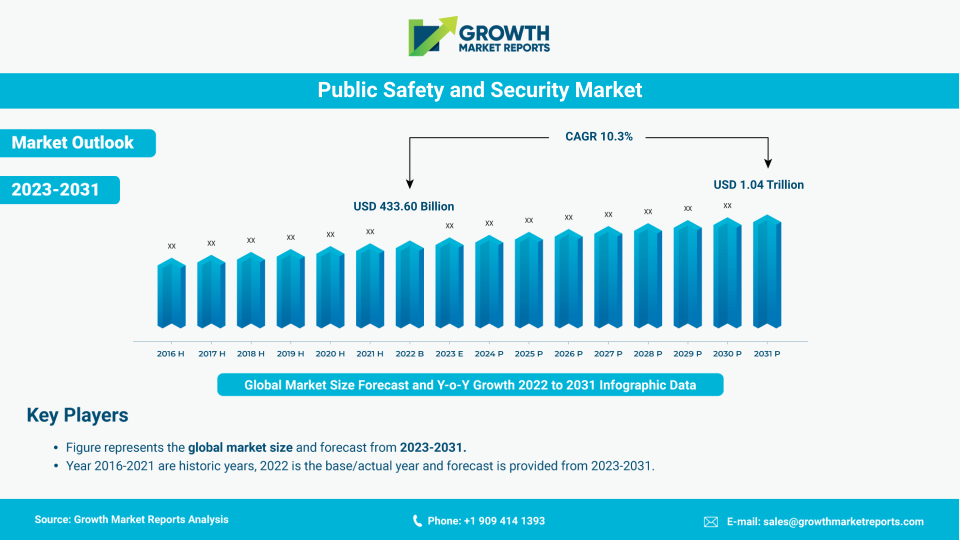
According to our latest research, the global Public Safety and Security market size reached USD 480.6 billion in 2024, reflecting robust investments in advanced security infrastructure and technologies worldwide. The market is expected to grow at a CAGR of 8.7% during the forecast period, climbing to an estimated USD 1,014.7 billion by 2033. This impressive expansion is driven by increasing urbanization, rising threats from terrorism and cybercrime, and the growing need for integrated safety solutions across public and private sectors.
One of the primary growth factors for the Public Safety and Security market is the escalating frequency and sophistication of threats to public safety, including terrorism, organized crime, natural disasters, and cyber-attacks. Governments and private entities are allocating significant resources to upgrade their security systems, leveraging state-of-the-art technologies such as artificial intelligence, machine learning, and the Internet of Things (IoT). These technologies enable real-time monitoring, predictive analytics, and rapid incident response, which are critical for minimizing risks and ensuring public safety. Additionally, the proliferation of smart city initiatives globally is fueling demand for integrated safety and security solutions, as urban centers seek to protect critical infrastructure and enhance emergency response capabilities.
Another key driver is the increasing regulatory requirements and compliance standards imposed by governments and international bodies, compelling organizations to adopt robust public safety and security measures. Regulations such as the General Data Protection Regulation (GDPR) in Europe and the Department of Homeland Security (DHS) guidelines in the United States mandate stringent data protection, surveillance, and emergency preparedness protocols. This regulatory landscape is pushing both public and private sector stakeholders to invest in advanced surveillance systems, biometric authentication, and cybersecurity solutions, thereby propelling market growth. Moreover, the integration of cloud-based platforms and managed services is making it easier for organizations to implement scalable and cost-effective security frameworks.
The rapid advancement of digital technologies and the convergence of physical and cyber security are also major contributors to market expansion. The adoption of smart surveillance cameras, facial recognition systems, and real-time communication networks is transforming the way public safety agencies operate. These technologies facilitate seamless coordination among emergency services, law enforcement, and critical infrastructure operators, enabling faster response times during crises. Furthermore, the growing awareness of the importance of disaster recovery and business continuity planning is prompting organizations to invest in backup and recovery systems, ensuring resilience against both physical and digital threats.
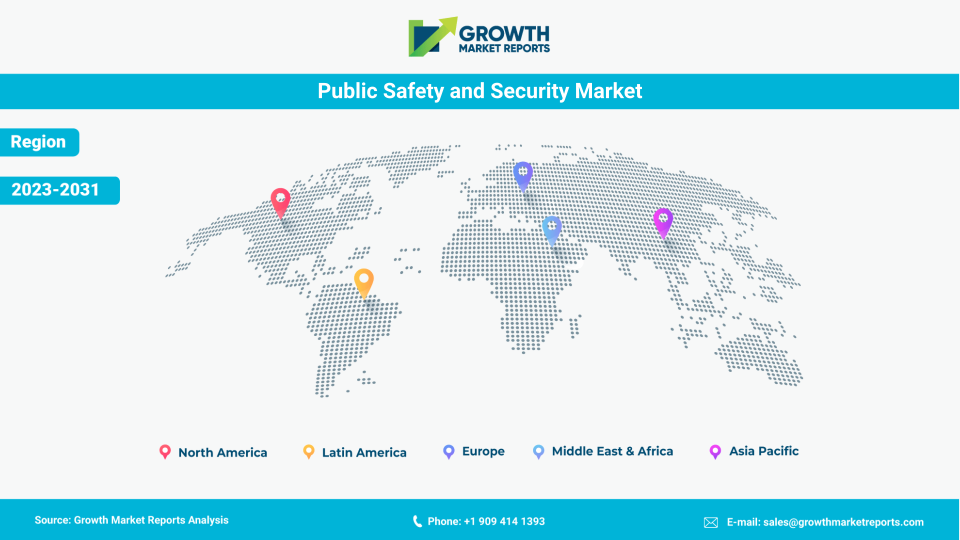
Regionally, North America continues to dominate the Public Safety and Security market, owing to its advanced technological infrastructure, high security spending, and a proactive approach to threat mitigation. However, the Asia Pacific region is witnessing the fastest growth, driven by rapid urbanization, increasing government initiatives for smart city development, and rising security concerns in densely populated countries such as China and India. Europe also remains a significant market, with strong emphasis on regulatory compliance and cross-border security cooperation. Meanwhile, the Middle East & Africa and Latin America are emerging as promising markets, supported by investments in critical infrastructure protection and modernization of emergency response systems.
The Public Safety and Security market is segmented by component into solutions and services. The solutions segment encompasses a wide array of technologies and platforms designed to address specific security challenges, such as surveillance systems, biometric authentication, and cybersecurity tools. The increasing adoption of advanced solutions is driven by the need for real-time threat detection, incident management, and data-driven decision-making. Organizations are investing heavily in integrated security platforms that combine multiple functionalities, enabling seamless monitoring and response across various domains. The rise of smart cities and connected infrastructure further amplifies the demand for comprehensive safety solutions that can be easily integrated and scaled.
Services, on the other hand, play a crucial role in the successful implementation and ongoing management of public safety and security systems. This segment includes professional services such as consulting, system integration, and training, as well as managed services that provide continuous monitoring, maintenance, and support. The growing complexity of security threats and the rapid evolution of technology necessitate specialized expertise, which is driving organizations to partner with service providers for end-to-end security management. Managed services are particularly gaining traction, as they offer cost-effective solutions and allow organizations to focus on their core operations while ensuring robust security coverage.
The synergy between solutions and services is becoming increasingly important, as organizations seek to deploy holistic security frameworks that address both physical and digital threats. Service providers are expanding their offerings to include advanced analytics, threat intelligence, and incident response capabilities, while solution vendors are enhancing their platforms with AI and machine learning features. This convergence is enabling the creation of integrated security ecosystems that deliver greater situational awareness, faster response times, and improved resilience against emerging threats.
Furthermore, the shift towards cloud-based deployment models is transforming the component landscape, allowing for greater scalability, flexibility, and cost efficiency. Cloud-based solutions and services are enabling organizations to rapidly deploy and manage security infrastructure, access advanced analytics, and collaborate across multiple agencies and jurisdictions. This trend is expected to accelerate in the coming years, as more organizations recognize the benefits of cloud adoption for public safety and security operations.
| Attributes | Details |
| Report Title | Public Safety and Security Market Research Report 2033 |
| By Component | Solution, Services |
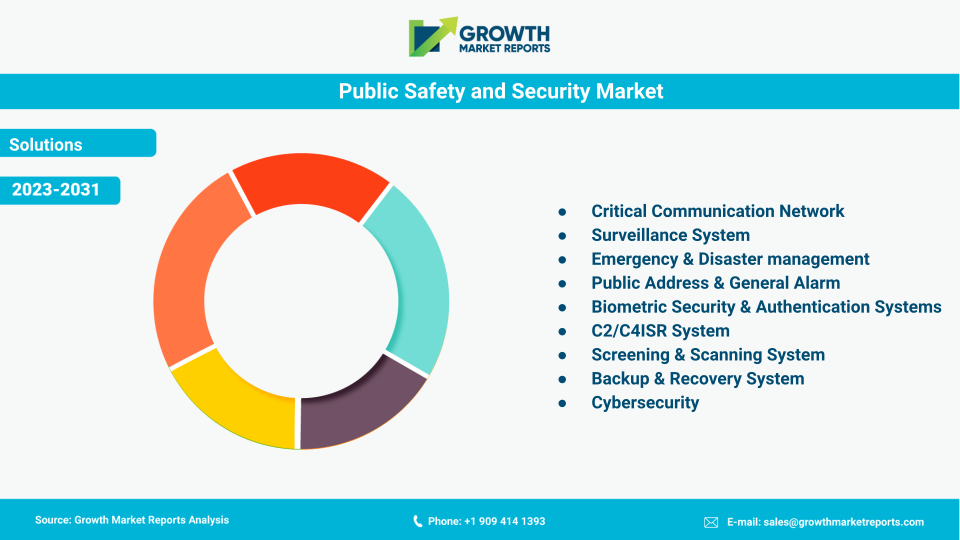
| By Solution Type | Critical Communication Network, Biometric Security and Authentication System, Surveillance System, Emergency and Disaster Management, Cybersecurity, Public Address and General Alarm, Backup and Recovery System |
| By Service Type | Professional Services, Managed Services |
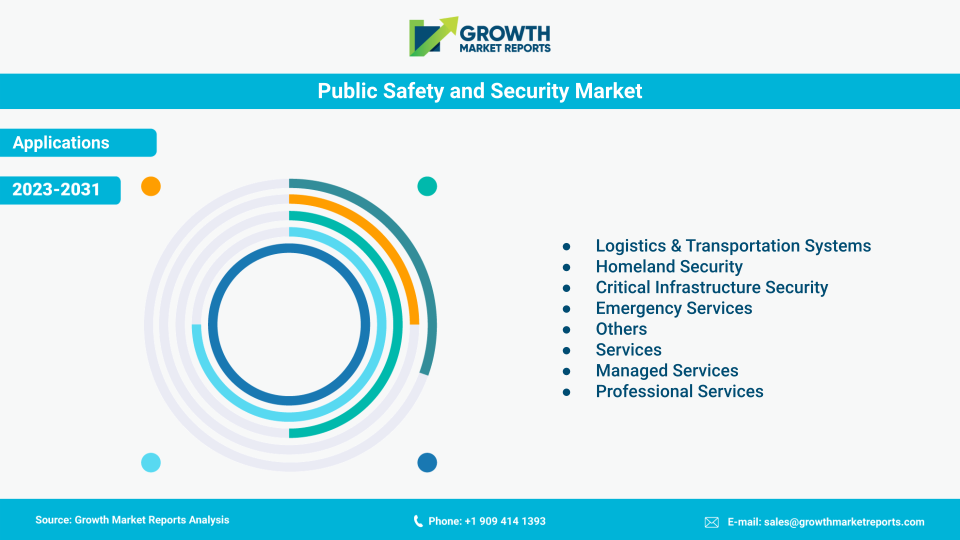
| By Application | Homeland Security, Emergency Services, Critical Infrastructure Security, Transportation Systems, Public Event Security, Others |
| By End-User | Law Enforcement Agencies, Firefighting Agencies, Emergency Medical Services, Others |
| Regions Covered | North America, Europe, APAC, Latin America, MEA |
| Countries Covered | North America (United States, Canada), Europe (Germany, France, Italy, United Kingdom, Spain, Russia, Rest of Europe), Asia Pacific (China, Japan, South Korea, India, Australia, South East Asia (SEA), Rest of Asia Pacific), Latin America (Mexico, Brazil, Rest of Latin America), Middle East & Africa (Saudi Arabia, South Africa, United Arab Emirates, Rest of Middle East & Africa) |
| Base Year | 2024 |
| Historic Data | 2018-2023 |
| Forecast Period | 2025-2033 |
| Number of Pages | 296 |
| Number of Tables & Figures | 303 |
| Customization Available | Yes, the report can be customized as per your need. |
The Public Safety and Security market encompasses a diverse range of solution types, each addressing specific aspects of safety and security. Critical communication networks are foundational to effective emergency response, enabling seamless communication among first responders, law enforcement, and public agencies. The deployment of next-generation communication systems, such as LTE and 5G networks, is enhancing the reliability and speed of information exchange during crises. This is particularly vital for coordinating large-scale emergency operations and ensuring timely dissemination of critical information to the public.
Biometric security and authentication systems are gaining significant traction as organizations seek to enhance identity verification and access control. Technologies such as fingerprint recognition, facial recognition, and iris scanning are being widely adopted across airports, government buildings, and critical infrastructure facilities. These systems offer high levels of accuracy and security, reducing the risk of unauthorized access and identity fraud. The integration of biometric authentication with other security solutions, such as surveillance and cybersecurity, is creating multi-layered defense mechanisms that are difficult to breach.
Surveillance systems, including video cameras, drones, and sensor networks, form the backbone of modern public safety infrastructure. The adoption of high-definition cameras, AI-powered video analytics, and real-time monitoring platforms is enabling proactive threat detection and incident management. Surveillance data is increasingly being integrated with big data analytics and machine learning algorithms to identify patterns, predict potential risks, and support investigative processes. The growing emphasis on public event security and critical infrastructure protection is further driving investments in advanced surveillance technologies.
Emergency and disaster management solutions are essential for preparing, responding to, and recovering from natural and man-made disasters. These solutions include incident management platforms, early warning systems, and resource allocation tools that enable coordinated response efforts. The increasing frequency of extreme weather events, pandemics, and industrial accidents is underscoring the importance of robust disaster management capabilities. Organizations are also investing in backup and recovery systems to ensure business continuity and minimize the impact of disruptions on public safety operations.
Cybersecurity solutions have become indispensable in the face of rising cyber threats targeting public safety infrastructure, data, and communication networks. The integration of advanced threat detection, intrusion prevention, and data encryption technologies is helping organizations safeguard critical assets and maintain operational integrity. Public address and general alarm systems are also crucial for alerting the public and coordinating evacuation procedures during emergencies. The convergence of these diverse solution types is enabling the creation of comprehensive security frameworks that address the full spectrum of public safety challenges.
The service segment of the Public Safety and Security market is bifurcated into professional services and managed services, each playing a distinct role in supporting the deployment and management of security solutions. Professional services encompass consulting, system integration, training, and support, which are essential for the successful implementation of complex security projects. Organizations rely on professional service providers to assess their security needs, design customized solutions, and ensure seamless integration with existing infrastructure. Training services are particularly important for equipping personnel with the skills required to operate advanced security systems and respond effectively to emergencies.
Managed services are experiencing rapid growth as organizations seek to outsource the ongoing management, monitoring, and maintenance of their security infrastructure. Managed service providers offer a range of solutions, including 24/7 surveillance, threat intelligence, incident response, and compliance management. This approach allows organizations to access specialized expertise, leverage the latest technologies, and reduce operational costs. The increasing complexity of security threats and the shortage of skilled security professionals are driving demand for managed services, particularly among small and medium-sized enterprises (SMEs) and public sector agencies with limited resources.
The integration of advanced analytics and artificial intelligence into service offerings is enhancing the value proposition of both professional and managed services. Service providers are leveraging AI-powered tools to analyze vast amounts of data, identify emerging threats, and automate incident response processes. This is enabling organizations to adopt a proactive approach to security management, detect anomalies in real-time, and respond swiftly to potential incidents. Additionally, the use of cloud-based service delivery models is increasing flexibility and scalability, allowing organizations to adapt to evolving security needs and regulatory requirements.
Collaboration between service providers and solution vendors is also becoming more prevalent, resulting in the development of end-to-end security solutions that combine hardware, software, and services. This integrated approach is enabling organizations to achieve greater operational efficiency, reduce the risk of security breaches, and ensure compliance with industry standards. As the threat landscape continues to evolve, the demand for comprehensive service offerings that address both current and emerging security challenges is expected to remain strong.
The Public Safety and Security market serves a wide range of applications, each with unique requirements and challenges. Homeland security is a major application area, encompassing border protection, counter-terrorism, and critical infrastructure defense. Governments around the world are investing in advanced surveillance systems, biometric authentication, and cybersecurity solutions to safeguard national borders and prevent terrorist activities. The integration of intelligence-sharing platforms and real-time communication networks is enhancing situational awareness and enabling coordinated responses to security threats.
Emergency services, including police, fire, and emergency medical services, rely heavily on public safety and security technologies to respond effectively to incidents and protect lives. The deployment of next-generation communication networks, real-time location tracking, and incident management platforms is improving response times and operational efficiency. Emergency services are also leveraging data analytics and predictive modeling to anticipate potential risks and allocate resources more effectively. The growing emphasis on community policing and public engagement is driving investments in technologies that facilitate transparency and collaboration between agencies and the public.
Critical infrastructure security is another key application, encompassing the protection of assets such as power plants, water supply systems, transportation networks, and communication infrastructure. The increasing threat of cyber-attacks and physical sabotage is prompting organizations to adopt multi-layered security solutions that integrate surveillance, access control, and cybersecurity. The use of AI-powered analytics and IoT sensors is enabling real-time monitoring and predictive maintenance, reducing the risk of disruptions and ensuring the resilience of critical services.
Transportation systems, including airports, seaports, railways, and public transit networks, are increasingly adopting advanced security technologies to enhance passenger safety and operational continuity. The integration of biometric authentication, video surveillance, and automated threat detection is improving the ability to identify and respond to security incidents. Public event security is also gaining prominence, with organizers deploying comprehensive security frameworks to protect attendees and prevent incidents during large-scale gatherings. The use of mobile applications, crowd analytics, and emergency communication systems is enabling real-time coordination and rapid response to potential threats.
Other applications include school and campus security, healthcare facility protection, and environmental monitoring. Each of these sectors presents unique security challenges, requiring tailored solutions that address specific risks and operational requirements. The growing adoption of integrated security platforms and cross-sector collaboration is enabling organizations to achieve greater efficiency, resilience, and public trust.
The Public Safety and Security market serves a diverse range of end-users, each with distinct needs and operational contexts. Law enforcement agencies are among the primary users of public safety technologies, leveraging advanced surveillance, communication, and analytics platforms to prevent crime, investigate incidents, and maintain public order. The adoption of body-worn cameras, facial recognition systems, and real-time data sharing is enhancing the effectiveness and accountability of law enforcement operations. Agencies are also investing in predictive policing tools and crime mapping software to allocate resources more efficiently and improve community engagement.
Firefighting agencies rely on public safety and security technologies to enhance emergency response, coordinate firefighting efforts, and protect personnel. The deployment of real-time communication networks, location tracking systems, and incident management platforms is improving situational awareness and enabling faster, more effective responses to fires and other emergencies. Firefighting agencies are also adopting drones and thermal imaging cameras to assess hazardous environments and support search and rescue operations. The integration of data analytics and predictive modeling is helping agencies anticipate fire risks and implement preventive measures.
Emergency medical services (EMS) are increasingly adopting advanced technologies to improve patient outcomes, optimize resource allocation, and enhance coordination with other emergency responders. The use of real-time communication systems, electronic health records, and telemedicine platforms is enabling EMS providers to deliver faster, more accurate care during emergencies. EMS agencies are also leveraging data analytics to identify trends, assess performance, and implement quality improvement initiatives. The growing emphasis on interoperability and data sharing is facilitating seamless collaboration among EMS, law enforcement, and firefighting agencies.
Other end-users include government agencies, private security firms, transportation authorities, and critical infrastructure operators. These organizations face a wide range of security challenges, from protecting physical assets and sensitive data to ensuring the safety of employees and the public. The adoption of integrated security solutions and cross-agency collaboration is enabling end-users to address complex threats more effectively and achieve greater operational resilience. As the threat landscape continues to evolve, the demand for tailored security solutions that meet the unique needs of different end-users is expected to grow.
The Public Safety and Security market presents significant opportunities for growth, driven by ongoing technological advancements, increasing security threats, and the proliferation of smart city initiatives. The integration of artificial intelligence, machine learning, and IoT is enabling the development of intelligent security systems that can detect, analyze, and respond to threats in real-time. These technologies are opening new avenues for innovation, allowing organizations to deploy proactive security measures and enhance situational awareness. The growing adoption of cloud-based platforms and managed services is also creating opportunities for solution providers to offer scalable, cost-effective security solutions that meet the evolving needs of public and private sector organizations.
Another major opportunity lies in the expansion of public-private partnerships and cross-sector collaboration. Governments and private entities are increasingly working together to address complex security challenges, share intelligence, and coordinate response efforts. This collaborative approach is enabling the development of integrated security frameworks that leverage the strengths of both sectors and deliver greater value to end-users. The increasing focus on regulatory compliance and data protection is also creating opportunities for solution providers to offer specialized services and solutions that help organizations meet stringent security standards and mitigate legal and reputational risks.
Despite the numerous opportunities, the Public Safety and Security market faces several restraining factors, including budget constraints, privacy concerns, and the complexity of integrating new technologies with legacy systems. Many organizations, particularly in developing regions, struggle to secure the necessary funding for large-scale security projects, which can limit the adoption of advanced solutions. Privacy concerns related to surveillance, data collection, and biometric authentication are also hindering market growth, as individuals and advocacy groups push for greater transparency and accountability. Additionally, the integration of new technologies with existing infrastructure can be challenging, requiring significant investments in training, system upgrades, and change management.
North America remains the largest regional market for Public Safety and Security, accounting for approximately USD 168.2 billion in 2024. The region's dominance is attributed to its advanced technological infrastructure, high security spending, and proactive approach to threat mitigation. The United States, in particular, is a major contributor, with significant investments in homeland security, critical infrastructure protection, and emergency management. Canada is also making strides in modernizing its public safety infrastructure, focusing on cross-border security cooperation and the adoption of advanced surveillance and communication systems.
The Asia Pacific region is experiencing the fastest growth in the Public Safety and Security market, with a projected CAGR of 11.2% through 2033. The market size in Asia Pacific reached USD 98.7 billion in 2024, driven by rapid urbanization, increasing government initiatives for smart city development, and rising security concerns in densely populated countries such as China, India, and Japan. Governments in the region are investing heavily in critical infrastructure protection, disaster management, and cyber security, creating significant opportunities for solution and service providers. The growing adoption of digital technologies and the expansion of public safety networks are further fueling market growth in Asia Pacific.
Europe is another key market, with a market size of USD 110.5 billion in 2024, characterized by strong regulatory frameworks, cross-border security cooperation, and a focus on data protection and privacy. The European Union's emphasis on harmonizing security standards and promoting information sharing among member states is driving investments in integrated security solutions. Countries such as the United Kingdom, Germany, and France are leading the adoption of advanced surveillance, biometric authentication, and cybersecurity technologies. Meanwhile, the Middle East & Africa and Latin America are emerging as promising markets, with a combined market size of USD 103.2 billion in 2024. These regions are investing in critical infrastructure modernization, emergency response capabilities, and public safety networks to address rising security threats and support economic development.
The Public Safety and Security market is highly competitive, with a diverse array of global, regional, and local players vying for market share. The competitive landscape is characterized by rapid technological innovation, strategic partnerships, and a strong focus on research and development. Leading companies are investing heavily in the development of advanced solutions that leverage artificial intelligence, machine learning, and IoT to deliver enhanced security capabilities. Mergers and acquisitions are also common, as companies seek to expand their product portfolios, enter new markets, and strengthen their competitive positions.
Solution providers are increasingly focusing on the integration of physical and cyber security, offering comprehensive platforms that address the full spectrum of public safety challenges. The ability to deliver end-to-end solutions that combine hardware, software, and services is becoming a key differentiator in the market. Service providers, meanwhile, are expanding their offerings to include advanced analytics, threat intelligence, and managed security services, catering to the evolving needs of public and private sector organizations. The growing demand for cloud-based solutions and the shift towards as-a-service delivery models are also shaping the competitive dynamics of the market.
The competitive landscape is further influenced by the entry of new players, particularly startups and technology firms, that are introducing innovative solutions and disrupting traditional business models. These companies are leveraging emerging technologies such as AI, blockchain, and edge computing to develop next-generation security solutions that offer greater efficiency, scalability, and cost-effectiveness. Established players are responding by investing in digital transformation, enhancing their R&D capabilities, and forming strategic alliances with technology partners, government agencies, and industry associations.
Major companies operating in the Public Safety and Security market include Honeywell International Inc., Motorola Solutions, Inc., Cisco Systems, Inc., IBM Corporation, NEC Corporation, Thales Group, Huawei Technologies Co., Ltd., Siemens AG, Hexagon AB, and Johnson Controls International plc. Honeywell International Inc. is renowned for its comprehensive portfolio of security solutions, including critical communication networks, surveillance systems, and emergency management platforms. Motorola Solutions, Inc. is a global leader in mission-critical communications and public safety software, serving law enforcement, fire, and EMS agencies worldwide. Cisco Systems, Inc. specializes in network security, cybersecurity, and integrated communication solutions for public safety agencies.
IBM Corporation is at the forefront of AI-powered analytics, threat intelligence, and incident response solutions, helping organizations detect and respond to security threats in real-time. NEC Corporation is a leading provider of biometric authentication, surveillance, and disaster management solutions, with a strong presence in Asia Pacific and other emerging markets. Thales Group offers a wide range of security solutions, including cybersecurity, critical infrastructure protection, and secure communication networks. Huawei Technologies Co., Ltd. is investing heavily in smart city and public safety technologies, focusing on integrated surveillance, communication, and data analytics platforms. Siemens AG and Johnson Controls International plc are prominent players in building security, critical infrastructure protection, and emergency management solutions, while Hexagon AB specializes in geospatial analytics and incident management platforms for public safety agencies.
These companies are continuously innovating to maintain their competitive edge, investing in advanced technologies, expanding their global footprint, and forging strategic partnerships to address the evolving needs of the Public Safety and Security market. The competitive landscape is expected to remain dynamic, with ongoing technological advancements, regulatory changes, and shifting customer demands shaping the future of the industry.
The Public Safety and Security market has been segmented on the basis of
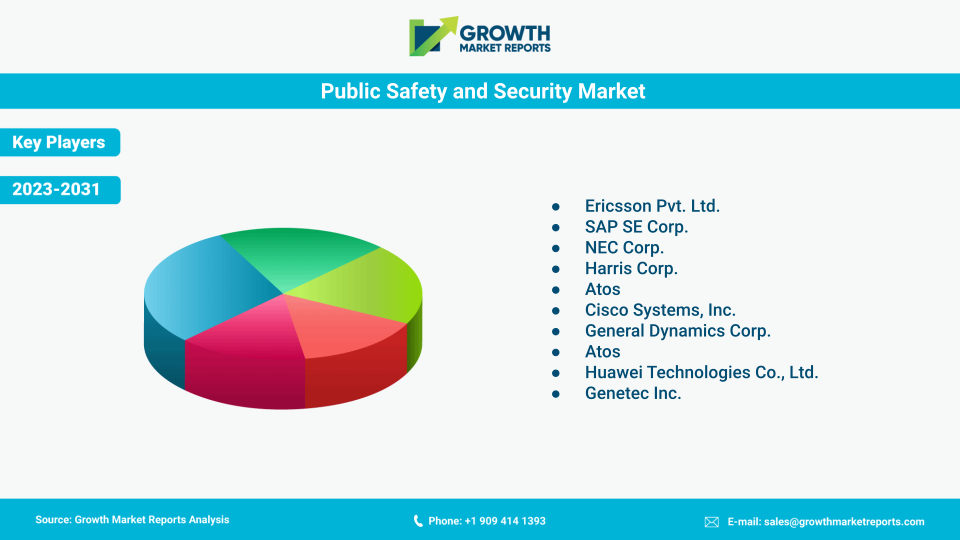
Key players competing in the global public safety and security market are Ericsson Pvt. Ltd.; SAP SE Corp.; NEC Corp.; Harris Corp.; Atos; Cisco Systems, Inc.; General Dynamics Corp.; Atos; Huawei Technologies Co., Ltd; and Genetec Inc.
Companies are focusing on offering advanced public safety and security solutions to improve the abilities of the governments to effectively manage emergencies. Companies with strong R & D teams are working on developing cutting edge technology systems.
Many of the key player of public safety and security solutions are also involved in the manufacturing and designing of weapon systems for the armed forces as well as working close with government for providing public safety and security systems.
For instance, in June 2020, Honeywell American publicly traded, multinational conglomerate corporation announced the launch of Honeywell Forge cybersecurity suite. This suite offers better cybersecurity risk monitoring, increased asset discovery capabilities with active and passive functionality, and improved industrial-grade remote access.
In 2019, Harris Corporation delivered 9,000 advanced XL-200P public safety radios to the U.S. Border Protection and Department of Homeland Security’s Customs. This radio was particularly designed in line with public safety experts to encounter the operational needs of the DHS.
Major players include Honeywell International Inc., Motorola Solutions, Cisco Systems, IBM Corporation, NEC Corporation, Thales Group, Huawei Technologies, Siemens AG, Hexagon AB, and Johnson Controls International plc.
Cloud-based solutions and services are enabling greater scalability, flexibility, and cost efficiency, making it easier for organizations to deploy and manage security infrastructure.
Challenges include budget constraints, privacy concerns, integration with legacy systems, and the complexity of adopting new technologies.
Major end-users include law enforcement agencies, firefighting agencies, emergency medical services, government agencies, private security firms, transportation authorities, and critical infrastructure operators.
High-demand solutions include critical communication networks, biometric authentication systems, surveillance systems, emergency and disaster management platforms, and cybersecurity solutions.
The market is segmented into solutions (such as surveillance systems, biometric authentication, and cybersecurity tools) and services (including consulting, system integration, training, and managed services).
North America is the largest market, while Asia Pacific is experiencing the fastest growth due to rapid urbanization and government investments in smart city and security infrastructure.
Key growth drivers include increasing urbanization, rising threats from terrorism and cybercrime, regulatory requirements, smart city initiatives, and advancements in technologies like AI, IoT, and machine learning.
The market is expected to grow at a CAGR of 8.7% from 2024 to 2033, reaching an estimated USD 1,014.7 billion by 2033.
As of 2024, the global Public Safety and Security market size is valued at USD 480.6 billion, with strong growth expected in the coming years.