Segments - by Types (Base Temperature Less Than 10 mK, Base Temperature Between 10 - 20 mK, Base Temperature between 21 - 80 mK, and Base Temperature Above 80 mK), Applications (Nano Research, Quantum Computing, Low Temperature Detection, and Others) and Region (North America, Europe, Asia Pacific, Latin America, and Middle East & Africa) - and Country (Thailand) - Thailand Industry Analysis, Growth, Share, Size, Trends, and Forecast 2023 - 2031
Segments - by Types (Base Temperature Less Than 10 mK, Base Temperature Between 10 - 20 mK, Base Temperature between 21 - 80 mK, and Base Temperature Above 80 mK), Applications (Nano Research, Quantum Computing, Low Temperature Detection, and Others) and Region (North America, Europe, Asia Pacific, Latin America, and Middle East & Africa) - and Country (Thailand) - Thailand Industry Analysis, Growth, Share, Size, Trends, and Forecast 2023 - 2031
Cryogen Free Dilution Refrigerators Market Outlook 2031:
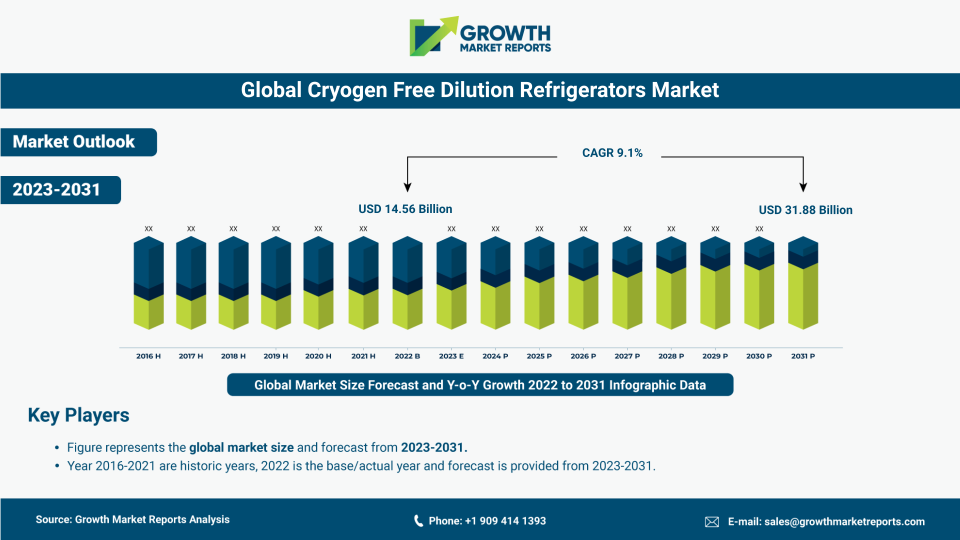
The global cryogen free dilution refrigerators market size was valued at USD 14.56 Billion in 2022 and is projected to reach USD 31.88 Billion by 2031, expanding at a CAGR of 9.1% during the forecast period 2023 - 2031.A cryogen free dilution refrigerator consists of a gas-handling system (GHS), an integrated pulse tube – dilution refrigerators (PT-DR UNIT), and a compressor for the pulse tube.
These tubes and systems are coupled with each other by cables and flexible stainless-steel lines for the gauges and valves. Cryogen free dilution refrigerators come with various innovative features, which simplify operations and enhance their performance. A free dilution refrigerator is a system that uses double-still technology to accelerates the system’s cooling and allows rapidly changes in samples without wasting days for warming up and cooling up.
The market is driven by factors such as easy operation of cryogen free dilution refrigerators, provision of large experimental space, and growing use of single dilution in cryogen free dilution refrigerators. Conversely, higher vibration and pressure than conventional dilution refrigerators and less usage in low temperature experiments are likely to restrain the market. Rising R&D investments and growth in the manufacturing of cryogen free dilution refrigerators are creating opportunities in the market.
Cryogen Free Dilution Refrigerators Market Segmental Outlook
By Types
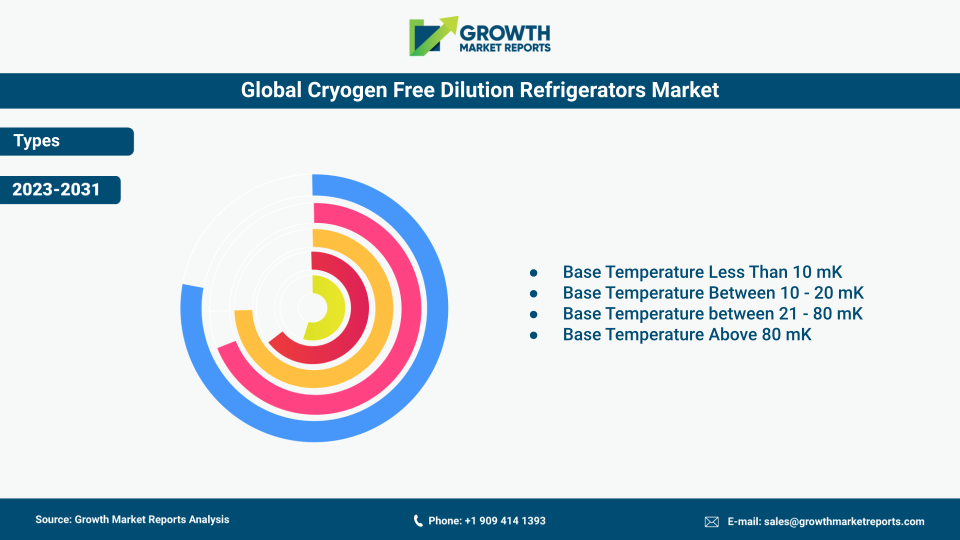
Based on types, global cryogen free dilution refrigerators market is segmented into- Base Temperature Less Than 10mK, Base Temperature Between 10 - 20 mK, Base Temperature between 21 - 80 mK, and Base Temperature Above 80 mK.
Definitions Base Temperature Less Than 10 mK Refrigerators with base temperature less than 10 mK are used in astrophysics as a particle and intraparticle in physics as they require very high sensitivity and resolution to detect a minute energy deposition.
In astrophysics millikelvin, varying temperatures are required in different experiments for the search of dark matter, detection of low-energy neutrons, X-ray astronomy, and β and γ spectroscopy. Moreover, astroparticle bolometric detector often depend on the use of the dilution refrigerators for providing a large cooling power at millikelvin temperatures.
Base Temperature Between 21 - 80 mK Refrigerators with base temperatures ranging between 21mK and 80 mK are used in superconducting quantum circuits which need very low temperatures for performance. Moreover, this kind of temperature is required in space missions as its demand for the higher cooling power at the low temperature of 50 mK for a lifetime of five to ten years. This range of temperature is expected to be needed in future space missions such as IXO/ATHENA and SPICA.
Base Temperature Above 80 mK Refrigerators with base temperatures above 80 mK are used in cosmic microwave background polarization observative for developing large-format detectors arrays. Cryogen free dilution refrigerators having a base temperature of above 80 mK are used in space applications for special purpose researches.
By Applications
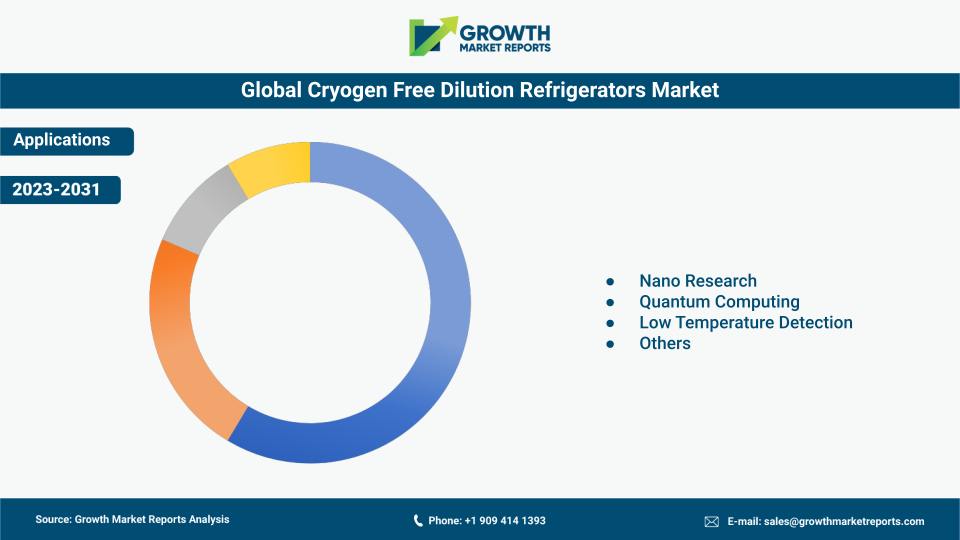
On the basis of applications, the cryogen free dilution refrigerators market is segmented into nano research, quantum computing, low temperature detection, and others.
The nano research segment is expected to hold a significant share of the market and is projected to expand at a substantial CAGR during the forecast period. The demand for cryogen free dilution refrigerators is expected to grow in the field of quantum computing, as they are able to provide cooling for experiments where the cooling power from the dilution refrigerators is insufficient to cool cables and amplifiers. Thus, the demand for cryogen free dilution refrigerators is projected to expand at a significant CAGR during the forecast period.
Definitions Nano Research Nano research is a branch of science and it helps in revolutionizing and improving many industries and technology sectors such as environmental science, food safety, transportation, medicine, homeland security, and information technology.
It is one of the emerging fields in science and can gain importance, as it can provide breakthroughs in various industries. In medical science, nano research offers various ranges of tools that are help the monitoring individual cells at an individual molecular level.
Quantum Computing Quantum computing is a technological area which focuses on developing computer technology that is based on the principal of quantum theory. It explains the behavior of materials and energy on subatomic and atomic levels.
Classical computers are used to encode information in bits that is 0 and 1. However, quantum computing uses quantum bits or qubits. Cryogen free dilution refrigerators are used to cool processors that are required for quantum computing and are used in quantum-optical studies for the analysis of luminescence centers in silicon.
Low Temperature Detection Low temperatures detection is important for fields such as new material research (advanced superconductors), next-generation computers (quantum computers), elemental microanalysis, and astronomy (cosmic structure). Cryogen free dilution refrigerators are considered to be the solution that generate extremely low temperatures of 1 K to several 10 mK for developing next-generation technologies.
The recent outbreak of COVID-19 has had a huge impact on the overall market. According to the World Trade Organization, trade depends on the effectiveness of the policy responses and the duration of the outbreak.
Inadequate ancillary supplies such as raw materials used for the manufacturing of cryogen-free dilution refrigerators are expected to hamper the market during the forecast period, as supply shortages lead to pricing volatility; however, this is expected to create opportunities for market participants. The crisis has forced some companies to think about changing their business models.
The impact of COVID-19 has created opportunities in the market, as many countries are engaging in R&D activities that are directly helping to minimize the pandemic situation. Moreover, research activities are expected to completely recommence soon in several countries and the market is projected to grow at a sluggish pace in 2021, as many countries are moving toward unlocking of the lockdowns by following several rules and norms.
Cryogen Free Dilution Refrigerators Market Regional Outlook
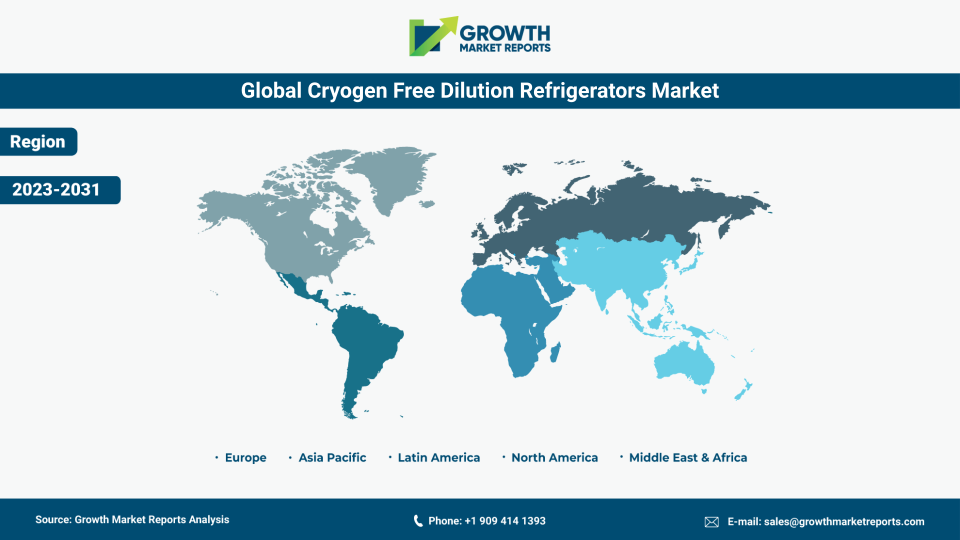
Based on regions, the global cryogen free dilution refrigerators market is divided into North America, Latin America, Europe, Asia Pacific, and Middle East & Africa (MEA).
North America holds a significant share of the global cryogen free dilution refrigerators market due to rising use of these refrigerators in various fields of technologies. This, in turn, is driving the growth of the market and encouraging technological development in this region.
The market in Asia Pacific is estimated to expand at a significant CAGR during the forecast period, as countries such as China, Japan, and South Korea are investing in research & development to produce innovative products at low cost rather than importing or buying the technology.
Key Benefits for Industry Participants & Stakeholders
In-depth analysis of the global cryogen free dilution refrigerators market
Historical, current and projected market size in terms of value and Unit
Potential & niche segments and Region exhibiting promising growth covered
Industry drivers, restraints and opportunities covered in the study
Recent industry trends and developments
Competitive landscape & strategies of key players
Neutral perspective on North America Cryogen Free Dilution Refrigerators Market performance
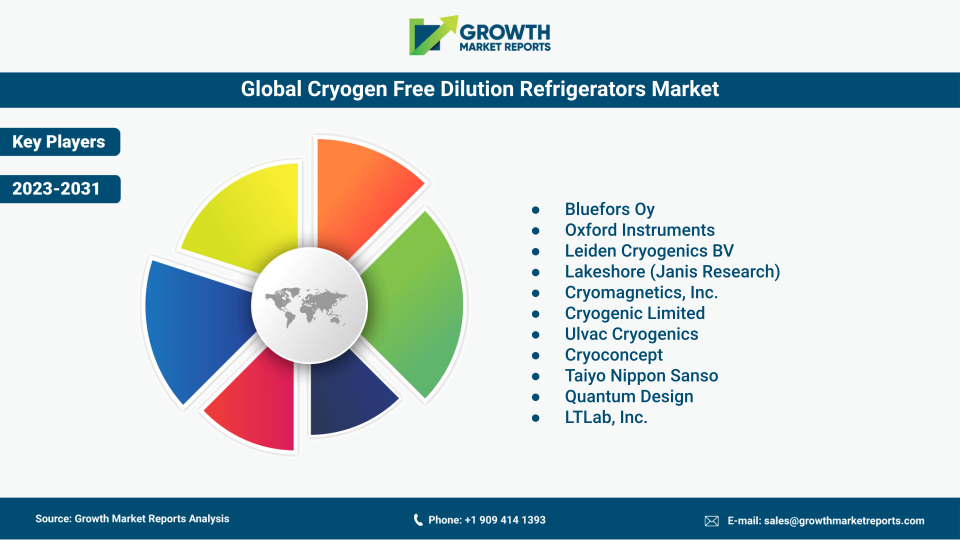
Key players in the market include Bluefors Oy, Oxford Instruments, Leiden Cryogenics BV, Lakeshore (Janis Research), and Cryomagnetics, Inc. These players are considered as key manufacturers of the market based on their different varieties of product availability, regional presence, better supply chain management system, and increasing demand for products.
These players are adopting key strategies such as product development and geographical expansion to increase their presence in the cryogen free dilution refrigerators market.
In 2020, Lakeshore (Janis Research). Lakeshore acquired Janis Research Company, LCC to expand its product portfolio.
Video Summary for Cryogen Free Dilution Refrigerators Market
Chapter 1 Executive Summary Chapter 2 Assumptions and Acronyms Used Chapter 3 Research Methodology Chapter 4 Cryogen Free Dilution Refrigerators Market Overview 4.1 Introduction 4.1.1 Market Taxonomy 4.1.2 Market Definition 4.1.3 Macro-Economic Factors Impacting the Market Growth 4.2 Cryogen Free Dilution Refrigerators Market Dynamics 4.2.1 Market Drivers 4.2.2 Market Restraints 4.2.3 Market Opportunity 4.3 Cryogen Free Dilution Refrigerators Market - Supply Chain Analysis 4.3.1 List of Key Suppliers 4.3.2 List of Key Distributors 4.3.3 List of Key Consumers 4.4 Key Forces Shaping the Cryogen Free Dilution Refrigerators Market 4.4.1 Bargaining Power of Suppliers 4.4.2 Bargaining Power of Buyers 4.4.3 Threat of Substitution 4.4.4 Threat of New Entrants 4.4.5 Competitive Rivalry 4.5 Global Cryogen Free Dilution Refrigerators Market Size & Forecast, 2017-2027 4.5.1 Cryogen Free Dilution Refrigerators Market Size and Y-o-Y Growth 4.5.2 Cryogen Free Dilution Refrigerators Market Absolute $ Opportunity Chapter 5 Global Cryogen Free Dilution Refrigerators Market Analysis and Forecast by Types 5.1 Introduction 5.1.1 Key Market Trends & Growth Opportunities by Types 5.1.2 Basis Point Share (BPS) Analysis by Types 5.1.3 Absolute $ Opportunity Assessment by Types 5.2 Cryogen Free Dilution Refrigerators Market Size & Volume Forecast by Types 5.2.1 Base Temperature Less Than 10 mK 5.2.2 Base Temperature Between 10 - 20 mK 5.2.3 Base Temperature between 21 - 80 mK 5.2.4 Base Temperature Above 80 mK 5.3 Market Attractiveness Analysis by Types Chapter 6 Global Cryogen Free Dilution Refrigerators Market Analysis and Forecast by Applications 6.1 Introduction 6.1.1 Key Market Trends & Growth Opportunities by Applications 6.1.2 Basis Point Share (BPS) Analysis by Applications 6.1.3 Absolute $ Opportunity Assessment by Applications 6.2 Cryogen Free Dilution Refrigerators Market Size & Volume Forecast by Applications 6.2.1 Nano Research 6.2.2 Quantum Computing 6.2.3 Low Temperature Detection 6.2.4 Others 6.3 Market Attractiveness Analysis by Applications Chapter 7 Global Cryogen Free Dilution Refrigerators Market Analysis and Forecast by Region 7.1 Introduction 7.1.1 Key Market Trends & Growth Opportunities by Region 7.1.2 Basis Point Share (BPS) Analysis by Region 7.1.3 Absolute $ Opportunity Assessment by Region 7.2 Cryogen Free Dilution Refrigerators Market Size & Volume Forecast by Region 7.2.1 North America 7.2.2 Europe 7.2.3 Asia Pacific 7.2.4 Latin America 7.2.5 Middle East & Africa (MEA) 7.3 Market Attractiveness Analysis by Region Chapter 8 Coronavirus Disease (COVID-19) Impact 8.1 Introduction 8.2 Current & Future Impact Analysis 8.3 Economic Impact Analysis 8.4 Government Policies 8.5 Investment Scenario Chapter 9 North America Cryogen Free Dilution Refrigerators Analysis and Forecast 9.1 Introduction 9.2 North America Cryogen Free Dilution Refrigerators Market Size & Volume Forecast by Country 9.2.1 U.S. 9.2.2 Canada 9.3 Basis Point Share (BPS) Analysis by Country 9.4 Absolute $ Opportunity Assessment by Country 9.5 Market Attractiveness Analysis by Country 9.6 North America Cryogen Free Dilution Refrigerators Market Size & Volume Forecast by Types 9.6.1 Base Temperature Less Than 10 mK 9.6.2 Base Temperature Between 10 - 20 mK 9.6.3 Base Temperature between 21 - 80 mK 9.6.4 Base Temperature Above 80 mK 9.7 Basis Point Share (BPS) Analysis by Types 9.8 Absolute $ Opportunity Assessment by Types 9.9 Market Attractiveness Analysis by Types 9.10 North America Cryogen Free Dilution Refrigerators Market Size & Volume Forecast by Applications 9.10.1 Nano Research 9.10.2 Quantum Computing 9.10.3 Low Temperature Detection 9.10.4 Others 9.11 Basis Point Share (BPS) Analysis by Applications 9.12 Absolute $ Opportunity Assessment by Applications 9.13 Market Attractiveness Analysis by Applications Chapter 10 Europe Cryogen Free Dilution Refrigerators Analysis and Forecast 10.1 Introduction 10.2 Europe Cryogen Free Dilution Refrigerators Market Size & Volume Forecast by Country 10.2.1 Germany 10.2.2 France 10.2.3 Italy 10.2.4 U.K. 10.2.5 Spain 10.2.6 Russia 10.2.7 Rest of Europe 10.3 Basis Point Share (BPS) Analysis by Country 10.4 Absolute $ Opportunity Assessment by Country 10.5 Market Attractiveness Analysis by Country 10.6 Europe Cryogen Free Dilution Refrigerators Market Size & Volume Forecast by Types 10.6.1 Base Temperature Less Than 10 mK 10.6.2 Base Temperature Between 10 - 20 mK 10.6.3 Base Temperature between 21 - 80 mK 10.6.4 Base Temperature Above 80 mK 10.7 Basis Point Share (BPS) Analysis by Types 10.8 Absolute $ Opportunity Assessment by Types 10.9 Market Attractiveness Analysis by Types 10.10 Europe Cryogen Free Dilution Refrigerators Market Size & Volume Forecast by Applications 10.10.1 Nano Research 10.10.2 Quantum Computing 10.10.3 Low Temperature Detection 10.10.4 Others 10.11 Basis Point Share (BPS) Analysis by Applications 10.12 Absolute $ Opportunity Assessment by Applications 10.13 Market Attractiveness Analysis by Applications Chapter 11 Asia Pacific Cryogen Free Dilution Refrigerators Analysis and Forecast 11.1 Introduction 11.2 Asia Pacific Cryogen Free Dilution Refrigerators Market Size & Volume Forecast by Country 11.2.1 China 11.2.2 Japan 11.2.3 South Korea 11.2.4 India 11.2.5 Australia 11.2.6 South East Asia (SEA) 11.2.7 Rest of Asia Pacific (APAC) 11.3 Basis Point Share (BPS) Analysis by Country 11.4 Absolute $ Opportunity Assessment by Country 11.5 Market Attractiveness Analysis by Country 11.6 Asia Pacific Cryogen Free Dilution Refrigerators Market Size & Volume Forecast by Types 11.6.1 Base Temperature Less Than 10 mK 11.6.2 Base Temperature Between 10 - 20 mK 11.6.3 Base Temperature between 21 - 80 mK 11.6.4 Base Temperature Above 80 mK 11.7 Basis Point Share (BPS) Analysis by Types 11.8 Absolute $ Opportunity Assessment by Types 11.9 Market Attractiveness Analysis by Types 11.10 Asia Pacific Cryogen Free Dilution Refrigerators Market Size & Volume Forecast by Applications 11.10.1 Nano Research 11.10.2 Quantum Computing 11.10.3 Low Temperature Detection 11.10.4 Others 11.11 Basis Point Share (BPS) Analysis by Applications 11.12 Absolute $ Opportunity Assessment by Applications 11.13 Market Attractiveness Analysis by Applications Chapter 12 Latin America Cryogen Free Dilution Refrigerators Analysis and Forecast 12.1 Introduction 12.2 Latin America Cryogen Free Dilution Refrigerators Market Size & Volume Forecast by Country 12.2.1 Brazil 12.2.2 Mexico 12.2.3 Rest of Latin America (LATAM) 12.3 Basis Point Share (BPS) Analysis by Country 12.4 Absolute $ Opportunity Assessment by Country 12.5 Market Attractiveness Analysis by Country 12.6 Latin America Cryogen Free Dilution Refrigerators Market Size & Volume Forecast by Types 12.6.1 Base Temperature Less Than 10 mK 12.6.2 Base Temperature Between 10 - 20 mK 12.6.3 Base Temperature between 21 - 80 mK 12.6.4 Base Temperature Above 80 mK 12.7 Basis Point Share (BPS) Analysis by Types 12.8 Absolute $ Opportunity Assessment by Types 12.9 Market Attractiveness Analysis by Types 12.10 Latin America Cryogen Free Dilution Refrigerators Market Size & Volume Forecast by Applications 12.10.1 Nano Research 12.10.2 Quantum Computing 12.10.3 Low Temperature Detection 12.10.4 Others 12.11 Basis Point Share (BPS) Analysis by Applications 12.12 Absolute $ Opportunity Assessment by Applications 12.13 Market Attractiveness Analysis by Applications Chapter 13 Middle East & Africa (MEA) Cryogen Free Dilution Refrigerators Analysis and Forecast 13.1 Introduction 13.2 Middle East & Africa (MEA) Cryogen Free Dilution Refrigerators Market Size & Volume Forecast by Country 13.2.1 Saudi Arabia 13.2.2 South Africa 13.2.3 UAE 13.2.4 Rest of Middle East & Africa (MEA) 13.3 Basis Point Share (BPS) Analysis by Country 13.4 Absolute $ Opportunity Assessment by Country 13.5 Market Attractiveness Analysis by Country 13.6 Middle East & Africa (MEA) Cryogen Free Dilution Refrigerators Market Size & Volume Forecast by Types 13.6.1 Base Temperature Less Than 10 mK 13.6.2 Base Temperature Between 10 - 20 mK 13.6.3 Base Temperature between 21 - 80 mK 13.6.4 Base Temperature Above 80 mK 13.7 Basis Point Share (BPS) Analysis by Types 13.8 Absolute $ Opportunity Assessment by Types 13.9 Market Attractiveness Analysis by Types 13.10 Middle East & Africa (MEA) Cryogen Free Dilution Refrigerators Market Size & Volume Forecast by Applications 13.10.1 Nano Research 13.10.2 Quantum Computing 13.10.3 Low Temperature Detection 13.10.4 Others 13.11 Basis Point Share (BPS) Analysis by Applications 13.12 Absolute $ Opportunity Assessment by Applications 13.13 Market Attractiveness Analysis by Applications Chapter 14 Competition Landscape 14.1 Cryogen Free Dilution Refrigerators Market: Competitive Dashboard 14.2 Global Cryogen Free Dilution Refrigerators Market: Market Share Analysis, 2019 14.3 Company Profiles (Details – Overview, Financials, Developments, Strategy) 14.3.1 Bluefors Oy 14.3.2 Oxford Instruments 14.3.3 Leiden Cryogenics BV 14.3.4 Lakeshore (Janis Research) 14.3.5 Cryomagnetics, Inc 14.3.6 Ulvac Cryogenics 14.3.7 Cryoconcept 14.3.8 Taiyo Nippon Sanso 14.3.9 Quantum Design 14.3.10 LTLab, Inc. 14.3.11 Hall Scientific Ltd 14.3.12 ICE Oxford Ltd. 14.3.13 Cryo Industries of America, Inc 14.3.14 CryoVac GmbH & Co. KG 14.3.15 Cryogenic Limited
Ask for Research To Be Focused On Specific Regions or Segments
Receive Data As Per Your Format and Definition
Companies Profiled based on Your Requirements
Breaking Down Competitive Landscape as per Your Requirements
Any Level of Customization
Our Clients
Client Testinomials
We needed a highly accurate and precise report, which Growth Market Reports delivered promptly. The company compiled information from a wide array of reliable agencies and sourcess.It is extremely satisfactory to be working with you. Strategy Head of Major Tech Company
We were very pleased to contact Growth Market Reports as they tailored reports precisely as per our requirements. As we are dealing with the aerospace and defense industry, we need reports of high accuracy and substantial quality. Major Player in Defense Industry
Extremely delighted to have a well-crafted report on “Global Packaging Solutions Market Research Report” from your team. Thank you for providing me with all our requirements and for incorporating our suggestions. CMO of Leading Packaging Company from USA
I had a good experience working with Growth Market Reports as they were very open to all constructive changes in the report. I found that the report had its charm embedded with ample of data. Founder and Managing Partner of Major Korean Company
Our company has been working with Growth Market Reports for some years now and we are very happy with the quality of the reports provided by the company.I, on behalf of my organization, would like to thank you for offering professional reports. Global Consulting Firm
Yes, the report covers types of cryogen free dilution refrigerators such as base temperature less than 10 mK, base temperature between 10 - 20 mK, base temperature between 21 - 80 mK, and base temperature above 80 mK.
According to this Growth Market Reports’ report, global Cryogen Free Dilution Refrigerators market is likely to register a CAGR of 9.1% during forecast period 2020-2027, with an anticipated valuation of USD 211.4 million by the end of the 2027.
In addition to market size (in USD Million) and company market share (in % for base year 2019), other data such macro-economic factors, COVID-19 Impact, and pricing analysis of cryogen free dilution refrigerators is available in final report.
The market is driven by the easy operation of cryogen free dilution refrigerators, provision of large experimental space, and growing use of single dilution in cryogen free dilution refrigerators.
Nano research, quantum computing, low temperature detection, and others are the key application that are driving the global cryogen free dilution refrigerators market.
The base year considered for the global cryogen free dilution refrigerators market report is 2019. The complete analysis period is 2017 to 2027, wherein, 2017 & 2018 are the historic years and the forecast is provided from 2020 to 2027.











 Request For Customization
 Enquiry Before Buying
 Speak With Analyst