Segments - by Product Type (Android Tablets, iOS Tablets, Windows Tablets, Others), by Age Group (2-5 Years, 6-8 Years, 9-12 Years), by Connectivity (Wi-Fi Only, Wi-Fi and Cellular), by Distribution Channel (Online Stores, Offline Stores), by End-User (Educational, Entertainment, Others)
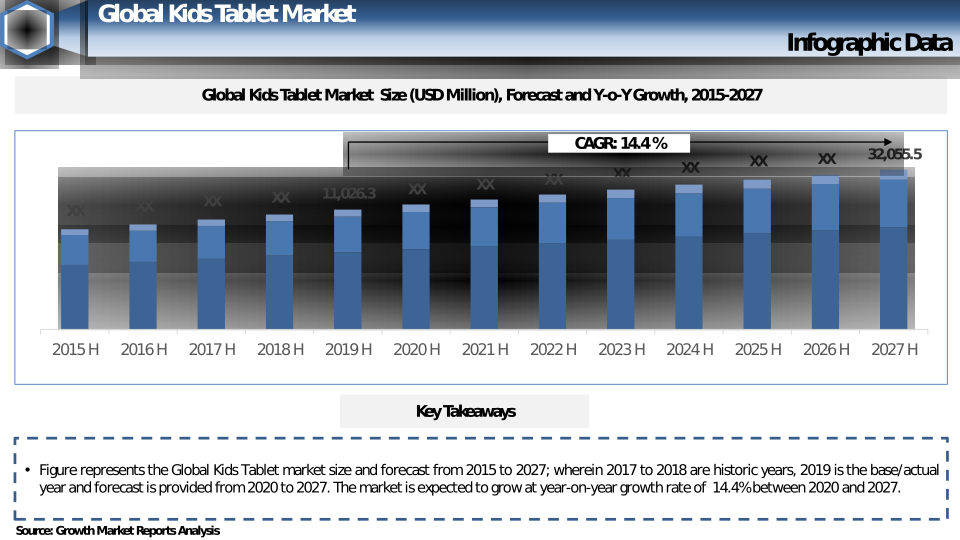
As per our latest research, the global kids tablet market size in 2024 stands at USD 15.8 billion, registering robust momentum on the back of rapid technological adoption and increasing digital literacy among children. The market is projected to expand at a CAGR of 13.2% from 2025 to 2033, reaching a forecasted value of USD 46.3 billion by 2033. This growth trajectory is driven by a combination of educational digitization, rising parental awareness regarding interactive learning, and the proliferation of affordable, feature-rich devices tailored for younger users.
The kids tablet market is experiencing significant growth due to the ongoing digital transformation in the education sector. Schools and educational institutions are increasingly integrating tablets into their curricula to facilitate interactive learning and personalized education. The COVID-19 pandemic further accelerated this trend, highlighting the importance of remote learning solutions and digital devices for children. In addition to formal education, parents are investing in tablets to supplement at-home learning, leveraging a wide range of educational apps, e-books, and multimedia resources. This emphasis on digital education is fostering a new generation of tech-savvy learners and is a key driver for the escalating demand for kids tablets globally.
Another major growth factor is the rising demand for entertainment and infotainment content tailored for children. With the explosion of streaming platforms, gaming applications, and interactive storytelling, kids tablets have become essential devices for safe, age-appropriate digital engagement. Manufacturers are responding by designing tablets with robust parental controls, kid-safe browsing environments, and curated content libraries that align with both entertainment and developmental needs. The integration of augmented reality (AR) and artificial intelligence (AI) is also enhancing the user experience, making learning and play more immersive and engaging. As a result, the market is witnessing a surge in product innovation and differentiation, further fueling its expansion.
The affordability and accessibility of kids tablets are also contributing to market growth. Advances in manufacturing and supply chain efficiencies have led to a broad spectrum of price points, making tablets accessible to a wider demographic. Furthermore, collaborations between hardware manufacturers, educational content providers, and telecom operators are creating bundled offerings that deliver greater value to consumers. This ecosystem approach is particularly impactful in emerging markets, where cost-effective solutions are critical for mass adoption. The proliferation of online distribution channels has also made it easier for parents to compare, purchase, and receive tablets, even in remote areas, amplifying the market's reach.
Regionally, North America continues to dominate the kids tablet market, owing to high digital penetration, early technology adoption, and significant investments in educational technology. However, Asia Pacific is emerging as the fastest-growing region, driven by a large youth population, rising disposable incomes, and government initiatives promoting digital education. Europe follows closely, with strong demand from both the education and entertainment sectors. Meanwhile, Latin America and the Middle East & Africa are witnessing steady growth, supported by improving internet infrastructure and increasing awareness of the benefits of digital learning. This diverse regional landscape underscores the global appeal and adaptability of kids tablets across different socioeconomic contexts.
The product type segment of the kids tablet market is categorized into Android Tablets, iOS Tablets, Windows Tablets, and Others. Android tablets currently hold the largest market share, primarily due to their affordability, customization options, and wide availability. Android’s open-source nature allows manufacturers to develop cost-effective devices with features specifically designed for children, such as enhanced parental controls and pre-installed educational content. The flexibility in hardware specifications and price points makes Android tablets a preferred choice for both parents and educational institutions, especially in price-sensitive markets. Furthermore, the vast ecosystem of kid-friendly apps available on the Google Play Store continues to bolster the appeal of Android-based devices.
iOS tablets, led by Apple’s iPad series, command a significant share of the premium segment in the kids tablet market. Renowned for their superior build quality, robust security features, and seamless integration with educational and entertainment ecosystems, iOS tablets are particularly popular in developed markets like North America and Europe. Apple’s commitment to privacy, coupled with its curated App Store and comprehensive parental controls, instills confidence among parents regarding content safety. Educational institutions also favor iPads for their reliability and compatibility with a wide range of learning management systems. Despite their higher price point, iOS tablets enjoy strong demand among consumers who prioritize quality and brand reputation.
Windows tablets, though occupying a smaller share compared to Android and iOS counterparts, are gaining traction in specific educational settings. These devices offer a familiar interface for users accustomed to Microsoft’s ecosystem, making them suitable for older children and schools that leverage Windows-based applications. The integration of productivity tools such as Microsoft Office, along with support for stylus input and detachable keyboards, positions Windows tablets as versatile devices for both learning and creative expression. However, their adoption in the kids segment is somewhat limited by higher costs and a relatively smaller selection of child-centric apps compared to Android and iOS platforms.
The “Others” category includes tablets running on proprietary operating systems or lesser-known platforms. These devices often target niche markets or are designed for specific educational programs, particularly in developing regions where cost constraints are paramount. While their market share remains modest, these tablets play a crucial role in bridging the digital divide by offering ultra-affordable solutions. Manufacturers in this segment often collaborate with local governments or NGOs to distribute tablets as part of digital literacy initiatives. As the market evolves, ongoing innovation and strategic partnerships in this segment are expected to contribute incrementally to overall market growth.
| Attributes | Details |
| Report Title | Kids Tablet Market Research Report 2033 |
| By Product Type | Android Tablets, iOS Tablets, Windows Tablets, Others |
| By Age Group | 2-5 Years, 6-8 Years, 9-12 Years |
| By Connectivity | Wi-Fi Only, Wi-Fi and Cellular |
| By Distribution Channel | Online Stores, Offline Stores |
| By End-User | Educational, Entertainment, Others |
| Regions Covered | North America, Europe, APAC, Latin America, MEA |
| Countries Covered | North America (United States, Canada), Europe (Germany, France, Italy, United Kingdom, Spain, Russia, Rest of Europe), Asia Pacific (China, Japan, South Korea, India, Australia, South East Asia (SEA), Rest of Asia Pacific), Latin America (Mexico, Brazil, Rest of Latin America), Middle East & Africa (Saudi Arabia, South Africa, United Arab Emirates, Rest of Middle East & Africa) |
| Base Year | 2024 |
| Historic Data | 2018-2023 |
| Forecast Period | 2025-2033 |
| Number of Pages | 286 |
| Number of Tables & Figures | 261 |
| Customization Available | Yes, the report can be customized as per your need. |
The age group segmentation of the kids tablet market is divided into 2-5 Years, 6-8 Years, and 9-12 Years. Tablets designed for the 2-5 years segment emphasize durability, ease of use, and safety. These devices typically feature rugged designs, colorful exteriors, and simplified interfaces tailored for toddlers. Pre-installed educational games, interactive storybooks, and creative drawing tools are common, helping young children develop cognitive and motor skills in a secure digital environment. Parental controls are especially robust in this segment, allowing caregivers to closely monitor usage and restrict access to age-inappropriate content, thereby fostering trust and adoption among parents.
The 6-8 years age group represents a dynamic segment characterized by a transition from basic learning to more advanced educational and entertainment needs. Tablets targeting this demographic offer a balance of educational content, interactive learning experiences, and entertainment options such as games, videos, and music. The integration of STEM (Science, Technology, Engineering, and Mathematics) learning modules and coding apps is increasingly prevalent, reflecting the growing emphasis on early digital literacy. Manufacturers are also focusing on ergonomic designs and long battery life to cater to the active lifestyles of children in this age bracket. As a result, this segment is witnessing robust growth, driven by both parental demand and institutional adoption in primary schools.
For the 9-12 years segment, tablets are designed to support more complex learning tasks and creative projects. These devices often feature higher processing power, larger screens, and compatibility with external accessories such as keyboards and styluses. The content ecosystem expands to include advanced educational apps, productivity tools, and collaborative platforms that facilitate group learning and project-based assignments. Security features remain critical, but there is also a greater emphasis on fostering independence, with customizable user profiles and graduated access controls. As children in this age group become more tech-savvy, manufacturers are innovating to provide devices that bridge the gap between child-friendly features and adolescent needs, ensuring continued engagement and relevance.
Across all age groups, the trend toward personalization is becoming increasingly prominent. Manufacturers are leveraging AI and machine learning to create adaptive learning environments that cater to individual learning styles and paces. This approach not only enhances educational outcomes but also strengthens brand loyalty, as parents and educators seek devices that can grow with the child. The segmentation by age group thus plays a pivotal role in shaping product development strategies and marketing approaches within the kids tablet market.
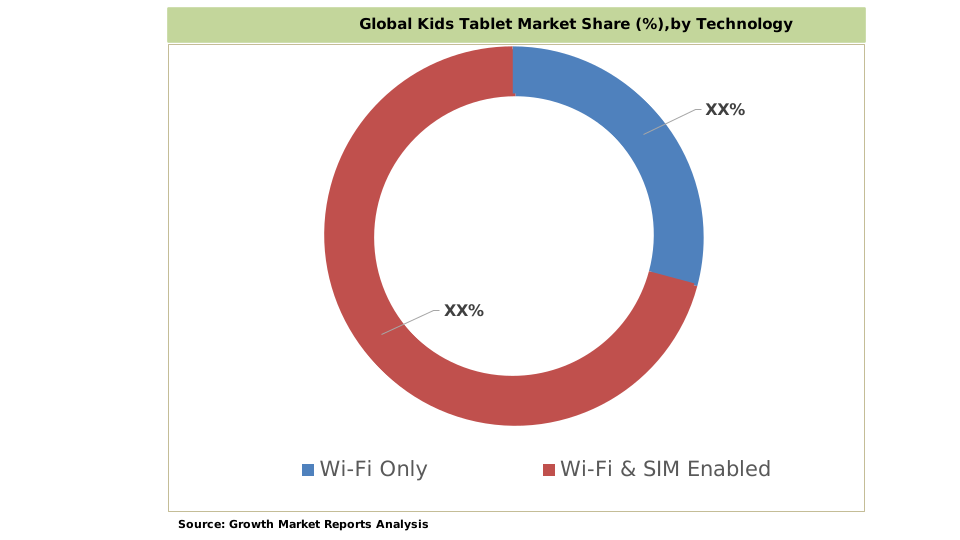
The connectivity segment of the kids tablet market is bifurcated into Wi-Fi Only and Wi-Fi and Cellular models. Wi-Fi Only tablets dominate the market, driven by their affordability and suitability for home and school environments where reliable internet access is readily available. These devices are particularly popular among parents who wish to limit their children’s exposure to the internet outside supervised settings. The simplicity of Wi-Fi Only tablets also translates to longer battery life and reduced hardware complexity, making them ideal for younger users and educational institutions with budget constraints. As a result, this segment continues to register strong demand, especially in developed regions with widespread broadband coverage.
Wi-Fi and Cellular tablets, while representing a smaller share of the market, are gaining traction among consumers seeking greater flexibility and mobility. These devices enable children to access educational resources and entertainment content on the go, making them suitable for families with active lifestyles or those residing in areas with limited Wi-Fi infrastructure. The inclusion of cellular connectivity also supports hybrid and remote learning models, which have become increasingly prevalent in the wake of the COVID-19 pandemic. However, the higher cost of cellular-enabled tablets and associated data plans remains a barrier for some consumers, particularly in price-sensitive markets.
Manufacturers are responding to the evolving connectivity needs by offering a range of models with varying connectivity options and price points. The growing availability of affordable data plans and the expansion of 4G and 5G networks are expected to further boost the adoption of cellular-enabled kids tablets in the coming years. In addition, some devices now offer dual SIM functionality and advanced parental controls that manage internet access based on location or time of day, providing greater peace of mind for parents concerned about digital safety.
Overall, the connectivity segment is characterized by a delicate balance between cost, convenience, and security. As digital learning and entertainment become increasingly integrated into daily life, the demand for flexible connectivity options is expected to rise. Manufacturers that can successfully address these needs while maintaining robust safety features will be well-positioned to capture a larger share of the growing kids tablet market.
The distribution channel landscape for kids tablets is divided into Online Stores and Offline Stores. Online stores have emerged as the dominant distribution channel, accounting for a significant portion of global sales. The convenience of online shopping, coupled with the ability to compare products, read reviews, and access exclusive discounts, has made e-commerce platforms the preferred choice for parents and educators. Major online retailers such as Amazon, Walmart, and specialized electronics stores offer a wide range of kids tablets, often bundled with accessories or extended warranties. The COVID-19 pandemic further accelerated the shift toward online purchasing, as lockdowns and safety concerns limited access to physical stores.
Offline stores, including electronics retailers, department stores, and dedicated toy shops, continue to play a vital role in the kids tablet market, particularly in regions where digital literacy is still developing. These outlets offer the advantage of hands-on product demonstrations, personalized assistance, and immediate availability. For many parents, the ability to physically inspect a device and seek expert advice is a crucial factor in the purchasing decision. Educational institutions also tend to procure tablets in bulk through authorized offline distributors, leveraging volume discounts and after-sales support services.
The distribution channel landscape is further enriched by hybrid models that combine online and offline elements. For instance, click-and-collect services allow customers to order online and pick up their devices in-store, providing a seamless and flexible shopping experience. Manufacturers are also investing in branded retail outlets and pop-up stores to enhance brand visibility and engage directly with consumers. These initiatives are particularly effective in building trust and loyalty, especially for new or lesser-known brands entering the market.
As competition intensifies, both online and offline channels are focusing on value-added services such as extended warranties, insurance, and technical support. Loyalty programs, exclusive content partnerships, and educational workshops are increasingly being used to differentiate offerings and enhance customer engagement. The evolving distribution ecosystem is thus a key enabler of market growth, ensuring that kids tablets remain accessible, affordable, and appealing to a broad spectrum of consumers worldwide.
The end-user segment of the kids tablet market is classified into Educational, Entertainment, and Others. The educational segment holds a commanding share, driven by the integration of digital learning tools in schools and the growing popularity of homeschooling. Educational tablets are designed to support a wide range of curricula, offering interactive lessons, e-books, and assessment tools that cater to diverse learning needs. Governments and educational institutions are increasingly investing in tablet-based learning initiatives, particularly in regions striving to bridge the digital divide. The emphasis on STEM education and coding skills is also fueling demand for specialized educational tablets equipped with relevant software and content.
Entertainment remains a significant end-user segment, propelled by the rising consumption of digital media among children. Tablets designed for entertainment purposes feature high-resolution displays, robust audio systems, and access to a wide array of games, videos, and interactive apps. Parental controls and content filtering remain critical in this segment, ensuring that children can safely explore digital content. The popularity of streaming services and mobile gaming is driving continuous innovation in hardware and software, with manufacturers seeking to deliver immersive and engaging experiences for young users.
The “Others” category encompasses a diverse range of applications, including healthcare, special needs education, and communication tools for children with disabilities. Tablets are increasingly being used as assistive devices, providing customized interfaces and accessibility features that support communication, therapy, and daily living skills. This segment, while smaller in scale, is characterized by high growth potential as awareness of the benefits of digital inclusion continues to rise. Collaborations between technology providers, healthcare professionals, and advocacy groups are driving product development and expanding the reach of kids tablets into new and underserved markets.
Across all end-user segments, there is a growing emphasis on holistic development, encompassing cognitive, social, and emotional skills. Manufacturers are leveraging partnerships with educational content providers, entertainment studios, and healthcare organizations to deliver comprehensive solutions that address the diverse needs of children. The end-user landscape is thus a key driver of innovation and differentiation in the kids tablet market, shaping the evolution of products and services in response to changing consumer preferences and societal trends.
The kids tablet market presents a multitude of opportunities for growth and innovation. One of the most significant opportunities lies in the continued expansion of digital education initiatives worldwide. Governments and non-profit organizations are increasingly recognizing the role of technology in bridging educational gaps, particularly in underserved and remote regions. This has led to the proliferation of public-private partnerships aimed at providing affordable or subsidized tablets to students. Manufacturers that align their product development and distribution strategies with these initiatives stand to gain substantial market share. Additionally, the integration of emerging technologies such as artificial intelligence, augmented reality, and adaptive learning algorithms is creating new avenues for product differentiation and enhanced user engagement. These advancements are enabling the development of personalized learning experiences that cater to individual learning styles and paces, thereby improving educational outcomes and fostering long-term loyalty among users and institutions.
Another major opportunity lies in the growing demand for specialized tablets designed for children with unique needs, such as those with learning disabilities or developmental challenges. The customization of hardware and software to support accessibility, communication, and therapy is opening up new market segments and driving innovation. Furthermore, the increasing popularity of subscription-based content models and bundled offerings is creating recurring revenue streams for manufacturers and content providers. As the digital ecosystem continues to evolve, there is also potential for cross-industry collaborations, such as partnerships with telecom operators, educational publishers, and entertainment studios, to deliver integrated solutions that enhance the value proposition of kids tablets. The rise of eco-friendly and sustainable product designs is another emerging trend, reflecting growing consumer awareness of environmental issues and presenting opportunities for differentiation and brand building.
Despite the promising outlook, the kids tablet market faces several restraining factors that could impede growth. Chief among these is the issue of digital safety and privacy, which remains a top concern for parents, educators, and regulators. The risk of exposure to inappropriate content, online predators, and cyberbullying necessitates robust security features and ongoing vigilance. Regulatory compliance with data protection laws such as COPPA (Children’s Online Privacy Protection Act) and GDPR (General Data Protection Regulation) adds complexity to product development and marketing. Additionally, concerns about excessive screen time and its impact on children’s physical and mental health are prompting calls for greater parental oversight and the development of devices that promote healthy usage habits. Economic factors, such as fluctuating disposable incomes and supply chain disruptions, can also affect market dynamics, particularly in emerging regions. Addressing these challenges will require a concerted effort from industry stakeholders to ensure that kids tablets deliver safe, meaningful, and balanced digital experiences.
North America remains the largest regional market for kids tablets, accounting for approximately USD 5.7 billion in 2024. The region’s dominance is attributed to high digital penetration, widespread adoption of educational technology, and strong consumer purchasing power. The United States, in particular, is a major driver of demand, with schools and parents alike investing heavily in digital learning tools. The presence of leading technology companies and a mature e-commerce ecosystem further support market growth. Canada also contributes significantly, with government initiatives promoting digital literacy and technology integration in schools. The North American market is expected to maintain steady growth, supported by ongoing innovation and a strong focus on educational outcomes.
Asia Pacific is emerging as the fastest-growing region, with a market size of USD 4.2 billion in 2024 and a projected CAGR of 16.5% through 2033. The region’s growth is fueled by a large and youthful population, rising disposable incomes, and increasing government investment in digital education infrastructure. Countries such as China, India, and Japan are at the forefront of this expansion, with ambitious initiatives to provide tablets and digital content to students in both urban and rural areas. The proliferation of affordable devices and the rapid expansion of internet connectivity are further accelerating adoption. Southeast Asian markets are also witnessing robust growth, driven by a combination of demographic trends and policy support for technology-enabled learning.
Europe holds a significant share of the global kids tablet market, with a market value of USD 3.6 billion in 2024. The region is characterized by high levels of digital literacy, strong regulatory frameworks, and a focus on quality and safety. Western European countries such as the United Kingdom, Germany, and France lead the market, supported by well-established educational systems and a culture of early technology adoption. Eastern Europe is also experiencing growth, albeit at a more moderate pace, as governments invest in digital infrastructure and educational technology. Latin America and the Middle East & Africa collectively account for approximately USD 2.3 billion in 2024, with growth driven by improving internet access, rising awareness of digital learning, and targeted initiatives to increase technology adoption among children. These regions present significant long-term potential as economic conditions improve and digital ecosystems mature.
The competitive landscape of the kids tablet market is characterized by intense rivalry among established technology giants, emerging players, and niche manufacturers. Market leaders are leveraging their brand equity, extensive distribution networks, and robust R&D capabilities to maintain a competitive edge. Product innovation is a key differentiator, with companies investing heavily in the development of devices that combine durability, safety, and engaging content. Strategic partnerships with educational content providers, telecom operators, and retailers are also playing a pivotal role in expanding market reach and enhancing the value proposition of kids tablets. The ability to offer integrated solutions that address the diverse needs of parents, educators, and children is increasingly becoming a critical success factor in this dynamic market.
Emerging players and startups are disrupting the market by introducing affordable, feature-rich tablets tailored for specific age groups and learning needs. These companies often focus on underserved segments or regions, leveraging local insights and agile product development processes to capture market share. Customization and localization of content, as well as innovative distribution models, are enabling new entrants to compete effectively with established brands. The rise of direct-to-consumer sales channels and the growing popularity of subscription-based content services are further leveling the playing field, allowing smaller players to reach a broader audience and build sustainable business models.
The market is also witnessing increasing consolidation, as larger players acquire or partner with smaller firms to enhance their product portfolios and expand into new markets. Mergers and acquisitions are driven by the need to access new technologies, content libraries, and distribution networks. This trend is expected to continue as companies seek to strengthen their competitive positions and respond to evolving consumer preferences. At the same time, regulatory scrutiny and the need for compliance with data protection laws are raising the bar for market entry, favoring players with robust governance frameworks and a commitment to ethical business practices.
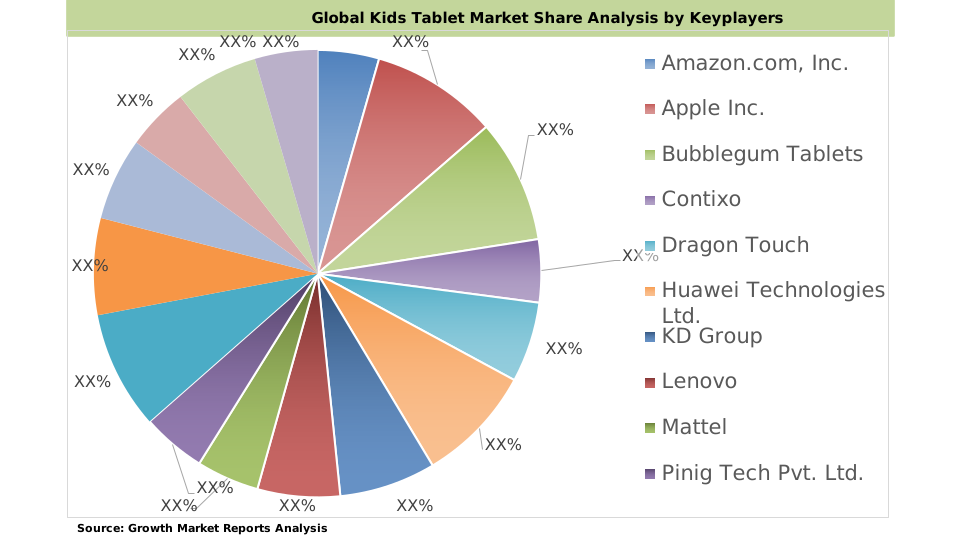
Some of the major companies operating in the kids tablet market include Amazon (Fire Kids Edition), Apple (iPad), Samsung Electronics, Lenovo, and Huawei. Amazon’s Fire Kids Edition tablets are renowned for their affordability, durable design, and comprehensive parental controls, making them a popular choice among parents and educators. Apple’s iPad remains the benchmark for quality and user experience, with a strong focus on privacy and a vast ecosystem of educational apps. Samsung and Lenovo offer a wide range of Android-based tablets, catering to diverse price points and feature requirements. Huawei is gaining ground in emerging markets with competitively priced devices and localized content offerings.
Other notable players include LeapFrog Enterprises, Kurio, and Dragon Touch, which specialize in educational tablets and interactive learning solutions. These companies are distinguished by their focus on child-centric design, curated content, and partnerships with educational publishers. LeapFrog, for example, is recognized for its proprietary learning platform and adaptive learning technology, while Kurio emphasizes advanced parental controls and safe browsing environments. Dragon Touch offers a variety of affordable options with robust hardware and pre-installed educational apps, targeting budget-conscious consumers.
In summary, the kids tablet market is characterized by a diverse and dynamic competitive landscape, with players ranging from global technology leaders to specialized niche manufacturers. Success in this market hinges on the ability to innovate, adapt to changing consumer needs, and deliver safe, engaging, and value-driven solutions for children worldwide. As the market continues to evolve, ongoing investment in product development, strategic partnerships, and customer engagement will be essential for sustained growth and leadership.
The Kids Tablet market has been segmented on the basis of
Major players include Amazon (Fire Kids Edition), Apple (iPad), Samsung Electronics, Lenovo, Huawei, LeapFrog Enterprises, Kurio, and Dragon Touch, each offering unique features and content ecosystems.
The primary end-users are educational institutions, parents for at-home learning, and children for entertainment. There is also a growing segment for special needs and healthcare applications.
Online stores are the dominant distribution channel for kids tablets, offering convenience and a wide product selection. Offline stores remain important for hands-on demonstrations and personalized assistance.
Kids tablets are available as Wi-Fi Only and Wi-Fi & Cellular models. Wi-Fi Only tablets are more popular due to affordability, while cellular models offer greater mobility and flexibility.
The market is segmented into 2-5 years, 6-8 years, and 9-12 years age groups, with each segment featuring devices tailored to specific developmental and learning needs.
The main product types are Android tablets, iOS tablets, Windows tablets, and others. Android tablets hold the largest market share due to affordability and customization options.
North America currently dominates the kids tablet market due to high digital penetration and early technology adoption, while Asia Pacific is the fastest-growing region, fueled by a large youth population and government digital education initiatives.
Key growth drivers include educational digitization, rising parental awareness about interactive learning, proliferation of affordable and feature-rich devices, and the integration of AR and AI technologies.
The kids tablet market is expected to grow at a CAGR of 13.2% from 2025 to 2033, reaching an estimated value of USD 46.3 billion by 2033.
The global kids tablet market size in 2024 is valued at USD 15.8 billion, driven by rapid technological adoption and increasing digital literacy among children.