Flow Computer Market Research Report 2033

Flow Computer Market Research Report 2033

Segments - by Type (Single Stream Flow Computers, Multi-Stream Flow Computers), by Offering (Hardware, Software, Services), by Communication Protocol (Modbus, Profibus, HART, Others), by Application (Oil & Gas, Water & Wastewater, Chemicals, Power Generation, Food & Beverage, Pharmaceuticals, Others), by Mounting (Rack Mount, Panel Mount, Field Mount)

https://growthmarketreports.com/Raksha
Author : Raksha Sharma
https://growthmarketreports.com/Vaibhav
Fact-checked by : V. Chandola
https://growthmarketreports.com/Shruti
Editor : Shruti Bhat

Upcoming | Report ID :EP-28 | 4.7 Rating | 79 Reviews | 263 Pages | Format : Docx PDF

Report Description


Flow Computer Market Outlook

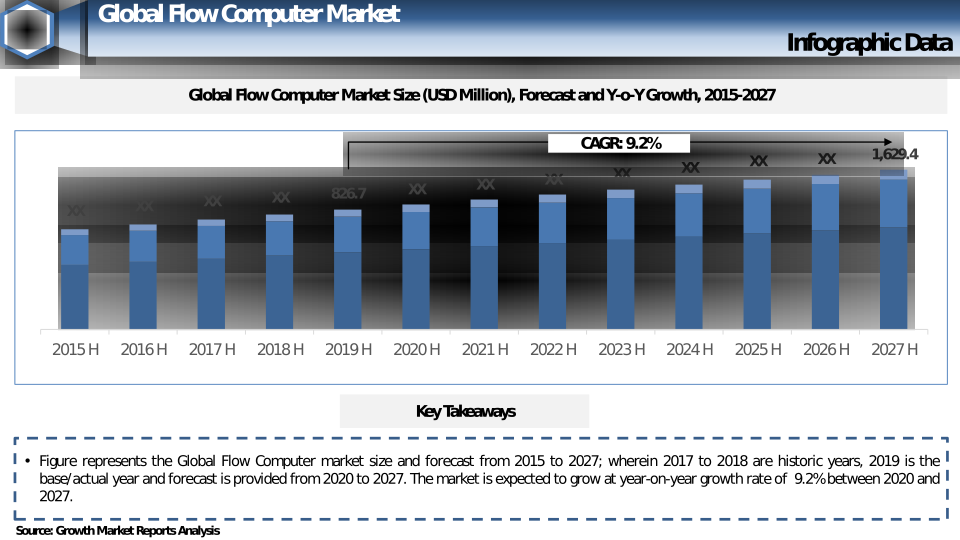
According to our latest research, the global Flow Computer market size in 2024 stands at USD 1.12 billion, reflecting robust demand across diverse industries. The market is expected to expand at a CAGR of 7.6% from 2025 to 2033, reaching an estimated USD 2.17 billion by the end of the forecast period. This steady growth is primarily driven by increasing automation in process industries, the adoption of advanced measurement technologies, and the critical need for precise flow measurement and data management in sectors such as oil & gas, water & wastewater, and chemicals. As per our latest research, the marketÂ’s expansion is further supported by the integration of IoT and digital technologies, which enhance operational efficiency and regulatory compliance.

The principal growth driver in the Flow Computer market is the rising demand for accurate and reliable flow measurement solutions in the oil & gas sector. As energy companies strive to optimize production and ensure compliance with stringent regulatory standards, the adoption of flow computers has become indispensable. These devices play a crucial role in custody transfer, process monitoring, and leak detection, enabling operators to enhance productivity while minimizing operational risks. The integration of advanced communication protocols and real-time data analytics further amplifies the value proposition of flow computers, allowing for seamless data transmission, remote monitoring, and predictive maintenance. This technological evolution is not only improving operational transparency but also reducing downtime and maintenance costs, making flow computers a strategic investment for modern industrial enterprises.

Another significant growth factor is the rapid industrialization and urbanization witnessed in emerging economies, particularly in Asia Pacific and Latin America. The expansion of water & wastewater infrastructure, coupled with the modernization of chemical and power generation plants, has accelerated the demand for flow computers. Governments across these regions are investing heavily in smart infrastructure projects, which necessitate the deployment of advanced flow measurement and control systems. Furthermore, the increasing focus on sustainability and resource optimization is compelling industries to adopt digital solutions that facilitate precise monitoring and efficient utilization of critical resources. Flow computers, with their ability to integrate with SCADA systems and provide actionable insights, are at the forefront of this digital transformation, driving market growth across multiple verticals.

Technological advancements in flow computer offerings, including the development of compact, modular, and highly scalable solutions, are also fueling market expansion. Leading manufacturers are investing in R&D to enhance the functionality, interoperability, and cybersecurity features of their products. The emergence of cloud-based flow computing platforms and the adoption of wireless communication protocols are further broadening the application scope of these devices. Additionally, the growing trend towards remote operations and unmanned facilities in hazardous environments is creating new opportunities for flow computer vendors. By enabling real-time monitoring and automated reporting, these solutions are empowering industries to achieve higher levels of efficiency, safety, and regulatory compliance, thus underpinning the sustained growth of the global Flow Computer market.

Flow Monitoring is becoming increasingly crucial in today's industrial landscape, as it provides the necessary insights to optimize resource utilization and enhance operational efficiency. By continuously tracking the flow of liquids and gases, industries can detect anomalies, prevent leaks, and ensure compliance with environmental regulations. This capability is particularly important in sectors such as oil & gas and water & wastewater, where precise flow monitoring can lead to significant cost savings and improved sustainability. The integration of flow monitoring systems with IoT and digital platforms further amplifies their effectiveness, allowing for real-time data analysis and decision-making. As industries strive for greater efficiency and sustainability, the demand for advanced flow monitoring solutions is set to rise, driving innovation and growth in the flow computer market.

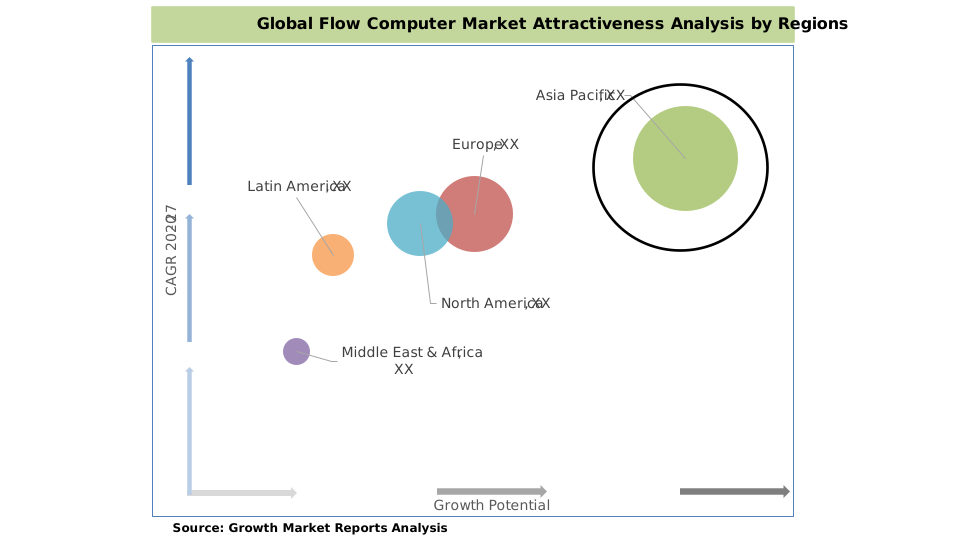
From a regional perspective, North America continues to dominate the Flow Computer market, owing to its mature oil & gas sector, advanced technological infrastructure, and stringent regulatory framework. However, Asia Pacific is emerging as the fastest-growing region, driven by rapid industrialization, urban expansion, and increasing investments in smart infrastructure. Europe and the Middle East & Africa are also witnessing significant growth, supported by the modernization of process industries and the adoption of digital technologies. The competitive landscape is characterized by the presence of global players, regional manufacturers, and innovative startups, all vying to capitalize on the evolving market dynamics and unlock new growth avenues.

Global Flow Computer Industry Outlook

Type Analysis

The Type segment of the Flow Computer market is primarily categorized into Single Stream Flow Computers and Multi-Stream Flow Computers. Single stream flow computers are widely used in applications where monitoring and controlling a single flow stream is required, such as in small-scale oil & gas pipelines, water distribution networks, and chemical plants. These devices offer high accuracy, reliability, and cost-effectiveness, making them ideal for standalone applications and facilities with limited complexity. With advancements in microprocessor technology and embedded software, single stream flow computers now offer enhanced data logging, real-time diagnostics, and seamless integration with SCADA systems, further increasing their adoption across various industries.

On the other hand, Multi-Stream Flow Computers are gaining traction in large-scale and complex industrial environments, where multiple flow streams need to be monitored and managed simultaneously. These computers are extensively used in oil & gas terminals, refineries, and multi-product pipelines, where they enable centralized control, data aggregation, and advanced analytics. Multi-stream solutions are designed to handle high data volumes, support multiple communication protocols, and provide robust cybersecurity features, ensuring uninterrupted operations and regulatory compliance. The increasing complexity of industrial processes and the growing need for integrated flow management solutions are driving the demand for multi-stream flow computers, particularly in regions with significant infrastructure investments.

The choice between single stream and multi-stream flow computers is often dictated by the scale and complexity of the application, as well as budgetary considerations. While single stream devices offer a cost-effective solution for small and medium-sized enterprises, multi-stream systems provide scalability and flexibility for large enterprises with diverse operational requirements. The ongoing trend towards process automation and digitalization is expected to further blur the lines between these two categories, as manufacturers introduce modular and configurable solutions that can be tailored to specific industry needs. This convergence is likely to drive innovation and competition in the type segment, resulting in enhanced product offerings and value-added services.

Market participants are also focusing on expanding their product portfolios to address the evolving needs of end-users. For instance, several leading vendors have introduced hybrid flow computers that combine the features of single and multi-stream devices, offering users the flexibility to scale their operations as needed. These solutions are particularly attractive for industries undergoing digital transformation, as they provide a future-proof platform for integrating new technologies and adapting to changing regulatory requirements. As a result, the type segment is expected to witness sustained growth and innovation throughout the forecast period.

Report Scope

Attributes Details
Report Title Flow Computer Market Research Report 2033
By Type Single Stream Flow Computers, Multi-Stream Flow Computers
By Offering Hardware, Software, Services
By Communication Protocol Modbus, Profibus, HART, Others
By Application Oil & Gas, Water & Wastewater, Chemicals, Power Generation, Food & Beverage, Pharmaceuticals, Others
By Mounting Rack Mount, Panel Mount, Field Mount
Regions Covered North America, Europe, APAC, Latin America, MEA
Base Year 2024
Historic Data 2018-2023
Forecast Period 2025-2033
Number of Pages 263
Number of Tables & Figures 366
Customization Available Yes, the report can be customized as per your need.

Offering Analysis

The Offering segment of the Flow Computer market encompasses Hardware, Software, and Services. Hardware remains the backbone of the market, comprising the physical flow computer units, sensors, transmitters, and related accessories. The demand for robust, reliable, and high-performance hardware solutions is particularly pronounced in industries such as oil & gas, chemicals, and power generation, where operational uptime and measurement accuracy are critical. Manufacturers are continually investing in R&D to enhance the durability, scalability, and interoperability of their hardware offerings, ensuring compatibility with a wide range of field instruments and communication protocols. The introduction of compact and modular hardware designs has further expanded the application scope of flow computers, enabling their deployment in space-constrained and remote environments.

Software is an increasingly important component of the Flow Computer market, providing the intelligence and analytics capabilities required for advanced flow measurement and data management. Modern flow computer software platforms offer real-time data visualization, predictive analytics, automated reporting, and seamless integration with enterprise systems such as ERP and SCADA. The shift towards cloud-based and edge computing solutions is transforming the software landscape, enabling remote monitoring, centralized control, and secure data sharing across distributed facilities. This digital transformation is not only improving operational efficiency but also enabling proactive maintenance, regulatory compliance, and data-driven decision-making, further driving the adoption of advanced software solutions in the flow computer market.

Services play a vital role in the successful deployment and operation of flow computer systems. These include consulting, system integration, calibration, training, maintenance, and technical support. As industrial processes become more complex and regulatory requirements more stringent, the demand for specialized services is on the rise. Service providers are offering end-to-end solutions, from initial system design and configuration to ongoing performance optimization and compliance management. The growing emphasis on lifecycle management and value-added services is creating new revenue streams for market participants and enhancing customer satisfaction. This trend is expected to gain momentum as industries increasingly seek to outsource non-core activities and focus on their core competencies.

The interplay between hardware, software, and services is shaping the competitive landscape of the Flow Computer market. Leading vendors are adopting a holistic approach, offering integrated solutions that combine best-in-class hardware, advanced software, and comprehensive services. This approach not only enhances the value proposition for end-users but also enables vendors to differentiate themselves in a crowded market. As the market evolves, the ability to deliver seamless, scalable, and future-proof solutions will be a key determinant of success in the offering segment.

Communication Protocol Analysis

The Communication Protocol segment is a critical determinant of interoperability, scalability, and data security in the Flow Computer market. Key protocols include Modbus, Profibus, HART, and Others. Modbus remains the most widely adopted protocol, owing to its simplicity, reliability, and compatibility with a broad range of industrial devices. It is particularly popular in oil & gas, water & wastewater, and power generation applications, where seamless data exchange between field instruments and control systems is essential. The widespread availability of Modbus-compatible devices and the ease of integration have made it the de facto standard for many industrial automation projects.

Profibus, on the other hand, is favored in environments that require high-speed, deterministic communication and advanced diagnostics. Its ability to support complex network topologies and large numbers of devices makes it ideal for large-scale process automation and distributed control systems. Profibus is extensively used in chemical, pharmaceutical, and food & beverage industries, where process reliability and data integrity are paramount. The protocolÂ’s robust error-checking and redundancy features ensure uninterrupted operations, even in harsh industrial environments. As industries continue to embrace digitalization and Industry 4.0 initiatives, the demand for high-performance communication protocols like Profibus is expected to grow.

HART (Highway Addressable Remote Transducer) protocol is widely used for its ability to enable both analog and digital communication over existing wiring infrastructure. This dual capability allows for the seamless integration of smart field devices into legacy systems, facilitating incremental upgrades and minimizing capital expenditure. HART is particularly beneficial in applications where real-time diagnostics, device configuration, and remote calibration are required. The protocolÂ’s widespread adoption in process industries underscores its versatility and cost-effectiveness, making it a key enabler of smart instrumentation and predictive maintenance strategies.

Other communication protocols, such as Ethernet/IP, Foundation Fieldbus, and wireless protocols, are also gaining traction as industries seek to enhance connectivity, scalability, and cybersecurity. The adoption of open and interoperable communication standards is enabling seamless integration of flow computers with a wide array of field devices, control systems, and enterprise applications. This trend is driving innovation in the communication protocol segment, with vendors introducing solutions that support multiple protocols and offer advanced cybersecurity features. As the Industrial Internet of Things (IIoT) continues to reshape the industrial landscape, the ability to support diverse communication protocols will be a key differentiator for flow computer vendors.

Application Analysis

The Application segment of the Flow Computer market is highly diversified, encompassing industries such as Oil & Gas, Water & Wastewater, Chemicals, Power Generation, Food & Beverage, Pharmaceuticals, and Others. Oil & gas remains the largest application segment, accounting for a significant share of the global market. Flow computers are indispensable in upstream, midstream, and downstream operations, where they enable accurate measurement, custody transfer, and leak detection. The increasing complexity of oil & gas operations, coupled with stringent regulatory requirements, is driving the adoption of advanced flow computer solutions that offer real-time monitoring, automated reporting, and advanced analytics.

The water & wastewater sector is another major application area, fueled by the global push for sustainable water management and smart infrastructure development. Flow computers play a critical role in monitoring water distribution networks, detecting leaks, and optimizing resource utilization. The integration of flow computers with SCADA systems and IoT platforms is enabling utilities to achieve higher levels of operational efficiency, reduce non-revenue water losses, and comply with environmental regulations. As urbanization and industrialization accelerate, the demand for advanced flow measurement solutions in the water & wastewater sector is expected to grow steadily.

In the chemicals and power generation industries, flow computers are used to monitor and control the flow of raw materials, process fluids, and energy resources. Accurate flow measurement is essential for ensuring product quality, process safety, and regulatory compliance. The adoption of flow computers in these industries is being driven by the need for real-time data analytics, predictive maintenance, and process optimization. The growing emphasis on energy efficiency, emission reduction, and resource conservation is further boosting the demand for advanced flow computer solutions.

The food & beverage and pharmaceutical industries are also emerging as significant application areas for flow computers. In these sectors, precise flow measurement is critical for ensuring product consistency, quality control, and compliance with stringent hygiene and safety standards. The adoption of flow computers in food & beverage and pharmaceutical manufacturing is being driven by the trend towards automation, digitalization, and traceability. As consumer demand for high-quality, safe, and sustainable products continues to rise, the role of flow computers in these industries is expected to become increasingly important.

Mounting Analysis

The Mounting segment of the Flow Computer market is categorized into Rack Mount, Panel Mount, and Field Mount solutions. Rack mount flow computers are typically deployed in centralized control rooms and data centers, where they are integrated with other process automation and control systems. These solutions offer high scalability, centralized management, and ease of maintenance, making them ideal for large-scale industrial facilities and infrastructure projects. The growing trend towards centralized data management and remote operations is driving the adoption of rack mount flow computers, particularly in the oil & gas, power generation, and water & wastewater sectors.

Panel mount flow computers are designed for installation in control panels, operator stations, and distributed field enclosures. These solutions offer a compact footprint, ease of integration, and user-friendly interfaces, making them suitable for applications where space is limited and local control is required. Panel mount flow computers are widely used in chemical plants, food & beverage processing facilities, and pharmaceutical manufacturing units, where they enable real-time monitoring, process control, and data logging. The increasing focus on process automation and digitalization is driving the demand for panel mount solutions that offer advanced features such as touchscreen displays, remote connectivity, and integrated diagnostics.

Field mount flow computers are engineered for deployment in harsh and remote environments, where they are exposed to extreme temperatures, humidity, and vibration. These ruggedized solutions are extensively used in upstream oil & gas operations, water distribution networks, and remote monitoring stations. Field mount flow computers are designed to withstand challenging conditions, offering high reliability, durability, and ingress protection. The growing trend towards unmanned and autonomous operations in hazardous environments is fueling the demand for field mount solutions that offer wireless connectivity, battery operation, and advanced cybersecurity features.

The choice of mounting configuration is influenced by factors such as application requirements, environmental conditions, and operational preferences. Leading vendors are offering modular and configurable solutions that can be tailored to specific mounting requirements, enabling end-users to achieve optimal performance, flexibility, and cost-effectiveness. The ongoing shift towards digitalization and remote operations is expected to drive innovation in the mounting segment, with vendors introducing solutions that offer enhanced connectivity, interoperability, and ease of deployment.

Opportunities & Threats

The Flow Computer market presents substantial opportunities for growth and innovation, particularly as industries embrace digital transformation and automation. The integration of flow computers with IoT, AI, and cloud computing platforms is enabling real-time data analytics, predictive maintenance, and remote monitoring, unlocking new possibilities for operational efficiency and cost savings. The increasing adoption of smart infrastructure solutions in emerging markets, coupled with government initiatives to modernize water, energy, and industrial sectors, is creating a fertile ground for market expansion. Vendors that can offer integrated, scalable, and future-proof solutions are well-positioned to capitalize on these opportunities and establish a competitive edge.

Another significant opportunity lies in the development of advanced communication protocols and cybersecurity solutions. As industrial networks become more interconnected and data-driven, the need for secure, reliable, and interoperable communication protocols is paramount. Vendors that invest in R&D to enhance the cybersecurity features of their flow computer offerings, support multiple communication standards, and enable seamless integration with legacy systems will be able to address the evolving needs of end-users and capture a larger share of the market. The growing emphasis on sustainability, resource optimization, and regulatory compliance is also driving demand for innovative flow computer solutions that enable precise monitoring, reporting, and decision-making.

Despite the promising growth prospects, the Flow Computer market faces several restraining factors. One of the primary challenges is the high initial investment required for the deployment of advanced flow computer systems, particularly for small and medium-sized enterprises. The complexity of integrating flow computers with existing infrastructure, coupled with the need for specialized skills and training, can also pose significant barriers to adoption. Additionally, concerns related to data security, interoperability, and regulatory compliance may hinder market growth, particularly in regions with less mature industrial and technological ecosystems. Vendors must address these challenges by offering cost-effective, user-friendly, and secure solutions that cater to the diverse needs of end-users.

Regional Outlook

Regional analysis indicates that North America continues to lead the global Flow Computer market, with a market size of USD 390 million in 2024. The regionÂ’s dominance is attributed to its mature oil & gas sector, advanced technological infrastructure, and stringent regulatory environment. The United States, in particular, is home to several leading flow computer manufacturers and solution providers, driving innovation and market growth. The increasing adoption of digital technologies, coupled with investments in smart infrastructure and energy efficiency initiatives, is expected to sustain North AmericaÂ’s leadership position throughout the forecast period.

Asia Pacific is emerging as the fastest-growing region in the Flow Computer market, with a CAGR of 9.2% expected between 2025 and 2033. The regionÂ’s market size reached USD 260 million in 2024, driven by rapid industrialization, urbanization, and infrastructure development in countries such as China, India, and Southeast Asia. Government initiatives to modernize water, energy, and industrial sectors, coupled with increasing investments in smart cities and digital transformation projects, are fueling demand for advanced flow measurement and control solutions. The presence of a large and growing base of process industries, combined with the need for efficient resource management, is expected to propel Asia PacificÂ’s market share in the coming years.

Europe and the Middle East & Africa are also witnessing significant growth in the Flow Computer market, with market sizes of USD 240 million and USD 120 million respectively in 2024. EuropeÂ’s growth is driven by the modernization of process industries, increasing focus on energy efficiency, and stringent environmental regulations. The Middle East & Africa region, on the other hand, is benefiting from investments in oil & gas infrastructure, water management projects, and industrial automation. Latin America, with a market size of USD 110 million in 2024, is experiencing steady growth, supported by the expansion of process industries and increasing adoption of digital technologies. Overall, regional dynamics are expected to remain favorable, with each region presenting unique opportunities and challenges for market participants.

Flow Computer Market Statistics

Competitor Outlook

The competitive landscape of the Flow Computer market is characterized by the presence of several global players, regional manufacturers, and innovative startups. Leading companies are focusing on expanding their product portfolios, enhancing technological capabilities, and strengthening their distribution networks to capture a larger share of the market. Strategic collaborations, mergers & acquisitions, and partnerships are increasingly being pursued to gain access to new markets, technologies, and customer segments. The emphasis on R&D and innovation is driving the development of advanced flow computer solutions that offer enhanced performance, scalability, and cybersecurity features.

Market leaders are differentiating themselves through the provision of integrated solutions that combine hardware, software, and services. This holistic approach enables them to address the diverse needs of end-users, from small and medium-sized enterprises to large industrial conglomerates. The ability to offer end-to-end solutions, backed by comprehensive technical support and value-added services, is a key competitive advantage in the market. Additionally, vendors are investing in digital transformation initiatives, such as cloud-based platforms, IoT integration, and data analytics, to enhance the functionality and value proposition of their flow computer offerings.

The competitive intensity in the Flow Computer market is further heightened by the entry of new players and the emergence of disruptive technologies. Startups and niche players are introducing innovative solutions that leverage AI, machine learning, and edge computing to deliver real-time insights and predictive maintenance capabilities. These companies are challenging established players by offering cost-effective, user-friendly, and highly customizable solutions that cater to specific industry needs. The increasing focus on sustainability, regulatory compliance, and resource optimization is also driving demand for specialized flow computer solutions, creating new opportunities for market entrants.

Major companies operating in the Flow Computer market include Emerson Electric Co., Schneider Electric SE, ABB Ltd., Honeywell International Inc., Yokogawa Electric Corporation, Siemens AG, and OMNI Flow Computers, Inc. Emerson Electric Co. is renowned for its extensive portfolio of flow measurement and control solutions, offering advanced hardware, software, and services for a wide range of industries. Schneider Electric SE and ABB Ltd. are also prominent players, known for their innovative automation and digitalization solutions that enable seamless integration and enhanced operational efficiency. Honeywell International Inc. and Yokogawa Electric Corporation are recognized for their expertise in process automation, advanced analytics, and cybersecurity, providing comprehensive solutions for the oil & gas, chemicals, and power generation sectors.

Siemens AG and OMNI Flow Computers, Inc. are distinguished by their focus on modular, scalable, and future-proof flow computer solutions. Siemens AG offers a broad range of flow measurement technologies, supported by advanced software and digital platforms that enable real-time data analytics and remote monitoring. OMNI Flow Computers, Inc. specializes in high-precision flow computers for custody transfer and process automation applications, with a strong emphasis on reliability, accuracy, and regulatory compliance. These companies, along with several other regional and niche players, are driving innovation and competition in the Flow Computer market, ensuring a dynamic and evolving industry landscape.

Key Players

  • Emerson Electric Co.
  • Schneider Electric SE
  • ABB Ltd.
  • Siemens AG
  • Honeywell International Inc.
  • Yokogawa Electric Corporation
  • Rockwell Automation, Inc.
  • OMRON Corporation
  • KROHNE Messtechnik GmbH
  • SICK AG
  • Endress+Hauser Group
  • Thermo Fisher Scientific Inc.
  • Brooks Instrument (ITW)
  • Badger Meter, Inc.
  • AW-Lake Company
  • Dynamic Flow Computers, Inc.
  • Spirit IT (Honeywell)
  • Flowmetrics Inc.
  • Fluid Components International LLC (FCI)
  • Cameron (Schlumberger Limited)
Flow Computer Market Overview

Segments

The Flow Computer market has been segmented on the basis of

Type

  • Single Stream Flow Computers
  • Multi-Stream Flow Computers

Offering

  • Hardware
  • Software
  • Services

Communication Protocol

  • Modbus
  • Profibus
  • HART
  • Others

Application

  • Oil & Gas
  • Water & Wastewater
  • Chemicals
  • Power Generation
  • Food & Beverage
  • Pharmaceuticals
  • Others

Mounting

  • Rack Mount
  • Panel Mount
  • Field Mount

Competitive Landscape

Key players in the market include Emerson Electric Co., Honeywell, TechnipFMC plc, and Yokogawa Electric Corporation. They are considered as key manufacturers in the market based on their different varieties of product availability, regional presence, and better supply chain management system.

These players utilize different development strategies such as geographical expansions, acquisitions, product development, investment in research & development to increase their presence in the global market. The growth of the corporate and start-ups sector can offer opportunities for players. Market vendors concentrate more on the growth prospects in the fast-growing segments to make the most of the opportunities, while retaining their positions in the slow-growing segments.
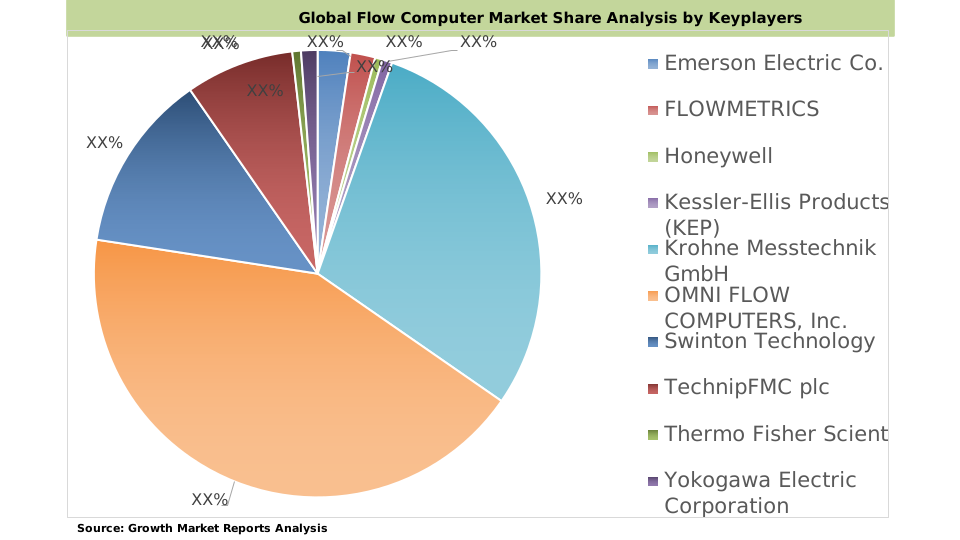

Flow Computer Market Key Players

Frequently Asked Questions

Major Manufactures include Emerson Electric Co., Honeywell, TechnipFMC plc, and Yokogawa Electric Corporation.

Liquid & gas measurement, well head measurement, custody & control, fuel monitoring, well optimization, and others are the key applications that are driving the flow computer market.

The base year considered for the global flow computer market report is 2019. The complete analysis period is 2017 to 2027, wherein, 2017 & 2018 are the historic years and the forecast is provided from 2020 to 2027.

The market is expected to have sluggish growth owing to the negative impact of COVID-19 pandemic on the flow computer market.

Factors such as competitive strength and market positioning are key areas considered while selecting top companies to be profiled.

The market is driven by factors such as automation in oil & gas industry and increasing regulations for workers and environment safety.

In addition to market size (in USD Million) and company market share (in % for base year 2019), other data such as macro-economic factors, and COVID-19 Impact on the flow computer market is available in the final report.

According to this Growth Market Reports report, the market from flow computer is likely to register a CAGR of 9.0% during forecast period, 2020-2027, with an anticipated valuation of USD 1,605.7 million by the end of the 2027.

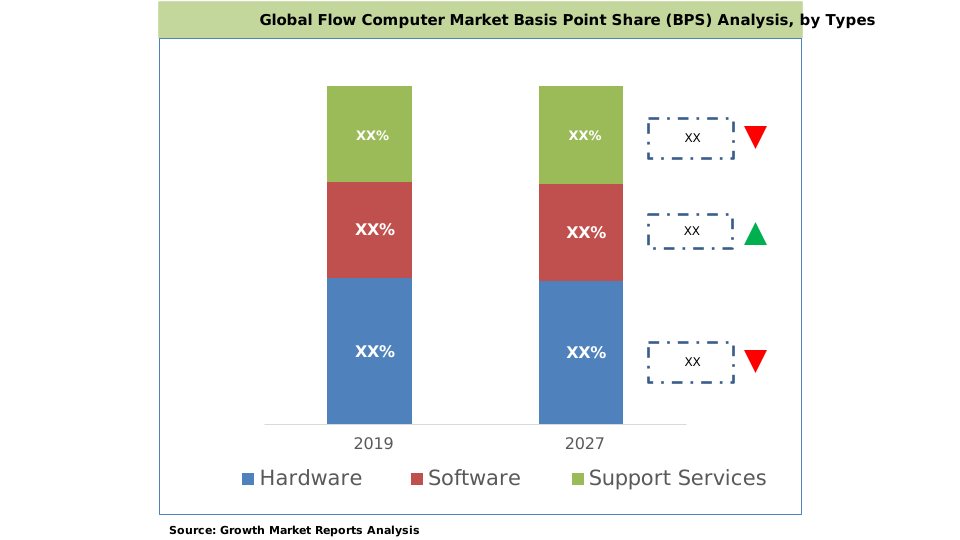
Yes, the report covers types of flow computer specific information such as hardware, software, and support services.

Additional company profiles can be provided on request.

Table Of Content

Chapter 1 Executive Summary
Chapter 2 Assumptions and Acronyms Used
Chapter 3 Research Methodology
Chapter 4 Flow Computer Market Overview
   4.1 Introduction
      4.1.1 Market Taxonomy
      4.1.2 Market Definition
      4.1.3 Macro-Economic Factors Impacting the Market Growth
   4.2 Flow Computer Market Dynamics
      4.2.1 Market Drivers
      4.2.2 Market Restraints
      4.2.3 Market Opportunity
   4.3 Flow Computer Market - Supply Chain Analysis
      4.3.1 List of Key Suppliers
      4.3.2 List of Key Distributors
      4.3.3 List of Key Consumers
   4.4 Key Forces Shaping the Flow Computer Market
      4.4.1 Bargaining Power of Suppliers
      4.4.2 Bargaining Power of Buyers
      4.4.3 Threat of Substitution
      4.4.4 Threat of New Entrants
      4.4.5 Competitive Rivalry
   4.5 Global Flow Computer Market Size & Forecast, 2023-2032
      4.5.1 Flow Computer Market Size and Y-o-Y Growth
      4.5.2 Flow Computer Market Absolute $ Opportunity

Chapter 5 Global Flow Computer Market Analysis and Forecast By Type
   5.1 Introduction
      5.1.1 Key Market Trends & Growth Opportunities By Type
      5.1.2 Basis Point Share (BPS) Analysis By Type
      5.1.3 Absolute $ Opportunity Assessment By Type
   5.2 Flow Computer Market Size Forecast By Type
      5.2.1 Single Stream Flow Computers
      5.2.2 Multi-Stream Flow Computers
   5.3 Market Attractiveness Analysis By Type

Chapter 6 Global Flow Computer Market Analysis and Forecast By Offering
   6.1 Introduction
      6.1.1 Key Market Trends & Growth Opportunities By Offering
      6.1.2 Basis Point Share (BPS) Analysis By Offering
      6.1.3 Absolute $ Opportunity Assessment By Offering
   6.2 Flow Computer Market Size Forecast By Offering
      6.2.1 Hardware
      6.2.2 Software
      6.2.3 Services
   6.3 Market Attractiveness Analysis By Offering

Chapter 7 Global Flow Computer Market Analysis and Forecast By Communication Protocol
   7.1 Introduction
      7.1.1 Key Market Trends & Growth Opportunities By Communication Protocol
      7.1.2 Basis Point Share (BPS) Analysis By Communication Protocol
      7.1.3 Absolute $ Opportunity Assessment By Communication Protocol
   7.2 Flow Computer Market Size Forecast By Communication Protocol
      7.2.1 Modbus
      7.2.2 Profibus
      7.2.3 HART
      7.2.4 Others
   7.3 Market Attractiveness Analysis By Communication Protocol

Chapter 8 Global Flow Computer Market Analysis and Forecast By Application
   8.1 Introduction
      8.1.1 Key Market Trends & Growth Opportunities By Application
      8.1.2 Basis Point Share (BPS) Analysis By Application
      8.1.3 Absolute $ Opportunity Assessment By Application
   8.2 Flow Computer Market Size Forecast By Application
      8.2.1 Oil & Gas
      8.2.2 Water & Wastewater
      8.2.3 Chemicals
      8.2.4 Power Generation
      8.2.5 Food & Beverage
      8.2.6 Pharmaceuticals
      8.2.7 Others
   8.3 Market Attractiveness Analysis By Application

Chapter 9 Global Flow Computer Market Analysis and Forecast By Mounting
   9.1 Introduction
      9.1.1 Key Market Trends & Growth Opportunities By Mounting
      9.1.2 Basis Point Share (BPS) Analysis By Mounting
      9.1.3 Absolute $ Opportunity Assessment By Mounting
   9.2 Flow Computer Market Size Forecast By Mounting
      9.2.1 Rack Mount
      9.2.2 Panel Mount
      9.2.3 Field Mount
   9.3 Market Attractiveness Analysis By Mounting

Chapter 10 Global Flow Computer Market Analysis and Forecast by Region
   10.1 Introduction
      10.1.1 Key Market Trends & Growth Opportunities By Region
      10.1.2 Basis Point Share (BPS) Analysis By Region
      10.1.3 Absolute $ Opportunity Assessment By Region
   10.2 Flow Computer Market Size Forecast By Region
      10.2.1 North America
      10.2.2 Europe
      10.2.3 Asia Pacific
      10.2.4 Latin America
      10.2.5 Middle East & Africa (MEA)
   10.3 Market Attractiveness Analysis By Region

Chapter 11 Coronavirus Disease (COVID-19) Impact 
   11.1 Introduction 
   11.2 Current & Future Impact Analysis 
   11.3 Economic Impact Analysis 
   11.4 Government Policies 
   11.5 Investment Scenario

Chapter 12 North America Flow Computer Analysis and Forecast
   12.1 Introduction
   12.2 North America Flow Computer Market Size Forecast by Country
      12.2.1 U.S.
      12.2.2 Canada
   12.3 Basis Point Share (BPS) Analysis by Country
   12.4 Absolute $ Opportunity Assessment by Country
   12.5 Market Attractiveness Analysis by Country
   12.6 North America Flow Computer Market Size Forecast By Type
      12.6.1 Single Stream Flow Computers
      12.6.2 Multi-Stream Flow Computers
   12.7 Basis Point Share (BPS) Analysis By Type 
   12.8 Absolute $ Opportunity Assessment By Type 
   12.9 Market Attractiveness Analysis By Type
   12.10 North America Flow Computer Market Size Forecast By Offering
      12.10.1 Hardware
      12.10.2 Software
      12.10.3 Services
   12.11 Basis Point Share (BPS) Analysis By Offering 
   12.12 Absolute $ Opportunity Assessment By Offering 
   12.13 Market Attractiveness Analysis By Offering
   12.14 North America Flow Computer Market Size Forecast By Communication Protocol
      12.14.1 Modbus
      12.14.2 Profibus
      12.14.3 HART
      12.14.4 Others
   12.15 Basis Point Share (BPS) Analysis By Communication Protocol 
   12.16 Absolute $ Opportunity Assessment By Communication Protocol 
   12.17 Market Attractiveness Analysis By Communication Protocol
   12.18 North America Flow Computer Market Size Forecast By Application
      12.18.1 Oil & Gas
      12.18.2 Water & Wastewater
      12.18.3 Chemicals
      12.18.4 Power Generation
      12.18.5 Food & Beverage
      12.18.6 Pharmaceuticals
      12.18.7 Others
   12.19 Basis Point Share (BPS) Analysis By Application 
   12.20 Absolute $ Opportunity Assessment By Application 
   12.21 Market Attractiveness Analysis By Application
   12.22 North America Flow Computer Market Size Forecast By Mounting
      12.22.1 Rack Mount
      12.22.2 Panel Mount
      12.22.3 Field Mount
   12.23 Basis Point Share (BPS) Analysis By Mounting 
   12.24 Absolute $ Opportunity Assessment By Mounting 
   12.25 Market Attractiveness Analysis By Mounting

Chapter 13 Europe Flow Computer Analysis and Forecast
   13.1 Introduction
   13.2 Europe Flow Computer Market Size Forecast by Country
      13.2.1 Germany
      13.2.2 France
      13.2.3 Italy
      13.2.4 U.K.
      13.2.5 Spain
      13.2.6 Russia
      13.2.7 Rest of Europe
   13.3 Basis Point Share (BPS) Analysis by Country
   13.4 Absolute $ Opportunity Assessment by Country
   13.5 Market Attractiveness Analysis by Country
   13.6 Europe Flow Computer Market Size Forecast By Type
      13.6.1 Single Stream Flow Computers
      13.6.2 Multi-Stream Flow Computers
   13.7 Basis Point Share (BPS) Analysis By Type 
   13.8 Absolute $ Opportunity Assessment By Type 
   13.9 Market Attractiveness Analysis By Type
   13.10 Europe Flow Computer Market Size Forecast By Offering
      13.10.1 Hardware
      13.10.2 Software
      13.10.3 Services
   13.11 Basis Point Share (BPS) Analysis By Offering 
   13.12 Absolute $ Opportunity Assessment By Offering 
   13.13 Market Attractiveness Analysis By Offering
   13.14 Europe Flow Computer Market Size Forecast By Communication Protocol
      13.14.1 Modbus
      13.14.2 Profibus
      13.14.3 HART
      13.14.4 Others
   13.15 Basis Point Share (BPS) Analysis By Communication Protocol 
   13.16 Absolute $ Opportunity Assessment By Communication Protocol 
   13.17 Market Attractiveness Analysis By Communication Protocol
   13.18 Europe Flow Computer Market Size Forecast By Application
      13.18.1 Oil & Gas
      13.18.2 Water & Wastewater
      13.18.3 Chemicals
      13.18.4 Power Generation
      13.18.5 Food & Beverage
      13.18.6 Pharmaceuticals
      13.18.7 Others
   13.19 Basis Point Share (BPS) Analysis By Application 
   13.20 Absolute $ Opportunity Assessment By Application 
   13.21 Market Attractiveness Analysis By Application
   13.22 Europe Flow Computer Market Size Forecast By Mounting
      13.22.1 Rack Mount
      13.22.2 Panel Mount
      13.22.3 Field Mount
   13.23 Basis Point Share (BPS) Analysis By Mounting 
   13.24 Absolute $ Opportunity Assessment By Mounting 
   13.25 Market Attractiveness Analysis By Mounting

Chapter 14 Asia Pacific Flow Computer Analysis and Forecast
   14.1 Introduction
   14.2 Asia Pacific Flow Computer Market Size Forecast by Country
      14.2.1 China
      14.2.2 Japan
      14.2.3 South Korea
      14.2.4 India
      14.2.5 Australia
      14.2.6 South East Asia (SEA)
      14.2.7 Rest of Asia Pacific (APAC)
   14.3 Basis Point Share (BPS) Analysis by Country
   14.4 Absolute $ Opportunity Assessment by Country
   14.5 Market Attractiveness Analysis by Country
   14.6 Asia Pacific Flow Computer Market Size Forecast By Type
      14.6.1 Single Stream Flow Computers
      14.6.2 Multi-Stream Flow Computers
   14.7 Basis Point Share (BPS) Analysis By Type 
   14.8 Absolute $ Opportunity Assessment By Type 
   14.9 Market Attractiveness Analysis By Type
   14.10 Asia Pacific Flow Computer Market Size Forecast By Offering
      14.10.1 Hardware
      14.10.2 Software
      14.10.3 Services
   14.11 Basis Point Share (BPS) Analysis By Offering 
   14.12 Absolute $ Opportunity Assessment By Offering 
   14.13 Market Attractiveness Analysis By Offering
   14.14 Asia Pacific Flow Computer Market Size Forecast By Communication Protocol
      14.14.1 Modbus
      14.14.2 Profibus
      14.14.3 HART
      14.14.4 Others
   14.15 Basis Point Share (BPS) Analysis By Communication Protocol 
   14.16 Absolute $ Opportunity Assessment By Communication Protocol 
   14.17 Market Attractiveness Analysis By Communication Protocol
   14.18 Asia Pacific Flow Computer Market Size Forecast By Application
      14.18.1 Oil & Gas
      14.18.2 Water & Wastewater
      14.18.3 Chemicals
      14.18.4 Power Generation
      14.18.5 Food & Beverage
      14.18.6 Pharmaceuticals
      14.18.7 Others
   14.19 Basis Point Share (BPS) Analysis By Application 
   14.20 Absolute $ Opportunity Assessment By Application 
   14.21 Market Attractiveness Analysis By Application
   14.22 Asia Pacific Flow Computer Market Size Forecast By Mounting
      14.22.1 Rack Mount
      14.22.2 Panel Mount
      14.22.3 Field Mount
   14.23 Basis Point Share (BPS) Analysis By Mounting 
   14.24 Absolute $ Opportunity Assessment By Mounting 
   14.25 Market Attractiveness Analysis By Mounting

Chapter 15 Latin America Flow Computer Analysis and Forecast
   15.1 Introduction
   15.2 Latin America Flow Computer Market Size Forecast by Country
      15.2.1 Brazil
      15.2.2 Mexico
      15.2.3 Rest of Latin America (LATAM)
   15.3 Basis Point Share (BPS) Analysis by Country
   15.4 Absolute $ Opportunity Assessment by Country
   15.5 Market Attractiveness Analysis by Country
   15.6 Latin America Flow Computer Market Size Forecast By Type
      15.6.1 Single Stream Flow Computers
      15.6.2 Multi-Stream Flow Computers
   15.7 Basis Point Share (BPS) Analysis By Type 
   15.8 Absolute $ Opportunity Assessment By Type 
   15.9 Market Attractiveness Analysis By Type
   15.10 Latin America Flow Computer Market Size Forecast By Offering
      15.10.1 Hardware
      15.10.2 Software
      15.10.3 Services
   15.11 Basis Point Share (BPS) Analysis By Offering 
   15.12 Absolute $ Opportunity Assessment By Offering 
   15.13 Market Attractiveness Analysis By Offering
   15.14 Latin America Flow Computer Market Size Forecast By Communication Protocol
      15.14.1 Modbus
      15.14.2 Profibus
      15.14.3 HART
      15.14.4 Others
   15.15 Basis Point Share (BPS) Analysis By Communication Protocol 
   15.16 Absolute $ Opportunity Assessment By Communication Protocol 
   15.17 Market Attractiveness Analysis By Communication Protocol
   15.18 Latin America Flow Computer Market Size Forecast By Application
      15.18.1 Oil & Gas
      15.18.2 Water & Wastewater
      15.18.3 Chemicals
      15.18.4 Power Generation
      15.18.5 Food & Beverage
      15.18.6 Pharmaceuticals
      15.18.7 Others
   15.19 Basis Point Share (BPS) Analysis By Application 
   15.20 Absolute $ Opportunity Assessment By Application 
   15.21 Market Attractiveness Analysis By Application
   15.22 Latin America Flow Computer Market Size Forecast By Mounting
      15.22.1 Rack Mount
      15.22.2 Panel Mount
      15.22.3 Field Mount
   15.23 Basis Point Share (BPS) Analysis By Mounting 
   15.24 Absolute $ Opportunity Assessment By Mounting 
   15.25 Market Attractiveness Analysis By Mounting

Chapter 16 Middle East & Africa (MEA) Flow Computer Analysis and Forecast
   16.1 Introduction
   16.2 Middle East & Africa (MEA) Flow Computer Market Size Forecast by Country
      16.2.1 Saudi Arabia
      16.2.2 South Africa
      16.2.3 UAE
      16.2.4 Rest of Middle East & Africa (MEA)
   16.3 Basis Point Share (BPS) Analysis by Country
   16.4 Absolute $ Opportunity Assessment by Country
   16.5 Market Attractiveness Analysis by Country
   16.6 Middle East & Africa (MEA) Flow Computer Market Size Forecast By Type
      16.6.1 Single Stream Flow Computers
      16.6.2 Multi-Stream Flow Computers
   16.7 Basis Point Share (BPS) Analysis By Type 
   16.8 Absolute $ Opportunity Assessment By Type 
   16.9 Market Attractiveness Analysis By Type
   16.10 Middle East & Africa (MEA) Flow Computer Market Size Forecast By Offering
      16.10.1 Hardware
      16.10.2 Software
      16.10.3 Services
   16.11 Basis Point Share (BPS) Analysis By Offering 
   16.12 Absolute $ Opportunity Assessment By Offering 
   16.13 Market Attractiveness Analysis By Offering
   16.14 Middle East & Africa (MEA) Flow Computer Market Size Forecast By Communication Protocol
      16.14.1 Modbus
      16.14.2 Profibus
      16.14.3 HART
      16.14.4 Others
   16.15 Basis Point Share (BPS) Analysis By Communication Protocol 
   16.16 Absolute $ Opportunity Assessment By Communication Protocol 
   16.17 Market Attractiveness Analysis By Communication Protocol
   16.18 Middle East & Africa (MEA) Flow Computer Market Size Forecast By Application
      16.18.1 Oil & Gas
      16.18.2 Water & Wastewater
      16.18.3 Chemicals
      16.18.4 Power Generation
      16.18.5 Food & Beverage
      16.18.6 Pharmaceuticals
      16.18.7 Others
   16.19 Basis Point Share (BPS) Analysis By Application 
   16.20 Absolute $ Opportunity Assessment By Application 
   16.21 Market Attractiveness Analysis By Application
   16.22 Middle East & Africa (MEA) Flow Computer Market Size Forecast By Mounting
      16.22.1 Rack Mount
      16.22.2 Panel Mount
      16.22.3 Field Mount
   16.23 Basis Point Share (BPS) Analysis By Mounting 
   16.24 Absolute $ Opportunity Assessment By Mounting 
   16.25 Market Attractiveness Analysis By Mounting

Chapter 17 Competition Landscape 
   17.1 Flow Computer Market: Competitive Dashboard
   17.2 Global Flow Computer Market: Market Share Analysis, 2023
   17.3 Company Profiles (Details – Overview, Financials, Developments, Strategy) 
      17.3.1 Emerson Electric Co.
Schneider Electric SE
ABB Ltd.
Siemens AG
Honeywell International Inc.
Yokogawa Electric Corporation
Rockwell Automation, Inc.
OMRON Corporation
KROHNE Messtechnik GmbH
SICK AG
Endress+Hauser Group
Thermo Fisher Scientific Inc.
Brooks Instrument (ITW)
Badger Meter, Inc.
AW-Lake Company
Dynamic Flow Computers, Inc.
Spirit IT (Honeywell)
Flowmetrics Inc.
Fluid Components International LLC (FCI)
Cameron (Schlumberger Limited)

Methodology

Our Clients

Honda Motor Co. Ltd.
Deloitte
The John Holland Group
Siemens Healthcare
General Electric
FedEx Logistics
General Mills
Microsoft