3D Automated Optical Inspection (AOI) Market Research Report 2033

3D Automated Optical Inspection (AOI) Market Research Report 2033

Segments - by Component (Hardware, Software, Services), by Technology (Inline AOI, Offline AOI), by Application (Printed Circuit Board (PCB) Inspection, Solder Paste Inspection, Component Inspection, Others), by Industry Vertical (Consumer Electronics, Automotive, Industrial, Aerospace & Defense, Medical Devices, Others)

https://growthmarketreports.com/Raksha
Author : Raksha Sharma
https://growthmarketreports.com/Vaibhav
Fact-checked by : V. Chandola
https://growthmarketreports.com/Shruti
Editor : Shruti Bhat

Upcoming | Report ID :ICT-SE-122 | 4.7 Rating | 68 Reviews | 284 Pages | Format : Docx PDF

Report Description


3D Automated Optical Inspection (AOI) Market Outlook

As per our latest research, the global 3D Automated Optical Inspection (AOI) market size stood at USD 1.22 billion in 2024, reflecting robust demand across electronics manufacturing industries. The market is projected to grow at a CAGR of 17.1% between 2025 and 2033, reaching a forecasted value of USD 4.12 billion by 2033. This impressive growth trajectory is primarily driven by the increasing complexity of printed circuit boards (PCBs), the proliferation of advanced consumer electronics, and the rising adoption of automation in manufacturing processes to ensure high-quality standards and reduce human error.

The primary growth factor for the 3D Automated Optical Inspection (AOI) market is the surging demand for miniaturized and densely packed electronic components. As technology advances, PCBs are becoming increasingly complex, with finer traces and smaller components, making manual inspection nearly impossible and unreliable. 3D AOI systems provide precise, high-speed inspection capabilities, significantly improving defect detection rates and reducing the risk of faulty products reaching end-users. The integration of advanced imaging technologies and artificial intelligence into AOI systems further enhances their ability to detect a wider range of defects, including those that are not easily identifiable by traditional 2D inspection methods. This technological evolution is compelling manufacturers across various industries to adopt 3D AOI solutions as a core part of their quality assurance processes.

Another significant driver for market expansion is the escalating focus on automation and Industry 4.0 initiatives worldwide. Manufacturers are under constant pressure to optimize production efficiency, reduce operational costs, and maintain stringent quality standards. 3D AOI systems address these requirements by providing real-time feedback and analytics, enabling manufacturers to quickly identify and rectify process deviations. The integration of AOI systems with manufacturing execution systems (MES) and enterprise resource planning (ERP) platforms further streamlines the production workflow, contributing to higher yields and reduced rework rates. This seamless integration of AOI into the broader automation ecosystem is expected to accelerate market adoption, particularly in high-volume production environments such as consumer electronics and automotive sectors.

The growing emphasis on regulatory compliance and product safety, especially in critical sectors like automotive, aerospace, and medical devices, is also fueling the adoption of 3D AOI systems. Stringent international standards mandate comprehensive inspection and documentation of electronic assemblies to ensure reliability and safety. 3D AOI solutions offer detailed inspection reports and traceability features, which are essential for meeting regulatory requirements and facilitating root cause analysis in the event of product failures. This regulatory landscape is compelling manufacturers to invest in advanced AOI technologies to mitigate risks, avoid costly recalls, and enhance their market reputation.

Automated Optical Inspection Equipment is becoming increasingly vital in the electronics manufacturing industry. As the demand for high precision and efficiency grows, manufacturers are turning to automated solutions to enhance their inspection processes. These systems offer unparalleled accuracy and speed, which are crucial in detecting defects in complex electronic assemblies. By automating the inspection process, companies can significantly reduce human error and improve the overall quality of their products. This shift towards automated optical inspection equipment is not just about keeping up with technological advancements but also about meeting the stringent quality standards demanded by today's market.

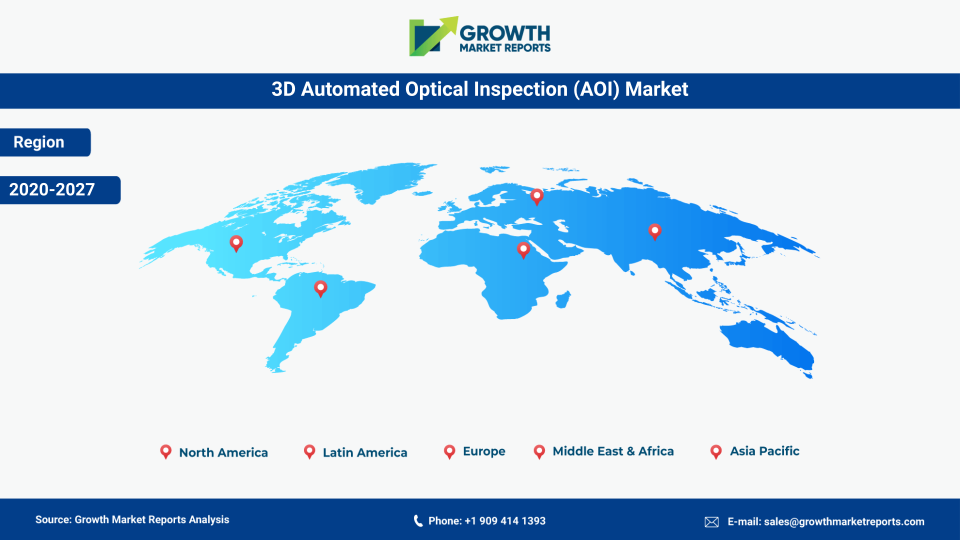
From a regional perspective, Asia Pacific continues to dominate the 3D Automated Optical Inspection (AOI) market, accounting for the largest market share in 2024. The regionÂ’s leadership is attributed to the presence of major electronics manufacturing hubs in China, Japan, South Korea, and Taiwan. These countries are at the forefront of adopting advanced manufacturing technologies, driven by strong demand from consumer electronics, automotive, and industrial sectors. North America and Europe are also witnessing significant growth, fueled by technological advancements and increasing investments in automation. Meanwhile, emerging economies in Latin America and the Middle East & Africa are gradually embracing AOI solutions, supported by the expansion of local electronics manufacturing and favorable government policies promoting industrial automation.

Global 3D Automated Optical Inspection (AOI) Industry Outlook

Component Analysis

The 3D Automated Optical Inspection (AOI) market by component is segmented into hardware, software, and services. Hardware constitutes the largest share of the market, driven by continuous advancements in imaging sensors, lighting systems, and processing units. Modern AOI hardware is characterized by high-resolution cameras, multi-angle lighting, and rapid data acquisition capabilities, enabling precise detection of defects such as solder bridges, component misalignment, and insufficient solder. The evolution of hardware components has significantly improved inspection speed and accuracy, making them indispensable for high-volume PCB production lines. Manufacturers are increasingly investing in modular and scalable hardware solutions that can be easily integrated into existing production environments, further boosting market growth in this segment.

The integration of Automated Optical Inspection System into manufacturing lines is revolutionizing quality assurance processes. These systems provide real-time data and analytics, allowing manufacturers to quickly identify and address defects. This capability is especially important in high-volume production environments where even minor defects can lead to significant losses. By implementing an automated optical inspection system, companies can enhance their production efficiency and ensure that only products meeting the highest quality standards reach the market. This technology is not only a tool for defect detection but also a strategic asset for maintaining competitive advantage in the fast-paced electronics industry.

Software plays a pivotal role in enhancing the functionality and adaptability of 3D AOI systems. Advanced software platforms leverage machine learning and artificial intelligence algorithms to analyze complex image data, recognize patterns, and differentiate between acceptable variations and actual defects. The software segment is witnessing rapid growth as manufacturers seek customizable, user-friendly interfaces that facilitate quick programming, real-time analytics, and remote monitoring capabilities. Additionally, software updates and upgrades are essential for keeping AOI systems aligned with evolving inspection requirements and new product designs. The rising demand for software-driven AOI solutions is also propelled by the trend toward smart manufacturing and digital transformation across industries.

The services segment encompasses installation, training, maintenance, and technical support for AOI systems. As the complexity and sophistication of AOI solutions increase, the need for specialized services becomes more pronounced. Manufacturers rely on expert service providers for system integration, calibration, and ongoing maintenance to ensure optimal performance and minimize downtime. Training services are especially critical, as they equip operators with the necessary skills to effectively utilize AOI systems and interpret inspection results. The growing adoption of AOI in diverse industry verticals is creating lucrative opportunities for service providers, who are expanding their offerings to include remote diagnostics, predictive maintenance, and customized training programs.

The adoption of AOI System is a testament to the industry's commitment to quality and innovation. These systems are equipped with advanced imaging technologies and artificial intelligence, enabling them to perform comprehensive inspections with remarkable accuracy. The AOI system's ability to adapt to new product designs and evolving inspection requirements makes it an indispensable tool for manufacturers aiming to stay ahead in the competitive market. By leveraging the capabilities of AOI systems, companies can not only improve their product quality but also streamline their manufacturing processes, ultimately leading to increased customer satisfaction and business growth.

Overall, the component landscape of the 3D Automated Optical Inspection (AOI) market is rapidly evolving, with each segment playing a crucial role in delivering comprehensive inspection solutions. The synergy between advanced hardware, intelligent software, and robust services is driving the adoption of AOI systems across a wide range of applications, from consumer electronics to automotive and medical devices. As manufacturers continue to prioritize quality, efficiency, and compliance, the demand for integrated and scalable AOI solutions is expected to surge in the coming years.

Report Scope

Attributes Details
Report Title 3D Automated Optical Inspection (AOI) Market Research Report 2033
By Component Hardware, Software, Services
By Technology Inline AOI, Offline AOI
By Application Printed Circuit Board (PCB) Inspection, Solder Paste Inspection, Component Inspection, Others
By Industry Vertical Consumer Electronics, Automotive, Industrial, Aerospace & Defense, Medical Devices, Others
Regions Covered North America, Europe, APAC, Latin America, MEA
Base Year 2024
Historic Data 2018-2023
Forecast Period 2025-2033
Number of Pages 284
Number of Tables & Figures 297
Customization Available Yes, the report can be customized as per your need.

Technology Analysis

The 3D Automated Optical Inspection (AOI) market by technology is broadly categorized into inline AOI and offline AOI systems. Inline AOI systems are designed to be integrated directly into the production line, enabling real-time inspection and immediate feedback during the manufacturing process. This capability is particularly valuable for high-volume production environments, where early detection of defects can prevent costly rework and minimize production delays. Inline AOI systems are equipped with high-speed cameras, advanced lighting, and powerful processing units, allowing them to inspect multiple boards simultaneously and keep pace with rapid production cycles. The adoption of inline AOI technology is being driven by the increasing need for automation, process control, and zero-defect manufacturing in industries such as consumer electronics, automotive, and industrial equipment.

Offline AOI systems, on the other hand, are typically used for batch inspection or in environments where production volumes are lower, and flexibility is paramount. These systems are not directly integrated into the production line but are instead used to inspect samples or specific lots of PCBs. Offline AOI offers the advantage of detailed, high-resolution inspection and is often employed for prototype analysis, process validation, and root cause investigations. Manufacturers in sectors such as aerospace, defense, and medical devices, where quality and reliability are critical, often prefer offline AOI systems for their ability to perform thorough, customizable inspections without disrupting ongoing production. The flexibility and adaptability of offline AOI make it an attractive option for specialized applications and low-to-medium volume manufacturing.

The choice between inline and offline AOI technologies depends on several factors, including production volume, inspection requirements, and budget constraints. Inline AOI is generally favored for large-scale, high-speed production environments, where continuous monitoring and immediate corrective action are essential. In contrast, offline AOI is better suited for applications requiring in-depth analysis, process optimization, and quality assurance for specialized or low-volume products. Both technologies are evolving rapidly, with manufacturers investing in research and development to enhance inspection speed, accuracy, and ease of use.

Recent advancements in 3D imaging, artificial intelligence, and machine learning are blurring the lines between inline and offline AOI systems, enabling hybrid solutions that combine the best features of both technologies. These hybrid systems offer the scalability and speed of inline AOI with the flexibility and depth of offline inspection, providing manufacturers with comprehensive quality control solutions. As the demand for higher quality standards and greater manufacturing efficiency continues to rise, the technology landscape of the 3D Automated Optical Inspection (AOI) market is expected to witness significant innovation and growth.

Application Analysis

The application landscape of the 3D Automated Optical Inspection (AOI) market is diverse, encompassing printed circuit board (PCB) inspection, solder paste inspection, component inspection, and other specialized applications. PCB inspection remains the largest and most prominent application segment, driven by the critical role of PCBs in virtually all electronic devices. The increasing complexity of PCB designs, with finer pitch components and higher density interconnections, necessitates advanced inspection solutions capable of detecting a wide range of defects, including misalignments, shorts, opens, and insufficient solder. 3D AOI systems offer the precision and speed required to meet these challenges, making them indispensable for quality assurance in PCB manufacturing.

Solder paste inspection is another key application area, particularly in surface mount technology (SMT) assembly processes. Accurate deposition of solder paste is essential for reliable component placement and electrical connectivity. 3D AOI systems are used to inspect solder paste deposits for volume, height, area, and shape, ensuring that each pad receives the correct amount of solder. This capability is crucial for preventing defects such as tombstoning, bridging, and insufficient solder, which can compromise product reliability. The adoption of 3D AOI for solder paste inspection is being driven by the trend toward miniaturization and the use of advanced packaging technologies in consumer electronics and automotive applications.

Component inspection involves the verification of component presence, orientation, polarity, and placement accuracy on PCBs. As electronic assemblies become more complex, the risk of component-related defects increases, necessitating robust inspection solutions. 3D AOI systems leverage advanced imaging and pattern recognition algorithms to accurately identify and classify components, detect missing or misplaced parts, and verify correct orientation. This level of inspection is particularly important in safety-critical industries such as automotive, aerospace, and medical devices, where component failures can have severe consequences. The growing demand for high-reliability electronic assemblies is fueling the adoption of 3D AOI for component inspection across various industry verticals.

Beyond PCB, solder paste, and component inspection, 3D AOI systems are also being utilized for specialized applications such as conformal coating inspection, connector inspection, and wire bond inspection. These applications require customized inspection routines and advanced imaging capabilities to detect subtle defects that may not be visible to the naked eye. The versatility of 3D AOI solutions makes them suitable for a wide range of inspection tasks, enabling manufacturers to achieve comprehensive quality control and compliance with industry standards.

Industry Vertical Analysis

The 3D Automated Optical Inspection (AOI) market serves a broad spectrum of industry verticals, with consumer electronics leading the pack in terms of adoption and market share. The relentless pace of innovation in smartphones, tablets, wearables, and smart home devices is driving the need for high-speed, high-precision inspection solutions. Manufacturers in this sector rely on 3D AOI systems to ensure the integrity and reliability of complex electronic assemblies, minimize defects, and maintain competitive advantage. The increasing trend toward miniaturization and the use of advanced packaging technologies further amplifies the demand for sophisticated AOI solutions in consumer electronics manufacturing.

The automotive industry is another major consumer of 3D AOI technology, owing to the growing integration of electronics in vehicles. Modern automobiles are equipped with a myriad of electronic systems, including advanced driver-assistance systems (ADAS), infotainment systems, and powertrain controls, all of which require flawless electronic assemblies. 3D AOI systems play a critical role in ensuring the quality and reliability of automotive electronics, helping manufacturers meet stringent safety and performance standards. The shift toward electric and autonomous vehicles is expected to further accelerate the adoption of AOI solutions in the automotive sector.

Industrial applications, including factory automation, robotics, and industrial control systems, represent a significant and growing segment of the 3D Automated Optical Inspection (AOI) market. Manufacturers in this sector are increasingly adopting AOI solutions to improve product quality, reduce downtime, and enhance operational efficiency. The integration of AOI with industrial IoT platforms and smart manufacturing systems is enabling real-time monitoring and predictive maintenance, driving productivity gains across industrial operations.

The aerospace and defense sector is characterized by its stringent quality and reliability requirements, making 3D AOI an essential tool for inspection and quality assurance. Electronic assemblies used in aerospace and defense applications must meet rigorous standards for performance, durability, and safety. 3D AOI systems provide the detailed inspection and documentation capabilities needed to comply with these requirements, reducing the risk of defects and ensuring mission-critical reliability. Similarly, the medical devices industry relies on AOI solutions to ensure the quality and safety of electronic components used in life-saving equipment, diagnostic devices, and implantable systems. Regulatory mandates and the need for traceability are key drivers of AOI adoption in this sector.

Other industry verticals, including telecommunications, renewable energy, and consumer appliances, are also contributing to the growth of the 3D Automated Optical Inspection (AOI) market. The expanding application scope of AOI solutions across diverse industries underscores the versatility and indispensability of this technology in modern manufacturing.

Opportunities & Threats

The 3D Automated Optical Inspection (AOI) market presents significant opportunities for growth and innovation, particularly in the context of Industry 4.0 and smart manufacturing. The ongoing digital transformation of manufacturing processes is creating a favorable environment for the integration of AOI systems with other automation technologies, such as robotics, machine vision, and data analytics. This convergence is enabling manufacturers to achieve unprecedented levels of process control, quality assurance, and operational efficiency. The emergence of artificial intelligence and machine learning is further enhancing the capabilities of AOI systems, enabling them to detect complex defects, adapt to new product designs, and provide actionable insights for process optimization. As manufacturers continue to prioritize quality and efficiency, the demand for advanced, intelligent AOI solutions is expected to rise, creating lucrative opportunities for market players.

Another promising opportunity lies in the expansion of AOI applications beyond traditional electronics manufacturing. The increasing adoption of AOI in emerging sectors such as renewable energy, electric vehicles, and smart infrastructure is opening new avenues for market growth. For instance, the inspection of solar panels, battery modules, and power electronics requires advanced AOI solutions capable of handling unique inspection challenges. Moreover, the growing focus on sustainability and environmental compliance is driving the need for defect-free, high-quality products across industries. AOI systems are well-positioned to address these requirements, offering manufacturers a competitive edge in an increasingly demanding market landscape.

Despite the numerous opportunities, the 3D Automated Optical Inspection (AOI) market also faces certain restraining factors. One of the primary challenges is the high initial investment required for AOI system implementation, particularly for small and medium-sized enterprises (SMEs). The cost of advanced hardware, software, and integration services can be prohibitive, limiting market penetration in price-sensitive segments. Additionally, the complexity of AOI systems necessitates specialized training and technical expertise, which may pose a barrier for manufacturers with limited resources. Addressing these challenges through cost-effective solutions, flexible financing options, and comprehensive training programs will be essential for sustaining market growth.

Regional Outlook

The Asia Pacific region continues to dominate the 3D Automated Optical Inspection (AOI) market, accounting for over 48% of the global market size in 2024, with a market value of approximately USD 586 million. The regionÂ’s leadership is underpinned by the presence of major electronics manufacturing hubs in China, Japan, South Korea, and Taiwan. These countries are characterized by high-volume production, rapid technological adoption, and a strong focus on quality and efficiency. The proliferation of consumer electronics, automotive electronics, and industrial automation in Asia Pacific is driving robust demand for 3D AOI solutions. Furthermore, government initiatives promoting smart manufacturing and industrial modernization are expected to sustain the regionÂ’s growth momentum, with a projected CAGR of 18.3% through 2033.

North America holds the second-largest share of the 3D Automated Optical Inspection (AOI) market, with a market size of approximately USD 268 million in 2024. The regionÂ’s growth is fueled by the presence of leading technology companies, strong investments in R&D, and a high degree of automation in manufacturing processes. The United States, in particular, is a major contributor to market growth, driven by demand from the automotive, aerospace, and medical devices sectors. The focus on innovation, regulatory compliance, and quality assurance is propelling the adoption of advanced AOI solutions in North America. As manufacturers continue to embrace digital transformation, the region is expected to witness steady growth, supported by ongoing advancements in AI and machine vision technologies.

Europe represents a significant and mature market for 3D Automated Optical Inspection (AOI), with a market size of around USD 207 million in 2024. The region is characterized by stringent quality standards, a strong emphasis on industrial automation, and a well-established electronics manufacturing base. Germany, France, and the United Kingdom are leading adopters of AOI technology, driven by demand from automotive, industrial, and aerospace sectors. The European market is also benefiting from initiatives aimed at promoting smart factories and sustainable manufacturing practices. While the market in Latin America and the Middle East & Africa is still in the nascent stage, these regions are gradually embracing AOI solutions, supported by the expansion of local manufacturing capabilities and favorable government policies.

3D Automated Optical Inspection (AOI) Market Statistics

Competitor Outlook

The 3D Automated Optical Inspection (AOI) market is characterized by intense competition, with a diverse mix of global and regional players vying for market share. Leading companies are focusing on technological innovation, strategic partnerships, and geographic expansion to strengthen their market position. The competitive landscape is marked by continuous investments in research and development, aimed at enhancing the speed, accuracy, and versatility of AOI systems. Companies are also prioritizing customer-centric strategies, offering tailored solutions, comprehensive support services, and flexible pricing models to address the unique needs of different industry verticals.

Technological differentiation is a key competitive factor in the AOI market. Market leaders are leveraging advancements in 3D imaging, artificial intelligence, and machine learning to develop next-generation AOI systems capable of handling complex inspection tasks. The integration of AOI with other automation technologies, such as robotics and MES platforms, is enabling manufacturers to achieve end-to-end process control and quality assurance. Companies are also investing in cloud-based AOI solutions, remote diagnostics, and predictive maintenance capabilities to enhance system uptime and reduce total cost of ownership for customers.

Strategic collaborations and mergers and acquisitions are shaping the competitive dynamics of the AOI market. Leading players are partnering with electronics manufacturers, automation solution providers, and research institutions to accelerate innovation and expand their global footprint. These collaborations are facilitating the development of customized AOI solutions for emerging applications, such as electric vehicles, renewable energy, and smart infrastructure. In addition, companies are expanding their presence in high-growth regions, such as Asia Pacific and Latin America, through local partnerships and distribution networks.

Some of the major companies operating in the 3D Automated Optical Inspection (AOI) market include Koh Young Technology, Omron Corporation, Test Research, Inc. (TRI), CyberOptics Corporation (acquired by Nordson Corporation), Saki Corporation, Mirtec Co., Ltd., Viscom AG, Camtek Ltd., and Nordson Corporation. Koh Young Technology is recognized as a pioneer in 3D AOI solutions, with a strong focus on innovation and global reach. Omron Corporation offers a comprehensive portfolio of AOI systems, leveraging its expertise in automation and sensing technologies. Test Research, Inc. (TRI) is known for its high-performance AOI systems and customer-centric approach, while Saki Corporation and Mirtec Co., Ltd. are renowned for their advanced imaging technologies and robust inspection capabilities. CyberOptics Corporation, now part of Nordson Corporation, is a leader in high-precision 3D sensing and inspection solutions, serving a wide range of industries.

Viscom AG and Camtek Ltd. are prominent players in the European and Israeli markets, respectively, offering cutting-edge AOI solutions for electronics manufacturing and semiconductor inspection. These companies are continuously expanding their product portfolios and investing in R&D to address evolving customer needs. Nordson Corporation, a global leader in precision technology, has strengthened its position in the AOI market through strategic acquisitions and a focus on integrated inspection solutions. Collectively, these companies are driving innovation, setting industry benchmarks, and shaping the future of the 3D Automated Optical Inspection (AOI) market.

Key Players

  • Koh Young Technology
  • Omron Corporation
  • CyberOptics Corporation
  • Mirtec Co., Ltd.
  • Test Research, Inc. (TRI)
  • Viscom AG
  • Saki Corporation
  • Camtek Ltd.
  • Nordson Corporation
  • ViTrox Corporation Berhad
  • Machine Vision Products, Inc. (MVP)
  • GÖPEL electronic GmbH
  • Pemtron Corporation
  • MEK (Marantz Electronics)
  • JUTZE Intelligence Technology Co., Ltd.
  • PARMI Co., Ltd.
  • Unicomp Technology
  • Mek (Marantz Electronics Ltd.)
  • Jet Technology Co., Ltd.
  • Chroma ATE Inc.
3D Automated Optical Inspection (AOI) Market Overview

Segments

The 3D Automated Optical Inspection (AOI) market has been segmented on the basis of

Component

  • Hardware
  • Software
  • Services

Technology

  • Inline AOI
  • Offline AOI

Application

  • Printed Circuit Board (PCB) Inspection
  • Solder Paste Inspection
  • Component Inspection
  • Others

Industry Vertical

  • Consumer Electronics
  • Automotive
  • Industrial
  • Aerospace & Defense
  • Medical Devices
  • Others

Competitive Landscape

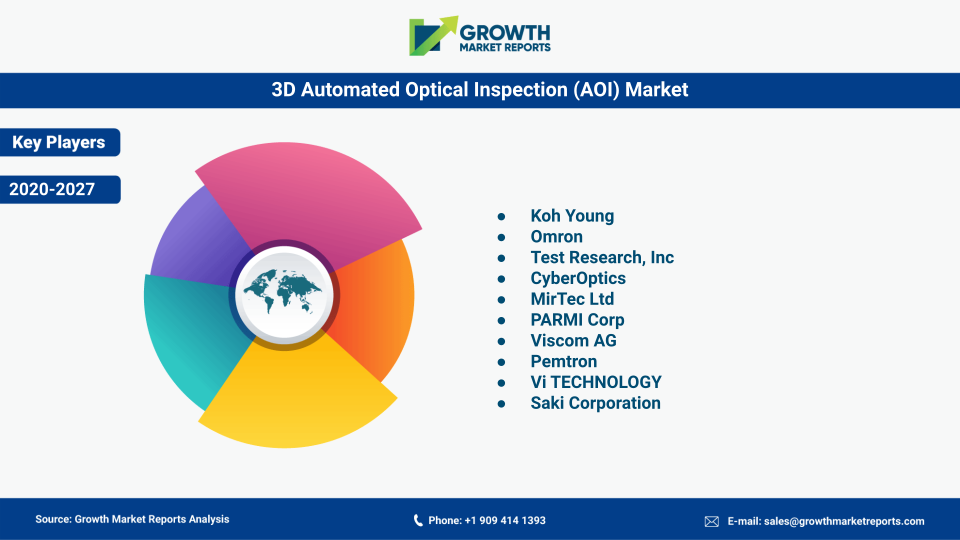
  • Key players in the market include Omron, Test Research, Inc (TRI), Koh Young, CyberOptics Corporation, MirTec Ltd, and Viscom AG. These companies are considered as key manufacturers of 3D automated optical inspection (AOI) based on their revenue, regional presence, research & development (R&D) activities, and supply chain management system.
  • These players are adopting key strategies such as acquisition, merger, and geographical expansion to strengthen their market position.
  • In July 2019, Saki Corporation and Cogiscan Inc. completed the partnership to speed up the development of Smart Factory Solutions. Cogiscan Inc is a provider of the leading track, trace, and control (TTC) solutions for the electronics manufacturing industry.
  • In April 2019, Omron and Voelker Controls Company (VCC) announced a new business partnership. According to this partnership, VCC will be an authorized distributor of Omron automation products for the Southern Ohio market in the U.S. Voelker Controls has its expertise in pneumatics, motion control, machine vision, robotics, and sensors.
  • In November 2017, Mycronic completed the acquisition of Vi TECHNOLOGY. Mycronic is a global supplier of production equipment with high precision, high flexibility, and built on advanced software.
Global 3D Automated Optical Inspection (AOI) Market Key Players

Video Summary for 3D Automated Optical Inspection (AOI) Market

Frequently Asked Questions

Major Manufactures include Koh Young, Omron, Test Research, Inc (TRI), CyberOptics Corporation, MirTec Ltd, and Viscom AG.

The companies operating in the industries such as automotive, consumer electronics, and aerospace & defense are the key end-users driving the market growth.

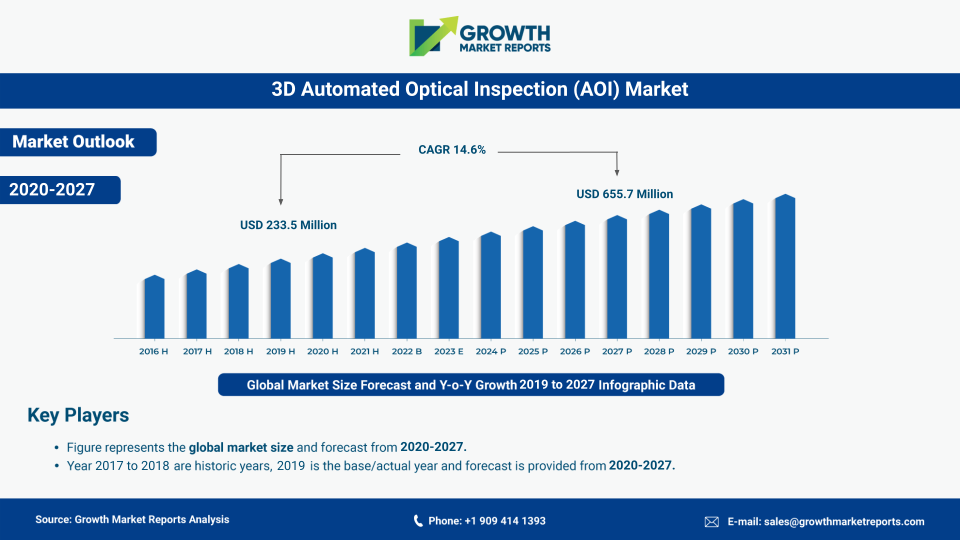
The base year considered for the global 3D automated optical inspection (AOI) market report is 2019. The complete analysis period is 2017 to 2027, wherein, 2017 & 2018 are the historic years and the forecast is provided from 2020 to 2027.

The market is expected to witness slow growth between 2019 and 2020 owing to the slight negative impact of COVID-19 pandemic on the 3D automated optical inspection (AOI) market.

Factors such as competitive strength and market positioning are key areas considered while selecting top companies to be profiled.

The factors such as growing demand for consumer electronics, increasing need for high-quality electronic components, and rising demand for 3D AOI systems in automotive electronics are expected to drive the growth of 3D automated optical inspection (AOI) market.

The report provides company market share analysis and volume data.

According to the Growth Market Reports report, the 3D automated optical inspection (AOI) market is likely to register a CAGR of 14.6% during the forecast period 2020-2027, with an anticipated valuation of USD 655.7 million by the end of the 2027.

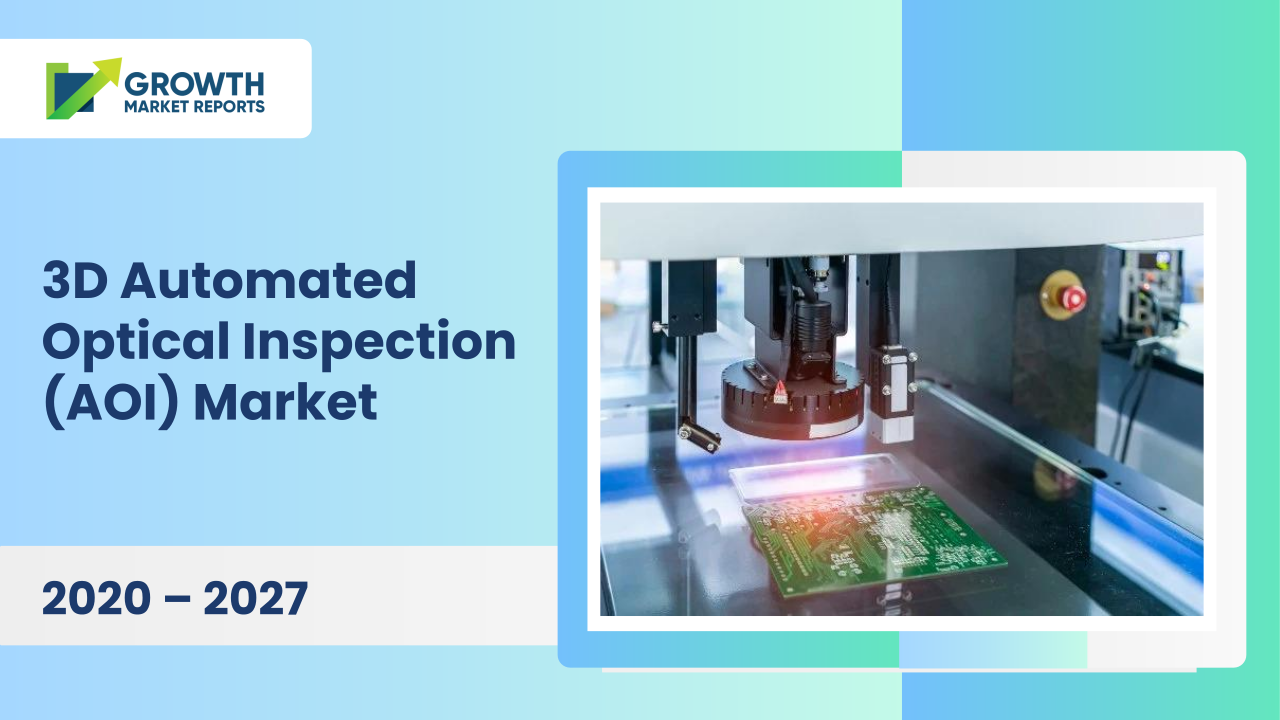
Yes, the report covers product specific information such as offline 3D AOI and inline 3D AOI.

Additional company profiles can be provided on request.

Table Of Content

Chapter 1 Executive Summary
Chapter 2 Assumptions and Acronyms Used
Chapter 3 Research Methodology
Chapter 4 3D Automated Optical Inspection (AOI) Market Overview
   4.1 Introduction
      4.1.1 Market Taxonomy
      4.1.2 Market Definition
      4.1.3 Macro-Economic Factors Impacting the Market Growth
   4.2 3D Automated Optical Inspection (AOI) Market Dynamics
      4.2.1 Market Drivers
      4.2.2 Market Restraints
      4.2.3 Market Opportunity
   4.3 3D Automated Optical Inspection (AOI) Market - Supply Chain Analysis
      4.3.1 List of Key Suppliers
      4.3.2 List of Key Distributors
      4.3.3 List of Key Consumers
   4.4 Key Forces Shaping the 3D Automated Optical Inspection (AOI) Market
      4.4.1 Bargaining Power of Suppliers
      4.4.2 Bargaining Power of Buyers
      4.4.3 Threat of Substitution
      4.4.4 Threat of New Entrants
      4.4.5 Competitive Rivalry
   4.5 Global 3D Automated Optical Inspection (AOI) Market Size & Forecast, 2023-2032
      4.5.1 3D Automated Optical Inspection (AOI) Market Size and Y-o-Y Growth
      4.5.2 3D Automated Optical Inspection (AOI) Market Absolute $ Opportunity

Chapter 5 Global 3D Automated Optical Inspection (AOI) Market Analysis and Forecast By Component
   5.1 Introduction
      5.1.1 Key Market Trends & Growth Opportunities By Component
      5.1.2 Basis Point Share (BPS) Analysis By Component
      5.1.3 Absolute $ Opportunity Assessment By Component
   5.2 3D Automated Optical Inspection (AOI) Market Size Forecast By Component
      5.2.1 Hardware
      5.2.2 Software
      5.2.3 Services
   5.3 Market Attractiveness Analysis By Component

Chapter 6 Global 3D Automated Optical Inspection (AOI) Market Analysis and Forecast By Technology
   6.1 Introduction
      6.1.1 Key Market Trends & Growth Opportunities By Technology
      6.1.2 Basis Point Share (BPS) Analysis By Technology
      6.1.3 Absolute $ Opportunity Assessment By Technology
   6.2 3D Automated Optical Inspection (AOI) Market Size Forecast By Technology
      6.2.1 Inline AOI
      6.2.2 Offline AOI
   6.3 Market Attractiveness Analysis By Technology

Chapter 7 Global 3D Automated Optical Inspection (AOI) Market Analysis and Forecast By Application
   7.1 Introduction
      7.1.1 Key Market Trends & Growth Opportunities By Application
      7.1.2 Basis Point Share (BPS) Analysis By Application
      7.1.3 Absolute $ Opportunity Assessment By Application
   7.2 3D Automated Optical Inspection (AOI) Market Size Forecast By Application
      7.2.1 Printed Circuit Board (PCB) Inspection
      7.2.2 Solder Paste Inspection
      7.2.3 Component Inspection
      7.2.4 Others
   7.3 Market Attractiveness Analysis By Application

Chapter 8 Global 3D Automated Optical Inspection (AOI) Market Analysis and Forecast By Industry Vertical
   8.1 Introduction
      8.1.1 Key Market Trends & Growth Opportunities By Industry Vertical
      8.1.2 Basis Point Share (BPS) Analysis By Industry Vertical
      8.1.3 Absolute $ Opportunity Assessment By Industry Vertical
   8.2 3D Automated Optical Inspection (AOI) Market Size Forecast By Industry Vertical
      8.2.1 Consumer Electronics
      8.2.2 Automotive
      8.2.3 Industrial
      8.2.4 Aerospace & Defense
      8.2.5 Medical Devices
      8.2.6 Others
   8.3 Market Attractiveness Analysis By Industry Vertical

Chapter 9 Global 3D Automated Optical Inspection (AOI) Market Analysis and Forecast by Region
   9.1 Introduction
      9.1.1 Key Market Trends & Growth Opportunities By Region
      9.1.2 Basis Point Share (BPS) Analysis By Region
      9.1.3 Absolute $ Opportunity Assessment By Region
   9.2 3D Automated Optical Inspection (AOI) Market Size Forecast By Region
      9.2.1 North America
      9.2.2 Europe
      9.2.3 Asia Pacific
      9.2.4 Latin America
      9.2.5 Middle East & Africa (MEA)
   9.3 Market Attractiveness Analysis By Region

Chapter 10 Coronavirus Disease (COVID-19) Impact 
   10.1 Introduction 
   10.2 Current & Future Impact Analysis 
   10.3 Economic Impact Analysis 
   10.4 Government Policies 
   10.5 Investment Scenario

Chapter 11 North America 3D Automated Optical Inspection (AOI) Analysis and Forecast
   11.1 Introduction
   11.2 North America 3D Automated Optical Inspection (AOI) Market Size Forecast by Country
      11.2.1 U.S.
      11.2.2 Canada
   11.3 Basis Point Share (BPS) Analysis by Country
   11.4 Absolute $ Opportunity Assessment by Country
   11.5 Market Attractiveness Analysis by Country
   11.6 North America 3D Automated Optical Inspection (AOI) Market Size Forecast By Component
      11.6.1 Hardware
      11.6.2 Software
      11.6.3 Services
   11.7 Basis Point Share (BPS) Analysis By Component 
   11.8 Absolute $ Opportunity Assessment By Component 
   11.9 Market Attractiveness Analysis By Component
   11.10 North America 3D Automated Optical Inspection (AOI) Market Size Forecast By Technology
      11.10.1 Inline AOI
      11.10.2 Offline AOI
   11.11 Basis Point Share (BPS) Analysis By Technology 
   11.12 Absolute $ Opportunity Assessment By Technology 
   11.13 Market Attractiveness Analysis By Technology
   11.14 North America 3D Automated Optical Inspection (AOI) Market Size Forecast By Application
      11.14.1 Printed Circuit Board (PCB) Inspection
      11.14.2 Solder Paste Inspection
      11.14.3 Component Inspection
      11.14.4 Others
   11.15 Basis Point Share (BPS) Analysis By Application 
   11.16 Absolute $ Opportunity Assessment By Application 
   11.17 Market Attractiveness Analysis By Application
   11.18 North America 3D Automated Optical Inspection (AOI) Market Size Forecast By Industry Vertical
      11.18.1 Consumer Electronics
      11.18.2 Automotive
      11.18.3 Industrial
      11.18.4 Aerospace & Defense
      11.18.5 Medical Devices
      11.18.6 Others
   11.19 Basis Point Share (BPS) Analysis By Industry Vertical 
   11.20 Absolute $ Opportunity Assessment By Industry Vertical 
   11.21 Market Attractiveness Analysis By Industry Vertical

Chapter 12 Europe 3D Automated Optical Inspection (AOI) Analysis and Forecast
   12.1 Introduction
   12.2 Europe 3D Automated Optical Inspection (AOI) Market Size Forecast by Country
      12.2.1 Germany
      12.2.2 France
      12.2.3 Italy
      12.2.4 U.K.
      12.2.5 Spain
      12.2.6 Russia
      12.2.7 Rest of Europe
   12.3 Basis Point Share (BPS) Analysis by Country
   12.4 Absolute $ Opportunity Assessment by Country
   12.5 Market Attractiveness Analysis by Country
   12.6 Europe 3D Automated Optical Inspection (AOI) Market Size Forecast By Component
      12.6.1 Hardware
      12.6.2 Software
      12.6.3 Services
   12.7 Basis Point Share (BPS) Analysis By Component 
   12.8 Absolute $ Opportunity Assessment By Component 
   12.9 Market Attractiveness Analysis By Component
   12.10 Europe 3D Automated Optical Inspection (AOI) Market Size Forecast By Technology
      12.10.1 Inline AOI
      12.10.2 Offline AOI
   12.11 Basis Point Share (BPS) Analysis By Technology 
   12.12 Absolute $ Opportunity Assessment By Technology 
   12.13 Market Attractiveness Analysis By Technology
   12.14 Europe 3D Automated Optical Inspection (AOI) Market Size Forecast By Application
      12.14.1 Printed Circuit Board (PCB) Inspection
      12.14.2 Solder Paste Inspection
      12.14.3 Component Inspection
      12.14.4 Others
   12.15 Basis Point Share (BPS) Analysis By Application 
   12.16 Absolute $ Opportunity Assessment By Application 
   12.17 Market Attractiveness Analysis By Application
   12.18 Europe 3D Automated Optical Inspection (AOI) Market Size Forecast By Industry Vertical
      12.18.1 Consumer Electronics
      12.18.2 Automotive
      12.18.3 Industrial
      12.18.4 Aerospace & Defense
      12.18.5 Medical Devices
      12.18.6 Others
   12.19 Basis Point Share (BPS) Analysis By Industry Vertical 
   12.20 Absolute $ Opportunity Assessment By Industry Vertical 
   12.21 Market Attractiveness Analysis By Industry Vertical

Chapter 13 Asia Pacific 3D Automated Optical Inspection (AOI) Analysis and Forecast
   13.1 Introduction
   13.2 Asia Pacific 3D Automated Optical Inspection (AOI) Market Size Forecast by Country
      13.2.1 China
      13.2.2 Japan
      13.2.3 South Korea
      13.2.4 India
      13.2.5 Australia
      13.2.6 South East Asia (SEA)
      13.2.7 Rest of Asia Pacific (APAC)
   13.3 Basis Point Share (BPS) Analysis by Country
   13.4 Absolute $ Opportunity Assessment by Country
   13.5 Market Attractiveness Analysis by Country
   13.6 Asia Pacific 3D Automated Optical Inspection (AOI) Market Size Forecast By Component
      13.6.1 Hardware
      13.6.2 Software
      13.6.3 Services
   13.7 Basis Point Share (BPS) Analysis By Component 
   13.8 Absolute $ Opportunity Assessment By Component 
   13.9 Market Attractiveness Analysis By Component
   13.10 Asia Pacific 3D Automated Optical Inspection (AOI) Market Size Forecast By Technology
      13.10.1 Inline AOI
      13.10.2 Offline AOI
   13.11 Basis Point Share (BPS) Analysis By Technology 
   13.12 Absolute $ Opportunity Assessment By Technology 
   13.13 Market Attractiveness Analysis By Technology
   13.14 Asia Pacific 3D Automated Optical Inspection (AOI) Market Size Forecast By Application
      13.14.1 Printed Circuit Board (PCB) Inspection
      13.14.2 Solder Paste Inspection
      13.14.3 Component Inspection
      13.14.4 Others
   13.15 Basis Point Share (BPS) Analysis By Application 
   13.16 Absolute $ Opportunity Assessment By Application 
   13.17 Market Attractiveness Analysis By Application
   13.18 Asia Pacific 3D Automated Optical Inspection (AOI) Market Size Forecast By Industry Vertical
      13.18.1 Consumer Electronics
      13.18.2 Automotive
      13.18.3 Industrial
      13.18.4 Aerospace & Defense
      13.18.5 Medical Devices
      13.18.6 Others
   13.19 Basis Point Share (BPS) Analysis By Industry Vertical 
   13.20 Absolute $ Opportunity Assessment By Industry Vertical 
   13.21 Market Attractiveness Analysis By Industry Vertical

Chapter 14 Latin America 3D Automated Optical Inspection (AOI) Analysis and Forecast
   14.1 Introduction
   14.2 Latin America 3D Automated Optical Inspection (AOI) Market Size Forecast by Country
      14.2.1 Brazil
      14.2.2 Mexico
      14.2.3 Rest of Latin America (LATAM)
   14.3 Basis Point Share (BPS) Analysis by Country
   14.4 Absolute $ Opportunity Assessment by Country
   14.5 Market Attractiveness Analysis by Country
   14.6 Latin America 3D Automated Optical Inspection (AOI) Market Size Forecast By Component
      14.6.1 Hardware
      14.6.2 Software
      14.6.3 Services
   14.7 Basis Point Share (BPS) Analysis By Component 
   14.8 Absolute $ Opportunity Assessment By Component 
   14.9 Market Attractiveness Analysis By Component
   14.10 Latin America 3D Automated Optical Inspection (AOI) Market Size Forecast By Technology
      14.10.1 Inline AOI
      14.10.2 Offline AOI
   14.11 Basis Point Share (BPS) Analysis By Technology 
   14.12 Absolute $ Opportunity Assessment By Technology 
   14.13 Market Attractiveness Analysis By Technology
   14.14 Latin America 3D Automated Optical Inspection (AOI) Market Size Forecast By Application
      14.14.1 Printed Circuit Board (PCB) Inspection
      14.14.2 Solder Paste Inspection
      14.14.3 Component Inspection
      14.14.4 Others
   14.15 Basis Point Share (BPS) Analysis By Application 
   14.16 Absolute $ Opportunity Assessment By Application 
   14.17 Market Attractiveness Analysis By Application
   14.18 Latin America 3D Automated Optical Inspection (AOI) Market Size Forecast By Industry Vertical
      14.18.1 Consumer Electronics
      14.18.2 Automotive
      14.18.3 Industrial
      14.18.4 Aerospace & Defense
      14.18.5 Medical Devices
      14.18.6 Others
   14.19 Basis Point Share (BPS) Analysis By Industry Vertical 
   14.20 Absolute $ Opportunity Assessment By Industry Vertical 
   14.21 Market Attractiveness Analysis By Industry Vertical

Chapter 15 Middle East & Africa (MEA) 3D Automated Optical Inspection (AOI) Analysis and Forecast
   15.1 Introduction
   15.2 Middle East & Africa (MEA) 3D Automated Optical Inspection (AOI) Market Size Forecast by Country
      15.2.1 Saudi Arabia
      15.2.2 South Africa
      15.2.3 UAE
      15.2.4 Rest of Middle East & Africa (MEA)
   15.3 Basis Point Share (BPS) Analysis by Country
   15.4 Absolute $ Opportunity Assessment by Country
   15.5 Market Attractiveness Analysis by Country
   15.6 Middle East & Africa (MEA) 3D Automated Optical Inspection (AOI) Market Size Forecast By Component
      15.6.1 Hardware
      15.6.2 Software
      15.6.3 Services
   15.7 Basis Point Share (BPS) Analysis By Component 
   15.8 Absolute $ Opportunity Assessment By Component 
   15.9 Market Attractiveness Analysis By Component
   15.10 Middle East & Africa (MEA) 3D Automated Optical Inspection (AOI) Market Size Forecast By Technology
      15.10.1 Inline AOI
      15.10.2 Offline AOI
   15.11 Basis Point Share (BPS) Analysis By Technology 
   15.12 Absolute $ Opportunity Assessment By Technology 
   15.13 Market Attractiveness Analysis By Technology
   15.14 Middle East & Africa (MEA) 3D Automated Optical Inspection (AOI) Market Size Forecast By Application
      15.14.1 Printed Circuit Board (PCB) Inspection
      15.14.2 Solder Paste Inspection
      15.14.3 Component Inspection
      15.14.4 Others
   15.15 Basis Point Share (BPS) Analysis By Application 
   15.16 Absolute $ Opportunity Assessment By Application 
   15.17 Market Attractiveness Analysis By Application
   15.18 Middle East & Africa (MEA) 3D Automated Optical Inspection (AOI) Market Size Forecast By Industry Vertical
      15.18.1 Consumer Electronics
      15.18.2 Automotive
      15.18.3 Industrial
      15.18.4 Aerospace & Defense
      15.18.5 Medical Devices
      15.18.6 Others
   15.19 Basis Point Share (BPS) Analysis By Industry Vertical 
   15.20 Absolute $ Opportunity Assessment By Industry Vertical 
   15.21 Market Attractiveness Analysis By Industry Vertical

Chapter 16 Competition Landscape 
   16.1 3D Automated Optical Inspection (AOI) Market: Competitive Dashboard
   16.2 Global 3D Automated Optical Inspection (AOI) Market: Market Share Analysis, 2023
   16.3 Company Profiles (Details – Overview, Financials, Developments, Strategy) 
      16.3.1 Koh Young Technology
Omron Corporation
CyberOptics Corporation
Mirtec Co., Ltd.
Test Research, Inc. (TRI)
Viscom AG
Saki Corporation
Camtek Ltd.
Nordson Corporation
ViTrox Corporation Berhad
Machine Vision Products, Inc. (MVP)
GÖPEL electronic GmbH
Pemtron Corporation
MEK (Marantz Electronics)
JUTZE Intelligence Technology Co., Ltd.
PARMI Co., Ltd.
Unicomp Technology
Mek (Marantz Electronics Ltd.)
Jet Technology Co., Ltd.
Chroma ATE Inc.

Methodology

Our Clients

Honda Motor Co. Ltd.
General Mills
Microsoft
General Electric
Dassault Aviation
sinopec
FedEx Logistics
Nestle SA