Crawler Camera System Market Research Report 2033

Crawler Camera System Market Research Report 2033

Segments - by Product Type (Push Rod Crawler Camera Systems, Robotic Crawler Camera Systems, Others), by Application (Pipeline Inspection, Drain and Sewer Inspection, Industrial Inspection, Municipal Inspection, Others), by End-User (Municipal, Industrial, Commercial, Residential, Others), by Component (Camera, Crawler, Cable, Control Unit, Others)

https://growthmarketreports.com/Raksha
Author : Raksha Sharma
https://growthmarketreports.com/Vaibhav
Fact-checked by : V. Chandola
https://growthmarketreports.com/Shruti
Editor : Shruti Bhat

Upcoming | Report ID :EP-346 | 5.0 Rating | 11 Reviews | 293 Pages | Format : Docx PDF

Report Description


Crawler Camera System Market Outlook

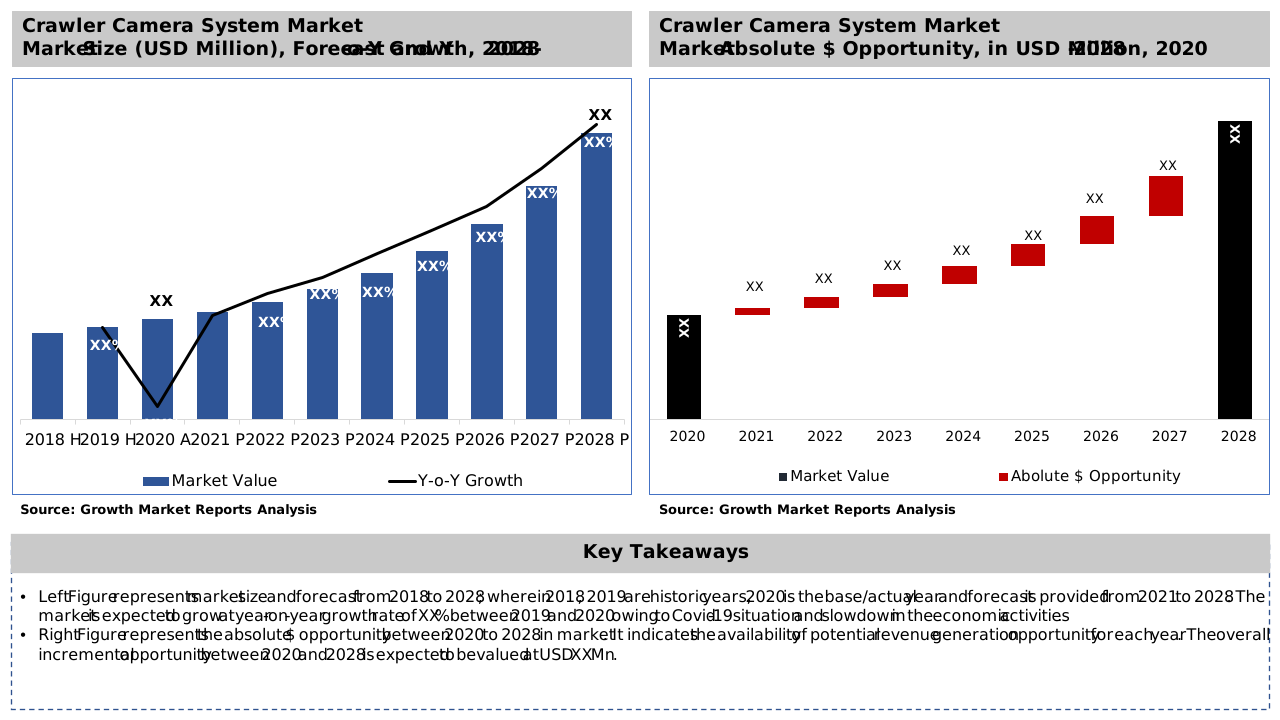
According to our latest research, the global crawler camera system market size reached USD 1.28 billion in 2024 and is projected to grow at a robust CAGR of 7.4% during the forecast period, reaching an estimated USD 2.43 billion by 2033. This growth is primarily driven by the increasing need for efficient inspection solutions in underground pipelines, sewage systems, and industrial environments, where traditional inspection methods are both challenging and time-consuming. The demand for advanced visual inspection technologies, coupled with the rising adoption of automation and digitalization in infrastructure maintenance, is significantly fueling the expansion of the crawler camera system market.

One of the primary growth factors for the crawler camera system market is the global emphasis on infrastructure maintenance and rehabilitation. Aging water supply networks, sewer systems, and industrial pipelines require regular inspection to ensure safety, efficiency, and regulatory compliance. Traditional manual inspection methods are often insufficient for detecting hidden or inaccessible faults. As a result, crawler camera systems, which provide high-definition visual data and facilitate remote, non-invasive inspections, have become indispensable tools for municipalities and industries alike. The integration of advanced imaging technologies, such as 4K resolution and pan-tilt-zoom capabilities, has further enhanced the accuracy and reliability of these systems, driving their widespread adoption across various sectors.

Technological advancements in robotics, imaging, and data analytics are also propelling the crawler camera system market forward. Modern crawler camera systems are now equipped with sophisticated sensors, wireless data transmission, and artificial intelligence-powered analytics, enabling real-time defect detection and condition assessment. This technological evolution not only improves inspection efficiency but also reduces operational costs and minimizes downtime. The development of lightweight, portable systems with extended battery life and modular components has expanded their usability in diverse environments, from narrow residential pipelines to large industrial conduits. Additionally, the growing trend of smart cities and the increasing use of IoT for infrastructure monitoring are expected to further boost market demand in the coming years.

Another significant driver is the increasing regulatory pressure on municipalities and industries to maintain and upgrade aging infrastructure in compliance with stringent safety and environmental standards. Governments worldwide are investing heavily in urban renewal and public utility upgrades, which necessitates regular, thorough inspection of underground assets. Crawler camera systems offer a cost-effective and efficient solution for these inspection needs, enabling asset owners to proactively identify and address potential issues before they escalate into major failures. The ability to document and archive inspection data for regulatory reporting purposes further enhances the value proposition of crawler camera systems in the municipal and industrial sectors.

From a regional perspective, North America and Europe currently dominate the crawler camera system market, owing to their well-established utility networks and proactive infrastructure management policies. However, the Asia Pacific region is witnessing the fastest growth, driven by rapid urbanization, expanding industrial bases, and increasing investments in public infrastructure. Emerging economies in Latin America and the Middle East & Africa are also gradually adopting crawler camera systems, spurred by the need to modernize aging utilities and comply with evolving environmental regulations. As infrastructure development accelerates globally, the crawler camera system market is poised for sustained, long-term growth.

Global Crawler Camera System Industry Outlook

Product Type Analysis

The crawler camera system market is segmented by product type into Push Rod Crawler Camera Systems, Robotic Crawler Camera Systems, and others. Push rod crawler camera systems are typically used for small-diameter pipes and short-distance inspections, making them ideal for residential and light commercial applications. These systems are valued for their portability, ease of use, and cost-effectiveness. With advancements in camera miniaturization and flexible cable technology, push rod systems now offer high-resolution imaging and improved maneuverability, allowing operators to inspect complex pipe geometries and identify blockages or defects with greater precision. The growing demand for quick, on-site inspections in the plumbing and maintenance sectors continues to drive the adoption of push rod crawler camera systems.

Robotic crawler camera systems, on the other hand, are designed for more demanding environments, such as large-diameter pipelines, industrial facilities, and municipal sewer networks. These systems are equipped with motorized tracks or wheels, enabling them to traverse long distances and navigate challenging terrains, including bends, junctions, and debris-laden pipes. Robotic crawlers often feature advanced functionalities, such as pan-tilt-zoom cameras, laser measurement tools, and data logging capabilities, which enhance their utility for comprehensive inspection and condition assessment. The increasing complexity of urban infrastructure and the need for detailed asset management are driving the adoption of robotic crawler camera systems, particularly in municipal and industrial applications.

Other product types in the crawler camera system market include hybrid systems and specialized inspection robots designed for unique environments, such as underwater pipelines or hazardous industrial sites. These systems are often custom-built to address specific inspection challenges, such as high-pressure conditions, corrosive environments, or limited access points. The development of modular crawler platforms, which can be configured with different camera heads, lighting systems, and data acquisition modules, is expanding the range of applications for crawler camera systems. As inspection requirements become more diverse and complex, the demand for versatile, customizable crawler camera solutions is expected to grow.

The product type segment is also witnessing significant innovation in terms of wireless connectivity, remote operation, and data integration. Modern crawler camera systems can be operated remotely via wireless controllers or even integrated with cloud-based inspection management platforms, enabling real-time data sharing and collaborative decision-making. This connectivity not only enhances operational efficiency but also supports predictive maintenance strategies by enabling continuous monitoring and early fault detection. As end-users increasingly prioritize digital transformation and automation, product innovation will remain a key driver of growth in the crawler camera system market.

Report Scope

Attributes Details
Report Title Crawler Camera System Market Research Report 2033
By Product Type Push Rod Crawler Camera Systems, Robotic Crawler Camera Systems, Others
By Application Pipeline Inspection, Drain and Sewer Inspection, Industrial Inspection, Municipal Inspection, Others
By End-User Municipal, Industrial, Commercial, Residential, Others
By Component Camera, Crawler, Cable, Control Unit, Others
Regions Covered North America, Europe, APAC, Latin America, MEA
Base Year 2024
Historic Data 2018-2023
Forecast Period 2025-2033
Number of Pages 293
Number of Tables & Figures 319
Customization Available Yes, the report can be customized as per your need.

Application Analysis

The application segment of the crawler camera system market is broad, encompassing Pipeline Inspection, Drain and Sewer Inspection, Industrial Inspection, Municipal Inspection, and others. Pipeline inspection represents the largest application area, driven by the critical need to monitor the condition of underground water, gas, and oil pipelines. Crawler camera systems enable operators to detect leaks, cracks, corrosion, and blockages without excavation, significantly reducing inspection time and costs. The integration of advanced imaging technologies, such as infrared and ultrasonic sensors, is further enhancing the accuracy and reliability of pipeline inspections, making crawler camera systems an essential tool for utility companies and pipeline operators.

Drain and sewer inspection is another major application, particularly in urban environments where aging sewer networks are prone to blockages, collapses, and infiltration. Crawler camera systems allow maintenance crews to quickly locate and diagnose issues, plan targeted repairs, and verify the effectiveness of maintenance work. The ability to generate detailed inspection reports with high-definition video and still images is invaluable for regulatory compliance and asset management. As cities invest in smart infrastructure and proactive maintenance strategies, the demand for crawler camera systems in drain and sewer inspection is expected to continue rising.

Industrial inspection applications include the monitoring of process piping, storage tanks, and confined spaces in sectors such as oil and gas, chemical processing, power generation, and food and beverage manufacturing. In these environments, crawler camera systems are used to ensure equipment integrity, prevent unplanned shutdowns, and comply with safety regulations. The harsh conditions often encountered in industrial settings, such as high temperatures, pressure, and corrosive substances, require robust and reliable crawler camera solutions. Manufacturers are responding by developing specialized systems with enhanced durability, explosion-proof designs, and advanced sensor integration to meet the unique needs of industrial users.

Municipal inspection applications extend beyond pipelines and sewers to include the inspection of stormwater drains, culverts, and other critical infrastructure assets. Municipalities rely on crawler camera systems to maintain public safety, prevent environmental contamination, and optimize maintenance budgets. The ability to conduct non-invasive, real-time inspections supports data-driven decision-making and helps prioritize repair and replacement projects. As urban populations grow and infrastructure ages, municipal inspection will remain a key driver of demand for crawler camera systems, supported by government funding and regulatory mandates.

End-User Analysis

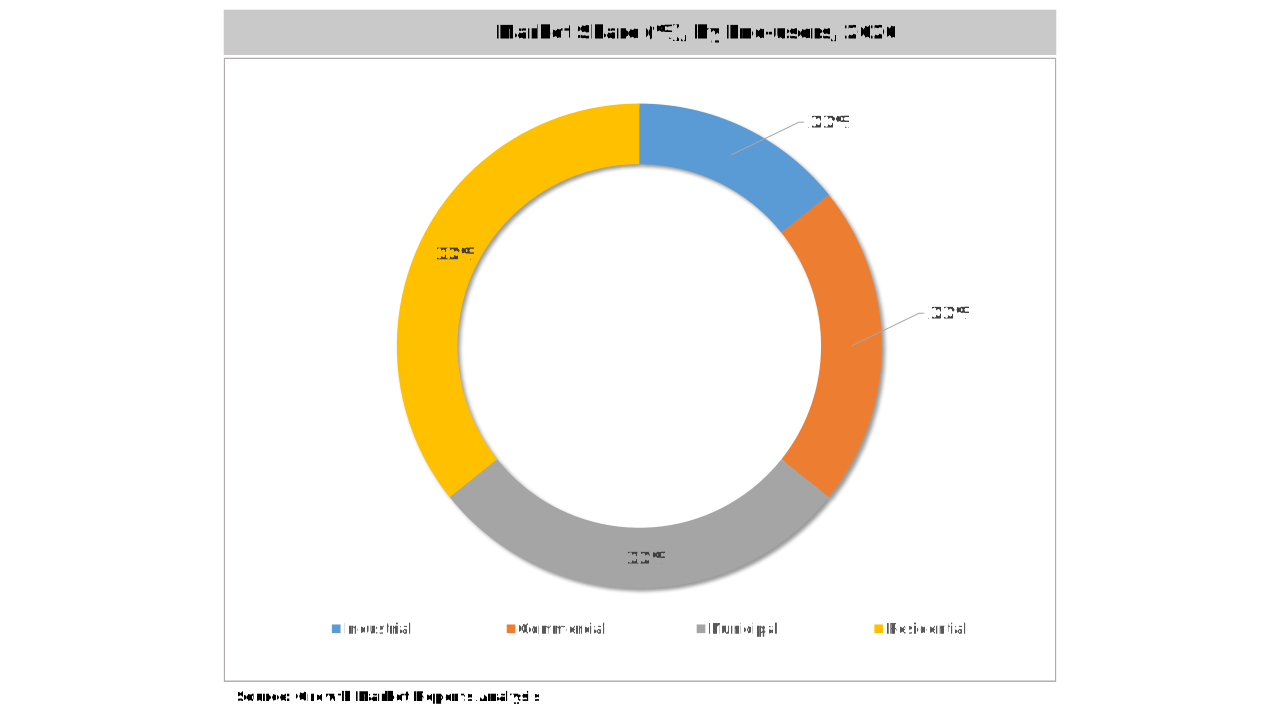
The end-user segment of the crawler camera system market includes Municipal, Industrial, Commercial, Residential, and others. Municipal end-users represent the largest share of the market, driven by the responsibility of local governments to maintain public utilities, such as water supply, sewage, and stormwater management systems. Municipalities utilize crawler camera systems to conduct routine inspections, monitor asset condition, and comply with regulatory reporting requirements. The increasing focus on preventive maintenance and asset management in the public sector is fueling demand for advanced inspection technologies, with crawler camera systems emerging as a preferred solution due to their versatility and reliability.

Industrial end-users, including oil and gas companies, chemical manufacturers, and power utilities, rely on crawler camera systems to inspect process piping, storage tanks, and confined spaces. These inspections are critical for ensuring operational safety, minimizing downtime, and meeting stringent industry regulations. The harsh and hazardous environments typical of industrial settings demand robust, high-performance crawler camera systems with features such as explosion-proof housings, high-temperature tolerance, and advanced data analytics. As industries embrace digital transformation and predictive maintenance, the adoption of crawler camera systems is expected to accelerate, supported by investments in automation and smart factory initiatives.

Commercial end-users, such as facility management companies, construction firms, and plumbing contractors, use crawler camera systems for building inspections, maintenance, and repair work. These systems enable quick and accurate diagnosis of issues in plumbing, HVAC, and drainage systems, reducing the need for invasive and costly exploratory work. The growing awareness of the benefits of regular inspection and preventive maintenance in commercial buildings is driving demand for user-friendly, portable crawler camera solutions. Manufacturers are responding by offering compact, easy-to-operate systems tailored to the needs of commercial users.

The residential segment, while smaller compared to municipal and industrial end-users, is experiencing steady growth as homeowners and property managers increasingly recognize the value of non-invasive inspection tools. Crawler camera systems are used to diagnose plumbing issues, inspect septic systems, and assess the condition of underground utilities. The availability of affordable, easy-to-use systems has made crawler camera technology accessible to a broader range of residential users, contributing to market expansion. As property owners seek to protect their investments and minimize repair costs, the residential end-user segment is expected to see continued growth.

Component Analysis

The component segment of the crawler camera system market includes Camera, Crawler, Cable, Control Unit, and others. The camera is the most critical component, responsible for capturing high-resolution images and videos of the inspection environment. Advances in camera technology, such as the development of 4K resolution, pan-tilt-zoom functionality, and low-light imaging, have significantly enhanced the performance and versatility of crawler camera systems. The integration of additional sensors, such as infrared, ultrasonic, and laser measurement tools, further expands the capabilities of modern inspection cameras, enabling more accurate defect detection and condition assessment.

The crawler, or robotic platform, is another essential component, providing mobility and maneuverability within pipes and confined spaces. Crawler designs have evolved to include features such as all-terrain wheels or tracks, articulated joints, and modular construction, allowing them to navigate complex pipe geometries and challenging environments. The development of lightweight, corrosion-resistant materials has improved the durability and operational lifespan of crawler platforms, making them suitable for a wide range of applications. The ability to customize crawler configurations to meet specific inspection requirements is a key factor driving adoption in diverse industries.

Cables play a vital role in transmitting power, control signals, and data between the crawler camera system and the operator's control unit. Innovations in cable design, such as the use of lightweight, flexible materials and reinforced sheathing, have improved cable durability and ease of deployment. Wireless transmission technologies are also being integrated into some crawler camera systems, enabling greater operational flexibility and reducing the risk of cable entanglement or damage. The choice of cable length and type depends on the specific application and inspection environment, with longer, more robust cables required for deep or extended inspections.

The control unit serves as the operator interface, providing real-time video feeds, system controls, and data logging capabilities. Modern control units feature high-definition displays, intuitive user interfaces, and advanced software for image analysis and report generation. The integration of wireless connectivity, cloud-based data storage, and remote operation capabilities is enhancing the functionality and usability of control units, enabling operators to conduct inspections more efficiently and collaborate with remote teams. As end-users demand greater automation and data integration, the control unit segment is expected to see continued innovation and growth.

Opportunities & Threats

The crawler camera system market presents significant opportunities for growth, particularly in the context of smart infrastructure and digital transformation initiatives. As governments and private sector organizations invest in upgrading aging utilities and implementing smart city projects, the demand for advanced inspection technologies is expected to surge. The integration of artificial intelligence, machine learning, and IoT connectivity into crawler camera systems opens new avenues for predictive maintenance, real-time monitoring, and data-driven decision-making. Manufacturers that can develop innovative, user-friendly solutions with enhanced data analytics and remote operation capabilities are well-positioned to capture emerging opportunities in this dynamic market.

Another major opportunity lies in the expansion of crawler camera applications beyond traditional pipeline and sewer inspections. The development of specialized systems for underwater inspection, hazardous environments, and confined spaces in industries such as oil and gas, mining, and construction is creating new market segments. Collaborative partnerships between equipment manufacturers, software developers, and end-users are driving the development of integrated inspection solutions that combine robotics, imaging, and data analytics. As regulatory requirements for infrastructure maintenance and environmental protection become more stringent, the adoption of crawler camera systems is expected to accelerate across a wider range of industries and applications.

Despite the positive outlook, the crawler camera system market faces certain restraining factors, most notably the high initial cost of advanced systems and the need for skilled operators. The complexity of some crawler camera solutions, particularly those equipped with sophisticated sensors and data analytics, can present a barrier to adoption for smaller organizations and residential users. Additionally, the presence of alternative inspection technologies, such as drones and static cameras, may limit market growth in certain applications. Manufacturers must focus on reducing costs, improving user-friendliness, and providing comprehensive training and support to overcome these challenges and maximize market potential.

Regional Outlook

Regionally, North America leads the crawler camera system market, accounting for approximately 38% of the global market in 2024, with a market value of around USD 487 million. The region's dominance is attributed to its well-established utility infrastructure, proactive maintenance policies, and high adoption of advanced inspection technologies. The United States, in particular, has made significant investments in upgrading aging water and sewer systems, driving demand for crawler camera systems in both municipal and industrial applications. The presence of leading manufacturers and technology innovators further supports market growth in North America.

Europe follows closely, with a market share of about 29% and a value of USD 371 million in 2024. The region's focus on environmental sustainability, regulatory compliance, and smart city development is fueling the adoption of crawler camera systems for infrastructure inspection and maintenance. Countries such as Germany, the United Kingdom, and France are at the forefront of implementing advanced inspection technologies in their public utility networks. The European market is expected to grow at a steady CAGR of 6.8% through 2033, driven by ongoing investments in urban infrastructure and the expansion of smart utility initiatives.

The Asia Pacific region is emerging as the fastest-growing market for crawler camera systems, with a CAGR of 9.1% expected over the forecast period. The region accounted for 22% of the global market in 2024, valued at USD 282 million. Rapid urbanization, expanding industrial sectors, and increasing government investments in infrastructure development are key growth drivers in countries such as China, India, and Japan. The adoption of crawler camera systems is accelerating as municipalities and industries seek efficient solutions for maintaining and upgrading their utility networks. Latin America and the Middle East & Africa, while currently smaller markets, are also experiencing gradual growth as infrastructure modernization initiatives gain momentum and regulatory standards evolve.

Crawler Camera System Market Statistics

Competitor Outlook

The global crawler camera system market is characterized by intense competition, with a mix of established multinational corporations and innovative startups vying for market share. The competitive landscape is shaped by continuous technological innovation, strategic partnerships, and a strong focus on research and development. Leading players are investing in the development of advanced crawler camera systems with enhanced imaging capabilities, wireless connectivity, and data analytics features to differentiate their offerings and meet the evolving needs of end-users. The emphasis on product customization, after-sales support, and comprehensive training services is also a key competitive factor, as customers increasingly demand tailored solutions and ongoing technical assistance.

Market leaders are expanding their geographic presence through mergers, acquisitions, and partnerships with local distributors and service providers. This strategy enables them to tap into emerging markets, address region-specific inspection challenges, and strengthen their customer base. The integration of artificial intelligence and machine learning into crawler camera systems is a notable trend, with companies developing smart inspection solutions that can automatically detect defects, generate actionable insights, and support predictive maintenance strategies. The ability to offer integrated inspection platforms that combine hardware, software, and data services is becoming a critical differentiator in the market.

Smaller players and new entrants are focusing on niche applications and specialized inspection environments, such as underwater pipelines, hazardous industrial sites, and confined spaces. By developing highly customized and application-specific crawler camera systems, these companies are able to carve out unique market positions and address unmet needs. The growing demand for affordable, user-friendly systems in the residential and commercial segments is also creating opportunities for smaller manufacturers to compete effectively against larger incumbents. As the market continues to evolve, collaboration between equipment manufacturers, software developers, and end-users will be essential for driving innovation and expanding the range of crawler camera system applications.

Major companies operating in the crawler camera system market include Hathorn Corporation, Envirosight LLC, Rausch Electronics USA, CUES Inc., Subsite Electronics, iPEK International GmbH, and Mini-Cam Ltd.. Hathorn Corporation is known for its rugged, portable inspection systems designed for plumbing and municipal applications. Envirosight LLC offers advanced robotic crawler systems with integrated reporting and data management capabilities, catering to both municipal and industrial sectors. Rausch Electronics USA specializes in modular crawler platforms that can be customized for a variety of inspection tasks, while CUES Inc. is recognized for its comprehensive range of pipeline inspection and rehabilitation solutions. Subsite Electronics focuses on innovative imaging and sensor technologies for underground utility inspection, and iPEK International GmbH is a leading provider of high-resolution camera systems for sewer and pipeline inspection. Mini-Cam Ltd. is renowned for its compact, user-friendly crawler camera systems suitable for a wide range of applications.

These companies are continuously investing in research and development to enhance the performance, reliability, and usability of their products. Key areas of innovation include the integration of AI-powered defect detection, cloud-based data management, and remote operation capabilities. Strategic partnerships with software providers, service companies, and end-users are enabling manufacturers to deliver integrated inspection solutions that address the full spectrum of customer needs. As competition intensifies and customer expectations evolve, the ability to deliver high-quality, innovative, and cost-effective crawler camera systems will be critical for sustained success in the global market.

Key Players

  • Robert Bosch GmbH
  • Continental AG
  • Valeo SA
  • Denso Corporation
  • FLIR Systems Inc.
  • OmniVision Technologies Inc.
  • STMicroelectronics N.V.
  • Delphi Technologies PLC
  • Honeywell International Inc.
  • Teledyne Technologies Incorporated
  • Sony Corporation
  • Panasonic Corporation
  • Samsung Electronics Co. Ltd.
  • Leica Geosystems AG
  • Hikvision Digital Technology Co. Ltd.
  • ZF Friedrichshafen AG
  • Ambarella Inc.
  • Cognex Corporation
  • Basler AG
  • Xilinx Inc.
Crawler Camera System Market Overview

Segments

The Crawler Camera System market has been segmented on the basis of

Product Type

  • Push Rod Crawler Camera Systems
  • Robotic Crawler Camera Systems
  • Others

Application

  • Pipeline Inspection
  • Drain and Sewer Inspection
  • Industrial Inspection
  • Municipal Inspection
  • Others

End-User

  • Municipal
  • Industrial
  • Commercial
  • Residential
  • Others

Component

  • Camera
  • Crawler
  • Cable
  • Control Unit
  • Others

Competitive Landscape

Major players of the crawler camera system market are Deep Trekker Inc., AM Industrial Ltd, iPEK International GmbH, CUES Inc, Eddyfi Technologies, Kummert GmbH, Mini-Cam Ltd, Rausch Electronics USA, LLC, Inspector Systems Rainer Hitzel GmbH, and Subsite Electronics.

Companies are engaging in partnership, collaboration, and merges. Moreover, the companies are focusing on expanding their product portfolio to expand their expand share.

In 2018, CUES Inc. launched a pipeline inspection system, designed to reduce unplanned downtime. The company’s CUES REDI Kit is a pipeline inspection kit, which allows quick and accurate trouble shooting.
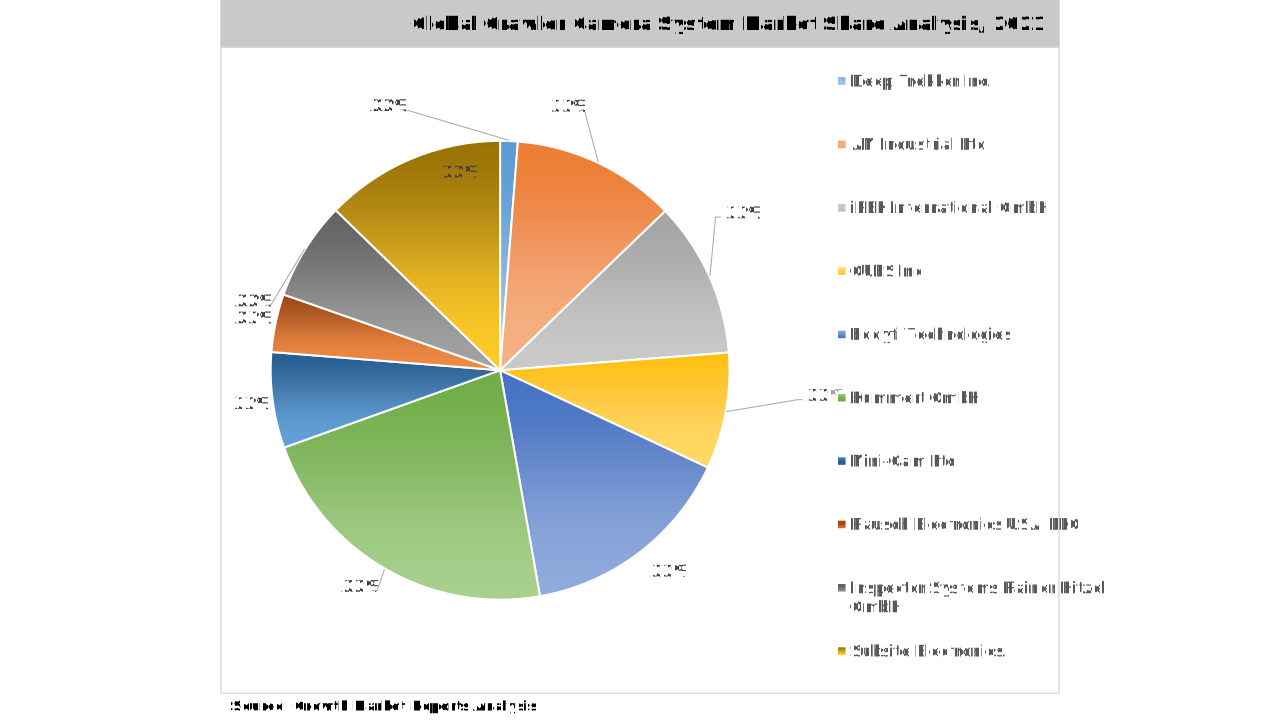

 Crawler Camera System Market By Key Players

Frequently Asked Questions

Crawler camera systems support smart city initiatives by enabling real-time, remote inspection and monitoring of underground utilities. Their integration with IoT, AI, and cloud platforms allows for predictive maintenance, improved asset management, and enhanced regulatory compliance.

Key players include Hathorn Corporation, Envirosight LLC, Rausch Electronics USA, CUES Inc., Subsite Electronics, iPEK International GmbH, and Mini-Cam Ltd. These companies focus on innovation, product customization, and integrated inspection solutions.

Challenges include the high initial cost of advanced systems, the need for skilled operators, and competition from alternative inspection technologies such as drones and static cameras. Manufacturers are addressing these by improving user-friendliness and reducing costs.

Key trends include the integration of 4K cameras, pan-tilt-zoom capabilities, wireless data transmission, AI-powered analytics, modular components, and cloud-based data management. These advancements improve inspection accuracy, efficiency, and data-driven decision-making.

Major end-users include municipal authorities, industrial companies (oil & gas, chemical, power), commercial facility managers, and residential property owners. Municipalities represent the largest market share due to their responsibility for public utility maintenance.

The market offers Push Rod Crawler Camera Systems for small-diameter pipes and short distances, Robotic Crawler Camera Systems for larger and more complex environments, and specialized systems for unique applications such as underwater or hazardous inspections.

North America and Europe currently dominate the crawler camera system market due to their established utility networks and proactive infrastructure management. The Asia Pacific region is the fastest-growing market, driven by rapid urbanization and infrastructure investments.

Crawler camera systems are primarily used for pipeline inspection, drain and sewer inspection, industrial inspection, and municipal inspection. They help detect leaks, blockages, corrosion, and other defects in underground utilities, industrial facilities, and public infrastructure.

The global crawler camera system market reached USD 1.28 billion in 2024 and is expected to grow at a CAGR of 7.4%, reaching approximately USD 2.43 billion by 2033. This growth is driven by increasing infrastructure maintenance needs, technological advancements, and regulatory requirements.

A crawler camera system is a robotic inspection tool equipped with a camera, crawler platform, control unit, and cables. It is designed to navigate through pipelines, sewers, and confined spaces to capture high-definition video and images for inspection purposes. Operators control the system remotely, allowing for non-invasive, real-time inspections of hard-to-reach areas.

Table Of Content

Chapter 1 Executive Summary
Chapter 2 Assumptions and Acronyms Used
Chapter 3 Research Methodology
Chapter 4 Crawler Camera System Market Overview
   4.1 Introduction
      4.1.1 Market Taxonomy
      4.1.2 Market Definition
      4.1.3 Macro-Economic Factors Impacting the Market Growth
   4.2 Crawler Camera System Market Dynamics
      4.2.1 Market Drivers
      4.2.2 Market Restraints
      4.2.3 Market Opportunity
   4.3 Crawler Camera System Market - Supply Chain Analysis
      4.3.1 List of Key Suppliers
      4.3.2 List of Key Distributors
      4.3.3 List of Key Consumers
   4.4 Key Forces Shaping the Crawler Camera System Market
      4.4.1 Bargaining Power of Suppliers
      4.4.2 Bargaining Power of Buyers
      4.4.3 Threat of Substitution
      4.4.4 Threat of New Entrants
      4.4.5 Competitive Rivalry
   4.5 Global Crawler Camera System Market Size & Forecast, 2023-2032
      4.5.1 Crawler Camera System Market Size and Y-o-Y Growth
      4.5.2 Crawler Camera System Market Absolute $ Opportunity

Chapter 5 Global Crawler Camera System Market Analysis and Forecast By Product Type
   5.1 Introduction
      5.1.1 Key Market Trends & Growth Opportunities By Product Type
      5.1.2 Basis Point Share (BPS) Analysis By Product Type
      5.1.3 Absolute $ Opportunity Assessment By Product Type
   5.2 Crawler Camera System Market Size Forecast By Product Type
      5.2.1 Push Rod Crawler Camera Systems
      5.2.2 Robotic Crawler Camera Systems
      5.2.3 Others
   5.3 Market Attractiveness Analysis By Product Type

Chapter 6 Global Crawler Camera System Market Analysis and Forecast By Application
   6.1 Introduction
      6.1.1 Key Market Trends & Growth Opportunities By Application
      6.1.2 Basis Point Share (BPS) Analysis By Application
      6.1.3 Absolute $ Opportunity Assessment By Application
   6.2 Crawler Camera System Market Size Forecast By Application
      6.2.1 Pipeline Inspection
      6.2.2 Drain and Sewer Inspection
      6.2.3 Industrial Inspection
      6.2.4 Municipal Inspection
      6.2.5 Others
   6.3 Market Attractiveness Analysis By Application

Chapter 7 Global Crawler Camera System Market Analysis and Forecast By End-User
   7.1 Introduction
      7.1.1 Key Market Trends & Growth Opportunities By End-User
      7.1.2 Basis Point Share (BPS) Analysis By End-User
      7.1.3 Absolute $ Opportunity Assessment By End-User
   7.2 Crawler Camera System Market Size Forecast By End-User
      7.2.1 Municipal
      7.2.2 Industrial
      7.2.3 Commercial
      7.2.4 Residential
      7.2.5 Others
   7.3 Market Attractiveness Analysis By End-User

Chapter 8 Global Crawler Camera System Market Analysis and Forecast By Component
   8.1 Introduction
      8.1.1 Key Market Trends & Growth Opportunities By Component
      8.1.2 Basis Point Share (BPS) Analysis By Component
      8.1.3 Absolute $ Opportunity Assessment By Component
   8.2 Crawler Camera System Market Size Forecast By Component
      8.2.1 Camera
      8.2.2 Crawler
      8.2.3 Cable
      8.2.4 Control Unit
      8.2.5 Others
   8.3 Market Attractiveness Analysis By Component

Chapter 9 Global Crawler Camera System Market Analysis and Forecast by Region
   9.1 Introduction
      9.1.1 Key Market Trends & Growth Opportunities By Region
      9.1.2 Basis Point Share (BPS) Analysis By Region
      9.1.3 Absolute $ Opportunity Assessment By Region
   9.2 Crawler Camera System Market Size Forecast By Region
      9.2.1 North America
      9.2.2 Europe
      9.2.3 Asia Pacific
      9.2.4 Latin America
      9.2.5 Middle East & Africa (MEA)
   9.3 Market Attractiveness Analysis By Region

Chapter 10 Coronavirus Disease (COVID-19) Impact 
   10.1 Introduction 
   10.2 Current & Future Impact Analysis 
   10.3 Economic Impact Analysis 
   10.4 Government Policies 
   10.5 Investment Scenario

Chapter 11 North America Crawler Camera System Analysis and Forecast
   11.1 Introduction
   11.2 North America Crawler Camera System Market Size Forecast by Country
      11.2.1 U.S.
      11.2.2 Canada
   11.3 Basis Point Share (BPS) Analysis by Country
   11.4 Absolute $ Opportunity Assessment by Country
   11.5 Market Attractiveness Analysis by Country
   11.6 North America Crawler Camera System Market Size Forecast By Product Type
      11.6.1 Push Rod Crawler Camera Systems
      11.6.2 Robotic Crawler Camera Systems
      11.6.3 Others
   11.7 Basis Point Share (BPS) Analysis By Product Type 
   11.8 Absolute $ Opportunity Assessment By Product Type 
   11.9 Market Attractiveness Analysis By Product Type
   11.10 North America Crawler Camera System Market Size Forecast By Application
      11.10.1 Pipeline Inspection
      11.10.2 Drain and Sewer Inspection
      11.10.3 Industrial Inspection
      11.10.4 Municipal Inspection
      11.10.5 Others
   11.11 Basis Point Share (BPS) Analysis By Application 
   11.12 Absolute $ Opportunity Assessment By Application 
   11.13 Market Attractiveness Analysis By Application
   11.14 North America Crawler Camera System Market Size Forecast By End-User
      11.14.1 Municipal
      11.14.2 Industrial
      11.14.3 Commercial
      11.14.4 Residential
      11.14.5 Others
   11.15 Basis Point Share (BPS) Analysis By End-User 
   11.16 Absolute $ Opportunity Assessment By End-User 
   11.17 Market Attractiveness Analysis By End-User
   11.18 North America Crawler Camera System Market Size Forecast By Component
      11.18.1 Camera
      11.18.2 Crawler
      11.18.3 Cable
      11.18.4 Control Unit
      11.18.5 Others
   11.19 Basis Point Share (BPS) Analysis By Component 
   11.20 Absolute $ Opportunity Assessment By Component 
   11.21 Market Attractiveness Analysis By Component

Chapter 12 Europe Crawler Camera System Analysis and Forecast
   12.1 Introduction
   12.2 Europe Crawler Camera System Market Size Forecast by Country
      12.2.1 Germany
      12.2.2 France
      12.2.3 Italy
      12.2.4 U.K.
      12.2.5 Spain
      12.2.6 Russia
      12.2.7 Rest of Europe
   12.3 Basis Point Share (BPS) Analysis by Country
   12.4 Absolute $ Opportunity Assessment by Country
   12.5 Market Attractiveness Analysis by Country
   12.6 Europe Crawler Camera System Market Size Forecast By Product Type
      12.6.1 Push Rod Crawler Camera Systems
      12.6.2 Robotic Crawler Camera Systems
      12.6.3 Others
   12.7 Basis Point Share (BPS) Analysis By Product Type 
   12.8 Absolute $ Opportunity Assessment By Product Type 
   12.9 Market Attractiveness Analysis By Product Type
   12.10 Europe Crawler Camera System Market Size Forecast By Application
      12.10.1 Pipeline Inspection
      12.10.2 Drain and Sewer Inspection
      12.10.3 Industrial Inspection
      12.10.4 Municipal Inspection
      12.10.5 Others
   12.11 Basis Point Share (BPS) Analysis By Application 
   12.12 Absolute $ Opportunity Assessment By Application 
   12.13 Market Attractiveness Analysis By Application
   12.14 Europe Crawler Camera System Market Size Forecast By End-User
      12.14.1 Municipal
      12.14.2 Industrial
      12.14.3 Commercial
      12.14.4 Residential
      12.14.5 Others
   12.15 Basis Point Share (BPS) Analysis By End-User 
   12.16 Absolute $ Opportunity Assessment By End-User 
   12.17 Market Attractiveness Analysis By End-User
   12.18 Europe Crawler Camera System Market Size Forecast By Component
      12.18.1 Camera
      12.18.2 Crawler
      12.18.3 Cable
      12.18.4 Control Unit
      12.18.5 Others
   12.19 Basis Point Share (BPS) Analysis By Component 
   12.20 Absolute $ Opportunity Assessment By Component 
   12.21 Market Attractiveness Analysis By Component

Chapter 13 Asia Pacific Crawler Camera System Analysis and Forecast
   13.1 Introduction
   13.2 Asia Pacific Crawler Camera System Market Size Forecast by Country
      13.2.1 China
      13.2.2 Japan
      13.2.3 South Korea
      13.2.4 India
      13.2.5 Australia
      13.2.6 South East Asia (SEA)
      13.2.7 Rest of Asia Pacific (APAC)
   13.3 Basis Point Share (BPS) Analysis by Country
   13.4 Absolute $ Opportunity Assessment by Country
   13.5 Market Attractiveness Analysis by Country
   13.6 Asia Pacific Crawler Camera System Market Size Forecast By Product Type
      13.6.1 Push Rod Crawler Camera Systems
      13.6.2 Robotic Crawler Camera Systems
      13.6.3 Others
   13.7 Basis Point Share (BPS) Analysis By Product Type 
   13.8 Absolute $ Opportunity Assessment By Product Type 
   13.9 Market Attractiveness Analysis By Product Type
   13.10 Asia Pacific Crawler Camera System Market Size Forecast By Application
      13.10.1 Pipeline Inspection
      13.10.2 Drain and Sewer Inspection
      13.10.3 Industrial Inspection
      13.10.4 Municipal Inspection
      13.10.5 Others
   13.11 Basis Point Share (BPS) Analysis By Application 
   13.12 Absolute $ Opportunity Assessment By Application 
   13.13 Market Attractiveness Analysis By Application
   13.14 Asia Pacific Crawler Camera System Market Size Forecast By End-User
      13.14.1 Municipal
      13.14.2 Industrial
      13.14.3 Commercial
      13.14.4 Residential
      13.14.5 Others
   13.15 Basis Point Share (BPS) Analysis By End-User 
   13.16 Absolute $ Opportunity Assessment By End-User 
   13.17 Market Attractiveness Analysis By End-User
   13.18 Asia Pacific Crawler Camera System Market Size Forecast By Component
      13.18.1 Camera
      13.18.2 Crawler
      13.18.3 Cable
      13.18.4 Control Unit
      13.18.5 Others
   13.19 Basis Point Share (BPS) Analysis By Component 
   13.20 Absolute $ Opportunity Assessment By Component 
   13.21 Market Attractiveness Analysis By Component

Chapter 14 Latin America Crawler Camera System Analysis and Forecast
   14.1 Introduction
   14.2 Latin America Crawler Camera System Market Size Forecast by Country
      14.2.1 Brazil
      14.2.2 Mexico
      14.2.3 Rest of Latin America (LATAM)
   14.3 Basis Point Share (BPS) Analysis by Country
   14.4 Absolute $ Opportunity Assessment by Country
   14.5 Market Attractiveness Analysis by Country
   14.6 Latin America Crawler Camera System Market Size Forecast By Product Type
      14.6.1 Push Rod Crawler Camera Systems
      14.6.2 Robotic Crawler Camera Systems
      14.6.3 Others
   14.7 Basis Point Share (BPS) Analysis By Product Type 
   14.8 Absolute $ Opportunity Assessment By Product Type 
   14.9 Market Attractiveness Analysis By Product Type
   14.10 Latin America Crawler Camera System Market Size Forecast By Application
      14.10.1 Pipeline Inspection
      14.10.2 Drain and Sewer Inspection
      14.10.3 Industrial Inspection
      14.10.4 Municipal Inspection
      14.10.5 Others
   14.11 Basis Point Share (BPS) Analysis By Application 
   14.12 Absolute $ Opportunity Assessment By Application 
   14.13 Market Attractiveness Analysis By Application
   14.14 Latin America Crawler Camera System Market Size Forecast By End-User
      14.14.1 Municipal
      14.14.2 Industrial
      14.14.3 Commercial
      14.14.4 Residential
      14.14.5 Others
   14.15 Basis Point Share (BPS) Analysis By End-User 
   14.16 Absolute $ Opportunity Assessment By End-User 
   14.17 Market Attractiveness Analysis By End-User
   14.18 Latin America Crawler Camera System Market Size Forecast By Component
      14.18.1 Camera
      14.18.2 Crawler
      14.18.3 Cable
      14.18.4 Control Unit
      14.18.5 Others
   14.19 Basis Point Share (BPS) Analysis By Component 
   14.20 Absolute $ Opportunity Assessment By Component 
   14.21 Market Attractiveness Analysis By Component

Chapter 15 Middle East & Africa (MEA) Crawler Camera System Analysis and Forecast
   15.1 Introduction
   15.2 Middle East & Africa (MEA) Crawler Camera System Market Size Forecast by Country
      15.2.1 Saudi Arabia
      15.2.2 South Africa
      15.2.3 UAE
      15.2.4 Rest of Middle East & Africa (MEA)
   15.3 Basis Point Share (BPS) Analysis by Country
   15.4 Absolute $ Opportunity Assessment by Country
   15.5 Market Attractiveness Analysis by Country
   15.6 Middle East & Africa (MEA) Crawler Camera System Market Size Forecast By Product Type
      15.6.1 Push Rod Crawler Camera Systems
      15.6.2 Robotic Crawler Camera Systems
      15.6.3 Others
   15.7 Basis Point Share (BPS) Analysis By Product Type 
   15.8 Absolute $ Opportunity Assessment By Product Type 
   15.9 Market Attractiveness Analysis By Product Type
   15.10 Middle East & Africa (MEA) Crawler Camera System Market Size Forecast By Application
      15.10.1 Pipeline Inspection
      15.10.2 Drain and Sewer Inspection
      15.10.3 Industrial Inspection
      15.10.4 Municipal Inspection
      15.10.5 Others
   15.11 Basis Point Share (BPS) Analysis By Application 
   15.12 Absolute $ Opportunity Assessment By Application 
   15.13 Market Attractiveness Analysis By Application
   15.14 Middle East & Africa (MEA) Crawler Camera System Market Size Forecast By End-User
      15.14.1 Municipal
      15.14.2 Industrial
      15.14.3 Commercial
      15.14.4 Residential
      15.14.5 Others
   15.15 Basis Point Share (BPS) Analysis By End-User 
   15.16 Absolute $ Opportunity Assessment By End-User 
   15.17 Market Attractiveness Analysis By End-User
   15.18 Middle East & Africa (MEA) Crawler Camera System Market Size Forecast By Component
      15.18.1 Camera
      15.18.2 Crawler
      15.18.3 Cable
      15.18.4 Control Unit
      15.18.5 Others
   15.19 Basis Point Share (BPS) Analysis By Component 
   15.20 Absolute $ Opportunity Assessment By Component 
   15.21 Market Attractiveness Analysis By Component

Chapter 16 Competition Landscape 
   16.1 Crawler Camera System Market: Competitive Dashboard
   16.2 Global Crawler Camera System Market: Market Share Analysis, 2023
   16.3 Company Profiles (Details – Overview, Financials, Developments, Strategy) 
      16.3.1 Robert Bosch GmbH
Continental AG
Valeo SA
Denso Corporation
FLIR Systems Inc.
OmniVision Technologies Inc.
STMicroelectronics N.V.
Delphi Technologies PLC
Honeywell International Inc.
Teledyne Technologies Incorporated
Sony Corporation
Panasonic Corporation
Samsung Electronics Co. Ltd.
Leica Geosystems AG
Hikvision Digital Technology Co. Ltd.
ZF Friedrichshafen AG
Ambarella Inc.
Cognex Corporation
Basler AG
Xilinx Inc.

Methodology

Our Clients

sinopec
Nestle SA
The John Holland Group
General Mills
Dassault Aviation
Deloitte
Honda Motor Co. Ltd.
Microsoft