Optoelectronics Market Research Report 2033

Optoelectronics Market Research Report 2033

Segments - by Component (LEDs, Photovoltaic Cells, Laser Diodes, Image Sensors, Optocouplers, Others), by Material (Gallium Nitride, Gallium Arsenide, Silicon Carbide, Silicon, Others), by Application (Consumer Electronics, Automotive, Healthcare, Telecommunications, Industrial, Aerospace & Defense, Others), by End-User (Residential, Commercial, Industrial, Others)

https://growthmarketreports.com/Raksha
Author : Raksha Sharma
https://growthmarketreports.com/Vaibhav
Fact-checked by : V. Chandola
https://growthmarketreports.com/Shruti
Editor : Shruti Bhat

Upcoming | Report ID :ICT-SE-265 | 4.8 Rating | 71 Reviews | 272 Pages | Format : Docx PDF

Report Description


Optoelectronics Market Outlook

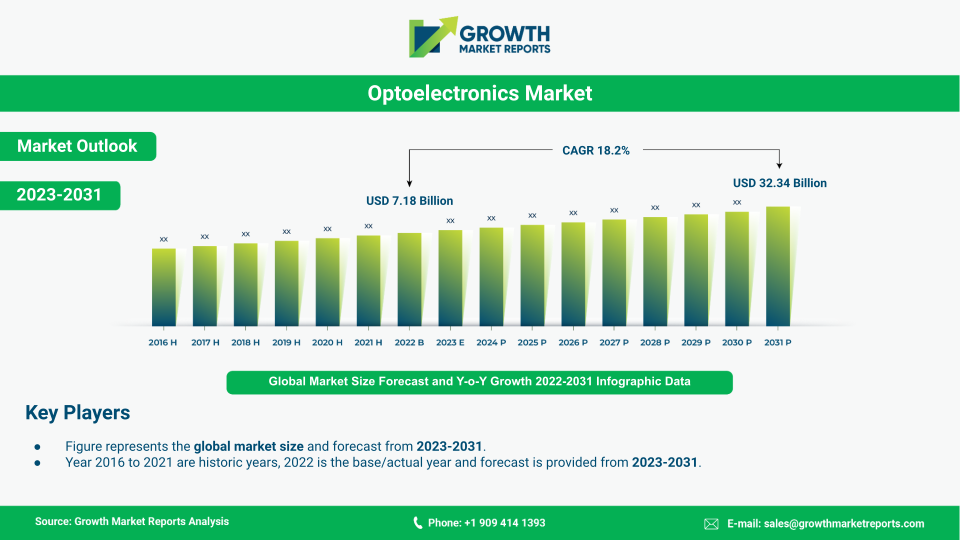
According to our latest research, the global optoelectronics market size reached USD 78.4 billion in 2024, reflecting robust growth across diverse application sectors. The market is projected to expand at a CAGR of 9.2% during the forecast period, with the total market value expected to reach USD 170.1 billion by 2033. This impressive growth trajectory is primarily driven by escalating demand for energy-efficient electronic components, rapid advancements in semiconductor materials, and the proliferation of smart consumer devices. As per our comprehensive analysis, the optoelectronics industry is rapidly evolving, fueled by innovation and the integration of advanced technologies in critical sectors worldwide.

The growth of the optoelectronics market can be attributed to several key factors, with technological innovation standing at the forefront. The ongoing transition to smart cities and the increasing adoption of Internet of Things (IoT) devices have created a surge in demand for optoelectronic components such as LEDs, image sensors, and laser diodes. These components are integral to advanced lighting systems, surveillance, and data communication networks. Moreover, the rising popularity of electric vehicles and autonomous driving technologies is further propelling the need for optoelectronic sensors and communication modules, as these devices ensure optimal performance and safety in automotive applications. This technological evolution is fostering a highly competitive environment where manufacturers are compelled to innovate and enhance the efficiency and miniaturization of their offerings.

Another significant growth driver is the global emphasis on sustainability and energy efficiency. Optoelectronic products, particularly LEDs and photovoltaic cells, are recognized for their low power consumption and environmentally friendly characteristics. Governments and regulatory bodies across the globe are implementing stringent energy efficiency standards, incentivizing the adoption of LED lighting and solar energy solutions in both residential and commercial settings. This regulatory push, coupled with increasing consumer awareness regarding sustainable energy, is accelerating the replacement of traditional lighting and energy systems with advanced optoelectronic alternatives. Furthermore, the declining cost of semiconductor materials and manufacturing processes is making these technologies more accessible and affordable, thus broadening their market reach.

The healthcare and telecommunications sectors are also playing a pivotal role in the expansion of the optoelectronics market. In healthcare, optoelectronic devices such as image sensors and laser diodes are revolutionizing diagnostic imaging, surgical procedures, and patient monitoring systems. The demand for high-resolution imaging and minimally invasive techniques is driving continuous innovation in this segment. In telecommunications, the shift towards 5G networks and fiber-optic communications is boosting the need for high-speed, reliable optoelectronic components capable of supporting massive data transfer and low latency. The synergy between these sectors and ongoing research and development activities is expected to sustain the market’s upward momentum over the coming years.

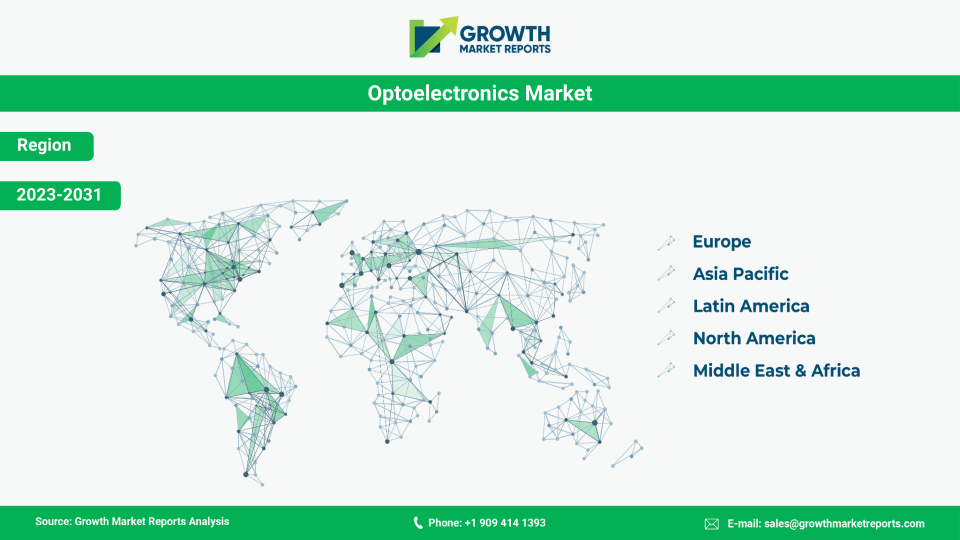
From a regional perspective, Asia Pacific continues to dominate the global optoelectronics market, accounting for the largest revenue share in 2024. The region’s leadership is underpinned by the presence of major semiconductor manufacturers, a robust consumer electronics industry, and significant investments in infrastructure development. North America and Europe are also notable contributors, with strong demand emanating from automotive, healthcare, and industrial automation sectors. Meanwhile, emerging markets in Latin America and the Middle East & Africa are witnessing steady growth, driven by increasing urbanization and government initiatives to modernize energy and communication infrastructure. This diverse regional landscape highlights the global relevance and adaptability of optoelectronic technologies across various economic and industrial environments.

Global Optoelectronics Industry Outlook

Component Analysis

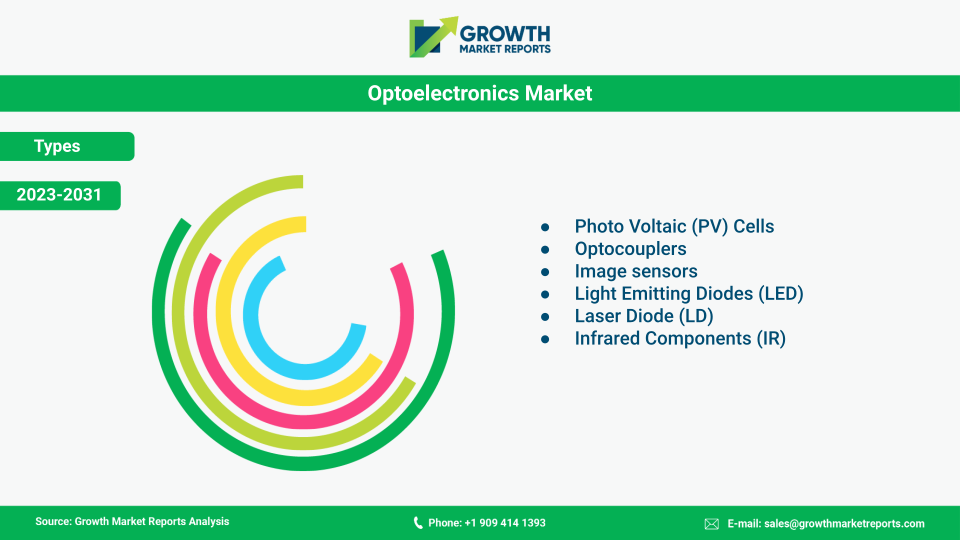
The component segment of the optoelectronics market is highly diversified, encompassing LEDs, photovoltaic cells, laser diodes, image sensors, optocouplers, and several other specialized devices. LEDs represent the most significant share within this segment, driven by their widespread application in general lighting, automotive headlights, and display technologies. The ongoing shift from conventional incandescent and fluorescent lighting to LED-based solutions is being fueled by their superior energy efficiency, longer lifespan, and declining production costs. Governments worldwide are actively promoting LED adoption through subsidies and regulatory mandates, further boosting market penetration. In addition, advancements in miniaturization and smart lighting controls are enabling LEDs to be integrated into a broader range of applications, from wearable devices to architectural lighting.

Photovoltaic cells are another critical component, primarily utilized in solar energy generation. The global push towards renewable energy sources is driving significant investments in photovoltaic technology, leading to higher efficiency rates and lower manufacturing costs. Innovations such as bifacial solar cells and thin-film technologies are expanding the application scope of photovoltaics beyond traditional solar farms to include building-integrated photovoltaics and portable power solutions. As energy storage technologies improve and grid integration becomes more seamless, the adoption of photovoltaic cells is expected to accelerate, particularly in regions with abundant solar resources and supportive regulatory frameworks.

Laser diodes play a vital role in a variety of high-growth applications, including telecommunications, industrial automation, medical diagnostics, and consumer electronics. The demand for high-speed data transmission and precision sensing in fiber-optic networks is driving continuous innovation in laser diode technology. In the medical field, laser diodes are increasingly used in minimally invasive surgeries, dermatological treatments, and advanced imaging systems. The growing emphasis on miniaturization, reliability, and power efficiency is prompting manufacturers to develop next-generation laser diodes capable of meeting the stringent requirements of emerging applications such as autonomous vehicles and augmented reality devices.

Image sensors and optocouplers are also experiencing robust demand, particularly in automotive safety systems, industrial automation, and consumer electronics. Image sensors are at the heart of advanced driver-assistance systems (ADAS), security cameras, and smartphones, where high resolution and low-light performance are critical. Optocouplers, on the other hand, are essential for isolating electronic circuits and ensuring safe signal transmission in industrial and medical equipment. The continuous evolution of these components, driven by advancements in material science and semiconductor fabrication, is expanding their application potential and contributing significantly to the overall growth of the optoelectronics market.

Report Scope

Attributes Details
Report Title Optoelectronics Market Research Report 2033
By Component LEDs, Photovoltaic Cells, Laser Diodes, Image Sensors, Optocouplers, Others
By Material Gallium Nitride, Gallium Arsenide, Silicon Carbide, Silicon, Others
By Application Consumer Electronics, Automotive, Healthcare, Telecommunications, Industrial, Aerospace & Defense, Others
By End-User Residential, Commercial, Industrial, Others
Regions Covered North America, Europe, APAC, Latin America, MEA
Base Year 2024
Historic Data 2018-2023
Forecast Period 2025-2033
Number of Pages 272
Number of Tables & Figures 292
Customization Available Yes, the report can be customized as per your need.

Material Analysis

The material segment of the optoelectronics market includes gallium nitride (GaN), gallium arsenide (GaAs), silicon carbide (SiC), silicon, and other emerging semiconductor materials. Gallium nitride has emerged as a preferred material for high-performance LEDs and power electronics due to its superior electron mobility, thermal stability, and energy efficiency. GaN-based devices are widely used in high-brightness LEDs, RF amplifiers, and power converters, where they offer significant advantages over traditional silicon-based components. The growing adoption of GaN in automotive, industrial, and consumer electronics applications is driving substantial investments in research and development to further enhance its performance and cost-effectiveness.

Gallium arsenide is another critical material, particularly valued for its high-speed and high-frequency capabilities. GaAs is extensively used in the production of laser diodes, solar cells, and microwave integrated circuits. Its unique properties make it ideal for applications requiring efficient light emission and rapid electronic switching, such as optical communication systems and satellite transponders. The increasing demand for high-data-rate communication and advanced imaging technologies is fueling the growth of the GaAs segment, with ongoing research focused on improving yield, scalability, and integration with other semiconductor materials.

Silicon carbide is gaining traction in the optoelectronics market, especially in high-power and high-temperature applications. SiC offers superior thermal conductivity, breakdown voltage, and efficiency compared to traditional silicon, making it an ideal choice for power electronics, LED lighting, and high-frequency devices. The adoption of SiC is particularly pronounced in electric vehicles, renewable energy systems, and industrial automation, where reliability and energy efficiency are paramount. As manufacturing processes mature and material costs decline, SiC-based optoelectronic components are expected to capture a larger share of the market.

Silicon remains the foundational material for a wide range of optoelectronic devices, including image sensors, photodiodes, and optocouplers. Its well-established manufacturing ecosystem, cost-effectiveness, and versatility make it a staple in both consumer and industrial applications. However, as the demand for higher performance and miniaturization increases, there is a growing trend towards hybrid and compound semiconductor materials that combine the advantages of silicon with those of GaN, GaAs, and SiC. This ongoing material innovation is enabling the development of next-generation optoelectronic devices with enhanced functionality, efficiency, and reliability.

Application Analysis

The application landscape for optoelectronics is broad and dynamic, encompassing consumer electronics, automotive, healthcare, telecommunications, industrial, aerospace and defense, and other specialized sectors. Consumer electronics represents the largest application segment, driven by the proliferation of smartphones, tablets, smart TVs, and wearable devices. Optoelectronic components such as LEDs, image sensors, and display modules are integral to delivering high-resolution visuals, energy-efficient lighting, and advanced user interfaces. The rapid pace of innovation in this sector, coupled with increasing consumer expectations for enhanced performance and functionality, is sustaining robust demand for optoelectronic solutions.

In the automotive sector, optoelectronics is revolutionizing vehicle safety, efficiency, and user experience. Advanced driver-assistance systems (ADAS), adaptive headlights, interior ambient lighting, and infotainment displays all rely on sophisticated optoelectronic components. The transition to electric and autonomous vehicles is further amplifying the need for high-performance sensors, laser diodes, and communication modules capable of supporting real-time data exchange and precise environmental sensing. As automotive manufacturers strive to differentiate their offerings and comply with stringent safety regulations, the integration of optoelectronic technologies is becoming increasingly pervasive.

The healthcare industry is witnessing a surge in demand for optoelectronic devices, particularly in diagnostic imaging, patient monitoring, and minimally invasive surgical procedures. Image sensors, laser diodes, and optocouplers are enabling the development of advanced medical instruments that offer higher accuracy, reduced invasiveness, and improved patient outcomes. The growing prevalence of chronic diseases, aging populations, and the need for remote healthcare solutions are driving continuous innovation in this segment. In addition, the integration of optoelectronics with artificial intelligence and machine learning is opening new avenues for personalized medicine and real-time health monitoring.

Telecommunications and industrial applications are also significant contributors to the optoelectronics market. The rollout of 5G networks and the expansion of fiber-optic communication infrastructure are creating substantial opportunities for optoelectronic components that enable high-speed data transmission and reliable connectivity. In industrial settings, optoelectronics is being leveraged for automation, process control, and safety monitoring, where precision and reliability are paramount. The adoption of Industry 4.0 principles and the increasing use of robotics and smart sensors are further enhancing the demand for advanced optoelectronic solutions in manufacturing and process industries.

End-User Analysis

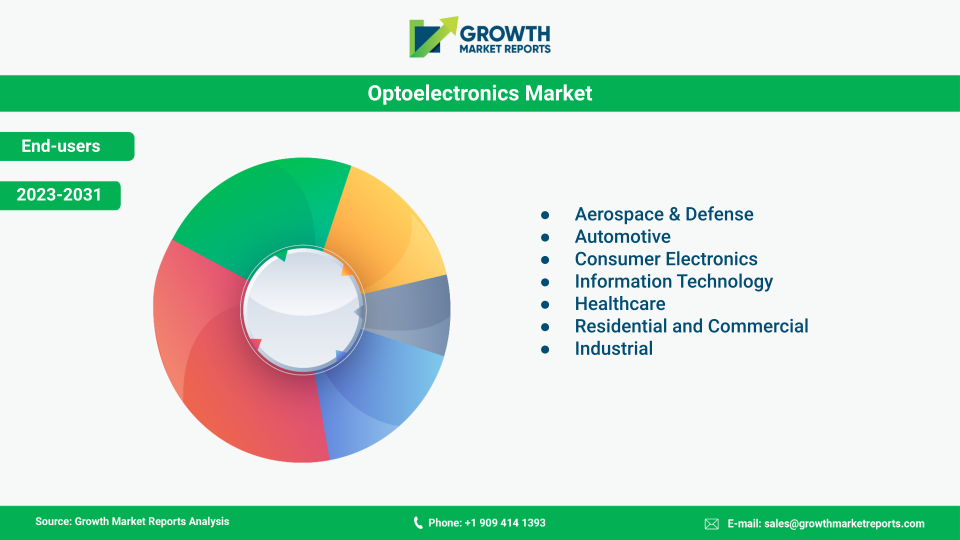
The end-user segment of the optoelectronics market is categorized into residential, commercial, industrial, and other specialized users. Residential applications are primarily driven by the adoption of LED lighting, smart home devices, and photovoltaic solar panels. The increasing focus on energy efficiency, coupled with government incentives and rising consumer awareness, is accelerating the penetration of optoelectronic technologies in homes worldwide. Smart lighting systems, security cameras, and home automation devices are becoming commonplace, supported by continuous advancements in optoelectronic components that offer enhanced performance and user convenience.

Commercial end-users encompass a wide range of sectors, including retail, hospitality, office spaces, and entertainment venues. The demand for energy-efficient lighting, high-resolution displays, and advanced security systems is driving the adoption of optoelectronics in commercial environments. Retailers are increasingly leveraging digital signage and interactive displays to enhance customer engagement, while hotels and office buildings are adopting smart lighting and building automation systems to optimize energy consumption and improve occupant comfort. The integration of optoelectronic solutions in commercial settings is also being supported by regulatory mandates and sustainability initiatives aimed at reducing carbon footprints.

The industrial sector represents a substantial and growing market for optoelectronic technologies, particularly in manufacturing, process automation, and quality control. Industrial end-users rely on optoelectronic sensors, laser diodes, and imaging systems to achieve precise measurement, real-time monitoring, and enhanced safety in complex operational environments. The adoption of advanced manufacturing techniques, such as additive manufacturing and robotics, is further driving the need for high-performance optoelectronic components capable of supporting automation and data-driven decision-making. As industries continue to embrace digital transformation and smart factory concepts, the demand for reliable and scalable optoelectronic solutions is expected to rise steadily.

Other end-users, including government agencies, educational institutions, and research organizations, are also contributing to the growth of the optoelectronics market. These entities are leveraging optoelectronic technologies for specialized applications such as scientific research, defense systems, and public infrastructure projects. The versatility and adaptability of optoelectronic components make them suitable for a wide range of end-user requirements, ensuring sustained market growth across diverse sectors and geographies.

Opportunities & Threats

The optoelectronics market presents a multitude of opportunities for growth and innovation, particularly in the areas of smart cities, renewable energy, and advanced healthcare solutions. The global shift towards sustainable urban development is creating significant demand for energy-efficient lighting, smart surveillance systems, and integrated communication networks—all of which rely heavily on optoelectronic components. The integration of optoelectronics with emerging technologies such as artificial intelligence, machine learning, and IoT is opening new avenues for intelligent systems that can optimize energy usage, enhance public safety, and improve quality of life. Furthermore, the ongoing expansion of renewable energy infrastructure, particularly solar power, is driving investments in high-efficiency photovoltaic cells and energy storage solutions, offering substantial growth potential for market participants.

Another major opportunity lies in the healthcare sector, where the convergence of optoelectronics and digital health technologies is transforming patient care and diagnostics. The development of high-resolution imaging systems, wearable health monitors, and minimally invasive surgical devices is enabling earlier detection, personalized treatment, and improved patient outcomes. The increasing prevalence of chronic diseases, aging populations, and the need for remote healthcare solutions are driving continuous innovation in optoelectronic medical devices. Additionally, the emergence of telemedicine and digital pathology is creating new opportunities for optoelectronic imaging and communication technologies that can support real-time diagnostics and remote consultations.

Despite these opportunities, the optoelectronics market faces several threats and restraining factors that could impact its growth trajectory. One of the primary challenges is the high initial cost of advanced optoelectronic components, particularly those based on compound semiconductors such as GaN and SiC. While the long-term benefits of energy efficiency and performance are well-established, the upfront investment required for adoption can be a barrier for cost-sensitive markets and small to medium-sized enterprises. Additionally, the market is subject to supply chain disruptions, fluctuations in raw material prices, and the complexities associated with semiconductor manufacturing. Intellectual property issues and the need for continuous innovation to stay ahead of competitors further compound these challenges, necessitating strategic investments in research and development and robust risk management practices.

Regional Outlook

The Asia Pacific region continues to lead the global optoelectronics market, with a market size of USD 34.7 billion in 2024. This dominance is driven by the presence of major electronics manufacturing hubs in countries such as China, Japan, South Korea, and Taiwan. The region benefits from a robust supply chain, significant investments in research and development, and a rapidly expanding consumer electronics market. Asia Pacific is also witnessing substantial growth in automotive and industrial automation applications, supported by government initiatives to promote smart manufacturing and energy efficiency. The region is expected to maintain a strong growth trajectory, with a projected CAGR of 10.1% through 2033, outpacing other regions due to its dynamic industrial base and technological leadership.

In North America, the optoelectronics market reached USD 18.2 billion in 2024, with steady demand emanating from the healthcare, telecommunications, and automotive sectors. The region is characterized by a high level of innovation, strong intellectual property protection, and a well-established ecosystem of technology companies and research institutions. The adoption of advanced optoelectronic solutions in areas such as autonomous vehicles, smart infrastructure, and digital health is driving continuous market expansion. Furthermore, government support for renewable energy and energy efficiency initiatives is contributing to the uptake of photovoltaic and LED technologies in residential and commercial applications.

Europe accounted for USD 14.8 billion in 2024, with a focus on sustainability, industrial automation, and advanced healthcare solutions. The region is home to several leading optoelectronics manufacturers and benefits from strong regulatory support for energy-efficient technologies. The automotive industry, in particular, is a key driver of demand, with European automakers at the forefront of integrating optoelectronic sensors and lighting systems into next-generation vehicles. Additionally, the increasing adoption of smart city initiatives and the expansion of fiber-optic communication networks are fueling growth in the telecommunications and infrastructure sectors. Europe is expected to maintain a healthy growth rate, supported by ongoing investments in research, innovation, and sustainable development.

Optoelectronics Market Statistics

Competitor Outlook

The competitive landscape of the optoelectronics market is characterized by intense rivalry, rapid technological advancements, and a high degree of fragmentation. Leading players are continually investing in research and development to enhance product performance, reduce costs, and expand their portfolios to address emerging application areas. The market is witnessing a wave of strategic collaborations, mergers, and acquisitions as companies seek to strengthen their technological capabilities, gain access to new markets, and achieve economies of scale. Intellectual property protection and innovation are critical success factors, with companies vying to secure patents and develop proprietary technologies that offer a competitive edge.

Major players in the optoelectronics market are also focused on vertical integration, encompassing the entire value chain from material sourcing and semiconductor fabrication to device assembly and system integration. This approach enables them to maintain quality control, optimize manufacturing processes, and respond swiftly to changing market demands. Additionally, companies are increasingly prioritizing sustainability and environmental responsibility, with initiatives aimed at reducing energy consumption, minimizing waste, and developing eco-friendly products. The ability to deliver high-performance, reliable, and energy-efficient solutions is a key differentiator in this competitive market.

The market is also witnessing the emergence of innovative startups and niche players specializing in advanced materials, miniaturization, and application-specific solutions. These companies are leveraging their agility and specialized expertise to address unmet needs in areas such as medical imaging, autonomous vehicles, and smart infrastructure. Strategic partnerships with established players, research institutions, and government agencies are enabling these emerging companies to accelerate product development and commercialization. As the market continues to evolve, the competitive landscape is expected to become even more dynamic, with new entrants and disruptive technologies reshaping the industry.

Some of the major companies operating in the global optoelectronics market include Osram Opto Semiconductors, Hamamatsu Photonics, ON Semiconductor, Sony Corporation, Samsung Electronics, TT Electronics, Vishay Intertechnology, Sharp Corporation, and ROHM Semiconductor. Osram Opto Semiconductors is renowned for its leadership in LED and laser diode technologies, serving automotive, industrial, and consumer electronics markets. Hamamatsu Photonics specializes in advanced photonic devices and systems, with a strong focus on medical, scientific, and industrial applications. ON Semiconductor is a key player in power and signal management solutions, offering a broad portfolio of optoelectronic components for automotive, industrial, and consumer markets.

Sony Corporation and Samsung Electronics are global giants with diversified portfolios spanning image sensors, display technologies, and consumer electronics. Both companies are at the forefront of innovation, leveraging their extensive research and development capabilities to deliver cutting-edge optoelectronic solutions. TT Electronics and Vishay Intertechnology are recognized for their expertise in optoelectronic sensors, optocouplers, and power management devices, catering to a wide range of industrial and automotive applications. Sharp Corporation and ROHM Semiconductor are also prominent players, with strong competencies in LED lighting, display modules, and semiconductor devices.

These companies are continuously expanding their product offerings and geographic presence through strategic investments, partnerships, and acquisitions. Their commitment to innovation, quality, and customer satisfaction is driving the advancement of optoelectronic technologies and shaping the future of the industry. As the market continues to grow and diversify, the competitive landscape will remain dynamic, with established leaders and emerging players vying for market share and technological leadership.

Key Players

  • Sony Corporation
  • Samsung Electronics Co., Ltd.
  • Hamamatsu Photonics K.K.
  • Osram Licht AG
  • Sharp Corporation
  • Mitsubishi Electric Corporation
  • TT Electronics plc
  • Vishay Intertechnology, Inc.
  • ON Semiconductor Corporation
  • Broadcom Inc.
  • Texas Instruments Incorporated
  • ROHM Co., Ltd.
  • Nichia Corporation
  • Cree, Inc. (now Wolfspeed, Inc.)
  • Finisar Corporation (now part of II-VI Incorporated)
  • Excelitas Technologies Corp.
  • Lumentum Holdings Inc.
  • AMS AG
  • Thorlabs, Inc.
  • Panasonic Corporation
Optoelectronics Market Overview

Segments

The Optoelectronics market has been segmented on the basis of

Component

  • LEDs
  • Photovoltaic Cells
  • Laser Diodes
  • Image Sensors
  • Optocouplers
  • Others

Material

  • Gallium Nitride
  • Gallium Arsenide
  • Silicon Carbide
  • Silicon
  • Others

Application

  • Consumer Electronics
  • Automotive
  • Healthcare
  • Telecommunications
  • Industrial
  • Aerospace & Defense
  • Others

End-User

  • Residential
  • Commercial
  • Industrial
  • Others

Competitive Landscape

Key players in the global optoelectronic market are Avago Technologies, JDSU, Fujitsu, Oplink Communications LLC, Broadex Technologies, Sony Corp., Finisar, Sharp Corp., Oclaro Inc., Toshiba Corp., Accelink Technologies, Panasonic Corp., NeoPhotonics, BetaLED, Browave, and Philips. Companies are focusing on improving their product offerings by engaging in mergers and acquisitions.
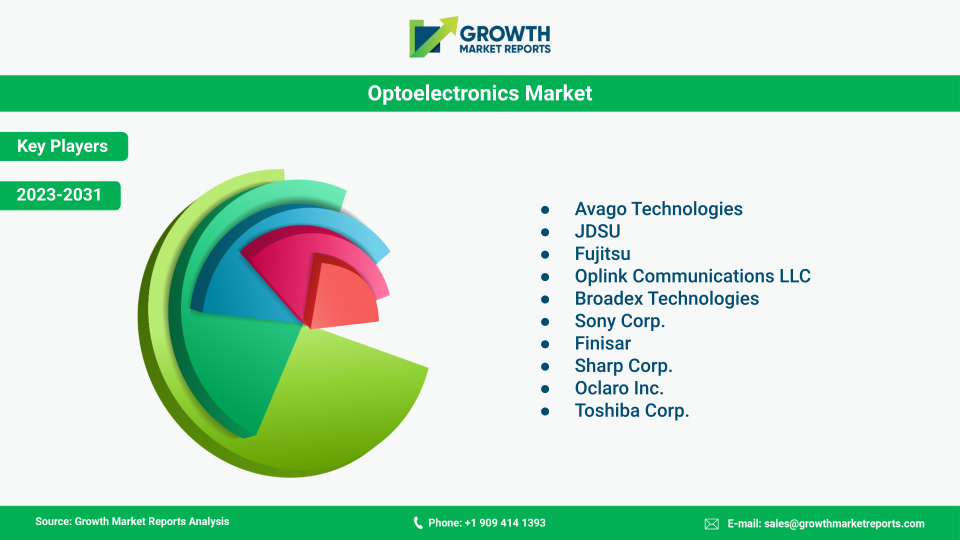

Optoelectronics Market Key Players

Frequently Asked Questions

Opportunities include smart city development, renewable energy expansion, advanced healthcare solutions, integration with AI and IoT, and the growth of high-speed telecommunications infrastructure.

Major players include Sony Corporation, Samsung Electronics, Hamamatsu Photonics, Osram Opto Semiconductors, Sharp Corporation, ON Semiconductor, TT Electronics, Vishay Intertechnology, and ROHM Semiconductor.

Challenges include high initial costs for advanced components, supply chain disruptions, raw material price fluctuations, and the need for continuous innovation to stay competitive.

In automotive, optoelectronics enable advanced safety systems, adaptive lighting, and autonomous driving. In healthcare, they power diagnostic imaging, minimally invasive surgery, and patient monitoring systems.

Optoelectronics are widely used in consumer electronics, automotive, healthcare, telecommunications, industrial automation, and aerospace & defense sectors.

Common materials include gallium nitride (GaN), gallium arsenide (GaAs), silicon carbide (SiC), and silicon. These materials are chosen for their efficiency, performance, and suitability for various applications.

The major components include LEDs, photovoltaic cells, laser diodes, image sensors, and optocouplers. LEDs hold the largest share due to their widespread use in lighting, displays, and automotive applications.

Asia Pacific dominates the global optoelectronics market, followed by North America and Europe. Asia Pacific's leadership is supported by major semiconductor manufacturers, a robust consumer electronics industry, and significant infrastructure investments.

Key growth drivers include rising demand for energy-efficient electronic components, rapid advancements in semiconductor materials, proliferation of smart consumer devices, and the global push for sustainability and energy efficiency.

The global optoelectronics market reached USD 78.4 billion in 2024 and is projected to grow at a CAGR of 9.2%, reaching USD 170.1 billion by 2033.

Table Of Content

Chapter 1 Executive Summary
Chapter 2 Assumptions and Acronyms Used
Chapter 3 Research Methodology
Chapter 4 Optoelectronics Market Overview
   4.1 Introduction
      4.1.1 Market Taxonomy
      4.1.2 Market Definition
      4.1.3 Macro-Economic Factors Impacting the Market Growth
   4.2 Optoelectronics Market Dynamics
      4.2.1 Market Drivers
      4.2.2 Market Restraints
      4.2.3 Market Opportunity
   4.3 Optoelectronics Market - Supply Chain Analysis
      4.3.1 List of Key Suppliers
      4.3.2 List of Key Distributors
      4.3.3 List of Key Consumers
   4.4 Key Forces Shaping the Optoelectronics Market
      4.4.1 Bargaining Power of Suppliers
      4.4.2 Bargaining Power of Buyers
      4.4.3 Threat of Substitution
      4.4.4 Threat of New Entrants
      4.4.5 Competitive Rivalry
   4.5 Global Optoelectronics Market Size & Forecast, 2023-2032
      4.5.1 Optoelectronics Market Size and Y-o-Y Growth
      4.5.2 Optoelectronics Market Absolute $ Opportunity

Chapter 5 Global Optoelectronics Market Analysis and Forecast By Component
   5.1 Introduction
      5.1.1 Key Market Trends & Growth Opportunities By Component
      5.1.2 Basis Point Share (BPS) Analysis By Component
      5.1.3 Absolute $ Opportunity Assessment By Component
   5.2 Optoelectronics Market Size Forecast By Component
      5.2.1 LEDs
      5.2.2 Photovoltaic Cells
      5.2.3 Laser Diodes
      5.2.4 Image Sensors
      5.2.5 Optocouplers
      5.2.6 Others
   5.3 Market Attractiveness Analysis By Component

Chapter 6 Global Optoelectronics Market Analysis and Forecast By Material
   6.1 Introduction
      6.1.1 Key Market Trends & Growth Opportunities By Material
      6.1.2 Basis Point Share (BPS) Analysis By Material
      6.1.3 Absolute $ Opportunity Assessment By Material
   6.2 Optoelectronics Market Size Forecast By Material
      6.2.1 Gallium Nitride
      6.2.2 Gallium Arsenide
      6.2.3 Silicon Carbide
      6.2.4 Silicon
      6.2.5 Others
   6.3 Market Attractiveness Analysis By Material

Chapter 7 Global Optoelectronics Market Analysis and Forecast By Application
   7.1 Introduction
      7.1.1 Key Market Trends & Growth Opportunities By Application
      7.1.2 Basis Point Share (BPS) Analysis By Application
      7.1.3 Absolute $ Opportunity Assessment By Application
   7.2 Optoelectronics Market Size Forecast By Application
      7.2.1 Consumer Electronics
      7.2.2 Automotive
      7.2.3 Healthcare
      7.2.4 Telecommunications
      7.2.5 Industrial
      7.2.6 Aerospace & Defense
      7.2.7 Others
   7.3 Market Attractiveness Analysis By Application

Chapter 8 Global Optoelectronics Market Analysis and Forecast By End-User
   8.1 Introduction
      8.1.1 Key Market Trends & Growth Opportunities By End-User
      8.1.2 Basis Point Share (BPS) Analysis By End-User
      8.1.3 Absolute $ Opportunity Assessment By End-User
   8.2 Optoelectronics Market Size Forecast By End-User
      8.2.1 Residential
      8.2.2 Commercial
      8.2.3 Industrial
      8.2.4 Others
   8.3 Market Attractiveness Analysis By End-User

Chapter 9 Global Optoelectronics Market Analysis and Forecast by Region
   9.1 Introduction
      9.1.1 Key Market Trends & Growth Opportunities By Region
      9.1.2 Basis Point Share (BPS) Analysis By Region
      9.1.3 Absolute $ Opportunity Assessment By Region
   9.2 Optoelectronics Market Size Forecast By Region
      9.2.1 North America
      9.2.2 Europe
      9.2.3 Asia Pacific
      9.2.4 Latin America
      9.2.5 Middle East & Africa (MEA)
   9.3 Market Attractiveness Analysis By Region

Chapter 10 Coronavirus Disease (COVID-19) Impact 
   10.1 Introduction 
   10.2 Current & Future Impact Analysis 
   10.3 Economic Impact Analysis 
   10.4 Government Policies 
   10.5 Investment Scenario

Chapter 11 North America Optoelectronics Analysis and Forecast
   11.1 Introduction
   11.2 North America Optoelectronics Market Size Forecast by Country
      11.2.1 U.S.
      11.2.2 Canada
   11.3 Basis Point Share (BPS) Analysis by Country
   11.4 Absolute $ Opportunity Assessment by Country
   11.5 Market Attractiveness Analysis by Country
   11.6 North America Optoelectronics Market Size Forecast By Component
      11.6.1 LEDs
      11.6.2 Photovoltaic Cells
      11.6.3 Laser Diodes
      11.6.4 Image Sensors
      11.6.5 Optocouplers
      11.6.6 Others
   11.7 Basis Point Share (BPS) Analysis By Component 
   11.8 Absolute $ Opportunity Assessment By Component 
   11.9 Market Attractiveness Analysis By Component
   11.10 North America Optoelectronics Market Size Forecast By Material
      11.10.1 Gallium Nitride
      11.10.2 Gallium Arsenide
      11.10.3 Silicon Carbide
      11.10.4 Silicon
      11.10.5 Others
   11.11 Basis Point Share (BPS) Analysis By Material 
   11.12 Absolute $ Opportunity Assessment By Material 
   11.13 Market Attractiveness Analysis By Material
   11.14 North America Optoelectronics Market Size Forecast By Application
      11.14.1 Consumer Electronics
      11.14.2 Automotive
      11.14.3 Healthcare
      11.14.4 Telecommunications
      11.14.5 Industrial
      11.14.6 Aerospace & Defense
      11.14.7 Others
   11.15 Basis Point Share (BPS) Analysis By Application 
   11.16 Absolute $ Opportunity Assessment By Application 
   11.17 Market Attractiveness Analysis By Application
   11.18 North America Optoelectronics Market Size Forecast By End-User
      11.18.1 Residential
      11.18.2 Commercial
      11.18.3 Industrial
      11.18.4 Others
   11.19 Basis Point Share (BPS) Analysis By End-User 
   11.20 Absolute $ Opportunity Assessment By End-User 
   11.21 Market Attractiveness Analysis By End-User

Chapter 12 Europe Optoelectronics Analysis and Forecast
   12.1 Introduction
   12.2 Europe Optoelectronics Market Size Forecast by Country
      12.2.1 Germany
      12.2.2 France
      12.2.3 Italy
      12.2.4 U.K.
      12.2.5 Spain
      12.2.6 Russia
      12.2.7 Rest of Europe
   12.3 Basis Point Share (BPS) Analysis by Country
   12.4 Absolute $ Opportunity Assessment by Country
   12.5 Market Attractiveness Analysis by Country
   12.6 Europe Optoelectronics Market Size Forecast By Component
      12.6.1 LEDs
      12.6.2 Photovoltaic Cells
      12.6.3 Laser Diodes
      12.6.4 Image Sensors
      12.6.5 Optocouplers
      12.6.6 Others
   12.7 Basis Point Share (BPS) Analysis By Component 
   12.8 Absolute $ Opportunity Assessment By Component 
   12.9 Market Attractiveness Analysis By Component
   12.10 Europe Optoelectronics Market Size Forecast By Material
      12.10.1 Gallium Nitride
      12.10.2 Gallium Arsenide
      12.10.3 Silicon Carbide
      12.10.4 Silicon
      12.10.5 Others
   12.11 Basis Point Share (BPS) Analysis By Material 
   12.12 Absolute $ Opportunity Assessment By Material 
   12.13 Market Attractiveness Analysis By Material
   12.14 Europe Optoelectronics Market Size Forecast By Application
      12.14.1 Consumer Electronics
      12.14.2 Automotive
      12.14.3 Healthcare
      12.14.4 Telecommunications
      12.14.5 Industrial
      12.14.6 Aerospace & Defense
      12.14.7 Others
   12.15 Basis Point Share (BPS) Analysis By Application 
   12.16 Absolute $ Opportunity Assessment By Application 
   12.17 Market Attractiveness Analysis By Application
   12.18 Europe Optoelectronics Market Size Forecast By End-User
      12.18.1 Residential
      12.18.2 Commercial
      12.18.3 Industrial
      12.18.4 Others
   12.19 Basis Point Share (BPS) Analysis By End-User 
   12.20 Absolute $ Opportunity Assessment By End-User 
   12.21 Market Attractiveness Analysis By End-User

Chapter 13 Asia Pacific Optoelectronics Analysis and Forecast
   13.1 Introduction
   13.2 Asia Pacific Optoelectronics Market Size Forecast by Country
      13.2.1 China
      13.2.2 Japan
      13.2.3 South Korea
      13.2.4 India
      13.2.5 Australia
      13.2.6 South East Asia (SEA)
      13.2.7 Rest of Asia Pacific (APAC)
   13.3 Basis Point Share (BPS) Analysis by Country
   13.4 Absolute $ Opportunity Assessment by Country
   13.5 Market Attractiveness Analysis by Country
   13.6 Asia Pacific Optoelectronics Market Size Forecast By Component
      13.6.1 LEDs
      13.6.2 Photovoltaic Cells
      13.6.3 Laser Diodes
      13.6.4 Image Sensors
      13.6.5 Optocouplers
      13.6.6 Others
   13.7 Basis Point Share (BPS) Analysis By Component 
   13.8 Absolute $ Opportunity Assessment By Component 
   13.9 Market Attractiveness Analysis By Component
   13.10 Asia Pacific Optoelectronics Market Size Forecast By Material
      13.10.1 Gallium Nitride
      13.10.2 Gallium Arsenide
      13.10.3 Silicon Carbide
      13.10.4 Silicon
      13.10.5 Others
   13.11 Basis Point Share (BPS) Analysis By Material 
   13.12 Absolute $ Opportunity Assessment By Material 
   13.13 Market Attractiveness Analysis By Material
   13.14 Asia Pacific Optoelectronics Market Size Forecast By Application
      13.14.1 Consumer Electronics
      13.14.2 Automotive
      13.14.3 Healthcare
      13.14.4 Telecommunications
      13.14.5 Industrial
      13.14.6 Aerospace & Defense
      13.14.7 Others
   13.15 Basis Point Share (BPS) Analysis By Application 
   13.16 Absolute $ Opportunity Assessment By Application 
   13.17 Market Attractiveness Analysis By Application
   13.18 Asia Pacific Optoelectronics Market Size Forecast By End-User
      13.18.1 Residential
      13.18.2 Commercial
      13.18.3 Industrial
      13.18.4 Others
   13.19 Basis Point Share (BPS) Analysis By End-User 
   13.20 Absolute $ Opportunity Assessment By End-User 
   13.21 Market Attractiveness Analysis By End-User

Chapter 14 Latin America Optoelectronics Analysis and Forecast
   14.1 Introduction
   14.2 Latin America Optoelectronics Market Size Forecast by Country
      14.2.1 Brazil
      14.2.2 Mexico
      14.2.3 Rest of Latin America (LATAM)
   14.3 Basis Point Share (BPS) Analysis by Country
   14.4 Absolute $ Opportunity Assessment by Country
   14.5 Market Attractiveness Analysis by Country
   14.6 Latin America Optoelectronics Market Size Forecast By Component
      14.6.1 LEDs
      14.6.2 Photovoltaic Cells
      14.6.3 Laser Diodes
      14.6.4 Image Sensors
      14.6.5 Optocouplers
      14.6.6 Others
   14.7 Basis Point Share (BPS) Analysis By Component 
   14.8 Absolute $ Opportunity Assessment By Component 
   14.9 Market Attractiveness Analysis By Component
   14.10 Latin America Optoelectronics Market Size Forecast By Material
      14.10.1 Gallium Nitride
      14.10.2 Gallium Arsenide
      14.10.3 Silicon Carbide
      14.10.4 Silicon
      14.10.5 Others
   14.11 Basis Point Share (BPS) Analysis By Material 
   14.12 Absolute $ Opportunity Assessment By Material 
   14.13 Market Attractiveness Analysis By Material
   14.14 Latin America Optoelectronics Market Size Forecast By Application
      14.14.1 Consumer Electronics
      14.14.2 Automotive
      14.14.3 Healthcare
      14.14.4 Telecommunications
      14.14.5 Industrial
      14.14.6 Aerospace & Defense
      14.14.7 Others
   14.15 Basis Point Share (BPS) Analysis By Application 
   14.16 Absolute $ Opportunity Assessment By Application 
   14.17 Market Attractiveness Analysis By Application
   14.18 Latin America Optoelectronics Market Size Forecast By End-User
      14.18.1 Residential
      14.18.2 Commercial
      14.18.3 Industrial
      14.18.4 Others
   14.19 Basis Point Share (BPS) Analysis By End-User 
   14.20 Absolute $ Opportunity Assessment By End-User 
   14.21 Market Attractiveness Analysis By End-User

Chapter 15 Middle East & Africa (MEA) Optoelectronics Analysis and Forecast
   15.1 Introduction
   15.2 Middle East & Africa (MEA) Optoelectronics Market Size Forecast by Country
      15.2.1 Saudi Arabia
      15.2.2 South Africa
      15.2.3 UAE
      15.2.4 Rest of Middle East & Africa (MEA)
   15.3 Basis Point Share (BPS) Analysis by Country
   15.4 Absolute $ Opportunity Assessment by Country
   15.5 Market Attractiveness Analysis by Country
   15.6 Middle East & Africa (MEA) Optoelectronics Market Size Forecast By Component
      15.6.1 LEDs
      15.6.2 Photovoltaic Cells
      15.6.3 Laser Diodes
      15.6.4 Image Sensors
      15.6.5 Optocouplers
      15.6.6 Others
   15.7 Basis Point Share (BPS) Analysis By Component 
   15.8 Absolute $ Opportunity Assessment By Component 
   15.9 Market Attractiveness Analysis By Component
   15.10 Middle East & Africa (MEA) Optoelectronics Market Size Forecast By Material
      15.10.1 Gallium Nitride
      15.10.2 Gallium Arsenide
      15.10.3 Silicon Carbide
      15.10.4 Silicon
      15.10.5 Others
   15.11 Basis Point Share (BPS) Analysis By Material 
   15.12 Absolute $ Opportunity Assessment By Material 
   15.13 Market Attractiveness Analysis By Material
   15.14 Middle East & Africa (MEA) Optoelectronics Market Size Forecast By Application
      15.14.1 Consumer Electronics
      15.14.2 Automotive
      15.14.3 Healthcare
      15.14.4 Telecommunications
      15.14.5 Industrial
      15.14.6 Aerospace & Defense
      15.14.7 Others
   15.15 Basis Point Share (BPS) Analysis By Application 
   15.16 Absolute $ Opportunity Assessment By Application 
   15.17 Market Attractiveness Analysis By Application
   15.18 Middle East & Africa (MEA) Optoelectronics Market Size Forecast By End-User
      15.18.1 Residential
      15.18.2 Commercial
      15.18.3 Industrial
      15.18.4 Others
   15.19 Basis Point Share (BPS) Analysis By End-User 
   15.20 Absolute $ Opportunity Assessment By End-User 
   15.21 Market Attractiveness Analysis By End-User

Chapter 16 Competition Landscape 
   16.1 Optoelectronics Market: Competitive Dashboard
   16.2 Global Optoelectronics Market: Market Share Analysis, 2023
   16.3 Company Profiles (Details – Overview, Financials, Developments, Strategy) 
      16.3.1 Sony Corporation
Samsung Electronics Co., Ltd.
Hamamatsu Photonics K.K.
Osram Licht AG
Sharp Corporation
Mitsubishi Electric Corporation
TT Electronics plc
Vishay Intertechnology, Inc.
ON Semiconductor Corporation
Broadcom Inc.
Texas Instruments Incorporated
ROHM Co., Ltd.
Nichia Corporation
Cree, Inc. (now Wolfspeed, Inc.)
Finisar Corporation (now part of II-VI Incorporated)
Excelitas Technologies Corp.
Lumentum Holdings Inc.
AMS AG
Thorlabs, Inc.
Panasonic Corporation

Methodology

Our Clients

Deloitte
Dassault Aviation
Nestle SA
The John Holland Group
Honda Motor Co. Ltd.
sinopec
Pfizer
Siemens Healthcare