SMS Marketing Market Research Report 2033

SMS Marketing Market Research Report 2033

Segments - by Component (Software, Services), by Deployment Mode (Cloud-Based, On-Premises), by Enterprise Size (Small and Medium Enterprises, Large Enterprises), by Application (Promotional Campaigns, Customer Relationship Management, Transactional Messages, Others), by End-User (Retail & E-commerce, BFSI, Healthcare, IT & Telecom, Travel & Hospitality, Others)

https://growthmarketreports.com/Raksha
Author : Raksha Sharma
https://growthmarketreports.com/Vaibhav
Fact-checked by : V. Chandola
https://growthmarketreports.com/Shruti
Editor : Shruti Bhat

Upcoming | Report ID :ICT-SE-458 | 4.0 Rating | 28 Reviews | 295 Pages | Format : Docx PDF

Report Description


SMS Marketing Market Outlook

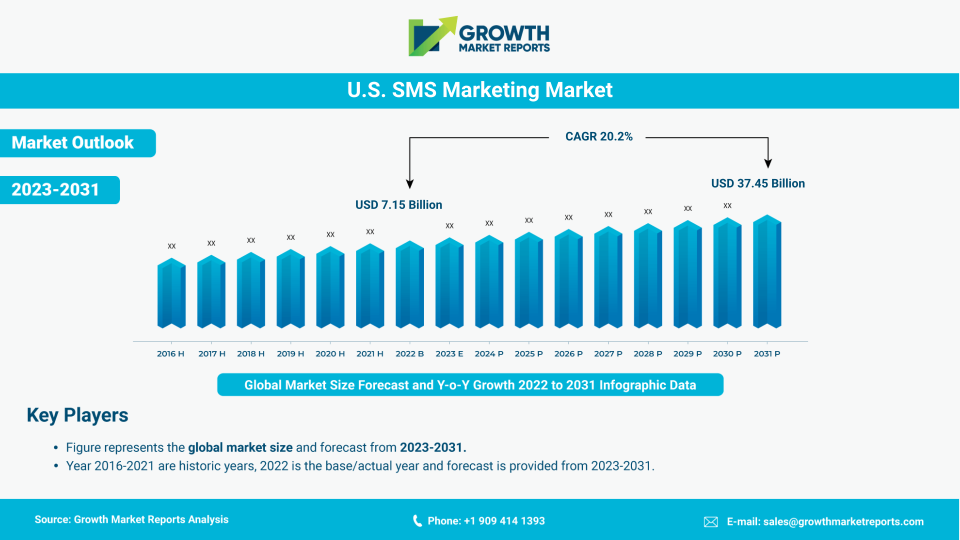
According to our latest research, the global SMS marketing market size reached USD 21.5 billion in 2024, reflecting the surging adoption of mobile-based communication across industries worldwide. With a robust compound annual growth rate (CAGR) of 19.2% projected for the forecast period, the market is expected to soar to USD 61.1 billion by 2033. This remarkable expansion is primarily driven by the growing penetration of mobile devices, the increasing demand for personalized and real-time customer engagement, and the cost-effectiveness of SMS as a marketing channel. As businesses continue to prioritize direct and immediate communication with their audiences, SMS marketing stands out as a vital tool for enhancing customer outreach and retention.

One of the most significant growth factors propelling the SMS marketing market is the unparalleled reach and immediacy of SMS as a communication medium. Unlike email or social media channels, SMS messages boast an open rate of over 98% within minutes of delivery, ensuring that marketing campaigns achieve maximum visibility and engagement. This high open rate, combined with the ubiquity of mobile phones, enables brands to deliver time-sensitive promotions, alerts, and transactional updates directly to consumers. Moreover, SMS marketing circumvents issues such as spam filters and algorithmic restrictions, which often limit the effectiveness of other digital marketing avenues. As a result, enterprises across sectors are increasingly leveraging SMS to drive customer acquisition, foster loyalty, and boost conversion rates.

Another critical driver of market growth is the integration of SMS marketing with advanced analytics and automation platforms. The evolution of marketing technology has enabled businesses to segment audiences, personalize message content, and automate campaign delivery based on user behavior and preferences. This level of sophistication enhances the relevance and impact of SMS campaigns, leading to higher response rates and improved return on investment (ROI). Additionally, the rise of omnichannel marketing strategies has positioned SMS as a complementary touchpoint alongside email, social media, and push notifications, further amplifying its strategic value. The ability to track campaign performance in real-time and optimize messaging tactics is fueling widespread adoption among both large enterprises and small and medium-sized businesses (SMEs).

Regulatory developments and consumer privacy concerns are also shaping the evolution of the SMS marketing market. With the implementation of data protection frameworks such as the General Data Protection Regulation (GDPR) in Europe and the California Consumer Privacy Act (CCPA) in the United States, businesses are prioritizing compliant and permission-based marketing practices. These regulations, while presenting certain challenges, are fostering a more transparent and trustworthy environment for SMS marketing. Companies that adhere to opt-in requirements and provide clear value propositions are witnessing higher customer trust and engagement. Furthermore, advancements in mobile security and authentication mechanisms are enhancing the reliability and safety of SMS communications, thereby supporting sustained market growth.

From a regional perspective, North America continues to dominate the SMS marketing market, accounting for the largest share in 2024. This leadership is attributed to the high smartphone penetration, advanced telecom infrastructure, and the presence of major technology providers in the region. Meanwhile, Asia Pacific is emerging as the fastest-growing market, driven by the rapid digitalization of businesses, expanding mobile user base, and increasing investments in mobile marketing solutions. Europe follows closely, benefiting from strong regulatory frameworks and a mature digital ecosystem. Latin America and the Middle East & Africa are also witnessing steady growth, fueled by rising mobile adoption and the proliferation of e-commerce and digital services. As global enterprises seek to expand their reach and enhance customer engagement, regional dynamics will continue to influence the trajectory of the SMS marketing market.

The rise of SMSing Platform solutions is revolutionizing the way businesses approach SMS marketing. These platforms provide a comprehensive suite of tools that enable companies to manage their messaging campaigns with greater efficiency and precision. By offering features such as bulk messaging, contact management, and real-time analytics, SMSing Platforms empower businesses to reach their target audiences more effectively. This technological advancement is particularly beneficial for enterprises looking to enhance their customer engagement strategies and streamline communication processes. As more organizations recognize the value of these platforms, the demand for integrated and user-friendly SMSing solutions is expected to grow, further driving the expansion of the SMS marketing market.

Global SMSing Industry Outlook

Component Analysis

The SMS marketing market is segmented by component into software and services, each playing a pivotal role in the overall ecosystem. Software solutions form the backbone of SMS marketing operations, enabling businesses to create, schedule, and manage bulk messaging campaigns with ease. These platforms offer a range of functionalities, including contact management, message personalization, campaign analytics, and integration with other marketing tools such as CRM and email platforms. The demand for robust and scalable SMS marketing software is particularly high among organizations seeking to streamline their communication workflows and maximize campaign effectiveness. As technology evolves, software providers are continuously enhancing their offerings with features such as AI-driven segmentation, real-time reporting, and automation capabilities, catering to the diverse needs of enterprises across industries.

On the other hand, services encompass a wide array of offerings, including managed campaign services, consulting, integration, and technical support. Many businesses, especially SMEs and those with limited in-house marketing expertise, rely on third-party service providers to design, execute, and optimize their SMS marketing initiatives. These service providers bring specialized knowledge, best practices, and access to advanced tools, ensuring that campaigns are tailored to specific business objectives and audience segments. The services segment is also witnessing growth due to the increasing complexity of compliance requirements and the need for ongoing support in navigating regulatory landscapes. As organizations strive to achieve measurable results from their SMS marketing investments, the demand for value-added services is expected to remain strong.

A notable trend within the component segment is the convergence of software and services into integrated solutions. Many vendors are offering end-to-end platforms that combine powerful software capabilities with dedicated support and consulting services. This approach simplifies vendor management, accelerates time-to-market, and enhances the overall user experience. Integrated solutions are particularly appealing to large enterprises with complex marketing needs, as well as SMEs looking for turnkey solutions that minimize operational overhead. The ability to access comprehensive support, from campaign strategy to execution and analysis, is driving adoption among businesses seeking to maximize the impact of their SMS marketing efforts.

The competitive landscape within the component segment is characterized by continuous innovation and strategic partnerships. Leading software providers are investing in research and development to introduce new features, improve user interfaces, and enhance integration capabilities. Meanwhile, service providers are expanding their offerings to include advanced analytics, AI-driven insights, and multi-channel campaign management. Strategic collaborations between software vendors and telecom operators are also emerging, enabling seamless connectivity and improved message delivery rates. As the market matures, differentiation based on technology, service quality, and customer support will be key to sustaining growth and capturing market share.

In the realm of secure communications, SMS OTP Management has emerged as a critical component for businesses aiming to safeguard their digital interactions. One-time passwords (OTPs) sent via SMS provide an additional layer of security, ensuring that only authorized users can access sensitive information or complete transactions. This method of authentication is widely adopted across industries such as banking, e-commerce, and healthcare, where data protection is paramount. The integration of SMS OTP Management into existing systems enhances security protocols and builds customer trust, making it an indispensable tool for organizations committed to protecting their digital assets. As cyber threats continue to evolve, the role of SMS OTP Management in fortifying security measures is set to become even more significant.

Report Scope

Attributes Details
Report Title SMS Marketing Market Research Report 2033
By Component Software, Services
By Deployment Mode Cloud-Based, On-Premises
By Enterprise Size Small and Medium Enterprises, Large Enterprises
By Application Promotional Campaigns, Customer Relationship Management, Transactional Messages, Others
By End-User Retail & E-commerce, BFSI, Healthcare, IT & Telecom, Travel & Hospitality, Others
Regions Covered North America, Europe, APAC, Latin America, MEA
Base Year 2024
Historic Data 2018-2023
Forecast Period 2025-2033
Number of Pages 295
Number of Tables & Figures 324
Customization Available Yes, the report can be customized as per your need.

Deployment Mode Analysis

Deployment mode is a critical consideration for organizations adopting SMS marketing solutions, with options spanning cloud-based and on-premises models. Cloud-based deployment has gained significant traction in recent years, owing to its scalability, flexibility, and cost-effectiveness. Cloud solutions enable businesses to launch and manage SMS campaigns from anywhere, leveraging centralized platforms that support real-time collaboration and data access. The pay-as-you-go pricing model offered by cloud providers is particularly attractive to SMEs and startups, as it minimizes upfront capital expenditure and allows for seamless scaling based on campaign volume. Additionally, cloud-based platforms facilitate rapid updates, integration with other digital marketing tools, and robust data security measures, making them the preferred choice for a growing number of organizations.

On-premises deployment, while less prevalent than cloud-based models, remains relevant for certain businesses, particularly those with stringent data security and compliance requirements. Organizations in regulated industries such as banking, healthcare, and government may opt for on-premises solutions to maintain full control over their messaging infrastructure and sensitive customer data. These deployments offer enhanced customization and integration capabilities, allowing businesses to tailor SMS marketing platforms to their specific operational needs. However, on-premises solutions typically involve higher upfront costs, longer implementation timelines, and ongoing maintenance responsibilities, which can be prohibitive for smaller organizations. As a result, the market share of on-premises deployment is gradually declining in favor of more agile and cost-efficient cloud-based alternatives.

A key trend in the deployment mode segment is the emergence of hybrid models, which combine the advantages of both cloud and on-premises solutions. Hybrid deployments enable organizations to leverage cloud scalability and accessibility while retaining control over critical data and processes within their own infrastructure. This approach is particularly beneficial for large enterprises with distributed operations or unique compliance needs, as it offers the flexibility to balance security and performance requirements. As businesses increasingly adopt digital transformation strategies, the demand for hybrid deployment options is expected to grow, driving innovation and differentiation among SMS marketing solution providers.

The choice of deployment mode also has implications for integration, scalability, and total cost of ownership. Cloud-based platforms typically offer seamless integration with third-party applications, APIs, and marketing automation tools, enabling businesses to orchestrate multi-channel campaigns and analyze performance across touchpoints. On-premises solutions, while offering greater control, may require additional investment in integration and customization. As organizations evaluate their deployment options, factors such as budget, IT resources, regulatory compliance, and long-term scalability will play a decisive role in shaping adoption trends within the SMS marketing market.

Enterprise Size Analysis

The SMS marketing market serves a diverse range of organizations, segmented by enterprise size into small and medium enterprises (SMEs) and large enterprises. SMEs represent a significant and rapidly growing segment, driven by their need for cost-effective and high-impact marketing solutions. SMS marketing offers SMEs an accessible and affordable channel to reach customers, promote products, and drive engagement without the need for extensive marketing budgets or technical expertise. The simplicity of SMS campaigns, coupled with the high open and response rates, makes it an ideal tool for SMEs looking to compete with larger players and establish a direct line of communication with their target audience. As digital literacy and mobile adoption increase among small businesses, the uptake of SMS marketing solutions is expected to accelerate further.

Large enterprises, on the other hand, leverage SMS marketing as part of comprehensive, multi-channel communication strategies. These organizations often operate at scale, managing complex customer databases and executing campaigns across multiple regions and languages. For large enterprises, SMS marketing serves as a critical touchpoint for delivering personalized promotions, transactional alerts, and customer service notifications. The integration of SMS platforms with enterprise resource planning (ERP), customer relationship management (CRM), and marketing automation systems enables large organizations to orchestrate seamless and data-driven campaigns. Additionally, the ability to track and analyze campaign performance in real-time supports continuous optimization and maximizes ROI. As competition intensifies and customer expectations evolve, large enterprises are increasingly investing in advanced SMS marketing solutions to maintain a competitive edge.

A notable trend within the enterprise size segment is the democratization of SMS marketing technology. Advances in cloud computing, automation, and user-friendly interfaces have made sophisticated SMS marketing tools accessible to businesses of all sizes. Vendors are offering scalable solutions that cater to the unique needs of SMEs and large enterprises alike, with flexible pricing models and customizable features. This democratization is leveling the playing field, enabling smaller organizations to compete effectively with larger counterparts and driving overall market growth. As the adoption of digital marketing channels continues to rise, the role of SMS marketing as a versatile and inclusive communication tool is set to expand across the enterprise spectrum.

Challenges and opportunities within this segment vary based on organizational size and resources. SMEs may face barriers related to budget constraints, limited technical expertise, and the need for simplified solutions. Addressing these challenges requires vendors to offer affordable, intuitive, and easy-to-implement platforms, along with comprehensive support and training services. Large enterprises, in contrast, prioritize scalability, integration capabilities, and advanced analytics to manage complex campaigns and large customer bases. As the market evolves, solution providers that can effectively address the distinct needs of both SMEs and large enterprises will be well-positioned to capture market share and drive innovation.

Application Analysis

The application landscape of the SMS marketing market is diverse, encompassing promotional campaigns, customer relationship management (CRM), transactional messages, and other specialized use cases. Promotional campaigns remain the most prevalent application, as businesses across industries leverage SMS to announce product launches, special offers, discounts, and events. The immediacy and high open rates of SMS make it an ideal channel for time-sensitive promotions, driving customer engagement and boosting sales conversions. Retailers, e-commerce platforms, and consumer brands are particularly active in this space, using SMS marketing to create urgency, incentivize purchases, and nurture customer loyalty.

Customer relationship management is another critical application area, with organizations using SMS to deliver personalized communications, appointment reminders, feedback requests, and loyalty program updates. SMS serves as a direct and unobtrusive channel for maintaining ongoing engagement with customers, fostering trust, and enhancing brand loyalty. The integration of SMS with CRM systems enables businesses to automate communication workflows, segment audiences, and tailor messages based on customer preferences and behavior. This level of personalization is key to building long-term relationships and maximizing customer lifetime value.

Transactional messages, including order confirmations, shipping notifications, account alerts, and payment reminders, represent a rapidly growing application segment. These messages are essential for providing timely and relevant information to customers, enhancing the overall customer experience and reducing friction in the transaction process. Industries such as banking, healthcare, and logistics rely heavily on SMS for critical notifications, leveraging its reliability and reach to ensure that customers receive important updates in real-time. The rise of two-factor authentication (2FA) and security alerts has further expanded the use of SMS for transactional purposes, highlighting its versatility and indispensability.

Beyond these core applications, SMS marketing is being utilized for a wide range of specialized use cases, including event management, internal communications, survey distribution, and emergency alerts. The adaptability of SMS as a communication tool enables organizations to address diverse business needs and respond to evolving market dynamics. As technology advances and integration capabilities improve, the scope of SMS marketing applications is expected to broaden, creating new opportunities for innovation and value creation across industries.

End-User Analysis

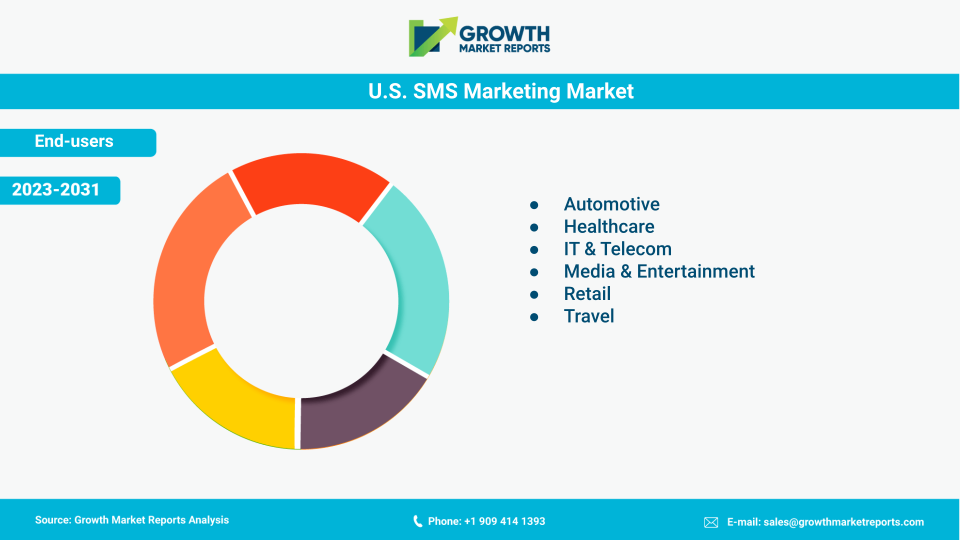
The SMS marketing market serves a broad array of end-users, with key segments including retail and e-commerce, banking, financial services and insurance (BFSI), healthcare, IT and telecom, travel and hospitality, and others. Retail and e-commerce businesses are among the most active adopters of SMS marketing, leveraging the channel to drive sales, promote exclusive offers, and enhance customer engagement. The ability to deliver personalized promotions and real-time updates directly to customersÂ’ mobile devices has made SMS an indispensable tool for retailers seeking to boost conversion rates and foster brand loyalty. As online shopping continues to grow, the role of SMS marketing in supporting omnichannel retail strategies is becoming increasingly prominent.

The BFSI sector relies heavily on SMS marketing for delivering transactional alerts, account notifications, security updates, and promotional offers. Financial institutions value the security, reliability, and immediacy of SMS for communicating critical information to customers, such as OTPs (one-time passwords), balance updates, and fraud alerts. The integration of SMS with digital banking platforms and CRM systems enables banks and insurers to provide seamless and personalized customer experiences, while also ensuring compliance with regulatory requirements. As digital transformation accelerates in the financial sector, the adoption of advanced SMS marketing solutions is expected to rise.

Healthcare organizations are increasingly turning to SMS marketing to improve patient engagement, streamline appointment management, and enhance care coordination. SMS reminders for appointments, medication adherence, and wellness tips help reduce no-shows, improve health outcomes, and strengthen patient-provider relationships. The COVID-19 pandemic has further underscored the importance of SMS as a channel for disseminating public health information, vaccination updates, and emergency alerts. As healthcare systems embrace digital health solutions, the use of SMS marketing for patient communication and outreach is set to expand.

Other key end-users include IT and telecom companies, which utilize SMS marketing for customer support, service notifications, and promotional campaigns. The travel and hospitality sector leverages SMS to deliver booking confirmations, travel updates, and personalized offers, enhancing the customer journey and driving repeat business. Across all end-user segments, the ability to deliver timely, relevant, and personalized communications directly to customersÂ’ mobile devices is driving the adoption and growth of SMS marketing solutions.

Opportunities & Threats

The SMS marketing market is poised for significant opportunities, driven by the rapid expansion of mobile connectivity and the proliferation of smartphones worldwide. As mobile internet access becomes more widespread, businesses have the potential to reach previously untapped customer segments, particularly in emerging markets. The integration of SMS marketing with advanced technologies such as artificial intelligence, machine learning, and big data analytics presents new avenues for innovation and differentiation. By leveraging AI-driven insights, businesses can optimize message timing, personalize content, and predict customer behavior, resulting in higher engagement and conversion rates. The emergence of rich communication services (RCS) and multimedia messaging is also opening up new possibilities for interactive and visually engaging campaigns, further enhancing the appeal of SMS marketing.

Another significant opportunity lies in the growing demand for omnichannel marketing solutions. As consumers increasingly interact with brands across multiple touchpoints, businesses are seeking integrated platforms that enable seamless communication and consistent messaging. SMS marketing, as a direct and reliable channel, is well-positioned to complement other digital marketing strategies such as email, social media, and push notifications. The ability to orchestrate coordinated campaigns across channels, track customer journeys, and analyze performance metrics in real-time is driving the adoption of multi-channel marketing platforms. Vendors that can offer comprehensive, easy-to-integrate SMS marketing solutions will be well-placed to capture market share and drive long-term growth.

Despite these opportunities, the market faces certain restraining factors, most notably regulatory challenges and evolving consumer privacy expectations. The implementation of stringent data protection laws such as GDPR and CCPA has increased the compliance burden on businesses, requiring them to obtain explicit consent, manage opt-outs, and ensure data security. Non-compliance can result in significant fines and reputational damage, making it imperative for organizations to prioritize privacy and transparency in their SMS marketing practices. Additionally, the risk of message fatigue and spam perceptions among consumers underscores the need for responsible and value-driven communication strategies. Vendors and businesses must continually adapt to changing regulations and consumer preferences to sustain growth and maintain customer trust.

Regional Outlook

North America leads the SMS marketing market, accounting for approximately USD 7.6 billion in market size in 2024. The regionÂ’s dominance is underpinned by high smartphone penetration, advanced telecommunications infrastructure, and the presence of major technology providers. Enterprises across sectors such as retail, BFSI, and healthcare are leveraging SMS marketing to enhance customer engagement and drive business outcomes. The United States, in particular, is a key contributor to regional growth, with businesses investing heavily in personalized and data-driven marketing strategies. As regulatory frameworks evolve and consumer expectations shift, North America is expected to maintain its leadership position, supported by ongoing innovation and digital transformation initiatives.

Asia Pacific is emerging as the fastest-growing region in the SMS marketing market, with a projected CAGR of 22.5% through 2033. The regionÂ’s rapid growth is fueled by the expanding mobile user base, increasing internet penetration, and the digitalization of businesses across sectors. Key markets such as China, India, Japan, and Southeast Asia are witnessing robust adoption of SMS marketing solutions, driven by the need to reach large and diverse customer populations. The proliferation of e-commerce, fintech, and digital health services is further accelerating demand for SMS-based communication. As businesses in Asia Pacific continue to embrace mobile-first strategies, the region is poised to capture a significant share of global market growth.

Europe holds a substantial share of the global SMS marketing market, valued at USD 5.2 billion in 2024. The region benefits from a mature digital ecosystem, strong regulatory frameworks, and high levels of consumer trust in digital communication channels. Countries such as the United Kingdom, Germany, and France are leading adopters of SMS marketing, particularly in sectors such as retail, BFSI, and travel. The emphasis on data privacy and compliance with regulations such as GDPR has fostered a culture of responsible and permission-based marketing. As European businesses continue to prioritize customer experience and digital engagement, the adoption of advanced SMS marketing solutions is expected to grow steadily.

SMSing Market Statistics

Competitor Outlook

The SMS marketing market is characterized by intense competition and a dynamic landscape, with numerous global and regional players vying for market share. The competitive environment is shaped by continuous innovation, strategic partnerships, and the entry of new entrants offering disruptive technologies. Leading vendors are differentiating themselves through the development of feature-rich platforms, robust integration capabilities, and superior customer support. The ability to deliver scalable, secure, and compliant solutions is a key differentiator, particularly as businesses navigate complex regulatory environments and evolving consumer expectations. As the market matures, consolidation is expected, with larger players acquiring niche providers to expand their product portfolios and geographic reach.

Innovation remains a cornerstone of competitive strategy in the SMS marketing market. Vendors are investing heavily in research and development to introduce advanced features such as AI-driven personalization, predictive analytics, and automated campaign management. The integration of SMS marketing platforms with broader marketing automation and CRM systems is enabling businesses to orchestrate seamless, multi-channel campaigns and gain deeper insights into customer behavior. Strategic partnerships with telecom operators, technology providers, and digital agencies are also playing a critical role in enhancing service delivery and expanding market presence. As customer demands evolve, vendors that can offer flexible, customizable, and future-proof solutions are well-positioned to succeed.

The market is also witnessing the emergence of specialized providers catering to specific industries or use cases. These niche players offer tailored solutions designed to address the unique needs of sectors such as healthcare, BFSI, and retail. By focusing on industry-specific requirements, compliance standards, and integration needs, these providers are able to deliver targeted value and build strong customer relationships. The rise of SaaS-based and API-driven SMS marketing solutions is further democratizing access to advanced marketing tools, enabling businesses of all sizes to benefit from the latest innovations.

Major companies operating in the global SMS marketing market include Twilio Inc., Infobip Ltd., Sinch AB, EZ Texting, Textlocal, MessageBird, and Clickatell. Twilio is renowned for its robust cloud communications platform and API-driven approach, enabling businesses to integrate SMS capabilities seamlessly into their applications and workflows. Infobip offers a comprehensive suite of omnichannel communication solutions, serving clients across industries with advanced analytics and automation features. Sinch specializes in cloud-based messaging and voice solutions, with a strong focus on scalability and global reach. EZ Texting and Textlocal are recognized for their user-friendly platforms and strong presence in the SME segment, offering affordable and intuitive SMS marketing solutions.

MessageBird and Clickatell are notable for their emphasis on global connectivity and multi-channel communication capabilities. These companies provide businesses with the tools to engage customers across SMS, voice, and chat platforms, supported by advanced analytics and integration options. The competitive landscape is further enriched by regional players and emerging startups, each contributing to the diversity and dynamism of the market. As competition intensifies, companies are prioritizing innovation, customer experience, and strategic partnerships to differentiate themselves and capture growth opportunities in the evolving SMS marketing landscape.

Key Players

  • Twilio
  • Infobip
  • Sinch
  • Vonage
  • MessageBird
  • EZ Texting
  • Textlocal
  • ClickSend
  • Plivo
  • Telesign
  • Kaleyra
  • OpenMarket
  • SlickText
  • SMSGlobal
  • Trumpia
  • Mozeo
  • TextMagic
  • SimpleTexting
  • Routee
  • Burst SMS
SMSing Market Overview

Segments

The SMS Marketing market has been segmented on the basis of

Component

  • Software
  • Services

Deployment Mode

  • Cloud-Based
  • On-Premises

Enterprise Size

  • Small and Medium Enterprises
  • Large Enterprises

Application

  • Promotional Campaigns
  • Customer Relationship Management
  • Transactional Messages
  • Others

End-User

  • Retail & E-commerce
  • BFSI
  • Healthcare
  • IT & Telecom
  • Travel & Hospitality
  • Others

Competitive Landscape

Some major players competing in the U.S. SMS marketing market include IBM Corporation; Amobee, Inc.; Infobip Ltd.; Chartboost; InMobi, Marketo; Slick Innovations, LLC; and EZ Texting. These players are actively adopting several business strategies such as mergers, acquisitions, partnerships, and others aiming to improve their product offerings and to grow their market share. The rapid development of services and several inventions of the products along with optimized costs are expected to increase the market.

For instance, in November 2018, Infobip Ltd announced its strategic partnership with Teckst intending to simplify the application of two-way messaging for both companies. Additionally, TextMagic Ltd. announced to provide its customers an SMS API, which integrates text messaging along with the customer’s current business software or application. This helps the customers to send text messages without accessing the portal of seller.
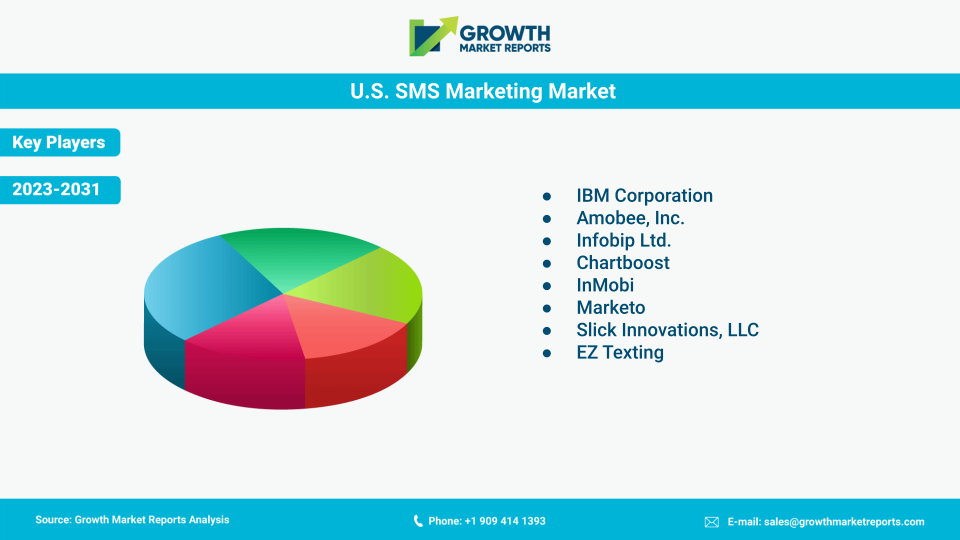

 SMS Marketing Market Key Players

Frequently Asked Questions

Leading companies include Twilio, Infobip, Sinch, Vonage, MessageBird, EZ Texting, Textlocal, ClickSend, Plivo, Telesign, Kaleyra, OpenMarket, SlickText, SMSGlobal, Trumpia, Mozeo, TextMagic, SimpleTexting, Routee, and Burst SMS.

Key end-users include retail & e-commerce, BFSI (banking, financial services, and insurance), healthcare, IT & telecom, and travel & hospitality.

SMS marketing is used for promotional campaigns, customer relationship management (CRM), transactional messages (like order confirmations and alerts), and specialized use cases such as event management and emergency alerts.

North America leads the market, followed by Europe and Asia Pacific. Asia Pacific is the fastest-growing region due to rapid digitalization and mobile adoption.

SMS marketing solutions can be deployed via cloud-based, on-premises, or hybrid models. Cloud-based deployment is popular for its scalability and flexibility, while on-premises is preferred by organizations with strict data security needs.

The market is segmented into software and services. Software enables campaign creation, management, and analytics, while services include managed campaigns, consulting, integration, and technical support.

SMS marketing boasts an open rate of over 98% within minutes, surpassing email and social media channels. It also avoids issues like spam filters and algorithmic restrictions, ensuring higher visibility and engagement.

Key growth drivers include the widespread use of mobile devices, demand for personalized and real-time customer engagement, high open rates of SMS messages, and the cost-effectiveness of SMS as a marketing channel.

The SMS marketing market is expected to grow at a compound annual growth rate (CAGR) of 19.2% from 2025 to 2033, reaching USD 61.1 billion by 2033.

As of 2024, the global SMS marketing market size reached USD 21.5 billion, reflecting strong adoption of mobile-based communication across industries.

Table Of Content

Chapter 1 Executive Summary
Chapter 2 Assumptions and Acronyms Used
Chapter 3 Research Methodology
Chapter 4 SMSing Market Overview
   4.1 Introduction
      4.1.1 Market Taxonomy
      4.1.2 Market Definition
      4.1.3 Macro-Economic Factors Impacting the Market Growth
   4.2 SMSing Market Dynamics
      4.2.1 Market Drivers
      4.2.2 Market Restraints
      4.2.3 Market Opportunity
   4.3 SMSing Market - Supply Chain Analysis
      4.3.1 List of Key Suppliers
      4.3.2 List of Key Distributors
      4.3.3 List of Key Consumers
   4.4 Key Forces Shaping the SMSing Market
      4.4.1 Bargaining Power of Suppliers
      4.4.2 Bargaining Power of Buyers
      4.4.3 Threat of Substitution
      4.4.4 Threat of New Entrants
      4.4.5 Competitive Rivalry
   4.5 Global SMSing Market Size & Forecast, 2023-2032
      4.5.1 SMSing Market Size and Y-o-Y Growth
      4.5.2 SMSing Market Absolute $ Opportunity

Chapter 5 Global SMSing Market Analysis and Forecast By Component
   5.1 Introduction
      5.1.1 Key Market Trends & Growth Opportunities By Component
      5.1.2 Basis Point Share (BPS) Analysis By Component
      5.1.3 Absolute $ Opportunity Assessment By Component
   5.2 SMSing Market Size Forecast By Component
      5.2.1 Software
      5.2.2 Services
   5.3 Market Attractiveness Analysis By Component

Chapter 6 Global SMSing Market Analysis and Forecast By Deployment Mode
   6.1 Introduction
      6.1.1 Key Market Trends & Growth Opportunities By Deployment Mode
      6.1.2 Basis Point Share (BPS) Analysis By Deployment Mode
      6.1.3 Absolute $ Opportunity Assessment By Deployment Mode
   6.2 SMSing Market Size Forecast By Deployment Mode
      6.2.1 Cloud-Based
      6.2.2 On-Premises
   6.3 Market Attractiveness Analysis By Deployment Mode

Chapter 7 Global SMSing Market Analysis and Forecast By Enterprise Size
   7.1 Introduction
      7.1.1 Key Market Trends & Growth Opportunities By Enterprise Size
      7.1.2 Basis Point Share (BPS) Analysis By Enterprise Size
      7.1.3 Absolute $ Opportunity Assessment By Enterprise Size
   7.2 SMSing Market Size Forecast By Enterprise Size
      7.2.1 Small and Medium Enterprises
      7.2.2 Large Enterprises
   7.3 Market Attractiveness Analysis By Enterprise Size

Chapter 8 Global SMSing Market Analysis and Forecast By Application
   8.1 Introduction
      8.1.1 Key Market Trends & Growth Opportunities By Application
      8.1.2 Basis Point Share (BPS) Analysis By Application
      8.1.3 Absolute $ Opportunity Assessment By Application
   8.2 SMSing Market Size Forecast By Application
      8.2.1 Promotional Campaigns
      8.2.2 Customer Relationship Management
      8.2.3 Transactional Messages
      8.2.4 Others
   8.3 Market Attractiveness Analysis By Application

Chapter 9 Global SMSing Market Analysis and Forecast By End-User
   9.1 Introduction
      9.1.1 Key Market Trends & Growth Opportunities By End-User
      9.1.2 Basis Point Share (BPS) Analysis By End-User
      9.1.3 Absolute $ Opportunity Assessment By End-User
   9.2 SMSing Market Size Forecast By End-User
      9.2.1 Retail & E-commerce
      9.2.2 BFSI
      9.2.3 Healthcare
      9.2.4 IT & Telecom
      9.2.5 Travel & Hospitality
      9.2.6 Others
   9.3 Market Attractiveness Analysis By End-User

Chapter 10 Global SMSing Market Analysis and Forecast by Region
   10.1 Introduction
      10.1.1 Key Market Trends & Growth Opportunities By Region
      10.1.2 Basis Point Share (BPS) Analysis By Region
      10.1.3 Absolute $ Opportunity Assessment By Region
   10.2 SMSing Market Size Forecast By Region
      10.2.1 North America
      10.2.2 Europe
      10.2.3 Asia Pacific
      10.2.4 Latin America
      10.2.5 Middle East & Africa (MEA)
   10.3 Market Attractiveness Analysis By Region

Chapter 11 Coronavirus Disease (COVID-19) Impact 
   11.1 Introduction 
   11.2 Current & Future Impact Analysis 
   11.3 Economic Impact Analysis 
   11.4 Government Policies 
   11.5 Investment Scenario

Chapter 12 North America SMSing Analysis and Forecast
   12.1 Introduction
   12.2 North America SMSing Market Size Forecast by Country
      12.2.1 U.S.
      12.2.2 Canada
   12.3 Basis Point Share (BPS) Analysis by Country
   12.4 Absolute $ Opportunity Assessment by Country
   12.5 Market Attractiveness Analysis by Country
   12.6 North America SMSing Market Size Forecast By Component
      12.6.1 Software
      12.6.2 Services
   12.7 Basis Point Share (BPS) Analysis By Component 
   12.8 Absolute $ Opportunity Assessment By Component 
   12.9 Market Attractiveness Analysis By Component
   12.10 North America SMSing Market Size Forecast By Deployment Mode
      12.10.1 Cloud-Based
      12.10.2 On-Premises
   12.11 Basis Point Share (BPS) Analysis By Deployment Mode 
   12.12 Absolute $ Opportunity Assessment By Deployment Mode 
   12.13 Market Attractiveness Analysis By Deployment Mode
   12.14 North America SMSing Market Size Forecast By Enterprise Size
      12.14.1 Small and Medium Enterprises
      12.14.2 Large Enterprises
   12.15 Basis Point Share (BPS) Analysis By Enterprise Size 
   12.16 Absolute $ Opportunity Assessment By Enterprise Size 
   12.17 Market Attractiveness Analysis By Enterprise Size
   12.18 North America SMSing Market Size Forecast By Application
      12.18.1 Promotional Campaigns
      12.18.2 Customer Relationship Management
      12.18.3 Transactional Messages
      12.18.4 Others
   12.19 Basis Point Share (BPS) Analysis By Application 
   12.20 Absolute $ Opportunity Assessment By Application 
   12.21 Market Attractiveness Analysis By Application
   12.22 North America SMSing Market Size Forecast By End-User
      12.22.1 Retail & E-commerce
      12.22.2 BFSI
      12.22.3 Healthcare
      12.22.4 IT & Telecom
      12.22.5 Travel & Hospitality
      12.22.6 Others
   12.23 Basis Point Share (BPS) Analysis By End-User 
   12.24 Absolute $ Opportunity Assessment By End-User 
   12.25 Market Attractiveness Analysis By End-User

Chapter 13 Europe SMSing Analysis and Forecast
   13.1 Introduction
   13.2 Europe SMSing Market Size Forecast by Country
      13.2.1 Germany
      13.2.2 France
      13.2.3 Italy
      13.2.4 U.K.
      13.2.5 Spain
      13.2.6 Russia
      13.2.7 Rest of Europe
   13.3 Basis Point Share (BPS) Analysis by Country
   13.4 Absolute $ Opportunity Assessment by Country
   13.5 Market Attractiveness Analysis by Country
   13.6 Europe SMSing Market Size Forecast By Component
      13.6.1 Software
      13.6.2 Services
   13.7 Basis Point Share (BPS) Analysis By Component 
   13.8 Absolute $ Opportunity Assessment By Component 
   13.9 Market Attractiveness Analysis By Component
   13.10 Europe SMSing Market Size Forecast By Deployment Mode
      13.10.1 Cloud-Based
      13.10.2 On-Premises
   13.11 Basis Point Share (BPS) Analysis By Deployment Mode 
   13.12 Absolute $ Opportunity Assessment By Deployment Mode 
   13.13 Market Attractiveness Analysis By Deployment Mode
   13.14 Europe SMSing Market Size Forecast By Enterprise Size
      13.14.1 Small and Medium Enterprises
      13.14.2 Large Enterprises
   13.15 Basis Point Share (BPS) Analysis By Enterprise Size 
   13.16 Absolute $ Opportunity Assessment By Enterprise Size 
   13.17 Market Attractiveness Analysis By Enterprise Size
   13.18 Europe SMSing Market Size Forecast By Application
      13.18.1 Promotional Campaigns
      13.18.2 Customer Relationship Management
      13.18.3 Transactional Messages
      13.18.4 Others
   13.19 Basis Point Share (BPS) Analysis By Application 
   13.20 Absolute $ Opportunity Assessment By Application 
   13.21 Market Attractiveness Analysis By Application
   13.22 Europe SMSing Market Size Forecast By End-User
      13.22.1 Retail & E-commerce
      13.22.2 BFSI
      13.22.3 Healthcare
      13.22.4 IT & Telecom
      13.22.5 Travel & Hospitality
      13.22.6 Others
   13.23 Basis Point Share (BPS) Analysis By End-User 
   13.24 Absolute $ Opportunity Assessment By End-User 
   13.25 Market Attractiveness Analysis By End-User

Chapter 14 Asia Pacific SMSing Analysis and Forecast
   14.1 Introduction
   14.2 Asia Pacific SMSing Market Size Forecast by Country
      14.2.1 China
      14.2.2 Japan
      14.2.3 South Korea
      14.2.4 India
      14.2.5 Australia
      14.2.6 South East Asia (SEA)
      14.2.7 Rest of Asia Pacific (APAC)
   14.3 Basis Point Share (BPS) Analysis by Country
   14.4 Absolute $ Opportunity Assessment by Country
   14.5 Market Attractiveness Analysis by Country
   14.6 Asia Pacific SMSing Market Size Forecast By Component
      14.6.1 Software
      14.6.2 Services
   14.7 Basis Point Share (BPS) Analysis By Component 
   14.8 Absolute $ Opportunity Assessment By Component 
   14.9 Market Attractiveness Analysis By Component
   14.10 Asia Pacific SMSing Market Size Forecast By Deployment Mode
      14.10.1 Cloud-Based
      14.10.2 On-Premises
   14.11 Basis Point Share (BPS) Analysis By Deployment Mode 
   14.12 Absolute $ Opportunity Assessment By Deployment Mode 
   14.13 Market Attractiveness Analysis By Deployment Mode
   14.14 Asia Pacific SMSing Market Size Forecast By Enterprise Size
      14.14.1 Small and Medium Enterprises
      14.14.2 Large Enterprises
   14.15 Basis Point Share (BPS) Analysis By Enterprise Size 
   14.16 Absolute $ Opportunity Assessment By Enterprise Size 
   14.17 Market Attractiveness Analysis By Enterprise Size
   14.18 Asia Pacific SMSing Market Size Forecast By Application
      14.18.1 Promotional Campaigns
      14.18.2 Customer Relationship Management
      14.18.3 Transactional Messages
      14.18.4 Others
   14.19 Basis Point Share (BPS) Analysis By Application 
   14.20 Absolute $ Opportunity Assessment By Application 
   14.21 Market Attractiveness Analysis By Application
   14.22 Asia Pacific SMSing Market Size Forecast By End-User
      14.22.1 Retail & E-commerce
      14.22.2 BFSI
      14.22.3 Healthcare
      14.22.4 IT & Telecom
      14.22.5 Travel & Hospitality
      14.22.6 Others
   14.23 Basis Point Share (BPS) Analysis By End-User 
   14.24 Absolute $ Opportunity Assessment By End-User 
   14.25 Market Attractiveness Analysis By End-User

Chapter 15 Latin America SMSing Analysis and Forecast
   15.1 Introduction
   15.2 Latin America SMSing Market Size Forecast by Country
      15.2.1 Brazil
      15.2.2 Mexico
      15.2.3 Rest of Latin America (LATAM)
   15.3 Basis Point Share (BPS) Analysis by Country
   15.4 Absolute $ Opportunity Assessment by Country
   15.5 Market Attractiveness Analysis by Country
   15.6 Latin America SMSing Market Size Forecast By Component
      15.6.1 Software
      15.6.2 Services
   15.7 Basis Point Share (BPS) Analysis By Component 
   15.8 Absolute $ Opportunity Assessment By Component 
   15.9 Market Attractiveness Analysis By Component
   15.10 Latin America SMSing Market Size Forecast By Deployment Mode
      15.10.1 Cloud-Based
      15.10.2 On-Premises
   15.11 Basis Point Share (BPS) Analysis By Deployment Mode 
   15.12 Absolute $ Opportunity Assessment By Deployment Mode 
   15.13 Market Attractiveness Analysis By Deployment Mode
   15.14 Latin America SMSing Market Size Forecast By Enterprise Size
      15.14.1 Small and Medium Enterprises
      15.14.2 Large Enterprises
   15.15 Basis Point Share (BPS) Analysis By Enterprise Size 
   15.16 Absolute $ Opportunity Assessment By Enterprise Size 
   15.17 Market Attractiveness Analysis By Enterprise Size
   15.18 Latin America SMSing Market Size Forecast By Application
      15.18.1 Promotional Campaigns
      15.18.2 Customer Relationship Management
      15.18.3 Transactional Messages
      15.18.4 Others
   15.19 Basis Point Share (BPS) Analysis By Application 
   15.20 Absolute $ Opportunity Assessment By Application 
   15.21 Market Attractiveness Analysis By Application
   15.22 Latin America SMSing Market Size Forecast By End-User
      15.22.1 Retail & E-commerce
      15.22.2 BFSI
      15.22.3 Healthcare
      15.22.4 IT & Telecom
      15.22.5 Travel & Hospitality
      15.22.6 Others
   15.23 Basis Point Share (BPS) Analysis By End-User 
   15.24 Absolute $ Opportunity Assessment By End-User 
   15.25 Market Attractiveness Analysis By End-User

Chapter 16 Middle East & Africa (MEA) SMSing Analysis and Forecast
   16.1 Introduction
   16.2 Middle East & Africa (MEA) SMSing Market Size Forecast by Country
      16.2.1 Saudi Arabia
      16.2.2 South Africa
      16.2.3 UAE
      16.2.4 Rest of Middle East & Africa (MEA)
   16.3 Basis Point Share (BPS) Analysis by Country
   16.4 Absolute $ Opportunity Assessment by Country
   16.5 Market Attractiveness Analysis by Country
   16.6 Middle East & Africa (MEA) SMSing Market Size Forecast By Component
      16.6.1 Software
      16.6.2 Services
   16.7 Basis Point Share (BPS) Analysis By Component 
   16.8 Absolute $ Opportunity Assessment By Component 
   16.9 Market Attractiveness Analysis By Component
   16.10 Middle East & Africa (MEA) SMSing Market Size Forecast By Deployment Mode
      16.10.1 Cloud-Based
      16.10.2 On-Premises
   16.11 Basis Point Share (BPS) Analysis By Deployment Mode 
   16.12 Absolute $ Opportunity Assessment By Deployment Mode 
   16.13 Market Attractiveness Analysis By Deployment Mode
   16.14 Middle East & Africa (MEA) SMSing Market Size Forecast By Enterprise Size
      16.14.1 Small and Medium Enterprises
      16.14.2 Large Enterprises
   16.15 Basis Point Share (BPS) Analysis By Enterprise Size 
   16.16 Absolute $ Opportunity Assessment By Enterprise Size 
   16.17 Market Attractiveness Analysis By Enterprise Size
   16.18 Middle East & Africa (MEA) SMSing Market Size Forecast By Application
      16.18.1 Promotional Campaigns
      16.18.2 Customer Relationship Management
      16.18.3 Transactional Messages
      16.18.4 Others
   16.19 Basis Point Share (BPS) Analysis By Application 
   16.20 Absolute $ Opportunity Assessment By Application 
   16.21 Market Attractiveness Analysis By Application
   16.22 Middle East & Africa (MEA) SMSing Market Size Forecast By End-User
      16.22.1 Retail & E-commerce
      16.22.2 BFSI
      16.22.3 Healthcare
      16.22.4 IT & Telecom
      16.22.5 Travel & Hospitality
      16.22.6 Others
   16.23 Basis Point Share (BPS) Analysis By End-User 
   16.24 Absolute $ Opportunity Assessment By End-User 
   16.25 Market Attractiveness Analysis By End-User

Chapter 17 Competition Landscape 
   17.1 SMSing Market: Competitive Dashboard
   17.2 Global SMSing Market: Market Share Analysis, 2023
   17.3 Company Profiles (Details – Overview, Financials, Developments, Strategy) 
      17.3.1 Twilio
Infobip
Sinch
Vonage
MessageBird
EZ Texting
Textlocal
ClickSend
Plivo
Telesign
Kaleyra
OpenMarket
SlickText
SMSGlobal
Trumpia
Mozeo
TextMagic
SimpleTexting
Routee
Burst SMS

Methodology

Our Clients

Deloitte
Nestle SA
Microsoft
The John Holland Group
FedEx Logistics
General Mills
sinopec
Dassault Aviation