Mining Automation Software Market Research Report 2033

Mining Automation Software Market Research Report 2033

Segments - by Component (Software, Services), by Deployment Mode (On-Premises, Cloud-Based), by Application (Mine Monitoring, Fleet Management, Safety and Security, Logistics and Transportation, Drilling and Blasting, Others), by End-User (Surface Mining, Underground Mining)

https://growthmarketreports.com/Raksha
Author : Raksha Sharma
https://growthmarketreports.com/Vaibhav
Fact-checked by : V. Chandola
https://growthmarketreports.com/Rucha
Editor : Rucha Phatak

Upcoming | Report ID :CM-187 | 4.2 Rating | 75 Reviews | 292 Pages | Format : Docx PDF

Report Description


Mining Automation Software Market Outlook

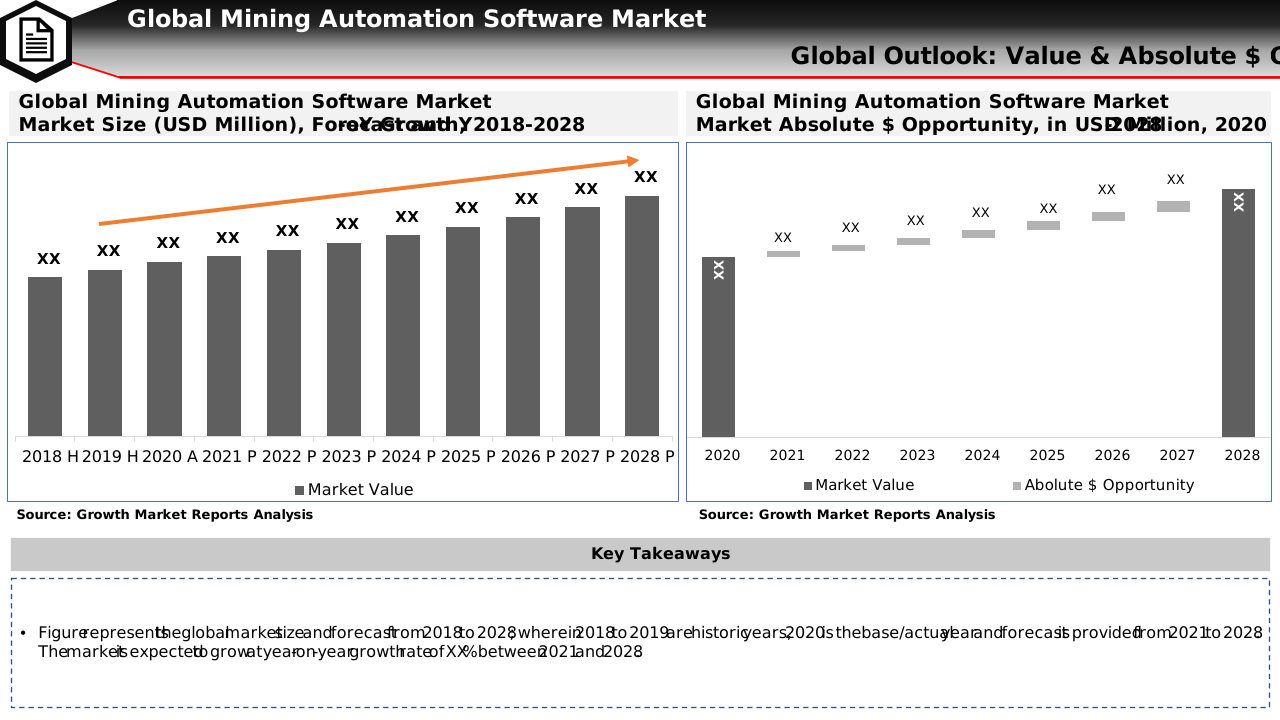
According to our latest research, the global mining automation software market size reached USD 4.8 billion in 2024, driven by a surge in digital transformation initiatives across the mining sector. The market is expected to expand at a robust CAGR of 10.7% from 2025 to 2033, reaching an estimated USD 12.2 billion by 2033. This remarkable growth is underpinned by the increasing adoption of advanced automation software solutions aimed at enhancing operational efficiency, safety, and sustainability within mining operations. As per our latest findings, the marketÂ’s expansion is being propelled by a confluence of technological advancements, heightened safety regulations, and escalating demand for resource optimization.

A key growth factor for the mining automation software market is the escalating need for operational efficiency and productivity improvements in mining activities. Mining companies are increasingly leveraging automation software to streamline processes such as fleet management, mine monitoring, and logistics, thereby reducing human intervention and minimizing operational costs. The integration of artificial intelligence, machine learning, and real-time data analytics into mining automation software is enabling predictive maintenance, process optimization, and improved resource allocation. These technological advancements are significantly reducing downtime and enhancing the overall productivity of mining operations, making automation software an indispensable tool for modern mining enterprises seeking to maintain competitiveness in a rapidly evolving industry landscape.

Another critical driver of market growth is the rising emphasis on safety and regulatory compliance within the mining sector. The inherently hazardous nature of mining operations has compelled industry stakeholders to adopt automation solutions that mitigate risks associated with human error, equipment failure, and environmental hazards. Mining automation software plays a pivotal role in enhancing safety by enabling remote monitoring, automated emergency response systems, and real-time hazard detection. Additionally, stringent government regulations and industry standards regarding worker safety and environmental protection are compelling mining companies to invest in advanced automation technologies. This regulatory impetus is not only safeguarding workforce well-being but also fostering sustainable mining practices, thereby contributing to the sustained growth of the mining automation software market.

Furthermore, the growing trend toward sustainable and environmentally responsible mining practices is fueling demand for mining automation software. Automation solutions are instrumental in optimizing energy consumption, reducing carbon emissions, and minimizing waste generation throughout the mining value chain. By facilitating precise resource extraction and efficient logistics management, automation software enables mining companies to adhere to environmental regulations and corporate social responsibility initiatives. The integration of Internet of Things (IoT) devices and cloud-based platforms is further enhancing the capabilities of mining automation software, allowing for seamless data exchange and real-time decision-making. As the global mining industry increasingly prioritizes sustainability, the adoption of automation software is expected to accelerate, driving market expansion over the forecast period.

Mining Drilling Automation is becoming an increasingly integral part of the mining automation landscape, offering significant benefits in terms of efficiency and safety. By automating drilling processes, mining companies can achieve greater precision and consistency, reducing the risk of human error and enhancing the accuracy of resource extraction. This technology enables real-time monitoring and control of drilling operations, allowing for adjustments to be made on-the-fly to optimize performance and minimize downtime. The integration of advanced sensors and data analytics into drilling automation systems further enhances their capabilities, enabling predictive maintenance and reducing the likelihood of equipment failure. As the mining industry continues to embrace digital transformation, the adoption of drilling automation is expected to grow, driven by the need for improved operational efficiency and reduced environmental impact.

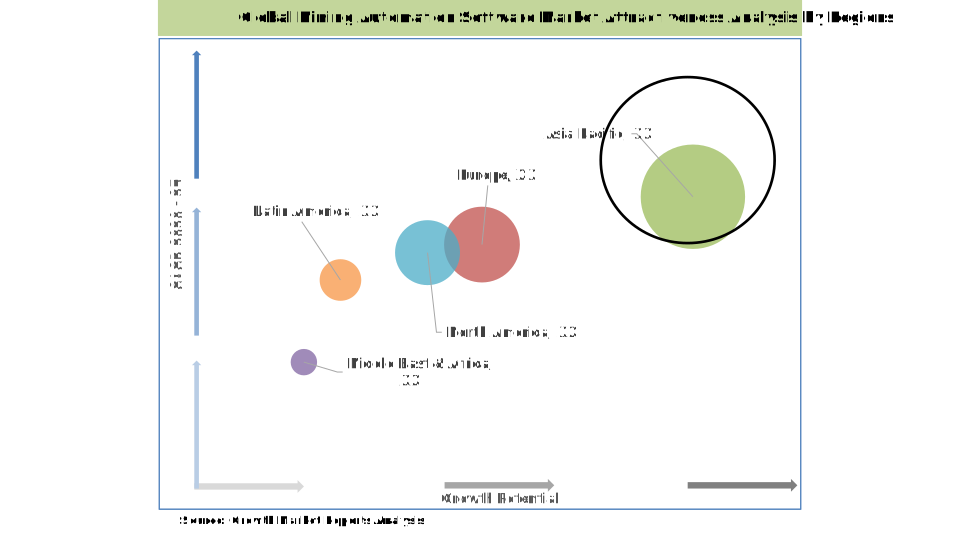
From a regional perspective, the mining automation software market exhibits significant growth potential across diverse geographies, with Asia Pacific, North America, and Europe emerging as key contributors to market expansion. Asia Pacific, in particular, is witnessing robust adoption of automation technologies due to the presence of large-scale mining operations and increasing investments in digital infrastructure. North America and Europe are also experiencing substantial growth, driven by stringent safety regulations and the presence of technologically advanced mining companies. Meanwhile, Latin America and the Middle East & Africa are gradually embracing automation solutions, supported by ongoing mining projects and favorable government policies. This diverse regional landscape underscores the global nature of the mining automation software market and highlights the myriad opportunities for market participants across different regions.

Global Mining Automation Software Industry Outlook

Component Analysis

The mining automation software market is segmented by component into software and services, each playing a distinct yet complementary role in enabling mining operations to achieve higher levels of automation and efficiency. The software segment encompasses a wide array of solutions such as mine monitoring systems, fleet management platforms, safety and security applications, and logistics optimization tools. These software solutions are designed to integrate seamlessly with existing mining infrastructure, providing real-time data analytics, process automation, and advanced decision support capabilities. The growing adoption of cloud-based software platforms is further enhancing the scalability and flexibility of mining automation solutions, enabling mining companies to rapidly deploy and update software applications across multiple sites.

The services segment, on the other hand, includes a comprehensive range of offerings such as consulting, implementation, system integration, maintenance, and technical support. As mining companies increasingly adopt automation software, the demand for specialized services to facilitate smooth deployment, customization, and ongoing optimization is on the rise. Service providers play a critical role in helping mining enterprises navigate the complexities of automation technology adoption, ensuring that software solutions are tailored to specific operational requirements and seamlessly integrated with existing processes. The growing emphasis on continuous improvement and performance optimization is also driving demand for managed services and remote monitoring solutions, enabling mining companies to maximize the value of their automation investments.

A key trend within the component segment is the convergence of software and services to deliver holistic automation solutions that address the end-to-end needs of mining operations. Solution providers are increasingly offering bundled packages that combine software platforms with value-added services such as training, support, and analytics, enabling mining companies to derive maximum benefit from their automation initiatives. This integrated approach not only simplifies the procurement and deployment process but also enhances the overall effectiveness and ROI of mining automation solutions. As the market matures, the distinction between software and services is expected to blur further, with solution providers adopting a more consultative and partnership-oriented approach to client engagement.

The competitive landscape within the component segment is characterized by the presence of both established technology vendors and specialized mining automation companies. Leading software providers are continuously innovating to develop advanced automation platforms that leverage artificial intelligence, machine learning, and IoT technologies. At the same time, service providers are expanding their capabilities to offer end-to-end automation solutions, encompassing everything from initial assessment and strategy development to deployment, integration, and ongoing support. This dynamic and competitive environment is fostering innovation and driving the evolution of the mining automation software market, with solution providers vying to deliver differentiated offerings that address the unique challenges and opportunities faced by mining companies.

Report Scope

Attributes Details
Report Title Mining Automation Software Market Research Report 2033
By Component Software, Services
By Deployment Mode On-Premises, Cloud-Based
By Application Mine Monitoring, Fleet Management, Safety and Security, Logistics and Transportation, Drilling and Blasting, Others
By End-User Surface Mining, Underground Mining
Regions Covered North America, Europe, APAC, Latin America, MEA
Base Year 2024
Historic Data 2018-2023
Forecast Period 2025-2033
Number of Pages 292
Number of Tables & Figures 319
Customization Available Yes, the report can be customized as per your need.

Deployment Mode Analysis

The mining automation software market is segmented by deployment mode into on-premises and cloud-based solutions, each offering distinct advantages and addressing specific operational requirements. On-premises deployment remains the preferred choice for many mining companies that prioritize data security, regulatory compliance, and control over their IT infrastructure. By hosting automation software locally, mining enterprises can ensure that sensitive operational data remains within their physical premises, mitigating the risk of data breaches and unauthorized access. On-premises solutions also offer greater customization and integration capabilities, enabling mining companies to tailor automation software to their unique operational workflows and legacy systems.

However, the adoption of cloud-based mining automation software is gaining significant momentum, driven by the growing need for scalability, flexibility, and cost-effectiveness. Cloud-based solutions enable mining companies to rapidly deploy and scale automation software across multiple sites without the need for significant upfront capital investment in IT infrastructure. The pay-as-you-go pricing model offered by cloud service providers allows mining enterprises to align their automation investments with operational needs and budget constraints. Furthermore, cloud-based platforms facilitate seamless data sharing and collaboration across geographically dispersed teams, enabling real-time decision-making and process optimization.

A key advantage of cloud-based mining automation software is its ability to support remote operations and enable centralized monitoring and control of mining activities. This is particularly valuable for mining companies operating in remote or challenging environments, where on-site IT resources may be limited. Cloud-based solutions also offer enhanced disaster recovery and business continuity capabilities, ensuring that critical automation software remains accessible even in the event of hardware failure or natural disasters. As the mining industry increasingly embraces digital transformation, the shift toward cloud-based automation solutions is expected to accelerate, driving market growth and innovation.

Despite the growing popularity of cloud-based deployment, on-premises solutions continue to play a vital role in the mining automation software market, particularly among large-scale mining enterprises with complex operational requirements and stringent security mandates. Many mining companies are adopting a hybrid deployment approach, leveraging the benefits of both on-premises and cloud-based solutions to achieve optimal performance, flexibility, and security. This hybrid model allows mining enterprises to maintain control over critical data and systems while leveraging the scalability and agility of the cloud for non-sensitive applications. As deployment models continue to evolve, solution providers are focusing on developing flexible and interoperable automation software platforms that support seamless integration across diverse IT environments.

Application Analysis

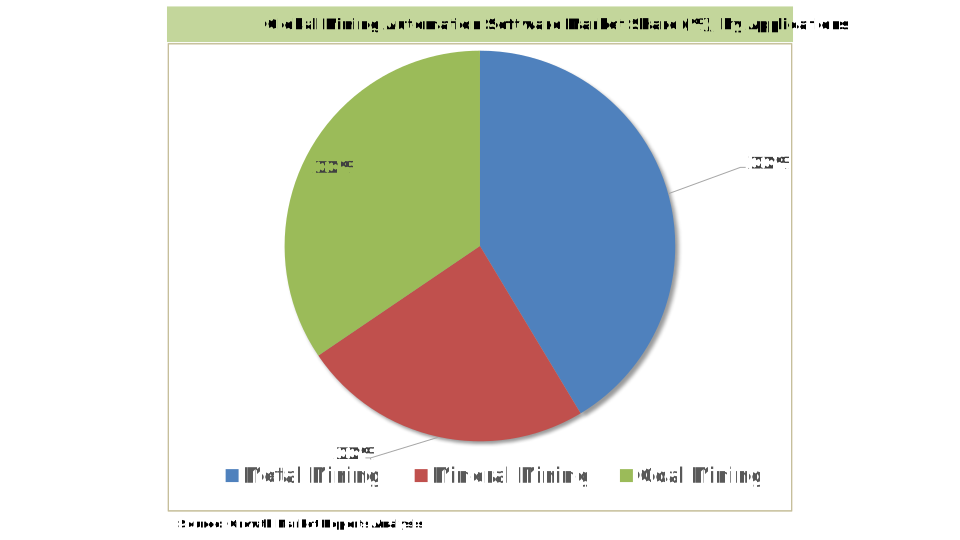
The mining automation software market is segmented by application into mine monitoring, fleet management, safety and security, logistics and transportation, drilling and blasting, and others. Each application area plays a pivotal role in enhancing the efficiency, safety, and sustainability of mining operations. Mine monitoring solutions enable real-time tracking of mining activities, equipment performance, and environmental conditions, providing actionable insights that support informed decision-making and proactive maintenance. By leveraging advanced data analytics and visualization tools, mine monitoring software helps mining companies optimize resource allocation, minimize downtime, and improve overall operational efficiency.

Fleet management is another critical application area, encompassing the automation of vehicle scheduling, tracking, and maintenance across mining operations. Fleet management software enables mining companies to optimize the utilization of haul trucks, loaders, and other mobile equipment, reducing fuel consumption, maintenance costs, and emissions. Advanced fleet management solutions leverage GPS, telematics, and IoT technologies to provide real-time visibility into equipment location, utilization, and health, enabling predictive maintenance and reducing the risk of equipment failure. The integration of fleet management software with other automation systems further enhances operational efficiency and supports end-to-end process optimization.

Safety and security applications are at the forefront of mining automation software adoption, driven by the need to protect workers, assets, and the environment. Automation software enables real-time monitoring of hazardous conditions, automated emergency response, and remote control of equipment in high-risk environments. Advanced safety solutions leverage AI and machine learning to detect anomalies, predict potential hazards, and initiate preventive actions, significantly reducing the risk of accidents and injuries. Regulatory compliance is a key driver of investment in safety and security automation, with mining companies seeking to meet increasingly stringent industry standards and government mandates.

Logistics and transportation automation is transforming the movement of materials, equipment, and personnel within mining sites. Automation software streamlines the scheduling, routing, and tracking of shipments, optimizing supply chain efficiency and reducing transportation costs. By integrating logistics automation with mine monitoring and fleet management systems, mining companies can achieve end-to-end visibility and control over their operations, enabling just-in-time delivery and minimizing inventory holding costs. Drilling and blasting automation is another emerging application area, leveraging advanced algorithms and remote control technologies to optimize blasting patterns, reduce material waste, and enhance safety. As mining operations become increasingly complex and data-driven, the demand for specialized automation software across these application areas is expected to continue rising.

End-User Analysis

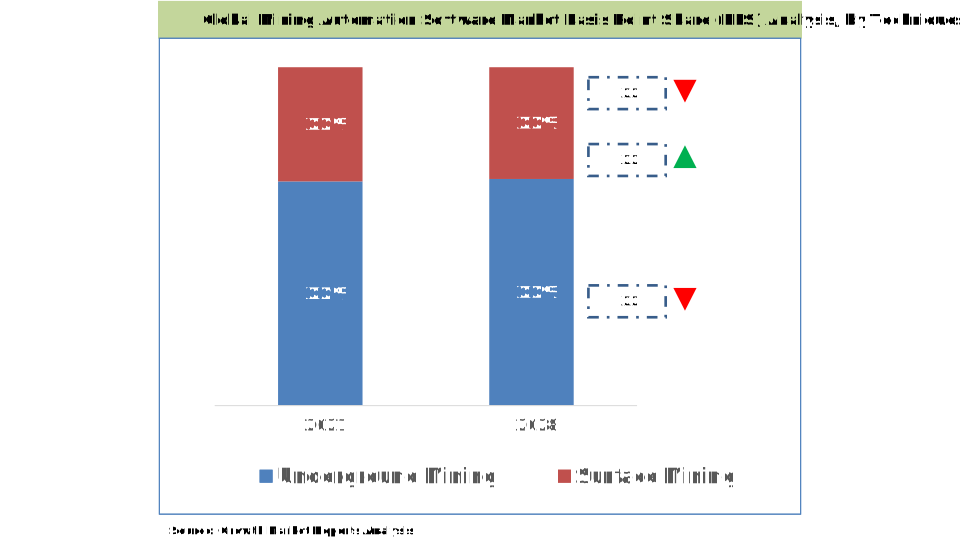
The mining automation software market is segmented by end-user into surface mining and underground mining, each presenting unique operational challenges and opportunities for automation. Surface mining operations, which account for a significant share of global mineral production, are characterized by large-scale equipment fleets, expansive mining areas, and complex logistics requirements. Automation software is playing a transformative role in surface mining by enabling real-time monitoring, fleet optimization, and process automation across vast operational areas. Surface mining companies are leveraging automation solutions to enhance productivity, reduce operational costs, and minimize environmental impact, driving robust demand for mining automation software in this segment.

Underground mining operations, on the other hand, present a distinct set of challenges related to confined spaces, limited visibility, and heightened safety risks. Automation software is instrumental in addressing these challenges by enabling remote monitoring, automated equipment control, and real-time hazard detection in underground environments. Advanced automation solutions are facilitating the deployment of autonomous vehicles, drilling rigs, and material handling systems in underground mines, reducing the need for human intervention in hazardous areas and enhancing worker safety. The integration of IoT sensors and wireless communication technologies is further enhancing the capabilities of underground mining automation software, enabling seamless data exchange and centralized control.

A key trend in the end-user segment is the increasing convergence of surface and underground mining automation solutions, driven by the need for integrated, end-to-end process optimization. Mining companies are seeking automation software platforms that can seamlessly manage operations across both surface and underground sites, providing unified visibility, control, and analytics capabilities. Solution providers are responding to this demand by developing modular and interoperable automation platforms that support a wide range of mining applications and equipment types. This integrated approach is enabling mining companies to achieve greater operational efficiency, flexibility, and scalability across their entire value chain.

The adoption of mining automation software among surface and underground mining companies is also being influenced by factors such as resource type, geographic location, regulatory environment, and corporate sustainability goals. For example, surface mining operations in regions with stringent environmental regulations are prioritizing automation solutions that support sustainable resource extraction and minimize ecological impact. Similarly, underground mining companies operating in remote or hazardous environments are investing in automation software to enhance safety and operational resilience. As the mining industry continues to evolve, the demand for tailored automation solutions that address the unique needs of surface and underground mining operations is expected to drive ongoing innovation and market growth.

Opportunities & Threats

The mining automation software market is poised for significant opportunities as digital transformation continues to reshape the mining industry. One of the most promising opportunities lies in the integration of advanced technologies such as artificial intelligence, machine learning, and IoT into mining automation software. These technologies enable predictive analytics, real-time decision-making, and autonomous operations, unlocking new levels of efficiency, safety, and sustainability. As mining companies increasingly seek to optimize resource utilization, reduce operational costs, and comply with stringent environmental regulations, the demand for intelligent automation solutions is expected to surge. Solution providers that can deliver innovative, scalable, and interoperable automation platforms are well-positioned to capitalize on the growing market opportunity.

Another major opportunity for market participants is the expansion of mining automation software adoption in emerging markets, particularly in Asia Pacific, Latin America, and Africa. These regions are witnessing significant investments in mining infrastructure, driven by rising demand for minerals and metals, favorable government policies, and increasing foreign direct investment. As mining companies in these regions seek to modernize their operations and enhance competitiveness, the adoption of automation software is expected to accelerate. Solution providers that can offer localized, cost-effective, and easy-to-deploy automation solutions tailored to the unique needs of emerging market customers stand to gain a significant competitive advantage in the global mining automation software market.

Despite the substantial growth opportunities, the mining automation software market faces several restraining factors that could impede its expansion. One of the key challenges is the high upfront cost associated with implementing advanced automation solutions, particularly for small and medium-sized mining enterprises. The complexity of integrating automation software with existing legacy systems, coupled with the need for specialized technical expertise, can also pose significant barriers to adoption. Additionally, concerns related to data security, privacy, and regulatory compliance may deter some mining companies from fully embracing cloud-based automation solutions. Addressing these challenges will require ongoing investment in research and development, as well as collaboration between solution providers, mining companies, and regulatory authorities to develop robust, secure, and cost-effective automation platforms.

Regional Outlook

The regional analysis of the mining automation software market reveals a diverse and dynamic landscape, with Asia Pacific, North America, and Europe emerging as key growth engines. In Asia Pacific, the market reached a value of USD 1.7 billion in 2024, accounting for over one-third of the global market. This growth is driven by the presence of large-scale mining operations in countries such as Australia, China, and India, coupled with significant investments in digital infrastructure and automation technologies. The region is expected to maintain a strong growth trajectory, with a projected CAGR of 12.1% from 2025 to 2033, fueled by ongoing mining projects and government initiatives to promote sustainable resource extraction.

In North America, the mining automation software market reached USD 1.3 billion in 2024, supported by the presence of technologically advanced mining companies and stringent safety and environmental regulations. The United States and Canada are leading the adoption of automation solutions, leveraging advanced software platforms to enhance operational efficiency, safety, and compliance. The North American market is characterized by a high degree of innovation, with mining companies actively investing in research and development to develop next-generation automation technologies. As the region continues to prioritize digital transformation and sustainability, the demand for mining automation software is expected to remain robust over the forecast period.

Europe accounted for approximately USD 0.9 billion in 2024, with Germany, Sweden, and Russia emerging as key markets for mining automation software. The European market is driven by a strong focus on sustainable mining practices, regulatory compliance, and technological innovation. Mining companies in the region are increasingly adopting automation software to optimize resource utilization, reduce environmental impact, and enhance worker safety. Meanwhile, Latin America and the Middle East & Africa collectively accounted for USD 0.9 billion in 2024, with growth in these regions supported by ongoing mining projects, favorable government policies, and increasing foreign investment. As the global mining industry continues to evolve, regional markets are expected to play an increasingly important role in shaping the future of the mining automation software market.

Mining Automation Software Market Statistics

Competitor Outlook

The competitive landscape of the mining automation software market is characterized by the presence of a diverse array of global technology giants, specialized mining automation companies, and innovative startups. Market leaders are continuously investing in research and development to enhance the capabilities of their automation software platforms, leveraging advanced technologies such as artificial intelligence, machine learning, and IoT to deliver differentiated solutions. The market is also witnessing a trend toward strategic partnerships, mergers, and acquisitions, as companies seek to expand their product portfolios, strengthen their market presence, and accelerate innovation. This dynamic and competitive environment is fostering a culture of continuous improvement and driving the evolution of the mining automation software market.

A key feature of the competitive landscape is the increasing emphasis on end-to-end automation solutions that address the full spectrum of mining operations, from exploration and extraction to logistics and processing. Leading solution providers are offering integrated automation platforms that combine software, hardware, and services to deliver comprehensive value to mining companies. These platforms are designed to support seamless integration with existing mining infrastructure, enabling mining enterprises to achieve unified visibility, control, and optimization across their operations. The ability to deliver scalable, flexible, and interoperable automation solutions is emerging as a critical differentiator in the highly competitive mining automation software market.

Innovation is at the heart of competition in the mining automation software market, with companies racing to develop next-generation solutions that leverage emerging technologies and address evolving customer needs. The integration of AI-powered analytics, autonomous operations, and cloud-based platforms is enabling mining companies to achieve unprecedented levels of efficiency, safety, and sustainability. Solution providers are also focusing on developing user-friendly, intuitive software interfaces that facilitate rapid adoption and maximize user engagement. As the pace of technological change accelerates, the ability to anticipate and respond to market trends will be a key determinant of success in the mining automation software market.

Major companies operating in the mining automation software market include ABB Ltd., Caterpillar Inc., Hexagon AB, Komatsu Ltd., Sandvik AB, Hitachi Construction Machinery Co., Ltd., Rockwell Automation, Inc., Siemens AG, Trimble Inc., and RPMGlobal Holdings Limited. ABB Ltd. is renowned for its advanced process automation solutions, offering integrated platforms that support real-time monitoring, predictive maintenance, and remote control of mining operations. Caterpillar Inc. is a global leader in autonomous mining equipment and fleet management software, enabling mining companies to optimize equipment utilization and enhance safety. Hexagon AB specializes in digital mining solutions, providing advanced software platforms for mine planning, fleet management, and safety monitoring.

Komatsu Ltd. and Sandvik AB are prominent players in the development of autonomous mining equipment and automation software, focusing on enhancing productivity and safety in both surface and underground mining operations. Hitachi Construction Machinery Co., Ltd. and Rockwell Automation, Inc. offer a wide range of automation solutions, including process control, remote monitoring, and data analytics platforms. Siemens AG is a leader in industrial automation, providing comprehensive software solutions that enable mining companies to achieve end-to-end process optimization and digital transformation. Trimble Inc. and RPMGlobal Holdings Limited are recognized for their expertise in mine planning, scheduling, and analytics software, supporting mining companies in achieving operational excellence and sustainability.

These major players are continuously expanding their product portfolios and geographic reach through strategic partnerships, acquisitions, and collaborations. By leveraging their technical expertise, global presence, and commitment to innovation, these companies are shaping the future of the mining automation software market and driving the industry toward greater efficiency, safety, and sustainability. As competition intensifies, the ability to deliver value-added, customer-centric automation solutions will be a key factor in determining long-term success in this dynamic and rapidly evolving market.

Key Players

  • Sandvik
  • Caterpillar
  • Hexagon AB
  • Komatsu
  • ABB Ltd.
  • Hitachi Construction Machinery
  • Trimble Inc.
  • RPMGlobal
  • Epiroc
  • Siemens AG
  • Rockwell Automation
  • Autonomous Solutions Inc.
  • Micromine
  • IntelliSense.io
  • GroundHog
  • MineSense Technologies
  • Maptek
  • Wenco International Mining Systems
  • RCT Global
  • Immersive Technologies
Mining Automation Software Market Overview

Segments

The Mining Automation Software market has been segmented on the basis of

Component

  • Software
  • Services

Deployment Mode

  • On-Premises
  • Cloud-Based

Application

  • Mine Monitoring
  • Fleet Management
  • Safety and Security
  • Logistics and Transportation
  • Drilling and Blasting
  • Others

End-User

  • Surface Mining
  • Underground Mining

Competitive Landscape

Key players in the mining automation software market include SAP AG; Maptek Pty Limited; INX Software Pty Ltd; Constellation Software Inc.; Hexagon AB; Minemax; ABB; acQuire Technology Solutions Pty Ltd; Dassault Systemes; ThreeDify Inc.; ARANZ Geo Ltd.; and Micromine. Mergers & acquisitions, collaborations, agreements, and partnerships are some growth strategies adopted by these players to strengthen their geographical presence.

For instance, in February 2019, Australia-based mining software provider, Micromine, collaborated with the MinEx Cooperative Research Centre. With this collaboration, Micromine is projected to be the sole provider of information software solutions for the Cooperative Research Centers (CRC) Projects in Australia.
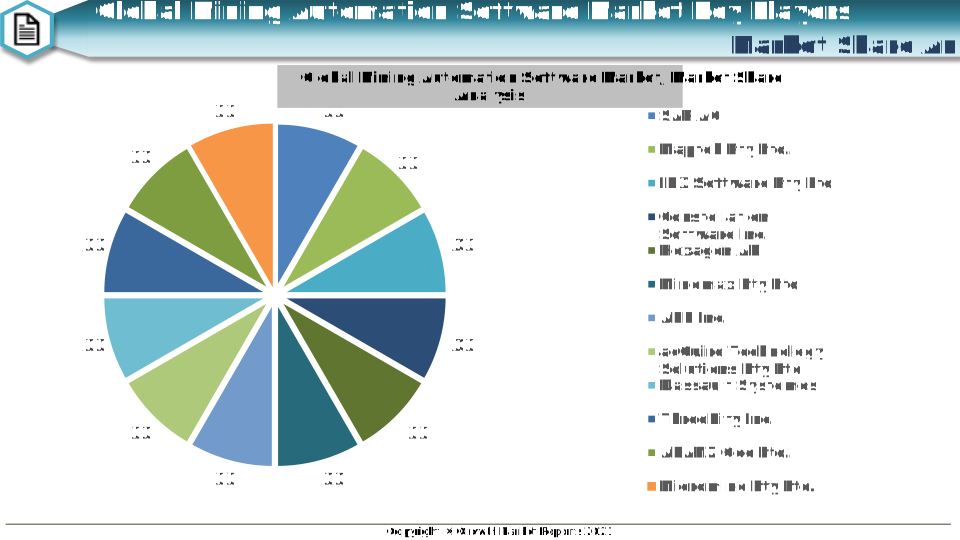

Mining Automation Software Market Key Players

Frequently Asked Questions

Yes, mining automation software solutions can be tailored to meet the specific needs of surface or underground mining operations, and can be customized based on resource type, geographic location, and regulatory requirements.

Mining automation software helps reduce energy consumption, minimize carbon emissions, and optimize resource extraction, supporting compliance with environmental regulations and corporate social responsibility initiatives.

Challenges include high upfront costs, integration complexities with legacy systems, the need for specialized technical expertise, and concerns regarding data security and regulatory compliance, especially with cloud-based solutions.

Key players include ABB Ltd., Caterpillar Inc., Hexagon AB, Komatsu Ltd., Sandvik AB, Hitachi Construction Machinery, Rockwell Automation, Siemens AG, Trimble Inc., and RPMGlobal Holdings Limited, among others.

Mining automation software can be deployed on-premises or via cloud-based solutions. On-premises deployment offers greater control and security, while cloud-based solutions provide scalability, flexibility, and easier remote access.

Major applications include mine monitoring, fleet management, safety and security, logistics and transportation, and drilling and blasting. These applications help optimize operations, enhance safety, and streamline logistics within mining sites.

Asia Pacific, North America, and Europe are the leading regions in mining automation software adoption, with Asia Pacific experiencing particularly robust growth due to large-scale mining operations and investments in digital infrastructure.

Key growth drivers include the need for operational efficiency, rising safety and regulatory compliance requirements, technological advancements (such as AI, IoT, and machine learning), and the push for sustainable and environmentally responsible mining practices.

The global mining automation software market is expected to reach approximately USD 12.2 billion by 2033, growing at a CAGR of 10.7% from 2025 to 2033.

Mining automation software refers to digital solutions designed to automate and optimize various mining operations, such as fleet management, mine monitoring, safety, and logistics. It is important because it enhances operational efficiency, improves safety, reduces costs, and supports sustainable mining practices.

Table Of Content

Chapter 1 Executive Summary
Chapter 2 Assumptions and Acronyms Used
Chapter 3 Research Methodology
Chapter 4 Mining Automation Software Market Overview
   4.1 Introduction
      4.1.1 Market Taxonomy
      4.1.2 Market Definition
      4.1.3 Macro-Economic Factors Impacting the Market Growth
   4.2 Mining Automation Software Market Dynamics
      4.2.1 Market Drivers
      4.2.2 Market Restraints
      4.2.3 Market Opportunity
   4.3 Mining Automation Software Market - Supply Chain Analysis
      4.3.1 List of Key Suppliers
      4.3.2 List of Key Distributors
      4.3.3 List of Key Consumers
   4.4 Key Forces Shaping the Mining Automation Software Market
      4.4.1 Bargaining Power of Suppliers
      4.4.2 Bargaining Power of Buyers
      4.4.3 Threat of Substitution
      4.4.4 Threat of New Entrants
      4.4.5 Competitive Rivalry
   4.5 Global Mining Automation Software Market Size & Forecast, 2023-2032
      4.5.1 Mining Automation Software Market Size and Y-o-Y Growth
      4.5.2 Mining Automation Software Market Absolute $ Opportunity

Chapter 5 Global Mining Automation Software Market Analysis and Forecast By Component
   5.1 Introduction
      5.1.1 Key Market Trends & Growth Opportunities By Component
      5.1.2 Basis Point Share (BPS) Analysis By Component
      5.1.3 Absolute $ Opportunity Assessment By Component
   5.2 Mining Automation Software Market Size Forecast By Component
      5.2.1 Software
      5.2.2 Services
   5.3 Market Attractiveness Analysis By Component

Chapter 6 Global Mining Automation Software Market Analysis and Forecast By Deployment Mode
   6.1 Introduction
      6.1.1 Key Market Trends & Growth Opportunities By Deployment Mode
      6.1.2 Basis Point Share (BPS) Analysis By Deployment Mode
      6.1.3 Absolute $ Opportunity Assessment By Deployment Mode
   6.2 Mining Automation Software Market Size Forecast By Deployment Mode
      6.2.1 On-Premises
      6.2.2 Cloud-Based
   6.3 Market Attractiveness Analysis By Deployment Mode

Chapter 7 Global Mining Automation Software Market Analysis and Forecast By Application
   7.1 Introduction
      7.1.1 Key Market Trends & Growth Opportunities By Application
      7.1.2 Basis Point Share (BPS) Analysis By Application
      7.1.3 Absolute $ Opportunity Assessment By Application
   7.2 Mining Automation Software Market Size Forecast By Application
      7.2.1 Mine Monitoring
      7.2.2 Fleet Management
      7.2.3 Safety and Security
      7.2.4 Logistics and Transportation
      7.2.5 Drilling and Blasting
      7.2.6 Others
   7.3 Market Attractiveness Analysis By Application

Chapter 8 Global Mining Automation Software Market Analysis and Forecast By End-User
   8.1 Introduction
      8.1.1 Key Market Trends & Growth Opportunities By End-User
      8.1.2 Basis Point Share (BPS) Analysis By End-User
      8.1.3 Absolute $ Opportunity Assessment By End-User
   8.2 Mining Automation Software Market Size Forecast By End-User
      8.2.1 Surface Mining
      8.2.2 Underground Mining
   8.3 Market Attractiveness Analysis By End-User

Chapter 9 Global Mining Automation Software Market Analysis and Forecast by Region
   9.1 Introduction
      9.1.1 Key Market Trends & Growth Opportunities By Region
      9.1.2 Basis Point Share (BPS) Analysis By Region
      9.1.3 Absolute $ Opportunity Assessment By Region
   9.2 Mining Automation Software Market Size Forecast By Region
      9.2.1 North America
      9.2.2 Europe
      9.2.3 Asia Pacific
      9.2.4 Latin America
      9.2.5 Middle East & Africa (MEA)
   9.3 Market Attractiveness Analysis By Region

Chapter 10 Coronavirus Disease (COVID-19) Impact 
   10.1 Introduction 
   10.2 Current & Future Impact Analysis 
   10.3 Economic Impact Analysis 
   10.4 Government Policies 
   10.5 Investment Scenario

Chapter 11 North America Mining Automation Software Analysis and Forecast
   11.1 Introduction
   11.2 North America Mining Automation Software Market Size Forecast by Country
      11.2.1 U.S.
      11.2.2 Canada
   11.3 Basis Point Share (BPS) Analysis by Country
   11.4 Absolute $ Opportunity Assessment by Country
   11.5 Market Attractiveness Analysis by Country
   11.6 North America Mining Automation Software Market Size Forecast By Component
      11.6.1 Software
      11.6.2 Services
   11.7 Basis Point Share (BPS) Analysis By Component 
   11.8 Absolute $ Opportunity Assessment By Component 
   11.9 Market Attractiveness Analysis By Component
   11.10 North America Mining Automation Software Market Size Forecast By Deployment Mode
      11.10.1 On-Premises
      11.10.2 Cloud-Based
   11.11 Basis Point Share (BPS) Analysis By Deployment Mode 
   11.12 Absolute $ Opportunity Assessment By Deployment Mode 
   11.13 Market Attractiveness Analysis By Deployment Mode
   11.14 North America Mining Automation Software Market Size Forecast By Application
      11.14.1 Mine Monitoring
      11.14.2 Fleet Management
      11.14.3 Safety and Security
      11.14.4 Logistics and Transportation
      11.14.5 Drilling and Blasting
      11.14.6 Others
   11.15 Basis Point Share (BPS) Analysis By Application 
   11.16 Absolute $ Opportunity Assessment By Application 
   11.17 Market Attractiveness Analysis By Application
   11.18 North America Mining Automation Software Market Size Forecast By End-User
      11.18.1 Surface Mining
      11.18.2 Underground Mining
   11.19 Basis Point Share (BPS) Analysis By End-User 
   11.20 Absolute $ Opportunity Assessment By End-User 
   11.21 Market Attractiveness Analysis By End-User

Chapter 12 Europe Mining Automation Software Analysis and Forecast
   12.1 Introduction
   12.2 Europe Mining Automation Software Market Size Forecast by Country
      12.2.1 Germany
      12.2.2 France
      12.2.3 Italy
      12.2.4 U.K.
      12.2.5 Spain
      12.2.6 Russia
      12.2.7 Rest of Europe
   12.3 Basis Point Share (BPS) Analysis by Country
   12.4 Absolute $ Opportunity Assessment by Country
   12.5 Market Attractiveness Analysis by Country
   12.6 Europe Mining Automation Software Market Size Forecast By Component
      12.6.1 Software
      12.6.2 Services
   12.7 Basis Point Share (BPS) Analysis By Component 
   12.8 Absolute $ Opportunity Assessment By Component 
   12.9 Market Attractiveness Analysis By Component
   12.10 Europe Mining Automation Software Market Size Forecast By Deployment Mode
      12.10.1 On-Premises
      12.10.2 Cloud-Based
   12.11 Basis Point Share (BPS) Analysis By Deployment Mode 
   12.12 Absolute $ Opportunity Assessment By Deployment Mode 
   12.13 Market Attractiveness Analysis By Deployment Mode
   12.14 Europe Mining Automation Software Market Size Forecast By Application
      12.14.1 Mine Monitoring
      12.14.2 Fleet Management
      12.14.3 Safety and Security
      12.14.4 Logistics and Transportation
      12.14.5 Drilling and Blasting
      12.14.6 Others
   12.15 Basis Point Share (BPS) Analysis By Application 
   12.16 Absolute $ Opportunity Assessment By Application 
   12.17 Market Attractiveness Analysis By Application
   12.18 Europe Mining Automation Software Market Size Forecast By End-User
      12.18.1 Surface Mining
      12.18.2 Underground Mining
   12.19 Basis Point Share (BPS) Analysis By End-User 
   12.20 Absolute $ Opportunity Assessment By End-User 
   12.21 Market Attractiveness Analysis By End-User

Chapter 13 Asia Pacific Mining Automation Software Analysis and Forecast
   13.1 Introduction
   13.2 Asia Pacific Mining Automation Software Market Size Forecast by Country
      13.2.1 China
      13.2.2 Japan
      13.2.3 South Korea
      13.2.4 India
      13.2.5 Australia
      13.2.6 South East Asia (SEA)
      13.2.7 Rest of Asia Pacific (APAC)
   13.3 Basis Point Share (BPS) Analysis by Country
   13.4 Absolute $ Opportunity Assessment by Country
   13.5 Market Attractiveness Analysis by Country
   13.6 Asia Pacific Mining Automation Software Market Size Forecast By Component
      13.6.1 Software
      13.6.2 Services
   13.7 Basis Point Share (BPS) Analysis By Component 
   13.8 Absolute $ Opportunity Assessment By Component 
   13.9 Market Attractiveness Analysis By Component
   13.10 Asia Pacific Mining Automation Software Market Size Forecast By Deployment Mode
      13.10.1 On-Premises
      13.10.2 Cloud-Based
   13.11 Basis Point Share (BPS) Analysis By Deployment Mode 
   13.12 Absolute $ Opportunity Assessment By Deployment Mode 
   13.13 Market Attractiveness Analysis By Deployment Mode
   13.14 Asia Pacific Mining Automation Software Market Size Forecast By Application
      13.14.1 Mine Monitoring
      13.14.2 Fleet Management
      13.14.3 Safety and Security
      13.14.4 Logistics and Transportation
      13.14.5 Drilling and Blasting
      13.14.6 Others
   13.15 Basis Point Share (BPS) Analysis By Application 
   13.16 Absolute $ Opportunity Assessment By Application 
   13.17 Market Attractiveness Analysis By Application
   13.18 Asia Pacific Mining Automation Software Market Size Forecast By End-User
      13.18.1 Surface Mining
      13.18.2 Underground Mining
   13.19 Basis Point Share (BPS) Analysis By End-User 
   13.20 Absolute $ Opportunity Assessment By End-User 
   13.21 Market Attractiveness Analysis By End-User

Chapter 14 Latin America Mining Automation Software Analysis and Forecast
   14.1 Introduction
   14.2 Latin America Mining Automation Software Market Size Forecast by Country
      14.2.1 Brazil
      14.2.2 Mexico
      14.2.3 Rest of Latin America (LATAM)
   14.3 Basis Point Share (BPS) Analysis by Country
   14.4 Absolute $ Opportunity Assessment by Country
   14.5 Market Attractiveness Analysis by Country
   14.6 Latin America Mining Automation Software Market Size Forecast By Component
      14.6.1 Software
      14.6.2 Services
   14.7 Basis Point Share (BPS) Analysis By Component 
   14.8 Absolute $ Opportunity Assessment By Component 
   14.9 Market Attractiveness Analysis By Component
   14.10 Latin America Mining Automation Software Market Size Forecast By Deployment Mode
      14.10.1 On-Premises
      14.10.2 Cloud-Based
   14.11 Basis Point Share (BPS) Analysis By Deployment Mode 
   14.12 Absolute $ Opportunity Assessment By Deployment Mode 
   14.13 Market Attractiveness Analysis By Deployment Mode
   14.14 Latin America Mining Automation Software Market Size Forecast By Application
      14.14.1 Mine Monitoring
      14.14.2 Fleet Management
      14.14.3 Safety and Security
      14.14.4 Logistics and Transportation
      14.14.5 Drilling and Blasting
      14.14.6 Others
   14.15 Basis Point Share (BPS) Analysis By Application 
   14.16 Absolute $ Opportunity Assessment By Application 
   14.17 Market Attractiveness Analysis By Application
   14.18 Latin America Mining Automation Software Market Size Forecast By End-User
      14.18.1 Surface Mining
      14.18.2 Underground Mining
   14.19 Basis Point Share (BPS) Analysis By End-User 
   14.20 Absolute $ Opportunity Assessment By End-User 
   14.21 Market Attractiveness Analysis By End-User

Chapter 15 Middle East & Africa (MEA) Mining Automation Software Analysis and Forecast
   15.1 Introduction
   15.2 Middle East & Africa (MEA) Mining Automation Software Market Size Forecast by Country
      15.2.1 Saudi Arabia
      15.2.2 South Africa
      15.2.3 UAE
      15.2.4 Rest of Middle East & Africa (MEA)
   15.3 Basis Point Share (BPS) Analysis by Country
   15.4 Absolute $ Opportunity Assessment by Country
   15.5 Market Attractiveness Analysis by Country
   15.6 Middle East & Africa (MEA) Mining Automation Software Market Size Forecast By Component
      15.6.1 Software
      15.6.2 Services
   15.7 Basis Point Share (BPS) Analysis By Component 
   15.8 Absolute $ Opportunity Assessment By Component 
   15.9 Market Attractiveness Analysis By Component
   15.10 Middle East & Africa (MEA) Mining Automation Software Market Size Forecast By Deployment Mode
      15.10.1 On-Premises
      15.10.2 Cloud-Based
   15.11 Basis Point Share (BPS) Analysis By Deployment Mode 
   15.12 Absolute $ Opportunity Assessment By Deployment Mode 
   15.13 Market Attractiveness Analysis By Deployment Mode
   15.14 Middle East & Africa (MEA) Mining Automation Software Market Size Forecast By Application
      15.14.1 Mine Monitoring
      15.14.2 Fleet Management
      15.14.3 Safety and Security
      15.14.4 Logistics and Transportation
      15.14.5 Drilling and Blasting
      15.14.6 Others
   15.15 Basis Point Share (BPS) Analysis By Application 
   15.16 Absolute $ Opportunity Assessment By Application 
   15.17 Market Attractiveness Analysis By Application
   15.18 Middle East & Africa (MEA) Mining Automation Software Market Size Forecast By End-User
      15.18.1 Surface Mining
      15.18.2 Underground Mining
   15.19 Basis Point Share (BPS) Analysis By End-User 
   15.20 Absolute $ Opportunity Assessment By End-User 
   15.21 Market Attractiveness Analysis By End-User

Chapter 16 Competition Landscape 
   16.1 Mining Automation Software Market: Competitive Dashboard
   16.2 Global Mining Automation Software Market: Market Share Analysis, 2023
   16.3 Company Profiles (Details – Overview, Financials, Developments, Strategy) 
      16.3.1 Sandvik
Caterpillar
Hexagon AB
Komatsu
ABB Ltd.
Hitachi Construction Machinery
Trimble Inc.
RPMGlobal
Epiroc
Siemens AG
Rockwell Automation
Autonomous Solutions Inc.
Micromine
IntelliSense.io
GroundHog
MineSense Technologies
Maptek
Wenco International Mining Systems
RCT Global
Immersive Technologies

Methodology

Our Clients

Siemens Healthcare
Deloitte
Microsoft
Dassault Aviation
General Electric
Pfizer
Honda Motor Co. Ltd.
Nestle SA