Segments - by Component (Hardware, Software, Services), by Application (Milk Harvesting, Feeding Management, Breeding Management, Heat Detection, Health Monitoring, Behavior Monitoring, Others), by Animal Type (Cattle, Poultry, Swine, Equine, Others), by Farm Size (Small and Medium Farms, Large Farms)
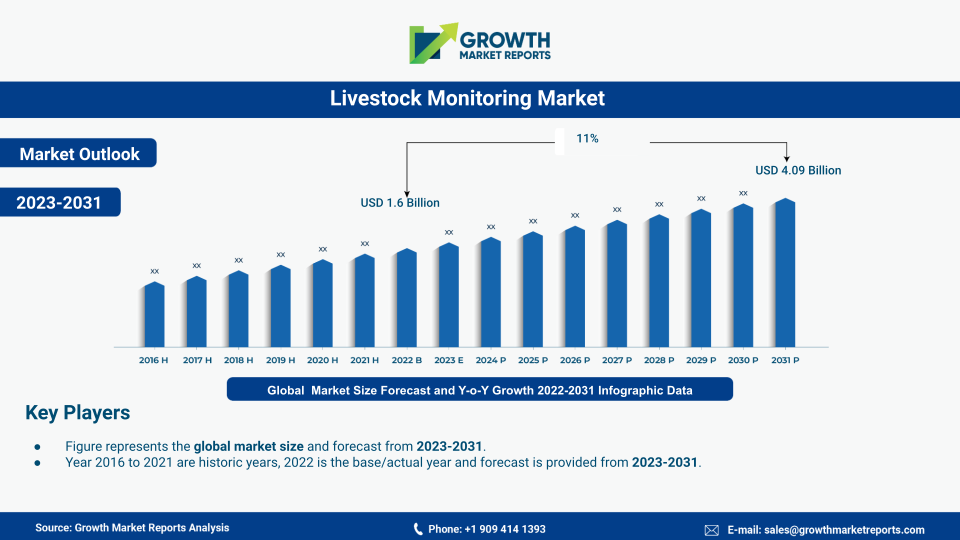
According to our latest research, the global livestock monitoring market size reached USD 5.6 billion in 2024, reflecting a robust trajectory driven by the adoption of advanced technologies in animal husbandry. The market is projected to expand at a CAGR of 13.2% from 2025 to 2033, reaching an estimated USD 16.1 billion by 2033. This impressive growth is primarily fueled by the increasing demand for real-time monitoring solutions, the rising need for operational efficiency on farms, and the growing emphasis on animal health and productivity across the globe.
One of the primary growth factors for the livestock monitoring market is the escalating need for precision livestock farming. Farmers and agribusinesses are increasingly adopting smart technologies to monitor animal health, optimize feeding, and streamline breeding processes. The integration of IoT devices, sensors, and advanced analytics has enabled real-time tracking of livestock, which not only minimizes losses due to disease outbreaks but also enhances overall productivity. The ability to collect and analyze data continuously allows for early detection of health issues, timely interventions, and improved resource management, all of which contribute to higher yields and profitability. Additionally, the growing awareness of animal welfare and the need for traceability in food production chains further drive the adoption of livestock monitoring solutions worldwide.
Another significant driver is the increasing pressure on the agricultural sector to meet the food demands of a rapidly growing global population. With urbanization and changing dietary preferences leading to higher consumption of animal-based products, livestock farmers are compelled to maximize output while maintaining sustainable practices. Livestock monitoring systems facilitate optimized feeding management, efficient milk harvesting, and precise breeding management, thereby ensuring that productivity targets are met without compromising animal health. Furthermore, regulatory mandates for food safety and animal traceability in several countries have prompted farmers to invest in advanced monitoring technologies, thereby accelerating market growth.
The proliferation of wireless connectivity and advancements in sensor technologies have also played a pivotal role in market expansion. Modern livestock monitoring systems leverage cloud computing, artificial intelligence, and big data analytics to provide actionable insights, automate routine tasks, and reduce labor costs. As a result, both small and large-scale farms are witnessing improved operational efficiency and reduced instances of livestock mortality. The cost-effectiveness of these solutions, coupled with government initiatives to promote smart farming, has further encouraged adoption. The market is also benefiting from the entry of new players offering innovative hardware, software, and service models tailored to diverse farming needs.
In recent years, Dairy Cow Health Monitoring has emerged as a critical component of livestock management, particularly within the dairy sector. This advancement is driven by the need to ensure the well-being of dairy cows, which directly impacts milk production and quality. By employing sophisticated monitoring systems, farmers can track vital health indicators such as temperature, heart rate, and activity levels, enabling early detection of illnesses and reducing the risk of disease outbreaks. These systems not only improve animal welfare but also enhance the efficiency of dairy operations by minimizing downtime and optimizing herd management. As the dairy industry continues to evolve, the integration of health monitoring technologies is becoming increasingly essential for maintaining competitive advantage and ensuring sustainable production practices.
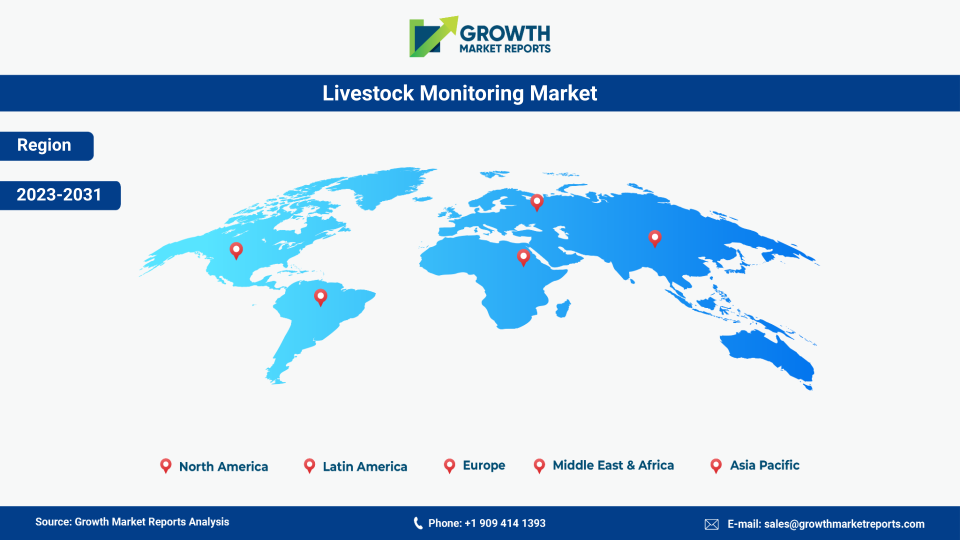
Regionally, North America continues to hold a dominant share in the livestock monitoring market, owing to the early adoption of digital technologies, established infrastructure, and strong presence of leading market players. However, Asia Pacific is emerging as the fastest-growing region, driven by the rapid modernization of the agricultural sector, increasing livestock population, and supportive government policies. Europe also presents significant growth opportunities due to stringent animal welfare regulations and the widespread adoption of precision farming practices. Latin America and the Middle East & Africa are witnessing steady growth, supported by rising investments in agricultural technology and the expansion of commercial livestock farming operations.
The livestock monitoring market by component is segmented into hardware, software, and services, each playing a critical role in the effective deployment of monitoring systems. Hardware components, including sensors, RFID tags, cameras, and wearable devices, form the backbone of livestock monitoring infrastructure. These devices are responsible for collecting real-time physiological and behavioral data from animals, which is crucial for health monitoring, heat detection, and feeding management. The hardware segment continues to dominate the market due to continuous advancements in sensor technology, miniaturization, and the integration of wireless connectivity. The growing demand for rugged, durable, and high-precision devices that can withstand harsh farm environments is further propelling the growth of this segment.
Software solutions are equally vital, serving as the analytical engine that processes and interprets the vast amounts of data generated by hardware devices. Modern livestock monitoring software leverages artificial intelligence, machine learning, and big data analytics to provide actionable insights, automate decision-making, and generate alerts for abnormal animal behavior or health issues. These platforms often feature user-friendly dashboards, mobile applications, and cloud-based interfaces, enabling farmers to access critical information anytime, anywhere. The increasing focus on data-driven farm management, coupled with the need for scalable and customizable solutions, is driving the growth of the software segment within the livestock monitoring market.
Services, encompassing installation, maintenance, technical support, and consulting, are integral to ensuring the seamless operation and longevity of livestock monitoring systems. As farms transition towards digitalization, the demand for professional services has surged, particularly among small and medium-sized enterprises lacking in-house technical expertise. Service providers offer tailored solutions, including system integration, training, and periodic upgrades, to maximize the return on investment for farmers. The rise of subscription-based service models and managed services is also gaining traction, providing farmers with cost-effective access to the latest technologies and ongoing support. This trend is expected to drive sustained growth in the services segment over the forecast period.
The interplay between hardware, software, and services is crucial for delivering end-to-end livestock monitoring solutions. Leading market players are increasingly offering bundled packages that integrate all three components, providing a comprehensive ecosystem for farm management. This holistic approach not only simplifies the purchasing process for farmers but also ensures compatibility and interoperability between different system elements. As the market matures, the emphasis is shifting towards open platforms and standardized protocols that facilitate seamless integration with existing farm infrastructure and third-party applications, further enhancing the value proposition of livestock monitoring solutions.
| Attributes | Details |
| Report Title | Livestock Monitoring Market Research Report 2033 |
| By Component | Hardware, Software, Services |
| By Application | Milk Harvesting, Feeding Management, Breeding Management, Heat Detection, Health Monitoring, Behavior Monitoring, Others |
| By Animal Type | Cattle, Poultry, Swine, Equine, Others |
| By Farm Size | Small and Medium Farms, Large Farms |
| Regions Covered | North America, Europe, APAC, Latin America, MEA |
| Base Year | 2024 |
| Historic Data | 2018-2023 |
| Forecast Period | 2025-2033 |
| Number of Pages | 292 |
| Number of Tables & Figures | 299 |
| Customization Available | Yes, the report can be customized as per your need. |
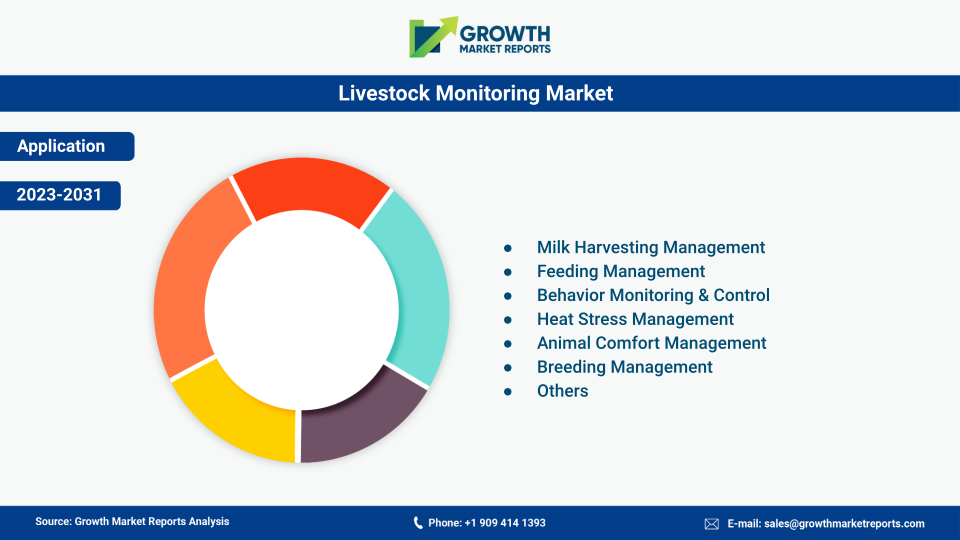
The livestock monitoring market is segmented by application into milk harvesting, feeding management, breeding management, heat detection, health monitoring, behavior monitoring, and others. Milk harvesting is a key application area, particularly in dairy farming, where automated milking systems and real-time monitoring devices are used to optimize milk yield, ensure animal comfort, and maintain hygiene standards. The adoption of smart milking solutions has led to significant improvements in productivity and quality control, while also reducing labor costs and minimizing the risk of mastitis and other health issues. The integration of data analytics enables farmers to track milk production trends, identify underperforming animals, and make informed decisions to enhance herd performance.
Feeding management is another critical application, as proper nutrition is essential for animal health, growth, and productivity. Livestock monitoring systems equipped with automated feeders and weight sensors enable precise control over feed intake, reducing waste and ensuring optimal nutrition for each animal. These solutions help farmers tailor feeding regimens based on individual animal requirements, monitor feed conversion ratios, and detect anomalies in eating behavior that may indicate health issues. The ability to automate and optimize feeding processes not only boosts operational efficiency but also contributes to sustainable farming practices by minimizing resource usage and environmental impact.
Breeding management and heat detection are closely related applications that play a pivotal role in maximizing reproductive efficiency and genetic improvement. Advanced monitoring systems utilize sensors and AI-driven analytics to detect estrus, monitor reproductive cycles, and predict optimal breeding windows. This enables timely insemination, reduces the incidence of missed heats, and improves conception rates. The adoption of automated breeding management solutions has become increasingly important in large-scale operations, where manual monitoring is impractical and labor-intensive. By enhancing reproductive performance, these technologies contribute to higher livestock productivity and profitability.
Health monitoring and behavior monitoring are central to ensuring animal welfare and preventing disease outbreaks. Wearable devices and biosensors continuously track vital signs, activity levels, and behavioral patterns, enabling early detection of illnesses, injuries, or stress. Real-time alerts and predictive analytics empower farmers to intervene promptly, reducing mortality rates and minimizing the spread of infectious diseases. These applications are particularly valuable in intensive farming environments, where the health status of individual animals can be challenging to assess manually. The integration of health and behavior monitoring with other farm management systems creates a holistic approach to livestock care, supporting both productivity and compliance with animal welfare regulations.
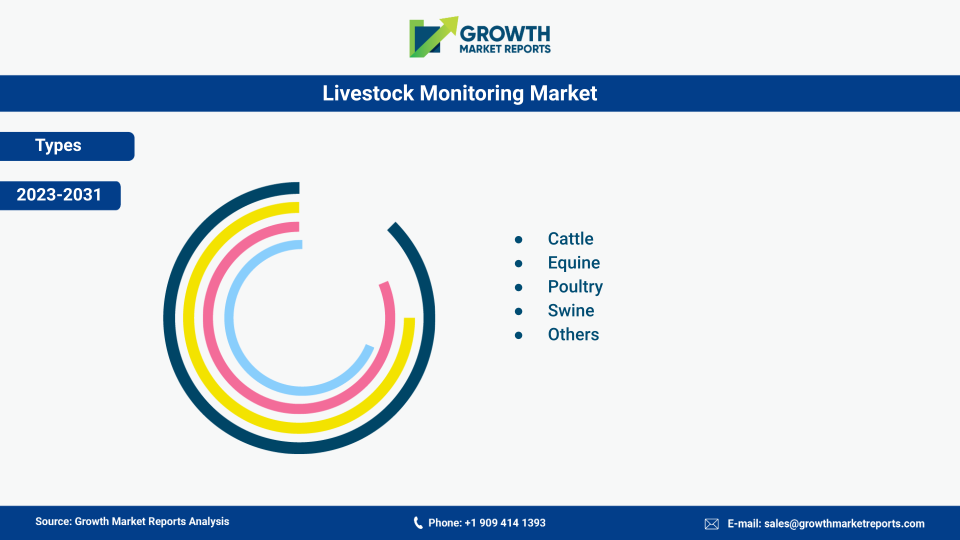
The livestock monitoring market is segmented by animal type into cattle, poultry, swine, equine, and others, reflecting the diverse needs and requirements of different farming operations. Cattle, particularly dairy and beef cattle, represent the largest segment due to the high economic value and intensive management practices associated with these animals. Monitoring solutions for cattle focus on health tracking, milk production optimization, reproductive management, and disease prevention. The widespread adoption of wearable sensors, automated milking systems, and real-time location tracking has transformed cattle farming, enabling farmers to achieve higher productivity and better animal welfare outcomes.
Poultry farming is another significant segment, characterized by large flock sizes and the need for precise environmental control. Livestock monitoring systems in poultry operations are primarily used for monitoring temperature, humidity, feed consumption, and overall flock health. Automated systems help detect early signs of disease, reduce mortality rates, and optimize feed efficiency. The integration of data analytics and machine learning algorithms enables predictive maintenance of equipment, early warning for potential outbreaks, and improved decision-making for flock management. As demand for poultry products continues to rise globally, the adoption of advanced monitoring technologies is expected to accelerate in this segment.
Swine farming presents unique challenges due to the susceptibility of pigs to various diseases and the need for strict biosecurity measures. Livestock monitoring solutions for swine focus on health surveillance, environmental monitoring, and reproductive management. Sensors and automated systems are used to track body temperature, activity levels, and feeding behavior, enabling early detection of illnesses such as African swine fever and respiratory diseases. The ability to monitor individual animals within large herds is particularly valuable in commercial swine operations, where early intervention can prevent significant economic losses. The growing emphasis on traceability and food safety in pork production is further driving the adoption of monitoring technologies in this segment.
Equine monitoring, while a smaller segment, is gaining traction among breeders, trainers, and sports organizations seeking to optimize performance and ensure the health of valuable horses. Wearable devices and GPS trackers are used to monitor vital signs, exercise patterns, and recovery times, providing insights for training optimization and injury prevention. The "others" category includes monitoring solutions for sheep, goats, and other livestock species, reflecting the expanding application of smart technologies across diverse animal husbandry practices. As awareness of the benefits of livestock monitoring grows, adoption is expected to increase across all animal types, driven by the need for improved productivity, animal welfare, and disease control.
The livestock monitoring market is segmented by farm size into small and medium farms and large farms, each with distinct operational requirements and adoption patterns. Small and medium farms, which constitute a significant portion of the global agricultural landscape, are increasingly recognizing the benefits of digital transformation. While budget constraints and limited technical expertise have historically hindered adoption, the availability of affordable, user-friendly monitoring solutions is bridging this gap. Vendors are offering scalable systems tailored to the needs of smaller operations, enabling these farms to enhance productivity, reduce losses, and comply with regulatory requirements. Government subsidies and training programs are also playing a crucial role in promoting technology adoption among small and medium-sized farmers.
Large farms, characterized by extensive livestock populations and complex operations, have been early adopters of advanced monitoring technologies. The scale of these operations necessitates the use of automated systems for health monitoring, feeding management, and breeding optimization. Large farms benefit from economies of scale, enabling them to invest in comprehensive solutions that integrate hardware, software, and services. The ability to monitor thousands of animals in real time, analyze vast datasets, and automate routine tasks has resulted in significant improvements in operational efficiency, animal welfare, and profitability. Leading market players are continuously innovating to meet the evolving needs of large-scale farms, offering customizable solutions that support integration with existing farm management systems.
The adoption of livestock monitoring solutions varies significantly by region and farm size, with developed markets witnessing higher penetration rates among large farms, while emerging markets are seeing rapid growth among small and medium farms. The trend towards farm consolidation and the rise of commercial livestock enterprises are further driving demand for scalable, high-performance monitoring systems. As the benefits of digitalization become more widely recognized, the gap between small and large farms in terms of technology adoption is expected to narrow, supported by ongoing innovation and targeted support initiatives.
The future of the livestock monitoring market lies in the development of flexible, interoperable solutions that cater to the diverse needs of farms of all sizes. Vendors are increasingly focusing on modular platforms that allow farmers to start with basic functionalities and scale up as their needs evolve. The integration of mobile applications, cloud-based analytics, and remote support services is making advanced monitoring technologies accessible to a broader range of users, fostering inclusive growth across the global agricultural sector.
The livestock monitoring market presents significant opportunities for growth, driven by the increasing adoption of smart farming practices and the integration of advanced technologies such as artificial intelligence, IoT, and big data analytics. The rising global demand for animal-based products, coupled with the need for efficient resource management, is prompting farmers to invest in monitoring solutions that enhance productivity and ensure animal welfare. The shift towards sustainable agriculture and the growing emphasis on traceability in food production are also creating new avenues for market expansion. Vendors that can offer innovative, cost-effective solutions tailored to the needs of diverse farming operations are well-positioned to capitalize on these opportunities.
Another major opportunity lies in the expansion of livestock monitoring solutions into emerging markets, particularly in Asia Pacific and Latin America. These regions are witnessing rapid growth in commercial livestock farming and increasing government support for agricultural modernization. The development of affordable, easy-to-use monitoring systems that cater to the unique challenges of small and medium-sized farms can unlock significant untapped potential. Additionally, the rise of cloud-based platforms and mobile applications is enabling remote monitoring and management, making advanced technologies accessible to farmers in remote and underserved areas. Strategic partnerships with local stakeholders, government agencies, and industry associations can further accelerate market penetration and drive long-term growth.
Despite the promising outlook, the livestock monitoring market faces several restraining factors. High initial investment costs, particularly for comprehensive monitoring systems, remain a significant barrier for small and medium-sized farms. The lack of technical expertise and limited access to reliable internet connectivity in rural areas can also hinder adoption. Data privacy and security concerns, especially with the increasing use of cloud-based solutions, are emerging as critical challenges that need to be addressed. Market players must focus on developing affordable, user-friendly solutions and providing robust support services to overcome these barriers and ensure sustained growth in the livestock monitoring market.
North America continues to lead the global livestock monitoring market, accounting for approximately USD 2.2 billion of the total market size in 2024. The regionÂ’s dominance is attributed to the early adoption of advanced farming technologies, strong presence of leading market players, and established infrastructure for digital agriculture. The United States and Canada have been at the forefront of implementing precision livestock farming practices, supported by favorable government policies and significant investments in research and development. The high concentration of large-scale commercial farms and the emphasis on food safety and traceability further drive the adoption of livestock monitoring solutions in this region.
Europe is another major market, with a value of USD 1.6 billion in 2024, driven by stringent animal welfare regulations and widespread adoption of precision farming practices. Countries such as Germany, France, and the Netherlands have implemented robust frameworks for animal health monitoring and traceability, encouraging farmers to invest in advanced monitoring technologies. The region is expected to witness a steady CAGR of 12.5% over the forecast period, supported by ongoing innovation, government incentives, and increasing consumer demand for high-quality, ethically produced animal products. The presence of a well-developed agricultural technology ecosystem and strong collaboration between industry stakeholders further contribute to market growth in Europe.
Asia Pacific is emerging as the fastest-growing region in the livestock monitoring market, with a market size of USD 1.1 billion in 2024 and a projected CAGR of 15.8% from 2025 to 2033. The rapid modernization of the agricultural sector, increasing livestock population, and supportive government policies are driving the adoption of monitoring solutions in countries such as China, India, and Australia. The region presents significant opportunities for market players, particularly in the small and medium farm segment, where the need for affordable, scalable solutions is paramount. Latin America and the Middle East & Africa, with market sizes of USD 0.5 billion and USD 0.2 billion respectively in 2024, are also witnessing steady growth, supported by rising investments in agricultural technology and the expansion of commercial livestock farming operations.
The livestock monitoring market is characterized by intense competition and a dynamic landscape, with both established players and new entrants vying for market share. Leading companies are focusing on innovation, product differentiation, and strategic partnerships to strengthen their positions and expand their global footprint. The market is witnessing a trend towards consolidation, with larger firms acquiring smaller players to enhance their technological capabilities and broaden their product portfolios. The ability to offer integrated, end-to-end solutions that combine hardware, software, and services is emerging as a key differentiator in this competitive environment.
Major players are investing heavily in research and development to introduce advanced monitoring solutions that leverage artificial intelligence, machine learning, and IoT technologies. The emphasis is on developing scalable, interoperable platforms that can be customized to meet the diverse needs of farms of all sizes and types. Companies are also focusing on enhancing user experience through intuitive interfaces, mobile applications, and cloud-based analytics. The shift towards subscription-based and managed service models is gaining traction, providing farmers with flexible, cost-effective access to the latest technologies and ongoing support.
Strategic collaborations and partnerships with technology providers, agricultural organizations, and government agencies are playing a crucial role in driving market growth and fostering innovation. Companies are increasingly engaging in joint ventures and alliances to expand their reach, access new markets, and leverage complementary expertise. The focus on sustainability, animal welfare, and food safety is also shaping the competitive landscape, with players developing solutions that address regulatory requirements and consumer expectations.
Some of the major companies operating in the livestock monitoring market include DeLaval Inc., GEA Group AG, Afimilk Ltd., BouMatic LLC, SCR Dairy Inc. (Allflex), Lely Holding S.Ã .r.l., Nedap N.V., Dairymaster, Fancom BV, and Sensaphone. These companies have established strong market positions through continuous innovation, extensive product portfolios, and robust global distribution networks. For instance, DeLaval and GEA Group are renowned for their advanced milking and herd management systems, while Afimilk and SCR Dairy are leaders in sensor technologies and data analytics. Lely Holding and Nedap N.V. are recognized for their comprehensive farm automation solutions, catering to the evolving needs of modern livestock operations.
In addition to these established players, a growing number of startups and emerging companies are entering the market with innovative solutions targeting specific applications or farm segments. These new entrants are driving competition and accelerating the pace of technological advancement, particularly in areas such as behavioral monitoring, health diagnostics, and cloud-based analytics. The competitive landscape is expected to remain dynamic, with ongoing innovation, strategic partnerships, and market consolidation shaping the future of the livestock monitoring market.
The Livestock Monitoring market has been segmented on the basis of
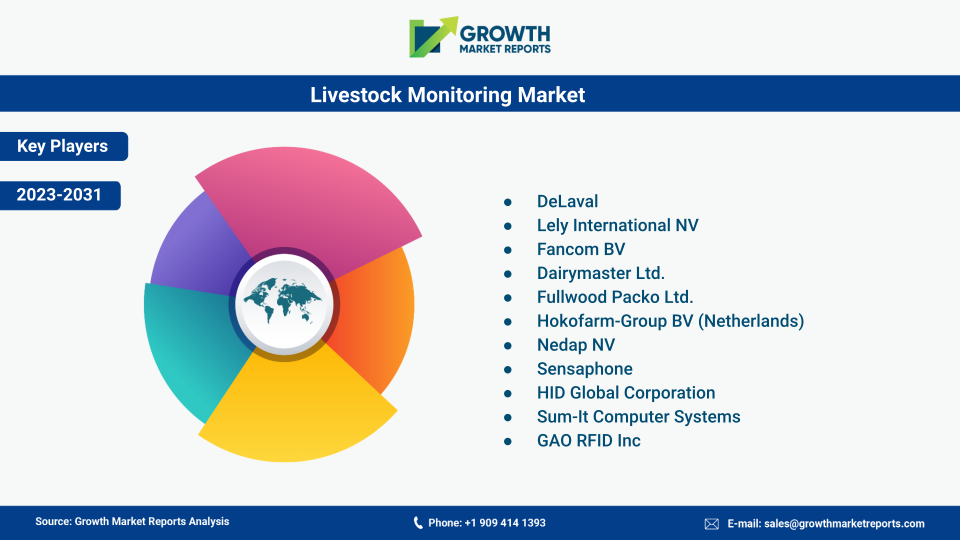
Key players in the global livestock monitoring market include DeLaval, Lely International NV, Fancom BV, Dairymaster Ltd., Fullwood Packo Ltd., Hokofarm-Group BV (Netherlands), Nedap NV, Sensaphone, HID Global Corporation, Sum-It Computer Systems, Ltd., GAO RFID Inc., Infovet (India), Quantified AG, FBS Systems Inc., Communications Group Lethbridge Ltd., Cainthus, GEA Farm Technologies, Afimilk Ltd., BouMatic, LLC., Antelliq Corporation, Valley Agriculture Software, Sol Chip Ltd., IceRobotics Ltd., Gallagher Group Limited, and Connecterra B.V. These players are engaging in product launches, technological advancements, partnerships, and collaborations between key players to increase their market presence and share.
Yes, the Livestock Monitoring Market Research Report 2033 can be customized according to specific needs and requirements.
Key companies include DeLaval Inc., GEA Group AG, Allflex Livestock Intelligence (MSD Animal Health), Afimilk Ltd., BouMatic LLC, Dairymaster, Lely Holding S.à r.l., SCR Dairy, Nedap N.V., Fancom BV, Valley Agriculture Software (VAS), Moocall Ltd., CowManager B.V., Cainthus, Connecterra B.V., Quantified Ag, Smartbow GmbH, HerdDogg Inc., AgriWebb, and CattleEye Ltd.
Large farms are early adopters due to scale and resources, benefiting from automation and integration. Small and medium farms are increasingly adopting affordable, user-friendly solutions, supported by government subsidies and scalable platforms.
Opportunities include the expansion into emerging markets, adoption of AI and IoT, and the shift towards sustainable and traceable farming. Challenges include high initial costs, lack of technical expertise, limited rural connectivity, and data privacy concerns.
Cattle monitoring focuses on health and milk production, poultry monitoring ensures flock health and feed efficiency, swine monitoring addresses disease prevention and biosecurity, and equine monitoring supports performance and injury prevention. Solutions are also available for sheep, goats, and other livestock.
Major applications include milk harvesting, feeding management, breeding management, heat detection, health monitoring, and behavior monitoring. These solutions help optimize productivity, animal health, and operational efficiency.
Livestock monitoring systems consist of hardware (sensors, RFID tags, cameras, wearables), software (AI, data analytics, dashboards, mobile apps), and services (installation, maintenance, consulting, technical support).
North America holds the largest market share due to early technology adoption and infrastructure, while Asia Pacific is the fastest-growing region driven by agricultural modernization, increasing livestock populations, and supportive government policies. Europe also shows strong growth due to strict animal welfare regulations.
Key growth drivers include the adoption of advanced technologies like IoT, sensors, and AI, increasing demand for real-time monitoring, the need for operational efficiency, rising focus on animal health and productivity, and regulatory requirements for food safety and traceability.
The global livestock monitoring market reached USD 5.6 billion in 2024 and is projected to grow at a CAGR of 13.2% from 2025 to 2033, reaching an estimated USD 16.1 billion by 2033.