Segments - by Component (Software, Services), by Deployment Mode (On-Premises, Cloud), by Application (Telecom, Utilities, BFSI, Healthcare, Retail, Energy, Others), by Organization Size (Small and Medium Enterprises, Large Enterprises), by End-User (Telecommunications, Banking and Financial Services, Energy and Utilities, Healthcare, Retail, Others)
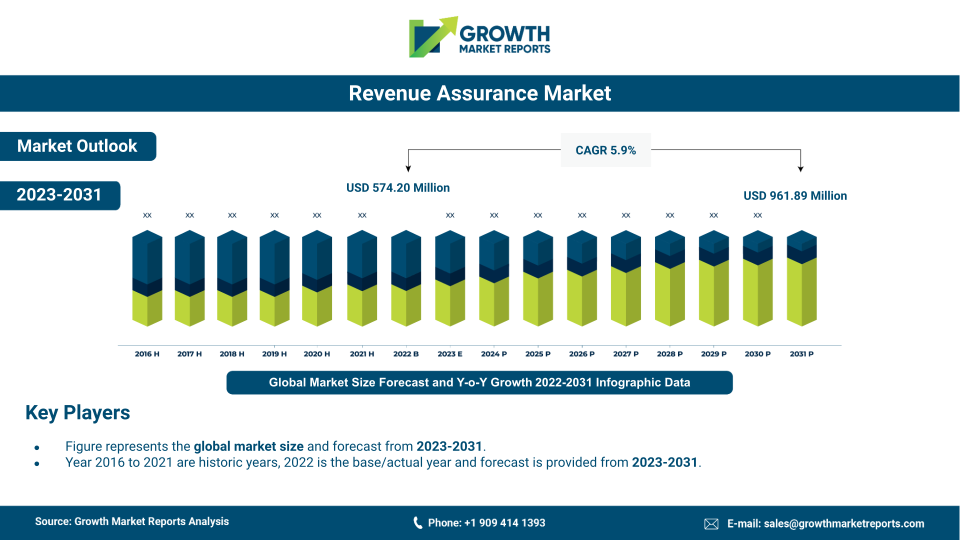
According to our latest research, the global Revenue Assurance market size is valued at USD 6.4 billion in 2024, reflecting the rapidly growing adoption of advanced solutions across key industries. This market is forecasted to reach USD 15.3 billion by 2033, expanding at a robust CAGR of 10.2% during the period from 2025 to 2033. The growth of the Revenue Assurance market is primarily driven by the increasing need for organizations to minimize revenue leakage, optimize operational efficiency, and comply with stringent regulatory requirements in a highly competitive digital landscape.
A major growth factor for the Revenue Assurance market is the exponential rise in digital transactions and billing complexities across industries such as telecommunications, banking, and utilities. As organizations increasingly digitize their operations, the risk of revenue leakage due to billing errors, fraud, and process inefficiencies escalates. This has led to a surge in demand for robust revenue assurance solutions that can monitor, detect, and prevent revenue losses in real-time. The integration of advanced technologies such as artificial intelligence, machine learning, and big data analytics into revenue assurance platforms is enabling businesses to automate error detection, enhance accuracy, and accelerate the reconciliation process. These technological advancements are further fueling market growth by providing organizations with actionable insights to optimize their revenue streams and improve profitability.
Additionally, the growing complexity of regulatory compliance is propelling the adoption of revenue assurance solutions across various sectors. Industries such as BFSI, healthcare, and energy are subject to stringent regulatory frameworks that require accurate reporting and transparency in revenue management. Failure to comply can result in hefty fines, reputational damage, and legal repercussions. Revenue assurance solutions help organizations ensure compliance by providing comprehensive audit trails, automated reporting, and robust controls over financial data. This not only mitigates the risk of regulatory breaches but also enhances trust among stakeholders and customers. As regulatory environments continue to evolve, the need for adaptable and scalable revenue assurance solutions is expected to intensify, further driving market expansion.
Another significant driver is the increasing focus on customer experience and retention. In highly competitive sectors like telecom and retail, customer churn due to billing errors or service discrepancies can have a substantial impact on revenue and brand loyalty. Revenue assurance solutions play a critical role in identifying and rectifying discrepancies before they affect customers, thereby improving service quality and customer satisfaction. Organizations are leveraging these solutions to gain a holistic view of their revenue processes, streamline operations, and deliver seamless customer experiences. The shift towards customer-centric business models is thus amplifying the importance of revenue assurance in sustaining long-term growth and competitiveness.
Telecom Service Assurance is becoming increasingly vital as telecommunications companies navigate the complexities of modern digital ecosystems. With the advent of technologies like 5G and IoT, telecom operators are under pressure to deliver seamless, reliable services while managing vast amounts of data and maintaining high customer satisfaction. Telecom Service Assurance solutions enable operators to monitor network performance, detect anomalies, and ensure service quality, thereby reducing churn and enhancing customer loyalty. By integrating these solutions with revenue assurance platforms, telecom companies can not only safeguard their revenue streams but also optimize their operational efficiency, ensuring a competitive edge in a rapidly evolving market landscape.
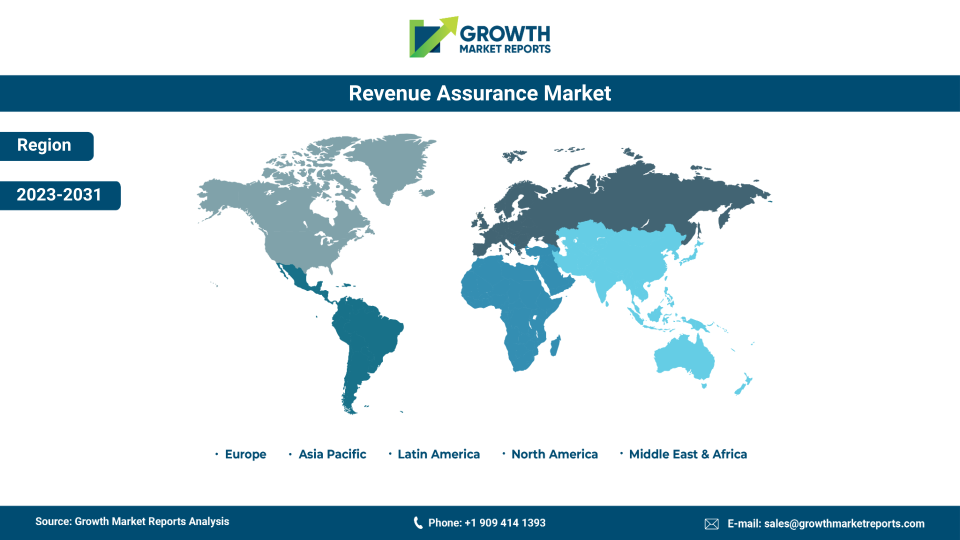
Regionally, the Asia Pacific market is witnessing the fastest growth, driven by rapid digitalization, expanding telecom infrastructure, and increasing investments in IT modernization. North America remains the largest market, supported by early technology adoption and a strong presence of leading revenue assurance solution providers. Europe is also experiencing steady growth, fueled by regulatory pressures and digital transformation initiatives across industries. Meanwhile, the Middle East & Africa and Latin America are emerging as promising markets, as organizations in these regions increasingly recognize the value of revenue assurance in safeguarding their financial health amidst evolving business landscapes.
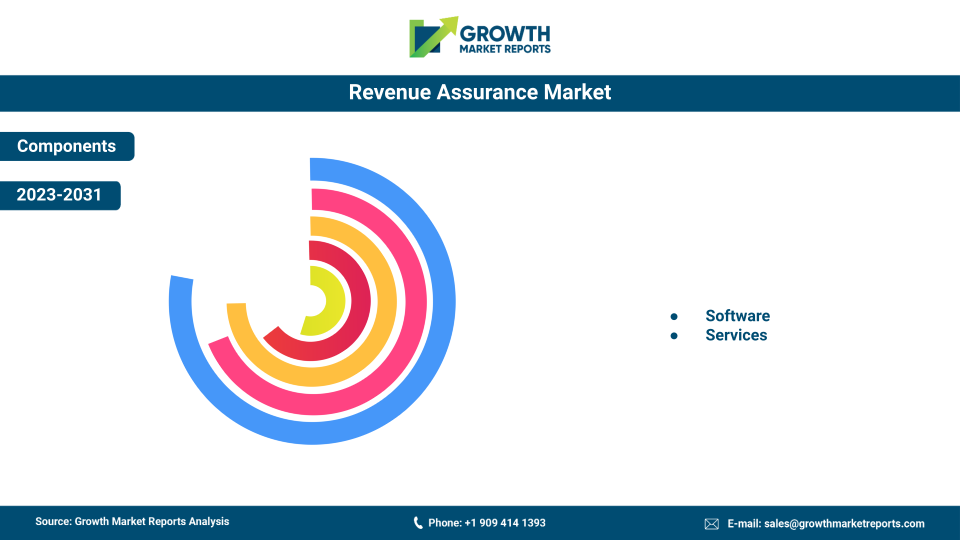
The Revenue Assurance market is segmented by component into Software and Services, each playing a pivotal role in the ecosystem. The software segment dominates the market, accounting for the majority of the global revenue due to its critical role in automating revenue assurance processes, monitoring transactions, and detecting anomalies. Revenue assurance software solutions are increasingly incorporating advanced analytics, machine learning, and artificial intelligence to enhance their detection capabilities, reduce false positives, and provide actionable insights. These solutions are highly scalable and can be integrated with existing enterprise systems, making them attractive to organizations of all sizes seeking to optimize their revenue management processes.
On the other hand, the services segment is experiencing significant growth, driven by the rising need for specialized expertise in implementing, customizing, and maintaining revenue assurance solutions. Services include consulting, system integration, training, and support, all of which are essential for ensuring the effective deployment and operation of revenue assurance platforms. As organizations face unique challenges in their revenue processes, the demand for tailored services that address industry-specific requirements is increasing. Managed services are particularly gaining traction among small and medium enterprises (SMEs) that lack in-house expertise and resources to manage complex revenue assurance systems.
The interplay between software and services is crucial for the successful adoption of revenue assurance solutions. While software provides the technological backbone for monitoring and analysis, services bridge the gap by offering domain expertise, customization, and ongoing support. Many leading vendors are offering bundled solutions that combine robust software platforms with comprehensive service offerings, enabling organizations to achieve faster time-to-value and maximize their return on investment. This integrated approach is expected to drive further growth in both segments as organizations seek end-to-end solutions that address their evolving revenue assurance needs.
Furthermore, the growing trend towards cloud-based revenue assurance solutions is transforming the component landscape. Cloud-based software is enabling organizations to access advanced capabilities without the need for substantial upfront investments in IT infrastructure. This, in turn, is increasing the demand for cloud integration and migration services, as businesses look to transition from legacy systems to modern, agile platforms. The convergence of software innovation and service excellence is thus shaping the future of the revenue assurance market, with vendors focusing on delivering holistic solutions that cater to the diverse needs of their clients.
| Attributes | Details |
| Report Title | Revenue Assurance Market Research Report 2033 |
| By Component | Software, Services |
| By Deployment Mode | On-Premises, Cloud |
| By Application | Telecom, Utilities, BFSI, Healthcare, Retail, Energy, Others |
| By Organization Size | Small and Medium Enterprises, Large Enterprises |
| By End-User | Telecommunications, Banking and Financial Services, Energy and Utilities, Healthcare, Retail, Others |
| Regions Covered | North America, Europe, APAC, Latin America, MEA |
| Base Year | 2024 |
| Historic Data | 2018-2023 |
| Forecast Period | 2025-2033 |
| Number of Pages | 253 |
| Number of Tables & Figures | 324 |
| Customization Available | Yes, the report can be customized as per your need. |
The Revenue Assurance market is segmented by deployment mode into On-Premises and Cloud, each offering distinct advantages and catering to varying organizational preferences. On-premises deployment has traditionally been the preferred choice for large enterprises and highly regulated industries that require complete control over their data and IT infrastructure. These organizations value the security, customization, and integration capabilities offered by on-premises solutions, particularly when dealing with sensitive financial information and compliance requirements. However, on-premises deployments often involve significant upfront costs, longer implementation timelines, and ongoing maintenance responsibilities, which can be challenging for organizations with limited IT resources.
Revenue Leakage Detection Software is gaining traction as organizations across industries strive to protect their bottom line from unnoticed financial losses. This software plays a crucial role in identifying discrepancies and inefficiencies within billing systems, transaction processes, and financial reporting. By leveraging advanced analytics and machine learning, Revenue Leakage Detection Software provides organizations with real-time insights into potential revenue losses, enabling them to take proactive measures to rectify issues before they escalate. As businesses continue to digitize their operations, the demand for sophisticated detection tools is expected to rise, underscoring the importance of investing in robust solutions to ensure financial integrity and operational resilience.
In contrast, the cloud deployment segment is witnessing rapid growth, driven by the increasing adoption of cloud computing across industries. Cloud-based revenue assurance solutions offer unparalleled flexibility, scalability, and cost-efficiency, allowing organizations to quickly deploy and scale their operations without the need for substantial capital investments. The subscription-based pricing model of cloud solutions makes them highly attractive to small and medium enterprises (SMEs) that seek to optimize their revenue processes while minimizing IT overhead. Furthermore, cloud deployment facilitates seamless updates, remote access, and integration with other cloud-based applications, enhancing operational agility and responsiveness.
The growing popularity of hybrid deployment models is also shaping the revenue assurance market. Organizations are increasingly adopting hybrid approaches that combine the security and control of on-premises solutions with the flexibility and scalability of the cloud. This allows them to leverage the strengths of both deployment modes while addressing their unique business and regulatory requirements. Vendors are responding to this trend by offering modular solutions that can be deployed on-premises, in the cloud, or in hybrid environments, providing organizations with greater choice and flexibility in their revenue assurance strategies.
Security and data privacy remain key considerations in the selection of deployment modes. While cloud solutions have made significant advancements in security, some organizations, particularly in sectors like BFSI and healthcare, continue to prefer on-premises deployments due to concerns over data sovereignty and regulatory compliance. However, as cloud providers invest in advanced security measures and obtain industry-specific certifications, the adoption of cloud-based revenue assurance solutions is expected to accelerate, particularly among organizations seeking to modernize their IT infrastructure and drive digital transformation.
The Revenue Assurance market finds application across a diverse range of industries, including Telecom, Utilities, BFSI, Healthcare, Retail, Energy, and Others. The telecom sector remains the largest application segment, accounting for a significant share of the global market. Telecommunications companies face complex billing structures, high transaction volumes, and frequent changes in service offerings, making them particularly vulnerable to revenue leakage. Revenue assurance solutions are essential for telecom operators to monitor call data records, reconcile billing systems, and detect fraudulent activities, thereby safeguarding their revenue streams and ensuring regulatory compliance.
The BFSI sector is another major adopter of revenue assurance solutions, driven by the need to manage complex financial transactions, mitigate fraud risks, and comply with stringent regulatory requirements. Banks and financial institutions leverage revenue assurance platforms to monitor transaction flows, identify discrepancies, and ensure accurate billing and reporting. The integration of advanced analytics and automation is enabling BFSI organizations to enhance the efficiency and accuracy of their revenue management processes, reduce operational costs, and improve customer trust.
In the utilities and energy sectors, revenue assurance solutions are gaining traction as organizations seek to optimize billing accuracy, reduce losses due to meter tampering or energy theft, and comply with regulatory mandates. The advent of smart meters and digital billing systems has increased the complexity of revenue management in these sectors, necessitating the adoption of advanced assurance platforms that can provide real-time monitoring, anomaly detection, and automated reconciliation. This is particularly important as utilities and energy providers transition towards more customer-centric business models and face increasing scrutiny from regulators and consumers alike.
Healthcare and retail are emerging as high-growth application segments, driven by the increasing digitization of services and the need for accurate revenue capture. In healthcare, revenue assurance solutions help providers manage complex billing processes, reduce claim denials, and ensure compliance with healthcare regulations. Retailers, on the other hand, use these solutions to streamline point-of-sale transactions, manage promotions and discounts, and prevent revenue losses due to fraud or operational errors. As digital transformation accelerates across industries, the application scope of revenue assurance solutions is expected to expand, opening new avenues for market growth.
The Revenue Assurance market is segmented by organization size into Small and Medium Enterprises (SMEs) and Large Enterprises, each exhibiting distinct adoption patterns and requirements. Large enterprises represent the largest share of the market, owing to their complex operational structures, high transaction volumes, and greater exposure to revenue leakage risks. These organizations have the resources and expertise to invest in sophisticated revenue assurance solutions that offer advanced analytics, automation, and integration capabilities. Large enterprises, particularly in sectors like telecom, BFSI, and energy, are increasingly focusing on end-to-end revenue assurance strategies to optimize their revenue streams and ensure regulatory compliance.
Small and medium enterprises (SMEs) are emerging as a key growth segment in the revenue assurance market, driven by the increasing availability of affordable, cloud-based solutions that cater to their unique needs. SMEs often face resource constraints and lack in-house expertise to manage complex revenue assurance processes, making them reliant on user-friendly, scalable, and cost-effective solutions. The adoption of cloud-based revenue assurance platforms is enabling SMEs to access advanced capabilities such as real-time monitoring, automated reconciliation, and fraud detection without significant upfront investments. This democratization of technology is leveling the playing field and allowing SMEs to compete more effectively in their respective markets.
The growing awareness of the financial and reputational risks associated with revenue leakage is prompting organizations of all sizes to prioritize revenue assurance. Vendors are responding by offering modular and customizable solutions that can be tailored to the specific needs and budgets of different organizations. This flexibility is particularly important for SMEs, which require solutions that can scale as their business grows and adapt to changing regulatory and market conditions. Training and support services are also critical for ensuring the successful adoption and ongoing effectiveness of revenue assurance platforms, especially among SMEs with limited IT resources.
The convergence of technological innovation and evolving business needs is driving the adoption of revenue assurance solutions across organizations of all sizes. As digital transformation accelerates and competitive pressures intensify, the ability to effectively manage and optimize revenue streams is becoming a key differentiator. Both large enterprises and SMEs are recognizing the strategic value of revenue assurance in enhancing operational efficiency, reducing costs, and sustaining long-term growth. This trend is expected to drive continued expansion of the revenue assurance market across all organization sizes.
The end-user landscape of the Revenue Assurance market is diverse, encompassing Telecommunications, Banking and Financial Services, Energy and Utilities, Healthcare, Retail, and Others. Telecommunications remains the dominant end-user segment, driven by the sector's inherent complexity and susceptibility to revenue leakage. Telecom operators face challenges such as multiple service offerings, frequent tariff changes, and high transaction volumes, making robust revenue assurance solutions essential for maintaining profitability and regulatory compliance. The adoption of next-generation technologies such as 5G, IoT, and cloud services is further increasing the need for advanced revenue assurance platforms that can manage the growing complexity of telecom operations.
The banking and financial services sector is also a significant end-user of revenue assurance solutions, as institutions strive to protect their revenue streams from fraud, errors, and regulatory breaches. The increasing digitization of financial services, coupled with the proliferation of digital payment channels, is heightening the risk of revenue leakage and necessitating the adoption of sophisticated assurance platforms. These solutions enable banks and financial institutions to monitor transactions in real-time, detect anomalies, and ensure accurate billing and reporting, thereby enhancing financial integrity and customer trust.
Energy and utilities companies are increasingly turning to revenue assurance solutions to address challenges such as meter tampering, energy theft, and billing inaccuracies. The transition to smart grids and digital billing systems is creating new opportunities for revenue optimization, but also introducing new risks and complexities. Revenue assurance platforms help energy and utilities providers monitor consumption patterns, detect irregularities, and reconcile billing data, ensuring accurate revenue capture and compliance with regulatory requirements. This is particularly important as the sector faces increasing pressure to improve efficiency, reduce losses, and support the transition to sustainable energy sources.
Healthcare and retail are emerging as high-growth end-user segments, driven by the need to optimize revenue processes and enhance customer experiences. Healthcare providers are leveraging revenue assurance solutions to manage complex billing cycles, reduce claim denials, and ensure compliance with healthcare regulations. Retailers, meanwhile, are using these platforms to streamline point-of-sale transactions, manage discounts and promotions, and prevent revenue losses due to fraud or operational errors. As the adoption of digital technologies accelerates across these sectors, the demand for revenue assurance solutions is expected to rise, creating new opportunities for market expansion.
The Revenue Assurance market presents significant opportunities for growth, particularly as organizations across industries embrace digital transformation and seek to optimize their revenue streams. The integration of advanced technologies such as artificial intelligence, machine learning, and big data analytics is enabling revenue assurance solutions to deliver greater accuracy, speed, and scalability. These technologies are transforming traditional revenue assurance processes by automating error detection, reducing manual intervention, and providing real-time insights into revenue performance. As organizations increasingly adopt cloud-based solutions, vendors have the opportunity to expand their offerings and reach new customer segments, particularly among small and medium enterprises that are seeking affordable and scalable assurance platforms.
Another major opportunity lies in the expanding application scope of revenue assurance solutions across emerging industries and regions. As sectors such as healthcare, retail, and energy undergo digital transformation, the need for robust revenue assurance platforms is becoming more pronounced. Vendors that can offer industry-specific solutions and address unique regulatory and operational challenges are well-positioned to capture new market share. Furthermore, the growing emphasis on customer experience and retention is driving demand for revenue assurance solutions that can help organizations deliver seamless, error-free services and build long-term customer loyalty. Strategic partnerships, mergers and acquisitions, and investments in research and development are expected to accelerate innovation and drive market growth in the coming years.
Despite these opportunities, the Revenue Assurance market faces several restraining factors, chief among them being the complexity and cost of implementation. Deploying advanced revenue assurance solutions often requires significant investments in technology, training, and process reengineering, which can be a barrier for organizations with limited resources. Additionally, integrating revenue assurance platforms with existing IT systems and ensuring data security and privacy pose significant challenges, particularly in highly regulated industries. Resistance to change and lack of awareness about the benefits of revenue assurance solutions can also hinder market adoption, especially among small and medium enterprises. Addressing these challenges will be critical for vendors and organizations seeking to maximize the value of their revenue assurance investments.
North America leads the global Revenue Assurance market, accounting for approximately USD 2.5 billion in 2024. The region's dominance is attributed to early technology adoption, a strong presence of leading revenue assurance vendors, and a mature digital infrastructure. The United States, in particular, is a major contributor to market growth, with organizations across telecom, BFSI, and utilities sectors investing heavily in advanced revenue assurance solutions to address complex billing processes, regulatory compliance, and revenue optimization. The region is expected to maintain its leadership position over the forecast period, driven by ongoing digital transformation initiatives and increasing focus on operational efficiency.
The Asia Pacific region is experiencing the fastest growth in the Revenue Assurance market, with a projected CAGR of 13.5% from 2025 to 2033. The market size in Asia Pacific is estimated at USD 1.7 billion in 2024, driven by rapid digitalization, expanding telecom infrastructure, and increasing investments in IT modernization. Countries such as China, India, and Japan are witnessing significant adoption of revenue assurance solutions across telecom, BFSI, and energy sectors, as organizations seek to mitigate revenue leakage and enhance competitiveness. The region's large and diverse customer base, coupled with favorable government initiatives and rising awareness of revenue assurance benefits, is expected to drive sustained market growth in the coming years.
Europe holds a significant share of the global Revenue Assurance market, valued at USD 1.3 billion in 2024. The region's growth is driven by stringent regulatory requirements, widespread adoption of digital technologies, and a strong focus on operational excellence. Key markets such as the United Kingdom, Germany, and France are leading the adoption of revenue assurance solutions, particularly in the telecom, BFSI, and utilities sectors. The Middle East & Africa and Latin America are also emerging as promising markets, with a combined market size of USD 0.9 billion in 2024. Organizations in these regions are increasingly recognizing the value of revenue assurance in safeguarding their financial health and supporting business growth amidst evolving market dynamics.
The competitive landscape of the Revenue Assurance market is characterized by the presence of several global and regional players offering a diverse range of software and service solutions. Leading vendors are focusing on innovation, strategic partnerships, and acquisitions to enhance their product portfolios and expand their market reach. The market is highly dynamic, with companies continuously investing in research and development to incorporate advanced technologies such as artificial intelligence, machine learning, and big data analytics into their revenue assurance platforms. This technological innovation is enabling vendors to offer solutions that deliver greater accuracy, automation, and scalability, thereby meeting the evolving needs of organizations across industries.
In addition to technological innovation, vendors are differentiating themselves through comprehensive service offerings, industry-specific solutions, and customer-centric approaches. Many companies are offering bundled solutions that combine robust software platforms with consulting, integration, training, and support services, enabling organizations to achieve faster time-to-value and maximize their return on investment. The ability to provide tailored solutions that address the unique regulatory, operational, and business requirements of different industries is a key competitive advantage in the market. As customer expectations continue to evolve, vendors are placing greater emphasis on delivering seamless user experiences, intuitive interfaces, and flexible deployment options.
The market is also witnessing increased consolidation, with major players acquiring niche solution providers to strengthen their capabilities and expand their customer base. Strategic partnerships and collaborations are enabling vendors to leverage complementary strengths, accelerate innovation, and enter new markets. The rise of cloud-based revenue assurance solutions is opening up new opportunities for vendors to reach small and medium enterprises and tap into emerging markets. However, competition is intensifying, and vendors must continuously innovate and adapt to changing market dynamics to maintain their competitive edge.
Some of the major companies operating in the Revenue Assurance market include Amdocs, Subex Limited, Hewlett Packard Enterprise (HPE), SAP SE, Ericsson, Tata Consultancy Services (TCS), Nokia Corporation, Araxxe, WeDo Technologies (now part of Mobileum), and Cartesian. These companies are at the forefront of technological innovation, offering a wide range of solutions that cater to the diverse needs of organizations across telecom, BFSI, utilities, healthcare, and retail sectors. For instance, Amdocs and Subex are renowned for their comprehensive revenue assurance platforms tailored for the telecom industry, while SAP and HPE offer scalable, cross-industry solutions with advanced analytics and automation capabilities. Mobileum, following its acquisition of WeDo Technologies, has strengthened its position as a leading provider of revenue assurance and risk management solutions for telecom operators worldwide.
In addition to these global players, several regional and niche vendors are making significant contributions to the market by offering specialized solutions and services that address specific industry challenges. These companies often focus on delivering high levels of customization, agility, and customer support, enabling them to build strong relationships with clients and compete effectively against larger, established vendors. As the Revenue Assurance market continues to evolve, the competitive landscape is expected to become increasingly dynamic, with new entrants, innovative startups, and established players all vying for market share in a rapidly growing and highly competitive environment.
The Revenue Assurance market has been segmented on the basis of
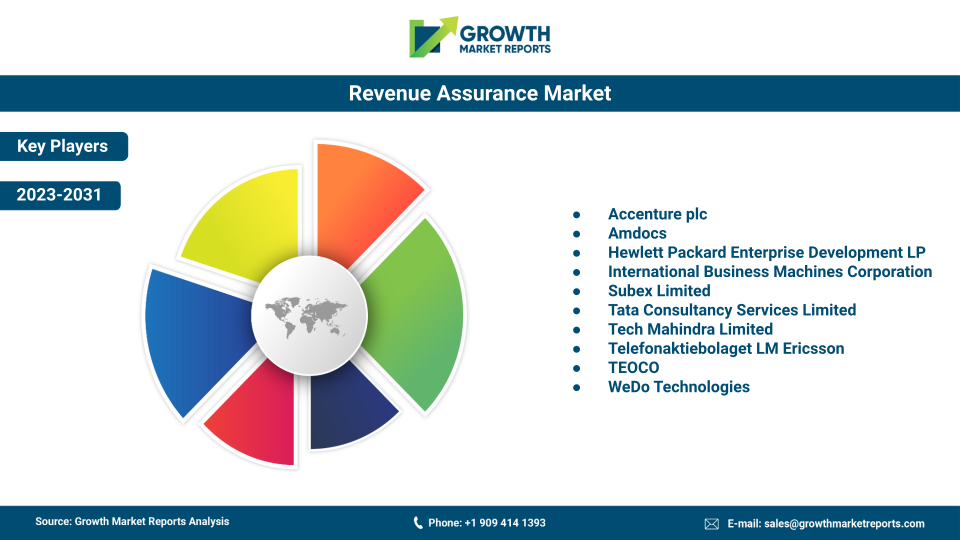
Major players of the global revenue assurance market are Accenture plc, Amdocs, Hewlett Packard Enterprise Development LP, International Business Machines Corporation, Subex Limited, Tata Consultancy Services Limited, Tech Mahindra Limited, Telefonaktiebolaget LM Ericsson, TEOCO, and WeDo Technologies.
In 2019, WeDo Technologies addressed more than 200 telecom specialists at its WeMeet Europe. The WeMeet Europe convened the industry experts about 5G is anticipated to disrupt the existing telecom business models. The chief strategy & marketing officer Bernardo Galvão Lucas talked about the importance of technology that can fight the revenue assurance threats.
Technologies such as artificial intelligence, machine learning, and big data analytics are automating error detection, enhancing accuracy, and providing real-time insights. Cloud-based solutions are also enabling greater scalability and accessibility for organizations of all sizes.
Key challenges include the complexity and cost of implementation, integration with existing IT systems, ensuring data security and privacy, resistance to change, and lack of awareness among SMEs about the benefits of revenue assurance solutions.
Major companies include Amdocs, Subex, Ericsson, Nokia, Huawei, Tata Consultancy Services (TCS), Accenture, Wipro, Hewlett Packard Enterprise (HPE), IBM, SAP, Tech Mahindra, Infosys, WeDo Technologies, Tata Communications, Cartesian, Sigos, Xintec, Araxxe, and Tango Telecom.
Major growth drivers include the rise in digital transactions, billing complexities, regulatory compliance requirements, the need to minimize revenue leakage, and the integration of advanced technologies like AI, machine learning, and big data analytics.
North America leads the market, driven by early technology adoption and a strong vendor presence. Asia Pacific is the fastest-growing region due to rapid digitalization and expanding telecom infrastructure, while Europe is also experiencing steady growth.
On-premises solutions offer greater control, security, and customization, making them suitable for large enterprises and regulated industries. Cloud-based solutions provide flexibility, scalability, and cost-efficiency, making them popular among SMEs and organizations seeking rapid deployment and lower IT overhead.
The revenue assurance market is segmented into software and services. Software dominates due to its automation and analytics capabilities, while services such as consulting, integration, and support are growing rapidly, especially among SMEs.
Key industries adopting revenue assurance solutions include telecommunications, banking and financial services (BFSI), utilities, healthcare, retail, and energy. Telecom remains the largest segment due to complex billing and high transaction volumes.
The global revenue assurance market is valued at USD 6.4 billion in 2024 and is expected to reach USD 15.3 billion by 2033, growing at a CAGR of 10.2% from 2025 to 2033.
Revenue assurance refers to the processes and solutions used by organizations to prevent revenue leakage, optimize operational efficiency, and ensure compliance with regulatory requirements. It is crucial for businesses as it helps detect billing errors, fraud, and process inefficiencies, thereby safeguarding revenue streams and improving profitability.