Segments - by Component (Software, Services), by Deployment Mode (Cloud-Based, On-Premises), by Application (Course Management, Curriculum Planning, Catalog Publishing, Degree Audit, Others), by End-User (Universities, Colleges, Community Colleges, Technical Institutes, Others)
According to our latest research, the global Higher Education Catalog and Curriculum Management Software market size reached USD 1.28 billion in 2024, with a robust compound annual growth rate (CAGR) of 11.2% expected from 2025 to 2033. By 2033, the market is forecasted to reach USD 3.03 billion. This strong growth trajectory is primarily fueled by the increasing digital transformation initiatives within the higher education sector, the rising need for efficient academic planning, and the growing demand for streamlined catalog publishing and curriculum management processes. As per our latest research, educational institutions globally are rapidly adopting technology solutions to enhance academic operations and improve student outcomes, which is driving the expansion of this market.
One of the primary growth factors for the Higher Education Catalog and Curriculum Management Software market is the accelerating shift towards digitalization across universities and colleges. Institutions are seeking advanced solutions to manage complex academic structures, course offerings, and degree requirements efficiently. The transition from manual, paper-based catalog and curriculum management to automated, software-driven processes is enabling institutions to reduce administrative burdens, minimize errors, and provide real-time updates to students and faculty. The integration of these platforms with student information systems (SIS) and learning management systems (LMS) further enhances operational efficiency, providing a seamless academic experience for all stakeholders. The need for agility in updating curricula to match evolving industry standards and accreditation requirements is also pushing institutions to invest in robust catalog and curriculum management solutions.
Another significant driver for market growth is the increasing emphasis on student-centric approaches in higher education. Modern catalog and curriculum management software platforms offer personalized degree planning, real-time progress tracking, and intuitive interfaces that empower students to make informed decisions about their academic paths. These solutions facilitate transparent communication between students, advisors, and faculty, ensuring that students remain on track for graduation and can navigate complex degree requirements with ease. Moreover, the ability to rapidly adapt course catalogs in response to new educational trends, such as interdisciplinary studies and micro-credentialing, has become a strategic advantage for institutions aiming to attract and retain students in a competitive educational landscape.
The regulatory environment and accreditation standards are also shaping the growth of this market. Higher education institutions are under increasing pressure to maintain compliance with evolving accreditation requirements and to demonstrate the effectiveness of their academic programs. Catalog and curriculum management software provides comprehensive audit trails, analytics, and reporting tools that support institutional accountability and facilitate the accreditation process. Additionally, the global expansion of higher education, particularly in emerging markets, is creating new opportunities for software vendors to offer scalable, cloud-based solutions tailored to the needs of diverse institutions. The growing trend of international collaborations and online program offerings further amplifies the demand for standardized, yet flexible, curriculum management systems.
In the context of digital transformation in higher education, Campus Management Software plays a pivotal role in streamlining various administrative and academic processes. This software encompasses a wide range of functionalities, including student information management, course scheduling, and resource allocation, which are crucial for the efficient operation of educational institutions. By integrating Campus Management Software with catalog and curriculum management systems, institutions can achieve a more cohesive and responsive educational environment. This integration not only enhances operational efficiency but also supports data-driven decision-making, ultimately leading to improved student outcomes and institutional performance.
From a regional perspective, North America currently leads the market, accounting for the largest share due to the high adoption rate of educational technologies and the presence of a large number of universities and colleges. However, the Asia Pacific region is witnessing the fastest growth, driven by substantial investments in education infrastructure, government initiatives promoting digital learning, and the rapid expansion of higher education institutions. Europe also holds a significant share, with a strong focus on academic quality assurance and innovation in curriculum design. Latin America and the Middle East & Africa are emerging markets, gradually increasing their adoption of catalog and curriculum management solutions as they modernize their educational systems and expand access to higher education.
The Higher Education Catalog and Curriculum Management Software market is segmented by component into software and services. The software segment dominates the market, capturing the majority of the market share in 2024 due to the essential role that robust, feature-rich platforms play in managing complex academic catalogs and curricula. These software solutions are designed to automate various administrative processes, from course scheduling and catalog publishing to degree audits and compliance reporting. The increasing demand for scalable, configurable, and user-friendly software platforms is driving continuous innovation in this segment. Advanced features such as analytics, integration with other campus systems, and cloud-based deployment are becoming standard, further enhancing the value proposition of these solutions for educational institutions.
The services segment, which includes implementation, consulting, training, and support, is also experiencing significant growth. As institutions adopt new software platforms, they require expert guidance to ensure smooth deployment, customization to meet specific institutional needs, and ongoing support to maximize the return on investment. Service providers are increasingly offering end-to-end solutions, encompassing system integration, data migration, and change management. The complexity of transitioning from legacy systems to modern catalog and curriculum management platforms often necessitates specialized services, which contributes to the steady expansion of this segment. Additionally, as institutions seek to optimize their use of these platforms, demand for continuous training and technical support remains strong.
The interplay between software and services is crucial for the successful adoption and long-term utilization of catalog and curriculum management solutions. Vendors are increasingly bundling software licenses with comprehensive service packages to provide a seamless customer experience. This integrated approach helps institutions overcome common implementation challenges, accelerates user adoption, and ensures that the software delivers its intended benefits. As the market matures, there is a growing emphasis on customer success, with vendors investing in dedicated support teams, user communities, and knowledge-sharing platforms to foster best practices and drive continuous improvement.
In summary, while software remains the core revenue generator in the Higher Education Catalog and Curriculum Management Software market, the services segment plays a vital supportive role in enabling successful digital transformation within educational institutions. The synergy between these two components is expected to intensify as institutions increasingly demand holistic solutions that address both technological and organizational challenges. As the market evolves, vendors that can deliver both innovative software and high-quality services will be well-positioned to capture a larger share of this growing market.
| Attributes | Details |
| Report Title | Higher Education Catalog and Curriculum Management Software Market Research Report 2033 |
| By Component | Software, Services |
| By Deployment Mode | Cloud-Based, On-Premises |
| By Application | Course Management, Curriculum Planning, Catalog Publishing, Degree Audit, Others |
| By End-User | Universities, Colleges, Community Colleges, Technical Institutes, Others |
| Regions Covered | North America, Europe, APAC, Latin America, MEA |
| Base Year | 2024 |
| Historic Data | 2018-2023 |
| Forecast Period | 2025-2033 |
| Number of Pages | 298 |
| Number of Tables & Figures | 281 |
| Customization Available | Yes, the report can be customized as per your need. |
Deployment mode is a critical consideration for institutions investing in catalog and curriculum management solutions, with cloud-based and on-premises options available. The cloud-based deployment mode is rapidly gaining traction, accounting for the largest share of new installations in 2024. The flexibility, scalability, and cost-effectiveness of cloud-based solutions make them particularly attractive to higher education institutions seeking to modernize their IT infrastructure without the burden of significant upfront capital investments. Cloud-based platforms offer seamless updates, high availability, and remote access, which are essential for supporting distributed campuses, online programs, and hybrid learning environments. Furthermore, the ability to scale resources on demand aligns well with the dynamic needs of academic institutions, especially during peak registration periods.
Rubric Management Software is becoming increasingly vital in the realm of higher education, particularly as institutions strive to enhance the quality and consistency of student assessments. This software provides educators with tools to create, manage, and apply rubrics that ensure fair and transparent evaluation of student work. By incorporating Rubric Management Software into the broader academic management ecosystem, institutions can foster a culture of continuous improvement and accountability. This integration allows for more nuanced insights into student performance, facilitating targeted interventions and personalized learning experiences that align with institutional goals and accreditation standards.
On-premises deployment, while still relevant, is increasingly favored by institutions with stringent data security, privacy, or regulatory requirements. Some universities and colleges, particularly those with legacy IT environments or specific compliance obligations, prefer to retain full control over their software infrastructure. On-premises solutions allow for greater customization and integration with existing campus systems, but they often require higher upfront investments in hardware, maintenance, and IT personnel. Despite these challenges, on-premises deployments remain a viable option for institutions with unique operational needs or those located in regions with limited cloud infrastructure.
The migration from on-premises to cloud-based deployments is a notable trend in this market. Many institutions are adopting a phased approach, initially implementing cloud solutions for non-critical applications and gradually expanding to core academic operations as confidence in cloud security and reliability grows. Hybrid deployment models, which combine the benefits of both cloud and on-premises solutions, are also gaining popularity. These models enable institutions to leverage the agility of the cloud while maintaining control over sensitive data and mission-critical processes. Vendors are responding to this trend by offering flexible deployment options and robust migration services to support institutions at various stages of their digital transformation journey.
Overall, the growing preference for cloud-based deployment is expected to drive significant growth in the Higher Education Catalog and Curriculum Management Software market over the forecast period. Cloud adoption is particularly strong among small and medium-sized institutions, which benefit from the lower total cost of ownership and reduced IT complexity. As cloud infrastructure continues to mature and concerns around data privacy are addressed, the shift towards cloud-based solutions is likely to accelerate, reshaping the competitive landscape and enabling greater innovation in the delivery of catalog and curriculum management services.
The application segment of the Higher Education Catalog and Curriculum Management Software market encompasses a range of functionalities, including course management, curriculum planning, catalog publishing, degree audit, and others. Course management remains the most widely adopted application, as it facilitates the efficient scheduling, organization, and administration of courses across diverse academic programs. Institutions rely on these solutions to manage course prerequisites, enrollment limits, instructor assignments, and classroom allocations. The ability to automate these processes not only reduces administrative workload but also enhances the overall student experience by providing accurate and timely information about course offerings.
Curriculum planning is another critical application, enabling institutions to design, review, and update academic programs in alignment with institutional goals and industry standards. Advanced curriculum planning tools support collaborative workflows, version control, and scenario analysis, allowing academic departments to evaluate the impact of proposed changes before implementation. These capabilities are essential for maintaining academic quality, ensuring compliance with accreditation standards, and responding to emerging educational trends. As institutions increasingly focus on interdisciplinary studies and competency-based education, the demand for sophisticated curriculum planning tools is expected to grow.
Catalog publishing is a vital application that streamlines the creation, maintenance, and dissemination of academic catalogs. Modern catalog management platforms support digital publishing, real-time updates, and integration with institutional websites and portals. This ensures that students, faculty, and advisors have access to the most current information regarding courses, programs, policies, and degree requirements. The shift from static, printed catalogs to dynamic, online catalogs has significantly improved transparency and accessibility, enabling institutions to communicate changes more effectively and reduce the risk of outdated information.
Degree audit solutions are increasingly being adopted to support student advising and graduation planning. These tools provide automated checks of student progress against degree requirements, identify gaps or deficiencies, and generate personalized academic plans. Degree audit applications are particularly valuable in large institutions with complex program structures, as they help advisors and students navigate intricate requirements and make informed decisions about course selection. Other applications, such as reporting, analytics, and integration with external accreditation bodies, further enhance the value of catalog and curriculum management software by supporting data-driven decision-making and institutional accountability.
The end-user segment of the Higher Education Catalog and Curriculum Management Software market includes universities, colleges, community colleges, technical institutes, and others. Universities represent the largest end-user group, accounting for a significant share of the market in 2024. These institutions typically offer a wide range of academic programs, complex degree requirements, and large student populations, necessitating comprehensive catalog and curriculum management solutions. Universities are early adopters of advanced software platforms, leveraging them to streamline academic operations, support strategic planning, and enhance student engagement.
Colleges and community colleges are also significant contributors to market growth. These institutions often face unique challenges related to resource constraints, diverse student populations, and the need to offer flexible program pathways. Catalog and curriculum management software enables colleges to efficiently manage course offerings, support transfer and articulation agreements, and provide personalized advising services. Community colleges, in particular, benefit from solutions that facilitate seamless transitions for students moving into four-year degree programs or entering the workforce.
Technical institutes and vocational schools are increasingly adopting catalog and curriculum management solutions to align their programs with industry requirements and workforce needs. These institutions prioritize agility and responsiveness in curriculum design, as they must rapidly adapt to changing labor market demands and emerging technologies. Software platforms that support competency-based education, skills mapping, and industry partnerships are particularly valuable for technical institutes seeking to maintain relevance and attract students.
Other end-users, such as online universities, continuing education providers, and international institutions, are emerging as important segments in this market. The expansion of online and hybrid learning models, coupled with the globalization of higher education, is driving demand for flexible, scalable, and interoperable catalog and curriculum management solutions. Vendors are increasingly tailoring their offerings to meet the specific needs of these diverse end-user groups, supporting the continued growth and diversification of the market.
The Higher Education Catalog and Curriculum Management Software market presents numerous opportunities for growth and innovation. One of the most significant opportunities lies in the integration of artificial intelligence (AI) and machine learning (ML) technologies into catalog and curriculum management platforms. AI-powered solutions can automate routine administrative tasks, provide predictive analytics for student success, and offer personalized recommendations for course selection and degree planning. This not only enhances operational efficiency but also supports data-driven decision-making and improves student outcomes. Furthermore, the increasing adoption of cloud-based solutions opens new avenues for vendors to offer subscription-based, scalable platforms that cater to institutions of all sizes, including those in emerging markets with limited IT resources.
Another major opportunity is the expansion of interoperability and integration capabilities. As higher education institutions adopt a growing array of digital tools, the ability to seamlessly integrate catalog and curriculum management software with other campus systems, such as student information systems (SIS), learning management systems (LMS), and accreditation platforms, becomes a key differentiator. Vendors that can offer robust APIs, data exchange standards, and pre-built connectors are well-positioned to capture market share. Additionally, the trend towards micro-credentialing, modular learning, and competency-based education is creating demand for flexible, customizable solutions that can accommodate diverse program structures and learning pathways.
Despite the numerous opportunities, the market faces certain restraining factors. One of the primary challenges is the resistance to change within educational institutions, which can slow the adoption of new technologies. Legacy systems, budget constraints, and concerns about data privacy and security are common barriers that institutions must overcome. The complexity of migrating from traditional, paper-based processes to digital platforms can also pose significant implementation challenges, particularly for smaller institutions with limited IT expertise. Vendors must address these concerns by offering comprehensive training, support, and change management services to facilitate successful adoption and maximize the benefits of their solutions.
North America remains the largest regional market for Higher Education Catalog and Curriculum Management Software, accounting for USD 520 million in 2024. This dominance is attributed to the high concentration of universities and colleges, widespread adoption of educational technologies, and substantial investments in digital transformation initiatives. The United States, in particular, leads the region, with institutions prioritizing the modernization of academic operations to enhance student engagement and institutional efficiency. The presence of leading software vendors and a mature IT infrastructure further support the growth of the market in North America.
Europe holds the second-largest share, with a market size of USD 340 million in 2024. The region is characterized by a strong focus on academic quality assurance, compliance with accreditation standards, and innovation in curriculum design. European institutions are increasingly adopting catalog and curriculum management solutions to streamline administrative processes, improve transparency, and support cross-border academic collaborations. The United Kingdom, Germany, and France are among the leading adopters, while Eastern European countries are gradually increasing their investments in educational technology.
The Asia Pacific region is experiencing the fastest growth, with a projected CAGR of 14.3% from 2025 to 2033. The market size in Asia Pacific reached USD 220 million in 2024, driven by rapid expansion in higher education enrollment, government initiatives promoting digital learning, and significant investments in education infrastructure. China, India, and Australia are leading the adoption of catalog and curriculum management software, while Southeast Asian countries are emerging as promising markets. The increasing demand for scalable, cloud-based solutions and the need to support diverse linguistic and cultural requirements are shaping the development of software offerings in this region. Latin America and the Middle East & Africa, with market sizes of USD 110 million and USD 90 million respectively, are gradually embracing these solutions as they modernize their educational systems and expand access to higher education.
The competitive landscape of the Higher Education Catalog and Curriculum Management Software market is characterized by the presence of both established players and emerging startups. Leading vendors are focused on continuous innovation, expanding their product portfolios, and enhancing integration capabilities to address the evolving needs of higher education institutions. The market is moderately consolidated, with a few key players holding significant market share, while a large number of regional and niche vendors cater to specific institutional requirements. Strategic partnerships, mergers and acquisitions, and investments in research and development are common strategies employed by market participants to strengthen their competitive positions.
Product differentiation is a critical success factor in this market. Vendors are increasingly incorporating advanced features such as AI-driven analytics, mobile accessibility, and customizable workflows to meet the diverse needs of universities, colleges, and technical institutes. The ability to offer flexible deployment options, robust security measures, and seamless integration with other campus systems is highly valued by institutions. Customer support, training, and professional services are also important differentiators, as institutions seek vendors that can provide comprehensive assistance throughout the software lifecycle.
The market is witnessing increased competition from cloud-native startups that offer agile, scalable, and cost-effective solutions tailored for smaller institutions and emerging markets. These vendors often leverage the latest technologies and focus on user experience, driving innovation and challenging established players. However, larger vendors benefit from established customer bases, extensive product portfolios, and strong brand recognition, enabling them to maintain their leadership positions. As the market continues to evolve, collaboration between vendors, educational institutions, and technology partners will be essential to address emerging challenges and capitalize on new opportunities.
Major companies operating in the Higher Education Catalog and Curriculum Management Software market include Ellucian, Oracle Corporation, Leepfrog Technologies, Digarc (Watermark), Jenzabar, CourseLeaf, SmartCatalog, and Campus Management. Ellucian is renowned for its comprehensive suite of higher education solutions, including catalog and curriculum management modules that integrate seamlessly with other campus systems. Oracle Corporation leverages its global presence and expertise in enterprise software to offer scalable, cloud-based solutions tailored for higher education. Leepfrog Technologies and Digarc (Watermark) are recognized for their user-friendly platforms, robust integration capabilities, and strong customer support. Jenzabar and CourseLeaf focus on delivering flexible, customizable solutions that address the unique needs of diverse institutions.
SmartCatalog and Campus Management are notable for their emphasis on interoperability, compliance, and analytics, providing institutions with powerful tools to manage academic operations and support accreditation processes. These companies are continually investing in product development, customer engagement, and strategic partnerships to enhance their market offerings and expand their global footprint. As the demand for catalog and curriculum management solutions continues to grow, competition among vendors is expected to intensify, driving further innovation and delivering greater value to higher education institutions worldwide.
The Higher Education Catalog and Curriculum Management Software market has been segmented on the basis of
Additional company profiles can be provided on request.
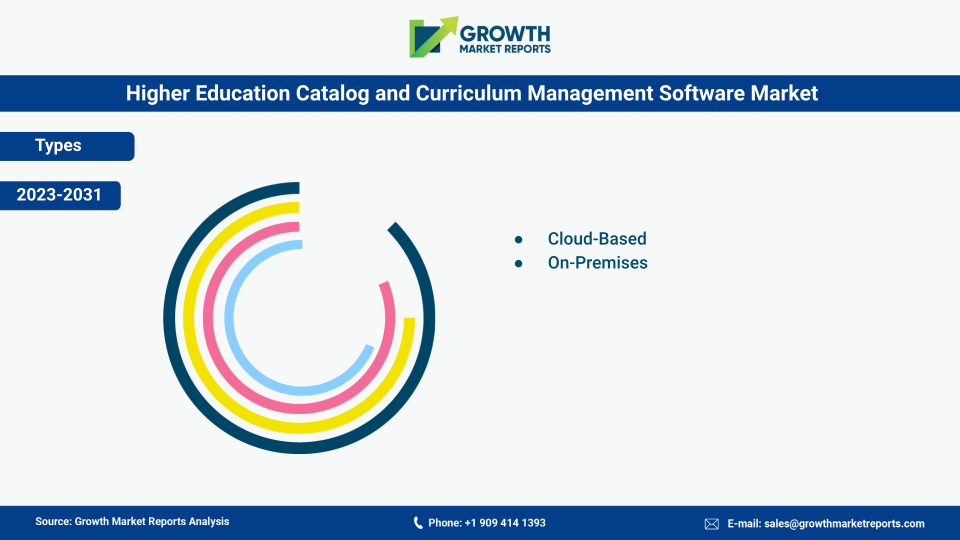
Yes, the report covers types of higher education catalog and curriculum management software such as cloud-based and on-premises software.
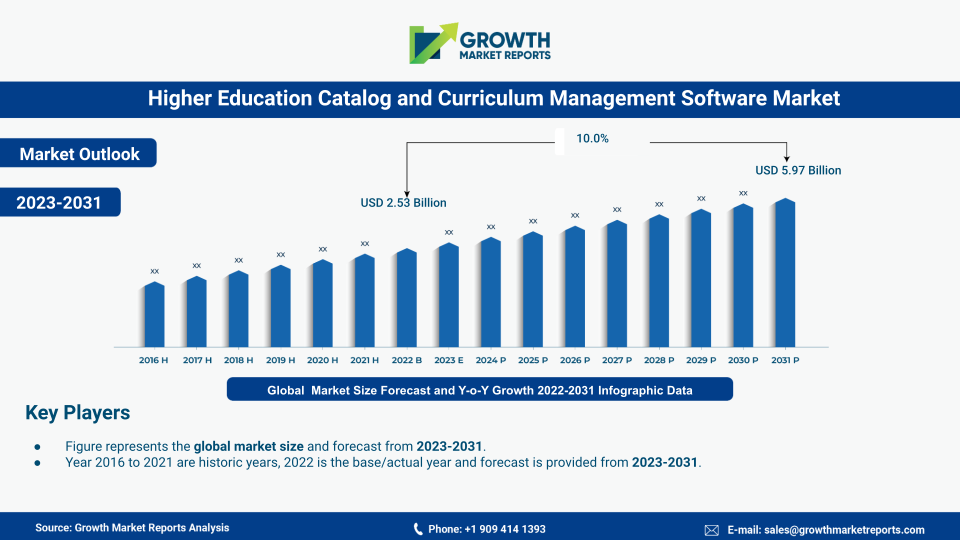
According to this Growth Market Reports report, the market from higher education catalog and curriculum management software is likely to register a CAGR of 10.0% during forecast period 2020-2027, with an anticipated valuation of USD 4,113.0 million by the end of the 2027.
In addition to market size (in USD Million) and Company Market Share (in % for base year 2019), other data such Macro-economic factors, COVID-19 Impact on the higher education catalog and curriculum management software market is available in final report.
The higher education catalog and curriculum management software market is anticipated to grow significantly during forecast period due to rising infrastructure investments in educational institutes. Moreover, growing internet penetration around the world.
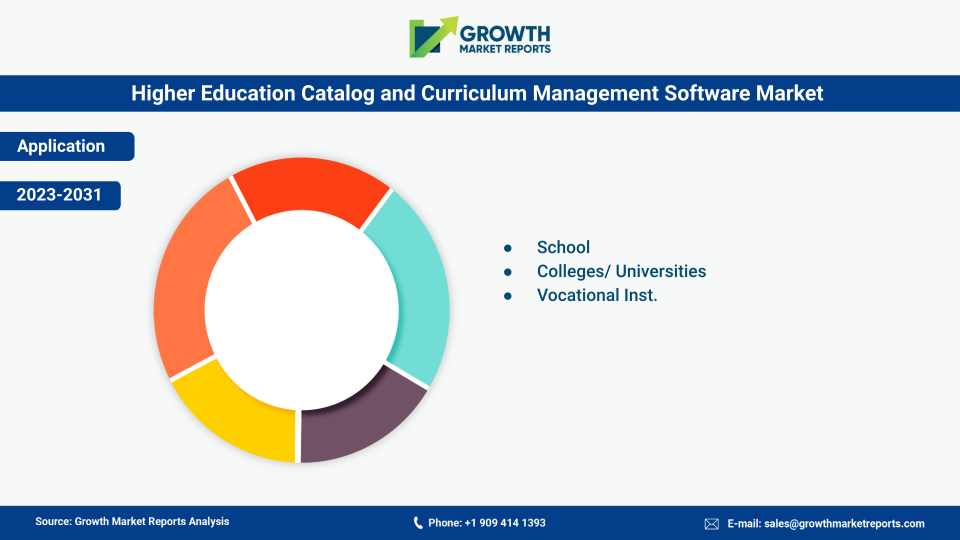
School, colleges/ universities, vocational inst. analysis are the key applications driving the market growth.
Factors such as competitive strength and market positioning are key areas considered while selecting top companies to be profiled.
The market is expected to witness noticeable growth during 2019-2020 owing to the positive impact of COVID-19 pandemic on the higher education catalog and curriculum management software market.
The base year considered for the global higher education catalog and curriculum management software market report is 2019. The complete analysis period is 2017 to 2027, wherein, 2017 & 2018 are the historic years and the forecast is provided from 2020 to 2027.
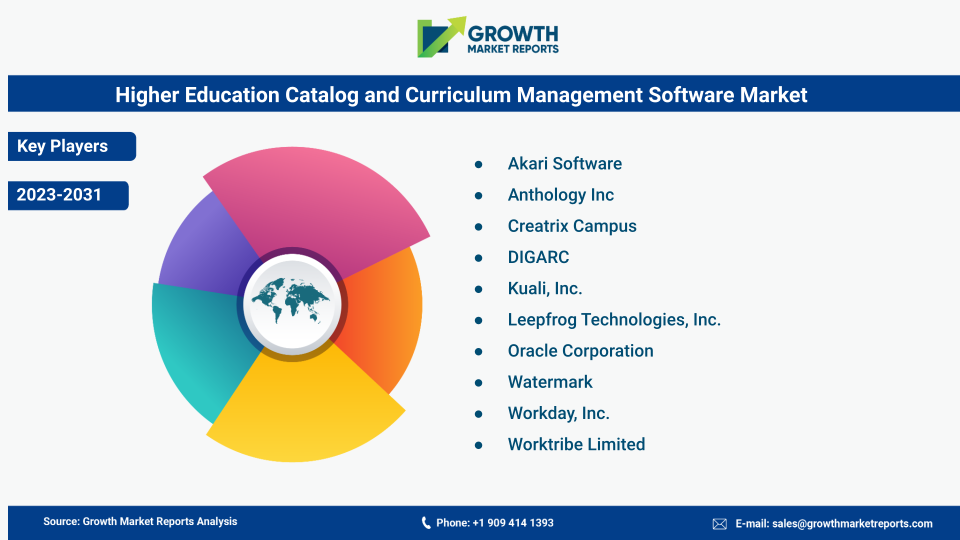
Major Manufactures include Akari Software, Anthology Inc., Creatrix Campus, DIGARC, Kuali, Inc., Leepfrog Technologies, Inc., Oracle Corporation, Watermark, Workday, Inc., Worktribe Limited.