Segments - by Service Type (E-books, Audiobooks, Textbooks, Magazines & Journals, Others), by Platform (Web-based, App-based), by Subscription Model (One-time Purchase, Subscription-based), by End User (Individual, Educational Institutions, Corporate, Libraries, Others)
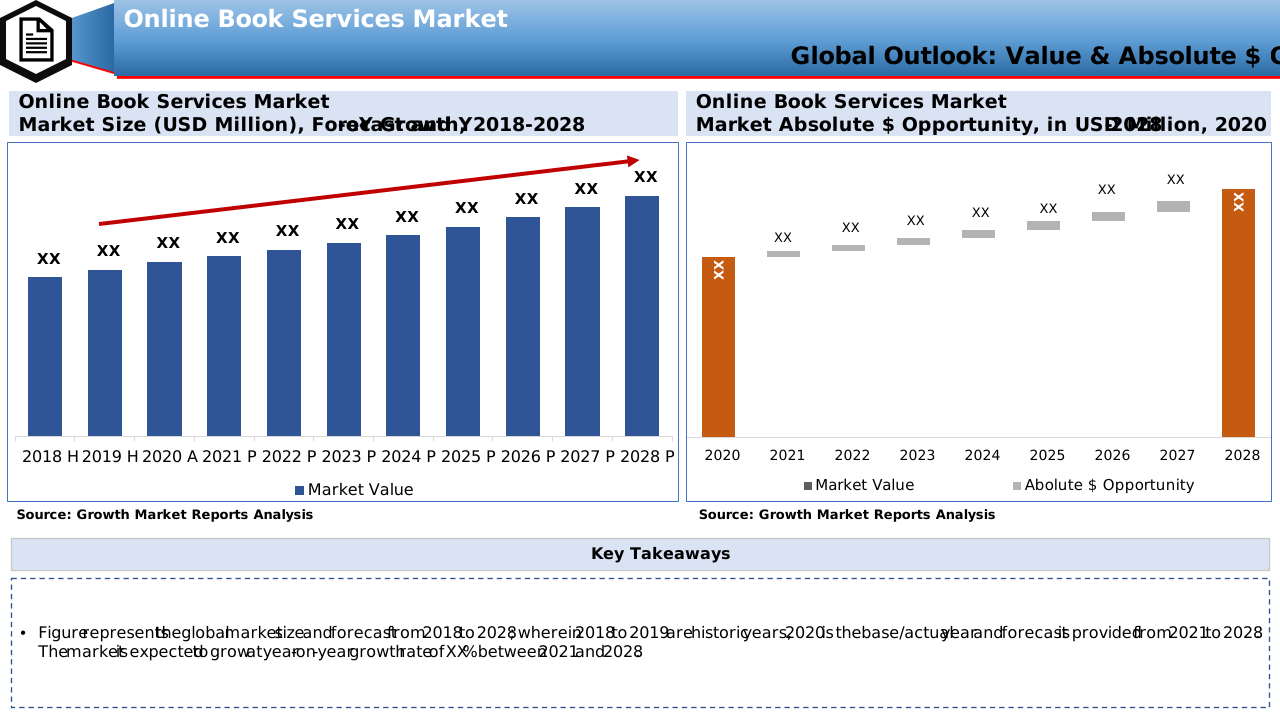
According to our latest research, the global online book services market size reached USD 23.7 billion in 2024, reflecting robust digital adoption across multiple verticals. The market is experiencing a steady expansion, with a CAGR of 8.9% anticipated from 2025 to 2033. By the end of the forecast period, the market is projected to attain a value of USD 50.1 billion. This growth is propelled by factors such as the increasing penetration of internet-enabled devices, evolving consumer preferences for digital content, and rising investments in digital education platforms. As per our latest research, the market is witnessing significant transformation, driven by technological advancements and the expanding reach of online book providers worldwide.
The primary growth driver for the online book services market is the widespread adoption of smartphones, tablets, and e-readers, which has fundamentally changed how consumers access and consume literary content. The convenience of instant access to a vast array of books, magazines, and journals has made digital platforms highly attractive, especially among younger demographics and urban populations. Furthermore, the integration of advanced features such as cloud libraries, personalized recommendations, and interactive content has enhanced user engagement and retention. The proliferation of high-speed internet and affordable data plans in both developed and emerging markets has further facilitated this shift toward digital reading, making online book services increasingly mainstream.
Another significant factor contributing to the growth of the online book services market is the evolution of content delivery models, particularly the rise of subscription-based services. Subscription models offer users unlimited access to extensive collections of e-books and audiobooks for a fixed monthly fee, making digital reading more economical and accessible. This model has gained widespread acceptance among both individual readers and institutional users, including schools, universities, and libraries. Additionally, the ongoing digital transformation in the education sector, accelerated by the COVID-19 pandemic, has led to a surge in demand for online textbooks and academic resources, further expanding the market's reach and relevance.
Technological innovation continues to play a pivotal role in shaping the online book services market. Enhanced user experiences through artificial intelligence-driven recommendations, voice-enabled navigation in audiobooks, and integration with smart home devices are redefining how content is consumed. The development of multilingual platforms and region-specific content libraries is helping service providers cater to diverse global audiences. Moreover, partnerships between publishers and online platforms are ensuring timely and exclusive releases, adding value for subscribers. As competition intensifies, leading players are investing in secure digital rights management and seamless cross-device synchronization to maintain user trust and loyalty.
In the evolving landscape of digital content consumption, Book Discovery Platforms have emerged as pivotal tools for readers and publishers alike. These platforms are designed to enhance the discoverability of books, leveraging sophisticated algorithms and user data to recommend titles that align with individual preferences. By offering personalized reading suggestions, these platforms not only enrich the user experience but also drive engagement and sales for publishers. As the online book services market continues to grow, the role of Book Discovery Platforms becomes increasingly significant, providing a competitive edge to service providers who integrate these technologies into their offerings. The seamless integration of discovery features into digital libraries ensures that readers can easily navigate vast collections, uncovering new authors and genres that they might not have encountered otherwise.
Regionally, the online book services market exhibits distinct growth patterns, with North America and Europe leading in terms of market share due to high digital literacy rates and established publishing ecosystems. However, the Asia Pacific region is emerging as the fastest-growing market, driven by a burgeoning middle class, increasing smartphone penetration, and government initiatives promoting digital education. Latin America and the Middle East & Africa are also witnessing gradual adoption, supported by improving internet infrastructure and rising demand for affordable educational content. These regional dynamics underscore the global nature of the market and the need for tailored strategies to address local preferences and regulatory frameworks.
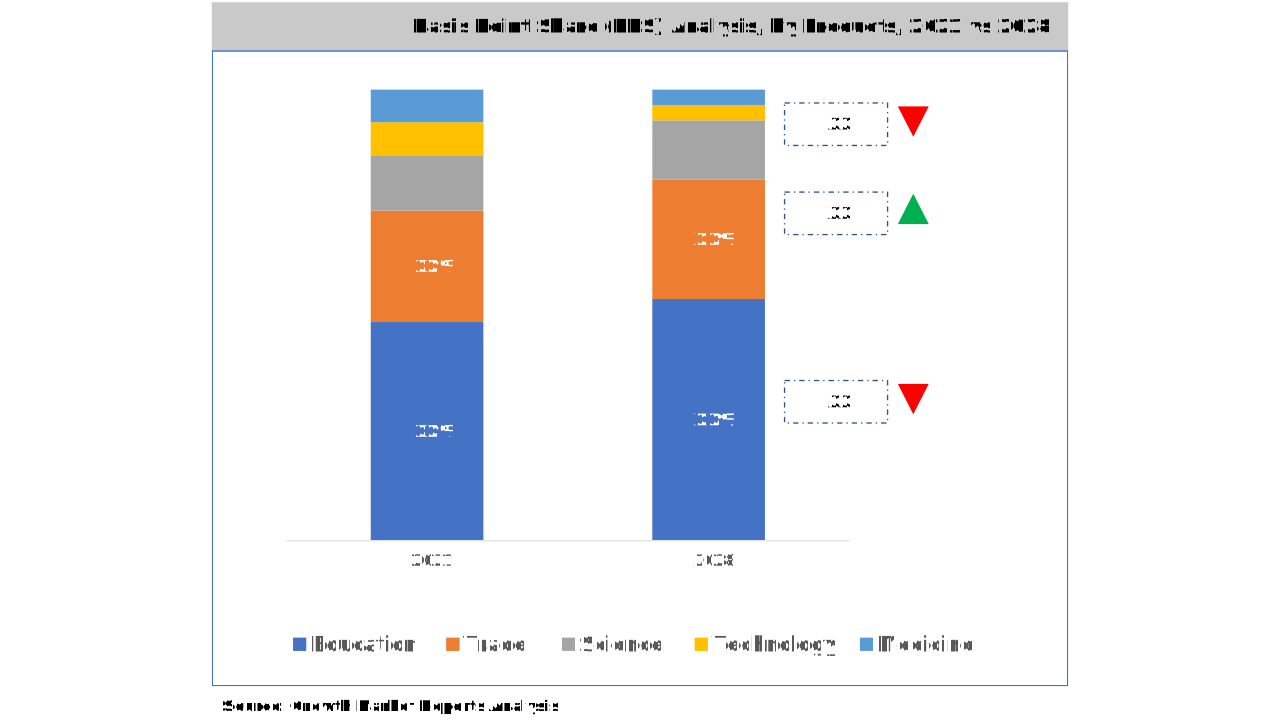
The online book services market is segmented by service type into e-books, audiobooks, textbooks, magazines & journals, and others, each contributing uniquely to the market's overall expansion. E-books remain the dominant segment, accounting for the largest share due to their early adoption and compatibility with multiple devices. The convenience of carrying entire libraries on a single device, adjustable font sizes, and integrated note-taking features have made e-books particularly popular among students and avid readers. The availability of a wide range of genres, from fiction to academic publications, further cements their position as a market leader. Publishers and authors are increasingly prioritizing digital-first releases, ensuring that new titles are available in electronic formats alongside traditional print versions.
Audiobooks represent one of the fastest-growing segments within the online book services market, driven by the increasing popularity of multitasking and on-the-go content consumption. Audiobooks cater to busy professionals, commuters, and visually impaired individuals, offering a hands-free, immersive reading experience. The integration of high-quality narration, background music, and dramatized storytelling has elevated the appeal of audiobooks, attracting both younger and older audiences. Leading platforms are expanding their catalogs to include bestselling novels, self-help guides, language learning resources, and exclusive celebrity-read titles, further fueling demand in this segment.
The textbooks segment is experiencing significant traction, particularly within the education sector. The shift toward digital classrooms and remote learning has accelerated the adoption of online textbooks, which offer interactive features such as embedded videos, quizzes, and real-time updates. Educational institutions are increasingly partnering with online book service providers to offer students affordable and up-to-date learning materials. The flexibility of digital textbooks, combined with analytics-driven insights for educators, is revolutionizing traditional teaching methodologies and enhancing student engagement and performance.
Magazines & journals are also witnessing steady growth, especially among professionals and researchers who require timely access to industry-specific content. Online platforms provide seamless access to a vast array of periodicals, scientific journals, and trade magazines, often with advanced search and citation tools. This segment benefits from the growing trend of digital publishing and open access initiatives, which aim to democratize information and foster knowledge sharing across disciplines. The ability to subscribe to individual titles or thematic collections adds value for both casual readers and institutional subscribers.
The others category encompasses a diverse range of digital content, including comics, graphic novels, and reference materials. This segment is gaining momentum as service providers diversify their offerings to cater to niche audiences and emerging content formats. The integration of multimedia elements, interactive storytelling, and user-generated content is expanding the scope of online book services beyond traditional narratives. As consumer preferences continue to evolve, service providers are likely to introduce innovative formats and personalized experiences to capture new market opportunities.
| Attributes | Details |
| Report Title | Online Book Services Market Research Report 2033 |
| By Service Type | E-books, Audiobooks, Textbooks, Magazines & Journals, Others |
| By Platform | Web-based, App-based |
| By Subscription Model | One-time Purchase, Subscription-based |
| By End User | Individual, Educational Institutions, Corporate, Libraries, Others |
| Regions Covered | North America, Europe, APAC, Latin America, MEA |
| Base Year | 2024 |
| Historic Data | 2018-2023 |
| Forecast Period | 2025-2033 |
| Number of Pages | 296 |
| Number of Tables & Figures | 289 |
| Customization Available | Yes, the report can be customized as per your need. |
The platform segment of the online book services market is divided into web-based and app-based solutions, each offering distinct advantages and catering to different user preferences. Web-based platforms have historically been the foundation of online book services, providing users with browser-based access to vast digital libraries without the need for downloads or installations. These platforms are particularly popular among educational institutions, libraries, and corporate users, who value the ability to access content from any device with an internet connection. Web-based solutions often feature advanced search capabilities, integration with learning management systems, and support for collaborative reading and annotation.
App-based platforms have surged in popularity in recent years, driven by the proliferation of smartphones and tablets. Mobile applications offer a seamless, personalized user experience, with features such as offline reading, push notifications, and customizable reading modes. App-based platforms are particularly appealing to individual consumers, who value the convenience of accessing their digital libraries on-the-go. Service providers are investing in intuitive user interfaces, gamification elements, and social sharing features to enhance user engagement and retention. The ability to synchronize reading progress across devices further strengthens the appeal of app-based solutions.
The competition between web-based and app-based platforms is fostering innovation and driving the development of hybrid models that combine the strengths of both approaches. For example, some service providers offer web-based portals for institutional users, complemented by mobile apps for individual subscribers. This integrated approach ensures consistent access to content across various contexts, from classrooms and offices to homes and public spaces. The use of cloud-based infrastructure enables real-time updates, secure content management, and scalable delivery, supporting the growing demand for flexible and reliable online book services.
Platform selection is increasingly influenced by user demographics, content preferences, and regional factors. In mature markets such as North America and Europe, app-based platforms dominate among younger, tech-savvy consumers, while web-based solutions remain prevalent in academic and corporate settings. In emerging markets, where smartphone adoption is outpacing desktop usage, app-based platforms are becoming the primary channel for digital content consumption. Service providers are adapting their strategies to accommodate local device preferences, language requirements, and connectivity constraints, ensuring broad accessibility and user satisfaction.
Looking ahead, the evolution of platform technology is expected to further enhance the value proposition of online book services. The integration of artificial intelligence, voice recognition, and augmented reality features is poised to transform the reading experience, making it more interactive, personalized, and immersive. As competition intensifies, service providers will need to differentiate their platforms through exclusive content, superior user experiences, and innovative features that anticipate and meet the evolving needs of global audiences.
The online book services market is segmented by subscription model into one-time purchase and subscription-based offerings, each catering to distinct user preferences and consumption patterns. The one-time purchase model allows users to buy individual titles for permanent access, mirroring the traditional ownership experience of physical books. This model is particularly popular among readers seeking specific titles, collectors, and those who prefer to curate their own digital libraries. Publishers and authors benefit from this model through direct sales and higher per-title revenues, while users appreciate the flexibility and control it offers.
The subscription-based model has gained significant traction in recent years, driven by the success of platforms offering unlimited access to vast digital libraries for a fixed monthly or annual fee. This model appeals to avid readers, students, and institutional users who consume large volumes of content and value the cost savings and convenience of all-you-can-read access. Subscription-based services often feature curated collections, personalized recommendations, and exclusive content, enhancing user engagement and loyalty. The recurring revenue generated by subscriptions provides service providers with greater financial stability and opportunities for long-term growth.
Hybrid models are emerging as a strategic response to the diverse needs of the market, combining elements of both one-time purchase and subscription-based offerings. For example, some platforms allow users to subscribe for regular access while also offering the option to purchase select titles for permanent ownership. This approach caters to users who wish to balance affordability with the ability to build personal collections. Hybrid models are particularly effective in attracting new users and converting free trial participants into paying subscribers, supporting customer acquisition and retention strategies.
The choice of subscription model is influenced by factors such as content type, user demographics, and regional market dynamics. In mature markets, subscription-based models dominate among younger, tech-savvy consumers, while one-time purchases remain prevalent among older readers and collectors. In educational and corporate settings, institutional subscriptions are increasingly common, providing organizations with cost-effective access to comprehensive digital libraries. Service providers are leveraging data analytics to optimize pricing, personalize offerings, and maximize user lifetime value, ensuring sustainable growth and profitability.
As competition intensifies, service providers are exploring innovative subscription models, such as pay-as-you-go, tiered access, and family plans, to differentiate their offerings and capture new market segments. The integration of value-added services, such as offline access, cross-device synchronization, and exclusive author events, is enhancing the appeal of subscription-based platforms. Looking ahead, the continued evolution of subscription models will play a critical role in shaping the future of the online book services market, driving user adoption and market expansion.
The end user segment of the online book services market encompasses individuals, educational institutions, corporate users, libraries, and others, each exhibiting unique usage patterns and requirements. Individual consumers represent the largest and most diverse user base, ranging from casual readers to avid bibliophiles and audiobook enthusiasts. The convenience of instant access, personalized recommendations, and flexible reading options has made online book services highly attractive to individuals across age groups and geographies. Service providers are focusing on user-centric features, such as customizable reading interfaces, social sharing, and gamified experiences, to enhance engagement and retention among individual users.
Educational institutions are increasingly embracing online book services as part of their digital transformation initiatives. The shift toward e-learning and remote education has accelerated the adoption of digital textbooks, reference materials, and interactive learning resources. Online book services offer schools, colleges, and universities cost-effective access to up-to-date academic content, supporting curriculum development and student learning outcomes. The integration of analytics, progress tracking, and collaborative tools is enabling educators to personalize instruction and monitor student performance, driving improved educational outcomes.
Corporate users are leveraging online book services to support employee training, professional development, and knowledge management initiatives. Digital libraries provide organizations with scalable access to business books, industry reports, and skill-building resources, facilitating continuous learning and talent development. The ability to curate custom collections, track usage, and integrate with learning management systems is enhancing the value proposition of online book services for corporate clients. As the nature of work evolves, organizations are prioritizing digital content solutions that support remote teams, foster innovation, and drive organizational agility.
Libraries, both public and academic, are playing a pivotal role in expanding access to online book services, particularly in underserved communities and developing regions. Digital lending platforms enable libraries to offer patrons convenient access to e-books, audiobooks, and periodicals, overcoming the limitations of physical collections and geographic barriers. Collaborative initiatives between libraries, publishers, and technology providers are driving innovation in digital lending, rights management, and user experience. The growing emphasis on digital inclusion and lifelong learning is positioning libraries as key stakeholders in the online book services ecosystem.
The others category includes government agencies, non-profit organizations, and special interest groups that utilize online book services for information dissemination, community engagement, and capacity building. These users often require specialized content, accessibility features, and compliance with regulatory standards. Service providers are responding by developing tailored solutions that address the unique needs of these segments, supporting social impact initiatives and expanding market reach. As digital content becomes increasingly integral to education, work, and civic life, the end user landscape for online book services will continue to diversify and evolve.
The online book services market is ripe with opportunities, particularly as technological advancements continue to reshape the way content is produced, distributed, and consumed. The integration of artificial intelligence and machine learning is opening new avenues for personalized content curation, adaptive learning, and targeted marketing. Service providers can leverage user data to deliver highly relevant recommendations, optimize pricing strategies, and enhance user engagement. The emergence of new content formats, such as interactive e-books, multimedia-rich audiobooks, and virtual reality storytelling, is expanding the creative possibilities for authors and publishers. Furthermore, the growing demand for multilingual and region-specific content presents significant opportunities for market expansion in emerging economies, where digital literacy and content localization are key growth drivers.
Another major opportunity lies in strategic partnerships and collaborations across the publishing, technology, and education sectors. By joining forces with educational institutions, libraries, and content creators, online book service providers can develop innovative solutions that address the evolving needs of diverse user groups. Collaborative initiatives can drive digital inclusion, promote lifelong learning, and support social impact objectives, enhancing the overall value proposition of online book services. The rise of open access publishing, self-publishing platforms, and crowd-sourced content is democratizing the creation and distribution of digital books, enabling new voices to reach global audiences. As regulatory environments evolve to support digital content, service providers have the opportunity to shape industry standards and best practices, fostering trust and transparency in the market.
Despite these opportunities, the online book services market faces several threats and restrainers that could impact its growth trajectory. One of the primary challenges is digital piracy and unauthorized content distribution, which can undermine revenue streams for publishers, authors, and service providers. Ensuring robust digital rights management and content protection is essential to maintaining the integrity of the market and safeguarding intellectual property. Additionally, the proliferation of free or low-cost content, including open educational resources and public domain works, can intensify price competition and erode profit margins. Market fragmentation, varying regulatory frameworks, and disparities in digital infrastructure across regions also pose challenges to market expansion and standardization. Addressing these threats requires ongoing investment in technology, stakeholder collaboration, and adaptive business models that balance accessibility with sustainability.
North America continues to dominate the online book services market, accounting for approximately USD 8.8 billion in revenue in 2024. The region's leadership is underpinned by high digital literacy rates, widespread adoption of e-readers and smart devices, and a mature publishing ecosystem. The United States, in particular, is home to several leading online book service providers and a vibrant community of authors, publishers, and technology innovators. The region's strong focus on educational technology and professional development further drives demand for digital content across individual, institutional, and corporate user segments. As the market matures, service providers are focusing on value-added features, exclusive content partnerships, and enhanced user experiences to maintain their competitive edge.
Europe represents the second-largest regional market, generating USD 6.7 billion in 2024, with a projected CAGR of 8.2% through 2033. The region benefits from a rich literary tradition, diverse linguistic landscape, and robust public library networks. Countries such as the United Kingdom, Germany, and France are at the forefront of digital publishing and online book adoption, supported by government initiatives promoting digital education and cultural preservation. The European market is characterized by a strong emphasis on content localization, accessibility, and regulatory compliance, with service providers adapting their offerings to meet the unique needs of local audiences. The growing popularity of audiobooks, academic journals, and subscription-based models is expected to drive sustained growth in the region.
The Asia Pacific region is emerging as the fastest-growing market, with revenues reaching USD 5.3 billion in 2024 and a projected CAGR of 12.1% through 2033. The region's rapid expansion is fueled by rising smartphone penetration, a burgeoning middle class, and government investments in digital infrastructure and education. Countries such as China, India, and Japan are experiencing a surge in demand for online textbooks, multilingual content, and affordable digital reading solutions. Service providers are leveraging partnerships with local publishers, educational institutions, and technology firms to develop region-specific offerings and expand their market presence. As digital literacy and internet connectivity continue to improve, the Asia Pacific market is poised to become a key growth engine for the global online book services industry.
The competitive landscape of the online book services market is characterized by the presence of established global players, emerging regional providers, and innovative startups, all vying for market share through differentiated offerings and strategic partnerships. Leading companies are investing heavily in technology, content acquisition, and user experience enhancements to maintain their competitive advantage. The market is witnessing increased consolidation, with major players acquiring niche platforms and content providers to expand their portfolios and geographic reach. Competitive dynamics are further intensified by the entry of technology giants and cross-industry collaborations, which are reshaping the traditional boundaries of the publishing and content distribution sectors.
Innovation is a key differentiator in the online book services market, with companies leveraging artificial intelligence, machine learning, and data analytics to deliver personalized recommendations, optimize pricing, and enhance content discovery. The integration of voice assistants, smart home devices, and immersive technologies is transforming the way users interact with digital content, creating new opportunities for engagement and monetization. Leading platforms are also focusing on exclusive content partnerships, celebrity collaborations, and original productions to attract and retain subscribers. The ability to offer seamless cross-device synchronization, offline access, and multilingual support is becoming increasingly important in catering to diverse user needs and preferences.
Content acquisition and rights management remain critical success factors in the online book services market. Companies are forging partnerships with publishers, authors, and educational institutions to secure timely and exclusive access to high-quality content. The rise of self-publishing platforms and open access initiatives is enabling new voices to reach global audiences, while also presenting challenges in terms of content curation and quality assurance. Service providers are investing in robust digital rights management systems and secure distribution channels to protect intellectual property and maintain user trust.
Major companies operating in the online book services market include Amazon (Kindle Direct Publishing and Audible), Apple Books, Google Play Books, Kobo (Rakuten), Scribd, OverDrive, Barnes & Noble (Nook), and Storytel. Amazon remains the market leader, leveraging its extensive content library, advanced recommendation algorithms, and global distribution network to maintain a dominant position. Audible, Amazon's audiobook platform, is a key driver of growth in the audiobook segment, offering a wide range of exclusive titles and celebrity narrations. Apple Books and Google Play Books are leveraging their integration with popular devices and ecosystem services to attract users and expand their content offerings.
Kobo, backed by Rakuten, is focusing on international expansion and content localization, catering to diverse linguistic and cultural preferences. Scribd has positioned itself as a leading subscription-based platform, offering unlimited access to e-books, audiobooks, magazines, and documents for a fixed monthly fee. OverDrive is a major player in the library segment, providing digital lending solutions to public and academic libraries worldwide. Barnes & Noble's Nook and Storytel are also significant competitors, with strong regional presence and innovative content strategies. As the market continues to evolve, these companies are expected to drive further innovation, shape industry standards, and expand the boundaries of digital reading and content consumption.
The Online Book Services market has been segmented on the basis of
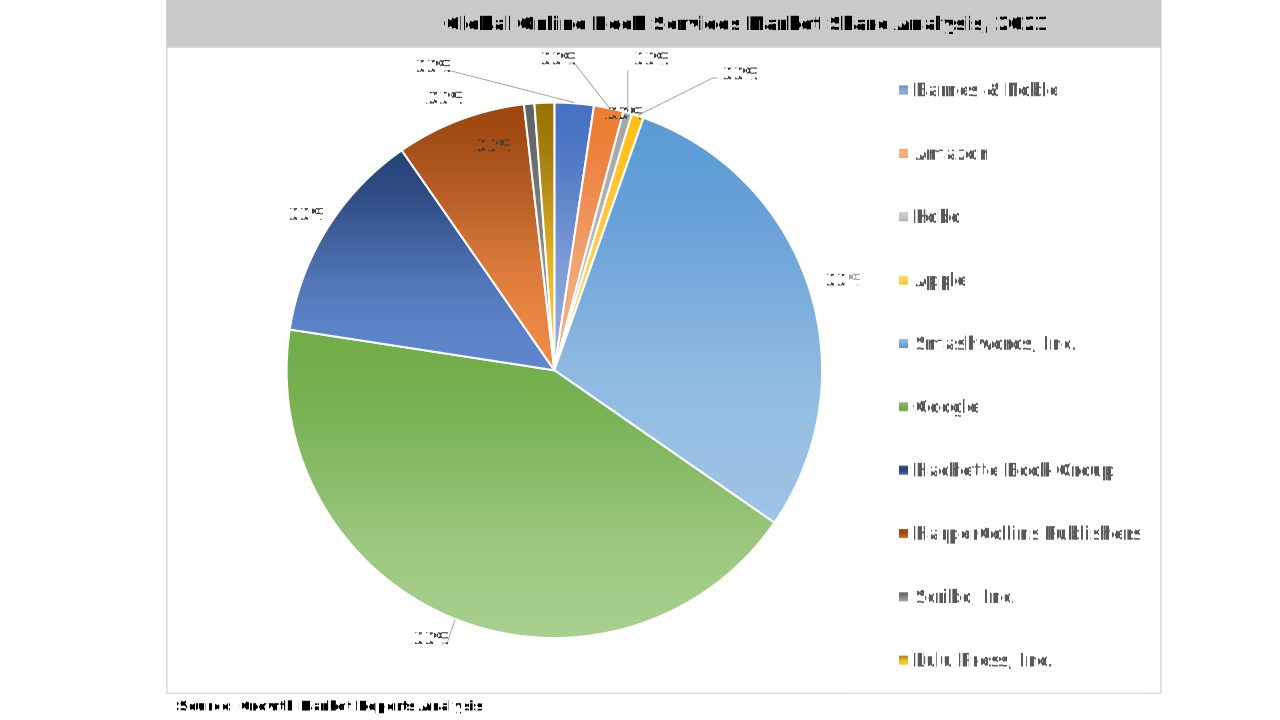
Key players in the global online book services market include Barnes & Noble, Amazon, Kobo, Apple, Smashwords, Inc., Google, Hachette Book Group, HarperCollins Publishers, Scribd, Inc., and Lulu Press, Inc. The influence of these major companies on the market is high, as most of them have a global consumer base. Several major players are concentrating on partnerships to widen their consumer base and extend their reach. For example, in March 2020, Kobo announced an alliance with Australia’s biggest online bookseller, known as Booktopia. According to this agreement, Kobo is expected to become Booktopia’s major digital reading partner and provide audiobooks, eBooks, and e-Readers to consumers in Australia.
Technological innovations such as AI recommendations, voice-enabled navigation, cross-device synchronization, and immersive content formats like AR and VR are enhancing user experiences and driving market growth.
Major players include Amazon (Kindle Direct Publishing, Audible), Apple Books, Google Play Books, Kobo (Rakuten), Scribd, OverDrive, Barnes & Noble (Nook), and Storytel, among others.
Opportunities include AI-driven personalization, new content formats, and partnerships across publishing and education sectors. Threats involve digital piracy, price competition from free content, market fragmentation, and regulatory challenges.
End users include individuals, educational institutions, corporate users, libraries, and other organizations such as government agencies and non-profits.
North America and Europe lead in market share due to high digital literacy, while Asia Pacific is the fastest-growing region, driven by smartphone adoption and government support for digital education. Latin America and MEA are also seeing gradual growth.
Online book services can be accessed via web-based platforms (popular in educational and corporate settings) and app-based platforms (favored by individual users for on-the-go access), with many providers now offering hybrid solutions.
Subscription-based models offer unlimited access to large digital libraries for a fixed fee and are popular among avid readers and institutions, while one-time purchases allow users to permanently own individual titles, appealing to collectors and those seeking specific books.
The market is segmented into e-books, audiobooks, textbooks, magazines & journals, and others such as comics and reference materials.
Key growth drivers include increasing adoption of smartphones and e-readers, evolving consumer preferences for digital content, rising investments in digital education, and advancements in technology such as AI-driven recommendations and cloud libraries.
As of 2024, the global online book services market is valued at USD 23.7 billion, with projections to reach USD 50.1 billion by 2033.