Segments - by Communication Type (A2P, P2A, P2P), by Deployment Mode (On-Premises, Cloud), by Application (Advertising & Marketing, Content Delivery, Customer Relationship Management, Integrated Solutions, Others), by Enterprise Size (Small and Medium Enterprises, Large Enterprises), by End-User (BFSI, Retail & E-commerce, Healthcare, IT & Telecom, Travel & Tourism, Others)
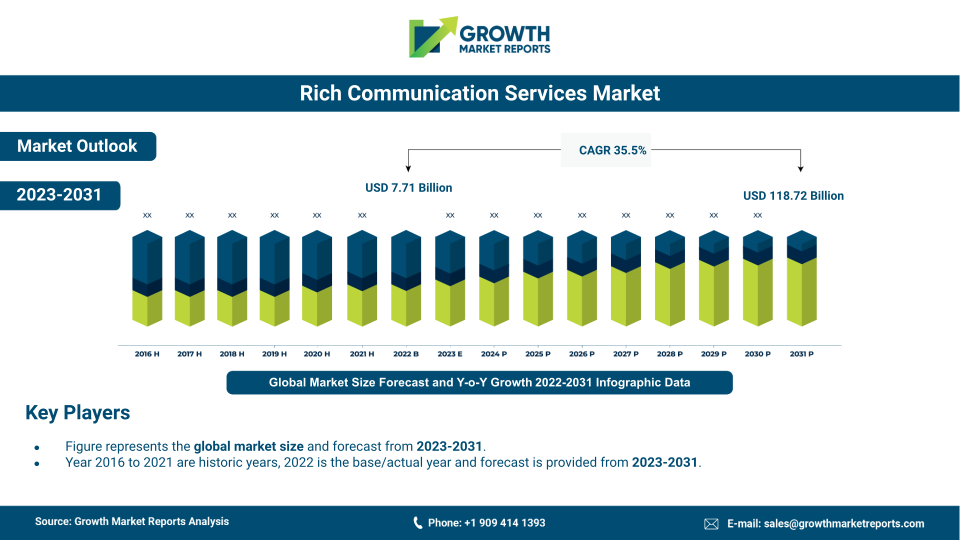
According to our latest research, the global Rich Communication Services (RCS) market size reached USD 1.92 billion in 2024. The market is projected to grow at a robust CAGR of 18.7% during the forecast period, reaching approximately USD 9.38 billion by 2033. This remarkable growth is primarily driven by the increasing adoption of advanced messaging solutions across enterprises and the rising demand for enhanced customer engagement through secure and interactive communication platforms.
One of the key growth factors propelling the Rich Communication Services market is the rapid digital transformation of businesses and the proliferation of smartphones globally. Enterprises are increasingly shifting from traditional SMS to RCS platforms, which offer features such as group chat, high-resolution photo sharing, read receipts, and interactive media. These capabilities enable businesses to deliver a richer and more personalized customer experience, boosting engagement rates and fostering brand loyalty. Furthermore, the integration of RCS with artificial intelligence and chatbots is streamlining customer service processes, making communication more efficient and responsive. The ability of RCS to support multimedia content and real-time analytics is further enhancing its appeal among marketers and customer relationship managers, driving widespread adoption across sectors.
Another significant driver fueling the growth of the RCS market is the escalating focus on data privacy and security. With increasing incidents of cyber threats and data breaches, enterprises are prioritizing secure communication channels for both internal and customer-facing interactions. RCS offers end-to-end encryption and advanced authentication protocols, making it a preferred choice over legacy messaging systems. The regulatory push towards data protection, especially in regions like Europe with GDPR compliance, is compelling organizations to upgrade their communication infrastructure. Additionally, telecom operators are collaborating with technology providers to ensure seamless interoperability and compliance, further accelerating the transition towards RCS-based solutions.
The expanding ecosystem of mobile operators and technology vendors is also contributing to the market's momentum. Strategic partnerships and alliances are enabling the rapid rollout of RCS services across various regions, reducing fragmentation and ensuring a unified user experience. The support from industry consortia such as the GSMA, which is driving the universal profile for RCS, is fostering standardization and interoperability. As more operators embrace RCS and migrate their subscriber base to IP-based messaging, the network effect is amplifying, resulting in exponential growth in user adoption and market revenues. The continuous innovation in RCS APIs and cloud-based deployment models is making it easier for enterprises of all sizes to integrate advanced messaging into their digital communication strategies.
Regionally, Asia Pacific is emerging as the fastest-growing market for RCS, supported by the massive mobile subscriber base and the aggressive rollout of 5G networks. North America and Europe are also witnessing strong adoption, driven by mature telecom infrastructure and high enterprise awareness. Latin America and the Middle East & Africa are gradually catching up, propelled by increasing smartphone penetration and digitalization initiatives. The diverse regulatory landscape and varying levels of telecom maturity across regions present both opportunities and challenges for market players, necessitating customized go-to-market strategies for sustained growth.
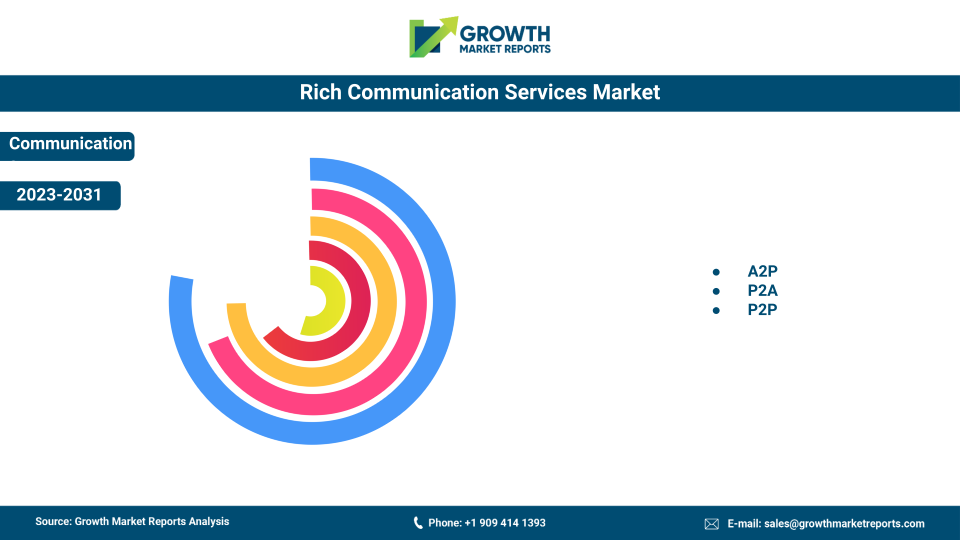
The Rich Communication Services market is segmented by communication type into A2P (Application-to-Person), P2A (Person-to-Application), and P2P (Person-to-Person) messaging. Among these, A2P messaging dominates the market, accounting for a substantial share in 2024. Enterprises are leveraging A2P RCS for sending notifications, alerts, promotional messages, and transactional updates to customers, capitalizing on the high engagement and interactivity offered by RCS compared to traditional SMS. The ability to send rich media content, such as videos, images, and carousels, is transforming customer outreach strategies, making them more dynamic and visually appealing. This is particularly beneficial for sectors like retail, banking, and travel, where timely and personalized communication is critical.
P2A messaging is gaining traction as organizations increasingly deploy chatbots and virtual assistants to facilitate seamless customer interactions. With RCS, customers can interact with brands through intuitive chat interfaces, enabling quick resolution of queries, appointment bookings, and service requests. The integration of AI and natural language processing with RCS platforms is enhancing the efficiency and responsiveness of P2A communication, reducing operational costs and improving customer satisfaction. Enterprises are also leveraging analytics capabilities within RCS to gain insights into user preferences and behavior, further optimizing their customer engagement strategies.
P2P messaging remains a significant segment, especially in regions where RCS adoption among consumers is high. The shift from basic SMS to feature-rich messaging platforms is being driven by the demand for enhanced user experiences, including group chats, file sharing, and real-time status updates. Telecom operators are investing in upgrading their infrastructure to support seamless P2P RCS messaging, ensuring interoperability across devices and networks. The growing popularity of social messaging apps is also influencing the evolution of P2P RCS, with vendors focusing on replicating popular features and ensuring a consistent user experience.
The convergence of communication types within RCS platforms is creating new opportunities for cross-channel engagement. Enterprises are adopting omnichannel strategies that leverage both A2P and P2A messaging to create a unified customer journey. For example, a customer may receive a promotional offer via A2P messaging and then interact with a chatbot through P2A for more information or to complete a transaction. This seamless integration is enhancing customer satisfaction and driving higher conversion rates. As RCS adoption continues to grow, the boundaries between communication types are expected to blur further, enabling more sophisticated and interactive use cases.
Looking ahead, the evolution of communication types in the RCS market will be shaped by advancements in AI, automation, and analytics. Enterprises are expected to increasingly adopt hybrid models that combine the strengths of A2P, P2A, and P2P messaging, creating new opportunities for personalized and context-aware communication. The ongoing standardization efforts by industry bodies and the growing ecosystem of RCS solution providers will further accelerate the adoption of advanced communication types, driving sustained growth in the market.
| Attributes | Details |
| Report Title | Rich Communication Services Market Research Report 2033 |
| By Communication Type | A2P, P2A, P2P |
| By Deployment Mode | On-Premises, Cloud |
| By Application | Advertising & Marketing, Content Delivery, Customer Relationship Management, Integrated Solutions, Others |
| By Enterprise Size | Small and Medium Enterprises, Large Enterprises |
| By End-User | BFSI, Retail & E-commerce, Healthcare, IT & Telecom, Travel & Tourism, Others |
| Regions Covered | North America, Europe, APAC, Latin America, MEA |
| Base Year | 2024 |
| Historic Data | 2018-2023 |
| Forecast Period | 2025-2033 |
| Number of Pages | 271 |
| Number of Tables & Figures | 328 |
| Customization Available | Yes, the report can be customized as per your need. |
The deployment mode segment of the Rich Communication Services market is bifurcated into On-Premises and Cloud solutions. Cloud deployment has emerged as the dominant mode, capturing a significant share of the market in 2024. The scalability, flexibility, and cost-effectiveness of cloud-based RCS solutions are driving their adoption among enterprises of all sizes. Cloud deployment enables rapid implementation, seamless updates, and easy integration with existing IT infrastructure, making it an attractive option for organizations looking to modernize their communication capabilities without substantial upfront investments. The ability to access RCS functionalities from anywhere and support remote workforces is further boosting the demand for cloud-based solutions.
On-premises deployment, while less prevalent, continues to find favor among organizations with stringent data security and compliance requirements. Industries such as banking, healthcare, and government often opt for on-premises RCS solutions to maintain full control over their data and ensure compliance with regulatory standards. The customization and integration capabilities offered by on-premises deployments allow organizations to tailor RCS functionalities to their specific needs, supporting complex workflows and legacy systems. However, the higher initial costs and ongoing maintenance requirements can be a barrier for some enterprises, particularly small and medium-sized businesses.
The growing trend towards hybrid deployment models is also shaping the RCS market landscape. Enterprises are increasingly adopting a mix of cloud and on-premises solutions to balance the need for agility and security. For example, sensitive customer data may be processed on-premises, while less critical workloads are managed in the cloud. This approach enables organizations to leverage the benefits of both deployment modes, optimizing performance, cost, and compliance. RCS vendors are responding to this trend by offering flexible deployment options and seamless migration paths, ensuring that enterprises can adapt their communication infrastructure as their needs evolve.
The rise of cloud-native RCS platforms is further accelerating market growth. These platforms are designed to leverage the full potential of cloud technologies, offering advanced features such as auto-scaling, high availability, and real-time analytics. Enterprises can easily integrate cloud-native RCS solutions with other digital services, such as CRM, marketing automation, and customer support systems, creating a unified communication ecosystem. The pay-as-you-go pricing models offered by cloud providers are making RCS accessible to a broader range of organizations, driving widespread adoption across industries.
Looking forward, the deployment mode segment is expected to witness continued innovation, with vendors focusing on enhancing the security, scalability, and interoperability of their solutions. The increasing adoption of edge computing and 5G networks is likely to drive the development of new deployment models that combine the benefits of cloud and on-premises architectures. As enterprises continue to prioritize digital transformation and customer experience, the demand for flexible and future-proof RCS deployment options will remain strong, supporting sustained growth in the market.
The application segment of the Rich Communication Services market encompasses Advertising & Marketing, Content Delivery, Customer Relationship Management (CRM), Integrated Solutions, and Others. Advertising & Marketing is the leading application, accounting for the largest share of the market in 2024. Enterprises are leveraging RCS to deliver interactive and visually engaging marketing campaigns, significantly improving customer engagement and conversion rates. The ability to send multimedia content, such as videos, images, and carousels, is enabling marketers to create immersive brand experiences and drive higher ROI compared to traditional SMS campaigns. Real-time analytics and feedback mechanisms within RCS platforms are further enhancing campaign effectiveness, allowing marketers to optimize their strategies based on user responses.
Content Delivery is another key application area, with organizations using RCS to distribute rich media content, such as product catalogs, event invitations, and promotional offers. The seamless integration of RCS with mobile devices ensures that content is delivered in a format optimized for each user, enhancing the overall experience. Enterprises in sectors such as retail, entertainment, and travel are particularly benefiting from the ability to deliver personalized content directly to customers' devices, driving engagement and loyalty. The support for interactive elements, such as clickable buttons and embedded forms, is enabling organizations to facilitate seamless transactions and information gathering within the messaging interface.
Customer Relationship Management (CRM) is emerging as a critical application of RCS, as organizations seek to enhance customer service and support through advanced messaging capabilities. RCS enables real-time, two-way communication between businesses and customers, allowing for quick resolution of queries, appointment scheduling, and feedback collection. The integration of RCS with CRM systems is streamlining customer interactions, reducing response times, and improving satisfaction levels. Enterprises are also leveraging AI-powered chatbots within RCS platforms to automate routine inquiries and provide personalized assistance, further enhancing the efficiency and effectiveness of their customer service operations.
Integrated Solutions are gaining traction as organizations look to create unified communication ecosystems that span multiple channels and touchpoints. RCS is being integrated with other digital services, such as email, social media, and mobile apps, to deliver consistent and coordinated customer experiences. This approach enables organizations to orchestrate complex customer journeys, ensuring that interactions are seamless and contextually relevant across all channels. The ability to leverage RCS APIs and connectors is making it easier for enterprises to integrate advanced messaging capabilities into their existing workflows, driving adoption across industries.
The "Others" category includes a range of emerging applications, such as authentication, ticketing, and emergency alerts. As RCS adoption continues to grow, new use cases are expected to emerge, driven by advancements in technology and changing customer expectations. Enterprises are increasingly exploring innovative ways to leverage RCS for business process automation, employee communication, and operational efficiency. The flexibility and extensibility of RCS platforms are enabling organizations to develop customized solutions that address their unique needs, supporting sustained growth in the application segment.
The Rich Communication Services market is segmented by enterprise size into Small and Medium Enterprises (SMEs) and Large Enterprises. Large enterprises currently dominate the market, accounting for a significant share in 2024. These organizations have the resources and scale to invest in advanced communication technologies, enabling them to deliver personalized and interactive experiences to their customers. Large enterprises are leveraging RCS to streamline customer engagement, enhance marketing effectiveness, and improve operational efficiency. The integration of RCS with enterprise systems, such as CRM and marketing automation platforms, is enabling large organizations to orchestrate complex customer journeys and drive higher ROI from their communication initiatives.
Small and Medium Enterprises (SMEs) are increasingly adopting RCS solutions as they seek to compete with larger players and deliver superior customer experiences. The scalability and affordability of cloud-based RCS platforms are making advanced messaging capabilities accessible to SMEs, enabling them to engage customers through rich and interactive channels. SMEs are leveraging RCS for a range of use cases, including promotional campaigns, appointment reminders, and customer support. The ability to automate routine interactions and gather real-time feedback is helping SMEs optimize their operations and improve customer satisfaction.
The adoption of RCS among SMEs is being facilitated by the growing ecosystem of solution providers offering tailored packages and flexible pricing models. Vendors are developing user-friendly platforms with intuitive interfaces and pre-built templates, enabling SMEs to quickly deploy RCS solutions without the need for extensive technical expertise. The availability of self-service tools and comprehensive support resources is further lowering the barriers to adoption, driving growth in the SME segment.
Large enterprises are also at the forefront of innovation in the RCS market, experimenting with advanced features such as AI-driven personalization, predictive analytics, and omnichannel integration. These organizations are investing in the development of customized RCS solutions that align with their specific business objectives and customer engagement strategies. The ability to leverage data from multiple touchpoints and deliver contextually relevant messages is enabling large enterprises to differentiate themselves in competitive markets and build lasting customer relationships.
Looking ahead, the enterprise size segment is expected to witness continued convergence, with both SMEs and large enterprises adopting best practices and leveraging emerging technologies to enhance their communication capabilities. The ongoing digital transformation of businesses and the increasing focus on customer experience are expected to drive sustained growth across both segments, supporting the overall expansion of the RCS market.
The end-user segment of the Rich Communication Services market includes BFSI (Banking, Financial Services, and Insurance), Retail & E-commerce, Healthcare, IT & Telecom, Travel & Tourism, and Others. The BFSI sector is one of the leading adopters of RCS, leveraging advanced messaging solutions to enhance customer engagement, streamline transactions, and improve security. Banks and financial institutions are using RCS to deliver account alerts, transaction notifications, and personalized offers, providing customers with timely and relevant information. The ability to support two-way communication and secure authentication is enabling BFSI organizations to improve service delivery and build trust with their customers.
Retail & E-commerce is another major end-user segment, with enterprises leveraging RCS to deliver personalized promotions, order updates, and customer support. The rich media capabilities of RCS are enabling retailers to create immersive shopping experiences, showcase products, and drive higher conversion rates. The integration of RCS with loyalty programs and mobile wallets is further enhancing customer engagement and retention. Retailers are also using RCS to gather feedback, conduct surveys, and facilitate seamless transactions, optimizing the overall customer journey.
The Healthcare sector is increasingly adopting RCS to improve patient communication, appointment scheduling, and care coordination. Healthcare providers are using RCS to send appointment reminders, test results, and health tips, ensuring that patients receive timely and relevant information. The ability to support secure messaging and multimedia content is enabling healthcare organizations to deliver personalized care and improve patient outcomes. RCS is also being used to facilitate telemedicine consultations, patient education, and remote monitoring, supporting the digital transformation of healthcare delivery.
IT & Telecom companies are at the forefront of RCS adoption, leveraging the technology to enhance internal communication, customer support, and service delivery. Telecom operators are investing in the development and deployment of RCS platforms to differentiate their offerings and retain subscribers. The integration of RCS with existing communication services is enabling IT & Telecom companies to create unified messaging ecosystems, streamline operations, and drive innovation. The ability to offer value-added services, such as chatbots and interactive media, is further strengthening the position of IT & Telecom companies in the RCS market.
The Travel & Tourism sector is leveraging RCS to enhance customer engagement, streamline bookings, and deliver personalized experiences. Airlines, hotels, and travel agencies are using RCS to send booking confirmations, itinerary updates, and travel tips, ensuring that customers have access to relevant information throughout their journey. The ability to support multimedia content and interactive elements is enabling travel companies to create engaging and informative communication, improving customer satisfaction and loyalty. The "Others" category includes sectors such as education, government, and logistics, which are also exploring innovative use cases for RCS to improve communication and operational efficiency.
The Rich Communication Services market is brimming with opportunities as enterprises increasingly recognize the value of enhanced messaging platforms in driving customer engagement and operational efficiency. One of the most significant opportunities lies in the integration of RCS with emerging technologies such as artificial intelligence, machine learning, and IoT. By embedding AI-driven chatbots and predictive analytics into RCS platforms, organizations can deliver hyper-personalized experiences, automate routine interactions, and gain valuable insights into customer behavior. The rise of 5G networks is further expanding the possibilities for RCS, enabling real-time, high-bandwidth communication and supporting advanced use cases such as interactive video messaging and augmented reality. As enterprises continue to prioritize digital transformation, the demand for scalable, secure, and feature-rich communication solutions is expected to drive sustained growth in the RCS market.
Another key opportunity for market players is the expansion into emerging markets, where smartphone penetration and mobile data usage are rapidly increasing. Regions such as Asia Pacific, Latin America, and the Middle East & Africa offer significant growth potential, driven by the rising adoption of digital services and the ongoing rollout of advanced telecom infrastructure. Vendors that can offer localized solutions, support multiple languages, and address region-specific regulatory requirements are well-positioned to capture market share in these high-growth regions. The growing focus on data privacy and security is also creating opportunities for RCS providers to differentiate their offerings through advanced encryption, authentication, and compliance features, catering to the needs of security-conscious enterprises.
Despite the numerous opportunities, the RCS market faces certain restraints that could hinder its growth trajectory. One of the primary challenges is the fragmentation of the RCS ecosystem, with varying levels of adoption and interoperability across operators, devices, and regions. The lack of universal standards and inconsistent support from telecom operators can create barriers to seamless communication, limiting the reach and effectiveness of RCS campaigns. Additionally, the competition from over-the-top (OTT) messaging apps, which offer similar features and have established user bases, poses a threat to the widespread adoption of RCS. Market players need to address these challenges by fostering industry collaboration, driving standardization, and continuously innovating to deliver superior value to both enterprises and end-users.
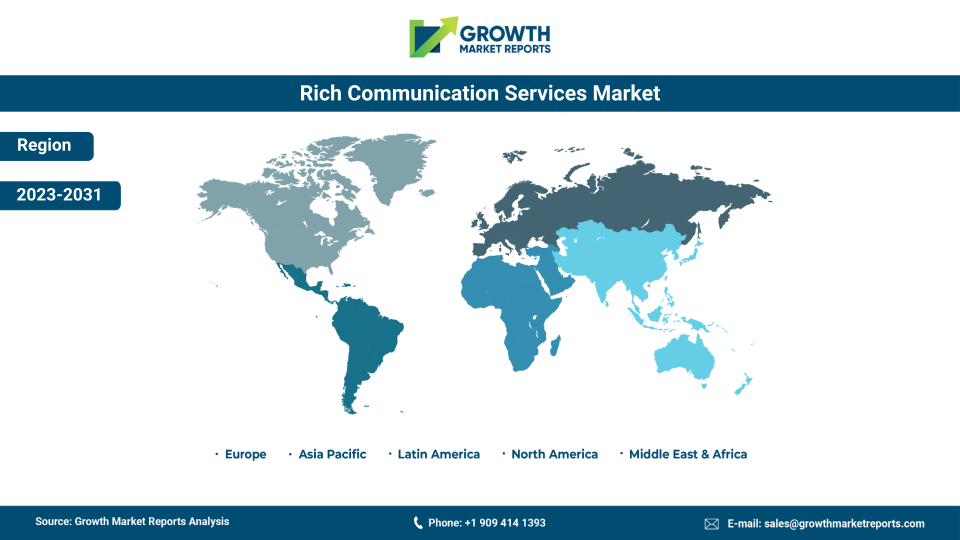
The regional analysis of the Rich Communication Services market reveals distinct trends and growth patterns across key geographies. Asia Pacific is leading the global market, accounting for over 38% of the total market size in 2024, driven by the massive mobile subscriber base, rapid digitalization, and aggressive investments in telecom infrastructure. Countries such as China, India, and Japan are at the forefront of RCS adoption, supported by favorable regulatory environments and strong partnerships between telecom operators and technology vendors. The proliferation of smartphones and the rollout of 5G networks are further accelerating the adoption of RCS in the region, enabling enterprises to deliver advanced messaging experiences to a large and diverse customer base.
North America is another major market for RCS, contributing approximately 26% of the global market size in 2024. The region is characterized by a mature telecom infrastructure, high enterprise awareness, and a strong focus on customer experience. The United States and Canada are witnessing rapid adoption of RCS across sectors such as BFSI, retail, and healthcare, driven by the need for secure, interactive, and personalized communication. The presence of leading RCS solution providers and the ongoing innovation in cloud-based deployment models are further supporting market growth in North America. The region is expected to maintain a steady CAGR of 16.5% during the forecast period, underpinned by continued investments in digital transformation and customer engagement initiatives.
Europe holds a significant share of the RCS market, accounting for around 20% of the global market size in 2024. The region is characterized by stringent data privacy regulations, such as GDPR, which are driving the adoption of secure and compliant communication solutions. Countries such as the United Kingdom, Germany, and France are leading the adoption of RCS, supported by strong enterprise demand and collaborative efforts between telecom operators and technology providers. Latin America and the Middle East & Africa are emerging as high-growth regions, collectively accounting for the remaining 16% of the global market size. The increasing smartphone penetration, expanding digital services, and supportive government initiatives are creating favorable conditions for RCS adoption in these regions, presenting attractive opportunities for market players.
The Rich Communication Services market is highly competitive, with a diverse landscape of telecom operators, technology vendors, and solution providers vying for market share. The competitive dynamics are shaped by rapid technological advancements, evolving customer expectations, and the increasing demand for integrated and feature-rich communication platforms. Leading players are focusing on innovation, strategic partnerships, and mergers & acquisitions to strengthen their market position and expand their product portfolios. The emphasis on interoperability, standardization, and seamless user experiences is driving collaboration among industry stakeholders, enabling the rapid rollout of RCS services across regions and networks.
Telecom operators play a crucial role in the RCS ecosystem, as they control the underlying infrastructure and have direct access to large customer bases. Major operators are investing in upgrading their networks to support RCS and collaborating with technology vendors to deliver advanced messaging solutions. The support from industry consortia, such as the GSMA, is fostering the development of universal RCS profiles and ensuring consistent user experiences across devices and networks. Technology vendors, on the other hand, are focusing on developing cloud-native RCS platforms, AI-powered chatbots, and advanced analytics capabilities to differentiate their offerings and address the evolving needs of enterprises.
The competitive landscape is also characterized by the presence of specialized RCS solution providers, who are catering to the unique requirements of different industries and enterprise sizes. These players are offering tailored packages, flexible pricing models, and comprehensive support services to drive adoption among SMEs and large enterprises alike. The ability to integrate RCS with existing enterprise systems, such as CRM and marketing automation platforms, is emerging as a key differentiator, enabling solution providers to deliver end-to-end communication solutions that enhance operational efficiency and customer engagement.
Some of the major companies operating in the Rich Communication Services market include Google LLC, AT&T Inc., Vodafone Group plc, Deutsche Telekom AG, Orange S.A., Telefonica S.A., Verizon Communications Inc., Infobip Ltd., Sinch AB, and Mavenir Systems Inc.. Google LLC, through its Jibe platform, is playing a pivotal role in driving RCS adoption by enabling seamless interoperability among operators and devices. AT&T and Verizon are leading the deployment of RCS services in North America, leveraging their extensive networks and customer bases. Vodafone, Deutsche Telekom, and Orange are at the forefront of RCS adoption in Europe, supported by strong enterprise demand and collaborative industry initiatives.
Infobip and Sinch are prominent RCS solution providers, offering cloud-based platforms and APIs that enable enterprises to integrate advanced messaging capabilities into their digital communication strategies. Mavenir Systems is focusing on the development of end-to-end RCS solutions for telecom operators, supporting the transition to IP-based messaging and enhancing network monetization opportunities. These companies are investing in research and development, strategic partnerships, and geographic expansion to capture new opportunities and address the evolving needs of their customers. The competitive landscape is expected to remain dynamic, with ongoing innovation, industry consolidation, and the emergence of new players shaping the future of the RCS market.
The Rich Communication Services market has been segmented on the basis of
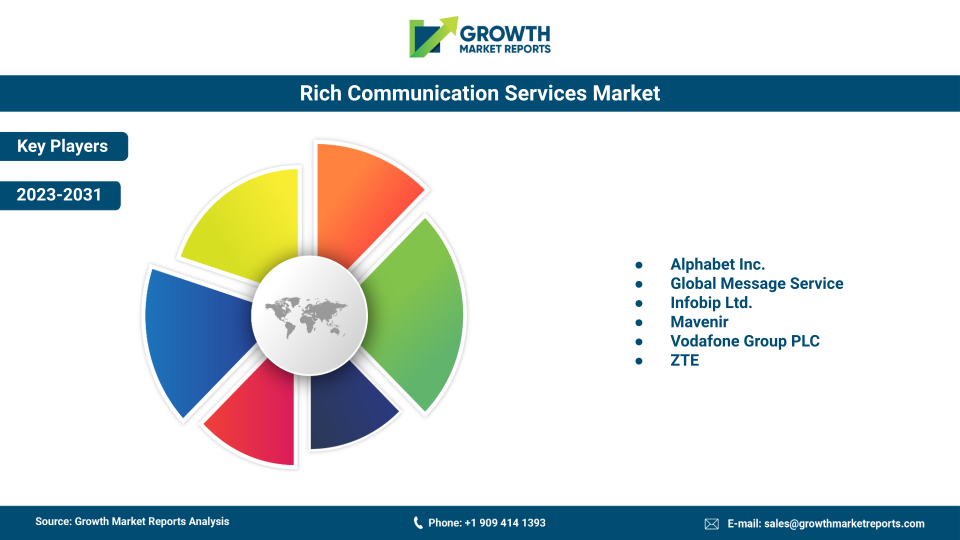
Some major participants in the global rich communication services include Alphabet Inc., Global Message Service, Infobip Ltd., Mavenir, Vodafone Group PLC, and ZTE.
The market players involve mobile network operators (MNOs), third party application developers, smartphone companies, and bulk messaging service providers, among others. The market is broadly fragmented and includes extreme competition among the rivals due to the presence of numerous shareholders.
These market players are focusing on improving their product portfolio by enrolling in several inorganic strategies including mergers, acquisition, collaboration, and partnerships.
In July 2019, Syniverse Technologies LLC partnered with China Telecom Global to offer connectivity services for mobile operators in the Middle East and Africa.
In March 2017, Mavenir introduced its cloud-based RCS platform and hub. The launch of the cloud-based platform is to effectively deploy secure and advance communications.
AI is enhancing RCS platforms by enabling features like chatbots, predictive analytics, and personalized messaging, which improve customer engagement, automate interactions, and provide actionable insights for businesses.
Major challenges include ecosystem fragmentation, lack of universal standards, inconsistent operator support, and competition from over-the-top (OTT) messaging apps.
Key players include Google LLC, AT&T Inc., Vodafone Group plc, Deutsche Telekom AG, Orange S.A., Telefonica S.A., Verizon Communications Inc., Infobip Ltd., Sinch AB, and Mavenir Systems Inc.
RCS is used for Advertising & Marketing, Content Delivery, Customer Relationship Management (CRM), Integrated Solutions, and emerging applications like authentication and emergency alerts.
Major end-users include BFSI (Banking, Financial Services, and Insurance), Retail & E-commerce, Healthcare, IT & Telecom, and Travel & Tourism, among others.
RCS solutions are deployed either on-premises or via the cloud, with cloud deployment being the most popular due to its scalability, flexibility, and cost-effectiveness. Hybrid models are also gaining traction.
The RCS market is segmented into A2P (Application-to-Person), P2A (Person-to-Application), and P2P (Person-to-Person) messaging, with A2P being the dominant segment in 2024.
Asia Pacific is the fastest-growing region, accounting for over 38% of the market in 2024, followed by North America (26%) and Europe (20%). Latin America and the Middle East & Africa are also experiencing significant growth.
Key growth drivers include the rapid digital transformation of businesses, increasing smartphone adoption, demand for enhanced customer engagement, integration of AI and chatbots, and a strong focus on data privacy and security.
The global Rich Communication Services (RCS) market is expected to reach approximately USD 9.38 billion by 2033, growing at a CAGR of 18.7% from its 2024 value of USD 1.92 billion.