Segments - by Component (Platform, Services), by Deployment Mode (On-Premises, Cloud), by Application (Authentication Services, Promotional and Marketing Services, CRM Services, Pushed Content Services, Interactive Messages, Others), by End-User (BFSI, Retail and E-commerce, Healthcare, Travel and Hospitality, Government, IT and Telecommunications, Others), by Messaging Channel (SMS, RCS, OTT Messaging, Others)
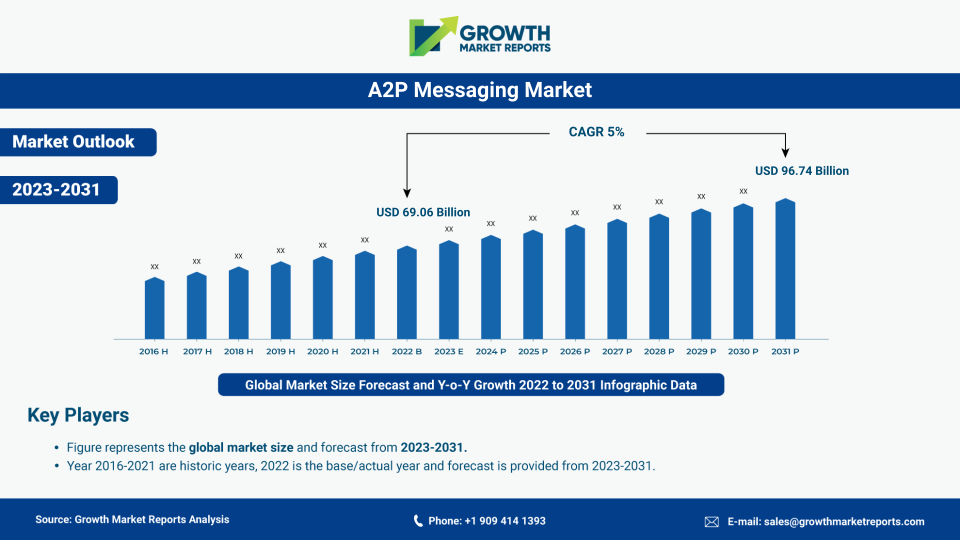
According to our latest research, the global A2P Messaging market size reached USD 68.2 billion in 2024, and it is anticipated to grow at a robust CAGR of 4.9% from 2025 to 2033. By the end of 2033, the market is forecasted to attain a value of USD 107.3 billion. This growth is primarily driven by the increasing adoption of mobile-based services, rising demand for customer engagement solutions, and the proliferation of smartphones across emerging and developed economies. The A2P Messaging market is experiencing rapid transformation due to advancements in messaging technologies, the integration of artificial intelligence, and growing enterprise focus on personalized communication.
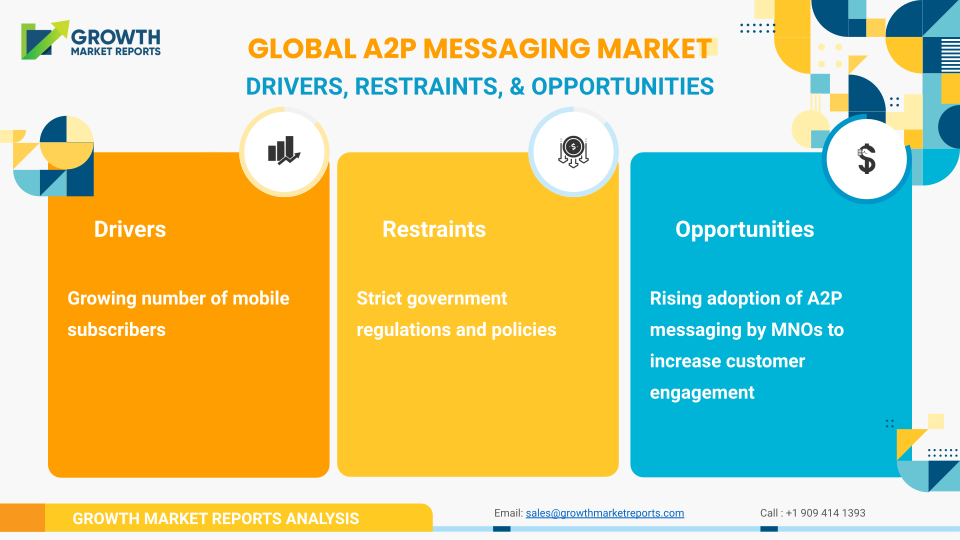
The A2P Messaging market is witnessing substantial growth owing to the exponential rise in mobile subscribers globally. Enterprises are increasingly leveraging A2P messaging for authentication, customer engagement, and promotional activities, which is fueling market expansion. The surge in two-factor authentication (2FA) requirements, especially in the BFSI and e-commerce sectors, has significantly contributed to the demand for secure and reliable messaging platforms. Additionally, the integration of A2P messaging with CRM and marketing automation tools is enabling businesses to deliver timely, personalized messages, further bolstering the market’s growth trajectory. As organizations strive to enhance customer experience and streamline operations, the adoption of A2P messaging solutions is expected to accelerate.
Another key growth driver for the A2P Messaging market is the evolution of messaging channels, such as Rich Communication Services (RCS) and Over-the-Top (OTT) messaging platforms. These advanced channels offer richer media capabilities, interactive features, and enhanced security, making them attractive for enterprises seeking to differentiate their communication strategies. The proliferation of smartphones and the shift towards digital transformation in sectors like healthcare, travel, and government are amplifying the need for seamless, real-time communication. Furthermore, regulatory mandates for secure communication and the increasing prevalence of mobile banking, digital payments, and e-governance initiatives are propelling the adoption of A2P messaging services worldwide.
The market is also benefiting from the increasing emphasis on customer-centric engagement models. With consumers expecting instant, relevant, and contextual information, enterprises are adopting A2P messaging to deliver notifications, reminders, alerts, and promotional content directly to users’ mobile devices. This direct communication channel enhances brand loyalty and drives customer retention, making A2P messaging an indispensable tool in modern business strategies. Moreover, the integration of analytics and AI-driven insights into messaging platforms is enabling organizations to measure campaign effectiveness and optimize engagement, further stimulating market growth.
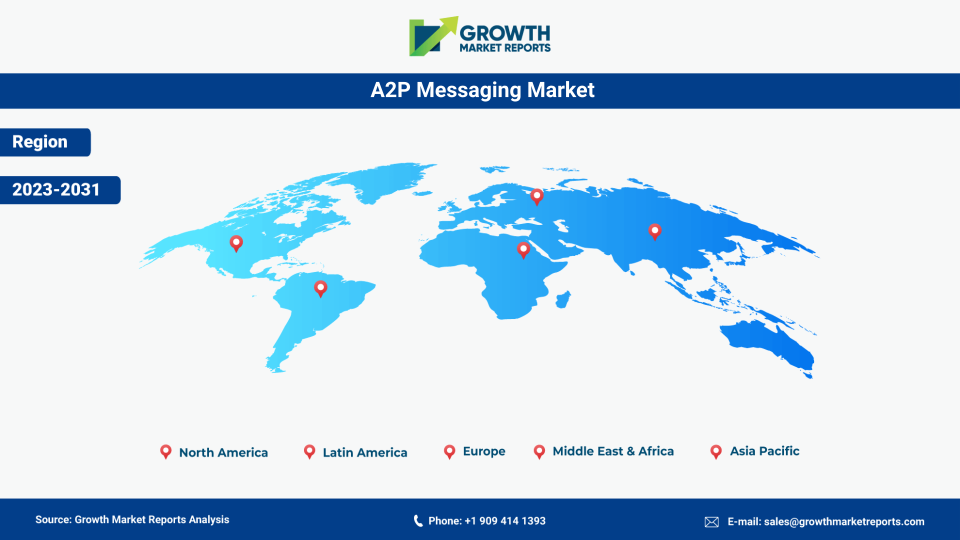
Regionally, the Asia Pacific region dominates the A2P Messaging market, accounting for the largest share in 2024, driven by its massive mobile subscriber base, rapid digitalization, and increasing penetration of mobile financial services. North America and Europe are also significant contributors, with robust adoption in sectors like BFSI, healthcare, and retail. The Middle East & Africa and Latin America are witnessing steady growth, fueled by expanding telecom infrastructure and growing demand for mobile-based services. Regional dynamics, such as regulatory frameworks, technological advancements, and consumer behavior, are shaping the competitive landscape and influencing market growth patterns across the globe.
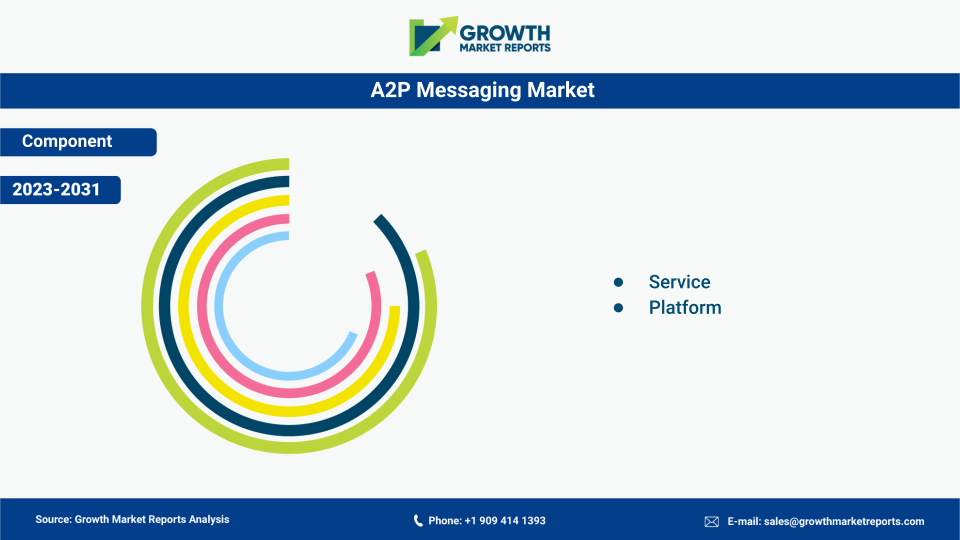
The A2P Messaging market by component is segmented into Platforms and Services, each playing a critical role in the ecosystem. Platforms form the backbone of A2P messaging, providing the necessary infrastructure for message routing, delivery, and analytics. These platforms are increasingly being enhanced with features such as API integration, security protocols, and multi-channel support, enabling enterprises to manage large-scale messaging campaigns efficiently. The demand for robust platforms is particularly high among large enterprises and telecom operators, who require scalable solutions to handle millions of messages daily. As businesses continue to prioritize automation and seamless integration with existing IT systems, platform providers are focusing on innovation and customization to meet diverse industry requirements.
On the other hand, the Services segment encompasses managed services, professional services, and support services, which are essential for the successful deployment and operation of A2P messaging solutions. Managed services are gaining traction among small and medium enterprises (SMEs) that lack in-house expertise or resources to manage complex messaging infrastructure. These services include message delivery management, compliance monitoring, campaign management, and technical support, ensuring optimal performance and regulatory adherence. The growing complexity of messaging regulations and the need for continuous monitoring are driving enterprises to opt for comprehensive service offerings from established vendors.
Integration of artificial intelligence and machine learning into both platforms and services is a notable trend in the A2P Messaging market. AI-powered analytics enable organizations to derive actionable insights from messaging data, optimize campaign targeting, and enhance personalization. Service providers are leveraging these technologies to offer value-added services such as predictive analytics, sentiment analysis, and real-time reporting. This technological evolution is not only improving the efficiency of A2P messaging solutions but also enhancing the overall customer experience by delivering more relevant and timely messages.
The competitive landscape within the component segment is characterized by the presence of both global and regional players, each striving to differentiate their offerings through technological innovation, pricing strategies, and service quality. Strategic partnerships, mergers, and acquisitions are common as companies seek to expand their product portfolios and geographic reach. The increasing demand for integrated, end-to-end messaging solutions is prompting vendors to invest in research and development, resulting in the continuous evolution of platforms and services. As the market matures, the focus is shifting towards providing holistic solutions that address the unique needs of various industries and regulatory environments.
| Attributes | Details |
| Report Title | A2P Messaging Market Research Report 2033 |
| By Component | Platform, Services |
| By Deployment Mode | On-Premises, Cloud |
| By Application | Authentication Services, Promotional and Marketing Services, CRM Services, Pushed Content Services, Interactive Messages, Others |
| By End-User | BFSI, Retail and E-commerce, Healthcare, Travel and Hospitality, Government, IT and Telecommunications, Others |
| By Messaging Channel | SMS, RCS, OTT Messaging, Others |
| Regions Covered | North America, Europe, APAC, Latin America, MEA |
| Base Year | 2024 |
| Historic Data | 2018-2023 |
| Forecast Period | 2025-2033 |
| Number of Pages | 267 |
| Number of Tables & Figures | 398 |
| Customization Available | Yes, the report can be customized as per your need. |
The A2P Messaging market is segmented by deployment mode into On-Premises and Cloud, each catering to distinct enterprise needs and operational preferences. The On-Premises deployment mode remains relevant for organizations with stringent data security and compliance requirements, particularly in sectors such as BFSI, government, and healthcare. These organizations prefer to maintain full control over their messaging infrastructure, ensuring data sovereignty and customized security protocols. However, the high upfront costs, ongoing maintenance, and scalability limitations associated with on-premises solutions are prompting many enterprises to reconsider their deployment strategies.
Cloud deployment, on the other hand, has emerged as the preferred choice for a majority of enterprises, driven by its scalability, cost-effectiveness, and ease of integration. Cloud-based A2P messaging solutions offer flexible pricing models, rapid deployment, and seamless updates, making them ideal for organizations of all sizes. The ability to access messaging platforms from anywhere, coupled with robust disaster recovery and business continuity features, is further accelerating the adoption of cloud solutions. Cloud deployment also enables enterprises to quickly scale their messaging operations in response to fluctuating demand, ensuring uninterrupted communication with customers.
The rise of hybrid deployment models is another significant trend in the A2P Messaging market. Organizations are increasingly adopting hybrid approaches that combine the security and control of on-premises solutions with the flexibility and scalability of cloud-based platforms. This approach allows enterprises to leverage the best of both worlds, optimizing their messaging infrastructure to meet specific business and regulatory requirements. Hybrid models are particularly popular among large enterprises with complex operational needs and global footprints, enabling them to maintain compliance while benefiting from the agility of the cloud.
As the market evolves, vendors are focusing on enhancing the security, reliability, and interoperability of their deployment offerings. The integration of advanced encryption, multi-factor authentication, and compliance management features is becoming standard in both on-premises and cloud solutions. Additionally, the growing emphasis on data privacy and regulatory compliance is influencing deployment decisions, with enterprises seeking solutions that can adapt to changing legal landscapes. The deployment mode segment is expected to witness continued innovation, driven by technological advancements and shifting enterprise priorities.
The Application segment of the A2P Messaging market is highly diverse, encompassing Authentication Services, Promotional and Marketing Services, CRM Services, Pushed Content Services, Interactive Messages, and Others. Authentication Services, such as two-factor authentication (2FA) and one-time passwords (OTPs), represent a significant share of the market, driven by the increasing need for secure user verification in online transactions, banking, and digital services. Enterprises across BFSI, e-commerce, and IT sectors are leveraging A2P messaging to enhance security, reduce fraud, and comply with regulatory mandates, making this application segment a key growth driver.
Promotional and Marketing Services constitute another major application area, as businesses seek to engage customers through personalized offers, discounts, and event notifications. The effectiveness of A2P messaging in driving customer acquisition, retention, and brand loyalty is prompting organizations to allocate substantial budgets to SMS and RCS-based marketing campaigns. The ability to deliver time-sensitive, targeted messages directly to consumers’ mobile devices is a distinct advantage, contributing to higher conversion rates and improved ROI. The integration of analytics and automation tools further enhances the impact of promotional messaging by enabling precise audience segmentation and performance tracking.
CRM Services are gaining prominence as enterprises focus on building long-term customer relationships and delivering exceptional service experiences. A2P messaging is increasingly being used for appointment reminders, service notifications, feedback requests, and loyalty program updates, facilitating seamless communication between businesses and their customers. The real-time nature of messaging, combined with its high open and response rates, makes it an ideal channel for CRM initiatives. Organizations are also integrating A2P messaging with their CRM systems to automate workflows, track customer interactions, and personalize communication, resulting in enhanced customer satisfaction and operational efficiency.
Pushed Content Services and Interactive Messages are emerging as innovative application areas, enabling businesses to deliver rich media content, surveys, polls, and interactive campaigns to engage users more effectively. These applications leverage advanced messaging technologies like RCS and OTT platforms to provide immersive experiences, gather valuable insights, and drive user participation. The versatility of A2P messaging in supporting a wide range of applications is a testament to its strategic importance in modern enterprise communication. As organizations continue to explore new use cases and integrate messaging with digital transformation initiatives, the application segment is poised for sustained growth.
The A2P Messaging market serves a broad spectrum of end-users, including BFSI, Retail and E-commerce, Healthcare, Travel and Hospitality, Government, IT and Telecommunications, and Others. The BFSI sector is a leading adopter of A2P messaging, utilizing it for transaction alerts, authentication, fraud detection, and customer notifications. The need for secure, real-time communication in banking and financial services is driving the demand for reliable messaging solutions. Regulatory compliance, customer trust, and operational efficiency are key considerations for BFSI organizations, making A2P messaging an integral component of their digital strategy.
Retail and E-commerce companies leverage A2P messaging to enhance customer engagement, drive sales, and streamline operations. From order confirmations and delivery updates to promotional offers and feedback requests, messaging solutions enable retailers to maintain constant communication with customers throughout the purchase journey. The ability to deliver personalized, timely messages is critical in today’s competitive retail landscape, where customer experience is a key differentiator. The integration of A2P messaging with e-commerce platforms and marketing automation tools is further amplifying its impact, enabling retailers to optimize campaigns and improve conversion rates.
In the Healthcare sector, A2P messaging is being adopted for appointment reminders, prescription notifications, test result alerts, and patient engagement initiatives. The need for secure, HIPAA-compliant communication channels is driving healthcare providers to invest in advanced messaging solutions. A2P messaging not only improves patient outcomes by ensuring timely communication but also enhances operational efficiency by reducing no-shows and streamlining administrative processes. The ongoing digital transformation in healthcare, coupled with the growing emphasis on patient-centric care, is expected to fuel the adoption of A2P messaging in this sector.
Travel and Hospitality, Government, and IT and Telecommunications are also significant end-users of A2P messaging. In travel and hospitality, messaging is used for booking confirmations, itinerary updates, and customer service interactions, enhancing the overall travel experience. Government agencies utilize A2P messaging for public notifications, emergency alerts, and citizen engagement, leveraging its wide reach and reliability. The IT and Telecommunications sector, as both a provider and consumer of messaging solutions, plays a pivotal role in driving innovation and adoption across industries. The diverse end-user landscape underscores the versatility and strategic value of A2P messaging in meeting the unique needs of different sectors.
The Messaging Channel segment of the A2P Messaging market includes SMS, Rich Communication Services (RCS), Over-the-Top (OTT) Messaging, and Others. SMS remains the dominant channel, accounting for the largest share of the market due to its ubiquity, reliability, and high open rates. Enterprises across industries continue to rely on SMS for critical communications, such as authentication, alerts, and notifications, owing to its universal compatibility with all mobile devices. The simplicity and effectiveness of SMS make it an indispensable tool for mass communication, particularly in regions with limited internet connectivity.
RCS is emerging as a next-generation messaging channel, offering enhanced features such as multimedia support, interactive buttons, and read receipts. RCS enables businesses to deliver richer, more engaging experiences to users, making it an attractive option for marketing campaigns, customer service, and transactional messages. The adoption of RCS is gaining momentum, especially in developed markets, as telecom operators and technology providers collaborate to expand network coverage and device compatibility. The ability to provide app-like experiences within the messaging interface is driving interest in RCS among enterprises seeking to differentiate their communication strategies.
OTT Messaging platforms, such as WhatsApp, Facebook Messenger, and WeChat, are increasingly being integrated into enterprise communication strategies. These platforms offer advanced capabilities, including multimedia messaging, group chats, and end-to-end encryption, making them suitable for a wide range of business applications. The growing popularity of OTT messaging is driven by changing consumer preferences, the proliferation of smartphones, and the desire for seamless, cross-platform communication. Enterprises are leveraging OTT channels to reach customers on their preferred platforms, enhance engagement, and deliver personalized experiences.
Other messaging channels, including email, voice messaging, and push notifications, complement the core offerings of SMS, RCS, and OTT platforms. The choice of messaging channel depends on factors such as message urgency, content type, target audience, and regulatory requirements. As the messaging landscape evolves, enterprises are adopting multi-channel strategies to maximize reach and effectiveness. The integration of messaging channels with analytics and automation tools enables organizations to optimize campaign performance, track user interactions, and continuously refine their communication strategies.
The A2P Messaging market presents significant opportunities for growth and innovation, driven by the ongoing digital transformation across industries. The increasing adoption of mobile-based services, coupled with the proliferation of smartphones and internet connectivity, is creating new avenues for enterprises to engage with customers. The emergence of advanced messaging channels like RCS and OTT platforms offers businesses the potential to deliver richer, more interactive experiences, enhancing brand loyalty and customer satisfaction. Furthermore, the integration of artificial intelligence, machine learning, and analytics into messaging platforms is enabling organizations to personalize communication, optimize campaigns, and derive actionable insights from messaging data. These technological advancements are opening up new possibilities for targeted marketing, customer engagement, and operational efficiency.
Another major opportunity lies in the expansion of A2P messaging into emerging markets, where rapid urbanization, growing mobile penetration, and increasing digital literacy are driving demand for mobile-based communication solutions. Governments, financial institutions, healthcare providers, and retailers in these regions are increasingly adopting A2P messaging to reach underserved populations, deliver essential services, and promote financial inclusion. The rising focus on regulatory compliance, data privacy, and secure communication is also creating opportunities for vendors to offer differentiated solutions tailored to specific industry and regional requirements. Strategic partnerships, mergers, and acquisitions are enabling companies to expand their product portfolios, enter new markets, and strengthen their competitive positions.
Despite the promising outlook, the A2P Messaging market faces certain restraining factors, most notably the growing threat of SMS fraud, spam, and phishing attacks. The prevalence of fraudulent activities, such as SIM swapping, SMS spoofing, and unauthorized message termination, poses significant challenges to market growth and user trust. Regulatory uncertainties, evolving data privacy laws, and the increasing complexity of compliance requirements are adding to the operational burden for enterprises and service providers. Additionally, the rise of alternative communication channels, such as email and social media, is intensifying competition and prompting organizations to continuously innovate and differentiate their messaging strategies. Addressing these challenges will be critical for sustaining long-term growth and maintaining the integrity of the A2P Messaging ecosystem.
The Asia Pacific region dominates the global A2P Messaging market, accounting for approximately 38% of the total market value in 2024, which translates to around USD 25.9 billion. This leadership position is attributed to the region’s massive mobile subscriber base, rapid digitalization, and the widespread adoption of mobile financial services. Countries such as China, India, Japan, and South Korea are at the forefront of A2P messaging adoption, driven by robust telecom infrastructure, government initiatives promoting digital inclusion, and the growing demand for mobile-based authentication and customer engagement solutions. The Asia Pacific market is expected to maintain its dominance throughout the forecast period, supported by a projected CAGR of 5.3% from 2025 to 2033.
North America is the second-largest market for A2P Messaging, with a market size of approximately USD 17.1 billion in 2024. The region’s growth is fueled by high smartphone penetration, advanced telecom networks, and the strong presence of leading technology providers. Key sectors such as BFSI, healthcare, and retail are driving demand for secure, real-time communication solutions, particularly for authentication, alerts, and marketing campaigns. Regulatory compliance, data privacy, and the integration of advanced technologies like AI and analytics are shaping the competitive landscape in North America. The market is expected to witness steady growth, supported by ongoing investments in digital transformation and customer engagement initiatives.
Europe, with a market value of around USD 13.5 billion in 2024, is characterized by mature telecom infrastructure, high mobile adoption rates, and a strong focus on data protection and regulatory compliance. The region’s A2P Messaging market is driven by the increasing adoption of digital banking, e-commerce, and mobile-based government services. Countries such as the United Kingdom, Germany, France, and Italy are leading contributors, with enterprises leveraging A2P messaging for authentication, customer engagement, and operational efficiency. The Middle East & Africa and Latin America, with market sizes of USD 6.4 billion and USD 5.3 billion respectively, are witnessing steady growth, driven by expanding telecom infrastructure, rising mobile penetration, and the growing demand for mobile-based services. These regions offer significant untapped potential, particularly in sectors such as banking, healthcare, and government.
The A2P Messaging market is highly competitive, with a mix of global and regional players vying for market share through innovation, strategic partnerships, and geographic expansion. The competitive landscape is characterized by rapid technological advancements, evolving customer preferences, and the continuous emergence of new use cases and applications. Leading vendors are investing heavily in research and development to enhance platform capabilities, improve security, and integrate advanced analytics and AI-driven features. The ability to offer scalable, reliable, and compliant messaging solutions is a key differentiator in this dynamic market, as enterprises seek to optimize their communication strategies and deliver superior customer experiences.
Strategic collaborations between telecom operators, technology providers, and messaging platform vendors are becoming increasingly common, as companies seek to expand their product portfolios, enter new markets, and address the diverse needs of different industries. Mergers and acquisitions are also shaping the competitive landscape, enabling vendors to strengthen their market positions, gain access to new technologies, and accelerate innovation. The rise of cloud-based and hybrid deployment models is prompting vendors to diversify their offerings and cater to the evolving preferences of enterprises across various sectors and regions.
The market is witnessing the entry of new players, particularly in the areas of RCS, OTT messaging, and AI-powered messaging solutions. These entrants are challenging established vendors by offering differentiated solutions, competitive pricing, and agile service delivery. At the same time, established players are leveraging their experience, scale, and global reach to maintain their leadership positions and drive market growth. The ongoing focus on regulatory compliance, data privacy, and security is prompting vendors to continuously enhance their offerings and ensure adherence to evolving legal frameworks.
Some of the major companies operating in the A2P Messaging market include Twilio Inc., Infobip Ltd., Sinch AB, Tata Communications, Vonage Holdings Corp., Route Mobile Limited, Comviva Technologies, OpenMarket Inc. (A subsidiary of Infobip), and MessageBird B.V. These companies are recognized for their robust product portfolios, global reach, and strong customer relationships. Twilio Inc. is known for its developer-friendly platform and extensive API offerings, enabling seamless integration with enterprise applications. Infobip Ltd. and Sinch AB are leading providers of omnichannel communication solutions, offering advanced messaging platforms, analytics, and managed services to enterprises worldwide.
Tata Communications and Vonage Holdings Corp. are prominent players with a strong presence in the telecom and cloud communication markets, offering end-to-end messaging solutions for various industries. Route Mobile Limited and Comviva Technologies are recognized for their expertise in mobile messaging and value-added services, catering to the needs of telecom operators and enterprises in emerging markets. OpenMarket Inc. and MessageBird B.V. are known for their innovative messaging platforms, global connectivity, and focus on customer engagement and experience. These companies are continuously investing in technology, expanding their service offerings, and forging strategic partnerships to stay ahead in the competitive A2P Messaging landscape.
The A2P Messaging market has been segmented on the basis of
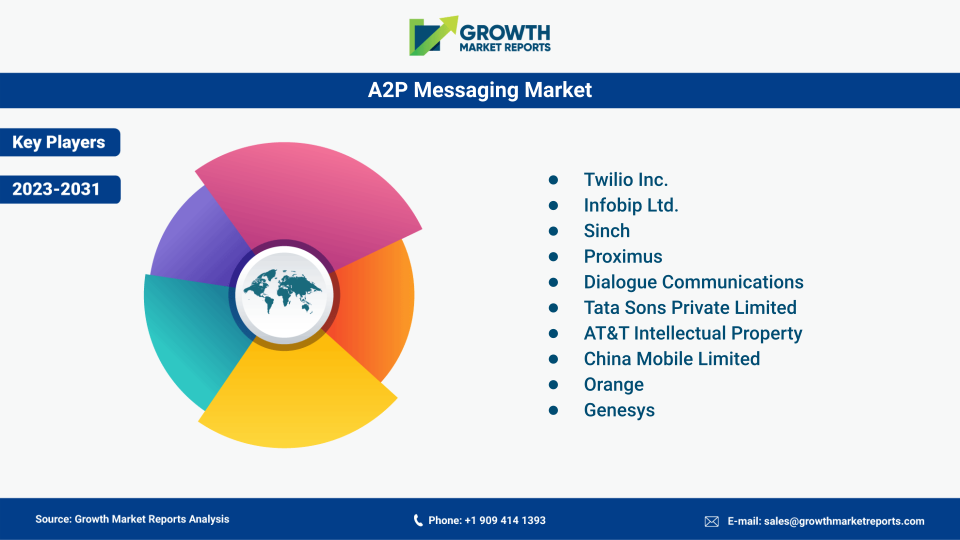
Key players competing in the global A2P messaging market are Twilio Inc.; Infobip Ltd.; Sinch; Proximus; Dialogue Communications; Tata Sons Private Limited; AT&T Intellectual Property; China Mobile Limited; Orange; Genesys; Mitto; and Tele-Whale.com.
These key players adopt various strategies including mergers, acquisitions, collaboration, partnerships, product launches, and production expansion to expand their consumer base globally.
In March 2023, DIDWW, a universal provider of SIP trunking services and VoIP communications, launched Alphanumeric A2P SMS service in 21 European markets. By using targeted and personalized messages, this service empowers organizations that drive results and brand loyalty, to reach customers.
Opportunities include expanding into emerging markets, leveraging AI and analytics, and adopting advanced messaging channels. Challenges involve combating SMS fraud and spam, navigating regulatory complexities, and competing with alternative communication channels like email and social media.
Major companies in the A2P messaging market include Twilio, Sinch, Infobip, Vonage, Tata Communications, Comviva, Route Mobile, MessageBird, Kaleyra, CM.com, Telesign, SAP Digital Interconnect, OpenMarket, Mitto, CLX Communications, Plivo, Soprano Design, Genesys, Global Message Services (GMS), and Clickatell.
Main applications include authentication services (such as two-factor authentication and OTPs), promotional and marketing services, CRM services, pushed content services, and interactive messages for surveys and polls.
A2P messaging platforms can be deployed on-premises, in the cloud, or as hybrid solutions. Cloud deployment is preferred for its scalability and cost-effectiveness, while on-premises solutions are chosen for stringent security and compliance needs. Hybrid models combine both approaches for flexibility and control.
Asia Pacific dominates the A2P messaging market, accounting for about 38% of the global value in 2024, followed by North America and Europe. The Middle East & Africa and Latin America are also experiencing steady growth due to expanding telecom infrastructure and mobile adoption.
Key trends include the integration of artificial intelligence and analytics for personalized messaging, the rise of RCS and OTT messaging channels, increasing focus on regulatory compliance and security, and the adoption of cloud and hybrid deployment models.
The main A2P messaging channels are SMS, Rich Communication Services (RCS), Over-the-Top (OTT) messaging platforms like WhatsApp and Facebook Messenger, as well as other channels such as email, voice messaging, and push notifications.
Key industries adopting A2P messaging include BFSI (banking, financial services, and insurance), retail and e-commerce, healthcare, travel and hospitality, government, and IT & telecommunications. These sectors use A2P messaging for authentication, customer engagement, notifications, and marketing.
The global A2P messaging market reached USD 68.2 billion in 2024 and is expected to grow at a CAGR of 4.9% from 2025 to 2033, reaching a projected value of USD 107.3 billion by 2033.
A2P (Application-to-Person) messaging refers to messages sent from an application to a person's mobile device. It is widely used by businesses for authentication, notifications, marketing, and customer engagement. Enterprises use A2P messaging platforms to automate and deliver messages such as OTPs, alerts, reminders, and promotional content directly to users’ phones.