Segments - by Component (Hardware, Software, Services), by Deployment Type (Public Cloud, Private Cloud, Hybrid Cloud), by Organization Size (Small and Medium Enterprises, Large Enterprises), by Application (Database, Big Data, DevOps, High Performance Computing, Web Hosting, Others), by Industry Vertical (BFSI, Healthcare, Retail & E-commerce, IT & Telecommunications, Manufacturing, Government, Others)
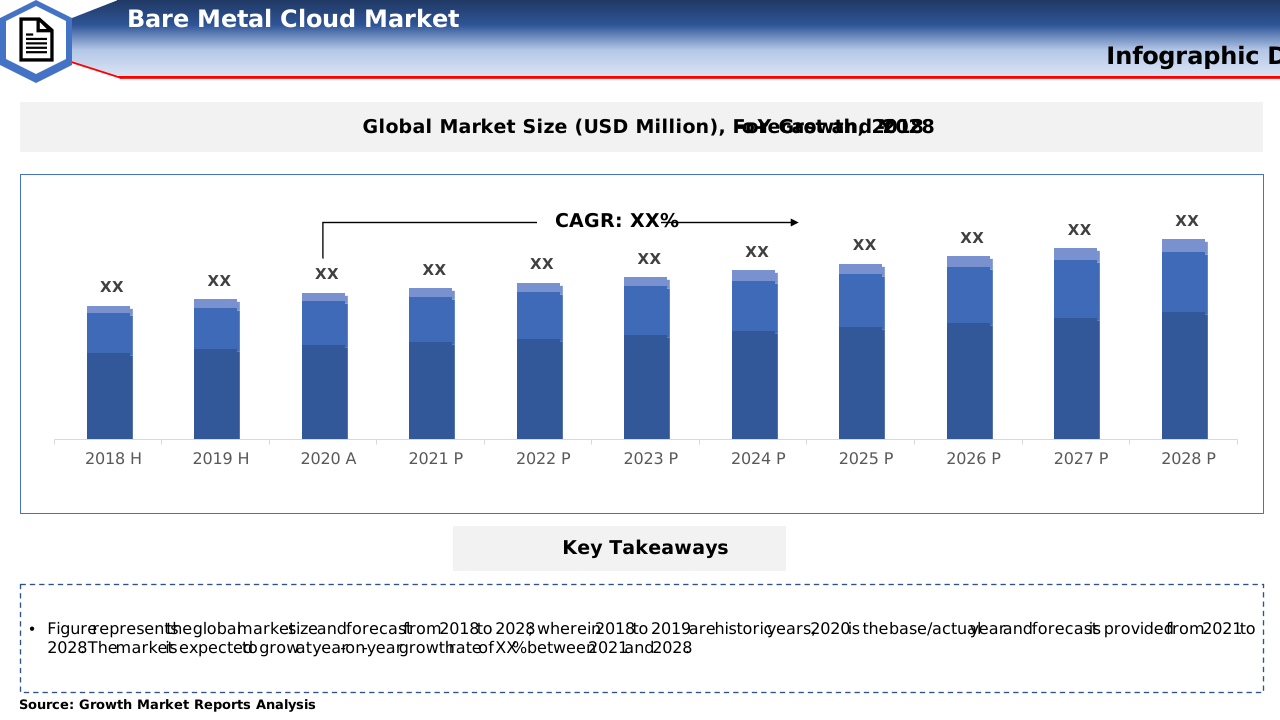
According to our latest research, the global bare metal cloud market size reached USD 8.2 billion in 2024, reflecting robust demand for high-performance, customizable cloud solutions. The market is projected to expand at a CAGR of 22.6% from 2025 to 2033, with revenues anticipated to reach USD 62.8 billion by 2033. This impressive growth trajectory is fueled by the increasing adoption of cloud-native applications, the surge in data-intensive workloads, and the critical need for low-latency computing across various industries. As organizations seek greater control and flexibility without the overhead of virtualization, bare metal cloud solutions are becoming a preferred alternative to traditional virtualized public cloud offerings.
One of the primary growth factors driving the bare metal cloud market is the escalating demand for high-performance computing (HPC) and data-intensive applications. Enterprises across sectors such as BFSI, healthcare, and manufacturing are increasingly leveraging artificial intelligence, machine learning, and big data analytics, all of which require substantial processing power and minimal latency. Bare metal cloud solutions offer dedicated, non-virtualized hardware, enabling organizations to achieve superior performance, enhanced security, and predictable workload management. This is particularly critical for businesses that handle sensitive data or operate in highly regulated environments, as bare metal infrastructure provides greater transparency and compliance assurance compared to traditional multi-tenant public cloud architectures.
Another significant driver is the rapid digital transformation initiatives underway in both large enterprises and small and medium enterprises (SMEs). As companies modernize their IT infrastructures, there is a growing need for scalable, flexible, and cost-effective cloud solutions that can accommodate fluctuating workloads and diverse application requirements. Bare metal cloud platforms facilitate seamless integration with existing on-premises systems while offering the agility of cloud deployment. This hybrid approach allows organizations to optimize resource allocation, reduce capital expenditures, and accelerate time-to-market for new products and services. Moreover, the proliferation of DevOps practices and containerization technologies is further boosting the adoption of bare metal cloud, as these environments benefit from the dedicated resources and configurability that bare metal servers provide.
The third key growth factor is the increasing focus on security, compliance, and data sovereignty. With the rise in cyber threats and stricter regulatory frameworks across regions, businesses are prioritizing infrastructure solutions that offer enhanced control over data storage and processing. Bare metal cloud environments, by virtue of their single-tenant architecture, minimize the risks associated with shared resources and provide organizations with the ability to implement customized security protocols. This is especially relevant for industries such as healthcare, finance, and government, where data privacy and compliance with standards like HIPAA, GDPR, and PCI DSS are paramount. As a result, the adoption of bare metal cloud is expected to accelerate as organizations seek to mitigate risks while maintaining the benefits of cloud scalability and agility.
From a regional perspective, North America continues to dominate the bare metal cloud market, driven by the presence of major cloud service providers, advanced IT infrastructure, and high levels of digital adoption across industries. The region accounted for over 38% of global revenue in 2024, with the United States leading in terms of both innovation and market share. Asia Pacific is emerging as the fastest-growing region, propelled by rapid digitalization in countries such as China, India, and Japan, as well as the expansion of data center infrastructure and increasing investments in cloud computing. Meanwhile, Europe is witnessing steady growth due to stringent data protection regulations and the rising adoption of cloud services among enterprises and government agencies. Other regions, including Latin America and the Middle East & Africa, are also gradually embracing bare metal cloud solutions as they modernize their IT landscapes to support economic development and digital transformation.
The bare metal cloud market is segmented by component into hardware, software, and services, each playing a critical role in the overall ecosystem. The hardware segment, comprising servers, storage devices, and networking equipment, forms the backbone of bare metal cloud infrastructure. With the growing complexity of enterprise workloads, there is an increasing emphasis on deploying high-performance, energy-efficient hardware that can support advanced computing requirements. Innovations in processor technology, storage solutions (such as NVMe SSDs), and network architecture are enhancing the capabilities of bare metal cloud platforms, enabling organizations to achieve greater speed, reliability, and scalability. As a result, demand for next-generation hardware components is expected to remain strong throughout the forecast period.
The software segment encompasses management platforms, orchestration tools, and automation solutions that facilitate the provisioning, monitoring, and optimization of bare metal cloud environments. As enterprises seek to streamline operations and reduce manual intervention, the adoption of sophisticated software tools is on the rise. These platforms enable seamless integration with existing IT systems, support multi-cloud and hybrid deployments, and provide advanced features such as workload balancing, security management, and resource allocation. The proliferation of open-source software and APIs is also driving innovation in this segment, allowing organizations to customize their bare metal cloud environments to meet specific business needs while maintaining interoperability with other cloud services.
Services represent a vital component of the bare metal cloud market, encompassing consulting, implementation, maintenance, and managed services. As the adoption of bare metal cloud solutions grows, enterprises are increasingly seeking expert guidance to navigate the complexities of migration, integration, and ongoing management. Service providers offer end-to-end support, from initial assessment and strategy development to deployment, optimization, and troubleshooting. Managed services, in particular, are gaining traction as organizations look to offload routine maintenance tasks and focus on core business objectives. By leveraging specialized expertise and best practices, businesses can maximize the value of their bare metal cloud investments while minimizing operational risks and costs.
The interplay between hardware, software, and services is shaping the evolution of the bare metal cloud market. Vendors are increasingly offering integrated solutions that combine cutting-edge hardware with robust software platforms and comprehensive service offerings. This holistic approach enables organizations to accelerate deployment, enhance performance, and achieve greater agility in responding to changing business requirements. As competition intensifies, providers are differentiating themselves through innovation, customer-centric support, and the ability to deliver tailored solutions that address the unique challenges of diverse industries and applications.
| Attributes | Details |
| Report Title | Bare Metal Cloud Market Research Report 2033 |
| By Component | Hardware, Software, Services |
| By Deployment Type | Public Cloud, Private Cloud, Hybrid Cloud |
| By Organization Size | Small and Medium Enterprises, Large Enterprises |
| By Application | Database, Big Data, DevOps, High Performance Computing, Web Hosting, Others |
| By Industry Vertical | BFSI, Healthcare, Retail & E-commerce, IT & Telecommunications, Manufacturing, Government, Others |
| Regions Covered | North America, Europe, APAC, Latin America, MEA |
| Base Year | 2024 |
| Historic Data | 2018-2023 |
| Forecast Period | 2025-2033 |
| Number of Pages | 271 |
| Number of Tables & Figures | 387 |
| Customization Available | Yes, the report can be customized as per your need. |
Deployment type is a crucial segment in the bare metal cloud market, encompassing public cloud, private cloud, and hybrid cloud models. The public cloud segment is characterized by its scalability, cost-efficiency, and ease of access, making it an attractive option for organizations seeking to rapidly deploy and scale applications without significant upfront investments. Public bare metal cloud providers offer flexible pricing models and a wide range of configuration options, allowing businesses to match infrastructure resources to specific workload requirements. As enterprises increasingly adopt cloud-first strategies, the public cloud segment is expected to maintain a significant share of the market, particularly among startups and SMEs with limited IT budgets.
The private cloud segment is gaining traction among organizations that prioritize security, compliance, and control over their IT environments. Private bare metal clouds provide dedicated infrastructure within a single-tenant environment, enabling businesses to implement customized security protocols, manage data sovereignty, and meet stringent regulatory requirements. This deployment model is particularly popular in industries such as healthcare, finance, and government, where data privacy and compliance are paramount. By leveraging private bare metal cloud solutions, organizations can achieve the benefits of cloud computing—such as agility, scalability, and cost savings—while maintaining full control over their infrastructure and data.
Hybrid cloud deployments are emerging as a preferred choice for enterprises seeking to balance the advantages of both public and private cloud models. Hybrid bare metal cloud solutions enable organizations to seamlessly integrate on-premises systems with cloud resources, facilitating workload portability, disaster recovery, and optimized resource utilization. This approach allows businesses to run sensitive or mission-critical applications on private infrastructure while leveraging the scalability and flexibility of the public cloud for less sensitive workloads. As digital transformation accelerates and IT environments become more complex, the adoption of hybrid cloud strategies is expected to increase, driving demand for interoperable and flexible bare metal cloud platforms.
The evolution of deployment models in the bare metal cloud market is being influenced by advancements in network connectivity, security technologies, and cloud management tools. Providers are investing in high-speed interconnects, software-defined networking, and automation solutions to enhance the performance, security, and manageability of their offerings. As organizations continue to embrace multi-cloud and hybrid IT strategies, the ability to seamlessly orchestrate workloads across diverse environments will be a key differentiator for bare metal cloud vendors. This trend is expected to drive further innovation and competition in the deployment type segment, benefiting end users with greater choice and flexibility.
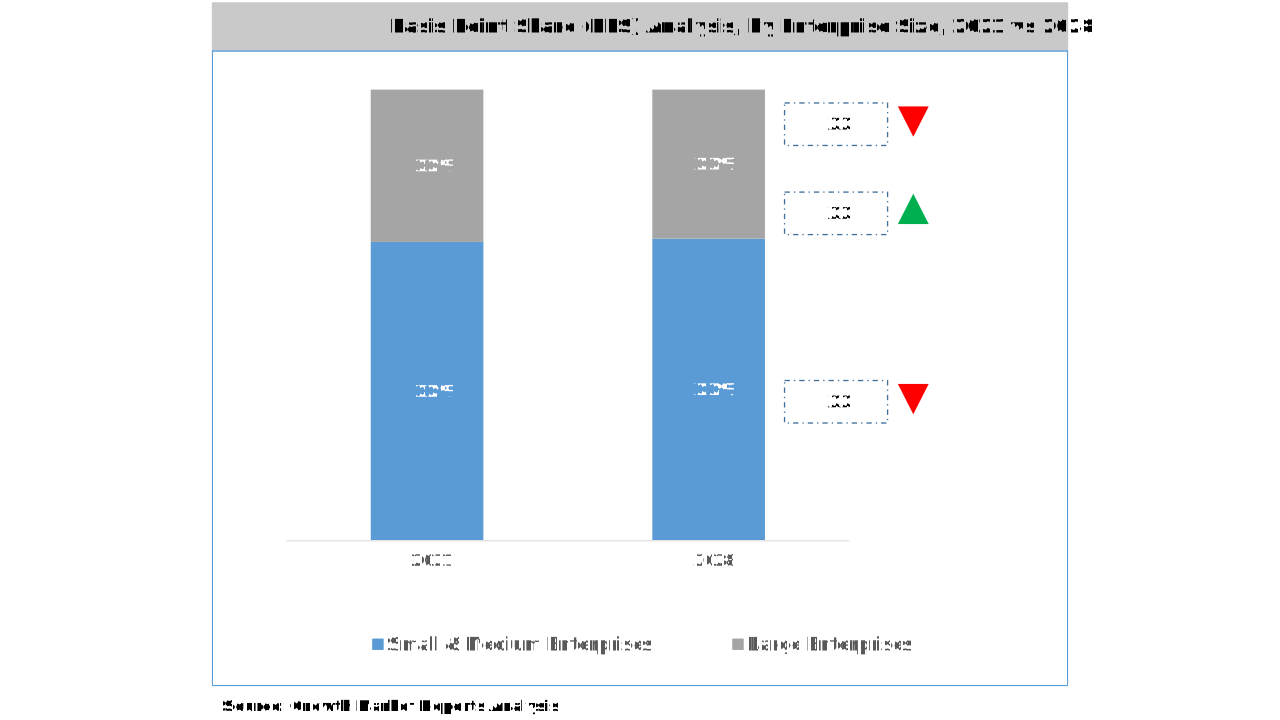
The bare metal cloud market serves organizations of all sizes, with distinct adoption patterns among small and medium enterprises (SMEs) and large enterprises. SMEs are increasingly turning to bare metal cloud solutions to overcome the limitations of traditional on-premises infrastructure, such as high capital expenditures, limited scalability, and resource constraints. By leveraging the pay-as-you-go model and on-demand scalability of bare metal cloud, SMEs can access enterprise-grade computing power without the need for significant upfront investments. This democratization of high-performance infrastructure is enabling smaller organizations to compete more effectively in the digital economy, accelerate innovation, and respond rapidly to changing market dynamics.
Large enterprises, on the other hand, are adopting bare metal cloud solutions to support complex, mission-critical workloads that demand high performance, security, and compliance. These organizations often operate in highly regulated industries and require dedicated infrastructure to meet stringent data protection and governance requirements. Bare metal cloud platforms offer the flexibility to customize hardware configurations, implement advanced security measures, and integrate with existing IT systems, making them an ideal choice for large-scale deployments. Additionally, the ability to run resource-intensive applications such as big data analytics, artificial intelligence, and high-performance computing on dedicated hardware is a significant advantage for large enterprises seeking to optimize performance and efficiency.
The adoption of bare metal cloud by organizations of all sizes is being driven by the need for greater agility, scalability, and cost efficiency. As digital transformation accelerates, businesses are seeking infrastructure solutions that can adapt to evolving requirements and support a wide range of applications. Bare metal cloud platforms provide the flexibility to scale resources up or down as needed, enabling organizations to align IT spending with business priorities and avoid overprovisioning. This is particularly important for SMEs, which often operate with limited resources and must maximize the value of their technology investments.
Furthermore, the growing emphasis on innovation and time-to-market is prompting organizations to adopt cloud-native technologies and DevOps practices. Bare metal cloud solutions, with their dedicated resources and high-performance capabilities, are well-suited to support agile development, continuous integration, and rapid deployment of new applications and services. As a result, both SMEs and large enterprises are increasingly incorporating bare metal cloud into their IT strategies to drive growth, enhance competitiveness, and achieve operational excellence.
The bare metal cloud market is segmented by application into database, big data, DevOps, high-performance computing (HPC), web hosting, and others. The database segment is witnessing significant growth as organizations seek to optimize the performance, scalability, and reliability of their database workloads. Bare metal cloud solutions provide dedicated resources, eliminating the "noisy neighbor" effect often associated with virtualized environments. This ensures consistent performance for database applications, which is critical for transaction-heavy workloads in sectors such as finance, e-commerce, and telecommunications. Additionally, the ability to customize hardware configurations allows organizations to tailor their infrastructure to the specific requirements of different database platforms.
Big data and analytics represent another major application area for bare metal cloud. The exponential growth of data generated by digital platforms, IoT devices, and enterprise applications is driving demand for high-performance infrastructure capable of processing and analyzing large volumes of data in real time. Bare metal cloud platforms offer the processing power, storage capacity, and network bandwidth required to support big data workloads, enabling organizations to derive actionable insights and make data-driven decisions. As businesses increasingly adopt advanced analytics, machine learning, and artificial intelligence, the demand for bare metal cloud solutions in the big data segment is expected to continue rising.
DevOps and agile development environments are also benefiting from the adoption of bare metal cloud. The need for rapid provisioning, testing, and deployment of applications is driving demand for infrastructure that can support continuous integration and continuous delivery (CI/CD) pipelines. Bare metal cloud platforms provide the flexibility, automation, and scalability required to support DevOps workflows, enabling development teams to accelerate innovation and reduce time-to-market. By eliminating the overhead of virtualization, bare metal servers deliver faster boot times, lower latency, and improved performance for development, testing, and production environments.
High-performance computing (HPC) and web hosting are additional application areas where bare metal cloud is gaining traction. HPC workloads, such as scientific simulations, financial modeling, and rendering, require massive computational power and low-latency networking. Bare metal cloud solutions offer the dedicated resources and high-speed interconnects needed to support these demanding applications. In the web hosting segment, businesses are leveraging bare metal cloud to deliver reliable, high-performance hosting services for websites, e-commerce platforms, and digital content. The ability to scale resources on demand and customize configurations makes bare metal cloud an attractive option for hosting providers and enterprises with dynamic web hosting needs.
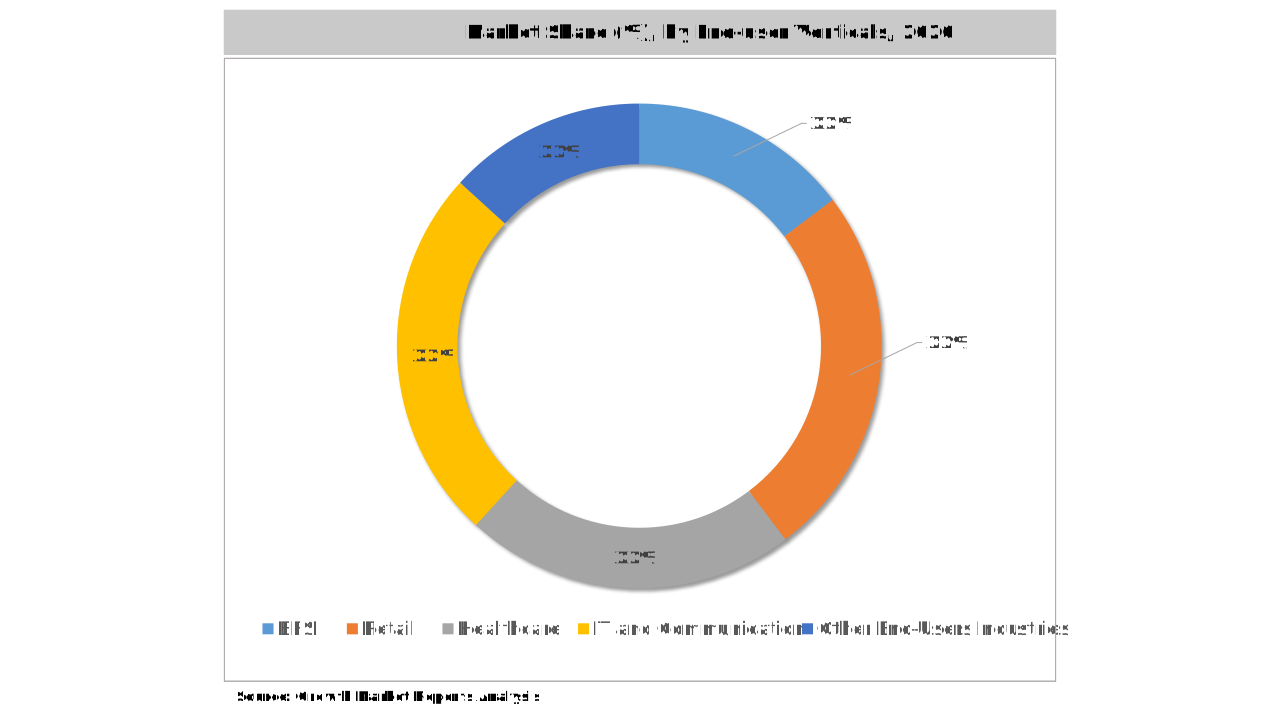
The bare metal cloud market serves a diverse range of industry verticals, including BFSI, healthcare, retail and e-commerce, IT and telecommunications, manufacturing, government, and others. The BFSI sector is a major adopter of bare metal cloud solutions, driven by the need for secure, compliant, and high-performance infrastructure to support core banking, payment processing, and risk management applications. Bare metal cloud platforms enable financial institutions to meet stringent regulatory requirements, protect sensitive customer data, and deliver seamless digital experiences.
Healthcare is another key vertical experiencing rapid adoption of bare metal cloud. The increasing digitization of healthcare records, the proliferation of telemedicine, and the growing use of AI-driven diagnostics are driving demand for scalable, secure, and high-performance computing infrastructure. Bare metal cloud solutions provide healthcare organizations with the ability to process large volumes of patient data, support advanced analytics, and ensure compliance with regulations such as HIPAA. The single-tenant nature of bare metal cloud environments enhances data privacy and security, making them an ideal choice for healthcare providers and research institutions.
Retail and e-commerce companies are leveraging bare metal cloud to deliver personalized customer experiences, optimize supply chains, and support omnichannel operations. The ability to scale resources during peak shopping periods, such as holidays and sales events, is a significant advantage for retailers seeking to maintain high availability and performance. Bare metal cloud platforms also enable retailers to process and analyze customer data in real time, supporting targeted marketing, inventory management, and demand forecasting. As digital commerce continues to grow, the adoption of bare metal cloud in the retail sector is expected to accelerate.
IT and telecommunications, manufacturing, and government are also important verticals in the bare metal cloud market. IT and telecom companies are using bare metal cloud to deliver managed services, support network functions virtualization (NFV), and enable next-generation applications such as 5G and edge computing. Manufacturers are adopting bare metal cloud to support smart factory initiatives, IoT deployments, and supply chain optimization. Government agencies are leveraging bare metal cloud to modernize legacy systems, enhance cybersecurity, and deliver digital services to citizens. The versatility and performance of bare metal cloud solutions make them well-suited to the diverse requirements of these industry verticals.
The bare metal cloud market presents significant opportunities for growth and innovation, driven by the rapid adoption of digital technologies and the increasing complexity of enterprise IT environments. One of the most promising opportunities lies in the integration of bare metal cloud with emerging technologies such as artificial intelligence, machine learning, and edge computing. As organizations seek to harness the power of AI and real-time analytics, the demand for high-performance, low-latency infrastructure is expected to surge. Bare metal cloud platforms are ideally positioned to support these workloads, providing the dedicated resources and flexibility required to drive innovation across industries.
Another key opportunity is the expansion of the bare metal cloud market into emerging economies and underserved regions. As digital transformation accelerates globally, businesses in Asia Pacific, Latin America, and the Middle East & Africa are increasingly investing in cloud infrastructure to support economic development and enhance competitiveness. The growing availability of high-speed internet, the proliferation of data centers, and supportive government policies are creating a favorable environment for the adoption of bare metal cloud solutions. Vendors that can offer localized support, competitive pricing, and tailored solutions stand to capture significant market share in these high-growth regions.
Despite the strong growth prospects, the bare metal cloud market faces several restraining factors. One of the primary challenges is the complexity of migrating legacy applications and workloads to bare metal cloud environments. Many organizations have significant investments in traditional IT infrastructure and may encounter technical, operational, and organizational hurdles during the transition. Additionally, concerns about vendor lock-in, data security, and compliance may deter some businesses from fully embracing bare metal cloud solutions. To overcome these barriers, vendors must invest in robust migration tools, comprehensive support services, and transparent pricing models to build trust and facilitate seamless adoption.
The regional landscape of the bare metal cloud market is characterized by strong growth in North America, which accounted for approximately USD 3.1 billion in revenue in 2024. The United States remains the largest market globally, driven by the presence of leading cloud service providers, advanced IT infrastructure, and a high concentration of technology-driven enterprises. The region’s focus on innovation, data security, and regulatory compliance has spurred the adoption of bare metal cloud across industries such as BFSI, healthcare, and government. Canada is also witnessing increased investment in cloud infrastructure, further strengthening North America’s leadership position in the global market.
Asia Pacific is emerging as the fastest-growing region in the bare metal cloud market, with a projected CAGR of 25.8% from 2025 to 2033. The region generated revenues of around USD 2.0 billion in 2024, fueled by rapid digitalization in countries such as China, India, Japan, and South Korea. Expanding data center infrastructure, increasing cloud adoption among enterprises, and supportive government initiatives are driving market growth. The rise of e-commerce, fintech, and smart city projects is further boosting demand for high-performance, scalable cloud solutions. As competition intensifies, global and regional vendors are expanding their presence and investing in localized offerings to capture market share in Asia Pacific.
Europe holds a significant share of the bare metal cloud market, generating approximately USD 1.8 billion in revenue in 2024. The region’s growth is underpinned by stringent data protection regulations, such as GDPR, and the increasing adoption of cloud services among enterprises and government agencies. Countries like Germany, the United Kingdom, and France are leading the way in cloud innovation, with a strong focus on data privacy, security, and compliance. Other regions, including Latin America and the Middle East & Africa, are gradually embracing bare metal cloud solutions as they modernize their IT infrastructures and pursue digital transformation initiatives. Collectively, these regions contributed about USD 1.3 billion to the global market in 2024, with growth expected to accelerate over the forecast period.
The bare metal cloud market is highly competitive, with a diverse mix of global technology giants, specialized cloud service providers, and innovative startups vying for market share. Leading players are investing heavily in research and development to enhance the performance, security, and scalability of their offerings. The competitive landscape is characterized by rapid technological advancements, strategic partnerships, and frequent product launches, as vendors strive to differentiate themselves and meet the evolving needs of enterprise customers. As the market matures, the ability to deliver integrated, end-to-end solutions that combine hardware, software, and services will be a key determinant of success.
Major companies in the bare metal cloud market include IBM Corporation, Oracle Corporation, Dell Technologies, Hewlett Packard Enterprise (HPE), Equinix, Rackspace Technology, and Internap Corporation (INAP). These industry leaders are leveraging their extensive experience, global reach, and deep expertise in cloud infrastructure to expand their portfolios and capture new opportunities. For example, IBM offers a comprehensive bare metal cloud platform with advanced security, automation, and AI-driven capabilities, while Dell Technologies provides customizable hardware solutions and integrated cloud management tools. Equinix is renowned for its global network of interconnected data centers, enabling customers to deploy bare metal cloud resources in proximity to key markets and partners.
In addition to established players, a number of innovative startups and niche providers are making significant inroads in the market. Companies such as Packet (now part of Equinix Metal), Scaleway, and PhoenixNAP are differentiating themselves through specialized offerings, flexible pricing models, and a focus on developer-friendly platforms. These vendors are targeting specific use cases, such as edge computing, DevOps, and high-performance workloads, catering to the unique requirements of modern enterprises. By prioritizing agility, transparency, and customer-centric support, these emerging players are challenging incumbents and driving further innovation in the bare metal cloud ecosystem.
Strategic partnerships, mergers, and acquisitions are also shaping the competitive dynamics of the bare metal cloud market. Vendors are collaborating with technology partners, system integrators, and managed service providers to expand their reach, enhance their capabilities, and deliver value-added services. As customer requirements become more complex and diverse, the ability to offer tailored solutions, robust support, and seamless integration with multi-cloud and hybrid environments will be critical for sustained growth and market leadership. The competitive outlook for the bare metal cloud market remains dynamic, with ongoing innovation and strategic investments expected to drive continued expansion and transformation in the years ahead.
The Bare Metal Cloud market has been segmented on the basis of
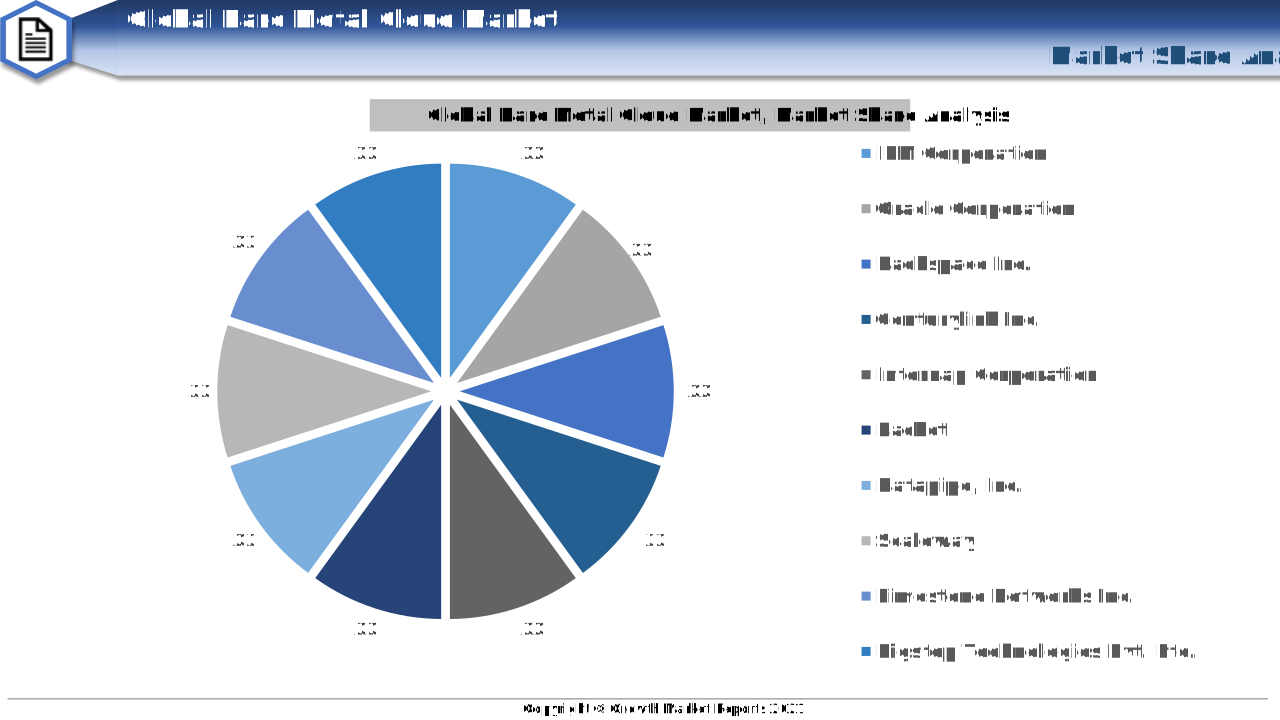
Key players competing in the bare metal cloud market include IBM Corporation, Oracle Corporation, Rackspace Inc., Centurylink Inc., Internap Corporation, Packet, Datapipe, Inc., Scaleway, Limestone Networks Inc., and Bigstep Technologies Pvt. Ltd.
Key players in the industry are focusing on organic growth strategies to maintain their position.
Bare metal cloud is used for databases, big data analytics, DevOps, high-performance computing (HPC), web hosting, and other data-intensive or mission-critical workloads.
Key players include IBM, Oracle, Dell Technologies, Hewlett Packard Enterprise (HPE), Equinix, Rackspace Technology, Internap Corporation (INAP), Scaleway, PhoenixNAP, Alibaba Cloud, Google Cloud, AWS, Microsoft Azure, and others.
Challenges include the complexity of migrating legacy workloads, concerns about vendor lock-in, data security, and compliance, as well as the need for robust migration tools and support services.
The ecosystem comprises hardware (servers, storage, networking), software (management and orchestration tools), and services (consulting, implementation, managed services).
North America leads the market, accounting for over 38% of global revenue in 2024, followed by rapid growth in Asia Pacific and significant adoption in Europe. Latin America and the Middle East & Africa are also emerging markets.
Bare metal cloud provides dedicated, non-virtualized hardware to each customer, offering superior performance, enhanced security, and predictable workload management compared to shared, multi-tenant virtualized environments.
The market is segmented into public cloud, private cloud, and hybrid cloud deployments, each offering different benefits in terms of scalability, security, and control.
Industries such as BFSI, healthcare, retail & e-commerce, IT & telecommunications, manufacturing, and government are leading adopters of bare metal cloud solutions due to their need for performance, security, and compliance.
Key growth drivers include rising demand for high-performance computing and data-intensive applications, digital transformation initiatives, increased focus on security and compliance, and the proliferation of DevOps and containerization technologies.
The global bare metal cloud market reached USD 8.2 billion in 2024 and is projected to grow at a CAGR of 22.6% from 2025 to 2033, reaching USD 62.8 billion by 2033.