Cloud Services Market Research Report 2033

Cloud Services Market Research Report 2033

Segments - by Service Type (Infrastructure as a Service, Platform as a Service, Software as a Service, Others), by Deployment Model (Public Cloud, Private Cloud, Hybrid Cloud), by Organization Size (Small and Medium Enterprises, Large Enterprises), by End-User Industry (BFSI, Healthcare, Retail, IT and Telecommunications, Government, Manufacturing, Media and Entertainment, Others)

https://growthmarketreports.com/Raksha
Author : Raksha Sharma
https://growthmarketreports.com/Vaibhav
Fact-checked by : V. Chandola
https://growthmarketreports.com/Shruti
Editor : Shruti Bhat

Upcoming | Report ID :ICT-SE-524 | 5.0 Rating | 52 Reviews | 281 Pages | Format : Docx PDF

Report Description


Cloud Services Market Outlook

According to our latest research, the cloud services market size reached USD 627.5 billion in 2024 globally, demonstrating robust expansion driven by digital transformation across industries. The market is expected to grow at a CAGR of 16.2% from 2025 to 2033, projecting a forecasted market size of USD 1,955.8 billion by 2033. This rapid growth is primarily fueled by increasing enterprise adoption of cloud-based solutions, the proliferation of data-driven applications, and the rising need for scalable IT infrastructure.

A key driver of the cloud services market is the accelerating digital transformation initiatives undertaken by organizations worldwide. Enterprises are migrating legacy systems to the cloud to achieve greater agility, cost-efficiency, and innovation. The adoption of advanced technologies such as artificial intelligence, machine learning, and Internet of Things (IoT) is further boosting demand for scalable and flexible cloud platforms. As businesses increasingly prioritize remote work, collaboration, and global connectivity, cloud services have become indispensable for supporting distributed workforces and ensuring business continuity. Moreover, the shift towards cloud-native application development and containerization is intensifying the need for robust cloud infrastructure and services.

Another significant growth factor is the expanding ecosystem of cloud service providers and the continuous evolution of service offerings. Major players are investing heavily in enhancing their cloud platforms with advanced analytics, security features, and industry-specific solutions. The rise of multi-cloud and hybrid cloud strategies enables organizations to optimize workloads, enhance data sovereignty, and mitigate risks associated with vendor lock-in. Additionally, the increasing focus on regulatory compliance and data privacy is compelling enterprises to seek cloud solutions that offer robust security and governance frameworks. The growing adoption of edge computing, which brings computation closer to the data source, is also contributing to the expansion of cloud services, particularly in sectors such as manufacturing, healthcare, and retail.

The surge in demand for cloud services is further bolstered by the rapid proliferation of digital content, e-commerce, and online services. As consumers and businesses increasingly rely on digital platforms for communication, entertainment, and transactions, the need for resilient, high-performance cloud infrastructure becomes paramount. Cloud services enable organizations to scale resources dynamically in response to fluctuating demand, ensuring optimal user experiences and operational efficiency. Furthermore, the integration of advanced security solutions within cloud environments is addressing concerns related to cyber threats and data breaches, thereby fostering greater trust and adoption among enterprises across various sectors.

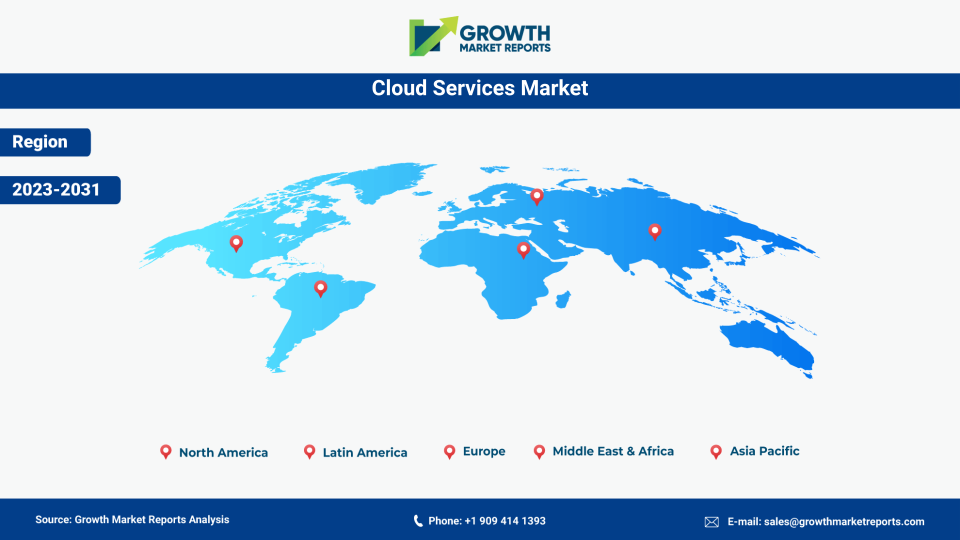
From a regional perspective, North America continues to dominate the global cloud services market, driven by the presence of leading technology providers and early adoption of digital technologies. The Asia Pacific region is witnessing the fastest growth, fueled by rapid urbanization, expanding internet penetration, and government-led digitalization initiatives. Europe is also experiencing steady growth, supported by stringent data protection regulations and increasing investments in cloud infrastructure. In contrast, Latin America and the Middle East & Africa are emerging as promising markets, with rising awareness and adoption of cloud solutions across various industries. The global nature of the cloud services market ensures that regional dynamics play a crucial role in shaping market trends and opportunities.

The emergence of Cloud POS systems is revolutionizing the retail and hospitality sectors by offering a flexible and scalable solution for managing transactions. Cloud POS platforms enable businesses to process payments, track inventory, and manage customer data seamlessly across multiple locations. This technology is particularly beneficial for small and medium enterprises (SMEs) that require cost-effective and efficient point-of-sale systems. By leveraging cloud-based POS solutions, businesses can enhance operational efficiency, improve customer experience, and gain real-time insights into sales performance. The integration of advanced analytics and mobile capabilities within Cloud POS systems further empowers businesses to make data-driven decisions and optimize their operations.

Global Cloud Services Industry Outlook

Service Type Analysis

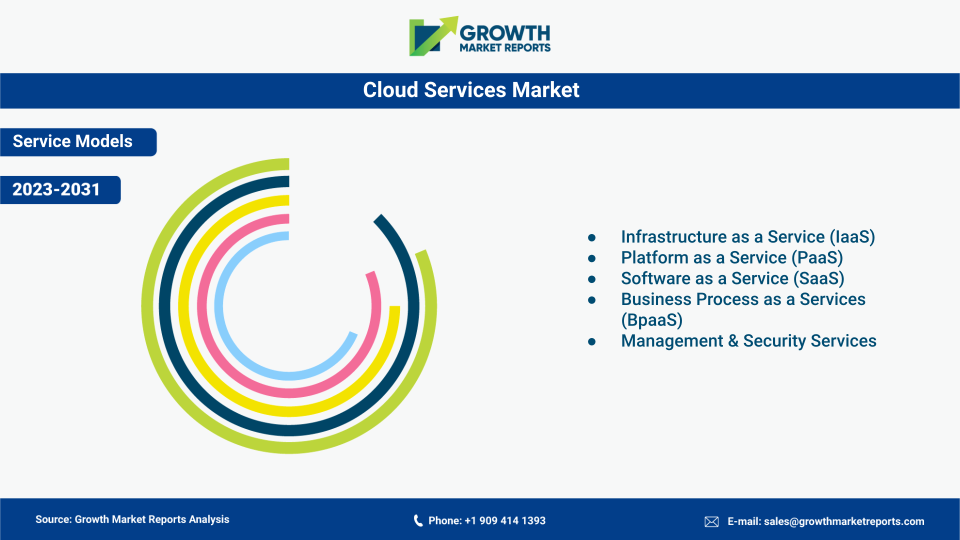
The cloud services market is segmented by service type into Infrastructure as a Service (IaaS), Platform as a Service (PaaS), Software as a Service (SaaS), and others. Software as a Service (SaaS) continues to hold the largest share within this segment, owing to its widespread adoption across enterprises of all sizes. SaaS solutions offer businesses the advantage of rapid deployment, minimal upfront investment, and seamless scalability, making them an attractive choice for organizations seeking to streamline operations and enhance productivity. The proliferation of SaaS-based applications in areas such as customer relationship management (CRM), enterprise resource planning (ERP), and collaboration tools is further accelerating market growth. The subscription-based pricing model associated with SaaS also provides predictable costs and reduces the burden of software maintenance and upgrades for end-users.

Infrastructure as a Service (IaaS) is witnessing significant growth, driven by the increasing demand for flexible and scalable computing resources. IaaS enables organizations to provision virtualized hardware, storage, and networking capabilities on-demand, allowing them to optimize IT infrastructure costs and respond swiftly to changing business requirements. The rise of data-intensive applications, big data analytics, and artificial intelligence workloads is fueling the adoption of IaaS among enterprises seeking robust and high-performance computing environments. Leading cloud providers are continually expanding their IaaS offerings with advanced features such as automated resource management, enhanced security, and integrated disaster recovery solutions.

Platform as a Service (PaaS) is gaining traction as organizations embrace cloud-native application development and DevOps practices. PaaS solutions provide developers with a comprehensive environment for building, testing, and deploying applications without the complexities of managing underlying infrastructure. This accelerates the software development lifecycle and fosters innovation by enabling rapid prototyping and iteration. The growing popularity of microservices architecture, containerization, and serverless computing is further driving demand for PaaS platforms that offer seamless integration with modern development tools and frameworks. Enterprises are leveraging PaaS to enhance agility, reduce time-to-market, and support continuous delivery of innovative applications.

The "Others" category within the service type segment encompasses emerging cloud services such as Function as a Service (FaaS), Disaster Recovery as a Service (DRaaS), and Database as a Service (DBaaS). These specialized services address specific business needs and are gaining prominence as organizations seek to optimize resource utilization, enhance business resilience, and ensure data availability. The adoption of FaaS, for instance, is enabling businesses to implement event-driven architectures and achieve greater operational efficiency. As the cloud services market continues to evolve, the diversification of service offerings is expected to create new growth avenues and drive further market expansion.

Report Scope

Attributes Details
Report Title Cloud Services Market Research Report 2033
By Service Type Infrastructure as a Service, Platform as a Service, Software as a Service, Others
By Deployment Model Public Cloud, Private Cloud, Hybrid Cloud
By Organization Size Small and Medium Enterprises, Large Enterprises
By End-User Industry BFSI, Healthcare, Retail, IT and Telecommunications, Government, Manufacturing, Media and Entertainment, Others
Regions Covered North America, Europe, APAC, Latin America, MEA
Base Year 2024
Historic Data 2018-2023
Forecast Period 2025-2033
Number of Pages 281
Number of Tables & Figures 386
Customization Available Yes, the report can be customized as per your need.

Deployment Model Analysis

The deployment model segment of the cloud services market is categorized into public cloud, private cloud, and hybrid cloud. The public cloud deployment model remains the most widely adopted, primarily due to its cost-effectiveness, scalability, and ease of access. Public cloud services are hosted and managed by third-party providers, allowing organizations to leverage shared resources and benefit from economies of scale. This model is particularly attractive for small and medium enterprises (SMEs) and startups that require flexible IT infrastructure without the burden of capital expenditure. Leading public cloud providers continue to invest in expanding their global data center footprints, enhancing service reliability, and introducing innovative offerings to cater to diverse customer needs.

Private cloud deployment is favored by organizations with stringent security, compliance, and data sovereignty requirements. Private clouds are dedicated environments, either hosted on-premises or by third-party vendors, offering greater control over data and IT resources. This deployment model is particularly prevalent in regulated industries such as banking, financial services, healthcare, and government, where data privacy and regulatory compliance are paramount. The adoption of private cloud solutions is also driven by the need for customized configurations, enhanced performance, and seamless integration with existing IT infrastructure. Enterprises are increasingly leveraging private clouds to support mission-critical workloads and ensure business continuity.

The hybrid cloud deployment model is gaining significant momentum as organizations seek to balance the benefits of both public and private clouds. Hybrid cloud enables seamless integration and orchestration of workloads across multiple environments, allowing businesses to optimize resource allocation, enhance agility, and improve disaster recovery capabilities. This model supports dynamic workload management, enabling organizations to scale resources based on demand and leverage public cloud for non-sensitive workloads while retaining sensitive data on-premises or in private clouds. The growing adoption of hybrid cloud is also driven by the need for multi-cloud strategies, regulatory compliance, and the increasing complexity of enterprise IT environments.

As the cloud services market continues to mature, the boundaries between deployment models are becoming increasingly blurred. Organizations are adopting multi-cloud approaches, leveraging a combination of public, private, and hybrid clouds to achieve greater flexibility, resilience, and cost optimization. Cloud service providers are responding to this trend by offering integrated solutions, unified management platforms, and advanced security features that enable seamless interoperability across diverse cloud environments. The evolution of deployment models is expected to play a pivotal role in shaping the future trajectory of the cloud services market.

Organization Size Analysis

The cloud services market is segmented by organization size into small and medium enterprises (SMEs) and large enterprises. Large enterprises account for the largest share of the market, driven by their substantial IT budgets, complex infrastructure requirements, and focus on digital transformation. These organizations are leveraging cloud services to modernize legacy systems, enhance operational efficiency, and support global business operations. The ability to scale resources dynamically, access advanced analytics, and implement robust security measures is particularly appealing to large enterprises operating in highly competitive and regulated environments. Additionally, large organizations are adopting multi-cloud and hybrid cloud strategies to optimize workload distribution, enhance data governance, and mitigate risks associated with vendor dependency.

Small and medium enterprises (SMEs) are emerging as a significant growth segment within the cloud services market. The adoption of cloud solutions by SMEs is driven by the need for cost-effective IT infrastructure, rapid scalability, and access to cutting-edge technologies. Cloud services level the playing field for smaller businesses, enabling them to compete with larger counterparts by providing access to enterprise-grade applications, storage, and computing resources on a pay-as-you-go basis. The proliferation of SaaS applications tailored to the unique needs of SMEs is further accelerating market growth in this segment. Cloud adoption among SMEs is also supported by the growing availability of industry-specific solutions, simplified pricing models, and enhanced customer support from service providers.

Cloud SCM (Supply Chain Management) solutions are transforming the way organizations manage their supply chains by providing enhanced visibility, flexibility, and efficiency. With Cloud SCM, businesses can streamline their operations, optimize inventory levels, and improve supplier collaboration. The cloud-based approach allows for real-time tracking of goods, demand forecasting, and seamless integration with other enterprise systems. This is particularly advantageous for industries with complex supply chains, such as manufacturing and retail, where agility and responsiveness are crucial. By leveraging Cloud SCM, companies can reduce costs, mitigate risks, and enhance customer satisfaction through improved service levels and faster delivery times.

The increasing focus on business agility, innovation, and customer experience is prompting organizations of all sizes to embrace cloud services. Enterprises are leveraging cloud platforms to drive digital transformation, automate business processes, and accelerate time-to-market for new products and services. The ability to rapidly deploy and scale applications, access real-time data insights, and collaborate seamlessly across distributed teams is transforming the way organizations operate and compete in the digital economy. Cloud services are also enabling businesses to respond effectively to market disruptions, such as the COVID-19 pandemic, by supporting remote work, virtual collaboration, and resilient operations.

As the cloud services market continues to evolve, service providers are tailoring their offerings to address the unique requirements of different organization sizes. This includes providing flexible pricing models, customizable solutions, and comprehensive support services to ensure successful cloud adoption and maximize value for customers. The ongoing democratization of cloud technologies is expected to drive further market expansion, empowering organizations of all sizes to harness the full potential of cloud computing.

End-User Industry Analysis

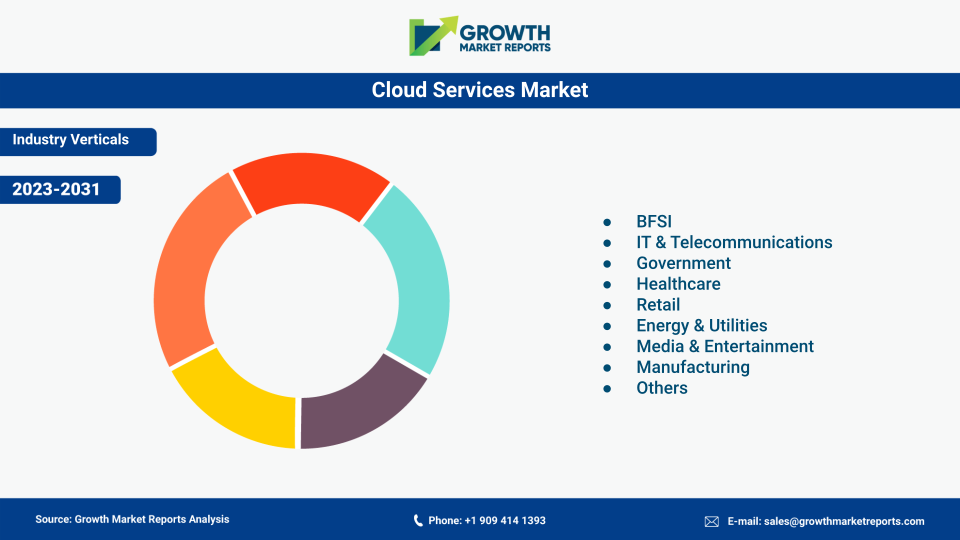
The cloud services market serves a diverse range of end-user industries, including BFSI (Banking, Financial Services, and Insurance), Healthcare, Retail, IT and Telecommunications, Government, Manufacturing, Media and Entertainment, and others. The BFSI sector is a major adopter of cloud services, leveraging cloud platforms to enhance customer experience, improve operational efficiency, and ensure regulatory compliance. Financial institutions are utilizing cloud-based analytics, risk management, and fraud detection solutions to gain actionable insights and drive innovation. The need for secure, scalable, and resilient IT infrastructure is prompting BFSI organizations to embrace hybrid and multi-cloud strategies.

The healthcare industry is experiencing rapid cloud adoption, driven by the increasing digitization of patient records, telemedicine, and healthcare analytics. Cloud services enable healthcare providers to store, manage, and analyze vast volumes of patient data securely, supporting improved patient outcomes and operational efficiency. The integration of artificial intelligence and machine learning in cloud-based healthcare applications is facilitating advanced diagnostics, personalized treatment plans, and remote patient monitoring. Compliance with data privacy regulations such as HIPAA is a critical consideration for healthcare organizations adopting cloud solutions.

The retail sector is leveraging cloud services to enhance customer engagement, optimize supply chain operations, and drive e-commerce growth. Cloud-based platforms enable retailers to analyze customer data, personalize marketing campaigns, and deliver seamless omnichannel experiences. The ability to scale resources dynamically in response to seasonal demand fluctuations is a key advantage for retailers operating in competitive markets. Additionally, cloud services support the integration of emerging technologies such as augmented reality, virtual reality, and IoT to enhance the retail experience.

Other key end-user industries, including IT and telecommunications, government, manufacturing, and media and entertainment, are also driving demand for cloud services. IT and telecom companies are utilizing cloud platforms to deliver innovative services, enhance network management, and support digital transformation initiatives. Government agencies are adopting cloud solutions to improve service delivery, enhance data security, and support digital governance initiatives. The manufacturing sector is leveraging cloud-based solutions for smart manufacturing, predictive maintenance, and supply chain optimization. In the media and entertainment industry, cloud services enable content creation, storage, and distribution at scale, supporting the growing demand for digital content and streaming services.

Opportunities & Threats

The cloud services market is brimming with opportunities as organizations across the globe continue to embrace digital transformation. One of the most significant opportunities lies in the adoption of advanced technologies such as artificial intelligence, machine learning, and big data analytics within cloud environments. These technologies are enabling organizations to derive actionable insights from vast volumes of data, automate business processes, and drive innovation. The growing demand for industry-specific cloud solutions, such as healthcare analytics, financial risk management, and smart manufacturing, is creating new revenue streams for cloud service providers. Additionally, the proliferation of edge computing and IoT devices is expanding the scope of cloud services, enabling real-time data processing and decision-making at the network edge.

Another key opportunity is the increasing adoption of multi-cloud and hybrid cloud strategies by enterprises seeking to optimize workload distribution, enhance resilience, and mitigate risks associated with vendor lock-in. Cloud service providers are responding to this trend by offering integrated management platforms, unified security frameworks, and seamless interoperability across diverse cloud environments. The rise of cloud marketplaces and ecosystem partnerships is also facilitating the development and deployment of innovative cloud-based applications and services. Furthermore, the growing focus on data privacy, regulatory compliance, and cybersecurity is driving demand for secure and compliant cloud solutions, particularly in regulated industries such as BFSI, healthcare, and government.

Despite the numerous opportunities, the cloud services market faces several restraining factors, with security and data privacy concerns being the most prominent. Organizations are increasingly wary of cyber threats, data breaches, and compliance risks associated with storing sensitive information in the cloud. The complexity of managing security across multi-cloud and hybrid environments further exacerbates these challenges. Additionally, issues related to data sovereignty, regulatory compliance, and vendor lock-in can hinder cloud adoption, particularly in highly regulated industries. Cloud service providers must continually invest in advanced security measures, robust governance frameworks, and transparent compliance processes to address these concerns and build trust among enterprise customers.

Regional Outlook

The North American region continues to lead the global cloud services market, accounting for the largest share with a market size of approximately USD 245 billion in 2024. The dominance of North America can be attributed to the presence of leading cloud service providers, high levels of digital adoption, and significant investments in cloud infrastructure. The United States, in particular, is a major contributor to regional growth, with enterprises across industries embracing cloud solutions to drive innovation, enhance operational efficiency, and support remote work. The region is also witnessing strong demand for advanced cloud services such as artificial intelligence, machine learning, and big data analytics.

The Asia Pacific region is experiencing the fastest growth in the cloud services market, with a projected CAGR of 19.5% from 2025 to 2033. The market size in Asia Pacific reached USD 138.2 billion in 2024, driven by rapid urbanization, expanding internet penetration, and government-led digitalization initiatives. Countries such as China, India, Japan, and South Korea are at the forefront of cloud adoption, with enterprises leveraging cloud platforms to support business growth, enhance customer experience, and drive digital transformation. The increasing focus on smart cities, e-government, and Industry 4.0 initiatives is further fueling demand for cloud services in the region.

Europe is another significant market for cloud services, with a market size of USD 119.6 billion in 2024. The region is characterized by stringent data protection regulations, such as the General Data Protection Regulation (GDPR), which are shaping cloud adoption trends and driving demand for secure and compliant cloud solutions. Enterprises in Europe are increasingly leveraging cloud services to enhance operational efficiency, support remote work, and drive innovation. The growing adoption of hybrid and multi-cloud strategies, coupled with investments in digital infrastructure, is expected to drive steady market growth in the region. Latin America and the Middle East & Africa regions are emerging as promising markets, with increasing awareness and adoption of cloud solutions across industries, albeit from a smaller base.

Cloud Services Market Statistics

Competitor Outlook

The global cloud services market is characterized by intense competition, with a diverse array of players ranging from global technology giants to specialized niche providers. The competitive landscape is shaped by continuous innovation, strategic partnerships, and aggressive investments in research and development. Leading cloud service providers are differentiating themselves through comprehensive service portfolios, advanced security features, and industry-specific solutions tailored to the unique needs of various sectors. The ability to offer seamless integration, unified management, and robust compliance frameworks is a key factor driving competitive advantage in the market.

Major players such as Amazon Web Services (AWS), Microsoft Azure, and Google Cloud Platform (GCP) dominate the market, collectively accounting for a significant share of global cloud services revenue. These providers have established extensive global data center networks, enabling them to deliver high-performance, reliable, and scalable cloud solutions to customers worldwide. Their comprehensive service offerings span IaaS, PaaS, SaaS, and emerging cloud services such as machine learning, IoT, and edge computing. These companies are also investing heavily in enhancing their platforms with advanced analytics, artificial intelligence, and automation capabilities to address evolving customer needs.

In addition to the global giants, a host of other prominent players, including IBM Cloud, Oracle Cloud, Alibaba Cloud, and Salesforce, are making significant strides in the market. IBM Cloud is known for its focus on hybrid cloud and AI-driven solutions, catering to enterprises with complex IT environments and regulatory requirements. Oracle Cloud offers a robust suite of cloud applications and infrastructure services, with a strong presence in the enterprise software market. Alibaba Cloud is a leading player in the Asia Pacific region, leveraging its deep expertise in e-commerce, big data, and artificial intelligence to drive cloud adoption across industries. Salesforce remains a dominant force in the SaaS segment, particularly in customer relationship management and business analytics.

The competitive landscape is further enriched by a multitude of regional and niche players offering specialized cloud services tailored to specific industries or use cases. These providers are leveraging domain expertise, agile service delivery, and customer-centric approaches to carve out distinct market positions. Strategic partnerships, mergers and acquisitions, and ecosystem collaborations are common strategies employed by both global and regional players to expand their service portfolios, enhance market reach, and drive innovation. As the cloud services market continues to evolve, competition is expected to intensify, with providers focusing on delivering differentiated value, superior customer experiences, and robust security to capture new growth opportunities.

Amazon Web Services (AWS) remains the market leader, known for its extensive service portfolio, global infrastructure, and continuous innovation. Microsoft Azure is a close competitor, offering deep integration with MicrosoftÂ’s enterprise software ecosystem and a strong focus on hybrid cloud solutions. Google Cloud Platform (GCP) is recognized for its leadership in analytics, machine learning, and open-source technologies. IBM Cloud distinguishes itself through its emphasis on hybrid cloud, AI, and industry-specific solutions, while Oracle Cloud is a preferred choice for enterprises seeking integrated cloud applications and database services. Alibaba Cloud is rapidly expanding its presence in Asia and other emerging markets, leveraging its strengths in e-commerce and digital transformation. Salesforce continues to dominate the SaaS landscape, particularly in CRM and business intelligence.

Key Players

  • Amazon Web Services (AWS)
  • Microsoft Azure
  • Google Cloud Platform (GCP)
  • Alibaba Cloud
  • IBM Cloud
  • Oracle Cloud
  • Salesforce
  • SAP Cloud
  • Tencent Cloud
  • VMware Cloud
  • Hewlett Packard Enterprise (HPE) Cloud
  • Dell Technologies Cloud
  • Cisco Cloud
  • Rackspace Technology
  • Fujitsu Cloud
  • Huawei Cloud
  • DigitalOcean
  • OVHcloud
  • Workday
  • Adobe Cloud Services
Cloud Services Market Overview

Segments

The Cloud Services market has been segmented on the basis of

Service Type

  • Infrastructure as a Service
  • Platform as a Service
  • Software as a Service
  • Others

Deployment Model

  • Public Cloud
  • Private Cloud
  • Hybrid Cloud

Organization Size

  • Small and Medium Enterprises
  • Large Enterprises

End-User Industry

  • BFSI
  • Healthcare
  • Retail
  • IT and Telecommunications
  • Government
  • Manufacturing
  • Media and Entertainment
  • Others

Competitive Landscape

Some of the key players in the global cloud services market are Amazon Web Services, Cisco Systems, Akamai Technologies, Google Inc., Hewlett Packet, Dell, Microsoft Corp, IBM Corp VM-Ware and Yahoo Inc.

Industry participants are focusing on providing customized solutions to various industry verticals to leverage their market position.
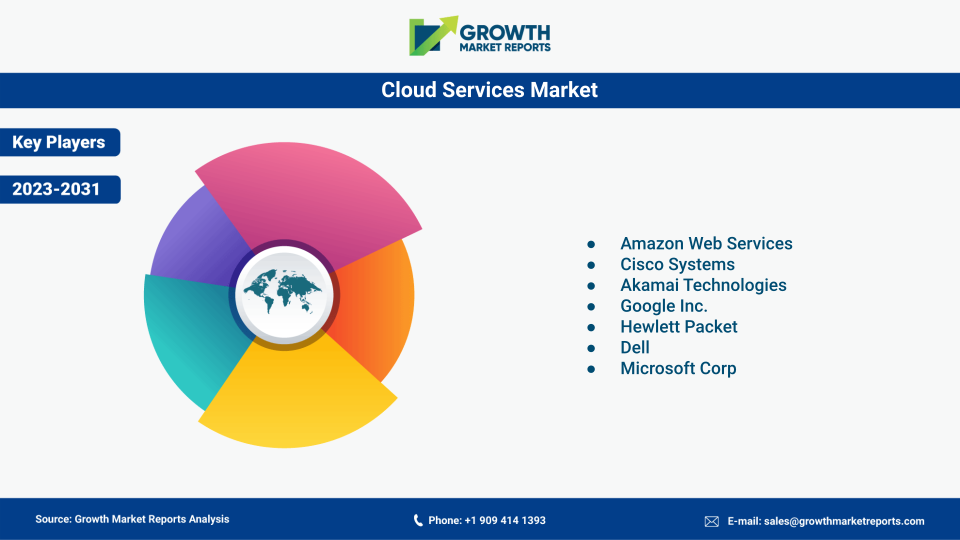

Cloud Services Market Key Players

Frequently Asked Questions

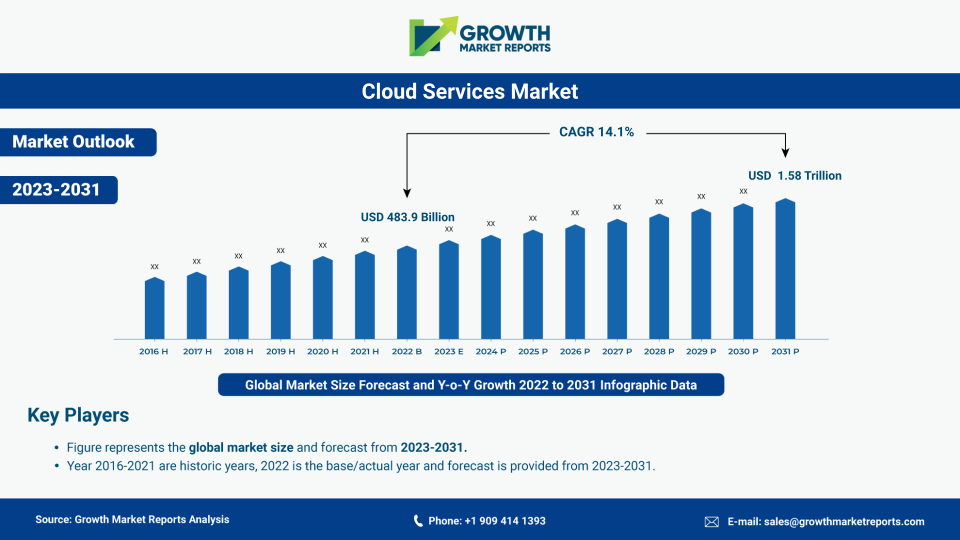
The global Cloud Services Market size was valued at USD 483.9 billion in 2022.

Cloud Services Market is growing at a CAGR of 14.1% in forecast period.

The Cloud Services Market is studied from 2023 - 2031.

The SaaS segment is expected to constitute a considerable market share during the forecast period.

North America market is expected to account for a large market share during the forecast period owing to the rapid technological advancements and presence of robust IT infrastructure in countries such as the US and China.

Some of the key players in the global cloud services market are Amazon Web Services, Cisco Systems, Akamai Technologies, Google Inc., Hewlett Packet, Dell, Microsoft Corp, IBM Corp VM-Ware and Yahoo Inc.

Table Of Content

Chapter 1 Executive Summary
Chapter 2 Assumptions and Acronyms Used
Chapter 3 Research Methodology
Chapter 4 Cloud Services Market Overview
   4.1 Introduction
      4.1.1 Market Taxonomy
      4.1.2 Market Definition
      4.1.3 Macro-Economic Factors Impacting the Market Growth
   4.2 Cloud Services Market Dynamics
      4.2.1 Market Drivers
      4.2.2 Market Restraints
      4.2.3 Market Opportunity
   4.3 Cloud Services Market - Supply Chain Analysis
      4.3.1 List of Key Suppliers
      4.3.2 List of Key Distributors
      4.3.3 List of Key Consumers
   4.4 Key Forces Shaping the Cloud Services Market
      4.4.1 Bargaining Power of Suppliers
      4.4.2 Bargaining Power of Buyers
      4.4.3 Threat of Substitution
      4.4.4 Threat of New Entrants
      4.4.5 Competitive Rivalry
   4.5 Global Cloud Services Market Size & Forecast, 2023-2032
      4.5.1 Cloud Services Market Size and Y-o-Y Growth
      4.5.2 Cloud Services Market Absolute $ Opportunity

Chapter 5 Global Cloud Services Market Analysis and Forecast By Service Type
   5.1 Introduction
      5.1.1 Key Market Trends & Growth Opportunities By Service Type
      5.1.2 Basis Point Share (BPS) Analysis By Service Type
      5.1.3 Absolute $ Opportunity Assessment By Service Type
   5.2 Cloud Services Market Size Forecast By Service Type
      5.2.1 Infrastructure as a Service
      5.2.2 Platform as a Service
      5.2.3 Software as a Service
      5.2.4 Others
   5.3 Market Attractiveness Analysis By Service Type

Chapter 6 Global Cloud Services Market Analysis and Forecast By Deployment Model
   6.1 Introduction
      6.1.1 Key Market Trends & Growth Opportunities By Deployment Model
      6.1.2 Basis Point Share (BPS) Analysis By Deployment Model
      6.1.3 Absolute $ Opportunity Assessment By Deployment Model
   6.2 Cloud Services Market Size Forecast By Deployment Model
      6.2.1 Public Cloud
      6.2.2 Private Cloud
      6.2.3 Hybrid Cloud
   6.3 Market Attractiveness Analysis By Deployment Model

Chapter 7 Global Cloud Services Market Analysis and Forecast By Organization Size
   7.1 Introduction
      7.1.1 Key Market Trends & Growth Opportunities By Organization Size
      7.1.2 Basis Point Share (BPS) Analysis By Organization Size
      7.1.3 Absolute $ Opportunity Assessment By Organization Size
   7.2 Cloud Services Market Size Forecast By Organization Size
      7.2.1 Small and Medium Enterprises
      7.2.2 Large Enterprises
   7.3 Market Attractiveness Analysis By Organization Size

Chapter 8 Global Cloud Services Market Analysis and Forecast By End-User Industry
   8.1 Introduction
      8.1.1 Key Market Trends & Growth Opportunities By End-User Industry
      8.1.2 Basis Point Share (BPS) Analysis By End-User Industry
      8.1.3 Absolute $ Opportunity Assessment By End-User Industry
   8.2 Cloud Services Market Size Forecast By End-User Industry
      8.2.1 BFSI
      8.2.2 Healthcare
      8.2.3 Retail
      8.2.4 IT and Telecommunications
      8.2.5 Government
      8.2.6 Manufacturing
      8.2.7 Media and Entertainment
      8.2.8 Others
   8.3 Market Attractiveness Analysis By End-User Industry

Chapter 9 Global Cloud Services Market Analysis and Forecast by Region
   9.1 Introduction
      9.1.1 Key Market Trends & Growth Opportunities By Region
      9.1.2 Basis Point Share (BPS) Analysis By Region
      9.1.3 Absolute $ Opportunity Assessment By Region
   9.2 Cloud Services Market Size Forecast By Region
      9.2.1 North America
      9.2.2 Europe
      9.2.3 Asia Pacific
      9.2.4 Latin America
      9.2.5 Middle East & Africa (MEA)
   9.3 Market Attractiveness Analysis By Region

Chapter 10 Coronavirus Disease (COVID-19) Impact 
   10.1 Introduction 
   10.2 Current & Future Impact Analysis 
   10.3 Economic Impact Analysis 
   10.4 Government Policies 
   10.5 Investment Scenario

Chapter 11 North America Cloud Services Analysis and Forecast
   11.1 Introduction
   11.2 North America Cloud Services Market Size Forecast by Country
      11.2.1 U.S.
      11.2.2 Canada
   11.3 Basis Point Share (BPS) Analysis by Country
   11.4 Absolute $ Opportunity Assessment by Country
   11.5 Market Attractiveness Analysis by Country
   11.6 North America Cloud Services Market Size Forecast By Service Type
      11.6.1 Infrastructure as a Service
      11.6.2 Platform as a Service
      11.6.3 Software as a Service
      11.6.4 Others
   11.7 Basis Point Share (BPS) Analysis By Service Type 
   11.8 Absolute $ Opportunity Assessment By Service Type 
   11.9 Market Attractiveness Analysis By Service Type
   11.10 North America Cloud Services Market Size Forecast By Deployment Model
      11.10.1 Public Cloud
      11.10.2 Private Cloud
      11.10.3 Hybrid Cloud
   11.11 Basis Point Share (BPS) Analysis By Deployment Model 
   11.12 Absolute $ Opportunity Assessment By Deployment Model 
   11.13 Market Attractiveness Analysis By Deployment Model
   11.14 North America Cloud Services Market Size Forecast By Organization Size
      11.14.1 Small and Medium Enterprises
      11.14.2 Large Enterprises
   11.15 Basis Point Share (BPS) Analysis By Organization Size 
   11.16 Absolute $ Opportunity Assessment By Organization Size 
   11.17 Market Attractiveness Analysis By Organization Size
   11.18 North America Cloud Services Market Size Forecast By End-User Industry
      11.18.1 BFSI
      11.18.2 Healthcare
      11.18.3 Retail
      11.18.4 IT and Telecommunications
      11.18.5 Government
      11.18.6 Manufacturing
      11.18.7 Media and Entertainment
      11.18.8 Others
   11.19 Basis Point Share (BPS) Analysis By End-User Industry 
   11.20 Absolute $ Opportunity Assessment By End-User Industry 
   11.21 Market Attractiveness Analysis By End-User Industry

Chapter 12 Europe Cloud Services Analysis and Forecast
   12.1 Introduction
   12.2 Europe Cloud Services Market Size Forecast by Country
      12.2.1 Germany
      12.2.2 France
      12.2.3 Italy
      12.2.4 U.K.
      12.2.5 Spain
      12.2.6 Russia
      12.2.7 Rest of Europe
   12.3 Basis Point Share (BPS) Analysis by Country
   12.4 Absolute $ Opportunity Assessment by Country
   12.5 Market Attractiveness Analysis by Country
   12.6 Europe Cloud Services Market Size Forecast By Service Type
      12.6.1 Infrastructure as a Service
      12.6.2 Platform as a Service
      12.6.3 Software as a Service
      12.6.4 Others
   12.7 Basis Point Share (BPS) Analysis By Service Type 
   12.8 Absolute $ Opportunity Assessment By Service Type 
   12.9 Market Attractiveness Analysis By Service Type
   12.10 Europe Cloud Services Market Size Forecast By Deployment Model
      12.10.1 Public Cloud
      12.10.2 Private Cloud
      12.10.3 Hybrid Cloud
   12.11 Basis Point Share (BPS) Analysis By Deployment Model 
   12.12 Absolute $ Opportunity Assessment By Deployment Model 
   12.13 Market Attractiveness Analysis By Deployment Model
   12.14 Europe Cloud Services Market Size Forecast By Organization Size
      12.14.1 Small and Medium Enterprises
      12.14.2 Large Enterprises
   12.15 Basis Point Share (BPS) Analysis By Organization Size 
   12.16 Absolute $ Opportunity Assessment By Organization Size 
   12.17 Market Attractiveness Analysis By Organization Size
   12.18 Europe Cloud Services Market Size Forecast By End-User Industry
      12.18.1 BFSI
      12.18.2 Healthcare
      12.18.3 Retail
      12.18.4 IT and Telecommunications
      12.18.5 Government
      12.18.6 Manufacturing
      12.18.7 Media and Entertainment
      12.18.8 Others
   12.19 Basis Point Share (BPS) Analysis By End-User Industry 
   12.20 Absolute $ Opportunity Assessment By End-User Industry 
   12.21 Market Attractiveness Analysis By End-User Industry

Chapter 13 Asia Pacific Cloud Services Analysis and Forecast
   13.1 Introduction
   13.2 Asia Pacific Cloud Services Market Size Forecast by Country
      13.2.1 China
      13.2.2 Japan
      13.2.3 South Korea
      13.2.4 India
      13.2.5 Australia
      13.2.6 South East Asia (SEA)
      13.2.7 Rest of Asia Pacific (APAC)
   13.3 Basis Point Share (BPS) Analysis by Country
   13.4 Absolute $ Opportunity Assessment by Country
   13.5 Market Attractiveness Analysis by Country
   13.6 Asia Pacific Cloud Services Market Size Forecast By Service Type
      13.6.1 Infrastructure as a Service
      13.6.2 Platform as a Service
      13.6.3 Software as a Service
      13.6.4 Others
   13.7 Basis Point Share (BPS) Analysis By Service Type 
   13.8 Absolute $ Opportunity Assessment By Service Type 
   13.9 Market Attractiveness Analysis By Service Type
   13.10 Asia Pacific Cloud Services Market Size Forecast By Deployment Model
      13.10.1 Public Cloud
      13.10.2 Private Cloud
      13.10.3 Hybrid Cloud
   13.11 Basis Point Share (BPS) Analysis By Deployment Model 
   13.12 Absolute $ Opportunity Assessment By Deployment Model 
   13.13 Market Attractiveness Analysis By Deployment Model
   13.14 Asia Pacific Cloud Services Market Size Forecast By Organization Size
      13.14.1 Small and Medium Enterprises
      13.14.2 Large Enterprises
   13.15 Basis Point Share (BPS) Analysis By Organization Size 
   13.16 Absolute $ Opportunity Assessment By Organization Size 
   13.17 Market Attractiveness Analysis By Organization Size
   13.18 Asia Pacific Cloud Services Market Size Forecast By End-User Industry
      13.18.1 BFSI
      13.18.2 Healthcare
      13.18.3 Retail
      13.18.4 IT and Telecommunications
      13.18.5 Government
      13.18.6 Manufacturing
      13.18.7 Media and Entertainment
      13.18.8 Others
   13.19 Basis Point Share (BPS) Analysis By End-User Industry 
   13.20 Absolute $ Opportunity Assessment By End-User Industry 
   13.21 Market Attractiveness Analysis By End-User Industry

Chapter 14 Latin America Cloud Services Analysis and Forecast
   14.1 Introduction
   14.2 Latin America Cloud Services Market Size Forecast by Country
      14.2.1 Brazil
      14.2.2 Mexico
      14.2.3 Rest of Latin America (LATAM)
   14.3 Basis Point Share (BPS) Analysis by Country
   14.4 Absolute $ Opportunity Assessment by Country
   14.5 Market Attractiveness Analysis by Country
   14.6 Latin America Cloud Services Market Size Forecast By Service Type
      14.6.1 Infrastructure as a Service
      14.6.2 Platform as a Service
      14.6.3 Software as a Service
      14.6.4 Others
   14.7 Basis Point Share (BPS) Analysis By Service Type 
   14.8 Absolute $ Opportunity Assessment By Service Type 
   14.9 Market Attractiveness Analysis By Service Type
   14.10 Latin America Cloud Services Market Size Forecast By Deployment Model
      14.10.1 Public Cloud
      14.10.2 Private Cloud
      14.10.3 Hybrid Cloud
   14.11 Basis Point Share (BPS) Analysis By Deployment Model 
   14.12 Absolute $ Opportunity Assessment By Deployment Model 
   14.13 Market Attractiveness Analysis By Deployment Model
   14.14 Latin America Cloud Services Market Size Forecast By Organization Size
      14.14.1 Small and Medium Enterprises
      14.14.2 Large Enterprises
   14.15 Basis Point Share (BPS) Analysis By Organization Size 
   14.16 Absolute $ Opportunity Assessment By Organization Size 
   14.17 Market Attractiveness Analysis By Organization Size
   14.18 Latin America Cloud Services Market Size Forecast By End-User Industry
      14.18.1 BFSI
      14.18.2 Healthcare
      14.18.3 Retail
      14.18.4 IT and Telecommunications
      14.18.5 Government
      14.18.6 Manufacturing
      14.18.7 Media and Entertainment
      14.18.8 Others
   14.19 Basis Point Share (BPS) Analysis By End-User Industry 
   14.20 Absolute $ Opportunity Assessment By End-User Industry 
   14.21 Market Attractiveness Analysis By End-User Industry

Chapter 15 Middle East & Africa (MEA) Cloud Services Analysis and Forecast
   15.1 Introduction
   15.2 Middle East & Africa (MEA) Cloud Services Market Size Forecast by Country
      15.2.1 Saudi Arabia
      15.2.2 South Africa
      15.2.3 UAE
      15.2.4 Rest of Middle East & Africa (MEA)
   15.3 Basis Point Share (BPS) Analysis by Country
   15.4 Absolute $ Opportunity Assessment by Country
   15.5 Market Attractiveness Analysis by Country
   15.6 Middle East & Africa (MEA) Cloud Services Market Size Forecast By Service Type
      15.6.1 Infrastructure as a Service
      15.6.2 Platform as a Service
      15.6.3 Software as a Service
      15.6.4 Others
   15.7 Basis Point Share (BPS) Analysis By Service Type 
   15.8 Absolute $ Opportunity Assessment By Service Type 
   15.9 Market Attractiveness Analysis By Service Type
   15.10 Middle East & Africa (MEA) Cloud Services Market Size Forecast By Deployment Model
      15.10.1 Public Cloud
      15.10.2 Private Cloud
      15.10.3 Hybrid Cloud
   15.11 Basis Point Share (BPS) Analysis By Deployment Model 
   15.12 Absolute $ Opportunity Assessment By Deployment Model 
   15.13 Market Attractiveness Analysis By Deployment Model
   15.14 Middle East & Africa (MEA) Cloud Services Market Size Forecast By Organization Size
      15.14.1 Small and Medium Enterprises
      15.14.2 Large Enterprises
   15.15 Basis Point Share (BPS) Analysis By Organization Size 
   15.16 Absolute $ Opportunity Assessment By Organization Size 
   15.17 Market Attractiveness Analysis By Organization Size
   15.18 Middle East & Africa (MEA) Cloud Services Market Size Forecast By End-User Industry
      15.18.1 BFSI
      15.18.2 Healthcare
      15.18.3 Retail
      15.18.4 IT and Telecommunications
      15.18.5 Government
      15.18.6 Manufacturing
      15.18.7 Media and Entertainment
      15.18.8 Others
   15.19 Basis Point Share (BPS) Analysis By End-User Industry 
   15.20 Absolute $ Opportunity Assessment By End-User Industry 
   15.21 Market Attractiveness Analysis By End-User Industry

Chapter 16 Competition Landscape 
   16.1 Cloud Services Market: Competitive Dashboard
   16.2 Global Cloud Services Market: Market Share Analysis, 2023
   16.3 Company Profiles (Details – Overview, Financials, Developments, Strategy) 
      16.3.1 Amazon Web Services (AWS)
Microsoft Azure
Google Cloud Platform (GCP)
Alibaba Cloud
IBM Cloud
Oracle Cloud
Salesforce
SAP Cloud
Tencent Cloud
VMware Cloud
Hewlett Packard Enterprise (HPE) Cloud
Dell Technologies Cloud
Cisco Cloud
Rackspace Technology
Fujitsu Cloud
Huawei Cloud
DigitalOcean
OVHcloud
Workday
Adobe Cloud Services

Methodology

Our Clients

Deloitte
Microsoft
General Mills
sinopec
Honda Motor Co. Ltd.
General Electric
Nestle SA
The John Holland Group