Cloud Music Services Market Research Report 2033

Cloud Music Services Market Research Report 2033

Segments - by Service Type (Music Streaming, Music Storage, Music Sharing, Others), by Platform (Web-based, App-based), by Content Type (Audio, Video), by End-User (Individual, Commercial), by Subscription Model (Free, Paid)

https://growthmarketreports.com/Debadatta
Author : Debadatta Patel
https://growthmarketreports.com/Vaibhav
Fact-checked by : V. Chandola
https://growthmarketreports.com/Shruti
Editor : Shruti Bhat

Upcoming | Report ID :CG-1870 | 4.1 Rating | 54 Reviews | 284 Pages | Format : Docx PDF

Report Description


Cloud Music Services Market Outlook

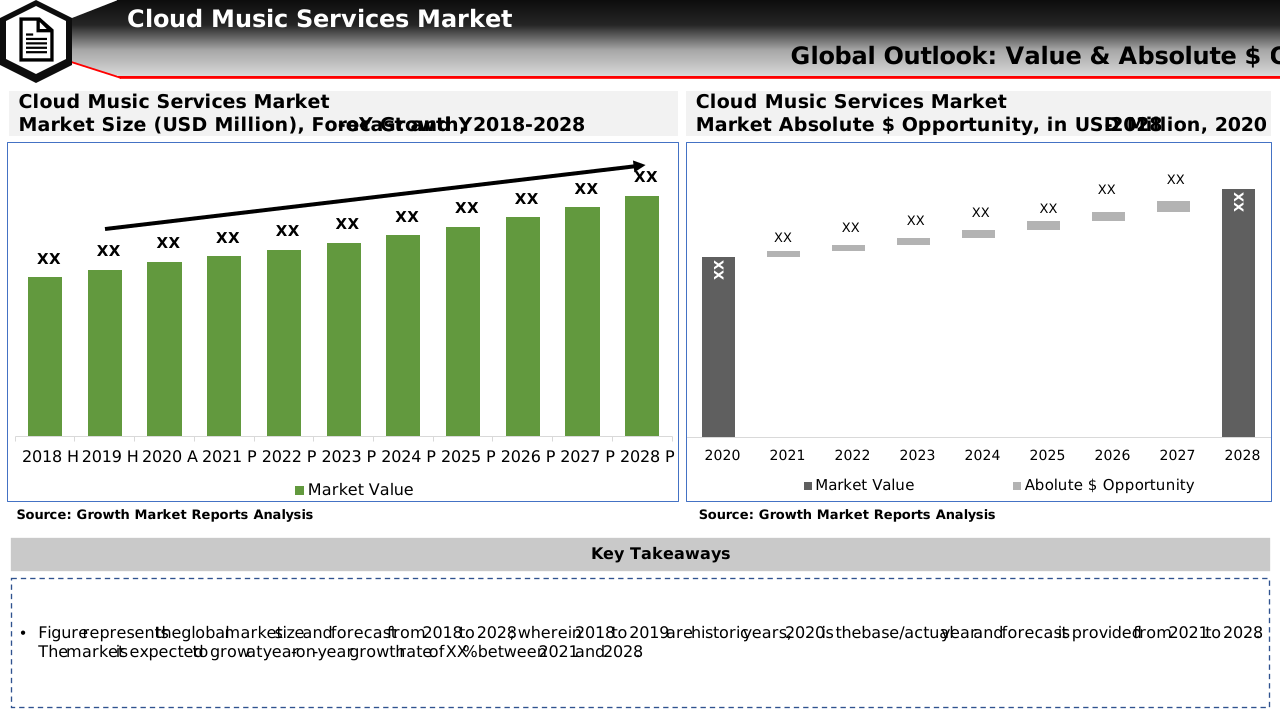
As per our latest research, the global cloud music services market size reached USD 14.9 billion in 2024, reflecting robust growth dynamics and a strong consumer shift toward digital music consumption. The market is expected to expand at a CAGR of 12.2% from 2025 to 2033, attaining a projected value of USD 41.6 billion by 2033. The primary growth factor driving this surge is the increasing penetration of high-speed internet and the proliferation of smart devices, which have made cloud-based music access more seamless and convenient than ever before.

One of the most significant growth drivers for the cloud music services market is the rapid evolution of consumer preferences toward on-demand, personalized entertainment experiences. The widespread adoption of smartphones, tablets, and smart speakers has revolutionized how users access and interact with music, enabling instant streaming and offline playback. The integration of artificial intelligence and machine learning in music recommendation engines has further enhanced user engagement, offering curated playlists and tailored suggestions based on individual listening habits. This high degree of personalization has proven instrumental in boosting user retention rates and increasing the average time spent on cloud music platforms, thereby accelerating market growth.

Another crucial factor propelling the cloud music services market is the strategic partnerships and licensing agreements between music service providers and record labels. These collaborations ensure a vast and diverse catalog of music, catering to a global audience with varied tastes and preferences. The expansion of regional and international content libraries has made cloud music services more attractive to users, especially in emerging markets where access to global music trends was previously limited. Furthermore, the implementation of flexible subscription models, including ad-supported free tiers and premium paid options, has democratized access to cloud music services, making them accessible to a broader demographic and driving subscriber growth across all age groups.

The continuous advancement in cloud infrastructure and data storage technologies has also played a pivotal role in shaping the cloud music services market. Enhanced cloud capabilities have enabled service providers to offer high-fidelity audio and video streaming with minimal latency, improving the overall user experience. The integration of cross-platform functionalities, allowing seamless transition between devices, has further contributed to the market's expansion. As cloud security protocols become more robust, concerns related to data privacy and intellectual property rights are being addressed more effectively, fostering greater trust among users and stakeholders. These technological advancements, combined with aggressive marketing strategies and localized content offerings, are expected to sustain the market's upward trajectory in the coming years.

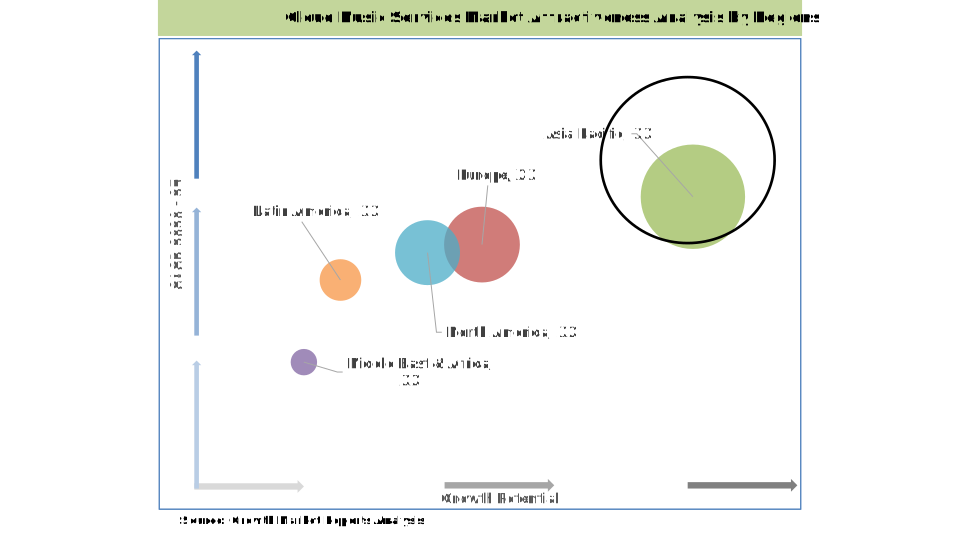
From a regional perspective, North America continues to dominate the cloud music services market, accounting for the largest revenue share in 2024, driven by high smartphone penetration, advanced digital infrastructure, and a mature music industry ecosystem. Europe follows closely, with significant contributions from countries such as the United Kingdom, Germany, and France. The Asia Pacific region is witnessing the fastest growth, fueled by rising internet adoption, a burgeoning middle class, and increasing demand for digital entertainment in countries like China, India, and Japan. Latin America and the Middle East & Africa are also emerging as promising markets, supported by ongoing digital transformation initiatives and expanding youth demographics. Regional dynamics are expected to evolve further as service providers tailor their offerings to meet local preferences and regulatory requirements.

The demand for high-quality audio experiences has led to the rise of Lossless Music Streaming, which offers audio files that are compressed without any loss of quality. This technology is particularly appealing to audiophiles who seek to enjoy music in its purest form, as it preserves the original sound quality of recordings. As more consumers become aware of the benefits of lossless audio, music streaming services are increasingly incorporating this feature into their offerings. This trend is expected to drive further growth in the cloud music services market, as users seek platforms that provide superior audio experiences. The integration of lossless streaming not only enhances user satisfaction but also differentiates service providers in a competitive landscape.

Global Cloud Music Services Industry Outlook

Service Type Analysis

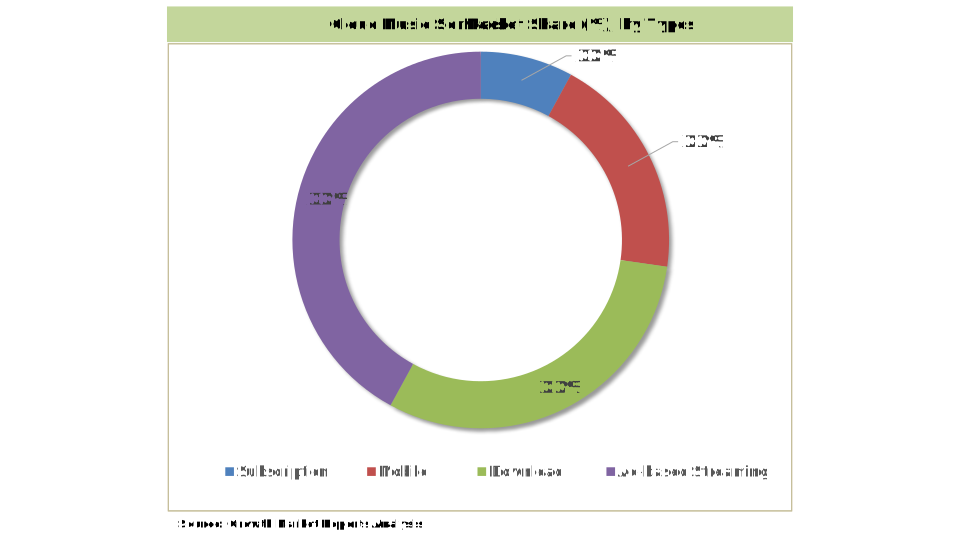
The service type segment of the cloud music services market is broadly categorized into music streaming, music storage, music sharing, and other ancillary services. Music streaming remains the dominant sub-segment, capturing the lionÂ’s share of the market revenue in 2024. The surge in demand for on-demand streaming is largely attributed to the convenience of accessing vast music libraries without the need for large storage capacities on personal devices. Leading platforms such as Spotify, Apple Music, and Amazon Music have set industry standards with their intuitive interfaces, extensive catalogs, and seamless integration across devices. The evolution of streaming technology, including adaptive bitrate streaming and offline listening features, has further solidified music streamingÂ’s position as the preferred mode of music consumption globally.

Music storage services cater to users who wish to upload and manage their personal music collections in the cloud. This segment, though smaller compared to streaming, retains relevance among audiophiles and users with specific curation needs. Cloud storage solutions offer robust backup capabilities, ensuring users can access their music libraries from any device without the risk of data loss. The integration of high-resolution audio formats and enhanced metadata management has added value to storage services, appealing to a niche but loyal customer base. As copyright and licensing frameworks continue to evolve, music storage providers are focusing on compliance and user-centric features to maintain their competitive edge.

Music sharing services have witnessed a steady increase in adoption, particularly among younger demographics and social media users. These services enable users to share tracks, playlists, and albums with friends and followers, fostering a sense of community and collaborative discovery. The integration of sharing functionalities within major streaming platforms has blurred the lines between streaming and sharing, creating a more interactive and social music experience. Music sharing has also become a powerful tool for independent artists and content creators to promote their work and reach new audiences, contributing to the democratization of music distribution in the digital age.

The other services sub-segment encompasses a range of value-added features, including lyric synchronization, podcast integration, live concert streaming, and artist-fan engagement tools. These offerings are designed to enhance the overall user experience and differentiate platforms in a highly competitive market. The growing popularity of podcasts and exclusive artist content has prompted service providers to diversify their portfolios and explore new revenue streams. As consumer expectations continue to evolve, the ability to innovate and deliver unique, immersive experiences will be a key determinant of success in the cloud music services market.

Report Scope

Attributes Details
Report Title Cloud Music Services Market Research Report 2033
By Service Type Music Streaming, Music Storage, Music Sharing, Others
By Platform Web-based, App-based
By Content Type Audio, Video
By End-User Individual, Commercial
By Subscription Model Free, Paid
Regions Covered North America, Europe, APAC, Latin America, MEA
Base Year 2024
Historic Data 2018-2023
Forecast Period 2025-2033
Number of Pages 284
Number of Tables & Figures 359
Customization Available Yes, the report can be customized as per your need.

Platform Analysis

The platform segment of the cloud music services market is divided into web-based and app-based platforms, each catering to distinct user preferences and usage scenarios. Web-based platforms have traditionally served as the primary access point for desktop and laptop users, offering comprehensive features and greater control over playlist management and library organization. The flexibility of web interfaces allows users to access their music collections from any browser, making it a popular choice for workplace and academic environments. Web-based platforms also facilitate integration with third-party applications and services, enhancing interoperability and user productivity.

In recent years, app-based platforms have emerged as the dominant mode of access, driven by the explosive growth of mobile device usage. Mobile apps offer unparalleled convenience, enabling users to stream, download, and share music on the go. The intuitive design and user-friendly interfaces of leading music apps have contributed to high engagement levels and increased time spent on platforms. App-based services also leverage device-specific features such as voice assistants, gesture controls, and location-based recommendations to deliver personalized experiences. The ability to sync playlists and preferences across devices has further strengthened the appeal of app-based platforms among tech-savvy consumers.

The convergence of web and app-based platforms is becoming increasingly evident, with service providers striving to offer a seamless and consistent user experience across all touchpoints. Cross-platform synchronization ensures that user preferences, playlists, and listening history are automatically updated, regardless of the device used. This interoperability is particularly important for users who switch between devices throughout the day, such as students, professionals, and frequent travelers. As cloud infrastructure continues to evolve, the distinction between web and app-based platforms is expected to diminish, paving the way for unified, omnichannel music experiences.

Platform differentiation is also influenced by the integration of advanced technologies such as artificial intelligence, machine learning, and blockchain. AI-powered recommendation engines, real-time lyric displays, and interactive user interfaces are enhancing the usability and appeal of both web and app-based platforms. Blockchain technology is being explored for secure and transparent royalty distribution, addressing longstanding challenges related to artist compensation and copyright management. As competition intensifies, the ability to innovate and deliver differentiated platform experiences will be critical for sustaining growth and market leadership in the cloud music services sector.

Content Type Analysis

The content type segment of the cloud music services market is bifurcated into audio and video content. Audio content has historically been the cornerstone of cloud music services, encompassing a vast array of genres, artists, and curated playlists. The demand for high-fidelity audio streaming has surged in recent years, with users seeking immersive listening experiences that rival physical formats. Service providers are responding by offering lossless and high-resolution audio options, catering to audiophiles and discerning listeners. The integration of podcasts, audiobooks, and spoken word content has further expanded the appeal of audio-centric platforms, attracting new user segments and increasing overall engagement.

Video content is gaining prominence as an integral component of cloud music services, driven by the growing popularity of music videos, live concert streams, and exclusive visual content. Platforms such as YouTube Music and Apple Music are investing heavily in video production and distribution, recognizing the value of visual storytelling in enhancing artist-fan connections. Music videos serve as powerful promotional tools, enabling artists to reach global audiences and drive engagement across social media channels. Live streaming of concerts and virtual events has become a significant revenue stream, especially in the wake of the COVID-19 pandemic, which accelerated the shift toward digital entertainment experiences.

As the cloud music services market continues to expand, Music Streaming Platform Liability Insurance has become an essential consideration for service providers. This type of insurance protects platforms against potential legal claims related to copyright infringement, data breaches, and other liabilities. With the increasing complexity of digital rights management and the global nature of music distribution, liability insurance offers a safeguard for companies navigating the intricacies of the music industry. By securing comprehensive coverage, music streaming platforms can mitigate risks and focus on delivering innovative and engaging user experiences. This proactive approach to risk management is crucial for sustaining growth and maintaining trust among users and stakeholders.

The convergence of audio and video content is creating new opportunities for service providers to differentiate their offerings and capture a larger share of the market. Interactive features such as synchronized lyrics, behind-the-scenes footage, and artist interviews are enhancing the value proposition of cloud music platforms. The integration of user-generated content and social sharing functionalities is fostering greater community engagement and driving organic growth. As content consumption patterns continue to evolve, the ability to deliver a diverse and engaging mix of audio and video content will be a key determinant of success in the highly competitive cloud music services market.

Content licensing and rights management remain critical challenges in the content type segment, particularly for video content, which often involves complex negotiations with multiple stakeholders. Service providers are investing in advanced digital rights management (DRM) solutions to ensure compliance with licensing agreements and protect intellectual property. The ability to offer exclusive content, such as early releases, live performances, and artist collaborations, is emerging as a differentiator in attracting and retaining subscribers. Going forward, content innovation and strategic partnerships with artists, labels, and content creators will be essential for sustaining growth and relevance in the dynamic cloud music services landscape.

End-User Analysis

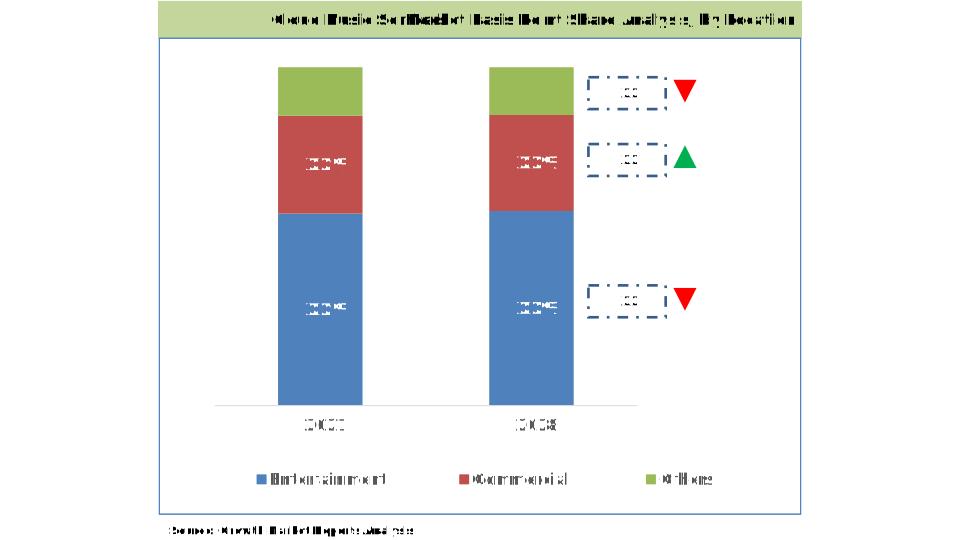
The end-user segment of the cloud music services market is categorized into individual and commercial users, each with distinct usage patterns and requirements. Individual users constitute the largest and most significant user base, driving the majority of revenue and engagement across platforms. The appeal of personalized playlists, curated recommendations, and social sharing features has made cloud music services an integral part of daily life for millions of consumers worldwide. The flexibility of subscription models, including free, ad-supported tiers and premium, ad-free options, has democratized access to cloud music, making it accessible to users across all income levels and age groups.

Commercial users represent a growing and lucrative segment within the cloud music services market, encompassing businesses, retail outlets, hospitality venues, gyms, and event organizers. These users leverage cloud music platforms to enhance customer experiences, create ambient environments, and drive brand engagement. Commercial licenses and tailored playlists enable businesses to curate music that aligns with their brand identity and target audience. The integration of analytics and reporting tools allows commercial users to monitor usage patterns and optimize music selection for maximum impact. As businesses increasingly recognize the value of music in shaping customer perceptions and behaviors, demand for commercial cloud music services is expected to rise steadily.

The needs and expectations of individual and commercial users are evolving in response to technological advancements and changing consumption patterns. Individual users are seeking greater control over their listening experiences, including advanced search functionalities, offline playback, and cross-device synchronization. Commercial users, on the other hand, prioritize scalability, compliance with licensing regulations, and seamless integration with existing audio-visual systems. Service providers are responding by offering customized solutions and flexible pricing models tailored to the unique requirements of each user segment.

User engagement and retention remain critical challenges in the end-user segment, particularly in the context of increasing competition and market saturation. Service providers are investing in loyalty programs, exclusive content, and interactive features to foster long-term relationships with users. The integration of social and community features, such as collaborative playlists and music sharing, is enhancing the sense of belonging and driving organic growth. As the market continues to mature, the ability to understand and anticipate the evolving needs of individual and commercial users will be essential for sustaining growth and maintaining a competitive edge in the cloud music services market.

Subscription Model Analysis

The subscription model segment of the cloud music services market is divided into free and paid tiers, each offering distinct value propositions and monetization strategies. Free, ad-supported models have played a pivotal role in driving user acquisition and expanding the reach of cloud music platforms. By offering basic features and access to a limited catalog of music, free tiers serve as entry points for new users, allowing them to experience the platform before committing to a paid subscription. Advertising revenues generated from free users contribute significantly to the overall revenue mix, enabling service providers to subsidize content licensing costs and invest in platform development.

Paid subscription models represent the primary revenue driver for most cloud music service providers, offering enhanced features such as ad-free listening, offline playback, higher audio quality, and access to exclusive content. The transition from free to paid subscriptions is facilitated by targeted marketing campaigns, personalized recommendations, and limited-time offers. The adoption of family plans, student discounts, and bundled offerings with other digital services has further accelerated the growth of paid subscribers. As consumers become increasingly willing to pay for premium experiences, the share of paid subscriptions in the overall revenue mix is expected to rise steadily.

The balance between free and paid subscription models is a critical strategic consideration for service providers, influencing user acquisition, retention, and monetization. While free tiers are effective in attracting a large user base, the challenge lies in converting these users into paying subscribers. Service providers are leveraging data analytics and machine learning to identify high-potential users and deliver targeted upsell offers. The introduction of tiered pricing models, catering to different user segments and preferences, is enabling greater flexibility and maximizing revenue opportunities.

Subscription model innovation is also being driven by partnerships with telecom operators, device manufacturers, and other digital service providers. Bundled offerings, such as free trials with the purchase of smartphones or data plans, are expanding the addressable market and reducing barriers to entry. As competition intensifies and user expectations continue to evolve, the ability to offer compelling value propositions and seamless upgrade paths will be essential for sustaining growth and profitability in the cloud music services market.

Opportunities & Threats

The cloud music services market presents a myriad of opportunities for service providers, content creators, and technology partners. The ongoing digital transformation across industries is creating new avenues for growth, particularly in emerging markets where internet penetration and smartphone adoption are on the rise. The integration of advanced technologies such as artificial intelligence, machine learning, and voice recognition is enabling service providers to deliver highly personalized and immersive music experiences. The expansion of content offerings, including podcasts, audiobooks, and live events, is attracting new user segments and driving higher engagement levels. Strategic partnerships with artists, labels, and device manufacturers are facilitating content innovation and expanding distribution channels, creating a virtuous cycle of growth and value creation.

Another significant opportunity lies in the commercial segment, where businesses are increasingly leveraging cloud music services to enhance customer experiences and drive brand differentiation. The adoption of music in retail, hospitality, fitness, and event management is creating new revenue streams and expanding the addressable market for service providers. The development of industry-specific solutions, such as curated playlists and analytics tools, is enabling businesses to optimize music selection and measure the impact on customer satisfaction and sales. As regulatory frameworks evolve to support digital music licensing and distribution, the commercial segment is poised for sustained growth and innovation.

Despite the numerous opportunities, the cloud music services market faces several restraining factors that could impede its growth trajectory. One of the most significant challenges is the complexity of content licensing and royalty distribution, which often involves negotiations with multiple stakeholders and compliance with diverse regulatory frameworks. Copyright infringement and piracy remain persistent threats, undermining the revenue potential of service providers and content creators. Additionally, the high cost of content acquisition and platform development can strain profitability, particularly for smaller players and new entrants. As competition intensifies and user expectations continue to rise, service providers must navigate these challenges while maintaining a focus on innovation, quality, and user satisfaction.

Regional Outlook

The regional landscape of the cloud music services market is characterized by varying levels of market maturity, consumer preferences, and regulatory environments. North America leads the global market, accounting for approximately USD 5.4 billion in revenue in 2024, driven by high smartphone penetration, advanced digital infrastructure, and a mature music industry ecosystem. The United States remains the largest market within the region, supported by a robust ecosystem of service providers, content creators, and technology partners. Ongoing investments in platform innovation and content acquisition are expected to sustain North AmericaÂ’s leadership position in the coming years.

Europe is the second-largest market for cloud music services, generating around USD 4.2 billion in revenue in 2024. The region is characterized by a diverse and culturally rich music landscape, with strong demand for both local and international content. The United Kingdom, Germany, and France are the primary contributors to regional growth, supported by favorable regulatory frameworks and high levels of digital literacy. The adoption of paid subscriptions and premium services is particularly strong in Europe, reflecting a growing willingness among consumers to pay for high-quality, ad-free experiences. The region is expected to maintain a healthy CAGR of 11.5% through 2033, driven by ongoing investments in content innovation and platform development.

The Asia Pacific region is emerging as the fastest-growing market for cloud music services, with revenue reaching USD 3.1 billion in 2024. Rapid urbanization, rising disposable incomes, and increasing smartphone adoption are fueling demand for digital entertainment in countries such as China, India, and Japan. Local and regional service providers are gaining traction by offering tailored content and pricing models that cater to the unique preferences of Asian consumers. The expansion of high-speed internet infrastructure and government initiatives to promote digital literacy are further accelerating market growth. As the region continues to evolve, Asia Pacific is expected to play an increasingly important role in shaping the global cloud music services landscape.

Cloud Music Services Market Statistics

Competitor Outlook

The cloud music services market is highly competitive, characterized by the presence of established global players, regional challengers, and innovative startups. Market leaders such as Spotify, Apple Music, Amazon Music, and YouTube Music dominate the landscape with extensive content libraries, advanced recommendation engines, and robust brand recognition. These companies leverage economies of scale, strategic partnerships, and continuous innovation to maintain their competitive edge and capture a larger share of the market. The ability to offer differentiated experiences, such as exclusive content, personalized playlists, and cross-platform integration, is a key factor driving user acquisition and retention in this dynamic industry.

Regional players and niche service providers are carving out unique positions by focusing on specific user segments, genres, or geographies. Companies such as Tencent Music Entertainment in China and JioSaavn in India are leveraging local content, language support, and culturally relevant features to attract and retain users in their respective markets. These providers are also exploring innovative monetization strategies, including live streaming, virtual events, and artist collaborations, to diversify revenue streams and enhance user engagement. The competitive landscape is further intensified by the entry of technology giants and telecom operators, who are bundling music services with other digital offerings to capture a larger share of the digital entertainment wallet.

Mergers, acquisitions, and strategic alliances are shaping the competitive dynamics of the cloud music services market, enabling companies to expand their content portfolios, enhance technological capabilities, and enter new markets. The pursuit of exclusive content deals with artists and record labels is becoming increasingly important, as service providers seek to differentiate their offerings and drive subscriber growth. Investment in artificial intelligence, machine learning, and data analytics is enabling companies to deliver more personalized and engaging user experiences, further strengthening their competitive positions.

Some of the major companies operating in the cloud music services market include Spotify Technology S.A., Apple Inc. (Apple Music), Amazon.com, Inc. (Amazon Music), Alphabet Inc. (YouTube Music), Tencent Music Entertainment Group, Deezer S.A., SoundCloud Limited, Pandora Media, LLC, JioSaavn, and Tidal. Spotify remains the global leader in terms of subscriber base and music catalog, consistently innovating with new features and partnerships. Apple Music leverages its integration with the broader Apple ecosystem to drive user engagement and retention. Amazon Music benefits from its integration with Amazon Prime and Alexa-enabled devices, offering unique value propositions to subscribers. YouTube Music capitalizes on its vast video content library and strong user base to attract music lovers worldwide. Tencent Music Entertainment dominates the Chinese market with a diverse portfolio of music and social entertainment platforms. These companies, along with emerging players, are expected to shape the future of the cloud music services market through ongoing innovation, strategic investments, and a relentless focus on user experience.

Key Players

  • Apple Inc.
  • Spotify AB
  • Amazon.com, Inc.
  • Google LLC (YouTube Music)
  • Tencent Music Entertainment Group
  • SoundCloud Ltd.
  • Deezer S.A.
  • Pandora Media, LLC (Sirius XM Holdings Inc.)
  • Tidal (Aspiro AB)
  • iHeartMedia, Inc.
  • Napster Group PLC
  • Qobuz (Xandrie SA)
  • JioSaavn (Saavn Media Pvt. Ltd.)
  • Anghami
  • KKBOX Inc.
  • Melon Company (Kakao Entertainment)
  • Yandex Music
  • Boomplay (Transsnet Music Limited)
  • Gaana (Times Internet Limited)
  • NetEase Cloud Music (NetEase, Inc.)
Cloud Music Services Market Overview

Segments

The Cloud Music Services market has been segmented on the basis of

Service Type

  • Music Streaming
  • Music Storage
  • Music Sharing
  • Others

Platform

  • Web-based
  • App-based

Content Type

  • Audio
  • Video

End-User

  • Individual
  • Commercial

Subscription Model

  • Free
  • Paid

Competitive Landscape

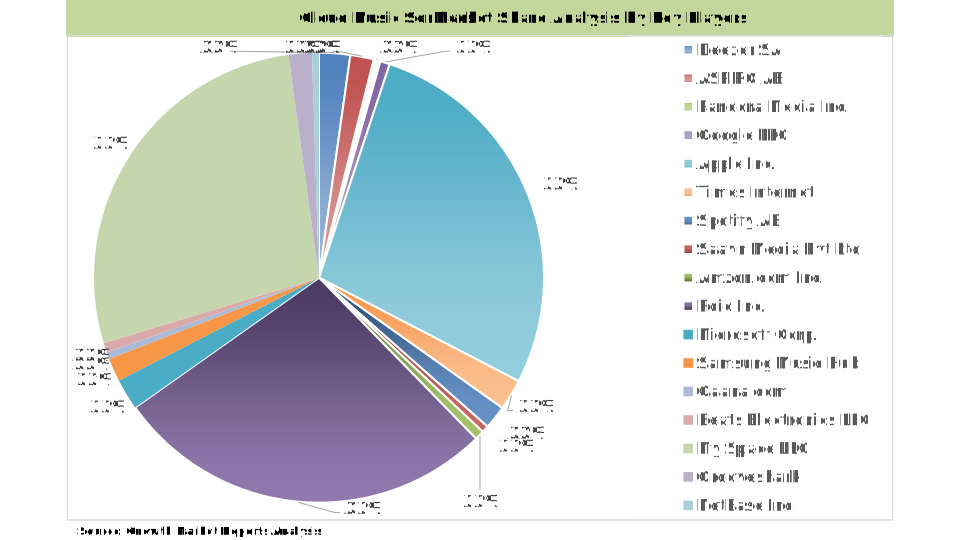
Key players competing in the cloud music services market include Deezer SA; ASPIRO AB; Pandora Media Inc.; Google LLC; Apple Inc.; Times Internet; Spotify AB; Saavn Media Pvt Ltd; Amzon.com Inc.; Rdio Inc.; Microsoft Corp.; Samsung Music Hub; Gaana.com; Beats Electronics LLC; My Space LLC; Grooveshark; and NetEase Inc.

Some of these players are using several market strategies such as product launches, acquisitions, collaborations, capacity expansion, partnerships, and merger to enhance their market shares and to generate revenue and rise their production line of the business in the coming years.

Cloud Music Services Market

Frequently Asked Questions

Opportunities include expanding into emerging markets, leveraging AI and machine learning, and growing commercial use. Challenges involve complex licensing, copyright infringement, piracy, and high content acquisition costs.

Major players include Spotify, Apple Music, Amazon Music, YouTube Music, Tencent Music Entertainment, Deezer, SoundCloud, Pandora, JioSaavn, and Tidal.

Cloud music services typically offer free, ad-supported tiers and paid subscription models with features like ad-free listening, offline playback, higher audio quality, and exclusive content.

End-users are categorized into individual users, who drive most of the revenue, and commercial users such as businesses, retail outlets, hospitality venues, gyms, and event organizers.

Cloud music services offer both audio and video content, including high-fidelity music streaming, music videos, live concert streams, podcasts, audiobooks, and exclusive artist content.

Web-based platforms are popular for desktop and workplace use, offering comprehensive features and integration. App-based platforms dominate mobile usage, providing convenience, voice assistant integration, and personalized experiences on the go.

The main service types are music streaming, music storage, music sharing, and other ancillary services such as lyric synchronization, podcast integration, and live concert streaming.

North America dominates the market, followed by Europe. The Asia Pacific region is the fastest-growing, with significant growth also seen in Latin America and the Middle East & Africa.

Key growth drivers include increasing high-speed internet penetration, widespread adoption of smart devices, personalized entertainment experiences, AI-powered recommendation engines, and strategic partnerships with record labels.

The global cloud music services market reached USD 14.9 billion in 2024 and is expected to grow at a CAGR of 12.2% from 2025 to 2033, reaching a projected value of USD 41.6 billion by 2033.

Table Of Content

Chapter 1 Executive Summary
Chapter 2 Assumptions and Acronyms Used
Chapter 3 Research Methodology
Chapter 4 Cloud Music Services Market Overview
   4.1 Introduction
      4.1.1 Market Taxonomy
      4.1.2 Market Definition
      4.1.3 Macro-Economic Factors Impacting the Market Growth
   4.2 Cloud Music Services Market Dynamics
      4.2.1 Market Drivers
      4.2.2 Market Restraints
      4.2.3 Market Opportunity
   4.3 Cloud Music Services Market - Supply Chain Analysis
      4.3.1 List of Key Suppliers
      4.3.2 List of Key Distributors
      4.3.3 List of Key Consumers
   4.4 Key Forces Shaping the Cloud Music Services Market
      4.4.1 Bargaining Power of Suppliers
      4.4.2 Bargaining Power of Buyers
      4.4.3 Threat of Substitution
      4.4.4 Threat of New Entrants
      4.4.5 Competitive Rivalry
   4.5 Global Cloud Music Services Market Size & Forecast, 2023-2032
      4.5.1 Cloud Music Services Market Size and Y-o-Y Growth
      4.5.2 Cloud Music Services Market Absolute $ Opportunity

Chapter 5 Global Cloud Music Services Market Analysis and Forecast By Service Type
   5.1 Introduction
      5.1.1 Key Market Trends & Growth Opportunities By Service Type
      5.1.2 Basis Point Share (BPS) Analysis By Service Type
      5.1.3 Absolute $ Opportunity Assessment By Service Type
   5.2 Cloud Music Services Market Size Forecast By Service Type
      5.2.1 Music Streaming
      5.2.2 Music Storage
      5.2.3 Music Sharing
      5.2.4 Others
   5.3 Market Attractiveness Analysis By Service Type

Chapter 6 Global Cloud Music Services Market Analysis and Forecast By Platform
   6.1 Introduction
      6.1.1 Key Market Trends & Growth Opportunities By Platform
      6.1.2 Basis Point Share (BPS) Analysis By Platform
      6.1.3 Absolute $ Opportunity Assessment By Platform
   6.2 Cloud Music Services Market Size Forecast By Platform
      6.2.1 Web-based
      6.2.2 App-based
   6.3 Market Attractiveness Analysis By Platform

Chapter 7 Global Cloud Music Services Market Analysis and Forecast By Content Type
   7.1 Introduction
      7.1.1 Key Market Trends & Growth Opportunities By Content Type
      7.1.2 Basis Point Share (BPS) Analysis By Content Type
      7.1.3 Absolute $ Opportunity Assessment By Content Type
   7.2 Cloud Music Services Market Size Forecast By Content Type
      7.2.1 Audio
      7.2.2 Video
   7.3 Market Attractiveness Analysis By Content Type

Chapter 8 Global Cloud Music Services Market Analysis and Forecast By End-User
   8.1 Introduction
      8.1.1 Key Market Trends & Growth Opportunities By End-User
      8.1.2 Basis Point Share (BPS) Analysis By End-User
      8.1.3 Absolute $ Opportunity Assessment By End-User
   8.2 Cloud Music Services Market Size Forecast By End-User
      8.2.1 Individual
      8.2.2 Commercial
   8.3 Market Attractiveness Analysis By End-User

Chapter 9 Global Cloud Music Services Market Analysis and Forecast By Subscription Model
   9.1 Introduction
      9.1.1 Key Market Trends & Growth Opportunities By Subscription Model
      9.1.2 Basis Point Share (BPS) Analysis By Subscription Model
      9.1.3 Absolute $ Opportunity Assessment By Subscription Model
   9.2 Cloud Music Services Market Size Forecast By Subscription Model
      9.2.1 Free
      9.2.2 Paid
   9.3 Market Attractiveness Analysis By Subscription Model

Chapter 10 Global Cloud Music Services Market Analysis and Forecast by Region
   10.1 Introduction
      10.1.1 Key Market Trends & Growth Opportunities By Region
      10.1.2 Basis Point Share (BPS) Analysis By Region
      10.1.3 Absolute $ Opportunity Assessment By Region
   10.2 Cloud Music Services Market Size Forecast By Region
      10.2.1 North America
      10.2.2 Europe
      10.2.3 Asia Pacific
      10.2.4 Latin America
      10.2.5 Middle East & Africa (MEA)
   10.3 Market Attractiveness Analysis By Region

Chapter 11 Coronavirus Disease (COVID-19) Impact 
   11.1 Introduction 
   11.2 Current & Future Impact Analysis 
   11.3 Economic Impact Analysis 
   11.4 Government Policies 
   11.5 Investment Scenario

Chapter 12 North America Cloud Music Services Analysis and Forecast
   12.1 Introduction
   12.2 North America Cloud Music Services Market Size Forecast by Country
      12.2.1 U.S.
      12.2.2 Canada
   12.3 Basis Point Share (BPS) Analysis by Country
   12.4 Absolute $ Opportunity Assessment by Country
   12.5 Market Attractiveness Analysis by Country
   12.6 North America Cloud Music Services Market Size Forecast By Service Type
      12.6.1 Music Streaming
      12.6.2 Music Storage
      12.6.3 Music Sharing
      12.6.4 Others
   12.7 Basis Point Share (BPS) Analysis By Service Type 
   12.8 Absolute $ Opportunity Assessment By Service Type 
   12.9 Market Attractiveness Analysis By Service Type
   12.10 North America Cloud Music Services Market Size Forecast By Platform
      12.10.1 Web-based
      12.10.2 App-based
   12.11 Basis Point Share (BPS) Analysis By Platform 
   12.12 Absolute $ Opportunity Assessment By Platform 
   12.13 Market Attractiveness Analysis By Platform
   12.14 North America Cloud Music Services Market Size Forecast By Content Type
      12.14.1 Audio
      12.14.2 Video
   12.15 Basis Point Share (BPS) Analysis By Content Type 
   12.16 Absolute $ Opportunity Assessment By Content Type 
   12.17 Market Attractiveness Analysis By Content Type
   12.18 North America Cloud Music Services Market Size Forecast By End-User
      12.18.1 Individual
      12.18.2 Commercial
   12.19 Basis Point Share (BPS) Analysis By End-User 
   12.20 Absolute $ Opportunity Assessment By End-User 
   12.21 Market Attractiveness Analysis By End-User
   12.22 North America Cloud Music Services Market Size Forecast By Subscription Model
      12.22.1 Free
      12.22.2 Paid
   12.23 Basis Point Share (BPS) Analysis By Subscription Model 
   12.24 Absolute $ Opportunity Assessment By Subscription Model 
   12.25 Market Attractiveness Analysis By Subscription Model

Chapter 13 Europe Cloud Music Services Analysis and Forecast
   13.1 Introduction
   13.2 Europe Cloud Music Services Market Size Forecast by Country
      13.2.1 Germany
      13.2.2 France
      13.2.3 Italy
      13.2.4 U.K.
      13.2.5 Spain
      13.2.6 Russia
      13.2.7 Rest of Europe
   13.3 Basis Point Share (BPS) Analysis by Country
   13.4 Absolute $ Opportunity Assessment by Country
   13.5 Market Attractiveness Analysis by Country
   13.6 Europe Cloud Music Services Market Size Forecast By Service Type
      13.6.1 Music Streaming
      13.6.2 Music Storage
      13.6.3 Music Sharing
      13.6.4 Others
   13.7 Basis Point Share (BPS) Analysis By Service Type 
   13.8 Absolute $ Opportunity Assessment By Service Type 
   13.9 Market Attractiveness Analysis By Service Type
   13.10 Europe Cloud Music Services Market Size Forecast By Platform
      13.10.1 Web-based
      13.10.2 App-based
   13.11 Basis Point Share (BPS) Analysis By Platform 
   13.12 Absolute $ Opportunity Assessment By Platform 
   13.13 Market Attractiveness Analysis By Platform
   13.14 Europe Cloud Music Services Market Size Forecast By Content Type
      13.14.1 Audio
      13.14.2 Video
   13.15 Basis Point Share (BPS) Analysis By Content Type 
   13.16 Absolute $ Opportunity Assessment By Content Type 
   13.17 Market Attractiveness Analysis By Content Type
   13.18 Europe Cloud Music Services Market Size Forecast By End-User
      13.18.1 Individual
      13.18.2 Commercial
   13.19 Basis Point Share (BPS) Analysis By End-User 
   13.20 Absolute $ Opportunity Assessment By End-User 
   13.21 Market Attractiveness Analysis By End-User
   13.22 Europe Cloud Music Services Market Size Forecast By Subscription Model
      13.22.1 Free
      13.22.2 Paid
   13.23 Basis Point Share (BPS) Analysis By Subscription Model 
   13.24 Absolute $ Opportunity Assessment By Subscription Model 
   13.25 Market Attractiveness Analysis By Subscription Model

Chapter 14 Asia Pacific Cloud Music Services Analysis and Forecast
   14.1 Introduction
   14.2 Asia Pacific Cloud Music Services Market Size Forecast by Country
      14.2.1 China
      14.2.2 Japan
      14.2.3 South Korea
      14.2.4 India
      14.2.5 Australia
      14.2.6 South East Asia (SEA)
      14.2.7 Rest of Asia Pacific (APAC)
   14.3 Basis Point Share (BPS) Analysis by Country
   14.4 Absolute $ Opportunity Assessment by Country
   14.5 Market Attractiveness Analysis by Country
   14.6 Asia Pacific Cloud Music Services Market Size Forecast By Service Type
      14.6.1 Music Streaming
      14.6.2 Music Storage
      14.6.3 Music Sharing
      14.6.4 Others
   14.7 Basis Point Share (BPS) Analysis By Service Type 
   14.8 Absolute $ Opportunity Assessment By Service Type 
   14.9 Market Attractiveness Analysis By Service Type
   14.10 Asia Pacific Cloud Music Services Market Size Forecast By Platform
      14.10.1 Web-based
      14.10.2 App-based
   14.11 Basis Point Share (BPS) Analysis By Platform 
   14.12 Absolute $ Opportunity Assessment By Platform 
   14.13 Market Attractiveness Analysis By Platform
   14.14 Asia Pacific Cloud Music Services Market Size Forecast By Content Type
      14.14.1 Audio
      14.14.2 Video
   14.15 Basis Point Share (BPS) Analysis By Content Type 
   14.16 Absolute $ Opportunity Assessment By Content Type 
   14.17 Market Attractiveness Analysis By Content Type
   14.18 Asia Pacific Cloud Music Services Market Size Forecast By End-User
      14.18.1 Individual
      14.18.2 Commercial
   14.19 Basis Point Share (BPS) Analysis By End-User 
   14.20 Absolute $ Opportunity Assessment By End-User 
   14.21 Market Attractiveness Analysis By End-User
   14.22 Asia Pacific Cloud Music Services Market Size Forecast By Subscription Model
      14.22.1 Free
      14.22.2 Paid
   14.23 Basis Point Share (BPS) Analysis By Subscription Model 
   14.24 Absolute $ Opportunity Assessment By Subscription Model 
   14.25 Market Attractiveness Analysis By Subscription Model

Chapter 15 Latin America Cloud Music Services Analysis and Forecast
   15.1 Introduction
   15.2 Latin America Cloud Music Services Market Size Forecast by Country
      15.2.1 Brazil
      15.2.2 Mexico
      15.2.3 Rest of Latin America (LATAM)
   15.3 Basis Point Share (BPS) Analysis by Country
   15.4 Absolute $ Opportunity Assessment by Country
   15.5 Market Attractiveness Analysis by Country
   15.6 Latin America Cloud Music Services Market Size Forecast By Service Type
      15.6.1 Music Streaming
      15.6.2 Music Storage
      15.6.3 Music Sharing
      15.6.4 Others
   15.7 Basis Point Share (BPS) Analysis By Service Type 
   15.8 Absolute $ Opportunity Assessment By Service Type 
   15.9 Market Attractiveness Analysis By Service Type
   15.10 Latin America Cloud Music Services Market Size Forecast By Platform
      15.10.1 Web-based
      15.10.2 App-based
   15.11 Basis Point Share (BPS) Analysis By Platform 
   15.12 Absolute $ Opportunity Assessment By Platform 
   15.13 Market Attractiveness Analysis By Platform
   15.14 Latin America Cloud Music Services Market Size Forecast By Content Type
      15.14.1 Audio
      15.14.2 Video
   15.15 Basis Point Share (BPS) Analysis By Content Type 
   15.16 Absolute $ Opportunity Assessment By Content Type 
   15.17 Market Attractiveness Analysis By Content Type
   15.18 Latin America Cloud Music Services Market Size Forecast By End-User
      15.18.1 Individual
      15.18.2 Commercial
   15.19 Basis Point Share (BPS) Analysis By End-User 
   15.20 Absolute $ Opportunity Assessment By End-User 
   15.21 Market Attractiveness Analysis By End-User
   15.22 Latin America Cloud Music Services Market Size Forecast By Subscription Model
      15.22.1 Free
      15.22.2 Paid
   15.23 Basis Point Share (BPS) Analysis By Subscription Model 
   15.24 Absolute $ Opportunity Assessment By Subscription Model 
   15.25 Market Attractiveness Analysis By Subscription Model

Chapter 16 Middle East & Africa (MEA) Cloud Music Services Analysis and Forecast
   16.1 Introduction
   16.2 Middle East & Africa (MEA) Cloud Music Services Market Size Forecast by Country
      16.2.1 Saudi Arabia
      16.2.2 South Africa
      16.2.3 UAE
      16.2.4 Rest of Middle East & Africa (MEA)
   16.3 Basis Point Share (BPS) Analysis by Country
   16.4 Absolute $ Opportunity Assessment by Country
   16.5 Market Attractiveness Analysis by Country
   16.6 Middle East & Africa (MEA) Cloud Music Services Market Size Forecast By Service Type
      16.6.1 Music Streaming
      16.6.2 Music Storage
      16.6.3 Music Sharing
      16.6.4 Others
   16.7 Basis Point Share (BPS) Analysis By Service Type 
   16.8 Absolute $ Opportunity Assessment By Service Type 
   16.9 Market Attractiveness Analysis By Service Type
   16.10 Middle East & Africa (MEA) Cloud Music Services Market Size Forecast By Platform
      16.10.1 Web-based
      16.10.2 App-based
   16.11 Basis Point Share (BPS) Analysis By Platform 
   16.12 Absolute $ Opportunity Assessment By Platform 
   16.13 Market Attractiveness Analysis By Platform
   16.14 Middle East & Africa (MEA) Cloud Music Services Market Size Forecast By Content Type
      16.14.1 Audio
      16.14.2 Video
   16.15 Basis Point Share (BPS) Analysis By Content Type 
   16.16 Absolute $ Opportunity Assessment By Content Type 
   16.17 Market Attractiveness Analysis By Content Type
   16.18 Middle East & Africa (MEA) Cloud Music Services Market Size Forecast By End-User
      16.18.1 Individual
      16.18.2 Commercial
   16.19 Basis Point Share (BPS) Analysis By End-User 
   16.20 Absolute $ Opportunity Assessment By End-User 
   16.21 Market Attractiveness Analysis By End-User
   16.22 Middle East & Africa (MEA) Cloud Music Services Market Size Forecast By Subscription Model
      16.22.1 Free
      16.22.2 Paid
   16.23 Basis Point Share (BPS) Analysis By Subscription Model 
   16.24 Absolute $ Opportunity Assessment By Subscription Model 
   16.25 Market Attractiveness Analysis By Subscription Model

Chapter 17 Competition Landscape 
   17.1 Cloud Music Services Market: Competitive Dashboard
   17.2 Global Cloud Music Services Market: Market Share Analysis, 2023
   17.3 Company Profiles (Details – Overview, Financials, Developments, Strategy) 
      17.3.1 Apple Inc.
Spotify AB
Amazon.com, Inc.
Google LLC (YouTube Music)
Tencent Music Entertainment Group
SoundCloud Ltd.
Deezer S.A.
Pandora Media, LLC (Sirius XM Holdings Inc.)
Tidal (Aspiro AB)
iHeartMedia, Inc.
Napster Group PLC
Qobuz (Xandrie SA)
JioSaavn (Saavn Media Pvt. Ltd.)
Anghami
KKBOX Inc.
Melon Company (Kakao Entertainment)
Yandex Music
Boomplay (Transsnet Music Limited)
Gaana (Times Internet Limited)
NetEase Cloud Music (NetEase, Inc.)

Methodology

Our Clients

General Electric
Nestle SA
Microsoft
Deloitte
FedEx Logistics
General Mills
Siemens Healthcare
sinopec