Segments - by Component (Software, Hardware, Services), by Solution Type (Kiosks, ATMs, Vending Machines, Self-checkout Systems, Others), by Application (Retail, Banking & Financial Services, Healthcare, Hospitality, Transportation, Others), by Deployment Mode (On-Premises, Cloud), by End-User (Enterprises, Consumers)
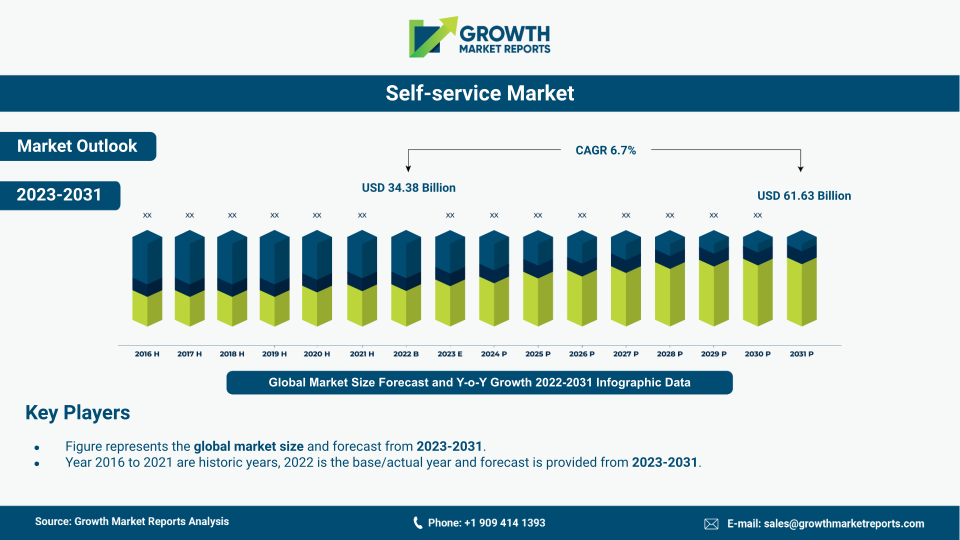
According to our latest research, the global self-service market size in 2024 stands at USD 47.2 billion, driven by an increasing demand for automation and enhanced customer experiences across various industries. The market is witnessing a robust growth trajectory with a CAGR of 10.9% from 2025 to 2033. By 2033, the self-service market is forecasted to reach USD 120.1 billion, reflecting the rapid adoption of advanced self-service technologies and solutions worldwide. This growth is primarily attributed to the rising integration of digital interfaces in retail, banking, and healthcare sectors, coupled with the need for operational efficiency and cost optimization.
One of the key growth factors propelling the self-service market is the widespread acceptance of digital transformation initiatives across enterprises. Organizations are increasingly turning to self-service kiosks, ATMs, and self-checkout systems to streamline operations and reduce labor costs. The proliferation of mobile devices and advancements in connectivity have further accelerated the adoption of self-service solutions, enabling businesses to offer seamless, omnichannel experiences to their customers. Additionally, the COVID-19 pandemic has catalyzed the deployment of contactless self-service technologies, as businesses prioritize safety and hygiene, thereby reinforcing the importance of this market segment.
Another significant driver is the continuous innovation in hardware and software components that power self-service systems. The integration of artificial intelligence, machine learning, and IoT technologies has enhanced the capabilities of self-service machines, making them smarter, more intuitive, and capable of handling complex transactions. This technological evolution has enabled industries such as banking, retail, and healthcare to deliver personalized services, improve customer satisfaction, and gather valuable data insights. Furthermore, the growing trend of urbanization and the increasing number of tech-savvy consumers are creating a favorable environment for the expansion of the self-service market.
The expanding application landscape of self-service solutions is also contributing to market growth. Beyond traditional sectors like retail and banking, industries such as healthcare, hospitality, and transportation are embracing self-service technology to address evolving customer expectations and to optimize service delivery. For instance, hospitals are deploying self-check-in kiosks to reduce wait times, while airports are investing in self-service baggage drops and check-in terminals. The versatility of self-service solutions, combined with their scalability and cost-effectiveness, is making them indispensable tools for businesses aiming to remain competitive in a digital-first world.
Common Use Self Service Systems have become an integral part of modern business operations, offering a versatile solution that caters to a wide range of industries. These systems are designed to handle multiple functions, from ticketing and check-in at airports to self-ordering in restaurants and self-checkout in retail stores. The flexibility of common use systems allows businesses to adapt quickly to changing customer demands and operational needs. By leveraging shared infrastructure and technology, companies can reduce costs and improve efficiency, while providing a consistent and seamless user experience. This approach not only enhances customer satisfaction but also enables businesses to scale their operations without significant capital investment. As the demand for personalized and efficient service continues to rise, common use self-service systems are poised to play a pivotal role in the future of customer interactions.
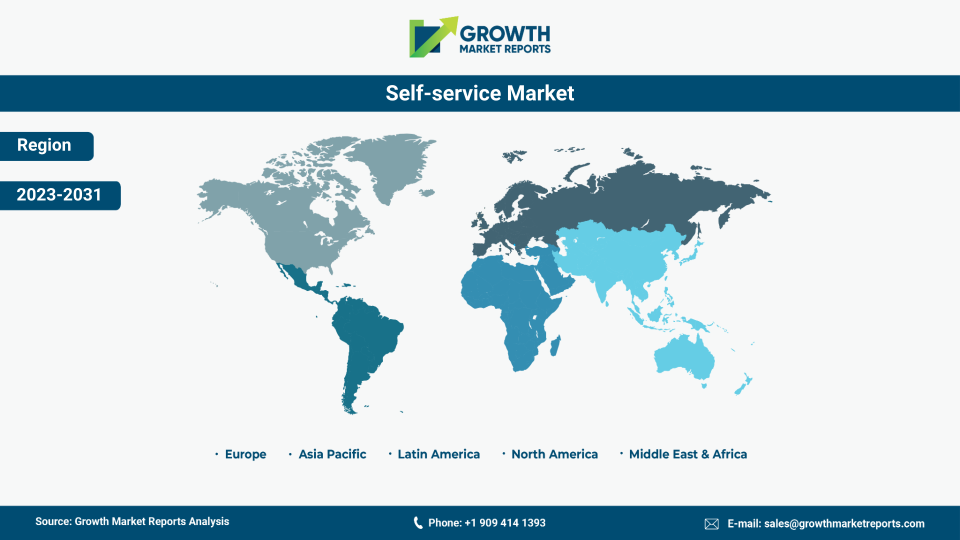
Regionally, the self-service market exhibits significant growth potential, with Asia Pacific emerging as a hotspot for innovation and adoption. North America remains a mature market, characterized by high penetration of advanced self-service systems, while Europe is witnessing increased investments in smart retail and banking automation. The Middle East & Africa and Latin America are also experiencing steady growth, fueled by rising urbanization and digitalization initiatives. As businesses worldwide continue to prioritize customer convenience and operational agility, the global self-service market is poised for sustained expansion over the forecast period.
The component segment of the self-service market is broadly categorized into software, hardware, and services. Hardware forms the backbone of self-service deployments, encompassing kiosks, ATMs, vending machines, and self-checkout systems. The hardware segment remains the largest contributor to market revenue, as businesses invest in physically robust and technologically advanced machines. The demand for touchless interfaces, biometric authentication, and high-resolution displays has further fueled innovation in this segment. However, hardware alone is not sufficient; the synergy between hardware and software is critical to deliver seamless and secure user experiences.
Software solutions are gaining prominence as they enable the customization, integration, and management of self-service devices. Modern self-service software platforms leverage AI, analytics, and cloud computing to provide real-time insights, automate routine tasks, and enhance user engagement. Software also plays a pivotal role in ensuring compliance with security standards and regulatory requirements, particularly in sensitive sectors like banking and healthcare. The increasing adoption of SaaS-based self-service solutions is enabling organizations to scale operations quickly while minimizing upfront costs.
Services, including installation, maintenance, consulting, and support, represent a vital component of the self-service ecosystem. As self-service deployments become more complex and widespread, the demand for specialized services to ensure system reliability and uptime is rising. Managed services and remote monitoring are particularly important for enterprises with geographically dispersed operations. The service segment is also witnessing growth from the need for continuous software updates, cybersecurity enhancements, and user training, all of which are essential for maximizing the ROI of self-service investments.
The interplay between hardware, software, and services is shaping the future of the self-service market. Businesses are increasingly opting for integrated solutions that combine robust hardware with flexible, cloud-based software and comprehensive support services. This holistic approach not only streamlines deployment but also ensures optimal performance and adaptability to changing business needs. As a result, vendors are focusing on offering end-to-end self-service solutions that address the unique requirements of different industries and applications.
| Attributes | Details |
| Report Title | Self-service Market Research Report 2033 |
| By Component | Software, Hardware, Services |
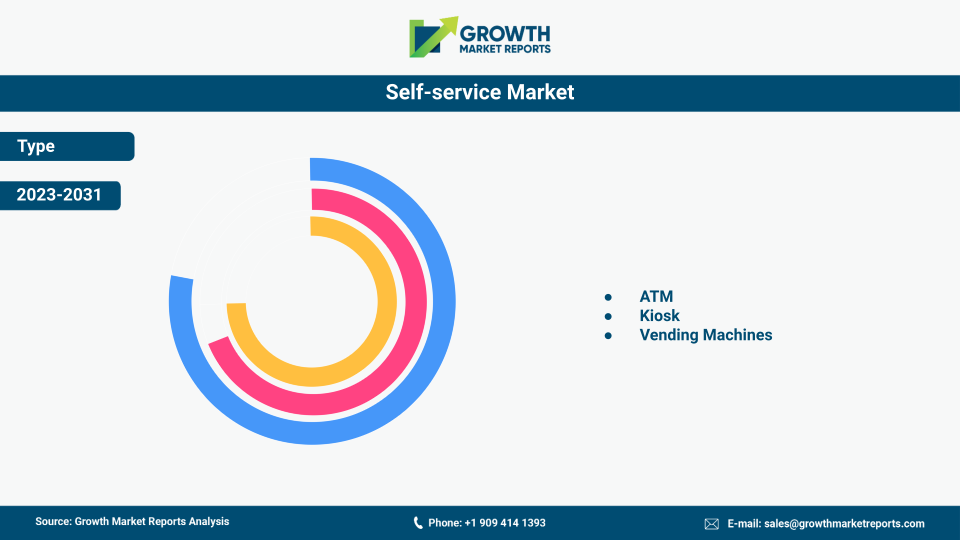
| By Solution Type | Kiosks, ATMs, Vending Machines, Self-checkout Systems, Others |
| By Application | Retail, Banking & Financial Services, Healthcare, Hospitality, Transportation, Others |
| By Deployment Mode | On-Premises, Cloud |
| By End-User | Enterprises, Consumers |
| Regions Covered | North America, Europe, APAC, Latin America, MEA |
| Base Year | 2024 |
| Historic Data | 2018-2023 |
| Forecast Period | 2025-2033 |
| Number of Pages | 282 |
| Number of Tables & Figures | 298 |
| Customization Available | Yes, the report can be customized as per your need. |
The solution type segment of the self-service market comprises kiosks, ATMs, vending machines, self-checkout systems, and others. Kiosks are among the most versatile self-service solutions, widely deployed in retail, healthcare, hospitality, and transportation sectors. Interactive kiosks facilitate a range of functions, from information dissemination and ticketing to order placement and payments. The growing adoption of digital kiosks, powered by touchscreens and advanced software, is enabling businesses to enhance customer engagement and streamline service delivery.
ATMs continue to be a cornerstone of the self-service market, particularly in the banking and financial services sector. The evolution of ATMs from basic cash dispensing machines to multifunctional terminals offering deposits, bill payments, and account management has expanded their utility and relevance. Innovations such as biometric authentication, cardless transactions, and integration with mobile banking apps are making ATMs more secure and user-friendly. The global ATM installed base is expected to grow steadily as financial institutions focus on expanding their reach and improving customer convenience.
Vending machines are experiencing a renaissance, driven by advancements in IoT, cashless payments, and product customization. Modern vending machines are equipped with smart sensors, digital displays, and remote monitoring capabilities, allowing operators to optimize inventory management and enhance the customer experience. The rise of healthy and premium vending options is also attracting new consumer segments, while the integration of mobile payment solutions is making transactions faster and more convenient.
Self-checkout systems are gaining traction in the retail sector as businesses seek to reduce wait times and improve operational efficiency. These systems empower customers to scan, bag, and pay for their purchases independently, freeing up staff for other value-added tasks. The adoption of self-checkout technology is particularly high in grocery stores, supermarkets, and convenience stores, where speed and convenience are critical. Retailers are also leveraging data collected from self-checkout systems to gain insights into consumer behavior and optimize store layouts.
Other solution types, such as self-service ticketing terminals, parking payment machines, and self-service printing stations, are also contributing to market growth. These solutions are finding applications in diverse settings, including airports, universities, and public transport hubs. The versatility and scalability of self-service solutions are enabling businesses across industries to enhance service delivery, reduce costs, and meet the evolving expectations of modern consumers.
The application segment of the self-service market encompasses retail, banking & financial services, healthcare, hospitality, transportation, and others. Retail is a leading adopter of self-service technologies, leveraging kiosks, self-checkout systems, and digital signage to enhance the shopping experience. Retailers are investing in self-service solutions to reduce labor costs, minimize queues, and offer personalized promotions. The integration of loyalty programs and mobile payment options is further enhancing the value proposition of self-service in retail environments.
Banking & financial services represent another major application area, with ATMs, interactive kiosks, and digital branches transforming the way customers access financial services. The shift towards branch automation and omnichannel banking is driving the deployment of advanced self-service systems that offer a wide range of transactions, from cash withdrawals to loan applications. Financial institutions are also focusing on enhancing security features, such as biometric authentication and real-time fraud detection, to build trust and ensure compliance.
In healthcare, self-service solutions are being deployed to streamline patient check-in, appointment scheduling, and payment processing. Hospitals and clinics are adopting self-service kiosks to reduce administrative burdens, improve patient flow, and enhance data accuracy. The integration of electronic health records (EHR) systems with self-service platforms is enabling healthcare providers to deliver more efficient and personalized care. The emphasis on contactless interactions, driven by the pandemic, is further accelerating the adoption of self-service technologies in healthcare settings.
The hospitality sector is leveraging self-service solutions to enhance guest experiences and operational efficiency. Hotels are deploying self-check-in kiosks, digital concierge services, and mobile room keys to offer guests greater convenience and flexibility. Restaurants and quick-service outlets are investing in self-ordering kiosks and mobile payment solutions to streamline order processing and reduce wait times. The adoption of self-service technology is enabling hospitality businesses to differentiate themselves in a highly competitive market.
Transportation is another key application area, with airports, train stations, and bus terminals implementing self-service ticketing, baggage drop, and check-in systems. These solutions are helping to reduce congestion, improve passenger flow, and enhance overall travel experiences. The growing emphasis on contactless travel and digital ticketing is expected to drive further investments in self-service technologies across the transportation sector. Other applications, such as education and government services, are also embracing self-service to improve accessibility and efficiency.
The deployment mode segment of the self-service market is categorized into on-premises and cloud-based solutions. On-premises deployment remains prevalent among large enterprises and organizations with stringent security and compliance requirements. This mode offers greater control over infrastructure, data, and customization, making it suitable for sectors like banking, healthcare, and government. However, on-premises solutions often involve higher upfront costs and longer implementation timelines, which can be a barrier for smaller organizations.
Cloud-based deployment is gaining significant traction due to its scalability, flexibility, and cost-effectiveness. Cloud solutions enable businesses to deploy and manage self-service systems remotely, reducing the need for extensive on-site infrastructure. The ability to access real-time data, perform remote updates, and scale resources on demand is particularly appealing to organizations with dynamic operational needs. Cloud deployment also facilitates the integration of advanced analytics, AI, and IoT capabilities, enhancing the functionality and value of self-service solutions.
Hybrid deployment models are emerging as a popular choice, allowing organizations to combine the benefits of both on-premises and cloud-based solutions. This approach enables businesses to retain control over sensitive data while leveraging the scalability and innovation offered by the cloud. Hybrid models are particularly relevant for enterprises with complex IT environments or those operating in regulated industries. The flexibility to choose the most suitable deployment mode based on specific business needs is driving the adoption of hybrid self-service solutions.
The choice of deployment mode has a significant impact on the total cost of ownership, operational efficiency, and agility of self-service systems. Vendors are increasingly offering modular and interoperable solutions that support seamless migration between deployment models. This trend is enabling organizations to future-proof their investments and adapt to evolving technology landscapes. As cloud adoption continues to rise, the market is expected to witness increased demand for cloud-native self-service platforms that offer enhanced security, scalability, and innovation.
The end-user segment of the self-service market is divided into enterprises and consumers. Enterprises are the primary adopters of self-service solutions, leveraging them to improve operational efficiency, reduce costs, and enhance customer experiences. Large organizations in sectors such as retail, banking, healthcare, and hospitality are investing heavily in self-service technologies to automate routine tasks and free up human resources for more strategic activities. The ability to gather real-time data and analytics from self-service systems is enabling enterprises to make informed decisions and optimize business processes.
Small and medium-sized enterprises (SMEs) are also recognizing the value of self-service solutions, particularly cloud-based offerings that require lower upfront investments. The democratization of self-service technology is enabling SMEs to compete with larger players by offering enhanced convenience and personalized services to their customers. The adoption of self-service solutions is helping enterprises of all sizes to adapt to changing consumer expectations and stay ahead in a rapidly evolving market landscape.
Consumers are increasingly embracing self-service options as they seek greater convenience, speed, and control over their interactions with businesses. The proliferation of smartphones and digital interfaces has empowered consumers to perform a wide range of tasks independently, from shopping and banking to booking appointments and accessing information. The shift towards self-service is being driven by a desire for contactless interactions, personalized experiences, and instant gratification. Businesses that prioritize self-service are better positioned to meet the evolving needs of tech-savvy consumers and build long-term loyalty.
The growing acceptance of self-service among consumers is also influencing the design and functionality of self-service solutions. User-friendly interfaces, intuitive navigation, and multilingual support are becoming standard features, ensuring accessibility for diverse user groups. The integration of mobile apps, digital wallets, and biometric authentication is further enhancing the convenience and security of self-service interactions. As consumer expectations continue to evolve, businesses must invest in innovative self-service solutions to remain competitive and relevant.
The self-service market presents numerous opportunities for growth and innovation. One of the most significant opportunities lies in the integration of advanced technologies such as artificial intelligence, machine learning, and IoT with self-service systems. These technologies can enhance the intelligence and adaptability of self-service solutions, enabling businesses to offer personalized recommendations, automate complex transactions, and gather actionable insights. The rise of smart cities and digital transformation initiatives across industries is creating a fertile ground for the deployment of next-generation self-service solutions that can address a wide range of applications, from retail and banking to healthcare and transportation.
Another key opportunity is the expansion of self-service solutions in emerging markets, where rapid urbanization, rising disposable incomes, and increasing digital literacy are driving demand for convenient and efficient services. Businesses that can tailor self-service offerings to the unique needs and preferences of consumers in these regions stand to gain a competitive advantage. The growing emphasis on contactless and hygienic interactions, accelerated by the pandemic, is also opening up new avenues for innovation in self-service technology, such as the development of touchless interfaces, voice-activated kiosks, and mobile-first solutions.
Despite the positive outlook, the self-service market faces several restraining factors. One of the primary challenges is the high initial investment required for deploying advanced self-service systems, particularly for small and medium-sized enterprises. The complexity of integrating self-service solutions with existing IT infrastructure and legacy systems can also pose significant hurdles. Security concerns, including the risk of data breaches and fraud, remain a major restraint, especially in sectors handling sensitive customer information. Additionally, resistance to change among certain customer segments and the need for ongoing maintenance and support can impact the pace of adoption. Addressing these challenges will be critical for unlocking the full potential of the self-service market.
Asia Pacific is emerging as the fastest-growing region in the global self-service market, accounting for a market size of USD 14.7 billion in 2024 and projected to grow at a CAGR of 13.2% over the forecast period. The region's rapid urbanization, expanding middle class, and widespread adoption of digital technologies are driving demand for self-service solutions across retail, banking, healthcare, and transportation sectors. Countries such as China, India, and Japan are at the forefront of this growth, investing heavily in smart city initiatives and digital infrastructure. The increasing penetration of smartphones and internet connectivity is further accelerating the adoption of self-service technologies in Asia Pacific.
North America remains the largest market for self-service solutions, with a market size of USD 16.3 billion in 2024. The region's mature technology ecosystem, high consumer acceptance of digital interfaces, and strong presence of leading self-service solution providers are key factors driving market growth. The United States, in particular, is witnessing widespread deployment of self-service kiosks, ATMs, and self-checkout systems across retail, banking, and healthcare sectors. The focus on enhancing customer experiences, improving operational efficiency, and ensuring regulatory compliance is fueling continued investments in self-service technology in North America.
Europe is also a significant contributor to the global self-service market, with a market size of USD 11.9 billion in 2024. The region is characterized by high adoption rates of self-service solutions in retail, transportation, and hospitality sectors. Countries such as the United Kingdom, Germany, and France are leading the way in deploying smart kiosks, digital ticketing systems, and contactless payment solutions. The emphasis on sustainability, data privacy, and seamless customer experiences is shaping the evolution of self-service technology in Europe. Meanwhile, Latin America and the Middle East & Africa are witnessing steady growth, driven by increasing digitalization, urbanization, and government initiatives to enhance service delivery and accessibility.
The competitive landscape of the self-service market is characterized by intense rivalry among global and regional players, each striving to differentiate their offerings through innovation, quality, and customer service. Leading companies are investing heavily in research and development to introduce advanced features such as AI-driven analytics, biometric authentication, and cloud-based management platforms. Strategic partnerships, mergers, and acquisitions are common as companies seek to expand their product portfolios, enter new markets, and strengthen their competitive positions. The focus on delivering end-to-end solutions that encompass hardware, software, and services is becoming a key differentiator in the market.
Market leaders are also prioritizing customer-centricity, offering customized solutions tailored to the unique needs of different industries and applications. The ability to provide seamless integration with existing IT infrastructure, robust security features, and comprehensive support services is critical for winning and retaining customers. As businesses increasingly demand scalable, flexible, and future-proof self-service solutions, vendors are responding by developing modular platforms that can be easily upgraded and adapted to changing requirements. The shift towards cloud-based and SaaS models is enabling vendors to offer more cost-effective and agile solutions, further intensifying competition in the market.
Regional players are leveraging their deep understanding of local markets and customer preferences to capture market share, particularly in emerging economies. These companies are focusing on affordability, ease of use, and localization to address the specific needs of consumers and businesses in their regions. Collaboration with government agencies, financial institutions, and retail chains is helping regional players to expand their reach and drive adoption of self-service technology. The ability to offer comprehensive after-sales support and maintenance services is also a key success factor in highly competitive markets.
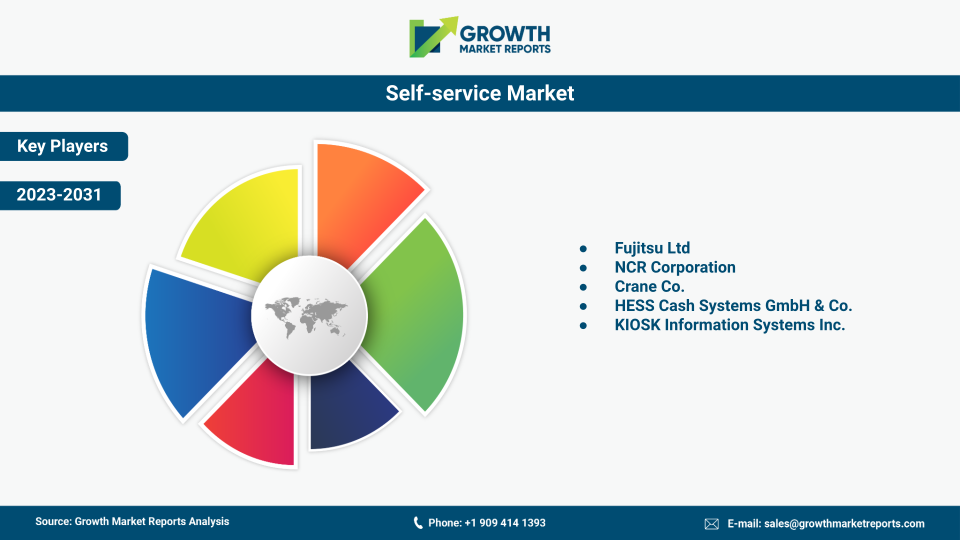
Some of the major companies operating in the global self-service market include NCR Corporation, Diebold Nixdorf, KIOSK Information Systems, Fujitsu, Toshiba Global Commerce Solutions, IBM Corporation, Glory Global Solutions, HESS Cash Systems, Azkoyen Group, and Crane Co. NCR Corporation and Diebold Nixdorf are recognized for their extensive portfolios of ATMs, kiosks, and self-checkout systems, serving clients across banking, retail, and hospitality sectors. KIOSK Information Systems specializes in custom kiosk solutions for diverse applications, while Fujitsu and Toshiba offer integrated hardware and software platforms for retail and financial services. IBM Corporation is leveraging its expertise in AI and cloud computing to deliver intelligent self-service solutions, and Glory Global Solutions is known for its cash automation technology. These companies are at the forefront of innovation, continuously evolving their offerings to meet the dynamic needs of the global self-service market.
The Self-service market has been segmented on the basis of
The key players competing in the Self-service market are Fujitsu Ltd; NCR Corporation; Crane Co.; HESS Cash Systems GmbH & Co.; and KIOSK Information Systems Inc.
Opportunities include integration of AI, IoT, and machine learning, as well as expansion in emerging markets. Challenges include high initial investments, integration complexity, security concerns, and resistance to change.
Key players include NCR Corporation, Diebold Nixdorf, KIOSK Information Systems, Fujitsu, Toshiba Global Commerce Solutions, IBM Corporation, Glory Global Solutions, and others.
Self-service solutions can be deployed on-premises, in the cloud, or through hybrid models, allowing organizations to choose based on their security, scalability, and operational needs.
Asia Pacific is the fastest-growing region, with significant adoption in China, India, and Japan. North America and Europe also have mature and rapidly evolving self-service markets.
Leading solution types include kiosks, ATMs, vending machines, self-checkout systems, and other solutions like ticketing terminals and parking payment machines.
The COVID-19 pandemic accelerated the deployment of contactless self-service technologies as businesses prioritized safety, hygiene, and operational efficiency.
The self-service market is segmented into hardware (kiosks, ATMs, vending machines, self-checkout systems), software (AI, analytics, cloud platforms), and services (installation, maintenance, consulting, support).
Key industries adopting self-service technologies include retail, banking and financial services, healthcare, hospitality, and transportation.
The self-service market is expected to grow at a CAGR of 10.9% from 2025 to 2033, reaching a forecasted value of USD 120.1 billion by 2033.
The global self-service market size in 2024 is estimated at USD 47.2 billion, driven by increased demand for automation and enhanced customer experiences across various industries.