Cloud-based Contact Center Market Research Report 2033

Cloud-based Contact Center Market Research Report 2033

Segments - by Component (Solutions, Services), by Deployment Mode (Public Cloud, Private Cloud, Hybrid Cloud), by Organization Size (Small and Medium Enterprises, Large Enterprises), by Application (Customer Service, Call Routing and Queuing, Workforce Optimization, Analytics and Reporting, Others), by End-User (BFSI, Healthcare, IT and Telecommunications, Retail and E-commerce, Government, Travel and Hospitality, Others)

https://growthmarketreports.com/Raksha
Author : Raksha Sharma
https://growthmarketreports.com/Vaibhav
Fact-checked by : V. Chandola
https://growthmarketreports.com/Shruti
Editor : Shruti Bhat

Upcoming | Report ID :ICT-SE-802 | 4.7 Rating | 81 Reviews | 290 Pages | Format : Docx PDF

Report Description


Cloud-based Contact Center Market Outlook

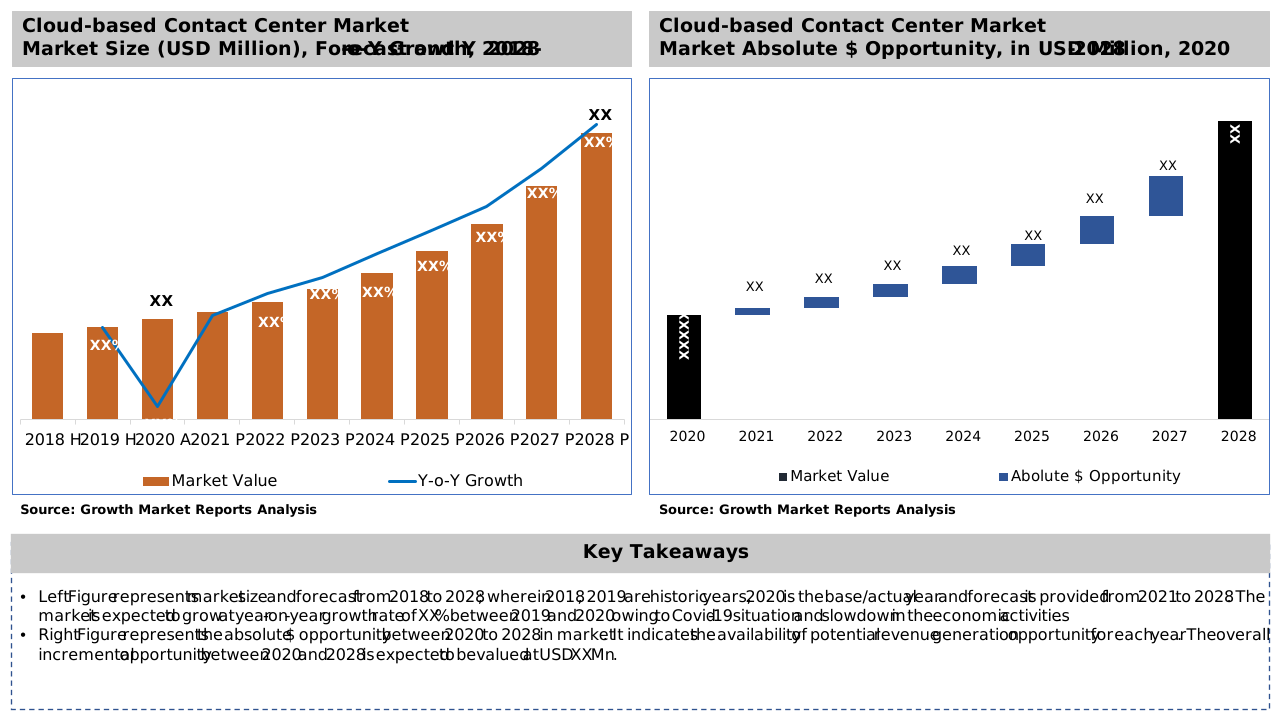
According to our latest research, the global cloud-based contact center market size in 2024 stands at USD 27.3 billion, reflecting robust adoption across diverse industries. The market is projected to grow at a remarkable CAGR of 22.1% from 2025 to 2033, reaching an estimated value of USD 192.7 billion by 2033. This impressive growth is being driven by increasing digital transformation initiatives, the rising demand for omnichannel customer engagement, and the scalability advantages offered by cloud-based solutions.

One of the primary growth factors fueling the expansion of the cloud-based contact center market is the accelerating shift towards digitalization and remote work across the globe. Organizations are increasingly prioritizing customer experience as a key differentiator, necessitating agile and scalable solutions that can be rapidly deployed and managed remotely. Cloud-based contact centers provide unparalleled flexibility, enabling businesses to quickly scale up or down based on demand fluctuations, integrate new communication channels, and seamlessly support remote agents. This agility is particularly critical in the post-pandemic era, as customer expectations for real-time, personalized interactions continue to rise and organizations seek to optimize operational costs while maintaining service excellence.

Another significant driver is the rapid adoption of advanced technologies such as artificial intelligence (AI), machine learning (ML), and analytics within cloud-based contact center platforms. These technologies empower organizations to automate routine customer interactions, enhance agent productivity, and derive actionable insights from vast volumes of customer data. AI-powered chatbots, intelligent call routing, and sentiment analysis are increasingly being leveraged to deliver proactive and contextually relevant customer service. Additionally, cloud-based analytics and reporting tools enable organizations to monitor key performance indicators (KPIs) in real time, optimize workforce management, and continuously refine customer engagement strategies. The seamless integration capabilities of cloud platforms further facilitate the adoption of emerging technologies, making them a preferred choice for forward-thinking businesses.

The growing emphasis on security, compliance, and data privacy is also shaping the trajectory of the cloud-based contact center market. With stringent regulatory requirements such as GDPR, HIPAA, and PCI DSS, organizations are seeking cloud solutions that offer robust security features, including end-to-end encryption, identity and access management, and comprehensive audit trails. Leading cloud-based contact center providers are investing heavily in security certifications and compliance frameworks, instilling greater confidence among enterprises to migrate critical customer engagement operations to the cloud. This trend is particularly pronounced in highly regulated sectors such as BFSI and healthcare, where data protection is paramount.

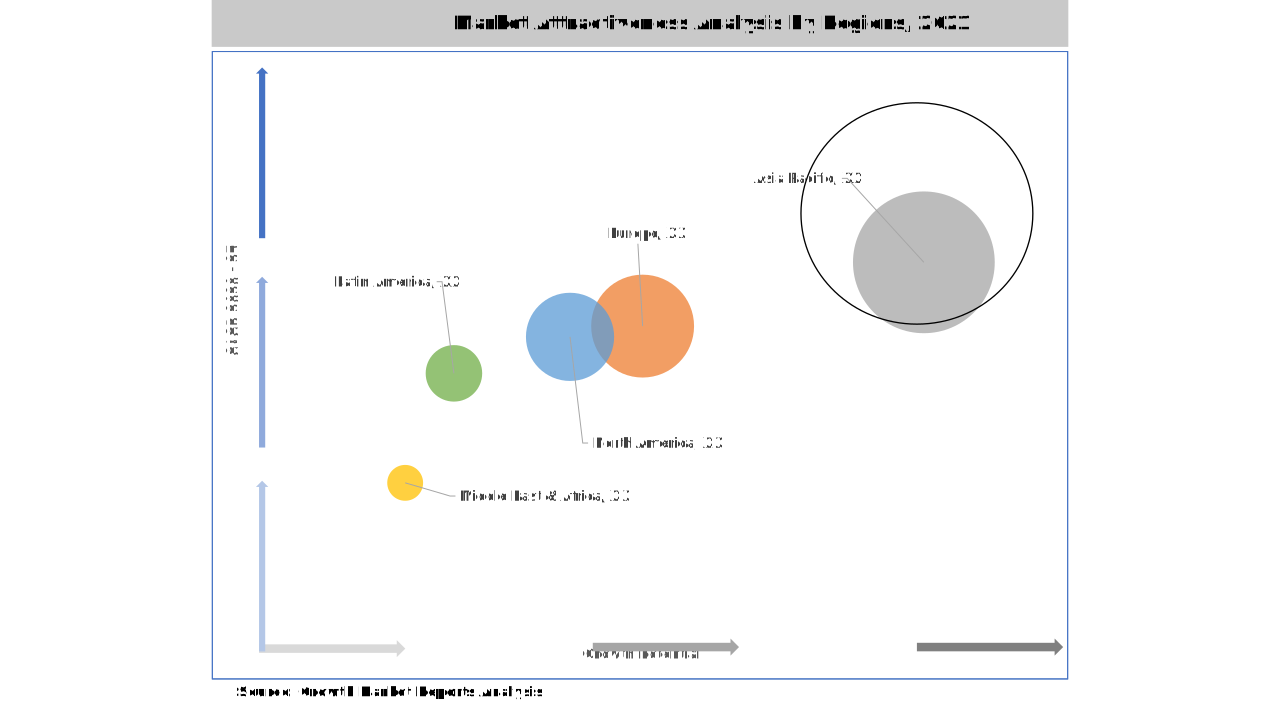
From a regional perspective, North America continues to dominate the cloud-based contact center market, accounting for the largest revenue share in 2024. The region's leadership is underpinned by the presence of global technology giants, a mature cloud infrastructure, and early adoption of omnichannel customer engagement strategies. However, the Asia Pacific region is witnessing the fastest growth, driven by rapid digital transformation, expanding internet penetration, and the proliferation of SMEs embracing cloud technologies. Europe is also experiencing steady growth, supported by strong regulatory frameworks and increasing investments in customer experience management. Latin America and the Middle East & Africa are gradually emerging as promising markets, propelled by the modernization of legacy contact center systems and a growing focus on customer-centric business models.

Global Cloud-based Contact Center Industry Outlook

Component Analysis

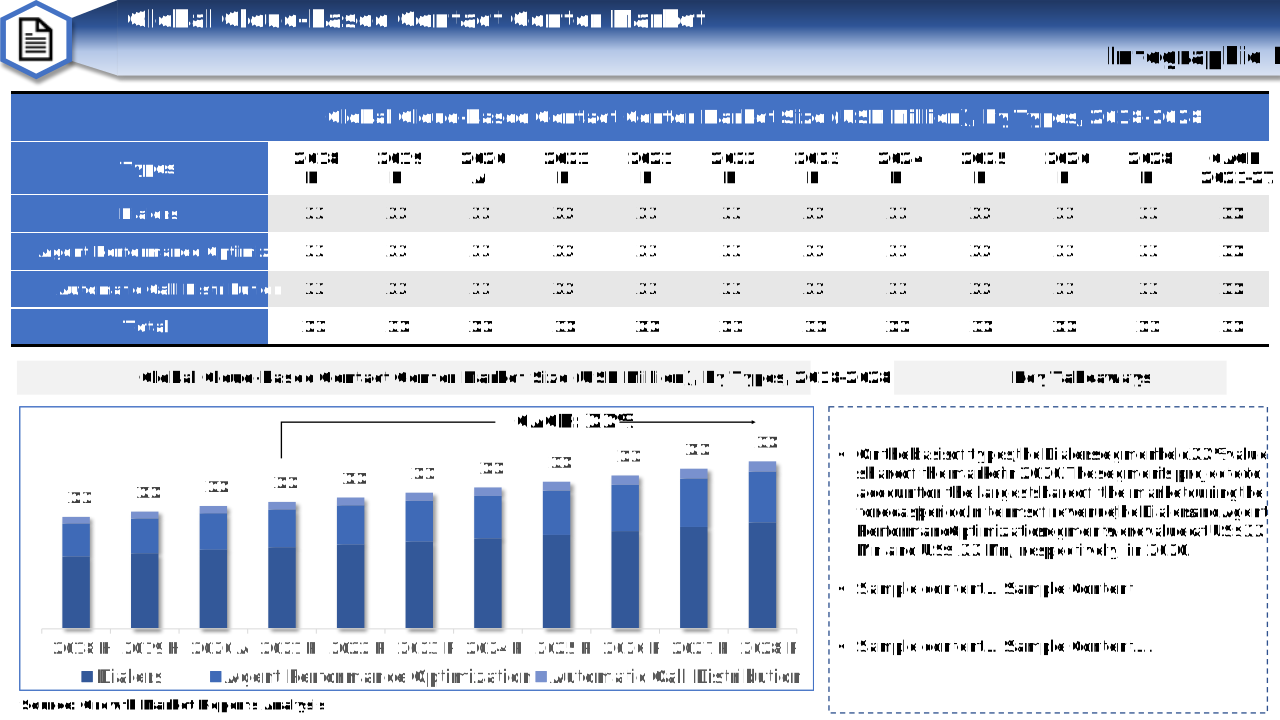
The cloud-based contact center market is segmented by component into solutions and services, each playing a pivotal role in the overall ecosystem. Solutions encompass a wide range of software offerings, including omnichannel routing, interactive voice response (IVR), automatic call distribution (ACD), workforce optimization, and analytics platforms. These solutions are designed to streamline customer interactions, enhance agent efficiency, and provide actionable insights for continuous improvement. The demand for advanced solutions is being fueled by organizations' need to deliver seamless and personalized customer experiences across multiple touchpoints, including voice, email, chat, social media, and messaging apps. As businesses increasingly prioritize customer-centric strategies, the adoption of comprehensive cloud-based solutions is expected to surge.

Services, on the other hand, include professional services such as consulting, implementation, integration, training, and support, as well as managed services. These services are critical for ensuring the successful deployment, customization, and ongoing optimization of cloud-based contact center platforms. With the complexity of integrating cloud solutions into existing IT environments, organizations are relying on service providers to guide them through the migration process, address technical challenges, and ensure compliance with industry regulations. Managed services are gaining traction as organizations seek to offload the management of contact center operations to specialized providers, enabling them to focus on core business activities while benefiting from expert support and continuous innovation.

The solutions segment currently holds the largest share of the market, driven by the increasing adoption of omnichannel engagement platforms and advanced analytics tools. However, the services segment is expected to exhibit the highest growth rate during the forecast period, as organizations recognize the value of expert guidance in navigating the complexities of cloud migration and optimizing their contact center operations. The rising demand for end-to-end managed services, particularly among small and medium enterprises (SMEs), is further contributing to the growth of this segment.

The integration of AI and automation capabilities into both solutions and services is transforming the landscape of the cloud-based contact center market. AI-powered solutions are enabling organizations to automate routine tasks, enhance self-service options, and deliver proactive customer support, while service providers are leveraging AI-driven tools to monitor system performance, predict maintenance needs, and deliver personalized training to agents. This convergence of technology and expertise is creating new opportunities for innovation and differentiation, positioning both solutions and services as critical enablers of next-generation customer engagement.

Report Scope

Attributes Details
Report Title Cloud-based Contact Center Market Research Report 2033
By Component Solutions, Services
By Deployment Mode Public Cloud, Private Cloud, Hybrid Cloud
By Organization Size Small and Medium Enterprises, Large Enterprises
By Application Customer Service, Call Routing and Queuing, Workforce Optimization, Analytics and Reporting, Others
By End-User BFSI, Healthcare, IT and Telecommunications, Retail and E-commerce, Government, Travel and Hospitality, Others
Regions Covered North America, Europe, APAC, Latin America, MEA
Base Year 2024
Historic Data 2018-2023
Forecast Period 2025-2033
Number of Pages 290
Number of Tables & Figures 277
Customization Available Yes, the report can be customized as per your need.

Deployment Mode Analysis

Deployment mode is a crucial consideration in the cloud-based contact center market, with organizations choosing between public cloud, private cloud, and hybrid cloud models based on their specific requirements for scalability, security, and control. The public cloud deployment mode remains the most popular, particularly among SMEs and organizations seeking rapid deployment, cost efficiency, and the ability to scale resources on demand. Public cloud providers offer a shared infrastructure model, enabling businesses to benefit from economies of scale, automatic updates, and access to the latest features without significant upfront investments. This model is especially attractive for organizations with dynamic workloads and limited IT resources.

Private cloud deployment, in contrast, is preferred by large enterprises and organizations operating in highly regulated industries such as BFSI and healthcare, where data security, compliance, and customization are paramount. Private cloud solutions offer dedicated infrastructure, enhanced control over data, and the ability to tailor the environment to meet specific regulatory and business requirements. While private cloud deployments typically involve higher costs and longer implementation timelines, they provide organizations with greater flexibility to implement advanced security measures, integrate with legacy systems, and maintain full ownership of their data.

Hybrid cloud deployment is emerging as a compelling option for organizations seeking to balance the benefits of public and private cloud models. Hybrid cloud solutions enable businesses to leverage the scalability and cost-effectiveness of the public cloud for non-sensitive workloads, while retaining critical customer data and applications in a secure private cloud environment. This approach offers the flexibility to optimize resource allocation, manage compliance risks, and ensure business continuity in the event of disruptions. As organizations increasingly adopt multi-cloud strategies, the demand for hybrid cloud solutions is expected to grow, driven by the need for seamless integration, interoperability, and centralized management.

The choice of deployment mode is influenced by a range of factors, including the organization's size, industry, regulatory landscape, and digital maturity. Leading cloud-based contact center providers are responding to these diverse needs by offering flexible deployment options, robust security features, and comprehensive support services. The ongoing evolution of cloud infrastructure, coupled with advancements in network connectivity and edge computing, is further expanding the possibilities for innovative deployment models, enabling organizations to deliver exceptional customer experiences regardless of their operational constraints.

Organization Size Analysis

The cloud-based contact center market is segmented by organization size into small and medium enterprises (SMEs) and large enterprises, each with distinct needs and adoption patterns. SMEs are increasingly embracing cloud-based contact center solutions to overcome the limitations of traditional on-premises systems, such as high upfront costs, limited scalability, and complex maintenance requirements. Cloud solutions offer SMEs the flexibility to start small, scale as their business grows, and access advanced features that were previously only available to larger organizations. The pay-as-you-go pricing model, rapid deployment, and minimal IT overhead make cloud-based contact centers an attractive option for resource-constrained SMEs seeking to enhance customer engagement and compete with larger players.

Large enterprises, on the other hand, are leveraging cloud-based contact center platforms to drive digital transformation, streamline global operations, and deliver consistent customer experiences across multiple markets. With complex organizational structures, diverse customer bases, and stringent compliance requirements, large enterprises require highly customizable and scalable solutions that can integrate seamlessly with existing IT ecosystems. Cloud-based platforms enable these organizations to centralize customer engagement operations, standardize processes, and leverage advanced analytics to gain a holistic view of customer interactions. The ability to support thousands of agents across multiple locations, languages, and channels is a key differentiator for large enterprises operating in competitive markets.

The adoption of cloud-based contact center solutions by SMEs is expected to accelerate at a faster pace than large enterprises during the forecast period, driven by the democratization of advanced technologies and the increasing availability of affordable, easy-to-deploy solutions. However, large enterprises will continue to account for a significant share of market revenue, given their greater investment capacity and the complexity of their requirements. Both segments are benefiting from the ongoing innovation in cloud-based platforms, including AI-driven automation, omnichannel engagement, and real-time analytics, which are leveling the playing field and enabling organizations of all sizes to deliver world-class customer service.

The growing trend of remote and hybrid work is further shaping the adoption patterns across organization sizes. SMEs are leveraging cloud-based contact centers to enable remote agents, reduce infrastructure costs, and ensure business continuity, while large enterprises are implementing global virtual contact centers to support distributed teams and deliver 24/7 customer support. The scalability, flexibility, and resilience of cloud-based solutions are proving invaluable in addressing the evolving needs of organizations in a rapidly changing business landscape.

Application Analysis

The cloud-based contact center market is segmented by application into customer service, call routing and queuing, workforce optimization, analytics and reporting, and others. Customer service remains the primary application, as organizations seek to deliver seamless, personalized, and efficient support across multiple channels. Cloud-based platforms enable real-time interaction management, intelligent case routing, and integration with customer relationship management (CRM) systems, empowering agents to resolve issues quickly and effectively. The ability to provide consistent service experiences across voice, chat, email, and social media is a key driver of adoption, particularly in customer-centric industries such as retail, BFSI, and telecommunications.

Call routing and queuing applications are essential for optimizing contact center operations and ensuring that customer inquiries are directed to the most appropriate agents or departments. Advanced cloud-based solutions leverage AI and machine learning algorithms to analyze customer intent, predict call volumes, and dynamically adjust routing strategies in real time. This results in reduced wait times, improved first-call resolution rates, and enhanced customer satisfaction. The scalability of cloud platforms also allows organizations to handle peak call volumes and seasonal fluctuations with ease, minimizing the risk of service disruptions and maximizing operational efficiency.

Workforce optimization is another critical application, encompassing features such as workforce management, quality monitoring, performance analytics, and training. Cloud-based workforce optimization tools enable organizations to forecast staffing needs, schedule agents efficiently, monitor performance against key metrics, and deliver targeted coaching and feedback. The integration of AI-powered analytics and gamification features is further enhancing agent engagement, reducing attrition, and driving continuous improvement. Organizations are increasingly recognizing the value of workforce optimization in improving both operational efficiency and customer experience outcomes.

Analytics and reporting applications are gaining prominence as organizations seek to derive actionable insights from vast volumes of customer interaction data. Cloud-based analytics platforms provide real-time dashboards, customizable reports, and predictive analytics capabilities, enabling organizations to monitor key performance indicators, identify emerging trends, and make data-driven decisions. The ability to integrate data from multiple channels and touchpoints is empowering organizations to gain a holistic view of the customer journey, optimize processes, and drive strategic initiatives. The growing emphasis on data-driven decision-making is expected to fuel the adoption of advanced analytics and reporting tools in the cloud-based contact center market.

End-User Analysis

The cloud-based contact center market serves a diverse array of end-users, including BFSI, healthcare, IT and telecommunications, retail and e-commerce, government, travel and hospitality, and others. The BFSI sector is one of the largest adopters, driven by the need to deliver secure, compliant, and personalized customer interactions across multiple channels. Cloud-based solutions enable BFSI organizations to streamline customer onboarding, support digital banking initiatives, and ensure regulatory compliance, while providing the agility to respond to changing customer needs and market dynamics. The integration of AI and analytics is further enhancing fraud detection, risk management, and customer engagement in the BFSI sector.

Healthcare organizations are increasingly turning to cloud-based contact centers to support patient engagement, appointment scheduling, telehealth services, and care coordination. The ability to integrate with electronic health records (EHR) systems, ensure data privacy, and support remote consultations is driving adoption in this sector. Cloud-based platforms are enabling healthcare providers to deliver timely, personalized, and accessible care, while optimizing resource allocation and improving patient outcomes. The ongoing digital transformation of healthcare, coupled with the need for scalable and secure communication solutions, is expected to drive significant growth in this segment.

The IT and telecommunications sector is leveraging cloud-based contact centers to manage complex customer support operations, deliver technical assistance, and support large-scale service deployments. The ability to handle high call volumes, support multiple languages, and integrate with existing IT systems is critical for organizations in this sector. Retail and e-commerce companies are adopting cloud-based contact centers to deliver omnichannel customer service, manage order inquiries, and support personalized marketing campaigns. The scalability and flexibility of cloud solutions are enabling retailers to respond to seasonal demand spikes, launch new products, and deliver consistent experiences across online and offline channels.

Government agencies and organizations in the travel and hospitality sector are also embracing cloud-based contact centers to enhance citizen engagement, manage public inquiries, and deliver responsive services. The ability to support remote work, ensure business continuity, and comply with regulatory requirements is driving adoption in these sectors. The "others" category includes industries such as education, utilities, and non-profits, which are increasingly recognizing the value of cloud-based solutions in improving stakeholder engagement and operational efficiency.

Opportunities & Threats

The cloud-based contact center market presents significant opportunities for innovation and growth, particularly in the areas of AI-driven automation, omnichannel engagement, and advanced analytics. The integration of conversational AI, natural language processing (NLP), and machine learning is enabling organizations to automate routine interactions, deliver personalized support, and proactively address customer needs. The growing demand for self-service options, such as chatbots and virtual assistants, is creating new opportunities for solution providers to differentiate their offerings and deliver greater value to customers. Additionally, the rise of omnichannel engagement, fueled by the proliferation of digital communication channels, is driving organizations to adopt cloud-based platforms that can seamlessly manage interactions across voice, chat, email, social media, and messaging apps.

Another key opportunity lies in the expansion of the cloud-based contact center market into emerging regions and verticals. As digital transformation accelerates in Asia Pacific, Latin America, and the Middle East & Africa, organizations in these regions are increasingly investing in cloud-based solutions to modernize their customer engagement operations and gain a competitive edge. The growing adoption of cloud technologies by SMEs, government agencies, and non-traditional sectors is further expanding the addressable market. Solution providers that can offer localized support, industry-specific features, and flexible deployment options are well positioned to capitalize on these growth opportunities.

Despite the immense potential, the cloud-based contact center market faces several restraining factors, the most significant of which is data security and privacy concerns. Organizations operating in highly regulated industries or handling sensitive customer information are often hesitant to migrate their contact center operations to the cloud due to fears of data breaches, unauthorized access, and compliance violations. The complexity of managing data across multiple jurisdictions, coupled with evolving regulatory requirements, poses significant challenges for both solution providers and end-users. Addressing these concerns requires ongoing investment in robust security measures, comprehensive compliance frameworks, and transparent data governance practices.

Regional Outlook

In 2024, North America leads the global cloud-based contact center market with a market size of USD 10.8 billion, accounting for nearly 40% of the total global revenue. The region’s dominance is underpinned by early cloud adoption, a mature IT infrastructure, and the presence of leading technology vendors. The United States, in particular, has been at the forefront of deploying advanced cloud-based contact center solutions, driven by high customer expectations, a competitive business landscape, and robust investments in digital transformation. Canada is also witnessing significant growth, fueled by increasing cloud adoption among SMEs and government agencies.

Europe is the second-largest regional market, with a 2024 market size of USD 6.2 billion. The region’s growth is supported by stringent data protection regulations, such as GDPR, which are driving organizations to adopt secure and compliant cloud-based solutions. The United Kingdom, Germany, and France are leading adopters, with strong demand from BFSI, retail, and public sector organizations. The European market is expected to grow at a CAGR of 20.1% through 2033, as organizations continue to invest in digital customer engagement and omnichannel strategies.

The Asia Pacific region is the fastest-growing market, with a 2024 value of USD 5.1 billion and a projected CAGR of 26.5% through 2033. Rapid digitalization, expanding internet penetration, and the proliferation of cloud-native startups are fueling adoption across key markets such as China, India, Japan, and Australia. The region’s growth is further supported by government initiatives to promote digital transformation and the increasing availability of affordable cloud-based solutions for SMEs. Latin America and Middle East & Africa are emerging as high-potential markets, with a combined market size of USD 5.2 billion in 2024, driven by the modernization of legacy systems and a growing focus on customer-centric business models.

Cloud-based Contact Center Market Statistics

Competitor Outlook

The cloud-based contact center market is characterized by intense competition, rapid innovation, and a diverse ecosystem of global and regional players. Leading vendors are continuously investing in research and development to enhance their product portfolios, integrate advanced technologies, and deliver differentiated value propositions to customers. The market is witnessing a wave of mergers and acquisitions, strategic partnerships, and alliances as companies seek to expand their geographic reach, access new customer segments, and strengthen their technological capabilities. The competitive landscape is further shaped by the entry of new players, the emergence of niche solution providers, and the growing influence of hyperscale cloud providers.

Key competitive factors in the market include product innovation, scalability, security, ease of integration, and customer support. Vendors are differentiating themselves by offering end-to-end omnichannel engagement platforms, AI-powered automation, advanced analytics, and flexible deployment options. The ability to support hybrid and multi-cloud environments, deliver seamless integration with third-party applications, and provide robust security and compliance features is increasingly important for winning large enterprise deals. Service excellence, including consulting, implementation, and managed services, is also a critical differentiator, particularly for organizations undertaking complex cloud migration projects.

The market is dominated by a handful of global leaders, including NICE Ltd., Genesys, Cisco Systems, Five9, and Avaya, each with a strong track record of innovation, a broad customer base, and a comprehensive suite of cloud-based contact center solutions. These companies are leveraging their scale, brand reputation, and extensive partner networks to maintain their leadership positions. At the same time, emerging players such as Talkdesk, 8x8, and RingCentral are gaining traction by offering agile, cloud-native platforms, competitive pricing, and a focus on customer-centric innovation. Regional players are also making inroads by addressing local market needs and providing tailored solutions for specific industries.

NICE Ltd. is recognized for its advanced analytics, workforce optimization, and AI-driven automation capabilities, serving a diverse range of industries worldwide. Genesys is a leader in omnichannel contact center solutions, offering a unified platform that integrates voice, digital, and AI-powered engagement. Cisco Systems leverages its expertise in networking and collaboration to deliver secure, scalable cloud contact center solutions for enterprises of all sizes. Five9 is known for its cloud-native architecture, ease of integration, and strong focus on AI and automation. Avaya continues to evolve its portfolio with hybrid cloud offerings and a focus on customer experience transformation. Together, these companies are shaping the future of the cloud-based contact center market, driving innovation and setting new benchmarks for customer engagement in the digital age.

Key Players

  • Amazon Web Services (AWS)
  • Genesys
  • Cisco Systems
  • Five9
  • NICE Ltd.
  • Avaya
  • Talkdesk
  • 8x8 Inc.
  • RingCentral
  • Vonage
  • Twilio
  • Mitel Networks
  • Content Guru
  • Alvaria (formerly Aspect Software)
  • Serenova (now part of Lifesize)
  • Zendesk
  • Oracle
  • SAP
  • UJET
  • Voximplant
Cloud-based Contact Center Market Overview

Segments

The Cloud-based Contact Center market has been segmented on the basis of

Component

  • Solutions
  • Services

Deployment Mode

  • Public Cloud
  • Private Cloud
  • Hybrid Cloud

Organization Size

  • Small and Medium Enterprises
  • Large Enterprises

Application

  • Customer Service
  • Call Routing and Queuing
  • Workforce Optimization
  • Analytics and Reporting
  • Others

End-User

  • BFSI
  • Healthcare
  • IT and Telecommunications
  • Retail and E-commerce
  • Government
  • Travel and Hospitality
  • Others

Competitive Landscape

Key players competing in the cloud-based contact center market include 3C Logic Inc., RingCentral Inc., Connect First Inc., Avaya Contact Center (Avaya Group), Genesys Telecommunications Laboratories Inc., Amazon Web Services, and ZephyrTel.

Amazon Web Services and Zephyrtel solution signed telecom-focused co-operating contract to relocate ZephyrTel solutions to Amazon Web Services along with OASIS cloud-based contact center.

Some of these players are using several market strategies such as acquisitions, merger, collaborations, partnerships, capacity expansion, and product launches to enhance their market shares.
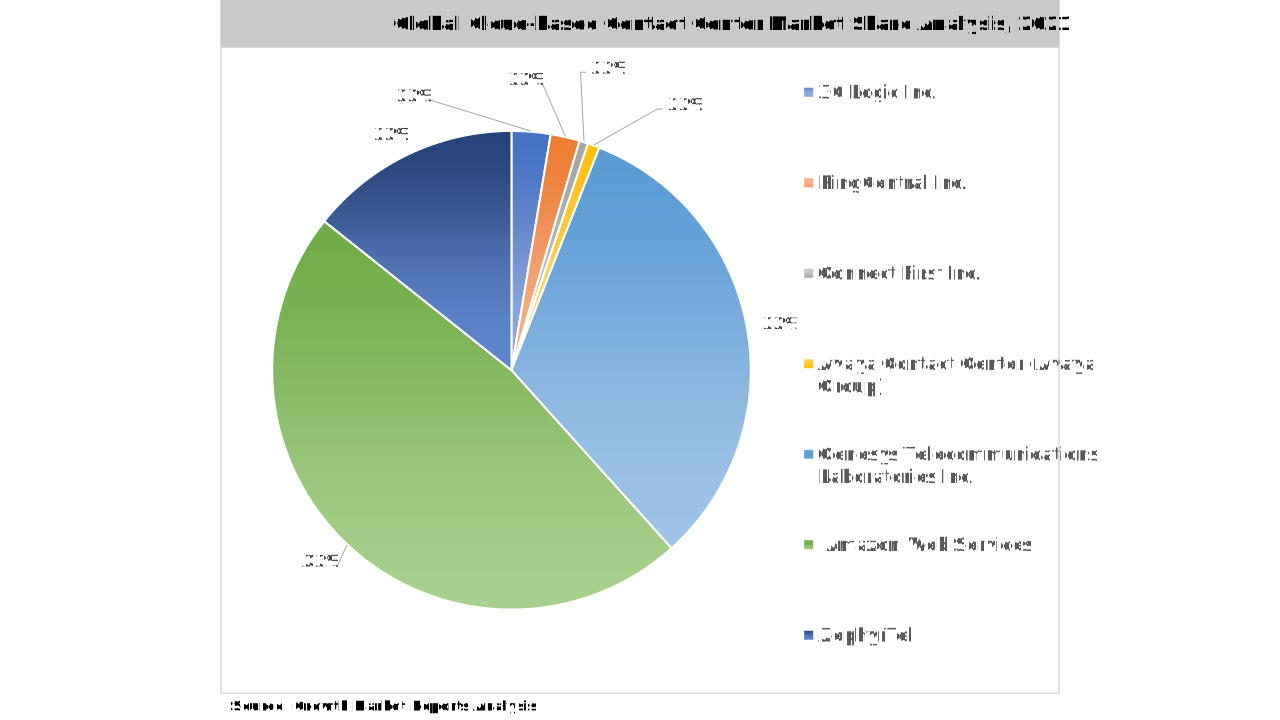

Global Cloud Based Contact Center Market Key Players

Frequently Asked Questions

Top vendors include NICE Ltd., Genesys, Cisco Systems, Five9, Avaya, Amazon Web Services (AWS), Talkdesk, 8x8 Inc., RingCentral, Vonage, Twilio, Mitel Networks, Content Guru, Alvaria, Serenova, Zendesk, Oracle, SAP, UJET, and Voximplant.

Opportunities include AI-driven automation, omnichannel engagement, and expansion into emerging regions. Key challenges are data security, privacy concerns, and compliance with evolving regulations.

Major end-users include BFSI, healthcare, IT and telecommunications, retail and e-commerce, government, travel and hospitality, and others such as education and utilities.

Key applications include customer service, call routing and queuing, workforce optimization, analytics and reporting, and other specialized functions.

North America leads the market in revenue, while the Asia Pacific region is experiencing the fastest growth due to rapid digital transformation and expanding internet penetration.

The market is segmented into solutions (such as omnichannel routing, IVR, ACD, workforce optimization, and analytics) and services (including consulting, implementation, integration, training, support, and managed services).

Deployment modes include public cloud, private cloud, and hybrid cloud, each offering different levels of scalability, security, and control to meet specific organizational needs.

Key drivers include digital transformation initiatives, demand for omnichannel customer engagement, scalability, remote work trends, and the integration of advanced technologies like AI and analytics.

The cloud-based contact center market is expected to grow at a CAGR of 22.1% from 2025 to 2033, reaching an estimated value of USD 192.7 billion by 2033.

The global cloud-based contact center market size in 2024 is valued at USD 27.3 billion, reflecting strong adoption across various industries.

Table Of Content

Chapter 1 Executive Summary
Chapter 2 Assumptions and Acronyms Used
Chapter 3 Research Methodology
Chapter 4 Cloud-based Contact Center Market Overview
   4.1 Introduction
      4.1.1 Market Taxonomy
      4.1.2 Market Definition
      4.1.3 Macro-Economic Factors Impacting the Market Growth
   4.2 Cloud-based Contact Center Market Dynamics
      4.2.1 Market Drivers
      4.2.2 Market Restraints
      4.2.3 Market Opportunity
   4.3 Cloud-based Contact Center Market - Supply Chain Analysis
      4.3.1 List of Key Suppliers
      4.3.2 List of Key Distributors
      4.3.3 List of Key Consumers
   4.4 Key Forces Shaping the Cloud-based Contact Center Market
      4.4.1 Bargaining Power of Suppliers
      4.4.2 Bargaining Power of Buyers
      4.4.3 Threat of Substitution
      4.4.4 Threat of New Entrants
      4.4.5 Competitive Rivalry
   4.5 Global Cloud-based Contact Center Market Size & Forecast, 2023-2032
      4.5.1 Cloud-based Contact Center Market Size and Y-o-Y Growth
      4.5.2 Cloud-based Contact Center Market Absolute $ Opportunity

Chapter 5 Global Cloud-based Contact Center Market Analysis and Forecast By Component
   5.1 Introduction
      5.1.1 Key Market Trends & Growth Opportunities By Component
      5.1.2 Basis Point Share (BPS) Analysis By Component
      5.1.3 Absolute $ Opportunity Assessment By Component
   5.2 Cloud-based Contact Center Market Size Forecast By Component
      5.2.1 Solutions
      5.2.2 Services
   5.3 Market Attractiveness Analysis By Component

Chapter 6 Global Cloud-based Contact Center Market Analysis and Forecast By Deployment Mode
   6.1 Introduction
      6.1.1 Key Market Trends & Growth Opportunities By Deployment Mode
      6.1.2 Basis Point Share (BPS) Analysis By Deployment Mode
      6.1.3 Absolute $ Opportunity Assessment By Deployment Mode
   6.2 Cloud-based Contact Center Market Size Forecast By Deployment Mode
      6.2.1 Public Cloud
      6.2.2 Private Cloud
      6.2.3 Hybrid Cloud
   6.3 Market Attractiveness Analysis By Deployment Mode

Chapter 7 Global Cloud-based Contact Center Market Analysis and Forecast By Organization Size
   7.1 Introduction
      7.1.1 Key Market Trends & Growth Opportunities By Organization Size
      7.1.2 Basis Point Share (BPS) Analysis By Organization Size
      7.1.3 Absolute $ Opportunity Assessment By Organization Size
   7.2 Cloud-based Contact Center Market Size Forecast By Organization Size
      7.2.1 Small and Medium Enterprises
      7.2.2 Large Enterprises
   7.3 Market Attractiveness Analysis By Organization Size

Chapter 8 Global Cloud-based Contact Center Market Analysis and Forecast By Application
   8.1 Introduction
      8.1.1 Key Market Trends & Growth Opportunities By Application
      8.1.2 Basis Point Share (BPS) Analysis By Application
      8.1.3 Absolute $ Opportunity Assessment By Application
   8.2 Cloud-based Contact Center Market Size Forecast By Application
      8.2.1 Customer Service
      8.2.2 Call Routing and Queuing
      8.2.3 Workforce Optimization
      8.2.4 Analytics and Reporting
      8.2.5 Others
   8.3 Market Attractiveness Analysis By Application

Chapter 9 Global Cloud-based Contact Center Market Analysis and Forecast By End-User
   9.1 Introduction
      9.1.1 Key Market Trends & Growth Opportunities By End-User
      9.1.2 Basis Point Share (BPS) Analysis By End-User
      9.1.3 Absolute $ Opportunity Assessment By End-User
   9.2 Cloud-based Contact Center Market Size Forecast By End-User
      9.2.1 BFSI
      9.2.2 Healthcare
      9.2.3 IT and Telecommunications
      9.2.4 Retail and E-commerce
      9.2.5 Government
      9.2.6 Travel and Hospitality
      9.2.7 Others
   9.3 Market Attractiveness Analysis By End-User

Chapter 10 Global Cloud-based Contact Center Market Analysis and Forecast by Region
   10.1 Introduction
      10.1.1 Key Market Trends & Growth Opportunities By Region
      10.1.2 Basis Point Share (BPS) Analysis By Region
      10.1.3 Absolute $ Opportunity Assessment By Region
   10.2 Cloud-based Contact Center Market Size Forecast By Region
      10.2.1 North America
      10.2.2 Europe
      10.2.3 Asia Pacific
      10.2.4 Latin America
      10.2.5 Middle East & Africa (MEA)
   10.3 Market Attractiveness Analysis By Region

Chapter 11 Coronavirus Disease (COVID-19) Impact 
   11.1 Introduction 
   11.2 Current & Future Impact Analysis 
   11.3 Economic Impact Analysis 
   11.4 Government Policies 
   11.5 Investment Scenario

Chapter 12 North America Cloud-based Contact Center Analysis and Forecast
   12.1 Introduction
   12.2 North America Cloud-based Contact Center Market Size Forecast by Country
      12.2.1 U.S.
      12.2.2 Canada
   12.3 Basis Point Share (BPS) Analysis by Country
   12.4 Absolute $ Opportunity Assessment by Country
   12.5 Market Attractiveness Analysis by Country
   12.6 North America Cloud-based Contact Center Market Size Forecast By Component
      12.6.1 Solutions
      12.6.2 Services
   12.7 Basis Point Share (BPS) Analysis By Component 
   12.8 Absolute $ Opportunity Assessment By Component 
   12.9 Market Attractiveness Analysis By Component
   12.10 North America Cloud-based Contact Center Market Size Forecast By Deployment Mode
      12.10.1 Public Cloud
      12.10.2 Private Cloud
      12.10.3 Hybrid Cloud
   12.11 Basis Point Share (BPS) Analysis By Deployment Mode 
   12.12 Absolute $ Opportunity Assessment By Deployment Mode 
   12.13 Market Attractiveness Analysis By Deployment Mode
   12.14 North America Cloud-based Contact Center Market Size Forecast By Organization Size
      12.14.1 Small and Medium Enterprises
      12.14.2 Large Enterprises
   12.15 Basis Point Share (BPS) Analysis By Organization Size 
   12.16 Absolute $ Opportunity Assessment By Organization Size 
   12.17 Market Attractiveness Analysis By Organization Size
   12.18 North America Cloud-based Contact Center Market Size Forecast By Application
      12.18.1 Customer Service
      12.18.2 Call Routing and Queuing
      12.18.3 Workforce Optimization
      12.18.4 Analytics and Reporting
      12.18.5 Others
   12.19 Basis Point Share (BPS) Analysis By Application 
   12.20 Absolute $ Opportunity Assessment By Application 
   12.21 Market Attractiveness Analysis By Application
   12.22 North America Cloud-based Contact Center Market Size Forecast By End-User
      12.22.1 BFSI
      12.22.2 Healthcare
      12.22.3 IT and Telecommunications
      12.22.4 Retail and E-commerce
      12.22.5 Government
      12.22.6 Travel and Hospitality
      12.22.7 Others
   12.23 Basis Point Share (BPS) Analysis By End-User 
   12.24 Absolute $ Opportunity Assessment By End-User 
   12.25 Market Attractiveness Analysis By End-User

Chapter 13 Europe Cloud-based Contact Center Analysis and Forecast
   13.1 Introduction
   13.2 Europe Cloud-based Contact Center Market Size Forecast by Country
      13.2.1 Germany
      13.2.2 France
      13.2.3 Italy
      13.2.4 U.K.
      13.2.5 Spain
      13.2.6 Russia
      13.2.7 Rest of Europe
   13.3 Basis Point Share (BPS) Analysis by Country
   13.4 Absolute $ Opportunity Assessment by Country
   13.5 Market Attractiveness Analysis by Country
   13.6 Europe Cloud-based Contact Center Market Size Forecast By Component
      13.6.1 Solutions
      13.6.2 Services
   13.7 Basis Point Share (BPS) Analysis By Component 
   13.8 Absolute $ Opportunity Assessment By Component 
   13.9 Market Attractiveness Analysis By Component
   13.10 Europe Cloud-based Contact Center Market Size Forecast By Deployment Mode
      13.10.1 Public Cloud
      13.10.2 Private Cloud
      13.10.3 Hybrid Cloud
   13.11 Basis Point Share (BPS) Analysis By Deployment Mode 
   13.12 Absolute $ Opportunity Assessment By Deployment Mode 
   13.13 Market Attractiveness Analysis By Deployment Mode
   13.14 Europe Cloud-based Contact Center Market Size Forecast By Organization Size
      13.14.1 Small and Medium Enterprises
      13.14.2 Large Enterprises
   13.15 Basis Point Share (BPS) Analysis By Organization Size 
   13.16 Absolute $ Opportunity Assessment By Organization Size 
   13.17 Market Attractiveness Analysis By Organization Size
   13.18 Europe Cloud-based Contact Center Market Size Forecast By Application
      13.18.1 Customer Service
      13.18.2 Call Routing and Queuing
      13.18.3 Workforce Optimization
      13.18.4 Analytics and Reporting
      13.18.5 Others
   13.19 Basis Point Share (BPS) Analysis By Application 
   13.20 Absolute $ Opportunity Assessment By Application 
   13.21 Market Attractiveness Analysis By Application
   13.22 Europe Cloud-based Contact Center Market Size Forecast By End-User
      13.22.1 BFSI
      13.22.2 Healthcare
      13.22.3 IT and Telecommunications
      13.22.4 Retail and E-commerce
      13.22.5 Government
      13.22.6 Travel and Hospitality
      13.22.7 Others
   13.23 Basis Point Share (BPS) Analysis By End-User 
   13.24 Absolute $ Opportunity Assessment By End-User 
   13.25 Market Attractiveness Analysis By End-User

Chapter 14 Asia Pacific Cloud-based Contact Center Analysis and Forecast
   14.1 Introduction
   14.2 Asia Pacific Cloud-based Contact Center Market Size Forecast by Country
      14.2.1 China
      14.2.2 Japan
      14.2.3 South Korea
      14.2.4 India
      14.2.5 Australia
      14.2.6 South East Asia (SEA)
      14.2.7 Rest of Asia Pacific (APAC)
   14.3 Basis Point Share (BPS) Analysis by Country
   14.4 Absolute $ Opportunity Assessment by Country
   14.5 Market Attractiveness Analysis by Country
   14.6 Asia Pacific Cloud-based Contact Center Market Size Forecast By Component
      14.6.1 Solutions
      14.6.2 Services
   14.7 Basis Point Share (BPS) Analysis By Component 
   14.8 Absolute $ Opportunity Assessment By Component 
   14.9 Market Attractiveness Analysis By Component
   14.10 Asia Pacific Cloud-based Contact Center Market Size Forecast By Deployment Mode
      14.10.1 Public Cloud
      14.10.2 Private Cloud
      14.10.3 Hybrid Cloud
   14.11 Basis Point Share (BPS) Analysis By Deployment Mode 
   14.12 Absolute $ Opportunity Assessment By Deployment Mode 
   14.13 Market Attractiveness Analysis By Deployment Mode
   14.14 Asia Pacific Cloud-based Contact Center Market Size Forecast By Organization Size
      14.14.1 Small and Medium Enterprises
      14.14.2 Large Enterprises
   14.15 Basis Point Share (BPS) Analysis By Organization Size 
   14.16 Absolute $ Opportunity Assessment By Organization Size 
   14.17 Market Attractiveness Analysis By Organization Size
   14.18 Asia Pacific Cloud-based Contact Center Market Size Forecast By Application
      14.18.1 Customer Service
      14.18.2 Call Routing and Queuing
      14.18.3 Workforce Optimization
      14.18.4 Analytics and Reporting
      14.18.5 Others
   14.19 Basis Point Share (BPS) Analysis By Application 
   14.20 Absolute $ Opportunity Assessment By Application 
   14.21 Market Attractiveness Analysis By Application
   14.22 Asia Pacific Cloud-based Contact Center Market Size Forecast By End-User
      14.22.1 BFSI
      14.22.2 Healthcare
      14.22.3 IT and Telecommunications
      14.22.4 Retail and E-commerce
      14.22.5 Government
      14.22.6 Travel and Hospitality
      14.22.7 Others
   14.23 Basis Point Share (BPS) Analysis By End-User 
   14.24 Absolute $ Opportunity Assessment By End-User 
   14.25 Market Attractiveness Analysis By End-User

Chapter 15 Latin America Cloud-based Contact Center Analysis and Forecast
   15.1 Introduction
   15.2 Latin America Cloud-based Contact Center Market Size Forecast by Country
      15.2.1 Brazil
      15.2.2 Mexico
      15.2.3 Rest of Latin America (LATAM)
   15.3 Basis Point Share (BPS) Analysis by Country
   15.4 Absolute $ Opportunity Assessment by Country
   15.5 Market Attractiveness Analysis by Country
   15.6 Latin America Cloud-based Contact Center Market Size Forecast By Component
      15.6.1 Solutions
      15.6.2 Services
   15.7 Basis Point Share (BPS) Analysis By Component 
   15.8 Absolute $ Opportunity Assessment By Component 
   15.9 Market Attractiveness Analysis By Component
   15.10 Latin America Cloud-based Contact Center Market Size Forecast By Deployment Mode
      15.10.1 Public Cloud
      15.10.2 Private Cloud
      15.10.3 Hybrid Cloud
   15.11 Basis Point Share (BPS) Analysis By Deployment Mode 
   15.12 Absolute $ Opportunity Assessment By Deployment Mode 
   15.13 Market Attractiveness Analysis By Deployment Mode
   15.14 Latin America Cloud-based Contact Center Market Size Forecast By Organization Size
      15.14.1 Small and Medium Enterprises
      15.14.2 Large Enterprises
   15.15 Basis Point Share (BPS) Analysis By Organization Size 
   15.16 Absolute $ Opportunity Assessment By Organization Size 
   15.17 Market Attractiveness Analysis By Organization Size
   15.18 Latin America Cloud-based Contact Center Market Size Forecast By Application
      15.18.1 Customer Service
      15.18.2 Call Routing and Queuing
      15.18.3 Workforce Optimization
      15.18.4 Analytics and Reporting
      15.18.5 Others
   15.19 Basis Point Share (BPS) Analysis By Application 
   15.20 Absolute $ Opportunity Assessment By Application 
   15.21 Market Attractiveness Analysis By Application
   15.22 Latin America Cloud-based Contact Center Market Size Forecast By End-User
      15.22.1 BFSI
      15.22.2 Healthcare
      15.22.3 IT and Telecommunications
      15.22.4 Retail and E-commerce
      15.22.5 Government
      15.22.6 Travel and Hospitality
      15.22.7 Others
   15.23 Basis Point Share (BPS) Analysis By End-User 
   15.24 Absolute $ Opportunity Assessment By End-User 
   15.25 Market Attractiveness Analysis By End-User

Chapter 16 Middle East & Africa (MEA) Cloud-based Contact Center Analysis and Forecast
   16.1 Introduction
   16.2 Middle East & Africa (MEA) Cloud-based Contact Center Market Size Forecast by Country
      16.2.1 Saudi Arabia
      16.2.2 South Africa
      16.2.3 UAE
      16.2.4 Rest of Middle East & Africa (MEA)
   16.3 Basis Point Share (BPS) Analysis by Country
   16.4 Absolute $ Opportunity Assessment by Country
   16.5 Market Attractiveness Analysis by Country
   16.6 Middle East & Africa (MEA) Cloud-based Contact Center Market Size Forecast By Component
      16.6.1 Solutions
      16.6.2 Services
   16.7 Basis Point Share (BPS) Analysis By Component 
   16.8 Absolute $ Opportunity Assessment By Component 
   16.9 Market Attractiveness Analysis By Component
   16.10 Middle East & Africa (MEA) Cloud-based Contact Center Market Size Forecast By Deployment Mode
      16.10.1 Public Cloud
      16.10.2 Private Cloud
      16.10.3 Hybrid Cloud
   16.11 Basis Point Share (BPS) Analysis By Deployment Mode 
   16.12 Absolute $ Opportunity Assessment By Deployment Mode 
   16.13 Market Attractiveness Analysis By Deployment Mode
   16.14 Middle East & Africa (MEA) Cloud-based Contact Center Market Size Forecast By Organization Size
      16.14.1 Small and Medium Enterprises
      16.14.2 Large Enterprises
   16.15 Basis Point Share (BPS) Analysis By Organization Size 
   16.16 Absolute $ Opportunity Assessment By Organization Size 
   16.17 Market Attractiveness Analysis By Organization Size
   16.18 Middle East & Africa (MEA) Cloud-based Contact Center Market Size Forecast By Application
      16.18.1 Customer Service
      16.18.2 Call Routing and Queuing
      16.18.3 Workforce Optimization
      16.18.4 Analytics and Reporting
      16.18.5 Others
   16.19 Basis Point Share (BPS) Analysis By Application 
   16.20 Absolute $ Opportunity Assessment By Application 
   16.21 Market Attractiveness Analysis By Application
   16.22 Middle East & Africa (MEA) Cloud-based Contact Center Market Size Forecast By End-User
      16.22.1 BFSI
      16.22.2 Healthcare
      16.22.3 IT and Telecommunications
      16.22.4 Retail and E-commerce
      16.22.5 Government
      16.22.6 Travel and Hospitality
      16.22.7 Others
   16.23 Basis Point Share (BPS) Analysis By End-User 
   16.24 Absolute $ Opportunity Assessment By End-User 
   16.25 Market Attractiveness Analysis By End-User

Chapter 17 Competition Landscape 
   17.1 Cloud-based Contact Center Market: Competitive Dashboard
   17.2 Global Cloud-based Contact Center Market: Market Share Analysis, 2023
   17.3 Company Profiles (Details – Overview, Financials, Developments, Strategy) 
      17.3.1 Amazon Web Services (AWS)
Genesys
Cisco Systems
Five9
NICE Ltd.
Avaya
Talkdesk
8x8 Inc.
RingCentral
Vonage
Twilio
Mitel Networks
Content Guru
Alvaria (formerly Aspect Software)
Serenova (now part of Lifesize)
Zendesk
Oracle
SAP
UJET
Voximplant

Methodology

Our Clients

Honda Motor Co. Ltd.
The John Holland Group
Dassault Aviation
General Mills
FedEx Logistics
General Electric
Microsoft
Deloitte