Segments - by Service Type (Backup & Recovery, Real-Time Replication, Data Protection, Others), by Deployment Mode (Public Cloud, Private Cloud, Hybrid Cloud), by Organization Size (Small and Medium Enterprises, Large Enterprises), by End-User (BFSI, IT & Telecommunications, Healthcare, Government, Retail, Manufacturing, Others)
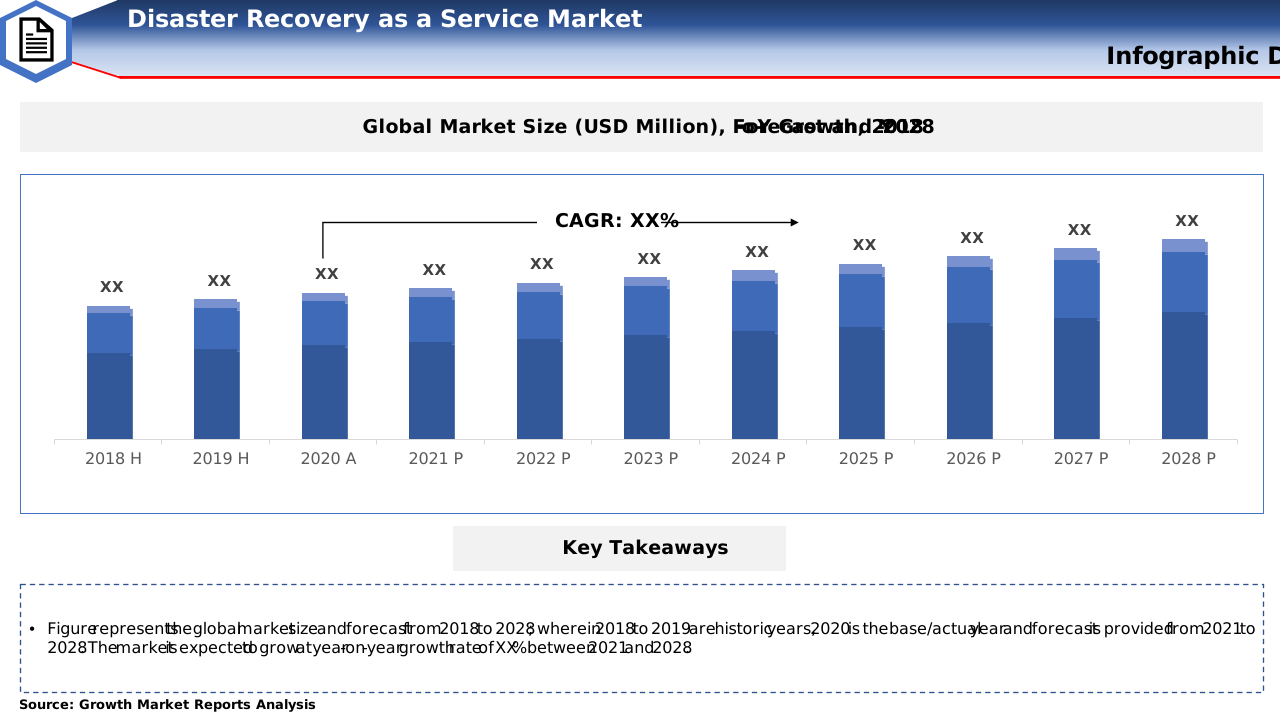
According to our latest research, the global Disaster Recovery as a Service (DRaaS) market size reached USD 11.2 billion in 2024, reflecting the sectorÂ’s rapid expansion due to increasing cyber threats and the growing need for robust business continuity strategies. The market is projected to grow at a CAGR of 22.8% during the forecast period, reaching a staggering USD 85.5 billion by 2033. This remarkable growth trajectory is primarily driven by the rising frequency of data breaches, natural disasters, and the critical demand for uninterrupted business operations across all industry verticals. As per our comprehensive analysis, organizations worldwide are prioritizing DRaaS adoption to fortify their IT infrastructure and ensure swift recovery from unplanned disruptions.
Several key growth factors are propelling the Disaster Recovery as a Service (DRaaS) market to new heights. First, the intensification of cyberattacks, including ransomware and sophisticated malware, has compelled enterprises to seek advanced data protection and recovery solutions. With digital transformation accelerating across sectors, businesses are increasingly vulnerable to data loss and operational downtime, making DRaaS an indispensable component of their IT strategy. Additionally, regulatory requirements concerning data integrity and business continuity, especially in highly regulated industries like BFSI and healthcare, are further stimulating demand. Organizations are now investing heavily in DRaaS to comply with stringent guidelines and to mitigate the risk of financial and reputational damage resulting from data unavailability.
Another significant driver is the widespread adoption of cloud computing, which has fundamentally transformed disaster recovery models. Traditional disaster recovery methods, often characterized by high costs and complex infrastructure, are being rapidly replaced by agile, scalable, and cost-effective DRaaS solutions. The flexibility offered by cloud-based disaster recovery allows businesses to tailor their recovery plans based on evolving needs, while also enabling seamless scalability and reduced capital expenditure. Furthermore, the integration of automation and artificial intelligence in DRaaS platforms is enhancing recovery speed and accuracy, providing organizations with near-instantaneous failover capabilities and minimizing manual intervention during crises.
Moreover, the proliferation of remote work and distributed IT environments is amplifying the necessity for robust, cloud-native disaster recovery solutions. As organizations expand their digital footprint and embrace hybrid workplace models, ensuring consistent data protection across geographically dispersed locations has become paramount. DRaaS not only offers centralized management and monitoring but also supports multi-cloud and hybrid cloud environments, thereby aligning with the evolving IT architectures of modern enterprises. This shift is particularly pronounced among small and medium enterprises (SMEs), which are leveraging DRaaS to access enterprise-grade disaster recovery capabilities without the need for substantial upfront investments in physical infrastructure.
In the realm of Disaster Recovery Solutions, businesses are increasingly seeking comprehensive strategies that encompass both prevention and rapid response to unforeseen events. These solutions are designed to ensure that organizations can quickly restore their operations and data integrity following a disruptive incident, thereby minimizing downtime and financial losses. As the digital landscape evolves, the complexity and frequency of threats such as cyberattacks and natural disasters have heightened the need for robust disaster recovery frameworks. By integrating advanced technologies and best practices, Disaster Recovery Solutions provide a critical safety net, enabling businesses to maintain continuity and safeguard their reputation in the face of adversity.
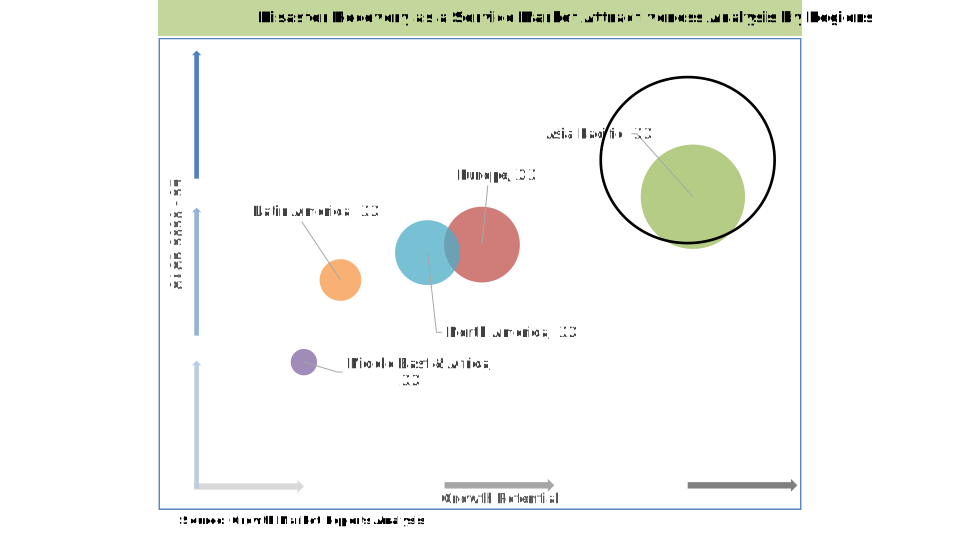
From a regional perspective, North America continues to dominate the DRaaS market, accounting for the largest revenue share in 2024, followed closely by Europe and Asia Pacific. The regionÂ’s leadership can be attributed to its advanced technological landscape, early adoption of cloud-based services, and the presence of major DRaaS providers. However, Asia Pacific is witnessing the fastest growth, fueled by rapid digitalization, increasing awareness of disaster recovery solutions, and a surge in cyber incidents across emerging economies. Latin America and the Middle East & Africa are also experiencing steady growth, supported by government initiatives and increasing investments in IT infrastructure. As organizations worldwide recognize the critical importance of disaster recovery, the DRaaS market is poised for robust expansion across all major regions.
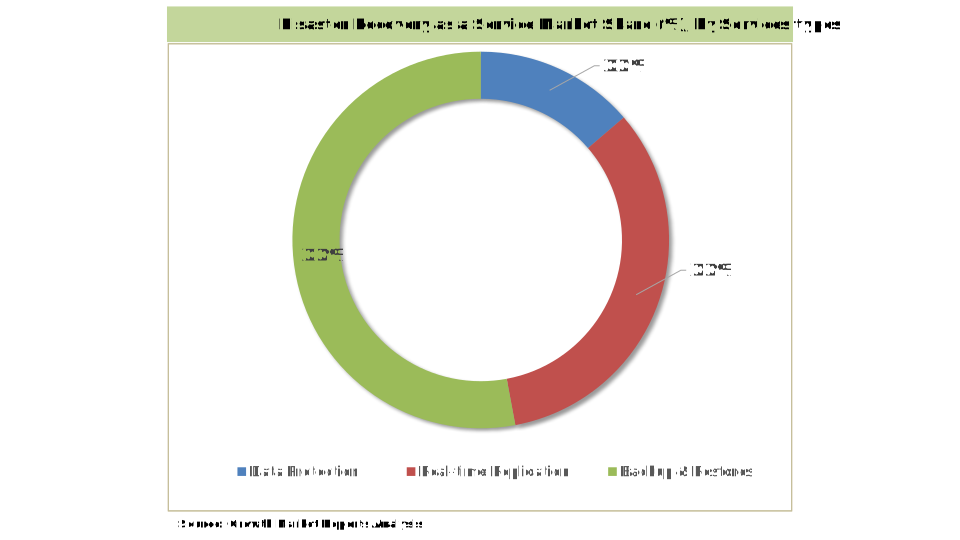
The service type segment of the Disaster Recovery as a Service market is comprised of Backup & Recovery, Real-Time Replication, Data Protection, and other ancillary services. Among these, Backup & Recovery holds the largest share, driven by the fundamental need for organizations to ensure data availability and integrity at all times. Backup & Recovery solutions provide businesses with the ability to restore critical data and applications swiftly in the event of a system failure or cyberattack, thus minimizing downtime and financial losses. The increasing adoption of cloud-based backup solutions, combined with advancements in automation and orchestration technologies, is making Backup & Recovery more efficient and cost-effective, further fueling its dominance in the DRaaS landscape.
Real-Time Replication is emerging as a crucial service type, particularly for organizations with zero-tolerance for downtime and data loss. This service enables continuous data synchronization between primary and secondary sites, ensuring that the most recent data state is always available for recovery. Industries such as BFSI, healthcare, and e-commerce, where real-time data access is mission-critical, are significantly investing in Real-Time Replication solutions. The growing reliance on real-time analytics and the need for uninterrupted business operations are expected to drive substantial growth in this segment throughout the forecast period.
Data Protection services within the DRaaS market are gaining prominence as organizations face increasing regulatory scrutiny and evolving threat landscapes. These services encompass a range of security measures, including encryption, access controls, and compliance monitoring, to safeguard sensitive data from unauthorized access or loss. The integration of advanced security features within DRaaS platforms is becoming a key differentiator for service providers, as businesses prioritize not just recovery but also the protection of their data assets. The rising incidence of data breaches and the growing awareness of data privacy regulations such as GDPR and HIPAA are expected to sustain the demand for robust Data Protection services.
Other services in the DRaaS market, such as disaster recovery planning, testing, and consulting, are also witnessing increased adoption as organizations seek comprehensive solutions to address their unique recovery needs. Service providers are offering tailored consulting services to help businesses assess risks, design recovery strategies, and conduct regular disaster recovery drills. This holistic approach ensures that organizations are well-prepared to respond to any disruptive event, thereby enhancing their overall resilience. As the threat landscape continues to evolve, the demand for specialized and customizable DRaaS services is expected to rise, creating new opportunities for market players.
| Attributes | Details |
| Report Title | Disaster Recovery as a Service Market Research Report 2033 |
| By Service Type | Backup & Recovery, Real-Time Replication, Data Protection, Others |
| By Deployment Mode | Public Cloud, Private Cloud, Hybrid Cloud |
| By Organization Size | Small and Medium Enterprises, Large Enterprises |
| By End-User | BFSI, IT & Telecommunications, Healthcare, Government, Retail, Manufacturing, Others |
| Regions Covered | North America, Europe, APAC, Latin America, MEA |
| Base Year | 2024 |
| Historic Data | 2018-2023 |
| Forecast Period | 2025-2033 |
| Number of Pages | 275 |
| Number of Tables & Figures | 355 |
| Customization Available | Yes, the report can be customized as per your need. |
Deployment mode is a critical factor influencing the adoption of Disaster Recovery as a Service solutions, with organizations choosing between Public Cloud, Private Cloud, and Hybrid Cloud models based on their specific requirements. The Public Cloud segment currently leads the market, driven by its cost-effectiveness, scalability, and ease of deployment. Public Cloud DRaaS solutions enable organizations to leverage shared infrastructure and pay-as-you-go pricing models, making disaster recovery accessible to businesses of all sizes. The proliferation of public cloud platforms such as AWS, Microsoft Azure, and Google Cloud is further accelerating the adoption of DRaaS in this segment, as organizations seek to capitalize on the agility and flexibility offered by these platforms.
Private Cloud deployment is favored by organizations with stringent security, compliance, and data sovereignty requirements. Industries such as government, healthcare, and BFSI, which handle sensitive and regulated data, often opt for Private Cloud DRaaS solutions to maintain greater control over their data and recovery processes. Private Cloud deployments offer enhanced customization, dedicated resources, and improved security postures, making them ideal for enterprises with complex disaster recovery needs. However, the higher costs associated with private cloud infrastructure can be a limiting factor for some organizations, particularly SMEs.
Hybrid Cloud deployment is gaining significant traction as organizations seek to balance the benefits of both public and private cloud environments. Hybrid Cloud DRaaS solutions allow businesses to distribute workloads across multiple environments, enabling them to optimize costs, enhance security, and improve recovery times. This deployment model is particularly well-suited for organizations with diverse IT environments and varying data sensitivity levels. The ability to seamlessly integrate on-premises infrastructure with cloud-based recovery solutions is a key advantage of Hybrid Cloud DRaaS, driving its adoption among large enterprises and organizations undergoing digital transformation.
The choice of deployment mode is heavily influenced by factors such as regulatory compliance, budget constraints, and the complexity of IT environments. As organizations continue to embrace cloud-first strategies and migrate critical workloads to the cloud, the demand for flexible and scalable DRaaS deployment models is expected to surge. Service providers are responding by offering a wide range of deployment options, along with value-added services such as migration support, integration, and ongoing management, to address the diverse needs of their customers.
The organization size segment of the Disaster Recovery as a Service market is divided into Small and Medium Enterprises (SMEs) and Large Enterprises. SMEs are increasingly recognizing the importance of robust disaster recovery solutions as they become more reliant on digital technologies for their day-to-day operations. Traditionally, SMEs have been constrained by limited IT budgets and resources, making it challenging to implement comprehensive disaster recovery plans. However, the advent of cloud-based DRaaS solutions has democratized access to enterprise-grade recovery capabilities, enabling SMEs to protect their data and ensure business continuity without significant capital investments.
Large Enterprises, on the other hand, have been early adopters of DRaaS, driven by their complex IT infrastructures, vast data volumes, and critical need for uninterrupted operations. These organizations often operate in highly regulated industries and face stringent compliance requirements, necessitating advanced disaster recovery strategies. Large Enterprises are leveraging DRaaS to enhance their resilience against a wide range of threats, from cyberattacks to natural disasters, while also optimizing recovery time objectives (RTOs) and recovery point objectives (RPOs). The scalability and flexibility offered by DRaaS solutions are particularly valuable for large organizations with distributed operations and global footprints.
The growing awareness of the financial and reputational risks associated with data loss and downtime is prompting organizations of all sizes to invest in disaster recovery solutions. SMEs are increasingly adopting DRaaS as part of their broader digital transformation initiatives, seeking to enhance their competitiveness and agility in a rapidly evolving business landscape. Service providers are responding by offering tailored DRaaS solutions for SMEs, featuring simplified deployment, intuitive management interfaces, and affordable pricing models. This trend is expected to drive significant growth in the SME segment over the forecast period.
Meanwhile, Large Enterprises are focusing on integrating DRaaS with other business continuity and risk management initiatives to create holistic resilience strategies. These organizations are investing in advanced DRaaS features such as real-time replication, automated failover, and multi-cloud support to ensure seamless recovery across complex IT environments. The ability to customize DRaaS solutions based on specific business requirements is a key factor driving adoption among large enterprises. As the threat landscape continues to evolve, both SMEs and Large Enterprises are expected to increase their investments in DRaaS, fueling overall market growth.
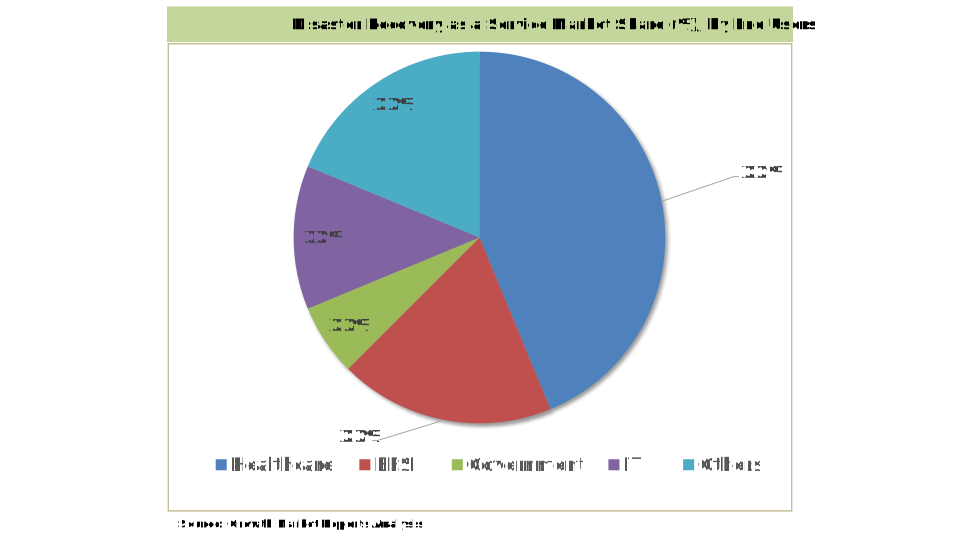
The end-user landscape for the Disaster Recovery as a Service market is diverse, encompassing sectors such as BFSI, IT & Telecommunications, Healthcare, Government, Retail, Manufacturing, and Others. The BFSI sector is the largest adopter of DRaaS solutions, owing to the critical importance of data integrity, regulatory compliance, and uninterrupted service delivery in this industry. Financial institutions face constant threats from cybercriminals and must comply with stringent regulations related to data protection and business continuity. DRaaS enables BFSI organizations to recover quickly from disruptions, minimize financial losses, and maintain customer trust, making it an essential component of their risk management strategies.
The IT & Telecommunications sector is another major end-user of DRaaS, driven by the need to ensure high availability and reliability of IT services. As digital transformation accelerates and organizations increasingly rely on cloud-based applications and services, the risk of downtime and data loss has become a significant concern. DRaaS solutions provide IT & Telecommunications companies with the ability to recover rapidly from outages and maintain service continuity, thereby enhancing customer satisfaction and operational efficiency. The growing adoption of 5G networks and edge computing is further increasing the demand for robust disaster recovery solutions in this sector.
Healthcare organizations are also rapidly adopting DRaaS solutions to protect sensitive patient data and ensure compliance with regulations such as HIPAA. The increasing digitization of healthcare records and the rise in cyberattacks targeting healthcare providers have underscored the need for advanced disaster recovery capabilities. DRaaS enables healthcare organizations to restore critical data and applications quickly, minimizing the impact of disruptions on patient care and operational workflows. The integration of DRaaS with electronic health record (EHR) systems and other healthcare IT platforms is expected to drive continued growth in this segment.
Other sectors, including Government, Retail, and Manufacturing, are also recognizing the value of DRaaS in safeguarding their operations against a wide range of threats. Government agencies are investing in DRaaS to ensure the continuity of public services and protect sensitive data from cyber threats. Retailers are leveraging DRaaS to maintain e-commerce operations and protect customer data, while manufacturers are adopting disaster recovery solutions to minimize production downtime and supply chain disruptions. As the importance of business continuity continues to grow across all industries, the demand for DRaaS is expected to remain robust across the end-user spectrum.
The Disaster Recovery as a Service market is ripe with opportunities, particularly as digital transformation initiatives accelerate across industries. The increasing adoption of cloud computing, coupled with the proliferation of IoT devices and edge computing, is creating new avenues for DRaaS providers to offer innovative, scalable, and flexible solutions. The integration of artificial intelligence and machine learning into DRaaS platforms is enhancing automation, enabling predictive analytics, and improving recovery times. These technological advancements are empowering organizations to implement proactive disaster recovery strategies, reduce manual intervention, and optimize resource utilization. As businesses continue to migrate their workloads to the cloud and embrace hybrid IT environments, the demand for next-generation DRaaS solutions is expected to surge, presenting significant growth opportunities for market players.
Another major opportunity lies in the growing focus on regulatory compliance and data privacy. Organizations across sectors are under increasing pressure to comply with a myriad of data protection regulations, such as GDPR, HIPAA, and CCPA. DRaaS providers that offer solutions with built-in compliance features, robust encryption, and comprehensive audit trails are well-positioned to capture market share. Additionally, the rising awareness of the financial and reputational risks associated with data loss and downtime is prompting organizations to invest in comprehensive disaster recovery strategies. Service providers that can deliver tailored, industry-specific DRaaS solutions, along with value-added services such as consulting, risk assessment, and ongoing management, stand to benefit from this growing demand.
Despite the numerous opportunities, the DRaaS market faces several restraining factors that could impede its growth. One of the primary challenges is the complexity of integrating DRaaS solutions with existing IT environments, particularly in organizations with legacy systems and heterogeneous infrastructures. Data security and privacy concerns associated with cloud-based disaster recovery solutions also remain a significant barrier, especially in highly regulated industries. Additionally, the lack of awareness and expertise among SMEs regarding the benefits and implementation of DRaaS can hinder market adoption. Service providers must address these challenges by offering seamless integration, robust security features, and comprehensive customer education to ensure widespread adoption of DRaaS solutions.
North America continues to lead the global Disaster Recovery as a Service market, accounting for approximately USD 4.7 billion in revenue in 2024. The regionÂ’s dominance is attributed to its advanced technological infrastructure, high adoption of cloud computing, and the presence of major DRaaS providers. Organizations in North America, particularly in the United States and Canada, are early adopters of innovative disaster recovery solutions, driven by the increasing frequency of cyberattacks and stringent regulatory requirements. The region is expected to maintain its leadership position throughout the forecast period, with a robust CAGR supported by ongoing investments in digital transformation and IT security.
Europe is the second-largest market for DRaaS, with a market size of approximately USD 2.6 billion in 2024. The regionÂ’s growth is fueled by the increasing adoption of cloud-based services, rising awareness of disaster recovery solutions, and stringent data protection regulations such as GDPR. Countries such as the United Kingdom, Germany, and France are at the forefront of DRaaS adoption, driven by the need to ensure business continuity and comply with regulatory requirements. The European market is expected to grow at a steady pace, supported by ongoing digitalization initiatives and the increasing prevalence of cyber threats across the region.
The Asia Pacific region is witnessing the fastest growth in the DRaaS market, with a remarkable CAGR of 27.5% during the forecast period. The market size in Asia Pacific reached USD 2.1 billion in 2024, driven by rapid digitalization, increasing investments in IT infrastructure, and a surge in cyber incidents across emerging economies such as China, India, and Southeast Asia. Organizations in the region are increasingly adopting DRaaS solutions to enhance their resilience against disruptions and ensure compliance with evolving data protection regulations. Latin America and the Middle East & Africa are also experiencing steady growth, with market sizes of USD 1.1 billion and USD 0.7 billion respectively in 2024, supported by government initiatives and increasing awareness of the importance of disaster recovery.
The Disaster Recovery as a Service market is characterized by intense competition, with a diverse mix of global technology giants, specialized DRaaS providers, and emerging startups vying for market share. The competitive landscape is shaped by continuous innovation, strategic partnerships, and mergers and acquisitions aimed at expanding service portfolios and geographic reach. Leading players are investing heavily in research and development to enhance the capabilities of their DRaaS platforms, incorporating advanced features such as real-time replication, automated failover, and artificial intelligence-driven analytics. The ability to deliver seamless integration with multi-cloud and hybrid cloud environments is emerging as a key differentiator in the market, as organizations seek flexible and scalable disaster recovery solutions.
Service providers are also focusing on delivering value-added services, such as disaster recovery planning, consulting, and managed services, to address the unique needs of their customers. Customization and industry-specific solutions are gaining prominence, as organizations in sectors such as BFSI, healthcare, and government require tailored disaster recovery strategies to comply with regulatory requirements and mitigate sector-specific risks. The emphasis on customer support and ongoing management is further intensifying competition, with providers offering comprehensive service level agreements (SLAs) and 24/7 support to ensure optimal performance and customer satisfaction.
The competitive landscape is also witnessing the entry of new players, particularly in emerging markets, who are leveraging innovative business models and advanced technologies to disrupt the status quo. These entrants are focusing on delivering cost-effective, easy-to-deploy DRaaS solutions targeted at SMEs and organizations with limited IT resources. Established players, in response, are expanding their offerings through strategic acquisitions and partnerships, aiming to strengthen their position in high-growth segments and geographies. The ongoing consolidation in the market is expected to intensify competition further, driving continuous innovation and service enhancement.
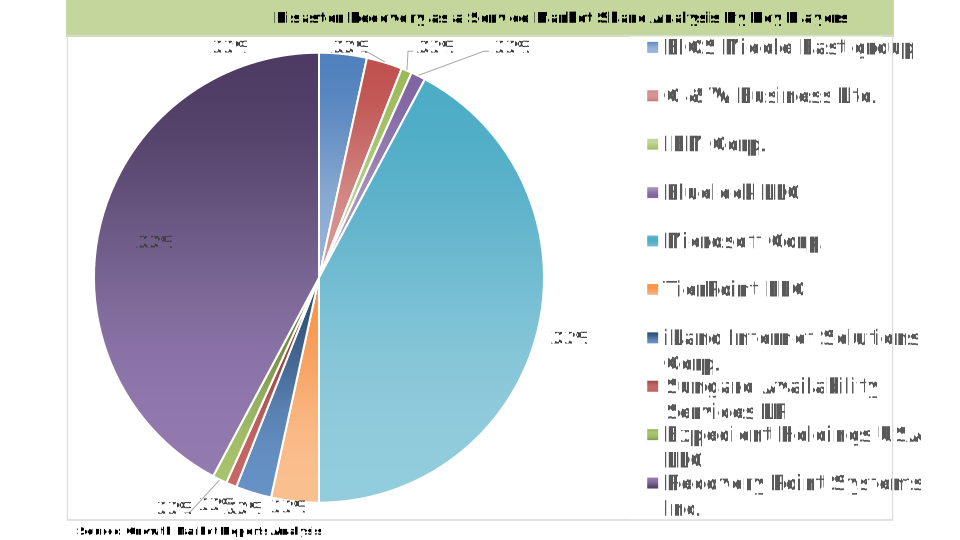
Major companies operating in the global DRaaS market include IBM Corporation, Microsoft Corporation, Amazon Web Services (AWS), VMware Inc., Dell Technologies, Acronis International, Zerto (a Hewlett Packard Enterprise company), Sungard Availability Services, and iland Internet Solutions, among others. IBM Corporation is renowned for its comprehensive suite of disaster recovery services, leveraging its global cloud infrastructure and advanced automation capabilities. Microsoft Corporation, with its Azure Site Recovery offering, provides seamless integration with existing Microsoft environments and robust support for hybrid cloud deployments. AWS is a dominant player, offering scalable and flexible DRaaS solutions through its extensive cloud platform. VMware Inc. and Dell Technologies are also prominent, known for their strong presence in virtualization and cloud infrastructure, enabling organizations to implement resilient and efficient disaster recovery strategies.
Acronis International and Zerto are recognized for their innovative approaches to disaster recovery and data protection, with solutions that cater to both SMEs and large enterprises. Sungard Availability Services and iland Internet Solutions are specialized providers, offering managed DRaaS solutions with a focus on customer support and industry-specific compliance. These companies are continuously enhancing their offerings through technological advancements, strategic partnerships, and a customer-centric approach. As the DRaaS market continues to evolve, the competitive landscape is expected to remain dynamic, with ongoing innovation and service differentiation driving growth and value for customers worldwide.
The Disaster Recovery as a Service market has been segmented on the basis of
Key players competing in the disaster recovery as a service market include BIOS Middle East group; C & W Business Ltd.; IBM Corp.; Bluelock LLC; Microsoft Corp.; TierPoint LLC; iLand Internet Solutions Corp.; Sungard Availability Services LP; Expedient Holdings USA LLC; and Recovery Point Systems Inc.
Some of these players are using several market strategies such as collaborations, acquisitions, partnerships, merger, product launches, and capacity expansion to enhance their market shares and to generate revenue and raise their production line of the business in the coming years.
DRaaS enables SMEs to access enterprise-grade disaster recovery capabilities without large upfront investments, offering scalable, affordable, and easy-to-deploy solutions that ensure data protection and business continuity.
Key players include IBM Corporation, Microsoft Corporation, Amazon Web Services (AWS), VMware Inc., Dell Technologies, Acronis International, Zerto (HPE), Sungard Availability Services, and iland Internet Solutions, among others.
North America leads the DRaaS market, followed by Europe and Asia Pacific. Asia Pacific is experiencing the fastest growth due to rapid digitalization and increased cyber incidents in emerging economies.
Major challenges include integration complexity with existing IT systems, data security and privacy concerns, and a lack of awareness or expertise among SMEs regarding DRaaS benefits and implementation.
The BFSI (Banking, Financial Services, and Insurance) sector is the largest adopter, followed by IT & Telecommunications, Healthcare, Government, Retail, and Manufacturing, all of which require robust disaster recovery to ensure data integrity and business continuity.
DRaaS solutions are available in Public Cloud, Private Cloud, and Hybrid Cloud deployment modes. Public Cloud is favored for its cost-effectiveness and scalability, while Private Cloud is chosen for enhanced security and compliance. Hybrid Cloud is gaining traction for its flexibility and ability to balance security with cost.
The most popular service types are Backup & Recovery, Real-Time Replication, and Data Protection. Backup & Recovery holds the largest share due to its essential role in ensuring data availability and integrity.
Key growth drivers include the increasing frequency of cyberattacks, the need for regulatory compliance, the shift to cloud computing, the rise of remote work, and the demand for uninterrupted business operations across industries.
The global DRaaS market reached USD 11.2 billion in 2024 and is projected to grow at a CAGR of 22.8%, reaching USD 85.5 billion by 2033, driven by rising cyber threats, regulatory requirements, and the need for robust business continuity strategies.
Disaster Recovery as a Service (DRaaS) is a cloud-based solution that enables organizations to back up their data and IT infrastructure in a third-party cloud environment, allowing for swift recovery and business continuity in the event of data loss, cyberattacks, or natural disasters.