Hard Seltzer Market Research Report 2033

Hard Seltzer Market Research Report 2033

Segments - by Product Type (Natural/Organic Hard Seltzer, Flavored Hard Seltzer, Unflavored Hard Seltzer), by Packaging (Cans, Bottles, Others), by ABV Content (1.0%-4.9%, 5.0%-6.9%, 7.0% & Above), by Distribution Channel (Supermarkets/Hypermarkets, Convenience Stores, Online Retail, Specialty Stores, Others)

https://growthmarketreports.com/Anuradha
Author : Anuradha B. More
https://growthmarketreports.com/Vaibhav
Fact-checked by : Vaibhav Chandola
https://growthmarketreports.com/Shruti
Editor : Shruti Bhat

Upcoming | Report ID :FB-66 | 4.0 Rating | 69 Reviews | 281 Pages | Format : Docx PDF

Report Description


Hard Seltzer Market Outlook

Based on our latest research, the global hard seltzer market size reached USD 18.2 billion in 2024, demonstrating robust expansion driven by shifting consumer preferences and innovative product development. The sector is projected to record a CAGR of 13.8% from 2025 to 2033, with the market expected to reach USD 55.7 billion by 2033. The primary growth factor fueling this surge is the increasing demand for low-calorie, low-sugar alcoholic beverages, particularly among millennials and health-conscious consumers worldwide.

A significant driver of the hard seltzer market’s growth is the evolving consumer lifestyle, which places a premium on health and wellness. Consumers are increasingly seeking alcoholic beverages that align with their dietary preferences, such as gluten-free, vegan, and low-calorie options. Hard seltzers, with their clean labels and transparent ingredient lists, have become the preferred choice for individuals who want to enjoy alcoholic drinks without compromising their health goals. Additionally, the popularity of “better-for-you” beverages has prompted many established alcohol brands and new entrants to innovate, expanding their product portfolios with hard seltzer offerings that cater to this growing demographic.

Another crucial factor propelling the expansion of the hard seltzer market is the rapid diversification of flavors and product types. Manufacturers are constantly experimenting with new flavor profiles, including exotic fruits, botanical infusions, and seasonal blends, to capture consumer interest and maintain brand loyalty. The introduction of natural and organic variants, as well as products with varying alcohol by volume (ABV) content, has broadened the marketÂ’s appeal across different consumer segments. This diversification strategy not only attracts new customers but also encourages repeat purchases by offering fresh experiences, thereby driving overall market growth.

The proliferation of distribution channels, particularly the rise of online retail and direct-to-consumer sales, has also played a pivotal role in the marketÂ’s expansion. E-commerce platforms and specialized online liquor stores have made hard seltzers more accessible to consumers, especially in regions where traditional retail infrastructure is less developed. The convenience of home delivery, coupled with targeted digital marketing campaigns, has amplified brand visibility and accelerated market penetration. Additionally, partnerships with supermarkets, hypermarkets, and convenience stores have ensured widespread product availability, further supporting the marketÂ’s upward trajectory.

The introduction of unique flavors such as Dragon Fruit Hard Seltzer has captured the attention of adventurous consumers looking for something different. This exotic flavor not only adds a tropical twist to the beverage but also aligns with the trend of incorporating superfoods into everyday products. Dragon fruit, known for its vibrant color and health benefits, offers a refreshing and visually appealing option for those seeking a novel drinking experience. As manufacturers continue to explore unconventional flavors, Dragon Fruit Hard Seltzer stands out as a testament to the industry's commitment to innovation and consumer satisfaction.

Regionally, North America continues to dominate the hard seltzer market, accounting for the largest share due to early adoption and strong brand presence. However, Europe and Asia Pacific are emerging as high-growth regions, fueled by rising disposable incomes, urbanization, and changing social norms around alcohol consumption. The marketÂ’s global outlook is increasingly optimistic, with manufacturers investing in localized flavors and marketing strategies to cater to diverse consumer preferences across different geographies.

Global Hard Seltzer Industry Outlook

Product Type Analysis

The hard seltzer market is segmented by product type into natural/organic hard seltzer, flavored hard seltzer, and unflavored hard seltzer. The flavored hard seltzer category currently commands the largest share, driven by consumer demand for variety and novel taste experiences. Leading brands have capitalized on this trend by launching a wide array of flavors, ranging from traditional citrus and berry blends to more adventurous options like cucumber-mint, hibiscus, and tropical fruits. This continuous innovation in flavor profiles has been instrumental in attracting younger consumers who prioritize experimentation and personalization in their beverage choices.

Floral Hard Seltzer is emerging as a sophisticated choice for those who appreciate subtle, aromatic flavors in their beverages. This variety combines the delicate notes of flowers with the effervescence of seltzer, creating a unique sensory experience that appeals to consumers looking for elegance in their drink choices. The infusion of floral elements not only enhances the flavor profile but also taps into the growing interest in botanicals and natural ingredients. As the market for hard seltzers continues to expand, Floral Hard Seltzer offers a refined alternative that caters to the discerning tastes of a niche audience.

Natural and organic hard seltzers are rapidly gaining traction as consumers become more conscious of the ingredients in their alcoholic beverages. These products are typically marketed as free from artificial sweeteners, preservatives, and colors, appealing to health-focused individuals. The organic segment, while still smaller in volume compared to flavored options, is expected to experience the fastest growth rate over the forecast period. This is largely due to increasing consumer trust in organic certifications and a broader movement towards sustainability and clean label products within the beverage industry.

Unflavored hard seltzer, while representing a niche segment, caters to a specific cohort of consumers seeking simplicity and versatility. These products are often chosen by those who prefer to mix their own cocktails or who wish to avoid added flavors and sugars. Although the unflavored segment is not as prominent as its flavored counterparts, it plays a crucial role in diversifying the overall market offering and supporting brand portfolios that emphasize minimalism and purity.

Charcoal Lemon Hard Seltzer introduces a bold and intriguing option for consumers who are drawn to the unexpected. The combination of activated charcoal and lemon creates a striking contrast, both visually and in taste, appealing to those who enjoy experimenting with flavors. Activated charcoal, known for its detoxifying properties, adds an element of wellness to the beverage, while the zesty lemon provides a familiar and refreshing counterbalance. This innovative blend not only stands out on the shelf but also reflects the industry's willingness to push boundaries and explore new frontiers in flavor development.

The ongoing evolution of product types within the hard seltzer market underscores the importance of innovation and adaptability. Manufacturers are increasingly investing in research and development to create unique blends, functional ingredients, and limited-edition releases. This dynamic approach not only enhances consumer engagement but also positions hard seltzer brands at the forefront of the rapidly changing alcoholic beverage landscape. As the market matures, the interplay between flavor innovation, health consciousness, and premiumization will continue to shape the competitive dynamics of the product type segment.

Report Scope

Attributes Details
Report Title Hard Seltzer Market Research Report 2033
By Product Type Natural/Organic Hard Seltzer, Flavored Hard Seltzer, Unflavored Hard Seltzer
By Packaging Cans, Bottles, Others
By ABV Content 1.0%-4.9%, 5.0%-6.9%, 7.0% & Above
By Distribution Channel Supermarkets/Hypermarkets, Convenience Stores, Online Retail, Specialty Stores, Others
Regions Covered North America, Europe, APAC, Latin America, MEA
Base Year 2024
Historic Data 2018-2023
Forecast Period 2025-2033
Number of Pages 281
Number of Tables & Figures 276
Customization Available Yes, the report can be customized as per your need.

Packaging Analysis

Packaging plays a pivotal role in the hard seltzer market, with cans emerging as the dominant format due to their portability, convenience, and appeal to on-the-go lifestyles. The majority of hard seltzer products are sold in sleek, lightweight cans, which are favored for outdoor events, picnics, and social gatherings. Cans also offer superior protection against light and oxygen, preserving the beverageÂ’s freshness and carbonation. The eco-friendly aspect of aluminum cans, which are highly recyclable, further enhances their appeal among environmentally conscious consumers.

Bottles, while less prevalent than cans, occupy a significant niche in the hard seltzer market, especially among premium brands and in select retail environments. Glass bottles are often associated with higher-end products and are favored for their aesthetic appeal and perceived quality. Some brands leverage unique bottle shapes and custom labeling to differentiate their offerings and create a premium drinking experience. However, the heavier weight and higher transportation costs associated with bottles limit their widespread adoption compared to cans.

Other packaging formats, such as pouches and tetra packs, are gradually making inroads, particularly in markets where portability and convenience are paramount. These alternative formats are often used for limited-edition releases or targeted at specific demographics, such as festival-goers or outdoor enthusiasts. While still a small segment, innovative packaging solutions are expected to gain traction as brands experiment with ways to enhance user experience and reduce environmental impact.

The choice of packaging is increasingly influenced by sustainability considerations, with both consumers and regulators placing greater emphasis on eco-friendly materials and waste reduction. Brands that prioritize recyclable, biodegradable, or reusable packaging are likely to gain a competitive edge as sustainability becomes a key purchasing criterion. As the hard seltzer market continues to evolve, packaging innovation will remain a critical factor in brand differentiation, consumer engagement, and long-term market growth.

ABV Content Analysis

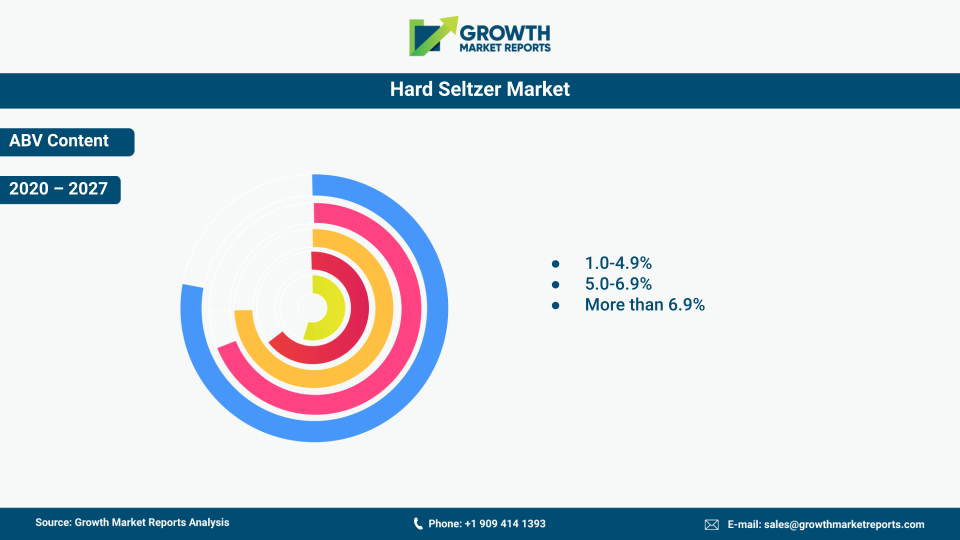
The hard seltzer market is segmented by alcohol by volume (ABV) content into 1.0%-4.9%, 5.0%-6.9%, and 7.0% & above. The 5.0%-6.9% ABV segment currently holds the largest market share, as it strikes a balance between flavor, refreshment, and alcohol strength, making it the preferred choice for mainstream consumers. This ABV range is often perceived as offering a satisfying yet moderate drinking experience, aligning with the “sessionable” trend that prioritizes sociability and responsible consumption.

The 1.0%-4.9% ABV segment is gaining popularity among health-conscious individuals and those seeking lighter alternatives to traditional alcoholic beverages. These lower-ABV hard seltzers are often marketed as “lite” or “session” drinks, appealing to consumers who want to enjoy multiple beverages without excessive alcohol intake. The rise of mindful drinking and the growing acceptance of alcohol moderation are expected to drive continued growth in this segment, especially among younger consumers and those with active lifestyles.

On the other end of the spectrum, the 7.0% & above ABV segment caters to a niche but expanding market of consumers seeking bolder flavors and higher alcohol content. These products are often positioned as craft or specialty offerings, with unique flavor profiles and premium branding. The higher ABV segment is particularly popular in North America, where consumers are more receptive to experimentation and variety in their alcoholic beverage choices. However, regulatory constraints and shifting attitudes towards high-alcohol products may temper growth in some regions.

Overall, the segmentation by ABV content reflects the diverse preferences of hard seltzer consumers and underscores the importance of offering a broad range of options. Manufacturers are increasingly leveraging ABV as a key differentiator, tailoring their product portfolios to meet the evolving needs of the market. As consumer preferences continue to shift towards moderation, wellness, and customization, the ABV content segment will remain a focal point for innovation and strategic positioning within the hard seltzer market.

Distribution Channel Analysis

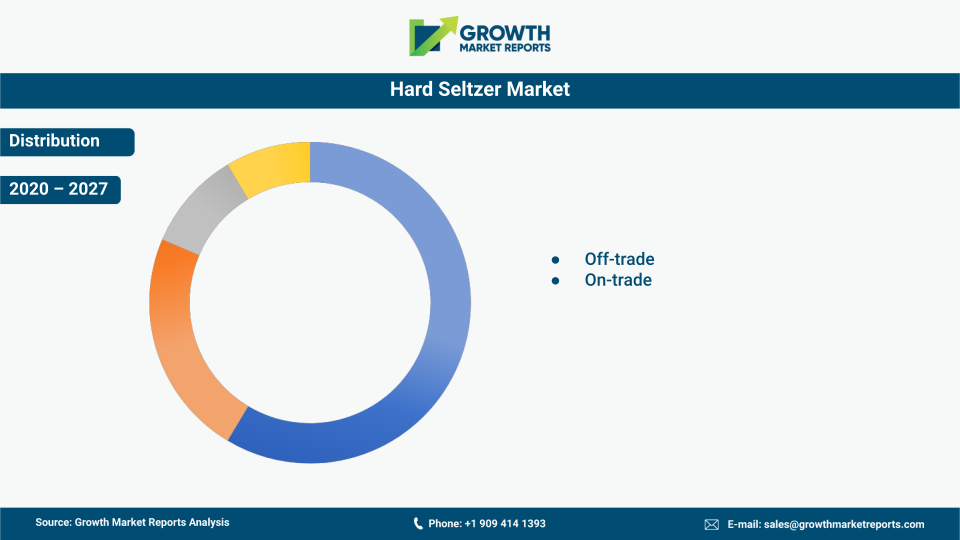
Distribution channels play a critical role in shaping the growth trajectory of the hard seltzer market. Supermarkets and hypermarkets remain the primary sales channels, accounting for the largest share due to their extensive reach, product variety, and convenience. These retail outlets offer consumers the opportunity to compare brands, flavors, and packaging formats in a single location, driving impulse purchases and brand discovery. Strategic partnerships with major supermarket chains have enabled hard seltzer brands to secure prominent shelf space and enhance product visibility.

Convenience stores represent another significant distribution channel, particularly in urban areas where consumers prioritize quick and easy access to beverages. These outlets are favored for their proximity, extended hours, and ability to cater to on-the-go lifestyles. Hard seltzer sales through convenience stores are often driven by single-serve packaging and promotional offers, which encourage trial and repeat purchases. As urbanization continues and consumer routines become increasingly fast-paced, the importance of convenience stores in the hard seltzer market is expected to grow.

The online retail segment is experiencing rapid expansion, fueled by changing shopping behaviors and advancements in e-commerce technology. Online platforms offer unparalleled convenience, a wider selection of products, and personalized recommendations, making them particularly attractive to tech-savvy and younger consumers. Direct-to-consumer sales channels, subscription services, and partnerships with third-party delivery apps have further accelerated the digital transformation of the hard seltzer market. The COVID-19 pandemic has also played a role in shifting consumer preferences towards online shopping, a trend that is likely to persist in the coming years.

Specialty stores and other niche retail formats cater to specific consumer segments, such as premium or organic hard seltzer enthusiasts. These outlets often provide curated selections, expert recommendations, and exclusive product launches, enhancing the overall shopping experience. While specialty stores represent a smaller share of the overall market, they play a crucial role in building brand loyalty and supporting the growth of premium and artisanal hard seltzer brands. As the market continues to diversify, the interplay between traditional and emerging distribution channels will be key to sustaining long-term growth.

Opportunities & Threats

The hard seltzer market presents numerous opportunities for growth and innovation, driven by evolving consumer preferences and advancements in product development. One of the most significant opportunities lies in the continued expansion of flavor profiles and ingredient innovation. As consumers seek unique and personalized experiences, brands that invest in research and development to create novel flavors, functional ingredients, and limited-edition releases are well-positioned to capture market share. Additionally, the growing demand for organic, natural, and sustainably sourced ingredients presents an opportunity for brands to differentiate themselves and appeal to environmentally conscious consumers.

Another key opportunity is the expansion into emerging markets, particularly in Asia Pacific and Latin America, where rising disposable incomes and changing social norms are creating new demand for premium alcoholic beverages. Brands that tailor their marketing strategies and product offerings to local tastes and cultural preferences can unlock significant growth potential in these regions. The continued growth of online retail and direct-to-consumer sales channels also offers opportunities for brands to reach new customer segments, enhance brand visibility, and leverage data-driven marketing strategies to drive engagement and loyalty.

Despite these opportunities, the hard seltzer market faces several restraining factors that could impact its growth trajectory. Chief among these is the intensifying competition from both established alcoholic beverage categories and new entrants. As the market becomes increasingly saturated, brands must invest heavily in marketing, innovation, and distribution to maintain their competitive edge. Additionally, regulatory challenges related to labeling, advertising, and alcohol content may pose hurdles, particularly in regions with stringent alcohol regulations. Lastly, shifting consumer preferences and potential backlash against “fad” beverages could lead to market volatility and impact long-term growth prospects.

Regional Outlook

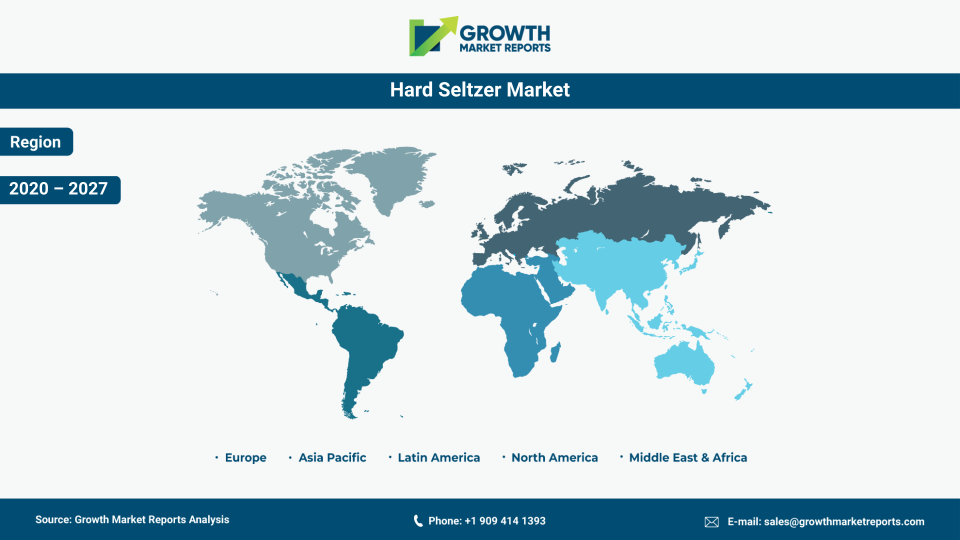
North America remains the dominant region in the global hard seltzer market, accounting for over 60% of total revenues in 2024, or approximately USD 10.9 billion. The United States, in particular, has been at the forefront of the hard seltzer boom, driven by early adoption, strong brand presence, and a culture of innovation in the alcoholic beverage industry. The Canadian market is also experiencing robust growth, fueled by similar consumer trends and the entry of major international brands. The regionÂ’s mature retail infrastructure, coupled with high consumer awareness, provides a solid foundation for sustained market expansion.

Europe is emerging as a high-growth region, with the market expected to record a CAGR of 15.2% through 2033. The regionÂ’s market size reached approximately USD 3.2 billion in 2024, with the United Kingdom, Germany, and France leading the way in terms of consumption and innovation. European consumers are increasingly embracing hard seltzers as a healthier alternative to traditional alcoholic beverages, and brands are responding by launching localized flavors and marketing campaigns that resonate with regional preferences. The rise of e-commerce and the relaxation of alcohol regulations in some markets are further supporting the growth of hard seltzer in Europe.

Asia Pacific and Latin America represent significant untapped potential for the hard seltzer market, with combined revenues reaching USD 2.8 billion in 2024. Rapid urbanization, rising disposable incomes, and a growing middle class are driving demand for premium and innovative alcoholic beverages in these regions. Brands that invest in market education, localized flavors, and strategic partnerships are likely to gain a competitive advantage. The Middle East & Africa, while still a nascent market, is expected to see gradual growth as consumer preferences evolve and regulatory barriers are addressed. Overall, the global outlook for the hard seltzer market remains highly positive, with significant opportunities for expansion across all major regions.

Hard Seltzer Market Statistics

Competitor Outlook

The competitive landscape of the hard seltzer market is characterized by intense rivalry among established alcoholic beverage companies and a growing number of new entrants. Leading players are leveraging their extensive distribution networks, brand equity, and marketing resources to capture market share and drive category growth. The market is also witnessing a wave of mergers and acquisitions, as larger companies seek to consolidate their positions and gain access to innovative products and technologies. In addition to traditional players, craft and artisanal brands are entering the market with unique flavor offerings, premium positioning, and a focus on sustainability, adding further dynamism to the competitive environment.

Marketing and branding play a critical role in differentiating products and building consumer loyalty in the hard seltzer market. Companies are investing heavily in targeted advertising campaigns, influencer partnerships, and experiential marketing initiatives to engage consumers and create memorable brand experiences. Packaging innovation, flavor diversification, and limited-edition releases are also key strategies employed by leading brands to maintain consumer interest and drive repeat purchases. As the market matures, the ability to anticipate and respond to evolving consumer trends will be a key determinant of long-term success.

Innovation remains at the core of the competitive strategy in the hard seltzer market. Companies are continuously experimenting with new ingredients, functional additives, and production techniques to create differentiated products that resonate with target audiences. The integration of health and wellness attributes, such as low sugar, low calorie, and organic certifications, is becoming increasingly important as consumers prioritize healthier lifestyle choices. Furthermore, the expansion into new geographic markets and the development of region-specific products are enabling brands to tap into diverse consumer bases and drive global growth.

Major companies operating in the hard seltzer market include Mark Anthony Brands (White Claw), Boston Beer Company (Truly), Anheuser-Busch InBev (Bud Light Seltzer), Constellation Brands (Corona Hard Seltzer), and Molson Coors Beverage Company (Vizzy, Coors Seltzer). White Claw remains the market leader, renowned for its wide range of flavors and strong brand recognition, particularly in North America. Truly, produced by Boston Beer Company, has differentiated itself through continuous flavor innovation and strategic partnerships. Anheuser-Busch InBev and Constellation Brands have leveraged their global distribution capabilities to rapidly scale their hard seltzer offerings, while Molson Coors has focused on premiumization and unique ingredient blends. These companies, along with a host of emerging craft brands, are shaping the future of the hard seltzer market through relentless innovation, strategic investments, and consumer-centric approaches.

Key Players

  • White Claw
  • Truly (The Boston Beer Company)
  • Bud Light Seltzer (Anheuser-Busch InBev)
  • Bon V!V (Anheuser-Busch InBev)
  • Smirnoff Seltzer (Diageo)
  • Corona Hard Seltzer (Constellation Brands)
  • Vizzy (Molson Coors Beverage Company)
  • Topo Chico Hard Seltzer (Coca-Cola Company & Molson Coors)
  • MikeÂ’s Hard Seltzer (Mark Anthony Brands)
  • High Noon Sun Sips (E. & J. Gallo Winery)
  • Crook & Marker
  • Barefoot Hard Seltzer (E. & J. Gallo Winery)
  • Pabst Blue Ribbon Hard Seltzer
  • Svedka Spiked Seltzer (Constellation Brands)
  • HenryÂ’s Hard Sparkling Water (Molson Coors Beverage Company)
  • Arctic Summer (Harpoon Brewery)
  • Wild Basin (Oskar Blues Brewery)
  • Press Premium Alcohol Seltzer
  • Canteen Spirits
  • Ashland Hard Seltzer
Hard Seltzer Market Overview

Segments

The Hard Seltzer market has been segmented on the basis of

Product Type

  • Natural/Organic Hard Seltzer
  • Flavored Hard Seltzer
  • Unflavored Hard Seltzer

Packaging

  • Cans
  • Bottles
  • Others

ABV Content

  • 1.0%-4.9%
  • 5.0%-6.9%
  • 7.0% & Above

Distribution Channel

  • Supermarkets/Hypermarkets
  • Convenience Stores
  • Online Retail
  • Specialty Stores
  • Others

Competitive Landscape

Key players in the market include Anheuser-Busch Companies LLC. Barefoot Cellars, Ficks & Co, HARD SELTZER BEVERAGE COMPANY LLC, and Mark Anthony Brands International among others.

These companies are considered as key manufacturers of hard seltzer based on their revenue, research & development (R&D) activities, regional presence, and supply chain management system. 
The players are adopting key strategies such as merger, acquisition, and geographical expansion in order to strengthen their market position.

  • For instance, in May 2020, HIGH NOON SPIRITS COMPANY announced the launch of two flavors of hard seltzers. These flavors (lime and peach) complemented the company’s product portfolio of hard seltzers.
  • In February 2019, Anheuser-Busch Companies, LLC completed the acquisition of Cutwater Spirits. Cutwater Spirits has a product portfolio that includes 14 spirits-based ready-to-drink (RTD) canned cocktails, seven mixers, and 16 spirits spanning vodka, whiskey, rum, and gin.
  • In 2018 and 2019, HARD SELTZER BEVERAGE COMPANY, LLC introduced styles and flavors, which includes Truly Berry Variety Pack and Truly Tropical Variety Pack. The Truly brand family grew significantly during these two years and led to the supply pressures on sleek cans.
  • In March 2018, Ficks & Co introduced a range of ready-to-drink products, namely hard seltzers. This product line is a simple mix of sparkling water, fruit-flavored alcohol, and real fruit juice.
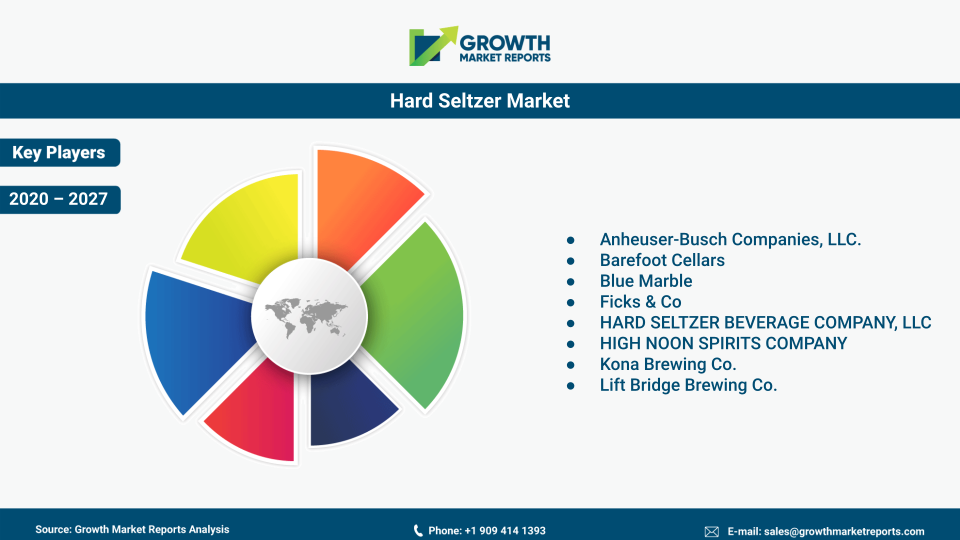

Hard Seltzer Market Key Players

Frequently Asked Questions

Major Manufactures include Anheuser-Busch Companies, LLC. Barefoot Cellars, Ficks & Co, HARD SELTZER BEVERAGE COMPANY, LLC, and Mark Anthony Brands International.

Adults, elderly population, and young generation are the key end-users that are driving the growth of hard seltzer market.

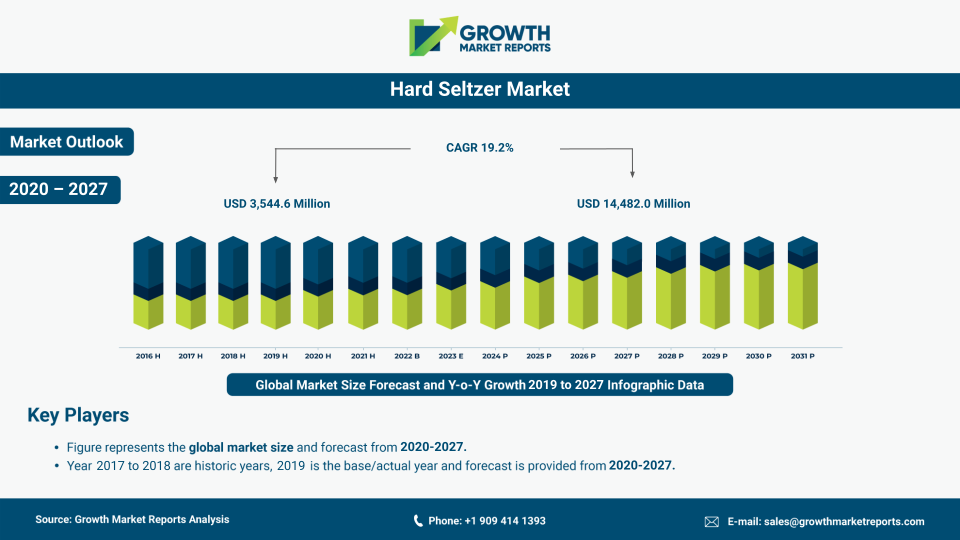
The base year considered for the global hard seltzer market report is 2019. The complete analysis period is 2017 to 2027, wherein, 2017 & 2018 are the historic years and the forecast is provided from 2020 to 2027.

The market is expected to witness slow year on year growth from 2019 to 2020 owing to the slight negative impact of COVID-19 pandemic on the global hard seltzer market.

Factors such as competitive strength and market positioning are key areas considered while selecting top companies to be profiled.

The market is driven by factors such as rising preference for hard seltzers over beer among millennial, growing preference for flavored low alcohol beverages, increasing product penetration in on-trade channel, and increasing product advertisement on social media platforms.

The global hard seltzer market report also provides the overview of the U.S. spirit industry; along with company market share analysis and volume data (million case).

According to the Growth Market Reports report, the market from hard seltzer is likely to register a CAGR of 19.2% during forecast period 2020-2027, with an anticipated valuation of USD 14,482.0 million by the end of the 2027.

Yes, the report covers product specific information such as hard seltzer.

Additional company profiles can be provided on request.

Table Of Content

Chapter 1 Executive Summary
Chapter 2 Assumptions and Acronyms Used
Chapter 3 Research Methodology
Chapter 4 Hard Seltzer Market Overview
   4.1 Introduction
      4.1.1 Market Taxonomy
      4.1.2 Market Definition
      4.1.3 Macro-Economic Factors Impacting the Market Growth
   4.2 Hard Seltzer Market Dynamics
      4.2.1 Market Drivers
      4.2.2 Market Restraints
      4.2.3 Market Opportunity
   4.3 Hard Seltzer Market - Supply Chain Analysis
      4.3.1 List of Key Suppliers
      4.3.2 List of Key Distributors
      4.3.3 List of Key Consumers
   4.4 Key Forces Shaping the Hard Seltzer Market
      4.4.1 Bargaining Power of Suppliers
      4.4.2 Bargaining Power of Buyers
      4.4.3 Threat of Substitution
      4.4.4 Threat of New Entrants
      4.4.5 Competitive Rivalry
   4.5 Global Hard Seltzer Market Size & Forecast, 2023-2032
      4.5.1 Hard Seltzer Market Size and Y-o-Y Growth
      4.5.2 Hard Seltzer Market Absolute $ Opportunity

Chapter 5 Global Hard Seltzer Market Analysis and Forecast By Product Type
   5.1 Introduction
      5.1.1 Key Market Trends & Growth Opportunities By Product Type
      5.1.2 Basis Point Share (BPS) Analysis By Product Type
      5.1.3 Absolute $ Opportunity Assessment By Product Type
   5.2 Hard Seltzer Market Size Forecast By Product Type
      5.2.1 Natural/Organic Hard Seltzer
      5.2.2 Flavored Hard Seltzer
      5.2.3 Unflavored Hard Seltzer
   5.3 Market Attractiveness Analysis By Product Type

Chapter 6 Global Hard Seltzer Market Analysis and Forecast By Packaging
   6.1 Introduction
      6.1.1 Key Market Trends & Growth Opportunities By Packaging
      6.1.2 Basis Point Share (BPS) Analysis By Packaging
      6.1.3 Absolute $ Opportunity Assessment By Packaging
   6.2 Hard Seltzer Market Size Forecast By Packaging
      6.2.1 Cans
      6.2.2 Bottles
      6.2.3 Others
   6.3 Market Attractiveness Analysis By Packaging

Chapter 7 Global Hard Seltzer Market Analysis and Forecast By ABV Content
   7.1 Introduction
      7.1.1 Key Market Trends & Growth Opportunities By ABV Content
      7.1.2 Basis Point Share (BPS) Analysis By ABV Content
      7.1.3 Absolute $ Opportunity Assessment By ABV Content
   7.2 Hard Seltzer Market Size Forecast By ABV Content
      7.2.1 1.0%-4.9%
      7.2.2 5.0%-6.9%
      7.2.3 7.0% & Above
   7.3 Market Attractiveness Analysis By ABV Content

Chapter 8 Global Hard Seltzer Market Analysis and Forecast By Distribution Channel
   8.1 Introduction
      8.1.1 Key Market Trends & Growth Opportunities By Distribution Channel
      8.1.2 Basis Point Share (BPS) Analysis By Distribution Channel
      8.1.3 Absolute $ Opportunity Assessment By Distribution Channel
   8.2 Hard Seltzer Market Size Forecast By Distribution Channel
      8.2.1 Supermarkets/Hypermarkets
      8.2.2 Convenience Stores
      8.2.3 Online Retail
      8.2.4 Specialty Stores
      8.2.5 Others
   8.3 Market Attractiveness Analysis By Distribution Channel

Chapter 9 Global Hard Seltzer Market Analysis and Forecast by Region
   9.1 Introduction
      9.1.1 Key Market Trends & Growth Opportunities By Region
      9.1.2 Basis Point Share (BPS) Analysis By Region
      9.1.3 Absolute $ Opportunity Assessment By Region
   9.2 Hard Seltzer Market Size Forecast By Region
      9.2.1 North America
      9.2.2 Europe
      9.2.3 Asia Pacific
      9.2.4 Latin America
      9.2.5 Middle East & Africa (MEA)
   9.3 Market Attractiveness Analysis By Region

Chapter 10 Coronavirus Disease (COVID-19) Impact 
   10.1 Introduction 
   10.2 Current & Future Impact Analysis 
   10.3 Economic Impact Analysis 
   10.4 Government Policies 
   10.5 Investment Scenario

Chapter 11 North America Hard Seltzer Analysis and Forecast
   11.1 Introduction
   11.2 North America Hard Seltzer Market Size Forecast by Country
      11.2.1 U.S.
      11.2.2 Canada
   11.3 Basis Point Share (BPS) Analysis by Country
   11.4 Absolute $ Opportunity Assessment by Country
   11.5 Market Attractiveness Analysis by Country
   11.6 North America Hard Seltzer Market Size Forecast By Product Type
      11.6.1 Natural/Organic Hard Seltzer
      11.6.2 Flavored Hard Seltzer
      11.6.3 Unflavored Hard Seltzer
   11.7 Basis Point Share (BPS) Analysis By Product Type 
   11.8 Absolute $ Opportunity Assessment By Product Type 
   11.9 Market Attractiveness Analysis By Product Type
   11.10 North America Hard Seltzer Market Size Forecast By Packaging
      11.10.1 Cans
      11.10.2 Bottles
      11.10.3 Others
   11.11 Basis Point Share (BPS) Analysis By Packaging 
   11.12 Absolute $ Opportunity Assessment By Packaging 
   11.13 Market Attractiveness Analysis By Packaging
   11.14 North America Hard Seltzer Market Size Forecast By ABV Content
      11.14.1 1.0%-4.9%
      11.14.2 5.0%-6.9%
      11.14.3 7.0% & Above
   11.15 Basis Point Share (BPS) Analysis By ABV Content 
   11.16 Absolute $ Opportunity Assessment By ABV Content 
   11.17 Market Attractiveness Analysis By ABV Content
   11.18 North America Hard Seltzer Market Size Forecast By Distribution Channel
      11.18.1 Supermarkets/Hypermarkets
      11.18.2 Convenience Stores
      11.18.3 Online Retail
      11.18.4 Specialty Stores
      11.18.5 Others
   11.19 Basis Point Share (BPS) Analysis By Distribution Channel 
   11.20 Absolute $ Opportunity Assessment By Distribution Channel 
   11.21 Market Attractiveness Analysis By Distribution Channel

Chapter 12 Europe Hard Seltzer Analysis and Forecast
   12.1 Introduction
   12.2 Europe Hard Seltzer Market Size Forecast by Country
      12.2.1 Germany
      12.2.2 France
      12.2.3 Italy
      12.2.4 U.K.
      12.2.5 Spain
      12.2.6 Russia
      12.2.7 Rest of Europe
   12.3 Basis Point Share (BPS) Analysis by Country
   12.4 Absolute $ Opportunity Assessment by Country
   12.5 Market Attractiveness Analysis by Country
   12.6 Europe Hard Seltzer Market Size Forecast By Product Type
      12.6.1 Natural/Organic Hard Seltzer
      12.6.2 Flavored Hard Seltzer
      12.6.3 Unflavored Hard Seltzer
   12.7 Basis Point Share (BPS) Analysis By Product Type 
   12.8 Absolute $ Opportunity Assessment By Product Type 
   12.9 Market Attractiveness Analysis By Product Type
   12.10 Europe Hard Seltzer Market Size Forecast By Packaging
      12.10.1 Cans
      12.10.2 Bottles
      12.10.3 Others
   12.11 Basis Point Share (BPS) Analysis By Packaging 
   12.12 Absolute $ Opportunity Assessment By Packaging 
   12.13 Market Attractiveness Analysis By Packaging
   12.14 Europe Hard Seltzer Market Size Forecast By ABV Content
      12.14.1 1.0%-4.9%
      12.14.2 5.0%-6.9%
      12.14.3 7.0% & Above
   12.15 Basis Point Share (BPS) Analysis By ABV Content 
   12.16 Absolute $ Opportunity Assessment By ABV Content 
   12.17 Market Attractiveness Analysis By ABV Content
   12.18 Europe Hard Seltzer Market Size Forecast By Distribution Channel
      12.18.1 Supermarkets/Hypermarkets
      12.18.2 Convenience Stores
      12.18.3 Online Retail
      12.18.4 Specialty Stores
      12.18.5 Others
   12.19 Basis Point Share (BPS) Analysis By Distribution Channel 
   12.20 Absolute $ Opportunity Assessment By Distribution Channel 
   12.21 Market Attractiveness Analysis By Distribution Channel

Chapter 13 Asia Pacific Hard Seltzer Analysis and Forecast
   13.1 Introduction
   13.2 Asia Pacific Hard Seltzer Market Size Forecast by Country
      13.2.1 China
      13.2.2 Japan
      13.2.3 South Korea
      13.2.4 India
      13.2.5 Australia
      13.2.6 South East Asia (SEA)
      13.2.7 Rest of Asia Pacific (APAC)
   13.3 Basis Point Share (BPS) Analysis by Country
   13.4 Absolute $ Opportunity Assessment by Country
   13.5 Market Attractiveness Analysis by Country
   13.6 Asia Pacific Hard Seltzer Market Size Forecast By Product Type
      13.6.1 Natural/Organic Hard Seltzer
      13.6.2 Flavored Hard Seltzer
      13.6.3 Unflavored Hard Seltzer
   13.7 Basis Point Share (BPS) Analysis By Product Type 
   13.8 Absolute $ Opportunity Assessment By Product Type 
   13.9 Market Attractiveness Analysis By Product Type
   13.10 Asia Pacific Hard Seltzer Market Size Forecast By Packaging
      13.10.1 Cans
      13.10.2 Bottles
      13.10.3 Others
   13.11 Basis Point Share (BPS) Analysis By Packaging 
   13.12 Absolute $ Opportunity Assessment By Packaging 
   13.13 Market Attractiveness Analysis By Packaging
   13.14 Asia Pacific Hard Seltzer Market Size Forecast By ABV Content
      13.14.1 1.0%-4.9%
      13.14.2 5.0%-6.9%
      13.14.3 7.0% & Above
   13.15 Basis Point Share (BPS) Analysis By ABV Content 
   13.16 Absolute $ Opportunity Assessment By ABV Content 
   13.17 Market Attractiveness Analysis By ABV Content
   13.18 Asia Pacific Hard Seltzer Market Size Forecast By Distribution Channel
      13.18.1 Supermarkets/Hypermarkets
      13.18.2 Convenience Stores
      13.18.3 Online Retail
      13.18.4 Specialty Stores
      13.18.5 Others
   13.19 Basis Point Share (BPS) Analysis By Distribution Channel 
   13.20 Absolute $ Opportunity Assessment By Distribution Channel 
   13.21 Market Attractiveness Analysis By Distribution Channel

Chapter 14 Latin America Hard Seltzer Analysis and Forecast
   14.1 Introduction
   14.2 Latin America Hard Seltzer Market Size Forecast by Country
      14.2.1 Brazil
      14.2.2 Mexico
      14.2.3 Rest of Latin America (LATAM)
   14.3 Basis Point Share (BPS) Analysis by Country
   14.4 Absolute $ Opportunity Assessment by Country
   14.5 Market Attractiveness Analysis by Country
   14.6 Latin America Hard Seltzer Market Size Forecast By Product Type
      14.6.1 Natural/Organic Hard Seltzer
      14.6.2 Flavored Hard Seltzer
      14.6.3 Unflavored Hard Seltzer
   14.7 Basis Point Share (BPS) Analysis By Product Type 
   14.8 Absolute $ Opportunity Assessment By Product Type 
   14.9 Market Attractiveness Analysis By Product Type
   14.10 Latin America Hard Seltzer Market Size Forecast By Packaging
      14.10.1 Cans
      14.10.2 Bottles
      14.10.3 Others
   14.11 Basis Point Share (BPS) Analysis By Packaging 
   14.12 Absolute $ Opportunity Assessment By Packaging 
   14.13 Market Attractiveness Analysis By Packaging
   14.14 Latin America Hard Seltzer Market Size Forecast By ABV Content
      14.14.1 1.0%-4.9%
      14.14.2 5.0%-6.9%
      14.14.3 7.0% & Above
   14.15 Basis Point Share (BPS) Analysis By ABV Content 
   14.16 Absolute $ Opportunity Assessment By ABV Content 
   14.17 Market Attractiveness Analysis By ABV Content
   14.18 Latin America Hard Seltzer Market Size Forecast By Distribution Channel
      14.18.1 Supermarkets/Hypermarkets
      14.18.2 Convenience Stores
      14.18.3 Online Retail
      14.18.4 Specialty Stores
      14.18.5 Others
   14.19 Basis Point Share (BPS) Analysis By Distribution Channel 
   14.20 Absolute $ Opportunity Assessment By Distribution Channel 
   14.21 Market Attractiveness Analysis By Distribution Channel

Chapter 15 Middle East & Africa (MEA) Hard Seltzer Analysis and Forecast
   15.1 Introduction
   15.2 Middle East & Africa (MEA) Hard Seltzer Market Size Forecast by Country
      15.2.1 Saudi Arabia
      15.2.2 South Africa
      15.2.3 UAE
      15.2.4 Rest of Middle East & Africa (MEA)
   15.3 Basis Point Share (BPS) Analysis by Country
   15.4 Absolute $ Opportunity Assessment by Country
   15.5 Market Attractiveness Analysis by Country
   15.6 Middle East & Africa (MEA) Hard Seltzer Market Size Forecast By Product Type
      15.6.1 Natural/Organic Hard Seltzer
      15.6.2 Flavored Hard Seltzer
      15.6.3 Unflavored Hard Seltzer
   15.7 Basis Point Share (BPS) Analysis By Product Type 
   15.8 Absolute $ Opportunity Assessment By Product Type 
   15.9 Market Attractiveness Analysis By Product Type
   15.10 Middle East & Africa (MEA) Hard Seltzer Market Size Forecast By Packaging
      15.10.1 Cans
      15.10.2 Bottles
      15.10.3 Others
   15.11 Basis Point Share (BPS) Analysis By Packaging 
   15.12 Absolute $ Opportunity Assessment By Packaging 
   15.13 Market Attractiveness Analysis By Packaging
   15.14 Middle East & Africa (MEA) Hard Seltzer Market Size Forecast By ABV Content
      15.14.1 1.0%-4.9%
      15.14.2 5.0%-6.9%
      15.14.3 7.0% & Above
   15.15 Basis Point Share (BPS) Analysis By ABV Content 
   15.16 Absolute $ Opportunity Assessment By ABV Content 
   15.17 Market Attractiveness Analysis By ABV Content
   15.18 Middle East & Africa (MEA) Hard Seltzer Market Size Forecast By Distribution Channel
      15.18.1 Supermarkets/Hypermarkets
      15.18.2 Convenience Stores
      15.18.3 Online Retail
      15.18.4 Specialty Stores
      15.18.5 Others
   15.19 Basis Point Share (BPS) Analysis By Distribution Channel 
   15.20 Absolute $ Opportunity Assessment By Distribution Channel 
   15.21 Market Attractiveness Analysis By Distribution Channel

Chapter 16 Competition Landscape 
   16.1 Hard Seltzer Market: Competitive Dashboard
   16.2 Global Hard Seltzer Market: Market Share Analysis, 2023
   16.3 Company Profiles (Details – Overview, Financials, Developments, Strategy) 
      16.3.1 White Claw
Truly (The Boston Beer Company)
Bud Light Seltzer (Anheuser-Busch InBev)
Bon V!V (Anheuser-Busch InBev)
Smirnoff Seltzer (Diageo)
Corona Hard Seltzer (Constellation Brands)
Vizzy (Molson Coors Beverage Company)
Topo Chico Hard Seltzer (Coca-Cola Company & Molson Coors)
Mike’s Hard Seltzer (Mark Anthony Brands)
High Noon Sun Sips (E. & J. Gallo Winery)
Crook & Marker
Barefoot Hard Seltzer (E. & J. Gallo Winery)
Pabst Blue Ribbon Hard Seltzer
Svedka Spiked Seltzer (Constellation Brands)
Henry’s Hard Sparkling Water (Molson Coors Beverage Company)
Arctic Summer (Harpoon Brewery)
Wild Basin (Oskar Blues Brewery)
Press Premium Alcohol Seltzer
Canteen Spirits
Ashland Hard Seltzer

Methodology

Our Clients

General Electric
FedEx Logistics
sinopec
Dassault Aviation
Microsoft
Pfizer
Deloitte
Nestle SA