Segments - by Product Type (Whiskey-based, Vodka-based, Rum-based, Gin-based, Tequila-based, Others), by Packaging (Cans, Bottles, Others), by Distribution Channel (Supermarkets/Hypermarkets, Convenience Stores, Online Retail, Specialty Stores, Others), by End User (Household, HoReCa, Others)
This report is updated with the latest market data and insights as of June 2026. Base year: 2025 | Forecast period: 2026-2034
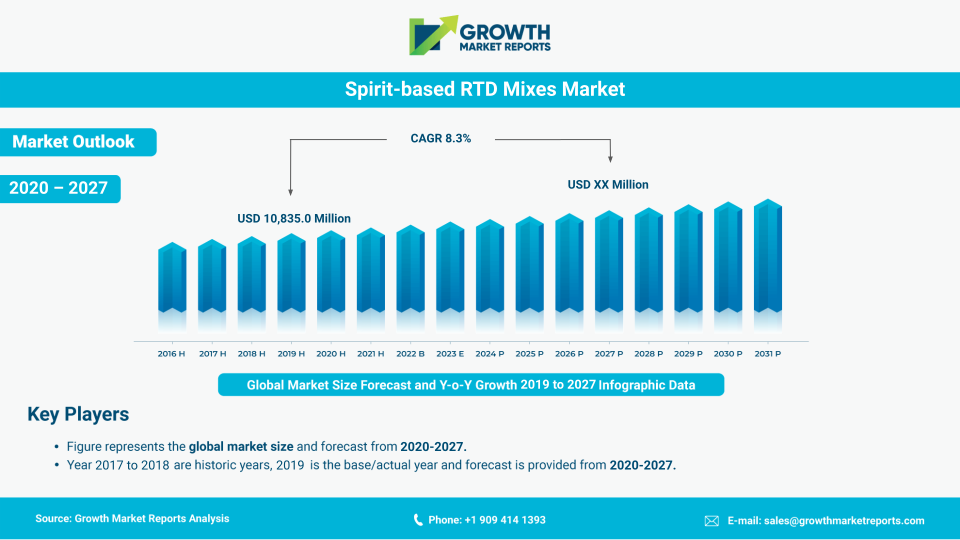
According to our latest research, the global Spirit-based RTD Mixes market size reached USD 36.4 billion in 2025, supported by a robust consumer shift toward convenience and premiumization in alcoholic beverages. The market is projected to grow at a CAGR of 11.5% through the forecast period, with the total value expected to reach USD 96.2 billion by 2034. This impressive growth is mainly attributed to evolving lifestyle preferences, increasing demand for ready-to-drink cocktails and spirit-based formats, and continuous product innovation catering to diverse consumer tastes worldwide.
The primary growth driver for the Spirit-based RTD Mixes market is the increasing consumer inclination toward convenience and on-the-go alcoholic beverages. Modern consumers, especially millennials and Gen Z, are increasingly seeking products that require minimal preparation and offer consistent quality, making RTD mixes a preferred choice in 2025 and beyond. Furthermore, the proliferation of premium and craft spirit-based RTD offerings has significantly expanded the consumer base, as these options cater to individuals who desire bar-quality cocktails without the need for specialized bartending skills. The introduction of new flavors, limited-edition releases, and collaborations with renowned mixologists and celebrities have further fueled market interest and broadened the appeal of spirit-based RTD mixes across various demographics.
Another significant factor propelling the market is the growing trend of health-conscious drinking. Consumers are increasingly aware of their alcohol intake and are seeking beverages with lower alcohol by volume (ABV), fewer calories, and natural ingredients. The RTD segment has responded proactively by introducing products that emphasize clean labels, organic ingredients, and reduced sugar content. This shift toward mindful consumption has attracted a segment of consumers who previously avoided traditional spirits or cocktails, thereby expanding the overall market. The parallel rise of non-alcoholic spirits in RTD formats also reflects this wellness-driven evolution, as brands cater to sober-curious demographics. Additionally, the convenience of portion-controlled servings in RTD formats allows consumers to better manage their consumption, aligning with current wellness trends.
The expansion of distribution channels has also played a pivotal role in market growth. The rise of e-commerce platforms and online alcohol delivery services has made spirit-based RTD mixes more accessible to a broader audience. Brick-and-mortar channels, such as supermarkets, hypermarkets, and specialty liquor stores, have also increased shelf space for RTD products, recognizing their growing popularity. Strategic partnerships between manufacturers and retailers have further enhanced product visibility and availability, contributing to higher sales volumes. The behavioral changes sparked by the COVID-19 pandemic accelerated online purchasing, a trend that continues to benefit the RTD mixes market, as consumers appreciate the convenience and variety offered by digital platforms. The broader ambient RTD beverages segment has similarly benefited from these distribution tailwinds, underlining the structural shift across the ready-to-drink category.
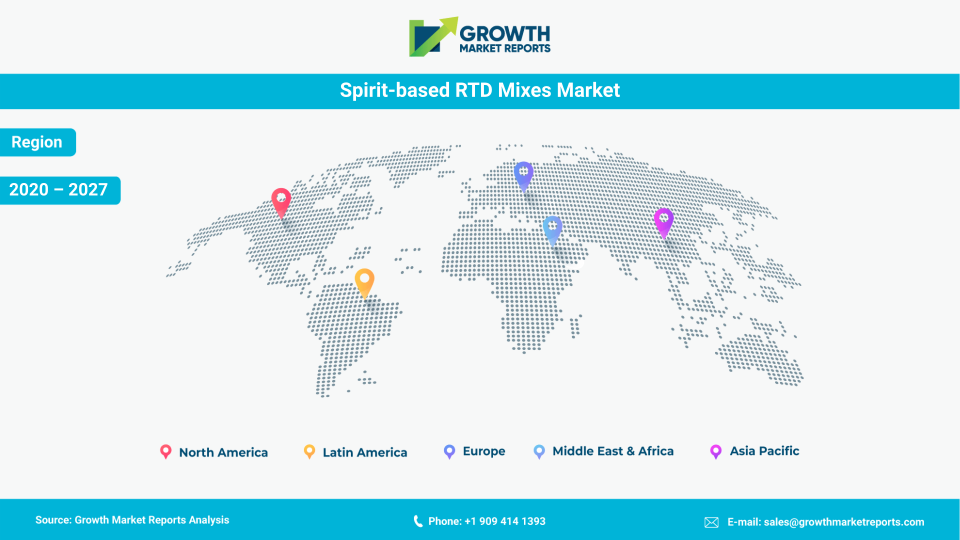
Regionally, North America remains the largest market for spirit-based RTD mixes, accounting for approximately 37.5% of global revenues in 2025. The region's dominance is supported by high disposable incomes, a mature alcoholic beverage market, and a strong culture of social drinking and experimentation with new products. Europe follows closely, driven by a resurgence in cocktail culture and increased demand for premium and craft beverages. The Asia Pacific region is emerging as a high-growth market, fueled by urbanization, changing social norms, and the rapid adoption of Western drinking habits among younger populations. Latin America and the Middle East & Africa, while smaller in terms of market size, are witnessing steady growth due to rising urban middle classes and increasing exposure to global beverage trends.
The product type segment within the Spirit-based RTD Mixes market comprises whiskey-based, vodka-based, rum-based, gin-based, tequila-based, and other spirit bases. Vodka-based RTD mixes hold the largest share in 2025, accounting for approximately 28% of the market, driven by their versatility and broad appeal, often serving as the base for fruit-forward and refreshing cocktails that attract younger consumers and those new to spirits. Whiskey-based RTD mixes hold a substantial secondary share at around 24.5%, favored by consumers who appreciate rich, robust flavors in a convenient format. These products have gained traction in regions with a strong whiskey culture, such as North America and parts of Europe, where brands continuously innovate with new flavor combinations and limited-edition releases.
Rum-based RTD mixes have carved a niche in the market, particularly in regions with a historical association with rum production and consumption, such as the Caribbean and Latin America. These mixes often feature tropical flavors like coconut, pineapple, and citrus, catering to consumers seeking an exotic and vacation-like drinking experience. The popularity of classic cocktails such as mojitos and pina coladas in RTD formats has further driven demand in this segment, which commands roughly 16% of the global market in 2025. The adjacent growth of sour mix RTD formats reflects similar consumer appetite for pre-mixed citrus-forward cocktail bases. Gin-based RTD mixes, representing approximately 13.5% of the market, have experienced a renaissance, buoyed by the global gin revival and the premiumization trend, with botanical-infused offerings appealing to discerning craft beverage consumers.
Tequila-based RTD mixes have witnessed remarkable growth, especially in North America and Europe, where tequila has become synonymous with celebration and social occasions. Representing around 12.5% of the market in 2025, rising popularity of margaritas and palomas in RTD formats has attracted both traditional tequila enthusiasts and new consumers. Brands are capitalizing on this trend by introducing innovative flavor pairings and premium tequila-based offerings, including ultra-premium agave expressions. The growing interest in classic cocktail recipes delivered in convenient formats is also reflected in the surge of Old Fashioned RTD products, which represent a growing niche within the whiskey-based sub-segment. The "others" category, which includes brandy, cognac, and liqueurs, represents approximately 5.5% of the market and targets niche consumers seeking unique and sophisticated drinking experiences.
Across all product types, innovation remains a key competitive differentiator. Manufacturers are investing in research and development to create new flavor profiles, improve product quality, and address consumer demands for healthier and more sustainable options. The use of natural ingredients, organic spirits, and environmentally friendly packaging is increasingly prevalent, reflecting broader industry trends. Limited-edition releases, seasonal offerings, and collaborations with influencers and mixologists have become common strategies to generate excitement and drive sales in the highly competitive spirit-based RTD mixes market. The parallel expansion of spirit-based hard seltzers further illustrates how the category continues to diversify and attract new consumer segments seeking lighter, lower-calorie formats.
| Attributes | Details |
| Report Title | Spirit-based RTD Mixes Market Research Report 2025-2034 |
| By Product Type | Whiskey-based, Vodka-based, Rum-based, Gin-based, Tequila-based, Others |
| By Packaging | Cans, Bottles, Others |
| By Distribution Channel | Supermarkets/Hypermarkets, Convenience Stores, Online Retail, Specialty Stores, Others |
| By End User | Household, HoReCa, Others |
| Regions Covered | North America, Europe, APAC, Latin America, MEA |
| Base Year | 2025 |
| Historic Data | 2019-2024 |
| Forecast Period | 2026-2034 |
| Number of Pages | 289 |
| Number of Tables & Figures | 319 |
| Customization Available | Yes, the report can be customized as per your need. |
Packaging plays a critical role in the Spirit-based RTD Mixes market, influencing consumer perceptions, convenience, and sustainability. The primary packaging formats include cans, bottles, and other innovative solutions. Cans have emerged as the dominant packaging choice, accounting for the largest share of the market in 2025. The popularity of cans can be attributed to their portability, lightweight nature, and ability to preserve product freshness. Cans are also favored for their recyclability, aligning with growing consumer awareness of environmental issues. The compact size and durability of cans make them ideal for outdoor events, picnics, and on-the-go consumption, further boosting their appeal among younger, active consumers.
Bottles, traditionally associated with premium spirits and cocktails, continue to hold a significant share of the RTD mixes market. Glass bottles are often perceived as more upscale and are preferred for products targeting the premium and craft segments. Bottled RTD mixes are commonly found in bars, restaurants, and retail outlets where presentation and brand image are paramount. The use of unique bottle shapes, embossed logos, and high-quality labeling helps brands differentiate their products and create a sense of exclusivity. However, bottles are generally heavier and less convenient for certain use cases, which has limited their adoption in some market segments, particularly in the convenience-led formats popular among younger demographics in 2025.
The "others" category encompasses innovative packaging solutions such as pouches, cartons, and kegs. These formats are gaining traction as brands seek to offer differentiated experiences and cater to specific consumer needs. Pouches are popular for festivals and outdoor events due to their lightweight and unbreakable nature. Cartons, often associated with sustainability, appeal to environmentally conscious consumers and are increasingly used for single-serve and multipack options. Kegs and larger-format containers are targeted at the HoReCa segment, enabling efficient service of RTD cocktails in high-volume settings.
Sustainability is a defining trend in packaging within the spirit-based RTD mixes market as of 2025. Brands are investing in eco-friendly materials, recyclable packaging, and reduced plastic usage to align with consumer expectations and tightening regulatory requirements across North America, Europe, and Asia Pacific. The adoption of lightweight packaging not only reduces transportation costs but also minimizes the carbon footprint, supporting broader corporate social responsibility initiatives. As consumers become more discerning about the environmental impact of their purchases, sustainable packaging is becoming a key differentiator and purchase driver in the competitive RTD mixes landscape.
Distribution channels play a pivotal role in the success of the Spirit-based RTD Mixes market, with supermarkets/hypermarkets, convenience stores, online retail, specialty stores, and other channels each contributing to market growth. Supermarkets and hypermarkets remain the leading distribution channels, accounting for the largest share of global RTD mix sales in 2025. These outlets offer consumers the convenience of one-stop shopping, a wide selection of brands and flavors, and frequent promotional activities. The visibility of RTD mixes in high-traffic retail environments has significantly contributed to their mainstream adoption, especially among impulse buyers and consumers seeking variety.
Convenience stores have become increasingly important in the distribution of spirit-based RTD mixes, especially in urban areas and regions with high population density. The appeal of convenience stores lies in their extended operating hours, strategic locations, and ability to cater to on-the-go consumption occasions. These outlets are particularly popular among younger consumers and those seeking single-serve or trial-size formats. The rise of smaller pack sizes and multipacks tailored for convenience retail has further boosted sales through this channel in 2025.
Online retail has experienced exponential growth in the distribution of spirit-based RTD mixes, driven by changing consumer shopping habits and the rapid expansion of e-commerce platforms. The behavioral shifts initiated during the COVID-19 pandemic have become permanent features of the market, with consumers continuing to value the broader product selection, detailed product information, and home delivery convenience offered by digital channels. The ability to purchase directly from brand websites or through third-party platforms has democratized access to premium and niche RTD mixes, supporting sustained market growth through the 2026-2034 forecast period.
Specialty stores, including dedicated liquor stores and boutique beverage outlets, play a crucial role in the distribution of premium and craft RTD mixes. These stores cater to discerning consumers who value expert advice, curated selections, and unique offerings not typically found in mainstream retail channels. Specialty stores are instrumental in building brand loyalty and educating consumers about new products and trends. The "others" category includes channels such as duty-free shops, event venues, and direct-to-consumer sales at festivals and pop-up events, which provide additional opportunities for brand exposure and consumer engagement in the dynamic 2025 market environment.
The end user segment in the Spirit-based RTD Mixes market is divided into household, HoReCa (Hotels, Restaurants, Cafes), and others. The household segment represents the largest share of the market in 2025, as consumers increasingly seek convenient, high-quality beverages for home consumption. The sustained trend toward home entertaining, which gained significant momentum during the pandemic years and has since become a structural behavior, has driven demand for RTD mixes that allow consumers to enjoy bar-quality cocktails without leaving their homes. The rise of social gatherings, parties, and celebrations at home has further fueled this segment, with consumers appreciating the ease of serving pre-mixed drinks to guests.
The HoReCa segment is an important driver of market growth, particularly in urban centers and tourist destinations globally. Hotels, restaurants, and cafes have embraced spirit-based RTD mixes as a way to streamline operations, reduce labor costs, and ensure consistent product quality. RTD mixes allow establishments to offer a wide range of cocktails with minimal preparation, enhancing customer satisfaction and reducing wait times. The adoption of RTD mixes in bars and clubs has also contributed to increased sales, as these venues can efficiently serve large volumes during peak hours and events in 2025.
The "others" category includes corporate events, catering services, and special occasions such as weddings and festivals. These use cases often require bulk purchases and customized solutions, providing additional revenue streams for manufacturers. The versatility of RTD mixes makes them suitable for a wide range of applications, from casual gatherings to formal events. As consumer awareness of RTD options continues to grow through the 2026-2034 period, the "others" segment is expected to expand, driven by increasing demand for convenience and variety in beverage offerings across new occasion types.
Across all end user segments, the emphasis on quality, flavor innovation, and convenience remains paramount. Manufacturers are tailoring their product offerings to meet the specific needs of each segment, introducing multipack formats for households, premium and craft options for HoReCa, and customized solutions for special events. The ability to cater to diverse consumption occasions and preferences is a key factor driving the sustained growth of the spirit-based RTD mixes market through 2034.
The Spirit-based RTD Mixes market presents significant opportunities for growth and innovation in 2025 and throughout the forecast horizon. One of the most promising opportunities lies in the continued premiumization of RTD offerings. As consumers become more discerning and willing to pay a premium for high-quality, craft, and artisanal beverages, brands that invest in superior ingredients, unique flavor profiles, and sophisticated packaging stand to capture a larger share of the market. The rise of health-conscious drinking habits also presents opportunities for manufacturers to develop low-calorie, low-sugar, and organic RTD mixes, appealing to a broader audience and differentiating their products in a crowded marketplace. Additionally, the expansion into emerging markets, particularly in Asia Pacific and Latin America, offers untapped potential for brands seeking to establish a foothold in regions with growing urban populations and increasing disposable incomes.
Another key opportunity lies in leveraging digital transformation and e-commerce. The rapid adoption of online retail channels has opened new avenues for direct-to-consumer sales, personalized marketing, and data-driven product development. Brands that effectively utilize digital platforms to engage with consumers, gather insights, and launch targeted campaigns can build stronger brand loyalty and drive repeat purchases. Collaborations with influencers, mixologists, and celebrities on social media can also amplify brand visibility and create buzz around new product launches. Furthermore, sustainability initiatives, such as eco-friendly packaging and responsible sourcing, can enhance brand reputation and appeal to environmentally conscious consumers, providing a competitive edge in the market through 2034.
Despite the numerous opportunities, the Spirit-based RTD Mixes market faces several threats and restraining factors. Regulatory challenges, including restrictions on alcohol advertising, sales, and distribution, can hinder market growth in certain regions. Stringent labeling requirements and varying legal definitions of RTD beverages across markets add complexity for manufacturers seeking to expand internationally. Additionally, the market is highly competitive, with low barriers to entry attracting new players and increasing pressure on pricing and margins. Economic uncertainties, shifts in consumer preferences, and potential supply chain disruptions also pose risks to sustained growth. Brands must remain agile and responsive to evolving market dynamics to mitigate these threats and maintain their competitive position through the 2026-2034 forecast period.
The regional analysis of the Spirit-based RTD Mixes market reveals significant variations in consumption patterns, market maturity, and growth prospects across different geographies. North America dominates the global market, accounting for approximately USD 13.6 billion in sales in 2025, representing roughly 37.5% of global revenues. The region's leadership is driven by a well-established culture of social drinking, high disposable incomes, and a strong presence of leading RTD brands. The United States, in particular, has witnessed a surge in demand for premium and craft RTD mixes, supported by a vibrant cocktail culture and a willingness to experiment with new flavors and formats. Canada also contributes significantly to regional growth, with consumers embracing convenience and innovation in alcoholic beverages.
Europe holds the second-largest share of the global market, with revenues reaching approximately USD 10.0 billion in 2025, representing around 27.5% of global revenues. The region's growth is fueled by the resurgence of cocktail culture, increasing demand for premium and artisanal spirits, and the popularity of RTD formats among younger consumers. The United Kingdom, Germany, and France are key markets, characterized by a strong tradition of socializing and a growing interest in health-conscious and low-alcohol options. European consumers are also receptive to sustainable packaging and organic ingredients, driving innovation and differentiation in the market. The region is projected to grow at a steady CAGR through the forecast period, supported by expanding distribution channels and ongoing product development.
The Asia Pacific region is emerging as the fastest-growing market for spirit-based RTD mixes, with sales estimated at USD 7.1 billion in 2025, accounting for approximately 19.5% of the global market. Rapid urbanization, changing social norms, and the increasing influence of Western drinking habits are driving demand in countries such as China, Japan, Australia, and India. Younger consumers, in particular, are drawn to the convenience, variety, and aspirational appeal of RTD mixes. The region offers significant opportunities for market expansion, as rising disposable incomes and a burgeoning middle class create a favorable environment for premium and innovative beverage offerings through 2034. Latin America, at approximately 9% of the global market, and the Middle East & Africa, at around 6.5%, are witnessing steady growth, supported by increasing urbanization, tourism, and growing exposure to global beverage trends.
The Spirit-based RTD Mixes market in 2025 is characterized by intense competition, with a mix of established global players, regional brands, and emerging startups vying for market share. The competitive landscape is defined by continuous innovation, aggressive marketing strategies, and a focus on quality and differentiation. Leading companies are investing heavily in research and development to create new flavor profiles, improve product quality, and address evolving consumer preferences. Collaborations with mixologists, celebrities, and influencers have become common tactics to enhance brand visibility and generate excitement around product launches. The ability to rapidly adapt to changing market dynamics and consumer trends is a key determinant of success in this highly competitive industry.
Mergers and acquisitions have played a significant role in shaping the competitive landscape, as larger players seek to expand their product portfolios, enter new markets, and gain access to innovative technologies and distribution channels. Strategic partnerships with retailers, e-commerce platforms, and hospitality venues have also facilitated market penetration and increased brand presence. Companies are leveraging data analytics and digital marketing to better understand consumer behavior, optimize product offerings, and drive targeted campaigns. Sustainability initiatives, such as eco-friendly packaging and responsible sourcing, are increasingly important for building brand reputation and meeting tightening regulatory requirements through the 2026-2034 forecast period.
Despite the dominance of a few major players, the market remains fragmented, with numerous regional and niche brands catering to specific consumer segments and preferences. Craft and artisanal brands have gained traction by focusing on quality, authenticity, and unique flavor profiles, appealing to consumers seeking differentiated experiences. The rise of private label and store brands has added another layer of competition, as retailers leverage their distribution networks and customer insights to introduce competitively priced alternatives. The proliferation of new entrants has intensified price competition and increased the pace of innovation, ultimately benefiting consumers with greater choice and value across all price tiers.
Some of the major companies operating in the Spirit-based RTD Mixes market include Diageo plc, Bacardi Limited, Pernod Ricard SA, Brown-Forman Corporation, Beam Suntory Inc., Anheuser-Busch InBev (Cutwater Spirits), The Coca-Cola Company, Constellation Brands Inc., and Campari Group. Diageo, with its popular brands such as Smirnoff, Gordon's, Tanqueray, and Captain Morgan RTD lines, has a strong presence in the segment, leveraging its global distribution network and marketing expertise. Bacardi Limited is known for its innovative rum-based RTD offerings, while Pernod Ricard has expanded its portfolio with gin and vodka-based mixes. Brown-Forman and Beam Suntory have also introduced a range of whiskey and bourbon-based RTD products, catering to the growing demand for premium and craft beverages in 2025.
E. & J. Gallo Winery, Campari Group, Molson Coors Beverage Company, Heaven Hill Brands, and Sazerac Company have diversified their product lines to include a variety of spirit-based RTD mixes, targeting both mass-market and premium segments. The Coca-Cola Company, through strategic partnerships with leading spirits brands, continues to expand its RTD footprint with co-branded products that leverage its extensive global distribution and marketing capabilities. Mark Anthony Brands International, known for its White Claw brand, has also been extending into spirit-forward RTD formats. These companies are continually investing in product innovation, sustainability, and consumer engagement to maintain their competitive edge and capture emerging opportunities as the market grows toward USD 96.2 billion by 2034.
The Spirit-based RTD Mixes market has been segmented on the basis of
Yes, the report can be customized to include profiles of companies not featured in the standard edition. If your area of interest includes specific regional players, emerging craft brands, private-label producers, or recently acquired entities relevant to the Spirit-based RTD Mixes market, our research team can incorporate tailored company profiles upon request. Customization options also extend to additional geographic coverage, alternative segmentation cuts, deeper competitive benchmarking, and proprietary primary research with industry executives. Please contact our team with your specific requirements to receive a customized scope and pricing proposal.
Yes, product type is the primary segmentation of this report. The analysis covers six distinct categories: whiskey-based RTD mixes, vodka-based RTD mixes, rum-based RTD mixes, gin-based RTD mixes, tequila-based RTD mixes, and others (including brandy, cognac, and liqueur-based formats). Each sub-segment is analyzed in terms of market size, growth rate, consumer trends, key brands, and regional demand patterns for both the historical period (2019-2024) and the forecast period (2026-2034). Vodka-based mixes hold the largest share in 2025 at approximately 28%, while tequila-based mixes are among the fastest-growing sub-segments owing to surging margarita and paloma RTD popularity.
Based on the 2025 base market size of USD 36.4 billion and the projected CAGR of 11.5% through the forecast period, the global Spirit-based RTD Mixes market is estimated to reach approximately USD 45.2 billion by 2027. This growth will be driven by continued premiumization, expanding distribution networks, rising demand from Asia Pacific and Latin America, and ongoing product innovation across whiskey-based, vodka-based, tequila-based, and gin-based RTD segments. The North American and European markets will remain the largest contributors, while Asia Pacific is projected to record the fastest growth rate during this period.
Beyond the core market sizing and forecast data, this report offers granular sub-segment analysis by product type, packaging format, distribution channel, and end user. Regional deep-dives cover North America, Europe, Asia Pacific, Latin America, and Middle East & Africa, including country-level analysis for key markets. The report also provides competitive benchmarking with detailed company profiles, SWOT analyses, recent strategic developments, and estimated revenue shares for leading players as of 2025. Pricing trend analysis, supply chain evaluation, regulatory landscape mapping, and consumer behavior insights are also included. Customized data cuts, additional country analyses, and bespoke competitive intelligence are available upon request.
Companies are selected for profiling in this report based on several criteria: global or significant regional revenue contribution to the Spirit-based RTD Mixes market, breadth and depth of RTD product portfolio, strategic initiatives such as mergers, acquisitions, partnerships, and new product launches, geographic reach and distribution strength, and overall influence on market trends and competitive dynamics. Both established multinational corporations and high-growth regional players are included to provide a balanced perspective. Companies that are trade associations, government bodies, research institutes, or industry councils are excluded, ensuring the profiles focus exclusively on commercial operators with verifiable market presence as of 2025.
Several key factors are driving the growth of the Spirit-based RTD Mixes market through the 2026-2034 forecast period. First, the strong consumer preference for convenience and on-the-go formats, particularly among millennials and Gen Z, continues to fuel demand. Second, premiumization trends are encouraging brands to introduce craft, artisanal, and celebrity-collaborated RTD offerings at higher price points. Third, the health-conscious drinking movement is spurring innovation in low-calorie, low-ABV, organic, and clean-label RTD mixes. Fourth, expanding distribution through e-commerce and modern retail is broadening consumer access. Fifth, the rapid growth of emerging markets in Asia Pacific and Latin America is adding new consumer pools. Finally, continuous flavor innovation and limited-edition releases sustain ongoing consumer interest and repeat purchases.
The COVID-19 pandemic had a mixed but ultimately net-positive impact on the Spirit-based RTD Mixes market during 2019-2020. The closure of bars, restaurants, and entertainment venues in 2020 initially disrupted the HoReCa channel, reducing on-premise consumption significantly. However, lockdown measures and social distancing drove a substantial surge in at-home alcohol consumption, directly benefiting retail and online RTD sales. Consumers sought convenient, bar-quality beverages for home entertaining, accelerating adoption of RTD mixes. The pandemic also permanently shifted shopping behavior toward e-commerce, a tailwind that continues to support market growth through 2025 and beyond. Overall, the market demonstrated resilience during 2019-2020 and emerged stronger by 2021.
The base year for this report is 2025, with the market size valued at USD 36.4 billion. The historical analysis period covers 2019 to 2024, providing six years of trend data to contextualize current market dynamics. The forecast period extends from 2026 to 2034, offering a nine-year outlook on market growth, segmentation trends, competitive developments, and regional opportunities. The report applies a CAGR of 11.5% from the 2025 base, projecting the global market to reach approximately USD 96.2 billion by 2034.
Supermarkets and hypermarkets remain the leading distribution channel for spirit-based RTD mixes in 2025, accounting for the largest share of global sales due to high consumer footfall, wide product assortment, and frequent promotional activities. Online retail is the fastest-growing channel, propelled by expanding e-commerce infrastructure, direct-to-consumer brand websites, and third-party delivery platforms. Convenience stores are gaining ground in urban markets, particularly for single-serve and on-the-go formats. Specialty liquor stores remain important for premium and craft RTD segments, while the HoReCa channel continues to adopt RTD mixes to streamline operations and ensure cocktail consistency.
The major players operating in the global Spirit-based RTD Mixes market include Diageo plc, Bacardi Limited, Pernod Ricard SA, Brown-Forman Corporation, Beam Suntory Inc., Anheuser-Busch InBev (Cutwater Spirits), The Coca-Cola Company, Constellation Brands Inc., Campari Group, Molson Coors Beverage Company, Mark Anthony Brands International, Suntory Holdings Limited, Halewood Artisanal Spirits, E. & J. Gallo Winery, Heaven Hill Brands, and Sazerac Company. These companies collectively account for a significant portion of global revenues in 2025 and continue to invest in product innovation, premiumization, and geographic expansion to strengthen their market positions through the 2026-2034 forecast period.