Beer Market Research Report 2033

Segments - by Product Type (Lager, Ale, Stout & Porter, Malt, Others), by Packaging (Glass Bottle, Cans, Draught, Others), by Production (Macro-brewery, Microbrewery, Craft Brewery, Others), by Distribution Channel (On-Trade, Off-Trade)

https://growthmarketreports.com/Anuradha
Author : Anuradha B. More
https://growthmarketreports.com/Vaibhav
Fact-checked by : Vaibhav Chandola
https://growthmarketreports.com/Shruti
Editor : Shruti Bhat

Upcoming | Report ID :FB-1038 | 5.0 Rating | 49 Reviews | 282 Pages | Format : Docx PDF

Report Description


Beer Market Outlook

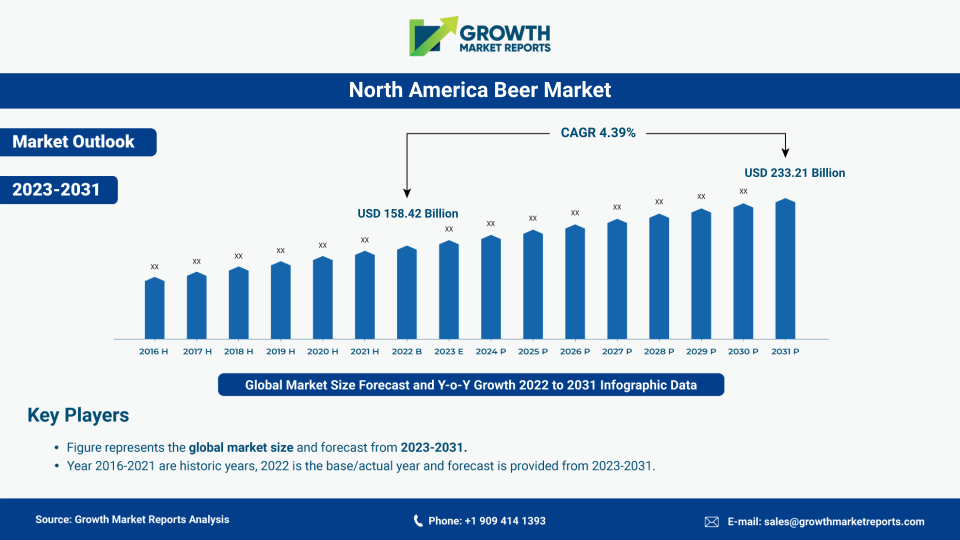
According to our latest research, the global beer market size reached USD 725.5 billion in 2024, demonstrating a robust presence across key regions. The market is projected to grow at a CAGR of 4.2% from 2025 to 2033, reaching an estimated value of USD 1,065.3 billion by 2033. The primary growth drivers include evolving consumer preferences, continuous product innovation, and the increasing popularity of craft and premium beer variants. As per our latest findings, the beer industry is undergoing transformative changes, with both established breweries and new entrants leveraging technological advancements and shifting distribution strategies to capture emerging opportunities worldwide.

The growth trajectory of the global beer market is significantly influenced by changing consumer demographics and preferences. Younger consumers, particularly in emerging economies, are exhibiting a growing inclination toward flavored and low-alcohol beer options. This shift is attributed to increased health consciousness and the desire for novel drinking experiences. Additionally, the premiumization trend is gaining momentum, as consumers are willing to pay more for high-quality, artisanal, and craft beers. This has led to a proliferation of microbreweries and craft beer brands, which are reshaping the competitive landscape and driving overall market expansion. Furthermore, the adoption of innovative brewing techniques and the introduction of unique flavors are attracting new customer segments, thereby fueling market growth.

Another critical growth factor is the expansion of distribution channels, both online and offline, making beer more accessible to a diverse customer base. The rise of e-commerce platforms and digital retailing has enabled breweries to reach consumers directly, bypassing traditional intermediaries and enhancing brand loyalty. On-trade channels, such as bars, pubs, and restaurants, continue to play a pivotal role in promoting experiential consumption, especially in urban centers. Meanwhile, off-trade channels, including supermarkets and convenience stores, are witnessing increased sales due to changing shopping habits and the convenience they offer. The integration of advanced logistics and cold chain solutions is further ensuring product quality and extending market reach.

Sustainability and environmental concerns are also shaping the future of the beer market. Breweries are increasingly investing in eco-friendly production processes, recyclable packaging, and water conservation initiatives. These efforts are not only helping companies meet regulatory requirements but also resonating with environmentally conscious consumers. Moreover, strategic collaborations between breweries and agricultural producers are fostering the development of sustainable supply chains, which is essential for long-term growth. The adoption of renewable energy sources and waste management technologies is further enhancing operational efficiency and reducing the overall carbon footprint of the industry.

In recent years, the concept of Luxury Beer has emerged as a significant trend within the beer market, catering to consumers who seek exclusivity and high-end experiences. These premium beers often feature rare ingredients, unique brewing techniques, and limited-edition releases, appealing to a niche audience that values craftsmanship and sophistication. The rise of luxury beer is driven by the growing disposable incomes and changing lifestyles of affluent consumers, who are willing to invest in quality and prestige. Breweries are capitalizing on this trend by collaborating with renowned chefs, artists, and designers to create bespoke beer offerings that stand out in the competitive landscape. As the demand for luxury beer continues to grow, it presents a lucrative opportunity for breweries to differentiate their brands and capture the attention of discerning consumers.

Regionally, Asia Pacific stands out as the fastest-growing market, driven by rapid urbanization, rising disposable incomes, and a burgeoning middle class. China and India, in particular, are witnessing significant increases in beer consumption, supported by favorable government policies and the entry of international brands. North America and Europe continue to dominate in terms of market share, owing to their well-established beer cultures and high per capita consumption rates. Latin America and the Middle East & Africa are also emerging as promising markets, fueled by demographic shifts and increasing acceptance of alcoholic beverages. However, regional dynamics vary, with local preferences and regulatory frameworks influencing market performance and growth prospects.

Global Beer  Industry Outlook

Product Type Analysis

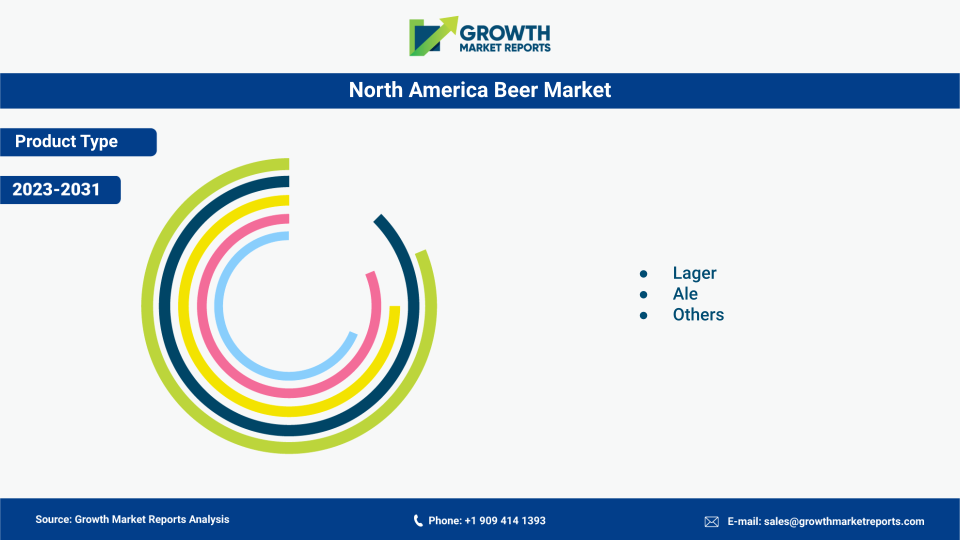
The beer market is segmented by product type into Lager, Ale, Stout & Porter, Malt, and Others, each catering to distinct consumer preferences and regional tastes. Lager remains the most popular segment globally, accounting for a significant share of total consumption due to its light, crisp flavor profile and widespread availability. The dominance of lager is particularly evident in Asia Pacific and Latin America, where it is often the beer of choice for casual and social occasions. The segment's growth is further supported by aggressive marketing campaigns and the introduction of low-calorie and flavored lagers, appealing to health-conscious and younger consumers. As breweries continue to innovate within the lager segment, the market is expected to witness sustained demand and incremental growth.

Ale, on the other hand, is experiencing a resurgence in popularity, especially in North America and Europe, where craft beer movements have revitalized interest in traditional brewing methods and diverse flavor profiles. The ale segment is characterized by its rich, complex taste and higher alcohol content, making it a favorite among beer enthusiasts seeking unique and artisanal experiences. Craft breweries are at the forefront of this trend, experimenting with various hops, malts, and fermentation techniques to create innovative ale varieties. The rising demand for specialty and seasonal ales is contributing to the segment's robust growth, with consumers increasingly seeking out limited-edition and locally sourced options.

Stout & Porter beers, known for their dark color and robust flavors, occupy a niche but growing segment within the global beer market. These beers are particularly popular in Europe and select markets in North America, where they are often associated with premium and festive consumption occasions. The segment's growth is fueled by the increasing popularity of craft stouts and porters, which often incorporate unique ingredients such as chocolate, coffee, and spices. As consumers become more adventurous in their beer choices, the demand for bold and distinctive stout and porter varieties is expected to rise, contributing to the diversification of the overall market.

Malt beers, which include both alcoholic and non-alcoholic variants, are gaining traction in regions with strict alcohol regulations or cultural restrictions on alcohol consumption. The malt segment is particularly significant in the Middle East & Africa, where non-alcoholic malt beverages offer a viable alternative for consumers seeking the taste of beer without the effects of alcohol. Breweries are investing in the development of innovative malt formulations, incorporating natural flavors and health-oriented ingredients to appeal to a broader audience. The growing popularity of malt-based energy and wellness drinks is also expanding the segment's reach and driving market growth.

The "Others" category encompasses a variety of specialty and hybrid beers that do not fit neatly into the traditional classifications. This includes fruit beers, spiced beers, and experimental brews that cater to niche markets and adventurous consumers. The segment is characterized by rapid innovation and the willingness of breweries to push the boundaries of conventional brewing. As consumer palates evolve and the demand for unique drinking experiences increases, the "Others" segment is expected to play an increasingly important role in shaping the future of the beer market.

Report Scope

Attributes Details
Report Title Beer Market Research Report 2033
By Product Type Lager, Ale, Stout & Porter, Malt, Others
By Packaging Glass Bottle, Cans, Draught, Others
By Production Macro-brewery, Microbrewery, Craft Brewery, Others
By Distribution Channel On-Trade, Off-Trade
Regions Covered North America, Europe, APAC, Latin America, MEA
Base Year 2024
Historic Data 2018-2023
Forecast Period 2025-2033
Number of Pages 282
Number of Tables & Figures 398
Customization Available Yes, the report can be customized as per your need.

Packaging Analysis

Packaging is a critical aspect of the beer market, influencing consumer perceptions, brand differentiation, and environmental impact. The glass bottle segment remains a dominant packaging choice, particularly for premium and imported beers. Glass bottles are favored for their ability to preserve flavor, maintain carbonation, and convey a sense of tradition and quality. Many established brands continue to invest in unique bottle designs and labeling to enhance shelf appeal and reinforce brand identity. However, the higher cost and fragility of glass bottles present logistical challenges, prompting breweries to explore alternative packaging solutions that balance quality with convenience.

Cans have gained substantial popularity in recent years, driven by their lightweight, portability, and recyclability. The can segment is experiencing rapid growth, particularly among younger consumers and in markets where outdoor and on-the-go consumption is prevalent. Cans offer several advantages, including faster cooling, extended shelf life, and reduced transportation costs. Breweries are capitalizing on these benefits by introducing a wide range of canned beer options, from mainstream lagers to specialty craft brews. The adoption of innovative can designs and resealable lids is further enhancing consumer convenience and driving segment expansion.

Draught beer, traditionally associated with on-trade channels such as bars and restaurants, remains a key segment for experiential consumption. Draught beer is prized for its freshness, superior taste, and the social experience it offers. The segment's growth is closely linked to the hospitality industry's performance and the resurgence of social gatherings post-pandemic. Breweries are investing in advanced dispensing systems and sustainable keg solutions to improve product quality and reduce environmental impact. The increasing popularity of home draught systems is also creating new opportunities for breweries to engage with consumers outside traditional venues.

Other packaging formats, including PET bottles, growlers, and innovative eco-friendly containers, are emerging as viable alternatives to traditional packaging. These formats cater to specific market needs, such as portability, resealability, and sustainability. PET bottles, for example, are gaining traction in regions with high outdoor consumption and regulatory restrictions on glass containers. Breweries are also experimenting with biodegradable and compostable packaging materials to address environmental concerns and appeal to eco-conscious consumers. As packaging technology continues to evolve, the beer market is likely to see a greater diversity of options that balance functionality, aesthetics, and sustainability.

The choice of packaging is increasingly influenced by regulatory requirements and consumer demand for sustainable solutions. Breweries are under pressure to reduce their carbon footprint and minimize waste, prompting investments in recycling infrastructure and circular economy initiatives. Collaborative efforts between industry stakeholders, governments, and environmental organizations are driving the adoption of best practices in packaging design and waste management. As sustainability becomes a key differentiator in the beer market, companies that prioritize eco-friendly packaging are likely to gain a competitive edge and enhance brand loyalty.

Production Analysis

The beer market is segmented by production into Macro-brewery, Microbrewery, Craft Brewery, and Others, each representing distinct business models and market strategies. Macro-breweries, characterized by large-scale production and extensive distribution networks, dominate the global beer market in terms of volume. These breweries leverage economies of scale, advanced automation, and strong brand recognition to maintain market leadership. Macro-breweries are continuously innovating their product portfolios to cater to changing consumer preferences, including the introduction of low-alcohol, gluten-free, and flavored beer variants. Their ability to invest in marketing, research, and global expansion ensures sustained growth and market relevance.

Microbreweries, defined by their small-scale operations and local focus, are experiencing a surge in popularity, particularly in North America and Europe. These breweries emphasize quality, craftsmanship, and community engagement, often producing limited batches of unique and experimental beers. Microbreweries play a pivotal role in driving the craft beer movement, challenging the dominance of macro-breweries and fostering a culture of innovation. The segment's growth is supported by increasing consumer demand for authentic, locally sourced products and the willingness to pay a premium for distinctive flavors and brewing techniques.

Craft breweries, which may overlap with microbreweries but typically operate on a slightly larger scale, are redefining the beer market landscape. Craft breweries are known for their creativity, independence, and commitment to traditional brewing methods. They often collaborate with local farmers, artists, and other businesses to create unique beer experiences and build strong community ties. The craft brewery segment is characterized by rapid product innovation, seasonal releases, and a focus on sustainability and ethical sourcing. As consumers become more discerning and adventurous in their beer choices, craft breweries are well-positioned to capture market share and drive industry growth.

The "Others" category includes contract breweries, gypsy brewers, and emerging production models that do not fit the traditional classifications. These producers often leverage third-party facilities or flexible production arrangements to minimize capital investment and respond quickly to market trends. The segment is characterized by agility, experimentation, and the ability to cater to niche markets and short-term demand spikes. As the beer market continues to evolve, alternative production models are expected to play an increasingly important role in fostering innovation and meeting the diverse needs of consumers.

Production efficiency, quality control, and scalability are critical success factors across all segments. Breweries are investing in state-of-the-art equipment, data analytics, and automation to optimize production processes and ensure consistent product quality. The adoption of sustainable production practices, such as water recycling, energy efficiency, and waste reduction, is also gaining traction as breweries seek to minimize their environmental impact and comply with regulatory standards. As competition intensifies, the ability to balance innovation with operational excellence will be key to long-term success in the global beer market.

Distribution Channel Analysis

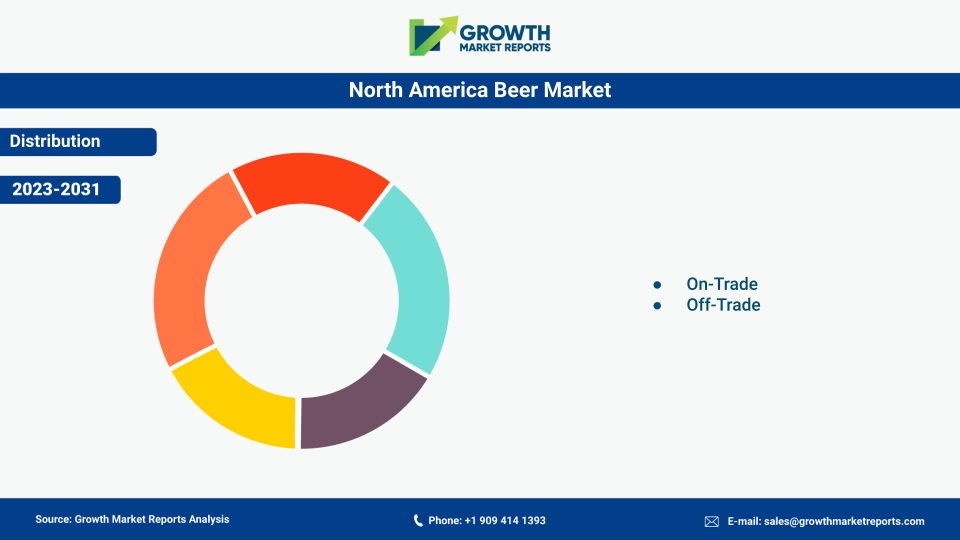
Distribution channels play a crucial role in shaping the accessibility and consumption patterns of beer worldwide. The market is segmented into On-Trade and Off-Trade channels, each offering distinct advantages and challenges. On-Trade channels, which include bars, pubs, restaurants, and hotels, are integral to the experiential aspect of beer consumption. These venues provide opportunities for breweries to showcase new products, engage directly with consumers, and build brand loyalty through curated experiences and events. The on-trade segment is particularly important for premium, craft, and specialty beers, which often rely on knowledgeable staff and optimal serving conditions to highlight their unique attributes.

Off-Trade channels, encompassing supermarkets, convenience stores, liquor stores, and online retailers, account for a significant share of global beer sales. The off-trade segment is characterized by convenience, affordability, and broad product availability, making it the preferred choice for at-home consumption and bulk purchases. The rise of e-commerce and digital retail platforms has further expanded the reach of off-trade channels, enabling consumers to discover and purchase a wide variety of beers from the comfort of their homes. Breweries are leveraging data analytics and targeted marketing to optimize product placement and promotions within off-trade channels, driving incremental sales and brand visibility.

The interplay between on-trade and off-trade channels is evolving in response to changing consumer behaviors and external factors such as the COVID-19 pandemic. While on-trade sales were temporarily impacted by lockdowns and social distancing measures, the segment is rebounding as consumers return to social venues and seek out immersive drinking experiences. Off-trade channels, meanwhile, have benefited from increased home consumption and the growing popularity of ready-to-drink and single-serve packaging formats. Breweries are adopting omnichannel strategies to seamlessly integrate both distribution channels and maximize market coverage.

Logistics, supply chain management, and regulatory compliance are critical considerations for effective distribution. Breweries are investing in advanced inventory management systems, cold chain logistics, and last-mile delivery solutions to ensure product freshness and minimize stockouts. Collaboration with distributors, retailers, and third-party logistics providers is essential for optimizing distribution efficiency and meeting diverse market requirements. As the competitive landscape intensifies, breweries that can adapt their distribution strategies to changing market dynamics will be best positioned to capture growth opportunities and enhance customer satisfaction.

The rise of direct-to-consumer (DTC) channels is also reshaping the distribution landscape. Breweries are increasingly leveraging their own websites, subscription services, and taprooms to engage with consumers directly and gather valuable customer insights. DTC channels offer higher margins, greater control over the customer experience, and the ability to test new products and concepts in real-time. As regulatory frameworks evolve to accommodate online alcohol sales, the DTC segment is expected to become an increasingly important growth driver for the global beer market.

Opportunities & Threats

The global beer market is brimming with opportunities driven by shifting consumer preferences, technological advancements, and the emergence of new business models. One of the most significant opportunities lies in the premiumization and craft beer segments, where consumers are increasingly seeking unique, high-quality, and artisanal products. Breweries that can innovate and differentiate their offerings through flavor experimentation, sustainable sourcing, and creative branding are well-positioned to capture market share and command higher price points. The growing demand for low-alcohol, non-alcoholic, and wellness-oriented beers presents another lucrative opportunity, particularly in health-conscious markets and regions with strict alcohol regulations.

Digital transformation and e-commerce are unlocking new avenues for growth and customer engagement. Breweries are leveraging digital marketing, social media, and data analytics to personalize interactions, optimize product recommendations, and build loyal communities. The expansion of online sales channels and direct-to-consumer models is enabling breweries to reach previously untapped markets and respond quickly to changing consumer demands. Strategic partnerships with technology providers, logistics companies, and retail platforms are further enhancing the efficiency and scalability of digital initiatives. As consumer expectations evolve, breweries that embrace digital innovation and omnichannel strategies will be best positioned to thrive in a dynamic and competitive market.

Despite the numerous opportunities, the beer market faces several restraining factors that could impact growth. Regulatory challenges, including stringent alcohol laws, advertising restrictions, and taxation policies, pose significant hurdles for breweries operating in multiple jurisdictions. Health concerns related to alcohol consumption, changing social attitudes, and the rise of alternative beverages such as hard seltzers and ready-to-drink cocktails are also exerting pressure on traditional beer sales. Additionally, supply chain disruptions, rising raw material costs, and environmental sustainability requirements are increasing operational complexity and costs. Breweries must proactively address these challenges through innovation, compliance, and sustainable practices to ensure long-term resilience and growth.

Regional Outlook

The Asia Pacific region is the fastest-growing market for beer, with a market size of USD 225.4 billion in 2024 and a projected CAGR of 5.6% through 2033. Rapid urbanization, rising disposable incomes, and a young, dynamic population are driving increased beer consumption in countries such as China, India, Vietnam, and Thailand. The entry of international brands, coupled with the expansion of local breweries and craft beer movements, is creating a vibrant and competitive market landscape. Government initiatives to promote tourism and hospitality are further boosting on-trade sales and expanding the consumer base. As the middle class continues to grow, demand for premium and imported beers is expected to rise, creating new opportunities for breweries and distributors.

North America and Europe remain the largest and most mature beer markets, with a combined market size of USD 335.6 billion in 2024. These regions are characterized by high per capita consumption, a well-established beer culture, and a strong presence of both global and local breweries. The craft beer revolution has been particularly transformative in the United States, Canada, Germany, and the United Kingdom, driving innovation and diversification within the market. While overall volume growth may be moderate, the premiumization trend and increasing demand for specialty, organic, and low-alcohol beers are supporting value growth. Regulatory frameworks, health trends, and shifting consumer preferences will continue to shape market dynamics in these regions.

Latin America and the Middle East & Africa are emerging as promising markets for beer, with a combined market size of USD 164.5 billion in 2024. In Latin America, countries such as Brazil, Mexico, and Colombia are witnessing steady growth in beer consumption, supported by a young population and increasing urbanization. The Middle East & Africa region is characterized by diverse market dynamics, with non-alcoholic and malt beverages gaining traction in countries with strict alcohol regulations. Breweries are adapting their product portfolios and marketing strategies to cater to local preferences and regulatory requirements. As economic conditions improve and consumer awareness increases, these regions are expected to contribute significantly to global market growth in the coming years.

Beer  Market Statistics

Competitor Outlook

The global beer market is highly competitive, with a mix of multinational corporations, regional players, and local craft breweries vying for market share. The competitive landscape is characterized by intense rivalry, rapid innovation, and continuous efforts to differentiate products and brands. Leading companies are leveraging their scale, distribution networks, and marketing prowess to maintain dominance, while smaller players are focusing on niche markets, artisanal production, and community engagement. Strategic mergers, acquisitions, and partnerships are common as companies seek to expand their geographic footprint, diversify their portfolios, and access new customer segments. The ability to anticipate and respond to changing consumer preferences is a key determinant of competitive success in the beer industry.

Innovation is at the heart of competition in the beer market, with companies investing heavily in research and development to create new flavors, packaging formats, and brewing techniques. The rise of craft beer and premiumization has intensified the need for differentiation, prompting breweries to experiment with exotic ingredients, sustainable sourcing, and limited-edition releases. Marketing and branding play a crucial role in shaping consumer perceptions and building loyalty, with companies employing a mix of traditional advertising, digital campaigns, and experiential marketing to engage with customers. The integration of technology, from production automation to digital sales platforms, is further enhancing operational efficiency and customer engagement.

Sustainability and corporate social responsibility are emerging as key competitive differentiators in the beer market. Breweries are increasingly adopting eco-friendly production processes, recyclable packaging, and community-focused initiatives to meet the expectations of environmentally conscious consumers. Transparency, ethical sourcing, and responsible marketing are becoming essential components of brand reputation and long-term success. Companies that can effectively balance profitability with social and environmental responsibility are likely to gain a competitive edge and build lasting relationships with stakeholders.

Some of the major companies operating in the global beer market include Anheuser-Busch InBev, Heineken N.V., Carlsberg Group, Asahi Group Holdings, Molson Coors Beverage Company, China Resources Snow Breweries, and Kirin Holdings Company. Anheuser-Busch InBev, the worldÂ’s largest brewer, boasts an extensive portfolio of iconic brands such as Budweiser, Stella Artois, and Corona, and maintains a strong global distribution network. Heineken N.V. is renowned for its premium positioning and innovative marketing campaigns, with a presence in over 190 countries. Carlsberg Group and Asahi Group Holdings are prominent players in Europe and Asia, respectively, with a focus on sustainability and product innovation.

China Resources Snow Breweries and Kirin Holdings Company are leading players in the Asia Pacific region, capitalizing on the rapid growth of beer consumption and the rising demand for premium and craft beers. Molson Coors Beverage Company, with its diverse portfolio and strong presence in North America and Europe, continues to invest in digital transformation and sustainability initiatives. These companies are actively pursuing strategic partnerships, acquisitions, and product diversification to strengthen their market positions and respond to evolving consumer trends. As competition intensifies, the ability to innovate, adapt, and connect with consumers will be critical to sustaining growth and profitability in the global beer market.

Key Players

  • Anheuser-Busch InBev
  • Heineken N.V.
  • China Resources Snow Breweries
  • Carlsberg Group
  • Molson Coors Beverage Company
  • Tsingtao Brewery Group
  • Asahi Group Holdings
  • Yanjing Brewery
  • Kirin Holdings Company
  • Grupo Modelo
  • BrewDog
  • Constellation Brands
  • San Miguel Corporation
  • Diageo plc
  • SABMiller (now part of AB InBev)
  • Boston Beer Company
  • Mahou San Miguel
  • United Breweries Group
  • Sapporo Holdings Limited
  • Royal Unibrew
Beer  Market Overview

Segments

The Beer market has been segmented on the basis of

Product Type

  • Lager
  • Ale
  • Stout & Porter
  • Malt
  • Others

Packaging

  • Glass Bottle
  • Cans
  • Draught
  • Others

Production

  • Macro-brewery
  • Microbrewery
  • Craft Brewery
  • Others

Distribution Channel

  • On-Trade
  • Off-Trade

Competitive Landscape

Key players competing in the North America beer market include Anheuser-Busch InBev, Boston Beer Company, Carlsberg Group, Heineken NV and Constellation Brands Some of these players are using several market strategies such as mergers, acquisitions, partnerships, collaborations, capacity expansion, and product launches to enhance their market shares.
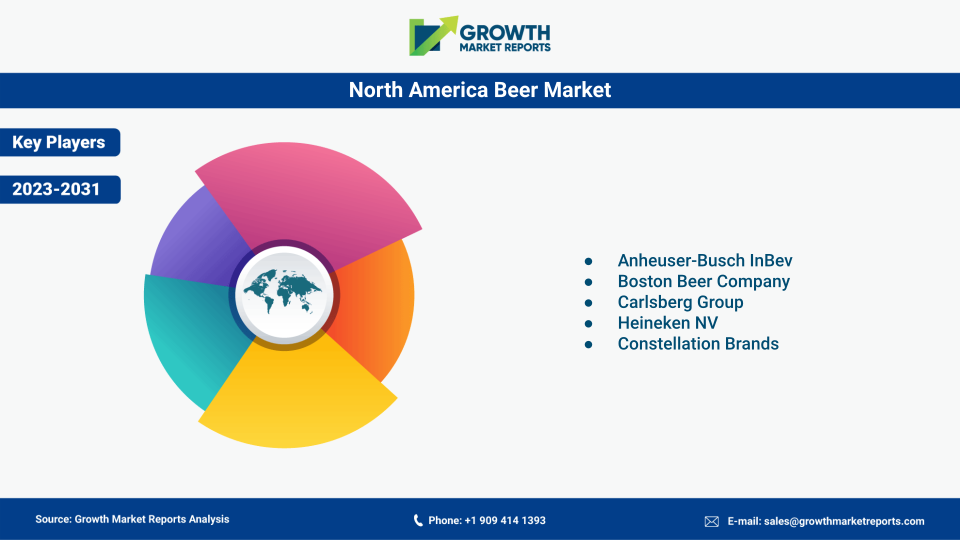

 North America Beer Market Key Players

Frequently Asked Questions

Challenges include regulatory restrictions, health concerns, competition from alternative beverages, supply chain disruptions, and the need to meet environmental sustainability standards.

Breweries are investing in eco-friendly production, recyclable packaging, and water conservation. Sustainable supply chains and renewable energy adoption are increasingly important for regulatory compliance and consumer appeal.

Major players include Anheuser-Busch InBev, Heineken N.V., Carlsberg Group, Asahi Group Holdings, Molson Coors Beverage Company, China Resources Snow Breweries, and Kirin Holdings Company, among others.

Major trends include premiumization, craft beer innovation, digital transformation, sustainability initiatives, and the rise of low-alcohol and non-alcoholic beer options.

Beer is sold through on-trade channels (bars, pubs, restaurants) and off-trade channels (supermarkets, convenience stores, online retailers). E-commerce and direct-to-consumer models are expanding rapidly.

Packaging plays a vital role in consumer perception and sustainability. Glass bottles remain popular for premium beers, while cans are gaining popularity for their portability and recyclability. Draught and innovative eco-friendly packaging are also growing segments.

Lager is the most widely consumed beer globally, followed by ale, stout & porter, malt, and specialty beers. Craft and flavored beers are gaining traction, especially among younger and health-conscious consumers.

North America and Europe remain the largest markets, while Asia Pacific is the fastest-growing region, particularly in China and India. Latin America and the Middle East & Africa are also showing promising growth.

Key growth drivers include evolving consumer preferences, product innovation, the rising popularity of craft and premium beers, expanding distribution channels, and increased focus on sustainability.

The global beer market reached USD 725.5 billion in 2024 and is expected to grow at a CAGR of 4.2% from 2025 to 2033, reaching approximately USD 1,065.3 billion by 2033.

Table Of Content

Chapter 1 Executive Summary
Chapter 2 Assumptions and Acronyms Used
Chapter 3 Research Methodology
Chapter 4 Beer  Market Overview
   4.1 Introduction
      4.1.1 Market Taxonomy
      4.1.2 Market Definition
      4.1.3 Macro-Economic Factors Impacting the Market Growth
   4.2 Beer  Market Dynamics
      4.2.1 Market Drivers
      4.2.2 Market Restraints
      4.2.3 Market Opportunity
   4.3 Beer  Market - Supply Chain Analysis
      4.3.1 List of Key Suppliers
      4.3.2 List of Key Distributors
      4.3.3 List of Key Consumers
   4.4 Key Forces Shaping the Beer  Market
      4.4.1 Bargaining Power of Suppliers
      4.4.2 Bargaining Power of Buyers
      4.4.3 Threat of Substitution
      4.4.4 Threat of New Entrants
      4.4.5 Competitive Rivalry
   4.5 Global Beer  Market Size & Forecast, 2023-2032
      4.5.1 Beer  Market Size and Y-o-Y Growth
      4.5.2 Beer  Market Absolute $ Opportunity

Chapter 5 Global Beer  Market Analysis and Forecast By Product Type
   5.1 Introduction
      5.1.1 Key Market Trends & Growth Opportunities By Product Type
      5.1.2 Basis Point Share (BPS) Analysis By Product Type
      5.1.3 Absolute $ Opportunity Assessment By Product Type
   5.2 Beer  Market Size Forecast By Product Type
      5.2.1 Lager
      5.2.2 Ale
      5.2.3 Stout & Porter
      5.2.4 Malt
      5.2.5 Others
   5.3 Market Attractiveness Analysis By Product Type

Chapter 6 Global Beer  Market Analysis and Forecast By Packaging
   6.1 Introduction
      6.1.1 Key Market Trends & Growth Opportunities By Packaging
      6.1.2 Basis Point Share (BPS) Analysis By Packaging
      6.1.3 Absolute $ Opportunity Assessment By Packaging
   6.2 Beer  Market Size Forecast By Packaging
      6.2.1 Glass Bottle
      6.2.2 Cans
      6.2.3 Draught
      6.2.4 Others
   6.3 Market Attractiveness Analysis By Packaging

Chapter 7 Global Beer  Market Analysis and Forecast By Production
   7.1 Introduction
      7.1.1 Key Market Trends & Growth Opportunities By Production
      7.1.2 Basis Point Share (BPS) Analysis By Production
      7.1.3 Absolute $ Opportunity Assessment By Production
   7.2 Beer  Market Size Forecast By Production
      7.2.1 Macro-brewery
      7.2.2 Microbrewery
      7.2.3 Craft Brewery
      7.2.4 Others
   7.3 Market Attractiveness Analysis By Production

Chapter 8 Global Beer  Market Analysis and Forecast By Distribution Channel
   8.1 Introduction
      8.1.1 Key Market Trends & Growth Opportunities By Distribution Channel
      8.1.2 Basis Point Share (BPS) Analysis By Distribution Channel
      8.1.3 Absolute $ Opportunity Assessment By Distribution Channel
   8.2 Beer  Market Size Forecast By Distribution Channel
      8.2.1 On-Trade
      8.2.2 Off-Trade
   8.3 Market Attractiveness Analysis By Distribution Channel

Chapter 9 Global Beer  Market Analysis and Forecast by Region
   9.1 Introduction
      9.1.1 Key Market Trends & Growth Opportunities By Region
      9.1.2 Basis Point Share (BPS) Analysis By Region
      9.1.3 Absolute $ Opportunity Assessment By Region
   9.2 Beer  Market Size Forecast By Region
      9.2.1 North America
      9.2.2 Europe
      9.2.3 Asia Pacific
      9.2.4 Latin America
      9.2.5 Middle East & Africa (MEA)
   9.3 Market Attractiveness Analysis By Region

Chapter 10 Coronavirus Disease (COVID-19) Impact 
   10.1 Introduction 
   10.2 Current & Future Impact Analysis 
   10.3 Economic Impact Analysis 
   10.4 Government Policies 
   10.5 Investment Scenario

Chapter 11 North America Beer  Analysis and Forecast
   11.1 Introduction
   11.2 North America Beer  Market Size Forecast by Country
      11.2.1 U.S.
      11.2.2 Canada
   11.3 Basis Point Share (BPS) Analysis by Country
   11.4 Absolute $ Opportunity Assessment by Country
   11.5 Market Attractiveness Analysis by Country
   11.6 North America Beer  Market Size Forecast By Product Type
      11.6.1 Lager
      11.6.2 Ale
      11.6.3 Stout & Porter
      11.6.4 Malt
      11.6.5 Others
   11.7 Basis Point Share (BPS) Analysis By Product Type 
   11.8 Absolute $ Opportunity Assessment By Product Type 
   11.9 Market Attractiveness Analysis By Product Type
   11.10 North America Beer  Market Size Forecast By Packaging
      11.10.1 Glass Bottle
      11.10.2 Cans
      11.10.3 Draught
      11.10.4 Others
   11.11 Basis Point Share (BPS) Analysis By Packaging 
   11.12 Absolute $ Opportunity Assessment By Packaging 
   11.13 Market Attractiveness Analysis By Packaging
   11.14 North America Beer  Market Size Forecast By Production
      11.14.1 Macro-brewery
      11.14.2 Microbrewery
      11.14.3 Craft Brewery
      11.14.4 Others
   11.15 Basis Point Share (BPS) Analysis By Production 
   11.16 Absolute $ Opportunity Assessment By Production 
   11.17 Market Attractiveness Analysis By Production
   11.18 North America Beer  Market Size Forecast By Distribution Channel
      11.18.1 On-Trade
      11.18.2 Off-Trade
   11.19 Basis Point Share (BPS) Analysis By Distribution Channel 
   11.20 Absolute $ Opportunity Assessment By Distribution Channel 
   11.21 Market Attractiveness Analysis By Distribution Channel

Chapter 12 Europe Beer  Analysis and Forecast
   12.1 Introduction
   12.2 Europe Beer  Market Size Forecast by Country
      12.2.1 Germany
      12.2.2 France
      12.2.3 Italy
      12.2.4 U.K.
      12.2.5 Spain
      12.2.6 Russia
      12.2.7 Rest of Europe
   12.3 Basis Point Share (BPS) Analysis by Country
   12.4 Absolute $ Opportunity Assessment by Country
   12.5 Market Attractiveness Analysis by Country
   12.6 Europe Beer  Market Size Forecast By Product Type
      12.6.1 Lager
      12.6.2 Ale
      12.6.3 Stout & Porter
      12.6.4 Malt
      12.6.5 Others
   12.7 Basis Point Share (BPS) Analysis By Product Type 
   12.8 Absolute $ Opportunity Assessment By Product Type 
   12.9 Market Attractiveness Analysis By Product Type
   12.10 Europe Beer  Market Size Forecast By Packaging
      12.10.1 Glass Bottle
      12.10.2 Cans
      12.10.3 Draught
      12.10.4 Others
   12.11 Basis Point Share (BPS) Analysis By Packaging 
   12.12 Absolute $ Opportunity Assessment By Packaging 
   12.13 Market Attractiveness Analysis By Packaging
   12.14 Europe Beer  Market Size Forecast By Production
      12.14.1 Macro-brewery
      12.14.2 Microbrewery
      12.14.3 Craft Brewery
      12.14.4 Others
   12.15 Basis Point Share (BPS) Analysis By Production 
   12.16 Absolute $ Opportunity Assessment By Production 
   12.17 Market Attractiveness Analysis By Production
   12.18 Europe Beer  Market Size Forecast By Distribution Channel
      12.18.1 On-Trade
      12.18.2 Off-Trade
   12.19 Basis Point Share (BPS) Analysis By Distribution Channel 
   12.20 Absolute $ Opportunity Assessment By Distribution Channel 
   12.21 Market Attractiveness Analysis By Distribution Channel

Chapter 13 Asia Pacific Beer  Analysis and Forecast
   13.1 Introduction
   13.2 Asia Pacific Beer  Market Size Forecast by Country
      13.2.1 China
      13.2.2 Japan
      13.2.3 South Korea
      13.2.4 India
      13.2.5 Australia
      13.2.6 South East Asia (SEA)
      13.2.7 Rest of Asia Pacific (APAC)
   13.3 Basis Point Share (BPS) Analysis by Country
   13.4 Absolute $ Opportunity Assessment by Country
   13.5 Market Attractiveness Analysis by Country
   13.6 Asia Pacific Beer  Market Size Forecast By Product Type
      13.6.1 Lager
      13.6.2 Ale
      13.6.3 Stout & Porter
      13.6.4 Malt
      13.6.5 Others
   13.7 Basis Point Share (BPS) Analysis By Product Type 
   13.8 Absolute $ Opportunity Assessment By Product Type 
   13.9 Market Attractiveness Analysis By Product Type
   13.10 Asia Pacific Beer  Market Size Forecast By Packaging
      13.10.1 Glass Bottle
      13.10.2 Cans
      13.10.3 Draught
      13.10.4 Others
   13.11 Basis Point Share (BPS) Analysis By Packaging 
   13.12 Absolute $ Opportunity Assessment By Packaging 
   13.13 Market Attractiveness Analysis By Packaging
   13.14 Asia Pacific Beer  Market Size Forecast By Production
      13.14.1 Macro-brewery
      13.14.2 Microbrewery
      13.14.3 Craft Brewery
      13.14.4 Others
   13.15 Basis Point Share (BPS) Analysis By Production 
   13.16 Absolute $ Opportunity Assessment By Production 
   13.17 Market Attractiveness Analysis By Production
   13.18 Asia Pacific Beer  Market Size Forecast By Distribution Channel
      13.18.1 On-Trade
      13.18.2 Off-Trade
   13.19 Basis Point Share (BPS) Analysis By Distribution Channel 
   13.20 Absolute $ Opportunity Assessment By Distribution Channel 
   13.21 Market Attractiveness Analysis By Distribution Channel

Chapter 14 Latin America Beer  Analysis and Forecast
   14.1 Introduction
   14.2 Latin America Beer  Market Size Forecast by Country
      14.2.1 Brazil
      14.2.2 Mexico
      14.2.3 Rest of Latin America (LATAM)
   14.3 Basis Point Share (BPS) Analysis by Country
   14.4 Absolute $ Opportunity Assessment by Country
   14.5 Market Attractiveness Analysis by Country
   14.6 Latin America Beer  Market Size Forecast By Product Type
      14.6.1 Lager
      14.6.2 Ale
      14.6.3 Stout & Porter
      14.6.4 Malt
      14.6.5 Others
   14.7 Basis Point Share (BPS) Analysis By Product Type 
   14.8 Absolute $ Opportunity Assessment By Product Type 
   14.9 Market Attractiveness Analysis By Product Type
   14.10 Latin America Beer  Market Size Forecast By Packaging
      14.10.1 Glass Bottle
      14.10.2 Cans
      14.10.3 Draught
      14.10.4 Others
   14.11 Basis Point Share (BPS) Analysis By Packaging 
   14.12 Absolute $ Opportunity Assessment By Packaging 
   14.13 Market Attractiveness Analysis By Packaging
   14.14 Latin America Beer  Market Size Forecast By Production
      14.14.1 Macro-brewery
      14.14.2 Microbrewery
      14.14.3 Craft Brewery
      14.14.4 Others
   14.15 Basis Point Share (BPS) Analysis By Production 
   14.16 Absolute $ Opportunity Assessment By Production 
   14.17 Market Attractiveness Analysis By Production
   14.18 Latin America Beer  Market Size Forecast By Distribution Channel
      14.18.1 On-Trade
      14.18.2 Off-Trade
   14.19 Basis Point Share (BPS) Analysis By Distribution Channel 
   14.20 Absolute $ Opportunity Assessment By Distribution Channel 
   14.21 Market Attractiveness Analysis By Distribution Channel

Chapter 15 Middle East & Africa (MEA) Beer  Analysis and Forecast
   15.1 Introduction
   15.2 Middle East & Africa (MEA) Beer  Market Size Forecast by Country
      15.2.1 Saudi Arabia
      15.2.2 South Africa
      15.2.3 UAE
      15.2.4 Rest of Middle East & Africa (MEA)
   15.3 Basis Point Share (BPS) Analysis by Country
   15.4 Absolute $ Opportunity Assessment by Country
   15.5 Market Attractiveness Analysis by Country
   15.6 Middle East & Africa (MEA) Beer  Market Size Forecast By Product Type
      15.6.1 Lager
      15.6.2 Ale
      15.6.3 Stout & Porter
      15.6.4 Malt
      15.6.5 Others
   15.7 Basis Point Share (BPS) Analysis By Product Type 
   15.8 Absolute $ Opportunity Assessment By Product Type 
   15.9 Market Attractiveness Analysis By Product Type
   15.10 Middle East & Africa (MEA) Beer  Market Size Forecast By Packaging
      15.10.1 Glass Bottle
      15.10.2 Cans
      15.10.3 Draught
      15.10.4 Others
   15.11 Basis Point Share (BPS) Analysis By Packaging 
   15.12 Absolute $ Opportunity Assessment By Packaging 
   15.13 Market Attractiveness Analysis By Packaging
   15.14 Middle East & Africa (MEA) Beer  Market Size Forecast By Production
      15.14.1 Macro-brewery
      15.14.2 Microbrewery
      15.14.3 Craft Brewery
      15.14.4 Others
   15.15 Basis Point Share (BPS) Analysis By Production 
   15.16 Absolute $ Opportunity Assessment By Production 
   15.17 Market Attractiveness Analysis By Production
   15.18 Middle East & Africa (MEA) Beer  Market Size Forecast By Distribution Channel
      15.18.1 On-Trade
      15.18.2 Off-Trade
   15.19 Basis Point Share (BPS) Analysis By Distribution Channel 
   15.20 Absolute $ Opportunity Assessment By Distribution Channel 
   15.21 Market Attractiveness Analysis By Distribution Channel

Chapter 16 Competition Landscape 
   16.1 Beer  Market: Competitive Dashboard
   16.2 Global Beer  Market: Market Share Analysis, 2023
   16.3 Company Profiles (Details – Overview, Financials, Developments, Strategy) 
      16.3.1 Anheuser-Busch InBev
Heineken N.V.
China Resources Snow Breweries
Carlsberg Group
Molson Coors Beverage Company
Tsingtao Brewery Group
Asahi Group Holdings
Yanjing Brewery
Kirin Holdings Company
Grupo Modelo
BrewDog
Constellation Brands
San Miguel Corporation
Diageo plc
SABMiller (now part of AB InBev)
Boston Beer Company
Mahou San Miguel
United Breweries Group
Sapporo Holdings Limited
Royal Unibrew

Methodology

Our Clients

Microsoft
Deloitte
General Electric
Honda Motor Co. Ltd.
sinopec
General Mills
FedEx Logistics
Nestle SA