Craft Beer Market Research Report 2033

Craft Beer Market Research Report 2033

Segments - by Product Type (Ales, Lagers, Stouts & Porters, Others), by Distribution Channel (On-Trade, Off-Trade), by Packaging (Bottles, Cans, Kegs), by Age Group (21–35 Years, 36–50 Years, Above 50 Years)

https://growthmarketreports.com/Anuradha
Author : Anuradha B. More
https://growthmarketreports.com/Vaibhav
Fact-checked by : Vaibhav Chandola
https://growthmarketreports.com/Shruti
Editor : Shruti Bhat

Upcoming | Report ID :FB-2828 | 5.0 Rating | 30 Reviews | 260 Pages | Format : Docx PDF

Report Description


Craft Beer Market Outlook

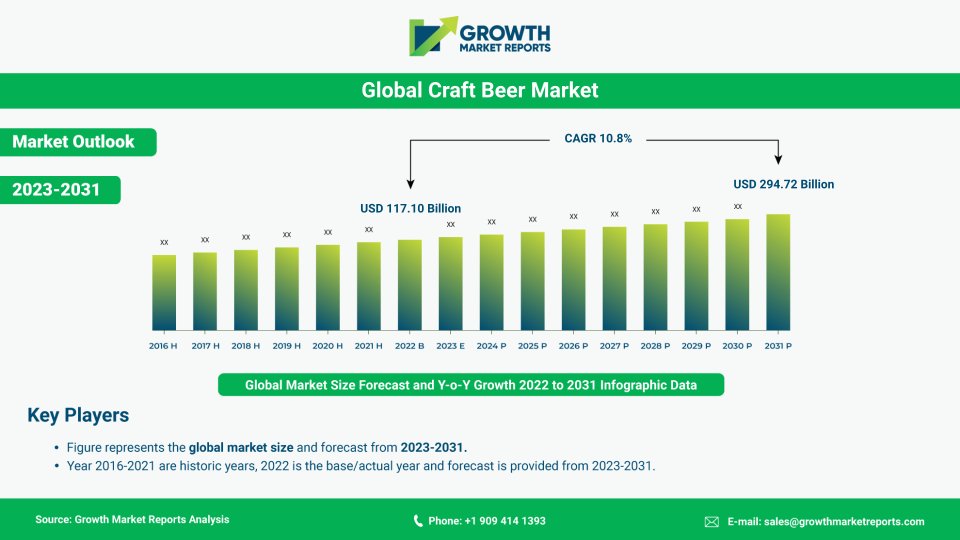
According to our latest research, the global craft beer market size reached USD 115.4 billion in 2024, reflecting a robust growth trajectory fueled by evolving consumer preferences and a surge in artisanal brewing culture. The market is projected to expand at a CAGR of 10.7% from 2025 to 2033, reaching an estimated value of USD 264.7 billion by 2033. This remarkable growth is primarily attributed to increasing demand for unique flavors, premiumization trends, and the rising influence of younger demographics seeking authentic, locally brewed beverages. The craft beer industry continues to benefit from a global shift toward experiential consumption, with consumers prioritizing quality, variety, and brand storytelling over mass-produced alternatives.

One of the primary growth drivers for the craft beer market is the significant shift in consumer preferences toward artisanal and small-batch products. As consumers become more discerning, there is a marked trend toward seeking out beverages that offer distinct flavors, innovative brewing techniques, and a sense of locality. This move away from mainstream, homogenized beer options has created fertile ground for craft breweries to thrive, as they can cater to niche tastes and offer seasonal or limited-edition brews that appeal to adventurous palates. Additionally, the rise of social media and digital marketing has enabled craft breweries to connect directly with their audience, fostering brand loyalty and allowing for rapid dissemination of new product launches and brewery events. The direct engagement with consumers not only boosts sales but also encourages a community-driven approach that further differentiates craft beer from its mass-market counterparts.

Another critical factor propelling the growth of the craft beer market is the premiumization trend that has swept across the beverage industry. Consumers, particularly in urban centers, are increasingly willing to pay a premium for products that promise superior quality, unique ingredients, and an authentic brewing heritage. This willingness to spend more for a better product has encouraged breweries to experiment with rare hops, exotic adjuncts, and barrel-aging techniques, resulting in a diverse array of craft beer styles that cater to a wide spectrum of tastes. Furthermore, the proliferation of brewpubs and taprooms has transformed beer drinking into an experiential activity, where consumers can enjoy curated tastings, food pairings, and brewery tours. This experiential aspect has become a key differentiator for the craft beer segment, setting it apart from traditional beer consumption and driving sustained market expansion.

The craft beer market is also benefiting from favorable regulatory changes and supportive government policies in several regions. Many countries have relaxed licensing restrictions, reduced excise duties for small-scale brewers, and provided incentives for local production, all of which have lowered barriers to entry and encouraged innovation in the sector. In addition, the growing emphasis on sustainability and eco-friendly practices has led craft breweries to adopt green brewing processes, such as sourcing local ingredients, minimizing water usage, and utilizing renewable energy. These sustainable initiatives resonate strongly with environmentally conscious consumers, further enhancing the appeal of craft beer. The market’s dynamism is also reflected in the increasing number of collaborations between craft breweries and other food and beverage producers, resulting in cross-industry innovations that continue to captivate consumers worldwide.

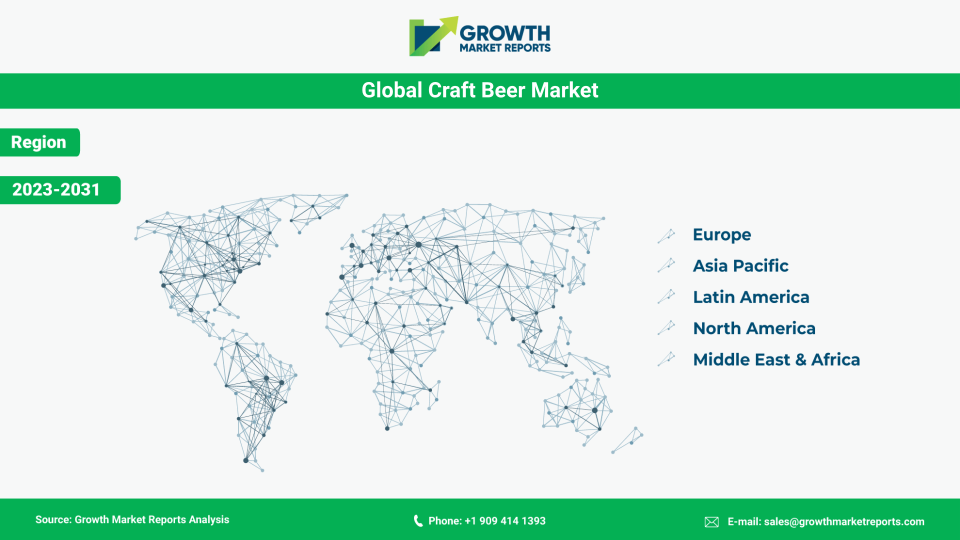
From a regional perspective, North America and Europe remain the dominant players in the global craft beer market, collectively accounting for a substantial share of global revenues. However, the Asia Pacific region is emerging as a key growth engine, driven by a burgeoning middle class, rapid urbanization, and increasing exposure to Western drinking culture. Latin America and the Middle East & Africa, while still nascent markets, are witnessing growing interest in craft beer, particularly among younger consumers and expatriate communities. As the market continues to evolve, regional dynamics are expected to play a pivotal role in shaping future growth trajectories, with local preferences and regulatory environments influencing the pace and direction of market expansion.

Global Craft Beer Industry Outlook

Product Type Analysis

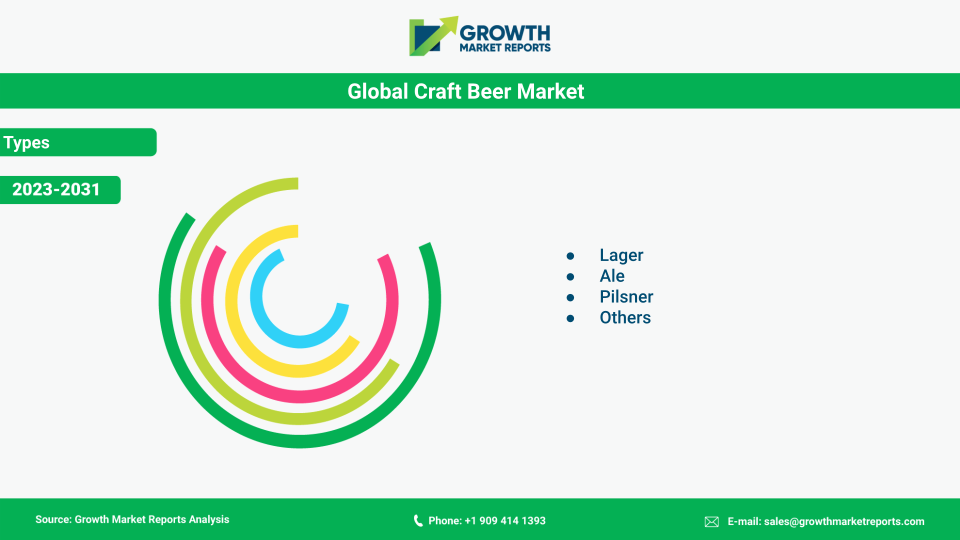
The craft beer market is segmented by product type into ales, lagers, stouts & porters, and others, each offering unique characteristics that cater to diverse consumer preferences. Ales represent the largest segment, driven by their rich flavor profiles, broad variety, and historical significance in the craft brewing tradition. Within ales, subcategories such as India Pale Ales (IPAs), pale ales, and Belgian-style ales have gained immense popularity, particularly among younger consumers who appreciate their hoppy, aromatic qualities. The versatility of ales allows craft brewers to experiment with a wide range of ingredients, from exotic fruits to local spices, resulting in a dynamic and ever-evolving product landscape. As a result, ales continue to be the flagship offering for many craft breweries, setting the tone for innovation and consumer engagement in the market.

Lagers, traditionally associated with mass-market beer, have experienced a renaissance in the craft beer sector. Craft lagers are distinguished by their clean, crisp taste and longer fermentation times, which appeal to consumers seeking a refreshing alternative to more robust ales. The resurgence of lagers is partly driven by the desire for sessionable beers that can be enjoyed in larger quantities without overwhelming the palate. Craft brewers have responded by introducing a variety of lagers, including pilsners, Vienna lagers, and specialty brews aged in unique barrels. This diversification has helped lagers carve out a significant niche within the craft beer market, attracting both traditional beer drinkers and newcomers seeking approachable yet high-quality options.

Stouts & porters, though a smaller segment compared to ales and lagers, play a crucial role in the craft beer ecosystem by offering deep, complex flavors that appeal to connoisseurs and enthusiasts. These dark beers are characterized by their roasted malt profiles, notes of coffee and chocolate, and creamy mouthfeel. Craft breweries often experiment with adjuncts such as vanilla, coconut, and chili peppers to create innovative stouts and porters that stand out in a crowded market. The popularity of barrel-aged stouts, in particular, has surged in recent years, with limited releases generating significant buzz and commanding premium prices. This segment’s focus on bold flavors and artisanal craftsmanship aligns perfectly with the core values of the craft beer movement.

The “others” category encompasses a variety of specialty and hybrid styles, including wheat beers, sours, fruit beers, and experimental brews that defy traditional classification. This segment is a hotbed of innovation, as craft brewers push the boundaries of flavor and technique to create unique offerings that capture consumer curiosity. The growing interest in low-alcohol and non-alcoholic craft beers also falls within this segment, reflecting broader health and wellness trends. By continuously introducing new styles and limited-edition releases, the “others” category ensures that the craft beer market remains dynamic and responsive to emerging consumer preferences, further fueling overall market growth.

Report Scope

Attributes Details
Report Title Craft Beer Market Research Report 2033
By Product Type Ales, Lagers, Stouts & Porters, Others
By Distribution Channel On-Trade, Off-Trade
By Packaging Bottles, Cans, Kegs
By Age Group 21–35 Years, 36–50 Years, Above 50 Years
Regions Covered North America, Europe, APAC, Latin America, MEA
Base Year 2024
Historic Data 2018-2023
Forecast Period 2025-2033
Number of Pages 260
Number of Tables & Figures 289
Customization Available Yes, the report can be customized as per your need.

Distribution Channel Analysis

Distribution channels play a pivotal role in shaping the accessibility and visibility of craft beer products. The market is segmented into on-trade and off-trade channels, each with distinct characteristics and growth dynamics. On-trade channels, including bars, restaurants, brewpubs, and taprooms, serve as critical touchpoints for craft breweries to engage directly with consumers. These venues offer curated experiences, such as guided tastings, brewery tours, and food pairings, which enhance brand loyalty and foster a sense of community. The experiential nature of on-trade consumption has been instrumental in driving the premiumization of craft beer, as consumers are willing to pay more for unique, high-quality products enjoyed in social settings.

Off-trade channels, comprising retail outlets such as supermarkets, liquor stores, and convenience stores, account for a significant share of craft beer sales, particularly in regions with well-established distribution networks. The rise of specialty beer shops and online retail platforms has further expanded the reach of craft breweries, enabling them to tap into new markets and demographics. Off-trade channels are characterized by their convenience and wide product selection, making them an attractive option for consumers seeking to explore different craft beer styles from the comfort of their homes. The growth of e-commerce, accelerated by the COVID-19 pandemic, has been a game-changer for the craft beer market, allowing breweries to offer direct-to-consumer sales and subscription services that enhance customer engagement and drive repeat purchases.

The interplay between on-trade and off-trade channels is shaping the competitive landscape of the craft beer market. Breweries are increasingly adopting omnichannel strategies, leveraging both physical and digital platforms to maximize their reach and visibility. Collaborations with restaurants, bars, and retailers have become commonplace, enabling craft breweries to showcase their products to a broader audience and generate buzz around new releases. Additionally, the integration of technology, such as mobile apps and digital loyalty programs, is enhancing the consumer experience and providing valuable data insights that inform marketing and product development efforts.

Regulatory considerations also play a significant role in determining the distribution strategies of craft breweries. In some regions, restrictive licensing laws and distribution agreements can limit access to on-trade or off-trade channels, posing challenges for smaller players. However, ongoing regulatory reforms and the emergence of craft beer associations are helping to level the playing field, providing greater opportunities for market entry and expansion. As distribution channels continue to evolve, the ability to adapt and innovate will be critical for craft breweries seeking to capture a larger share of the global market.

Packaging Analysis

Packaging is a crucial aspect of the craft beer market, influencing both consumer perception and product shelf life. The market is segmented into bottles, cans, and kegs, each offering distinct advantages and aligning with different consumption occasions. Bottled craft beer has long been associated with premium quality and traditional brewing heritage, making it a popular choice for limited-edition releases and specialty brews. Glass bottles are prized for their ability to preserve flavor and carbonation, as well as their aesthetic appeal, which is often enhanced by intricate label designs and branding elements. For many consumers, bottled craft beer represents a tangible connection to the artisanal roots of the industry.

Cans have experienced a surge in popularity within the craft beer segment, driven by their convenience, portability, and environmental benefits. Aluminum cans are lightweight, shatterproof, and offer superior protection against light and oxygen, preserving the freshness and flavor of the beer. The rise of canned craft beer has been fueled by changing consumer lifestyles, with outdoor activities, festivals, and sporting events creating demand for packaging that is easy to transport and dispose of responsibly. Craft breweries have embraced innovative can designs and limited-edition artwork to differentiate their products and appeal to younger, design-conscious consumers. The shift toward cans also aligns with sustainability goals, as aluminum is highly recyclable and reduces the carbon footprint associated with packaging.

Kegs remain a vital packaging format for the on-trade segment, enabling bars, restaurants, and taprooms to serve draft beer at scale. Kegs are favored for their cost efficiency, ability to maintain product quality over extended periods, and contribution to the communal experience of sharing beer on tap. For craft breweries, kegs provide an opportunity to showcase their products in high-traffic venues, build relationships with on-trade partners, and generate word-of-mouth marketing through tap takeovers and special events. The use of innovative keg systems, such as eco-friendly and disposable kegs, is also gaining traction, offering logistical advantages and reducing waste for both breweries and retailers.

The choice of packaging format is increasingly influenced by consumer preferences, regulatory requirements, and sustainability considerations. Craft breweries are investing in research and development to optimize packaging materials, improve shelf stability, and reduce environmental impact. The adoption of biodegradable labels, lightweight bottles, and reusable packaging solutions reflects the industry’s commitment to sustainability and corporate social responsibility. As the market continues to evolve, packaging innovation will remain a key differentiator for craft breweries seeking to capture the attention of discerning consumers and drive long-term growth.

Age Group Analysis

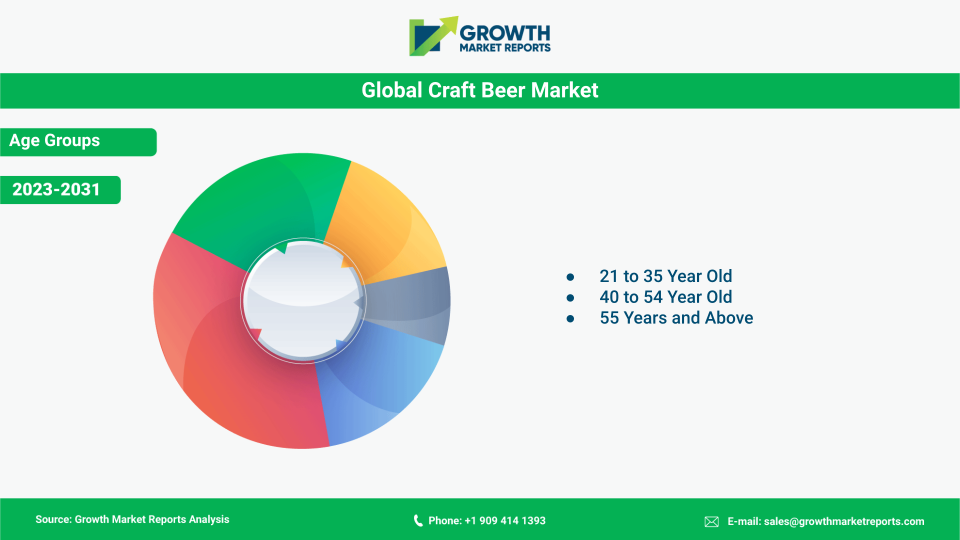
The craft beer market is segmented by age group into 21–35 years, 36–50 years, and above 50 years, each exhibiting distinct consumption patterns and preferences. The 21–35 years segment represents the largest and most dynamic consumer base for craft beer, accounting for a significant share of global sales. This demographic is characterized by its openness to experimentation, affinity for bold flavors, and preference for brands that align with their values and lifestyle. Millennials and younger Gen Z consumers are driving demand for innovative beer styles, sustainable practices, and immersive experiences, making them a key target audience for craft breweries. Their active presence on social media platforms amplifies brand visibility and facilitates word-of-mouth marketing, further accelerating market growth.

Consumers aged 36–50 years represent a substantial and growing segment within the craft beer market. This group tends to have higher disposable incomes and a greater appreciation for premium products, making them more likely to purchase specialty brews and participate in brewery events. Their consumption patterns are influenced by a desire for quality, authenticity, and a connection to local communities. Many in this age group are also health-conscious, seeking out lower-alcohol or organic craft beer options that align with their wellness goals. Craft breweries are responding by expanding their product portfolios to include a wider range of offerings, from session ales to gluten-free and non-alcoholic beers, catering to the evolving needs of this demographic.

The above 50 years age group, while representing a smaller share of the craft beer market, is nonetheless an important segment with unique preferences. Consumers in this category often have established tastes and a preference for classic beer styles, such as lagers and stouts. However, there is a growing trend among older consumers to explore new flavors and support local breweries, particularly as craft beer becomes more mainstream and accessible. This segment values quality, consistency, and the social aspects of beer consumption, making them receptive to brewery tours, tasting events, and educational experiences. Craft breweries are increasingly targeting this demographic with tailored marketing campaigns and product offerings that emphasize tradition, heritage, and craftsmanship.

Understanding the distinct preferences and motivations of each age group is critical for craft breweries seeking to maximize their market reach and drive sustained growth. By leveraging data analytics and consumer insights, breweries can develop targeted marketing strategies, optimize product development, and enhance the overall customer experience. The ability to engage multiple age groups through diverse product offerings and experiential marketing initiatives will be a key determinant of success in the highly competitive craft beer market.

Opportunities & Threats

The craft beer market is brimming with opportunities, particularly in the areas of product innovation, market expansion, and experiential marketing. The growing demand for unique and premium beverages presents a fertile ground for breweries to experiment with new ingredients, brewing techniques, and flavor profiles. Collaborations with local farmers, chefs, and other beverage producers enable craft breweries to create distinctive offerings that resonate with consumers seeking authenticity and novelty. The rise of low-alcohol, non-alcoholic, and functional craft beers opens up new market segments, catering to health-conscious consumers and those seeking alternatives to traditional alcoholic beverages. Furthermore, the expansion of craft beer into emerging markets, facilitated by e-commerce and digital marketing, offers significant growth potential for breweries willing to invest in localized strategies and adapt to regional preferences.

Another major opportunity lies in the integration of sustainability and social responsibility into business operations. Consumers are increasingly prioritizing brands that demonstrate a commitment to environmental stewardship, ethical sourcing, and community engagement. Craft breweries that adopt sustainable brewing practices, reduce packaging waste, and support local initiatives are well-positioned to build strong brand loyalty and differentiate themselves in a crowded market. The use of technology, such as blockchain for supply chain transparency and data analytics for customer insights, can further enhance operational efficiency and drive innovation. As the craft beer market continues to evolve, the ability to anticipate and respond to emerging trends will be critical for capturing new growth opportunities and maintaining a competitive edge.

Despite its many opportunities, the craft beer market faces several challenges that could restrain growth. Intense competition, both from within the craft segment and from large multinational breweries entering the space, puts pressure on profit margins and necessitates constant innovation. Regulatory hurdles, such as restrictive licensing laws and complex distribution agreements, can limit market access for smaller players and hinder expansion efforts. Additionally, changing consumer preferences and the rise of alternative beverages, such as hard seltzers and ready-to-drink cocktails, pose a threat to traditional craft beer sales. Craft breweries must remain agile and adaptable, investing in product development, marketing, and operational efficiency to navigate these challenges and sustain long-term growth.

Regional Outlook

North America remains the largest regional market for craft beer, accounting for approximately USD 51.8 billion in 2024. The United States, in particular, is home to a vibrant craft beer culture, with over 9,000 breweries operating across the country. The region’s growth is driven by a strong tradition of homebrewing, supportive regulatory frameworks, and a highly engaged consumer base that values innovation and local production. Canada is also witnessing robust growth, with craft beer accounting for an increasing share of total beer consumption. The North American market is expected to maintain a healthy CAGR of 9.8% through 2033, supported by ongoing product innovation and the expansion of brewpubs and taprooms.

Europe is the second-largest market, with a 2024 market size of USD 38.6 billion. The region boasts a rich brewing heritage, with countries such as the United Kingdom, Germany, and Belgium leading the way in craft beer production and consumption. European consumers are known for their appreciation of traditional brewing techniques and willingness to explore new styles and flavors. The market is characterized by a diverse array of breweries, ranging from small family-owned operations to larger independent players. Regulatory support for small-scale brewers and the growing popularity of beer festivals and tasting events are key factors driving market growth in Europe. The region is projected to achieve a CAGR of 10.2% over the forecast period.

The Asia Pacific region is emerging as a major growth engine for the craft beer market, with a 2024 market size of USD 13.9 billion and a forecasted CAGR of 14.3% through 2033. Rapid urbanization, rising disposable incomes, and increasing exposure to Western drinking culture are fueling demand for craft beer in countries such as China, Japan, Australia, and India. Local breweries are gaining traction by incorporating indigenous ingredients and flavors, catering to the unique preferences of Asian consumers. The expansion of e-commerce and digital marketing is further accelerating market penetration, enabling craft breweries to reach new customer segments and build brand awareness. Latin America and the Middle East & Africa, though smaller in size, are also witnessing growing interest in craft beer, driven by changing lifestyles and the influence of expatriate communities.

Craft Beer Market Statistics

Competitor Outlook

The competitive landscape of the craft beer market is characterized by a vibrant mix of small, independent breweries and larger players seeking to capitalize on the segment’s rapid growth. The market’s low barriers to entry have spurred a proliferation of microbreweries, brewpubs, and regional craft brewers, each vying for consumer attention through product innovation, unique branding, and community engagement. This intense competition has resulted in a dynamic and constantly evolving market, with new styles, limited-edition releases, and collaborative brews regularly entering the fray. Craft breweries often leverage their local roots and artisanal credentials to differentiate themselves from mass-market brands, fostering strong connections with their communities and cultivating loyal customer bases.

In recent years, the craft beer market has witnessed increased consolidation, as larger breweries and beverage conglomerates acquire successful craft brands to diversify their portfolios and tap into the growing demand for premium, small-batch products. These acquisitions provide craft breweries with access to greater resources, expanded distribution networks, and enhanced marketing capabilities, while allowing larger players to benefit from the credibility and authenticity associated with craft beer. However, concerns about “craftwashing” and the potential dilution of brand identity remain, prompting some consumers to prioritize independently owned breweries over those owned by multinational corporations.

Innovation remains a key competitive differentiator in the craft beer market, with breweries constantly experimenting with new ingredients, brewing techniques, and packaging formats to stay ahead of the curve. The use of local and seasonal ingredients, barrel-aging processes, and creative collaborations with other food and beverage producers are just a few examples of how craft breweries are pushing the boundaries of flavor and style. Marketing and consumer engagement strategies, such as social media campaigns, brewery events, and loyalty programs, also play a critical role in building brand awareness and driving repeat purchases.

Some of the major companies operating in the global craft beer market include Boston Beer Company, Sierra Nevada Brewing Co., New Belgium Brewing Company, Dogfish Head Craft Brewery, Stone Brewing Co., Deschutes Brewery, and BrewDog. Boston Beer Company, known for its flagship Samuel Adams brand, is a pioneer in the American craft beer movement and continues to innovate with new product launches and collaborations. Sierra Nevada Brewing Co. is renowned for its commitment to sustainability and its iconic Pale Ale, which has become a staple in the craft beer community. New Belgium Brewing Company, with its employee-owned structure and focus on environmental responsibility, has built a strong reputation for quality and innovation. Dogfish Head Craft Brewery is celebrated for its experimental approach, often incorporating unusual ingredients and brewing methods to create distinctive, boundary-pushing beers. Stone Brewing Co. and Deschutes Brewery are also recognized for their bold flavors and community-oriented business models, while BrewDog, based in the United Kingdom, has achieved global recognition for its disruptive marketing and rapid international expansion.

These leading players, along with a multitude of smaller, independent breweries, are shaping the future of the craft beer market through relentless innovation, a commitment to quality, and a deep understanding of consumer preferences. As competition intensifies and market dynamics continue to evolve, the ability to adapt, differentiate, and build strong brand equity will be critical for long-term success in the global craft beer industry.

Key Players

  • Anheuser-Busch InBev SA/NV
  • Heineken N.V.
  • Sierra Nevada Brewing Co.
  • The Boston Beer Company
  • D.G. Yuengling & Son, Inc.
  • Stone Brewing Co.
  • New Belgium Brewing Company
  • Dogfish Head Craft Brewery
  • Bells Brewery, Inc.
  • Deschutes Brewery
  • Craft Brew Alliance, Inc.
  • Minhas Craft Brewery
  • Brooklyn Brewery
  • Lagunitas Brewing Company
  • Oskar Blues Brewery
  • Founders Brewing Co.
  • SweetWater Brewing Company
  • Molson Coors Beverage Company
  • Carlsberg Group
  • Asahi Group Holdings, Ltd.
Craft Beer Market Overview

Segments

The Craft Beer market has been segmented on the basis of

Product Type

  • Ales
  • Lagers
  • Stouts & Porters
  • Others

Distribution Channel

  • On-Trade
  • Off-Trade

Packaging

  • Bottles
  • Cans
  • Kegs

Age Group

  • 21–35 Years
  • 36–50 Years
  • Above 50 Years

Competitive Landscape

Key players in the Craft Beer Market are AB In Bev, Heineken NV, Constellation Brands, The Boston Beer Company, and Sieera Nevada. These players engage in mergers & acquisitions, collaborations, agreements, and partnerships to strengthen their geographical presence.
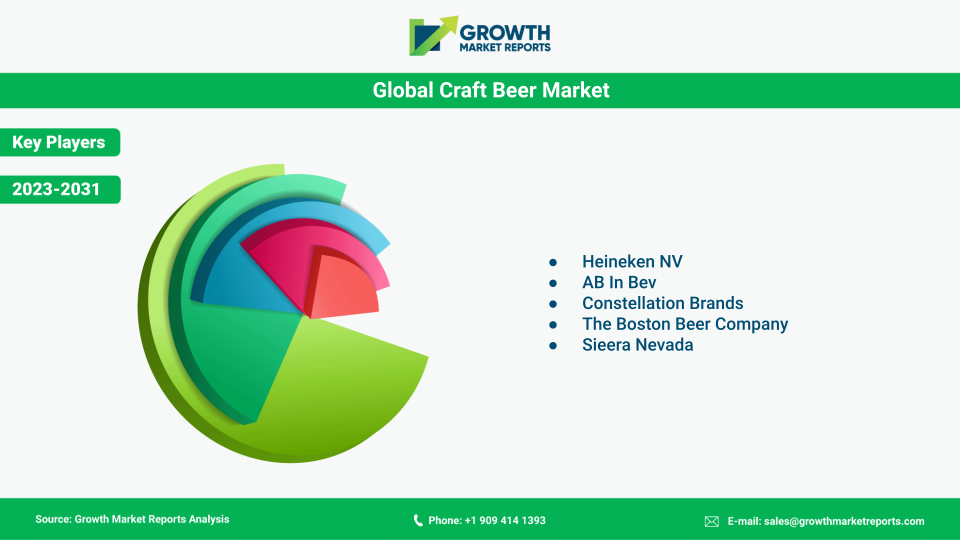

These players engage in mergers & acquisitions, collaborations, agreements, and partnerships to strengthen their geographical presence.

Craft Beer Market Key Players

Frequently Asked Questions

Sustainability is increasingly important, with breweries adopting green brewing processes, using local ingredients, minimizing water usage, utilizing renewable energy, and investing in recyclable and eco-friendly packaging to appeal to environmentally conscious consumers.

Major players include Boston Beer Company, Sierra Nevada Brewing Co., New Belgium Brewing Company, Dogfish Head Craft Brewery, Stone Brewing Co., Deschutes Brewery, BrewDog, Anheuser-Busch InBev, Heineken, and Molson Coors, among others.

Opportunities include product innovation, market expansion, experiential marketing, and sustainability initiatives. Challenges include intense competition, regulatory hurdles, and competition from alternative beverages like hard seltzers and RTD cocktails.

The 21–35 years age group is the largest and most dynamic consumer base, followed by the 36–50 years group, which values premium and authentic products. The above 50 years group is smaller but increasingly interested in craft beer, especially classic styles.

Popular packaging formats include bottles, cans, and kegs. Bottles are associated with premium quality, cans are favored for convenience and sustainability, and kegs are essential for draft beer in bars and restaurants.

Craft beer is distributed through on-trade channels (bars, restaurants, brewpubs, taprooms) and off-trade channels (supermarkets, liquor stores, online platforms). On-trade channels drive experiential consumption, while off-trade channels offer convenience and a wide selection.

The craft beer market is segmented by product type into ales, lagers, stouts & porters, and others (including wheat beers, sours, fruit beers, and experimental brews). Ales are the largest segment, followed by lagers and stouts & porters.

North America and Europe are the dominant regions in the craft beer market, while the Asia Pacific region is expected to see the fastest growth, driven by urbanization, rising incomes, and exposure to Western drinking culture.

Key growth drivers include evolving consumer preferences for unique flavors, premiumization trends, a surge in artisanal brewing culture, increased demand from younger demographics, and a shift toward experiential and quality-focused consumption.

The global craft beer market reached USD 115.4 billion in 2024 and is projected to grow at a CAGR of 10.7% from 2025 to 2033, reaching an estimated value of USD 264.7 billion by 2033.

Table Of Content

Chapter 1 Executive Summary
Chapter 2 Assumptions and Acronyms Used
Chapter 3 Research Methodology
Chapter 4 Craft Beer Market Overview
   4.1 Introduction
      4.1.1 Market Taxonomy
      4.1.2 Market Definition
      4.1.3 Macro-Economic Factors Impacting the Market Growth
   4.2 Craft Beer Market Dynamics
      4.2.1 Market Drivers
      4.2.2 Market Restraints
      4.2.3 Market Opportunity
   4.3 Craft Beer Market - Supply Chain Analysis
      4.3.1 List of Key Suppliers
      4.3.2 List of Key Distributors
      4.3.3 List of Key Consumers
   4.4 Key Forces Shaping the Craft Beer Market
      4.4.1 Bargaining Power of Suppliers
      4.4.2 Bargaining Power of Buyers
      4.4.3 Threat of Substitution
      4.4.4 Threat of New Entrants
      4.4.5 Competitive Rivalry
   4.5 Global Craft Beer Market Size & Forecast, 2023-2032
      4.5.1 Craft Beer Market Size and Y-o-Y Growth
      4.5.2 Craft Beer Market Absolute $ Opportunity

Chapter 5 Global Craft Beer Market Analysis and Forecast By Product Type
   5.1 Introduction
      5.1.1 Key Market Trends & Growth Opportunities By Product Type
      5.1.2 Basis Point Share (BPS) Analysis By Product Type
      5.1.3 Absolute $ Opportunity Assessment By Product Type
   5.2 Craft Beer Market Size Forecast By Product Type
      5.2.1 Ales
      5.2.2 Lagers
      5.2.3 Stouts & Porters
      5.2.4 Others
   5.3 Market Attractiveness Analysis By Product Type

Chapter 6 Global Craft Beer Market Analysis and Forecast By Distribution Channel
   6.1 Introduction
      6.1.1 Key Market Trends & Growth Opportunities By Distribution Channel
      6.1.2 Basis Point Share (BPS) Analysis By Distribution Channel
      6.1.3 Absolute $ Opportunity Assessment By Distribution Channel
   6.2 Craft Beer Market Size Forecast By Distribution Channel
      6.2.1 On-Trade
      6.2.2 Off-Trade
   6.3 Market Attractiveness Analysis By Distribution Channel

Chapter 7 Global Craft Beer Market Analysis and Forecast By Packaging
   7.1 Introduction
      7.1.1 Key Market Trends & Growth Opportunities By Packaging
      7.1.2 Basis Point Share (BPS) Analysis By Packaging
      7.1.3 Absolute $ Opportunity Assessment By Packaging
   7.2 Craft Beer Market Size Forecast By Packaging
      7.2.1 Bottles
      7.2.2 Cans
      7.2.3 Kegs
   7.3 Market Attractiveness Analysis By Packaging

Chapter 8 Global Craft Beer Market Analysis and Forecast By Age Group
   8.1 Introduction
      8.1.1 Key Market Trends & Growth Opportunities By Age Group
      8.1.2 Basis Point Share (BPS) Analysis By Age Group
      8.1.3 Absolute $ Opportunity Assessment By Age Group
   8.2 Craft Beer Market Size Forecast By Age Group
      8.2.1 21–35 Years
      8.2.2 36–50 Years
      8.2.3 Above 50 Years
   8.3 Market Attractiveness Analysis By Age Group

Chapter 9 Global Craft Beer Market Analysis and Forecast by Region
   9.1 Introduction
      9.1.1 Key Market Trends & Growth Opportunities By Region
      9.1.2 Basis Point Share (BPS) Analysis By Region
      9.1.3 Absolute $ Opportunity Assessment By Region
   9.2 Craft Beer Market Size Forecast By Region
      9.2.1 North America
      9.2.2 Europe
      9.2.3 Asia Pacific
      9.2.4 Latin America
      9.2.5 Middle East & Africa (MEA)
   9.3 Market Attractiveness Analysis By Region

Chapter 10 Coronavirus Disease (COVID-19) Impact 
   10.1 Introduction 
   10.2 Current & Future Impact Analysis 
   10.3 Economic Impact Analysis 
   10.4 Government Policies 
   10.5 Investment Scenario

Chapter 11 North America Craft Beer Analysis and Forecast
   11.1 Introduction
   11.2 North America Craft Beer Market Size Forecast by Country
      11.2.1 U.S.
      11.2.2 Canada
   11.3 Basis Point Share (BPS) Analysis by Country
   11.4 Absolute $ Opportunity Assessment by Country
   11.5 Market Attractiveness Analysis by Country
   11.6 North America Craft Beer Market Size Forecast By Product Type
      11.6.1 Ales
      11.6.2 Lagers
      11.6.3 Stouts & Porters
      11.6.4 Others
   11.7 Basis Point Share (BPS) Analysis By Product Type 
   11.8 Absolute $ Opportunity Assessment By Product Type 
   11.9 Market Attractiveness Analysis By Product Type
   11.10 North America Craft Beer Market Size Forecast By Distribution Channel
      11.10.1 On-Trade
      11.10.2 Off-Trade
   11.11 Basis Point Share (BPS) Analysis By Distribution Channel 
   11.12 Absolute $ Opportunity Assessment By Distribution Channel 
   11.13 Market Attractiveness Analysis By Distribution Channel
   11.14 North America Craft Beer Market Size Forecast By Packaging
      11.14.1 Bottles
      11.14.2 Cans
      11.14.3 Kegs
   11.15 Basis Point Share (BPS) Analysis By Packaging 
   11.16 Absolute $ Opportunity Assessment By Packaging 
   11.17 Market Attractiveness Analysis By Packaging
   11.18 North America Craft Beer Market Size Forecast By Age Group
      11.18.1 21–35 Years
      11.18.2 36–50 Years
      11.18.3 Above 50 Years
   11.19 Basis Point Share (BPS) Analysis By Age Group 
   11.20 Absolute $ Opportunity Assessment By Age Group 
   11.21 Market Attractiveness Analysis By Age Group

Chapter 12 Europe Craft Beer Analysis and Forecast
   12.1 Introduction
   12.2 Europe Craft Beer Market Size Forecast by Country
      12.2.1 Germany
      12.2.2 France
      12.2.3 Italy
      12.2.4 U.K.
      12.2.5 Spain
      12.2.6 Russia
      12.2.7 Rest of Europe
   12.3 Basis Point Share (BPS) Analysis by Country
   12.4 Absolute $ Opportunity Assessment by Country
   12.5 Market Attractiveness Analysis by Country
   12.6 Europe Craft Beer Market Size Forecast By Product Type
      12.6.1 Ales
      12.6.2 Lagers
      12.6.3 Stouts & Porters
      12.6.4 Others
   12.7 Basis Point Share (BPS) Analysis By Product Type 
   12.8 Absolute $ Opportunity Assessment By Product Type 
   12.9 Market Attractiveness Analysis By Product Type
   12.10 Europe Craft Beer Market Size Forecast By Distribution Channel
      12.10.1 On-Trade
      12.10.2 Off-Trade
   12.11 Basis Point Share (BPS) Analysis By Distribution Channel 
   12.12 Absolute $ Opportunity Assessment By Distribution Channel 
   12.13 Market Attractiveness Analysis By Distribution Channel
   12.14 Europe Craft Beer Market Size Forecast By Packaging
      12.14.1 Bottles
      12.14.2 Cans
      12.14.3 Kegs
   12.15 Basis Point Share (BPS) Analysis By Packaging 
   12.16 Absolute $ Opportunity Assessment By Packaging 
   12.17 Market Attractiveness Analysis By Packaging
   12.18 Europe Craft Beer Market Size Forecast By Age Group
      12.18.1 21–35 Years
      12.18.2 36–50 Years
      12.18.3 Above 50 Years
   12.19 Basis Point Share (BPS) Analysis By Age Group 
   12.20 Absolute $ Opportunity Assessment By Age Group 
   12.21 Market Attractiveness Analysis By Age Group

Chapter 13 Asia Pacific Craft Beer Analysis and Forecast
   13.1 Introduction
   13.2 Asia Pacific Craft Beer Market Size Forecast by Country
      13.2.1 China
      13.2.2 Japan
      13.2.3 South Korea
      13.2.4 India
      13.2.5 Australia
      13.2.6 South East Asia (SEA)
      13.2.7 Rest of Asia Pacific (APAC)
   13.3 Basis Point Share (BPS) Analysis by Country
   13.4 Absolute $ Opportunity Assessment by Country
   13.5 Market Attractiveness Analysis by Country
   13.6 Asia Pacific Craft Beer Market Size Forecast By Product Type
      13.6.1 Ales
      13.6.2 Lagers
      13.6.3 Stouts & Porters
      13.6.4 Others
   13.7 Basis Point Share (BPS) Analysis By Product Type 
   13.8 Absolute $ Opportunity Assessment By Product Type 
   13.9 Market Attractiveness Analysis By Product Type
   13.10 Asia Pacific Craft Beer Market Size Forecast By Distribution Channel
      13.10.1 On-Trade
      13.10.2 Off-Trade
   13.11 Basis Point Share (BPS) Analysis By Distribution Channel 
   13.12 Absolute $ Opportunity Assessment By Distribution Channel 
   13.13 Market Attractiveness Analysis By Distribution Channel
   13.14 Asia Pacific Craft Beer Market Size Forecast By Packaging
      13.14.1 Bottles
      13.14.2 Cans
      13.14.3 Kegs
   13.15 Basis Point Share (BPS) Analysis By Packaging 
   13.16 Absolute $ Opportunity Assessment By Packaging 
   13.17 Market Attractiveness Analysis By Packaging
   13.18 Asia Pacific Craft Beer Market Size Forecast By Age Group
      13.18.1 21–35 Years
      13.18.2 36–50 Years
      13.18.3 Above 50 Years
   13.19 Basis Point Share (BPS) Analysis By Age Group 
   13.20 Absolute $ Opportunity Assessment By Age Group 
   13.21 Market Attractiveness Analysis By Age Group

Chapter 14 Latin America Craft Beer Analysis and Forecast
   14.1 Introduction
   14.2 Latin America Craft Beer Market Size Forecast by Country
      14.2.1 Brazil
      14.2.2 Mexico
      14.2.3 Rest of Latin America (LATAM)
   14.3 Basis Point Share (BPS) Analysis by Country
   14.4 Absolute $ Opportunity Assessment by Country
   14.5 Market Attractiveness Analysis by Country
   14.6 Latin America Craft Beer Market Size Forecast By Product Type
      14.6.1 Ales
      14.6.2 Lagers
      14.6.3 Stouts & Porters
      14.6.4 Others
   14.7 Basis Point Share (BPS) Analysis By Product Type 
   14.8 Absolute $ Opportunity Assessment By Product Type 
   14.9 Market Attractiveness Analysis By Product Type
   14.10 Latin America Craft Beer Market Size Forecast By Distribution Channel
      14.10.1 On-Trade
      14.10.2 Off-Trade
   14.11 Basis Point Share (BPS) Analysis By Distribution Channel 
   14.12 Absolute $ Opportunity Assessment By Distribution Channel 
   14.13 Market Attractiveness Analysis By Distribution Channel
   14.14 Latin America Craft Beer Market Size Forecast By Packaging
      14.14.1 Bottles
      14.14.2 Cans
      14.14.3 Kegs
   14.15 Basis Point Share (BPS) Analysis By Packaging 
   14.16 Absolute $ Opportunity Assessment By Packaging 
   14.17 Market Attractiveness Analysis By Packaging
   14.18 Latin America Craft Beer Market Size Forecast By Age Group
      14.18.1 21–35 Years
      14.18.2 36–50 Years
      14.18.3 Above 50 Years
   14.19 Basis Point Share (BPS) Analysis By Age Group 
   14.20 Absolute $ Opportunity Assessment By Age Group 
   14.21 Market Attractiveness Analysis By Age Group

Chapter 15 Middle East & Africa (MEA) Craft Beer Analysis and Forecast
   15.1 Introduction
   15.2 Middle East & Africa (MEA) Craft Beer Market Size Forecast by Country
      15.2.1 Saudi Arabia
      15.2.2 South Africa
      15.2.3 UAE
      15.2.4 Rest of Middle East & Africa (MEA)
   15.3 Basis Point Share (BPS) Analysis by Country
   15.4 Absolute $ Opportunity Assessment by Country
   15.5 Market Attractiveness Analysis by Country
   15.6 Middle East & Africa (MEA) Craft Beer Market Size Forecast By Product Type
      15.6.1 Ales
      15.6.2 Lagers
      15.6.3 Stouts & Porters
      15.6.4 Others
   15.7 Basis Point Share (BPS) Analysis By Product Type 
   15.8 Absolute $ Opportunity Assessment By Product Type 
   15.9 Market Attractiveness Analysis By Product Type
   15.10 Middle East & Africa (MEA) Craft Beer Market Size Forecast By Distribution Channel
      15.10.1 On-Trade
      15.10.2 Off-Trade
   15.11 Basis Point Share (BPS) Analysis By Distribution Channel 
   15.12 Absolute $ Opportunity Assessment By Distribution Channel 
   15.13 Market Attractiveness Analysis By Distribution Channel
   15.14 Middle East & Africa (MEA) Craft Beer Market Size Forecast By Packaging
      15.14.1 Bottles
      15.14.2 Cans
      15.14.3 Kegs
   15.15 Basis Point Share (BPS) Analysis By Packaging 
   15.16 Absolute $ Opportunity Assessment By Packaging 
   15.17 Market Attractiveness Analysis By Packaging
   15.18 Middle East & Africa (MEA) Craft Beer Market Size Forecast By Age Group
      15.18.1 21–35 Years
      15.18.2 36–50 Years
      15.18.3 Above 50 Years
   15.19 Basis Point Share (BPS) Analysis By Age Group 
   15.20 Absolute $ Opportunity Assessment By Age Group 
   15.21 Market Attractiveness Analysis By Age Group

Chapter 16 Competition Landscape 
   16.1 Craft Beer Market: Competitive Dashboard
   16.2 Global Craft Beer Market: Market Share Analysis, 2023
   16.3 Company Profiles (Details – Overview, Financials, Developments, Strategy) 
      16.3.1 Anheuser-Busch InBev SA/NV
Heineken N.V.
Sierra Nevada Brewing Co.
The Boston Beer Company
D.G. Yuengling & Son, Inc.
Stone Brewing Co.
New Belgium Brewing Company
Dogfish Head Craft Brewery
Bells Brewery, Inc.
Deschutes Brewery
Craft Brew Alliance, Inc.
Minhas Craft Brewery
Brooklyn Brewery
Lagunitas Brewing Company
Oskar Blues Brewery
Founders Brewing Co.
SweetWater Brewing Company
Molson Coors Beverage Company
Carlsberg Group
Asahi Group Holdings, Ltd.

Methodology

Our Clients

Dassault Aviation
Deloitte
Nestle SA
Microsoft
Pfizer
General Electric
FedEx Logistics
Siemens Healthcare