Segments - by Product Type (Industrial Enzymes, Specialty Enzymes, Food Enzymes, Animal Feed Enzymes, Others), by Source (Microbial, Plant, Animal), by Application (Food & Beverages, Pharmaceuticals, Bioenergy, Animal Feed, Textile & Leather, Pulp & Paper, Others), by Form (Liquid, Powder, Others)
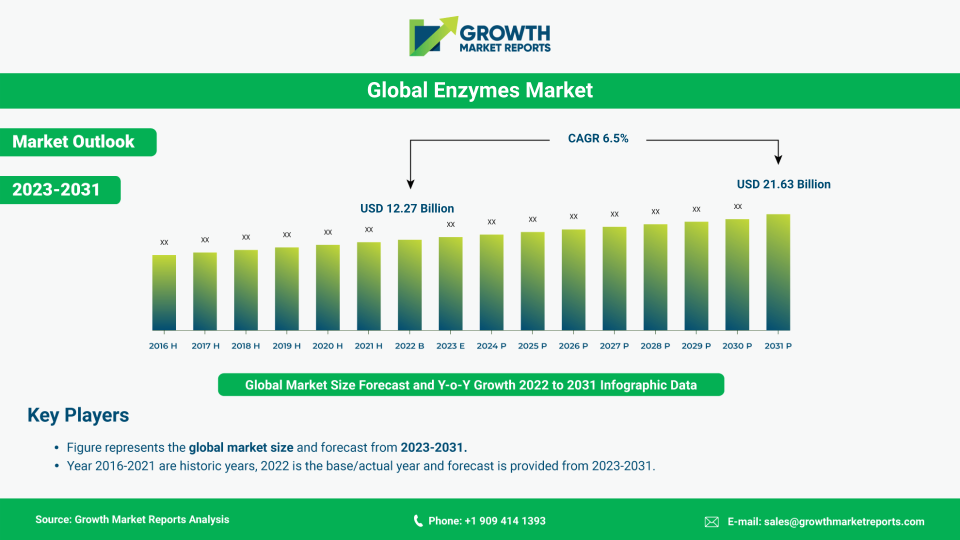
According to our latest research, the global enzymes market size in 2024 stands at USD 13.8 billion, reflecting robust demand across various industries. The market is experiencing a healthy growth trajectory with a CAGR of 6.9% from 2025 to 2033. By the end of 2033, the enzymes market is forecasted to reach USD 27.1 billion. This growth is primarily fueled by the increasing adoption of enzymes in food processing, pharmaceuticals, and bioenergy, as well as advancements in enzyme engineering and biotechnology.
One of the key drivers behind the impressive expansion of the enzymes market is the rising consumer preference for processed and convenience foods. Enzymes play a pivotal role in enhancing food quality, improving shelf life, and supporting clean-label formulations, which are in high demand among health-conscious consumers. The food and beverages sector, in particular, is leveraging enzyme technologies to optimize production processes and develop innovative products that cater to evolving dietary trends. Furthermore, the surge in global population and urbanization has intensified the need for efficient food production, further propelling the demand for food enzymes. In addition, regulatory support for enzyme applications in food safety and quality assurance has further cemented their significance in the industry.
Another prominent growth factor is the expanding application of enzymes in the pharmaceutical and bioenergy sectors. In pharmaceuticals, enzymes are increasingly utilized in drug formulation, diagnostics, and therapeutic interventions due to their specificity and efficiency. The ongoing research and development in enzyme-based therapies, particularly for metabolic and genetic disorders, is opening new avenues for market growth. Simultaneously, the bioenergy sector's shift towards sustainable and renewable energy sources has amplified the use of enzymes in biofuel production. Enzymatic processes offer eco-friendly alternatives to conventional chemical methods, reducing environmental impact and enhancing process efficiency. The growing focus on sustainability and green chemistry is expected to further accelerate the adoption of enzymes across these sectors.
Technological advancements in enzyme engineering, such as protein engineering and directed evolution, have significantly broadened the functional scope and efficiency of enzymes. These innovations enable the development of tailor-made enzymes with enhanced stability, activity, and substrate specificity for diverse industrial applications. The integration of artificial intelligence and machine learning in enzyme discovery is also streamlining the identification and optimization of novel enzymes, thereby reducing development timelines and costs. Moreover, strategic collaborations between biotechnology firms, academic institutions, and industrial players have fostered a dynamic ecosystem for enzyme innovation. The increasing investment in research and development, coupled with favorable intellectual property frameworks, is expected to sustain the momentum of growth in the enzymes market over the forecast period.
From a regional perspective, Asia Pacific is emerging as a powerhouse in the enzymes market, driven by rapid industrialization, expanding food and beverage sectors, and growing investments in biotechnology infrastructure. North America and Europe continue to hold significant shares due to their mature pharmaceutical and bioenergy industries, as well as strong regulatory frameworks supporting enzyme applications. Latin America and the Middle East & Africa are also witnessing steady growth, propelled by rising demand for processed foods and sustainable agricultural practices. The global landscape is marked by dynamic shifts in production and consumption patterns, with emerging economies increasingly contributing to market expansion. This regional diversification is expected to enhance market resilience and create new growth opportunities for both established and emerging players.
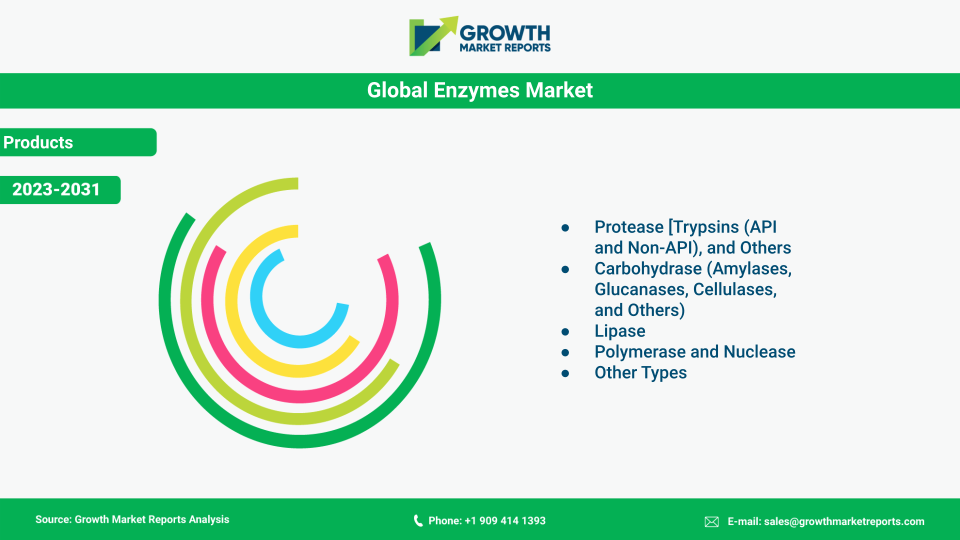
The enzymes market is segmented by product type into industrial enzymes, specialty enzymes, food enzymes, animal feed enzymes, and others. Industrial enzymes constitute the largest share, owing to their extensive use in sectors such as textiles, detergents, biofuels, and pulp & paper. These enzymes are integral to optimizing manufacturing processes, reducing energy consumption, and minimizing environmental footprints. The demand for industrial enzymes is further amplified by stringent environmental regulations and the global push for sustainable industrial practices. The continuous innovation in enzyme formulations tailored for specific industrial applications is also driving growth in this segment, enabling manufacturers to achieve higher yields and product quality.
Specialty enzymes are witnessing rapid growth due to their critical applications in diagnostics, research, and pharmaceuticals. These enzymes are characterized by their high specificity and are often used in low volumes but command premium prices due to their complexity and value addition. The surge in biopharmaceutical research, personalized medicine, and molecular diagnostics is fueling demand for specialty enzymes. Additionally, advancements in enzyme engineering are enabling the development of novel specialty enzymes with enhanced stability and performance, further expanding their application scope. The increasing incidence of chronic diseases and the need for advanced diagnostic tools are expected to sustain growth in this segment.
Food enzymes play a vital role in the processing, preservation, and enhancement of food products. They are widely used in baking, dairy, brewing, and meat processing industries to improve texture, flavor, and nutritional value. The growing consumer preference for natural and clean-label ingredients has led to a surge in demand for food enzymes, as they offer safe and effective alternatives to synthetic additives. Regulatory approvals for new enzyme applications in food processing are also contributing to market expansion. The trend towards plant-based and allergen-free foods is creating new opportunities for food enzyme manufacturers to innovate and cater to niche markets.
The animal feed enzymes segment is gaining traction as livestock producers seek to enhance feed efficiency, animal health, and growth rates. Enzymes such as phytases, proteases, and carbohydrases are commonly added to animal feed to improve nutrient digestibility and reduce environmental waste. The increasing focus on sustainable animal husbandry practices and the need to minimize the use of antibiotics in feed are driving the adoption of feed enzymes. Additionally, the rising demand for high-quality animal protein in emerging markets is expected to further boost growth in this segment. Manufacturers are investing in research to develop enzyme blends tailored for specific animal species and dietary requirements.
The others category encompasses enzymes used in niche applications such as cosmetics, detergents, and waste management. While this segment represents a smaller share of the overall market, it is characterized by high innovation and the potential for rapid growth in response to evolving consumer preferences and regulatory landscapes. The integration of enzymes in eco-friendly cleaning products and personal care formulations is gaining momentum, reflecting broader trends towards sustainability and natural ingredients. As new applications for enzymes continue to emerge, this segment is expected to contribute to the overall dynamism of the enzymes market.
| Attributes | Details |
| Report Title | Enzymes Market Research Report 2033 |
| By Product Type | Industrial Enzymes, Specialty Enzymes, Food Enzymes, Animal Feed Enzymes, Others |
| By Source | Microbial, Plant, Animal |
| By Application | Food & Beverages, Pharmaceuticals, Bioenergy, Animal Feed, Textile & Leather, Pulp & Paper, Others |
| By Form | Liquid, Powder, Others |
| Regions Covered | North America, Europe, APAC, Latin America, MEA |
| Base Year | 2024 |
| Historic Data | 2018-2023 |
| Forecast Period | 2025-2033 |
| Number of Pages | 281 |
| Number of Tables & Figures | 324 |
| Customization Available | Yes, the report can be customized as per your need. |
The enzymes market is segmented by source into microbial, plant, and animal origins. Microbial enzymes dominate the market, accounting for the largest share due to their cost-effectiveness, scalability, and broad applicability across industries. Microorganisms such as bacteria, fungi, and yeast are preferred sources for enzyme production, as they can be genetically engineered to produce large quantities of specific enzymes with desired properties. The advantages of microbial enzymes include high yield, consistent quality, and the ability to function under diverse conditions. The growing adoption of fermentation technologies and advances in microbial strain development are further supporting the dominance of this segment.
Plant-derived enzymes are gaining popularity, particularly in food and beverage applications where natural and vegan-friendly ingredients are in high demand. Enzymes extracted from sources such as papaya (papain), pineapple (bromelain), and soybeans are widely used in meat tenderization, brewing, and dietary supplements. The trend towards plant-based diets and clean-label products is driving innovation in plant enzyme extraction and formulation. However, challenges related to extraction efficiency, seasonal variability, and supply chain management can impact the scalability of plant enzyme production. Ongoing research into novel plant sources and extraction methods is expected to address these challenges and expand the market for plant-derived enzymes.
Animal-derived enzymes have traditionally been used in applications such as cheese production (rennet) and digestive aids (pancreatin). While the use of animal enzymes is declining in some regions due to ethical and regulatory concerns, they remain important in specific applications where microbial or plant alternatives are not viable. The pharmaceutical and nutraceutical industries continue to rely on animal enzymes for certain therapeutic and diagnostic purposes. However, the growing preference for non-animal sources, driven by consumer awareness and regulatory shifts, is prompting manufacturers to explore alternative production methods and transition towards microbial and plant-based enzymes.
The source of enzymes has significant implications for product labeling, regulatory compliance, and market positioning. Manufacturers are increasingly investing in transparent sourcing practices and traceability to meet the expectations of both regulators and consumers. The ability to offer enzymes from multiple sources enables companies to cater to a diverse range of applications and customer preferences. As sustainability and ethical sourcing become more prominent considerations, the market is likely to witness continued innovation in enzyme production technologies and sourcing strategies.
The competitive landscape is shaped by the ability of companies to develop high-performance enzymes from diverse sources while maintaining cost efficiency and regulatory compliance. Strategic partnerships with research institutions and biotechnology firms are enabling companies to access advanced technologies and expand their enzyme portfolios. The ongoing evolution of sourcing practices is expected to play a critical role in shaping the future trajectory of the enzymes market.
The application landscape of the enzymes market is highly diverse, encompassing segments such as food & beverages, pharmaceuticals, bioenergy, animal feed, textile & leather, pulp & paper, and others. Food & beverages represent the largest application segment, driven by the widespread use of enzymes in baking, dairy, brewing, and fruit juice processing. Enzymes are instrumental in improving product quality, enhancing flavor, and extending shelf life. The increasing consumer demand for natural and minimally processed foods is fueling the adoption of enzyme-based solutions. Additionally, regulatory support for enzyme use in food safety and quality assurance is further bolstering growth in this segment.
In the pharmaceutical sector, enzymes are utilized in drug formulation, diagnostic assays, and therapeutic interventions. The specificity and efficiency of enzymes make them ideal candidates for targeted drug delivery, biocatalysis, and molecular diagnostics. The rise of enzyme replacement therapies for genetic and metabolic disorders is creating new opportunities for market expansion. Advances in enzyme engineering and recombinant DNA technology are enabling the development of highly specialized enzymes for pharmaceutical applications. The growing prevalence of chronic diseases and the need for advanced diagnostic tools are expected to sustain demand for pharmaceutical enzymes.
The bioenergy segment is experiencing rapid growth as industries shift towards renewable and sustainable energy sources. Enzymes are essential in the production of biofuels, such as bioethanol and biodiesel, by facilitating the breakdown of biomass into fermentable sugars. The adoption of enzymatic processes offers significant environmental benefits, including reduced greenhouse gas emissions and lower energy consumption compared to traditional chemical methods. Government incentives and regulatory mandates promoting bioenergy adoption are driving investment in enzyme technologies for this sector. Ongoing research into next-generation biofuels and enzyme optimization is expected to further accelerate market growth.
Animal feed enzymes are widely used to enhance feed efficiency, nutrient absorption, and animal health. The incorporation of enzymes such as phytases, proteases, and carbohydrases in animal feed helps improve the digestibility of complex nutrients and reduce environmental waste. The growing demand for high-quality animal protein, coupled with the need for sustainable livestock production practices, is driving the adoption of feed enzymes. Regulatory restrictions on antibiotic use in animal feed are also contributing to the shift towards enzyme-based solutions. Manufacturers are focusing on developing enzyme blends tailored to specific animal species and dietary requirements.
Other significant applications include textile & leather processing, where enzymes are used for desizing, bio-polishing, and stain removal, and pulp & paper manufacturing, where they aid in pulp bleaching and fiber modification. The use of enzymes in these industries offers environmental advantages, such as reduced chemical usage and lower energy consumption. The trend towards sustainable manufacturing practices is expected to drive further adoption of enzymes in these segments. As new applications for enzymes continue to emerge, the market is poised for sustained growth across a broad spectrum of industries.
The enzymes market is segmented by form into liquid, powder, and others. Liquid enzymes are widely used in industries such as food processing, textiles, and detergents due to their ease of handling, rapid solubility, and uniform distribution in processing systems. Liquid formulations are particularly favored in continuous processing environments where precise dosing and quick action are required. The growing adoption of automated and high-throughput manufacturing processes is further driving demand for liquid enzymes. However, challenges related to storage stability and transportation can impact the widespread use of liquid forms, prompting manufacturers to invest in advanced stabilization technologies.
Powder enzymes are preferred in applications where long shelf life, ease of storage, and transportability are critical. The powder form offers advantages in terms of stability, cost-effectiveness, and compatibility with dry blending processes. Industries such as animal feed, baking, and pharmaceuticals often favor powder enzymes for their versatility and ease of incorporation into formulations. The development of encapsulation and granulation technologies has further enhanced the functional properties and shelf life of powder enzymes. As demand for convenient and stable enzyme products grows, the powder segment is expected to maintain a strong growth trajectory.
The others category includes enzyme forms such as granules, pellets, and immobilized enzymes. Immobilized enzymes are gaining traction in industrial applications where reusability, process control, and operational stability are essential. These forms are particularly valuable in continuous processing systems and bioreactors used in bioenergy, pharmaceuticals, and wastewater treatment. The ability to recover and reuse immobilized enzymes offers significant cost savings and process efficiencies. Ongoing research into innovative enzyme immobilization techniques is expected to expand the application scope of this segment.
The choice of enzyme form is influenced by factors such as application requirements, processing conditions, and end-user preferences. Manufacturers are increasingly offering customized enzyme formulations tailored to specific industry needs, enabling greater flexibility and value addition. The integration of advanced packaging and delivery systems is also enhancing the convenience and effectiveness of enzyme products. As industries continue to seek efficient and sustainable solutions, the demand for diverse enzyme forms is expected to grow.
The competitive landscape in the enzymes market is characterized by a focus on innovation, quality, and customer-centric product development. Companies are investing in research to develop next-generation enzyme formulations with enhanced performance characteristics. Strategic collaborations with end-users and technology providers are enabling manufacturers to stay ahead of market trends and deliver differentiated solutions. The ongoing evolution of enzyme forms is expected to play a pivotal role in shaping the future of the enzymes market.
The enzymes market presents a host of lucrative opportunities, particularly in the context of sustainability and green chemistry. The growing emphasis on eco-friendly manufacturing processes across industries such as food, textiles, and bioenergy is driving demand for enzyme-based solutions. Enzymes offer significant advantages over traditional chemical catalysts, including lower energy consumption, reduced environmental impact, and enhanced process efficiency. The increasing focus on circular economy principles and waste minimization is expected to create new avenues for enzyme applications, such as bioremediation, waste valorization, and renewable energy production. Additionally, the expansion of the biotechnology sector and advancements in enzyme engineering are enabling the development of customized enzymes for niche applications, opening up new markets and revenue streams for manufacturers.
Another major opportunity lies in the integration of digital technologies and artificial intelligence in enzyme discovery and optimization. The use of AI-driven platforms for protein engineering, enzyme screening, and predictive modeling is streamlining the development of high-performance enzymes with tailored properties. This technological convergence is reducing development timelines, lowering costs, and enabling rapid commercialization of innovative enzyme products. The growing adoption of enzyme-based diagnostics and therapeutics in personalized medicine is also creating new growth opportunities in the healthcare sector. As regulatory frameworks evolve to support innovation and market access, companies that invest in digital transformation and R&D are well-positioned to capitalize on emerging trends and drive long-term growth.
Despite the positive outlook, the enzymes market faces certain restraints that could hinder growth. One of the primary challenges is the high cost of enzyme production, particularly for specialty and recombinant enzymes. The complexity of enzyme purification, formulation, and stabilization processes can result in elevated production costs, which may limit adoption in price-sensitive markets. Additionally, regulatory hurdles related to safety, quality, and labeling can pose barriers to market entry, especially for novel enzyme applications. Intellectual property constraints and competition from alternative technologies, such as chemical catalysts and synthetic additives, also present challenges for market participants. Addressing these restrainers will require sustained investment in process optimization, regulatory compliance, and stakeholder engagement.
The Asia Pacific region is rapidly emerging as a key growth engine for the global enzymes market, accounting for approximately USD 4.5 billion in 2024. This robust growth is driven by the region's expanding food and beverage industry, rising investments in biotechnology infrastructure, and increasing adoption of enzyme-based solutions in industrial applications. Countries such as China, India, and Japan are at the forefront of this expansion, leveraging their large consumer bases and dynamic manufacturing sectors. The Asia Pacific enzymes market is projected to grow at a CAGR of 8.2% over the forecast period, outpacing other regions due to favorable government policies, rising disposable incomes, and a strong focus on sustainability.
North America remains a significant market for enzymes, with a market size of USD 3.8 billion in 2024. The region's mature pharmaceutical, food processing, and bioenergy industries provide a solid foundation for enzyme adoption. Regulatory support for enzyme use in food safety, healthcare, and environmental applications is further bolstering market growth. The presence of leading biotechnology firms and research institutions is driving innovation and accelerating the commercialization of advanced enzyme products. North America is expected to maintain steady growth, supported by ongoing investments in R&D and a strong emphasis on sustainability and clean-label solutions.
Europe holds a substantial share of the global enzymes market, valued at USD 3.2 billion in 2024. The region is characterized by a well-established food and beverage industry, stringent environmental regulations, and a high level of consumer awareness regarding product quality and sustainability. The European Union's focus on green chemistry and circular economy initiatives is driving the adoption of enzyme-based solutions in various sectors, including bioenergy, textiles, and waste management. Latin America and the Middle East & Africa, though smaller in market size, are witnessing steady growth driven by rising demand for processed foods, sustainable agriculture, and industrial modernization. The combined market size of these regions is estimated at USD 2.3 billion in 2024, with significant potential for future expansion as economic development accelerates and enzyme applications diversify.
The global enzymes market is marked by intense competition, with key players focusing on innovation, quality, and strategic partnerships to maintain their market positions. Leading companies are investing heavily in research and development to create high-performance enzymes with enhanced stability, specificity, and efficiency. The competitive landscape is characterized by a mix of multinational corporations, specialized biotechnology firms, and emerging startups, each bringing unique capabilities and market strategies. Mergers and acquisitions, collaborations with academic institutions, and licensing agreements are common strategies employed by market participants to expand their product portfolios and geographic reach.
A major trend shaping the competitive dynamics is the emphasis on sustainability and green chemistry. Companies are increasingly developing enzyme products that enable eco-friendly manufacturing processes and support circular economy initiatives. The integration of digital technologies, such as artificial intelligence and machine learning, in enzyme discovery and optimization is providing a competitive edge to firms that can leverage these tools for rapid innovation. Additionally, the ability to offer customized enzyme solutions tailored to specific industry needs is becoming a key differentiator in the market.
Intellectual property management and regulatory compliance are critical factors influencing competitive positioning. Companies with strong patent portfolios and robust regulatory expertise are better positioned to navigate complex market environments and capitalize on emerging opportunities. The ability to demonstrate product safety, quality, and efficacy is essential for gaining regulatory approvals and building customer trust. As the market continues to evolve, agility and responsiveness to changing industry trends and customer preferences will be crucial for sustained success.
Some of the major players in the global enzymes market include Novozymes A/S, DuPont de Nemours, Inc., BASF SE, DSM N.V., and Amano Enzyme Inc. Novozymes A/S is a global leader in enzyme production, renowned for its extensive portfolio of industrial and specialty enzymes. The company has a strong focus on sustainability and innovation, leveraging advanced biotechnology to develop high-performance enzyme solutions. DuPont de Nemours, Inc. is another prominent player, offering a wide range of enzyme products for food, beverage, and industrial applications. The company's commitment to research and strategic collaborations has enabled it to maintain a competitive edge in the market.
BASF SE is recognized for its expertise in enzyme development for various industrial applications, including bioenergy, animal feed, and textiles. The company's global presence and investment in R&D have positioned it as a key player in the enzymes market. DSM N.V. is a leading provider of food and specialty enzymes, with a strong emphasis on health, nutrition, and sustainable solutions. The company's focus on innovation and customer-centric product development has contributed to its market leadership. Amano Enzyme Inc. specializes in the production of high-quality specialty enzymes for food, pharmaceuticals, and diagnostics. The company's commitment to quality and technological advancement has earned it a strong reputation in the industry.
Other notable players include Chr. Hansen Holding A/S, Advanced Enzyme Technologies, AB Enzymes, and Enzyme Development Corporation. These companies are actively engaged in expanding their product portfolios, entering new markets, and strengthening their research capabilities. The competitive landscape is expected to remain dynamic, with ongoing innovation, strategic alliances, and market expansion shaping the future of the global enzymes market.
The Enzymes market has been segmented on the basis of
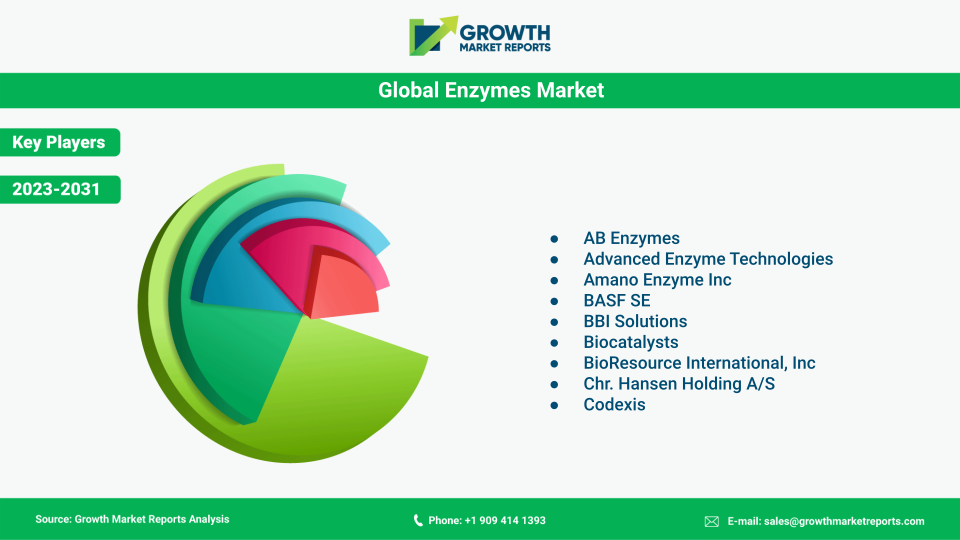
Key players in the global enzymes market include AB Enzymes, Advanced Enzyme Technologies, Amano Enzyme Inc, BASF SE, BBI Solutions, Biocatalysts, BioResource International, Inc, Chr. Hansen Holding A/S, Codexis, DuPont, Enzyme Development Corporation, and Novazymes.
These players engage in mergers & acquisitions, collaborations, agreements, and partnerships to strengthen their geographical presence.
Enzymes in food processing improve product quality, enhance flavor, extend shelf life, and support clean-label formulations, meeting the demand for natural and minimally processed foods.
Major players include Novozymes A/S, DuPont (IFF), BASF SE, DSM (dsm-firmenich), Chr. Hansen Holding A/S, Advanced Enzyme Technologies, Amano Enzyme Inc., AB Enzymes GmbH, and others.
Opportunities include the shift towards sustainability, green chemistry, and AI-driven enzyme development. Challenges include high production costs, regulatory hurdles, and competition from alternative technologies.
Enzymes are available in liquid, powder, and other forms (such as granules and immobilized enzymes). Liquid enzymes are favored for ease of use in food and textiles, while powder enzymes are preferred for stability and storage in animal feed and pharmaceuticals.
Asia Pacific is the fastest-growing region, driven by industrialization and biotechnology investments. North America and Europe have significant shares due to mature industries and strong regulatory frameworks, while Latin America and MEA are experiencing steady growth.
Key trends include advancements in enzyme engineering (protein engineering, directed evolution), integration of artificial intelligence and machine learning in enzyme discovery, and the development of tailor-made enzymes with enhanced stability and activity.
Microbial enzymes dominate the market due to their cost-effectiveness, scalability, high yield, and broad applicability across various industries.
The enzymes market is segmented into industrial enzymes, specialty enzymes, food enzymes, animal feed enzymes, and others (such as enzymes for cosmetics and detergents).
Key industries driving enzyme demand include food & beverages, pharmaceuticals, bioenergy, animal feed, textiles, leather, and pulp & paper.
The global enzymes market size in 2024 is USD 13.8 billion and is expected to reach USD 27.1 billion by 2033, growing at a CAGR of 6.9% from 2025 to 2033.