Rum & Cachaca Market Report 2025-2034

Rum & Cachaca Market Report 2025-2034

Segments - by Product Type (White Rum, Dark Rum, Gold Rum, Flavored Rum, Premium Rum, Traditional Cachaca, Aged Cachaca, Others), by Distribution Channel (On-Trade, Off-Trade, Online Retail, Supermarkets/Hypermarkets, Specialty Stores, Others), by Application (Beverages, Food Industry, Others)

https://growthmarketreports.com/Anuradha
Author : Anuradha B. More
https://growthmarketreports.com/Vaibhav
Fact-checked by : Vaibhav Chandola
https://growthmarketreports.com/Shruti
Editor : Shruti Bhat

Last Updated : Jun, 2026 | Report ID :FB-282 | 4.6 Rating | 23 Reviews | 262 Pages | Format : Docx PDF

Report Description

This report is updated with the latest market data and insights as of June 2026. Base year: 2025  |  Forecast period: 2026-2034


RUM & CACHACA Market Outlook

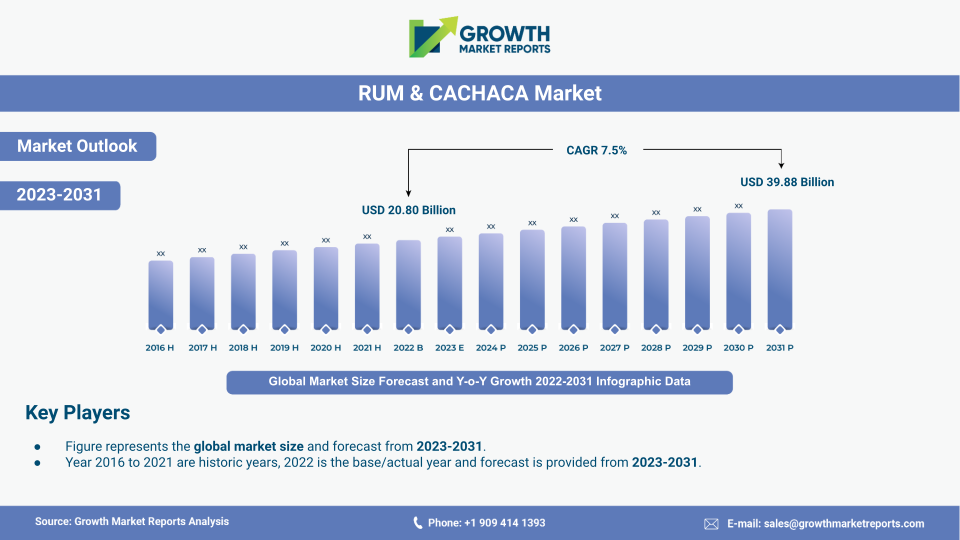
According to our latest research, the global Rum & Cachaca market size reached USD 19.1 billion in 2025, registering a robust presence across both mature and emerging economies. The market is expected to grow at a CAGR of 4.7% from 2026 to 2034, with the total market size projected to reach USD 29.0 billion by the end of the forecast period. This growth trajectory is driven by evolving consumer preferences, the premiumization trend in spirits, and the increasing popularity of cocktail culture worldwide. As per the latest research, the market's expansion is also fueled by product innovation and the rising influence of craft spirits, making rum and cachaca increasingly appealing to a diverse consumer base.

Global RUM & CACHACA Market Size Forecast 2025-2034, USD Billion

A primary growth factor for the Rum & Cachaca market in 2025 is the global shift towards premium and super-premium spirits. Consumers, particularly in urban centers and developed economies, are demonstrating a greater willingness to explore high-quality, aged, and artisanal variants of rum and cachaca. This trend is further accentuated by the growing demand for unique flavor profiles, small-batch production, and limited-edition releases, which enhance the perceived value of these spirits. The surge in interest around craft and small-batch rum production reflects a broader consumer appetite for authenticity, with distilleries emphasizing heritage, terroir, and traditional methods to capture the attention of discerning buyers. Additionally, the influence of mixology and the proliferation of cocktail bars have made rum and cachaca staples in the creation of signature drinks, expanding their reach well beyond traditional consumption occasions.

Another significant driver for the Rum & Cachaca market is the increased penetration of organized retail and e-commerce channels. The digital transformation of the spirits industry has made it easier for consumers to access a wide range of rum and cachaca products, including niche and imported brands. Online retail platforms have democratized access to premium spirits, enabling direct-to-consumer models and targeted marketing campaigns. Furthermore, the expansion of specialty stores and the growing presence of rum and cachaca in supermarkets and hypermarkets are enhancing product visibility and consumer awareness. These channels provide opportunities for brands to engage with consumers through in-store tastings, educational events, and promotional activities, further stimulating demand.

The market is also benefiting from the rising popularity of rum and cachaca in emerging economies, where increasing disposable incomes and changing lifestyles are driving the adoption of Western-style drinking habits. In countries such as India, China, and Brazil, the younger demographic is particularly receptive to new and innovative alcoholic beverages, including flavored and premium variants. The influence of global travel, social media, and international events has contributed to the diffusion of cocktail culture, making these spirits integral to social gatherings and celebrations. Moreover, local producers in Latin America, especially Brazil, are leveraging traditional production methods and indigenous ingredients to differentiate their offerings and tap into the growing demand for authentic, region-specific spirits. The cachaca segment in particular is experiencing a renaissance as Brazilian producers gain international recognition and export volumes climb steadily through 2025.

Rhum Agricole, a distinctive style of rum made from fresh sugarcane juice rather than molasses, is gaining traction in the global market. Originating from the French Caribbean islands, particularly Martinique, Rhum Agricole is celebrated for its unique flavor profile, often described as grassy, vegetal, and slightly fruity. This type of rum is typically produced in small batches, adhering to traditional methods that emphasize quality and authenticity. As consumers become more adventurous in their spirit choices, Rhum Agricole is capturing the interest of those seeking a more refined and artisanal drinking experience. The growing appreciation for terroir and provenance in spirits is further enhancing its appeal, positioning it as a premium option within the broader rum category.

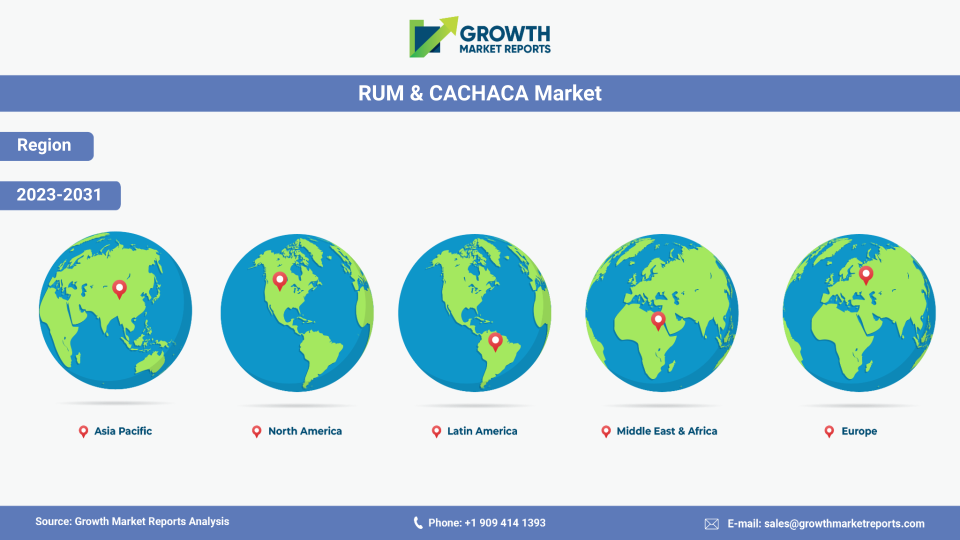
From a regional perspective, Latin America continues to dominate the Rum & Cachaca market, driven by the strong cultural association of cachaca with Brazilian heritage and the widespread consumption of rum in the Caribbean. However, significant growth is also being observed in the Asia Pacific region, where rising urbanization, a burgeoning middle class, and increasing exposure to international lifestyles are fueling demand. North America and Europe remain important markets, characterized by a mature spirits industry and a well-established cocktail culture. The Middle East & Africa region, while still nascent, is showing promise due to the gradual relaxation of alcohol regulations and the expansion of premium hospitality venues. Overall, the global outlook for rum and cachaca heading into the 2026-2034 forecast period is highly positive, with ample opportunities for innovation, market expansion, and brand differentiation.

Product Type Analysis

The Rum & Cachaca market is segmented by product type into White Rum, Dark Rum, Gold Rum, Flavored Rum, Premium Rum, Traditional Cachaca, Aged Cachaca, and Others. White rum, known for its light flavor and versatility, remains a staple in both home and commercial bars, especially for use in classic cocktails like mojitos and daiquiris. Its relatively lower price point and approachable taste profile make it a popular choice among younger consumers and those new to rum. The segment commands approximately 22.5% of the global market in 2025, though it faces increasing competition from flavored and premium variants that are capturing the interest of consumers seeking novel drinking experiences.

RUM & CACHACA Market Share by Product Type 2025

Dark rum and gold rum segments are experiencing notable growth, driven by a renewed appreciation for aged and full-bodied spirits. Dark rum appeals to connoisseurs and enthusiasts who value complexity, depth, and a rich sensory experience, holding approximately 18.0% of global market share in 2025. The demand for these variants is particularly strong in markets with established spirits cultures, such as Europe and North America, where consumers are more inclined to savor spirits neat or on the rocks. The trend towards premiumization is evident in this segment, with producers emphasizing traditional aging processes, unique barrel finishes, and limited-edition releases that resonate strongly with quality-conscious buyers.

Flavored rum has emerged as a dynamic and fast-growing segment within the Rum & Cachaca market, capturing approximately 14.0% of global sales in 2025. The infusion of tropical fruits, spices, and botanicals has broadened the appeal of rum, attracting a younger and more diverse consumer base. Flavored rums are particularly popular in the on-trade channel, where bartenders leverage their versatility to create innovative cocktails and signature drinks. Brands are continuously experimenting with new flavor combinations and seasonal releases to maintain consumer interest and drive repeat purchases, aligning with the broader trend towards flavored spirits visible across categories such as vodka and gin.

Premium rum and aged cachaca represent the pinnacle of the market, together accounting for approximately 18.0% of global revenue in 2025. The aged rum category in particular is experiencing accelerated momentum, as producers highlight the unique characteristics of local sugarcane, traditional distillation methods, and extended maturation periods to differentiate their offerings. These products are often positioned as luxury items, with elaborate packaging, detailed storytelling, and limited availability. The success of premium rum and aged cachaca is also being driven by the gifting market and the growing trend of spirits collecting, which is attracting a new generation of enthusiasts and investors into the category.

Report Scope

Attributes Details
Report Title RUM & CACHACA Market Research Report 2034
By Product Type White Rum, Dark Rum, Gold Rum, Flavored Rum, Premium Rum, Traditional Cachaca, Aged Cachaca, Others
By Distribution Channel On-Trade, Off-Trade, Online Retail, Supermarkets/Hypermarkets, Specialty Stores, Others
By Application Beverages, Food Industry, Others
Regions Covered North America, Europe, APAC, Latin America, MEA
Base Year 2025
Historic Data 2019-2024
Forecast Period 2026-2034
Number of Pages 262
Number of Tables & Figures 278
Customization Available Yes, the report can be customized as per your need.

Distribution Channel Analysis

The Rum & Cachaca market is distributed through a variety of channels, including On-Trade, Off-Trade, Online Retail, Supermarkets/Hypermarkets, Specialty Stores, and Others. The on-trade channel, comprising bars, restaurants, clubs, and hotels, plays a crucial role in shaping consumer perceptions and driving trial of new products. Mixologists and bartenders act as brand ambassadors, introducing consumers to innovative cocktails and premium variants of rum and cachaca. The on-trade segment is particularly important for building brand loyalty and generating word-of-mouth recommendations. As consumers increasingly seek experiential and social drinking occasions in 2025, the role of on-trade establishments in promoting rum and cachaca continues to grow.

Off-trade channels, including liquor stores and retail outlets, remain the dominant distribution avenue for rum and cachaca, accounting for a significant share of total sales. These channels offer convenience, competitive pricing, and a wide product assortment, making them the preferred choice for at-home consumption. The off-trade segment is also benefiting from the trend towards premiumization, as consumers are more likely to purchase higher-value products for personal enjoyment or gifting. Retailers are responding by expanding their premium and craft spirits sections, hosting in-store tastings, and partnering with brands for exclusive releases. The growth of organized retail chains and the increasing penetration of modern trade formats are further supporting the expansion of the off-trade segment through the forecast period.

Online retail has firmly established itself as a transformative channel in the Rum & Cachaca market by 2025. E-commerce platforms provide consumers with unparalleled access to a diverse range of products, including rare and imported variants that may not be available in traditional retail outlets. Online channels enable brands to engage directly with consumers, offer personalized recommendations, and leverage data analytics to optimize marketing strategies. The convenience of home delivery, coupled with attractive promotions and loyalty programs, is driving continued adoption of online retail for spirits. Regulatory changes in several markets have also facilitated the growth of this channel, making it easier for consumers to purchase alcohol online across North America, Europe, and parts of Asia Pacific.

Supermarkets and hypermarkets continue to be important distribution channels, particularly in urban areas where consumers value convenience and one-stop shopping. These outlets offer a curated selection of rum and cachaca brands, often accompanied by promotional displays and educational materials. Specialty stores, including boutique liquor shops and duty-free outlets, cater to discerning consumers seeking exclusive and premium products. These stores play a vital role in the premiumization trend, offering a personalized shopping experience and expert guidance on product selection. The growing number of airport duty-free shops and travel retail outlets is also providing incremental growth opportunities, particularly for premium and limited-edition rum expressions.

Application Analysis

The Rum & Cachaca market finds its primary application in the beverages segment, which encompasses both direct consumption and use in cocktails and mixed drinks. Rum and cachaca are integral ingredients in a wide range of classic and contemporary cocktails, such as the mojito, daiquiri, pina colada, and caipirinha. The growing popularity of cocktail culture, driven by millennials and Gen Z consumers, is fueling demand for versatile and high-quality spirits. Bars and restaurants are increasingly featuring rum and cachaca-based drinks on their menus, often highlighting the provenance and unique characteristics of specific brands. The beverages segment also includes ready-to-drink rum cocktails, which are gaining substantial traction among consumers seeking convenience, portability, and consistent quality without the need for bartender expertise.

In addition to beverages, the food industry represents a growing application area for rum and cachaca. These spirits are used as flavoring agents in a variety of culinary preparations, including desserts, sauces, marinades, and baked goods. The distinctive taste profiles of rum and cachaca, ranging from sweet and fruity to rich and smoky, enhance the complexity and depth of dishes. Chefs and food manufacturers are experimenting with different types of rum and cachaca to create innovative recipes and specialty products. The trend towards gourmet and artisanal foods is further boosting the use of premium spirits in the culinary sector, opening up new avenues for market growth particularly in North America and Europe.

The "others" application segment includes non-traditional uses of rum and cachaca, such as in the production of liqueurs, infusions, and specialty products. These applications are often driven by niche consumer preferences and the desire for unique and differentiated offerings. The rise of craft distilling and the growing interest in home mixology are encouraging experimentation with rum and cachaca as base spirits for homemade infusions and flavored liqueurs. Additionally, some brands are exploring the use of rum and cachaca in wellness and functional beverages, capitalizing on the trend towards natural and botanical ingredients. While still a small segment, these alternative applications contribute to the overall diversity and dynamism of the market.

The versatility of rum and cachaca across multiple applications underscores their enduring appeal and adaptability to changing consumer preferences. As the boundaries between traditional and contemporary consumption occasions continue to blur, brands are increasingly positioning their products as suitable for a wide range of uses, from casual gatherings to gourmet experiences. The ability to innovate and respond to emerging trends in both the beverages and food industries will be critical to sustaining long-term growth in the Rum & Cachaca market through 2034.

Opportunities & Threats

The Rum & Cachaca market presents significant opportunities for growth, particularly in the areas of product innovation and premiumization. As consumers become more adventurous and discerning in their spirits choices, there is a growing demand for unique flavor profiles, artisanal production methods, and limited-edition releases. Brands that invest in research and development, collaborate with mixologists, and leverage local ingredients are well-positioned to capture the attention of trend-conscious consumers in 2025 and beyond. The rise of craft distilleries and the increasing focus on sustainability and provenance offer additional avenues for differentiation and value creation. Furthermore, the expansion of e-commerce and digital marketing platforms enables brands to reach new audiences, engage directly with consumers, and build strong brand communities.

Another major opportunity lies in the continued expansion of the Rum & Cachaca market in emerging economies. Rapid urbanization, rising disposable incomes, and changing social norms are driving the adoption of premium spirits in countries such as India, China, and Brazil. These markets offer substantial growth potential, particularly for brands that can tailor their offerings to local tastes and preferences. Strategic partnerships with local distributors, targeted marketing campaigns, and the development of region-specific products can help brands establish a strong foothold in these high-growth markets. The growing influence of global travel and tourism also presents opportunities for brands to showcase their products to international consumers and drive cross-border demand, particularly as travel retail volumes recover and expand beyond 2025.

However, the market is not without its challenges. One of the key threats facing the Rum & Cachaca market is the increasing competition from other spirits categories, such as whiskey, gin, and tequila. These categories have successfully capitalized on the premiumization trend and the growing interest in craft and artisanal products. To remain competitive, rum and cachaca brands must continue to innovate, invest in brand building, and differentiate their offerings. Regulatory changes, fluctuating raw material prices, and the impact of economic uncertainty also pose potential risks to market growth. Health-conscious consumption trends and the rising popularity of low-alcohol and no-alcohol alternatives represent an additional structural challenge that incumbent producers must address through portfolio diversification and product development.

Regional Outlook

Latin America remains the undisputed leader in the Rum & Cachaca market, accounting for approximately 39% of global revenue in 2025, or nearly USD 7.4 billion. The region's dominance is anchored by Brazil's strong cachaca heritage and the widespread consumption of rum across the Caribbean. Local producers are leveraging traditional production methods and indigenous ingredients to differentiate their offerings, while also capitalizing on the growing demand for premium and aged spirits. The region's vibrant cocktail culture and the increasing popularity of international tourism are further supporting market growth. Latin America is expected to maintain its leadership position throughout the 2026-2034 forecast period, driven by both domestic consumption and expanding export opportunities to North America and Europe.

RUM & CACHACA Market Regional Share 2025

The Asia Pacific region is emerging as a key growth engine for the Rum & Cachaca market, with a market size of USD 3.9 billion in 2025 and a projected CAGR of 6.1% from 2026 to 2034. The region's rapid urbanization, rising middle class, and increasing exposure to global drinking trends are fueling demand for both mainstream and premium spirits. Countries such as India, China, and Japan are witnessing a surge in cocktail culture, with rum and cachaca gaining prominence in bars, restaurants, and home gatherings. The expansion of organized retail and e-commerce channels is making it easier for consumers to access a wide range of products, further supporting market growth. Asia Pacific is expected to contribute significantly to the overall expansion of the global market in the coming years and may challenge Europe's share by the early 2030s.

North America and Europe together represent a substantial share of the Rum & Cachaca market, with a combined market size of USD 6.2 billion in 2025, accounting for approximately 32.5% of global revenue. These regions are characterized by a mature spirits industry, a well-established cocktail culture, and a strong focus on premiumization. Consumers in these markets are increasingly seeking out high-quality, authentic, and innovative products, driving demand for aged and craft variants. The Middle East & Africa region, while still nascent, is showing promise with a market size of approximately USD 1.5 billion in 2025, supported by the gradual relaxation of alcohol regulations in select markets and the expansion of premium hospitality venues and international hotel chains across the Gulf Cooperation Council countries and urban centers in sub-Saharan Africa.

Competitor Outlook

The competitive landscape of the Rum & Cachaca market in 2025 is characterized by a mix of global spirits giants, regional leaders, and a growing number of craft and artisanal producers. Major players are leveraging their extensive distribution networks, strong brand portfolios, and significant marketing resources to maintain their market positions and drive growth. These companies are continuously investing in product innovation, premiumization, and brand building to differentiate themselves in an increasingly crowded marketplace. Strategic mergers, acquisitions, and partnerships are common, as companies seek to expand their geographic reach, enhance their product offerings, and tap into new consumer segments. The competitive intensity is expected to increase further through the 2026-2034 forecast period as emerging-market brands gain international scale.

In addition to established global brands, the market is witnessing the emergence of craft distilleries and boutique producers, particularly in regions with a rich tradition of rum and cachaca production. These companies are focusing on small-batch production, unique flavor profiles, and authentic storytelling to capture the interest of discerning consumers. The rise of experiential marketing, including distillery tours, tasting events, and educational workshops, is helping these brands build strong connections with their target audiences. The craft and artisanal segment is also benefiting from the growing demand for sustainable and locally sourced products, as consumers become more conscious of the environmental and social impact of their purchasing decisions. Certifications around organic farming, fair-trade sugarcane sourcing, and carbon-neutral production are increasingly becoming points of competitive differentiation in 2025.

Digital transformation is playing an increasingly important role in the competitive dynamics of the Rum & Cachaca market. Companies are leveraging e-commerce platforms, social media, and data analytics to engage with consumers, personalize marketing efforts, and optimize distribution strategies. The ability to quickly adapt to changing consumer preferences and market trends is becoming a key differentiator in the industry. Brands that can effectively combine digital innovation with traditional craftsmanship and heritage are well-positioned to succeed in the evolving market landscape through 2034.

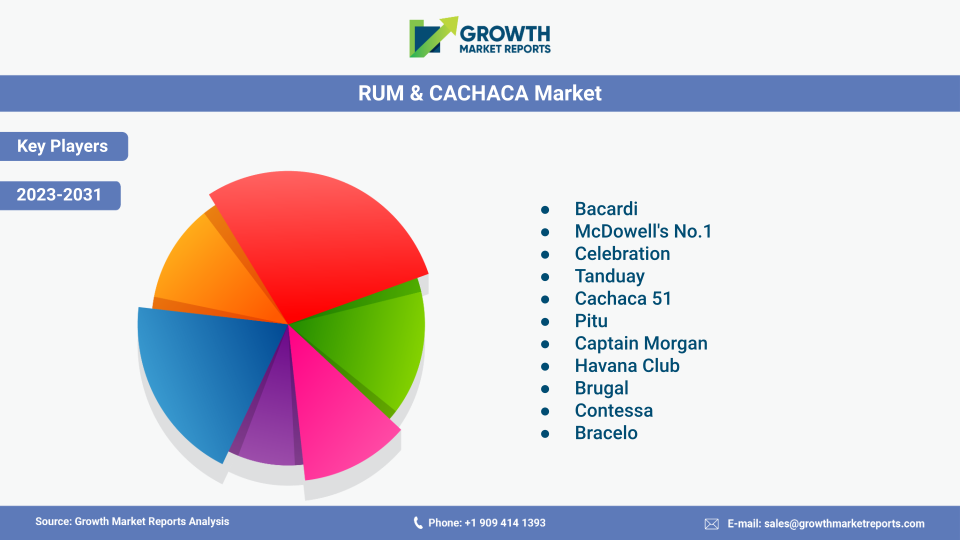
Some of the major companies operating in the Rum & Cachaca market include Bacardi Limited, Diageo plc, Pernod Ricard SA, Grupo Campari, Brown-Forman Corporation, Havana Club International S.A., and Cachaça 51 (Companhia Müller de Bebidas). Diageo, with its iconic Captain Morgan brand and ownership of Ypióca cachaça, remains a global leader in both segments, leveraging its extensive distribution network and strong marketing capabilities. Bacardi Limited continues to innovate with new product launches and limited-edition releases across its flagship and premium tiers. Pernod Ricard and Grupo Campari are expanding their presence in both rum and cachaca, focusing on premiumization and market diversification. Maison Ferrand, producer of the acclaimed Plantation Rum portfolio, is a leading force in the premium and aged rum segment, while Demerara Distillers Limited continues to build international recognition for its El Dorado expressions. Companhia Müller de Bebidas, the producer of Cachaça 51, remains the dominant player in the Brazilian domestic market. These companies, along with a host of regional and craft producers, are shaping the future of the Rum & Cachaca market through continuous innovation, strategic investments, and a relentless focus on consumer engagement.

Key Players

  • Bacardi Limited
  • Diageo plc
  • Pernod Ricard SA
  • Destilería Serrallés Inc.
  • Mohan Meakin Ltd.
  • Radico Khaitan Ltd.
  • Tanduay Distillers Inc.
  • La Martiniquaise
  • LVMH Moët Hennessy Louis Vuitton SE
  • William Grant & Sons Ltd.
  • Havana Club International S.A.
  • Maison Ferrand (Plantation Rum)
  • Cachaça 51 (Companhia Müller de Bebidas)
  • Leblon Cachaça
  • Proximo Spirits (The Kraken Rum)
  • Demerara Distillers Limited (El Dorado Rum)
  • Grupo Campari
  • Brown-Forman Corporation

Segments

The RUM & CACHACA market has been segmented on the basis of

Product Type

  • White Rum
  • Dark Rum
  • Gold Rum
  • Flavored Rum
  • Premium Rum
  • Traditional Cachaca
  • Aged Cachaca
  • Others

Distribution Channel

  • On-Trade
  • Off-Trade
  • Online Retail
  • Supermarkets/Hypermarkets
  • Specialty Stores
  • Others

Application

  • Beverages
  • Food Industry
  • Others

Frequently Asked Questions

The market faces challenges including intensifying competition from whiskey, gin, and tequila categories that have effectively leveraged premiumization narratives, fluctuating sugarcane raw material costs, complex and evolving alcohol regulatory environments across key markets, health-conscious consumption trends, and the need for continuous innovation to maintain relevance among younger demographics.

Key trends in 2025 include the premiumization and craft spirits movement, growing consumer interest in aged and single-origin expressions, the rapid rise of ready-to-drink rum cocktails, sustainability and provenance storytelling, digital and direct-to-consumer marketing, and the expansion of rum and cachaca into mainstream cocktail menus globally.

Leading companies include Bacardi Limited, Diageo plc, Pernod Ricard SA, Grupo Campari, Brown-Forman Corporation, Havana Club International, Maison Ferrand (Plantation Rum), Demerara Distillers Limited, Cachaça 51 (Companhia Müller de Bebidas), Proximo Spirits, Destilería Serrallés, La Martiniquaise, Tanduay Distillers, LVMH Moët Hennessy, and William Grant & Sons.

The primary application is in beverages, including direct consumption, classic and contemporary cocktails such as mojitos, daiquiris, and caipirinhas, and ready-to-drink formats. The food industry represents a secondary application, using rum and cachaca as flavoring agents in desserts, sauces, and marinades. Other niche applications include liqueur production and specialty culinary products.

Rum and cachaca products are distributed through On-Trade channels (bars, restaurants, hotels), Off-Trade channels (liquor stores, retail outlets), Online Retail platforms, Supermarkets and Hypermarkets, and Specialty Stores. The on-trade channel remains crucial for brand building, while online retail is the fastest-growing distribution avenue as of 2025.

The market is segmented into White Rum, Dark Rum, Gold Rum, Flavored Rum, Premium Rum, Traditional Cachaca, Aged Cachaca, and Others. White Rum holds the largest share at approximately 22.5%, followed by Dark Rum at 18.0% and Gold Rum at 15.5%. Premium Rum and Aged Cachaca are the fastest-growing sub-segments due to the ongoing premiumization wave.

Latin America remains the dominant region, accounting for approximately 39% of global revenue in 2025, anchored by Brazil's cachaca heritage and Caribbean rum traditions. Asia Pacific is the fastest-growing region, with a projected CAGR of 6.1% through 2034, while North America and Europe together represent a substantial combined share driven by mature spirits cultures.

Key growth drivers include the global premiumization trend in spirits, the rising popularity of cocktail culture among millennials and Gen Z consumers, expanding e-commerce and organized retail penetration, increasing disposable incomes in emerging economies, and continuous product innovation from both legacy brands and craft distilleries.

The global Rum & Cachaca market is projected to grow at a CAGR of 4.7% from 2026 to 2034, with the total market size expected to reach approximately USD 29.0 billion by the end of 2034. This steady growth reflects sustained consumer interest in premium, flavored, and craft variants.

According to our latest research, the global Rum & Cachaca market reached USD 19.1 billion in 2025, reflecting strong demand across both mature and emerging economies driven by premiumization trends and expanding cocktail culture.

Table Of Content

Chapter 1 Executive Summary
Chapter 2 Assumptions and Acronyms Used
Chapter 3 Research Methodology
Chapter 4 RUM & CACHACA Market Overview
   4.1 Introduction
      4.1.1 Market Taxonomy
      4.1.2 Market Definition
      4.1.3 Macro-Economic Factors Impacting the Market Growth
   4.2 RUM & CACHACA Market Dynamics
      4.2.1 Market Drivers
      4.2.2 Market Restraints
      4.2.3 Market Opportunity
   4.3 RUM & CACHACA Market - Supply Chain Analysis
      4.3.1 List of Key Suppliers
      4.3.2 List of Key Distributors
      4.3.3 List of Key Consumers
   4.4 Key Forces Shaping the RUM & CACHACA Market
      4.4.1 Bargaining Power of Suppliers
      4.4.2 Bargaining Power of Buyers
      4.4.3 Threat of Substitution
      4.4.4 Threat of New Entrants
      4.4.5 Competitive Rivalry
   4.5 Global RUM & CACHACA Market Size & Forecast, 2023-2032
      4.5.1 RUM & CACHACA Market Size and Y-o-Y Growth
      4.5.2 RUM & CACHACA Market Absolute $ Opportunity

Chapter 5 Global RUM & CACHACA Market Analysis and Forecast By Product Type
   5.1 Introduction
      5.1.1 Key Market Trends & Growth Opportunities By Product Type
      5.1.2 Basis Point Share (BPS) Analysis By Product Type
      5.1.3 Absolute $ Opportunity Assessment By Product Type
   5.2 RUM & CACHACA Market Size Forecast By Product Type
      5.2.1 White Rum
      5.2.2 Dark Rum
      5.2.3 Gold Rum
      5.2.4 Flavored Rum
      5.2.5 Premium Rum
      5.2.6 Traditional Cachaca
      5.2.7 Aged Cachaca
      5.2.8 Others
   5.3 Market Attractiveness Analysis By Product Type

Chapter 6 Global RUM & CACHACA Market Analysis and Forecast By Distribution Channel
   6.1 Introduction
      6.1.1 Key Market Trends & Growth Opportunities By Distribution Channel
      6.1.2 Basis Point Share (BPS) Analysis By Distribution Channel
      6.1.3 Absolute $ Opportunity Assessment By Distribution Channel
   6.2 RUM & CACHACA Market Size Forecast By Distribution Channel
      6.2.1 On-Trade
      6.2.2 Off-Trade
      6.2.3 Online Retail
      6.2.4 Supermarkets/Hypermarkets
      6.2.5 Specialty Stores
      6.2.6 Others
   6.3 Market Attractiveness Analysis By Distribution Channel

Chapter 7 Global RUM & CACHACA Market Analysis and Forecast By Application
   7.1 Introduction
      7.1.1 Key Market Trends & Growth Opportunities By Application
      7.1.2 Basis Point Share (BPS) Analysis By Application
      7.1.3 Absolute $ Opportunity Assessment By Application
   7.2 RUM & CACHACA Market Size Forecast By Application
      7.2.1 Beverages
      7.2.2 Food Industry
      7.2.3 Others
   7.3 Market Attractiveness Analysis By Application

Chapter 8 Global RUM & CACHACA Market Analysis and Forecast by Region
   8.1 Introduction
      8.1.1 Key Market Trends & Growth Opportunities By Region
      8.1.2 Basis Point Share (BPS) Analysis By Region
      8.1.3 Absolute $ Opportunity Assessment By Region
   8.2 RUM & CACHACA Market Size Forecast By Region
      8.2.1 North America
      8.2.2 Europe
      8.2.3 Asia Pacific
      8.2.4 Latin America
      8.2.5 Middle East & Africa (MEA)
   8.3 Market Attractiveness Analysis By Region

Chapter 9 Coronavirus Disease (COVID-19) Impact 
   9.1 Introduction 
   9.2 Current & Future Impact Analysis 
   9.3 Economic Impact Analysis 
   9.4 Government Policies 
   9.5 Investment Scenario

Chapter 10 North America RUM & CACHACA Analysis and Forecast
   10.1 Introduction
   10.2 North America RUM & CACHACA Market Size Forecast by Country
      10.2.1 U.S.
      10.2.2 Canada
   10.3 Basis Point Share (BPS) Analysis by Country
   10.4 Absolute $ Opportunity Assessment by Country
   10.5 Market Attractiveness Analysis by Country
   10.6 North America RUM & CACHACA Market Size Forecast By Product Type
      10.6.1 White Rum
      10.6.2 Dark Rum
      10.6.3 Gold Rum
      10.6.4 Flavored Rum
      10.6.5 Premium Rum
      10.6.6 Traditional Cachaca
      10.6.7 Aged Cachaca
      10.6.8 Others
   10.7 Basis Point Share (BPS) Analysis By Product Type 
   10.8 Absolute $ Opportunity Assessment By Product Type 
   10.9 Market Attractiveness Analysis By Product Type
   10.10 North America RUM & CACHACA Market Size Forecast By Distribution Channel
      10.10.1 On-Trade
      10.10.2 Off-Trade
      10.10.3 Online Retail
      10.10.4 Supermarkets/Hypermarkets
      10.10.5 Specialty Stores
      10.10.6 Others
   10.11 Basis Point Share (BPS) Analysis By Distribution Channel 
   10.12 Absolute $ Opportunity Assessment By Distribution Channel 
   10.13 Market Attractiveness Analysis By Distribution Channel
   10.14 North America RUM & CACHACA Market Size Forecast By Application
      10.14.1 Beverages
      10.14.2 Food Industry
      10.14.3 Others
   10.15 Basis Point Share (BPS) Analysis By Application 
   10.16 Absolute $ Opportunity Assessment By Application 
   10.17 Market Attractiveness Analysis By Application

Chapter 11 Europe RUM & CACHACA Analysis and Forecast
   11.1 Introduction
   11.2 Europe RUM & CACHACA Market Size Forecast by Country
      11.2.1 Germany
      11.2.2 France
      11.2.3 Italy
      11.2.4 U.K.
      11.2.5 Spain
      11.2.6 Russia
      11.2.7 Rest of Europe
   11.3 Basis Point Share (BPS) Analysis by Country
   11.4 Absolute $ Opportunity Assessment by Country
   11.5 Market Attractiveness Analysis by Country
   11.6 Europe RUM & CACHACA Market Size Forecast By Product Type
      11.6.1 White Rum
      11.6.2 Dark Rum
      11.6.3 Gold Rum
      11.6.4 Flavored Rum
      11.6.5 Premium Rum
      11.6.6 Traditional Cachaca
      11.6.7 Aged Cachaca
      11.6.8 Others
   11.7 Basis Point Share (BPS) Analysis By Product Type 
   11.8 Absolute $ Opportunity Assessment By Product Type 
   11.9 Market Attractiveness Analysis By Product Type
   11.10 Europe RUM & CACHACA Market Size Forecast By Distribution Channel
      11.10.1 On-Trade
      11.10.2 Off-Trade
      11.10.3 Online Retail
      11.10.4 Supermarkets/Hypermarkets
      11.10.5 Specialty Stores
      11.10.6 Others
   11.11 Basis Point Share (BPS) Analysis By Distribution Channel 
   11.12 Absolute $ Opportunity Assessment By Distribution Channel 
   11.13 Market Attractiveness Analysis By Distribution Channel
   11.14 Europe RUM & CACHACA Market Size Forecast By Application
      11.14.1 Beverages
      11.14.2 Food Industry
      11.14.3 Others
   11.15 Basis Point Share (BPS) Analysis By Application 
   11.16 Absolute $ Opportunity Assessment By Application 
   11.17 Market Attractiveness Analysis By Application

Chapter 12 Asia Pacific RUM & CACHACA Analysis and Forecast
   12.1 Introduction
   12.2 Asia Pacific RUM & CACHACA Market Size Forecast by Country
      12.2.1 China
      12.2.2 Japan
      12.2.3 South Korea
      12.2.4 India
      12.2.5 Australia
      12.2.6 South East Asia (SEA)
      12.2.7 Rest of Asia Pacific (APAC)
   12.3 Basis Point Share (BPS) Analysis by Country
   12.4 Absolute $ Opportunity Assessment by Country
   12.5 Market Attractiveness Analysis by Country
   12.6 Asia Pacific RUM & CACHACA Market Size Forecast By Product Type
      12.6.1 White Rum
      12.6.2 Dark Rum
      12.6.3 Gold Rum
      12.6.4 Flavored Rum
      12.6.5 Premium Rum
      12.6.6 Traditional Cachaca
      12.6.7 Aged Cachaca
      12.6.8 Others
   12.7 Basis Point Share (BPS) Analysis By Product Type 
   12.8 Absolute $ Opportunity Assessment By Product Type 
   12.9 Market Attractiveness Analysis By Product Type
   12.10 Asia Pacific RUM & CACHACA Market Size Forecast By Distribution Channel
      12.10.1 On-Trade
      12.10.2 Off-Trade
      12.10.3 Online Retail
      12.10.4 Supermarkets/Hypermarkets
      12.10.5 Specialty Stores
      12.10.6 Others
   12.11 Basis Point Share (BPS) Analysis By Distribution Channel 
   12.12 Absolute $ Opportunity Assessment By Distribution Channel 
   12.13 Market Attractiveness Analysis By Distribution Channel
   12.14 Asia Pacific RUM & CACHACA Market Size Forecast By Application
      12.14.1 Beverages
      12.14.2 Food Industry
      12.14.3 Others
   12.15 Basis Point Share (BPS) Analysis By Application 
   12.16 Absolute $ Opportunity Assessment By Application 
   12.17 Market Attractiveness Analysis By Application

Chapter 13 Latin America RUM & CACHACA Analysis and Forecast
   13.1 Introduction
   13.2 Latin America RUM & CACHACA Market Size Forecast by Country
      13.2.1 Brazil
      13.2.2 Mexico
      13.2.3 Rest of Latin America (LATAM)
   13.3 Basis Point Share (BPS) Analysis by Country
   13.4 Absolute $ Opportunity Assessment by Country
   13.5 Market Attractiveness Analysis by Country
   13.6 Latin America RUM & CACHACA Market Size Forecast By Product Type
      13.6.1 White Rum
      13.6.2 Dark Rum
      13.6.3 Gold Rum
      13.6.4 Flavored Rum
      13.6.5 Premium Rum
      13.6.6 Traditional Cachaca
      13.6.7 Aged Cachaca
      13.6.8 Others
   13.7 Basis Point Share (BPS) Analysis By Product Type 
   13.8 Absolute $ Opportunity Assessment By Product Type 
   13.9 Market Attractiveness Analysis By Product Type
   13.10 Latin America RUM & CACHACA Market Size Forecast By Distribution Channel
      13.10.1 On-Trade
      13.10.2 Off-Trade
      13.10.3 Online Retail
      13.10.4 Supermarkets/Hypermarkets
      13.10.5 Specialty Stores
      13.10.6 Others
   13.11 Basis Point Share (BPS) Analysis By Distribution Channel 
   13.12 Absolute $ Opportunity Assessment By Distribution Channel 
   13.13 Market Attractiveness Analysis By Distribution Channel
   13.14 Latin America RUM & CACHACA Market Size Forecast By Application
      13.14.1 Beverages
      13.14.2 Food Industry
      13.14.3 Others
   13.15 Basis Point Share (BPS) Analysis By Application 
   13.16 Absolute $ Opportunity Assessment By Application 
   13.17 Market Attractiveness Analysis By Application

Chapter 14 Middle East & Africa (MEA) RUM & CACHACA Analysis and Forecast
   14.1 Introduction
   14.2 Middle East & Africa (MEA) RUM & CACHACA Market Size Forecast by Country
      14.2.1 Saudi Arabia
      14.2.2 South Africa
      14.2.3 UAE
      14.2.4 Rest of Middle East & Africa (MEA)
   14.3 Basis Point Share (BPS) Analysis by Country
   14.4 Absolute $ Opportunity Assessment by Country
   14.5 Market Attractiveness Analysis by Country
   14.6 Middle East & Africa (MEA) RUM & CACHACA Market Size Forecast By Product Type
      14.6.1 White Rum
      14.6.2 Dark Rum
      14.6.3 Gold Rum
      14.6.4 Flavored Rum
      14.6.5 Premium Rum
      14.6.6 Traditional Cachaca
      14.6.7 Aged Cachaca
      14.6.8 Others
   14.7 Basis Point Share (BPS) Analysis By Product Type 
   14.8 Absolute $ Opportunity Assessment By Product Type 
   14.9 Market Attractiveness Analysis By Product Type
   14.10 Middle East & Africa (MEA) RUM & CACHACA Market Size Forecast By Distribution Channel
      14.10.1 On-Trade
      14.10.2 Off-Trade
      14.10.3 Online Retail
      14.10.4 Supermarkets/Hypermarkets
      14.10.5 Specialty Stores
      14.10.6 Others
   14.11 Basis Point Share (BPS) Analysis By Distribution Channel 
   14.12 Absolute $ Opportunity Assessment By Distribution Channel 
   14.13 Market Attractiveness Analysis By Distribution Channel
   14.14 Middle East & Africa (MEA) RUM & CACHACA Market Size Forecast By Application
      14.14.1 Beverages
      14.14.2 Food Industry
      14.14.3 Others
   14.15 Basis Point Share (BPS) Analysis By Application 
   14.16 Absolute $ Opportunity Assessment By Application 
   14.17 Market Attractiveness Analysis By Application

Chapter 15 Competition Landscape 
   15.1 RUM & CACHACA Market: Competitive Dashboard
   15.2 Global RUM & CACHACA Market: Market Share Analysis, 2023
   15.3 Company Profiles (Details – Overview, Financials, Developments, Strategy) 
      15.3.1 Bacardi Limited
      15.3.2 Diageo plc
      15.3.3 Pernod Ricard SA
      15.3.4 Destilería Serrallés Inc.
      15.3.5 Mohan Meakin Ltd.
      15.3.6 Radico Khaitan Ltd.
      15.3.7 Tanduay Distillers Inc.
      15.3.8 La Martiniquaise
      15.3.9 LVMH Moët Hennessy Louis Vuitton SE
      15.3.10 William Grant & Sons Ltd.
      15.3.11 Havana Club International S.A.
      15.3.12 Maison Ferrand (Plantation Rum)
      15.3.13 Cachaça 51 (Companhia Müller de Bebidas)
      15.3.14 Leblon Cachaça
      15.3.15 Proximo Spirits (The Kraken Rum)
      15.3.16 Demerara Distillers Limited (El Dorado Rum)
      15.3.17 Grupo Campari
      15.3.18 Brown-Forman Corporation

Methodology

Our Clients

Deloitte
Siemens Healthcare
Microsoft
Honda Motor Co. Ltd.
Dassault Aviation
General Mills
sinopec
The John Holland Group