Dental Care Market Outlook 2031
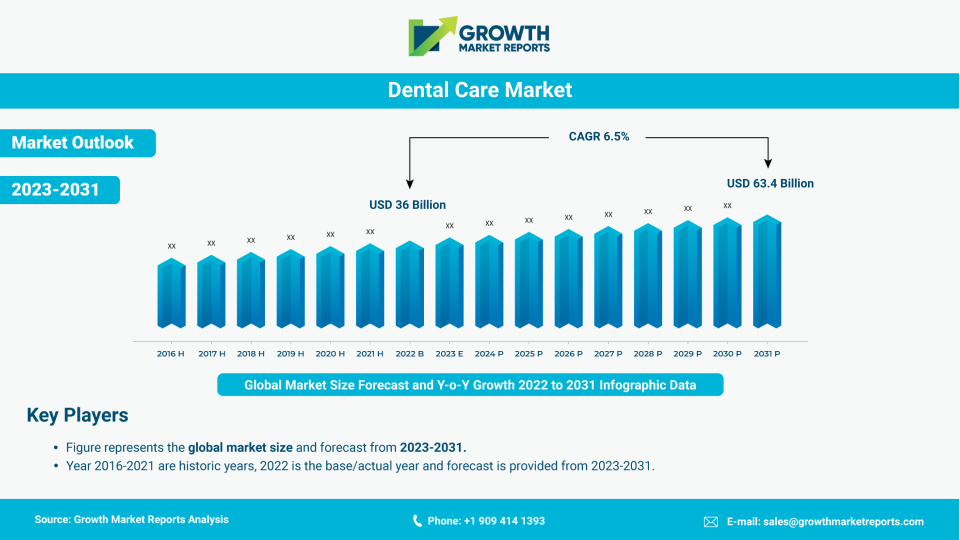
The global dental care market size was USD 36 Billion in 2022 and is likely to reach USD 63.4 Billion by 2031, expanding at a CAGR of 6.5% during 2023–2031. The market growth is attributed to the growing incidence of dental disorders among the population and the increasing awareness regarding oral hygiene.
Increasing prevalence of teeth disorders among the global population, due to poor eating habits, and less attention to oral health, are propelling the demand for dental care products. Rising disposable income has driven the purchase of oral care products that facilitate enhanced maintenance of dental health. The development of a wide variety of dental solutions to improve the convenience of consumers in modern lifestyles is boosting opportunities in the market.
-
As per the information available from the Centers for Disease Control and Prevention (CDC), reviewed in September 2023, by the age of 34, above 80% of people have suffered at least one cavity. Each year, the US spends USD 124 billion on dental care-related products and solutions. On average, above 34 million school hours and above USD 45 billion losses occur owing to unplanned care required for dental emergencies each year.
The research report finds that the COVID-19 pandemic benefited the dental care market, owing to a surge in the demand for at-home oral care products. Dental clinics around the world were closed or operating at low efficiency, as various governments enforced subsequent lockdowns, to curb the virus spread. The dental care product purchases including toothpaste, sprays, electric brushes, and other products grew significantly on eCommerce platforms. As oral care awareness among the global population has sustained post the pandemic, the market is expected to witness steady growth in the coming years.
Impact of Artificial Intelligence (AI) on the Dental Care Market
AI is expected significantly impact the dental care industry. The technology’s ability to quickly analyze vast data can benefit dental professionals in speedily deriving informed decisions and suggest individuals with personalized dental products to recover. AI is projected to expand the scope of teledentistry, thereby, allowing quality dental care services to reach semi-urban and rural parts.
Manufacturers in the industry are likely to benefit from the incorporation of AI and machine learning (ML) for optimizing production, distribution, and sales operations. The technology is expected to give rise to customized dental care products with its accuracy in analysis and suggestion features.
-
A survey carried out by dentaly organization in the US, on 250 licensed dentists and 1015 patients in July 2023, revealed that 35% of dentists have implemented AI in their regular practices. About 77% of participant dentists stated of getting positive outcomes since they have begun using AI in their practice. While 68% of patients affirmed the potential benefits of AI in dental care.
Dental Care Market Dynamics
Key Trends
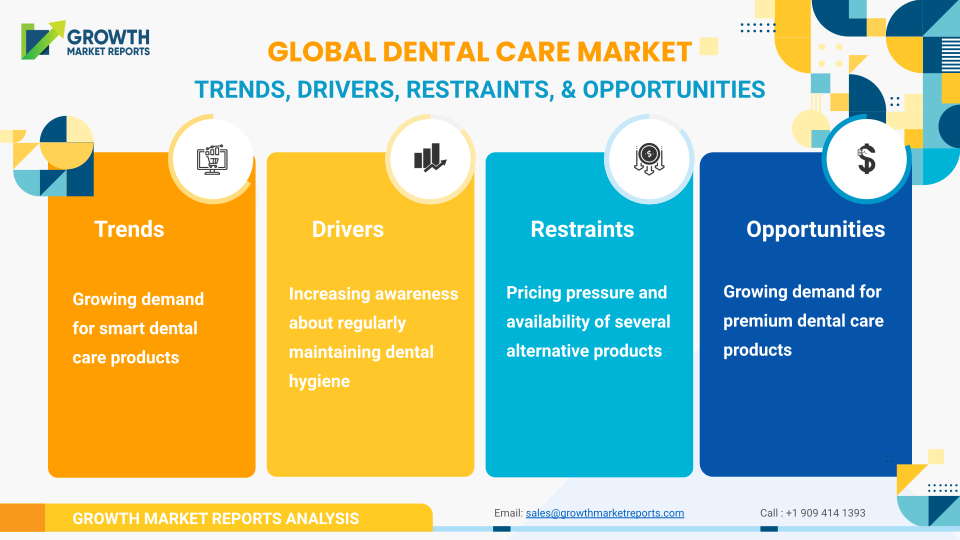
Growing demand for smart dental care products is a key trend in the market. Products such as smart toothbrushes allow enhanced teeth brushing, without affecting their structure or gums. Most of these smart electric toothbrushes have rotating heads that oscillate in both directions, which, as a result, improves oral health. Demand for smart oral care products has grown significantly in the recent years, due to their ease of use and comfort. This has rapidly increased the availability of innovative teeth care products in the market.
-
In August 2023, WATERPIK, a leading brand in the oral care industry, launched an innovative and clinically backed Sensonic Electronic Toothbrush. This brush comes with advanced sonic technology, and a specially developed bristle pattern, which provides deep teeth cleaning that can be seen and felt by its users.
Major Drivers
Increasing awareness about regularly maintaining dental hygiene is expected to propel the market during the forecast period. Various governments and companies in the market are playing key roles in increasing oral health consciousness among the population. This is supported by the internet and social media, on which information and preventive measures are being spread through creative campaigns and the use of celebrities & influencers.
Dental disorders are causing losses of billions of dollars and countless hours for worldwide nations. According to WHO, these disorders are widely caused by increased consumption of sugar, alcohol, and tobacco use, and poor eating habits & hygiene. This is being addressed with increasing focus on expanding awareness initiatives to motivate people to maintain their dental hygiene.
-
According to a study published by the World Health Organization (WHO) in March 2023, it is estimated that close to 3.5 billion people worldwide are affected by oral diseases. Of these diseases, untreated tooth decay (dental carries) in the permanent teeth is the most common condition as reported in the Global Burden of Disease 2019 study.
Existing Restraints
Pricing pressure and availability of several alternative products are likely to hinder the market in the coming years. The dental care industry is becoming highly competitive with the entry of new players and rapid production. This is leading to the existence of several optional products for each dental care solution at various price ranges. The expansion of selling on eCommerce further strains this pricing competition in the market with product offerings available from a vast selection. All of these factors are leading to affecting the growth of the market.
Emerging Opportunities
Growing demand for premium dental care products and rising development of eco-friendly solutions are expected to create opportunities in the market. The low-quality products can affect the gums and tooth structure. Increasing awareness related to the use of quality products is widely promoted by companies in their marketing and advertising campaigns. This is contributing to a sharp rise in the demand for premium and personalized dental care solutions. Additionally, the development of eco-friendly products with natural plant extracts is being increased by companies in the industry. This is driven by rising concerns about the effects of artificial agents on dental health and overall oral health.
Scope of the Dental Care Market Report
The global market research report includes an assessment of the market trends, market segments, and regional markets. Overview and dynamics have also been included in the report.
|
Attributes
|
Details
|
|
Report Title
|
Dental Care Market - Global Industry Analysis, Growth, Share, Size, Trends, and Forecast
|
|
Base Year
|
2022
|
|
Historic Data
|
2016–2021
|
|
Forecast Period
|
2023–2031
|
|
Segmentation
|
Product (Toothpaste [Pastes, Powders, Gels, and Polishes], Toothbrushes & Accessories [Manual Toothbrushes, Battery-powered Toothbrushes, Electric Toothbrushes, and Replacement Toothbrush Heads], Dental Accessories [Breath Fresheners, Dental Flosses, Dental Water Jets, and Cosmetic Dental Whitening Products], Denture Products [Fixatives, Cleansers, and Other Dentures]. Mouthwashes, and Dental Prosthesis Cleaning Solutions), Application (Home and Dentistry), and Distribution Channel (Retail Pharmacies, Consumer Stores, Online, and Others)
|
|
Regional Scope
|
Asia Pacific, North America, Latin America, Europe, and Middle East & Africa
|
|
Report Coverage
|
Company Share, Market Analysis and Size, Competitive Landscape, Growth Factors, Market Trends, and Revenue Forecast
|
|
Key Players Covered in the Report
|
3M; Church & Dwight Co., Inc.; Colgate-Palmolive Company; GC Corporation; GSK plc.; Johnson & Johnson Private Limited; Kao Corporation; Koninklijke Philips N.V; Lion Corporation; Procter & Gamble; supersmile; Ultradent Products, Inc.; Unilever; and Xiaomi.
|
Market Segment Insights
Product Analysis
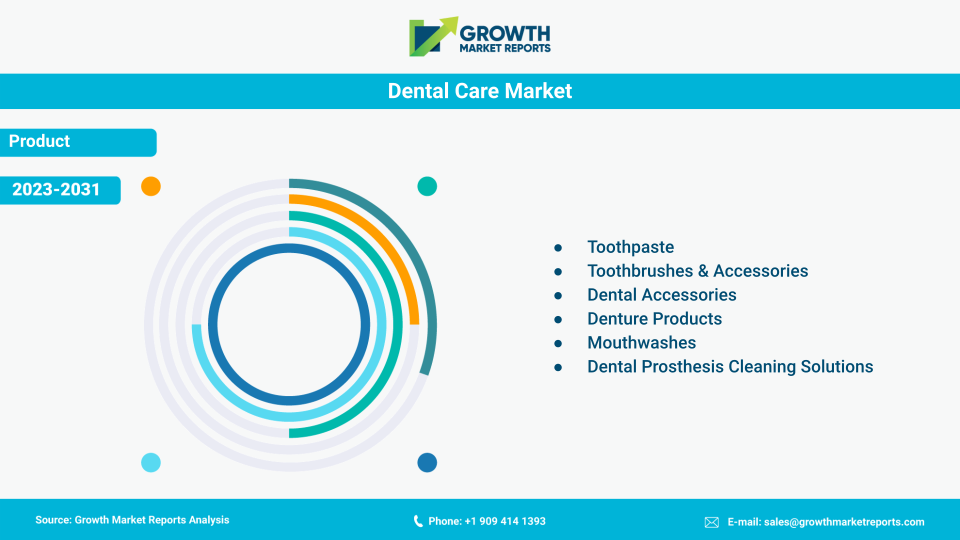
Based on product, the dental care market is divided into toothpaste, toothbrushes & accessories, dental accessories, denture products. mouthwashes, and dental prosthesis cleaning solutions. The toothpaste segment is subdivided into pastes, powders, gels, and polishes. The toothbrushes & accessories segment is further segmented into manual toothbrushes, battery-powered toothbrushes, electric toothbrushes, and replacement toothbrush heads. The dental accessories segment is subcategorized as breath fresheners, dental flosses, dental water jets, and cosmetic dental whitening products. The denture products segment is further divided into fixatives, cleansers, and other dentures.
The toothpaste segment is projected to hold a major revenue share of the market during the projection period, owing to its regular use by the population across the globe. Toothpaste products come in various formulations and flavors, thereby, catering varying preferences and dental needs of each individual. Growing availability of highly effective toothpaste in various size and price ranges are further propelling their sales. Whereas, demand for toothpaste with natural ingredients is likely to support the growth of this segment in the coming years.
-
As per a report published in August 2023, toothpaste unit sales in the US rose by 771 million units in 2022. In the oral care category, toothbrushes and dental accessories were the second most sold products, recording almost 561 million units in sales in the past year.
The toothbrushes & accessories segment is anticipated to witness significant growth over the forecast period, owing to increasing demand for quality products for regular teeth cleaning. Growing improvements in toothbrushes with innovations and the aid of technology are further likely to fuel their demand in the global market. Availability of smart and battery-powered toothbrushes is creating growth potential in the market. Smart electric toothbrushes are being integrated with Bluetooth and analytical tools, to track usage patterns, allowing users and dentists to gain deep insights about brushing habits.
Application Analysis
On the basis of application, the global market is bifurcated into home and dentistry. The home segment is projected to expand at a robust CAGR during the forecast period, owing to the growing use of diverse dental care products at home for maintaining quality oral health. The rise of awareness regarding various aspects of teeth care is driving demand for toothpaste, mouthwash, toothbrushes, accessories, and dentures. The widening availability of home care solutions for effective maintenance of teeth and oral health is further expected to propel the segment.
The dentistry segment is projected to hold a key share of the market in the coming years, owing to the rising development of smart dental devices. The introduction of analytical tools such as AI is allowing dentists to gain a better and deeper understanding of tooth disorders. Smart dental care medical devices are further easing the treatment, thereby, improving the convenience of dentists and patients. Additionally, the introduction of digital dentures and rising approvals to create dentures using material discs are expected to drive the segment.
Distribution Channel Analysis
On the basis of distribution channel, the dental care market is segmented into retail pharmacies, consumer stores, online, and others. The consumer stores segment is expected to register a robust growth rate during the forecast period, owing to easy access to consumer stores across worldwide regions. The availability of a diverse range of dental care products in various price ranges in these stores further propels the segment.
The online segment is poised to witness rapid growth in the coming years, owing to rising eCommerce sales of various dental care products. Multi-national corporations such as Amazon, eBay, Alibaba, and Flipkart have tremendously increased their operations and reach across global regions, in recent years. It has become highly convenient for home-based users and dentistry practitioners to purchase products from digital platforms, and get them delivered in the quickest duration. The key players in the market are expanding their product offerings on online platforms to support the growing demand from worldwide consumers.
-
According to the Colgate-Palmolive 2022 Annual Report, the company’s eCommerce sales recorded fastest growth in 2022. Online sales grew double digits, representing 14% of total sales for the company in the global market.
Regional Outlook
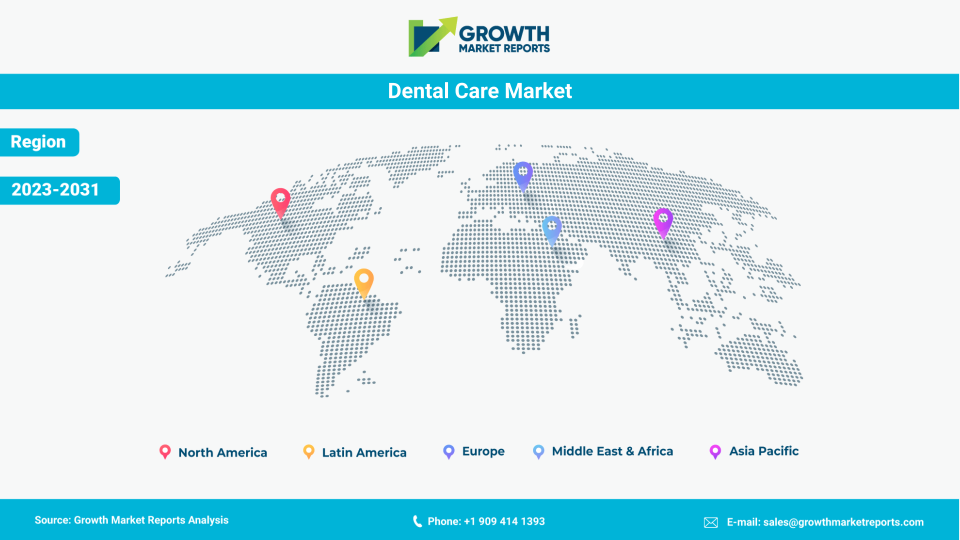
In terms of region, the global dental care market is classified as Asia Pacific, North America, Latin America, Europe, and Middle East & Africa. Asia Pacific is expected to dominate the market during the projection period, owing to the presence of a large population, coupled with the growing awareness of dental disorders. Expanding development of diverse products for catering to consumers’ preferences and needs further propels the market in this region. The demand for natural dental care products in emerging economies, India and China is contributing to growth opportunities in the market. The presence of key players and the development of smart dental care products are expected to fuel the market during the assessment period.
-
As per the large-scale survey carried out in India in 2020, about 17% of participants reported having suffered from dental decay and cavities. Tooth decay, cavities, and bad breath are reported to be significant oral health-related concerns among the population. These growing concerns are consequently boosting sales of various dental care products.
The market in North America is expected to grow rapidly in the coming years, owing to growing concerns about dental disorders and expanding initiatives to promote regular dental care. The high prevalence of chronic illnesses such as diabetes, Alzheimer’s disease, and osteoporosis further fuels the need for regular dental care, as bad teeth condition results in the worsening of the health. The high disposable income and demand for smart and premium dental care products for modern lifestyle convenience further propels this region’s market.
Segments
The global Dental Care Market has been segmented on the basis of
Product
- Toothpaste
- Pastes
- Powders
- Gels
- Polishes
- Toothbrushes & Accessories
- Manual Toothbrushes
- Battery-powered Toothbrushes
- Electric Toothbrushes
- Replacement Toothbrush Heads
- Dental Accessories
- Breath Fresheners
- Dental Flosses
- Dental Water Jets
- Cosmetic Dental Whitening Products
- Denture Products
- Fixatives
- Cleansers
- Other Dentures
- Mouthwashes
- Dental Prosthesis Cleaning Solutions
Application
Distribution Channel
- Retail Pharmacies
- Consumer Stores
- Online
- Others
Region
- Asia Pacific
- North America
- Latin America
- Europe
- Middle East & Africa
Key Players
Competitive Landscape
Key players competing in the Dental Care Market are 3M; Church & Dwight Co., Inc.; Colgate-Palmolive Company; GC Corporation; GSK plc.; Johnson & Johnson Private Limited; Kao Corporation; Koninklijke Philips N.V; Lion Corporation; Procter & Gamble; supersmile; Ultradent Products, Inc.; Unilever; and Xiaomi.
These companies adopted development strategies including mergers, acquisitions, partnerships, collaboration, product launches, and production expansion to expand their consumer base worldwide. The competitive landscape covers key insights into growth strategies adopted by major market players.
-
In August 2022, Xiaomi launched the electric toothbrush, the MI Electric Toothbrush T100 in the Indian market. Back in February 2022, the company launched its first electric toothbrush MI Electric Toothbrush T300 in India. The new device is priced at INR 549.
-
In February 2022, Colgate-Palmolive Company, launched a groundbreaking recyclable toothpaste tube with a “Recycle Me!” message on the packaging in the US. This tube, made of High-Density Polyethylene (HDPE), is the first to be recognized as “recyclable” by external recycling authorities.











 Request For Customization
 Enquiry Before Buying
 Speak With Analyst