Acromegaly Treatment Market Research Report 2033

Acromegaly Treatment Market Research Report 2033

Segments - by Drug Type (Somatostatin Analogs, Growth Hormone Receptor Antagonists, Dopamine Agonists, Others), by Therapy (Medication, Surgery, Radiation Therapy, Others), by Route Of Administration (Oral, Injectable, Others), by Distribution Channel (Hospital Pharmacies, Retail Pharmacies, Online Pharmacies, Others)

https://growthmarketreports.com/raksha
Author : Raksha Sharma
https://growthmarketreports.com/Vaibhav
Fact-checked by : V. Chandola
https://growthmarketreports.com/Shruti
Editor : Shruti Bhat

Upcoming | Report ID :HC-17 | 4.5 Rating | 37 Reviews | 269 Pages | Format : Docx PDF

Report Description


Acromegaly Treatment Market Outlook

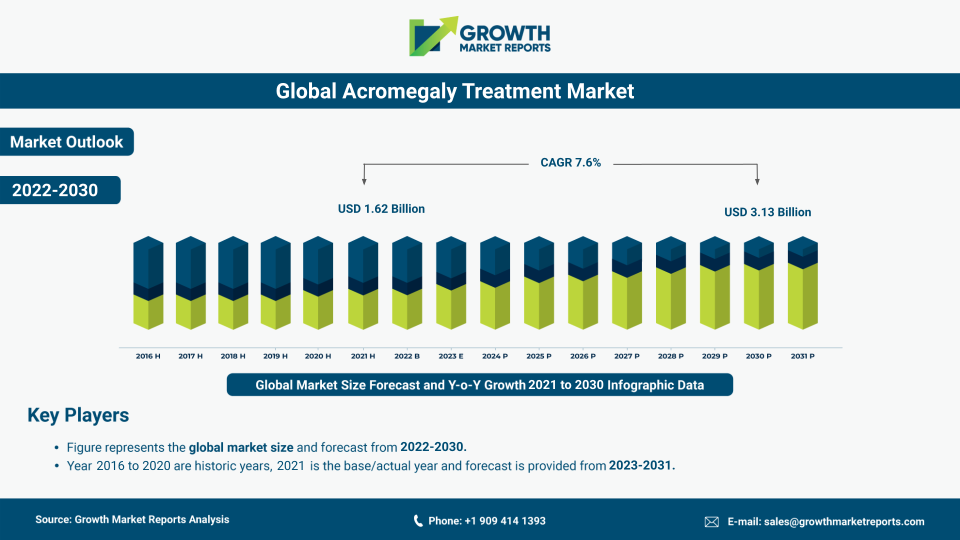
According to our latest research, the global acromegaly treatment market size reached USD 1.45 billion in 2024, driven by increasing disease awareness and advancements in medical therapeutics. The market is expected to expand at a CAGR of 6.8% from 2025 to 2033, reaching a forecasted value of USD 2.81 billion by 2033. The growth trajectory is primarily fueled by rising incidences of pituitary tumors, enhanced diagnostic capabilities, and the launch of innovative drug formulations, all of which are reshaping the landscape of acromegaly management worldwide.

One of the primary growth factors for the acromegaly treatment market is the increasing prevalence of pituitary adenomas, which are the leading cause of acromegaly. With greater awareness among healthcare professionals and patients, early diagnosis rates have improved significantly. This, in turn, has led to a higher number of patients seeking timely treatment, thus boosting market demand. Additionally, the integration of advanced imaging techniques and biochemical assays has facilitated more accurate and earlier detection, enabling clinicians to initiate treatment at earlier stages. This trend is particularly evident in developed economies, where access to healthcare infrastructure and expertise is robust, contributing to the overall expansion of the acromegaly treatment market.

Another significant driver is the continuous evolution of pharmacological therapies. The development and approval of novel somatostatin analogs, growth hormone receptor antagonists, and long-acting injectable formulations have transformed the therapeutic landscape. These drugs not only offer improved efficacy but also enhance patient compliance due to less frequent dosing regimens. The introduction of combination therapies and personalized medicine approaches has further improved treatment outcomes, reducing disease burden and improving quality of life for patients. Pharmaceutical companies are heavily investing in research and development to innovate new molecules and drug delivery systems, further propelling the market forward.

Furthermore, the growing emphasis on multidisciplinary care, involving endocrinologists, neurosurgeons, and radiologists, has led to better management of acromegaly. The availability of multiple therapeutic modalities—medications, surgery, and radiation therapy—allows for tailored treatment plans based on individual patient profiles. This approach not only optimizes clinical outcomes but also minimizes side effects, thus increasing patient satisfaction. Governments and healthcare organizations are also launching awareness campaigns and patient support programs, which are playing a crucial role in encouraging early diagnosis and adherence to treatment regimens, thereby supporting the overall growth of the acromegaly treatment market.

In recent years, the introduction of Gozetotide has marked a significant advancement in the acromegaly treatment landscape. As a novel therapeutic agent, Gozetotide offers a new mechanism of action that targets specific pathways involved in the disease process. This innovation not only broadens the spectrum of available treatments but also provides an alternative for patients who may not respond adequately to existing therapies. The development of Gozetotide underscores the ongoing commitment of the pharmaceutical industry to address unmet needs in acromegaly management, with a focus on improving patient outcomes and quality of life. Its integration into clinical practice is expected to enhance the effectiveness of personalized treatment plans, offering hope to patients with complex or refractory disease profiles.

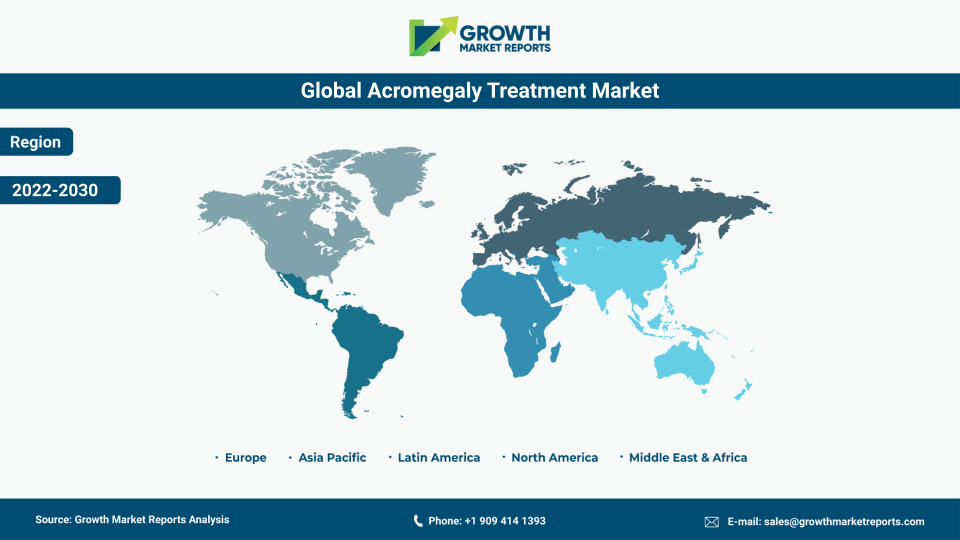
Regionally, North America continues to dominate the global acromegaly treatment market, accounting for the largest share in 2024, followed by Europe and Asia Pacific. The high market share in North America is attributed to advanced healthcare infrastructure, widespread disease awareness, and the presence of leading pharmaceutical companies. Europe benefits from strong regulatory support and growing investments in rare disease research. Meanwhile, the Asia Pacific region is experiencing the fastest growth, driven by increasing healthcare expenditure, improving access to specialized care, and rising awareness about rare endocrine disorders. These trends are expected to persist, ensuring sustained growth across all major regions during the forecast period.

Global Acromegaly Treatment Industry Outlook

Drug Type Analysis

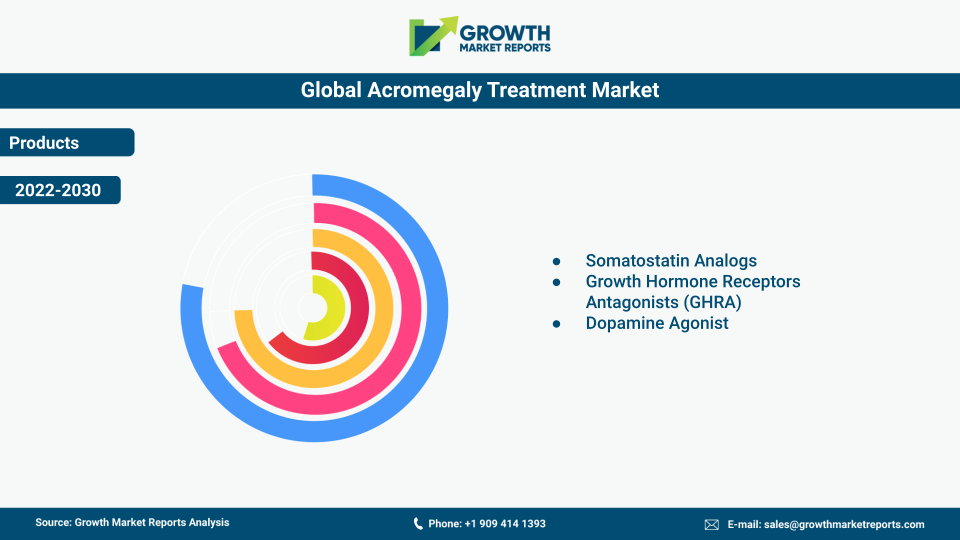
The acromegaly treatment market is segmented by drug type into somatostatin analogs, growth hormone receptor antagonists, dopamine agonists, and others. Somatostatin analogs represent the largest segment, accounting for a significant proportion of the market revenue in 2024. These drugs, including octreotide, lanreotide, and pasireotide, are widely recognized as the first-line pharmacological therapy due to their proven efficacy in suppressing excess growth hormone secretion. The availability of long-acting formulations has further improved patient adherence, reducing the frequency of injections and enhancing therapeutic outcomes. Pharmaceutical companies continue to invest in the development of next-generation somatostatin analogs with improved pharmacokinetic profiles, ensuring sustained dominance of this segment in the foreseeable future.

Growth hormone receptor antagonists, such as pegvisomant, have emerged as an essential option for patients who do not respond adequately to somatostatin analogs. These agents work by directly blocking the effects of growth hormone at its receptor, thereby normalizing insulin-like growth factor-1 (IGF-1) levels. The segment has witnessed steady growth due to increasing awareness among clinicians about its utility in refractory cases. Ongoing research into combination therapies involving growth hormone receptor antagonists and somatostatin analogs is expected to further expand this segment, offering new hope to patients with challenging disease profiles.

The dopamine agonists segment, including drugs such as cabergoline and bromocriptine, is characterized by its cost-effectiveness and oral administration route. Although these drugs are generally less effective than somatostatin analogs and growth hormone receptor antagonists, they remain an important option for selected patients, particularly those with mild disease or as adjunct therapy. The market for dopamine agonists is expected to maintain steady growth, supported by their favorable safety profile and accessibility, especially in regions with limited healthcare resources.

The "others" category encompasses emerging therapies and investigational drugs currently in clinical development. This segment holds promise for future market expansion as new molecules with novel mechanisms of action are introduced. Pharmaceutical companies are actively exploring innovative therapeutic targets to address unmet needs in acromegaly management. The successful commercialization of these pipeline drugs could significantly alter the competitive landscape, offering additional treatment options and improving patient outcomes in the years ahead.

Report Scope

Attributes Details
Report Title Acromegaly Treatment Market Research Report 2033
By Drug Type Somatostatin Analogs, Growth Hormone Receptor Antagonists, Dopamine Agonists, Others
By Therapy Medication, Surgery, Radiation Therapy, Others
By Route Of Administration Oral, Injectable, Others
By Distribution Channel Hospital Pharmacies, Retail Pharmacies, Online Pharmacies, Others
Regions Covered North America, Europe, APAC, Latin America, MEA
Base Year 2024
Historic Data 2018-2023
Forecast Period 2025-2033
Number of Pages 269
Number of Tables & Figures 287
Customization Available Yes, the report can be customized as per your need.

Therapy Analysis

The acromegaly treatment market is further segmented by therapy into medication, surgery, radiation therapy, and others. Medication remains the cornerstone of acromegaly management, accounting for the largest share of the market in 2024. The availability of multiple pharmacological agents, including somatostatin analogs, growth hormone receptor antagonists, and dopamine agonists, has revolutionized disease management. Advances in drug delivery systems, such as long-acting injectables and depot formulations, have further improved patient adherence and therapeutic efficacy. The trend towards personalized medicine, where treatment regimens are tailored to individual patient profiles, is gaining momentum and is expected to drive further growth in this segment.

Surgery, particularly transsphenoidal adenomectomy, is a critical therapeutic option for patients with pituitary tumors amenable to resection. Surgical intervention offers the potential for disease remission, especially in cases where tumors are localized and accessible. The success of surgical treatment depends on the expertise of neurosurgeons and the availability of advanced imaging technologies. While surgery remains a mainstay of treatment, its market share is influenced by the increasing effectiveness of pharmacological therapies, which are often used as first-line or adjunctive treatments.

Radiation therapy serves as an important adjunct for patients who are not candidates for surgery or who do not achieve remission with medication alone. Techniques such as stereotactic radiosurgery and conventional radiotherapy are employed to target residual tumor tissue and control hormone secretion. The adoption of advanced radiation modalities, including proton therapy and intensity-modulated radiation therapy (IMRT), has improved treatment precision and reduced adverse effects. Although radiation therapy represents a smaller segment compared to medication and surgery, its role in comprehensive acromegaly management remains vital, particularly for complex or recurrent cases.

The "others" segment includes emerging therapeutic approaches such as immunotherapy, gene therapy, and investigational interventions currently under clinical evaluation. These novel modalities hold promise for addressing unmet needs in treatment-resistant acromegaly and may offer alternative options for patients with limited response to conventional therapies. Ongoing research and clinical trials are expected to yield new insights and expand the therapeutic arsenal, contributing to long-term market growth and improved patient outcomes.

Route of Administration Analysis

The route of administration is a critical consideration in the acromegaly treatment market, with segments including oral, injectable, and others. Injectable therapies dominate the market, primarily due to the widespread use of somatostatin analogs and growth hormone receptor antagonists, which are typically administered via subcutaneous or intramuscular injection. The development of long-acting injectable formulations has significantly reduced the frequency of administration, enhancing patient convenience and adherence. Pharmaceutical companies are focusing on improving injection devices and delivery technologies to further optimize the patient experience and minimize discomfort.

Oral therapies, mainly represented by dopamine agonists such as cabergoline and bromocriptine, offer a convenient and non-invasive alternative for selected patients. Although oral medications are generally less potent than injectable agents, they remain an important option for patients with mild disease or those who are unable to tolerate injections. The market for oral therapies is expected to grow steadily, supported by ongoing research into new molecules and formulations that may offer improved efficacy and safety profiles.

The "others" segment includes emerging routes of administration, such as transdermal patches, implantable devices, and intranasal formulations. These innovative delivery systems are currently under investigation in preclinical and clinical studies. If successfully developed and commercialized, they have the potential to further enhance patient adherence and expand treatment options. The adoption of novel drug delivery technologies is anticipated to play a pivotal role in shaping the future of acromegaly treatment, offering new avenues for market growth and differentiation.

Overall, the route of administration remains a key factor influencing patient preference, adherence, and clinical outcomes in acromegaly management. The ongoing evolution of drug delivery systems, coupled with advances in pharmaceutical technology, is expected to drive continued innovation and expansion in this segment, supporting the long-term growth of the acromegaly treatment market.

Distribution Channel Analysis

The acromegaly treatment market is distributed through hospital pharmacies, retail pharmacies, online pharmacies, and others. Hospital pharmacies represent the largest distribution channel, accounting for a significant share of market revenue in 2024. This dominance is attributed to the complex nature of acromegaly management, which often requires specialized medications, close monitoring, and multidisciplinary care. Hospital pharmacies are well-equipped to handle the storage, dispensing, and administration of injectable therapies, ensuring optimal patient outcomes. The increasing prevalence of hospital-based specialty clinics and centers of excellence for endocrine disorders further supports the growth of this segment.

Retail pharmacies are an important channel for the distribution of oral medications and maintenance therapies. They offer convenient access to prescription drugs and play a key role in supporting patient adherence through medication counseling and refill services. The expansion of retail pharmacy networks, particularly in emerging markets, is expected to drive growth in this segment. Retail pharmacies are also leveraging digital technologies to enhance patient engagement and streamline prescription management, further strengthening their position in the acromegaly treatment market.

Online pharmacies are gaining traction as a convenient and cost-effective distribution channel, particularly in the wake of the COVID-19 pandemic. The increasing adoption of e-commerce platforms for prescription medications has enabled patients to access a wide range of therapies from the comfort of their homes. Online pharmacies offer competitive pricing, home delivery, and digital health support services, making them an attractive option for patients with chronic conditions such as acromegaly. Regulatory support for telemedicine and digital health initiatives is expected to further accelerate the growth of online pharmacies in the coming years.

The "others" category includes specialty pharmacies, compounding pharmacies, and direct-to-patient distribution models. These channels cater to specific patient populations with unique needs, such as those requiring customized formulations or home infusion services. The continued evolution of distribution channels, driven by advances in digital health and logistics, is expected to enhance patient access to acromegaly therapies and support long-term market growth.

Opportunities & Threats

The acromegaly treatment market presents numerous opportunities for growth and innovation. One of the most promising areas is the development of next-generation therapeutics with improved efficacy, safety, and convenience. Pharmaceutical companies are investing heavily in research and development to identify novel drug targets, optimize existing molecules, and explore combination therapies. The adoption of personalized medicine approaches, leveraging genetic and biomarker data, holds the potential to tailor treatment regimens to individual patient profiles, thereby improving outcomes and reducing adverse effects. Additionally, the expansion of patient support programs and disease awareness initiatives is expected to drive earlier diagnosis and treatment initiation, further expanding the addressable patient population.

Another significant opportunity lies in the expansion of market access in emerging economies. As healthcare infrastructure improves and awareness of rare endocrine disorders increases, demand for acromegaly therapies is expected to rise in regions such as Asia Pacific, Latin America, and the Middle East & Africa. Multinational pharmaceutical companies are actively pursuing partnerships and collaborations with local stakeholders to enhance distribution networks, streamline regulatory approvals, and improve affordability. The adoption of digital health solutions, including telemedicine and remote monitoring, is also facilitating greater access to specialized care in underserved areas, unlocking new growth opportunities for market participants.

Despite these opportunities, the acromegaly treatment market faces several restraining factors. Chief among them is the high cost of advanced therapies, particularly long-acting injectables and novel biologics. The financial burden associated with chronic disease management can be prohibitive for patients, especially in regions with limited insurance coverage or reimbursement options. Additionally, the rarity of acromegaly poses challenges in terms of disease awareness, timely diagnosis, and access to specialized care. These factors can delay treatment initiation and adversely impact patient outcomes. Addressing these barriers through policy reforms, pricing strategies, and patient assistance programs will be essential to unlocking the full potential of the acromegaly treatment market.

Regional Outlook

North America remains the largest regional market for acromegaly treatment, accounting for approximately USD 600 million of the global market size in 2024. The region benefits from advanced healthcare infrastructure, high disease awareness, and strong presence of leading pharmaceutical companies. The United States, in particular, leads in terms of research and development, regulatory approvals, and adoption of innovative therapies. The availability of specialized endocrine centers and multidisciplinary care teams further supports optimal disease management. Market growth in North America is expected to continue at a steady pace, supported by ongoing investments in rare disease research and patient support initiatives.

Europe is the second-largest regional market, with a market size of around USD 430 million in 2024. The region is characterized by robust regulatory frameworks, strong public healthcare systems, and growing investments in rare disease awareness. Countries such as Germany, France, and the United Kingdom are at the forefront of acromegaly research and treatment innovation. The European Medicines Agency (EMA) plays a key role in facilitating the approval and availability of new therapies. The market in Europe is projected to grow at a CAGR of 6.2% during the forecast period, driven by increasing adoption of advanced pharmacological and surgical interventions.

The Asia Pacific region is witnessing the fastest growth in the acromegaly treatment market, with a market size of USD 270 million in 2024. Rapid economic development, rising healthcare expenditure, and improving access to specialized care are key drivers of market expansion in countries such as China, India, and Japan. The region is also benefiting from growing awareness of rare endocrine disorders and the introduction of digital health solutions to bridge gaps in care delivery. Multinational pharmaceutical companies are increasingly focusing on Asia Pacific as a strategic growth market, leveraging partnerships with local stakeholders to expand their footprint and address unmet needs.

Acromegaly Treatment Market Statistics

Competitor Outlook

The global acromegaly treatment market is characterized by intense competition, with a mix of established pharmaceutical giants and emerging biotechnology firms vying for market share. The competitive landscape is shaped by continuous innovation in drug development, strategic collaborations, and a focus on expanding market access. Companies are investing heavily in research and development to bring novel therapies to market, address unmet clinical needs, and differentiate their product portfolios. The emphasis on personalized medicine and combination therapies is driving the evolution of treatment paradigms, with players seeking to offer comprehensive solutions that improve patient outcomes and quality of life.

Strategic partnerships, licensing agreements, and mergers and acquisitions are common strategies employed by market participants to strengthen their positions and accelerate product commercialization. Collaborations with academic institutions, research organizations, and patient advocacy groups are also playing a key role in advancing scientific understanding and driving innovation. The competitive landscape is further shaped by regulatory dynamics, with companies striving to secure timely approvals and expand their geographic reach. The ability to navigate complex reimbursement environments and demonstrate the value of new therapies is increasingly important for sustained market success.

In addition to product innovation, companies are focusing on enhancing patient support services, including education, adherence programs, and digital health solutions. These initiatives are designed to improve patient engagement, optimize treatment outcomes, and build brand loyalty. The adoption of real-world evidence and health economics data is also becoming more prevalent, as stakeholders seek to demonstrate the cost-effectiveness and long-term benefits of new therapies. As the market continues to evolve, companies that can successfully integrate scientific innovation with patient-centric strategies are likely to emerge as leaders in the acromegaly treatment space.

Major companies operating in the acromegaly treatment market include Pfizer Inc., Novartis AG, Ipsen Biopharmaceuticals, Chiasma Inc. (acquired by Amryt Pharma), and Sun Pharmaceutical Industries Ltd. Pfizer is a dominant player, particularly with its growth hormone receptor antagonist, pegvisomant (Somavert), which is widely used for refractory cases. Novartis AG is a leader in somatostatin analogs, offering both octreotide (Sandostatin) and pasireotide (Signifor), which are considered gold standards in pharmacological therapy. Ipsen Biopharmaceuticals is known for its long-acting somatostatin analog, lanreotide (Somatuline Depot), which has gained significant traction due to its efficacy and patient convenience.

Chiasma Inc., now part of Amryt Pharma, has developed oral octreotide (Mycapssa), representing a significant advancement in non-invasive therapy options for acromegaly patients. Sun Pharmaceutical Industries Ltd. is expanding its presence in the global market through a diverse portfolio of generic and branded therapies. These companies are actively engaged in clinical trials, regulatory filings, and strategic collaborations to expand their product offerings and geographic reach. The competitive landscape is expected to remain dynamic, with new entrants and innovative therapies continually reshaping the market.

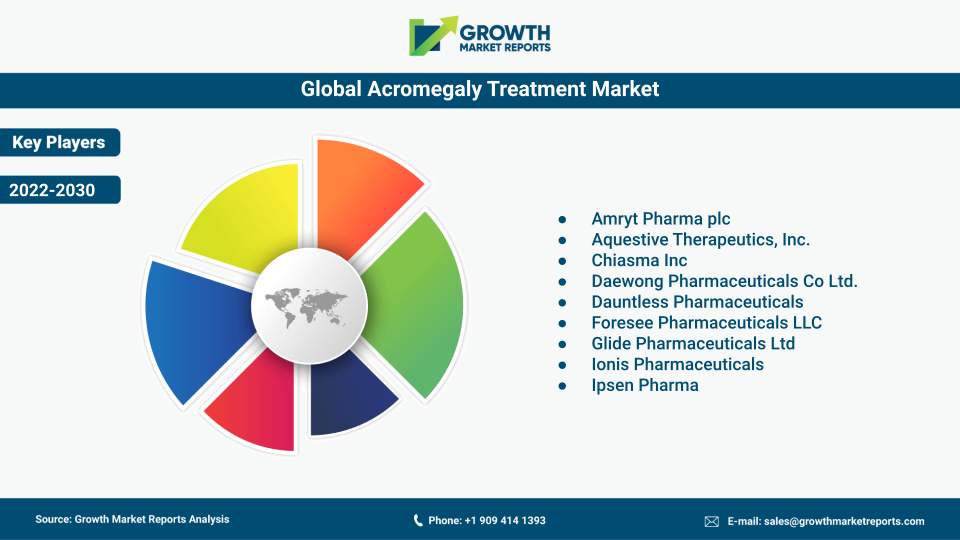
Key Players

  • Pfizer Inc.
  • Novartis AG
  • Ipsen Pharma
  • Chiasma, Inc.
  • Recordati S.p.A.
  • Sun Pharmaceutical Industries Ltd.
  • Teva Pharmaceutical Industries Ltd.
  • Ferring Pharmaceuticals
  • Wockhardt Ltd.
  • Camurus AB
  • Crinetics Pharmaceuticals, Inc.
  • Amryt Pharma plc
  • Antisense Therapeutics Limited
  • Dauntless Pharmaceuticals, Inc.
  • Regeneron Pharmaceuticals, Inc.
  • Strongbridge Biopharma plc
  • Rani Therapeutics
  • Peptron Inc.
  • Italfarmaco S.p.A.
  • GeneScience Pharmaceuticals Co., Ltd.
Acromegaly Treatment Market Overview

Segments

The Acromegaly Treatment market has been segmented on the basis of

Drug Type

  • Somatostatin Analogs
  • Growth Hormone Receptor Antagonists
  • Dopamine Agonists
  • Others

Therapy

  • Medication
  • Surgery
  • Radiation Therapy
  • Others

Route Of Administration

  • Oral
  • Injectable
  • Others

Distribution Channel

  • Hospital Pharmacies
  • Retail Pharmacies
  • Online Pharmacies
  • Others

Competitive Landscape

  • Key players in the global acromegaly treatment market includes Novartis AG, Sun Pharmaceutical Industries Ltd., DAEWOONG PHARMACEUTICAL CO.,LTD., Dauntless Pharmaceuticals, and WOCKHARDT. These companies are considered as key manufacturers of acromegaly treatment drugs, based on their revenue, research & development activities, regional presence, and supply chain management system.
  • The players are adopting key strategies such as acquisition, and geographical expansion where potential opportunity for the Acromegaly Treatment extraction is added in the company’s capacity.
  • For instance, In June 2020, Chiasma Inc announced that its MYCAPSSA (Octreotide) capsules, which is the first and only oral somatostatin analog, received FDA approval.
  • In October 2019, Sun Pharmaceutical Industries Ltd. launched Drizalma Sprinkle (duloxetine delayed-release capsules) in the US for oral use. The Drizalma Sprinkle (duloxetine delayed-release capsules) is designed for the treatment of various neuro-psychiatric and pain disorders in patients who have difficulty in swallowing.
  • In April 2019, Ipsen Pharma completed acquisition of Clementia Pharmaceuticals. This acquisition provided clear validation of strategy and bolstered rare diseases pipeline with a strong cornerstone asset for multiple indications.
Acromegaly Treatment Market Key Players

Video Summary for Acromegaly Treatment Market

Frequently Asked Questions

Major manufactures include, Novartis AG, Sun Pharmaceutical Industries Ltd., DAEWOONG PHARMACEUTICAL CO., LTD., Dauntless Pharmaceuticals, WOCKHARDT.

The base year considered for the global Acromegaly Treatment market report is 2019. The complete analysis period is 2017 to 2027, wherein, 2017 & 2018 are the historic years and the forecast is provided from 2020 to 2027.

The market is expected to maintain its normal growth between 2019 and 2020 owing to the continuous supply medicine and acromegaly cases. The ongoing research on acromegaly drug is expected to grow the demand for acromegaly treatment in the market.

Factors such as competitive strength and market positioning are key areas considered while selecting top companies to be profiled.

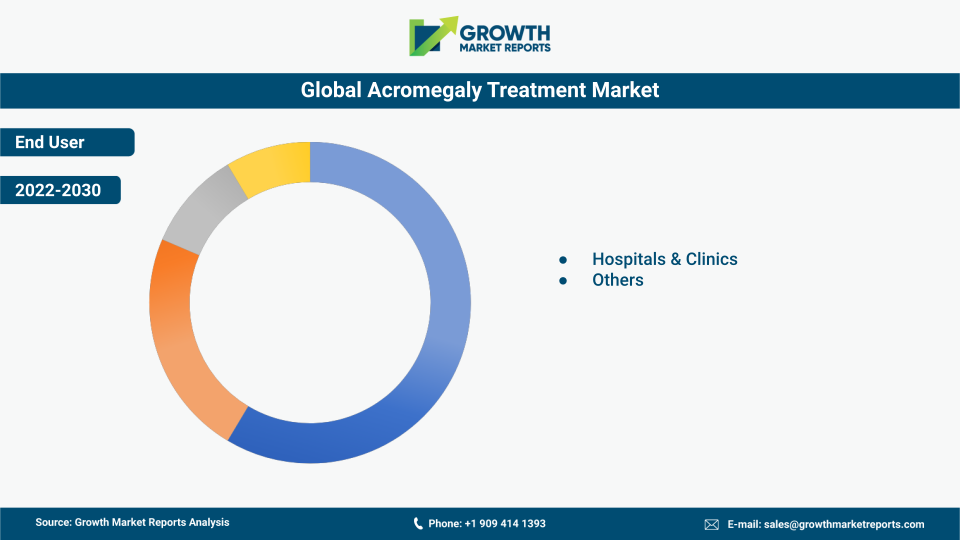
Hospitals & Clinics and Others are the key end-user that are driving the Acromegaly Treatment market.

Rising prevalence of acromegaly, growing number of hormonal diseases, rising number of clinical trials, and increasing awareness among people for acromegaly.

In addition Regulations and Company Market Share (in % for base year 2019), SWOT analysis of the market, Political & Legal, Economic and Technological analysis for Acromegaly Treatment market is available in final report.

According to this Growth Market Reports report, the market from Acromegaly Treatment is likely to register a CAGR of 7.6% during forecast period 2020-2027, with an anticipated to reach USD 2,299.4 million by the end of the 2027.

Yes, the report covers product specific information such as composition development etc.

Additional company profiles can be provided on request.

Table Of Content

Chapter 1 Executive Summary
Chapter 2 Assumptions and Acronyms Used
Chapter 3 Research Methodology
Chapter 4 Acromegaly Treatment Market Overview
   4.1 Introduction
      4.1.1 Market Taxonomy
      4.1.2 Market Definition
      4.1.3 Macro-Economic Factors Impacting the Market Growth
   4.2 Acromegaly Treatment Market Dynamics
      4.2.1 Market Drivers
      4.2.2 Market Restraints
      4.2.3 Market Opportunity
   4.3 Acromegaly Treatment Market - Supply Chain Analysis
      4.3.1 List of Key Suppliers
      4.3.2 List of Key Distributors
      4.3.3 List of Key Consumers
   4.4 Key Forces Shaping the Acromegaly Treatment Market
      4.4.1 Bargaining Power of Suppliers
      4.4.2 Bargaining Power of Buyers
      4.4.3 Threat of Substitution
      4.4.4 Threat of New Entrants
      4.4.5 Competitive Rivalry
   4.5 Global Acromegaly Treatment Market Size & Forecast, 2023-2032
      4.5.1 Acromegaly Treatment Market Size and Y-o-Y Growth
      4.5.2 Acromegaly Treatment Market Absolute $ Opportunity

Chapter 5 Global Acromegaly Treatment Market Analysis and Forecast By Drug Type
   5.1 Introduction
      5.1.1 Key Market Trends & Growth Opportunities By Drug Type
      5.1.2 Basis Point Share (BPS) Analysis By Drug Type
      5.1.3 Absolute $ Opportunity Assessment By Drug Type
   5.2 Acromegaly Treatment Market Size Forecast By Drug Type
      5.2.1 Somatostatin Analogs
      5.2.2 Growth Hormone Receptor Antagonists
      5.2.3 Dopamine Agonists
      5.2.4 Others
   5.3 Market Attractiveness Analysis By Drug Type

Chapter 6 Global Acromegaly Treatment Market Analysis and Forecast By Therapy
   6.1 Introduction
      6.1.1 Key Market Trends & Growth Opportunities By Therapy
      6.1.2 Basis Point Share (BPS) Analysis By Therapy
      6.1.3 Absolute $ Opportunity Assessment By Therapy
   6.2 Acromegaly Treatment Market Size Forecast By Therapy
      6.2.1 Medication
      6.2.2 Surgery
      6.2.3 Radiation Therapy
      6.2.4 Others
   6.3 Market Attractiveness Analysis By Therapy

Chapter 7 Global Acromegaly Treatment Market Analysis and Forecast By Route Of Administration
   7.1 Introduction
      7.1.1 Key Market Trends & Growth Opportunities By Route Of Administration
      7.1.2 Basis Point Share (BPS) Analysis By Route Of Administration
      7.1.3 Absolute $ Opportunity Assessment By Route Of Administration
   7.2 Acromegaly Treatment Market Size Forecast By Route Of Administration
      7.2.1 Oral
      7.2.2 Injectable
      7.2.3 Others
   7.3 Market Attractiveness Analysis By Route Of Administration

Chapter 8 Global Acromegaly Treatment Market Analysis and Forecast By Distribution Channel
   8.1 Introduction
      8.1.1 Key Market Trends & Growth Opportunities By Distribution Channel
      8.1.2 Basis Point Share (BPS) Analysis By Distribution Channel
      8.1.3 Absolute $ Opportunity Assessment By Distribution Channel
   8.2 Acromegaly Treatment Market Size Forecast By Distribution Channel
      8.2.1 Hospital Pharmacies
      8.2.2 Retail Pharmacies
      8.2.3 Online Pharmacies
      8.2.4 Others
   8.3 Market Attractiveness Analysis By Distribution Channel

Chapter 9 Global Acromegaly Treatment Market Analysis and Forecast by Region
   9.1 Introduction
      9.1.1 Key Market Trends & Growth Opportunities By Region
      9.1.2 Basis Point Share (BPS) Analysis By Region
      9.1.3 Absolute $ Opportunity Assessment By Region
   9.2 Acromegaly Treatment Market Size Forecast By Region
      9.2.1 North America
      9.2.2 Europe
      9.2.3 Asia Pacific
      9.2.4 Latin America
      9.2.5 Middle East & Africa (MEA)
   9.3 Market Attractiveness Analysis By Region

Chapter 10 Coronavirus Disease (COVID-19) Impact 
   10.1 Introduction 
   10.2 Current & Future Impact Analysis 
   10.3 Economic Impact Analysis 
   10.4 Government Policies 
   10.5 Investment Scenario

Chapter 11 North America Acromegaly Treatment Analysis and Forecast
   11.1 Introduction
   11.2 North America Acromegaly Treatment Market Size Forecast by Country
      11.2.1 U.S.
      11.2.2 Canada
   11.3 Basis Point Share (BPS) Analysis by Country
   11.4 Absolute $ Opportunity Assessment by Country
   11.5 Market Attractiveness Analysis by Country
   11.6 North America Acromegaly Treatment Market Size Forecast By Drug Type
      11.6.1 Somatostatin Analogs
      11.6.2 Growth Hormone Receptor Antagonists
      11.6.3 Dopamine Agonists
      11.6.4 Others
   11.7 Basis Point Share (BPS) Analysis By Drug Type 
   11.8 Absolute $ Opportunity Assessment By Drug Type 
   11.9 Market Attractiveness Analysis By Drug Type
   11.10 North America Acromegaly Treatment Market Size Forecast By Therapy
      11.10.1 Medication
      11.10.2 Surgery
      11.10.3 Radiation Therapy
      11.10.4 Others
   11.11 Basis Point Share (BPS) Analysis By Therapy 
   11.12 Absolute $ Opportunity Assessment By Therapy 
   11.13 Market Attractiveness Analysis By Therapy
   11.14 North America Acromegaly Treatment Market Size Forecast By Route Of Administration
      11.14.1 Oral
      11.14.2 Injectable
      11.14.3 Others
   11.15 Basis Point Share (BPS) Analysis By Route Of Administration 
   11.16 Absolute $ Opportunity Assessment By Route Of Administration 
   11.17 Market Attractiveness Analysis By Route Of Administration
   11.18 North America Acromegaly Treatment Market Size Forecast By Distribution Channel
      11.18.1 Hospital Pharmacies
      11.18.2 Retail Pharmacies
      11.18.3 Online Pharmacies
      11.18.4 Others
   11.19 Basis Point Share (BPS) Analysis By Distribution Channel 
   11.20 Absolute $ Opportunity Assessment By Distribution Channel 
   11.21 Market Attractiveness Analysis By Distribution Channel

Chapter 12 Europe Acromegaly Treatment Analysis and Forecast
   12.1 Introduction
   12.2 Europe Acromegaly Treatment Market Size Forecast by Country
      12.2.1 Germany
      12.2.2 France
      12.2.3 Italy
      12.2.4 U.K.
      12.2.5 Spain
      12.2.6 Russia
      12.2.7 Rest of Europe
   12.3 Basis Point Share (BPS) Analysis by Country
   12.4 Absolute $ Opportunity Assessment by Country
   12.5 Market Attractiveness Analysis by Country
   12.6 Europe Acromegaly Treatment Market Size Forecast By Drug Type
      12.6.1 Somatostatin Analogs
      12.6.2 Growth Hormone Receptor Antagonists
      12.6.3 Dopamine Agonists
      12.6.4 Others
   12.7 Basis Point Share (BPS) Analysis By Drug Type 
   12.8 Absolute $ Opportunity Assessment By Drug Type 
   12.9 Market Attractiveness Analysis By Drug Type
   12.10 Europe Acromegaly Treatment Market Size Forecast By Therapy
      12.10.1 Medication
      12.10.2 Surgery
      12.10.3 Radiation Therapy
      12.10.4 Others
   12.11 Basis Point Share (BPS) Analysis By Therapy 
   12.12 Absolute $ Opportunity Assessment By Therapy 
   12.13 Market Attractiveness Analysis By Therapy
   12.14 Europe Acromegaly Treatment Market Size Forecast By Route Of Administration
      12.14.1 Oral
      12.14.2 Injectable
      12.14.3 Others
   12.15 Basis Point Share (BPS) Analysis By Route Of Administration 
   12.16 Absolute $ Opportunity Assessment By Route Of Administration 
   12.17 Market Attractiveness Analysis By Route Of Administration
   12.18 Europe Acromegaly Treatment Market Size Forecast By Distribution Channel
      12.18.1 Hospital Pharmacies
      12.18.2 Retail Pharmacies
      12.18.3 Online Pharmacies
      12.18.4 Others
   12.19 Basis Point Share (BPS) Analysis By Distribution Channel 
   12.20 Absolute $ Opportunity Assessment By Distribution Channel 
   12.21 Market Attractiveness Analysis By Distribution Channel

Chapter 13 Asia Pacific Acromegaly Treatment Analysis and Forecast
   13.1 Introduction
   13.2 Asia Pacific Acromegaly Treatment Market Size Forecast by Country
      13.2.1 China
      13.2.2 Japan
      13.2.3 South Korea
      13.2.4 India
      13.2.5 Australia
      13.2.6 South East Asia (SEA)
      13.2.7 Rest of Asia Pacific (APAC)
   13.3 Basis Point Share (BPS) Analysis by Country
   13.4 Absolute $ Opportunity Assessment by Country
   13.5 Market Attractiveness Analysis by Country
   13.6 Asia Pacific Acromegaly Treatment Market Size Forecast By Drug Type
      13.6.1 Somatostatin Analogs
      13.6.2 Growth Hormone Receptor Antagonists
      13.6.3 Dopamine Agonists
      13.6.4 Others
   13.7 Basis Point Share (BPS) Analysis By Drug Type 
   13.8 Absolute $ Opportunity Assessment By Drug Type 
   13.9 Market Attractiveness Analysis By Drug Type
   13.10 Asia Pacific Acromegaly Treatment Market Size Forecast By Therapy
      13.10.1 Medication
      13.10.2 Surgery
      13.10.3 Radiation Therapy
      13.10.4 Others
   13.11 Basis Point Share (BPS) Analysis By Therapy 
   13.12 Absolute $ Opportunity Assessment By Therapy 
   13.13 Market Attractiveness Analysis By Therapy
   13.14 Asia Pacific Acromegaly Treatment Market Size Forecast By Route Of Administration
      13.14.1 Oral
      13.14.2 Injectable
      13.14.3 Others
   13.15 Basis Point Share (BPS) Analysis By Route Of Administration 
   13.16 Absolute $ Opportunity Assessment By Route Of Administration 
   13.17 Market Attractiveness Analysis By Route Of Administration
   13.18 Asia Pacific Acromegaly Treatment Market Size Forecast By Distribution Channel
      13.18.1 Hospital Pharmacies
      13.18.2 Retail Pharmacies
      13.18.3 Online Pharmacies
      13.18.4 Others
   13.19 Basis Point Share (BPS) Analysis By Distribution Channel 
   13.20 Absolute $ Opportunity Assessment By Distribution Channel 
   13.21 Market Attractiveness Analysis By Distribution Channel

Chapter 14 Latin America Acromegaly Treatment Analysis and Forecast
   14.1 Introduction
   14.2 Latin America Acromegaly Treatment Market Size Forecast by Country
      14.2.1 Brazil
      14.2.2 Mexico
      14.2.3 Rest of Latin America (LATAM)
   14.3 Basis Point Share (BPS) Analysis by Country
   14.4 Absolute $ Opportunity Assessment by Country
   14.5 Market Attractiveness Analysis by Country
   14.6 Latin America Acromegaly Treatment Market Size Forecast By Drug Type
      14.6.1 Somatostatin Analogs
      14.6.2 Growth Hormone Receptor Antagonists
      14.6.3 Dopamine Agonists
      14.6.4 Others
   14.7 Basis Point Share (BPS) Analysis By Drug Type 
   14.8 Absolute $ Opportunity Assessment By Drug Type 
   14.9 Market Attractiveness Analysis By Drug Type
   14.10 Latin America Acromegaly Treatment Market Size Forecast By Therapy
      14.10.1 Medication
      14.10.2 Surgery
      14.10.3 Radiation Therapy
      14.10.4 Others
   14.11 Basis Point Share (BPS) Analysis By Therapy 
   14.12 Absolute $ Opportunity Assessment By Therapy 
   14.13 Market Attractiveness Analysis By Therapy
   14.14 Latin America Acromegaly Treatment Market Size Forecast By Route Of Administration
      14.14.1 Oral
      14.14.2 Injectable
      14.14.3 Others
   14.15 Basis Point Share (BPS) Analysis By Route Of Administration 
   14.16 Absolute $ Opportunity Assessment By Route Of Administration 
   14.17 Market Attractiveness Analysis By Route Of Administration
   14.18 Latin America Acromegaly Treatment Market Size Forecast By Distribution Channel
      14.18.1 Hospital Pharmacies
      14.18.2 Retail Pharmacies
      14.18.3 Online Pharmacies
      14.18.4 Others
   14.19 Basis Point Share (BPS) Analysis By Distribution Channel 
   14.20 Absolute $ Opportunity Assessment By Distribution Channel 
   14.21 Market Attractiveness Analysis By Distribution Channel

Chapter 15 Middle East & Africa (MEA) Acromegaly Treatment Analysis and Forecast
   15.1 Introduction
   15.2 Middle East & Africa (MEA) Acromegaly Treatment Market Size Forecast by Country
      15.2.1 Saudi Arabia
      15.2.2 South Africa
      15.2.3 UAE
      15.2.4 Rest of Middle East & Africa (MEA)
   15.3 Basis Point Share (BPS) Analysis by Country
   15.4 Absolute $ Opportunity Assessment by Country
   15.5 Market Attractiveness Analysis by Country
   15.6 Middle East & Africa (MEA) Acromegaly Treatment Market Size Forecast By Drug Type
      15.6.1 Somatostatin Analogs
      15.6.2 Growth Hormone Receptor Antagonists
      15.6.3 Dopamine Agonists
      15.6.4 Others
   15.7 Basis Point Share (BPS) Analysis By Drug Type 
   15.8 Absolute $ Opportunity Assessment By Drug Type 
   15.9 Market Attractiveness Analysis By Drug Type
   15.10 Middle East & Africa (MEA) Acromegaly Treatment Market Size Forecast By Therapy
      15.10.1 Medication
      15.10.2 Surgery
      15.10.3 Radiation Therapy
      15.10.4 Others
   15.11 Basis Point Share (BPS) Analysis By Therapy 
   15.12 Absolute $ Opportunity Assessment By Therapy 
   15.13 Market Attractiveness Analysis By Therapy
   15.14 Middle East & Africa (MEA) Acromegaly Treatment Market Size Forecast By Route Of Administration
      15.14.1 Oral
      15.14.2 Injectable
      15.14.3 Others
   15.15 Basis Point Share (BPS) Analysis By Route Of Administration 
   15.16 Absolute $ Opportunity Assessment By Route Of Administration 
   15.17 Market Attractiveness Analysis By Route Of Administration
   15.18 Middle East & Africa (MEA) Acromegaly Treatment Market Size Forecast By Distribution Channel
      15.18.1 Hospital Pharmacies
      15.18.2 Retail Pharmacies
      15.18.3 Online Pharmacies
      15.18.4 Others
   15.19 Basis Point Share (BPS) Analysis By Distribution Channel 
   15.20 Absolute $ Opportunity Assessment By Distribution Channel 
   15.21 Market Attractiveness Analysis By Distribution Channel

Chapter 16 Competition Landscape 
   16.1 Acromegaly Treatment Market: Competitive Dashboard
   16.2 Global Acromegaly Treatment Market: Market Share Analysis, 2023
   16.3 Company Profiles (Details – Overview, Financials, Developments, Strategy) 
      16.3.1 Pfizer Inc.
Novartis AG
Ipsen Pharma
Chiasma, Inc.
Recordati S.p.A.
Sun Pharmaceutical Industries Ltd.
Teva Pharmaceutical Industries Ltd.
Ferring Pharmaceuticals
Wockhardt Ltd.
Camurus AB
Crinetics Pharmaceuticals, Inc.
Amryt Pharma plc
Antisense Therapeutics Limited
Dauntless Pharmaceuticals, Inc.
Regeneron Pharmaceuticals, Inc.
Strongbridge Biopharma plc
Rani Therapeutics
Peptron Inc.
Italfarmaco S.p.A.
GeneScience Pharmaceuticals Co., Ltd.

Methodology

Our Clients

The John Holland Group
Dassault Aviation
FedEx Logistics
Microsoft
Pfizer
Siemens Healthcare
General Mills
sinopec