Segments - by Drug Type (Antiviral Creams/Ointments, Oral Antiviral Tablets, Others), by Route Of Administration (Topical, Oral), by Distribution Channel (Hospital Pharmacies, Retail Pharmacies, Online Pharmacies, Others), by Patient Age Group (Pediatric, Adult, Geriatric)
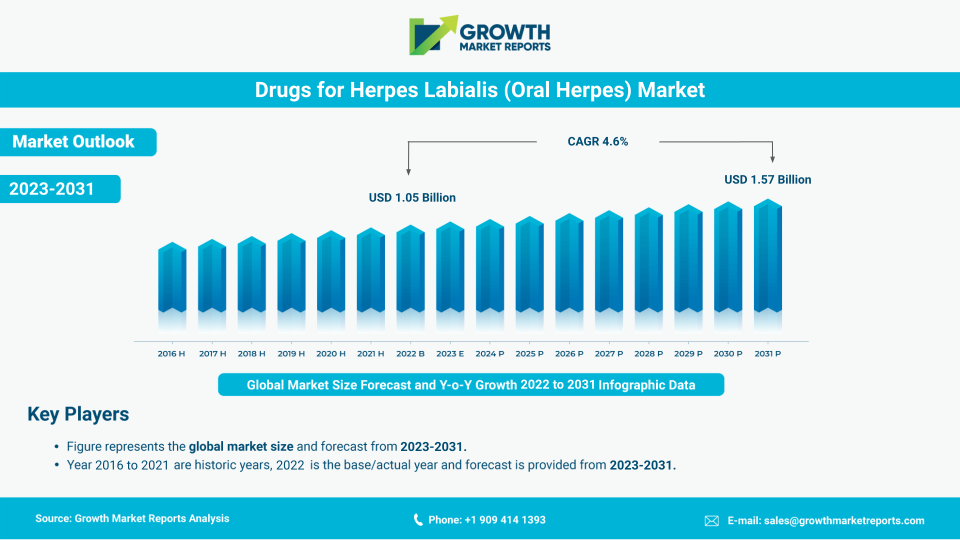
According to our latest research, the global market size for Drugs for Herpes Labialis (Oral Herpes) in 2024 stands at USD 2.16 billion. This market is experiencing a steady expansion, with a recorded CAGR of 4.8% from 2025 to 2033. By 2033, the market is projected to reach a value of USD 3.35 billion, as per our comprehensive analysis. The primary growth driver for this market is the rising prevalence of herpes simplex virus infections worldwide, coupled with increased awareness and diagnosis rates, which are fueling the demand for effective therapeutic interventions.
The growth of the Drugs for Herpes Labialis (Oral Herpes) market is significantly influenced by the escalating incidence of herpes simplex virus type 1 (HSV-1) infections globally. As per the World Health Organization, over 3.7 billion people under the age of 50 are estimated to be infected with HSV-1, which predominantly manifests as oral herpes. This high prevalence is a critical factor propelling the demand for antiviral medications and topical treatments. Furthermore, the recurrent nature of herpes labialis, characterized by frequent flare-ups, necessitates ongoing treatment, thereby ensuring a consistent and expanding market for therapeutic drugs. Additionally, the increasing adoption of self-care and over-the-counter (OTC) antiviral creams and ointments is contributing to market growth, as patients seek convenient and accessible solutions to manage their symptoms.
Another important growth driver for the Drugs for Herpes Labialis (Oral Herpes) market is the advancement in drug formulations and delivery mechanisms. Pharmaceutical companies are investing heavily in research and development activities to introduce more effective, fast-acting, and patient-friendly antiviral products. Innovations such as rapid-onset topical formulations, long-acting oral antiviral tablets, and combination therapies are gaining traction. These advancements not only enhance patient compliance but also improve clinical outcomes, making them highly attractive in both developed and emerging markets. The growing emphasis on patient-centric drug development, coupled with the integration of digital health tools for symptom tracking and medication adherence, is further catalyzing market expansion.
The increasing accessibility of healthcare services and the expansion of distribution channels are also pivotal to the market's growth trajectory. The proliferation of retail and online pharmacies has made antiviral drugs more readily available to a broader patient population, particularly in remote and underserved regions. Additionally, the rising trend of telemedicine and e-prescriptions is facilitating easier access to prescription medications for herpes labialis, thus contributing to higher treatment uptake. The ongoing efforts by governments and non-profit organizations to educate the public about oral herpes, its symptoms, and the importance of early treatment are also playing a crucial role in driving market growth.
Trifluridine, an antiviral medication, plays a significant role in the treatment of herpes labialis. As a topical solution, it is primarily used for ocular herpes infections but has shown efficacy in managing oral herpes outbreaks as well. Its mechanism of action involves inhibiting viral DNA synthesis, thereby reducing the replication of the herpes simplex virus. This makes Trifluridine a valuable option for patients seeking targeted relief from herpes symptoms. The inclusion of Trifluridine in treatment protocols highlights the ongoing efforts to expand the arsenal of drugs available for herpes management, ensuring that patients have access to a variety of therapeutic options tailored to their specific needs.
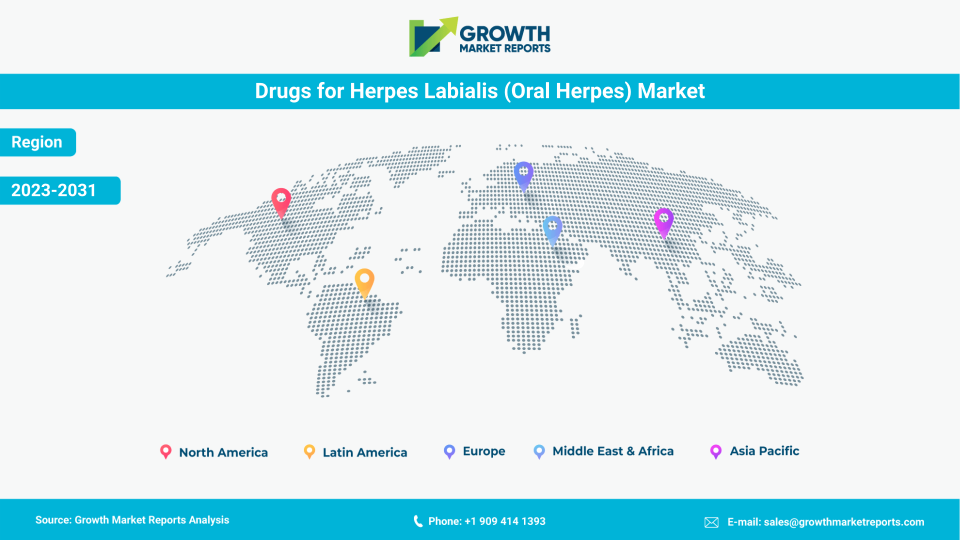
From a regional perspective, North America continues to dominate the Drugs for Herpes Labialis (Oral Herpes) market, owing to its well-established healthcare infrastructure, high disease awareness, and robust reimbursement policies. Europe follows closely, benefiting from widespread access to healthcare and a strong focus on preventive medicine. Meanwhile, the Asia Pacific region is emerging as a lucrative market, driven by a large patient pool, improving healthcare access, and increasing investments by pharmaceutical companies in local manufacturing and distribution. Latin America and the Middle East & Africa, while currently representing smaller market shares, are expected to witness accelerated growth rates over the forecast period due to rising awareness and expanding healthcare networks.
The Drugs for Herpes Labialis (Oral Herpes) market is segmented by drug type into antiviral creams/ointments, oral antiviral tablets, and others. Antiviral creams and ointments represent a significant share of the market, as they are often the first line of defense for patients experiencing mild to moderate outbreaks. These topical formulations, including products containing acyclovir and penciclovir, offer quick symptom relief and are widely available as both prescription and OTC options. The convenience of self-administration and rapid action against visible lesions make them highly popular among patients seeking immediate relief from discomfort and aesthetic concerns. Manufacturers are focusing on improving formulation stability, skin absorption, and user experience, which is expected to further boost the adoption of these products.
Oral antiviral tablets are another critical segment, particularly for patients with frequent or severe episodes of herpes labialis. Medications such as valacyclovir, famciclovir, and acyclovir are commonly prescribed for their systemic action, which helps reduce the duration and severity of outbreaks. Oral antivirals are especially preferred for immunocompromised patients or those at risk of complications. The development of new oral formulations with improved bioavailability and reduced dosing frequency is enhancing patient adherence and satisfaction. Additionally, the potential for long-term suppressive therapy with oral antivirals is driving sustained demand within this segment.
The "others" category encompasses a range of alternative and adjunctive therapies, including immune modulators, herbal remedies, and novel drug delivery systems. While these products currently hold a smaller market share, there is growing interest in their potential to complement conventional antiviral treatments. Research into natural compounds with antiviral properties, along with the exploration of innovative drug delivery platforms such as patches or nanocarriers, is expected to create new opportunities for market expansion. The integration of complementary therapies into mainstream treatment protocols may also address the unmet needs of patients who experience resistance or intolerance to standard antivirals.
Overall, the drug type segment is characterized by intense competition, with pharmaceutical companies striving to differentiate their products through enhanced efficacy, safety profiles, and patient-centric features. The increasing trend toward combination therapies, where multiple agents are used to target different stages of the viral lifecycle, is also gaining momentum. As the understanding of herpes simplex virus biology deepens, the pipeline for new drug candidates is expected to grow, further diversifying the treatment landscape for herpes labialis.
| Attributes | Details |
| Report Title | Drugs for Herpes Labialis (Oral Herpes) Market Research Report 2033 |
| By Drug Type | Antiviral Creams/Ointments, Oral Antiviral Tablets, Others |
| By Route Of Administration | Topical, Oral |
| By Distribution Channel | Hospital Pharmacies, Retail Pharmacies, Online Pharmacies, Others |
| By Patient Age Group | Pediatric, Adult, Geriatric |
| Regions Covered | North America, Europe, APAC, Latin America, MEA |
| Base Year | 2024 |
| Historic Data | 2018-2023 |
| Forecast Period | 2025-2033 |
| Number of Pages | 288 |
| Number of Tables & Figures | 392 |
| Customization Available | Yes, the report can be customized as per your need. |
The route of administration is a crucial consideration in the Drugs for Herpes Labialis (Oral Herpes) market, with options including topical and oral delivery. Topical administration remains the most widely used approach, particularly for patients experiencing localized outbreaks. The direct application of antiviral creams or ointments to the affected area allows for targeted action, minimizing systemic side effects and providing rapid relief from symptoms such as pain, itching, and burning. Topical treatments are especially favored for their ease of use and the ability to initiate therapy at the earliest sign of an outbreak, which is critical for optimal efficacy. The development of advanced topical formulations with enhanced skin penetration and prolonged activity is a key focus area for manufacturers seeking to improve patient outcomes.
Oral administration is preferred for patients with more severe or recurrent episodes of herpes labialis, as well as those at risk for complications. Oral antiviral tablets deliver systemic therapy, which is effective in suppressing viral replication and reducing the duration and frequency of outbreaks. The convenience of oral dosing, combined with the potential for long-term prophylactic use, makes this route attractive for individuals with chronic or high-risk profiles. Pharmaceutical companies are investing in the development of novel oral formulations that offer improved pharmacokinetics, reduced dosing frequency, and enhanced patient compliance. The availability of generic versions of key oral antivirals is also contributing to increased accessibility and affordability.
The choice between topical and oral administration is often influenced by factors such as the severity of symptoms, patient preference, and underlying health conditions. In some cases, combination therapy involving both routes may be recommended to achieve optimal results. Healthcare providers play a critical role in guiding patients toward the most appropriate treatment strategy, taking into account individual needs and risk factors. The growing trend toward personalized medicine is expected to drive further innovation in this segment, with tailored treatment regimens designed to maximize efficacy and minimize adverse effects.
Emerging technologies, such as transdermal patches and buccal films, are also being explored as alternative delivery methods for herpes labialis drugs. These novel approaches aim to enhance drug absorption, prolong therapeutic effects, and improve patient convenience. While still in the early stages of development, these innovations hold promise for expanding the range of available treatment options and addressing unmet needs within the market.
Distribution channels play a pivotal role in the accessibility and availability of Drugs for Herpes Labialis (Oral Herpes). Hospital pharmacies are a key distribution point, particularly for prescription-only antiviral medications and for patients requiring more intensive or specialized care. These settings offer the advantage of professional oversight, ensuring that patients receive appropriate guidance on medication use and potential side effects. Hospital pharmacies also serve as important hubs for the distribution of newer or high-cost therapies that may require closer monitoring or coordination with healthcare providers.
Retail pharmacies represent the largest distribution channel for herpes labialis drugs, especially for over-the-counter (OTC) topical treatments. The widespread presence of retail pharmacy chains and independent outlets ensures broad accessibility for patients seeking immediate relief from symptoms. Retail pharmacies also play a critical role in patient education, providing information on proper medication use, prevention strategies, and when to seek medical attention. The convenience of walk-in access and the availability of a wide range of products contribute to the popularity of this channel.
The rise of online pharmacies is transforming the distribution landscape for Drugs for Herpes Labialis (Oral Herpes), offering patients the convenience of home delivery and discreet purchasing options. Online platforms are particularly appealing for individuals who may be reluctant to seek treatment in person due to stigma or privacy concerns. The integration of telemedicine services with online pharmacies is further enhancing access to prescription medications, enabling remote consultations and e-prescriptions. Regulatory efforts to ensure the safety and authenticity of online drug sales are critical to maintaining patient trust and safeguarding public health.
Other distribution channels, such as specialty clinics and direct-to-consumer sales, are also contributing to market growth. These channels cater to specific patient populations, such as those with recurrent or complicated herpes labialis, and may offer specialized products or services. The ongoing expansion and diversification of distribution networks are expected to enhance the reach of herpes labialis drugs, particularly in underserved or remote regions. Strategic partnerships between pharmaceutical companies, distributors, and healthcare providers are essential for optimizing supply chain efficiency and ensuring timely access to essential medications.
The Drugs for Herpes Labialis (Oral Herpes) market is segmented by patient age group into pediatric, adult, and geriatric populations. The adult segment constitutes the largest share of the market, as herpes labialis is most commonly diagnosed in individuals between the ages of 15 and 49. Adults are more likely to experience recurrent outbreaks due to factors such as stress, immunosuppression, and lifestyle choices. The availability of a wide range of treatment options, including both topical and oral antivirals, caters to the diverse needs of this demographic. Adult patients also tend to be more proactive in seeking treatment and preventive care, contributing to sustained demand for herpes labialis drugs.
The pediatric segment represents a smaller but significant share of the market, as children can acquire HSV-1 infection through non-sexual contact, such as sharing utensils or close personal interactions. Pediatric cases often require special consideration in terms of drug dosing, formulation, and safety profiles. Pharmaceutical companies are focusing on developing child-friendly formulations, such as flavored oral suspensions and low-irritation topical creams, to improve treatment adherence and outcomes in this age group. Education and awareness campaigns targeting parents and caregivers are also essential for early detection and management of pediatric herpes labialis.
The geriatric population is an emerging segment within the Drugs for Herpes Labialis (Oral Herpes) market, as the risk of recurrent and severe outbreaks increases with age, particularly among individuals with weakened immune systems or comorbidities. Older adults may face additional challenges, such as polypharmacy and age-related changes in drug metabolism, which necessitate careful selection and monitoring of antiviral therapies. The development of tailored treatment protocols and supportive care measures for geriatric patients is an area of growing interest, with the potential to improve quality of life and reduce complications associated with herpes labialis.
Overall, the segmentation by patient age group underscores the importance of a personalized approach to treatment, with consideration given to the unique needs and preferences of different demographic cohorts. Ongoing research into age-specific risk factors, disease progression, and treatment responses is expected to inform the development of more effective and targeted therapies for herpes labialis across the lifespan.
The Drugs for Herpes Labialis (Oral Herpes) market presents numerous opportunities for growth and innovation. One of the most promising areas is the development of novel antiviral agents with improved efficacy, safety, and resistance profiles. There is a growing need for drugs that can effectively target drug-resistant strains of HSV-1, as well as therapies that offer longer-lasting protection and reduced dosing frequency. Advances in biotechnology and molecular medicine are enabling the identification of new therapeutic targets and the design of next-generation antivirals. Additionally, the integration of digital health tools, such as mobile apps for symptom tracking and medication reminders, presents opportunities to enhance patient engagement and treatment adherence. Pharmaceutical companies that invest in research and development, as well as strategic partnerships with academic institutions and technology providers, are well-positioned to capitalize on these opportunities.
Another significant opportunity lies in the expansion of market access in emerging economies. As healthcare infrastructure and access to medicines improve in regions such as Asia Pacific, Latin America, and the Middle East & Africa, there is considerable potential to reach underserved patient populations. Efforts to increase awareness, reduce stigma, and promote early diagnosis and treatment are essential for unlocking this growth potential. The rise of online pharmacies and telemedicine platforms is also facilitating access to herpes labialis drugs in remote and rural areas. Companies that can navigate the unique regulatory and market dynamics of these regions, while offering affordable and culturally appropriate products, stand to gain a competitive edge.
Despite these opportunities, the Drugs for Herpes Labialis (Oral Herpes) market faces several restraining factors. One of the primary challenges is the limited availability of curative therapies, as current treatments primarily focus on symptom management and viral suppression rather than eradication of the virus. The recurrent nature of herpes labialis, coupled with the potential for drug resistance and adverse effects, can lead to patient frustration and suboptimal treatment adherence. Additionally, the stigma associated with herpes infections may deter individuals from seeking timely medical care, resulting in underdiagnosis and undertreatment. Addressing these challenges will require ongoing investment in research, patient education, and the development of more effective and tolerable therapies.
Regionally, North America commands the largest share of the global Drugs for Herpes Labialis (Oral Herpes) market, with a market value of approximately USD 850 million in 2024. The region's dominance can be attributed to its advanced healthcare infrastructure, high disease awareness, and widespread access to both prescription and OTC antiviral medications. The United States, in particular, accounts for a significant portion of the North American market, driven by a high prevalence of HSV-1 infections and robust investment in pharmaceutical research and development. The presence of leading market players and favorable reimbursement policies further support market growth in this region.
Europe follows as the second-largest regional market, with a value of around USD 560 million in 2024. The region benefits from comprehensive healthcare systems, a strong emphasis on preventive care, and active public health campaigns aimed at reducing the burden of herpes labialis. Key markets within Europe include Germany, the United Kingdom, and France, where high levels of disease awareness and access to innovative therapies drive demand. The European market is expected to grow at a steady CAGR of 4.3% through 2033, supported by ongoing investments in healthcare infrastructure and the adoption of digital health solutions.
The Asia Pacific region is emerging as a high-growth market for Drugs for Herpes Labialis (Oral Herpes), with a current market size of USD 420 million in 2024. Rapid urbanization, rising disposable incomes, and improving healthcare access are key factors driving market expansion in countries such as China, India, and Japan. The Asia Pacific market is projected to register the highest CAGR of 6.1% over the forecast period, reflecting increasing awareness, expanding distribution networks, and growing investments by multinational pharmaceutical companies. Latin America and the Middle East & Africa, while currently representing smaller market shares of USD 180 million and USD 150 million respectively, are expected to witness accelerated growth rates as healthcare infrastructure and access to medicines continue to improve.
The competitive landscape of the Drugs for Herpes Labialis (Oral Herpes) market is characterized by the presence of several global and regional players, each vying for market share through product innovation, strategic partnerships, and geographic expansion. Leading pharmaceutical companies are investing heavily in research and development to introduce new and improved antiviral therapies, as well as to strengthen their product pipelines. The market is highly competitive, with companies differentiating themselves based on drug efficacy, safety profiles, patient convenience, and pricing strategies. Intellectual property protection and regulatory approvals are critical factors influencing market entry and success, particularly for novel drug candidates and biosimilars.
Mergers, acquisitions, and collaborations are common strategies employed by key market players to enhance their competitive positioning and expand their geographic footprint. Strategic alliances with academic institutions, research organizations, and technology providers are facilitating the development of next-generation therapies and digital health solutions. Companies are also focusing on expanding their presence in emerging markets, where rising disease prevalence and improving healthcare infrastructure offer significant growth opportunities. The increasing trend toward patient-centric care and personalized medicine is driving the development of tailored treatment regimens and innovative drug delivery systems, further intensifying competition within the market.
The market is also witnessing the entry of generic and biosimilar products, particularly in the oral antiviral segment, which is contributing to increased competition and price pressure. While this trend enhances affordability and accessibility for patients, it also necessitates ongoing innovation and value-added services from branded drug manufacturers. Companies that can effectively balance cost competitiveness with product differentiation are likely to maintain a strong market presence. Regulatory compliance, quality assurance, and supply chain management are additional areas of focus for companies seeking to navigate the complexities of the global market.
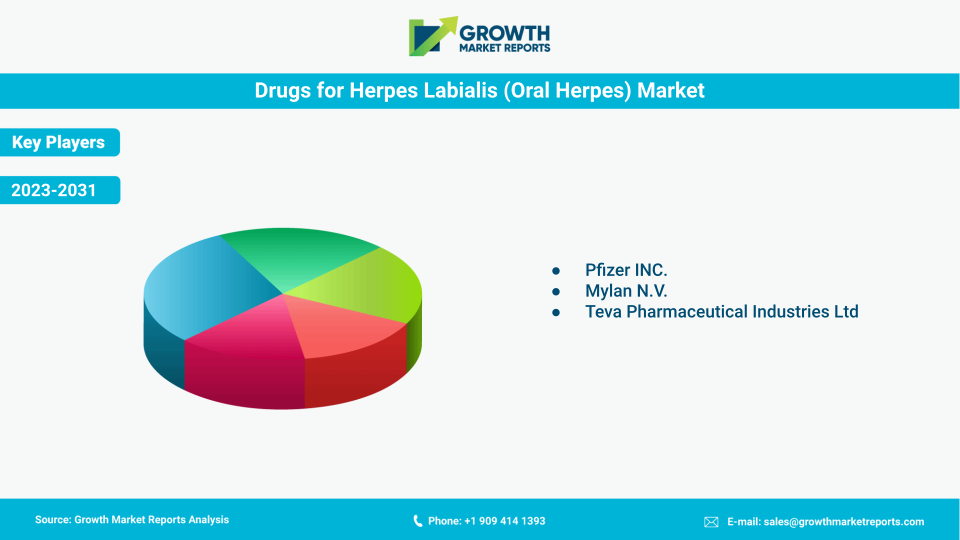
Major companies operating in the Drugs for Herpes Labialis (Oral Herpes) market include GlaxoSmithKline plc, Novartis AG, Teva Pharmaceutical Industries Ltd., Mylan N.V., and Sun Pharmaceutical Industries Ltd.. GlaxoSmithKline is renowned for its leading antiviral product, acyclovir, and continues to invest in research to develop more effective therapies for herpes labialis. Novartis AG and Teva Pharmaceutical Industries are prominent players in the oral antiviral segment, offering a range of generic and branded formulations. Mylan N.V. and Sun Pharmaceutical Industries have established strong distribution networks and are expanding their presence in emerging markets through strategic partnerships and product launches. These companies are also actively engaged in patient education initiatives and support programs to enhance treatment adherence and outcomes.
In summary, the competitive outlook for the Drugs for Herpes Labialis (Oral Herpes) market is dynamic and evolving, with companies leveraging innovation, strategic alliances, and market expansion to drive growth and maintain leadership positions. Ongoing investment in research and development, coupled with a focus on patient-centric solutions and global market access, will be key determinants of success in this rapidly growing market.
The Drugs for Herpes Labialis (Oral Herpes) market has been segmented on the basis of
Challenges include the lack of curative therapies, potential for drug resistance, stigma associated with herpes infections, and the need for improved patient adherence and education.
The market is segmented into pediatric, adult, and geriatric groups. Adults represent the largest segment, while pediatric and geriatric populations require specialized formulations and dosing.
Current trends include the development of rapid-onset and long-acting formulations, combination therapies, integration of digital health tools for symptom tracking, and the rise of telemedicine and online pharmacies.
Major players include GlaxoSmithKline plc, Novartis AG, Teva Pharmaceutical Industries Ltd., Mylan N.V., Sun Pharmaceutical Industries Ltd., Pfizer Inc., Cipla Inc., Bayer AG, Abbott Laboratories, and others.
Drugs for herpes labialis are distributed through hospital pharmacies, retail pharmacies, online pharmacies, and specialty clinics. Retail and online pharmacies are especially significant for over-the-counter and prescription products.
North America holds the largest market share, followed by Europe. The Asia Pacific region is experiencing the fastest growth, while Latin America and the Middle East & Africa are expected to see accelerated expansion.
Topical administration (creams and ointments) is most common for localized outbreaks, while oral administration (tablets) is preferred for severe or recurrent cases. Emerging methods include transdermal patches and buccal films.
The main drug types are antiviral creams/ointments (such as acyclovir and penciclovir), oral antiviral tablets (like valacyclovir, famciclovir, and acyclovir), and other adjunctive therapies including immune modulators and herbal remedies.
Key growth drivers include the rising prevalence of herpes simplex virus (HSV-1) infections, increased awareness and diagnosis rates, advancements in drug formulations, and improved healthcare accessibility.
As of 2024, the global market size for Drugs for Herpes Labialis (Oral Herpes) stands at USD 2.16 billion.