Cannabidiol (CBD) Market Share, Opportunities, Industry 2030
Cannabidiol (CBD) Market
Segments - By Product Type (Isolate, Full Spectrum, And Broad Spectrum), By Source (Hemp, Marijuana), By Application (Anxiety, Fibromyalgia, Diabetes, And Others) and Region (North America, Latin America, Europe, Asia Pacific and Middle East & Africa) - Global Industry Analysis, Growth, Share, Size, Trends, and Forecast 2020 – 2027
Segments - By Product Type (Isolate, Full Spectrum, And Broad Spectrum), By Source (Hemp, Marijuana), By Application (Anxiety, Fibromyalgia, Diabetes, And Others) and Region (North America, Latin America, Europe, Asia Pacific and Middle East & Africa) - Global Industry Analysis, Growth, Share, Size, Trends, and Forecast 2020 – 2027
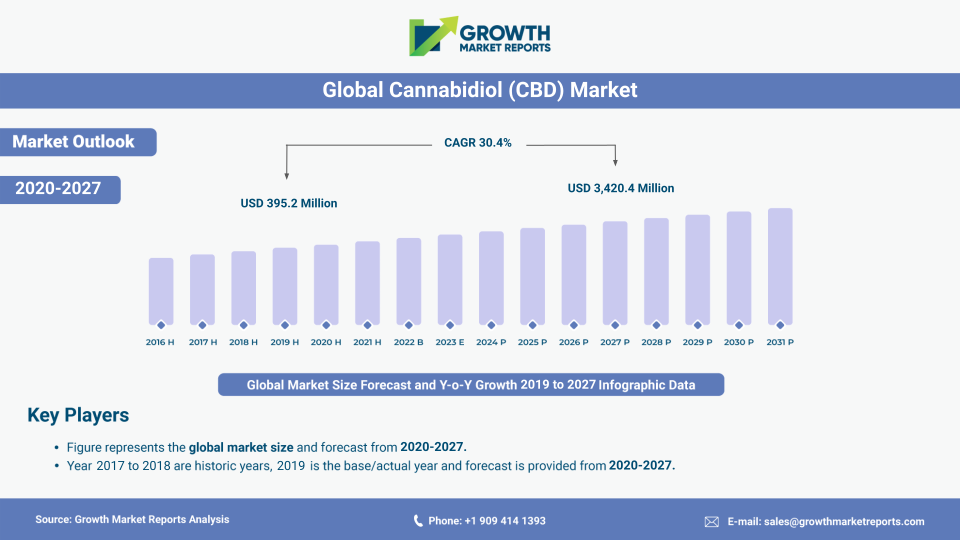
The global Cannabidiol (CBD) Market size was valued at USD 395.2 Million in 2019 and is projected to reach USD 3,420.4 Million by 2027, expanding around a CAGR of 30.4% during the forecast period, 2020-2027. Cannabidiol (CBD) is a naturally occurring chemical compound found in cannabis plants and accounts for 40% of plant extract. It is immiscible in water but miscible in organic solvents such as hexane or pentane. It is a colorless crystalline solid at room temperature and can be cyclized to Tetrahydrocannabinol (THC) under acidic conditions.
CBD-based products such as oils, gums, supplements, and high-concentration extracts are used for the treatment of many ailments such as anxiety, cognition, disturbed sleep, diabetes, and pain.
Cannabidiol (CBD) Market Dynamics
Rising use of cannabis in several products due to increasing consumer preference for CBD products is fueling the growth of the market. Approval of pharmaceutical CBD products for several cancer patients to manage pain is driving market growth. Increasing usage of CBD in medical applications, skin care products, beverages, and supplements is anticipated to propel market growth.
The growth of the market can be attributed to the substantial R&D and investments in the pharmaceutical industry. In term of consumption, market share of North America is growing due to the rise in use of CBD for medical purposes such as pain management.
Moreover, legalization of CBD has eliminated the need for prescription. This, in turn, is expected to fuel market growth. Market players are creating their online selling platforms for the sale of products, which is boosting the sale of CBD, thus catapulting the market growth.
Cannabidiol (CBD) Market Segment Insights
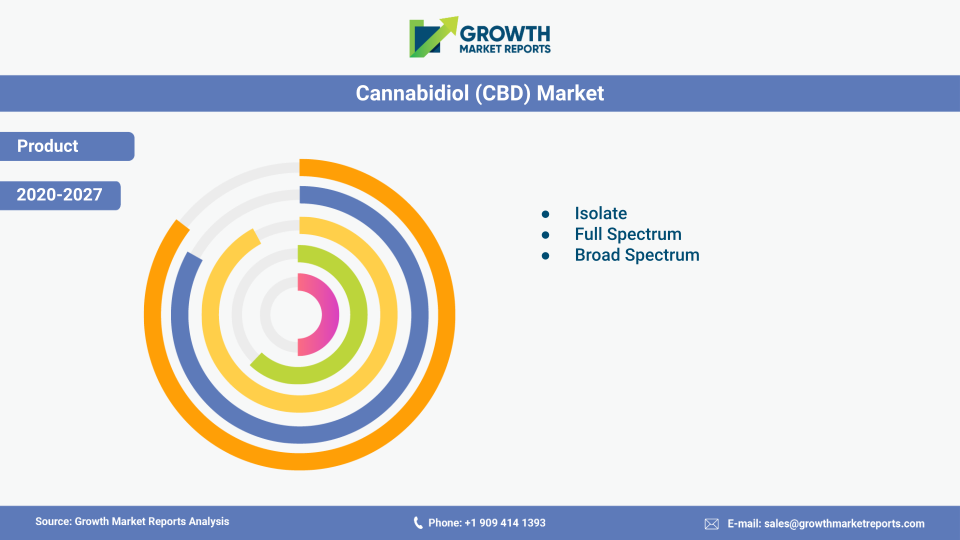
On the basis of product type, the global Cannabidiol (CBD) Market is segmented as isolate, full spectrum, and broad spectrum. Isolate segment is anticipated to expand at a CAGR of around 30.5% during the forecast period as it produces cleaner and healthier oil as compared to alcohol extraction.
Full spectrum segment is estimated to hold approximately 33.1% share of the market in 2020 as contains a complete range of cannabinoid and terpene profiles and provides high level of effectiveness. The broad spectrum segment is estimated to hold around 28.9% share of the market in 2021 offer a full range of cannabinoid profiles as it does not contain THC.
Based on source, the market is divided into hemp & marijuana. Hemp account for the major share as hemp derived CBD is obtained from industrial hemp plants, which are harvested for their seeds and fibers.
CBD extracted from marijuana is consumed for its intoxicating properties. Correct products for consumers needs can be found by experimenting with both by changing levels of THC and CBD.
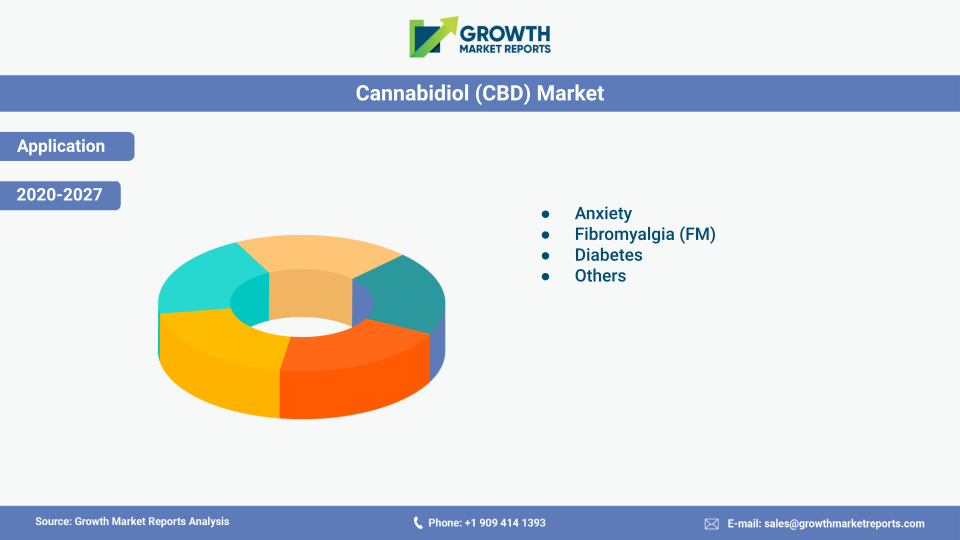
Based on application, the market is segmented into anxiety, fibromyalgia, diabetes, and others. Anxiety account for the major share as to reduce the disorder. Traditional options for treating anxiety include prescription drugs, which can result in several major side effects; hence, people with anxiety can be treated with CBD oil.
Application
Anxiety
Anxiety is a type of feeling people experience when confronted with a threat, danger, or under stress. People feel upset, nervous, and tense when anxious. Anxiety disorders can be caused by various factors such as genetics, brain chemistry, and personality issues. Furthermore, anxiety can be a consequence of life experiences such as job loss, relationship failure, serious disease, major accident, or the death of a loved one.
According to the Anxiety and Depression Association of America (ADAA), anxiety affects 40 million adults in the US aged 18 and above, or 18.1% of the population every year. Research has shown consumption of CBD oil by people with anxiety can significantly help to reduce the disorder. Traditional options for treating anxiety include prescription drugs, which can result in several major side effects; hence, people with anxiety can be treated with CBD oil.
Fibromyalgia
Fibromyalgia is an ailment characterized by musculoskeletal pain, fatigue, sleep, and mood and memory issues. General symptoms of fibromyalgia start after a physical trauma, infection, or significant psychological stress. Women are more prone to fibromyalgia than men. CBD can help relieve pain induced by fibromyalgia.
Diabetes
Diabetes is a chronic disease in which the body does not properly process food for use as energy. The body of a diabetic person does not produce enough insulin. This increases sugar or glucose in the blood and this can cause serious health-related issues including heart diseases, lower-extremity amputations, and kidney failure.
Type 2 diabetes is an inflammatory disease and CBD can improve the condition as it possesses anti-inflammatory properties. Some research on CBD has shown a reduction in insulin resistance and blood sugars for type 2 diabetes patients. CBD oil can also be used for serious ailments such as cancer, and cerebral ischemia, and neuroprotection.
Regional Analysis
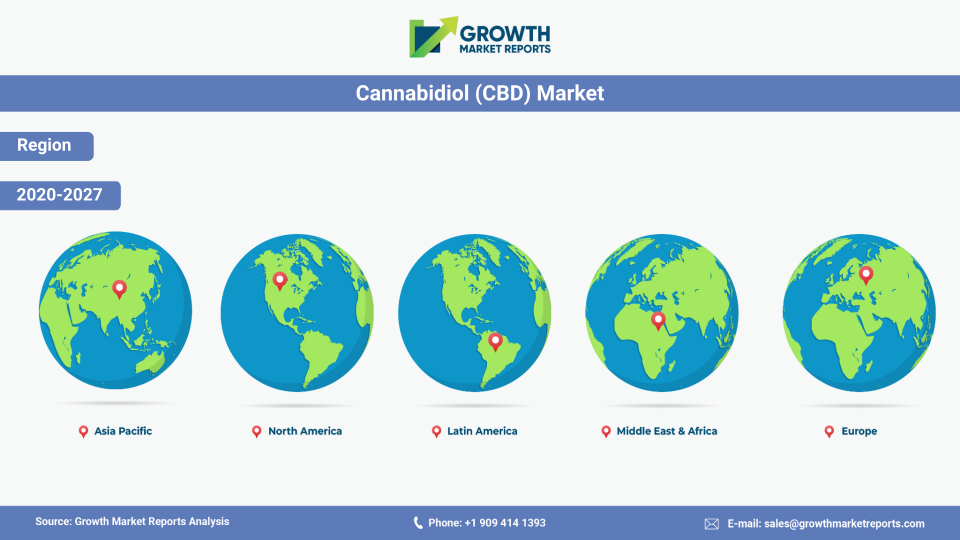
In terms of regions, the market is fragmented into North America, Europe, Asia Pacific, Latin America, and Middle East & Africa. North America is a promising region for the market. The region constituted approximately 50% share of the market in 2020.
The market in the region is projected to expand at a CAGR around 29% during the forecast period as there is increase in demand for Cannabidiol (CBD) in Asia Pacific, increasing focus of players in development of Cannabidiol (CBD), rise in government initiatives are some of the factors expected to boost the market growth on the region.
Key Benefits for Industry Participants & Stakeholders
In-depth Analysis of the Global Cannabidiol (CBD) Market
Historical, Current, and Projected Market Size in terms of Value and volume
Potential & Niche Segments and Regions Exhibiting Promising Growth Covered
Industry Drivers, Restraints, and Opportunities Covered in the Study
Recent Industry Trends and Developments
Competitive Landscape & Strategies of Key Players
Neutral Perspective on Global Cannabidiol (CBD) Market Performance
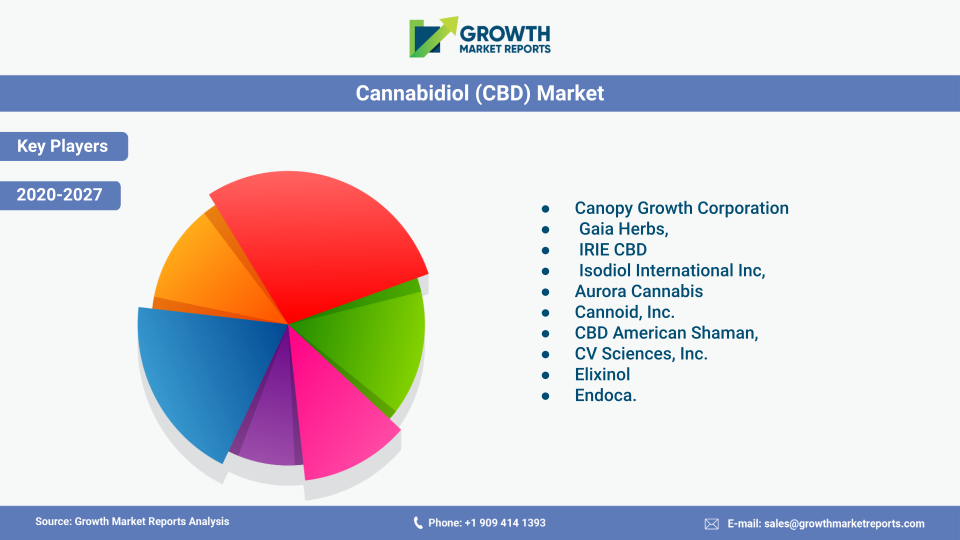
Key players in the market include Canopy Growth Corporation, Gaia Herbs, IRIE CBD, Isodiol International Inc, Aurora Cannabis, Cannoid, Inc., CBD American Shaman, CV Sciences, Inc., Elixinol, Endoca., FOLIUM BIOSCIENCES, Medical Marijuana, Inc., NuLeaf Naturals, LLC PharmaHemp.
These companies are considered manufacturers of Cannabidiol (CBD) based on their revenue, research development (R&D) activities, regional presence, and supply chain management system. The players are adopting key strategies such as acquisition, and geographical expansion where potential opportunity for the Cannabidiol (CBD) is added in the company’s capacity.
In 2017, IRIE CBD completed the acquisition of IRIE which is a formulator of CBD products, adds another level of integration of vertically-integrated business model.
Jan. 9, 2020- Medical Marijuana, Inc. the first-ever publicly traded cannabis company in the United States that launched the world’s first-ever cannabis-derived nutraceutical products, brands and supply chain, announced that its investment company AXIM Biotechnologies, Inc. has signed a binding term sheet to acquire leading oncology research and development company Sapphire Biotech, Inc. as a wholly-owned subsidiary.
Chapter 1 Executive Summary Chapter 2 Assumptions and Acronyms Used Chapter 3 Research Methodology Chapter 4 Cannabidiol Market Overview 4.1 Introduction 4.1.1 Market Taxonomy 4.1.2 Market Definition 4.1.3 Macro-Economic Factors Impacting the Market Growth 4.2 Cannabidiol Market Dynamics 4.2.1 Market Drivers 4.2.2 Market Restraints 4.2.3 Market Opportunity 4.3 Cannabidiol Market - Supply Chain Analysis 4.3.1 List of Key Suppliers 4.3.2 List of Key Distributors 4.3.3 List of Key Consumers 4.4 Key Forces Shaping the Cannabidiol Market 4.4.1 Bargaining Power of Suppliers 4.4.2 Bargaining Power of Buyers 4.4.3 Threat of Substitution 4.4.4 Threat of New Entrants 4.4.5 Competitive Rivalry 4.5 Global Cannabidiol Market Size & Forecast, 2017-2027 4.5.1 Cannabidiol Market Size and Y-o-Y Growth 4.5.2 Cannabidiol Market Absolute $ Opportunity Chapter 5 Global Cannabidiol Market Analysis and Forecast By Product Type 5.1 Introduction 5.1.1 Key Market Trends & Growth Opportunities By Product Type 5.1.2 Basis Point Share (BPS) Analysis By Product Type 5.1.3 Absolute $ Opportunity Assessment By Product Type 5.2 Cannabidiol Market Size Forecast By Product Type 5.2.1 Isolate 5.2.2 Full Spectrum 5.2.3 Broad Spectrum 5.3 Market Attractiveness Analysis By Product Type Chapter 6 Global Cannabidiol Market Analysis and Forecast By Source 6.1 Introduction 6.1.1 Key Market Trends & Growth Opportunities By Source 6.1.2 Basis Point Share (BPS) Analysis By Source 6.1.3 Absolute $ Opportunity Assessment By Source 6.2 Cannabidiol Market Size Forecast By Source 6.2.1 Hemp 6.2.2 Marijuana 6.3 Market Attractiveness Analysis By Source Chapter 7 Global Cannabidiol Market Analysis and Forecast By Application 7.1 Introduction 7.1.1 Key Market Trends & Growth Opportunities By Application 7.1.2 Basis Point Share (BPS) Analysis By Application 7.1.3 Absolute $ Opportunity Assessment By Application 7.2 Cannabidiol Market Size Forecast By Application 7.2.1 Anxiety 7.2.2 Fibromyalgia 7.2.3 Diabetes 7.2.4 Others. 7.3 Market Attractiveness Analysis By Application Chapter 8 Global Cannabidiol Market Analysis and Forecast by Region 8.1 Introduction 8.1.1 Key Market Trends & Growth Opportunities by Region 8.1.2 Basis Point Share (BPS) Analysis by Region 8.1.3 Absolute $ Opportunity Assessment by Region 8.2 Cannabidiol Market Size Forecast by Region 8.2.1 North America 8.2.2 Europe 8.2.3 Asia Pacific 8.2.4 Latin America 8.2.5 Middle East & Africa (MEA) 8.3 Market Attractiveness Analysis by Region Chapter 9 Coronavirus Disease (COVID-19) Impact 9.1 Introduction 9.2 Current & Future Impact Analysis 9.3 Economic Impact Analysis 9.4 Government Policies 9.5 Investment Scenario Chapter 10 North America Cannabidiol Analysis and Forecast 10.1 Introduction 10.2 North America Cannabidiol Market Size Forecast by Country 10.2.1 U.S. 10.2.2 Canada 10.3 Basis Point Share (BPS) Analysis by Country 10.4 Absolute $ Opportunity Assessment by Country 10.5 Market Attractiveness Analysis by Country 10.6 North America Cannabidiol Market Size Forecast By Product Type 10.6.1 Isolate 10.6.2 Full Spectrum 10.6.3 Broad Spectrum 10.7 Basis Point Share (BPS) Analysis By Product Type 10.8 Absolute $ Opportunity Assessment By Product Type 10.9 Market Attractiveness Analysis By Product Type 10.10 North America Cannabidiol Market Size Forecast By Source 10.10.1 Hemp 10.10.2 Marijuana 10.11 Basis Point Share (BPS) Analysis By Source 10.12 Absolute $ Opportunity Assessment By Source 10.13 Market Attractiveness Analysis By Source 10.14 North America Cannabidiol Market Size Forecast By Application 10.14.1 Anxiety 10.14.2 Fibromyalgia 10.14.3 Diabetes 10.14.4 Others. 10.15 Basis Point Share (BPS) Analysis By Application 10.16 Absolute $ Opportunity Assessment By Application 10.17 Market Attractiveness Analysis By Application Chapter 11 Europe Cannabidiol Analysis and Forecast 11.1 Introduction 11.2 Europe Cannabidiol Market Size Forecast by Country 11.2.1 Germany 11.2.2 France 11.2.3 Italy 11.2.4 U.K. 11.2.5 Spain 11.2.6 Russia 11.2.7 Rest of Europe 11.3 Basis Point Share (BPS) Analysis by Country 11.4 Absolute $ Opportunity Assessment by Country 11.5 Market Attractiveness Analysis by Country 11.6 Europe Cannabidiol Market Size Forecast By Product Type 11.6.1 Isolate 11.6.2 Full Spectrum 11.6.3 Broad Spectrum 11.7 Basis Point Share (BPS) Analysis By Product Type 11.8 Absolute $ Opportunity Assessment By Product Type 11.9 Market Attractiveness Analysis By Product Type 11.10 Europe Cannabidiol Market Size Forecast By Source 11.10.1 Hemp 11.10.2 Marijuana 11.11 Basis Point Share (BPS) Analysis By Source 11.12 Absolute $ Opportunity Assessment By Source 11.13 Market Attractiveness Analysis By Source 11.14 Europe Cannabidiol Market Size Forecast By Application 11.14.1 Anxiety 11.14.2 Fibromyalgia 11.14.3 Diabetes 11.14.4 Others. 11.15 Basis Point Share (BPS) Analysis By Application 11.16 Absolute $ Opportunity Assessment By Application 11.17 Market Attractiveness Analysis By Application Chapter 12 Asia Pacific Cannabidiol Analysis and Forecast 12.1 Introduction 12.2 Asia Pacific Cannabidiol Market Size Forecast by Country 12.2.1 China 12.2.2 Japan 12.2.3 South Korea 12.2.4 India 12.2.5 Australia 12.2.6 South East Asia (SEA) 12.2.7 Rest of Asia Pacific (APAC) 12.3 Basis Point Share (BPS) Analysis by Country 12.4 Absolute $ Opportunity Assessment by Country 12.5 Market Attractiveness Analysis by Country 12.6 Asia Pacific Cannabidiol Market Size Forecast By Product Type 12.6.1 Isolate 12.6.2 Full Spectrum 12.6.3 Broad Spectrum 12.7 Basis Point Share (BPS) Analysis By Product Type 12.8 Absolute $ Opportunity Assessment By Product Type 12.9 Market Attractiveness Analysis By Product Type 12.10 Asia Pacific Cannabidiol Market Size Forecast By Source 12.10.1 Hemp 12.10.2 Marijuana 12.11 Basis Point Share (BPS) Analysis By Source 12.12 Absolute $ Opportunity Assessment By Source 12.13 Market Attractiveness Analysis By Source 12.14 Asia Pacific Cannabidiol Market Size Forecast By Application 12.14.1 Anxiety 12.14.2 Fibromyalgia 12.14.3 Diabetes 12.14.4 Others. 12.15 Basis Point Share (BPS) Analysis By Application 12.16 Absolute $ Opportunity Assessment By Application 12.17 Market Attractiveness Analysis By Application Chapter 13 Latin America Cannabidiol Analysis and Forecast 13.1 Introduction 13.2 Latin America Cannabidiol Market Size Forecast by Country 13.2.1 Brazil 13.2.2 Mexico 13.2.3 Rest of Latin America (LATAM) 13.3 Basis Point Share (BPS) Analysis by Country 13.4 Absolute $ Opportunity Assessment by Country 13.5 Market Attractiveness Analysis by Country 13.6 Latin America Cannabidiol Market Size Forecast By Product Type 13.6.1 Isolate 13.6.2 Full Spectrum 13.6.3 Broad Spectrum 13.7 Basis Point Share (BPS) Analysis By Product Type 13.8 Absolute $ Opportunity Assessment By Product Type 13.9 Market Attractiveness Analysis By Product Type 13.10 Latin America Cannabidiol Market Size Forecast By Source 13.10.1 Hemp 13.10.2 Marijuana 13.11 Basis Point Share (BPS) Analysis By Source 13.12 Absolute $ Opportunity Assessment By Source 13.13 Market Attractiveness Analysis By Source 13.14 Latin America Cannabidiol Market Size Forecast By Application 13.14.1 Anxiety 13.14.2 Fibromyalgia 13.14.3 Diabetes 13.14.4 Others. 13.15 Basis Point Share (BPS) Analysis By Application 13.16 Absolute $ Opportunity Assessment By Application 13.17 Market Attractiveness Analysis By Application Chapter 14 Middle East & Africa (MEA) Cannabidiol Analysis and Forecast 14.1 Introduction 14.2 Middle East & Africa (MEA) Cannabidiol Market Size Forecast by Country 14.2.1 Saudi Arabia 14.2.2 South Africa 14.2.3 UAE 14.2.4 Rest of Middle East & Africa (MEA) 14.3 Basis Point Share (BPS) Analysis by Country 14.4 Absolute $ Opportunity Assessment by Country 14.5 Market Attractiveness Analysis by Country 14.6 Middle East & Africa (MEA) Cannabidiol Market Size Forecast By Product Type 14.6.1 Isolate 14.6.2 Full Spectrum 14.6.3 Broad Spectrum 14.7 Basis Point Share (BPS) Analysis By Product Type 14.8 Absolute $ Opportunity Assessment By Product Type 14.9 Market Attractiveness Analysis By Product Type 14.10 Middle East & Africa (MEA) Cannabidiol Market Size Forecast By Source 14.10.1 Hemp 14.10.2 Marijuana 14.11 Basis Point Share (BPS) Analysis By Source 14.12 Absolute $ Opportunity Assessment By Source 14.13 Market Attractiveness Analysis By Source 14.14 Middle East & Africa (MEA) Cannabidiol Market Size Forecast By Application 14.14.1 Anxiety 14.14.2 Fibromyalgia 14.14.3 Diabetes 14.14.4 Others. 14.15 Basis Point Share (BPS) Analysis By Application 14.16 Absolute $ Opportunity Assessment By Application 14.17 Market Attractiveness Analysis By Application Chapter 15 Competition Landscape 15.1 Cannabidiol Market: Competitive Dashboard 15.2 Global Cannabidiol Market: Market Share Analysis, 2019 15.3 Company Profiles (Details – Overview, Financials, Developments, Strategy) 15.3.1 Canopy Growth Corporation 15.3.2 Gaia Herbs, 15.3.3 IRIE CBD 15.3.4 Isodiol International Inc 15.3.5 Aurora Cannabis 15.3.6 Cannoid, Inc. 15.3.7 CBD American Shaman 15.3.8 CV Sciences, Inc 15.3.9 Elixinol 15.3.10 Endoca. 15.3.11 FOLIUM BIOSCIENCES 15.3.12 Medical Marijuana, Inc. 15.3.13 NuLeaf Naturals, LLC 15.3.14 PharmaHemp
Ask for Research To Be Focused On Specific Regions or Segments
Receive Data As Per Your Format and Definition
Companies Profiled based on Your Requirements
Breaking Down Competitive Landscape as per Your Requirements
Any Level of Customization
Our Clients
Client Testinomials
We needed a highly accurate and precise report, which Growth Market Reports delivered promptly. The company compiled information from a wide array of reliable agencies and sourcess.It is extremely satisfactory to be working with you. Strategy Head of Major Tech Company
We were very pleased to contact Growth Market Reports as they tailored reports precisely as per our requirements. As we are dealing with the aerospace and defense industry, we need reports of high accuracy and substantial quality. Major Player in Defense Industry
Extremely delighted to have a well-crafted report on “Global Packaging Solutions Market Research Report” from your team. Thank you for providing me with all our requirements and for incorporating our suggestions. CMO of Leading Packaging Company from USA
I had a good experience working with Growth Market Reports as they were very open to all constructive changes in the report. I found that the report had its charm embedded with ample of data. Founder and Managing Partner of Major Korean Company
Our company has been working with Growth Market Reports for some years now and we are very happy with the quality of the reports provided by the company.I, on behalf of my organization, would like to thank you for offering professional reports. Global Consulting Firm
According to this Growth Market Reports report, the market from Cannabidiol (CBD) is likely to register a CAGR of approximately 30.4% during forecast period 2020-2027, with an anticipated valuation of US$ 3,420.4 million by the end of the 2027.
In addition to market size (in US$ Million) and Company Market Share (in % for base year 2019), other data such as Macro-economic factors, COVID 19 impact on the market is available in final report.
Rising use of cannabis in several products due to increasing consumer preference for CBD products, approval of pharmaceutical CBD products for several cancer patients to manage pain Increasing usage of CBD in medical applications, skin care products, beverages, and supplements is anticipated to propel market growth and growing disposable income are key factors driving the Cannabidiol (CBD) market growth.
The market is expected to decline between 2019 and 2020 owing to the slight impact of COVID-19 pandemic on the Cannabidiol (CBD) market. The ongoing research of Cannabidiol (CBD) for COVID-19 string is expected to decrease the production Cannabidiol (CBD) product.
The base year considered for the global Cannabidiol (CBD) Market report is 2019. The complete analysis period is 2017 to 2027, wherein, 2017 & 2018 are the historic years and the forecast is provided from 2021 to 2027.











 Request For Customization
 Enquiry Before Buying
 Speak With Analyst