Segments - by Type (Cereals & Grains, Oilseeds & Pulses, Fruits & Vegetables, Others), by Trait (Genetically Modified, Conventional), by Crop Type (Field Crops, Horticultural Crops, Turf & Ornamental), by Treatment (Treated, Non-Treated), by Availability (Commercial, Saved)
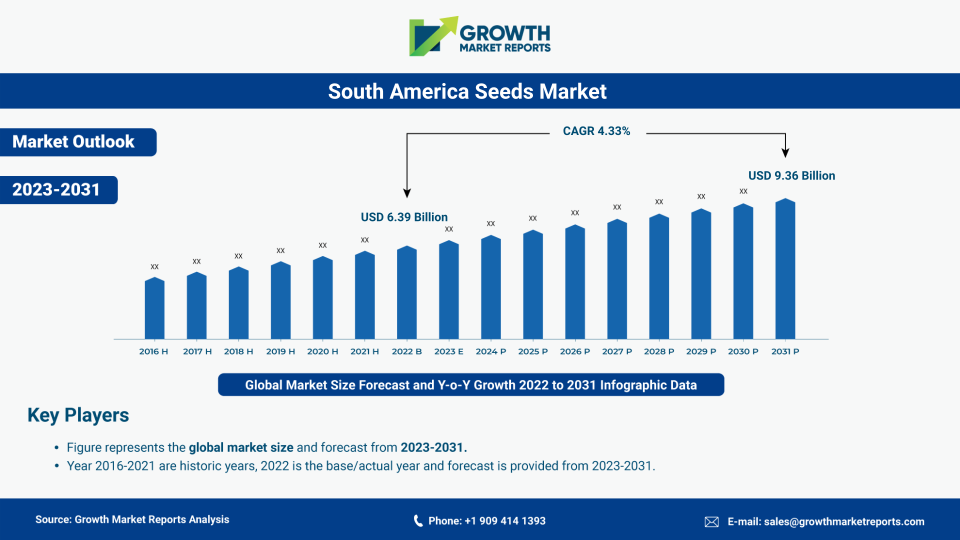
According to our latest research, the global seeds market size reached USD 72.4 billion in 2024, driven by rapid advancements in agricultural biotechnology and increasing demand for high-yielding crop varieties. The market is expected to grow at a robust CAGR of 7.1% from 2025 to 2033, reaching a projected value of USD 134.5 billion by 2033. Major growth factors include rising food security concerns, expanding global population, and the need for sustainable agricultural practices. This comprehensive analysis reflects the latest market dynamics, trends, and forecasts as per our 2025 research findings.
One of the primary growth drivers for the global seeds market is the escalating demand for food, which is directly linked to the rapid increase in global population. As the worldÂ’s population is expected to surpass 9 billion by 2050, the pressure to produce more food using limited arable land has intensified. This scenario has led to a surge in the adoption of high-yielding and hybrid seeds, which offer better productivity and resistance to pests and diseases. Additionally, the increasing awareness among farmers regarding the benefits of improved seed varieties, such as drought tolerance, enhanced nutritional value, and shorter growing cycles, has significantly contributed to the expansion of the seeds market. Governments and international bodies are also playing a crucial role by promoting the use of certified seeds and providing subsidies, further fueling market growth.
Another significant factor propelling the seeds market is the rapid advancements in agricultural biotechnology, particularly in the development of genetically modified (GM) seeds. The adoption of GM seeds has revolutionized modern agriculture by enabling crops to withstand biotic and abiotic stresses, thereby reducing crop losses and increasing farm profitability. The integration of cutting-edge technologies such as CRISPR gene editing, marker-assisted selection, and precision breeding has further enhanced the efficiency of seed development processes. These technological innovations have not only improved crop yields but also contributed to sustainable farming practices by reducing the reliance on chemical inputs. As a result, seed companies are heavily investing in research and development to introduce new and improved seed varieties, addressing both farmer and consumer needs.
Genetically Modified Seed technology has played a pivotal role in transforming the agricultural landscape. By incorporating specific traits such as herbicide tolerance and pest resistance, GM seeds have enabled farmers to achieve higher yields and reduce dependency on chemical pesticides. This innovation has not only contributed to increased farm profitability but also supported sustainable farming practices by minimizing environmental impact. As the global population continues to grow, the demand for GM seeds is expected to rise, driven by the need to enhance food security and adapt to changing climatic conditions. Despite facing regulatory challenges and public perception issues, the adoption of GM seeds is gaining momentum in regions with supportive policies, offering a promising avenue for future market growth.
The growing trend of sustainable and organic farming is also shaping the seeds market landscape. With increasing consumer preference for organic and non-GMO food products, seed manufacturers are diversifying their product portfolios to cater to this segment. The demand for untreated, open-pollinated, and heirloom seeds is witnessing a steady rise, especially in developed markets such as North America and Europe. Furthermore, the expansion of horticultural crops, driven by the rising consumption of fruits and vegetables, is creating new opportunities for seed companies. The development of climate-resilient seed varieties that can adapt to changing environmental conditions is another area gaining traction, ensuring long-term market sustainability.
Regionally, the Asia Pacific region dominates the global seeds market, accounting for the largest share in 2024, followed closely by North America and Europe. The rapid adoption of advanced agricultural practices, increasing government support, and large-scale cultivation of cereals and grains in countries like China and India are key factors driving the market in Asia Pacific. Meanwhile, North America remains a hub for technological innovation and GM seed adoption, while Europe is witnessing steady growth due to the rising demand for organic and specialty seeds. Latin America and the Middle East & Africa are emerging as promising markets, supported by expanding agricultural activities and increasing investments in the seed sector.
The seeds market is segmented by type into cereals & grains, oilseeds & pulses, fruits & vegetables, and others, each contributing distinctively to overall market growth. Cereals & grains represent the largest segment, driven by the extensive cultivation of crops such as wheat, rice, corn, and barley globally. These crops form the staple diet of a significant portion of the worldÂ’s population, making their productivity a top priority for both farmers and policymakers. The growing demand for high-yielding and disease-resistant cereal seeds has led to substantial investments in seed technology and breeding programs. In addition, the increasing use of cereals in animal feed and biofuel production is further boosting the demand for quality seeds in this segment.
Oilseeds & pulses constitute another crucial segment, with crops like soybean, sunflower, canola, and various pulses witnessing robust demand. The rising consumption of vegetable oils and plant-based protein sources, particularly in developing regions, has spurred the need for improved seed varieties that offer higher oil content and better resistance to pests. Pulses, being a primary protein source in vegetarian diets, are gaining prominence, especially in regions like Asia and Africa. Seed companies are focusing on developing varieties that are not only high-yielding but also climate-resilient, ensuring consistent production despite fluctuating weather patterns.
Fruits & vegetables represent a rapidly growing segment within the seeds market, fueled by changing dietary preferences and the increasing awareness of the health benefits associated with fresh produce. The demand for hybrid and disease-resistant fruit and vegetable seeds is on the rise, as farmers seek to maximize yields and minimize losses due to pests and diseases. Additionally, the trend towards urban farming and protected cultivation methods, such as greenhouses and hydroponics, is driving innovation in this segment. Seed manufacturers are introducing varieties tailored for these modern farming systems, offering attributes like faster maturation, uniformity, and improved shelf life.
The others category encompasses seeds for crops such as forage, fiber, and ornamental plants, which, while smaller in market share, are essential for specific agricultural and industrial applications. Forage seeds are critical for livestock feed, particularly in regions with large dairy and meat industries. Fiber crops like cotton are vital for the textile industry, and the demand for high-quality, pest-resistant cotton seeds remains strong. Ornamental plant seeds cater to the landscaping and horticulture markets, which are experiencing growth due to rising urbanization and the increasing popularity of home gardening. Overall, the diversity in crop types within the seeds market ensures a broad spectrum of growth opportunities across different agricultural sectors.
| Attributes | Details |
| Report Title | Seeds Market Research Report 2033 |
| By Type | Cereals & Grains, Oilseeds & Pulses, Fruits & Vegetables, Others |
| By Trait | Genetically Modified, Conventional |
| By Crop Type | Field Crops, Horticultural Crops, Turf & Ornamental |
| By Treatment | Treated, Non-Treated |
| By Availability | Commercial, Saved |
| Regions Covered | North America, Europe, APAC, Latin America, MEA |
| Base Year | 2024 |
| Historic Data | 2018-2023 |
| Forecast Period | 2025-2033 |
| Number of Pages | 281 |
| Number of Tables & Figures | 253 |
| Customization Available | Yes, the report can be customized as per your need. |
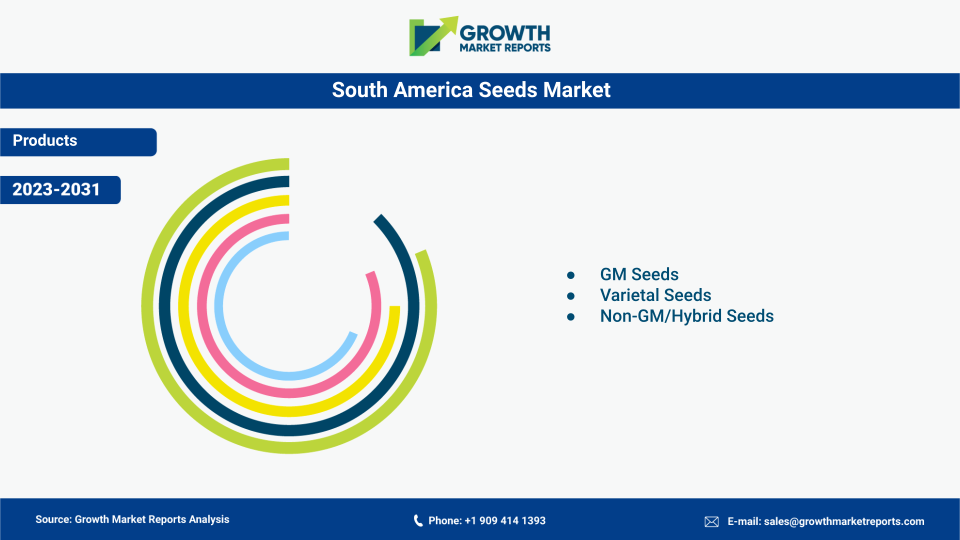
The seeds market is broadly categorized by trait into genetically modified (GM) and conventional seeds, each segment reflecting unique market dynamics and consumer preferences. Genetically modified seeds have revolutionized modern agriculture by offering traits such as herbicide tolerance, insect resistance, and improved nutritional profiles. The adoption of GM seeds is particularly high in regions like North America, South America, and parts of Asia, where regulatory frameworks are supportive and farmers are keen to enhance productivity and profitability. The ability of GM seeds to withstand biotic and abiotic stresses has significantly reduced crop losses, leading to higher yields and lower production costs. However, the market for GM seeds is not without challenges, including regulatory hurdles, public perception issues, and concerns over biodiversity.
Conventional seeds continue to hold a substantial share of the global market, especially in regions where GM crops face regulatory restrictions or consumer resistance. These seeds are developed through traditional breeding methods, focusing on attributes such as yield, disease resistance, and adaptability to local agro-climatic conditions. The demand for conventional seeds is particularly strong in Europe, where stringent regulations limit the cultivation of GM crops, and in organic farming systems that prohibit the use of genetically modified organisms. Seed companies are investing in advanced breeding techniques, such as marker-assisted selection and hybridization, to enhance the performance of conventional seeds and meet evolving market demands.
The debate between GM and conventional seeds is also influenced by consumer preferences and market trends. In recent years, there has been a growing demand for non-GMO and organic food products, particularly in developed markets. This trend has prompted seed manufacturers to expand their portfolios to include non-GMO and organic-certified seeds, catering to health-conscious consumers and the burgeoning organic agriculture sector. At the same time, the need to address global food security challenges continues to drive research and innovation in both GM and conventional seed segments.
Regulatory policies play a pivotal role in shaping the trait segment of the seeds market. Countries with favorable regulatory environments for biotechnology, such as the United States, Brazil, and Argentina, have witnessed rapid adoption of GM seeds. In contrast, regions with strict regulations or bans on GM crops, such as the European Union and certain Asian countries, continue to rely heavily on conventional seeds. The evolving regulatory landscape, coupled with ongoing scientific advancements, is expected to influence the trajectory of both GM and conventional seed markets in the coming years.
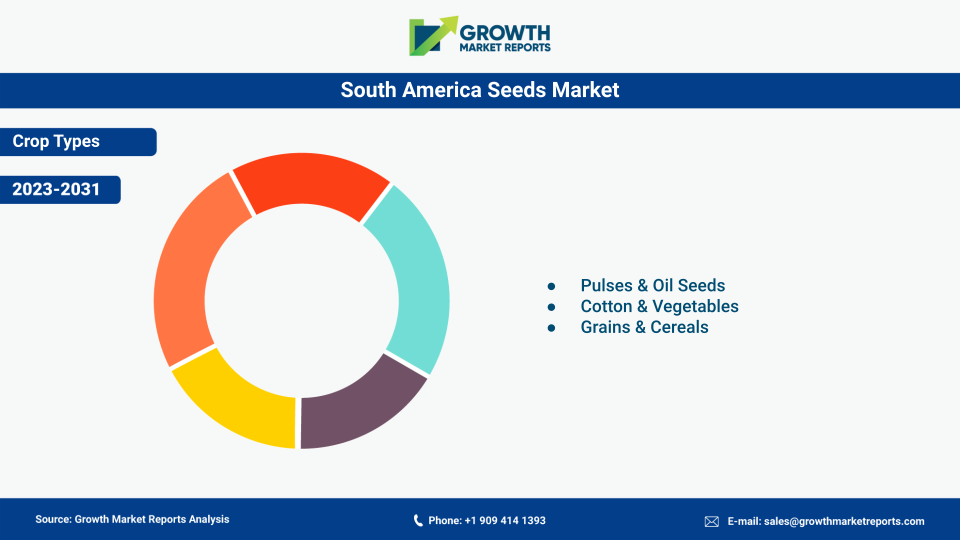
The seeds market is segmented by crop type into field crops, horticultural crops, and turf & ornamental crops, each serving distinct agricultural and commercial needs. Field crops, which include cereals, grains, oilseeds, and pulses, dominate the market due to their extensive cultivation and critical role in global food security. These crops are the backbone of the agricultural sector, providing staple foods, animal feed, and raw materials for various industries. The demand for high-yielding, disease-resistant, and climate-resilient field crop seeds is driving significant investments in research and development, particularly in major agricultural economies such as the United States, China, Brazil, and India.
Horticultural crops encompass fruits, vegetables, and other specialty crops, and represent a rapidly expanding segment within the seeds market. The rising consumer preference for fresh, healthy, and diverse food options has led to increased cultivation of horticultural crops, both in open fields and controlled environments such as greenhouses. Seed companies are focusing on developing hybrid and disease-resistant varieties that offer improved yield, taste, appearance, and shelf life. The growth of the horticultural crops segment is also supported by the expansion of urban agriculture, vertical farming, and export-oriented production systems, which require specialized seed varieties tailored to specific growing conditions and market requirements.
The turf & ornamental crops segment, while smaller in comparison to field and horticultural crops, plays a vital role in landscaping, sports, and recreational industries. Turf seeds are essential for establishing and maintaining lawns, golf courses, sports fields, and parks, particularly in urban and suburban areas. Ornamental plant seeds cater to the growing demand for aesthetic landscaping, home gardening, and floriculture. The increasing popularity of green spaces, both in residential and commercial settings, is driving the demand for high-quality turf and ornamental seeds. Seed companies are innovating to develop varieties that offer attributes such as drought tolerance, disease resistance, and vibrant colors, meeting the evolving needs of landscapers and consumers.
Each crop type segment within the seeds market presents unique challenges and opportunities, influenced by factors such as climate, soil conditions, market demand, and regulatory policies. The ongoing shift towards sustainable and precision agriculture is prompting seed companies to develop crop-specific solutions that enhance productivity while minimizing environmental impact. As global agricultural systems continue to evolve, the demand for specialized seed varieties across field, horticultural, and turf & ornamental crops is expected to remain strong, driving overall market growth.
Seed treatment is a critical factor influencing the performance and value of seeds in the global market. The seeds market is segmented by treatment into treated and non-treated seeds, each offering distinct benefits and catering to different farming practices. Treated seeds are coated or infused with chemical or biological agents that protect them from pests, diseases, and environmental stresses during the early stages of growth. The use of treated seeds has gained significant traction among commercial farmers seeking to maximize germination rates, improve crop establishment, and reduce the need for additional pesticide applications. Advancements in seed treatment technologies, including the use of bio-based and environmentally friendly agents, are further enhancing the appeal of treated seeds.
The adoption of treated seeds is particularly high in regions with intensive farming practices and large-scale commercial agriculture, such as North America, Europe, and parts of Asia. Seed companies are collaborating with agrochemical manufacturers to develop integrated seed treatment solutions that offer multiple layers of protection and support sustainable farming practices. The increasing focus on integrated pest management (IPM) and the need to comply with stringent environmental regulations are also driving the demand for treated seeds. Farmers are recognizing the economic and agronomic benefits of using treated seeds, including higher yields, reduced crop losses, and improved resource use efficiency.
Non-treated seeds, on the other hand, are preferred by organic farmers and those adhering to traditional or low-input farming systems. These seeds are free from chemical treatments and are often used in organic agriculture, where the use of synthetic pesticides and fungicides is prohibited. The demand for non-treated seeds is growing in response to the rising consumer preference for organic and non-GMO food products, particularly in developed markets. Seed companies are expanding their offerings to include untreated and organically certified seeds, catering to the specific needs of organic and smallholder farmers.
The choice between treated and non-treated seeds is influenced by factors such as crop type, farming system, regulatory environment, and market requirements. While treated seeds offer clear advantages in terms of crop protection and yield enhancement, non-treated seeds play a crucial role in supporting organic and sustainable agriculture. The ongoing innovation in seed treatment technologies, coupled with evolving consumer and regulatory preferences, is expected to shape the future trajectory of this segment within the seeds market.
The seeds market is segmented by availability into commercial and saved seeds, reflecting different approaches to seed sourcing and usage among farmers. Commercial seeds are produced and distributed by seed companies, often featuring advanced traits such as hybrid vigor, disease resistance, and improved yield potential. The use of commercial seeds has become increasingly prevalent, particularly among commercial and large-scale farmers seeking to optimize productivity and profitability. Seed companies invest heavily in research and development to create new and improved varieties, offering farmers access to the latest advancements in seed technology.
The adoption of commercial seeds is driven by factors such as government policies, access to credit and extension services, and the availability of high-quality seeds. In many countries, governments and international organizations promote the use of certified commercial seeds through subsidies, awareness campaigns, and quality assurance programs. The growth of contract farming and integrated supply chains has also facilitated the widespread use of commercial seeds, ensuring consistent quality and traceability from farm to market. As a result, the commercial seeds segment accounts for a significant share of the global seeds market, particularly in developed and emerging economies.
Saved seeds, also known as farm-saved or farmer-saved seeds, are seeds that farmers retain from their own harvests for replanting in subsequent seasons. This traditional practice remains common in many developing regions, where access to commercial seeds may be limited by cost, availability, or cultural preferences. Saved seeds offer farmers greater autonomy and reduce input costs, but they may lack the improved traits and quality assurance associated with commercial seeds. The use of saved seeds is more prevalent among smallholder and subsistence farmers, particularly in regions with limited access to formal seed systems.
The balance between commercial and saved seeds is influenced by factors such as farm size, crop type, socioeconomic conditions, and government policies. While the shift towards commercial seeds is expected to continue, particularly in regions experiencing agricultural modernization, saved seeds will remain an important component of traditional and resource-constrained farming systems. Efforts to improve the quality and performance of saved seeds through community-based seed banks and participatory breeding programs are also gaining traction, supporting the resilience and sustainability of local seed systems.
The seeds market presents a host of opportunities for growth, driven by technological advancements and the evolving needs of the global agricultural sector. One of the most promising opportunities lies in the development and commercialization of climate-resilient and high-yielding seed varieties. As climate change continues to pose significant challenges to agricultural productivity, there is a growing demand for seeds that can withstand extreme weather conditions, pests, and diseases. Seed companies have a unique opportunity to leverage cutting-edge technologies such as gene editing, molecular breeding, and digital agriculture to create innovative seed solutions tailored to diverse agro-ecological zones. The expansion of precision agriculture and the integration of data-driven decision-making tools further enhance the potential for seed companies to deliver customized and high-performance products to farmers worldwide.
Another key opportunity in the seeds market is the rising demand for organic and specialty seeds, driven by changing consumer preferences and the growth of the organic food sector. The increasing awareness of health and environmental issues has led to a surge in demand for non-GMO, untreated, and organically certified seeds. Seed companies can capitalize on this trend by diversifying their product portfolios and investing in the development of seeds specifically designed for organic and sustainable farming systems. The growth of urban agriculture, vertical farming, and protected cultivation also presents new avenues for innovation, as these sectors require specialized seed varieties with unique attributes such as compact growth, fast maturation, and resistance to indoor pests and diseases.
Despite the numerous opportunities, the seeds market faces several restraining factors that could impede its growth. One of the major challenges is the complex and evolving regulatory landscape governing the development, commercialization, and use of genetically modified and treated seeds. Stringent regulations, lengthy approval processes, and public resistance to GM crops in certain regions can hinder the adoption of advanced seed technologies and limit market expansion. Additionally, issues related to intellectual property rights, seed piracy, and the concentration of market power among a few large seed companies pose challenges for smaller players and may impact market competitiveness. Addressing these restraining factors will require coordinated efforts from industry stakeholders, policymakers, and research institutions to ensure a balanced and sustainable growth trajectory for the seeds market.
The Asia Pacific region leads the global seeds market, accounting for approximately USD 26.8 billion in 2024, driven by the large-scale cultivation of cereals, grains, and horticultural crops in countries such as China, India, and Southeast Asia. The regionÂ’s dominance is attributed to its vast agricultural land, favorable government policies, and the rapid adoption of advanced seed technologies. The increasing demand for high-yielding and hybrid seeds, coupled with rising investments in agricultural research and infrastructure, is expected to sustain strong market growth in Asia Pacific. The region is projected to register a CAGR of 8.1% through 2033, outpacing other regions and reinforcing its position as a key growth engine for the global seeds market.
North America holds the second-largest share of the global seeds market, valued at USD 18.5 billion in 2024. The region is characterized by its advanced agricultural practices, high adoption rates of genetically modified and treated seeds, and a strong focus on innovation and sustainability. The United States is a major contributor to the North American seeds market, supported by a well-established seed industry, robust research infrastructure, and favorable regulatory environment. The demand for specialty and organic seeds is also on the rise, reflecting changing consumer preferences and the growth of the organic food sector. North America is expected to maintain steady growth over the forecast period, driven by ongoing technological advancements and the expansion of sustainable agriculture.
EuropeÂ’s seeds market reached USD 13.7 billion in 2024, with growth driven by the increasing demand for organic and non-GMO seeds, particularly in Western European countries. The regionÂ’s stringent regulations on GM crops have led to a strong emphasis on conventional breeding techniques and the development of high-quality, disease-resistant seed varieties. The expansion of horticultural and specialty crop production, coupled with growing investments in research and development, is supporting market growth in Europe. Latin America and the Middle East & Africa, with market sizes of USD 8.1 billion and USD 5.3 billion respectively in 2024, are emerging as promising markets, fueled by expanding agricultural activities, government support, and increasing investments in the seed sector. These regions offer significant growth potential, particularly in the cultivation of field and horticultural crops.
The global seeds market is characterized by intense competition, with a mix of multinational corporations, regional players, and emerging startups vying for market share. The competitive landscape is shaped by factors such as technological innovation, product differentiation, strategic partnerships, and mergers and acquisitions. Leading seed companies are investing heavily in research and development to introduce new and improved seed varieties that address the evolving needs of farmers and consumers. The ability to offer a diverse and high-quality product portfolio, coupled with robust distribution networks and strong brand recognition, is critical for maintaining a competitive edge in this dynamic market.
Intellectual property rights and access to proprietary technologies play a significant role in shaping the competitive dynamics of the seeds market. Major players often hold extensive portfolios of patents and licenses, enabling them to dominate key segments such as genetically modified and hybrid seeds. The concentration of market power among a few large companies has raised concerns about market consolidation and its impact on seed diversity, pricing, and farmer choice. However, the emergence of regional and local seed companies, particularly in developing markets, is contributing to increased competition and innovation at the grassroots level.
Strategic collaborations and partnerships are common in the seeds market, as companies seek to leverage complementary strengths and expand their market reach. Collaborations with research institutions, universities, and agrochemical companies are enabling seed companies to accelerate product development and introduce cutting-edge technologies. Mergers and acquisitions are also prevalent, as companies aim to strengthen their market position, access new markets, and diversify their product offerings. The ongoing digital transformation of agriculture, including the use of data analytics, artificial intelligence, and precision farming tools, is creating new opportunities for seed companies to enhance their value proposition and deliver tailored solutions to farmers.
Some of the major companies operating in the global seeds market include Bayer Crop Science AG, Corteva Agriscience, Syngenta Group, BASF SE, KWS SAAT SE & Co. KGaA, Sakata Seed Corporation, DLF Seeds A/S, and Rijk Zwaan Zaadteelt en Zaadhandel B.V.. Bayer Crop Science AG, a global leader in agricultural solutions, offers a wide range of seeds and traits, with a strong focus on innovation and sustainability. Corteva Agriscience, formed through the merger of Dow AgroSciences and DuPont Pioneer, is known for its extensive portfolio of hybrid and genetically modified seeds, as well as its commitment to digital agriculture. Syngenta Group, a major player in crop protection and seeds, is investing in advanced breeding technologies and expanding its presence in emerging markets.
BASF SE, another key player, is actively involved in the development of hybrid and specialty seeds, leveraging its expertise in agricultural solutions and biotechnology. KWS SAAT SE & Co. KGaA is renowned for its focus on sugar beet, corn, and cereal seeds, with a strong emphasis on research and innovation. Sakata Seed Corporation and Rijk Zwaan Zaadteelt en Zaadhandel B.V. are prominent in the horticultural seeds segment, offering a diverse range of vegetable and flower seeds for global markets. DLF Seeds A/S is a leading supplier of turf and forage seeds, catering to the needs of the landscaping and livestock sectors. These companies are continuously expanding their product portfolios, investing in R&D, and forging strategic partnerships to strengthen their market position and drive future growth.
The Seeds market has been segmented on the basis of
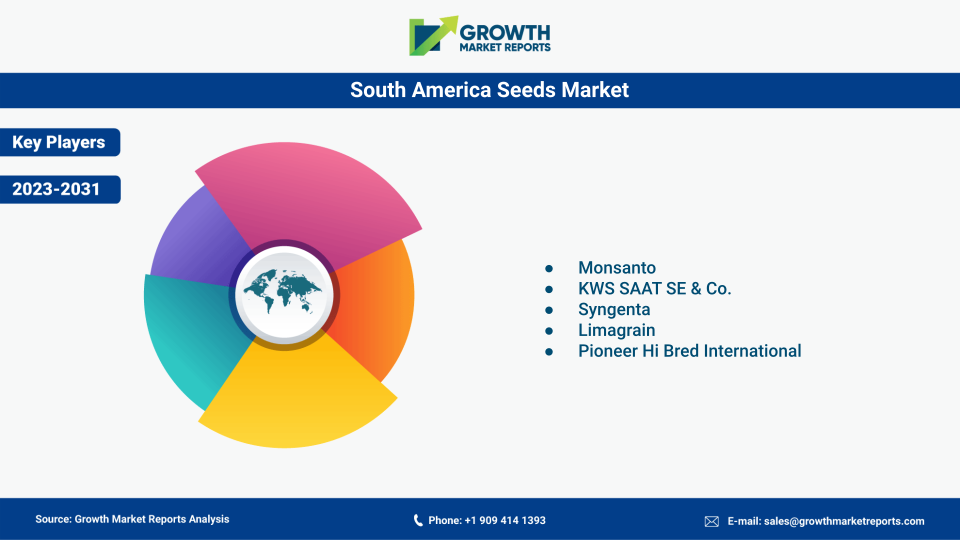
The key players competing in the South America seed market are Monsanto; KWS SAAT SE & Co.; Syngenta; Limagrain; and Pioneer Hi Bred International.
Companies are investing in increasing their production capacities and engaging in partnerships to expand their market share.
Key trends include the development of climate-resilient and high-yielding seeds, rising demand for organic and non-GMO seeds, growth in urban and vertical farming, and technological advancements such as gene editing and precision breeding.
Major players include Bayer Crop Science AG, Corteva Agriscience, Syngenta Group, BASF SE, KWS SAAT SE & Co. KGaA, Sakata Seed Corporation, DLF Seeds, and Rijk Zwaan, among others.
Commercial seeds are produced by seed companies and offer advanced traits, while saved seeds are retained by farmers from previous harvests. Commercial seeds are prevalent in modern agriculture, whereas saved seeds are common in traditional and resource-constrained farming.
Treated seeds are coated with chemical or biological agents to protect against pests and diseases, improving germination and yield. Non-treated seeds are free from such treatments and are preferred in organic and traditional farming systems.
The market is segmented into field crops (cereals, grains, oilseeds, pulses), horticultural crops (fruits, vegetables, specialty crops), and turf & ornamental crops (for landscaping and recreation).
Genetically modified seeds are engineered for traits like pest resistance and higher yields, while conventional seeds are developed through traditional breeding methods. GM seeds are widely adopted in the Americas and parts of Asia, whereas conventional seeds are preferred in regions with strict GM regulations or for organic farming.
The seeds market is segmented by type into cereals & grains, oilseeds & pulses, fruits & vegetables, and others (including forage, fiber, and ornamental plant seeds).
Asia Pacific leads the global seeds market, followed by North America and Europe. Latin America and the Middle East & Africa are emerging as promising markets due to expanding agricultural activities.
Key growth drivers include rising food security concerns, increasing global population, advancements in agricultural biotechnology, demand for high-yielding and hybrid seeds, and the adoption of sustainable agricultural practices.
The global seeds market reached USD 72.4 billion in 2024 and is projected to grow at a CAGR of 7.1% from 2025 to 2033, reaching USD 134.5 billion by 2033.