Cannabis Cultivation Market Research Report 2033

Cannabis Cultivation Market Research Report 2033

Segments - by Cultivation Method (Indoor, Outdoor, Greenhouse), by Application (Medical, Recreational, Industrial Hemp), by Genetics (Hybrid, Sativa, Indica), by Facility Size (Small, Medium, Large)

https://growthmarketreports.com/Anuradha
Author : Anuradha B. More
https://growthmarketreports.com/Vaibhav
Fact-checked by : Vaibhav Chandola
https://growthmarketreports.com/Shruti
Editor : Shruti Bhat

Upcoming | Report ID :FB-198 | 4.9 Rating | 17 Reviews | 284 Pages | Format : Docx PDF

Report Description


Cannabis Cultivation Market Outlook

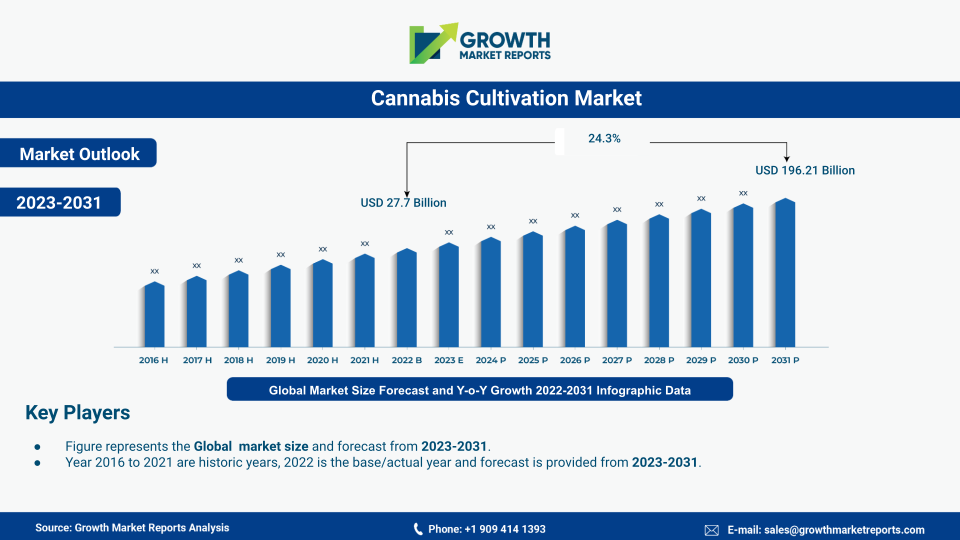
According to our latest research, the global cannabis cultivation market size reached USD 47.6 billion in 2024, demonstrating robust expansion driven by regulatory shifts and growing consumer demand. The market is anticipated to expand at a CAGR of 18.2% from 2025 to 2033, reaching a forecasted value of USD 215.8 billion by 2033. This impressive growth is primarily fueled by the increasing legalization of cannabis for both medical and recreational use, as well as the adoption of advanced cultivation technologies and the rising acceptance of cannabis-derived products worldwide. As per our latest research, the industry’s trajectory is defined by evolving legislation, significant investments in cultivation infrastructure, and a broadening scope of applications across medical, recreational, and industrial domains.

A primary growth driver for the cannabis cultivation market is the accelerating pace of cannabis legalization across multiple regions, especially in North America and Europe. Governments are increasingly recognizing the economic and social benefits of regulated cannabis markets, leading to a surge in both medicinal and recreational cannabis production. This regulatory evolution has not only encouraged established players to expand their operations but has also attracted new entrants and investors eager to tap into the burgeoning demand. Moreover, the gradual normalization of cannabis use, supported by scientific research highlighting its therapeutic benefits, is fostering a supportive environment for market expansion. As more countries move towards decriminalization and legalization, the market is expected to witness a steady influx of capital, technological innovation, and talent, further propelling growth.

Another significant factor propelling the cannabis cultivation market is the rapid advancement in cultivation technologies and methodologies. Modern growers are increasingly adopting precision agriculture, hydroponics, and climate-controlled environments to optimize yield, quality, and consistency. The integration of data analytics, automation, and artificial intelligence into cultivation processes is enabling producers to monitor plant health, manage resource utilization, and predict harvest outcomes with unprecedented accuracy. These technological advancements are not only enhancing operational efficiency but are also enabling scalability, which is crucial for meeting the rising global demand. Additionally, the development of disease-resistant and high-yielding cannabis strains through genetic engineering is further boosting productivity and profitability for cultivators.

The expanding range of cannabis applications is also a key growth catalyst for the market. Beyond traditional medical and recreational uses, cannabis is increasingly being utilized in wellness, cosmetics, food and beverage, and industrial hemp sectors. The rising consumer preference for natural and plant-based products, coupled with ongoing research into the therapeutic potential of cannabinoids, is opening new avenues for product innovation and market penetration. The industrial hemp segment, in particular, is gaining momentum due to its diverse applications in textiles, construction, bioplastics, and nutraceuticals. This diversification is mitigating market risks and providing cultivators with multiple revenue streams, thereby enhancing the overall attractiveness of the cannabis cultivation market.

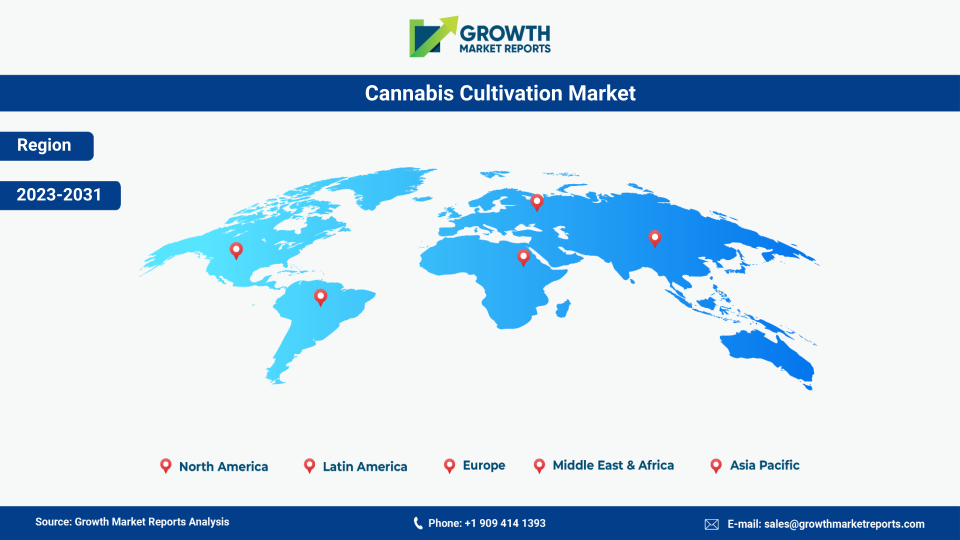
From a regional perspective, North America continues to dominate the global cannabis cultivation market, accounting for the largest share in 2024. The region’s leadership is underpinned by progressive regulatory frameworks in the United States and Canada, robust investment inflows, and a well-established supply chain infrastructure. Europe is emerging as a significant market, driven by the legalization of medical cannabis in several countries and increasing research activities. Meanwhile, Asia Pacific and Latin America are witnessing steady growth, supported by evolving regulations and rising consumer awareness. The Middle East & Africa region, though still nascent, is poised for future expansion as regulatory landscapes evolve and investment in cultivation infrastructure increases.

Global Cannabis Cultivation Industry Outlook

Cultivation Method Analysis

The cannabis cultivation market is segmented by cultivation method into indoor, outdoor, and greenhouse growing, each presenting distinct advantages and challenges. Indoor cultivation, which accounted for a substantial portion of the market in 2024, is favored for its ability to provide year-round production, precise environmental control, and superior product consistency. Indoor growers leverage advanced lighting, climate control, and nutrient delivery systems to optimize plant health and cannabinoid profiles. However, the high capital and operational costs associated with indoor facilities, particularly energy consumption, remain a significant consideration. Despite these costs, the demand for premium-grade cannabis, especially for medical use, continues to drive the adoption of indoor cultivation. Producers are increasingly investing in energy-efficient technologies and renewable energy sources to mitigate operational expenses and reduce environmental impact.

Outdoor cultivation, while less capital-intensive, is highly dependent on climatic conditions and is more susceptible to pests, diseases, and environmental fluctuations. Nevertheless, outdoor growing offers significant advantages in terms of scalability and cost-effectiveness, making it an attractive option for large-scale producers and industrial hemp cultivators. The use of organic farming practices and sustainable land management techniques is gaining traction among outdoor growers, aligning with the rising consumer preference for eco-friendly and naturally cultivated products. However, regulatory restrictions and quality control challenges in some regions continue to limit the widespread adoption of outdoor cultivation for high-value medical and recreational cannabis.

Greenhouse cultivation is emerging as a hybrid approach, combining the benefits of both indoor and outdoor methods. Greenhouses offer controlled environments with natural sunlight, reducing energy costs while enabling multiple harvests per year. The adoption of advanced greenhouse technologies, such as automated shading, irrigation, and climate management systems, is enhancing productivity and product quality. Greenhouse cultivation is particularly popular in regions with favorable climates and supportive regulatory frameworks, allowing growers to strike a balance between cost efficiency and quality assurance. As sustainability concerns become increasingly important, greenhouse operations are expected to gain further traction, supported by ongoing investments in infrastructure and innovation.

The choice of cultivation method is often influenced by regulatory requirements, target market segments, and the desired product characteristics. Medical cannabis producers, for instance, prioritize consistency and purity, favoring indoor and greenhouse methods, while industrial hemp cultivators typically opt for outdoor growing to maximize scale and minimize costs. The ongoing evolution of cultivation technologies and best practices is enabling producers to optimize their operations and adapt to changing market dynamics. As the cannabis cultivation market matures, the integration of sustainable and precision agriculture practices across all cultivation methods will be critical for ensuring long-term profitability and environmental stewardship.

Report Scope

Attributes Details
Report Title Cannabis Cultivation Market Research Report 2033
By Cultivation Method Indoor, Outdoor, Greenhouse
By Application Medical, Recreational, Industrial Hemp
By Genetics Hybrid, Sativa, Indica
By Facility Size Small, Medium, Large
Regions Covered North America, Europe, APAC, Latin America, MEA
Base Year 2024
Historic Data 2018-2023
Forecast Period 2025-2033
Number of Pages 284
Number of Tables & Figures 307
Customization Available Yes, the report can be customized as per your need.

Application Analysis

The cannabis cultivation market is broadly segmented by application into medical, recreational, and industrial hemp, with each segment exhibiting unique growth dynamics and regulatory considerations. The medical application segment remains a dominant force, fueled by increasing recognition of cannabis’s therapeutic potential in managing conditions such as chronic pain, epilepsy, multiple sclerosis, and cancer-related symptoms. The expansion of medical cannabis programs in North America, Europe, and parts of Asia Pacific has driven demand for high-quality, pharmaceutical-grade cannabis. Producers are investing heavily in research and development, clinical trials, and quality assurance to meet stringent regulatory standards and gain a competitive edge in this lucrative segment.

Recreational cannabis is another major application area, particularly in regions where legalization has enabled the establishment of regulated adult-use markets. The recreational segment is characterized by a diverse range of products, including dried flower, edibles, concentrates, and beverages, catering to varying consumer preferences. Branding, product innovation, and retail experience are key differentiators in this highly competitive segment. The growing social acceptance of recreational cannabis, coupled with evolving consumption patterns and the emergence of new product formats, is expected to drive robust growth in the coming years. Market participants are focusing on expanding their product portfolios and distribution networks to capitalize on the expanding consumer base.

The industrial hemp segment is gaining significant momentum, driven by the rising demand for sustainable raw materials across multiple industries. Hemp’s versatility as a source of fiber, seeds, oil, and cannabinoids has positioned it as a key input for textiles, construction materials, bioplastics, food supplements, and personal care products. The relaxation of regulations surrounding hemp cultivation in countries such as the United States, Canada, and China has spurred investment in large-scale outdoor and greenhouse operations. Producers are leveraging advances in genetics and agronomy to enhance yield, pest resistance, and cannabinoid content, unlocking new opportunities for value-added products and revenue diversification.

Each application segment faces distinct regulatory, quality assurance, and market access challenges. Medical cannabis producers must navigate complex approval processes and comply with rigorous safety and efficacy standards, while recreational operators contend with shifting consumer preferences, taxation, and advertising restrictions. Industrial hemp growers are focused on optimizing agronomic practices and supply chain integration to compete with traditional raw materials. The continued expansion and diversification of cannabis applications are expected to drive sustained growth and innovation across the cultivation market, supported by ongoing research, regulatory clarity, and consumer education initiatives.

Genetics Analysis

The cannabis cultivation market is further segmented by genetics into hybrid, sativa, and indica strains, each offering unique agronomic and product characteristics. Hybrid strains, which accounted for the largest market share in 2024, are bred to combine desirable traits from both sativa and indica varieties, such as yield, cannabinoid profile, and disease resistance. The popularity of hybrid genetics is driven by their versatility and adaptability to different cultivation environments and end-use applications. Producers are increasingly investing in genetic research and breeding programs to develop proprietary hybrid strains that cater to specific medical, recreational, and industrial needs.

Sativa strains are valued for their uplifting and energizing effects, making them popular among recreational users seeking daytime use and creative stimulation. Sativa plants typically require longer flowering periods and thrive in warm, sunny climates, making them well-suited for outdoor and greenhouse cultivation. However, sativa strains can be more challenging to cultivate indoors due to their height and sensitivity to environmental fluctuations. Advances in breeding and cultivation techniques are enabling growers to overcome these challenges and optimize sativa production for both flower and extract markets.

Indica strains, on the other hand, are favored for their relaxing and sedative effects, making them ideal for medical applications such as pain relief, insomnia, and anxiety management. Indica plants are generally shorter and bushier, with faster flowering times and higher yield potential in controlled environments. The compact growth habit of indica strains makes them particularly suitable for indoor and greenhouse cultivation, where space optimization is critical. Producers are leveraging genetic selection and tissue culture techniques to enhance the consistency, potency, and disease resistance of indica varieties, ensuring reliable supply for both medical and recreational markets.

The ongoing evolution of cannabis genetics is shaping the future of the cultivation market, enabling producers to tailor plant characteristics to meet specific market demands and regulatory requirements. The development of disease-resistant, high-yielding, and cannabinoid-rich strains is enhancing productivity and profitability across all cultivation methods and applications. Intellectual property protection for proprietary genetics is also emerging as a key competitive differentiator, driving investment in breeding programs and genetic research. As consumer preferences continue to evolve and new therapeutic applications are discovered, the demand for innovative and specialized cannabis genetics is expected to remain strong.

Facility Size Analysis

Facility size is a critical determinant of operational efficiency, scalability, and market competitiveness in the cannabis cultivation industry. The market is segmented into small, medium, and large facilities, each catering to different business models and market segments. Small-scale facilities, often operated by craft growers and boutique producers, focus on niche markets and premium product offerings. These operations emphasize quality, unique genetics, and artisanal cultivation techniques, appealing to discerning consumers and medical patients seeking specific cannabinoid profiles or organic certification. While small facilities face challenges in achieving economies of scale and regulatory compliance, they benefit from flexibility, agility, and direct-to-consumer engagement.

Medium-sized facilities represent a balance between artisanal quality and commercial scale, enabling producers to serve both local and regional markets effectively. These operations typically invest in advanced cultivation technologies, quality control systems, and workforce training to optimize yield and consistency. Medium-sized growers are well-positioned to adapt to changing market dynamics, regulatory requirements, and consumer preferences, leveraging their scale to negotiate favorable supply agreements and distribution partnerships. The ability to diversify product offerings and respond quickly to emerging trends is a key advantage for medium-sized facilities in the competitive cannabis cultivation landscape.

Large-scale cultivation facilities are characterized by significant capital investment, advanced automation, and high-volume production capacity. These operations are designed to supply national and international markets, often focusing on commodity-grade cannabis for extraction, processing, and industrial applications. Large facilities benefit from economies of scale, streamlined logistics, and robust supply chain integration, enabling them to compete on price and reliability. However, the complexity of managing large-scale operations, regulatory compliance, and quality assurance presents unique challenges. Producers are increasingly adopting data-driven management systems and lean manufacturing principles to maximize efficiency and minimize operational risks.

The choice of facility size is influenced by regulatory frameworks, target market segments, access to capital, and long-term business strategy. As the cannabis cultivation market matures, consolidation and vertical integration are expected to drive the emergence of larger, more sophisticated operations, while niche and craft producers continue to play a vital role in product innovation and market differentiation. The integration of sustainable practices, renewable energy, and circular economy principles is becoming increasingly important across all facility sizes, reflecting growing stakeholder expectations for environmental and social responsibility.

Opportunities & Threats

The cannabis cultivation market presents a wealth of opportunities for stakeholders across the value chain. The ongoing legalization and normalization of cannabis use are unlocking new markets and consumer segments, driving demand for high-quality, safe, and innovative products. Advances in cultivation technologies, genetics, and agronomy are enabling producers to optimize yield, consistency, and cannabinoid profiles, opening new avenues for product differentiation and value creation. The expansion of medical cannabis programs, coupled with growing research into the therapeutic potential of cannabinoids, is creating opportunities for pharmaceutical partnerships, clinical trials, and product development. Additionally, the rising demand for sustainable and eco-friendly products is driving investment in organic cultivation, renewable energy, and circular economy initiatives, positioning the industry at the forefront of responsible agriculture.

The industrial hemp segment offers significant growth potential, driven by the versatility of hemp as a raw material for textiles, construction, bioplastics, and nutraceuticals. The relaxation of regulations surrounding hemp cultivation and processing in key markets such as the United States, Canada, and China is spurring investment in large-scale operations and supply chain integration. Producers are exploring new applications for hemp-derived cannabinoids, fibers, and seeds, leveraging advances in genetics and processing technologies to enhance quality and functionality. The emergence of hemp-based wellness, food, and personal care products is expanding the addressable market for cultivators, providing multiple revenue streams and mitigating risks associated with regulatory and market volatility in the medical and recreational segments.

Despite these opportunities, the cannabis cultivation market faces several restraining factors and threats. Regulatory uncertainty remains a significant challenge, with varying legal frameworks, licensing requirements, and quality standards across regions creating complexity and compliance risks for producers. The persistence of illicit markets, driven by high taxation and limited legal access in some jurisdictions, continues to undermine the growth of regulated cultivation and distribution channels. Market participants must also contend with price volatility, supply-demand imbalances, and evolving consumer preferences, which can impact profitability and long-term sustainability. Additionally, the environmental impact of large-scale cultivation, particularly in terms of energy consumption and water use, is attracting increased scrutiny from regulators, investors, and consumers, necessitating ongoing investment in sustainable practices and resource efficiency.

Regional Outlook

North America remains the largest and most mature regional market for cannabis cultivation, accounting for over 65% of the global market value in 2024. The United States, with its patchwork of state-level legalization, and Canada, with its fully legal national market, are the primary drivers of growth in the region. Investment in cultivation infrastructure, research and development, and supply chain integration is robust, supported by a favorable regulatory environment and strong consumer demand. The region is also at the forefront of product innovation, branding, and retail experience, setting benchmarks for quality and safety standards globally. The North American market is projected to maintain a strong growth trajectory, with a CAGR of 16.5% through 2033, reaching a forecasted value of USD 140.3 billion by the end of the forecast period.

Europe is emerging as a significant growth market for cannabis cultivation, driven by the legalization of medical cannabis in several countries and increasing investment in research and clinical trials. Germany, the United Kingdom, and the Netherlands are leading the way in regulatory reform and market development, attracting international investment and fostering innovation in cultivation and processing. The European market is characterized by stringent quality and safety standards, necessitating investment in pharmaceutical-grade production facilities and robust quality assurance systems. The rising acceptance of cannabis-derived wellness and personal care products is also contributing to market expansion. Europe’s cannabis cultivation market is expected to grow at a CAGR of 19.8% from 2025 to 2033, reaching an estimated value of USD 38.5 billion by 2033.

Asia Pacific and Latin America are poised for significant growth as regulatory landscapes evolve and consumer awareness increases. In Asia Pacific, countries such as Australia, Thailand, and New Zealand are taking steps towards legalizing medical cannabis and supporting research initiatives. The region’s large population base and growing demand for alternative therapies present substantial opportunities for market expansion. Latin America, with key markets such as Colombia, Uruguay, and Mexico, is benefiting from favorable climates, low production costs, and supportive regulatory frameworks for both medical and industrial hemp cultivation. The Middle East & Africa region, while still in the early stages of development, is expected to witness gradual growth as regulatory barriers are addressed and investment in cultivation infrastructure increases.

Cannabis Cultivation Market Statistics

Competitor Outlook

The cannabis cultivation market is characterized by intense competition, rapid innovation, and a dynamic regulatory environment. Market participants range from large, vertically integrated corporations to small-scale craft growers, each vying for market share through product quality, innovation, and brand differentiation. The competitive landscape is shaped by ongoing consolidation, with mergers and acquisitions enabling companies to achieve economies of scale, expand geographic reach, and enhance supply chain integration. Strategic partnerships, joint ventures, and licensing agreements are also common, facilitating access to new markets, technologies, and intellectual property. As the market matures, the ability to navigate regulatory complexity, maintain product consistency, and respond to evolving consumer preferences will be critical for sustained success.

Innovation is a key driver of competitive advantage in the cannabis cultivation market. Companies are investing heavily in research and development to develop proprietary genetics, optimize cultivation techniques, and introduce novel product formats. The integration of automation, data analytics, and precision agriculture is enabling producers to enhance operational efficiency, reduce costs, and improve product quality. Intellectual property protection for unique strains, cultivation methods, and processing technologies is becoming increasingly important, with leading companies building robust patent portfolios and licensing strategies to safeguard their innovations. Brand building and consumer engagement are also central to competitive positioning, particularly in the recreational and wellness segments, where differentiation and loyalty are key drivers of market share.

Sustainability and corporate social responsibility are emerging as important differentiators in the competitive landscape. Companies are increasingly adopting environmentally friendly cultivation practices, investing in renewable energy, and engaging in community development initiatives to meet stakeholder expectations and regulatory requirements. Transparency, traceability, and third-party certification are gaining prominence as consumers and regulators demand greater accountability across the supply chain. The ability to demonstrate a commitment to sustainability, quality, and social impact is expected to play a growing role in shaping competitive dynamics and brand reputation in the cannabis cultivation market.

Some of the major companies operating in the global cannabis cultivation market include Canopy Growth Corporation, Aurora Cannabis Inc., Tilray Brands, Inc., Aphria Inc. (now part of Tilray), Cronos Group Inc., GW Pharmaceuticals plc, HEXO Corp, Organigram Holdings Inc., and MedMen Enterprises Inc. These companies are at the forefront of innovation, investing in advanced cultivation technologies, genetic research, and product development to maintain their competitive edge. Canopy Growth Corporation, for example, is renowned for its extensive portfolio of proprietary genetics and global distribution network, while Aurora Cannabis has established itself as a leader in large-scale, automated cultivation and pharmaceutical-grade production. Tilray Brands, Inc. is recognized for its diversified product offerings and strategic partnerships in both medical and recreational markets.

Cronos Group Inc. and GW Pharmaceuticals plc are notable for their focus on cannabinoid-based pharmaceuticals and clinical research, leveraging intellectual property and regulatory expertise to develop novel therapies for a range of medical conditions. HEXO Corp and Organigram Holdings Inc. are known for their commitment to quality, innovation, and sustainability, with a focus on organic cultivation, advanced extraction methods, and consumer-driven product development. MedMen Enterprises Inc. has distinguished itself through its retail-focused business model and emphasis on brand experience and consumer engagement. The ongoing evolution of the competitive landscape, marked by consolidation, innovation, and international expansion, is expected to drive further growth and transformation in the global cannabis cultivation market.

Key Players

  • Canopy Growth Corporation
  • Aurora Cannabis Inc.
  • Aphria Inc.
  • Tilray Inc.
  • Cronos Group Inc.
  • GW Pharmaceuticals plc
  • MedMen Enterprises Inc.
  • Hexo Corp.
  • Organigram Holdings Inc.
  • The Green Organic Dutchman Holdings Ltd.
  • Cresco Labs Inc.
  • Curaleaf Holdings, Inc.
  • Trulieve Cannabis Corp.
  • Green Thumb Industries Inc.
  • Harvest Health & Recreation Inc.
  • TerrAscend Corp.
  • Acreage Holdings, Inc.
  • Supreme Cannabis Company, Inc.
  • Village Farms International, Inc.
  • Jushi Holdings Inc.
Cannabis Cultivation Market Overview

Segments

The Cannabis Cultivation market has been segmented on the basis of

Cultivation Method

  • Indoor
  • Outdoor
  • Greenhouse

Application

  • Medical
  • Recreational
  • Industrial Hemp

Genetics

  • Hybrid
  • Sativa
  • Indica

Facility Size

  • Small
  • Medium
  • Large

Competitive Landscape

Key players in the global cannabis cultivation market include CCanopy Growth Corporation; Aphria, Inc.; AURORA CANNABIS INC.; Maricann Inc.; Tilray Brands; The Cronos Group; Organigram Holdings Inc.; ABcann Medicinals, Inc.; Jazz Pharmaceuticals, Inc.; and Lexaria Bioscience. They are engaged in mergers& acquisitions, collaborations, agreements, and partnerships as growth strategies to strengthen their geographical presence and market share.
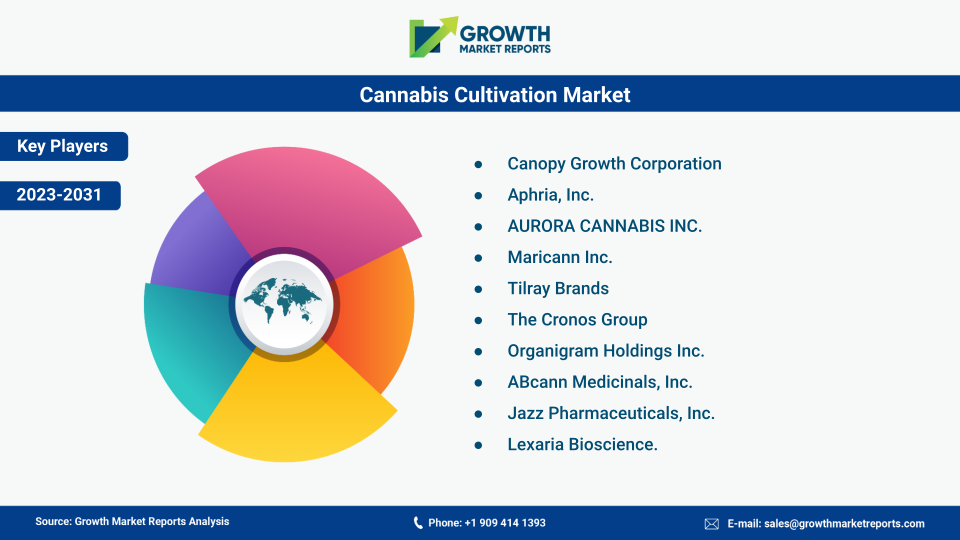

Cannabis Cultivation Market Keyplayers

Frequently Asked Questions

Opportunities include advances in genetics, precision agriculture, automation, sustainable practices, and the development of new cannabis-based products for medical, wellness, and industrial use.

Key companies include Canopy Growth Corporation, Aurora Cannabis Inc., Tilray Brands, Inc., Cronos Group Inc., GW Pharmaceuticals plc, HEXO Corp, Organigram Holdings Inc., and MedMen Enterprises Inc.

Challenges include regulatory uncertainty, illicit market competition, price volatility, supply-demand imbalances, and environmental concerns related to large-scale cultivation.

The market is segmented into hybrid, sativa, and indica strains. Hybrids combine traits from sativa and indica, sativa strains are known for uplifting effects, and indica strains are preferred for relaxation and medical applications.

Cannabis is used for medical purposes (chronic pain, epilepsy, cancer symptoms), recreational use (dried flower, edibles, concentrates), and industrial hemp (textiles, construction, bioplastics, nutraceuticals).

Cannabis is cultivated using indoor, outdoor, and greenhouse methods. Indoor cultivation offers year-round production and precise control but is costly. Outdoor cultivation is cost-effective and scalable but depends on climate. Greenhouse cultivation combines benefits of both, offering controlled environments with lower energy costs.

North America leads the global cannabis cultivation market, followed by Europe. Asia Pacific and Latin America are experiencing steady growth, while the Middle East & Africa region is in the early stages of development.

Key growth drivers include the legalization of cannabis for medical and recreational use, adoption of advanced cultivation technologies, increasing acceptance of cannabis-derived products, and expanding applications in wellness, cosmetics, food, and industrial hemp.

The cannabis cultivation market is expected to grow at a CAGR of 18.2% from 2025 to 2033, reaching an estimated value of USD 215.8 billion by 2033.

As of 2024, the global cannabis cultivation market reached USD 47.6 billion, driven by regulatory changes and increasing consumer demand.

Table Of Content

Chapter 1 Executive Summary
Chapter 2 Assumptions and Acronyms Used
Chapter 3 Research Methodology
Chapter 4 Cannabis Cultivation Market Overview
   4.1 Introduction
      4.1.1 Market Taxonomy
      4.1.2 Market Definition
      4.1.3 Macro-Economic Factors Impacting the Market Growth
   4.2 Cannabis Cultivation Market Dynamics
      4.2.1 Market Drivers
      4.2.2 Market Restraints
      4.2.3 Market Opportunity
   4.3 Cannabis Cultivation Market - Supply Chain Analysis
      4.3.1 List of Key Suppliers
      4.3.2 List of Key Distributors
      4.3.3 List of Key Consumers
   4.4 Key Forces Shaping the Cannabis Cultivation Market
      4.4.1 Bargaining Power of Suppliers
      4.4.2 Bargaining Power of Buyers
      4.4.3 Threat of Substitution
      4.4.4 Threat of New Entrants
      4.4.5 Competitive Rivalry
   4.5 Global Cannabis Cultivation Market Size & Forecast, 2023-2032
      4.5.1 Cannabis Cultivation Market Size and Y-o-Y Growth
      4.5.2 Cannabis Cultivation Market Absolute $ Opportunity

Chapter 5 Global Cannabis Cultivation Market Analysis and Forecast By Cultivation Method
   5.1 Introduction
      5.1.1 Key Market Trends & Growth Opportunities By Cultivation Method
      5.1.2 Basis Point Share (BPS) Analysis By Cultivation Method
      5.1.3 Absolute $ Opportunity Assessment By Cultivation Method
   5.2 Cannabis Cultivation Market Size Forecast By Cultivation Method
      5.2.1 Indoor
      5.2.2 Outdoor
      5.2.3 Greenhouse
   5.3 Market Attractiveness Analysis By Cultivation Method

Chapter 6 Global Cannabis Cultivation Market Analysis and Forecast By Application
   6.1 Introduction
      6.1.1 Key Market Trends & Growth Opportunities By Application
      6.1.2 Basis Point Share (BPS) Analysis By Application
      6.1.3 Absolute $ Opportunity Assessment By Application
   6.2 Cannabis Cultivation Market Size Forecast By Application
      6.2.1 Medical
      6.2.2 Recreational
      6.2.3 Industrial Hemp
   6.3 Market Attractiveness Analysis By Application

Chapter 7 Global Cannabis Cultivation Market Analysis and Forecast By Genetics
   7.1 Introduction
      7.1.1 Key Market Trends & Growth Opportunities By Genetics
      7.1.2 Basis Point Share (BPS) Analysis By Genetics
      7.1.3 Absolute $ Opportunity Assessment By Genetics
   7.2 Cannabis Cultivation Market Size Forecast By Genetics
      7.2.1 Hybrid
      7.2.2 Sativa
      7.2.3 Indica
   7.3 Market Attractiveness Analysis By Genetics

Chapter 8 Global Cannabis Cultivation Market Analysis and Forecast By Facility Size
   8.1 Introduction
      8.1.1 Key Market Trends & Growth Opportunities By Facility Size
      8.1.2 Basis Point Share (BPS) Analysis By Facility Size
      8.1.3 Absolute $ Opportunity Assessment By Facility Size
   8.2 Cannabis Cultivation Market Size Forecast By Facility Size
      8.2.1 Small
      8.2.2 Medium
      8.2.3 Large
   8.3 Market Attractiveness Analysis By Facility Size

Chapter 9 Global Cannabis Cultivation Market Analysis and Forecast by Region
   9.1 Introduction
      9.1.1 Key Market Trends & Growth Opportunities By Region
      9.1.2 Basis Point Share (BPS) Analysis By Region
      9.1.3 Absolute $ Opportunity Assessment By Region
   9.2 Cannabis Cultivation Market Size Forecast By Region
      9.2.1 North America
      9.2.2 Europe
      9.2.3 Asia Pacific
      9.2.4 Latin America
      9.2.5 Middle East & Africa (MEA)
   9.3 Market Attractiveness Analysis By Region

Chapter 10 Coronavirus Disease (COVID-19) Impact 
   10.1 Introduction 
   10.2 Current & Future Impact Analysis 
   10.3 Economic Impact Analysis 
   10.4 Government Policies 
   10.5 Investment Scenario

Chapter 11 North America Cannabis Cultivation Analysis and Forecast
   11.1 Introduction
   11.2 North America Cannabis Cultivation Market Size Forecast by Country
      11.2.1 U.S.
      11.2.2 Canada
   11.3 Basis Point Share (BPS) Analysis by Country
   11.4 Absolute $ Opportunity Assessment by Country
   11.5 Market Attractiveness Analysis by Country
   11.6 North America Cannabis Cultivation Market Size Forecast By Cultivation Method
      11.6.1 Indoor
      11.6.2 Outdoor
      11.6.3 Greenhouse
   11.7 Basis Point Share (BPS) Analysis By Cultivation Method 
   11.8 Absolute $ Opportunity Assessment By Cultivation Method 
   11.9 Market Attractiveness Analysis By Cultivation Method
   11.10 North America Cannabis Cultivation Market Size Forecast By Application
      11.10.1 Medical
      11.10.2 Recreational
      11.10.3 Industrial Hemp
   11.11 Basis Point Share (BPS) Analysis By Application 
   11.12 Absolute $ Opportunity Assessment By Application 
   11.13 Market Attractiveness Analysis By Application
   11.14 North America Cannabis Cultivation Market Size Forecast By Genetics
      11.14.1 Hybrid
      11.14.2 Sativa
      11.14.3 Indica
   11.15 Basis Point Share (BPS) Analysis By Genetics 
   11.16 Absolute $ Opportunity Assessment By Genetics 
   11.17 Market Attractiveness Analysis By Genetics
   11.18 North America Cannabis Cultivation Market Size Forecast By Facility Size
      11.18.1 Small
      11.18.2 Medium
      11.18.3 Large
   11.19 Basis Point Share (BPS) Analysis By Facility Size 
   11.20 Absolute $ Opportunity Assessment By Facility Size 
   11.21 Market Attractiveness Analysis By Facility Size

Chapter 12 Europe Cannabis Cultivation Analysis and Forecast
   12.1 Introduction
   12.2 Europe Cannabis Cultivation Market Size Forecast by Country
      12.2.1 Germany
      12.2.2 France
      12.2.3 Italy
      12.2.4 U.K.
      12.2.5 Spain
      12.2.6 Russia
      12.2.7 Rest of Europe
   12.3 Basis Point Share (BPS) Analysis by Country
   12.4 Absolute $ Opportunity Assessment by Country
   12.5 Market Attractiveness Analysis by Country
   12.6 Europe Cannabis Cultivation Market Size Forecast By Cultivation Method
      12.6.1 Indoor
      12.6.2 Outdoor
      12.6.3 Greenhouse
   12.7 Basis Point Share (BPS) Analysis By Cultivation Method 
   12.8 Absolute $ Opportunity Assessment By Cultivation Method 
   12.9 Market Attractiveness Analysis By Cultivation Method
   12.10 Europe Cannabis Cultivation Market Size Forecast By Application
      12.10.1 Medical
      12.10.2 Recreational
      12.10.3 Industrial Hemp
   12.11 Basis Point Share (BPS) Analysis By Application 
   12.12 Absolute $ Opportunity Assessment By Application 
   12.13 Market Attractiveness Analysis By Application
   12.14 Europe Cannabis Cultivation Market Size Forecast By Genetics
      12.14.1 Hybrid
      12.14.2 Sativa
      12.14.3 Indica
   12.15 Basis Point Share (BPS) Analysis By Genetics 
   12.16 Absolute $ Opportunity Assessment By Genetics 
   12.17 Market Attractiveness Analysis By Genetics
   12.18 Europe Cannabis Cultivation Market Size Forecast By Facility Size
      12.18.1 Small
      12.18.2 Medium
      12.18.3 Large
   12.19 Basis Point Share (BPS) Analysis By Facility Size 
   12.20 Absolute $ Opportunity Assessment By Facility Size 
   12.21 Market Attractiveness Analysis By Facility Size

Chapter 13 Asia Pacific Cannabis Cultivation Analysis and Forecast
   13.1 Introduction
   13.2 Asia Pacific Cannabis Cultivation Market Size Forecast by Country
      13.2.1 China
      13.2.2 Japan
      13.2.3 South Korea
      13.2.4 India
      13.2.5 Australia
      13.2.6 South East Asia (SEA)
      13.2.7 Rest of Asia Pacific (APAC)
   13.3 Basis Point Share (BPS) Analysis by Country
   13.4 Absolute $ Opportunity Assessment by Country
   13.5 Market Attractiveness Analysis by Country
   13.6 Asia Pacific Cannabis Cultivation Market Size Forecast By Cultivation Method
      13.6.1 Indoor
      13.6.2 Outdoor
      13.6.3 Greenhouse
   13.7 Basis Point Share (BPS) Analysis By Cultivation Method 
   13.8 Absolute $ Opportunity Assessment By Cultivation Method 
   13.9 Market Attractiveness Analysis By Cultivation Method
   13.10 Asia Pacific Cannabis Cultivation Market Size Forecast By Application
      13.10.1 Medical
      13.10.2 Recreational
      13.10.3 Industrial Hemp
   13.11 Basis Point Share (BPS) Analysis By Application 
   13.12 Absolute $ Opportunity Assessment By Application 
   13.13 Market Attractiveness Analysis By Application
   13.14 Asia Pacific Cannabis Cultivation Market Size Forecast By Genetics
      13.14.1 Hybrid
      13.14.2 Sativa
      13.14.3 Indica
   13.15 Basis Point Share (BPS) Analysis By Genetics 
   13.16 Absolute $ Opportunity Assessment By Genetics 
   13.17 Market Attractiveness Analysis By Genetics
   13.18 Asia Pacific Cannabis Cultivation Market Size Forecast By Facility Size
      13.18.1 Small
      13.18.2 Medium
      13.18.3 Large
   13.19 Basis Point Share (BPS) Analysis By Facility Size 
   13.20 Absolute $ Opportunity Assessment By Facility Size 
   13.21 Market Attractiveness Analysis By Facility Size

Chapter 14 Latin America Cannabis Cultivation Analysis and Forecast
   14.1 Introduction
   14.2 Latin America Cannabis Cultivation Market Size Forecast by Country
      14.2.1 Brazil
      14.2.2 Mexico
      14.2.3 Rest of Latin America (LATAM)
   14.3 Basis Point Share (BPS) Analysis by Country
   14.4 Absolute $ Opportunity Assessment by Country
   14.5 Market Attractiveness Analysis by Country
   14.6 Latin America Cannabis Cultivation Market Size Forecast By Cultivation Method
      14.6.1 Indoor
      14.6.2 Outdoor
      14.6.3 Greenhouse
   14.7 Basis Point Share (BPS) Analysis By Cultivation Method 
   14.8 Absolute $ Opportunity Assessment By Cultivation Method 
   14.9 Market Attractiveness Analysis By Cultivation Method
   14.10 Latin America Cannabis Cultivation Market Size Forecast By Application
      14.10.1 Medical
      14.10.2 Recreational
      14.10.3 Industrial Hemp
   14.11 Basis Point Share (BPS) Analysis By Application 
   14.12 Absolute $ Opportunity Assessment By Application 
   14.13 Market Attractiveness Analysis By Application
   14.14 Latin America Cannabis Cultivation Market Size Forecast By Genetics
      14.14.1 Hybrid
      14.14.2 Sativa
      14.14.3 Indica
   14.15 Basis Point Share (BPS) Analysis By Genetics 
   14.16 Absolute $ Opportunity Assessment By Genetics 
   14.17 Market Attractiveness Analysis By Genetics
   14.18 Latin America Cannabis Cultivation Market Size Forecast By Facility Size
      14.18.1 Small
      14.18.2 Medium
      14.18.3 Large
   14.19 Basis Point Share (BPS) Analysis By Facility Size 
   14.20 Absolute $ Opportunity Assessment By Facility Size 
   14.21 Market Attractiveness Analysis By Facility Size

Chapter 15 Middle East & Africa (MEA) Cannabis Cultivation Analysis and Forecast
   15.1 Introduction
   15.2 Middle East & Africa (MEA) Cannabis Cultivation Market Size Forecast by Country
      15.2.1 Saudi Arabia
      15.2.2 South Africa
      15.2.3 UAE
      15.2.4 Rest of Middle East & Africa (MEA)
   15.3 Basis Point Share (BPS) Analysis by Country
   15.4 Absolute $ Opportunity Assessment by Country
   15.5 Market Attractiveness Analysis by Country
   15.6 Middle East & Africa (MEA) Cannabis Cultivation Market Size Forecast By Cultivation Method
      15.6.1 Indoor
      15.6.2 Outdoor
      15.6.3 Greenhouse
   15.7 Basis Point Share (BPS) Analysis By Cultivation Method 
   15.8 Absolute $ Opportunity Assessment By Cultivation Method 
   15.9 Market Attractiveness Analysis By Cultivation Method
   15.10 Middle East & Africa (MEA) Cannabis Cultivation Market Size Forecast By Application
      15.10.1 Medical
      15.10.2 Recreational
      15.10.3 Industrial Hemp
   15.11 Basis Point Share (BPS) Analysis By Application 
   15.12 Absolute $ Opportunity Assessment By Application 
   15.13 Market Attractiveness Analysis By Application
   15.14 Middle East & Africa (MEA) Cannabis Cultivation Market Size Forecast By Genetics
      15.14.1 Hybrid
      15.14.2 Sativa
      15.14.3 Indica
   15.15 Basis Point Share (BPS) Analysis By Genetics 
   15.16 Absolute $ Opportunity Assessment By Genetics 
   15.17 Market Attractiveness Analysis By Genetics
   15.18 Middle East & Africa (MEA) Cannabis Cultivation Market Size Forecast By Facility Size
      15.18.1 Small
      15.18.2 Medium
      15.18.3 Large
   15.19 Basis Point Share (BPS) Analysis By Facility Size 
   15.20 Absolute $ Opportunity Assessment By Facility Size 
   15.21 Market Attractiveness Analysis By Facility Size

Chapter 16 Competition Landscape 
   16.1 Cannabis Cultivation Market: Competitive Dashboard
   16.2 Global Cannabis Cultivation Market: Market Share Analysis, 2023
   16.3 Company Profiles (Details – Overview, Financials, Developments, Strategy) 
      16.3.1 Canopy Growth Corporation
Aurora Cannabis Inc.
Aphria Inc.
Tilray Inc.
Cronos Group Inc.
GW Pharmaceuticals plc
MedMen Enterprises Inc.
Hexo Corp.
Organigram Holdings Inc.
The Green Organic Dutchman Holdings Ltd.
Cresco Labs Inc.
Curaleaf Holdings, Inc.
Trulieve Cannabis Corp.
Green Thumb Industries Inc.
Harvest Health & Recreation Inc.
TerrAscend Corp.
Acreage Holdings, Inc.
Supreme Cannabis Company, Inc.
Village Farms International, Inc.
Jushi Holdings Inc.

Methodology

Our Clients

Siemens Healthcare
FedEx Logistics
Microsoft
Nestle SA
General Mills
Dassault Aviation
Pfizer
General Electric