The global forage seed market is anticipated to expand at a substantial CAGR during the forecast period, between 2020 and 2027. Forage seeds are used by dairy farmers and farmers producing feed for the animals. These seeds are produced depending on the animal species it would be fed to. Forage seeds are available at a lower cost than other feeds, such as wheat bran and oil seed.
Forage seeds do not depend on synthetic fertilizers and pesticides, which help improve and maintain the soil quality. These seeds are used to increase protein content, energy, and reproduction levels of animals.
Market Trends, Drivers, Restraints, and Opportunities:
- Increase in concerns regarding the improvement of soil health, which resulting in better-quality yield, is projected to fuel the market.
- Rise in awareness regarding animal health & feed quality drives market growth.
- The meat of animals feed on forage is considered to be good for the health, as it helps prevent fat gain, cholesterol, cancer, obesity, and hypertension. This is expected to create opportunities in the market.
- COVID-19 has disturbed the supply chain and manufacturing activities, which in turn, is hampering the market.
- Availability of substitutes such as fibrous co-products, soybean hulls, and corn gluten feed is likely to impede the market.
- Rise in awareness about the health of animals is expected to boost the market during the forecast period.
Scope of the report:
The report on forage seed market includes an assessment of the market, size, share, trends, segments, and regional markets. Overview and dynamics have been included in the report.
|
Attributes
|
Details
|
|
Base Year
|
2019
|
|
Historic Data
|
2017–2018
|
|
Forecast Period
|
2020–2027
|
|
Regional Scope
|
Asia Pacific, North America, Europe, Latin America, and Middle East & Africa
|
|
Report Coverage
|
Market scope, analysis, share, competitive analysis, growth facts, restraints, opportunities and revenue forecast
|
Forage Seed Market Segment Insights:
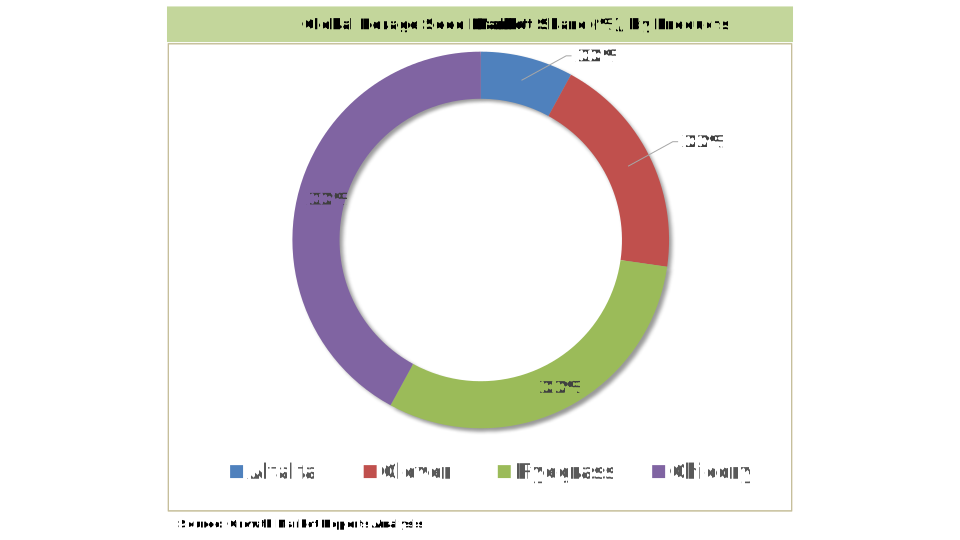
Alfalfa segment accounts for a dominant share of the market
In the terms of products, the forage seed market can be divided into alfalfa, clover, ryegrass, and chicory. The alfalfa segment accounts for a large share of the market, as it is mainly used for feeding goats, sheep, goats, cattle, and dairy cows. Alfalfa helps improve the productivity of the livestock by improving their intestinal health and digestion system. It also helps increase the yield of the livestock, while improving the quality of livestock production.
Cattle segment to account for major market share
On the basis of livestock, the market can be segregated into poultry, cattle, and swine. The cattle segment accounts for a large share of the market. Forage seeds are added to the cattle feed to increase the production and performance. These seeds improve the quantity of milk and enhance the immune system of cattle, leading to greater feed efficiency.
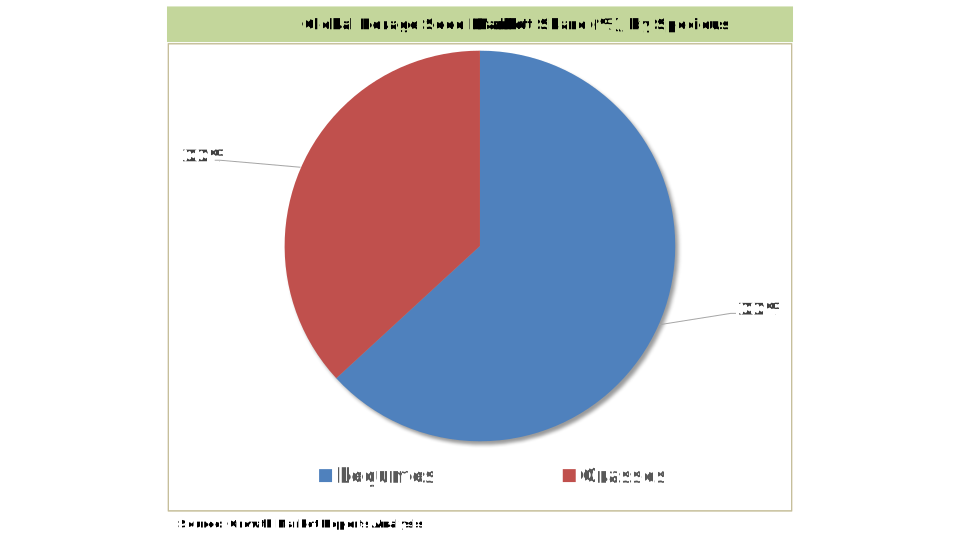
Legumes segment constitutes key share of the market
Based on species, the forage seed market can be classified as legumes and grasses. The legumes segment accounted for a large share of the market, as it helps in fixing the atmospheric nitrogen. Forage legumes improve the health of animals, as it provides essential nutrients such as proteins. Legume production is a cost-effective method. Cultivation of legumes enhance soil fertility, thereby reducing the cost of crop production and livestock feed.
Organic segment dominants the market
On the basis of origin, the market can be bifurcated into organic and inorganic. The organic segment accounts for a large share of the market owing to the rise in awareness regarding health among people.
Green segment accounts for a dominant share of the market
In the terms of forms, the forage seed market can be divided into green and dry. The green segment accounts for a large share of the market; however, the dry segment is expected to grow during the forecast period.
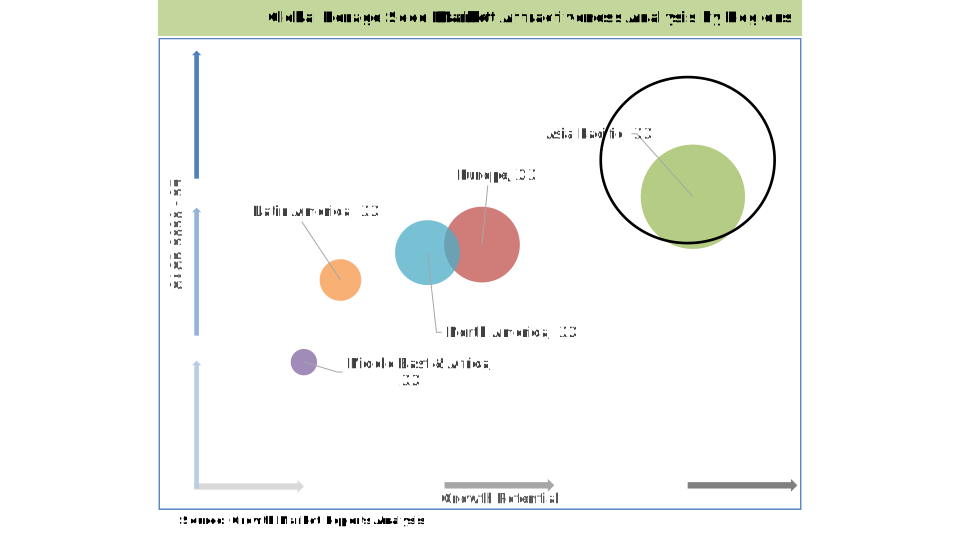
Asia Pacific constituted a dominant share of the global market
In terms of regions, the global forage seed market can be segmented into North America, Europe, Latin America, Asia Pacific, and Middle East & Africa. Asia Pacific accounts for a large share of the market due to the increase in the demand for animal feed. However, the market in Europe is anticipated to expand at a rapid pace during the in forecast period.
Segments
By Products
- Alfalfa
- Clover
- Ryegrass
- Chicory
By Livestock
By Species
By Origin
By Forms
By Regions
- North America
- Europe
- Latin America
- Asia Pacific
- Middle East & Africa
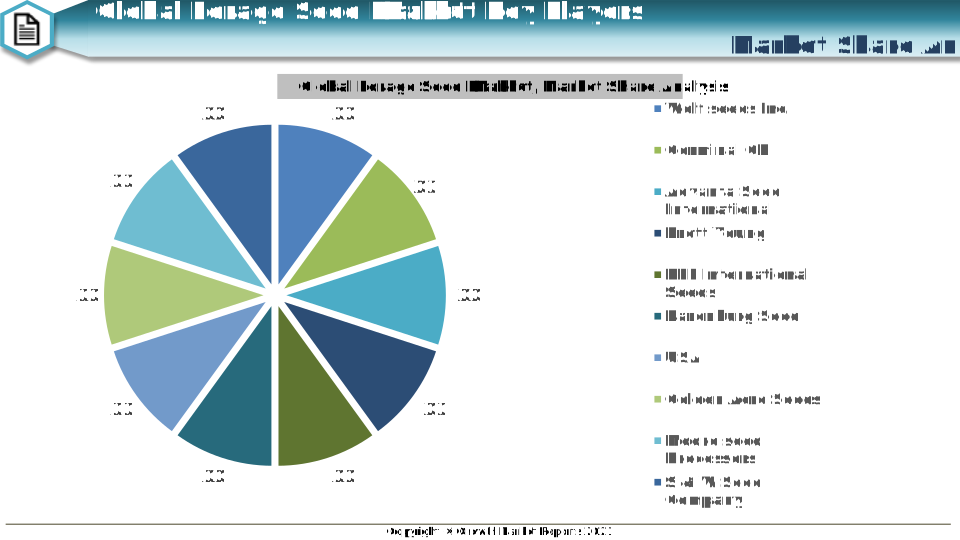
Competitive Landscape
Key players in the forage seed market include Wolf seeds Inc., Germinal GB, Advanta Seed International, Brett Young, DLF International Seeds, Barenburg Seeds, USA, Golden Acre Seeds, Moore seed Processors, S & W Seed Company, Pickseed Canada Ltd, Barenburg Seeds, Blue River Hybrids Organic Seeds, Heritage Seed Company, Ampac Seed Company, and Canterbury Seeds. Mergers & acquisitions, collaborations, agreements, and partnerships are some growth strategies adopted by these players to strengthen their geographical presence.











 Request For Customization
 Enquiry Before Buying
 Speak With Analyst





